



Abstract
This article conceptualises animal liberation direct action in green-cultural criminological terms. To do this, it draws on Johnston and Johnston’s methodological approach and undertakes qualitative content analysis of animal liberation communiqués published on the website, Bite Back. Whilst a significant body of scholarly literature has discussed animal liberation struggles, this article develops an understanding of these often-criminal acts and events within a cultural criminological context. Findings from this analysis reveal three themes. First, activists variously resist and embrace the state and media’s ‘terrorisation’ and discursive delegitimating of animal liberation struggle. Activists wilfully play on the framing of themselves as terrorists. Second, activists are also able to re-contextualise what might otherwise be seen as minor, apolitical events into a much broader liberation struggle. Third, animal liberation activism is frequently and explicitly connected to other emancipatory struggles. To conclude, the article argues that animal liberation activists engage in direct action on a local level, and strategically promote hyper localised instances of direct action globally through online communiqués. In doing so, animal liberation activists engage in a ‘prefigurative integration’ of what might otherwise be dismissed as isolated hyper local ‘petty events’ within a global struggle against violence, exploitation and oppression.
Keywords
Introduction and context
The Animal Liberation Front (ALF) is perhaps the most well-known element within the global animal rights movement today (Best and Nocella, 2004; Johnston and Johnston, 2020). As opposed to resembling a traditional group with established leadership positions and hierarchies, the ALF represents a form of leaderless resistance. Within this, independent, autonomous cells and individuals engage in action unilaterally, providing it adheres to the key principles of the movement. 1 Common tactics include freeing animals from farms and sabotaging equipment used in animal industries (Johnston and Johnston, 2020). Websites like Bite Back serve as a useful resource for informing others about animal liberation activism. These acts are often but not always done under the ALF banner and/or carried out in clandestine ways. As such, Bite Back represents a valuable resource for analysis, particularly through a cultural-criminological lens. Struggles for animal liberation might simultaneously be regarded as utopian, advocating for transformations in society that may seem extremely far off, as well as deeply practical, resulting as they so often do, in animal lives being saved in the here and now. It is within this practical utopian tendency that direct action for animal liberation, and the narrative constructions of such acts via grassroots independent media, take place.
Drawing on Johnston and Johnston’s (2020) methodological approach, this article adopts a green-cultural criminological lens to examine the way animal liberation activists represent and construct their actions in defence of non-human animals. These acts occur in a context of the social and legal ‘acceptability’ of violence towards non-human animals (Cudworth, 2015), the criminalisation of animal liberation and environmental activism (Schlemach et al., 2019; Stephens Griffin, 2021), and takes place against an increasingly catastrophic ecological backdrop, in which the consequences climate change and other environmental problems impact at an alarming rate (IPCC, 2021). I begin by outlining a green-cultural criminological theoretical framework, as well as literature on animal liberation activism and prefigurative direct action, more broadly. I then outline the qualitative content analysis methodology that I employed, offering justification for this approach and explanations for how the sample was drawn and analysed. I then discusses three dominant themes identified within the data, specifically: (1) the creative construct of serious criminal acts, whereby animal liberation activists play with existing frames around terrorism in order to emphasise the political nature of serious criminal events; (2) ‘petty events’ as prefigurative strategy, whereby animal liberation activists re-contextualise what might otherwise be seen as minor, apolitical events as part of a much broader liberation struggle and (3) total liberation, whereby activists emphasise the connections between the cause of animal liberation and other struggles, such as anti-racist and ecological campaigns. Finally, I draw conclusions on the benefits of using a green-cultural criminological approach to examine animal liberation.
Theoretical framework: Green-cultural criminology and animal liberation struggle
Green-cultural criminology
When Hayward and Young (2004: 259) affirmed that ‘the street scripts the screen, and the screen scripts the street’, they encouraged criminologists to explore the ways in which ‘the virtual’ and ‘the real’ contend, overlap, influence and otherwise interact with one another, across a boundary they saw as permanently blurred. As they argued, ‘[a]bove all else, [cultural criminology] is the placing of crime and its control in the context of culture; that is, viewing both crime and the agencies of control as cultural products – as creative constructs. As such, they must be read in terms of the meanings they carry’ (Hayward and Young, 2004: 259). Campbell (2010: 98) argues that crime, and its control, should be approached as cultural enterprises. This challenges the notion that cultural representations of crime can ever exist as benign reflections of it. Instead ‘crime occurs – and is made sense of – within a circuit of culture where collective meaning is made and remade’ (Campbell, 2010: 98).
This article adopts a green-cultural criminological theoretical framework as a means of conceptualising animal liberation direct action (Brisman and South, 2013; Brisman et al., 2014; Di Ronco and Allen-Robertson, 2021; McClanahan, 2014). Green-cultural criminology ‘seeks to incorporate a concern with the cultural significance of the environment, environmental crime and environmental harm into the green criminological enterprise’ (Brisman and South, 2013: 115). In other words, green-cultural criminology expands the project of green criminology into the realms of the cultural, the mediated and the virtual. Brisman et al. (2014: 480) argue that one fruitful way to pursue this aim is to focus on ‘the contestation of space, transgression and resistance’ in relation to green crime and harm, focussing on modes of opposition and transgression be they explicitly political or otherwise. Green criminology is a well-established and diverse field of study, which is in no-way monolithic, and which reflects an increasingly broad range of political and ethical perspectives (Lynch, 1990; Lynch and Stretsky, 2003; South, 1998; White, 2008, 2011). Brevity precludes an in-depth discussion of its various competing traditions and tenets, however, it is important to situate this work within a critical green criminological tradition which explicitly opposes violence against animals (Beirne, 2018; Nurse and Wyatt, 2020; Sollund, 2020). It is this tradition which provides the impetus for the green-cultural criminological approach adopted here – an approach which therefore seeks to expand green criminology’s explicit rejection of animal exploitation, into explorations of the ‘cultural’ realm, and directs focus onto acts of transgression, contestation and defiance to hegemonic carnist, speciesist logics (Beirne, 2018; Joy, 2010).
Di Ronco and Allen-Robertson (2021) offer a relevant recent example of the application of a green-cultural criminological analysis to representations of protest. The authors adopt a mixed methods approach to examine political resistance to the Trans Adriatic Pipeline in southern Italy. Situating their study within a green-cultural criminology approach, the authors analyse data from ethnographic observations, qualitative interviews and an AI-assisted ethnography of visual data. The authors found that only a partial overlap existed between the themes evidenced in ‘online’ and ‘offline’ data and, in doing so, their work contributes to evidencing blurred boundaries between online and offline experiences of injustice. There are also examples where work has drawn from green-cultural criminology in discussions of animal liberation struggle. For example Gacek and Jochelson (2020: 2) interweave green criminology and law, and contend that ‘when paired together, green criminology and law have the potential to reconstitute the animal as something more than mere property within law, shed light on the anthropocentric logics at play within the criminal justice system, and promote positive changes to animal cruelty legislation’. Within their work, they argue that a legal analysis of animal exploitation can function like a cultural one, because ‘legal forces are cultural forces. . . how we think about animals has a connection with prospective legal change because culture and law are interwoven, and law is both iterative and reiterative’ (Gacek and Jochelson, 2020: 3). This work is useful in ensuring we conceptualise the creative construct of animal liberation struggle and its control within a suitable legal context (Gacek and Jochelson, 2022). These works provide an illustration of the radical potential that a green-cultural criminological analysis can provide in relation to prefigurative forms of resistance to animal exploitation – in other words, forms of resistance that enact elements of the future society that activists wish to create, in the present (e.g. one where animals are not exploited). Animal liberation communiqués represent a virtual record of these forms of resistance, and from which to conceptualise ‘crimes’ and ‘harms’ in cultural terms. These communiqués also represent a rich source of data through which to pursue the above aims, documenting, as they frequently do, criminal acts of unapologetic political resistance to animal exploitation. These communiqués actively seek to shape the narrative surrounding what might otherwise be understood or perceived as apolitical or irrational acts of crime or vandalism.
Theorising animal liberation direct action
The social, cultural and legal acceptability of violence against animals has grown as a topic of social science exploration (Cudworth, 2015; Peggs, 2013). Scholars have long been arguing that harm to animals should be an area of concern for criminologists and have developed explicitly non-speciesist positions around the harms of animal exploitation and murder (Beirne, 1999, 2018; Flynn and Hall, 2017; Nurse and Wyatt, 2020; Sollund, 2011, 2020). Fundamentally, these perspectives are united in the view that animals have rights to be treated with respect. In doing so they share common ground with zemiological approaches which emphasise the need to think beyond that which is explicitly criminalised, and shift focus away from the law towards other forms of harm (Hillyard and Tombs, 2004; Stephens Griffin and Griffin, 2021). These green criminological approaches often dovetail with work in the radical interdisciplinary field of Critical Animal Studies (CAS). CAS rests on explicitly intersectional, abolitionist principles and has illustrated how the oppression of animals is connected to oppression within and among human societies (Matsuoka and Sorenson, 2018; Nocella et al., 2014; Taylor and Fitzgerald, 2018). CAS advocates a ‘total liberation’ approach to the dismantling of social hierarchy, one in which emancipation struggle extends beyond the traditional limits of human social dynamics and takes into consideration the position of animals and ecosystems within the social realm (Pellow, 2014, 2020; Stephens Griffin and Griffin, 2021). The total liberation approach is distinctive because it not only highlights the plight of animals and ecosystems, but also emphasises the ways that oppressive systems emanating from human society, such as white supremacy, patriarchy and speciesism, often serve to overlap, reinforce and constitute one another (Pellow, 2014). Ultimately, CAS strives for liberation for all, human and non-human under what is theorised to be the innately oppressive system of global capitalism (Nibert, 2017; Nocella et al., 2014). Linking these ideas to activism, Johnston and Johnston (2017, 2020) have called into question existing discourses which position animal rights activism as an extremist, single-issue movement. In doing so, this serves to delegitimate and make it easier to dismiss these campaigns (Del Gandio and Nocella, 2014). Having twice conducted large scale content analyses of documents produced by North American radical animal rights groups, Johnston and Johnston (2017, 2020) identified an abundance of evidence of the ways animal rights activists embrace intersectional goals, form alliances with other radical social movements, and campaign against multiple forms of oppression such as sexism and racism, supporting this total liberation narrative, countering perceptions of animal rights struggle as being reductive in its concerns.
With regards to the specific forms of direct action favoured by animal rights activists, it is useful to briefly expand on direct action itself and the related concept of prefiguration. Graeber (2011: paragraph 3) argues that ‘[t]he very notion of direct action, with its rejection of a politics which appeals to governments to modify their behaviour, in favour of physical intervention against state power in a form that itself prefigures an alternative – all of this emerges directly from the libertarian tradition’. Expanding on these ideas, Graeber (2011: paragraph 17) wrote that ‘[f]or those who desire to create a society based on the principle of human freedom, direct action is simply the defiant insistence on acting as if one is already free’. In this sense, some kinds of direct action 2 can be understood in prefigurative terms, whether appeals to such ideals are an explicit intention of those taking part or not. The term ‘prefiguration’ (sometimes known as ‘prefigurative politics’) was first coined by Boggs (1977: 100) to refer to ‘the embodiment, within the ongoing political practice of a movement, of those forms of social relations, decision-making, culture and human experience that are the ultimate goal’. Or, to put it more simply, prefiguration refers to attempts by activists to act and live in the present, according to the principles they wish to see enacted and practiced more broadly in the future. Whilst Boggs (1977) discussion centred around dynamics between statist and non-statist leftist struggle in the 1970s, the term can be understood within an anarchist and syndicalist tradition, as illustrated by the Industrial Workers of the World slogan of ‘building the new world in the shell of the old’ (Swain, 2019: 47).
For Yates (2015: 1), the concept of prefiguration refers to ‘the attempted construction of alternative or utopian social relations in the present, either in parallel with or in the course of, adversarial social movement protest’. Notably, prefigurative politics are often discussed in opposition to the more ‘strategic’ politics, exemplified in approaches that seek change through existing institutions, or ‘working within the system’ (Swain, 2019). The notion that prefigurative politics are innately ‘un-strategic’ is increasingly being challenged, and the potential for strategic forms of prefiguration asserted more forcefully (Swain, 2019). In order to explicate debates around the strategic effectiveness of prefiguration, Yates (2021) explores the diverse functions prefiguration has in social movements today. Illustrating the role prefiguration plays in the vital processes of reproduction, mobilisation and coordination Yates (2021) argues that instead of focussing on whether prefiguration is ‘strategic’, we should be examining the way movements negotiate their priorities, and how interactions with opponents and allies can shift their approach, as well examining examples in which the combining of strategic elements has been beneficial. In addition to debates about the ‘strategic’ effectiveness of prefiguration, Yates (2021) also summarises various other criticisms of prefigurative approaches, such as claims that they are too small and local in focus, too open to co-optation and having a solipsistic focus on identity and self-expression. Animal liberation struggle represents a useful example of protest that embraces direct action.
Whilst social research on prefiguration has often focussed on directly democratic alter-globalisation, anti-austerity and anarchist struggle (Graeber, 2011; Ishkanian and Ali, 2018; Ishkanian and Peña Saavedra, 2019; Maeckelbergh, 2011; Naegler, 2018), animal liberation direct action has also been discussed and theorised in explicitly prefigurative terms (Johnston and Johnston, 2017; Petray and Pendergrast, 2018). Johnston and Johnston (2017: 747) argue that animal liberation is prefigurative in the sense that it represents ‘a collective conception of a utopic future which blossoms from the daily work and interactions of their activism’. Practices such as veganism are prefigurative in the sense that they represent a belief by activists that ‘by living in line with their values and encouraging others to do the same, the world will slowly get better’ (Johnston and Johnston, 2017: 747). Whilst Petray and Pendergrast (2018) discuss animal liberation in prefigurative terms, they suggest the concept of ‘non-hegemonic’ activism is more useful, due to problems in theorising prefiguration (e.g. arguments around reformist versus revolutionary politics). They define ‘non-hegemonic’ approaches as those that ‘prefigure alternatives at the local level. Non-hegemonic approaches are not oriented to power structures like states. Instead of actively resisting power, they bypass it or in some ways ignore it, as they create new ways of being’ (Petray and Pendergrast, 2018: 665). In discussing animal liberation in these terms, the authors help distinguish its orientation to broader power structures, be they political, legal, cultural, etc.
To summarise, this project utilises a green-cultural criminological theoretical framework in which crime and its control, including direct action for animal liberation, are theorised as creative constructs (Gacek and Jochelson, 2020; Hayward and Young, 2004). Acts like these exist within a circuit of culture where collective meanings are constantly being made and remade (Campbell, 2010). This direct action is also understood in ‘prefigurative’ terms, rejecting the notion that such acts are inherently un-strategic (Swain, 2019; Yates, 2021). Having outlined the theoretical framework underpinning the research, I now discuss the methodology of the project.
Methodology
The research sought to examine animal liberation related direct action in the year 2020. It drew on an interpretivist epistemology with an interest in the phenomenology of these transgressive communiqués (Young, 2004). The focus of this work is therefore on the construction of meaning in the actions themselves and in the stories that activists tell the world about their actions, which allows for a sensitivity to ‘the way people write and rewrite their personal narratives’ (Young, 2004: 23). In line with a green-cultural criminological focus on the meanings that crime and its control carry, the data collection and analysis method comprised a qualitative content analysis of online communiqués submitted to the website Bite Back. Bite Back was chosen because it is a well-known, free to access website that exists to promote the cause of animal liberation and to document and publicise radical direct action carried out in defence of animals internationally. The research therefore draws on a purposive sample of 134 communiqués published on the Bite Back website in 2020. This amounts to the entirety of communiqués published through the website between January 1st and December 31st, 2020. The use of communiqués as a source of data was directly influenced by Johnston and Johnston (2017, 2020) whose work on radical animal liberation struggle in the USA utilised a qualitative content analysis of documents garnered from radical animal liberation websites and social media. Loadenthal’s (2018) work on political violence also effectively utilised an analysis of anarchist communiqués to similar ends.
In order to process the data, the communiqués were first input into a database, sorted, organised according to several variables including date of publication, country, continent, type of action, physical location of action, as well as numbers and species of non-human animals rescued. This database also included details on the number of words, videos and pictures per comminuqué, as well as any other important context. This sorting was useful in allowing some limited quantitative analysis of the data, revealing patterns within the dataset, as well as indicating the prevalence of direct action globally, as reported through Bite Back. Whilst this kind of quantitative sorting can be useful and interesting, it is important not to overstate the numbers, or to suggest this is a work rooted in a desire for positivistic ‘rigour’ with primary aims of generalisability or reliability. As Young (2004: 22) once argued, ‘precision must be constantly eyed with suspicion, decimal points with raised eyebrows’.
Having organised these data to support descriptive statistical analysis as a starting point, a qualitative content analysis was conducted examining all 134 English language 3 communiqués from the year 2020. Though the majority of these emanate from a small number of countries (chiefly, Sweden, France and the UK 4 ), there were 16 countries, from four continents, represented in the sample. Qualitative content analysis is a well-established method of social research, necessitating an in-depth careful examination of the use and intended effect of language within texts in a dataset (Moore, 2014; Schreier, 2012). Content analysis provides a useful means of analysing large numbers of images (Rose, 2012), and whilst typically associated with quantitative approaches, Krippendorf (1980) argues that it provides a means of understanding the symbolic qualities of texts and images in context. Drawing upon Johnston and Johnston’s (2020) approach, I used a process whereby codes were generated to help index data accurately according to the meanings of the communiqués, thus helping me to actively identify key themes within the data. The critical discussion and argument below is a result of exploring these key themes, in light of the above theoretical work. Crime, Media, Culture usually requests authors provide written permission from the copyright holder for the reproduction of visual data such as photographs. The communiqués and photographs/videos included within them were frequently posted anonymously, and so, given that it was not possible to get written permission, these have been reproduced here by an illustrator.
Obviously, this sample of 134 communiqués is in no way inclusive of all acts of animal liberation struggle that took place in 2020 globally. The sample is simply an indication of specific acts, within specific networks, as publicised through Bite Back. The dataset is extremely biassed towards acts within the Global North as a starting point, and within Europe specifically. Even within this narrow Global North context, the dataset included no examples of fox hunt sabotage, despite this remaining a vibrant and common form of animal activism in the UK (Cox and Donovan, 2020). It would be very misleading to suggest such a sample can be representative or generalisable to all animal liberation struggle or direct action, even within the narrow mostly Western European parameters set. The sample merely provides a snapshot, through the medium of one website. It is nevertheless interesting and can help us better understand animal liberation struggle within a green-cultural criminological context. Note, several of these communiqués were originally published on other websites that also exist to document direct action, such as Frente de Liberacion, Unoffensive Animal, Vrije Dier and indeed, through the promotion of acts by individual groups via their own social media pages.
Findings and discussion
The sample was composed of n = 134 communiqués, all describing animal liberation related actions or events and published online on the Bite Back website. The communiqués were varied in size and scope. With regards to word length, the longest communiqué in the sample was 549 words in length, and provided a detailed account of the liberation of ~3,100 mink from fur farms in North America, with accompanying photos (#114 ‘Fur Farms Raided in Utah and Idaho’). The shortest was just three words in length, providing just a title and two photographs of the sabotage of a fox trap in Slovakia (#66 ‘Fox Trap Destroyed’). This gives an idea of the differences between communiqués in terms of detail provided, with the average length of communiqué being 117 words. About 85.9% (n = 115) of the communiqués included at least one photograph of the events described. The most photos provided alongside a single communiqué was 17, all of which depicted various examples of vandalism/graffiti at a French fur farm (#94 ‘Messages Painted at Fur Farms’). The average number of photos provided alongside the communiqués was 2. About 10.4% (n = 14) of the communiqués also included a video of the events described. Figure 1 provides detail on the geographical location of the events described in communiqués, illustrating that a majority of acts occurred in Europe, with 20.1% in Sweden (n = 27), 20.1% France (n = 27) and the UK 17.2% (n = 23) being the most frequently cited locations.
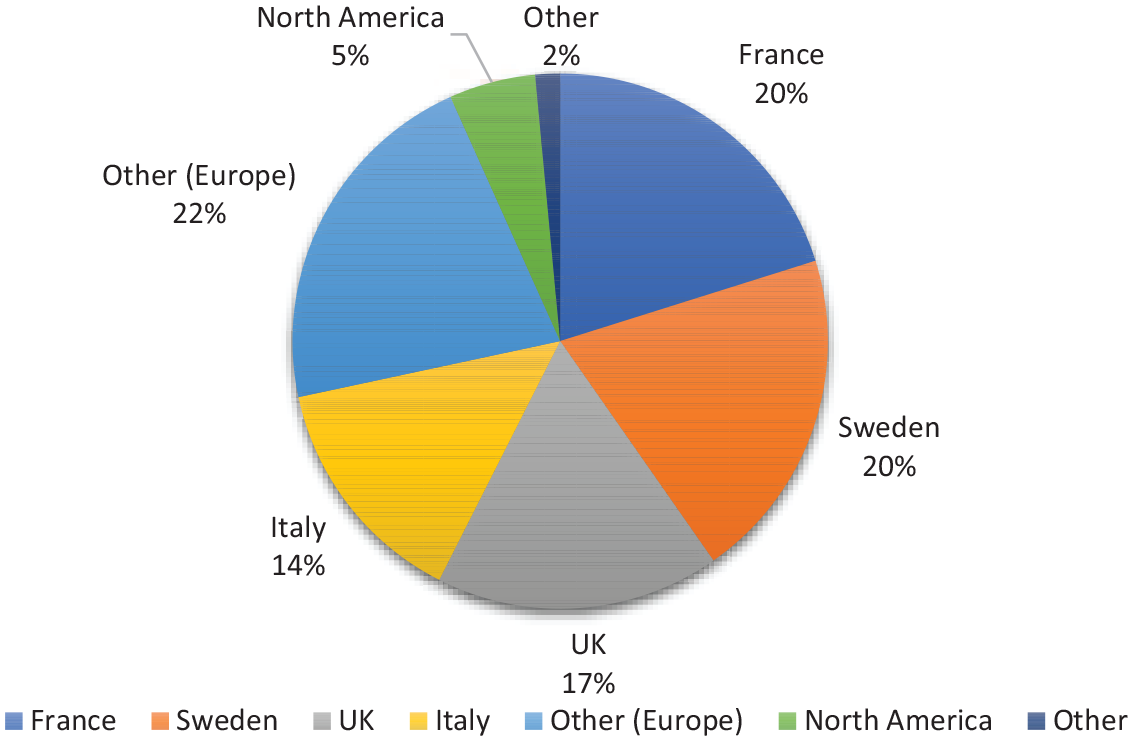
Geographical location of actions/events.
Examining the types of actions/events detailed in the communiqués, 17.2% (n = 23) described more than one ‘type’ of action (e.g. vandalism often occurred alongside sabotage). In total, 44% (n = 59) described acts of liberation, making it the most frequently described type of action in the communiqués. The second most frequently described action was sabotage in 37.3% (n = 50), followed by vandalism 32.1% (n = 43) and finally communiqués describing the arrest/imprisonment of activists 3.7% (n = 5). In total the sample described the liberation of ~4,526 animals. This includes ~3,300 mink, 723 hens/chickens, 328 ducks, 107 other types of bird, 32 sheep or lambs, 19 rabbits, 5 pigs, 4 dogs, 4 goats, 2 calves, 1 fox and 1 wild boar. The average number of animals rescued during liberation actions was ~86. Excluding the outlier of the release of ~3,300 mink described across two communiqués, this number falls to an average of 24 animals per liberation action. Figure 2 provides detail on when the actions events/actions took place. This chart shows a pattern of declining actions from the beginning of the year to the end of the year. On average there were 11 communiqués per month. In the period of January–March this average was 18 per month, whereas in the period of October–December the average was just 7 per month. One potential explanation for this drop-off in the number of actions may be the Covid-19 pandemic and related restrictions which will have impacted both the frequency with which these actions were carried out and described in communiqués from March 2020 onwards. As Lee (2021) has shown, Covid-19’s impact on activism is a topic rife for further research and consideration.
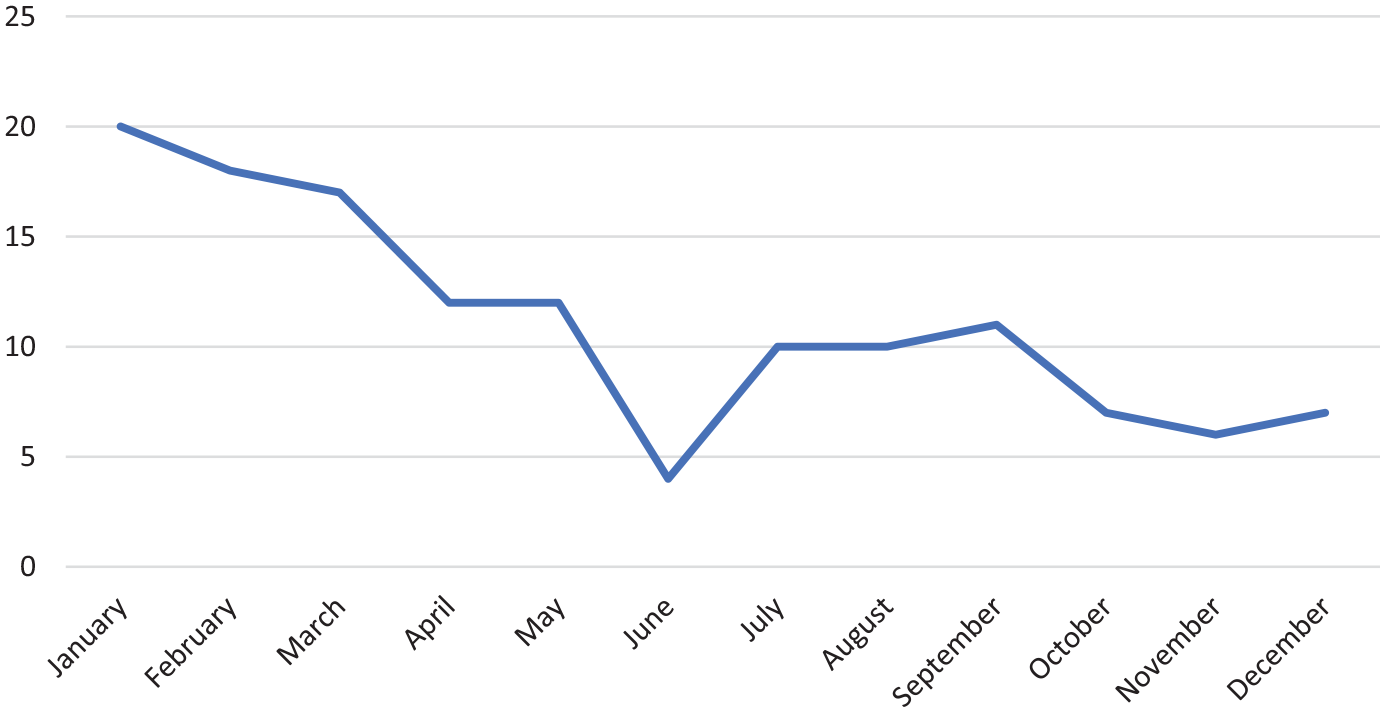
Number of actions/events documented per month.
Following a qualitative content analysis of the communiqués, I identified three key themes within the data, (1) the creative construct of serious criminal acts, whereby animal liberation activists play with existing frames around terrorism in order to emphasise the political nature of serious criminal events; (2) ‘petty events’ as prefigurative strategy, whereby animal liberation activists re-contextualise what might otherwise be seen as minor, apolitical events as part of a much broader liberation struggle and (3) total liberation, whereby activists emphasise the connections between struggles for animal liberation and other struggles, such as anti-racist and ecological campaigns. As discussed in more detail below, communiqués frequently situated actions within broader or related struggles and 22 communiqués made explicit reference to the ALF.
The creative construct of serious criminal acts
The communiqués provide evidence of the ways that activists creatively respond to the discursive delegitimating and ‘terrorisation’ of animal liberation struggle (Del Gandio and Nocella, 2014). In line with Hayward and Young (2004) my analysis aimed to understand these communiqués – and the acts which they sought to describe and document – as cultural products and creative constructs. Within the sample, there were numerous examples of what might be deemed ‘serious’ criminal acts, specifically arson, attacks on private residences and, to a lesser extent, large scale liberation operations (where the financial impact may have been particularly great). These communiqués were rarer and contrasted with the majority of communiqués which tended to describe smaller-scale instances of liberation, vandalism and sabotage (which are discussed in more detail below).
Focussing on the more ‘serious’ criminal acts documented through the prism of crime and crime control as creative construct is useful. As discussed above, a key feature of animal liberation struggle and state/private responses to it relates to repression of resistance. The state has historically overstated the threat of animal liberation struggle, presenting it as an existential societal threat, exaggerating both the violence that can be attributed to animal liberation activists, as well as generalising the targets of animal liberation direct action in the public imagination (Del Gandio and Nocella, 2014). This also relates to broader conceptions of non-violence, and the way in which discursively and in statute, western so-called ‘liberal democratic’ states have sought to limit the horizons of activism and draw in increasingly benign forms of direct action under the banner of violence and terrorism (Del Gandio and Nocella, 2014; Sorenson, 2009). Where property destruction that occurred in the past might be understood as righteous and necessary (e.g. in relation to the women’s suffrage movement), equivalent actions in the present are constructed as ‘terrorism’. This characterisation of animal liberation activists as ‘terrorists’ benefits the state greatly, providing a pretext for repression (Sorenson, 2009). As a result, this has often been stridently resisted by scholars and the movement itself (Del Gandio and Nocella, 2014). Repression of animal liberation has had significant negative impacts on animal liberation struggles, for example, the explicitly politically motivated policy of ‘leadership-decapitation’ successfully deployed against Stop Huntingdon Animal Cruelty (SHAC) in the UK (Donovan and Coupe, 2013: 127). We must, therefore, view these more ‘serious’ instances of crime as creative constructs within a context of increased repression, criminalisation and the discursive framing of animal liberation as ‘terrorism’. The sample demonstrates the ways that activists, who are subject to these labels, are acutely aware of them and deliberately play off them.
Communiqué #79 which details a serious arson attack on a duck slaughterhouse in the Netherlands (see Figure 3). It is accompanied by a photograph of a burned-out lorry, with flames around it, and a firefighter and engine in the foreground. The communiqué explicitly juxtaposes the seriousness of the event, through the photo and description of the damage, with the invisible harms of the slaughterhouse itself, as the following excerpt shows:
‘Five trucks and two trailers were completely destroyed. Activists also attempted to start a fire inside the slaughterhouse. In the claim of responsibility, sent anonymously to [Dutch Animal Rights Website] Vrije Dier, activists explained that their goal was to hit an “already weakened duck industry’. They added, ‘We are aware of the danger of arson, but the daily murder of innocent animals has to end’.
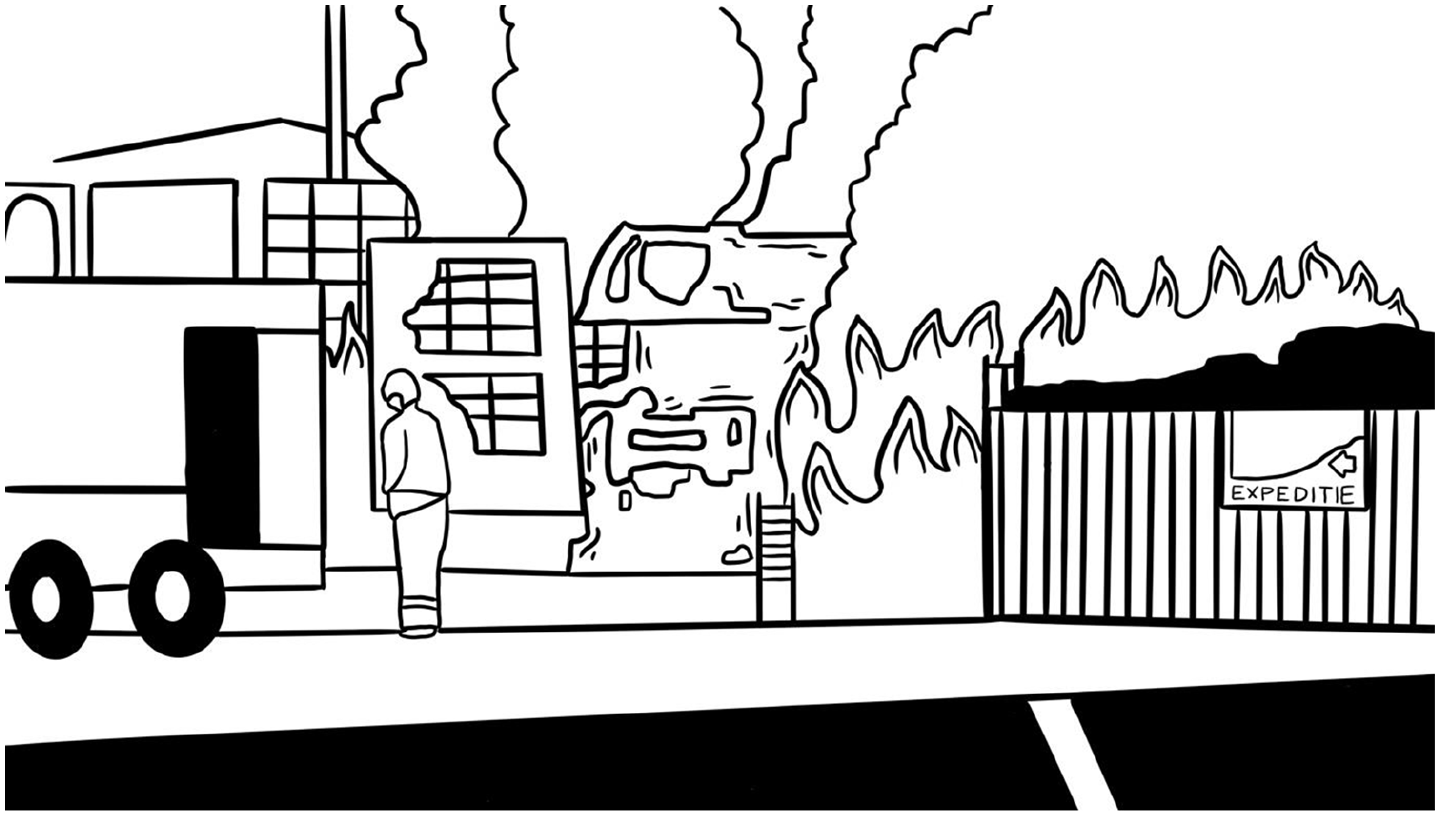
Firefighters respond to Arson (Communiqué #79: trucks set on fire at duck slaughterhouse).
The risk and seriousness of the criminal act is acknowledged, but the communiqué emphasises the unchecked and unmitigated slaughter of the animals within the warehouse as a bigger and more concerning evil. Another similar example is ‘Communiqué #22: Explosive Attack on Butcher Shop’, which describes the use of an explosive device on a butcher’s shop in Argentina, framing it as an act of terror in response to violence:
‘We assume full responsibility for the abandonment of an explosive in front of a butcher shop. . . The device was composed of two cans of butane gas, a firecracker and 1 litre of gasoline. We do not know what happened, but it was intended to damage this exploitative cursed establishment and cause terror to the civilized who exploit animals and damage the earth in the name of progress, without caring about anything. Let them know that our wicks are ready and our explosives look towards their bastard world of garbage. We will not hesitate to attack, we want to see it burn completely, because those who do not respect the earth or its co-inhabitants do not deserve to exist. We will continue stalking. . .’
The communiqué, translated from the original Spanish, invokes terror explicitly as an aim of the act, seizing upon existing frames around animal liberation direct action. Communiqué #51 describes an act of sabotage and vandalism on the private residence of the Chief Executive of a mink farming organisation in Sweden, which activists allege engages in torture of mink. An accompanying photograph shows a front door and window of a residential property, adorned with thick lines of red spray paint. As the communiqué describes:
‘The 23 of March. . . the new CEO for Svensk Mink, had his home spray painted, doors and windows glued and a trace of red paint from his house to the street. . . Svensk Mink is an organisation in Sweden that organize Swedish mink farmers and help them torture minks’.
There were examples of serious criminality, which were not tied to direct threats of violence, personal attacks or playing off terror discourses. For example, large scale liberation operations like the ones described in Communiqué #115 (Figure 4) which provide evidence of criminality in defence of farmed animals, with the accompanying narrative connecting these actions to a broader effort to eradicate fur farming altogether.
‘Caging the wild is a heinous offense against life – against freedom. Every cage is worth emptying, and to begin this work is not difficult. Pressure from animal liberation activists, a declining demand for the products and economic downswings have come together to push the archaic fur industry further than ever towards full collapse. Wiping fur farms off the landscape is a worthy and attainable goal. What’s needed now is for the reader to reflect on what is stopping them from picking up where others left off’.
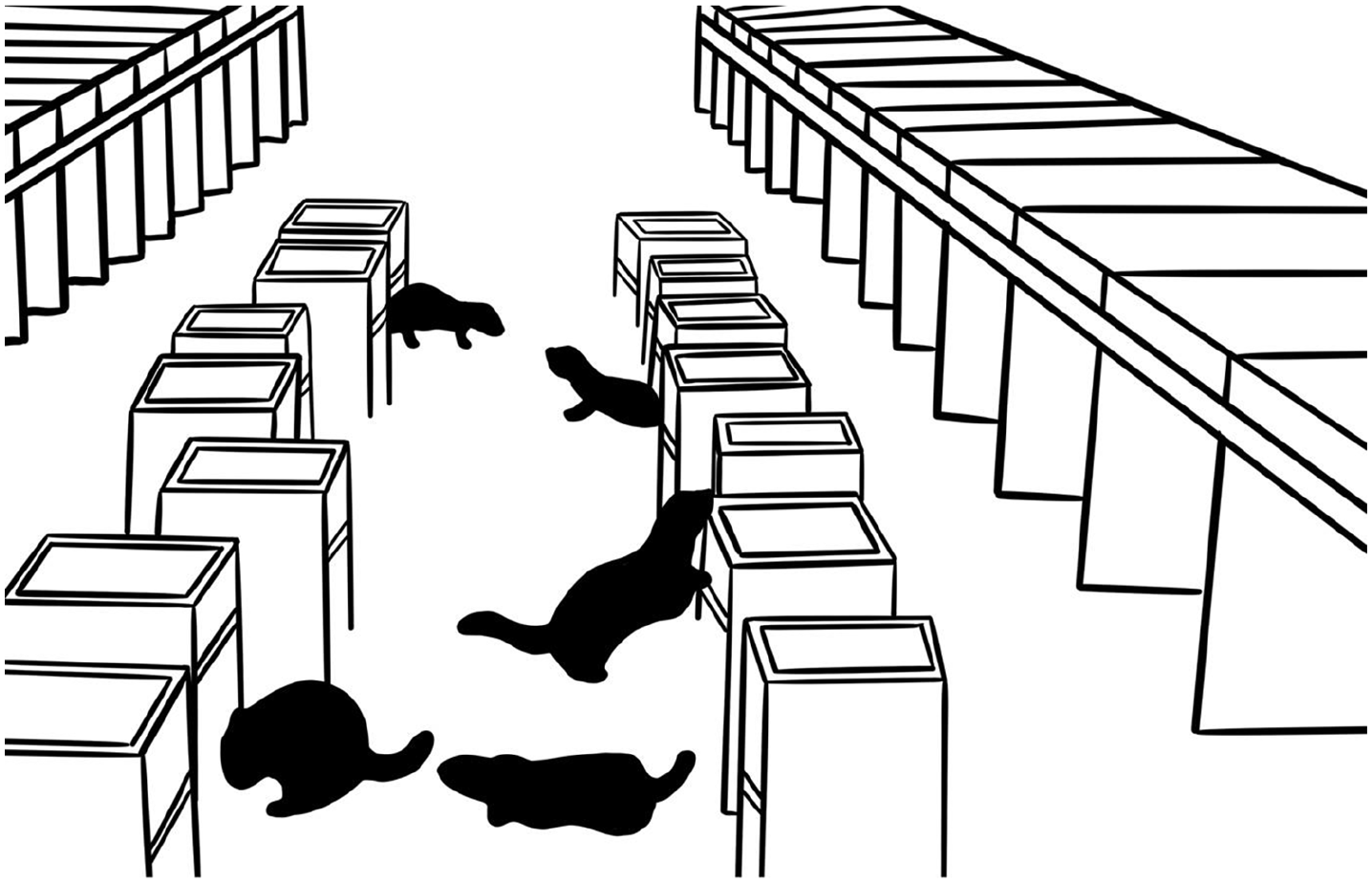
Freed mink (Communiqué #115: fur farms raided in Utah and Idaho).
The accompanying image shows the inside of a mink farm, with rows upon rows of cages, however, a dozen or so black mink can be seen having been released from the cages. The discussion of ‘wiping fur farms off the landscape’ uses serious language, as does the call to arms at the end. The communiqué also appeals to the notoriety of the ALF and its successes in terms of building pressure on animal industries. Nevertheless, whilst no doubt serious, examples of animal rescue such as this are likely understood to be more defensible in the eyes of an abstract public audience, whereas communiqués that appear to advocate violence or play into terror tropes might be seen as less defensible. In both instances, animal right activists deliberately play on existing frames and discourses, including terror discourses, using them to enhance the power of their messaging and the significance of their acts. These communiqués frequently act as a further call to action for other activists, emphasising the severity of the situation animals face, and the necessity for meaningful direct action.
‘Petty events’ as prefigurative strategy
The communiqués did not all relate to so-called ‘serious’ crimes. Hillyard and Tombs (2004: 11) argued, in their critique of the discipline of criminology, that ‘crime has no ontological reality’. This acknowledgement of the social construction of ‘crime’ from an explicit social harm perspective provides a pathway to accepting the ways in which non-criminalised and socially acceptable forms of animal exploitation are socially harmful (Stephens Griffin and Griffin, 2021). Following this, Hillyard and Tombs also underline the ways criminology has disproportionately focussed on ‘serious’ crime, despite vast majority of events which are defined as ‘criminal’ being very minor. For Hillyard and Tombs (2004: 12), crime consists of ‘many petty events’. The communiqués prove to be particularly interesting in relation to the above two points, providing, as they do, a record of a broad range of events – some of which are ‘criminal’ – ranging from the petty to the relatively serious. Analysis of the data reveals complex tensions between these mediated acts of transgression and the cultural, legal and criminal justice contexts in which they take place.
As discussed above, there has been a tendency for the state to overemphasise the harms associated with acts of animal liberation and ecological struggle, representing them as equivalent to high spectacle acts of mass-casualty violence and terrorism, despite the absence of comparable methods, targets or indeed body counts (Best and Nocella, 2004; Del Gandio and Nocella, 2014; Lovitz, 2010; Sorenson, 2009). In contrast to the more ‘serious’ criminal acts described above, there is a degree to which these communiqués can be seen to actively emphasise the seriousness of the acts, even where, on face value, they do might not be immediately understood – at least initially – as politically significant. Communiqués often sought to emphasise the significance of what might otherwise be seen as ‘petty events’. An illustrative example would be communiqué #130 in which a road sign near to an Ostrich Farm in Sweden was vandalised. The photo shows a simple road sign which has been completely covered in black spray paint, rendering the words on the sign totally illegible. The narrative accompanying this photo states:
‘Somewhere in Sweden, ALF vandalized a disgusting ostrich farm, a fucking death camp (several road signs were destroyed). Comrades, until everyone is free, we fight for the animals! Fire to the prisons! Fire to the farms! See you soon. . .’
What might otherwise have been understood by passers-by as an unserious, apolitical, random act of vandalism is thus, through the framing and explanation was connected deliberately to a wider explicitly abolitionist, animal liberation struggle. Another example of the way in which petty events can be(come) prefigurative include a dog rescue, where a dog was reportedly being used as a ‘burglar alarm’ in Treviso, Italy. Communiqué #1 includes a video of the rescue in which the dog’s dire living situation (chained outdoors in amongst filth and garbage by a dilapidated barn) is documented. It also includes a photograph of the rescued dog, which is being held up by an anonymous hooded figure all in black, who is facing away from the camera (Figure 5). Again, an event that could very easily be dismissed as ‘petty crime’, or even an accidental escape, is rearticulated in prefigurative terms using a communiqué.

Rescued dog (Communiqué #1: ‘Dog freed from chain’).
A third example to illustrate the theme of ‘petty events’ as prefigurative strategy is Communiqué #9: ‘Hunting Tower Damaged’, in which the following is reported from an action in the Netherlands, where a wooden hunting tower was sabotaged:
‘After eating way too many vegan pancakes, an evening workout was needed. So chopping up some wood to help it biodegrade seemed like the best thing to do. Big fuck you to all hunters and everybody who exploits animals’.
Other potentially petty acts were made more serious by the rhetoric and narratives attached to them, for example communiqué #117: Three Hunting Towers Sabotaged, provided photos and description of the destruction of hunting equipment in Sweden, but this was coupled with violently threatening graffiti: ‘next time we’ll kill you’ (see Figure 6). One accompanying image shows the remains of the hunting tower with the aforementioned graffiti carved into it, and fir trees in the background.
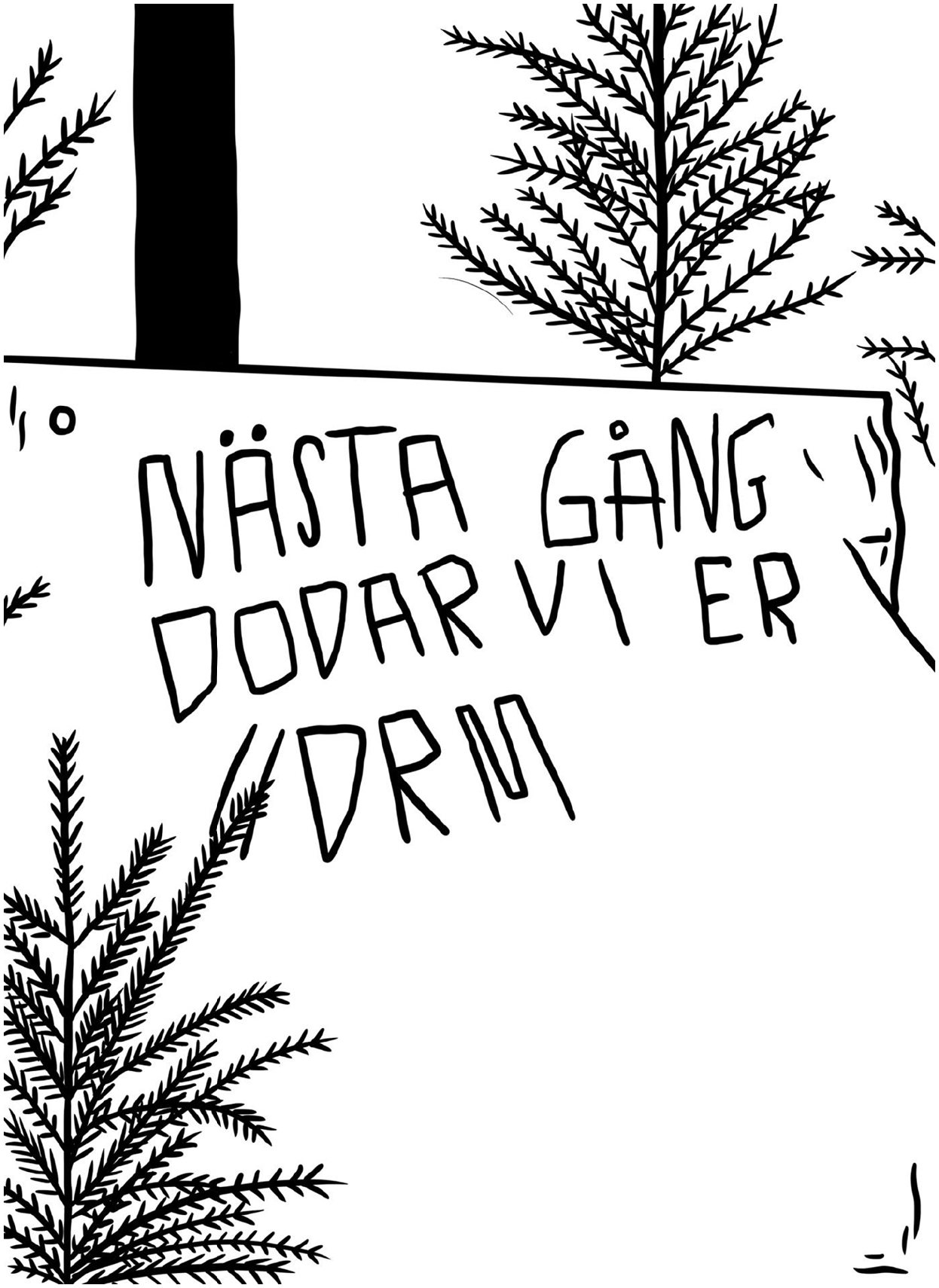
Graffiti translated as ‘next time we’ll kill you’ (Communiqué #117 ‘Three hunting towers sabotaged’).
Examples such as these illustrate a process through which, what might otherwise be perceived as simple ‘petty events’, can prefigure a future in which those who would abuse, exploit or kill animals, no longer do so. In inscribing these ‘petty’ events with the cultural signifiers of animal liberation struggle, activists deliberately enhance the ‘seriousness’ of their own struggle. It is a push and pull battle over how activists and direct actions are perceived, and it is useful to try to understand this within Campbell’s (2010: 98) ‘circuit of culture where collective meaning is made and remade’. Rescuing a chained and unloved farm dog, smashing a wooden hunting trap, spray painting a road sign – the meanings of these seemingly disparate and petty events come into sharp focus when understood within the wider cultural context of animal liberation struggle, and communiqués provide a means of taking control over and making sure the meanings of these events are understood to be sufficiently political and connected to wider struggle. Following Brisman et al. (2014), these acts can be understood as humble forms of transgression, and contestations of space, which through the cultural medium of Bite Back, are listed within a daily record of actions occurring globally. Petty events become prefigurative within the wider cultural landscape, and attendant symbolism of animal liberation struggle, thus imagining a world where animal abuse and exploitation is a ‘crime’, and the perpetrators are held accountable, as activists present ‘a collective conception of a utopic future which blossoms from the daily work and interactions of their activism’ (Johnston and Johnston, 2017: 747). In engaging in these forms of direct action on a local level, and subsequently promoting these hyper localised instances of this direct action globally through online communiqués, animal liberation activists engage in a prefigurative integration of what might otherwise be dismissed as isolated hyper local ‘petty events’ within a global struggle against violence, exploitation and oppression These communiqués repeatedly reach beyond the local context of liberation, sabotage and vandalism, to speak to a much larger global audience, speaking to prefigurative social change motivations (Petray and Pendergrast’s, 2018).
Total liberation, race and ecology
The third theme identified via the process of qualitative content analysis, relates to the topic of total liberation, within which communiqués emphasised notions of multiple or intersecting forms of oppression and exploitation. As discussed, Johnston and Johnston (2017, 2020) have demonstrated via the use of qualitative content analysis, the intersectional tendency of animal rights campaigns in North America. These data suggest that similar arguments can be made about European animal rights campaigns, with ‘total liberation’ narratives being a persistent feature of the sample.
For example, Communiqué #121: ‘Store Owned By Notorious Hunter Vandalised’, made explicit reference to what activists allege to be the racism of the owner of a hunting store in Sweden and quote below from activists:
‘[B]illionaire, murderer and racist, has shoot 1000 moose, now accused of having tried to shoot a wolf. One Hedin’s stores in Sweden was vandalized by ALF. We never forget! We never forgive!’
The accompanying photo shows a storefront with the Swedish words for ‘Murderer’ and ‘Racist’ spray painted onto it in black paint. Communiqué #6: ‘Hunting Seat Destroyed’ offered the following narrative relation to an action that took place in the UK in January 2020, which also made connections between racism and hunting, referring to the alleged racism of a local fox hunt.
‘Under the cover of darkness, we made our way through the woods last night and came across a grim little tower built by cowardly humans to prey on the wild. A couple adjustments had it come crashing down into a field where we have it on good sources that the extremely fucking violent and racist local fox hunt also like to meet up on Saturdays. This is not only a message to the cowards shooting animals from their towers but a warning to the farmers allowing the East Sussex and Romney Marsh Hunt to meet on their land, we are on to you’.
Similarly, within the narrative of Communiqué #69: ‘Cars Of Animal Abusers Re-Painted, In Solidarity With Richi Klinsmeister’ describing an action that took place in Sweden in May 2020, activists accused a Swedish police figure of being racist, corrupt and of hunting.
‘This was a conspiracy put through by the corrupt Swedish cop. . . (both an active hunter and an open supporter of the Swedish racist party – that support the Swedish fur industry)’.
References to the racism of targets lends further credence to Johnston and Johnston’s (2020) argument that these animal liberation struggles do not adopt a single-issue approach, and instead at least partly reflect the kind of ‘total liberation’ outlook outlined by Pellow (2014). Activists are able to draw connections between seemingly disparate liberation struggles by highlighting cases where they feel those practicing violence towards animals are also guilty of racism. Within the sample, there was little evidence of the kinds of problematic false equivalences or use of direct race comparisons. As Pellow (2014: 270) describes, ‘debates about animal rights often get mired in unproductive and poorly thought-out comparisons between the oppression of nonhumans to humans – particularly women, Jewish victims of the Nazi Holocaust, and people of color’. Rejecting these, Pellow (2014) instead argues that ideological justifications for racism, sexism and speciesism operate using similar logics, fundamentally resting on notions of the superiority of specific groups over others.
This ‘total liberation’ theme can also be evidenced in the sample in relation to conceptions of ecological liberation. For example, in Communiqué #101: ‘And More Farms Painted’ (Figure 7), explicit connections were drawn between the ongoing Covid-19 pandemic and animal exploitation. In France, farm walls were painted with various slogans including ‘Zoocide a l’origine du Covid’ (‘Zoocide is the origin of Covid’), signalling that the ongoing pandemic is a result of the systematic exploitation of animals, thus drawing explicit causal connections between ecological and public health catastrophes. The accompanying narrative stated:
‘Several fattening camps in France, here pig and dairy farms in Seine-et-Marne, have been painted with messages making the connection between animal slavery and epidemics of zoonotic viruses, past, present & future’.
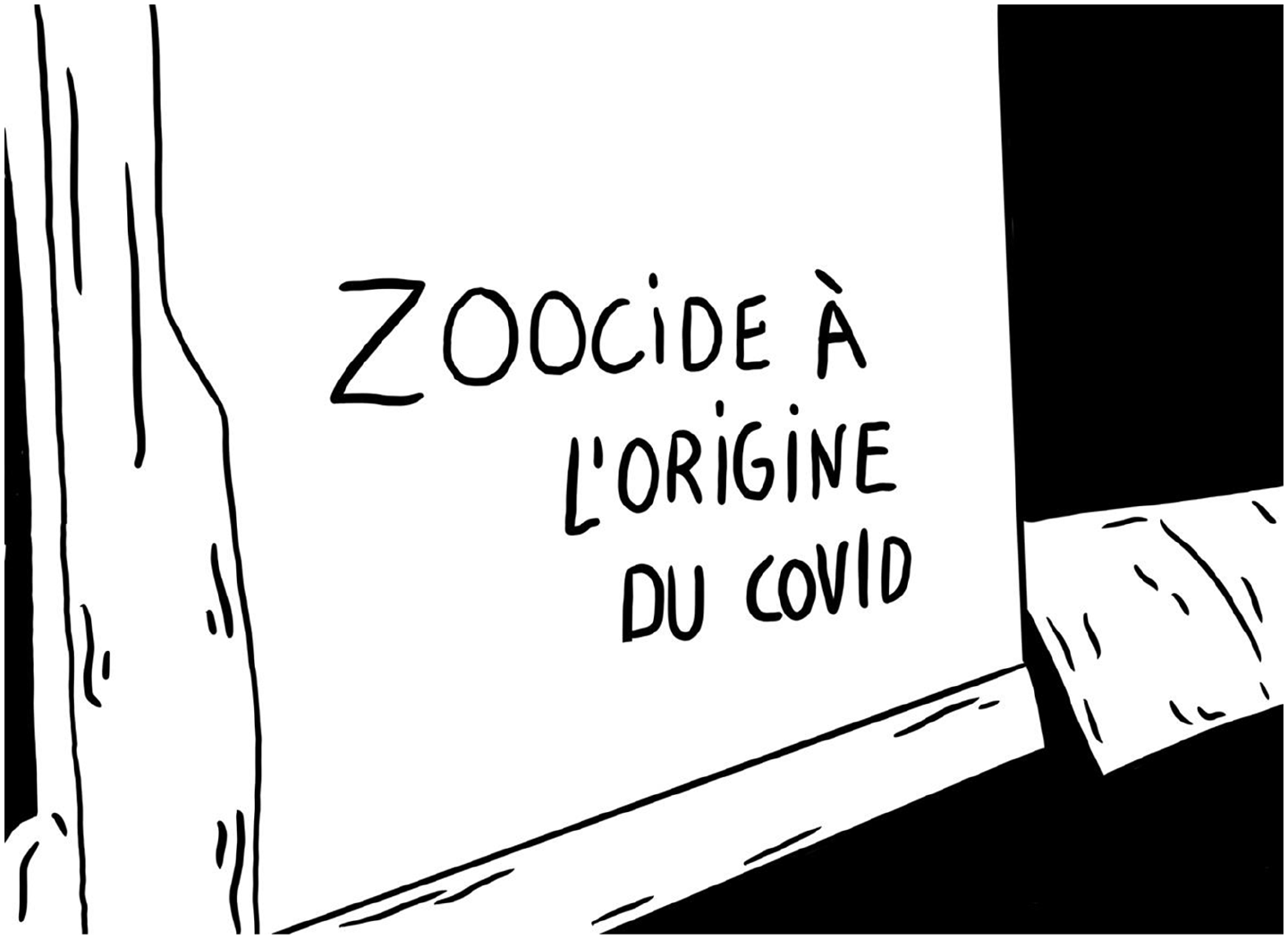
Communiqué #101: ‘And more farms painted’.
Communiqué #124: Butcher Shop Covered in Red Paint, also made explicit connections between the pandemic and animal slaughter, where a shop in France was spray painted with the slogan ‘coronavirus kills less than the butcher’. Similarly, in Communiqué # 21: ‘Anti-Shell Actions’, which described the coordinated vandalism and sabotage of Shell garages in Sweden (specifically through glueing credit card machines), activists chose a petrol company as the target of its direct action. The immediate connection between petrol and animal rights might not be clear, but as the accompanying narrative made clear, Shell was the target for its alleged role in the oppression of people in the Niger delta, and the devastating and varied ecological consequences of its operations, in which animals suffer through experimentation and through loss of habitat/ecosystem.
‘As a contribution to Shell Must Fall action week, a number of Shell. . . gas stations around Sweden have been sabotaged. Small “credit cards” have been glued into the card readers of the pay stations to make it harder, or at best impossible to sell their gas. Apart from destroying the atmosphere Shell is targeted for being complicit in the oppression and executions of people in the Niger delta, polluting seas, rivers and entire ecosystems with thousands of oil spills and torturing hundred thousands of animals in different experiments’.
These communiqués serve to foreground and integrate other connected issues within a struggle against animal exploitation. In doing so, connections are made with racism identified on the part of hunters and business owners, as well as the links to wider ecological issues and the extremely topical concern of Covid-19 and zoonotic diseases, positioning animal liberation struggle within a wider context of total liberation.
Conclusion: A green-cultural criminology of animal liberation struggle
Green-cultural criminology has provided a useful prism through which to view these prefigurative acts and broader animal liberation struggles within the context of post-political criminal justice, and particularly trends towards repression and criminalisation. These communiqués indicate the movement’s resistance to and opportunistic appropriation of the ways in which animal liberation struggles have been discursively delegitimised and criminalised – a process Del Gandio and Nocella (2014) call ‘terrorisation’. The communiqués variously play with, reject and at times embrace notions of terror, in pursuit of animal liberation aims. Brisman and South’s (2013) green-cultural criminology entails a focus on transgression, resistance and on the contestation of space, as well as encouraging a sensitivity to media constructions of crime, and patterns of constructed consumerism. Using this lens, we can view these communiqués and the acts they describe, as well as the criminal justice and wider systems that would seek to criminalise or ‘terrorise’ them, as cultural products and as creative constructs. This allows for a more nuanced understanding of animal liberation struggle. These communiqués provided a snapshot of a dynamic, complex and self-aware liberation movement that plays on the tropes it has seen applied to itself to pursue its goals. The political nature of serious criminal events is emphasised and underlined to play with existing media discourses and frames. This enhances the power of the messaging and ultimately significance of the acts documented. As Campbell (2010: 98) argues, ‘crime occurs – and is made sense of – within a circuit of culture where collective meaning is made and remade’. Here the circuit reclaims the stigmatising media labels of ‘terrorism’ and can subvert them in the interests of non-human animals who are subject to exploitation. The communiqués rest on transgression and the contestation of prevailing norms around the acceptability of violence towards animals, and in producing visual and narrative accounts of liberation activism, activists creatively construct these serious criminal acts in highly politicised terms.
At the same time, what might otherwise be assumed to be minor criminal events are elevated in their significance, within the broader context of prefigurative political outlook. The findings arising out of these communiqués broadly support Johnston and Johnston’s (2020: 747) claim that animal liberation is prefigurative in the sense that it represents ‘a collective conception of a utopic future which blossoms from the daily work and interactions of their activism’. This was manifest in occasionally very minor or ‘petty’ events – such as the spray painting of a rural road sign, or the rescue of an apparently uncared for animal. As Swain (2019) has argued, prefigurative forms of activism are often positioned as ‘un-strategic’ in opposition to other avenues. The way in which smaller, easily dismissible, petty events were able to be recontextualised as part of a broad, global, resistance struggle, provides evidence of the ways in which combinations of strategic elements can be beneficial (Yates, 2021). Rather than viewing these smaller acts of vandalism or small-scale rescues as un-strategic, by employing the lens of green-cultural criminology, we can see them as part of a much broader contestation of space and examples of joined up transgression, and resistance (Brisman and South, 2013; Brisman et al., 2014). These often fit into what Petray and Pendergrast (2018) have called ‘non-hegemonic’ approaches, which prefigure change at a local level, and therefore provide a useful lens through which to analyse the position of animal liberation struggle in relation to broader hegemonic power structures. The significance of narratives foregrounding the intersections of race, ecology and animal liberation within the sample demonstrates a movement that acts locally, but thinks globally, across a diverse range of social and political issues. These communiqués repeatedly reach beyond the local context of liberation, sabotage and vandalism, to speak to a much larger global audience, and beyond the ‘single issue’ focus of animal rights.
Green-cultural criminology has provided a useful prism through which to view this prefigurative struggle within the context of post-political criminal justice, and particularly trends towards repression and criminalisation. Irrespective of their utility, in examining these communiqués through the lens of green-cultural criminology, we reveal a multi-faceted global liberation struggle, which simultaneously exploits and rejects the cultural frames applied to it by political elites. A green-cultural analysis brings added layers of value as a means of conceptualising the cultural significance of animal liberation struggle. Having applied cultural-criminological principles in the context of examining representations of animal liberation struggle speaks to the value of an interpretive approach when analysing the social significance of cultural representations. It also speaks to the fact that human beings are, first and foremost, animals, acting within webs of significance they actively participate in spinning (Geertz, 1973). These events, criminal or otherwise, creatively play with frames surrounding human-animal relations, and construct alternative visions of a future in which animals are no longer exploited for human benefit. Animal liberation struggle can therefore be understood as a cycle of praxis (knowledge turned into action) and negotiated, mediated spectacle.
Footnotes
Acknowledgements
I would like to thank my friend Dr. Michelle Addison for offering her very thoughtful and constructive feedback on a draft of this article. I would also like to thank the reviewers and the editors for their contributions, which strengthened the work greatly.
Funding
The author received no financial support for the research, authorship, and/or publication of this article.
