




Abstract
Yoga programs are a growing part of daily life in prisons around the globe. Yet, scholars have not deeply considered the extent to which mass media report upon, or the ways in which they frame, these interventions. We address this absence through an analysis of English-language newspaper written reportage on prison yoga from 1981 until 2022, comprising a total of 1448 unique articles originating from 31 countries. After a brief analysis of geographic and temporal characteristics of reportage, we analyze three key themes that emerged from a qualitative analysis of the articles: (1) the normalization for a popular audience of yoga as part of prisoners’ daily life; (2) the framing of yoga as a rehabilitative tool; and (3) sensationalized reportage, which either presents yoga as a luxury for undeserving criminals or focuses on “notorious” prisoners. Our study not only shows increasing media interest in prison yoga in a diverse range of countries, but also highlights how a seemingly innocuous aspect of prison life can become politicized in competing media frames. We argue, therefore, that newspapers’ framing of yoga ultimately speaks to debates about the purpose and form of punishment, rather than about the activity of yoga itself; and that, through the reliance on these relatively narrow and simplistic frames, the complexity of prison yoga’s meanings can be obscured.
Introduction
Scholars have long recognized that mass media is influential in shaping popular attitudes toward crime and punishment (e.g., Grosholz and Kubrin, 2007; Hall et al., 2007; Jewkes, 2015), including in shaping understandings of prison life (e.g., Cheliotis, 2010; Jewkes, 2013; Mason, 2006; Ricciardelli et al., 2024). Yet, while the practice of yoga by incarcerated persons 1 appears to be growing in popularity and prominence (e.g., Godrej, 2022; Griera, 2020; Norman, 2015), scholars have not deeply considered the extent to which mass media report upon prisoners’ engagement with yoga nor how these media frame the activity. In the current article, we address this lacuna through a textual analysis of major themes and trends in English-language newspaper reportage on prison yoga from 1981 (the first year in which prison yoga appeared in our search) until 2022. Having analyzed the full text of 1448 unique articles originating from 31 countries, we first provide a brief description and interpretation of key characteristics of the reporting on prison yoga to offer a bird’s-eye sketch of the growing global media interest in prison yoga. Next, we present three major themes emerging from newspapers’ discussions of prison yoga: (1) the normalization in popular discourse of yoga as part of some prisoners’ regular routine (a daily life frame); (2) the implicit or explicit framing of yoga as a rehabilitative tool that can benefit individual prisoners and, in some case, broader society through reducing recidivism (a rehabilitation frame); (3) sensationalized reportage, often in the tradition of penal populism (Garland, 2021; Mason, 2006), which either presents yoga as a luxury that contributes to “coddling” of undeserving criminals (a coddling criminals frame) or focuses on celebrity or otherwise infamous prisoners (a notorious criminals frame).
After providing brief discussion of the general characteristics and daily life frame, we focus the bulk of our analysis on the latter two themes, which sit in opposition to each other: rehabilitation and sensationalized reportage. We suggest that reportage on yoga coalesces around these two competing themes in part due to its associations with affluent consumer culture, spirituality, holistic health, and femininity (e.g., Shaw and Kaytaz, 2021; Strings et al., 2019; Webb et al., 2017), none of which are commonly associated with prison culture. Coverage using the rehabilitation frame idealizes yoga as a healthy and socially beneficial activity. This reportage, often unquestioningly, promotes the views of prison yoga practitioners and organizations (as well as public health agencies) and, at times, echoes broader discourses of healthism—that is, a neoliberal ideology, often promoted through yoga as well as a host of other physical practices and health regimes, “that situates solutions to the problem of ill-health squarely in the individual by presenting a particular ideal of healthy bodies and lives as a moral imperative that all citizen-subjects need to achieve or risk stigmatization in failing to do so” (Bailey et al., 2022: 828). On the other hand, articles that rely on sensationalized reportage present yoga as a luxurious activity that is representative of a prison system, and even a broader criminal justice system, that is “soft” on those convicted of crimes. We note that reportage using the rehabilitation frame often provides somewhat in-depth explanations of why yoga is presented as a beneficial activity, whereas articles using the coddling criminals or notorious criminals frames typically mention yoga briefly (sometimes alongside other supposedly “frivolous” activities), presumably relying on its audience to interpret it as a signifier for broader critiques of the criminal justice system. We suggest, therefore, that newspaper framing of prison yoga is ultimately as much, if not more so, about broader ideological views on punishment than it is on the actual practice of yoga; and that the reliance on these frames ignores much of complexity of social meanings that can be produced through the practice of yoga behind bars.
Yoga and physical culture in prisons
While “yoga” is an ancient practice, the term modern postural yoga is used by scholars to broadly describe the contemporary forms of yoga that emerged in India through transnational influences during British colonization and spread globally in the late-19th and early-20th century (Shaw and Kaytaz, 2021). While a great diversity of forms of modern postural yoga is taught in prisons, we follow Norman (2015: 81) in adopting a very broad definition of yoga, as it is practiced in prisons, as “a physical cultural practice that links bodily movement, in the form of a series of established poses and a focus on breathing, to mindfulness and meditation.” Newspaper reporting on prison yoga largely adhered to such a broad definition and rarely recognized nuances of different types of yoga. While no comprehensive history of prison yoga exists, the earliest organized programs identified by scholars emerged between the 1970s and 1990s through the work of individuals and organizations in countries such as Canada, the United Kingdom, and the United States (Godrej, 2022; Norman, 2019). Yoga has since taken root in prisons around the globe, including in the 51 countries reported upon in our sample of newspaper articles.
While yoga takes diverse forms and meanings in carceral settings globally, many studies about prison yoga provide a relatively narrow focus on whether the activity may contribute to improved health and social outcomes for incarcerated persons. Numerous studies highlight a range of possible benefits that that may accrue to participants, including decreased levels of psychological distress and improved mental health outcomes (Auty et al., 2017; Muirhead and Fortune, 2016; Sfendla et al., 2018), reduced likelihood of aggression and “antisocial” behavior (Bilderbeck et al., 2013; Kerekes et al., 2017), and improvements to flexibility, pain reduction, and sleep (Bartels et al., 2019). Some of these studies focus on whether yoga can target known correlates of reoffending and, thus, contribute to rehabilitation and eventual community re-entry (Muirhead and Fortune, 2016; Sfendla et al., 2018).
This body of research not only points to the possibility for yoga to improve individual prisoner health, a worthy goal given the general poor health conditions typically experienced in prisons (e.g., de Viggiani, 2007; Fazel and Baillargeon, 2011; Kouyoumdjian et al., 2016), but also to contribute to particular understandings of rehabilitation. Rehabilitation is a contested and complex concept (McNeill, 2012) whose public perception is shaped in part by mass media representations (Rosenberger and Callanan, 2011). Its contemporary operationalization can be characterized, in at least some jurisdictions, as “profoundly utilitarian and correctional. . .[and] increasingly influenced by the preoccupation with public protection and risk reduction,” rather than as a process involving participant agency and consent (McNeill, 2012: 8). Such an approach is implicitly adopted in much of the prison yoga literature focused on rehabilitation.
A smaller strand of scholarly analysis examines how social meanings of prison yoga are produced and interpreted by various actors, rather than attempting to determine specific outcomes. Studies have analyzed how yoga enables some prisoners to temporarily transcend the daily struggles of confinement and transform carceral spaces (Griera, 2017; Norman, 2019), provides a safe and therapeutic space for incarcerated girls with experiences of trauma (Middleton et al., 2019), or allows imprisoned men to perform masculinities that do not conform to narrow gender expectations within their home communities (Griera, 2020). These studies connect to alternative conceptualizations of rehabilitation, which focus not on risk reduction, but rather encouraging desistance through promoting the agency, strengths, and relationships of criminalized persons (e.g., Maruna and LaBel, 2009; McNeill, 2006, 2012). However, some scholars (Godrej, 2022; Norman, 2015) have unearthed tensions between yoga as a socially meaningful and beneficial practice for some prisoners and, simultaneously, an extension of the punitive carceral environment in which they are confined. Godrej (2022: 12), in a critical examination of yoga in US prisons, notes these programs usually focus “solely on individual improvement, combined with acceptance and coping” rather than on “a more capacious self- improvement that fosters critique of the standard narratives that perpetuate unjust systems.”
While yoga is distinct from many sport or fitness activities in prison, there are nonetheless relevant theoretical findings in the broader literature on prison physical culture. Echoing the concerns of some prison yoga scholars (Godrej, 2022; Norman, 2015), researchers have examined how physical movement may simultaneously be a vehicle for the social control of prison populations and a site for acts of resistance and expressions of agency (Martinez-Merino et al., 2019; Martos-García et al., 2009; Norman, 2017). Meanwhile, the interest in spatial and emotional transformation through prison yoga is paralleled by research examining how sport and physical activities may enable emotional experiences not usually attainable in prison environments or temporary reimagining of carceral space (Gacek, 2017; Norman and Andrews, 2019).
Collectively, the literature provides a nuanced perspective on yoga programs in prisons that highlights key tensions in their social meanings. On the one hand, yoga can offer important social and health opportunities for some prisoners, a particularly notable finding given the limited resources and agency afforded to incarcerated populations (de Viggiani, 2007; Fazel and Baillargeon, 2011; Kouyoumdjian et al., 2016). Furthermore, it can be understood to contribute to multiple paradigms of rehabilitation. Yet, by focusing on individual improvement and outcomes, yoga programs may fail to acknowledge or challenge the carceral systems of punishment that create harms and detriments for incarcerated persons. More broadly,
Mass media and representations of punishment
Mass media not only report on crime and punishment but, through choosing what to report and how to present these issues, make moral claims about normative behavior and expectations for punishment of transgressions (Hall et al., 2007). Media thus play an important role in shaping how the public understand and view crime (e.g., Grosholz and Kubrin, 2007; Hall et al., 2007; Jewkes, 2015), including the conditions and social functions of prisons as a predominant form of punishment for those found guilty of certain crimes (e.g., Cheliotis, 2010; Jewkes, 2013; Mason, 2006). Our interest in the current study is on how newspapers “frame” the practice of yoga in prisons. Following the theorization of Goffman (1974), we conceptualize “frames” as “schemata of interpretation” through which people “identify, organize, and understand an issue or problem” (Stick et al., 2022: 2327). Put differently, framing conveys “some aspects of a perceived reality” of a specific issue so as to “promote a particular problem definition, causal interpretation, moral evaluation, and/or treatment recommendation” (Entman, 1993: 52). Mass media develop and convey frames of various social and political issues to wide audiences, thus playing a hugely significant role in “agenda-setting” among the general public (McCombs and Valenzuela, 2021). The ways in which mass media frame issues relating to crime and punishment, and the implications of these frames on public perceptions, remain an important focus of criminological scholarship (e.g., Baranauskas and Drakulich, 2018; Ricciardelli et al., 2024; Richards et al., 2014).
Mass media have played a large part in the emergence and influence of penal populism (Garland, 2021; Pratt, 2007; Pratt and Lee, 2024), which Garland (2021: 258) defines as “a form of political discourse that, directly or by implication, denigrates the views of professional experts and liberal elites and claims instead the authority of ‘the people’ whose views about punishment it professes to express.” A key feature of penal populism is the belief that “criminals and prisoners. . .have been favored at the expense of crime victims, in particular, and the law-abiding public” (Pratt and Lee, 2024: 52)—a view that is reflected in popular journalism by the individualization of crime and dehumanization of those charged with crimes, thus severely curtailing popular discourse about structural causes of crime or experiences of punishment (Mason, 2006; Pratt and Lee, 2024; Reiner et al., 2003). In such reportage, particularly through focusing in emotional ways on the stories of victims, offenders are portrayed not as parts of social relations or structures that the victims or the public are also embedded in, but as pathologically evil. Any attempt to understand them, let alone any concern for. . .their rehabilitation, is seen as insensitive to the suffering of their victims (Reiner et al., 2003: 31).
Even with the rise of social media starting in the 2000s, “crime continued to be reported as the most obvious and immediate source of risk and danger. . .[and] news reporting became more simplified, more competitive, more readily available and more sensationalized” (Pratt and Lee, 2024: 54–55).
Scholars have recently critiqued the enduring relevance of penal populism as an explanatory concept, noting, for example, imprecision of the definition of “populism”; the specific Anglophone context in which the concept was developed, meaning it that it may look different or not be relevant in other cultural contexts; that punitiveness and populism are separate ideologies that are only sometimes linked (e.g., Hamilton, 2023; Silveira de Queirós Campos and Cesar Fabriz, 2024). Pratt and Miao (2017) suggest that, given the extent to which populist politics have moved into the political mainstream in many countries, penal populism was only a first stage of populist forces that are now challenging the foundations of a variety of modern democratic institutions; put differently, penal populism may not be the distinct ideological movement which it has long been represented to be. Nonetheless, even as populism, broadly, continues to shape political discourses and systems in many parts of the world, “fear of crime and crime risks [has] remained part of the populist repertoire” including in mass and social media representations (Pratt and Lee, 2024: 56).
While recognizing the contested, culturally-contingent, and ever-changing nature of the concept, we deploy the concept of penal populism—particularly its individualization and dehumanization of those accused or found guilty of crimes—to make sense of some sensationalized reportage on prison yoga. In this context, prison yoga programs can be understood, through analysis of media representations, as one of many ideological battlegrounds over punitive versus rehabilitative approaches to criminal punishment. Indeed, in some western countries, prison yoga has been a particular target of political and media ire (Norman, 2015). Through our analysis of these competing frames of prison yoga, we offer an important insight into the role of mass media in supporting or challenging this growing phenomenon of prison life.
Methodological approach
In the current study, we analyzed how newspaper written reportage frames understandings of yoga in prison, as well as key descriptive characteristics of this coverage. Our intention was to find and analyze all newspaper articles that mention yoga in prisons or other spaces of incarceration. To determine our sample of articles, we searched the Nexis UNI database for English language articles, written in any year up to and including 2022, using the keywords “yoga” and “prison OR incarceration OR jail.” This resulted in an initial batch of 22,489 articles. After removing duplicates, all four authors screened the text of these articles based on the following inclusion criteria: (1) the article was from a newspaper or online print media source; (2) the article discussed or mentioned yoga in a custody space, even if briefly. We chose to include articles that included only a brief mention of yoga, rather than exclusively pieces that focused upon or centered yoga, for two reasons. Firstly, in our descriptive findings, we were interested to see how media awareness of prison yoga developed and changed over time; a single mention of yoga, perhaps as part of a prisoner’s routine or among a suite of programs provided within a prison, demonstrates awareness of this physical practice in prison settings even if it is not deeply examined. Secondly, yoga is often mentioned briefly in newspaper articles in support of the development of specific frames; for example, even it is mentioned in a single sentence of an article, yoga may be discussed as part of a broader focus on prisoner rehabilitation or, conversely, as an example of coddling convicted criminals.
After screening, we ended up with a sample of 1448 unique articles. All four authors participated in coding of articles. We used a multi-step coding process, inspired by the descriptions of open and axial coding provided by Strauss and Corbin (1990), to first widely identify codes seen in the data and next organize these numerous codes into the three broad thematic categories discussed in the current article (i.e., yoga as part of daily life in prison, yoga and rehabilitation, and sensationalized reportage). To start, we each independently coded the first 500 articles, identifying what we believed to be the key themes in each article (e.g., “contribution to prisoner rehabilitation” or “celebrity prisoner”). We then compared our results and refined our coding scheme to ensure consistency, before individually coding the remaining documents. Throughout the process, we regularly met to discuss new emergent themes and potential refinements to our established codes. Our process of ongoing collaboration and adjustment helped ensure consistency and reliability in our analysis of dominant themes. We note that, while our thematic interpretations emerged from the data, our analysis was still shaped by our theoretical orientations and backgrounds; thus, rather than a purely grounded theory approach to data analysis (Glaser and Strauss, 1967), our approach is better described as semi-grounded (see Ricciardelli et al., 2010). In addition to this interpretive thematic analysis, we used descriptive statistics to analyze characteristics of our newspaper sample (e.g., year of publication, country of publication, country of focus).
Limitations
Our research, while shining a valuable light upon how media represents yoga in prisons, is nonetheless limited in several ways. Firstly, as Ricciardelli et al. (2024: 41) note, scholarly text-based frame analyses are methodologically limited as they “they rely heavily on inferring how framing is interpreted by various audiences.” Thus, our analysis of how the media represents prison yoga tells us nothing about how audiences interpret and engage with those representations—a limitation that could be addressed in future studies using an audience studies approach to understand how media consumers interpret media frames to make sense of prison yoga. Secondly, by focusing exclusively on print media, we neglect the many other forms of media—such as film, online video, and social media—that represent the practice of yoga in spaces of confinement. Recognizing that social media users respond to mass media representations and produce collective discussions about sociopolitical issues (e.g., Norman, 2012), including crime (e.g., Powell et al., 2018), future studies could seek to analyze how meanings about prison yoga are (re)produced or challenged through various social media. Thirdly, we recognize that our choice of keywords may have excluded some sources from our sample. Most notably, by not using the term “custody,” we may have excluded newspaper articles focused on youth incarceration. That said, as our search returned 22,489 articles and our sample consists of 1448 unique articles, we feel confident that our data is robust. However, given the unique role physical activity can play in the lives of young people who are incarcerated (see Norman et al., 2024), a future study focused specifically on representations of yoga in youth custody may be warranted. Finally, we recognize the limitations of focusing exclusively on English-language sources, an approach which doubtlessly neglects relevant media from parts of the globe in which English is not a predominant language used in print media. This bias is reflected in the geographic distribution of articles, which overwhelmingly are drawn from countries in which English is the dominant language (e.g., US, UK, Canada, Australia) or in which there are large English-speaking populations (e.g., India). Future research on representations of prison yoga should consider a broader approach that analyzes media from multiple languages to ensure a more diverse and representative global sample.
Findings
We present our findings in four sections: (1) descriptive findings of major characteristics of reportage on yoga in prisons; (2) yoga as part of daily life in prison; (3) yoga and rehabilitation; and (4) sensationalized reportage of prison yoga. We note that the latter three themes sometimes overlap (e.g., an article that discusses yoga both as part of daily routine and as having rehabilitative components), meaning that the numbers and percentages presented across these three sections add to a larger number than the 1448 articles in our sample. Following the reporting of findings, we focus the majority of our discussion on the latter two sections, which reflect the contrasting rehabilitation and sensationalized reportage themes.
Descriptive findings: Trends within and characteristics of reportage
The sample of articles provides some broad insights into key characteristics of reportage on prison yoga (such as country of publication, geographic distribution of prison yoga practice, and newspaper interest over time). The findings reported in this section reflect the entire sample of 1448 articles that mentioned yoga in prisons. Firstly, as seen in Figure 1, newspaper reportage about prison yoga has grown significantly over time. Analyzing the data by decade we see a clear trend from minimal media attention to prison yoga in the 1980s (n = 12 articles; 0.8% of the sample) and 1990s (34 articles; 2.3%), to slightly increased reportage beginning in the 2000s (n = 183 articles; 12.6%), to a relative explosion of coverage in the 2010s (n = 939 articles; 64.8%) and first 3 years of the 2020s (n = 280 articles; 19.3%). While we cannot say conclusively, these trends could suggest that that yoga is becoming commonplace in some prison systems, that media interest in prison yoga is increasing, and/or that yoga has become a symbolic target for penal populist critiques of “soft” prisons or signifier for advocates of rehabilitation or prison reform. That said, the wider context of the growth of private media and proliferation of online newspapers may also help explain the rise in reportage over a 4 -decade period.
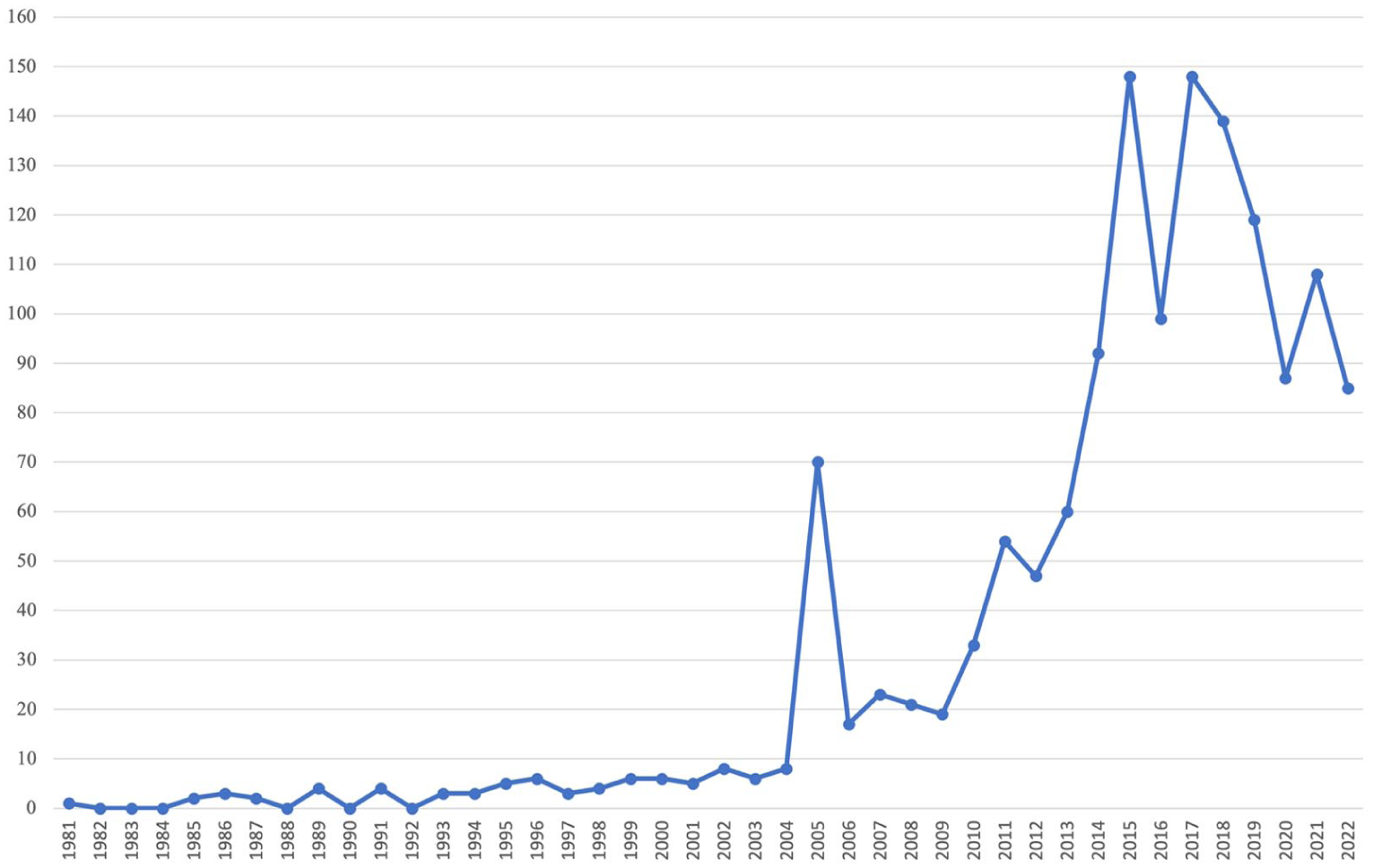
Number of articles per year (1981–2022).
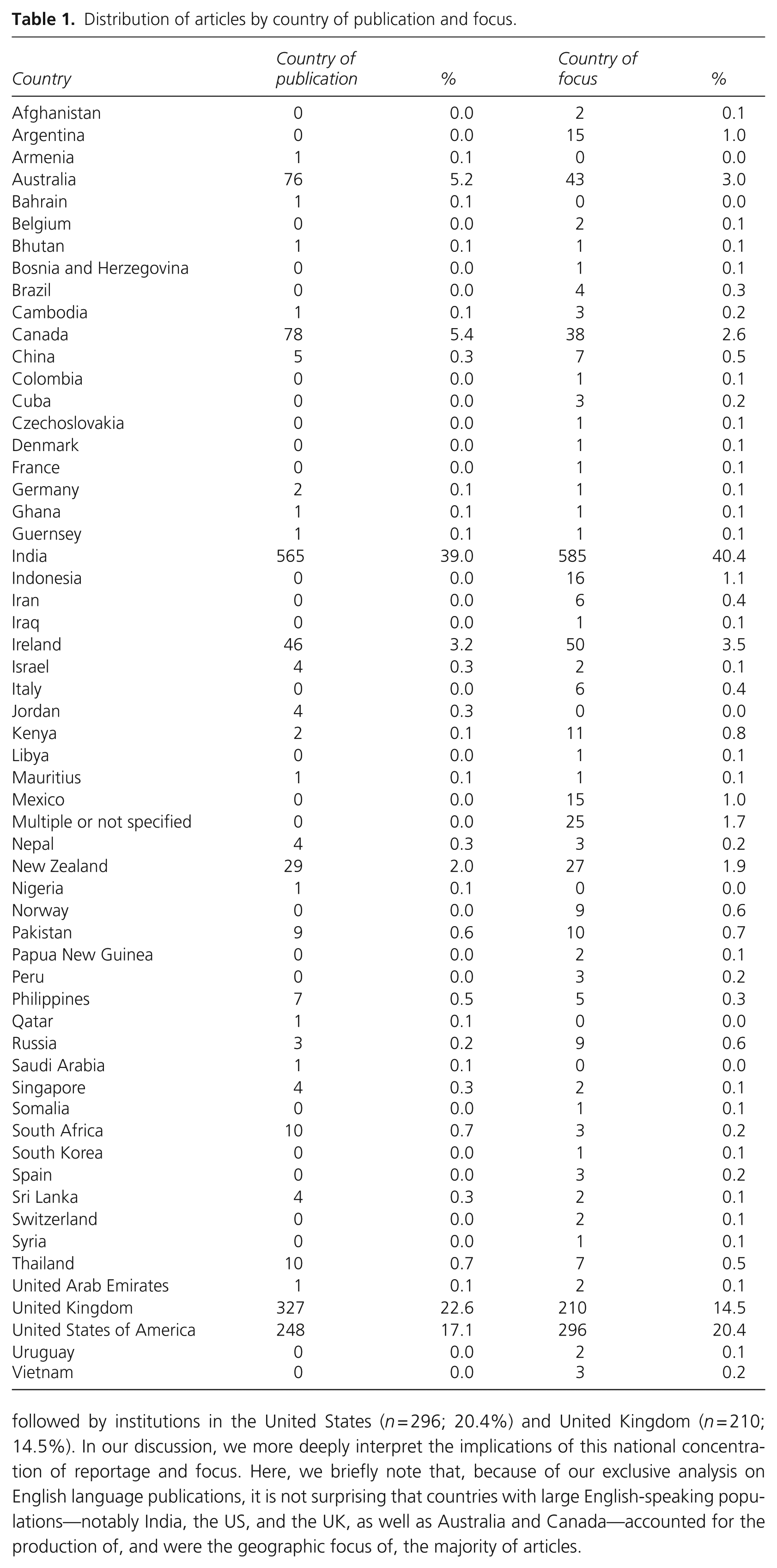
As shown in Table 1, articles originated from newspaper in 31 different countries; however, these publications were heavily clustered in a handful of countries: India (n = 565) accounted for 39.0% of all articles, followed by the United Kingdom (n = 327; 22.6%) and United States (n = 248; 17.1%). These three countries thus produced 78.7% of all articles in our sample. Within the full sample of articles, prison yoga was reported to occur in 52 different countries (see Table 1). Despite the greater number of countries reported upon, there was similar distribution of reportage on a small number of locations: Indian prisons were the focus of 40.4% (n = 585) of articles, followed by institutions in the United States (n = 296; 20.4%) and United Kingdom (n = 210; 14.5%). In our discussion, we more deeply interpret the implications of this national concentration of reportage and focus. Here, we briefly note that, because of our exclusive analysis on English language publications, it is not surprising that countries with large English-speaking populations—notably India, the US, and the UK, as well as Australia and Canada—accounted for the production of, and were the geographic focus of, the majority of articles.
Distribution of articles by country of publication and focus.
Yoga as part of daily life in Prison
A common theme in reporting on prison yoga was to mention it, often briefly, as part of a discussion of daily life in prisons—reportage that helps normalize, in popular discourse, yoga as an activity in the routine of many incarcerated persons. We identified mentions of yoga as part of daily prison routines in 220 articles (15.2%). A typical example is seen in an article in Indian Education News (2016: para. 4–5): “The inmates' day begins with a yoga session on the lush-green lawns of the prison complex. After their breakfast, the inmates attend their educational or vocational training classes at the jail school.” Quotations such as these position yoga as a regular part of prison life. They also, as in the case of this excerpt, may imply a rehabilitative component to prison yoga by positioning it alongside other activities associated with rehabilitation or therapeutic outcomes (e.g., education or employment training)—a theme we explore more deeply in the next section. Indeed, the theme of daily life frequently overlapped with other themes, such as a focus on incarcerated celebrities or other “notorious” criminals. For example, an article on Martha Stewart’s imprisonment mentioned yoga alongside a host of other activities the media star undertook on a regular basis: Stewart has spent her time behind bars foraging for wild edible greens such as dandelions, glazing a ceramic Nativity scene for her mom, teaching a nightly yoga class, crocheting toy opossums for her dogs, and reading “voraciously” (USA Today, 2005: para. 2).
Even more benign than the sources we coded as daily life, a large number of articles (n = 344; 23.8%) provided only a passing mention of prison yoga or presented it briefly in connection with other aspects of criminal justice or administration (coded as other mentions of prison yoga). For example, an account of an incident between staff and prisoners in an Indian Media News (2022: para. 22) article noted that this event occurred while a member of staff “was taking [the prisoners] from their cells for a yoga session in the morning.” In other cases, mentions of prison yoga were entirely tangential to the article’s focus. For example, a person featured in an article about Australian Rules Football in the Advertiser (Australia) was involved with a charitable foundation “in its 12th year of delivering yoga programs to Aboriginal communities, prisons, hospitals and victims of rape and domestic violence” (Cornes, 2020: para. 7). We coded these exceedingly brief mentions of prison yoga because, while seemingly mundane and insignificant, they collectively highlight that the practice is increasingly being mentioned in mainstream media and, thus, it may be becoming ubiquitous in public discourse about imprisonment.
Collectively, although not providing deep reporting of prison yoga, the articles using the daily life frame, as well as those that only provide a passing mention of yoga, point to yoga’s growing normalization within many prisons and in the broader public consciousness—an interpretation reinforced by the increasing amount of reportage on prison yoga we discussed in the previous section. That said, it is important to note that the availability of yoga programs in many jurisdictions does not mean all prisoners can or will choose to participate. While it is not apparent from our data, it is reasonable to assume that participation in yoga is, in most cases, an individual choice that some prisoners will opt not to make. Further, in some prisons, space in classes may be extremely limited and opportunities to participate may be restricted to those who are perceived by prison staff to exhibit “good” behavior (Norman, 2015). Finally, some prisoners may face barriers, such as physical or mental health conditions, that prevent them from taking part. Given the potential for yoga to provide meaningful health, social, and spiritual benefits to incarcerated people (e.g., Auty et al., 2017; Bartels et al., 2019; Godrej, 2022; Griera, 2017, 2020; Middleton et al., 2019; Muirhead and Fortune, 2016; Norman, 2015; Norman et al., 2021; Norman, 2019; Sfendla et al., 2018), it is vital to recognize and address such barriers. In the next section, we turn to how newspapers framed these potential rehabilitative benefits.
Yoga and Rehabilitation
Much of the academic literature on prison yoga can be broadly characterized as focusing on whether (and how) the practice can contribute to the rehabilitation of prisoners by facilitating behavioral change or individual transformation (e.g., Muirhead and Fortune, 2016; Sfendla et al., 2018). Interestingly, a significant number of articles in our sample (n = 574; 39.6%) mentioned or discussed yoga as having rehabilitative potential, broadly defined, in correctional settings. These articles had three primary, and sometimes overlapping, areas of focus: the mental health benefits of yoga, particularly as a means of coping with the challenges of daily life in prison; increasing the likelihood of successful reintegration and avoiding recidivism; and overcoming addiction. In many ways, therefore, the approach to rehabilitation presented in these articles echoes the “utilitarian. . .and risk reduction” approach that often characterizes contemporary correctional interventions (McNeill, 2012: 8).
Articles focused on yoga’s mental health benefits often presented the activity as a means for prisoners to cope with, or temporarily escape, the unpleasant impacts of incarceration. For example, an article on a yoga program in a prison in Argentina, published in the Nigerian publication The Nation (2018: para. 4), quoted a prisoner saying “[you] end up feeling relieved, relaxed. You feel free doing yoga; you leave the world for two hours.” An article in The Conversation (Cook-Cottone, 2017: para. 13), discussing a project that brings yoga into Kenyan schools and prisons, stated: The practice of yoga enabled [participants] to turn inward and focus on the present moment. It appeared to increase their sense of personal value, strengthen a sense of personal trust - as skills like attention and intention are developed - and brought the practitioners to a higher sense of purpose or contribution in his or her life.”
Such descriptions not only present yoga as an important way for prisoners to deal with challenging experiences of confinement, they also position the activity as a cure, or at least a “band-aid,” for the detrimental psychosocial impacts of incarceration. Building a “sense of personal value” might be understood as a contribution toward mitigating loss of individuality that occurs in a “total institution” (Goffman, 1961), while creating a “sense of purpose” might help combat the hopelessness that can characterize some experiences of incarceration (e.g., Palmer and Connelly, 2005). Other articles expressed similar sentiments, describing yoga as a tool “for coping with life’s difficulties” (Zuppa, 2018: para. 6) or a means to “cope with the frustration and anger of separation from loved ones and the powerful negative emotions connected with being in jail” (Dhillon, 2006: para. 4). Such statements speak to the way that some newspaper coverage positions yoga as an important way for incarcerated persons to mitigate the psychosocial distress caused by incarceration and, thus, to improve their mental health. However, little attention is directed to deep unpacking of the lived experiences of incarcerated yoga participants or whether the practice of yoga contributes to a more holistic and agentic view of rehabilitation (Maruna and LaBel, 2009; McNeill, 2006, 2012).
Another significant aspect is the focus on drug rehabilitation through yoga and meditation programs. While yoga is provided to a broad spectrum of incarcerated populations, newspaper coverage suggests that those with drug addictions are a particularly targeted group. An article in the UK’s The Evening Standard (2002) typifies such reportage: “jailed heroin addicts are being taught yoga and acupuncture as part of a new rehabilitation project. . .to help ‘de-stress’ them and wean them off their addiction” (para. 1–2). Some articles moved beyond basic description to suggest ways that yoga might help with counter drug addiction among prisoners, such as a piece in The Times (UK) which quoted a therapist who oversees a prison yoga program: “‘We are running a treatment program for prisoners to address their patterns of control, violence, addiction and psychosis,’ she explains. ‘We work at the root causes of violence’” (Roe, 1998, para. 6). By quoting a practitioner, who links yoga with deeper treatment for addiction, as well as other behaviors that might contribute to criminal activity, the article positions yoga as a potential solution to individualized causes of crime.
These discussions of yoga contributing to improved mental health or reduced substance misuse tied into broader assertions the practice as a tool for prisoners’ successful community reintegration. An article in the Ottawa Citizen (Canada) quoted the executive director of a prison reform organization as saying that yoga and meditation can help prisoner “become more self-aware and. . .control their anger. . .. It contributes to the successful reintegration of people” (Quan, 2013, para. 4). Similarly, an article in Indian publication The Hindu (2021), about a program which incorporated yoga and targeted young non-violent offenders in India, presented the imitative as offering prisoners “a focused holistic interventional program, in a conducive environment, to enable them to reintegrate into society and be its responsible members” (para. 3). Collectively, these articles focus on rehabilitation and post-incarceration reintegration and present yoga as a holistic tool for addressing these issues.
Sensationalized reportage: Yoga as a “Frill” and a focus on “notorious” prisoners
Much reportage on prison yoga focused on what we labeled sensationalized reporting, operating through one or both of two overlapping frames: the implicit or explicit framing of yoga as a “frill” or a “luxury” to which criminals should not be entitled (a coddling criminals frame); and a focus on individual prisoners—usually either celebrities (e.g., actors, athletes, etc.) or criminals whose cases attracted significant media attention—in which their yoga participation is implicitly linked with the notoriety of the individual (a notorious criminals frame). In our sample, 9.0% of articles (n = 131) framed yoga as a frill, while 28.2% (n = 408) focused on “notorious” prisoners. Accounting for the fact that some articles used both frames, we identified a total of 491 individual sources (33.9%) used sensationalized reporting in their discussion of prison yoga.
Articles using the coddling criminals frame often expressed disdain for prisoners’ well-being, in some cases representing them as irredeemable. Like other reporting that contributes toward penal populism, (Mason, 2006), some of these articles juxtaposed the “frivolous” activity of yoga with the anger and suffering of victims. For example, an article in the Australian Herald Sun stated: Prison inmates are being offered reiki massages, classes in Buddhist meditation and Siddha yoga to help their physical and spiritual healing. . .. Relatives of victims of violent crimes have said the programs are “disgusting” and “a joke”. Shirley and Allan Irwin, whose daughters Colleen and Laura were raped and killed in their Altona North home in 2006, said it was outrageous that programs like reiki or meditation were offered to prisoners. (Wright, 2012: para 1, 4–5).
While this quotation explicitly juxtaposes the experiences of victims with prisoners’ access to yoga and other rehabilitative services, other examples of framing of yoga as a “perk” or “frill” were more implicit. For example, a Sunday Times (UK) article about the possibility of banning smoking in British prisons sarcastically explained that in the US a federal appeal court has ordered prisons to set up non-smoking and smoking sections, so murderers and other criminals can breathe clean air in their confinement. . .. No doubt in California prisoners will soon be demanding organic porridge and yoga yards (Barwick, 1991: para 3–4).
Juxtaposing yoga with “organic porridge,” this article frames yoga as an excess or luxury sought out by pampered prisoners. Another UK article, an editorial in The Sunday Mercury (2004: para 1–2, 6–8), used yoga to argue that prisons’ primary function should be punishment, not rehabilitation: Being sent to prison for a long stretch used to be something called punishment. You may remember the concept. These days it seems that even our hardest prisoners are being given free yoga lessons so they can find inner peace. . .. This is a dangerous game. Any suggestion that crime pays, and is even rewarded after you are convicted, only serves to make the criminal career path more attractive. And where is the justice in free treats when law-abiding people cannot themselves afford life’s little luxuries? Rather than handing out rewards to criminals, they should be getting their just desserts.
As these quotations indicate, some newspaper coverage used yoga to make larger claims about the purpose of punishment, broadly, and prison programs, specifically. Here, the anonymous author argues that if prisoners are “coddled” they will fail to suffer the consequences of their crime. The author invokes the idea of less eligibility to frame yoga programs as one of “life’s little luxuries” that is financially out of reach for many “law-abiding people.”
Reportage of “notorious” prisoners was not always as explicit in critiquing yoga, but nonetheless contributed to a sensationalizing of prison yoga and an individualization of prison experiences. Reporting about specific celebrities tended to occur in a short period of time and be clustered in one or two countries. For example, when US celebrity Martha Stewart approached her release from a 5-month prison sentence in 2005, she revealed to media that she had practiced yoga during her sentence. Mention of Stewart’s yoga practice was then included in numerous articles in which her prison stint was discussed. The following excerpt from a USA Today article typifies much of this coverage: “Stewart is slimmer after prison, thanks to predawn exercise and yoga” (Thomas, 2005: para. 6). Coverage of Stewart’s prison yoga experience was most prominent in US, Canadian, and UK newspapers, but also attracted attention from press in Australia, China, and Ireland. Ultimately, our sample included 48 separate articles about Stewart, far more than any other individual. In these instances, yoga formed a key part of media narratives about Stewart’s time in prison.
In contrast to the global interest in Stewart’s prison stint, most “notorious” prisoners were discussed more locally. Emblematic here are Indian Bollywood star Rhea Chakraborty, who spent a month in pretrial detention in 2020 while being investigated about involvement in the suicide of actor Sushant Singh Rajput, and Irish paramilitary leader Michael McKevitt, who was imprisoned in 2003 on terrorism charges. Rhea found herself in the midst of a massive public outrage related to Rajput’s death. In this context, the articles (n = 11) that focused on Rhea—all from Indian sources—discussed how the actor used yoga to cope with the challenging conditions of her arrest and imprisonment. For example, an India Today Online (2020: para. 1) article stated that “Rhea’s lawyer Satish Maneshinde said that she took help of yoga to survive in jail.” Coverage of McKevitt (11 articles), meanwhile, abounded in media from Ireland and the UK (primarily Northern Ireland) in 2014, when the Real IRA leader sought early release from prison. Discussion of yoga was linked to McKevitt’s efforts to demonstrate suitability for release, such as in this article from The Irish Times: [McKevitt] claimed that he was entitled to one-third remission of his sentence for good behaviour and participation in activities designed to prepare him for release - including courses in French, creative writing, web design, yoga and home economics (Gartland, 2014: para. 4)
Other reportage was more explicitly sensational in nature, such as this headline from the Daily Mirror after McKevitt’s petition was denied: “TERROR BOSS TOLD: DO YOUR STRETCH; Yoga class not enough for McKevitt release” (O’Faolain, 2014). Ultimately, in celebrity or “notorious” cases such as Stewart, Rhea, and McKevitt, reporting on yoga participation was tied in with discussion, some of it sensationalized, about the individual’s experiences of incarceration. Some articles overlapped a focus with “notorious” prisoners with an outraged tone at the provision of yoga to imprisoned persons. For example, a Daily Star Online (UK) article began: “Pedophile ex-football coach Barry Bennell is in a cushy prison where inmates are offered yoga, acupuncture and trendy spinning workouts” (Dickinson, 2021: para. 1). Thus, even where yoga was merely mentioned as an activity available to prisoners, sensationalized reportage implicitly presented it as something about which its readers should be outraged.
Discussion
Our study not only shows increasing media interest in prison yoga in a diverse range of countries, but also highlights how a seemingly innocuous aspect of prison life can become politicized in competing media frames. The historical trends of newspaper reportage demonstrate a clear increase in the frequency with which yoga is discussed in the English language press, albeit dominated by sources from just three countries. Beyond the size of their media market, there are unique reasons that may explain why each of India, the US, and the UK occupy such a large share of the articles. Yoga is deeply ingrained in Indian culture, as India is both the historic home of premodern yoga practices and the nation from which modern postural yoga was developed and globally exported in the 19th Century (Shaw and Kaytaz, 2021). Additionally, yoga programs in Indian prisons have proliferated with support from high-profile politicians and, in 2022, an intervention by the national government to bring yoga and meditation into 75 prisons or jails across the country. This initiative, which was in honor of the 150th anniversary of Indian freedom fighter and yogi Sri Aurobindo, was directly endorsed by Prime Minister Narendra Modi (The Satsung Foundation, 2022). Meanwhile, the US is home to the world’s largest imprisoned population and has over 6000 prisons, jails, youth detention centers, and other correctional institutions (Sawyer and Wagner, 2024). Finally, the UK is home to one of the world’s first and most influential prison yoga and meditation organizations, the Prison Phoenix Trust, which was founded in 1988 and has been prominently supported by influential British citizens (The Prison Phoenix Trust, 2023). As such, the UK has a relatively established and publicly recognized set of prison yoga programs that have been operated for over three decades. The UK also has a large tabloid press that uses sensationalist reporting to both regularly discuss celebrity gossip commonly and, using penal populist frames, to criticize perceived “softness” on those charged with crimes (Mason, 2006; Pratt, 2007). Prison yoga, as we discuss, sits at the confluence of these two areas of focus, and these factors may help explain the UK’s prominence among countries of reportage.
The geographical nuances in reportage from these three countries can be observed in the contrasting use of the rehabilitation frame and sensationalized reportage (comprising the frames of coddling criminals and notorious criminals). Indian sources used the rehabilitation frame in 234 out of 565 articles (41.4%) and at least one of the two frames comprising sensationalized reportage in just 90 articles (15.9%). In UK newspapers, meanwhile, almost half (n = 159; 48.6%) of the 327 articles used sensationalized reportage to discuss prison yoga, while 132 (40.4%) focused on rehabilitative aspects. In the US, coverage was completely balanced between these two types of reportage: 91 out of 248 articles (36.7%) used the rehabilitation frame and the same number relied on sensationalized reporting. Interestingly, in the 308 articles from all other countries than these three, sensationalized reportage predominated (n = 151; 49.0%), trailed by the use of a rehabilitation frame (n = 117; 38.0%).
These disparities point to a complex interplay of cultural, social, and policy factors. India’s historical, cultural, and political connections to yoga facilitated, and suggest widespread acceptance of, its adoption as a rehabilitative tool in prisons. In contrast, the UK’s prolific tabloid press and tradition of penal populist journalism (Mason, 2006; Pratt, 2007) may account for its heavy focus on sensationalized reporting. Given its history of mass incarceration, one might expect American reportage of prison yoga to reflect a penal populist perspective. However, in reality, reportage was balanced—suggesting a willingness in the US press to engage in a nuanced range of discussion about prison yoga. Finally, the fact that nearly half of other newspaper articles relied on sensationalized reportage is notable; perhaps this focus has arisen from a popular interest in celebrities who are imprisoned (e.g., Martha Stewart) which crosses national borders. In all instances, the nuances between framing of prison yoga in different national media contexts deserves deeper scrutiny in future research.
We interpret the numerous mundane and passing mentions of prison yoga in articles focused on other topics as suggestive that the practice is increasingly seen as commonplace in many prisons globally. The articles situating yoga within the typical routines and activities of prison life also contribute to the popular understandings of yoga as a normal, even mundane, feature of correctional settings. Given that scholarly accounts of contemporary prison yoga programs and organizations place its emergence in the 1970s (Godrej, 2022), it is notable that this aspect of prison life has now become so widely discussed in mainstream media. However, while the descriptive findings and articles employing the daily life frame demonstrate a growing awareness of and interest in prison yoga, they tell us little about how newspaper coverage represents prison yoga.
The findings on the rehabilitation frame and sensationalized reportage reveal the primary ways in which newspapers frame prison yoga. Articles focused on rehabilitative aspects of yoga, such as its contribution to battling addiction or avoiding recidivism, present it as an inherently positive practice with benefits accruing to individual prisoners, as well as society more broadly (e.g., through reduced reoffending). While such reportage appears to represent a progressive approach to punishment and the treatment of those convicted of crimes, it generally fails to present the complexity of meanings—both beneficial and harmful—of yoga in prisons (e.g., Godrej, 2022; Norman, 2015). Such one-sided reporting, which often uncritically presented the viewpoints of those involved in the delivery of prison yoga (e.g., organizational staff or individual teachers), ignored the possibilities for rehabilitative programing to coerce criminalized persons into certain ways of acting or focus on individual transformation to the neglect of structural causes of criminal behavior (e.g., Godrej, 2022; Norman, 2017; Peacock, 2019). Indeed, there is a risk that progressive rhetoric about prisons may mask the inherently punitive nature of imprisonment as a solution to criminal action (Peacock, 2019).
Articles using the rehabilitation frame also present yoga as an inherently healthy activity for those who are incarcerated. Given the numerous physical, mental, and social health toll of incarceration (e.g., de Viggiani, 2007; Fazel and Baillargeon, 2011; Kouyoumdjian et al., 2016), there is a vital need to better understand and communicate about activities that might counteract these detrimental effects and offer prisoners holistic health benefits. Indeed, much academic literature indicates that, for some prisoners, yoga can indeed offer important health benefits and social experiences (Auty et al., 2017; Bartels et al., 2019; Muirhead and Fortune, 2016; Norman et al., 2021; Sfendla et al., 2018). However, by uncritically framing yoga as a healthy activity for prisoners, newspaper reportage risks reproducing discourses of healthism (Bailey et al., 2022). Much like reportage that focuses on individual rehabilitation without considering structural causes of criminalization, the uncritical promotion of yoga as a healthy activity for incarcerated persons suggests that achieving health (and, thus, demonstrating a moral commitment to self-improvement) is simply a matter of individual choice and commitment.
The sensationalized reportage of prison yoga, meanwhile, largely aligns with a penal populist view of prisons. Yoga was brought up, often briefly, in the context of impassioned and lurid discussions of individuals and the crimes for which they were convicted. The articles that used the coddling criminals frame expressed anger at yoga being provided to individuals seen as irredeemable and deserving of harsh punishment. These articles used yoga (alongside other supposed “frills”) as a signifier for much broader ideological arguments about criminal justice systems seen to be “soft” on criminals or uncaring about victims’ needs. Meanwhile, those articles that focused on notorious criminals situated yoga within popular narratives focused on the celebrity status or infamy of individual prisoners. In so doing, this reportage implicitly tied yoga to public outrage at the crimes of notorious prisoners or salacious interest in the lives of celebrities.
Collectively the articles relying on sensationalized reportage reflect the fact that many mass media have increasingly individualized how crime is reported, leading to the dehumanization and stigmatization of criminalized persons who are seen as “pathologically evil” (Reiner et al., 2003: 31). In this context, yoga is used in sensationalized reportage to further villainize those who are incarcerated and stoke public outrage at the living conditions of prisons. As Mason (2006: 251) argues, writing specifically about the British press, such media coverage not only stigmatizes prisoners but also deflects attention away from vital discussions about the problematic nature of modern imprisonment: “media representations of incarceration as an institution full of murderers, rapists and pedophiles precludes a long overdue debate about prison suicides, the erosion of prisoners’ rights and the rising number of women and children incarcerated.” The sensationalized reportage on prison yoga contributes to such dehumanization of criminalized persons and obscures questions about prison reform or wider social and political action to tackle the roots of crime. However, given critiques of penal populism earlier discussed, (Hamilton, 2023; Pratt and Miao, 2017; Silveira de Queirós Campos and Cesar Fabriz, 2024), it would be valuable for future researchers to consider if media discourses toward prison yoga vary in diverse cultural contexts or have changed with the rise of populism in many parts of the globe.
The critiques of the competing framing of yoga, as either a rehabilitative activity or a symbol of a “soft” penal system, highlight the need for further scholarly and popular analyses of yoga’s meanings and impacts in prisons. Despite the potentially problematic role of yoga in controlling prison populations (Godrej, 2022; Norman, 2015), the reality of prisons is that they are harmful and typically unhealthy spaces (de Viggiani, 2007; Fazel and Baillargeon, 2011; Kouyoumdjian et al., 2016) and, therefore, activities that improve the physical, mental, and social health of those who participate should be welcomed. Nonetheless, given the structural inequalities that contribute to both incarceration and poor health, yoga is unlikely to play as large a transformative role as some newspaper reportage simplistically implies. More nuanced reporting, coupled with a strong commitment to tackling social inequalities that contribute to both poor health and incarceration, could more effectively convey to a popular audience the potential and limitations of yoga as a meaningful practice in the lives of people who are incarcerated.
Conclusion
In the current article, we analyze how English-language newspapers report on prison yoga, using a sample of over 1400 articles published over a 43-year period. The volume of reportage, and its increase over time, suggests a growing public awareness of yoga as a regular part of daily life in many prison settings—an interpretation supported by the reportage using the daily life frame or simply providing brief mentions of yoga in the context of broader topics. As yoga is an activity popularly associated in western countries with physical and spiritual health, affluent consumerism, femininity, and whiteness (Strings et al., 2019; Webb et al., 2017), it is thus an easy signifier for media to employ, as it connotes particular assumptions about the meanings and values of the activity. Media using the rehabilitation frame draw from yoga’s associations with health and well-being to present it as an inherently positive activity, not only for individual prisoners but for society as a whole. Conversely, sensationalized reportage leverages the associations with affluence to critique the provision of yoga to prisoners and implicitly juxtapose the white feminized image of yoga with the notoriety of individual prisoners. Yoga thus becomes, in the context of criminal justice, a “floating signifier” “used by fundamentally different and in many ways deeply opposing political projects as a means of constructing political identities, conflicts and antagonisms” (Farkas and Schou, 2018: 300). We argue, therefore, that newspapers’ framing of yoga—whether as a tool for rehabilitation or a symbol for “soft” criminal justice systems—ultimately speak more to ideological debates about the purpose and form of punishment than about yoga itself. However, by discussing yoga through these relatively narrow and simplistic frames, the complexity and multiplicity of social meanings of prison yoga are obscured or ignored entirely. Through these analyses, we both deepen the literature on yoga in prisons and highlight how mass media can use seemingly minor or innocuous topics to make broader ideological claims to its audiences about crime and punishment.
Footnotes

Ethical Considerations
Ethical approval was not required.
Funding
The authors received no financial support for the research, authorship, and/or publication of this article.
Declaration of Conflicting Interests
The authors declared no potential conflicts of interest with respect to the research, authorship, and/or publication of this article.