



Abstract
Principal turnover undermines school improvement efforts, teacher retention, and educational equity, yet research on how psychological and physiological factors influence leadership practice and sustainability is limited. This study draws upon organizational stress theories to model how work-stress influences principals’ intentions to leave their positions through stress, mental health, and sleep. Using survey data from 188 public, noncharter school principals in Texas, US, a path analysis was conducted to examine direct and indirect pathways between work-stress and principals’ leave intentions. Results show that the majority of principals struggle with high work-stress, moderate anxiety and depression symptoms, and poor sleep quality. Further, principals’ anxiety, depression, sleep quality, and leadership self-efficacy were significant mediators between work-stress and leave intentions accounting for nearly 40% of the variance. Stress-induced anxiety was related to lower sleep quality and higher leave intentions, whereas stress-induced depression was related to lower sleep quality and leadership self-efficacy that then act as serial mediators of leave intentions. This finding underscores the unique paths through which mental health conditions operate. While causes of leadership ill-being are systemically rooted, findings from this study highlight stress, mental health, and sleep as malleable levers for change to support principals’ leadership self-efficacy and reduce turnover risk.
Introduction
School principals are critical actors for school improvement efforts which include developing a positive school climate, addressing inequities in student outcomes, and supporting the holistic needs of students, teachers, and communities (DeMatthews, 2018; Grissom et al., 2021; Leithwood, 2021). In addition to the substantial roles of teachers, assistant principals, support staff, and distributed leadership structures, principals play a significant role in student achievement; hiring, developing, coaching, and retaining teachers; shaping the working conditions for staff; and addressing societal inequities that become replicated within schools (Cherkowski, 2016; Khalifa et al., 2016; Leithwood, 2021). However, systemic stressors and organizational demands threaten leaders’ ability to sustain their roles, and undermine long-term school improvement plans (DeMatthews et al., 2021a; Mahfouz, 2020; Su-Keene and DeMatthews, 2022). Sustaining principals, especially in high-needs schools, is essential given the evidence that principal turnover has rippling effects, such as catalyzing teacher turnover rates (DeMatthews et al., 2021b). While policy debates often focus on recruitment, training, professional development, and evaluation in school leadership, far less attention has been paid to the psychological and physiological factors that determine whether principals stay or leave their positions. From a Maslownian perspective, without a deeper understanding of how stress and health-related factors mediate work demands, leadership practice, and sustainability, efforts to develop and sustain effective school leadership fall short. And while principals are not the sole drivers of school improvement, they play an important role in the broader constellation of actors whose personal and professional well-being contribute significantly to school climate, teacher capacity, and school policy and procedures (Fullan, 2016; Sebring et al., 2006).
Researchers have explored principal stress, mental and physical health, and well-being for decades with intensified attention during and after the COVID-19 pandemic (Chen et al., 2025; Doyle Fosco, 2022). While this present study does not examine pandemic-specific effects, COVID-19 was a historical catalyst that brought longstanding issues of stress and well-being among educational leaders into sharper public and scholarly focus, and it is important to note that postpandemic effects linger and continue to impact school systems and leaders (Okilwa et al., 2025). Recent studies have documented high levels of work-related stress, identified specific stressors, established direct relationships between stress and leadership efficacy, and documented how stress increases the risk of leadership turnover (Doyle Fosco et al., 2025; Mahfouz, 2020; Skaalvik, 2020). Additionally, studies have documented how chronic work-stress increases the risk of mental health conditions that typically manifest in the form of anxiety and depression symptoms (Carr, 1994; Doyle Fosco et al., 2025; Su-Keene et al., 2026). Notably, principals’ sleep quality, which operates as both a health behavior and a critical physiological factor for overall health, has been implicated as a significant factor affecting principals’ personal and professional well-being (Ray et al., 2020; Su-Keene et al., 2024, 2026). Among occupational health literature, poor sleep quality been linked to physical and psychological health ailments and directly tied to workplace productivity and job satisfaction (Jike et al., 2018; Kucharczyk et al., 2012). Further, sleep is sensitive to psychological effects such as stress and mental health symptoms, making principals a particularly susceptible population to poor sleep and negative health outcomes.
Though interdisciplinary literature on school leadership health and wellness is an emerging subfield, most studies examine outcomes in isolation. Few studies have examined the complex relationships between principals’ psychological state and intentions of leaving the profession. Further, there are no studies to date that have examined sleep quality as a potential mediator in this relationship, and therefore, a potential lever for change in leadership sustainability. The purpose of this quantitative paper is to examine the complex relationships between principals’ work-induced psychological symptoms (i.e., work-stress, anxiety, and depression), sleep quality, and occupational outcomes (i.e., leadership self-efficacy and leave intentions) through a path analysis in a large sample of Texas public school principals. I ask the following research questions: What are principals’ perceptions of work-stress, anxiety symptoms, depression symptoms, sleep quality, leadership self-efficacy, and intentions to leave? And, what direct and indirect relationships among these observed factors are associated with principals’ leave intentions?
This interdisciplinary study offers an examination of the impacts of work-induced psychological challenges and sleep quality, a biomarker of health, to examine the effects on principals’ perception of leadership capabilities and sustainability to highlight important well-being factors for school leader preparation, professional development, in-service interventions, and policy and procedural changes. In the following sections, I provide a literature review of work-stress and mental health, sleep in the principalship, and impacts on leadership self-efficacy. I then provide the hypothesized model drawing from occupational stress theories, the methods to test this model, and the statistical findings. I end with a discussion of the findings, implication for school leaders and educational systems, limitations of the study, and conclusions.
Work-stress and mental health in the principalship
Studies have documented extensive organizational stressors and job demands in the principalship (Doyle Fosco et al., 2025; Mahfouz, 2020). These include long hours, unanticipated daily challenges, high workload, and a heavy emotional responsibility for the welfare of the school community (Doyle Fosco et al., 2025; Taie and Goldring, 2020). Budget cuts, staff shortages, and a lack of human and material resources highlight how principals are doing a lot more with a lot less (Doyle Fosco et al., 2025; Mahfouz, 2020; Su-Keene et al., 2026). Further, high-stakes accountability systems and state-mandated tests put pressure on principals to ensure student academic success amid ongoing financial and human resources shortages (Gurr and Liu, 2025; Klar et al., 2025; Mitani, 2018). In the US and other countries, outputs from these metrics feed into local, state, and national narratives that have further fueled right-wing political agendas to privatize public education systems through increased school competition, charter schools, and voucher programs (DeMatthews et al., 2025; Ravitch, 2013). Using the job demands–resources (JD-R) framework, scholars have consistently shown that these high demands and insufficient resources result in increased stress that affect principals’ individual well-being and organizational stability (Ford et al., 2024; Skaalvik, 2023).
For decades, researchers have documented elevated stress in school administrators in the US (Gmelch and Swent, 1984; Steiner et al., 2022; West et al., 2014). Studies show that most principals experience frequent work-stress with a significant increase during COVID-19 where nearly 85% of principals experienced frequent work-related stress (Steiner et al., 2022). Further, work-stress is higher in principals than teachers and the general working population (Steiner et al., 2022). Literature also suggests that the burden of work disproportionately impacts principals based on attitudinal, personal demographic, and school demographic factors. Moral Santaella (2020) found that principals’ mindset and approach to their work influenced how they appraised stressful leadership problems, and that realistic, optimistic, and flexible professional identity orientations generated positive leadership practice. In other studies, researchers find that psychological challenges disproportionately impact principals along intersectional identities of race and gender. Principals of color, Hispanic principals, and female principals are disproportionately impacted by work-stress, mental health conditions, and occupational burnout from systemic patterns of marginalization and undue burdens (Darmody and Smyth, 2016; Doyle Fosco et al., 2025; Steiner et al., 2022). Likewise, early career principals are more likely to struggle with stress as they transition into a “reality shock” with task volume, unpredictability, and new responsibilities (Kilinç and Gümüş, 2021; Spillane and Lee, 2014). Lastly, principals working with greater proportions of disadvantaged students and in rural schools are at greater risk for work-related stress and mental health conditions (DeMatthews et al., 2023; Gamm et al., 2010; Mitani, 2018).
Work-stress is a subjective construct that depends on the interpretation of the individual, their available coping mechanisms and skills, and the environment in which they are situated (Lazarus and Folkman, 1984). Mental health conditions such as general anxiety disorder and major depression, on the other hand, are the consequences of unmanaged chronic stress (Carr, 1994). Though these conditions have a genetic component that increases individuals’ propensity for such conditions, work-stress, especially among principals, is a significant factor in the development of such conditions (Carr, 1994). Further, anxiety and depression are distinct mental health conditions. Anxiety is characterized by excessive worrying, restlessness, irritability, and dreading over something bad happening (Spitzer et al., 2006), whereas depression is characterized by reduced sense of joy, feelings of hopelessness, or unworthiness, and can result in cognitive changes that affect memory and mood (Kroenke et al., 2001).
Organizational stress theory highlights that these psychological conditions are mechanisms that link organizational demands to leadership outcomes through theories like job demands-resource imbalance and transactional stress theory (Bakker and Demerouti, 2007; Lazarus and Folkman, 1984). Work-stress increases principals’ risk for health ailments like cardiovascular disease, diabetes, and stroke, and mental health conditions like general anxiety disorder, major depression, and mood disorders (Su-Keene et al., 2024). Doyle Fosco et al., (2025) also found that stress creates spillover effects onto principals’ personal lives, affects their ability to manage workload, and impacts their emotional, physical, and mental well-being. Steiner et al. (2022) showed that more than one in four principals experienced depression symptoms coming out of the COVID-19 pandemic. Recently, colleagues and I documented elevated anxiety and depression symptoms during high work-stress contexts compared to minimal mental health symptoms during low work-stress contexts among a group of principals (Su-Keene et al., 2026). Additionally, we found that not all principals who experienced work-stress, experienced mental health symptoms demonstrating both a direct, and yet, distinct construct from work-stress.
Sleep quality in the principalship
Sleep is a physiological process essential for healthy development, cognition, memory, and overall quality of life. In a recent article that examined literature across health sciences, organizational psychology, and occupational health, I argued that sleep quality was a critical, yet underexplored factor in educational leadership given that sleep is both an antecedent and outcome of mental health, physical health, and occupational outcomes (Su-Keene et al., 2024). Sleep quality is characterized not only by duration, but also latency, awakenings, wake after sleep onset, and overall efficiency (Nelson et al., 2022). That is, the time taken to fall asleep, times spent awake at night, and the total sleep time contrasted to the time spent in bed are all important factors for overall sleep quality. Sleep disruption, even just a few days, can increase susceptibility to stress, pain, emotional distress, and impact cognition, memory, and daily functioning (Grandner, 2022; Medic et al. 2017). Long-term sleep disruption can affect other physiological processes that increase risk of cardiovascular disease, type II diabetes, metabolic issues, and certain types of cancers (Grandner, 2022; Medic et al., 2017; Roenneberg et al., 2022). As such, sleep quality is an important biomarker of overall health status especially when longitudinal studies in humans are not feasible.
Within occupational research, sleep quality is increasingly recognized as a resource that shapes leaders’ decision-making, emotional regulation, and ability to maintain positive relationships with staff (Guarana and Barnes, 2017). Sleep has been tied to employee job satisfaction, productivity, and absenteeism and plays an important role in leader–employee relationships (Guarana and Barnes, 2017; Kucharczyk et al., 2012). Likewise, evidence suggests that sleep quality and mental health operate in a reciprocal manner where changes in one affect the other making sleep an imperative factor when examining the relationship between psychological states and negative professional outcomes (Su-Keene et al., 2024).
For principals, sleep quality is an aspect of leadership well-being in need of further exploration. The intensity of stress from the principalship makes school leaders particularly susceptible to sleep disruptions which can have downstream health and organizational consequences especially when the immediate effects of even mild sleep disruption can impact mood and emotional regulation which are critical to leadership skills that promote positive, interpersonal relationships and decision-making (Oplatka, 2025; Wang, 2021). Sleep research in education has predominately focused on the relationship between sleep and student learning outcomes, and such findings have decisively influenced policies to shift school start times for adolescent youth (Owens et al., 2010). However, limited studies have examined sleep quality in school employees and even fewer in school leaders. Amschler and McKenzie (2010) conducted a study examining sleep habits, sleepiness, and sleep issues in a population of educators that included administrators. The study found that school employees experienced more sleep issues than the general population, and nearly a quarter of their participants experienced daytime sleepiness that impaired daily activities including the quality of education and leadership. However, this study included only 12 administrators, which was less than 1% of their participant population. A decade later, Ray et al. (2020) found, in a large group of school administrators, school leaders experienced sleep deprivation at a percentage greater than the national average. These findings prompted colleagues and I to conduct a small pilot study using objective sleep data from sleep actigraphy watches where we found evidence of reduced sleep quality, not duration, (i.e., more awakenings and time spent awake after falling asleep) during high work-stress contexts (Su-Keene et al., 2026). In another study, colleagues and I demonstrated that physical and mental health factors mediated the relationship between leadership demands and poor sleep quality among more than a thousand early childhood leaders (Ford et al., 2025). However, no studies to date have examined sleep quality as a meaningful predictor of occupational outcomes. Thus, this paper examines sleep quality as a potential mediator between work-stress and principals’ leave intentions to determine, in addition to mental health supports, whether sleep is a potential lever for supporting principals’ personal health and professional outcomes.
Leadership self-efficacy and attrition in relation to psychological health
Principals’ psychological health should be understood not only as an individual wellness issue, but as an organizationally consequential factor that shapes occupational outcomes like leadership self-efficacy and career sustainability. Self-efficacy is defined as an individuals’ perception of their capabilities in producing desired outcomes (Bandura, 1997), and for principals, “successful leadership involves using social influence processes to organize, direct, and motivate the actions of others” (McCormick, 2001: 28). Findings among empirical studies show that self-efficacy beliefs predict actual behavior (Hesbol, 2019; McBrayer et al., 2020), and “principals with a strong sense of self-efficacy have been found to be persistent in pursing their goals but are also more flexible and more willing to adapt strategies to meeting contextual conditions” (Tschannen-Moran and Gareis, 2004: 574). However, the construct of self-efficacy is highly sensitive to psychological and emotional states which situate principals’ self-efficacy in a delicate space given the stressful working conditions (Bandura, 1977; Skaalvik, 2020). For example, researchers find that burnout, specifically through emotional exhaustion, is a significant predictor of lower self-efficacy among principals in Norway and Turkey (Ozer, 2013; Skaalvik, 2020). Colleagues and I have also drawn descriptive and predictive links between high work-stress, mental health, and decreased perceptions of self-efficacy especially in principals’ perceptions of management abilities (Su-Keene et al., 2025; 2026).
The extant literature collectively shows that factors like poor psychological, physiological, and occupational well-being can affect principals’ job satisfaction and therefore, their desire to stay within a school (Chaplain, 2001; DeMatthews et al., 2021a; Marsh et al., 2023). Among nearly two thousand principals in Norway, Federici and Skaalvik (2012) found that lower self-efficacy predicted lower job satisfaction and higher motivations to quit. Later, Bauer and Silver (2018) confirmed self-efficacy as a strong predictor of leave intentions among principals in the southeast US. Then, Chen et al. (2023) found that principals’ well-being played a significant role in their work engagement and intentions to leave among Chinese principals across multiple phases in their research. While motivation to quit and leave intentions are similar, occupational psychology defines motivation to quit as a measurement of one's internal desires to quit which may not always be a consistent predictor of actual turnover (Vandenberg and Nelson, 1999). Intent to leave, on the other hand, involves cognitive and planning decisions such as “searching for another job” or “regretting their current organization” which are more consistent predictors of actual turnover (Mobley et al., 1978; Vandenberg and Nelson, 1999). Overall, literature in educational leadership suggests that principals’ psychological health impacts principals’ beliefs in their capability, job satisfaction, and desires and intent to leave their jobs prematurely or retire early. As such, principals’ overall health is a critical educational issue given that sustained leadership across multiple years is critical for making meaningful impact toward school improvement (Hargreaves and Fink, 2003; Lambert, 2007).
Current study
The purpose of this study is to test the complex relationships between principals’ perceptions of work-stress, mental health (i.e., anxiety and depression), sleep quality, leadership self-efficacy, and intentions to leave their positions (Figure 1). Based on extant literature, I propose that work-stress induces anxiety and depression symptoms that then have negative downstream effects on sleep quality, leadership self-efficacy, and leave intentions. Based on previous work, I also hypothesize that anxiety and depression directly predict sleep quality which impacts principals’ self-efficacy. This hypothesis is supported by other studies that note mental health and stress are antecedents of sleep quality which induce negative organizational outcomes such as absenteeism, lowered productivity, and lowered job satisfaction (Kucharczyk et al., 2012; Nelson et al., 2022). The proposed framework for this study draws upon theories and frameworks from educational leadership, occupational psychology, and health sciences including Ford et al.'s (2025) leader well-being framework, Bakker and Demerouti's (2007) JD-R theory, and Nelson et al.'s (2022) sleep quality framework. I expand upon the interconnectedness of the four components in the leader well-being framework (Ford et al., 2025) by using both anxiety and depression (rather than depression, alone), sleep quality as a biomarker for health, and self-efficacy as a potential mediator and mechanisms through which psychological and physical health operates. These measures function as demands and resources that impact occupational outcomes (Bakker and Demerouti, 2007). Lastly, sleep quality is proposed as a mediator that is susceptible to occupational demands and leads to occupational consequences (Nelson et al., 2022). The novelty of this study is not sleep quality per se, but sleep as a predictive, mediating, and meaningful lever in a well-being model to support and sustain school leaders in their positions.
Methods
Epistemological positioning
This study is grounded in a postpositivist paradigm, which assumes that psychological, physiological, and social phenomena such as work-stress, anxiety, depression, sleep quality, self-efficacy, and leave intentions can be partially measured and that probabilistic relationships among variables can be modeled to inform theoretical understanding. A path analysis approach aligns with this paradigm and best answers the study's research questions by estimating directional associations among constructs grounded in prior empirical research and theoretical understandings. I acknowledge that alternative paradigms (e.g., interpretivist or critical perspectives) can illuminate rich subjective meaning-making, identity construction, and contextual understandings that are beyond the scope of the current study to develop a fuller understanding of principals’ well-being and serves as a limitation to this study. That is, the aim of this study is not to claim objectivity or exhaustiveness, but to complement existing qualitative, mixed-methods, and arts-based scholarship with empirical modeling of psychological and physiological mechanisms of principals personal and professional well-being.
Participants and measures
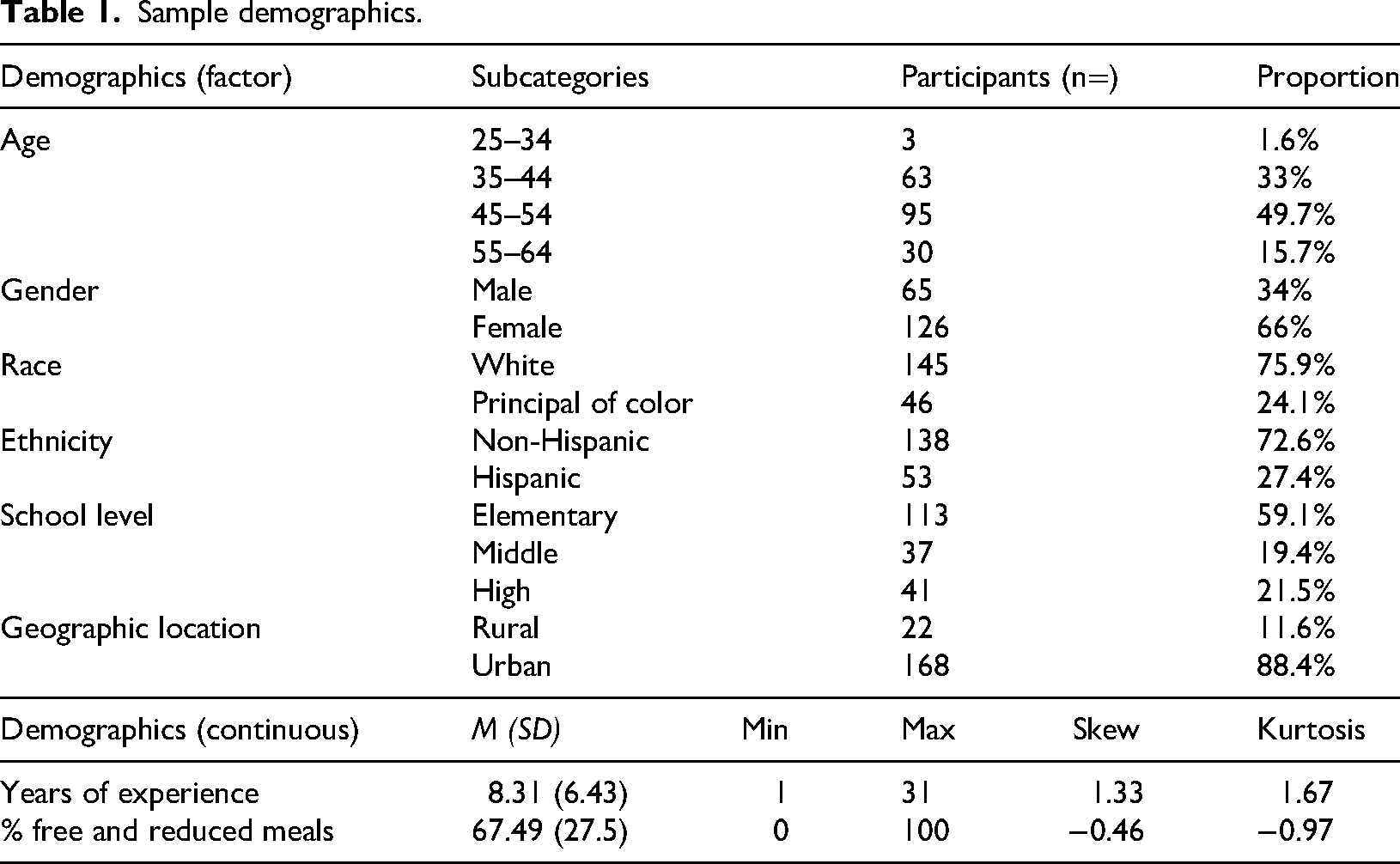
Public, non-charter school principals in Texas, US were recruited to participate in a survey between March–May 2024 and March–May 2025 to control for variations in sleep quality due to circadian rhythm changes from seasonality (Su-Keene et al., 2024). Participants were recruited through professional networks, individual emails, and word-of-mouth. Cold-call emails were sent to an equal representation of principals from urban, suburban, and rural areas. As such, the data represents a convenience sample. A total of 191 principals across Texas participated in the survey reflecting a 2% response rate. While the response rate is low, we confirmed our sample with recent demographic data trends on Texas principals which reflect a population comprising of 68% female and 32% male principals and 56% white and 44% principals of color (Dematthews et al., 2024). This study's sample is generally reflective of the state's gender demographics but comprises less principals of color (24% compared to 44%) which is a study limitation. Additional details on participant demographics can be found in Table 1.
Sample demographics.
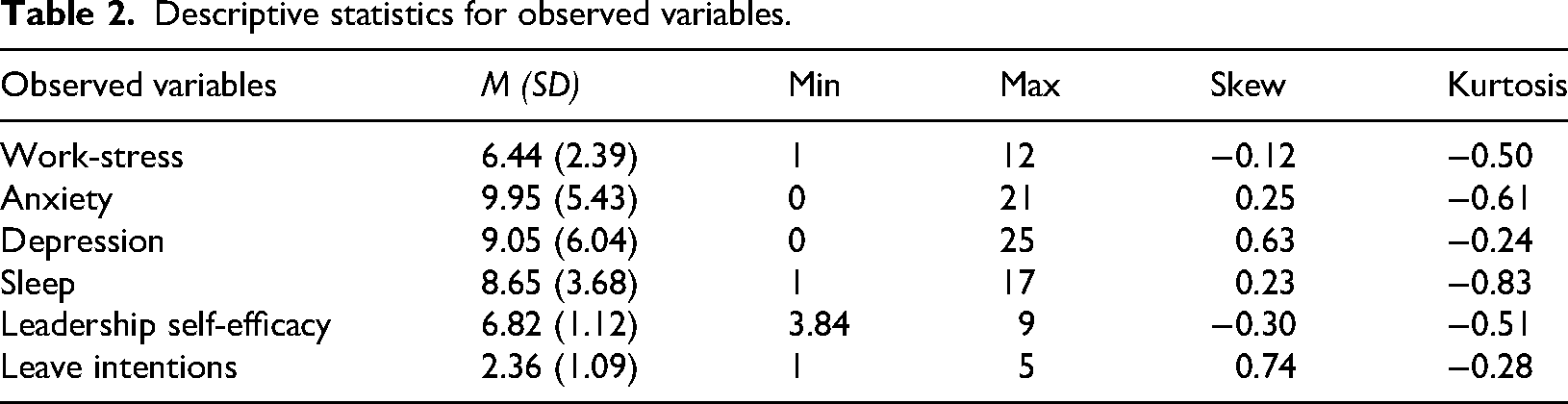
Descriptive statistics for observed variables.
The survey included personal (e.g., age, gender, race, ethnicity, and years of experience) and school demographic questions (e.g., % free and reduced meals, geography, and school level) and validated scales that assessed principals’ perceptions of stress at work (perceptions of stress-4, [PSS-4]; Cohen et al., 1994), anxiety symptoms (general anxiety disorder-7, [GAD-7]; Spitzer et al., 2006), depression symptoms (personal health questionaire-9, [PHQ-9]; Kroenke et al., 2001), sleep quality (Pittsburgh sleep quality index, [PSQI]; Buysse et al., 1989), leadership self-efficacy (Tschannen-Moran and Gareis, 2004), and leave intentions (Mobley et al., 1978). After cleaning the data, removing duplicates, and accounting for missing data, the analytic sample consisted of 188 school principals. McDonald's omega was used to estimate internal consistency to provide a more accurate reliability when they may differ in factor loading, reflect multiple related dimensions, and are appropriate for structural equation model (SEM) frameworks (Hayes and Coutts, 2020). The measures demonstrated acceptable to excellent reliability for each observed variable: work-stress (ω = 0.75), anxiety (ω = 0.91), depression (ω = 0.88), sleep (ω = 0.71), leadership self-efficacy (ω = 0.94), and leave intentions (ω = 0.82).
Data analysis
Descriptive statistical analyses were performed on all observed variables to understand the current perceptions of work-stress, anxiety and depression symptoms, sleep quality, leadership self-efficacy, and leave intentions among principals. Prior to estimating the path analysis model, I evaluated statistical assumptions including multivariate normality, linearity, multicollinearity issues, and missing data. Skewness and kurtosis values for all observed variables fell within the acceptable range (skew <+/-2, kurtosis <+/-7). Linearity was confirmed through bivariate scatterplots, and absence of multicollinearity was verified with variance inflation factors (<5) and tolerance statistics (>.20). Missing data were examined for patterns and were missing at random allowing for full-information maximum likelihood (FIML) estimation. Model fit was evaluated using standard indices (comparative fit index [CFI], Tucker–Lewis index [TLI], root-mean-square error of approximation [RMSEA], and standardized root mean square residual [SRMR]) with conventional cutoffs.
A path analysis was conducted to examine the complex relationships among the observed variables—work-stress, anxiety, depression, sleep quality, leadership self-efficacy, and leave intentions—and to determine the direct and indirect effects of work-stress on principals’ leave intentions. Each questionnaire was scored according to its original published guidelines, and no items were combined across instruments. Composite scores for work-stress, anxiety, depression, sleep quality, leadership self-efficacy, and leave intentions were treated as separate observed variables in the path analysis. Path analysis is an appropriate method for examining theoretically derived directional relationships among observed composite variables (Kline, 2016). Given the modest sample size of 188 school principals, a path analysis was conducted over a full SEM to maintain statistical power with researchers noting the appropriateness of the sample size for six observed variables and eight demographic factors as potential covariances (Wolf et al., 2013). Using a path analysis instead of a full or even parceled SEM allowed for the development of a parsimonious model while maintaining statistical power within the sample size constraint. Sample size adequacy follows guidelines for structural modeling with observed variables (Wolf et al., 2013). As noted by methodologists, a general rule of thumb of 5–10 observations per estimated parameter has been suggested (Bentler and Chou, 1987; Kline, 2016). However, studies to date have shown that high ratios of observations to estimated parameters have been minimally supported with others problematizing large sample sizes in justifying the validity of SEM analyses (Jackson, 2003; Wolf et al., 2013). Jackson (2003) noted “the general advice of basing sample size on some minimum value, ensuring indicators are carefully chosen and reliable, and ensuring there are an adequate number of indicators per latent variable seemingly provide more supportable guidelines for sample size than N:q [observation to parameter ratio]” (p. 139). Directional paths reflect theoretically specified relationships grounded in prior research; however, given the cross-sectional nature of the data, findings should be interpreted as evidence of association rather than causation.
All statistical analyses were conducted in RStudio using R version 4.5.1. Path analysis modeling was performed using the lavaan package for SEM. FIML estimation was used to handle missing data, which is considered robust under missing-at-random conditions (Enders, 2010). Additional descriptive and psychometric analyses were conducted using psych and MVN package for multivariate normality testing. Model fit was evaluated using recommended indices and thresholds (Hu and Bentler, 1999). Once a good model with only significant relationships was developed among the six observed variables, demographic factors that were empirically supported by literature were added individually, and then systematically to determine the significance and model fit. For example, age is an empirically and theoretically supported factor in sleep quality and was added as a covariate (Ancoli-Israel, 2005). Another example includes race and gender which have been implicated in principals’ work-stress and depression (Steiner et al., 2022). Only covariates that were significant remained in the model unless strongly implicated in laboratory or empirical studies.
Results
To answer “What are principals’ perceptions of work-stress, anxiety and depression symptoms, sleep quality, leadership self-efficacy, and intentions to leave?” I conducted descriptive statistics on the six observed variables: work-stress, anxiety, depression, sleep quality, leadership self-efficacy, and leave intentions (Table 2). Principals scored an average of 6.44 (SD = 2.39) on the perceived work-stress scale, 9.96 (SD = 5.43) on anxiety symptoms, 9.06 (SD = 6.04) on depression symptoms, 8.65 (SD = 3.68) on the sleep quality questionnaire, 6.82 (SD = 1.12) on the leadership self-efficacy scale, and 2.36 (SD = 1.09) on intentions to leave. Interpretations of these scores, based on respective seminal articles, show that principals are experiencing high-levels of work-stress (scores >6), struggling with moderate levels of anxiety and depression symptoms (>9), experiencing poor sleep quality likely with daytime fatigue (>5 = poor sleep quality, >8 = poor sleep quality and daytime fatigue), moderately high perceptions of self-efficacy (Likert score out of 9), and are considering leaving their positions (Likert score out of 5). Out of the 188 principals surveyed, 71.7% of principals experienced high levels of work-stress. In terms of mental health, 50.3% and 40.3% of principals are experiencing moderate-to-severe anxiety and depression symptoms, respectively, which indicate a need for professional treatment, counseling, and possibly medication (Kroenke et al., 2001; Spitzer et al., 2006). Further, 87.4% of principals experience disrupted sleep quality and 55%, of principals are struggling with severe disruption of sleep, likely affecting their daytime functioning. Overall, these descriptive findings suggest that most principals in the sample are experiencing high levels of stress, moderate-to-severe anxiety and depression symptoms, and poor sleep quality which have organizational implications for leadership sustainability.
Path analysis
To answer “What direct and indirect relationships are significantly associated with principals’ leave intentions?” I conducted a path analysis which demonstrated an excellent fit to the data. The final model was overidentified (df = 22), which allowed for testing of model fit. The chi-square test was nonsignificant, χ2(22) = 21.90, p = .466, suggesting that the model did not significantly deviate from the observed data. Additional fit indices also showed good model fit: the CFI was 1.00, the TLI was 1.00, the RMSEA was 0.00 with a 90% confidence interval ranging from 0.000 to 0.060, and close-fit test of 0.88 supporting a close fit. The SRMR was 0.03 and well below the 0.08 criterion. Collectively, these indices provide strong evidence for the adequacy of the conceptual model, that it did not significantly differ from the observed data, and that the model fits well across multiple indices. That is, the conceptual model specifying the relationship between work-stress, anxiety, depression, and sleep quality as factors of leadership self-efficacy and leave intentions is well supported by the data.
Direct effects
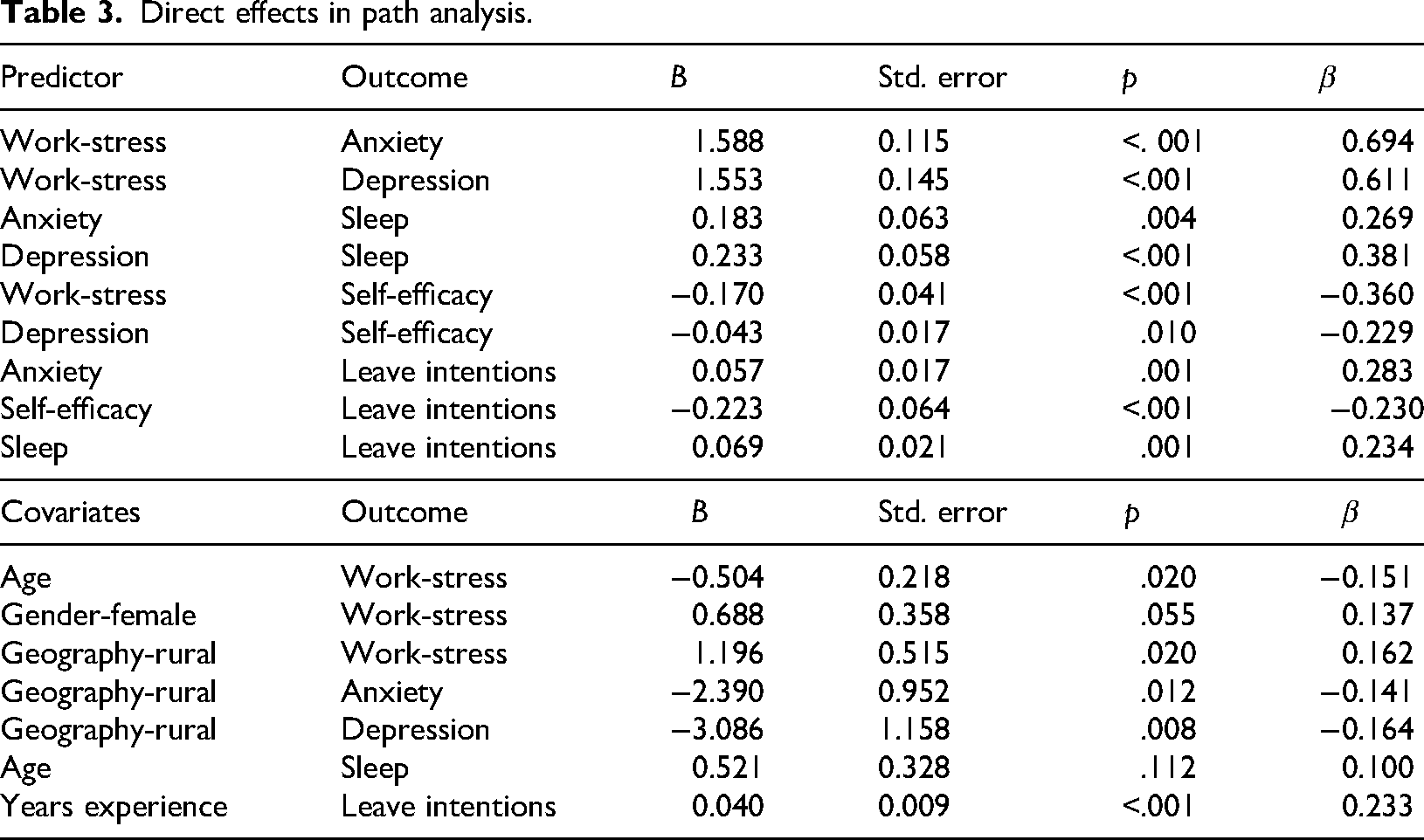
Several direct effects were supported in the model (Table 3). Principals’ work-stress is significantly associated with greater anxiety (β = 0.694, p < .001) and depression symptoms (β = 0.611, p < .001) and lower leadership self-efficacy (β = −0.360, p < .001). In turn, anxiety and depression are associated with poorer sleep quality (β = 0.269, p = .004 and β = 0.381, p < .001, respectively). Interestingly, only depression is associated with lower leadership self-efficacy (β = –0.229, p = .010), whereas only anxiety is directly associated with higher leave intentions (β = 0.283, p = .001). Both poor sleep quality (β = 0.234, p = .001) and lower leadership self-efficacy (β = –0.230, p < .001) were associated with higher leave intentions. Anxiety and depression were allowed to covary (r = .72, p < .001) but are not depicted as a directional effect. There were no direct effects of sleep quality on leadership self-efficacy.
Direct effects in path analysis.
Indirect effects in path analysis.
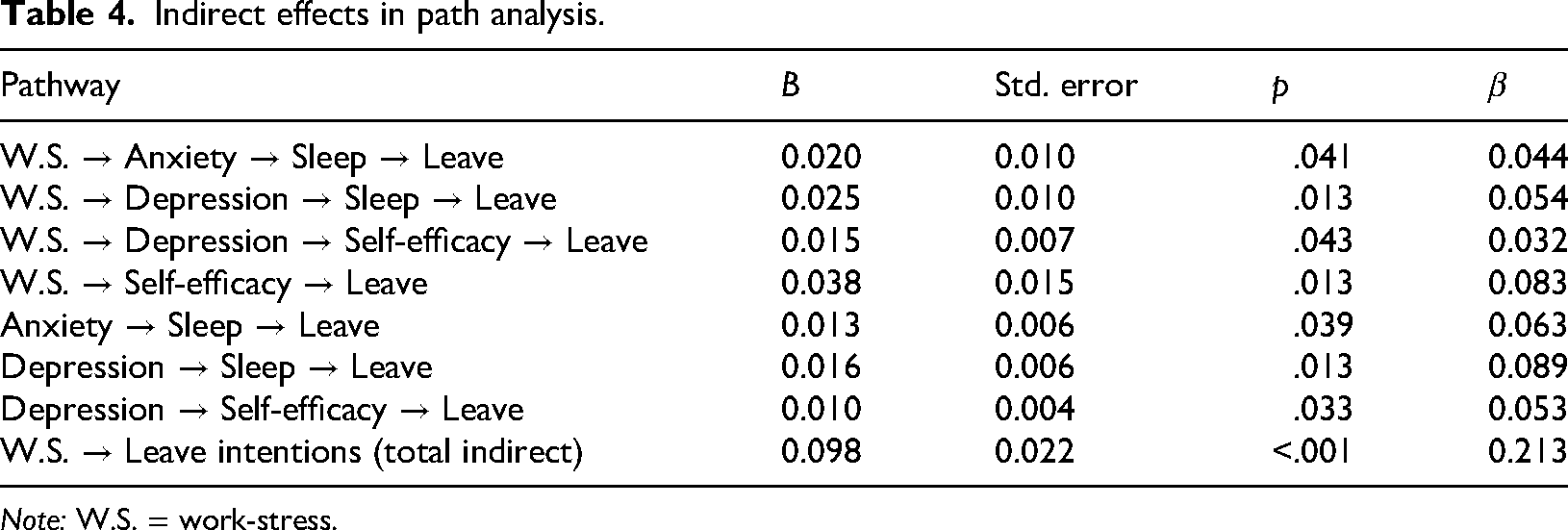
Note: W.S. = work-stress.
Only some demographic factors were identified as significant covariates of the observed variables (Table 3). Principals’ age is negatively associated with work-stress suggesting that younger principals experience greater work-stress (β = –0.151, p = .020). Like literature suggests, age is positively associated with sleep quality, where aging is associated with poorer sleep quality, though this was not a significant relationship in the data (β = 0.100, p = .112). Similarly, being a female principal is associated with higher work-stress and this relationship approached significance (β = 0.137, p = .055). Geographic location played an interesting role. While urban and suburban principals are associated with greater work-stress (β = 0.162, p = .020), only principals in rural contexts are associated with higher anxiety (β = −0.141, p = .012) and depression symptoms (β = −0.164, p = .008). Principals of color was a significant covariate of work-stress but became insignificant when geographic location was added. Lastly, more years of experience is linked with higher leave intentions (β = 0.233, p < .001).
Indirect effects
In addition to direct effects, several significant indirect pathways were also discovered in the model (Table 4, Figure 2). Anxiety and depression served as two distinct parallel mediators of the relationship between work-stress and leave intentions and operate with sleep quality in a serial mediation (W.S. → Anxiety → Sleep → Leave: β = 0.044, p = .041, and W.S. → Depression → Sleep → Leave: β = 0.054, p = .013). Leadership self-efficacy is a mediator with and without depression, as a serial mediator, between work-stress and leave intentions (W.S. → Self-efficacy → Leave: β = 0.083, p = .013, and W.S. → Depression → Self-efficacy → Leave: β = 0.043, p = .032). Additionally, leadership self-efficacy is a significant mediator of depression and leave intentions (Depression → Self-efficacy → Leave: β = 0.053, p = .033). Sleep quality is a significant mediator of both anxiety and depression symptoms and leave intentions (Anxiety → Sleep → Leave: β = 0.063, p = .039, and Depression → Sleep → Leave: β = 0.089, p = .013). The total indirect effects between work-stress and leave intentions was strong and significant (β = 0.213, p < .001). Together, these indirect effects suggest that psychological health partially mediates the impact of work-stress on sleep and perceptions of self-efficacy, both of which contribute to principals’ intentions of leaving their positions. This finding highlights the unique connections between health-related factors and principals’ confidence in their ability to lead that ultimately drives turnover risk (Figure 2).
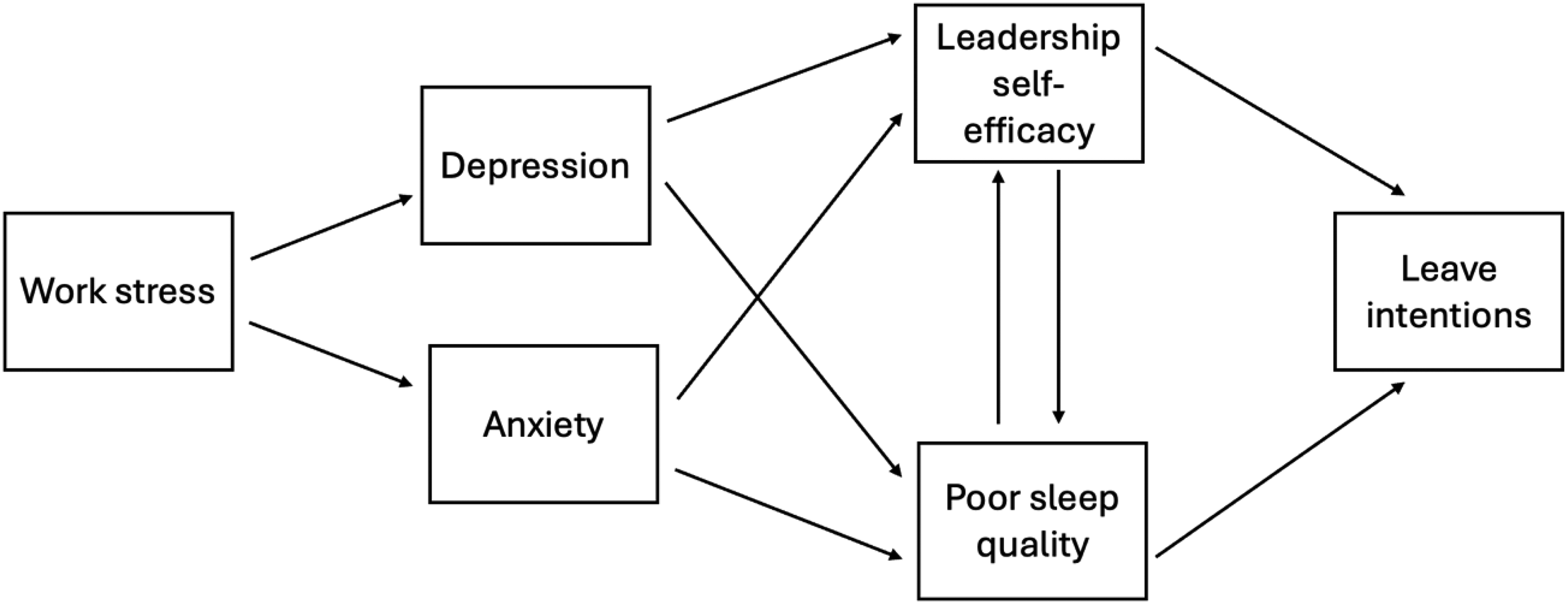
Hypothesized model.
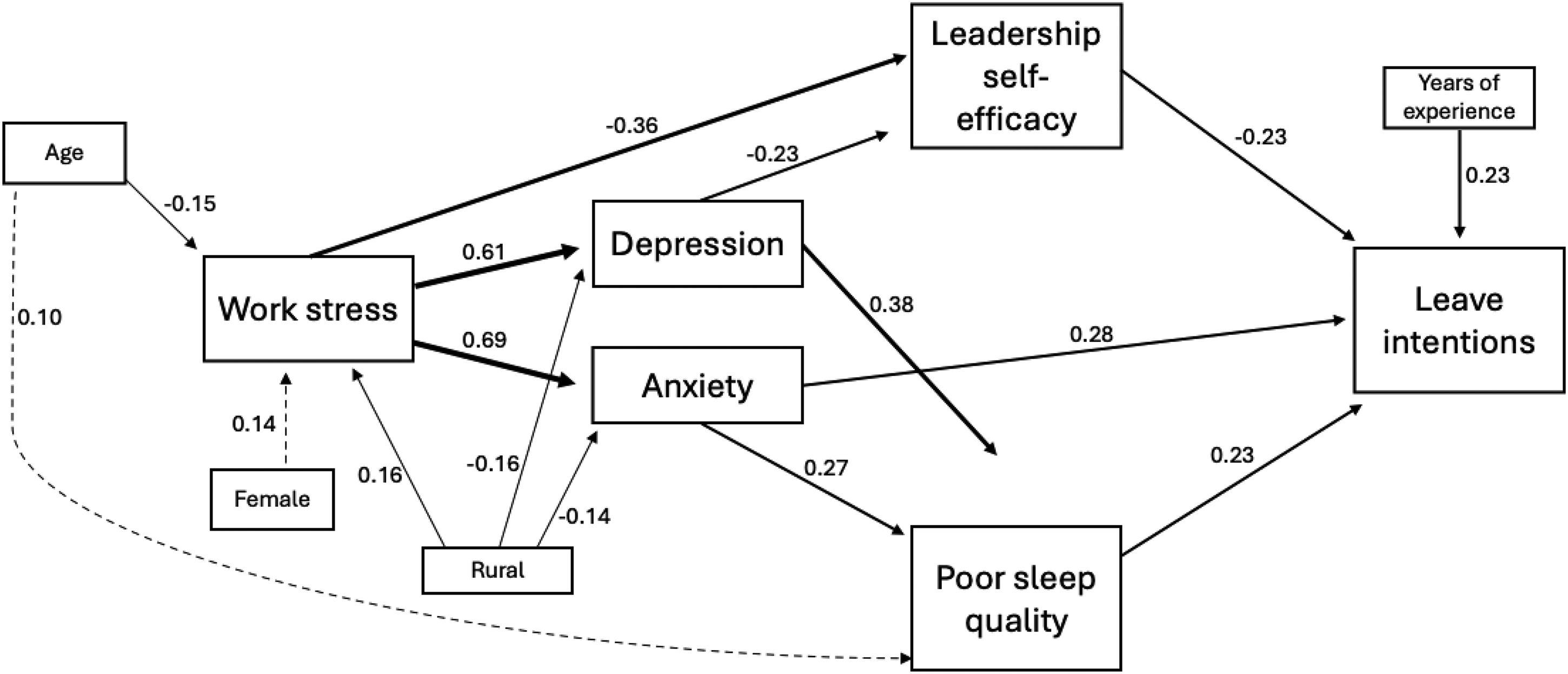
Path analysis of conceptual model.
Variance (R2)
The variance values highlight strong explanatory power for several variables in this model. Work-stress and rurality explain 46.4% of the variance in principals’ anxiety and 36.2% of the variance in depression symptoms which suggests that work stress is a major source of mental health outcomes beyond demographic factors. Anxiety, depression, and age explain 39.5% of the variance in principals’ sleep quality. Leadership self-efficacy was moderately explained (27.8% of the variance) by work-stress and depression symptoms. Lastly, principals’ leave intentions were strongly explained by the model (39.5% of the variance), which include years of experience, anxiety, sleep, and leadership self-efficacy. Overall, these R2 values suggest substantial, strong effects, especially for anxiety, depression, sleep quality, and intentions to leave based on social science standards.
Discussion
This study contributes to the field of educational leadership by extending organizational theories of leadership sustainability to include psychological and physiological mechanisms (anxiety, depression, and sleep quality) and is one of the first to demonstrate direct and indirect impacts of health-related factors on principals’ intentions to leave. The study empirically links work-stress to psychological, physiological, and professional well-being within one integrated model, extending prior studies that examine these domains separately (Hansen, 2018; Mahfouz, 2020; Ray et al., 2020). It is the first to test sleep quality as a mediating biomarker of school leadership sustainability, adding a physiological and health dimension to the literature on leadership self-efficacy, retention, and turnover. Noted earlier, colleagues and I established the importance of sleep quality in early childhood leaders and the direct effects from physical and psychological ill-being generated by work demands (Ford et al., 2025). This study extends that knowledge base by not only demonstrating similar trends in K-12 public school principals, but importantly, the direct effects of poor sleep quality on principals’ self-efficacy and turnover intentions. The path analysis provides empirical support for a cascading effect where work-stress contributes to anxiety and depression symptoms, which in turn compromises sleep quality and leadership self-efficacy, and is linked with greater leave intentions. These findings align with existing research in educational leadership that have qualitatively and quantitatively examined the relationships between workplace stress and personal and professional outcomes. However, this study expands prior understandings by highlighting how stress-related consequences (e.g., anxiety and depression) operate with sleep quality and leadership self-efficacy to explain principals’ risk of turning over.
In this study, most principals surveyed experienced high work-stress, poor mental health, and disrupted sleep quality. Interestingly, anxiety and depression operated as independent predictors of different occupational outcomes. Depression was a significant predictor of lower leadership self-efficacy, whereas anxiety was a significant predictor of higher leave intentions. As noted earlier, depression and anxiety are symptomatically different conditions that may have disproportionate impacts on leadership outcomes. For example, depression symptoms such as feelings of worthlessness or diminished happiness can impact the relational aspects of leadership self-efficacy more so than anxiety. Similarly, symptoms of anxiety such as excessive worrying or the fear of something bad happening may encourage principals to change schools, switch professions, or retire early. Further, both mental health conditions were associated with poorer sleep quality, which, in turn, is a strong direct predictor of principals leave intentions, supporting our previous work on sleep in school leadership (Su-Keene et al., 2024, 2026). However, unlike our previous work, this study shows no evidence of sleep quality affecting leaders’ self-efficacy. These findings underscore the relevance of psychological health and sleep quality as potentially malleable levers in supporting principals’ leadership practice and sustainability.
The inclusion of demographic covariates in the study also adds nuance to how work-stress is distributed across the principal workforce. The model highlights how younger principals, female principals, and those working in urban schools experience greater work-stress which have downstream effects on leave intentions. This is consistent with prior research. Researchers have documented higher stress and occupational burnout in novice school principals (DeMatthews et al., 2023). Similarly, there are intersections with principals in urban contexts (Washington, 1982) and women in educational leadership (Mahfouz, 2020; Riley et al., 2021). Some of these studies demonstrate how gendered expectations, emotional labor, visibility within school communities, and other forms of marginalization contribute to disproportionate stress burdens (e.g., Mahfouz, 2020; Riley et al., 2021). These gendered dynamics warrant further examination especially as it pertains to prosocial dispositions and attitudinal traits. Further, the findings shows that principals leading in rural areas are more susceptible to mental health symptoms also warrants further exploration. The elevated mental health symptoms among rural principals may reflect the persistent structural disadvantages and persistent economic divestment of rural communities that result in challenges for schools, communities, and access to professional mental health services (DeMatthews et al., 2023; Gamm et al., 2010). These conditions position many rural schools as disadvantaged contexts for leaders which can induce additional work-related stressors. These patterns suggest that organizational demands and resource constraints are unevenly distributed across contexts, producing inequity in leadership sustainability. That is, stress and its downstream consequences may disproportionately impact female leaders, younger leaders, and those serving in rural contexts. While studies have cited disproportionate impacts of work-stress and mental health in principals of color (Steiner et al., 2022), I did not find evidence of this in the data. Being a principal of color was a marginally significant predictor of work-stress, but any potential significance disappeared when urbanicity was introduced suggesting that urban and suburban schools, which were positively correlated to principals of color, were a stronger predictor of work-stress than principals’ racial identity. These findings should be taken with caution since principals racial demographics in the sample did not match that of the state. Lastly, principals with more years of experience are at greater risk for leaving the position which needs further examination to determine whether this is due to a desire to move schools, change leadership positions, or early retirement. While age and experience are correlated, these factors differentially relate to stress and leave intentions.
While material and structural stressors are well-documented, attitudinal and identity-based processes also shape how principals interpret and respond to work demands and stressors. Research on professional leadership identity has shown that attitudinal traits such as optimistic, agentic, problem-solving, and other mindset orientations may buffer the numerous challenges of the principalship (Moral Santaella, 2020). These perspectives align with findings in this study that link mental health to leadership self-efficacy, specifically demonstrating how psychological stress may limit the very attitudes, like confidence, that help leaders navigate work adversity and challenges. Thus, the implications of this study extend beyond material supports to include the cultivation of reflective, identity-affirming attitudes in preparation programs and professional learning.
The model explains a substantial proportion of variance in key variables, particularly in anxiety symptoms, depression symptoms, sleep quality, and leave intentions, strengthening the study's theoretical and practical implications. The field of educational leadership has extensively (re)conceptualized effective school leadership from management, instructional, and moral perspectives; however, few studies have modeled the organizational costs of stress-related consequences on leadership practice and sustainability. Future research will need to mitigate work-stress, address mental health, and create health supports from both individualistic and systemic perspectives. Future research should further theorize and test how organizational contexts affect the distribution of stress and resources across leaders. From an intervention standpoint, the findings from this study highlight the importance of targeting principals’ mental health and sleep quality, as well as reinforcing self-efficacy, to help retain school leaders and reduce turnover.
Implications
Given that a substantial proportion of principals in this sample reported high stress, poor mental health, and poor sleep quality as key factors of leave intentions, interventions supporting psychological distress and sleep are particularly relevant. I end with strategies and recommendations derived directly from the pathways identified in the model to reduce principals’ intentions of leaving the profession.
Principals’ overall well-being is not just a personal issue, but a critical organizational issue that demands the urgent attention of scholars, practitioners, and policy makers.
Study limitations
Although the path analysis revealed several significant direct and indirect relationships among work-stress, anxiety, depression, sleep quality, leadership self-efficacy, and leave intentions, several limitations need to be acknowledged. The analysis is based on cross-sectional data
Conclusion
Although prior studies have examined principal stress and mental health, these investigations typically focus on one of two outcomes in isolation. This study extends this literature base by testing a more holistic theoretical model that links stress with anxiety, depression, sleep quality, leadership self-efficacy, and leave intentions. By expanding ways in which psychological and physiological factors connect with leadership self-efficacy and turnover risk, this study offers a more complex picture of how stress-related mechanisms erode principals’ practice and sustainability in their jobs. This study contributes to the broader, ongoing discussion in educational leadership regarding the sustainability of school leadership amid increasingly complex contexts, the personal and professional impacts of stress and demands of the job, and the levers linking organizational demands to school leaders’ overall well-being. Grounding the findings in occupational stress theories and holistic well-being frameworks (Bakker and Demerouti, 2007; Ford et al., 2024; Nelson et al., 2022), I show that principals’ overall mental health and sleep quality are not peripheral concerns but core factors that shape principals' confidence in leading and willingness to stay in their positions. As such, the study highlights a need for targeted principal development, overall health supports, structural reform, policy changes, and an adaptation of leadership preparation curricula that cultivate reflective, adaptable, and healthy school leaders within identity-affirming, supportive, and sustainable educational environments. Future research should integrate qualitative and critical approaches to explore how depression and anxiety operate distinctly on leadership self-efficacy and leave intentions, respectively; how leaders construct their leadership self-efficacy amid stressful contexts; and how leaders cope effectively and healthily through their work.
Footnotes
Generative AI acknowledgement
ChatGPT was used for R code generation and resolving errors during data analysis.

Ethical approval
This study was approved by Texas A&M University IRB Committee (IRB2023-0915 M) on 22 November 2023. All procedures were conducted in accordance with ethical standards and the principles of the Declaration of Helsinki. Informed consent was obtained from all participants.
Funding
The author received no financial support for the research, authorship, and/or publication of this article.
Declaration of conflicting interests
The author declared no potential conflicts of interest with respect to the research, authorship, and/or publication of this article.
Data availability statement
The participants of this study did not give written consent for their data to be shared publicly, so due to the sensitive nature of the research supporting data are not available.