




Abstract
School leaders are experiencing increasing job demands, high turnover, burnout, and declining well-being. Given the critical role school leaders play in our community, it is crucial to explore the factors contributing to and protecting from these issues. Guided by the Job Demands-Resources Model, this study examines the complex interplay between emotional demands, quantitative demands, resilience, burnout, and job satisfaction among school leaders. Structural equation modelling was used to analyse data from 2307 Australian school leaders. The results showed that job demands were positively related to burnout and negatively related to job satisfaction. In contrast, resilience was negatively related to burnout and positively related to job satisfaction. Interestingly, the results showed that individuals with higher levels of resilience exhibited a significantly stronger relationship between emotional demands and burnout. There was no significant interaction between resilience and quantitative demands. These results show that while building resilience is important, it is also crucial to implement strategies that reduce job demands, such as manageable workloads, adequate support, and organisational changes that prioritise well-being. A dual approach utilising policies and interventions to address both resilience and job demands is essential to ensure school leaders can thrive, ultimately benefiting the entire community.
School principals hold a crucial leadership role in schools, which are essential to our society. However, research highlights a global crisis concerning the shortage of school principals (Tran et al., 2018). In the United States, the principal turnover rate is estimated at 18% (Goldring and Taie, 2018). Moreover, research by Wahlstrom and colleagues (2010) indicates that up to 50% of new principals leave their positions within three years. In Finland, most school principals (77%) reported high or altered levels of stress and decreased work engagement compared to previous years (Salmela-Aro et al., 2020; Upadyaya et al., 2020). These issues are also prevalent in Australia, as evidenced by the Annual Principal Health and Well-being Survey (APHWS), conducted among Australian school leaders since 2011 (Dicke et al., 2024). The 2023 survey revealed that 56% of respondents agreed or strongly agreed when asked, ‘I often seriously consider leaving my current job’ (Dicke et al., 2024). These high turnover and intention to quit rates may stem from increasing job demands, burnout, and early retirements because of declining well-being (Riley et al., 2021; Wahlstrom et al., 2010). To explore the factors contributing to these issues, a model of occupational stress can be applied, such as the Job-Demands Resources Model (JD-R Model; Bakker and Demerouti, 2007).
Theoretical framework: The job-demands resources model
The JD-R Model explains organisational outcomes, such as turnover, organisational commitment, and job performance across multiple occupations (Schaufeli and Taris, 2014). The predictions of the model are represented by two interconnected processes: the health impairment process, where job demands predict job strain, leading to organisational outcomes, and the motivational process, where job resources predict engagement, which predicts organisational outcomes (Bakker and Demerouti, 2007). Job resources are the supportive elements that facilitate job performance and positive well-being (Bakker and Demerouti, 2007). For school principals, this can include high levels of resilience, self-efficacy, and a positive school culture. Conversely, job demands encompass tasks that require significant energy and effort (Bakker and Demerouti, 2007). For school principals, this can include emotional and quantitative demands (Dicke et al., 2024).
The health impairment and motivational processes are interconnected through direct, indirect, and interaction effects, which have been investigated thoroughly (Schaufeli and Taris, 2014). One interaction effect, known as the buffering effect, suggests that the relationship between job demands and burnout can be moderated by the presence or absence of personal resources (Schaufeli and Taris, 2014). Put simply, the model predicts that a high level of personal resources can buffer the adverse effects of job demands on burnout.
In the present study, we focus specifically on two job demands (emotional and quantitative) and one personal resource (resilience). While this represents a narrower scope than the full JD-R model, which also includes organisational resources such as autonomy, collegial support, and role clarity, it enables us to provide a focused test of selected pathways most relevant to school leadership.
Job demands: Emotional and quantitative demands
Emotional demands refer to the psychological pressure from managing emotions, such as through empathy, managing emotions, or handling interpersonal conflict (Grandey et al., 2005). School principals’ response to their own and others’ emotions is a central part of their role (Crawford, 2009). For example, they must present calmly to stakeholders, maintain a balance between managing and caring, and put on a fake smile to parents, staff and students, even if they are not feeling positive (Berkovich and Eyal, 2015; Rhodes and Greenway, 2010). This emotional regulation, often described as emotional labour, can involve both surface acting and deep acting strategies, which have been linked to burnout and lower well-being in Australian principals (Maxwell and Riley, 2017). A study of Australian school leaders found that they faced significantly higher levels of emotional demands in comparison to the general population, which was linked to poorer psychosocial health (Maxwell and Riley, 2017). However, although one study found that interactions with staff and parents affected burnout levels more than role overload (Friedman, 2002), another study by Poirel and colleagues (2012) found that administrative constraints were a higher stressor compared to interpersonal relationships or interpersonal conflict. Administrative constraints are a component of quantitative demands.
Quantitative demands refer to the workload and pace of work required for employees (Kristensen et al., 2004). Insufficient time needed to perform job responsibilities is a key indicator of an employee with high quantitative demands (Kristensen et al., 2004). School leaders have a large number of responsibilities, such as leadership, financial budgeting, reporting, teacher evaluations, and providing a service to parents and students (Torff and Sessions, 2005). This is reflected in the APHWS, which found that Australian school leaders worked an average of 55.95 h per week during term time (Dicke et al., 2024). These high work hours align with school leaders reporting high quantitative demands.
Educational leadership research highlights that the emotional and quantitative demands faced by principals are deeply embedded in the nature of schooling itself. School leaders operate within emotionally charged environments where values, relationships, and moral purpose frequently intersect (Beatty, 2000). A systematic review on educational leaders' well-being found that emotions were a key theme across 19 studies, with increased stress and workload contributing to more frequent and challenging emotional states (Fosco, 2022). Similarly, the expanding scope of principals’ work has been shown to intensify the emotional aspects of leadership, making it more difficult for principals to effectively manage their emotions (Hauseman, 2020). A recent scoping review also identified clear intersections between relational leadership and emotional work, showing how relational and care-oriented responsibilities affect principals’ work–life balance and overall well-being (McKay et al., 2025). Furthermore, recent evidence indicates that emotional labour predicts job-related stress, which in turn fully mediates the relationship between emotional labour and burnout among school administrators (Coşkun et al., 2025). Together, these studies demonstrate that emotional and quantitative demands are interrelated rather than independent pressures, reflecting the complex and emotionally intense nature of contemporary school leadership.
Personal resource: Resilience
School leaders face challenging job demands. To manage these demands, the JD-R Model suggests that personal resources can predict job engagement, buffer the adverse effects of high emotional and quantitative demands, and increase positive well-being outcomes (Bakker and Demerouti, 2007; Kermott et al., 2019). One of these personal resources is resilience. Resilience is the process of adaptively overcoming demands, threats, adversity, or even significant sources of stress, whilst maintaining normal psychological and physical functioning (Russo et al., 2012). Although there is limited research on school leaders’ resilience, studies have found that teachers with high levels of resilience experience less stress, have a higher level of job satisfaction, and have better student outcomes, in comparison to teachers with lower resilience (Danilidou et al., 2020). Additionally, another study on teachers found that resilience acts as a preventative variable against burnout (De Vera Garcia and Gambarte, 2019). In other occupations, such as in nurses and government workers, the buffering effect in the JD-R Model has also been supported, as resilience has been found to be a moderator between work stress and burnout (Garcia-Izquierdo et al., 2018; Hao et al., 2015). There is currently no research on the buffering effect for school leaders. However, the preliminary findings for other occupations provide evidence that resilience is a key personal resource, and that research on the buffering effect for school leaders is critical for targeted interventions and policy to make changes in well-being.
Beneficial outcome: Job satisfaction
Although school leaders report high levels of job demands, seemingly paradoxical findings of school leaders report high levels of job satisfaction in comparison to the general population (Horwood et al., 2021). Job satisfaction is the overall level of fulfilment and positive emotional regard for one's job (Schaufeli and Bakker, 2010) and is commonly used as an indicator of employee well-being (Page and Vella-Brodrick, 2009). Job satisfaction is an important predictor of commitment and retention (Skaalvik and Skaalvik, 2015). Additionally, school leaders’ job satisfaction has been found to be positively related to student achievement and teacher job satisfaction (Dicke et al., 2020). Previous research on Australian school leaders has found that job satisfaction was positively related to job resources and negatively related to job demands (Marsh et al., 2023). Similar findings from Norwegian school leaders showed that job satisfaction was linked to job resources, including opportunities for personal development, while time pressure was found to be predictive of lower job satisfaction (Skaalvik, 2020). These findings align with the JD-R Model, suggesting that the motivational and health impairment processes are separate. Therefore, even if there are many resources that increase levels of job satisfaction, there can nevertheless be many demands that increase job strain levels, such as burnout.
Adverse outcome: Burnout
Burnout is defined as a state of emotional exhaustion which has follow-on effects of diminished personal accomplishment and depersonalisation due to experiences of workplace stress (Federici and Skaalvik, 2012; Maslach et al., 1997). Across occupations and countries, burnout has been linked to poor physical and emotional well-being, as well as poor job performance and job commitment (Maslach et al., 2001). A recent systematic review of 99 studies on burnout among school principals found that burnout was consistently linked to low job satisfaction, low self-efficacy, and poor well-being (Rogers et al., 2025). The review also highlighted that principal burnout research is fragmented and underdeveloped compared to teacher burnout, shown as only one-third of the studies included were high-quality, peer-reviewed studies (Rogers et al., 2025). Notably, burnout has been found to contribute to principal turnover and has shown an upward trajectory in school leaders since 2019 (Dicke et al., 2024; Yan, 2020). This alarming trend emphasises the need for targeted strategies and additional research to address burnout. Previous research on Australian school leaders provides preliminary direction for these strategies, as job demands were positively related and job resources were negatively related to burnout, aligning with the health impairment process and the motivational process, respectively, in the JD-R Model (Marsh et al., 2023).
The Australian context
To fully understand the unique challenges faced by Australian school leaders, it is important to examine the context in which they operate. Demands on Australian school leaders have increased over the past two decades in large part from three intersecting contextual factors (Hallinger, 2018): global policy priorities for student achievement, particularly standardised testing at both national (Daliri-Ngametua et al., 2023) and international levels (Kemethofer et al., 2023), support for increasing mental health issues among students and teachers (Arnold et al., 2023; Dicke et al., 2024), and workload intensification (Stacey et al., 2023).
These exist within an education system architecture that is highly segmented, comprising three sectors (government, Catholic, and independent), each of which is present across all six mainland states and two Commonwealth territories (OECD, 2023). Overlaying these contexts are policy and funding responsibilities that have become more centrally powered by successive Commonwealth governments. Rather than support school leaders, this complexity contributes to the stresses they report (Dicke et al., 2024).
Over the past two decades, reforms such as the ‘Local Schools, Local Decisions’ policy in New South Wales and the establishment of national bodies like the Australian Curriculum, Assessment and Reporting Authority (ACARA) have increased administrative workloads while simultaneously shifting greater decision-making responsibilities to individual schools (New South Wales Department of Education, 2020; Stacey et al., 2023). These systemic changes often result in heightened quantitative demands, including excessive paperwork, budget management, and compliance reporting, as well as emotional demands, such as navigating competing stakeholder expectations. In the framework of the JD-R model, these demands represent significant stressors that can deplete leaders’ energy and well-being, particularly when not balanced by adequate resources. This context highlights the urgent need to explore how resilience, as a key personal resource, interacts with the emotional and quantitative demands faced by Australian school leaders. The findings will provide critical insights into strategies to enhance well-being and retention in this pivotal role.
The present investigation
Research on teacher well-being has shown that resilience plays a significant role in protecting against burnout and helps educators to manage job demands (Danilidou et al., 2020; De Vera Garcia and Gambarte, 2019). However, while these findings are well-established for teachers, much less is known about how resilience functions for school leaders. Additionally, although previous research has explored the relationship between job demands, job resources, burnout, and job satisfaction (Marsh et al., 2023; Skaalvik, 2020), a research gap remains in understanding how quantitative demands and emotional demands uniquely impact the outcomes of burnout and job satisfaction. These research gaps are important to investigate given the increasing rates of intention to quit, mental health challenges, and declining well-being among school leaders (Dicke et al., 2024; Tran et al., 2018). This is also a global issue, shown through the international shortage of school leaders (Tran et al., 2018). Addressing these unexplored relationships will provide valuable insights for developing targeted interventions to improve school leaders’ well-being, job satisfaction, and retention. This study aimed to apply the JD-R Model to investigate the relationships between emotional demands, quantitative demands, resilience, and burnout among Australian school leaders. We had four hypotheses:
Motivational process hypothesis: Higher levels of resilience will be positively related to job satisfaction and negatively related to burnout. This hypothesis aligns with the JD-R motivational process, suggesting that resilience has beneficial effects on occupational well-being. Health impairment process hypothesis: Higher levels of both emotional and quantitative demands will be positively related to burnout and negatively related to job satisfaction. This aligns with the JD-R Model's health impairment process, where increased demands contribute to adverse effects on occupational well-being. Buffering hypothesis: Resilience will moderate the negative relationship between emotional and quantitative demands and burnout (interaction effect). Higher resilience is expected to reduce the adverse effects of these demands, reflecting the JD-R buffering effect. Covariate hypothesis: The inclusion of covariates will not alter the pattern of results. This is to test the generalisability of the findings.
Method
Participants
Participants included 2307 (53.52% female, 31.72% male, 14.76% gender unspecified) Australian school leaders. The data was collected in November 2023. The inclusion criteria were individuals who were working as school leaders in Australia. No participants were excluded. School leaders' ages ranged from 31 to 75 years, with an average age of 55.3 years (SD = 8.19). School types included primary schools (34.79%), secondary schools (44.88%), special schools (19.54%) or combined schools (40.89%). Most school leaders were from government schools (62.74%), followed by Catholic schools (14.25%) and independent schools (5.56%). The distribution of school leaders by years of leadership experience showed that 2.48% had 0–5 years, 13.41% had 6–10 years, 20.70% had 11–15 years, 25% had 16–20 years, and 37.75% had 21 or more years of experience.
Measures
Demographic questionnaire
The participants were asked demographic questions, including their age, gender, leadership role, years of leadership experience, school sector, and school type. These were not the focus of the study but a way to assess the generalisability of the findings. For this analysis, school type was categorised into primary or secondary/combined; school sector was divided into government or Catholic/independent; and leadership role was classified as principal or non-principal (e.g. deputy, assistant).
Quantitative demands
Quantitative demands were measured using the Copenhagen Psychosocial Questionnaire (COPSOQ-II; Dicke et al., 2018; Pejtersen et al., 2010). This questionnaire evaluates psychosocial factors in the workplace, such as job control, social support, and well-being. The scale for quantitative demands measures the workload and pace of work required for individuals (e.g. ‘Do you have enough time for your work tasks?’). This scale used a five-point response scale (Always, Often, Sometimes, Seldom, Never/Hardly Ever) and demonstrated acceptable internal consistency within our data, with a Cronbach's alpha of .67.
Emotional demands
Emotional demands were also measured using the COPSOQ-II (Pejtersen et al., 2010). This scale evaluates the emotional challenges or emotional pressure faced in their workplace (e.g. ‘Does your work put you in emotionally disturbing situations?’). This scale used a five-point response scale (Always, Often, Sometimes, Seldom, Never/Hardly Ever) and the internal consistency was good, with a Cronbach's alpha of .78.
Burnout
Burnout was assessed using the COPSOQ-II (Pejtersen et al., 2010). This evaluates the extent of exhaustion and fatigue that individuals experience due to their job (e.g. ‘How often have you felt worn out?’). This scale used a 5-point response scale (All the time, A large part of the time, A small part of the time, Not at all). The internal consistency reliability of the burnout scale was excellent, with a Cronbach's alpha of .94.
Job satisfaction
Job satisfaction was measured using the COPSOQ-II (Pejtersen et al., 2010). The job satisfaction scale assesses the overall level of fulfilment that individuals feel regarding their job roles, including the work environment and perceived recognition of one's work (e.g. ‘How satisfied are you with your work prospects?’). This scale used a 4-point response scale (Very satisfied, Satisfied, Unsatisfied, Very Unsatisfied) and showed high internal consistency, with a Cronbach's alpha of .86.
Resilience
Resilience, a personal resource, was assessed using the Brief Resilience Scale (Smith et al., 2008). This scale measures an individual's capacity to recover from setbacks (e.g. ‘I tend to bounce back quickly after hard times’) and uses a 5-point response scale (Strongly Disagree, Disagree, Neutral, Agree, Strongly Agree). The scale demonstrated strong internal consistency with a Cronbach's alpha of .87.
Procedure
The participants were recruited via email from national and state-based school principal organisations. The survey was conducted online via REDCap (Research Electronic Data Capture; Harris et al., 2009). All participants were provided with a participant information letter and provided informed consent prior to starting the survey.
Statistical analysis
A power analysis was conducted using R Statistical Software (Version 4.1.2; R Core Team, 2021) and the ModSem package (Version 1.0.2; Kjell, 2024). The analysis aimed to determine the necessary sample size required to detect a significant moderation effect with a power level of 0.80. A conservative effect size of 0.1 was used for the interaction effects, while the direct effects were set at 0.3 and 0.4 in line with similar research (Broeck et al., 2008; Kohnen et al., 2023). The results indicated that a sample of 850 participants was needed. Therefore, the final sample of 2307 participants ensured the study had sufficient power.
Missing data were handled using the full-information maximum likelihood (FIML) approach (Enders, 2010; Parker et al., 2015). We used structural equation modelling to examine the relationships between the latent variables. All statistical analyses were conducted using Jamovi (Version 2.5; The Jamovi Project, 2024) and R Statistical Software with the Lavaan package (Version 0.6–18; Rosseel, 2012) and the ModSem package. The latent correlations of variables were calculated as a preliminary analysis, shown in Table 1. Next, we tested the baseline model (Model 1), including the assumed relationships between latent job satisfaction, burnout, quantitative demands, emotional demands, and resilience. These assumed relationships are displayed in Figure 1. Following this, we incorporated the interaction between resilience and emotional demands, as well as resilience and quantitative demands, into the model (Model 2). Latent interaction terms were estimated using the Latent Moderated Structural Equations (LMS) approach (Klein and Moosbrugger, 2000) as implemented in modsem. Because LMS computes interactions at the latent level, the latent means are estimated and removed internally; explicit mean-centring of indicators is therefore unnecessary (Marsh et al., 2004; Little et al., 2006). To assess the robustness of the moderation effect, we also estimated a reduced model including only emotional demands, resilience, and their interaction term. This model was used to evaluate whether the interaction remained when excluding quantitative demands. Johnson–Neyman probing was conducted to identify the regions of significance for the interaction effect. Finally, we tested the model where covariates of gender, years of experience, school type, school sector, and leadership role were added to the baseline model (Model 3).
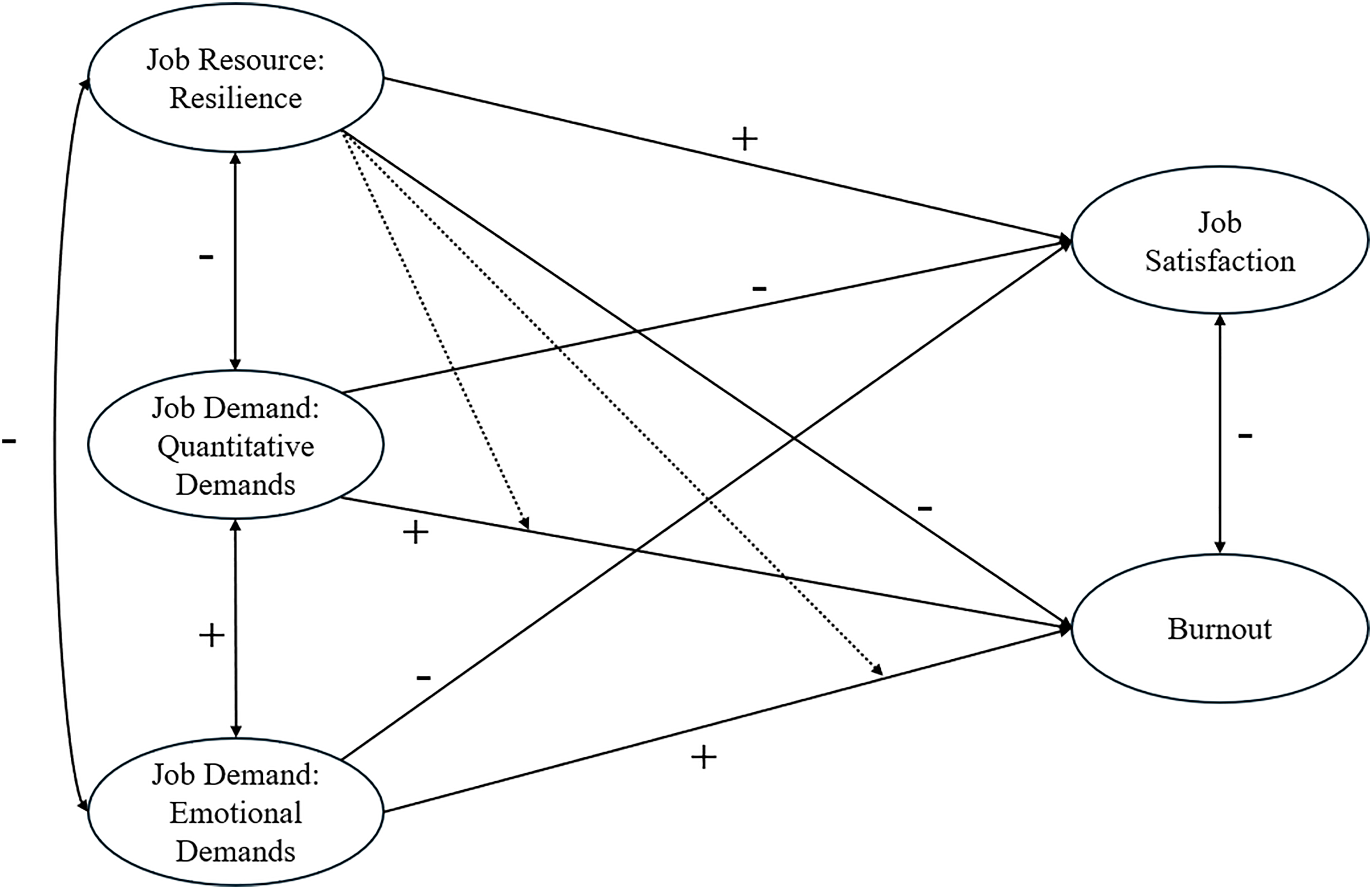
Assumed relationships based on the JD-R model.
Number of items and correlations between latent variables.
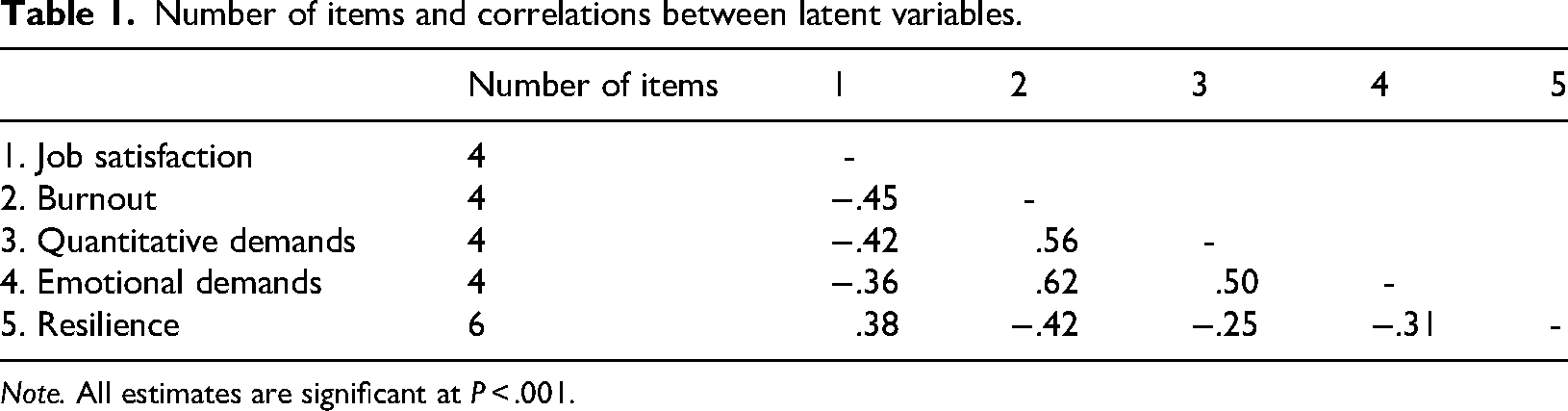
Note. All estimates are significant at P < .001.
Latent-variable structural path analyses were performed using maximum likelihood estimation within Lavaan (Version 0.6–18; Rosseel, 2012) to estimate model parameters. Model fit was assessed using several indices: the Comparative Fit Index (CFI), Tucker-Lewis Index (TLI), Root Mean Square Error of Approximation (RMSEA), and Standardised Root Mean Square Residual (SRMR). These measures of fit were included in addition to χ2, as this depends on sample size, where small amounts of change can lead to significant χ2 values when sample sizes are moderate to large (Chen, 2007). This could lead to misinterpretation, such as false model rejections. For the RMSEA, values ≤.05 reflect a good fit, values between .05 and .08 reflect an adequate fit, values between .08 and .10 reflect a mediocre fit, and values >.10 are not acceptable (Browne and Cudeck, 1992). For TLI and CFI, values of .90 or higher are considered a satisfactory fit, whereas values above .95 are considered an excellent fit (Hu and Bentler, 1999).
Interaction effects wer.e tested using the ModSem package (Version 1.0.2; Kjell, 2024), using the Latent Moderated Structural Equations (LMS) approach. For evaluating models with LMS, standard fit criteria such as RMSEA and SRMR are not applicable. Instead, model fit was evaluated using the Akaike Information Criterion (AIC) and Bayesian Information Criterion (BIC). In this context, lower values of AIC and BIC indicate a better fit of the model (Burnham and Anderson, 2004). Comparative analysis of the null hypothesis (H0) model, which does not include interaction effects, with the alternative hypothesis (H1) model, which incorporates interaction effects, was conducted to determine the most appropriate model.
Results
Correlations
The latent correlations and number of items of the latent factors representing all variables are presented in Table 1. All variables were significantly correlated in the expected directions. Job satisfaction demonstrated moderate negative correlations with burnout, quantitative demands, and emotional demands, while showing a moderate positive correlation with resilience. Burnout exhibited strong positive correlations with both quantitative and emotional demands, and a moderate negative correlation with resilience. Quantitative demands and emotional demands were strongly positively correlated. Resilience had a weak negative correlation with emotional demands and a moderate negative correlation with quantitative demands.
Baseline model (Model 1)
The fit of the baseline model, shown in Figure 1, examined the hypothesised relationships between latent job satisfaction, burnout, quantitative demands, emotional demands, and resilience. The model demonstrated good fit and an adequate representation of the data: χ²(199) = 1026.52, RMSEA = .04, CFI = .971, and TLI = .967.
Consistent with the JD-R Model, emotional and quantitative demands positively predicted burnout and negatively predicted job satisfaction. Conversely, resilience was negatively related to burnout and positively related to job satisfaction. All relationships were statistically significant, reflecting the robustness of the model. The regression coefficients are presented in Table 2. The path diagram of the structural equation model is illustrated in Figure 2 below.
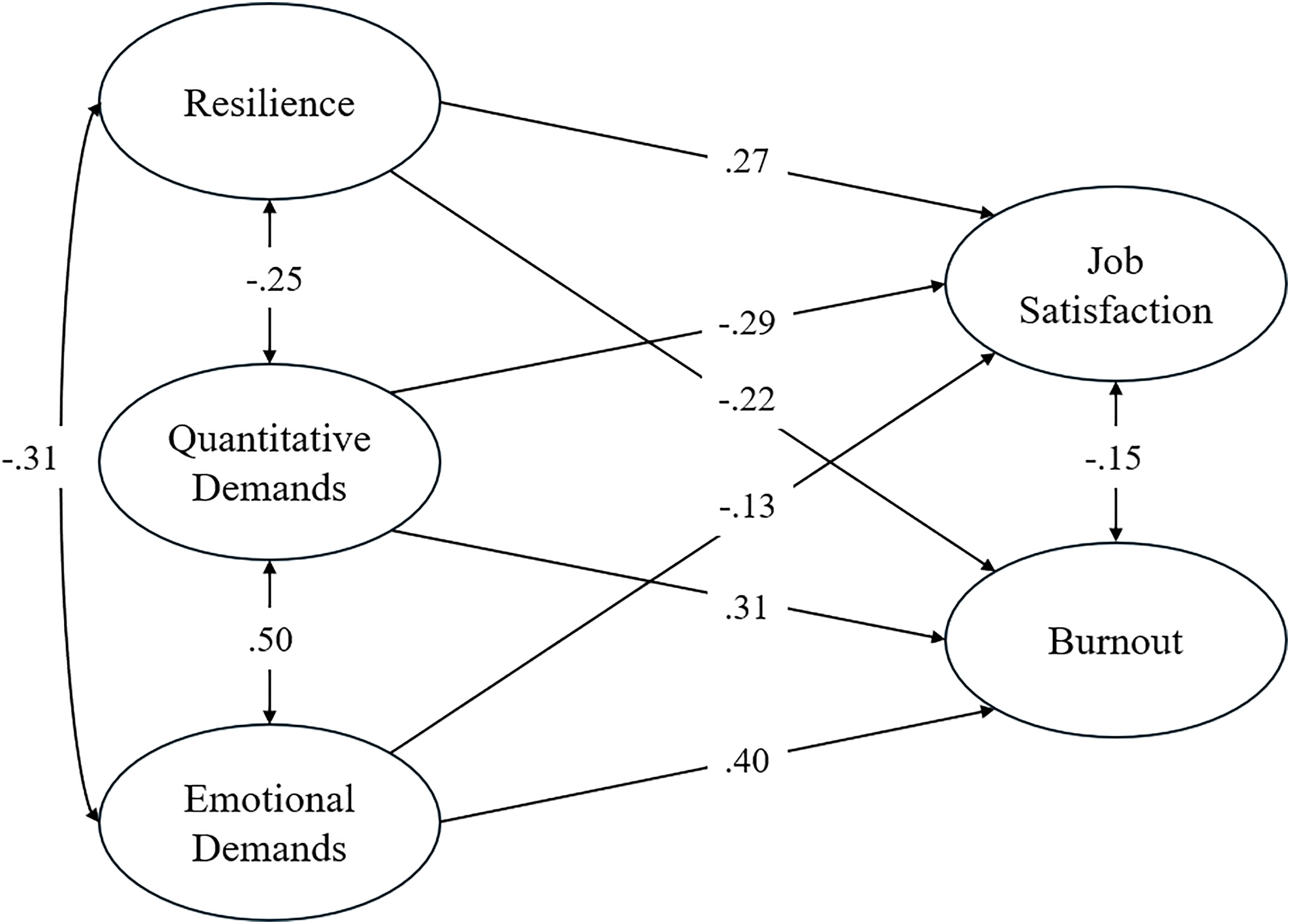
Baseline structural equation model depicting standardised estimates (model 1).
Regression coefficients for the baseline model (model 1).
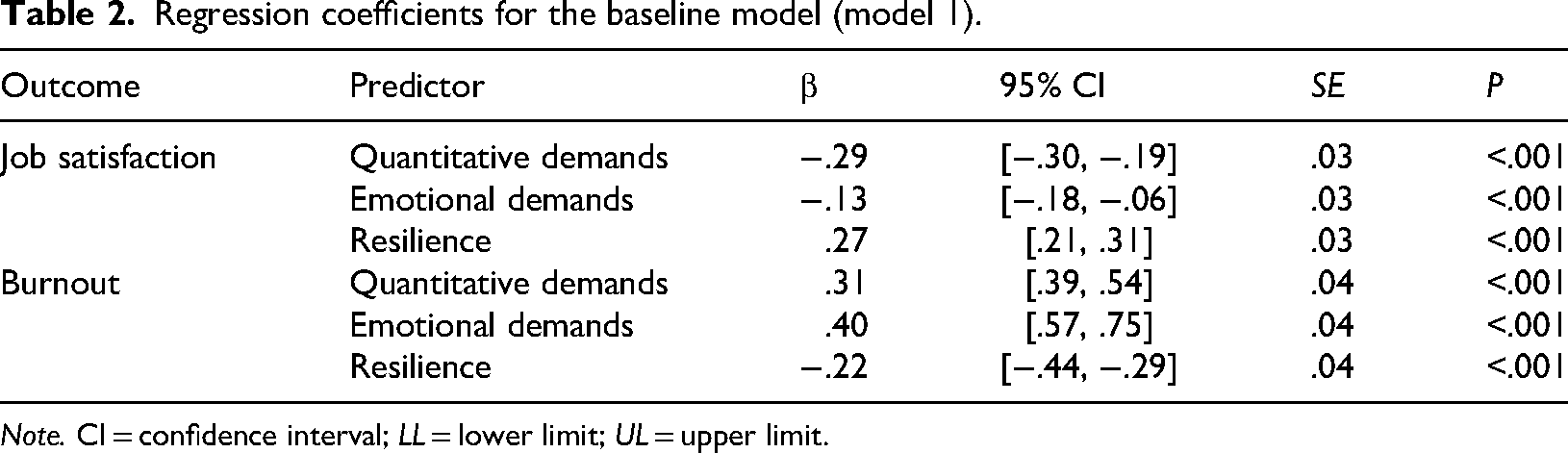
Note. CI = confidence interval; LL = lower limit; UL = upper limit.
Interaction model (Model 2)
The loglikelihood for the H1 model that included the interaction terms was −37,467.16, with the AIC at 75,088.33 and the BIC at 75,508.65. For the baseline model (H0), which is the model without interactions, the fit statistics were as follows: loglikelihood = −39,341, AIC = 78,831.92, BIC = 79,241.33, chi-square = 809.36 with 200 degrees of freedom (P < 0.001), and RMSEA = 0.016. The comparison of the interaction model to the baseline model showed a significant improvement in fit, with a loglikelihood change of 1873.80 and a difference test value of 3747.60 (P < 0.001).
The regression coefficients for the interaction model are in Table 3. The pattern of results did not change when the interactions were added to Model 1. The interaction between resilience and emotional demands was significant and positively related to burnout. This indicates that higher levels of resilience were associated with increased burnout in response to higher emotional demands. On the other hand, the interaction between resilience and quantitative demands was not significantly related to burnout. The interaction effects are displayed as simple slope figures in Figures 3 and 4.
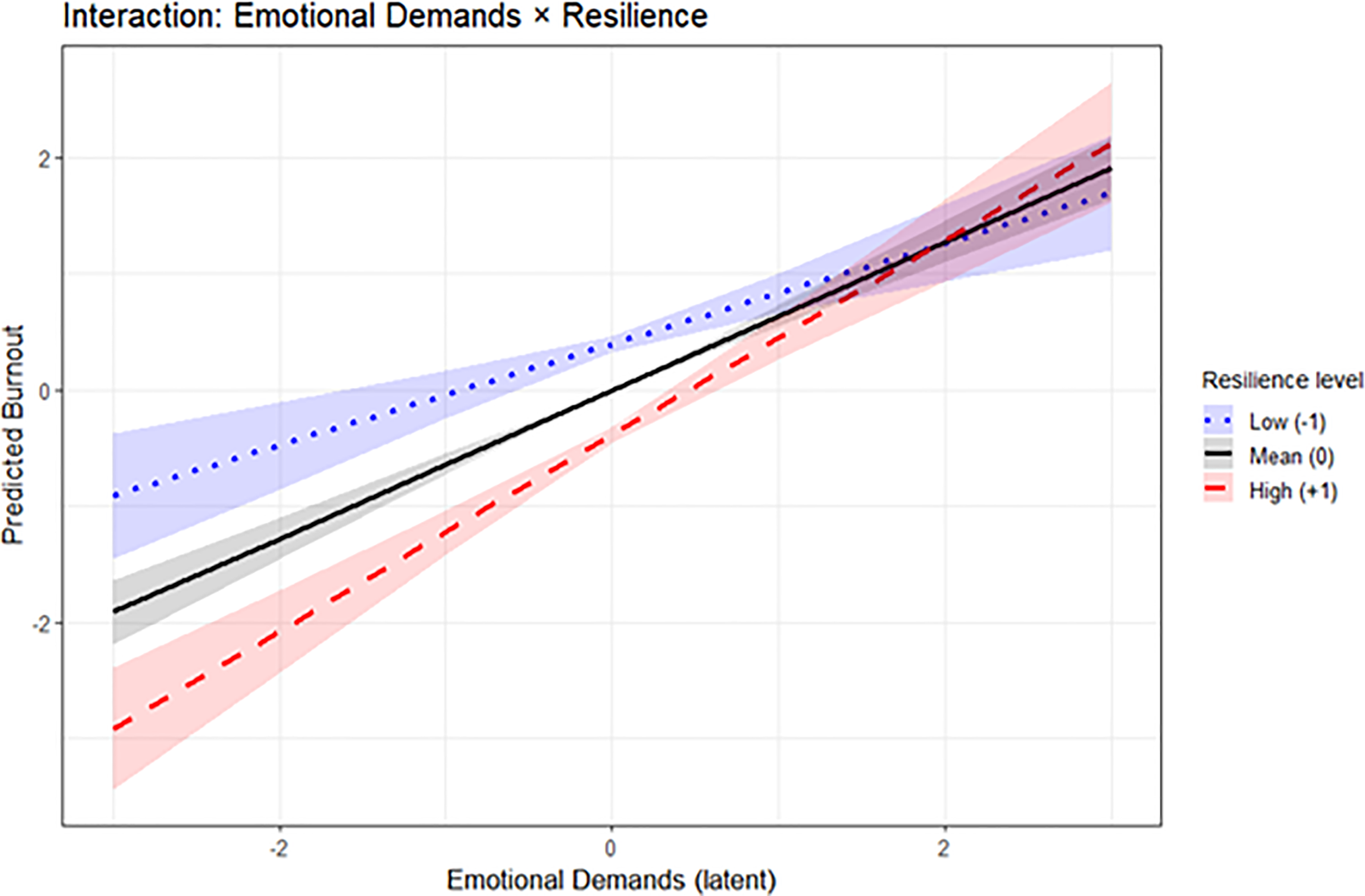
Interaction effect of resilience on burnout and emotional demands.
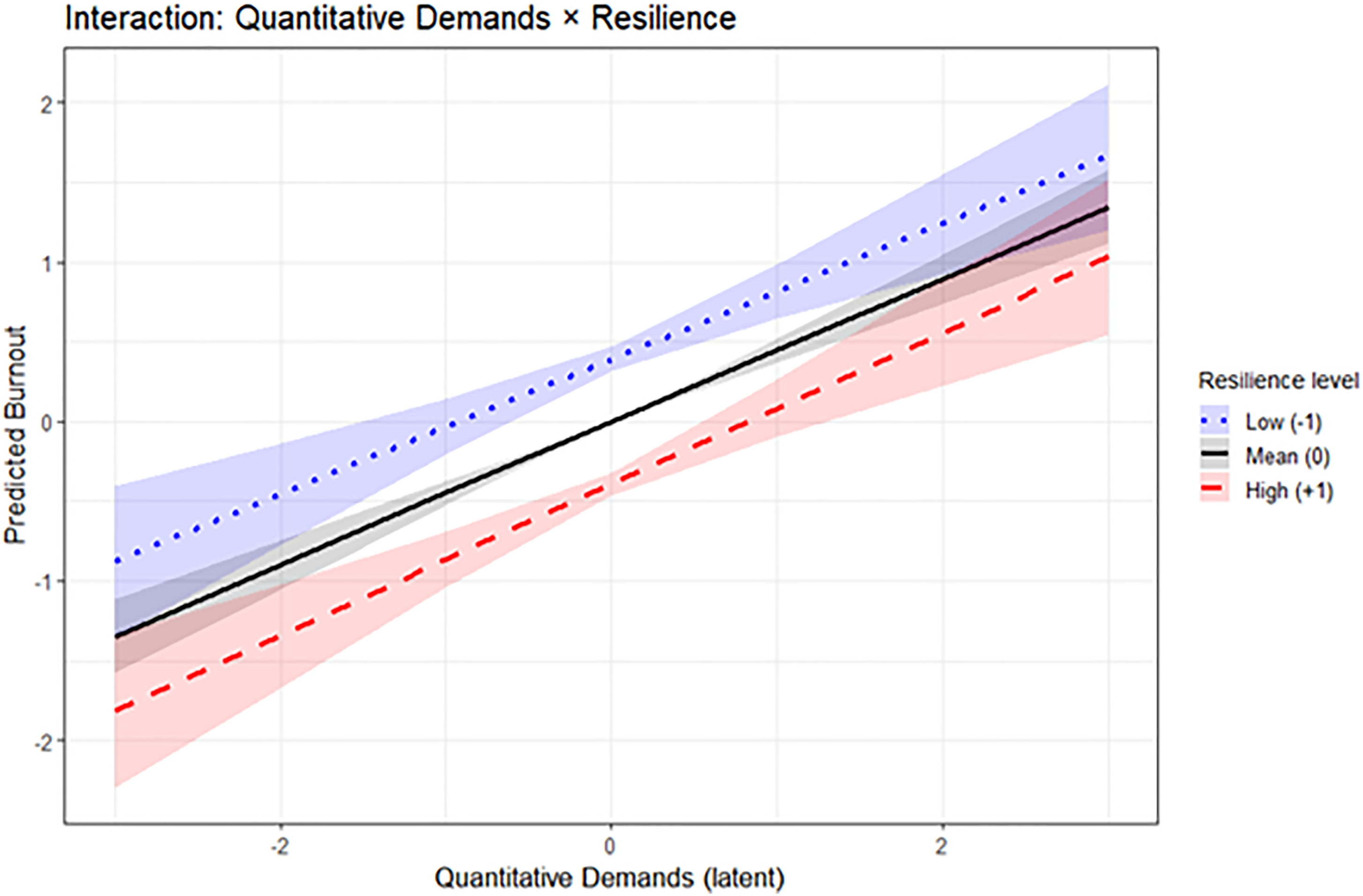
Interaction effect of resilience on burnout and quantitative demands.
Regression coefficients for the interaction model (model 2).
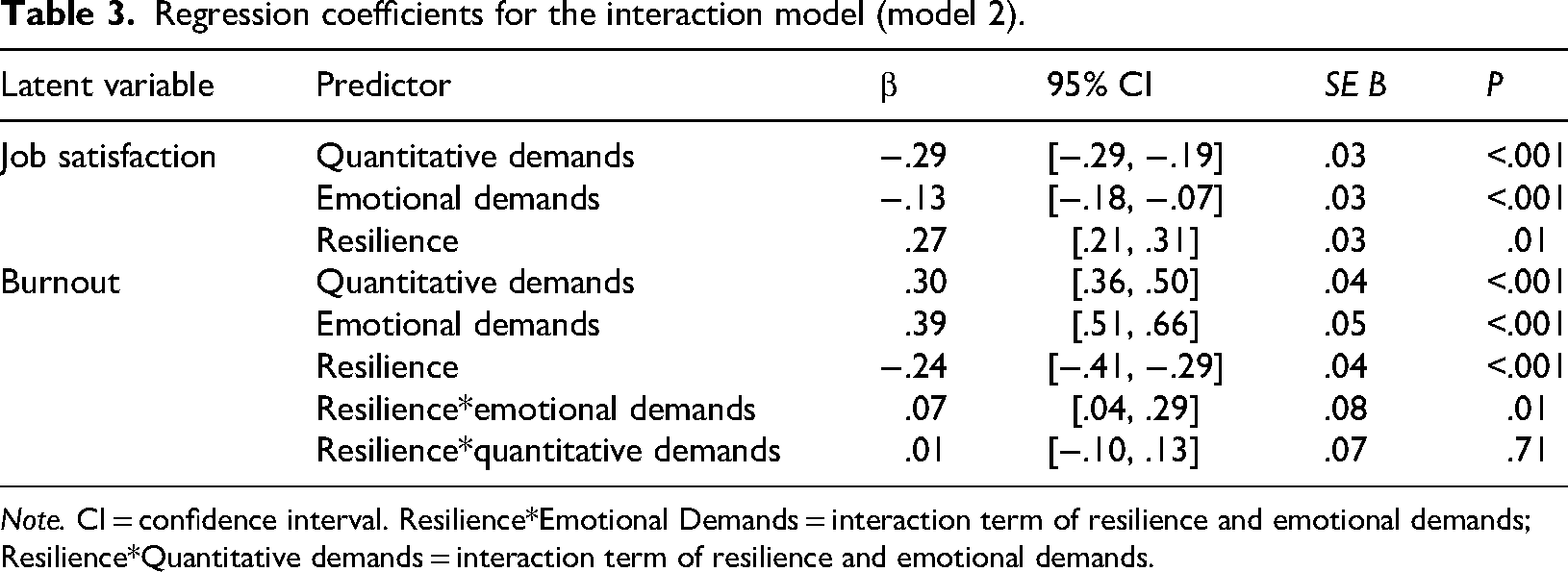
Note. CI = confidence interval. Resilience*Emotional Demands = interaction term of resilience and emotional demands; Resilience*Quantitative demands = interaction term of resilience and emotional demands.
In a reduced model including only emotional demands, resilience, and their interaction, the emotional-demands × resilience term remained significant (β = 0.1, SE = 0.06, P < .001), indicating that the moderation was not due to shared variance with quantitative demands. Johnson–Neyman probing, shown in Figure 5, showed that emotional demands predicted burnout significantly at all levels of resilience, with a steeper slope at higher resilience. The latent correlation between resilience and emotional demands was positive (r = .33, P < .001), suggesting that resilient leaders encounter more emotionally demanding roles.
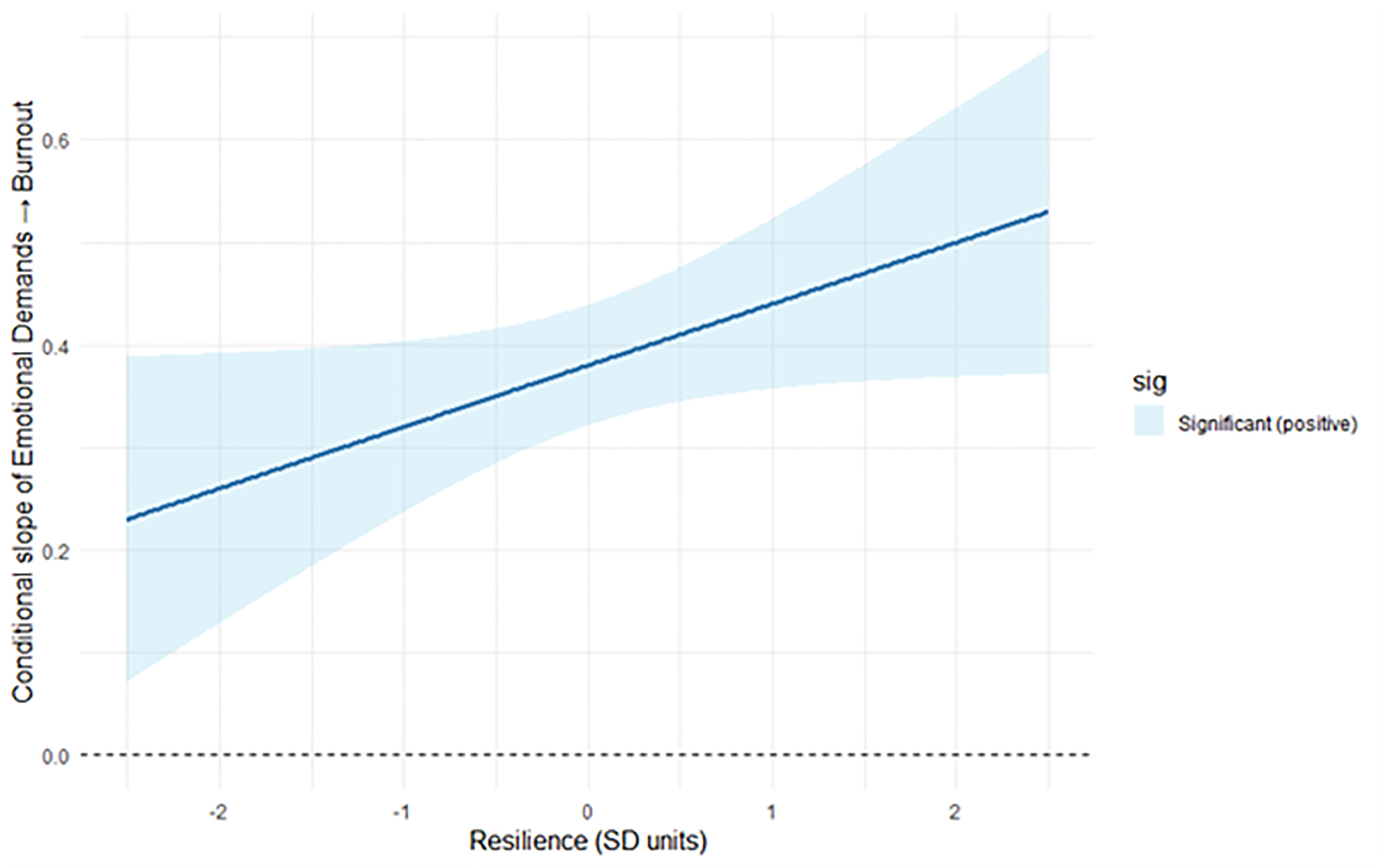
Johnson–Neyman plot with region of significance.
Model with covariates (Model 3)
Model 3 assessed the baseline model with the addition of covariates, including gender, years of experience, school type, school sector, and leadership role. The model fit suggests that the model provides a good fit to the data: χ²(299) = 892.77, RMSEA = .04, CFI = .955, and TLI = .94.
The inclusion of covariates did not alter the pattern of results. Neither school type (primary or secondary/combined) nor gender had a significant impact on job satisfaction or burnout. Leadership role (principal or non-principal) negatively predicted job satisfaction and positively predicted burnout. School sector (government or Catholic/independent) had a positive relationship with job satisfaction but did not significantly relate to burnout. Years of leadership experience did not have a significant relationship with job satisfaction but had a negative relationship on burnout. The detailed effects are presented in Table 4.
Regression coefficients for the covariate model (model 3).
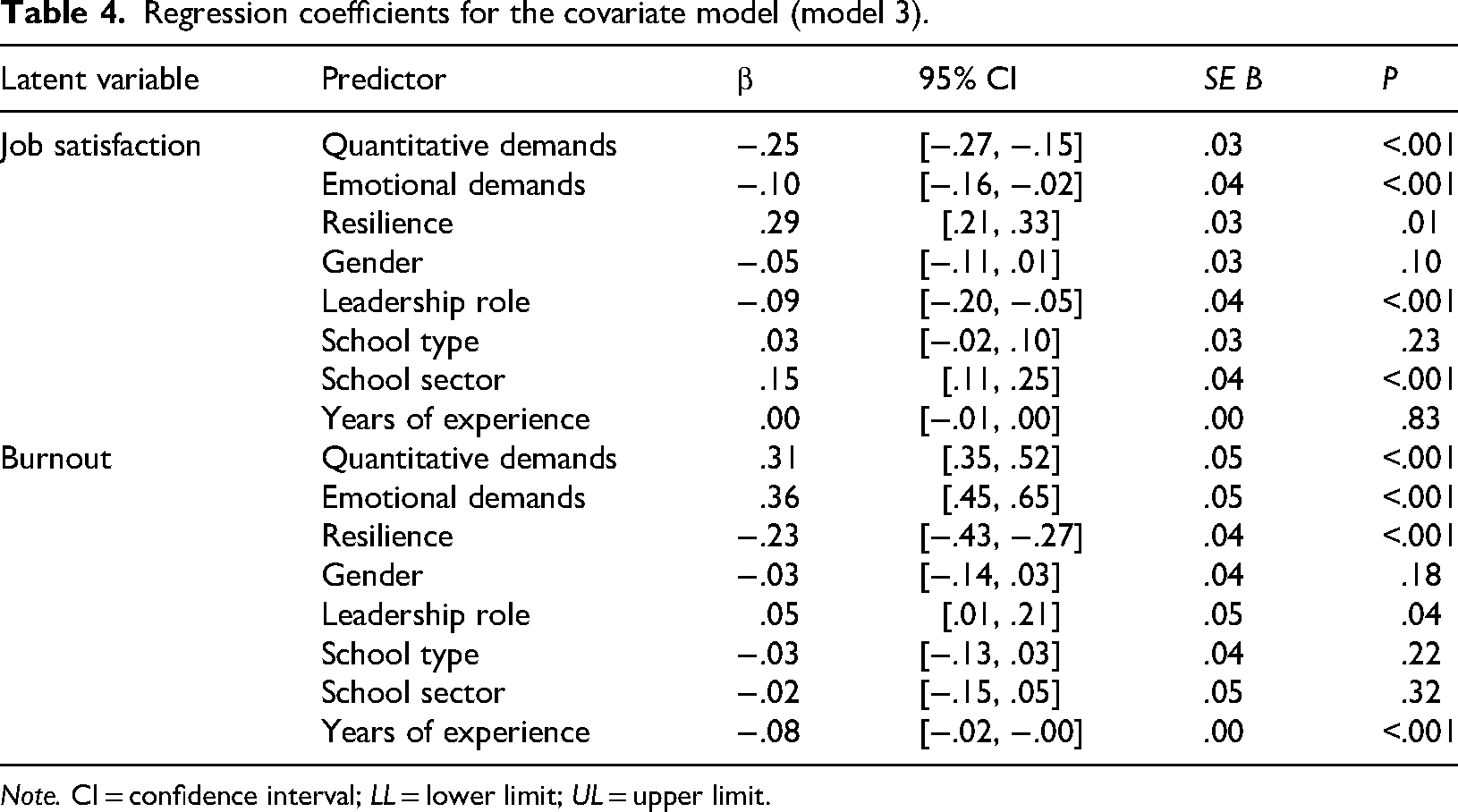
Note. CI = confidence interval; LL = lower limit; UL = upper limit.
Discussion
This study aimed to explore the relationships between emotional demands, quantitative demands, resilience, and burnout among Australian school leaders, using the JD-R Model as a theoretical framework. These relations are crucial to investigate, given the rising levels of burnout and high turnover rates among Australian school leaders (Dicke et al., 2024). While previous research has explored the relationships between job demands, job resources, burnout, and job satisfaction (Marsh et al., 2023; Skaalvik, 2020), a research gap remains in understanding how quantitative demands and emotional demands uniquely impact the outcomes of burnout and job satisfaction. Additionally, the buffering effect of resilience has not been investigated in past research for school leaders. By examining these relationships, this study provides insights that can inform targeted interventions and policies designed to support school leaders’ well-being, mitigate burnout, and ultimately enhance their effectiveness and retention. Our findings supported three of the hypotheses, while the third hypothesis (the buffering hypothesis) was not supported.
Hypothesis 1: Motivational process
The first hypothesis, which suggested that higher levels of resilience would be positively related to job satisfaction and negatively related to burnout, was supported by the results. This aligns with the JD-R Model's motivational process, where job resources, such as resilience, can enhance job satisfaction and reduce burnout. This finding reinforces the importance of resilience as a protective factor against burnout. This is aligned with previous research on teachers (De Vera Garcia and Gambarte, 2019) and strengthens the argument that prioritising resilience-building initiatives is important in educational settings. Moreover, the reinforcement of resilience as a protective factor against burnout highlights the potential for creating a healthier work environment. When leaders experience higher job satisfaction and lower burnout, they are better positioned to support their staff and students (Morris and Laipple, 2015).
Hypothesis 2: Health impairment process
The second hypothesis, which focused on the health impairment process in the JD-R Model, was also supported. The results showed that higher levels of emotional and quantitative demands were positively related to burnout and negatively related to job satisfaction. These findings illustrate one side of the JD-R process: that elevated demands contribute to strain, particularly when not balanced by sufficient resources. These results also align with previous findings where job demands were significantly associated with emotional exhaustion and motivation to quit (Skaalvik, 2020). Additionally, the results aligned with the recent systematic review that found that burnout was typically negatively related to value-positive constructs such as well-being, job satisfaction, and self-efficacy (Rogers et al., 2025). This aligns with broader evidence that emotional and workload demands are inherent to the nature of educational leadership, reflecting the deeply relational context in which school leaders operate (Beatty, 2000; Fosco, 2022; Hauseman, 2020; McKay et al., 2025). Understanding that emotional and quantitative demands contribute to burnout can help policymakers and school boards identify specific areas for intervention, which are discussed in the practical implications section.
Hypothesis 3: Buffering effect
Contrary to a universal buffering view, Hypothesis 3, which proposed that resilience would moderate the negative effects of emotional and quantitative demands on burnout, was not supported. Instead, resilience strengthened the association between emotional demands and burnout. Supplementary analyses, including a reduced specification and Johnson and Neyman probes, confirmed that this pattern was not an artefact of model complexity. Within the JD-R framework, one interpretation is that resilience may promote sustained engagement and role expansion under high emotional demands; in the absence of sufficient resources, such persistence could heighten cumulative emotional load and increase burnout risk. This unexpected finding may also reflect a threshold effect, whereby individuals with lower resilience have already reached a level of burnout, leading to a weaker observed association between demands and outcomes. Previous research supports this interpretation, showing that individuals with lower resilience tend to experience higher emotional exhaustion and lower personal accomplishment (Ferreira and Gomes, 2021), which may accelerate progression towards burnout. Overall, these findings align with emerging evidence that personal strengths can entail costs under chronic strain. Nevertheless, these cross-sectional results should be interpreted cautiously and replicated longitudinally across occupational contexts.
An alternative explanation for this relationship is that those who are resilient may take on more responsibilities or challenges, leading to increased emotional demands and a higher risk of burnout. Liu and colleagues (2023) found that individual resilience was positively related to work effort. This may mean that individuals with higher resilience are engaging more intensely with their emotional demands, potentially overwhelming their coping mechanisms. In the context of educational leadership, resilient leaders may also extend their role by taking on additional emotionally demanding responsibilities, which increases their overall exposure to such demands (McKay et al., 2025). This may explain why resilience did not buffer the emotional demands on the burnout pathway in our study: resilience may enable leaders to remain engaged and take on more challenging interactions, but in the absence of sufficient organisational resources, this can still culminate in burnout. We frame this as a plausible exposure mechanism, not a causal inference, pending longitudinal evidence. This interpretation aligns with the notion of the ‘dark side of resilience’, which highlights that qualities such as persistence and determination may under sustained pressure exposure individuals to a greater risk of strain (Mahdiani and Ungar, 2021). In this view, resilience may lead leaders to persevere through adversity rather than step back, prolonging their exposure to stressors and inadvertently heightening vulnerability to burnout.
Additionally, the interaction between resilience and quantitative demands was not significant, indicating that resilience does not moderate the relationship between quantitative demands and burnout as expected. This does not align with the buffering effect in the JD-R Model. This also contrasts with previous research where resilience has been a moderator for work stress and burnout in other professions, such as in nurses and government workers (Garcia-Izquierdo et al., 2018; Hao et al., 2015). However, the current findings are similar to a study on teachers, which found that resilience did not moderate the relationship between burnout and well-being, indicating that even if teachers are resilient, it does not affect the negative impact of burnout on well-being (Orines et al., 2023). The contradicting findings highlight the complexity of resilience as a moderating factor and suggest that its impact may vary across different job demands and occupations.
Inclusion of covariates
The addition of covariates of gender, years of experience, school type, school sector, and leadership role was intended to control for potential confounding factors and to identify any subgroups that might affect job satisfaction and burnout differently. As hypothesised, the inclusion of these covariates did not alter the pattern of the results. However, the leadership role and school sector emerged as significant factors. Leaders in higher positions (e.g. principal versus department head) experienced lower job satisfaction and higher burnout. This highlights the importance of providing additional support to individuals in high-pressure positions. Moreover, the positive relationship between the school sector and job satisfaction indicated that school leaders from government schools have lower job satisfaction in comparison to other school sectors (independent and catholic). This is consistent with past research (Riley et al., 2021) and may reflect pressures that government school leaders face, such as heightened external accountability and strict compliance regulations (Keddie and Holloway, 2019). Additionally, government school leaders tend to serve less privileged populations, which can make the work more demanding due to heightened student needs, resource constraints, and complex community challenges (OECD, 2024; Rorris, 2023). In contrast, gender, school type, and years of experience were not significantly related to job satisfaction or burnout. This shows that while gender, school type and experience levels are relevant, they are not as influential on job satisfaction and burnout as leadership role and school sector. This suggests that addressing the specific challenges associated with leadership positions and the context of the school sector may assist to improve job satisfaction and reduce burnout among school leaders.
Theoretical and practical implications
Theoretically, our research is consistent with two pathways within the JD-R model: the motivational process and the health impairment process. Resilience functioned as a personal resource, positively associated with job satisfaction and negatively with burnout, while emotional and quantitative demands were associated with increased burnout and lower job satisfaction. These findings represent a focused application of the JD-R model, rather than support for the framework in its entirety. In particular, our results did not support the buffering hypothesis and diverged from previous research suggesting that personal resources such as resilience can moderate the impact of demands on strain (Trembley and Messervey, 2011). This highlights the complexity of the buffering process and suggests that future research should investigate how different types of personal and organisational resources interact with specific demands.
Practically, these results can help policymakers and school boards identify specific areas for intervention. Addressing high emotional demands, such as providing support for managing challenging student or parent dynamics, along with tackling high quantitative demands by mitigating excessive workload and unrealistic expectations, can improve job satisfaction and reduce burnout. Importantly, the findings suggest that tailored strategies to reduce job demands are crucial. Interventions could include workload management programmes, enhanced mental health support, and leadership training designed to help school leaders navigate the pressures of their roles effectively (DeMatthews et al., 2021). Specifically, leaders in more senior positions, such as principals, who experience lower job satisfaction and higher burnout, need additional support targeted at these high-pressure roles. Systemic changes should also be made, such as adjusting job expectations, to alleviate demands on school leaders.
Additionally, the impact of the school sector on job satisfaction emphasises the need for policies that address sector-specific challenges, offering targeted support to leaders in government schools who report lower satisfaction and who may be leading less privileged populations (OECD, 2024). Targeted policies should also be developed to provide comprehensive resources and support, including flexible work arrangements, mentorship programs, resource allocation, and workload monitoring (DeMatthews et al., 2021). Furthermore, implementing regular feedback mechanisms to gather input from school leaders on existing policies and interventions will help ensure that strategies are continually aligned with their needs, promoting more effective support and adaptation to changing job demands.
Practically, these findings caution against resilience-only interventions. Under high emotional demands, resilience training should be paired with resource-enhancing measures, such as structured debriefing, collegial supervision, role clarity, and protected recovery time, to prevent resilience from becoming a risk amplifier rather than a buffer.
Limitations and directions for further research
This study has several strengths, including a large sample size, a strong theoretical foundation based on the JD-R Model, good control for covariates, and the use of structural equational modelling with latent interactions. However, this study has several limitations. First, the sample contained only school leaders from Australia, limiting the generalisability of results to school leaders in other countries, teachers, or leaders from other occupational groups. Future research should replicate this study in other countries or different contexts to determine the broader applicability of the results. Additionally, the cross-sectional design is a limitation as it does not account for changes over time and prevents conclusions about causality. Longitudinal studies would be valuable to explore these relationships over time, especially given the upward trend in burnout (Dicke et al., 2024; Marsh et al., 2023).
We acknowledge that a further limitation is the absence of qualitative data. While the quantitative approach provided robust statistical testing, qualitative insights could have illuminated the underlying drivers and consequences of burnout, as well as the lived nature of resilience in school leadership practice. Incorporating interviews, focus groups, or case studies in future work would provide richer contextual understanding. A mixed-methods design combining large-scale surveys with qualitative inquiry would therefore offer a more comprehensive account of how school leaders experience and respond to job demands and resources.
Another limitation is that this study relied on self-reports, introducing the possibility of method effects, which may distort the relationships (Podsakoff and Organ, 1986). While the study's well-defined structure and modest correlations protect against this, future research could benefit from incorporating objective measures and ratings by colleagues or supervisors. Additionally, there is a potential limitation of construct correspondence. Resilience was operationalised at a general level, while demands were specific to situations experienced by school leaders. This discrepancy may have affected the results interpretation (De Jonge et al., 2008; Dicke et al., 2018). Also, the Brief Resilience Scale (Smith et al., 2008) consists of six items and may not capture the complexity of resilience in school leadership. Future research should consider developing or utilising context-specific measures of resilience that align with demands faced by school leaders.
Conclusion
Previous research has highlighted how Australian school leaders are facing increasing levels of burnout, high turnover rates, and a growing intention to quit (Dicke et al., 2024). To explore the factors contributing to these issues, this study explored how emotional and quantitative demands, alongside resilience, influence burnout and job satisfaction. The findings confirmed the motivational and health impairment process in the JD-R Model as a theoretical framework and supported past research by Marsh and colleagues (2023) but also revealed that resilience alone is not sufficient to buffer against the high job demands faced by school leaders. While resilience positively impacted job satisfaction and reduced burnout, it did not mitigate the impact of emotional and quantitative demands. Notably, the results showed that individuals with higher levels of resilience exhibited a stronger relationship between emotional demands and burnout. This suggests that resilience, though valuable, cannot fully counteract the pressures of job demands. These results provide direction for school boards and educational policymakers to act. Building resilience in school leaders remains important, but it must be paired with strategies that reduce job demands. Additionally, researchers should continue exploring interventions that combine resilience-building with demand-reduction strategies to ensure the sustainability of educational leadership. By prioritising school leaders and taking action to support them, we not only protect individual leaders but also build a stronger educational system that benefits the entire community.
Footnotes

Funding
The authors disclosed receipt of the following financial support for the research, authorship, and/or publication of this article: The data collection for this study was supported by the NSW Secondary Principals’ Council (NSWSPC), Catholic Secondary Principals Australia (CaSPA), Australian Primary Principals Association (APPA), Australian Catholic Primary Principals’ Association (ACPPA), Association of Heads of Independent Schools of Australia (AHISA), Catholic Schools New South Wales (CSNSW), Australian Secondary Principals’ Association (ASPA), and Victorian Principal Association (VPA).
Declaration of conflicting interests
The authors declared no potential conflicts of interest with respect to the research, authorship, and/or publication of this article.