




Abstract
This systematic review builds on a 2021 study that analysed 35 empirical articles from January 2006 to January 2020, demonstrating middle leadership's growing importance in schools. Using Scopus and ERIC databases, this updated review examined 52 empirical peer-reviewed studies from February 2020 to April 2024 across 21 countries to refine understanding of middle leadership definitions, impact, and professional development (PD) needs. The findings strengthen definitional understanding by framing middle leaders as powerful ‘conduits’ or ‘bridges’ between organisational levels, emphasising the highly relational and emotional nature of their roles. While consensus exists regarding the need for additional PD, debates continue about optimal provision, content, and delivery methods. Unlike the first review, this article presents empirical evidence of the direct impact between middle leadership and student outcomes and highlights the different ways middle leaders impact practices in their school. The authors argue for more nuanced understanding of middle leadership's complexity and propose new research directions. This updated systematic review demonstrates the field's rapid evolution and provides a stronger evidence base for middle leaders’ critical role in school effectiveness and student achievement.
Keywords
Introduction: Rapid expansion in school middle leadership research
Middle leadership in schools has garnered increased attention from researchers, policy makers and practitioners over the past five years, reflecting growing recognition of its critical role in school improvement. Situated strategically between senior leaders and teaching staff, middle leaders (MLs) serve as vital intermediaries for implementing organisational goals, while supporting classroom teachers’ professional growth and pedagogical practices (Lipscombe et al., 2020a, 2020b; Kavanagh et al., 2021). This review demonstrates that while research interest has surged in recent years, particularly due to emerging evidence of middle leadership's positive influence on teaching quality and reform implementation (Lipscombe et al., 2020a ; Gurr, 2018), heightened attention has not necessarily led to greater conceptual clarity of the role, impact or professional learning needs of MLs. Despite some shared understandings about MLs’ organisational positioning and formal responsibilities in school-wide decision-making (De Nobile, 2018; Gear and Sood, 2021), the field remains characterised by ambiguity, suggesting the need for continued scholarly investigation into this evolving and increasingly complex role.
In 2021, Lipscombe and colleagues published a systematic review of literature on school middle leadership. This review examined 35 empirical studies published over 14 years (2006–2020) across 14 countries to understand how middle leadership is defined, the responsibilities held by MLs, the impact and professional development (PD) they are afforded, and to discover lacunae in studies to support further research. The review provided an operational definition, description and set of characteristics of school middle leadership, and identified gaps in the research associated with impact and PD. One recommendation was a call to action to advance middle leadership research in schools as the burgeoning potential of the role is yet to be fully realised. Over the past four years, research into school middle leadership has increased considerably, offering new insights, perspectives and analysis to advance research, practice and policy. This paper revisits the 2021 systematic review by analysing 52 new empirically peer-reviewed papers from 21 countries, published across four years (2020–2024) in consideration of the past review to propose revisions, refinement and confirmations as warranted.
Middle leadership
MLs have been defined as holding formalised school leadership positions, resulting in specific responsibilities and accountabilities (Gurr and Nicholas, 2023). The body of research on middle leadership is typically focused on teachers in formal leadership roles, who work alongside teaching colleagues and senior school leaders with a focus on improving classroom teaching and learning (De Nobile et al., 2024). While other forms of middle management might exist within the administrative teams of large schools, this review reports on literature associated with educational leaders in ML roles. The growth in the number of MLs and recognition of their perceived importance in driving classroom improvement – due to their positionality and expertise in teaching and learning – has resulted in increased interest from researchers, schools and school systems in understanding the roles, responsibilities and practices of MLs, and how they can be supported to positively impact classroom teaching and learning and school improvement (Gurr, 2024).
Research has shown that middle leadership is conceptualised differently across jurisdictions, regions, and sectors, resulting in a diverse nomenclature across contexts (Lipscombe et al., 2021), with roles including departmental leads, subject leaders, and assistant principals (De Nobile, 2018). The lack of clarity on MLs’ titles, roles and responsibilities raises challenges in researching middle leadership, including the synthesis and transferability of findings and recommendations. Ainsworth et al. (2024) noted a “binary of knowledge” (550) within ML research, that focuses on either critiquing middle leadership or providing instrumental solutions. The authors argued that neither approach is conducive to developing knowledge in the field, nor are they reflective of the “complexity and messiness” (550) of middle leadership practices. To gain deeper insights into the tensions within middle leadership, calls have been made for further large-scale mixed methods and quantitative studies (Bryant and Walker, 2024; Tang et al., 2023).
Despite the need for greater clarity within middle leadership research and practice, there is agreement that MLs have expert knowledge and skills in curriculum, content and pedagogy which they draw upon to lead school change initiatives (Lipscombe et al., 2020a, 2020b). Leading change is often achieved through collaborative practices (Edwards-Groves and Rönnerman, 2013), where MLs work closely with teacher colleagues and senior school leadership that they are positioned between. This complex positionality results in middle leadership being highly relational and emotionally complex (Edwards-Groves et al., 2023).
This systematic review addresses a critical need for an updated empirical foundation in middle leadership research across both primary and secondary educational settings. While recent scholarly contributions have advanced our understanding—such as Adams et al.'s (2024) bibliometric analysis of key scholars, journals, and research traditions in the field, and Bento et al.'s (2023) scoping review employing behavioural and complex systems perspectives focused on secondary schools—our work specifically responds to Harris and Jones’ (2017) call for more robust evidence to inform middle leadership practice and Adams et al.'s (2024) appeal for enhanced understanding of middle leadership roles. By synthesising contemporary empirical findings, this review aims to inform the growing proliferation of middle leadership policies (e.g., Professional Standards for Middle Leaders (AITSL, 2024)) and professional learning initiatives (e.g., Middle Leadership Development Program (NSW DoE, 2024); National Professional Qualifications, Best Practice Network (UK)) emerging across educational systems.
Systematic literature review methodology
The objective of this paper is to replicate the previous systematic review in order to update and extend knowledge in the field of middle leadership, which has expanded substantially in recent years. As in the previous article by Lipscombe et al. (2021), a systematic review of literature was the selected approach to provide a comprehensive, transparent, and replicable method of synthesising existing research on middle leadership in schools, allowing for the identification of patterns, gaps, and inconsistencies in the literature while extending on the previous review (Hallinger, 2013; Petticrew and Roberts, 2006). This methodological approach is particularly valuable for providing a broad synthesis of evidence on middle leadership, as it enables the integration of diverse empirical findings across different educational contexts and theoretical frameworks.
To systematically and commensurably build on current knowledge, we chose to focus on the same four research questions as Lipscombe et al. (2021), namely:
How is school middle leadership defined? What are the positions and responsibilities of school MLs? What is the impact of middle leadership in schools? What are the PD opportunities and needs of school MLs?
We sought to identify and analyse recent research, from 01 February 2020 to 15 April 2024, while maintaining the clear and transparent processes of the 2021 review. The search strategy was replicated to provide a clear and consistent link between the analyses of literature in these two time periods. First, we used the same two research databases: ERIC and Scopus, to identify and retrieve peer-reviewed literature on middle leadership, and second, a comprehensive research protocol was devised with the key tenets of transparency and academic rigour at its core (Jesson et al., 2011).
ERIC and Scopus were used for this research to maintain consistency with the 2021 systematic review and due to their suitability for this research. ERIC represents the most frequently used index for compiling educational literature, and Scopus was selected as it is the world's largest abstract and citation database for peer-reviewed literature in the fields of science, medicine, technology, arts and humanities. Covidence was used as a digital review platform to enable the collaborative and systematic identification of research.
The review protocol consisted of six phases:
Establishing inclusion and exclusion criteria; Selecting databases, keywords, and search configurations; Collating literature using prescribed search strategy; Screening abstracts, applying set inclusion and exclusion criteria; Screening full texts to identify relevant literature; and, Synthesising literature with reference to the defined research questions.
As established in the prior review (Lipscombe et al., 2021), the terminology of ‘middle leadership’ is present in academic literature from a variety of different fields. To provide preliminary refinement in the search strategy phase, the following keywords and search configurations were used:
‘middle leadership’ AND (education OR school) ‘middle leaders’ AND (education OR school) ‘middle leading’ AND (education OR school) ‘leading from the middle’ AND (education OR school) ‘middle-level leadership’ AND (education OR school)
Data collection and screening
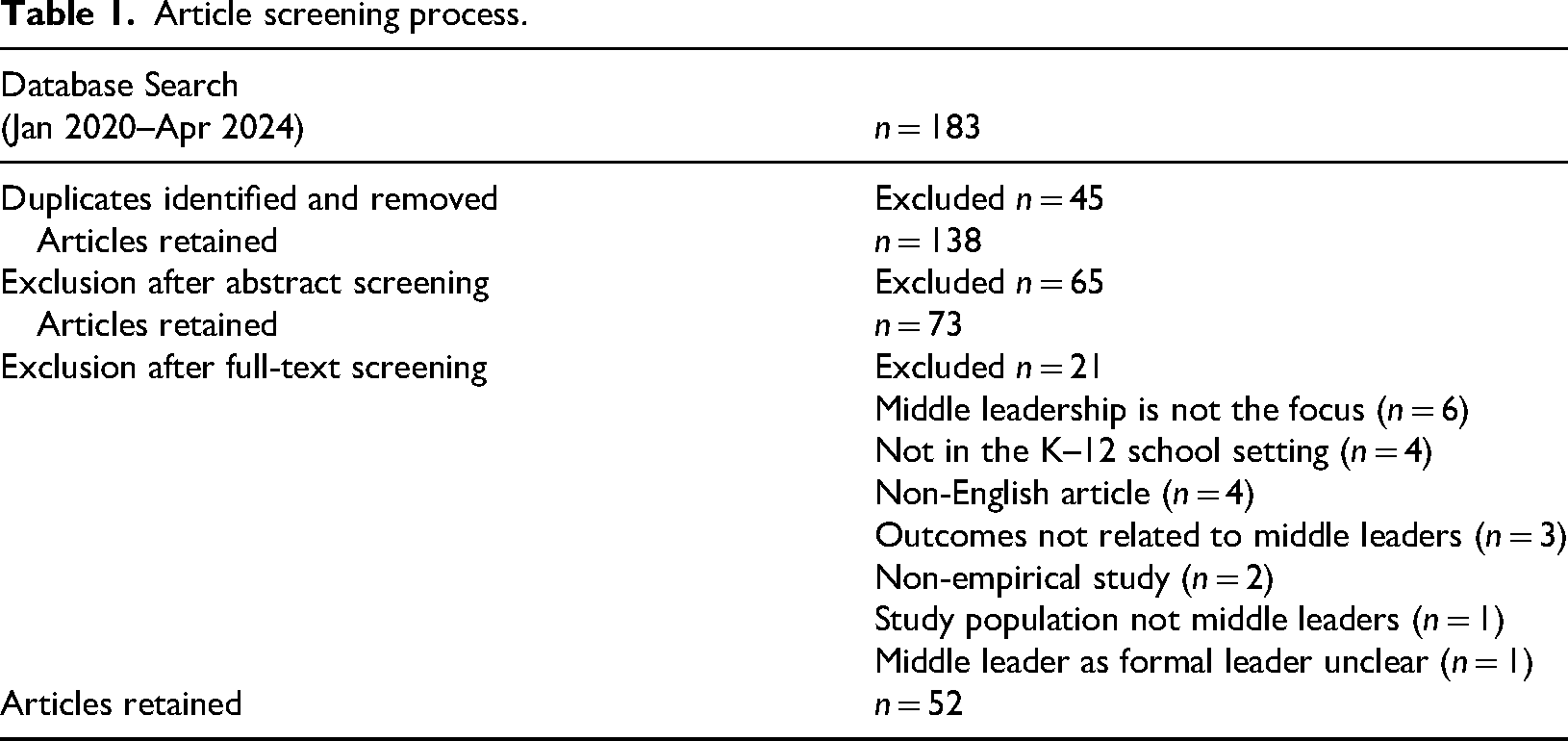
A total of 183 studies were retrieved from Scopus and ERIC. Through Covidence's automatic detection and removal of duplicate entries, 138 papers were moved to abstract screening. Each abstract was independently assessed by a minimum of two reviewers according to the following criteria: The study must be an original, English language, peer-reviewed, empirical journal article focusing on middle leadership within a school setting, ranging from kindergarten (the first year of formal schooling) to secondary education (not early childhood or tertiary). Studies that focused on teacher-leadership or broader leadership were excluded, with a key exception being the 2021 review on which this paper builds. Additionally, like the original review, this systematic review deliberately excludes existing literature reviews to focus on primary empirical studies, thereby avoiding the potential for compounding interpretive biases across reviews and ensuring that our analysis engages directly with original research findings rather than secondary interpretations of the middle leadership evidence base. Where reviewers reached conflicting verdicts or were unsure of a study's adherence to inclusion criteria during abstract screening, the study was included in the full-text screening phase. A total of 73 studies were moved to full-text screening.
Full-text screening used the same approach and inclusion criteria, but the criteria were assessed against the entire article. If two reviewers reached conflicting decisions after full-text screening, a third reviewer independently assessed the study to reach a final verdict. After full-text screening, 52 journal articles were included as part of the systematic review. These are highlighted in the reference list with an asterisk and a reference number between 1 and 160. Table 1 provides a detailed report on the screening process.
Article screening process.
Data analysis processes
Data from the 52 papers were analysed by adopting a narrative synthesis approach (Popay et al., 2006). This textual focus to data analysis in a systematic review enabled relationships with and between diverse studies to be explored rather than providing a simple summary of results (Hallinger, 2013). Each study was read in its entirety, and studies were initially coded and tabulated according to key characteristics (country, setting, method, aim, focus). The purpose of this review is to present an inclusive account of the research being done on middle leadership and therefore, all empirical research within the defined time frame that met the inclusion criteria were included in the analysis, regardless of method or sample size.
Next, studies were clustered according to each of the research questions with a line-by-line coding approach where initial codes were generated through inductive analysis and then codes were recorded in an Excel spreadsheet. NVivo12 was used for preliminary synthesis across studies. At this stage, the codes across each study within each research question were cross-checked by a second researcher and then categorised across studies into cogent themes (Saldana, 2016) that described relationships within and across the included studies (Popay et al., 2006). Final themes in each research question were then synthesised and evaluated by the researchers for final accuracy of interpretation, agreement and reporting. The next section of the paper provides our analysis of the 52 studies in relation to each of the research questions and the previous review.
Findings
Overview of articles
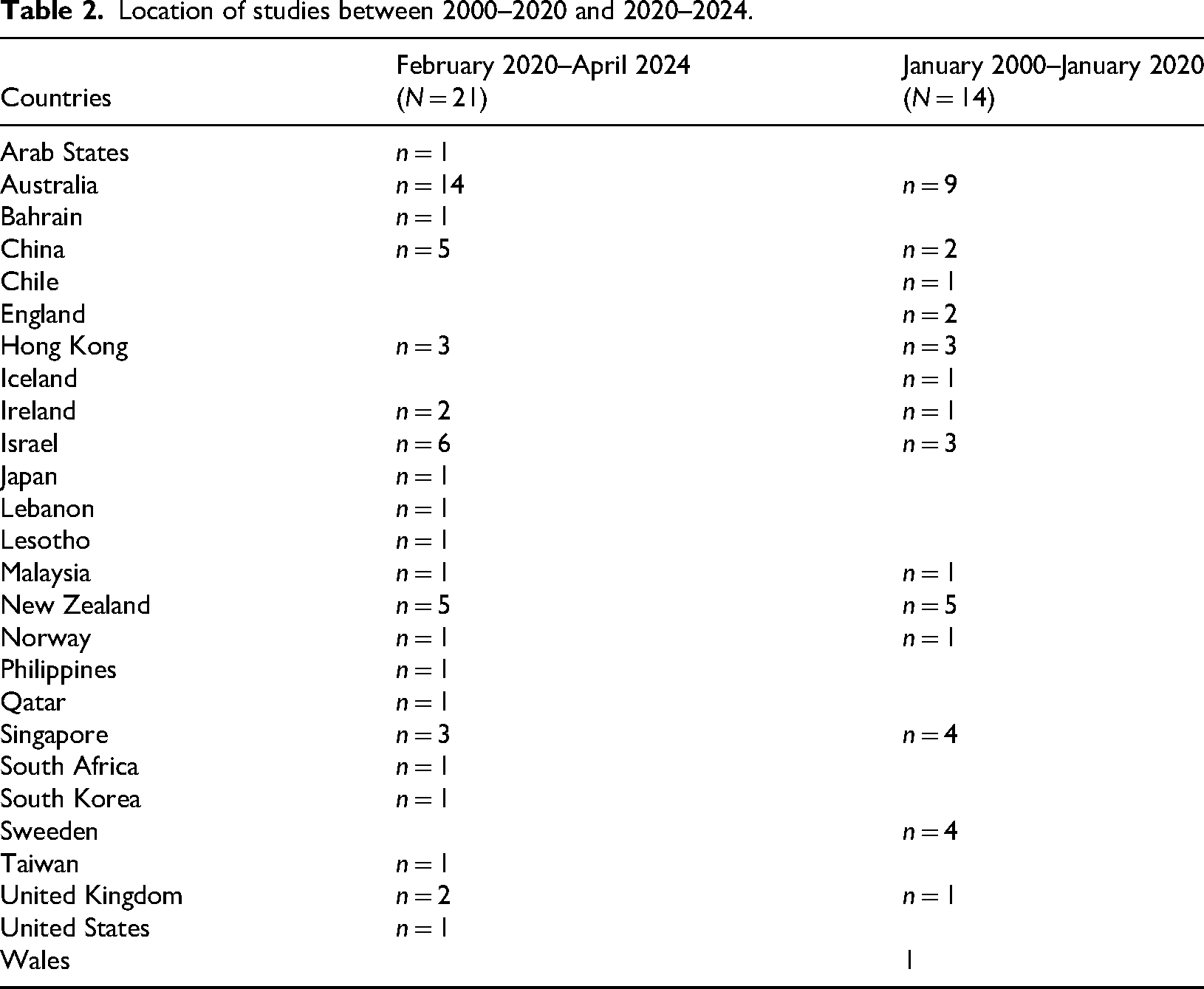
The articles identified within this updated systematic review on middle leadership encompassed diverse contexts, methodologies and focus areas, including studies from 21 countries, with predominant representation from Australia, Israel, China, and New Zealand. Table 2 compares the locations of research in the 2021 and this review. Some of the research studies include multi-country locations. Educational settings varied across the studies with 14 set in primary/elementary schools, 14 set in secondary schools, 13 multisite school settings, one K–12 school setting, and seven unspecified school settings. Of the 52 studies included in this review, 16 included teachers as research participants. These studies focused predominantly on the role of MLs in enhancing teaching and learning and supporting teacher development in their schools. Only one of these studies (Ghamrawi et al., 2024) examined teacher leadership, with specific attention paid to how middle leading practices can enhance or negatively impact teacher leadership in schools.
Location of studies between 2000–2020 and 2020–2024.
Regarding methodological approaches, 56% (n = 29) of studies were qualitative, 25% (n = 13) were mixed methods and 19% (n = 10) used quantitative methods. When compared to the much smaller 9% use of mixed methods and 3% use of quantitative methods from the previous review, there is clearly a significant increase in the diversity of methodological approaches in the presently reviewed middle leadership literature.
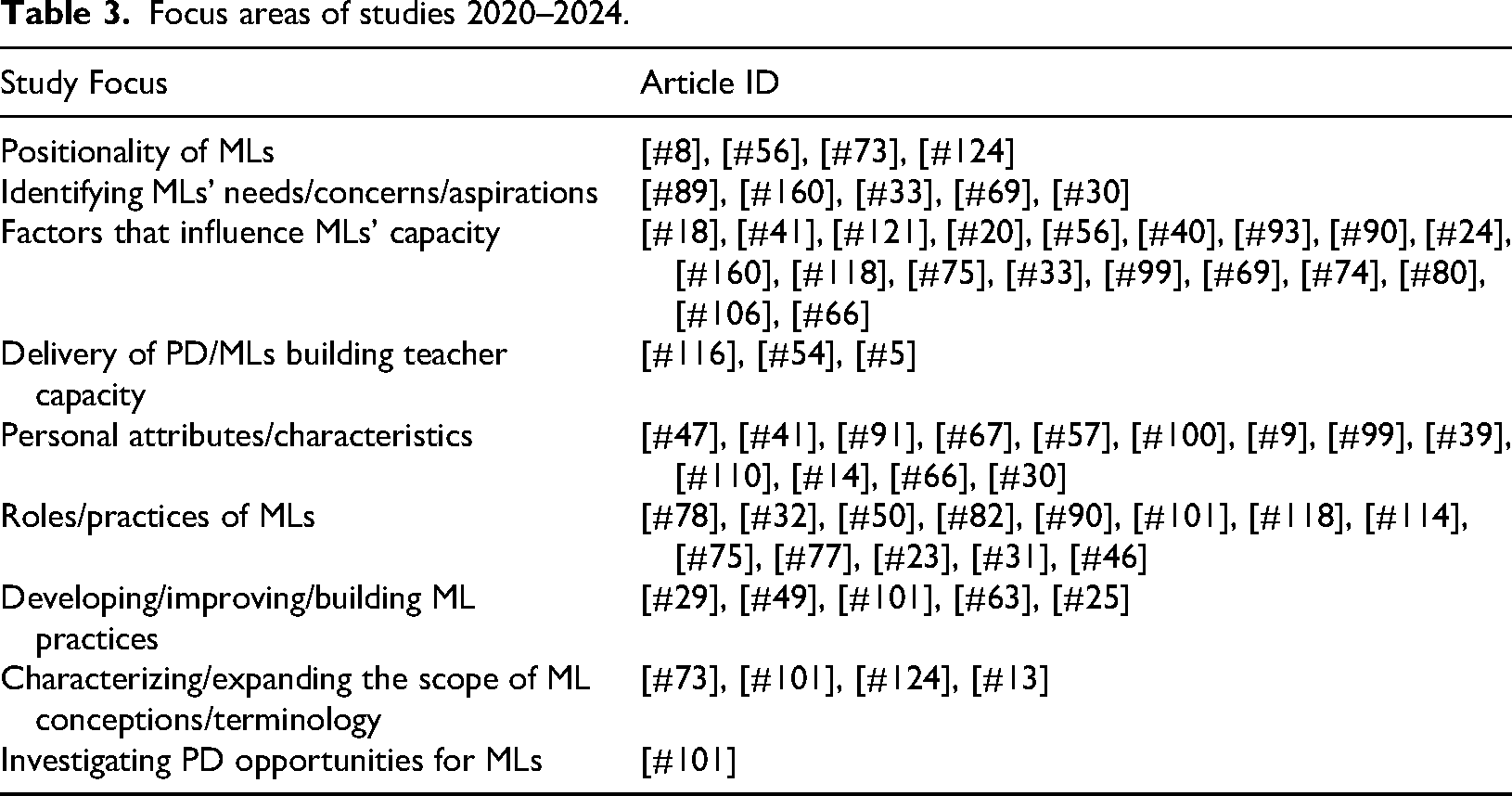
Our detailed thematic analysis (see Table 3) yielded eight key themes, the most prominent of which was a focus on factors influencing middle leadership. This review highlights the evolving landscape of middle leadership research, demonstrating a shift towards greater contexts, more diverse methodological approaches, and a concentrated focus on specific aspects of the role.
Focus areas of studies 2020–2024.
How is school middle leadership defined?
In the previous review, it was widely agreed that MLs are teachers with formal leadership responsibilities, though the extent of their classroom teaching duties was debated. Definitions frequently emphasised positionality within the school hierarchy between principal and teachers. The multifaceted definitions reflected the diversity of middle leadership across contexts and sites and, as such, we argued that middle leadership is best understood as a social construct that is defined, understood and shaped according to context (Lipscombe et al., 2020a).
The current review echoes these findings, affirming that school middle leadership is typically characterised by two key features: a formal leadership role (e.g., Lipscombe et al., 2020a, 2020b; Gramaje and Buenviaje, 2023; Joyner et al., 2023; Pan and Chen, 2024) and dual roles of teaching and leading (e.g., Harris et al., 2024; Iftach and Shapira-Lishchinsky, 2023; Roche et al., 2022; Thompson and Stokes, 2023). Research, however, reveals nuances in both characteristics. Ghamrawi et al. (2023), for example, argue that middle leadership positions can be both formal and informal. This blurring of boundaries between middle leadership and teacher leadership, the latter typically defined as informal leadership, was noted in both recent research (Blake and Fielding, 2023; Ghamrawi et al., 2024) and the previous review. Recent research also reveals variation in the concept of MLs’ dual roles as teacher and leader. While the prevailing definition of middle leadership assumes active classroom teaching, some researchers adopt a broader perspective. For instance, Lipscombe et al. (2023) suggests that MLs are trained teachers with formal leadership positions, while Tang et al. (2023) emphasise their close proximity to the classroom, without specifying a current teaching responsibility. These nuanced interpretations highlight that MLs can be teachers and leaders, regardless of whether they hold the responsibilities of teaching in the classroom.
A central theme in both the previous review and recent literature is the unique positionality of middle leaders between executive and senior leaders (e.g., principals, deputy principals) and teachers, which has been described in various ways. Some, like Shaked (2024a), conceptualise it as a simple hierarchical structure. However, a significant body of research characterises middle leadership positionality as an enabling function, using terms like ‘broker’, ‘bridge’, ‘buffer’, and ‘link’ (Ababneh, 2023; Blake and Fielding, 2023; Grootenboer et al., 2023; Lambert, 2022; Tlali and Matete, 2021; Zadok and Benoliel, 2023; Zhang et al., 2021). Conversely, Chaaban et al. (2023: 67) employ the term ‘squeezed’ to highlight the challenges inherent in this intermediary position. Edwards-Groves et al. (2024) offer a more integrative perspective, arguing that MLs are not merely positioned between principal, senior leaders and teachers, but are integral members of both groups. In their study focused on heads of departments, Tlali and Matete (2021: 196) described middle leadership as ‘third tier’, above teachers but below the principal and school system. The diverse terminology reflects that positionality is an important definitional construct of MLs that draws attention to some of the challenges and the facilitative roles inherent in middle leading practice.
What are the positions and responsibilities of school middle leaders?
Consistent with previous findings, this review underscores the diverse range of position titles and responsibilities encompassed within school middle leadership. Table A (supplementary material) delineates an extensive array of position titles (n = 57) across the analysed studies, revealing significant heterogeneity in middle leadership roles. The inclusion of curriculum, pastoral, subject, and pedagogical leadership positions at the team level remain prevalent in recent research. Furthermore, some positions were tied to specific teaching leadership roles, such as head teacher (Gramaje and Buenviaje, 2023) and lead teacher (Lipscombe et al., 2020b), implying that MLs often bear responsibility for leading teaching practices. Other roles were associated with particular programmes, such as assessment, safety (Iftach and Shapira-Lishchinsky, 2023), or teacher research groups (Zhang et al., 2021).
Senior leadership in schools typically refers to the highest level of administrative authority, consisting of principals/headmasters who hold ultimate decision-making responsibility and accountability for school-wide operations and strategic direction. Notably, in this review, several middle leadership position titles indicated deputising senior leadership roles such as deputy principal or headmaster (Harris et al., 2024), vice principal (Ho et al., 2021), and assistant principal (Kavanagh et al., 2021), suggesting that these positions often function primarily as support for senior leadership rather than operating as autonomous middle leadership positions. Conversely, some researchers argue that these deputising roles should be classified within the senior leadership category due to their direct involvement in school-wide governance and their function as principal proxies (Abrahamsen and Aas, 2023).
The responsibilities of MLs were also explored in depth. Through thematic analysis, nine predominant responsibilities were identified (Table 4), underscoring the complexity and breadth of middle leadership roles, many of which are enacted simultaneously. The most common responsibility identified was acting as agents of change (e.g., Abrahamsen and Aas, 2023; Blake and Fielding, 2023). MLs were identified as having responsibilities related to whole-school (e.g., Bryant and Walker, 2024; Tay et al., 2020) and small-scale change (e.g., Bryant and Walker, 2024), as well as informal and in-situ teacher capacity building and school improvement focus areas (e.g., Thien et al., 2024), highlighting the expectation that MLs possess the skills, strategies, and capacities to drive improvement.
Article IDs grouped by identified roles and responsibilities of middle leaders, 2020–2024.
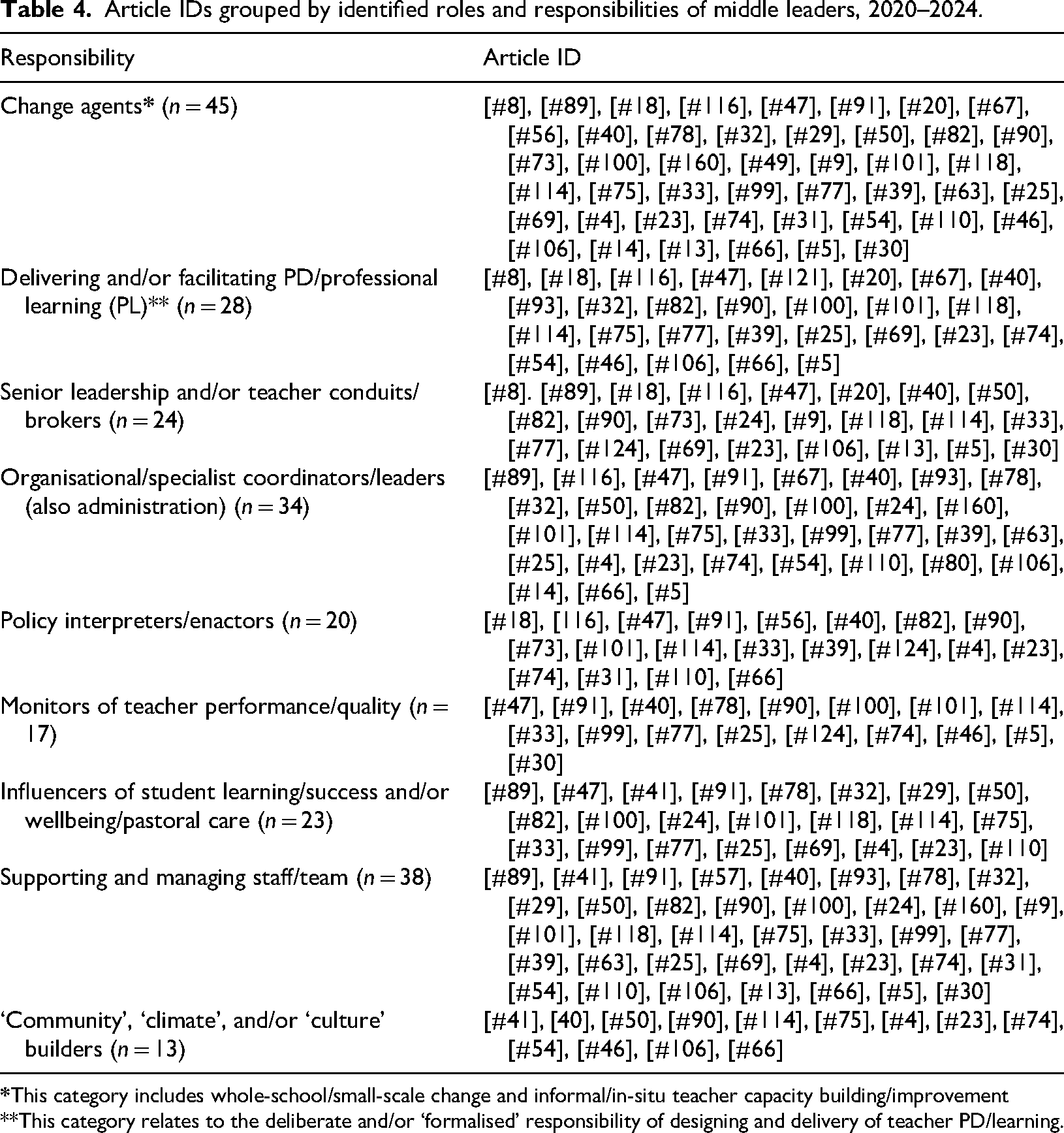
**This category relates to the deliberate and/or ‘formalised’ responsibility of designing and delivery of teacher PD/learning.
Other notable responsibilities include culture building (e.g., Ghamrawi et al., 2024), serving as conduits or brokers between senior leaders and teachers (e.g., Chaaban et al., 2025), and interpreting and enacting policy (e.g., Da’as, 2023; Gear and Sood, 2021; Shaked, 2024b; Skerritt et al., 2023), which emphasises the need for MLs to cross boundaries involving people, communities, and strategic initiatives. In addition, responsibilities such as supporting and managing staff and teams (e.g., Lipscombe et al., 2020a, 2020b), delivering or facilitating PD (e.g., Liu and Hallinger, 2024), and monitoring teacher performance (e.g., Meyer and Hanna, 2022) demonstrate MLs’ roles as capacity builders and evaluators, improving the quality of staff, teams, and teaching practices. Their influence extends beyond teaching and learning; they are leaders of student success and well-being (e.g., Highfield and Rubie-Davies, 2022), often serving as coordinators in areas like pastoral care and organisational or specialist programmes (e.g., Joyner et al., 2023; Li et al., 2018).
The diverse landscape of middle leadership positions and responsibilities highlights the complex and multifaceted nature of these roles. It also underscores the challenges of developing a standardised taxonomy of middle leadership positions to facilitate cross-institutional and international comparisons. Furthermore, this variability raises questions about the potential impact of role definition on leadership efficacy and organisational outcomes, an important avenue for future research.
What is the impact of middle leadership in schools?
The current systematic literature review
identified 17 studies investigating or providing findings on the impact of MLs in schools (see Table 5); with seven of the studies providing empirical evidence of the direct impact of MLs on areas including student learning and wellbeing, teacher practices and their engagement in PD, and increasing teacher resilience. One study evaluating MLs’ reflective portfolios and follow-up interviews (Willis et al., 2022), provided evidence of direct impacts at the student, teacher, school and community level, and how middle leaders impact their own development. This finding contrasts with the previous review, in which no study provided direct evidence of ML impact.
Middle leader impact in research studies 2020–2024.
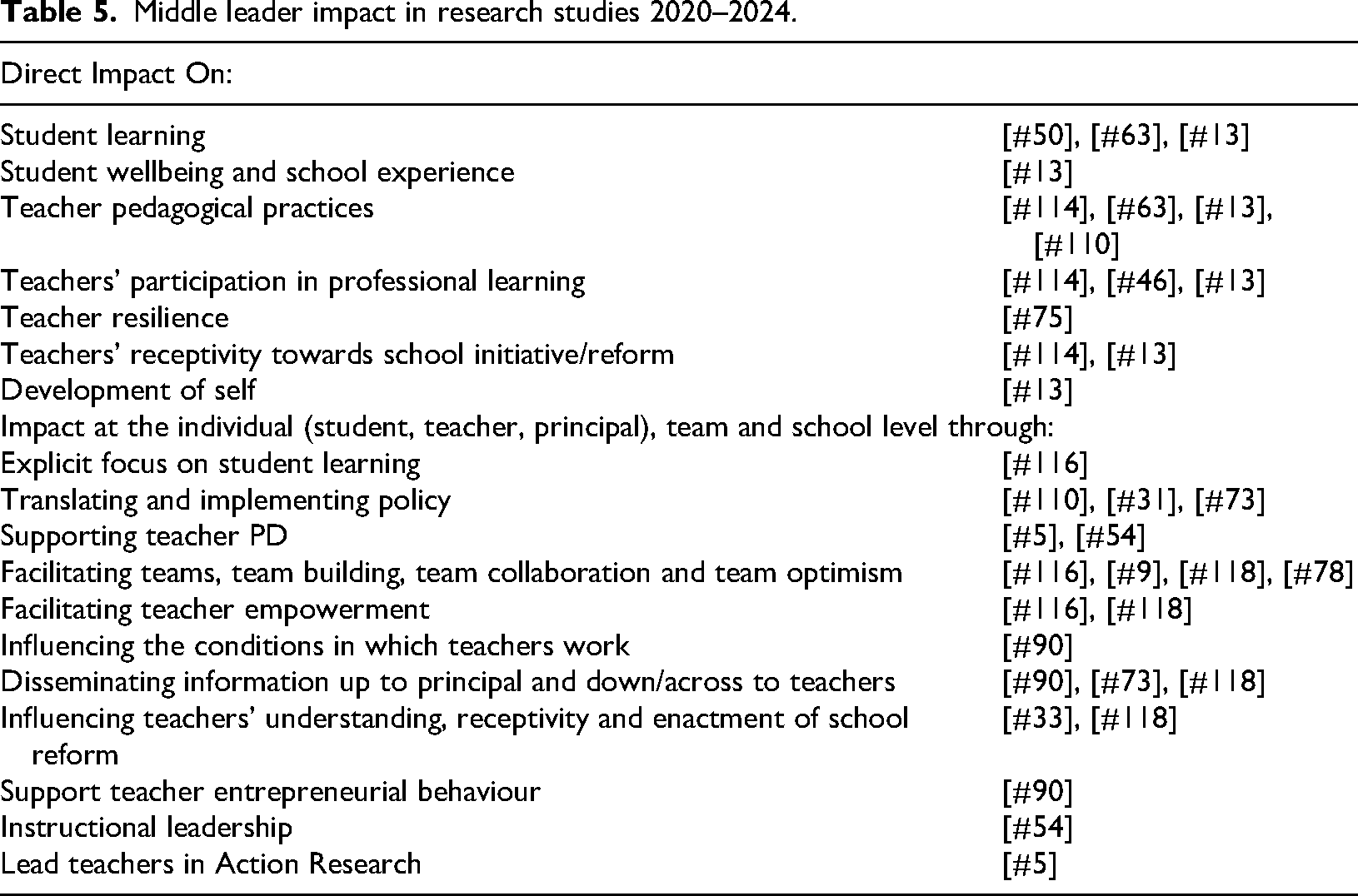
Two quantitative studies from New Zealand found evidence of MLs directly impacting student learning. Patuawa et al. (2023) reported on an intervention programme that developed MLs’ capacity to support classroom teachers to respond to student reading problems. Through theoretically informed PD, MLs were able to increase learning-focused collaborative discussions with teachers about problems students encountered in reading. The results were collaboratively designed, evidence-informed interventions that resulted in significant increases in the reading outcomes of targeted students. Similarly, Highfield and Rubie-Davies (2022) showed that when MLs engaged in professional discussions and clear goal setting with teachers, coupled with an increased use of formative assessment and provision of pedagogical resources, they had a direct impact on senior secondary students’ academic achievement. Both studies provide evidence of the ‘holy grail’, or pinnacle in ML research, identifying the flow of practices from MLs to improvements in classroom teaching and student results, evidenced through student data. While Li et al. (2018) did not find direct impact on student learning, their examination of MLs leading large scale English curriculum reform showed that teachers perceived a positive effect when MLs supported them to enact innovative English pedagogies in their classrooms. Using structural equation modelling Li et al. (2018) showed that MLs had a direct positive effect on teachers’ participation in PD and receptivity to curriculum reforms.
MLs influence on teacher receptivity to, and engagement with, PD is recognised as a crucial lever for positively impacting classroom practice and learning (Bryant et al., 2020). Thien et al. (2024) undertook a partial least-squares structural equation modelling approach to show when MLs enacted a learning-centred leadership approach, there was a direct impact on teachers’ engagement with PD. In contrast, Liu and Hallinger (2024) found that MLs had a positive but indirect effect on the professional learning of teachers, but a direct impact on teachers’ resilience. A mixed methods study by Tay et al. (2020) found positive change in teachers’ classroom practices when MLs prioritised assessment for learning as an expectation. These studies highlight the capacity of MLs to have positive impacts on teachers’ ability to deal with the challenges of their work, engage in PD and support improvement in classroom teaching and student learning.
Importantly, a mixed methods study by Willis et al. (2022) identified MLs’ impact at the student, teacher, classroom, school and community levels and how MLs can also positively impact self. Impact was defined by the authors as “a temporal narrative, where applicant teachers make connections between their actions and the actions of others over time to highlight practices that have meaning and value in their specific contexts” (694). The researchers argued that middle leadership impact was evident by the ML portfolios providing ‘before’ and ‘after’ narratives of their leadership when leading a school intervention. The portfolios showed that MLs impacted others through their relationships, positively impacting students, colleagues, and wider systems. These findings were further supported by a ML efficacy survey and interviews. This study is important as it captures the complexity and diversity of MLs’ work, and how MLs documenting and collecting evidence over time can provide proof of how they impact the individuals, teams and school they work in, and importantly, further develop their own middle leadership.
Ten studies highlighted the potential for MLs to impact school teaching and learning, aligning with studies demonstrating a direct impact of MLs on teacher engagement with professional learning. Research further suggests that when MLs lead teachers in action research (Zhang et al., 2021), support teacher entrepreneurial behaviour (Ho et al., 2022), enact instructional leadership (Tang et al., 2023) and provide an explicit focus on student learning (Bryant et al., 2020), a culture focused on learning and improvement is facilitated, raising the potential for improvement in classroom teaching and learning. By working across ecological levels within a school, MLs are enabled to disseminate information widely (Ho et al., 2020), while also collaborating, advocating for, and empowering individual teachers (Bryant et al., 2020; Lipscombe et al., 2021). The research highlighted that the potential of MLs impacting classroom teaching and learning can be achieved through facilitating teams (Lipscombe et al., 2023), creating academic optimism (Gramaje and Buenviaje, 2023) and receptivity towards and enactment of teaching and learning reforms within the teams they lead (Loh and Hu, 2021). However, research suggests that the actual positive impact of MLs is influenced by expertise, beliefs, years of experience and practice (Ho et al., 2024; Vale et al., 2023). Of note, one study focused on the negative impact of MLs. Ghamrawi et al. (2024) found six ways MLs could prevent teacher leadership through the micromanagement and lack of recognition of the teachers they lead, disregarding teachers’ expertise and by lacking integrity, showing favouritism and being poor communicators. The current literature review highlights an important step forward in ML impact research, direct evidence of MLs impacting student learning through student data, something that was not found in the previous review and provides a deeper understanding of how MLs can impact at an individual, team and school level.
What are the PD opportunities and needs of school MLs?
The 2021 review identified an “inherent tension in the field of professional development” for MLs (Lipscombe et al., 2021:18). While acknowledging that MLs are often tasked with the responsibility of supporting the professional learning of colleagues, the previous review highlighted a substantial need for targeted professional learning to support the development of MLs’ leadership practices, echoed in more recent research. While most reviewed papers identify a need for stronger focus on PD, the discussions were split between studies recommending PD with a focus on the need for targeted support to build ML capacity or those focusing on MLs’ provision of professional learning opportunities for others within their school context.
A vast majority of the papers reviewed in this study (n = 43) recognised that current leadership development for MLs remains patchy and inadequate. The common approach to developing MLs is the apprenticeship model, whereby schools provide site-based support to MLs when they are already in the role. Iftach and Shapira-Lishchinsky (2023) describe current approaches to training and PD as ineffective, suggesting this is a key challenge for MLs. Emphasising the role of MLs as instructional leaders, a number of papers (n = 7) indicated a critical need for additional PD to enhance MLs’ pedagogical expertise, content knowledge, and ability to support teachers in improving instructional practice (Bryant et al., 2020; Bryant and Walker, 2024; Edwards-Groves et al., 2023; Rahman et al., 2024; Tang et al., 2023; Vale et al., 2023). Vale et al. (2023) argue the need for MLs to have dedicated time allocation and more targeted PD to enhance their leadership of teaching and learning. While enhancing pedagogical and content knowledge is vital, the majority of research in this field indicates that PD focusing specifically on these areas is insufficient. As Ghamrawi et al. (2023) argue, “[MLs] require differentiated professional development that goes beyond teaching and pedagogical knowledge, addressing the leadership skills necessary for their roles” (16–17).
The call for PD to enhance MLs’ leadership capacity is resoundingly supported in the literature (Bryant et al., 2020; Bryant and Walker, 2024; Chaaban et al., 2025; Fourie and Naidoo, 2022; Ghamrawi et al., 2024; Highfield and Rubie-Davies, 2022; Loh and Hu, 2021; Tlali and Matete, 2021; Zadok and Benoliel, 2023). These studies indicate that engaging in targeted leadership development programmes could enhance MLs’ ability to facilitate collaborative work (Lipscombe et al., 2021), their capacity for instructional leadership (Edwards-Groves et al., 2023; Rahman et al., 2024; Shaked, 2023; Vale et al., 2023) and support them in leading change within their schools (Ababneh, 2023; Li et al., 2018). In addition, the literature illustrates the broad scope of PD recommendations for MLs, clearly reflecting the diversity of ML roles and responsibilities beyond the scope of instructional leadership. These recommendations include PD for MLs to better understand and manage student mental health issues (Joyner et al., 2023) and the development of their personal Christian faith (Chalwell et al., 2024).
While there is significant recognition of the need for leadership training for MLs, there is growing debate within the literature about the content of professional learning and methods of delivery. Ghamrawi et al. (2023) identified a broad range of elements that were required in targeted leadership PD for MLs that could enhance their capacity for school improvement: Leadership development initiatives should provide clear guidance on role expectations, foster personal qualities and interpersonal skills, build trust among stakeholders, address the unique challenges faced by middle leaders, enhance versatile leadership skills, offer targeted professional development opportunities, and cultivate a positive and supportive school culture. Implementing these implications can empower middle leaders to succeed in their roles and contribute to school improvement (17).
Meyer and Hanna (2022) identify that such PD needs to be sustained over time, which involves a greater commitment by MLs and schools and a more cost-intensive approach to leadership development than could be achieved in a typical one-off workshop. Furthermore, research by Thompson and Stokes (2023) cautions that mentoring or uniform approaches to leadership development can actually be detrimental to women in middle leadership roles if care is not taken to ensure the right fit. Thien et al. (2024) suggest that the responsibility for providing leadership development for MLs and teachers should fall on system authorities to prepare educational leaders for the future.
Discussion
This revisited systematic review has called attention to the rapid expansion of middle leadership research, identifying and analysing 52 studies published between 2020 and 2024. The growing interest in middle leadership, however, has done little to clarify some of the persistent questions and debates within the field. In many cases, this review identified greater diversity among reviewed research in response to each of our research questions. As such, while this paper reports on how the field has advanced since 2020, we also show growing complexities around the definition, roles, impact and professional learning needs of MLs.
The growth of research in the field has led to an increase in study locations, and the use of more diverse methodological approaches, with a significant increase in studies using mixed methods (25% vs. 9%) and quantitative (19% vs. 3%) research methods in this review compared to the previous systematic review (Lipscombe et al., 2021). Undoubtedly, these mixed methods and quantitative studies have helped to expand the field of research, providing the first empirical evidence of the direct impact that MLs have on supporting improved outcomes for teachers and students within their schools. Two studies (Highfield and Rubie-Davies, 2022; Patuawa et al., 2023) have managed to capture the so-called ‘holy grail’ of leadership research, demonstrating a direct and significant link between MLs providing professional learning support for teachers resulting in improved student learning outcomes. The studies offered insights into how MLs exert either direct or indirect positive influence on students, teachers, and their own development through practices that include an explicit focus on student learning, teacher development and empowerment, and team and culture building. These types of findings confirm the importance of middle leading roles and practices and the potential for MLs to support improved teaching and learning in schools and school systems.
The literature reviewed for this paper presents a more nuanced definition of middle leadership, recognising that some MLs do not hold formal classroom teaching positions. This nuance aligns with Lipscombe et al.'s (2021) operational definition of middle leadership, which relates to the positionality of the role: School middle leaders are formally appointed leaders, with accountable responsibilities, who operate between senior leaders and teachers, and lead in order to positively impact teaching and student learning (283).
This definition firstly recognises the work of MLs to support teaching and learning throughout the school, whether this is achieved within their own classroom or in another area of the school. Secondly, it acknowledges the enabling positionality of MLs, working between senior leaders and teachers to support school improvement. Rather than just being seen as the ‘meat in the sandwich’ (Marshall, 2012:502) or the ‘guts’ of the school (Hargreaves, 2023:50), recent literature offers a reframing of positionality in recognition of the powerful role that MLs play as the ‘conduit’ or ‘bridge’ between levels within the school hierarchy. Finally, the research recognises the variety of impacts of MLs by supporting the wellbeing and development of staff and students, strengthening the resilience of their teaching colleagues and developing themselves as leaders within and beyond their school context.
While there is clear consensus about the need for additional PD for MLs, debates around the provision, content and mode of delivery of this PD remain. There is a persistent split in the literature, focusing both on the need for MLs to drive PD within their school to support teaching and student learning, and on the necessity of sustained leadership development for those in middle leading roles.
Finally, this literature review has highlighted the highly relational and emotional nature of middle leadership, citing several interconnected factors. Firstly, MLs work with and between teachers and senior school leaders, resulting in the need for carefully managed communication and relationships to ensure positive outcomes for all members of the school community. Second, their role in supporting and enhancing teaching within the school requires MLs to balance their collegial relationships with supervision and performance management. Thirdly, MLs are often responsible for leading change within their schools, implementing the vision of senior school leaders and working to gain the support of teaching colleagues. While demonstrating the powerful role of middle leadership, this positionality can result in tensions and relational challenges for MLs when trying to manage the impacts of change on staff and students.
The 2021 review presented a figure that overviewed the findings and their implication to middle leadership. In this review, we have updated this figure (Figure 1) to include new empirical findings and implications from the contemporary studies analysed (Italics in Figure 1 denotes new research findings between 2020 and 2024). Like the previous review, we caution that the ideas represented include varying degrees of empirical evidence, and are situated across multiple contexts and therefore require careful consideration with the interpretation of results.
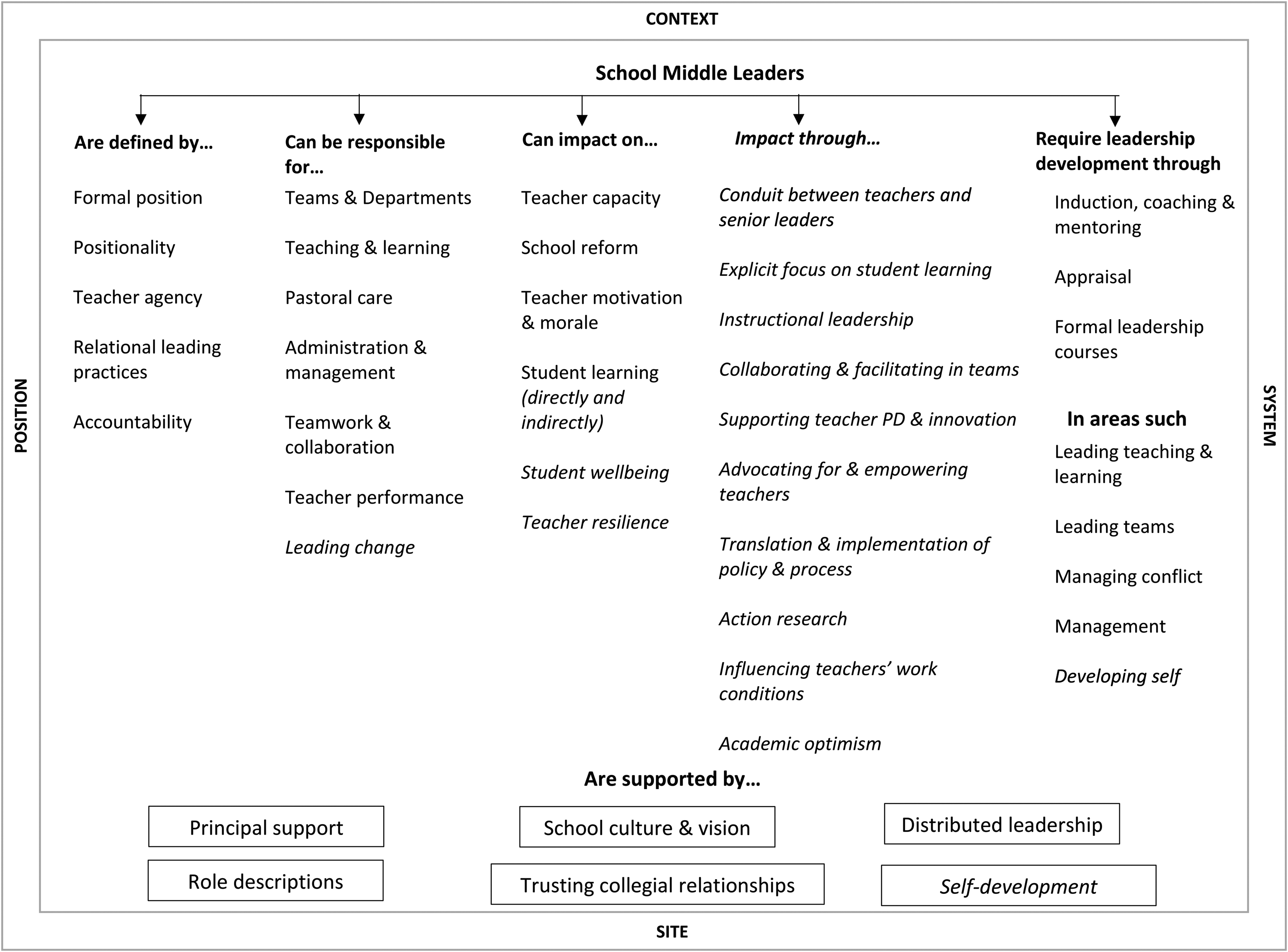
Updated overview of research findings and their implications for school middle leadership 2006–2024.
Conclusion
This systematic review has demonstrated exponential growth in the field of middle leadership research between 2020 and 2024. The increasing interest has developed a more nuanced understanding of middle leadership roles, impacts and positionality within the school, demonstrating that the roles held by MLs are deeply contextual. While illustrating that the roles and responsibilities held by MLs are different across school contexts, we also highlight some universal characteristics of middle leading practice. These include working in formal leadership roles as a conduit between senior leadership and teaching colleagues to support enhancements in teaching and student learning across the school. A limitation of this article is a lack of specific focus on the contextual difference of middle leadership across various contexts. This is difficult to achieve given the significant variations of aims, definitional work and methodological approaches across the 52 studies. Future research that explores such contextual variations in middle leadership would support advancements in understanding what and how context shapes middle leadership. Additionally, it is important to acknowledge the limited sources in this review from America and European countries. This may be a result of the keywords used targeting the very specific terminology of ‘middle leader(ship)’. Further research in middle leadership using a broader search strategy may yield greater contextual variance in research articles.
It could be argued that the growing interest and importance of MLs may be traced to the increasing focus of schools and school systems in school improvement, particularly classroom teaching and learning and MLs potential to impact both. This literature review confirms that MLs directly impact student learning, wellbeing and school experience and teachers’ pedagogical practices, fulfilling the promise of middle leadership, and importantly shedding light on the different ways that MLs can influence those within their schools. Importantly, the research found evidence of MLs developing self, this may be seen as necessary with middle leadership positions often being a teacher's first leadership role, and one that this review highlights is extremely complex. The paper also provides an understanding on the different ways MLs impact individuals, teams and schools, which we posit may provide guidance on specific areas for ML PD to support ML impact.
Given the diversity of middle leading roles within the literature, examining the impact of introducing role descriptions for MLs in school systems could provide a potentially fertile area for future research. While the literature has consistently referenced the capacity of MLs to shape relationships within schools, the research into the social, emotional and relational work that they conduct is limited. Further examination of this work could provide new insights into how MLs support teachers, establish relationships within the school and enact their roles within diverse school contexts.
Supplemental Material
sj-docx-1-ema-10.1177_17411432251362970 - Supplemental material for School middle leadership: A systematic review revisited 2020–2024
Supplemental material, sj-docx-1-ema-10.1177_17411432251362970 for School middle leadership: A systematic review revisited 2020–2024 by Kylie Lipscombe, Jess Harris, Sharon Tindall- Ford and Sean Groth in Educational Management Administration & Leadership
Footnotes

Funding
The authors received no financial support for the research, authorship, and/or publication of this article.
Declaration of conflicting interests
The authors declared no potential conflicts of interest with respect to the research, authorship, and/or publication of this article.
Supplemental material
Supplemental material for this article is available online.
References
Supplementary Material
Please find the following supplemental material available below.
For Open Access articles published under a Creative Commons License, all supplemental material carries the same license as the article it is associated with.
For non-Open Access articles published, all supplemental material carries a non-exclusive license, and permission requests for re-use of supplemental material or any part of supplemental material shall be sent directly to the copyright owner as specified in the copyright notice associated with the article.
