




Abstract
This study explored school leaders’ professional identity by examining the guiding standards school leaders pursue in their jobs and the professional roles they identify themselves with. Using professional roles in school leadership that were formulated in (inter)national frameworks, 36 Dutch school leaders in secondary education provided their identity standards and their professional role identification. Standards were grouped per topic for each professional role. Role identification was visualized and grouped using radar charts. Results showed that in general ‘interactions and interpersonal contact’ formed significant aspects of these school leaders’ professional identities. Identity standards covered all professional roles and were mostly formulated in terms of contact and interaction. School leaders sometimes identified themselves primarily with a specific social or analytical role. Some school leaders identified themselves with multiple professional roles. Additionally, a new role, focusing on performing practical ‘hands on’ tasks, emerged. The identity standards as well as the identification patterns can be used in helping school leaders to gain more insight into their personal leadership preferences and their motivation for certain dimensions in their work and how these relate to specific demands and expectations in the work context.
Keywords
Introduction
International research on school leadership shows that school leaders play a crucial role when it comes to the quality of schools and the learning outcomes of pupils (Grissom et al., 2021; Huber and West, 2002; Leithwood et al., 2019). Effective school leadership is instrumental for the success and resilience of schools (Daniëls, Hondeghem and Dochy, 2019). Factors such as heavy workload, growing responsibilities for school principals and increasingly high expectations from the public (Hitt and Tucker, 2016) and the fact that not all school leaders possess the capabilities that are required to do the job successfully, call for improvement of the quality of current leadership (Thomson and Hillman, 2020). Moreover, there is an increasing shortage of school leaders (Stone-Johnson and Weiner, 2022). These developments have made school leadership a priority in education systems around the world.
To counter these problems in leadership, governments and schools have formulated professional roles, leadership practices and competencies for school leaders and have invested in training to help prospective candidates to meet these criteria (Schleicher, 2012). These roles and competencies are derived from research that focuses on factors for successful and effective school leadership (Day et al., 2020) and skills that are required for that (OECD, 2010). Current professional criteria identify the knowledge and skills with regards to ‘creating and sustaining schools, empowering teachers, providing professional development and formulating a vision’, all of which are necessary for successful school leadership (Leithwood and Riehl, 2003). These criteria for school leadership are internationally identified and defined in professional frameworks in order to select, develop and evaluate school leaders (Leithwood, 2017).
Although these professional frameworks are important in defining professional standards for being a school leader, these roles and qualifications do not necessarily reflect the internal motivation and drive school leaders have and the choices they make in bringing certain standards into practice (e.g. Crow and Moller, 2017). In parallel to research on teachers’ professional identity showing beneficial effects of knowing ‘who you are as a teacher’, research on school leaders’ professionalism increasingly include their professional identity (Cruz-Conzales et al., 2020). Teacher identity research showed for example that developing effective practices is easier when teachers have insight into what kind of teacher they want to become (Beauchamp and Thomas, 2009) and that knowing internal values and beliefs regarding teaching, helped teachers to remain resilient and to be effective in various career phases and to deal with tensions in the midst of demanding and changing professional contexts (Gu and Day, 2007). Paying attention to school leaders’ professional identity thus holds the potential of diminishing the problems we currently face in the field of school leadership.
The purpose of this study is to contribute to identity research from this person-centred approach to school leaders’ professional learning. The objective is to explore the makeup of school leaders’ professional identity by identifying standards school leaders internally adhere to and by examining how school leaders relate to the various professional roles that are expected from them externally.
Using the professional framework formulated for school leadership in Dutch secondary education, we answer the central question of this study ‘What constitutes school leaders’ professional identities?’ which is subdivided in the following two research questions:
Which guiding standards do school leaders mention related to different professional roles?
What professional roles do school leaders identify with?
Theoretical framework
The concept of teachers’ professional identity has been widely researched from different perspectives. School leaders’ professional identity is increasingly addressed in school leadership literature (Cruz-Gonzales et al., 2020). Focusing on identity formation and development, this research pays attention to, for example: external factors such as the influence of political and social contexts on identity development (Connolly et al., 2018, Rigby, 2015); cross-cultural barriers in the development of leadership identity (Armstrong and Mitchell, 2017); expected roles and how the above mentioned factors in identity can be used for school improvement (Ritacco and Bolivar, 2018).
Professional identity can be understood both as a process of forming an identity, as well as a product, namely as the self-image that represents the identity (Beijaard et al., 2000). Professional identities are formed by interactions in personal, professional and situational dimensions (Carroll and Levy, 2010). The product, a self-image of who one is or wants to be, consists of ‘internalized meanings which represent values regarding specific aspirations for instance in how school leaders themselves want to empower and guide others. These standards also influence their decisions in developing the organization, for example, decisions to implement certain innovations at a certain time and at a certain pace (e.g. Bush and Glover, 2014).
In leadership identity studies, often the characteristics that focus on the process of the formation and development of the professional identity are stressed, using it as a construct in leadership development and linking it to leadership effectiveness (Day and Sin, 2011). Our study focuses on the product (aspects of the self-image) by exploring what constitutes school leaders’ professional identity, using the identity theory of Burke and Stets (2009). This identity theory focusses on internal standards (concerning who one is) and the identification with the role (what one does in and how one relates to one's role) as the central features of the professional identity (Burke and Stets, 2009).
Identity standards and professional role identities
In the process of forming a professional identity, internally formulated professional standards are verified or challenged (appraised) by oneself when trying to meet external expectations, in organizationally defined roles. They are verified or appraised by others when interacting with others, or in performing tasks in certain situations in the professional context (Burke and Stets, 2009). The product of the formation of one's professional identity, the image of the self that represents the identity, is laid out in more scripted and static professional roles (Ryan, 2007). The way a person relates to and/or identifies with their professional role as a school leader describes their professional role identity. For instance, a school leader might see himself as innovator related to creating and sustaining a school, or a school leader might identify more with the role of people manager because he/she relates to empowering others. A professional role identity consists of ‘internalized meanings of a role that individuals apply to themselves’ and which serves as the reference and behaviour in situations (Burke and Stets, 2009, p. 114).
The meanings individuals apply to themselves in forming professional role identities concern a variety of standards they adhere to: standards about the context such as school policies, rules and regulations, social and policy expectations are taken into account by forming a professional role identity. Also, standards about interactions with significant others such as students, parents, teachers and other school leaders and meanings about the social or professional environment including social norms, personal values, educational practices, beliefs and ways of discussing education, are part of the professional role identity (Helstad and Møller, 2013; Wubbels et al., 2012). Role identities thus contain a large set of standards that a person holds for him-/herself and that describe the characteristics of the role. Different individuals may have different meanings or standards for the same role, and role identities have a variety of characteristics.
A representation of one's professional identity is thus made up of various components, namely how one identifies with the various professional roles that one relates to, and the standards that make up the meanings within these roles (Ryan, 2007). Identification with externally formulated professional roles determine internal expectations about these roles, that is, who one is as a professional (e.g. Vähäsantanen and Billet, 2008).
International profiles for school leadership
What is expected of school leaders in order to be successful in their work is already (inter)nationally researched and formulated into professional profiles or frameworks for school leaders (Darling-Hammond et al., 2017; Pont, 2014). These frameworks outline the key components of successful school leadership and describe qualities, behaviours and attitudes concerning professional roles for school leaders (Leithwood et al., 2019). The focus varies from leading concerns (i.e. vision, strategic issues, transformation, ends, people, doing the right thing) to managing concerns (i.e. implementation, operational issues, transactions, means, systems) (Day et al., 2020).
In the Netherlands, where the current study took place, the professional framework for school leaders in secondary education identified five leadership practices as defined by Leithwood (2017) that are also used as a basis for internationally formulated frameworks. These frameworks sometimes distinguish tasks regarding administration, coordinating and daily management of the school from leadership tasks, by which is meant ‘leading the teachers in their roles as educators’ (Gardner, 2000). In the Dutch professional standard, school leadership is defined as: ‘providing educational and/or organizational leadership and bearing responsibility for the staff in the school’, thereby combining administrative and leadership roles. Accompanying criteria for school leadership in the standard are identified and used to select, develop and evaluate school leaders (SRVO, 2021).
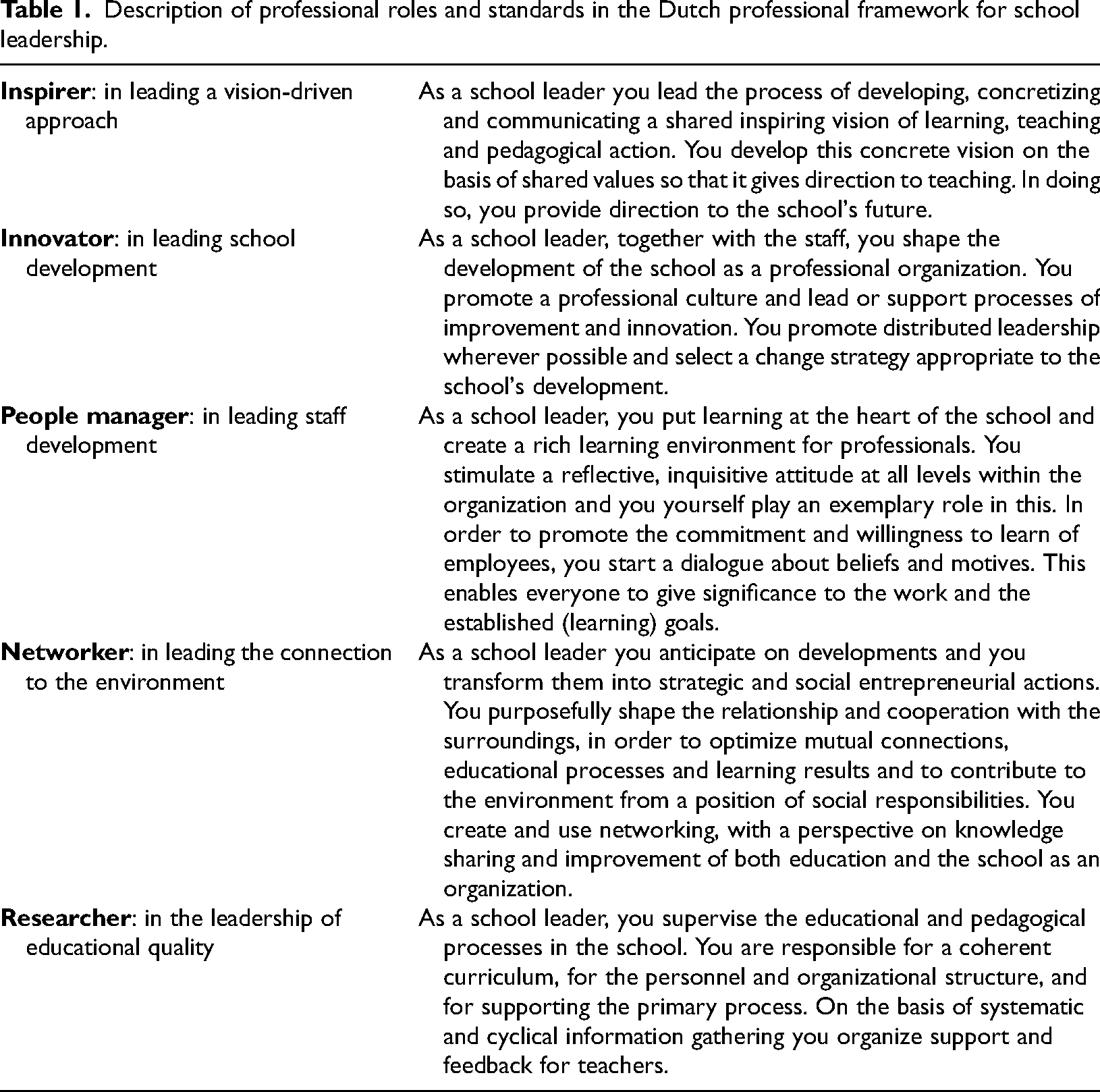
For our research, professional role descriptions were added that described the professional role school leaders take, and identify with, when carrying out leadership practices. Table 1 represents the Dutch professional framework for school leadership and the accompanying professional roles.
Description of professional roles and standards in the Dutch professional framework for school leadership.
Although these formulated leadership practices and professional roles for school leadership show what in general is expected of school leaders (Leithwood et al., 2019), this does not take into account how school leaders relate to these roles internally and the meaning school leaders attach to the criteria that accompany professional roles.
It is expected that when studying internally formulated professional standards that school leaders adhere to, important values regarding being a school leader that are represented in their professional identities become clearer. Next to that also the relation to externally formulated professional criteria for school leadership and leadership roles, that are defined by frameworks for school leadership and that are influenced by these standards, becomes explicit (Burke and Stets, 2009). By identifying these aspects of the professional identity that continuously interact, it becomes clear what guides school leaders professional actions from within (e.g. Akkerman and Meijer, 2011; Crow et al., 2017). The meanings school leaders attach to the professional roles (through identity standards and identification with the roles) can influence the behaviour that school leaders may engage in (Day et al., 2020).
Methodology
In order to gain more insight into the makeup of school leaders professional identity this multiple case study takes the externally formulated professional roles (as formulated in the Dutch professional framework) in specific situations to explore: firstly, the standards school leaders distinguish in situations, representing significant and guiding meanings within professional roles (identity standards), and secondly, the internal identification with the various externally formulated professional roles that represent school leadership (role identities). For this, both qualitative (i.e. participants’ professional identity standards) and quantitative data (i.e. the extent to which participants identified themselves with professional roles) are used.
Context and participants
The study was conducted in the context of professional development courses for school leaders, offered by the Dutch council for secondary education (VO-raad). The council advocates the interests of 330 school boards and 1.421 schools.
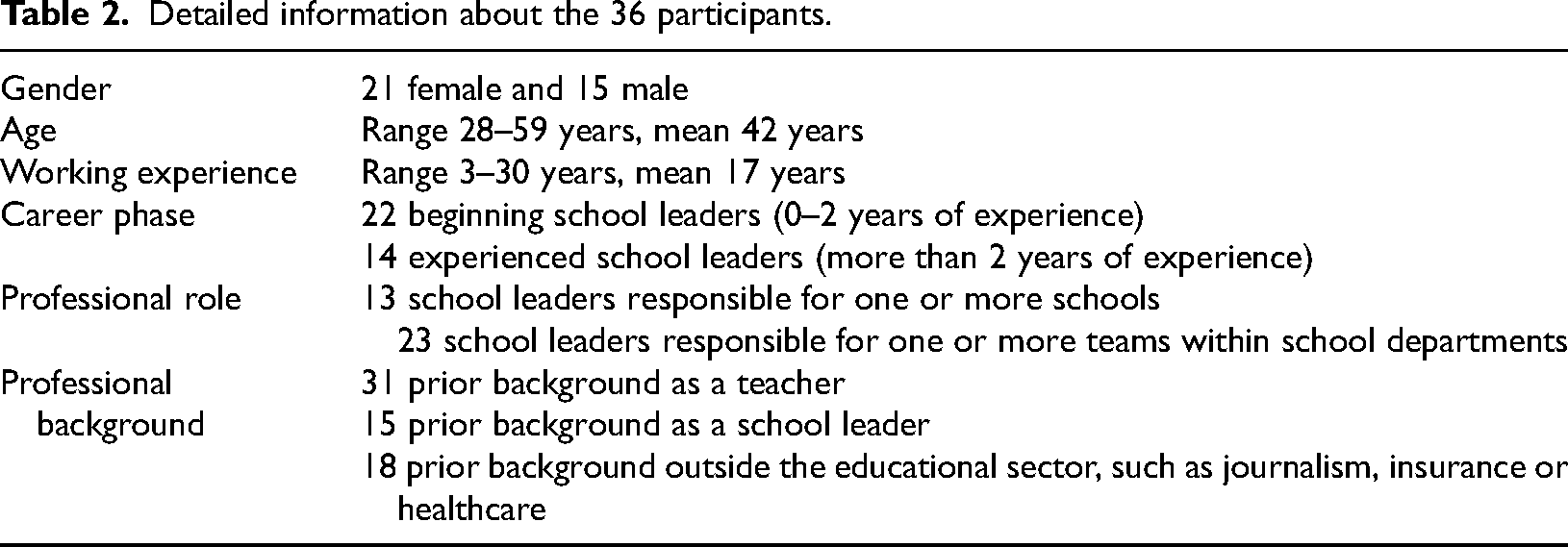
The 36 participants each took part in a course for professional development that was tailored to their career stage (i.e. being a beginning or experienced school leader) and matched their professional role (in terms of being responsible for one or more schools or being responsible for one or more teams within a school department). Professional identity modules were part of these courses. Selecting participants through these courses enabled us to include a variety of school leaders. See Table 2 for more detailed information.
Detailed information about the 36 participants.
Procedure
Participants of this study enrolled in courses of the VO-Academy. As part of these courses, school leaders were offered to choose from a diverse program of modules (concerning leadership, governance or specific educational themes) and subscribed to one or two specific modules. One of these concerned the development of ones’ professional identity as a school leader. The identity module was offered in three different courses and was similar in setup and content in these courses.
Participants received an invitation email for their course in which they also found descriptions about the modules and were asked to subscribe to one or two of the list of modules offered. For the professional identity module, the aim, goal and procedure of the research was made clear. All 36 participants subscribed to the professional identity module and were asked to fill out an online questionnaire. The answers were used as preparation for the module. Data was thus collected beforehand. Participants were also informed in more detail about the research and how data of the questions were used for research if they agreed to participate. Participants could withdraw from participation in the study at any moment.
Instruments
The questionnaire started with an explanation of the concept of professional identity, the goals of the study and of the content of the questionnaire. Permission was asked for using the answers provided for this research and to publish the results anonymously.
The questionnaire was first pilot tested in an earlier course among 13 participants to test the questions for their comprehensiveness and if adequate information was gathered. Some questions were rephrased for clarity, and the questionnaire was somewhat shortened.
The final questionnaire consisted of the following three components: 1. professional identity standards that were either confirmed or challenged in specific situations; 2. leadership roles school leaders identified themselves with; 3. background information of participants. See Table 2 for the questions of each component of the questionnaire (Table 3).
Components and questions of the questionnaire.
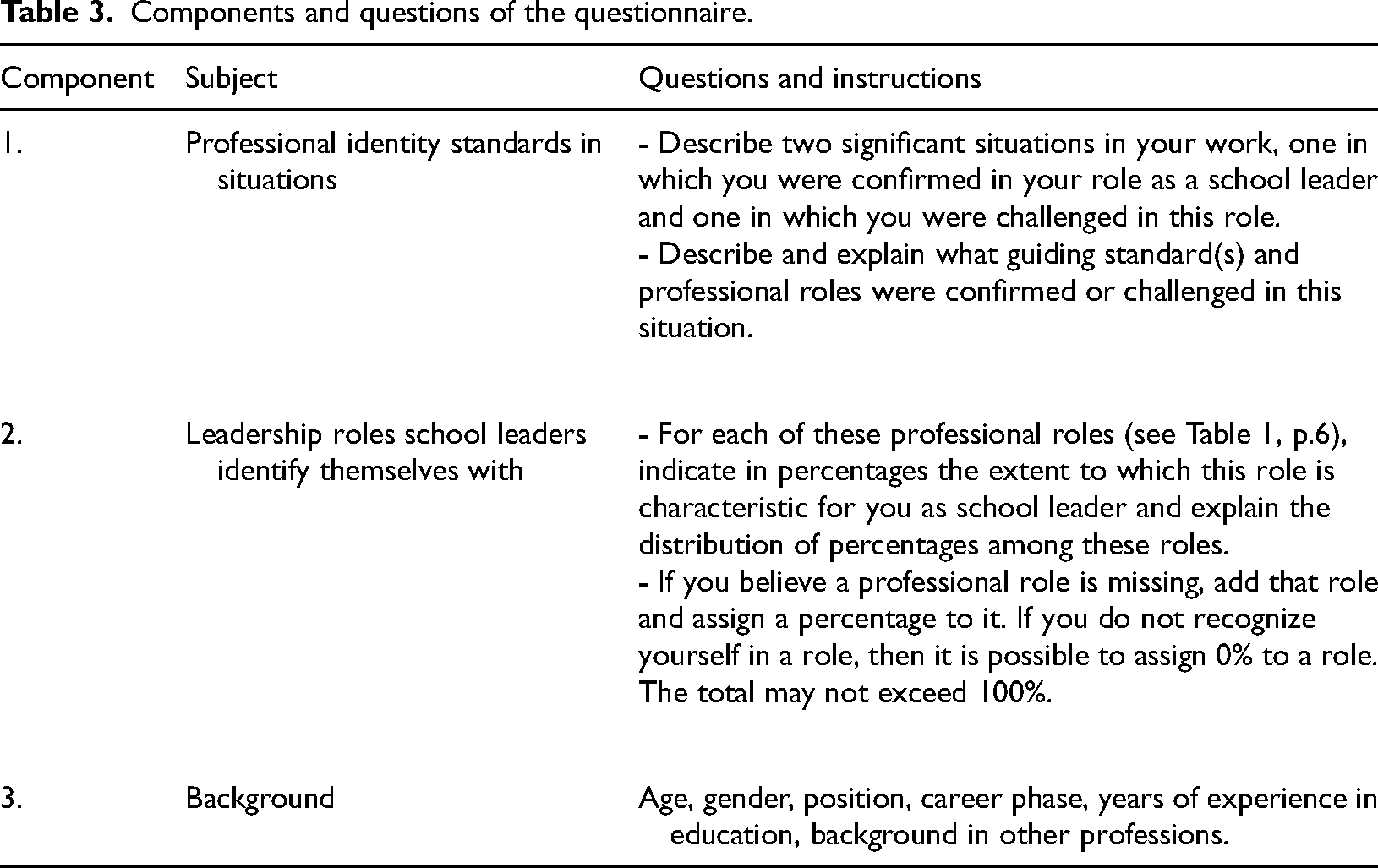
The professional roles were introduced (Table 1, p.6) at the start of the questionnaire. Next, identity standards in component 1 of the questionnaire were elicited from confirming or challenging situations. After that, the question was asked what standards matched professional roles.
Data-analysis
The open-ended responses of participants to the questionnaire were analyzed in a narrative and thematic way (Riessman, 2008), thereby treating the responses of each participant as a whole rather than a set of isolated instances. Given the exploratory nature of the study, an inductive thematic approach was used. All data were first uploaded into an Excel file. To ensure anonymity, the names of participants were replaced by numbers and all names were removed from the Excel file.
Second, standards were extracted, then assigned to the professional roles to which they were linked by the respondents. Per role, those standards that were very much similar or related to one another were clustered. For example, related to the role of People manager, the standards of ‘Getting others to take responsibility; Inviting others to take action and ownership of problems; Coaching others to come to solutions; Being constructive in working together on a vision’ were clustered together and labelled ‘Encouragement’.
Extracting standards, relating them to the professional roles the respondents linked them to, and clustering was initially done by the first author of this article. The two other authors and the first author discussed the choices and a final categorization was made.
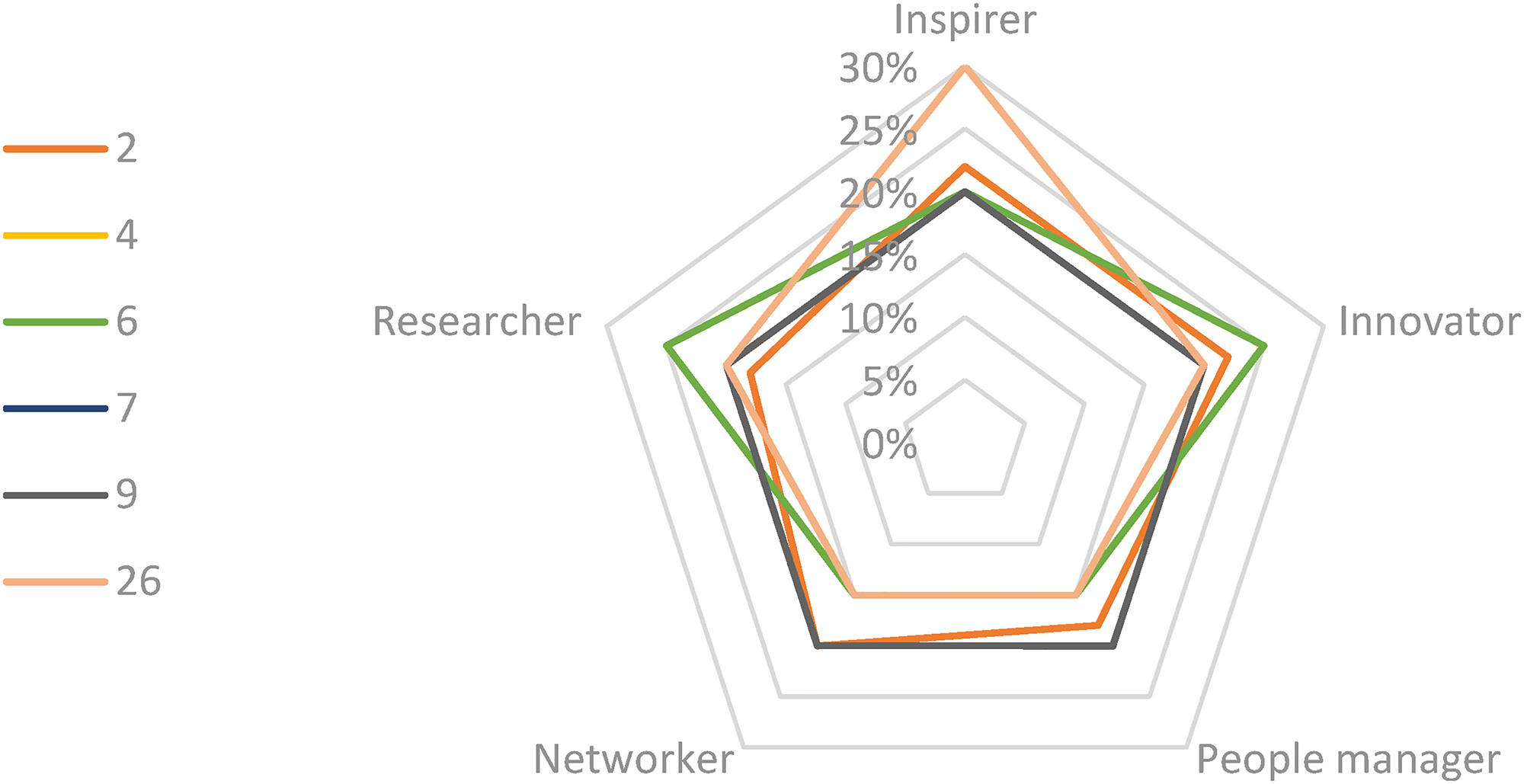
School leaders identifying broadly with all professional roles. Numbers in the figure refer to respondent numbers.
Results
Identity standards within school leaders’ professional roles
In total, 71 different standards were mentioned and they covered all five professional roles. The same standards were sometimes mentioned by several school leaders. For instance, for the role of People manager the standard being able to genuinely listen was mentioned by 11 respondents. Most school leaders mentioned more than one standard per situation.
Table 4 shows the clustering by topic and the standards within each professional role. Standards varied, sometimes focusing more on attitudes (being optimistic), sometimes more on qualities (being able to (re)connect the team) or behaviour (asking in-depth questions). Identity standards also varied in topics, from focusing on educational goals (setting a course by going for specific innovations in pedagogy and didactics) to leadership (coaching others to come to solutions). And they varied from more focused on interactions with others (acting to support others) to more personal or more focused on the self (expressing your moral compass).
Standards per professional role.
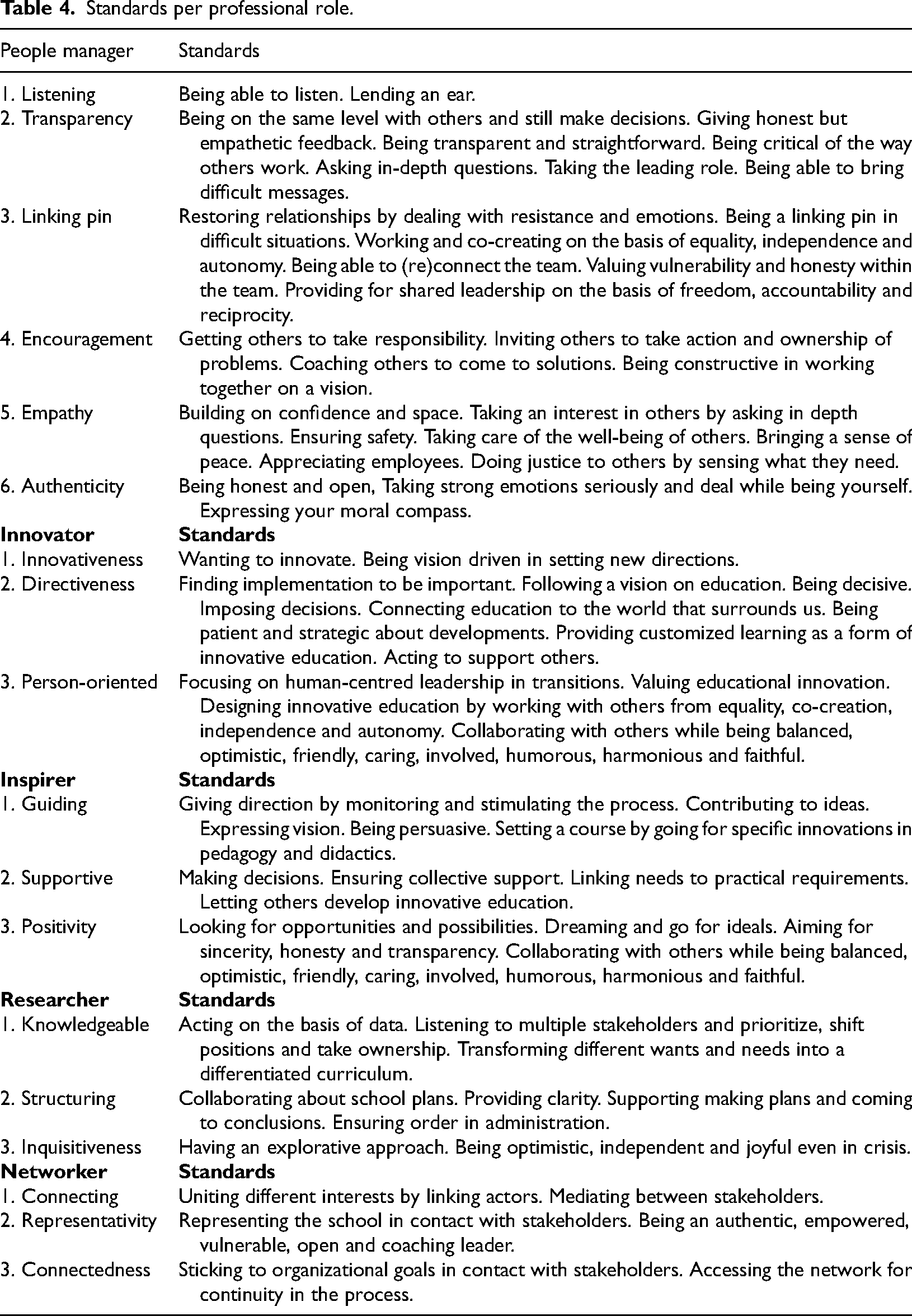
Respondents mentioned the largest number of standards for the professional role of People manager. The least amount of standards were mentioned for the professional roles of Researcher and Networker. Some respondents identified the same standards for both the Innovator and Inspirer roles. Some standards found in Table 4 are therefore mentioned for the role of Innovator as well as for the role of Inspirer, for instance the standards: Collaborating with others while being balanced, optimistic, friendly, caring, involved, humorous, harmonious and faithful.
Within the topics that were identified per professional role, certain topics showed a richer variety of standards than others. For the topics listening or innovativeness, standards were described in a basic vocabulary for example: ‘being able to listen or wanting to innovate’. In contrast, for the topic linking pin (headed under the same professional role), a rich description of standards occurred, for example: ‘restoring relationships by dealing with resistance and emotions’, ‘valuing vulnerability and honesty within the team’, ‘providing for shared leadership on the basis of freedom, accountability and reciprocity’.
School leaders’ identification with professional roles
The 36 school leaders participating in this research identified to what degree a role fitted with them by assigning it a percentage and elaborating on the identifications.
The radar charts were clustered by role identifications for all roles except for the role of Inspirer. There were school leaders that did identify with the role of Inspirer, but identification for this role was always combined with higher percentages for other roles as well (see respondent 18 Researcher and 21 Networker). An exception was respondent 29 who assigned 40% to the role of Inspirer. However, this respondent also assigned high percentages (30%) the role of Innovator and People manager. In accordance with the explanation provided: ‘I often talk to my colleagues about school processes…’ the chart was clustered with the identification of People manager. A separate cluster of respondents identifying most strongly with the role of Inspirer was not found.
The identifications with the professional roles that were clustered are explored in more detail in the following alineas.
Respondents explained that they recognized themselves in all roles, were committed to all roles, finding them equally important and wanting to devote an equal amount of time to all of them. Respondents further explained that although they felt balanced in their identification with all roles, they also found themselves more talented to bring some of the roles into practice and less for other roles. Also, respondents explained that situations sometimes required more focus on a certain role or on a combination of a few of the roles. It was stated by four respondents that identifying with all roles equally did not mean that all these roles were therefore carried out evenly in daily work routines. One of these four respondents who is a beginning school leader responsible for one school, stated: ‘All roles are equally important. I will not do the same amount of work in all roles myself, but in that case I will make sure that it is done by somebody else’.
Figure 2 shows that these nine school leaders assigned at least 25% to the role of People manager and that four of the school leaders even assigned 50% or more to this role. Within this role ‘interacting with others’ was most significant. Respondents explained this role as developing people in order to initiate and fuel other processes in school, such as developing and innovating education or improving educational quality. This indicates that other roles might be assumed via the role of People manager. For instance, the next statement from an experienced school leader who is responsible for one school showed that the roles of Innovator and Networker seem to be achieved via the role of People manager: ‘To achieve innovation you need to inspire by connecting and empowering people (…) networking is then unnecessary and comes by itself’.
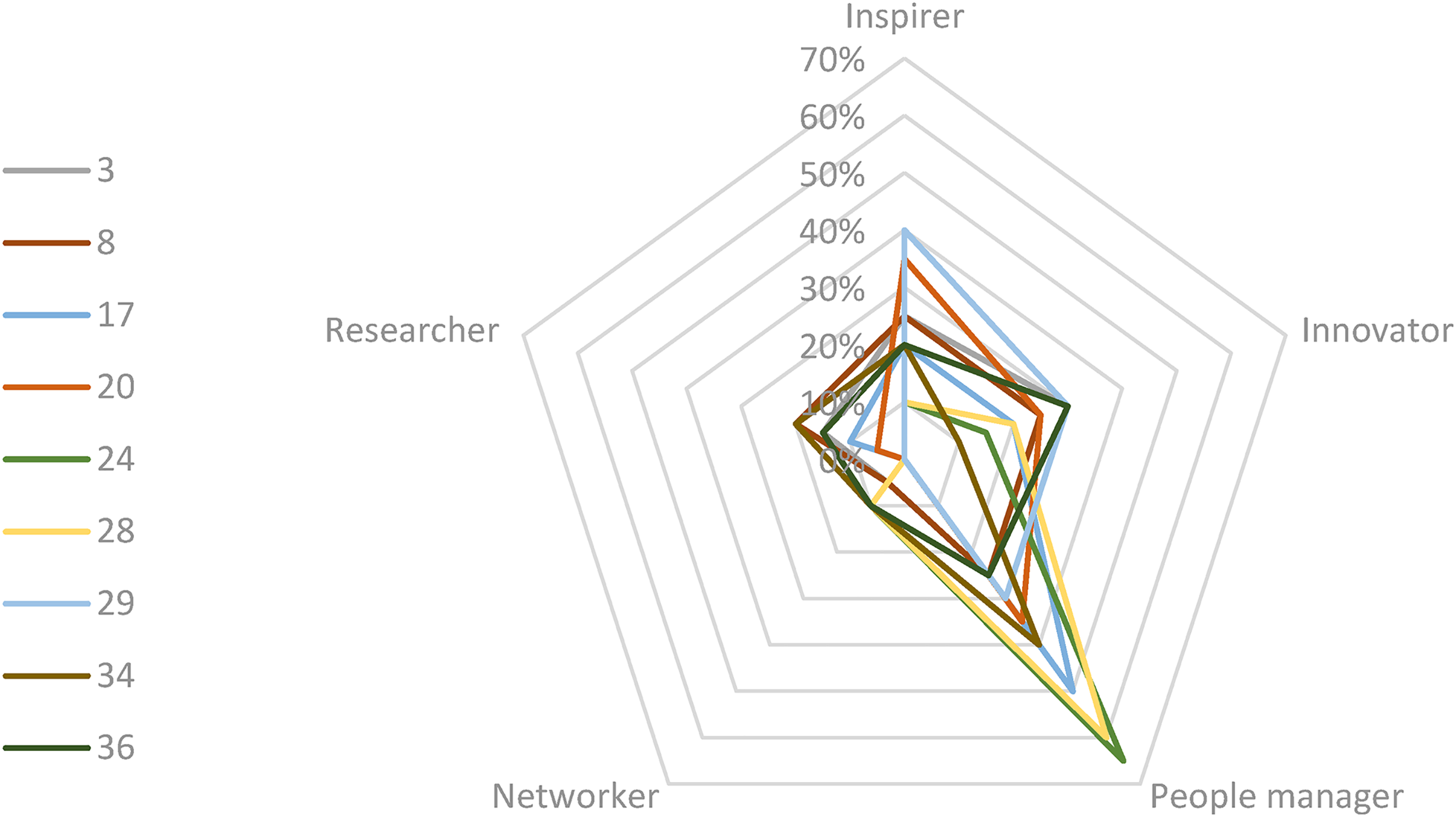
School leaders identifying with the role of people manager.
School leaders identifying with the role of People manager positioned themselves as a designer of processes in the organization and/or within teams and in a coaching and guiding role. Also, some school leaders explained they spent most of their time enacting this role.
Moreover, some respondents who assigned a low percentage to the role of People manager often explained doing so because this was a role they did not identify with at the moment, but wanted to grow into in the future. This was the case for the following respondent who is a beginning school leader responsible for a team in school: ‘For me the role of Researcher is the most important role right now, but I want to work more as a People manager, so I am developing that role’.
Some of the school leaders stated they focused on working from a clear vision and starting from an analysis of the problem. Others focused more on ensuring that processes – like for instance team formation or budget and administration – were ‘in order’. Four also identified strongly with the role of People manager.
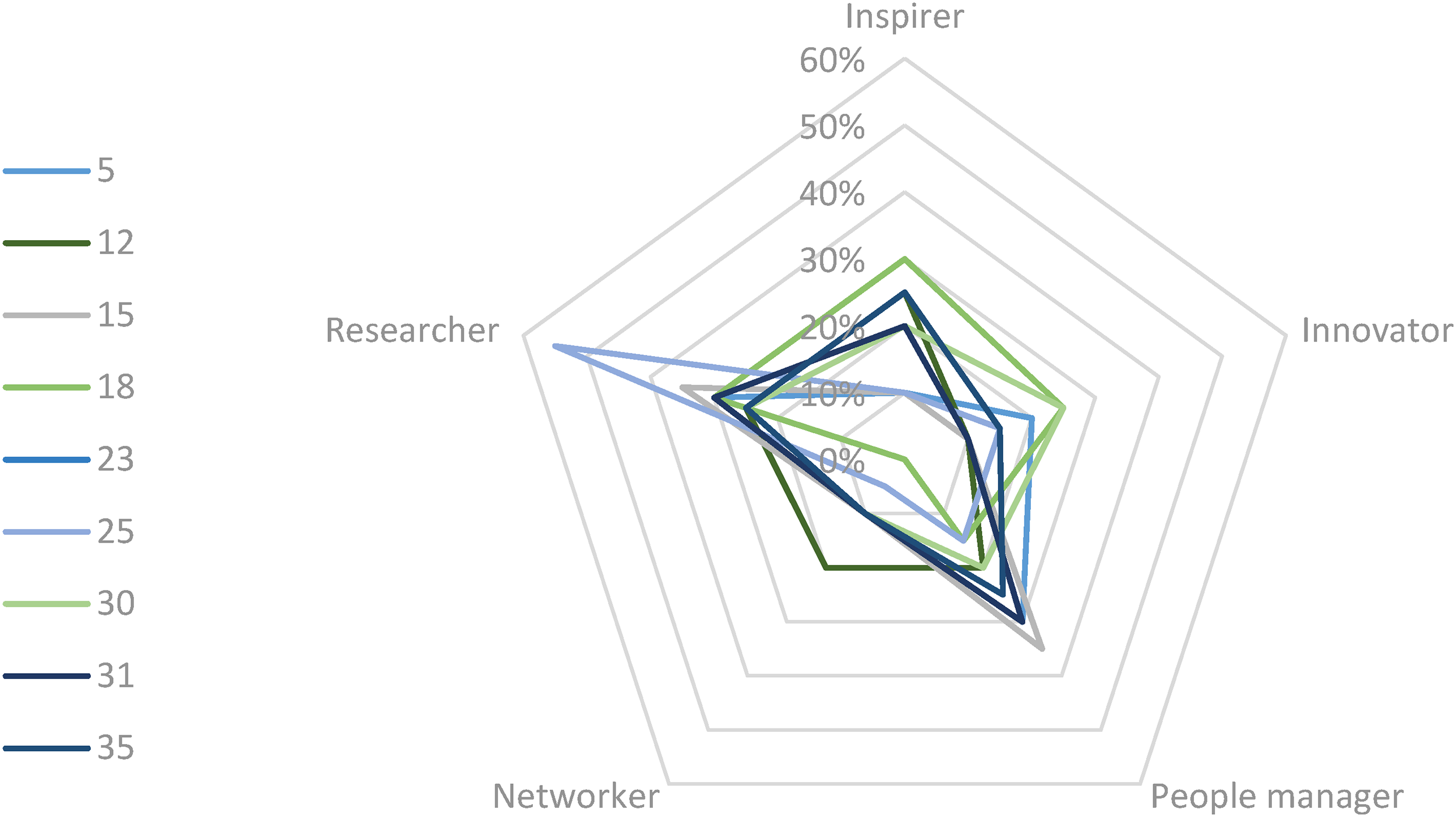
School leaders identifying with the role of researcher.
Some of the beginning school leaders identified with the role of Researcher because in practice they needed to gain insight and overview for growing into their role. One respondent, who is a beginning school leader responsible for a team in school, stated: ‘I don't really know what the problems are and how to solve them. I want to map this out first’.
This beginning school leader seems to consider the identification as Researcher as a present moment phenomenon.
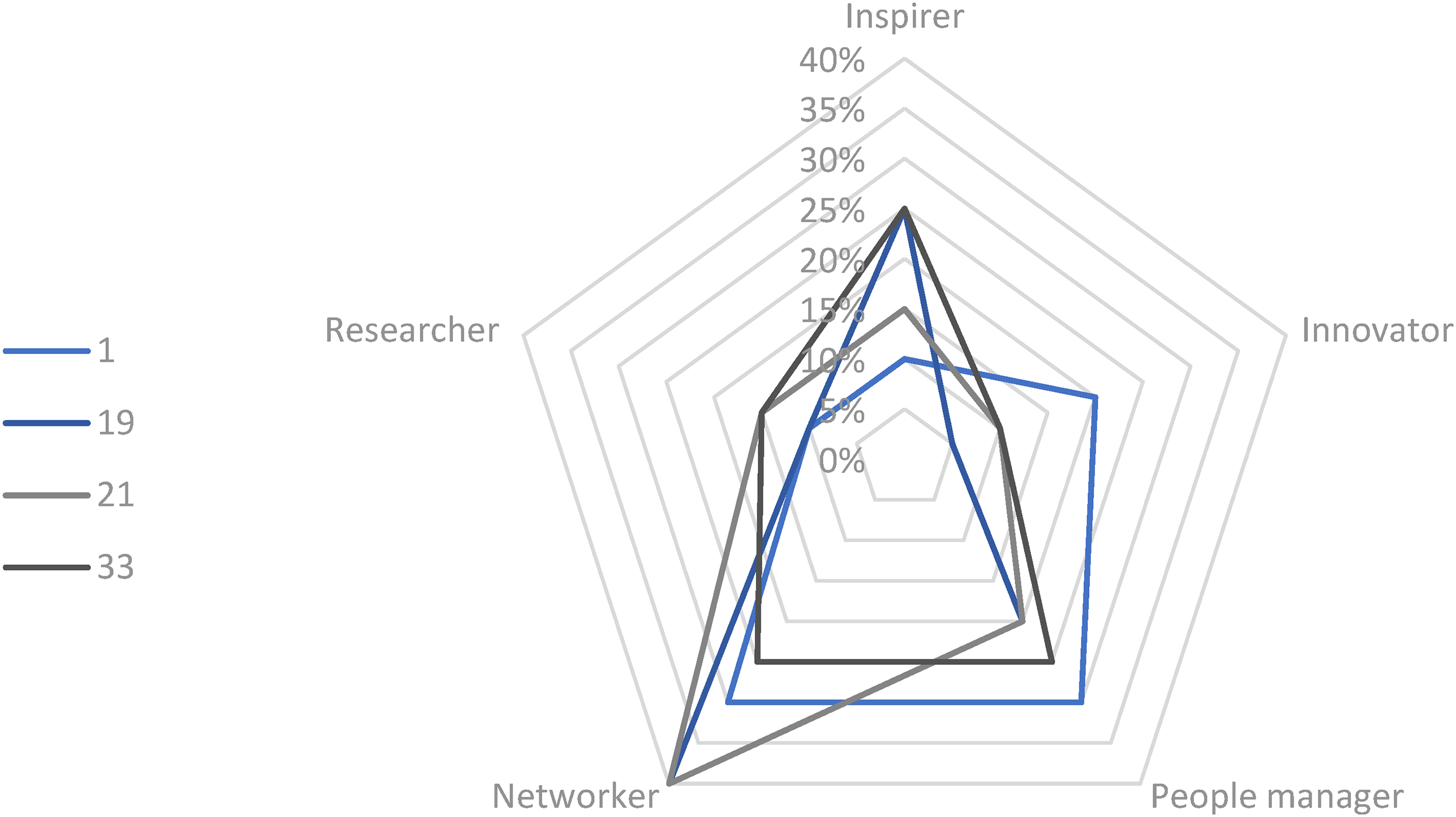
School leaders identifying with the role of networker.
School leaders identifying with the role of Networker found networking to be important for problem solving, and to promote and design initiatives in partnership with external stakeholders. School leaders identifying with this role actually took part in a network, for instance working within the network of secondary schools that work together with elementary schools. Also, two (of the four) school leaders explicitly explained not to be innovative but to seek the network for that purpose. One of them, who is a beginning team leader, stated: ‘Connections are important for me. I do not consider myself to be a great innovator with revolutionary ideas’.
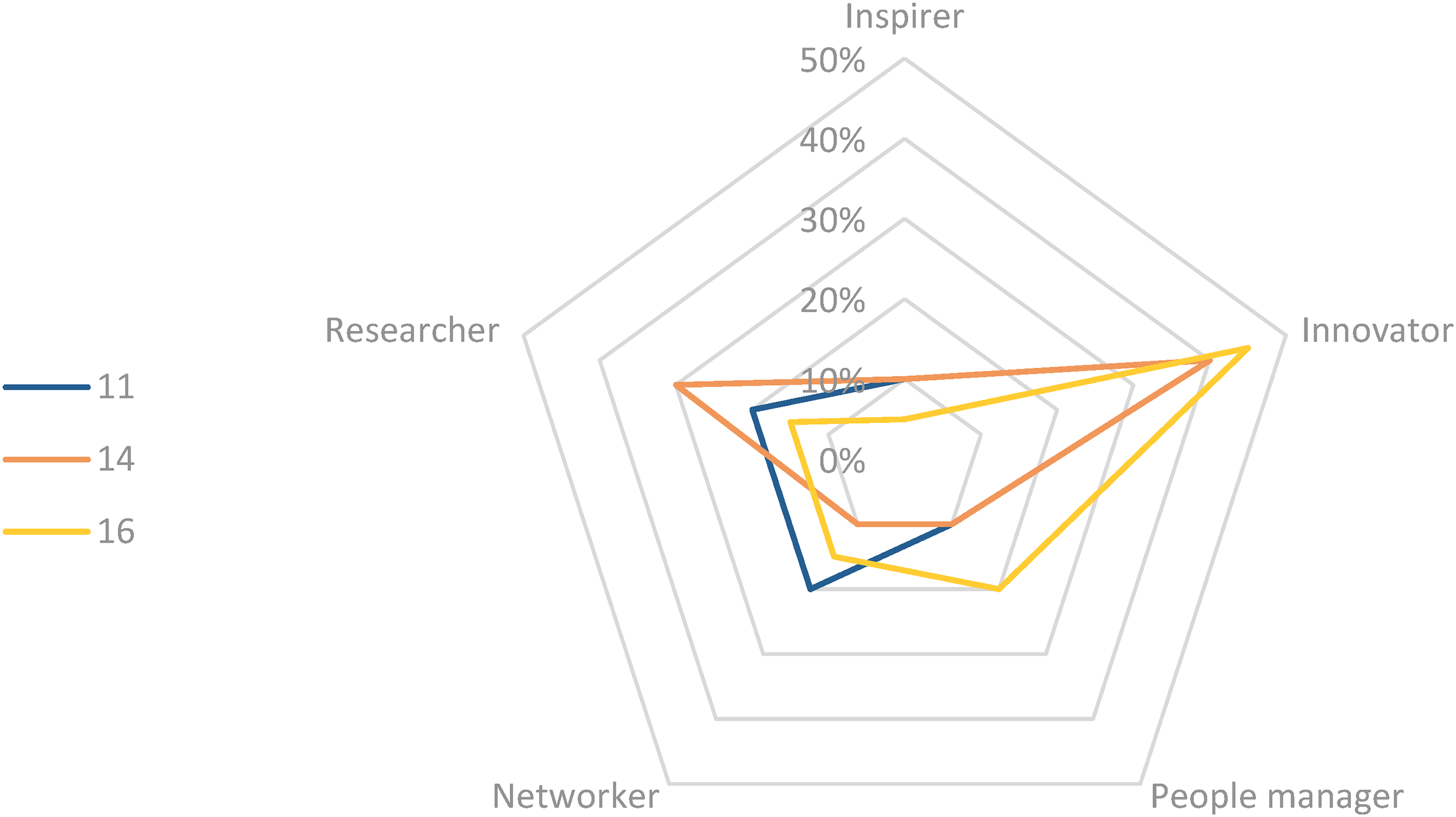
School leaders identifying with the role of innovator.
These school leaders stated they wanted to develop the school and build on the professional school culture. They saw their own role as inventing, leading and initiating school development by focusing on educational and pedagogical processes and connecting school innovations to the school context. One these respondents, a beginning team leader, stated: ‘As innovator I am ‘inventing’ many relevant new developments, make changes within the school and initiate various projects’.
I
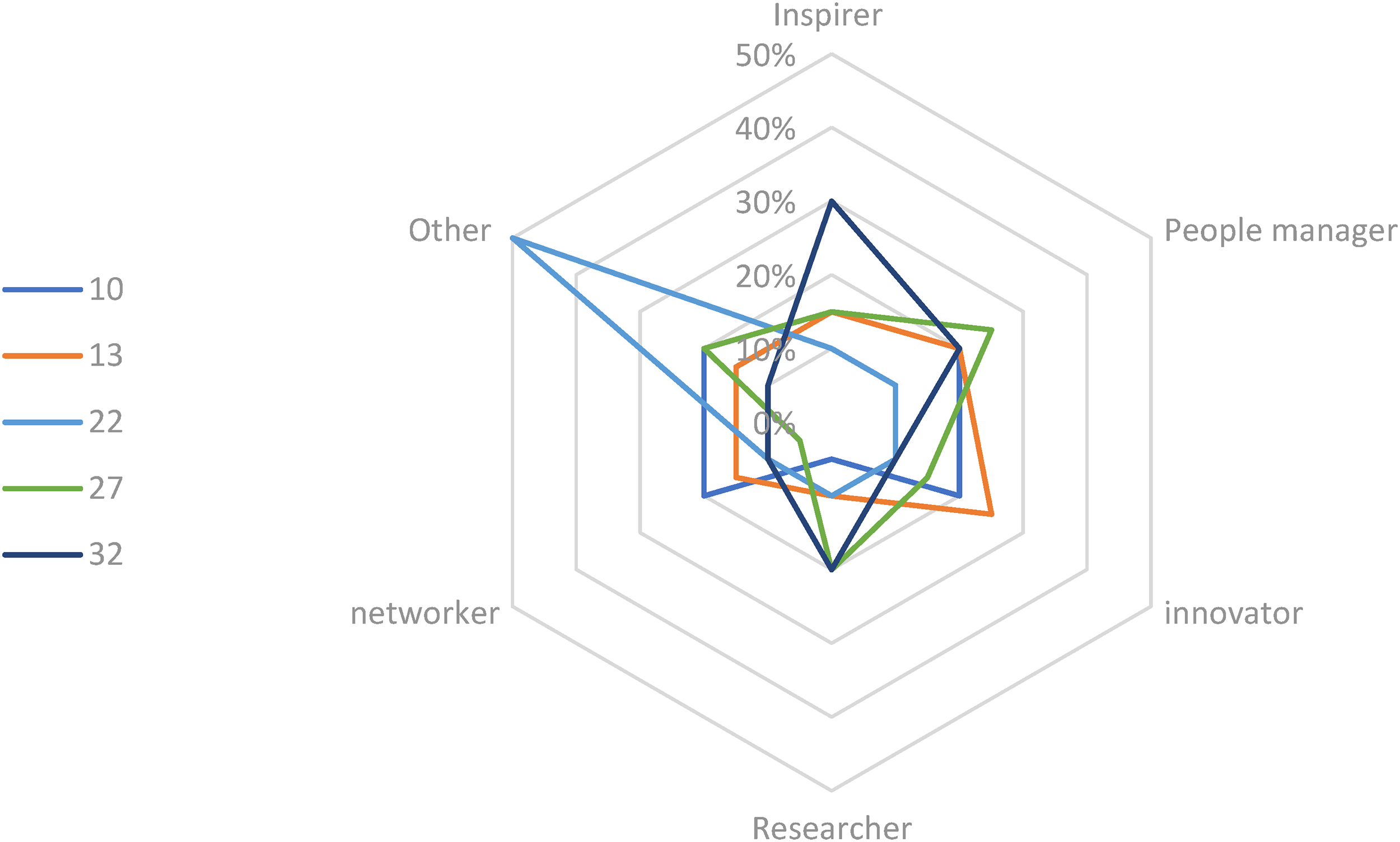
School leaders who identified with an additional role.
Respondents identifying with this role also identified with various other professional roles, but decided to add a role they missed in the professional roles that were described, assigned percentages to the added role and explained more about it in the comments. The following description of the hands on role was derived from the comments of two of the respondents: an experienced school leader who is responsible for an entire school and a beginning team leader. ‘The hands on manager is the manager of everything that happens in the school that requires immediate action or decision’ ‘Tasks include holding meetings on all sorts of conditional activities, organizational matters and administration in the form of personnel files, contracts, schedules, etc’.
In the comments, the hands on role was characterized as the role in which the school leader performed practical tasks by him/herself that were related to the organizational and operational part of the school.
Discussion
This study aimed to understand what constitutes school leaders’ professional identity by investigating how school leaders make sense of their professional roles within a certain context. Teacher identity research already showed the importance of knowing one's professional identity in order to diminish the problems related to being a teacher (Gee, 2001; Gu and Day, 2007). If school leaders have insight into their professional identity, it might help them to identify possible frictions and problems and relate them to standards that guide them in their work. This might help in diminishing these problems and frictions as with teachers. This study first explored which guiding standards school leaders mention related to different professional roles (research question 1) and second, what professional roles school leaders identify with (research question 2).
Results regarding the first research question revealed that the standards school leaders mentioned, covered all five different professional roles for school leadership as defined by the Dutch professional framework for school leaders in secondary education: Inspirer, Innovator, People manager, Networker and Researcher (SRVO, 2021). In this framework, no distinction is made in the importance or emphasis of (one of) the professional roles. Table 4 showed, however, that in this research considerably more standards were mentioned for the professional role of People manager than for other roles, and that these were more elaborate descriptions as well.
In general, most standards incorporated aspects of a communicative nature in the professional role, similar as with teachers (Van der Want et al., 2015), and they were often formulated in words signifying contact and interaction, for example, listening, guiding, connecting and supporting. Although standards concerning ‘interacting with others’ were identified mostly for the role of People manager, these were frequently mentioned in other professional roles as well. For instance, the standard ‘collaborating on school plans’ was mentioned in relation with the role of ‘Researcher’.
Results regarding the second research question showed that the role of People manager was the professional role school leaders identified most with. School leaders assigned the highest percentages to this role. Next to that, many respondents who did not assign the highest percentages to the role of People manager still often assigned relatively high percentage to the role. For instance, one of the respondents not only identified with the role of Researcher but also assigned 35% to the role of People manager.
Teacher identity research also showed that ‘interactions and interpersonal contact’ form significant aspects of teachers professional identities (Beauchamp and Thomas, 2009; Vähäsantanen and Billet, 2008). This reinforces the consideration that ‘interpersonal identity standards’ for contact and interactions and ‘interpersonal role identifications’ are the most prominent aspects of school leaders’ professional identity. Subsequent research could confirm whether this is actually the case. Research concerning the professional identity of beginning teachers showed that especially for beginning teachers it was important to become aware of possibly conflicting standards especially in situations when they were interacting with others (Pillen et al., 2013).
Overall, next to a broad and diverse identification pattern, two distinct types of identification patterns seemed to emerge: a ‘socially oriented pattern’ and an ‘analytically oriented pattern’. Within the ‘socially oriented identity’ some school leaders identified more with the professional role of People manager and others more with the role of Networker.
Within the ‘analytically oriented identity’ some school leaders identified more with the professional role of Researcher and others with the role of Innovator. An additional identification pattern came to the fore: the identification with the ‘hands on manager’. Performing practical ‘hands on’ tasks seems to be an important and sometimes impactful aspect of school leaders’ identification in their profession.
Similar patterns or profiles are described in studies concerning leadership roles and in teacher research. Devos and Bouckenooghe (2009) for instance found a ‘people-minded profile’, and a ‘moderate minded profile’ in which less emphasis lies on involving teachers and more on analytical orientations. They also identified an ‘administrative-minded profile’ focusing on administration and coordinating in leadership. Also, in teacher research various role preferences can be found with more content-driven teachers versus more pedagogically driven teachers (Hanna et al., 2019). These differences in role perceptions, administrative versus more content-driven or leadership-based, may lead to different perceptions in school leaders as to their roles and responsibilities. This might translate into different perceptions of what being a school leader entails and possibly into different types of identities.
Regarding the professional role of Inspirer the results showed overlapping standards and no specific identification pattern for the role of Inspirer, only for the role of Innovator. This might point to interrelatedness of these professional roles in school leaders’ professional identity. In leadership research, this interrelatedness is also found in theories of Transformational leadership which is centred in forming ideas, building a shared vision and changing employee's ways of thinking and doing things (Inspirer role) and which is key to school improvement (Innovator role) (Anderson, 2017).
The standards mentioned in this study revealed what school leaders found important in the professional roles they carry out. The identification with professional roles showed the image of the kind of school leader they are. However, this image of who these school leaders are does not represent who they are as school leaders in practice. Some school leaders indicated in this study that they hold ideal standards for who they aspire to be as a school leader in the future and express wanting to grow towards this image.
Future research could explore the identity standards school leaders adhere to at present and what the ideal identity standards are they strive for in their leadership in the future and how these standards are related to actual behaviour of school leaders.
Limitations
For the present study, a context-specific and relatively small sample of 36 respondents was used. Within this sample, a larger part (N = 22) consisted of beginning school leaders (0–2 years of experience in being a school leader). With 36 respondents, the sample was not large enough to establish differences in identifications in various career stages and positions (team leaders, school principals). In subsequent research, larger respondent numbers and a less context-specific sample are needed for more generalizability.
School leaders were asked for each of the professional roles (see Table 1), to indicate in percentages the extent to which this role is characteristic for them as school leader and explain the distribution of percentages among these roles. Although the radar charts indeed showed these identifications with professional roles, still school leaders in some cases explained that the identification was chosen because of the amount of time spent on the professional role. Future research needs to take into account what these percentages are specifically based on the amount of time school leaders spend in the professional role, what they feel is important, or a combination of these two.
Implications
The two identification patterns that came to the fore in this study can be useful to identify leadership preferences as more analytical or social. This might identify school leaders’ preferences or motivations for certain, more social or analytical dimensions of their work. It may also provide insights into how one's own preferences relate to specific demands and expectations in the work context.
Within these patterns many school leaders in this study identified with professional role standards that were related to the interaction with others. In addition, a strong identification was found with the social role in leadership and with ‘interacting with others’ specifically in the role of People manager but also in all other professional roles. It is important to acknowledge that the social role and ‘interacting with others’ has great impact and might be the basis of school leadership. More attention needs to be given to this social role also to be able to integrate this knowledge into training for school leaders and as a prerequisite for doing the job.
What the preferences in role identification are based on, whether they are elicited through the environment or through interactions with significant others and what behaviours and emotions play a role, is not yet clear. In future research, the fact that identification with multiple professional roles can occur simultaneously and sometimes becomes visible in a particular preference for a role, can be used to identify how school leaders balance these various, possibly conflicting, roles and standards.
Practical implications
For Dutch educational policy and, specifically for the refinement of qualification frameworks and associated professional development opportunities for school leaders, it is recommended to explicitly include school leaders’ perspective. That is, based on the study results, school leaders differ from each other when it comes to the professional roles they identify themselves most with. Hence is recommended to allow for differentiation among schools leaders, for example, in terms of their affinity with more administrative or more leadership-oriented responsibilities (Farchi and Tubin, 2019).
The results of this study can be used as a basis for a reflection tool for conducting periodical job evaluations of school leaders. It could be useful for school leaders to become aware of how they personally identify with various professional roles and what accompanying standards they hold within these roles. This insight into the makeup of their professional identity provides insight into their being as a school leader and might be a starting point for identifying the balance within their work and possible tensions that are being experienced (Pillen et al., 2013).
The method used in this research, using radar charts, provides a clear picture for school leaders of their identifications with certain professional roles. By adding specific words to the roles in which the standards were described in this research, it becomes possible for school leaders to talk about and reflect on their identity standards within each professional role and their identification pattern. In addition, school leaders can be asked to formulate their own identity standards.
This type of dialogue might especially help beginning school leaders to become aware of their standards and identifications as aspects of who they are in their work. It provides insight into their professional identity, their motivation to enact a certain role as school leader and might help them to identify what kind of school leader they are and want to become in the future. Similar to teachers, developing an insight into their professional role identity might help school leaders to develop effective work practices that fit who they are as a school leader and help them to be resilient when dealing with demanding and changing professional contexts (Gu & Day, 2007).
Footnotes
Declaration of conflicting interests
The author(s) declared no potential conflicts of interest with respect to the research, authorship, and/or publication of this article.
Funding
The author(s) received no financial support for the research, authorship, and/or publication of this article.
