



Abstract
In most countries around the world, teaching is a highly feminized profession. However, despite the higher percentage of female teachers in secondary schools, women continue to be under-represented in secondary principal roles. Similar to the United Kingdom, in Australia more than 60% of all teachers in secondary schools are female, and 40% of the principals in secondary schools are female. Furthermore, on average it takes female teachers 2.7 years longer to attain a principal role and consequently have a shorter career as a principal. Therefore, it is important to understand the pathway of female principals as they progress through middle leadership roles to senior leadership. This article investigates and reports on the career pathways of 14 female principals in Australian secondary schools. Each individual pathway to principalship was mapped out to specifically identify the types of middle leadership roles undertaken over each principal's career. The mapping of the pathways identifies the types of roles which were more commonly held by the female principals prior to senior leadership. Interviews with the principals enabled the identification of a range of shared challenges and affordances on their pathway to principalship.
Keywords
Introduction
In most countries around the world, teaching is a highly feminized profession (Coleman, 2005). However, despite the higher percentage of female teachers in secondary schools, women continue to be under-represented in secondary principal roles. According to OECD data, the percentage of female principals in secondary schools is on average 45% despite 69% of secondary school teachers being female. There are exceptions noted in some countries such as Brazil (75% women principals) and Japan (94% male principals) (OECD, 2016). Similar to the United Kingdom, in Australia more than 60% of all teachers in secondary schools are female, and 40% of the principals in secondary schools are female (McKenzie et al., 2014). On average it takes female teachers 2.7 years longer to attain a principal role and consequently have a shorter career as a principal (Maranto et al., 2018). Therefore, it is important to understand the pathway of female principals as they progress through middle leadership roles to senior leadership.
This article investigates and reports on the career pathways of 14 female principals in Australian Catholic and independent secondary schools. Each individual pathway to principalship was mapped out to specifically identify the types of middle leadership roles undertaken over each principal's career. The data was then compiled in two ways to enable comparisons across and between the 14 principals. The two graphs compiled from the data were used to identify similarities and differences and to glean an overall understanding of their route to principalship. As part of the interview, the principals discussed their journey to principalship, and the middle leadership roles undertaken along the way. An analysis of the interviews revealed the shared challenges and enablers experienced by the women on their pathway to principalship.
Overall findings include that principal undertook a range of middle leadership roles, and a broad experience was generally needed to develop the necessary skill base to take on a principal role. It was commonplace for leadership roles to be undertaken early in their teaching careers, and principals were deliberately strategic regarding the range of roles they undertook. There was also a willingness to make some brave decisions such as relocating from family and place of residence to maximise leadership opportunities. The leaders also discussed the issues regarding family and caring responsibilities and importance of family and colleagues as key enablers on a pathway to principalship.
Literature review
What is the pathway to principalship?
Typically, the pathway to principalship in schools is a staged process. The first step for early career teachers is to be an informal ‘teacher leader’ as identified by Nguyen et al. (2020) and Lovett (2017). Similarly, De Nobile (2023) describes this type of leadership as ‘first level’. The teacher-leader step is also described by Murphy (2023) in his analysis of 12 recently appointed principals in the Republic of Ireland where he found all principals had been informal teacher leaders in their early career, mainly focussed on some aspect of curriculum or pedagogy.
The next stage on the way to principalship for most teachers is through undertaking a range of middle leadership roles (Lipscombe et al., 2023). In Australia, principals on average, spend 23 years as teachers, including approximately 12 years in middle leadership roles before becoming a principal (Thomson and Hillman, 2019). This is similar to the OECD average of 20 years; however, Australian teachers spend more time in other administrative roles (middle leadership) than is the average internationally. In contrast, principals in Finland (on average) spend 3 years in other administrative roles and 15 years in the classroom.
Moving into the senior leadership role of deputy or assistant principal is the step along the pathway for most principals (Murphy, 2023). There appears to be little available data on the number of years spent in the role of assistant or deputy principal prior to principalship. Weindling and Earley (1987) considered the length of time secondary headteachers spent in other school leadership roles prior to headship. They reported that for 97% of their sample, the leaders spent 6.5 years as a deputy head. The co-principalship pathways have been reported to be another model of school leadership (Grubb and Flessa, 2006; Masters, 2013). This model of leadership has not gained significant traction in most jurisdictions but is reported as a being linked with increased job satisfaction (Porritt, 2021; Wexler Eckman, 2018).
Gender differences are prevalent in the pathway to principalship. The first notable difference is time taken to move from teacher to principal. In Australian schools, men reach the role of principal on average 2.7 years sooner than women (Maranto et al., 2018). This pathway is similar in countries such as the USA (United States of America), and U.K. (United Kingdom) (see Davis et al., 2017; Higham et al., 2015; Martinez et al., 2021). A further difference in principal pathways was reported by Maranto et al. (2018), who note gender differences in the types of middle leadership roles undertaken by women and men. Their analysis of the pathway to a principalship indicates that women are twice as likely than men to have taken on a curriculum specialist role (31% of women and 16% of men) and men are three times more likely to have been an athletics coach (53% of men and 17% of women). They attribute the rationale for this difference as attributable to the highly visible and public profiles of coaching and sporting roles which enable people to be noticed in comparison to invisible nature of curriculum work.
School leadership has long been considered a male dominated pursuit (Boris-Schacter and Langer, 2006) and this seems to be slowly changing. A study by McGrath (2020) tracking the promotion of females and males in government schools in the state of NSW (New South Wales) Australia found the number of female principals in has increased over time. However, the numbers continue to be unreflective of the number of female teachers in the profession. Whilst previous data has shown the number of female principals was increasing slowly over time (McKenzie et al., 2014, up by 6% from the 2010 report), the latest Teacher Workforce in Australia report (AITSL, 2021) states while there was no change in the gender of registered teachers more broadly, there was a 2% decline in the proportion of women in senior leadership roles from 2018 (71%) to 2020 (69%). Furthermore, Fuller (2017), in an analysis of head teachers across England, found there is not an even distribution of women leading all types of secondary schools. Fuller reports that women were more likely to be leading in smaller schools and in less affluent areas than their male counterparts.
Challenges
Throughout the literature a number of challenges emerged for women on the path to principalship.
Selecting ‘the known’
There are fewer women applicants and fewer women being selected for leadership positions which leads to lower number of female principals in schools around the world (Thomson and Hillman, 2019). To understand this trend, Myung et al. (2011) report on the widespread practice of principals identifying and ‘tapping teachers on the shoulder’ to become principals. Their survey of over 9000 teachers of more than 10 years of experience in one school district in Florida, found 72% of principals were approached by their former principal and 52% of assistant principals were approached by their former principal. They also report that those ‘shoulder tapped’ were those whose principals believed to have the necessary skills and abilities to take on a leadership role. However, the colleagues who were casually approached were disproportionately males and of the same ethnic group as the individuals who encouraged their application. This research aligns closely with that of Blackmore (2006) who has identified a pattern of ‘reproduction of the known’, when a successful candidate is often known to the selection panel. This phenomenon also aligns with the concept of homo-sociability as discussed by Coleman (2005) where people are more comfortable to appoint people like themselves.
Perceptions and bias of others
The perceptions and biases of education colleagues are noted as another barrier to women seeking promotion. The existence of a motherhood penalty is reported by Budig et al. (2012) and Becker et al. (2019). Furthermore, Mari and Luijkx (2020) found employers view working mothers as less competent and less committed compared with childfree women. Conversely, when men were often perceived as more stable and competent, a phenomenon known as the ‘the fatherhood bonus’ (Budig et al., 2012). These factors can negatively impact on women's appointment to leadership roles in schools, as factors beyond the stated criteria, such as caring responsibilities, are often considered when deciding a female candidate's suitability for a role (Becker et al., 2019; Blackmore, 2006; Coleman, 2005; Everitt, 2020).
Family and caring responsibilities
According to the Workplace Gender Equality Agency (2022), women ‘still undertake most of society's unpaid caring work (2)’ and this impacts on opportunities to take on leadership roles. This point aligns with the research undertake by Wylie (2020), who report that for many women, motherhood takes priority over the linear progression from teaching to school leadership roles. Furthermore, many female teachers report difficulty maintaining a work-life balance (Coleman, 2005; Gavin et al., 2021).
Women underestimating their leadership capabilities
An additional reported barrier for women into principalship is women underestimating or lacking confidence in their leadership capability. Several researchers have identified women's lower levels of confidence in their ability to become a principal in comparison to men (Coleman, 2002; Shakeshaft et al., 2007). Furthermore, Hoff and Mitchell (2008) found that over 60% of women waited until they met all the appointment criteria (compared to 5.2% of men) and typically waited for their children to be grown before applying for a senior leadership role.
Women are less likely to plan their careers and aspire for promotion. Coleman (2007) stated that 25% of female headteachers had never planned to take on the role. The percentage of men who had an unplanned promotion pathway was small. Coleman (2005) also found 25% of male principals had decided early in their teaching career to pursue a pathway to principalship, comparted to 10% of women.
The research undertaken by Hoff and Mitchell (2008) conducted in the state of Maine investigated the factors contributing to the underrepresentation of women in principalship. They found that women spent more time as a classroom teacher before taking up a leadership role (on average 13 years compared to 8 years for men) and waited for their children to be independent before applying for a senior leadership role. The women also reported they were less likely to change location to obtain promotion. This also aligns with the research of Martinez et al. (2021), in an analysis of a world management survey (WMS), they reported females exhibited higher management quality scores but lower self-ratings in comparison to men.
Enablers
Whilst there are many challenges noted for women accessing principalship, there are also several enablers.
Support from others
Partner and family support has been noted by female principals as an important enabler for principalship (Liang et al., 2018; Mortimer and Edwards, 2018). Liang et al. (2018) noted the support could be in the form of encouragement from family, friends, and colleagues as they recognised the woman's potential to be a leader. At the school level, Fuller et al. (2015) explain the key role that senior leadership teams (SLT) have in developing colleagues for leadership. The study revealed the importance of opportunities to expand the repertoire of colleagues through changing roles or promotion within the current school. This aligns with the work of Cunneen (2021) who highlights the importance of undertaking a range of middle leadership roles as a pathway to principalship. Similarly, opportunities for leadership were noted as important by Gallagher (2021) and Helterbran and Rieg (2004)
Professional learning programmes
Professional programmes, such as structured principal development programmes, have also been shown to support women on a pathway to principalship (Fleming, 2019; Harris et al., 2001). However, most of the previously conducted research in this area does not specifically consider the topic through a gender lens. This literature does, however, identify several factors which support women and men to be promoted to principalship which we outline in this section.
Completing principal preparation and certification programmes have been associated with the pathway to principalship. However, Baker et al. (2018) found there is more likelihood of becoming a principal immediately post certification. This research reports a reduction in the success rate of attainment to principalship of 2% per year, finding after 11 years over half of the certified female principals did not attain a principalship.
Fuller et al. (2015) reported access to mentoring and coaching programmes – particularly those provided outside the school e.g. by local school authorities, universities, or other professional bodies. Access to formal and informal networks of senior leaders in education were also reported as a key factor to support the pathway to principalship.
Mentoring, role models, encouragement and support
Mentoring is noted as important to provide direction and support for women who aspire to senior leadership in schools (Bynum, 2015). The shortage of a mentoring has been reported as one of the reasons underpinning women's underrepresentation in leadership (Angel et al., 2013). Coleman (2020) notes mentoring can take a range of forms including formal, organisation sponsored arrangements or informal and less structured arrangements. Both forms of mentoring have been shown to support women's career advancement (Gardiner et al., 2000).
Furthermore, having visible role models support women's pathway to leadership in schools (Liang et al., 2018). Glass et al. (2001) found when there were women role models in schools, such as in senior leadership roles, there are likely to be more women aspiring to leadership positions. In addition, observable flexibility in leadership roles such as co-leadership encouraged people to take up a leadership position (Döös et al., 2018) and to balance family and work responsibilities.
Overall, the prior research has outlined both the challenges and enablers for women in their pathway to principalship, but no research has mapped the principal pathways that women have undertaken.
The research questions which guide this project are:
What is the career pathway of women into principalship in Australian Catholic and independent secondary schools? Are there particular middle leadership roles which enhance the pathway to leadership for women? What are the key challenges and enablers for women into principalship?
Method
Background and participants
This study was qualitative in nature, as it was structured to provide rich descriptions of each principal's pathway to principalship. The data was drawn from a larger ongoing study conducted on middle leadership in secondary schools in Australia. Following ethics approval from The University Human Ethics Advisory Committee and drawing on publicly available online information, we devised a list of over 100 schools selecting schools who were from diverse locations (both city and rural), of different school size and different school types (co-ed, girls’ schools, and boys’ schools). These schools were then approached via an email to the principal and invited to participate in the study. At the time of the study due to the Covid-19 pandemic, researchers were not permitted to contact government schools to undertake research and therefore we sought participants from independent and Catholic schools from a range of locations.
Of the 36 schools who consented to participate, 14 were led by female principals. In Australian secondary schools 40% of the principals are female (McKenzie et al., 2014). Therefore, the sample in this study is commensurate to these numbers.
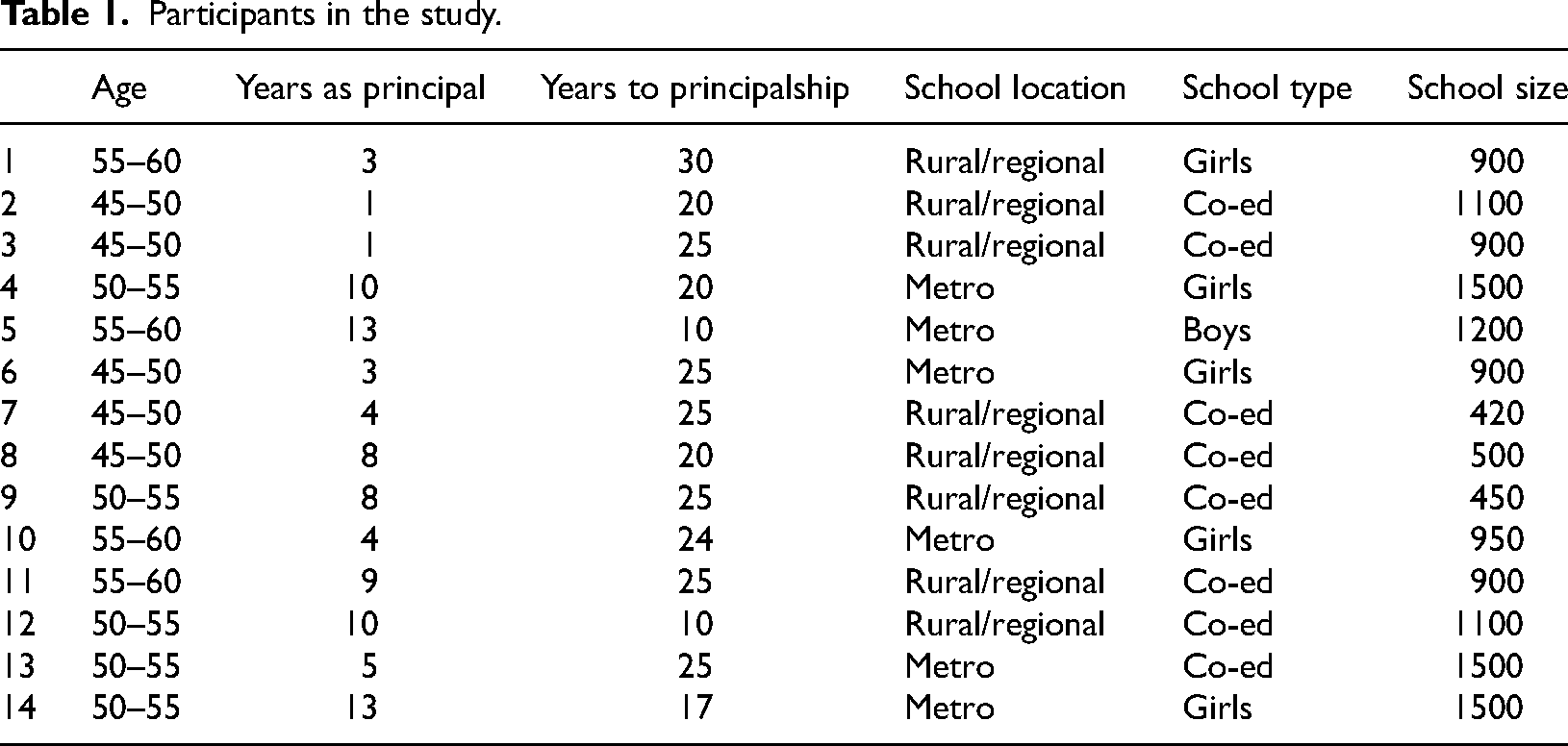
As can be seen from Table 1, the 14 principal participants were working in a range of school types including single sex schools (one boys’ schools and four girls’ schools) and nine co-education schools. The participating principals’ schools varied in size from 400 to 1500 student population and were from metropolitan (6) and rural/regional (8) locations.
Participants in the study.
Data collection
Data was collected through 45-min (approx.) audio recorded semi-structured interviews with each principal asked the same set of questions with the scope for the researcher to respond in the moment and follow up questions from the participants’ responses whenever possible. The principals were asked to describe their journey to principalship including any factors which may have supported or challenged their pathway. They were also asked to share any insights with the researcher about their journey that considered important for us know.
Data analysis
The transcriptions were uploaded into NVivo software for data analysis. Initially transcripts were deductively coded independently by two researchers, drawing on the key barriers and enablers which emerged from the literature review.
The transcriptions of the audio recorded interviews was analysed in a four-stage process of data reduction, data display, identification of themes and verifying conclusions (Miles and Huberman, 1984). In the reduction stage, the data was coded according to the themes as they emerged from across the interviews. The data display stage provided the opportunity for the patterns or relationships across the data to become apparent through the clustering of responses and the subsequent emergence of key themes. These themes were then further categorised and identified as challenges or enablers.
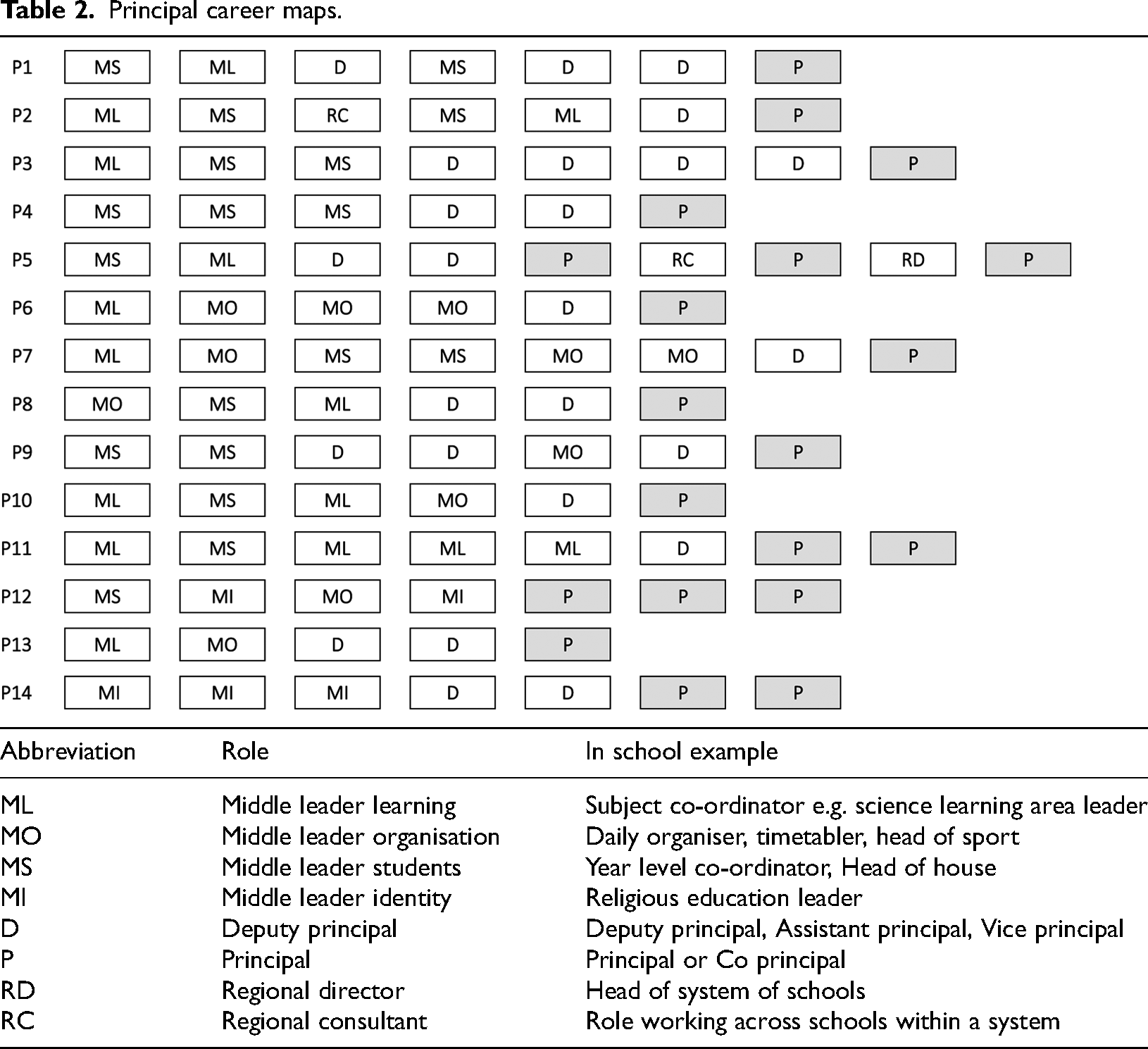
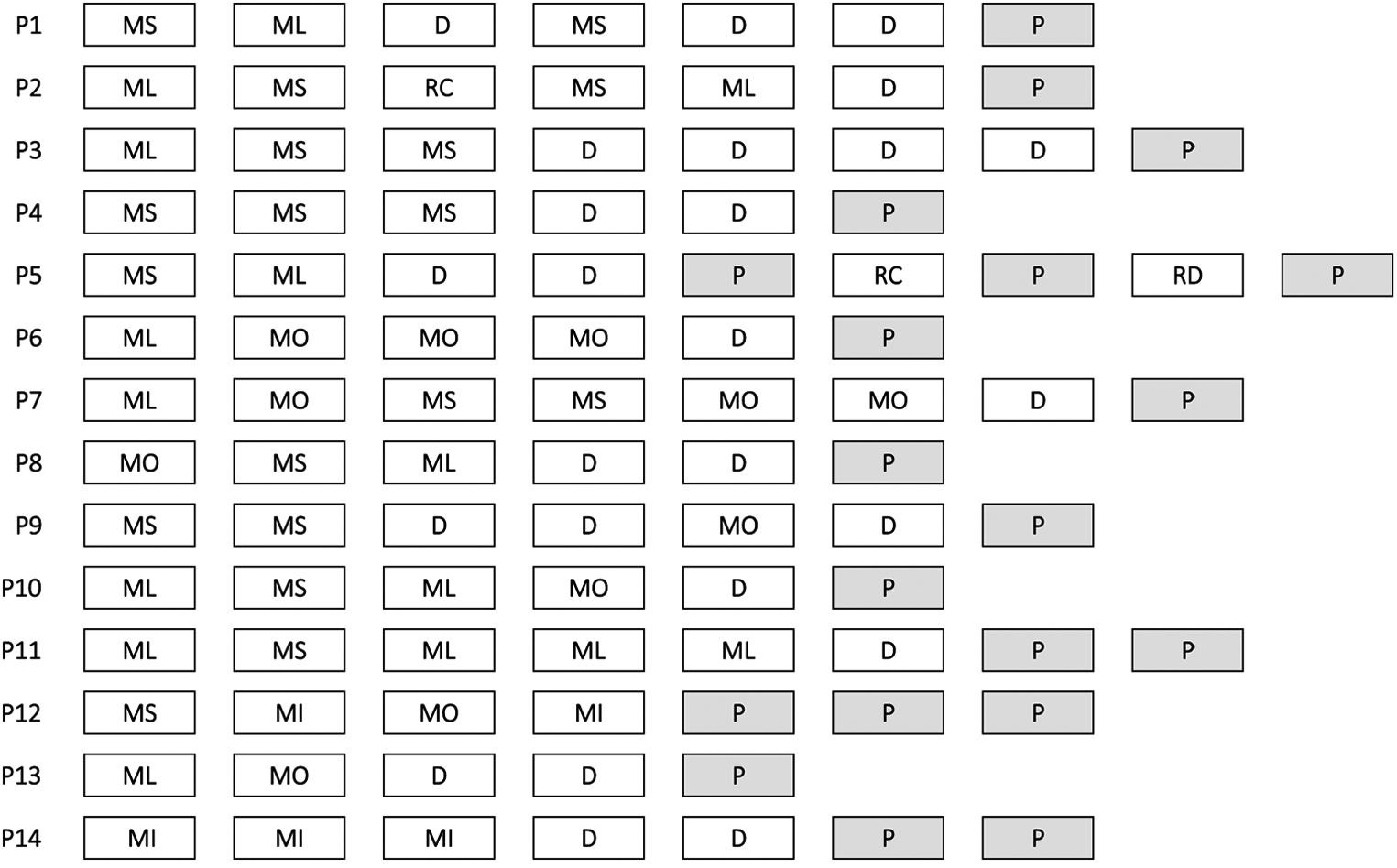
During the interviews the principals outlined their individual pathway to principalship and provided a verbal account of the middle leadership roles undertaken over their career. The data was categorised, tabulated, coded and displayed to enable any patterns or trends to be identified (Table 2). The in-school middle leadership roles were categorised into four types, student management role (e.g. year level co-ordinator), learning (e.g. subject co-ordinator), organisation (e.g. daily organiser/timetable, sports co-ordinator) or Catholic identity. Non-school based roles undertaken by the participants were regional consultant regional director. The senior leadership roles were reported as deputy principal, co-principal, and principal.
Principal career maps.
To explain the career trajectory patterns across the 14 principals, the data was then compiled and displayed in a network map (Figure 1) which shows the transitions between the roles. The nodes represent the roles undertaken by the participants. By observing line thickness between nodes this indicates the numbers of times the participants have transitioned between roles. The ‘looping’ observed at each node shows if the participants have held the role multiple times. Again, the line thickness indicates the number of people through this pathway.
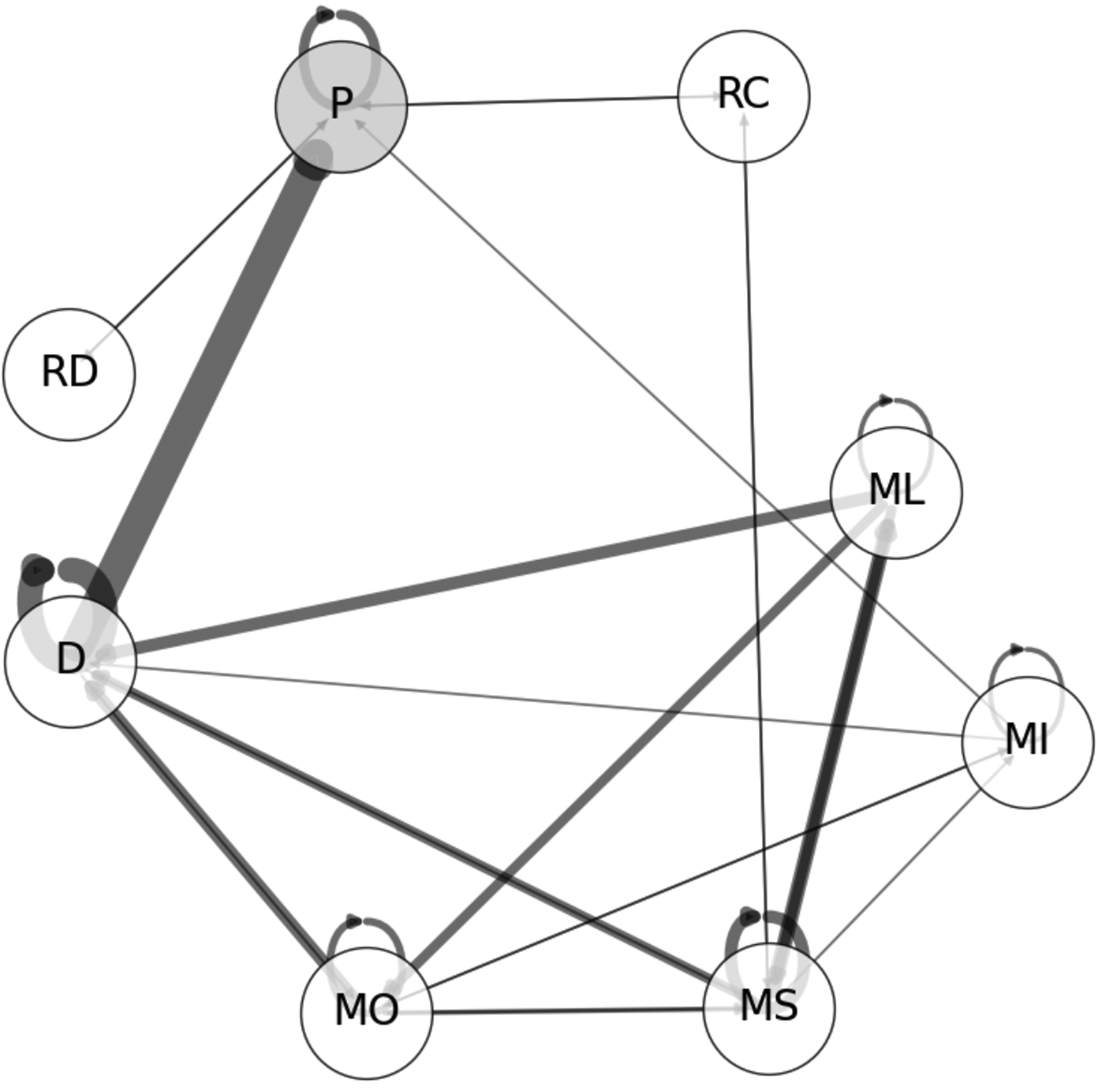
Map of career pathways of female principals.
Findings and discussion
In this section, we discuss and analyse two aspects of the principal pathways. Firstly, we analyse the data as shown in Table 2 and Figure 1 which tracks the range of middle leadership roles undertaken by the principals. Further to this, we then identify and describe the challenges and enablers as identified through the interviews.
Table
Describing the pathways
The career map (Table 1) outlines there is no single pathway to principalship for women in secondary schools other than broadly undertaking middle leadership roles. Aligning with previous recent research (see De Nobile, 2023 and Murphy, 2023) the 14 women who participated in this study held a range of middle leadership roles over their route to becoming a principal.
Even though each principal has a unique pathway to principalship there are many notable similarities. As shown in Figure 1, aligning with the previous research of Cunneen (2021) all undertook a range of middle leadership roles throughout their careers. Taking on student management roles as well as learning focussed roles was a common pathway to principalship. However, four principals (Principals 8, 9, and 14) did not hold a specific learning leader role such as subject co-ordinator. The role of student management, such as year level co-ordinator, was undertaken by most of the 14 principals with only two principals (Principals 6 and 13) not reporting experience in these roles. Organisational roles, such as daily organiser and sports master, were undertaken by seven of the 14 principals. Maranto et al. (2018) note how these roles are more visible than curriculum focussed roles. Interestingly, 10 of the 14 women held a curriculum role at least once on their pathway to principalship. Figure 1 demonstrates the common pathways of middle leadership roles into principalship. Transitioning between student management, learning and organisation roles was commonplace as shown by the thickness of the line between these nodes. As seen from the ‘looping’ shown in Figure 1, transitioning through multiple student management roles is a common pathway for these principals. This ‘looping’ pathway around the other middle leadership roles, such as middle leader learning or organisation, was not as evident.
There was also variation from 10 up to 30 years for women to take up a role as principal. Two of the principals (Principals 5 and 12) were appointed after 10 years of teaching and are now experiencing their third appointment as a principal. Principal 1 and Principal 11's journey was much longer at 30 years, with all other principals taking between 20 and 25 years. This finding aligns with the research of Thomson and Hillman (2019) who report an overall average of 23 years prior to first principalship.
Principals 2 and Principal 5 also held roles at a regional level of the Catholic system, with Principal 5 as a regional director prior to returning to a school as a principal. Principal 2 regional role was enacted prior to her appointment as a deputy principal. Her out of school role centred on providing leadership professional learning to school leaders. She commented she was ‘immersed in best practice’ and this gave her sound knowledge and understanding of educational challenges and priorities to move into senior leadership. The findings from this study were like the experience of principals in the study conducted by Murphy (2023).
Similar to previous research (Murphy, 2023; Weindling and Earley, 1987), all of the principals, except for Principal 12, were in a deputy role prior to their principalship. In Principal 12's case her first principalship was a co-principal appointment. She commented that the co-principalship was a great way to learn. This point concurs with the research of Masters (2013) who note the higher level or support as being a key feature of co-principalship. Furthermore, as noted by Döös et al. (2018), the flexibility of a co-principalship encouraged people to take up a leadership role and learn in a supportive environment as mentioned by Principal 12.
Interestingly, eight of the principals held multiple deputy principal positions prior to their first principal role. Given the pathway to principalship is not well researched (Farley-Ripple et al., 2012) it is not known if multiple deputy roles are commonplace. However, the data from this study shows this phenomenon and is visibly evident through Figure 1 where the thickest ‘looping’ line around the deputy (D) node can be observed. Most notably, Principal 3, held four deputy roles in three separate schools before her appointment as principal. She shared her belief that she thought the opportunity [to be a principal] had passed me by. Similarly, Principal 1 held three deputy roles in two different schools, and she stated it took a lot to back myself [and keep trying for principal roles].
In the next section, following an analysis of the interviews with the principals, it is evident from an analysis of the interviews that there were shared challenges and enablers experienced along the way to principalship. The thematic analysis revealed three key challenges and two key enablers experienced by these women.
Challenge 1 – overcoming gendered expectations of women as caregiver
An enduring challenge impacting on the career progression of women in education is to overcome the impact on careers linked to a gendered expectation of women as caregivers (Wylie, 2020). This was noted by all the participants in this study.
The length of time to principalship is noted as being impacted by the parenting responsibilities as noted by Principal 11.
It was a very long time, and I could have made it faster, but like many women, I had family obligations, and it wasn’t possible to move where I was. So, I guess, my circumstances were career limiting for some time.
Principal 10 also noted, aligned with the research of Wylie (2020), that many women are choosing not to take on principal roles due to family commitments. She stated,
I do think some of the barrier is managing your family, there are times when it is really, really hard.
She also noted often women put their careers second to their husband's careers when she said,
if your partner is in a job that is equal to yours, then it is even harder. Someone has to make a choice and very often it's the woman.
For many of the principals in this study their marital status was considered an important part of the hiring process. For Principal 5 when she was announced as a principal she was asked by a man from the governing body about her title in the letter of announcement to the community.
Do you want it to say Dr Wilson or Mrs Wilson? …. I said, well, I've just made it. You wouldn't think twice. You'd claim the doctorate. But for me, my marital status is something that you're even querying? Why should anyone – like he didn't say, do you want to be Dr or Ms? He said Dr or Mrs?
Principal 5 explained her perception that it seemed important for the school governing body to communicate to the community their new female principal's marital status.
Similarly, Principal 7 recounted an experience post interview for a principal role where it appeared important that her husband was part of the process.
I had the interview and then got a call to say, can you bring your husband up for lunch with the current principal? I actually wish I had said no I’m not interested in the role anymore. Because it was awful. It's checking me out but checking him out as well. I just thought this should be about me and if I’m the right person for the role.
Challenge 2 – women underestimating their own skills and abilities
The participants in this study discussed their observations of how men and women typically approach a promotion application process, with women frequently waiting until they were confident with all aspects of the role description. The observation by Principal 4 aligns with the earlier research of Hoff and Mitchell (2008), Coleman (2002) and Shakeshaft et al. (2007).
It never ceases to amaze me when we externally advertise, the overqualified women and the underqualified men that apply. So, I do think there's a natural tendency to be a little bit more confident and see themselves in the role. (Principal 4)
Similarly, Principal 3 discussed her observations of women articulating the areas which they do not feel 100% confident about.
I think it's about women - it's that self-doubt I think, and we articulate that more than our male colleagues do., I actually think it does us a disservice.
Challenge 3 – overcoming the stereotype of what a leader looks like
The observation that school leadership has long been considered a male dominated pursuit (Boris-Schacter and Langer, 2006) was reinforced by the responses of the women in this study.
This was specifically noted by Principal 1 who recounted her experience when she was not shortlisted for an interview and was told they were interviewing principals and those known to the panel.
I thought, how am I going to move from being a deputy to a principal when they’re either choosing only principals to be interviewed, or you have to be known to the panel.
Similar to challenges articulated by Wylie (2020), Principal 1 further reinforced the disadvantage that many women, who have taken time out of teaching and leadership for caring responsibilities, experience.
I really feel the opportunity to interview is critical in people being able to move up, particularly females who have been out [of the workforce], and as you’re getting older, you’re competing with people, men often, who are 10 years, 15 years younger.
Enabler 1 – planning: follow your passion and be strategic and brave
Aligning with the research of Murphy (2023), all the principals in this study took on a leadership opportunity very early in their teaching career. This type of leadership is described by De Nobile (2023) as first level leadership. These early leadership roles appeared to provide the experience and confidence to move on to other things and develop their leadership skills.
Principal 2 noted how she started with smaller leadership roles.
When I started my teaching career, I took on roles that were extracurricular roles and roles where you were leading smaller cohorts of students. So, debating, going on the writers’ camp and various other social justice activities and teams.
Principal 6 noted how her experience of teaching in a small school facilitated opportunities to be a leader right from the start. I actually started teaching in a small country school and it was so small that you've pretty much got a leadership role from the start. So, I actually had shared science from my first year of teaching.
Participants such as Principal 13 was asked to lead very early on in her career which led to other opportunities such as described below.
I got thrown into a Year 12 PE class. In the second year they said, we need you to be the head of faculty. So, I had been teaching for 12 months. I think I fell into it, leading curriculum and then from there, I moved across and became the director of sport, which I have to say, was an incredible role in terms of leadership, communication, relationships, problem solving, just general organisation at a whole school scale. That took me to a role at another school and I spent a year in that role and then became a year level coordinator.
Many of the principals also talked about the importance of being strategic and planning out their careers. They specifically noticed areas where they thought they might need improvement and then set about making the changes.
The pathways of Principal 6 and Principal 11 were noteworthy. Principal 6's pathway was predominantly organisation focussed and she noted I realised there was a gap in my CV. She then went on to take up Deputy Principal (learning) role. However, Principal 11's pathway mostly centred on leading learning and teaching. She stated I have such a love of the learning area leader path … I just couldn’t deviate from that. Similarly, Principal 10 worked in the student wellbeing/management space stated I knew I didn’t want to live the welfare space. Learning and teaching has always been my passion.
Interestingly, it was noted by Principal 1 that different roles seemed to impact her career pathway differently. She specifically noted the difference between wellbeing (student management) roles and curriculum roles and how the wellbeing role was more beneficial for her career. [I] made most of my gains in wellbeing, you get noticed. She clarified that when you’re dealing with a lot of staff you’re dealing with there is a need. As opposed to you're challenging more when you are leading learning.
Participants described “being strategic, knowing what you want and going for it”. What was notable for these women was the high level of determination to achieve their goal of principalship. This was well summarised by Principal 5 who was in her third principalship when she said:
I am where I am because I planned my career. I knew exactly where I wanted to be. I knew exactly what I wanted to do and good people that worked in performance reviews with me– it was not accident. There was no accidental tourist in me.
Principal 11's determination was evident through her comments on her career pathway.
But when I turned 50, I said to myself, self, would you be happy with what you've done when you look back on your professional life? Or will you wish you'd done more? The answer was, I won't be happy, and I need to do more.
Principal 11 was not deterred by needing to relocate, by herself when her husband did not want to relocate with her.
I went by myself, which was a really brave thing to do, and it wasn't an easy place, and it wasn't an easy school, and I was all by myself, my first principalship for four years. But I did it.
Enabler 2 – support and encouragement
Mentoring encouragement/support/role models
All the principal participants discussed the support received from others as an important part of their leadership progression. Similar to the research of Liang et al. (2018) the support came from a range of sources such as expressed by Principals 1, 7, 13 and 14
Then in my 20th year I became an Assistant Principal and then in my Assistant Principal's role I was very fortunate, I had a wonderful Principal. Every time someone went on long service leave, she put me in their portfolio. (Principal 14)
I did have a couple of champions that really said early in my career, I think you can be a principal, and I think I was in my 30s then, and I didn’t act on it, but people who actually saw in me something, and I know for women, particularly having a champion is something that can be really beneficial. (Principal 1)
Principal 7 commented on how formational it was to work with a range of principals. She had spent her career working in girl's schools with female principals who modelled a broad range of leadership approaches. In line with the research of Liang et al. (2018), these visible role models formed the basis of her leadership and enabled her to see what might be possible for her career pathway.
All of my principals that I worked with were encouraging and were great mentors and role models, and also gave me that shove when I needed it as well. They're all different people. I had the opportunity to see lots of different leadership styles and how each of them works, so that was good. (Principal 7)
Interestingly, it was unsuccessful job applications which was also noted as providing an important source of support and encouragement.
Principal 2 mentioned how important it was to get feedback when she was unsuccessful. This gave her an idea of what she needed to do next.
I guess all of the follow-up conversations I’ve had when I haven’t been successful, because you look at, well, yeah, here you are but there's all these moments that are really formational. (Principal 2)
Highlighting the point made by Coleman (2020), that mentoring can take a range of forms, Principal 13 also recalled how missing out on a role led to an enduring mentoring supportive relationship.
I missed out on a job and as a result of that, I left and went somewhere else. The principal was new, coming in, and I so I left and never got to work with her. When I got the job in another place, she rang me out of the blue and said, ‘I probably made the wrong decision five years ago, and I just want you to know, I'm really happy for you’. I think this is amazing. I was like, wow, what a good person, so I rang her and now we speak quite regularly, and she's become that mentor figure for me. (Principal 13)
Principal 5 clearly articulated the key factors which supported her successful career pathway – highlighting the importance of professional and personal support and guidance together with strategic and focused career plan.
You want to be a successful female, you need to find a person who believes in you, let's you be who you need to be, plan your career and your study, make it a priority. That's what I call self-care. Not just going and getting a manicure and a pedicure. I'm actually doing that and reading a journal article while I'm doing that.
Professional learning – leadership preparation programmes
The women in this study discussed how they had undertaken various leadership development programmes as part of preparation for principalship and these have been reported as being important to support women's leadership aspirations (Fleming, 2019; Fuller et al., 2015).
I did a Women in - Middle Leadership Programme, then I did an Aspiring Programme, then I did a [system sponsored] Leadership Women's Programme, then I did an Aspiring Principals Programme and that's where I was taught to apply for things even though you didn’t know everything on the job description. (Principal 14)
Principal 7 also stated the importance of formal training to enable her to develop the necessary knowledge and skills to lead a school.
I had this thing I needed to go and make sure I knew as much as I could about it. So, probably that's where I've done a lot of study as well. Because, depending on where I was, what I was leading in, I did my Masters or grad certs in things to go accompany that. I feel that is very important to keep it current.
Limitations
This study has several notable limitations. First, the data was collected from interviews with 14 principals and may not represent the experience of all women in secondary schools in Australia. Second, data was collected in non-government schools, and we recognise there may be differences in government schools. Furthermore, the secondary context of this study means that findings cannot be generalised to primary school or tertiary settings. Given the study was conducted in one country, Australia, we recommend replication other international contexts. We also recommend the study be replicated in government administered systems.
Conclusion and recommendations
This study highlights the issues facing women as they navigate their way to principalship in a system which has traditionally favoured male leaders. While not representative, it provides insights into the experience of becoming a principal in Australia in a period of time where there are significant teacher shortages and when it is difficult to attract and retain teachers both in Australian and in the OECD. Given teaching is a highly feminised profession in Australia and other countries around the world, this research documents the often difficult and convoluted career pathway for women to leadership. Building on the previous scholarly work of researchers such as Coleman (2002, 2020) and Fuller and Berry (2019), our research further highlights how the system is disadvantageous for women as they are often not afforded the same opportunities as men due to societal expectations of caregiving or do not comply with the traditional male leadership model. The recounting of the challenges and enablers of their leadership journeys also highlights the often-unconscious nature of these biases. Therefore, this study provides much-needed data to shine a light on these issues and consequently raise awareness of the tacit assumptions that need to be challenged, and policies and structures put in place which address this inequity. To increase the number of women in secondary school principalship in Australia and ensure it is proportional to the number of women in teaching, there will need to be targeted professional support for women aspirants and those responsible for their employment.
This research seeks to influence policy and practice at three levels. Firstly, at the school level to identify how leaders in schools can enhance the pathway of women into middle and senior leadership, relevant to their context. At the school level, the implementation of mentoring and coaching programs to provide guidance for aspiring women leaders and support for promotion into more senior roles. Secondly, this research will inform administrators at the local district/authority level as to the types of professional learning which enhance the pathway for women into senior leadership. Thirdly, we call on policy makers and administrators must take note of the specific factors articulated by these principals which enhanced or impeded their leadership journey and put a range of structures and programmes in place to ensure women have an equitable opportunity to be promoted to principal.
Footnotes
Declaration of conflicting interests
The authors declared no potential conflicts of interest with respect to the research, authorship, and/or publication of this article.
Funding
The authors received no financial support for the research, authorship, and/or publication of this article.
