




Abstract
Despite the appeal of promoting and forming collaborative relationships between schools, empirical evidence for an association between school-to-school collaboration and school outcomes is still somewhat lacking. This study utilized data from 76 schools nested within 56 districts in the United States to examine the association between a school's reciprocal relationships and school outcomes by employing social network analysis and hierarchical linear modeling (HLM). After controlling for school and district demographic characteristics, we found the indices of reciprocal collaboration are associated with the school's 2018 student proficiency level in both math and reading and the growth in proficiency level between 2017 and 2018. The implications and limitations were discussed.
Keywords
Introduction
The past few decades have seen a growing global interest in school-to-school collaboration (Armstrong and Ainscow, 2018; Chapman, 2015; Muijs, 2015). Scholars have urged to build relationships between schools in which schools work and learn collaboratively as a community to accomplish the common goal of school renewal and improvement (Chapman, 2008; Chapman and Muijs, 2014; Muijs et al., 2010). A range of terms and concepts convey such ideas and have often been used interchangeably, such as interorganizational relationship (Shen et al., 2004; Lima and Dâmaso, 2019), school federation (Chapman, 2015; Chapman and Muijs, 2014; Muijs, 2015), and networked learning or improvement community (Bryk, 2015; Katz and Earl, 2010; Pino-Yancovic et al., 2020).
These terms are not synonymous and have not been clearly delineated and distinguished. School-to-school collaboration can be defined as joint actions between two or more schools towards a shared goal (Armstrong et al., 2021; Muijs et al., 2010; Vangrieken et al., 2015; West, 2010). The collaboration is an intensive interaction and can be perceived on a continuum ranging from superficial to deep (Vangrieken et al., 2015). The term interorganizational relationship has a more neutral and broader meaning than collaboration. It describes how two or more organizations (i.e., schools) are connected. This connection can be described as collaborative or competitive. For example, schools may compete with neighboring schools for resource allocation and new enrollment. In contrast, schools may also collaborate with others to overcome shared challenges (Belfield and Levin, 2002; Lima and Dâmaso, 2019).
The construct of network has also become popular in discourses on school change and improvement (Daly, 2010; Díaz-Gibson et al., 2017). On the one hand, networks are considered as a promising organizational form for knowledge integration, innovation, exchange, and diffusion (Katz and Earl, 2010; Russell et al., 2017). For example, Kools and Stoll (2016) suggested that a network is “an extended group of people with similar interests or concerns who interact and exchange knowledge for mutual assistance, support, and increased learning” (p. 5). Likewise, Russell et al. (2017) defined networked improvement community, an improvement model, as a “highly structured, intentionally formed collaboration among educational professionals, researchers, and designers that aim to address a high leverage practical problem” (p. 3). Given this, we can differentiate collaboration from network. Network denotes a system and context, but collaboration describes an action. As Muijis et al. (2010) suggested, network is an umbrella term within which collaboration occurs.
On the other hand, network can serve as a theoretical lens and methodology to study educational networks at different levels (Moolenaar et al., 2012). Using network as a theoretical lens allows for a detailed investigation of the composition and the structure of the network through a wide variety of network measures such as the strength of tie, network size, density, centralization, and so forth (Daly, 2010; Granovetter, 1973; Lima, 2010). One of the important measures for the strength of tie between two organizations is reciprocity, which indicates whether a relationship between organizations is mutual (Daly, 2010; Wells et al., 2015). Educational scholars have consistently emphasized the importance of a reciprocal relationship and pointed out that an effective school collaborative relationship requires mutual benefits, through reciprocal exchanges of ideas and resources, for both schools, rather than a one-way flow from the “good” school to “weak” school (Chapman et al., 2010; Wells et al., 2015; West, 2010).
Despite the appeal of promoting and fostering collaborative relationships between schools, it is striking to note the paucity of empirical evidence supporting the link between school-to-school collaboration and school improvement (Azorín and Muijs, 2017; Chapman, 2015; Lima, 2010). In this article, we collected relationship data from 76 schools in the United States. Our goal was not to provide an analysis on the whole network structure; instead, we aimed to explore the status of reciprocal school-to-school collaboration among these schools and examine the associations between reciprocal school-to-school collaboration and student learning by using hierarchical linear models. We hypothesized that the quantity and quality of reciprocal school-to-school collaboration would be positively associated with student academic achievement. Despite the fact that the design of this study does not permit causal inference, we argue that the insights generated through our study suggest the value of promoting reciprocated collaborations between schools for school improvement and are helpful in guiding future research in examining the causal effect of school-to-school collaboration.
Literature Review
Reciprocal School-to-School Collaboration
In response to “the complexity of the work of education and the wide variability in outcomes that our systems currently produce” (Bryk, 2015: 467), school-to-school collaboration has become increasingly prevalent in K-12 education across the world over recent years (Azorín and Muijs, 2017; Chapman and Hadfield, 2010; Muijs et al., 2010; Sliwka, 2003). A set of studies have discussed the policies and practices of school networks and collaboration in different educational systems such as Belgium (Feys and Devos, 2015), Chile (Pino-Yancovic et al., 2020), Germany (Schulz and Geithner, 2010), Portugal (Lima and Dâmaso, 2019), Spain (Azorín and Muijs, 2017; Díaz-Gibson et al., 2017), the United Kingdom (Chapman, 2008, 2015; Dudley, 2011; Katz and Earl, 2010; Muijs, 2008), and the United States (Bryk, 2015; Proger et al., 2017; Wells et al., 2015; Wohlstetter et al., 2003, 2015), etc. These studies have suggested that school-to-school collaboration has several advantages such as (a) exchanging ideas, knowledge, and resources, (b) providing mutual support and challenge, (c) promoting professional development, and (d) facilitating innovation (Chapman, 2015; Chapman and Muijs, 2014; Keddie, 2014; Moore and Rutherford, 2012; OECD, 2003; Pino-Yancovic et al., 2020).
The collaboration between two schools could be on a continuum, determining whether or not collaboration activities bring meaningful educational change and improvement (Chapman, 2015; Duffy and Gallagher, 2014; Leithwood and Azah, 2016). Several frameworks can help us to think about the extent and degree of collaboration between two schools. For instance, Little and Warren-Little (1990) and Smith (2009) distinguished five types of collaborative activities with growing levels of interaction and interdependence: (a) storytelling and scanning, (b) seeking aid and assistance, (c) sharing, (d) joint work, and (e) teamwork. Ainscow and West (2006) made a similar point in their four-level typologies of collaborative practice, which are “association,” “cooperation,” “collaboration,” and “collegiality.” “Association” means that there are only some occasional links between schools which involve no resources and knowledge sharing; “cooperation” infers some incidental knowledge and resources sharing through meetings and activities between schools; “collaboration” suggests there are some opportunities for knowledge creation but are limited to specific objectives and the flow of knowledge sharing is unidirectional from “stronger” to “weaker” or “knowers” to “doers”; and “collegiality” illustrates a long-term interdependent companionship with active improvement, shared responsibilities, solidarity, and trust They also argued that the goal is to achieve collegiality.
From the perspective of educational renewal, Shen et al. (2004) demonstrated that the relationship between two schools could be a continuum from (a) symbolic relationship, to (b) resource dependence, to (c) resource exchange, and to (d) simultaneous renewal. The symbolic relationship means that there is no substance to the relationship. It is a façade. The resource dependence describes a nonreciprocated relationship. It means that one school depends on the other for guidance or support in, for example, how to implement a student discipline program, develop an outreach program with parents, or foster a professional learning community. The resource exchange goes beyond the one-way interaction and becomes a mutual relationship, with both schools providing and receiving resources such as teaching materials, technological support, and human capital. However, the two schools in a resource exchange relationship do not challenge each other to become critical partners in each other's school improvement efforts. The simultaneous renewal relationship refers to two schools joining as equal partners in continuous renewal in both schools. In a simultaneous renewal relationship, two schools actively engage with each other in various collaborative activities, not only sharing expertise and knowledge, but also bringing about new ideas, and helping each other implement those ideas to achieve shared purposes and address common problems. A simultaneous renewal relationship is a continuous process of challenging and helping each other to ensure that simultaneous renewal is occurring for both schools. It is of significance for schools to build simultaneous renewal relationships with other schools. Our study focused on the reciprocal renewal relationship, which includes resource exchange and simultaneous renewal.
Reciprocity and Active Agents for Improvement
Shen et al. (2004) and Ainscow and West’s (2006) studies, together with many other prior studies, illustrate two crucial elements of effective relationships: reciprocity and active agents for improvement. Reciprocity stresses a mutually beneficial relationship between schools in which the ideas, knowledge, and resources flow in both directions (Wells et al., 2015; West, 2010). Numerous studies have argued that reciprocity is the heart of successful relationships, and it makes the relationship more robust (e.g., Chapman et al., 2010; Ehren and Perryman, 2018; Keddie, 2014; Wells et al., 2015; West, 2010). For example, in a mixed-method study on 37 schools and 17 networks in the UK, Muijs (2015) identified reciprocal benefits as one key factor that promotes successful school-to-school relationships. Keddie (2014) also argued schools that are more productive in a network emphasize the spirit of reciprocity where schools “(are) able to ‘take from’ but also ‘contribute to’ alliance activities.” (p. 237)
Scholars have also highlighted that effective collaborative school-to-school relationships require schools to be active agents for their own renewal (Keddie, 2014; Wohlstetter et al., 2003). Bryk (2015) emphasized that the improvement paradigm calls us to recognize the task and organizational complexity and value diverse expertise from all participants in structured improvement networks. On the one hand, “networked improvement communities embrace all involved as full members” (Bryk, 2015: 475), thus generating a sense of ownership (Ainscow, 2010). In such networks, schools work together as active improvers, supporting and challenging each other. On the other hand, schools in the networks need to localize solutions and implement critical improvement ideas around their needs. Collaborative learning and contextual responsiveness together are more likely to generate new knowledge and promote innovation (Bryk, 2015; Muijs et al., 2010). These studies provide theoretical insights into the importance of reciprocal school-to-school relationships in school improvement; however, the reciprocal relationship among schools in an improvement network has not been adequately studied, empirically.
School-to-School Collaboration and Student Achievement
Prior literature has repeatedly indicated that there have been few empirical analyses of the association between school-to-school collaboration and student achievement (e.g., Azorín and Muijs, 2017; Chapman, 2015; Lima, 2010; Sammons et al., 2007). Even worse, the few existing studies have produced mixed evidence of an association (Armstrong, 2015; Armstrong and Ainscow, 2018; Muijs, 2015).
Some scholars have studied the initiatives and institutional arrangements of school-to-school collaboration in England, such as the network learning community (NLC) and school federation, and examined their effects on student achievement (e.g., Chapman, 2008; Chapman and Muijs, 2013, 2014; Katz and Earl, 2010; Muijs, 2015; Sammons et al., 2007). NLC was a large-scale collaboration initiative conducted from 2002 to 2006 in England. NLC promotes schools in challenging situations working in partnership with others to enhance teaching and learning and build improvement capacity. In an analysis of school achievement changes in 109 NLC networks from 2003 to 2005, Sammons et al. (2007) found (a) a great amount of variation among schools in the improvement of student achievement over three years and (b) little to no association between the NLC network schools and the improvement of student achievement at either the primary or secondary levels. However, another study of 662 schools in 60 NLC networks demonstrated a positive link between participation in the network program and student achievement improvement (Katz and Earl, 2010). In addition, Chapman’s (2008) case studies of four schools indicated a contributing role of NLC in building improvement capacity for schools in challenging circumstances. Although these studies provide initial empirical evidence for the effects of school networks, their conclusions are not well-supported due to weakness in research methods (Croft, 2015).
School federation has been another formal structural arrangement in England for school improvement through promoting partnership and collaboration. Federations provide schools opportunities for sharing resources and expertise, joint professional development and training, instruction and curriculum, and leadership. There are several types of federations, such as cross-phase federation, performance federation, size federation, and academy federation (Chapman et al., 2010; Chapman and Muijs, 2013, 2014). Evidence on school federation and student learning is mixed. For example, based on data from 66 secondary schools in the federation and their matched schools, Chapman and Muijs (2013) found some evidence of a positive relationship between school federation and student achievement in performance federation and academy federation but not in other federation types. Chapman and Muijs’s (2014) study on 264 schools in 122 federations and their matched groups showed a similar pattern. Participation in a federation showed a positive association with student achievement in the following years and performance federation showed the strongest positive association with student achievement compared to other types of federation. Similarly, Muijs (2015) applied the same method as above on a rural school sample. His reanalysis indicated that students in the 37 partnership schools (both supported and supporting schools) outperformed their counterparts in the matched comparison schools and the positive association between school partnerships and student achievement increased over three years.
It should be further noted that the education landscape in England has undergone a radical transformation since 2010. To increase the autonomy of schools and create a more competitive school marketplace, the schools in a federation are allowed and encouraged to acquire the academy status. Therefore, an increasing number of academy groups, also referred to as multi-academy trusts (MATs), have formed (Armstrong and Ainscow, 2018; Chapman, 2015). Alongside the development of MATs, building a national network of “teaching schools” is another strategy to facilitate school-led improvement. Teaching schools are outstanding schools and thus serve as professional development hubs. All teaching schools’ form alliances (TSAs) with their partners and the schools they support (Ainscow et al., 2016; Armstrong and Ainscow, 2018). Nevertheless, there is still a lack of robust evidence to determine the impacts of MATs and TSAs on student achievement (Greatbatch and Tate, 2019).
The above literature examined the effect of particular institutional arrangements of school collaboration on student achievement in England. In contrast, there are few studies focused on school collaboration in a general sense. To examine the effect of school-to-school collaboration in China, Fang et al. (2021) utilized survey data that asks principals whether their school was in collaboration with other schools. Their findings showed that, on average, students in schools that work collaboratively with other schools were 15.2% higher on cognitive skills than their counterparts.
In summary, previous research has provided theoretical support and some initial empirical evidence for the effect of school-to-school collaboration. Yet many studies have only focused on collaborative relationships in initiatives such as NLC. Nevertheless, these studies did not directly examine the factor of reciprocity, the essential nature of school-to-school collaboration. From a social network perspective, our study investigated the reciprocal school-to-school collaboration occurring naturally and spontaneously among 76 schools. We tested whether there is a relationship between reciprocal collaboration and student achievement. Moreover, we examined whether the quantity and quality of the reciprocal collaboration are related to student achievement.
The Current Study
The aim of the current study was (a) to explore the reciprocal school-to-school collaboration among 76 schools and (b) to examine the association between the reciprocal school-to-school collaboration and student achievement. We used social network theory as the theoretical lens to frame this study. Social network theory (a) emphasizes the connectedness and interdependence among individuals or organizations, (b) assumes the resources, ideas, and knowledge are exchanged in the relationship, and (c) implies social networks impact individuals and organizations (Moolenaar et al., 2012). Reciprocity is one of the key characteristics of social networks and it refers to the mutuality of the ties between nodes (i.e., schools) in a network (Hanneman and Riddle, 2011; Moolenaar and Sleegers, 2010; Wells et al., 2015). A relationship between two schools is reciprocal when both organizations are in agreement as to whether they relate to each other. Moreover, social network researchers have argued that reciprocity provides insights into the strongest relationship in a network and a network with more reciprocal ties is more stable than a network with a predominance of asymmetric connections, which is more of a hierarchy (Hanneman and Riddle, 2011). This argument is aligned with the school renewal theory, as discussed earlier. Our hypothesis in this study is that the number and quality of reciprocal relationships between schools are positively associated with student achievement. Specifically, we sought to focus on three research questions:
Research Question 1: What is the naturally occurring pattern of reciprocal school-to-school collaboration among 76 high-need schools in a school renewal project? Research Question 2: To what extent are the reciprocal collaborations between schools associated with school outcomes in both math and reading, with control for school background variables? Research Question 3: To what extent are the reciprocal collaborations between schools associated with school outcomes in both math and reading, with control for school background variables and schools’ previous year outcomes?
Methods
Sample
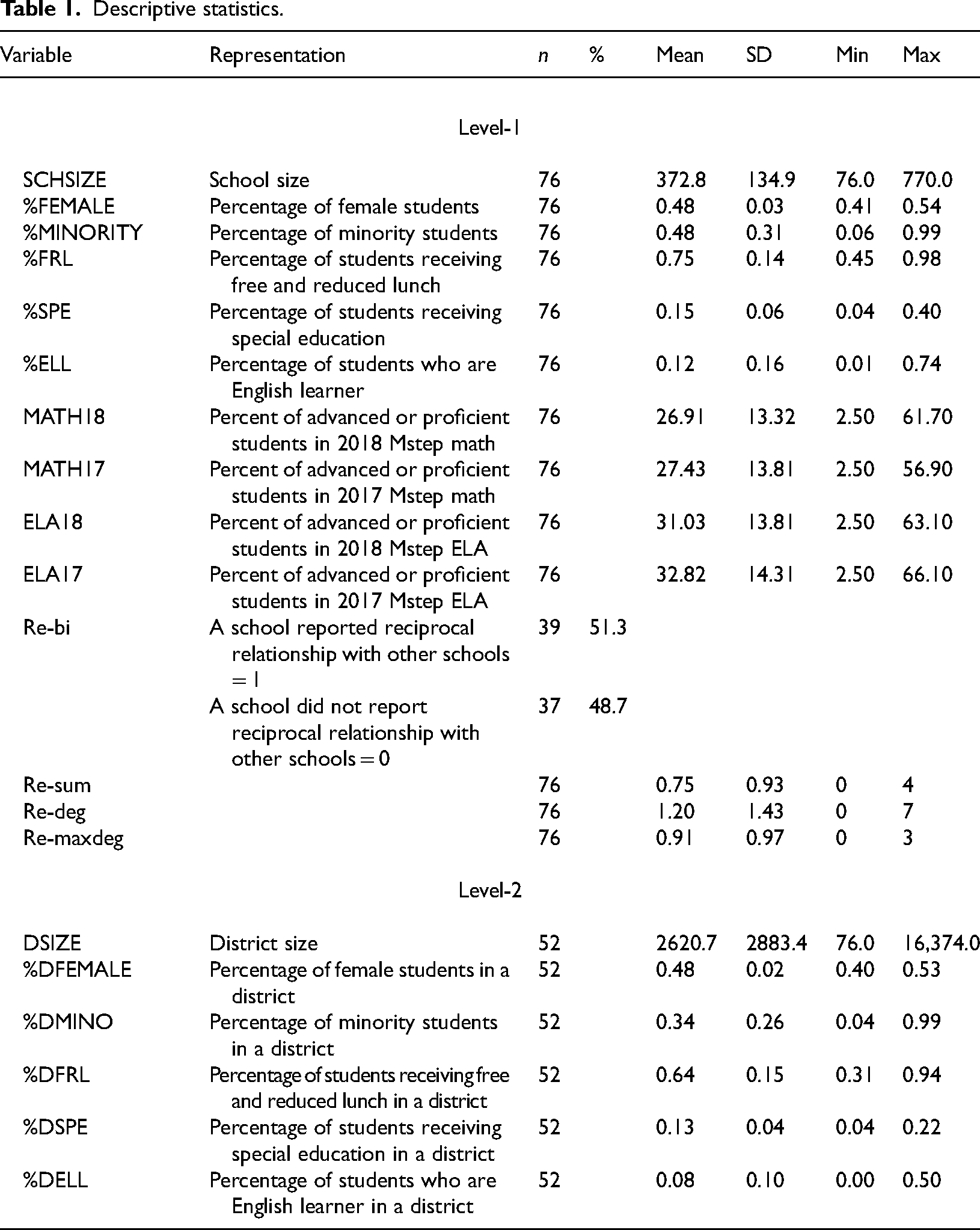
Data for this study came from a large-scale school renewal project in Michigan. The sample includes 76 schools that are nested within 52 school districts in west Michigan. Per the guideline of the grant program under which the project was funded, the project must serve schools with high concentrations of high-need students. High-need students were defined as “students who are at risk for educational failure or otherwise in need of special assistance and support, such as students who are living in poverty….” (U.S. Department of Education, 2017: 18620). Each of these 76 schools had free and reduced-price lunch rates higher than the state's average. The relationship data was gathered from the school leader team (including three teacher leaders and the principal) at a project summit with a 100% response rate. We merged relationship data with student characteristics and outcomes data, which were from the Michigan Department of Education's database. The sample demographics are presented in Table 1.
Descriptive statistics.
Variables and Measures
Reciprocal school-to-school collaboration
The school leader teams were instructed to choose one statement that corresponds the most to their perception of their school's relationships with the other 75 schools. It should be noted that the study was conducted at the beginning of the project. Therefore, no interventions have been implemented to foster the school-to-school relationship. These reciprocal collaborative relationships occurred naturally and voluntarily. To reflect the quality or level of the relationship, there are four options to select, which include:
0 = There was no relationship that involved the exchange of ideas, examples, suggestions, or resources between our school and this school. 1 = Our school had a relationship with this school whereby we relied on that school for ideas, examples, suggestions, etc. 2 = Our school and the named school had a relationship whereby we exchanged ideas, examples, suggestions and/or resources for improvement. 3 = Our school and the named school had a relationship whereby we both exchanged ideas and challenged and helped each other implement those ideas.
To be considered as having a reciprocal collaboration, both schools must report at least 1 for their relationship with each other. The lower level was used to describe their reciprocal relationship when both schools reported a relationship with each other but indicated different levels. Considering a simple relationship shown in Figure 1, Schools A and B have a reciprocal relationship with a degree 1, and schools A and C have a reciprocal relationship with a degree 2. Schools B and C have a nonreciprocal relationship, and schools A and D have no relationship.
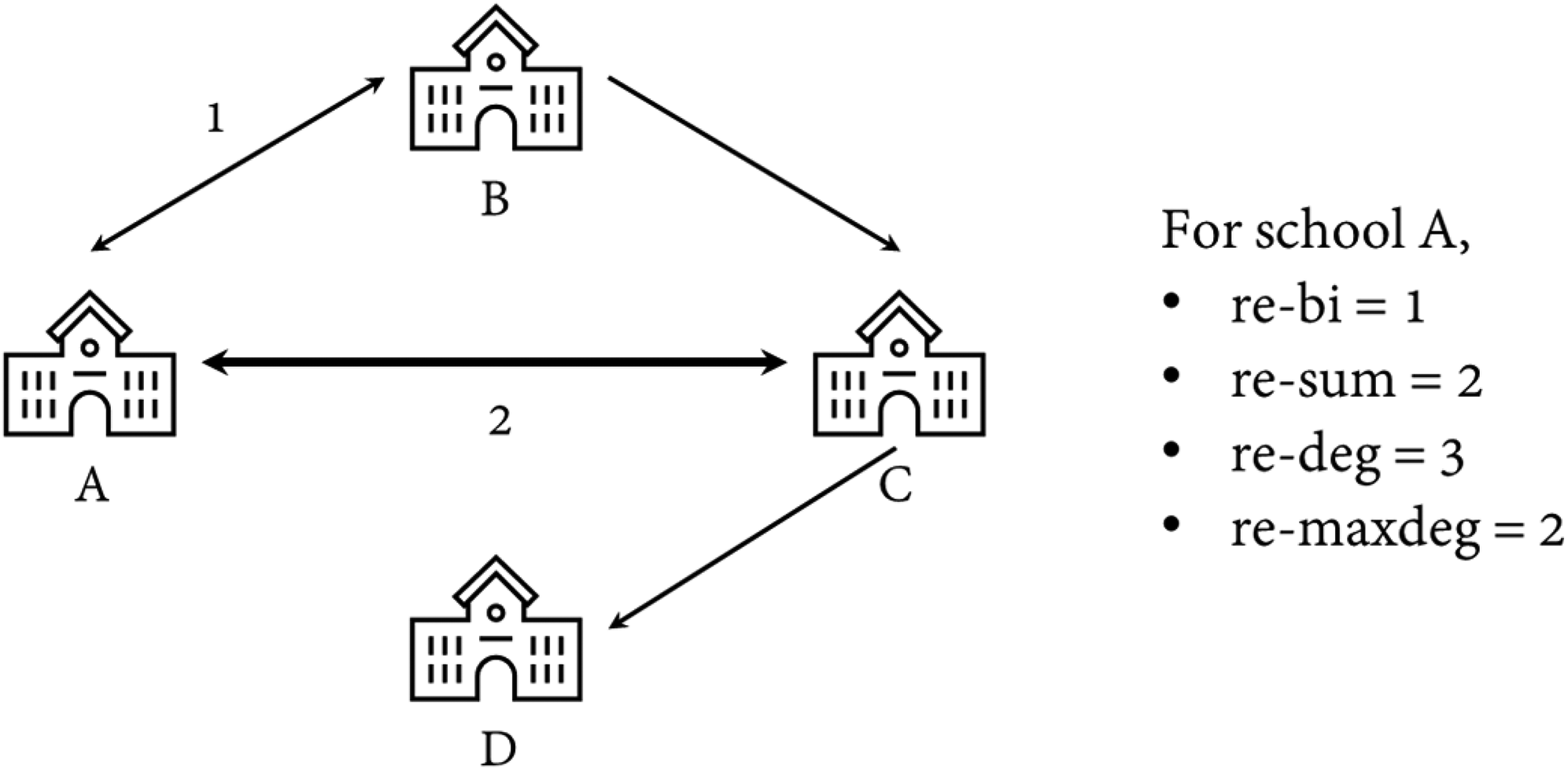
Definitions of reciprocal school-to-school collaboration. Note: Re-bi is a binary indicator of whether a school has a reciprocal collaboration with other schools; re-sum is the total number of reciprocal collaborations a school has with other schools; re-deg represents the total degree of the reciprocal collaborations a school has with other schools; and re-maxdeg mirrors the highest degree of reciprocal collaboration that a school has with other schools. For example, in this case, school A has two reciprocal collaborations with other schools, one with a degree of 1 and the other with degree of 2. Thus, the re-bi is 1, and re-sum is 2. The total degree of the relationship (re-deg) is 3, and the highest degree of the relationship (re-maxdeg) is 2.
Based on the raw school network data, four measures of school-to-school collaboration reciprocity were created and served as independent variables. These four measures are:
Reciprocal collaboration, binary (re-bi). This index reflects whether a school has a reciprocal collaboration with any other school. This index is a binary variable, and the value can take 1 (a school has at least one reciprocal collaboration with other schools) or 0 (a school does not have any reciprocal collaboration). Reciprocal collaboration, sum (re-sum). This index is the total number of reciprocal collaborations a school has with other schools. Reciprocal collaboration, total degree (re-deg). This index represents the total degree of the reciprocal collaborations a school has with other schools. Reciprocal collaboration, max degree (re-maxdeg). This index represents the highest degree of reciprocal collaboration that a school has with other schools.
Taking school A as an example (see Figure 1), we coded re-bi as 1, since A has the reciprocal relationship with other schools; we coded re-sum equals 2, because A has two reciprocal relationships with other schools; we coded re-deg equals 3, because the degree of reciprocal relationship between A and B is 1 and the reciprocal relationship between A and C is 2, so the total degree is 3; we coded re-maxdeg equals 2, because the highest degree of the reciprocal relationship that A has with other schools is 2.
School and district demographic variables
School and district demographic variables were utilized as control variables. With regard to school characteristics, we included school enrollment size, the school proportion of female students, the proportion of non-White students, the proportion of students eligible for free and reduced lunch, the proportion of students receiving special education services, and the proportion of English language learners. The districts’ level covariates consist of a similar set of demographic variables. Because school and district enrollment sizes are on a very different scale in relation to other variables, we rescaled these two variables by dividing 100.
Student achievement
Our dependent variables were school-level student achievement in math and reading, which were measured as the proportion of students within each school whose state-mandated accountability test (Michigan Student Test of Educational Progress, M-STEP) score reached the proficient level in 2018. School reading and math performances in 2017 were also used as controls in the second part of the analysis.
Research Design
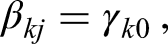
We first conducted a social network analysis to visualize the reciprocal relationships among 76 schools and calculated the proportion of reciprocal relationships between schools in the network using R igraph package (Csárdi and Nepusz, 2006). Then, since our data were multilevel with schools (i) nested in districts (j), a two-level hierarchical linear modeling (HLM) was employed as the primary analytic technique. Our first HLM model was an unconditional model (Model 1) to estimate the variance components of student achievement in 2018 at each level. The second model (Model 2) was a full control model with both school and district-level covariates. Third, we added school-to-school collaboration variables individually to the full model (Model 3 to Model 6) to investigate the effect of each variable on student achievement. Then, we repeated the models using school-level student achievement in 2018 as the dependent variable and achievement in 2017 as a covariate to study the effect of the network variables on the “gain” between the two years. The full model can be expressed as follows:
Level 1 (school level):



Level 2 (district level):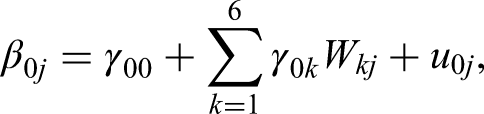
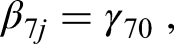
We understand that there might be a multicollinearity issue in this study because of the moderate to high correlations between the school and district demographic variables. To address this concern, we group mean centered school level background variables and grand mean centered district level background variables (Pituch and Stevens, 2016). We, then, checked the correlations and the variance inflation factors (VIF) which did not indicate the presence of multicollinearity. In addition, group-mean centering at level-1 and grand-mean centering at level 2 have been recommended in the multilevel analysis (Raudenbush and Bryk, 2002). All the multilevel modeling analyses were performed using HLM 8 (Raudenbush et al., 2019), and we reported the fixed effect results with robust standard errors which are recommended when there is misspecification of the distribution of the dependent variable (Raudenbush et al., 2019).
Results
Visualizing Reciprocal School-to-School Collaborations
Figure 2 visualizes the collaboration among 76 schools in the school renewal project. The green circle represents schools with reciprocal collaboration and the orange square reflects schools with no reciprocal collaboration with other schools. Gray edges are the nonreciprocal relationships and red edges are the reciprocal relationships. Overall, among 76 schools, there are 28 reciprocal relationships between 39 schools and 93 nonreciprocal relationships. The proportion of reciprocal relationship between schools was 23.1%. Among the 28 reciprocal ties, most ties have a level of two, indicating both schools agreed on a resources exchange relationship. There are 12 ties with a level of one, suggesting both schools reported at least a resource dependence relationship with the other. Only two schools (one reciprocal relationship) reported an exchange of ideas while also challenging and helping each other implement those ideas.
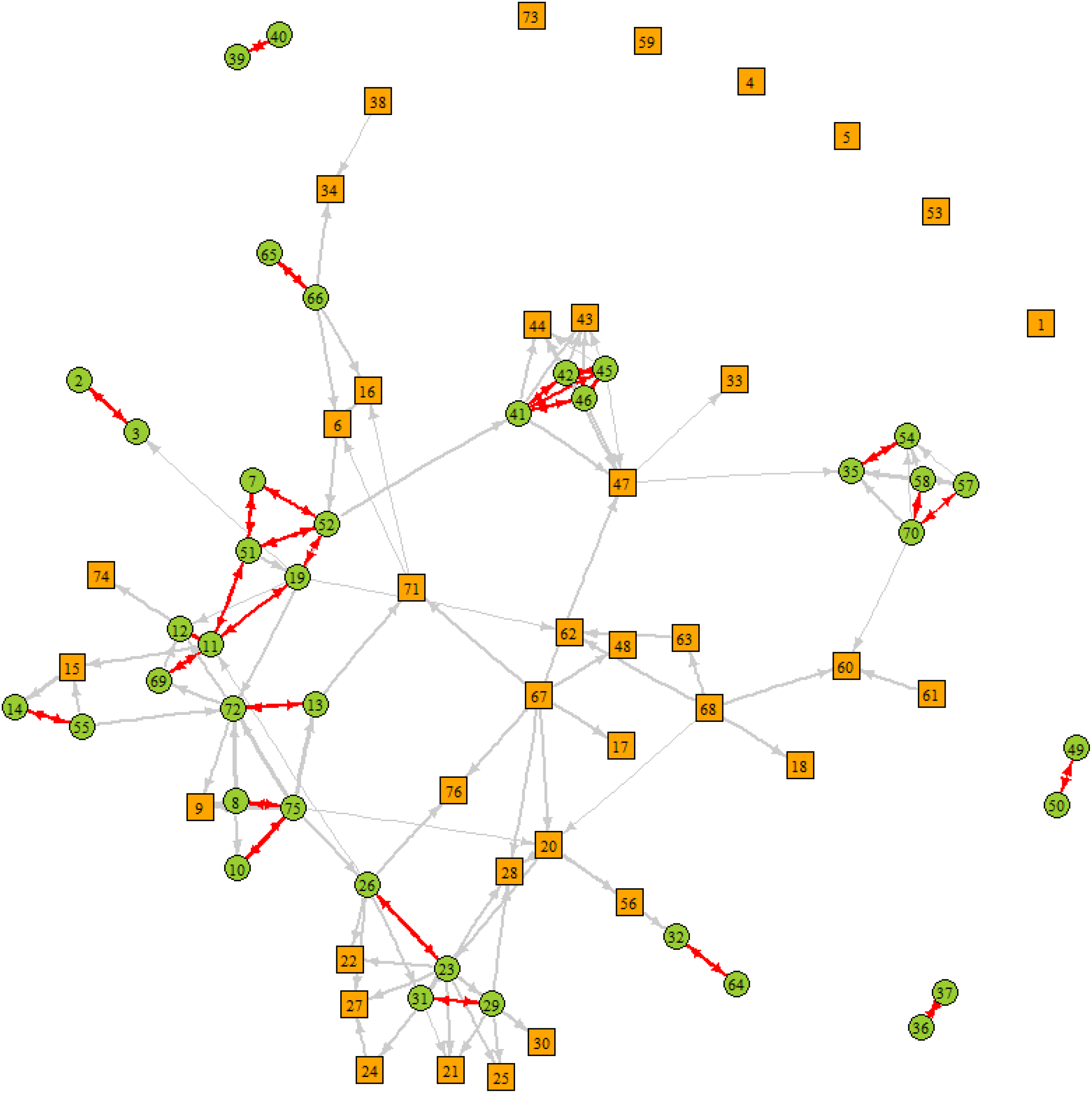
School-to-school collaboration among 76 schools. Note: The green circle represents school with reciprocal collaboration and the orange square reflects schools with no reciprocal collaboration with other schools. Gray edges are the nonreciprocal relationships and red edges are the reciprocal relationships.
Figure 3 geographically shows 76 schools and their reciprocal relationships to each other in the school renewal project. The blue spots represent the schools that have no reciprocal relationship with other schools, and red pins represent the schools that have a mutual relationship. In addition, the schools are connected by edges, indicating that a school has a mutual relationship with the other. The thickness of the lines reflects the strength of the relationship. From this figure, we learned that schools tend to show reciprocal relationship with schools that are geographically close.
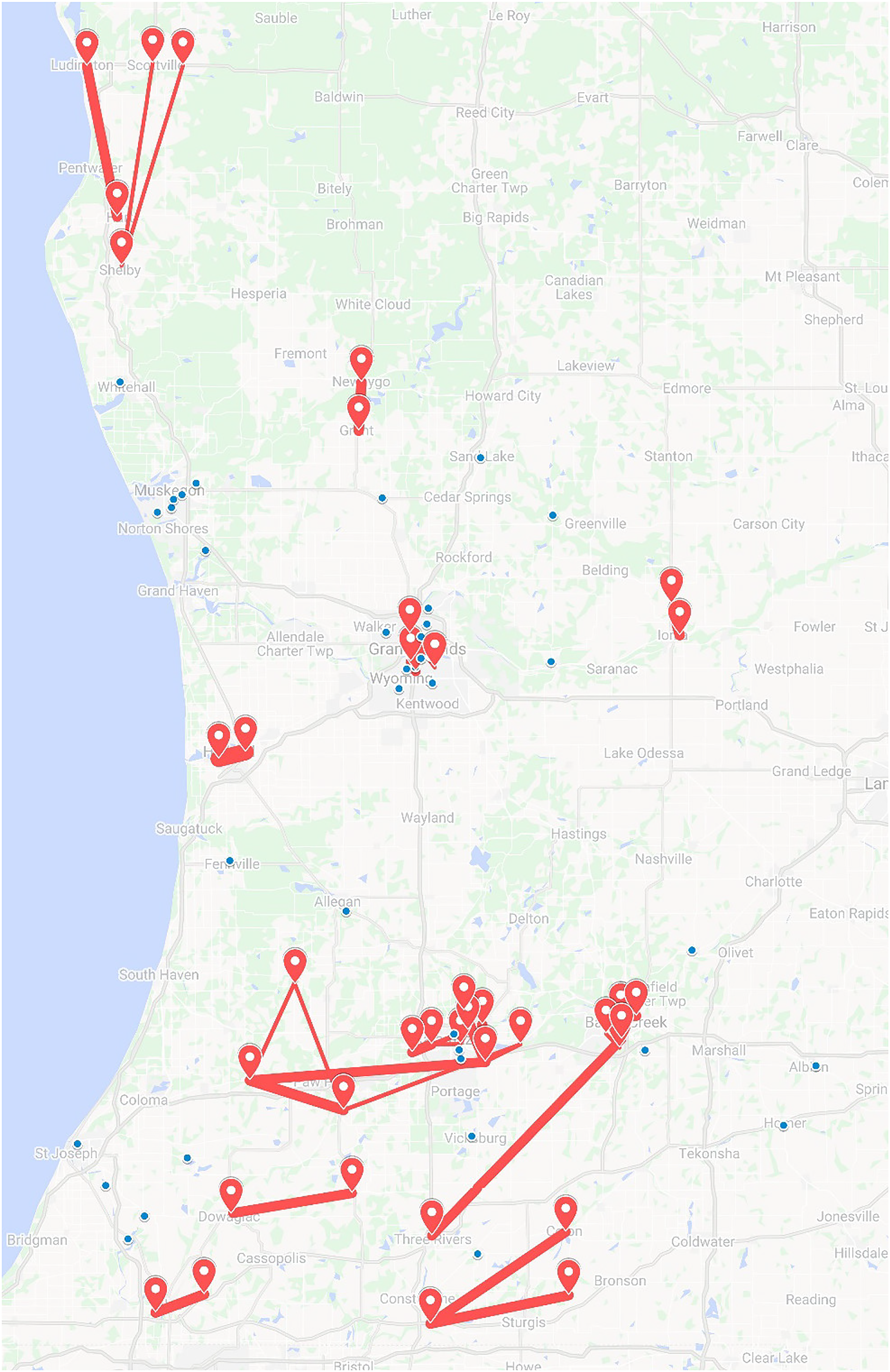
Geospatial reciprocal school-to-school collaborations among 76 schools. Note: The blue spots are the schools that have no reciprocal relationship with other schools and the red pins represent the schools that have a mutual relationship.
The Variance of Student Achievement in Math and Reading
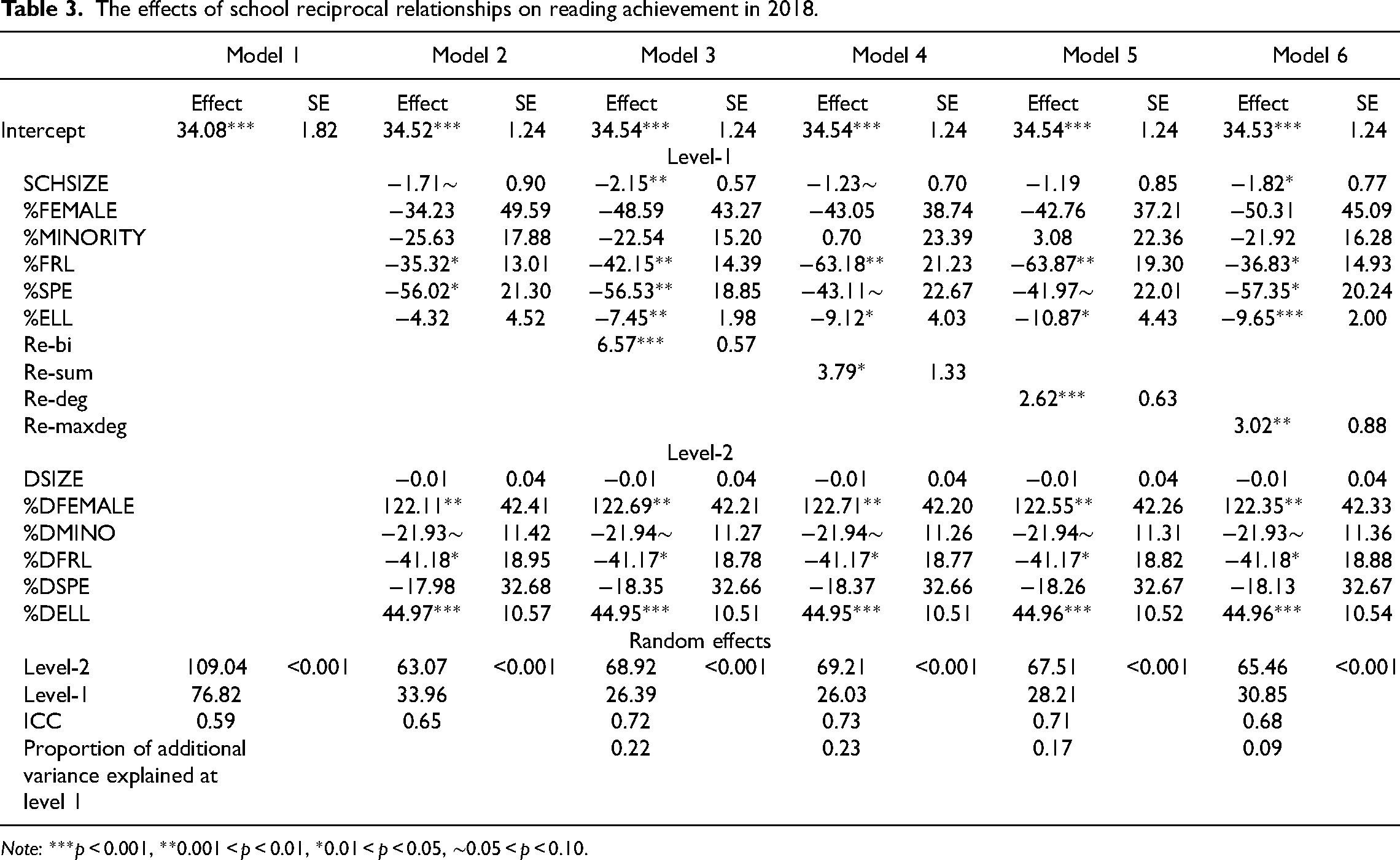
Moving from the visualization to hierarchical linear model analyses, the results of the unconditional model, which included no predictors, showed the mean school proficiency rate of 76 schools was 29.8% for math and 34.1% for reading. The intraclass correlation (ICC) was 109.12/(109.12 + 61.50) = 0.639 for math achievement, and 109.04 / (109.04 + 76.82) = 0.586. In other words, 64% and 59% of the variance in student math and reading achievement, respectively, lies between school districts, which justifies the two-level linear model. In Model 2, we added both school level and district level demographic variables. The variance component for math achievement at the school level was reduced from 61.50 in the null model to 27.65, and the variance component for reading achievement at the school level was reduced from 76.82 in the null model to 33.96, indicating that the school background characteristics explained 55% and 56% of variances of school level variances in math and reading achievement, respectively (see Table 2 to Table 5).
The effects of school reciprocal relationships on math achievement in 2018.
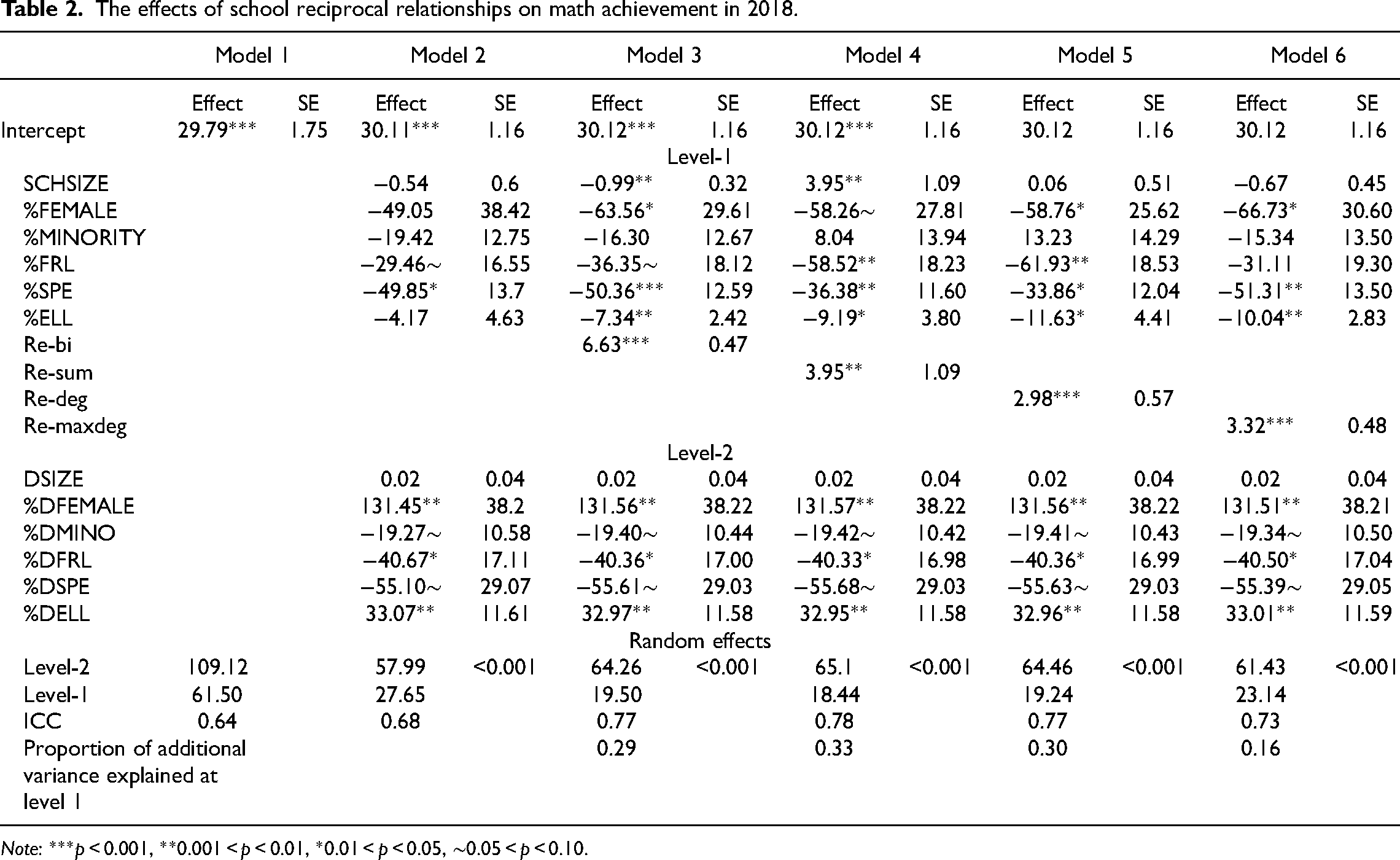
Note: ***p < 0.001, **0.001 < p < 0.01, *0.01 < p < 0.05, ∼0.05 < p < 0.10.
The effects of school reciprocal relationships on reading achievement in 2018.
Note: ***p < 0.001, **0.001 < p < 0.01, *0.01 < p < 0.05, ∼0.05 < p < 0.10.
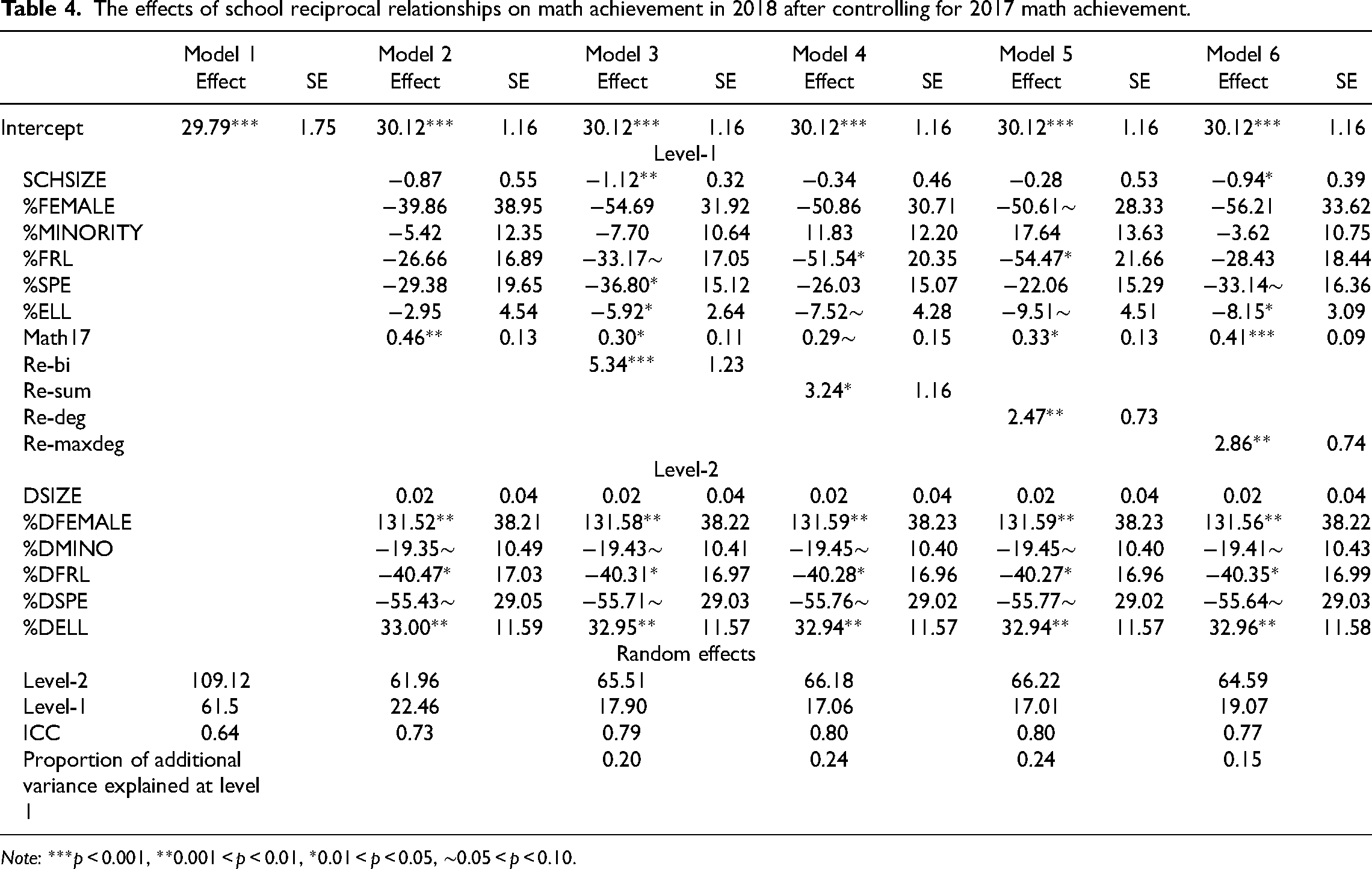
The effects of school reciprocal relationships on math achievement in 2018 after controlling for 2017 math achievement.
Note: ***p < 0.001, **0.001 < p < 0.01, *0.01 < p < 0.05, ∼0.05 < p < 0.10.
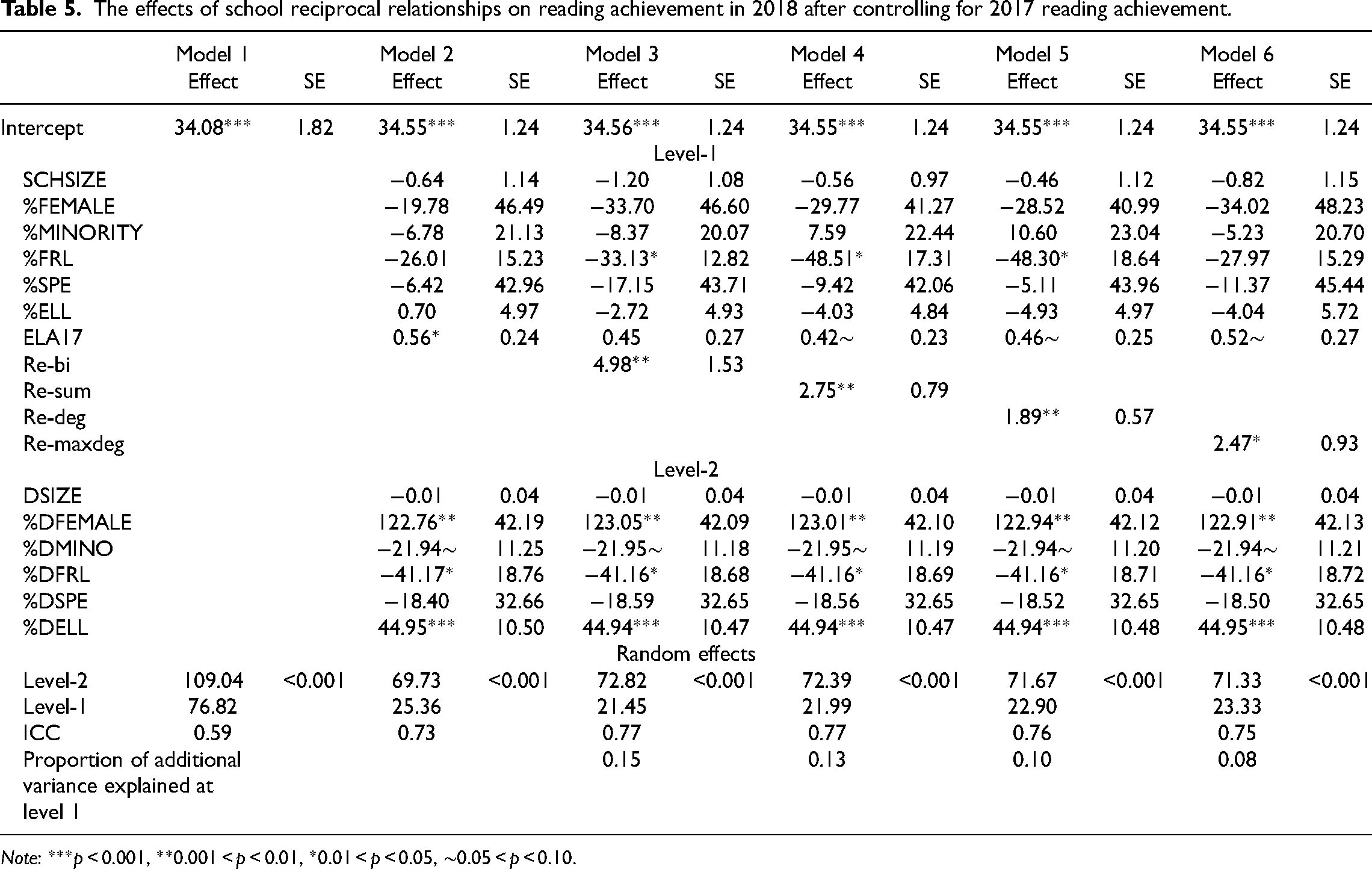
The effects of school reciprocal relationships on reading achievement in 2018 after controlling for 2017 reading achievement.
Note: ***p < 0.001, **0.001 < p < 0.01, *0.01 < p < 0.05, ∼0.05 < p < 0.10.
The Relationship Between Reciprocal School Collaboration and School Outcome
The second research question of this study was to examine to what extent is the reciprocal school-to-school collaboration associated with school academic outcomes. The results of Model 3 to Model 6 in Table 2 and Table 3 showed that all four school-to-school collaboration indices were statistically significantly related to school outcomes in math and reading when controlling district and school background variables. Specifically, these findings pointed out that: (a) on average within a school district, a school that reported a reciprocal collaborative relationship with other schools were 6.63 and 6.57 percentage points higher in student math and reading performance respectively, (b) on average within school district, a school that has one more reciprocal collaborative relationship with other schools is associated with 3.95 and 3.79 percentage points higher in math and reading respectively, and (c) the degree of reciprocal relationships between schools was also positively connected with school math and reading outcome. Schools with one level higher in the max degree of reciprocal relationship are associated with 3.32 and 3.02 percentage points higher in 2018 math and reading achievement, respectively. The index re-deg, which reflects the weighted combination of the quantity and quality of the reciprocal relationships, is also associated with 2.98 and 2.62 higher percentage points in math and reading achievement, respectively. In addition, compared to Model 2, after adding reciprocal school network indices, the school level variance was reduced by about 16% to 33%.
Tables 4 and 5 display the results for the third research question. Controlling for the district and school background variables, and previous year school performance, all four reciprocal school collaboration variables were found to be positively associated with school outcomes in both math and reading achievement (
Discussion and Implication
Grounded in the literature around school collaboration and network, for this study we hypothesized that reciprocal school-to-school collaboration could be positively associated with school academic outcomes. To test our hypotheses, we conducted a study to explore the current state of the reciprocal school-to-school collaboration among 76 K-12 schools in a school renewal project and to examine the association between reciprocal school-to-school relationships and school academic outcomes. We built a series of nested hierarchical linear models to examine this hypothesis, including the unconditional model, control model with both school and district level background variables, and full models for each reciprocal relationship index. The results indicated that all four indices of reciprocal collaboration between schools were significantly positively connected to school outcomes even when controlling for school and district background and previous achievement. Next, we will discuss the implications of this study for both educational research and practice.
For educational research, first, as illustrated above, even though there have been continuous calls for building collaborations or networks among schools, many of the previous studies have been descriptive and normative in nature, for example, focusing on mapping the situation of school collaboration in different contexts (e.g., Azorín and Muijs, 2017; Pino-Yancovic et al., 2020) and how to build effective collaborations between school (e.g., Armstrong and Ainscow, 2018; Hargreaves et al., 2015; Proger et al., 2017). Only a few studies have empirically examined the effect of school-to-school collaboration on student achievement (Chapman, 2015; Wohlstetter et al., 2003), and these studies were mostly conducted in England. Our study adds empirical knowledge to this question and highlights the positive associations between school-to-school collaboration and school outcomes based on a sample from the United States.
Second, our study found that multiple characteristics of reciprocal collaboration [(a) having or not having a reciprocal collaboration, (b) the number of reciprocal collaborations, (c) the total degrees of reciprocal collaborations, and (d) the highest degree of reciprocal collaborations] are positively associated with student achievement in math and reading when controlling for all background variables at the school and district levels. These findings, to some extent, accord with Chapman and Muijs's studies (Chapman and Muijs, 2013, 2014; Muijs, 2015), which demonstrated the positive link between school federation and student achievement. More importantly, our study also offered quantitative support for the previous claim that reciprocity is pivotal for developing an effective collaborative relationship between schools (e.g., Ehren and Perryman, 2018; Keddie, 2014). As Keddie (2014) illustrated, successful school-to-school collaboration should enable schools to not only contribute to but also benefit from the relationship.
Third, another important contribution of our study derives from comparing results between, not controlling and controlling, for prior year achievement level. In doing so, our study found that various indices of reciprocal school-to-school collaboration are associated with not only the current year's school-level achievement but also the gain or growth in school-level achievement between the previous and current year. In other words, schools on the higher end of those reciprocal relationship indices not only achieved better in the current year but also grew more between previous and current years. To our knowledge, no studies to date have tested the impact of school-to-school collaboration on the growth of student achievement from year to year; thus, our finding on gain or growth is a new finding for the literature. It suggests that reciprocal collaboration could be a powerful tool for school renewal since renewal focuses on positive growth over time, a point that will be discussed later in terms of the implications for educational policy and practice.
Furthermore, this study supports Shen et al.'s (2004) theory of interorganizational relationships. They argued that there is a hierarchy in the nature of an interorganizational relationship and that the resources exchange model and simultaneous renewal model (the two highest levels of interorganizational relationship) are associated with better achievement outcomes. Our study found that both the quantity (total number of reciprocal relationships) and quality (total and highest degrees in reciprocal relationships) are positively associated with school achievement outcomes.
For educational policy and practice, this study also has several implications. First, in the past years, the government and policies have endowed individual schools with greater independence and autonomy instead of imposing top-down mandates (Sliwka, 2003; Wohlstetter et al., 2015). Nevertheless, it must be realized that interdependence is as essential as independence even in a competitive educational system (Ainscow et al., 2016; Armstrong and Ainscow, 2018). Our study supported this claim. Second, our study demonstrated that in order to achieve higher outcomes, schools need to collaborate with each other (Ainscow et al., 2012). The positive links between the extent of reciprocal school network and school performance indicate that schools need to, not only build more reciprocal relationships with other schools, but also enhance the quality of the relationships from (a) no relationship or a one-way resource dependence relationship to a (b) two-way resources exchange relation, and better yet, a simultaneous renewal relationship (Shen et al., 2004). Therefore, rather than being passive receivers, schools need to work as active developers and implementers, challenging each other to implement the key shared ideas with contextual responsiveness (Shen, 2020; Bryk, 2015).
Finally, from an overall policy perspective, building a networked improvement community in which schools share resources, exchange ideas, and challenge each other for renewal is a powerful tool for school improvement (Proger et al., 2017). There have been two schools of thought on the driving force for school improvement, focusing either on the external pressure or the internal professionalism and initiatives (Shen, 2020). The findings of this study suggest that the combination of the external influence and internal initiatives on a voluntary basis—as reflected in the various reciprocal relationship indices of the study—is associated with better school outcomes. More policy initiatives should be developed to encourage and facilitate the development of such a school-to-school reciprocal relationship.
Limitations and Future Directions
Although the contribution of this study to both educational research and practice is substantial, we will next discuss limitations and directions for future studies. First, although we indicated a positive association between reciprocal school-to-school collaboration and student achievement, our cross-sectional design does not allow us to draw strong causal inferences of this relationship. Further research needs to be undertaken to test the causality of the effect of school social network relationships on school performance via experimental design. Second, this study focused on the reciprocal school-to-school collaboration that occurs naturally and voluntarily, and it does not address questions such as, “What is the role of these structural arrangements in supporting collaboration? How are they formed?” For follow-up studies, it would be interesting to find out how this kind of relationship comes into being. Moreover, we found in this study that these naturally and voluntarily occurring reciprocal relationships are related to both the current school-level student achievement and the growth in school-level student achievement from one year to the next. One interesting follow-up question is to experiment with ways to foster reciprocal relationships and study if the fostered reciprocal relationships would have a positive effect on school-level student achievement.
Third, our study also has some other methodological limitations. For example, we understand that because the 76 schools are nested within 52 school districts, the average cluster size is small and in some school districts, there is only one school. We still decided to use the multilevel modeling technique since there are many advantages over the traditional regression analysis. Modeling both levels together meets the independence assumption, estimates the standard error correctly, and allows us to examine both level predictors (Raudenbush and Bryk, 2002). Future studies could have more schools in each district. In addition, due to the unavailability of student-level data, we employed two-level hierarchical linear models in this study. A three-level study would be advised to substantiate our findings. Finally, this study focused on the school-to-school reciprocal relationship, which is one aspect of school networking. The effects of other aspects of networking, such as the relationship among clusters of schools, could also be studied.
Footnotes
Declaration of conflicting interests
The author(s) declared no potential conflicts of interest with respect to the research, authorship, and/or publication of this article.
Funding
The author(s) disclosed receipt of the following financial support for the research, authorship, and/or publication of this article: This work was supported by the US Department of Education (grant number U423A170077). The authors are sole responsible for the findings, discussions, and possible errors in the article.
