




Abstract
As a result of reforms in the governance of schools, the role of principals in Germany has changed from a teacher with additional administrative tasks to a leader of school improvement. However, many principals in Germany did not receive any substantial formal training for management and leadership tasks. Using the results of a survey of 1240 principals in nine German states, we investigated in which areas of school improvement German principals had professional development needs and how their needs were related to individual and school-related factors. Despite a lack of training and in contrast to studies from other countries, principals reported only moderate professional development needs, and these were influenced, only to a limited extent, by their training and experience and, to a greater extent, by the individual self-efficacy and the perception of teachers in schools. The results might indicate that the normatively postulated change of the principal’s role has not yet permeated their practice.
Introduction
In international school improvement research, there is consensus that principals are key for the success of schools (Hendriks and Steen, 2012; Marzano et al., 2005). School leadership research and policies are pervaded by the narrative that principals need to be leaders and managers to improve their schools. This is supported by a plethora of research that shows that principals have an impact on school effectiveness that is “second only to the effects of the quality of curriculum and teachers’ instruction” (Leithwood and Riehl, 2003: 4). As a result, research findings suggest that principals are usually aware of the demands of their job, and have high professional development (PD) needs with regard to school improvement (see Spanneut et al., 2012).
Most of that research is from Anglophone countries, and particularly the US (Kovačević and Hallinger, 2019). In the US, however, schools are located in a specific governance context that has a tradition of measuring the outcomes of individual schools, and on managing the improvement of those outcomes, since the beginning of the 1900s (Klein et al., in print; Cuban, 2004), with principals being responsible for the improvement of their particular school (Goodwin et al., 2005). By way of contrast, in several European countries the role of the principal has traditionally been rooted in governance contexts that were focused on functionality and ordinance rather than on measurable outcomes and improvement, in which principals were little more than teachers with additional administrative tasks.
In the past 20 years, however, the role of principals has changed from head teachers to school improvement leaders in many countries (Aho et al., 2006; Møller, 2009). At the same time, there are reports indicating that in countries where the role has been changed substantially, principals are struggling with that role (Taglietti et al., 2018). In Germany, too, schools have been increasingly expected to evaluate their outcomes and develop strategies for improvement during the past two decades, which has entailed changes in the role of principals (Wiesner et al., 2015). In contrast to the US, however, German principals receive little support from the local or regional authorities when it comes to improvement, and there are very few network or other collaborative structures between schools at local level (Klein and Bremm, 2020; Tulowitzki, 2019). In addition, many principals in Germany have not received any formal training for their new role (Klein and Schwanenberg, 2020), which is partly due to the fact that while the normative and legal expectations of the principal’s role have changed, the systemic structures and processes for the recruitment and training of principals are only slowly adapting to the changed role (Tulowitzki et al., 2019).
The question arises as to whether, in this context that normatively attributes them the role of school improvement leader, principals feel the need to become leaders for improvement, invest in their own training for that role, and strive for a better fit between their skills and the systemic demands for their role. To answer this question, this paper investigates the perceived PD needs of principals in Germany in their traditional role as “teachers with administrative tasks” as well as their new role as “school improvement leader”. The goal is to analyze what areas of their traditional and new tasks principals feel they need PD in, and how their perceived PD needs are related to their interpretation of their situation as well as sociodemographic factors of their work.
In the following, we describe the changes in the governance system and the effect it has had on the role, relevance, and tasks of principals in Germany. We then present an overview of research into the PD needs of principals and their antecedents. In the second part of the paper, we introduce the project School Leadership Monitor (Schulleitungsmonitor) and report the results. The paper concludes with a discussion of the results and their implications.
The role of principals in Germany
Changing governance regimes
The role of school principals is contingent on the governance regimes that they are working in and the role the individual school has within these regimes. Schmid et al. (2007) distinguish between bureaucratic, efficiency-oriented, and legitimacy-oriented governance regimes. In bureaucratic governance, the government and its subdivisions regulate schools through hierarchical structures within which regulations are enforced onto the subordinate levels through laws and legal directives (Schmid et al., 2007). Individual schools have very little autonomy and can be seen as the “executive body” of the system. The main rationale is to maintain the functionality and regularity of the school system. Efficiency-oriented governance is based on economic principles and uses competition among education providers to maintain the efficiency of the system. While there is some hierarchical regulation, individual schools have autonomy in the use of resources and programs, and are responsible for their own outcomes (Schmid et al., 2007). Legitimacy-oriented governance is based on democracy and participation at all levels of the school system and on collaborative decision-making. The government does not regulate the schools, but coordinates negotiation processes (Schmid et al., 2007).
Brüsemeister (2012) distinguishes the classic bureaucratic type, which is the traditional form of governance in the education system in several European countries, from newer approaches of managerial governance, or a “new governance model” (Jann, 2005; Neues Steuerungsmodell) in German-speaking areas. In this model, the hierarchical, rule-based mode of the bureaucratic governance is coupled with elements of the efficiency type as described by Schmid et al. (2007). This means that schools are supposed to assume responsibility for their own quality, while previously it was the government’s. In contrast to the pure bureaucratic model, schools are given more flexibility and decision-making powers (autonomy), but, on the other hand, the government also defines clear goals for the work of schools (standards) and measures the extent to which schools attain to these goals (evaluation). The rationale of the system – functionality and regularity – is supplemented with a new rationale: effectiveness, meaning the degree to which schools attain to their goals, as well as accountability of the individual school for their effectiveness.
Changes in the role of principals in Germany
The public school system in Germany was established in the middle of the 1700s (van Ackeren et al., 2015), and public education was, among other things, meant as a tool to gain more control over the people, which resulted in a highly bureaucratic system that was not focused on improving the outcomes of schooling (see Klein et al., in print). Traditionally, German schools consisted of a largely egalitarian teaching staff that was governed through regulations and standardized teacher education, and a weak inner-school management with no real influence on instruction (Klein et al., in print). School improvement was supposed to be carried out by the government and merely implemented by schools. The primary tasks of principals were administrative, such as processing orders and inquiries of the authorities, implementing new legal requirements, and being the representative of the school at official events and in public; however, they were not superior to the other teachers and were merely implementers of regulations (Schratz, 1998).
From the 1990s on, with the transition from the classic bureaucratic model to the new governance model described above, the role of principals changed as well. As a result, schools were expected to devise their own improvement plans, and principals were supposed to play a key role in shaping said school improvement rather than just administering it. The implementation of evaluation systems moreover meant that they were not only responsible for the improvement of their school, but also accountable for it (Wiesner et al., 2015).
A current analysis of legal documents describing the tasks of principals in the different German states by Brauckmann (2014) reveals that the current legal role of principals closely matches their theoretical role in the new governance model. The legal role of principals includes, on the one hand, tasks that have traditionally been part of their work as “teachers with administrative tasks”, such as external representation of the school, student- and parent-related work, and administrative tasks. On the other hand, the analysis revealed that in most German states, regulations today require principals to manage organizational improvement (e.g. developing a vision and common goals for the school, establishing structures for collaboration, and internal evaluation) and staff development (e.g. devising a staff development plan for the school), and to assert instructional leadership (e.g. devising structures for teachers’ improvement planning), all of which are tasks that were not part of the “old” role, but have become necessary for the “new” principal role (Brauckmann, 2014). However, while there is a plethora of literature discussing what “good” leadership in these new categories could be from a theoretical point of view (see Buchen and Rolff, 2016), the legal descriptions of tasks do not follow any specific theoretical approach (Meyer et al., 2019).
Also, even though the paradigm shift started in the 1990s, current research suggests that principals do not yet see themselves as leaders or managers of their schools (Warwas, 2012), and that, on average, principals tend to perform very little leadership in terms of, for instance, teacher collaboration, data use, instructional improvement, or staff development (Appius et al., 2012; Harazd and Drossel, 2011; Muslic, 2017; Pietsch and Tulowitzki, 2017).
Principal training in Germany
This points to another aspect of the “new” role: changing the governance has had consequences not only for the tasks of principals, but also for their recruitment and training. In a bureaucratic, rule-based system, actors are perceived to be qualified for a job by the mere fact that they have acquired that position; in the new governance model, however, they are subject to improvement as well (Brüsemeister and Newiadomsky, 2008): it is not only the organization or instruction that need to improve, but also the people in the school. So, while in the bureaucratic system it was not imperative to have PD for principals (as the logic of the system said they were qualified by being appointed), training is of particular importance in a more managerial system (see Brüsemeister and Newiadomsky, 2008). While only a few German states had systematic initial training programs for principals before the 1990s, nowadays most of the states have implemented initial training for principals that has to be taken either before they take the job, or shortly after (Tulowitzki et al., 2019). However, many of these programs have only recently been or are currently being implemented, and, consequently, there is still a large proportion of principals who have not received any mandatory training for this role (Klein and Schwanenberg, 2020).
The German literature on initial training and ongoing PD hardly addresses this lack of training; instead, most of it is focused on describing what PD should look like (Huber and Schneider, 2013), but there are hardly any analyses of the areas in which principals actually need PD, whether and to what extent principals receive and use PD, what type of PD they participate in, what contents it covers, how it affects their work, and their cognitions in this context.
In short, the field of principal PD is both undertheorized and under-researched in Germany, and the supply of PD programs resembles a patchwork quilt of public and private programs that are neither systematically addressing all requirements of the principal job, nor coordinated (Schwanenberg et al., 2018).
PD needs of principals
Theoretical perspectives on the PD needs of principals
Which areas should be addressed by PD programs can be answered from different perspectives. One possible way is to evaluate the extent to which principals already have the skills and competences that they need with regard to normative requirements (e.g. leadership standards) or empirical findings (e.g. research on effective school leadership), and then to provide PD programs in those areas where a lot of principals do not have these skills or competences yet. In Germany, however, there are no standards for school leadership, nor is there any mature research on effective leadership, and there are no regular, area-wide principal evaluations to systematically assess their PD needs (Tulowitzki, 2019). What PD programs principals participate in, therefore, is determined by the principals’ perceived PD needs. These perceived PD needs are not necessarily congruent with the PD needs that an evaluation might bring to light.
In PD research, the choice to participate in PD or not is usually explained with psychological models, such as expectancy-value theory, as well as sociological models explaining choices through the influence of sociodemographics (Richter et al., 2019). While these theories are used to explain why people participate in PD or not, they can also be used to unravel theoretical descriptions of the perceived PD needs of principals.
Expectancy-value theories interpret choices as a complex process that is influenced by individual dispositions (Eccles and Wigfield, 2002; Eccles et al., 1983). Choices are based, on one hand, on a person’s success expectancy, and, on the other hand, on the value ascribed to a certain activity. Both expectancy and value are not determined by the objective abilities or values, but rather by the person’s interpretation of these aspects. This interpretation is contingent on a person’s experiences of success or failure in the past, their self-efficacy and self-concept of ability, causal attributions, their perception of task difficulty, and affected by socialization processes within specific social and cultural environments. The value that is attached to a PD program is determined by how well it reflects the principal’s self-concept and interests, and by its expected outcome (Eccles and Wigfield, 2002).
Moreover, sociological studies look at the socio-demographic factors of a person and their organizational context. Summarizing the international research on sociodemographic determinants of PD participation, Philipps (2019) concludes that a person’s participation in PD is contingent on their formal education and training, age, immigrant status, gender, personal and job situation, as well as enabling factors of the organizational context.
Research on perceived PD needs of principals
There are only very few studies that examined the perceived PD needs of principals in Germany. In a research project in one large German state, Böttcher et al. (2015) found that principals felt that PD programs offered by the administration were usually not systematically geared to the actual needs of principals, and that they wished for PD in instructional improvement and staff development, but had trouble naming the specific areas that they needed PD in. In a different German state, the strongest PD needs of principals were likewise reported in new task areas, such as school improvement and human resources management (Thiel and Thillmann, 2009), which were not further specified. Both studies did not examine how these PD needs were affected by psychological determinants or sociodemographic characteristics of the principals.
In international research, there are a few studies that investigate principals’ perceived PD needs as well as their antecedents; most of these studies have been carried out in the US. In a study by Salazar (2007), principals reported the highest PD needs in creating a learning organization and building collaborative cultures. Spanneut et al. (2012) used the same instrument and reported moderate or high PD needs, especially in the area of organizing, improving, and monitoring instruction. In both studies, the PD needs were highest in areas that focused on organizational or instructional improvement, but with different foci.
Several studies analyzed how the socio-demographic characteristics of principals affected their perceived PD needs. For instance, Duncan et al. (2011) found that the PD needs of beginning principals were highest in the area of working with difficult staff or parents, while PD needs in instructional leadership came in third. Their study pointed out that beginning principals had high PD needs in administrative as well as improvement tasks, whereas the PD needs of principals with more experience were higher with regard to organizational and instructional improvement. Other studies, too, highlight that principals report different PD needs at different stages of their career (Stroud, 2005). Moreover, Duncan (2013) found that female principals in the US reported higher PD needs than male principals, regardless of their work experience.
In addition to the individual dispositions of principals, their work is affected by the conditions of the school they work in and the community the school is serving. Spanneut et al. (2012) found that the PD needs of US principals were different depending on the grade levels their schools were offering. This might be a function of the different student groups they were serving, the specific educational programs they were offering, or the school size, as secondary schools often are larger than primary schools.
Some authors also suggest that principals in urban, underperforming schools probably have special needs with regard to PD (Houle, 2006). Other studies suggest that principals in schools with a disadvantaged or marginalized group of students (Louie et al., 2018) or principals in rural areas may have PD needs that are different from those in other areas (Salazar, 2007).
While there are several studies connecting the perceived PD needs of principals with their sociodemographic or organizational characteristics, the roles of expectancy and value are less researched. Some US studies show that principals’ self-efficacy affects how they lead their school (Leithwood and Jantzi, 2008). Moreover, several studies show that how principals perceive their success is affected by, for instance, the perceived external pressure to perform (Daly et al., 2011) or their feelings of being supported within their own schools (Tschannen-Moran and Gareis, 2007). However, so far there are no studies linking these aspects of the individual interpretation of expectancy and values to the perceived PD needs (Rutherford et al., 2017).
The reported international research points out that principals often had high PD needs, especially in the area of organizational and instructional improvement. The findings can be used as a guidance to determine which factors may have an impact on the perceived PD needs of German principals; however, it must be noted that most of the studies focusing on the PD needs were from the US, and, thus, from a country in which organizational and instructional improvement have been a part of the job of a principal for a long time, where principals have to attend mandatory and systematic training programs, and where they receive a lot of support from, for instance, the district administration (Klein and Bremm, 2020). Therefore, the results can only be seen as a first approximation; whether they can be transferred to the perceived PD needs of German principals is unclear.
Design and method
Purpose
The two German studies by Böttcher et al. (2015) and Thiel and Thillmann (2009) pointed out that principals felt their PD needs were highest in their “new” tasks of leading school improvement and PD. Apparently, the participating principals seemed to acknowledge that these tasks were required of them, but at the same time pointed out that they were inadequately prepared for these tasks. They could not, however, clearly state where exactly they had difficulties (Böttcher et al., 2015).
What is not clear from the studies though is whether all principals in Germany feel inadequately prepared for the new tasks, or whether this is a question of school type, individual situation of the school, or location, and whether the preparation or on-the-job training that principals have received actually matters for their perceived needs.
The aim of the paper is to analyze the perceived PD needs of a diverse sample of principals in Germany, and find out whether principals feel compelled to further develop their knowledge and competencies in leading school improvement, and what factors affect this. We wanted to answer the following questions: In which traditional and “new” tasks, as defined above, do principals in Germany report PD needs? How are the perceived PD needs in the “new” tasks of principals in Germany associated with their success expectation and the value of school improvement as well as sociodemographic factors?
To answer these questions, we used data from the research project School Leadership Monitor (Schulleitungsmonitor), in which we investigated how successful principals from nine German states felt in their traditional and “new” tasks and what PD needs they had. The research was carried out at the University of Duisburg-Essen and funded by the Wübben Foundation.
Data source
In the spring of 2018, we conducted an online survey of principals in nine German states in all parts of Germany. In these states, all principals from public schools in general primary and secondary education were invited to participate (N = 12,511). In total, 1471 school leaders (88.9% principals, 7.9% assistant principals, 3.2% members of leadership teams or interim principals) participated (response rate = 12%). For this paper, we only use the data from principals (n = 1240).
A total of 64.7% of the principals worked at a primary school, and 35.3% worked at a secondary school; 7.2% of the participants were principals at more than one school. Only 2.1% of the principals reported that they did not teach at all; all other principals taught for at least one hour per week. On average, principals reported to spend 41.1 (standard deviation (SD) = 9.82) hours per week on work that was not teaching. The demographics of the participants are illustrated in Table 1.
Demographics of the participants.
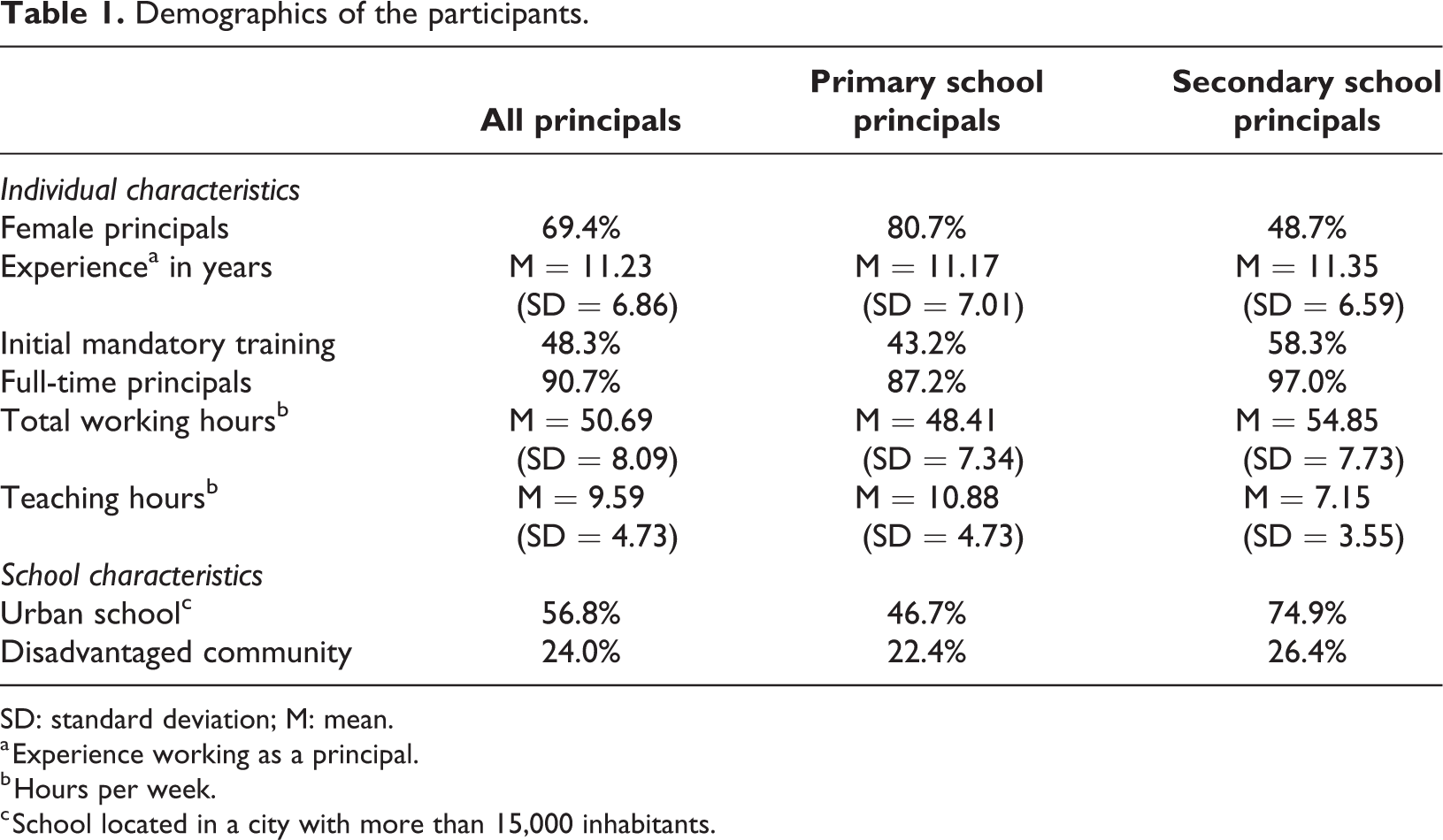
SD: standard deviation; M: mean.
a Experience working as a principal.
b Hours per week.
c School located in a city with more than 15,000 inhabitants.
Regarding the different school types and tracks, the sample roughly resembled the distribution of schools in the nine states. However, as there are no comprehensive data about the demographics of principals across the German states, and some states do not store any data on the demographics of principals, we cannot assess whether the sample matches the population in other aspects.The participation in the survey was completely voluntary, and the survey did not ask participants to disclose any identifiable information.
Methodology
To assess the PD needs of principals, we attempted to create an instrument that covered legal requirements as well as relevant leadership practices described in international leadership research. Our items were, therefore, firstly modelled after the items used in a study by Herrmann and Brauckmann (2013), which was based on an analysis of legal requirements for principals in Germany (Brauckmann, 2014) and, therefore, offer a valid representation of these requirements. To increase the validity with regard to desirable leadership practice in school improvement, additional items were developed based on the description of effective leadership behavior in the Nature of School Leadership Survey by Leithwood et al. (2006). Because schools have been asked to implement different instruments of internal and external accountability since the 1990s (e.g. written school improvement programs, internal and external evaluation), we also added the area “implementation of accountability instruments”. Table 2 gives an overview of the different areas, item examples (translated from German), and reliability of the scales (Cronbach’s alpha). Scales 1 through 4 describe traditional tasks of principals, whereas scales 5 through 8 describe “new” tasks that have been implemented as a result of the paradigm shift in the principal role. The participants were asked to rate how high their own PD and support needs were on a four-point scale (1 = low, 2 = rather low, 3 = rather high, 4 = high).
Overview of the items and scales.
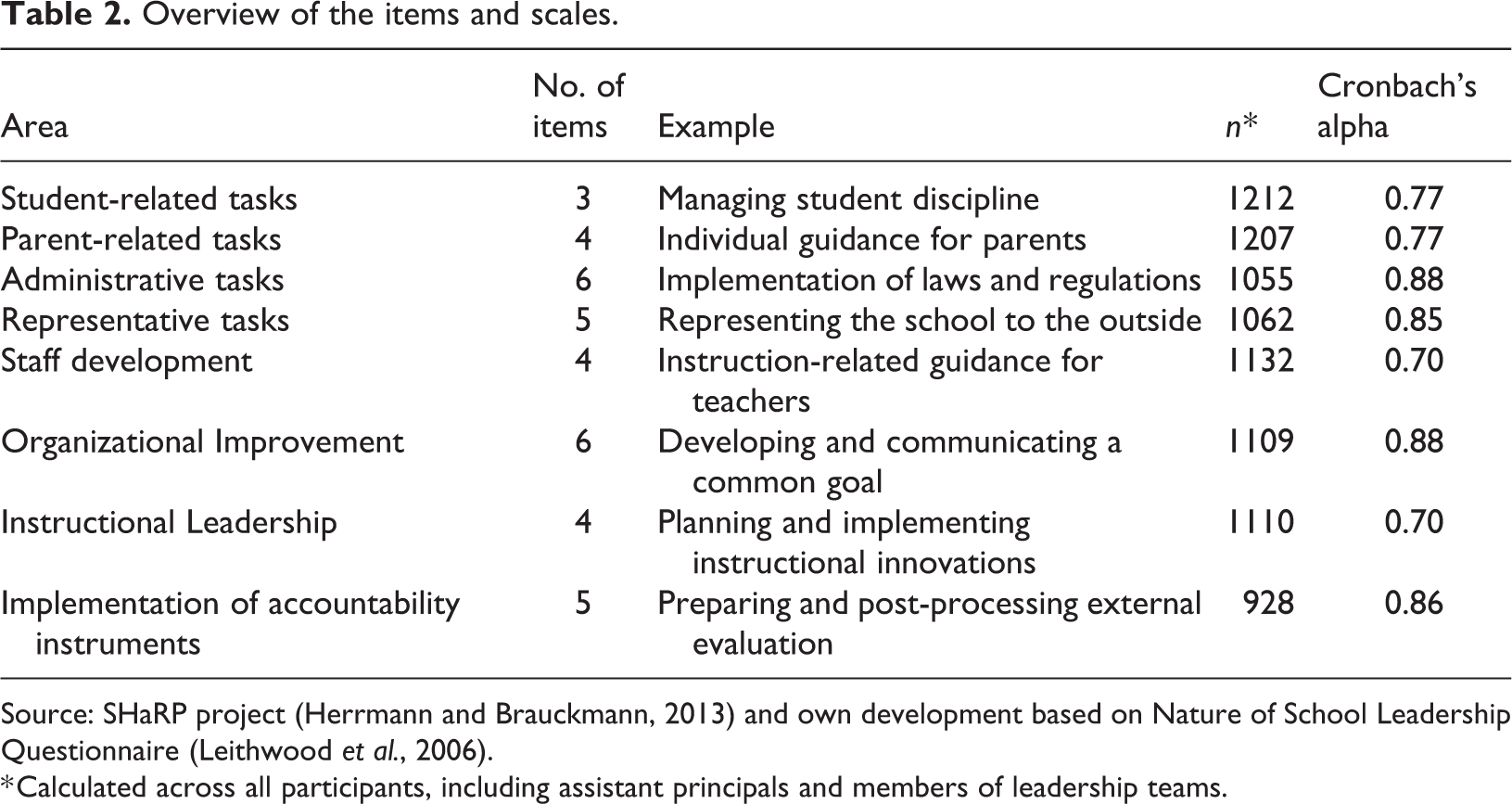
Source: SHaRP project (Herrmann and Brauckmann, 2013) and own development based on Nature of School Leadership Questionnaire (Leithwood et al., 2006).
* Calculated across all participants, including assistant principals and members of leadership teams.
To find out if there were certain practices in which a majority of principals reported PD and support needs, we first looked at the individual items and analyzed the amount of principals that had chosen the options rather high or high.
We then merged the items into scales representing the eight areas described above. In a second step, we took those areas that represented the “new” tasks (scales 5 through 8), and analyzed how they were related to different factors at the individual and school level. Because we wanted to explore how the PD needs related to several different variables, we used Ordinary Least Squares regression. We first ran a model including the training and experience of principals. In a second model, we added their self-concept as proxy of their success expectancy. In a third model, we included additional variables at the school level that served as proxies for the value of PD, as well as additional sociodemographic and organizational variables. Missing values were deleted pairwise.
M1: training and experience
We asked principals whether they had had mandatory training before becoming principal (1 = yes, 0 = no). To model leadership experience, we included an item that asked whether principals had worked as assistant principals or as part of an extended leadership team before (1 = yes, 0 = no), and how many years they had been working as principals. To assess their use of PD programs, we asked how often they had participated in PD related to organizational improvement, staff development, and new accountability instruments 1 during the past 12 months. The variable was recoded into a dummy with 0 = not at all, and 1 = at least once.
M2: self-concept
Self-perception: we included two predictors relating to the self-perception of the principals. The general self-efficacy of the principals (Schwarzer and Jerusalem, 1999) was measured with nine items – for instance, “I can find a solution for every problem” (α = .83; four-point scale; mean (M) = 3.03). To assess their perceived success in the different practices, we used the same items as in the PD needs scale. The items started with “In my school, I am very good at…” (four-point scale: 1 = disagree through 4 = agree).
M3: additional variables
Perceived improvement needs of the school: the perceived improvement needs of the school were included as a proxy of the value of PD. To measure the perceived support for change and an improvement-oriented mindset of teachers, we used two scales. In the first scale, principals were asked to assess the innovativeness of their teachers (i.e. their ability and willingness to reflect about and change their practice; Quellenberg, 2009) with six items – for instance, “Most teachers at our school are open to new instructional approaches” (α = .89; four-point scale; M = 2.83).
In the second scale, principals were asked to assess how much student learning was affected by problematic teacher behavior (OECD, 2017) with four items (e.g. “Teachers not meeting individual students’ needs”; α = .68; four-point scale; M = 2.11).
Individual demographics: we also included the gender, working hours per week, and teaching hours per week.
Organizational factors: we included the school size (number of teachers), and the school type (1 = secondary; 0 = primary). We also asked principals to assess the community their school serves in three categories 2 : 1 = privileged, low proportion of immigrant students, families with high economic resources; 2 = less privileged, average proportion of immigrant students, families with average economic resources; and 3 = disadvantaged, high proportion of immigrant students, families with low economic resources. For the analysis, categories 1 and 2 were merged into one category (1 = disadvantaged, 0 = rather privileged).
Results
What PD needs do principals have in the different areas?
We first looked at the 38 items that represented individual tasks in the different areas, to see whether there were practices in which the principals had particularly high PD needs. Table 3 reports those tasks, in which more than one third chose the options rather high or high. This was the case in 19 out of the 38 tasks we assessed in the survey, which showed that, altogether, the PD needs of the participants were moderate. However, it also becomes clear that the PD needs were higher in some areas than in others: with the exception of three items (“securing third party funding”, “implementing legal and administrative provisions”, and “motivating parents to get engaged in the school”), all tasks in which more than one third of the participants reported PD needs were from the “new” tasks in school improvement.
Percentage of principals with (rather) high PD needs in different tasks.
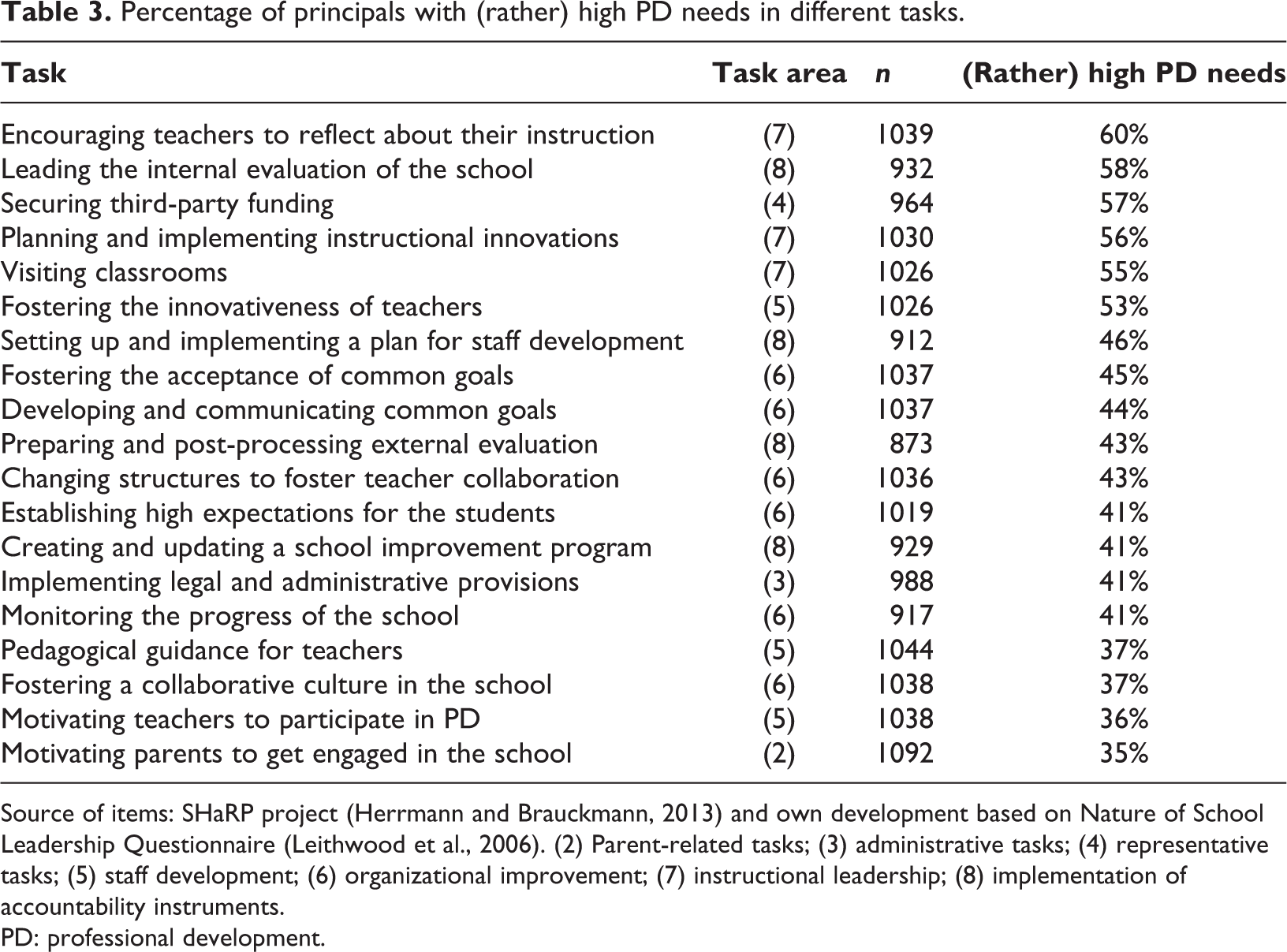
Source of items: SHaRP project (Herrmann and Brauckmann, 2013) and own development based on Nature of School Leadership Questionnaire (Leithwood et al., 2006). (2) Parent-related tasks; (3) administrative tasks; (4) representative tasks; (5) staff development; (6) organizational improvement; (7) instructional leadership; (8) implementation of accountability instruments.
PD: professional development.
This emphasis on tasks in school improvement was also reflected in the results for the task areas: the means of all eight areas were below the theoretical mean of 2.5, indicating that the PD needs were rather moderate in general. However, they were particularly low in the traditional areas of parent-related (M = 1.89; SD = 0.53), administrative (M = 1.99; SD = 0.62), student-related (M = 2.01; SD = 0.59), and representative tasks (M = 2.06; SD = 0.64), but comparatively higher in staff development (M = 2.31; SD = 0.55), instructional leadership (M = 2.39; SD = 0.56), organizational improvement (M = 2.41; SD = 0.64), and the implementation of accountability instruments (M = 2.42; SD = 0.65).
To find out whether the PD needs of principals in the “new” tasks were related to the different antecedents described above, we ran regression analyses for each of the four areas.
How are the perceived PD needs associated with the different explanatory variables?
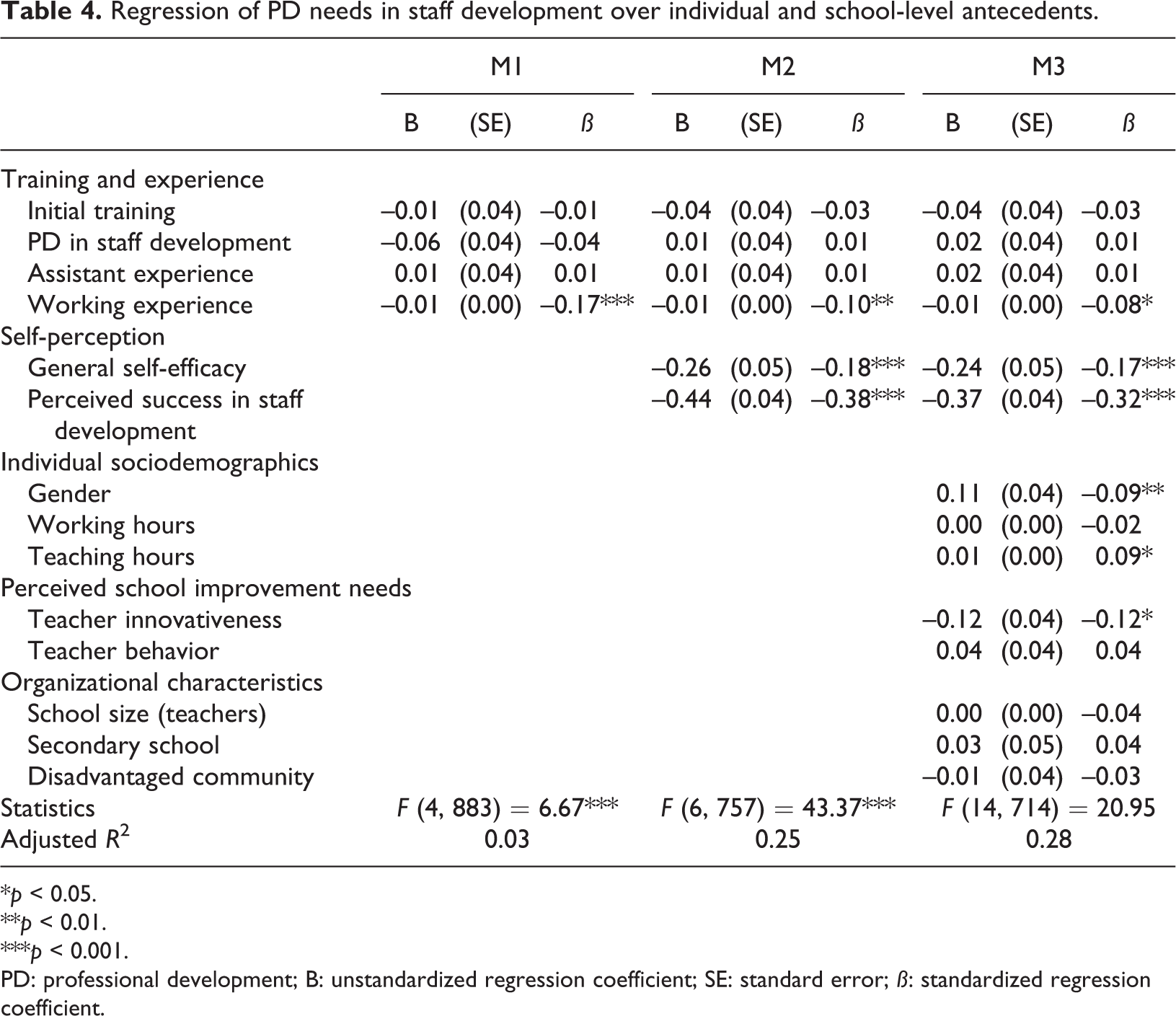
PD needs in staff development: In the analysis of predictors for PD needs in staff development, the first model showed that neither a mandatory training, nor additional PD in that area during the past twelve months were related to the PD needs of the principals (see Table 4). Principals with more working experience reported lower PD needs, although the size of the coefficient was small (Gignac and Szodorai, 2016).
Regression of PD needs in staff development over individual and school-level antecedents.
*p < 0.05.
**p < 0.01.
***p < 0.001.
PD: professional development; B: unstandardized regression coefficient; SE: standard error; ß: standardized regression coefficient.
In the second model, we included the self-perception of the principals, which turned out to be more predictive of the PD needs: principals with a higher general self-efficacy, and even more so principals with a higher perceived success in staff development, reported lower PD needs in this area. Moreover, the association between the PD needs in staff development and the working experience was reduced to ß = –0.10, which means it was rather non-substantial.
When demographics of the principals and the school were included, the model showed that the principals reported higher PD needs in staff development when they thought that the innovativeness of their teachers was lower (ß = –0.12). The gender of the principal and their teaching hours also had a significant, but rather unsubstantial (ß <|.10|), association with the PD needs.
PD needs in organizational improvement
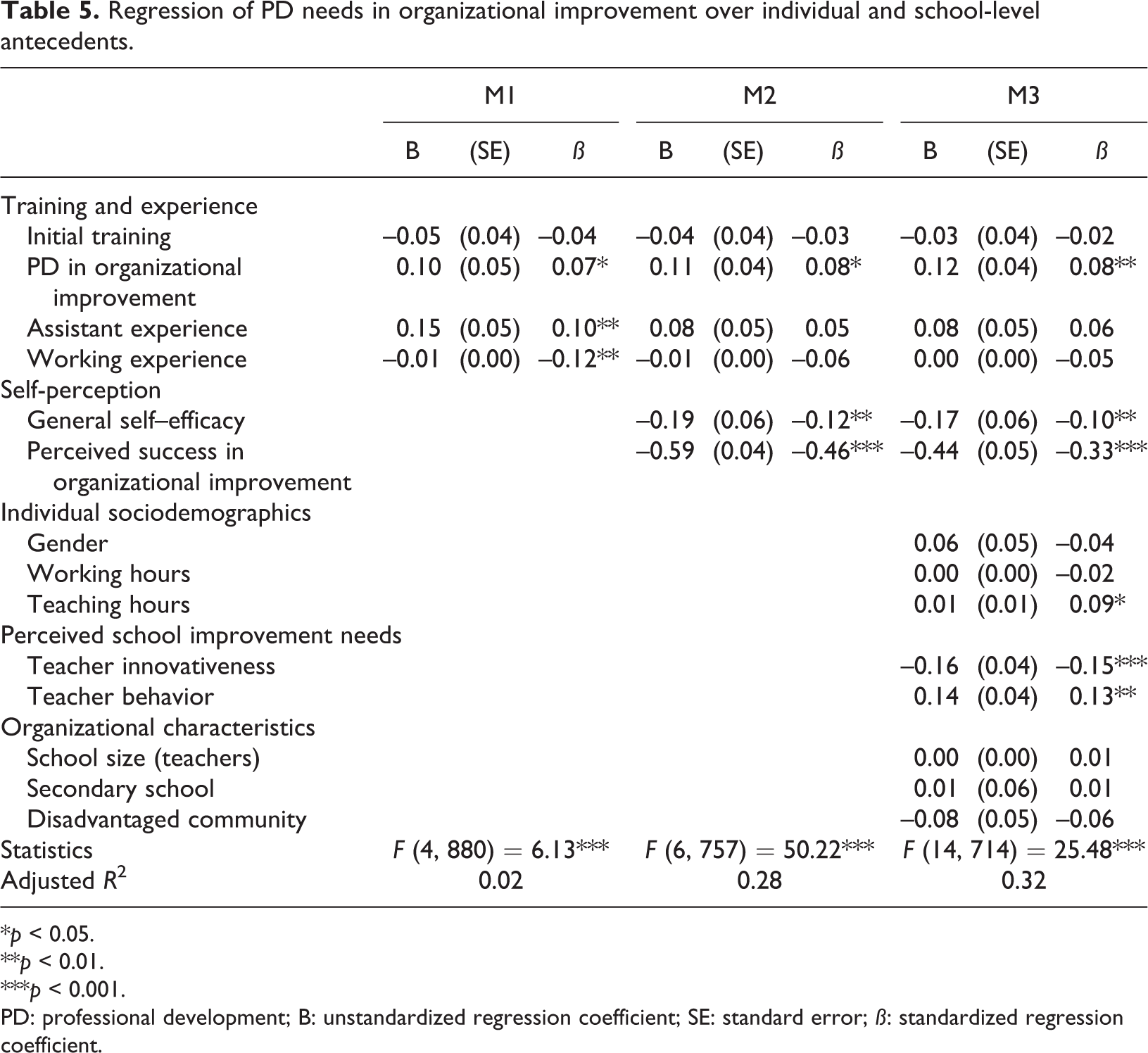
Regarding the PD needs in organizational improvement, we see that whether principals had received formal training before they started as principals was not related to their PD needs (see Table 5). However, principals who had worked as assistant principals before had higher PD and support needs (ß = 0.10), while principals with a longer working experience had less (ß = –0.12). Both coefficients were small.
Regression of PD needs in organizational improvement over individual and school-level antecedents.
*p < 0.05.
**p < 0.01.
***p < 0.001.
PD: professional development; B: unstandardized regression coefficient; SE: standard error; ß: standardized regression coefficient.
When the self-perception of the principals was included, principals who felt more successful in organizational improvement reported much lower PD needs (ß = 0.46). Also, the assistant experience and the general working experience did not make a difference when the self-perception was included.
The third model showed that the demographics of principals and schools reduced the association with the perceived success, and that principals reported higher PD needs when they felt that their teachers were less innovative (ß = –0.15) and when they perceived the behavior of teachers in their school as more problematic (ß = 0.13).
PD needs in instructional improvement
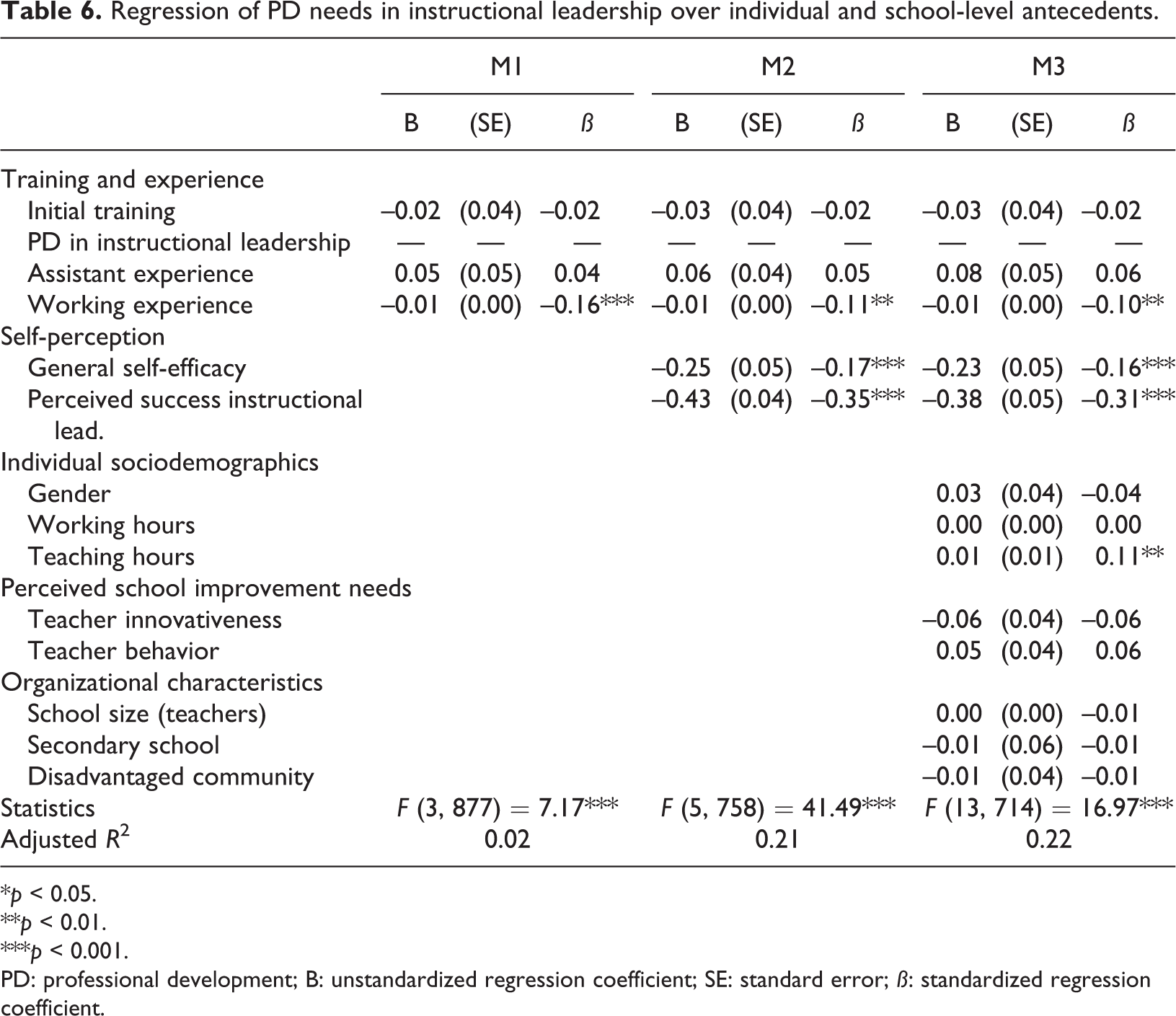
For technical reasons, we did not have information whether the principals had participated in PD in instructional improvement, so we could not include that information in the analysis. Yet, the regression analyses revealed results similar to those before (see Table 6).
Regression of PD needs in instructional leadership over individual and school-level antecedents.
*p < 0.05.
**p < 0.01.
***p < 0.001.
PD: professional development; B: unstandardized regression coefficient; SE: standard error; ß: standardized regression coefficient.
The first model, again, showed that it was the experience of the principals rather than their training that was associated to their reported PD needs in instructional improvement (ß = –0.16).
In the second model, we observed the same results as with the PD needs in staff development and organizational improvement: a higher general self-efficacy and a perceived higher success in instructional improvement meant that principals reported lower PD needs in this area. In this area, too, the association with the experience was reduced when the self-perception was included.
Including demographics in the third model only slightly changed the effect of self-perception and experience. However, in contrast to the other two areas analyzed previously, it also showed that principals with more teaching hours reported higher needs for PD in instructional improvement (ß = 0.11), whereas the perception of the innovativeness of the teachers was not related to the PD needs.
PD needs in the implementation of accountability instruments
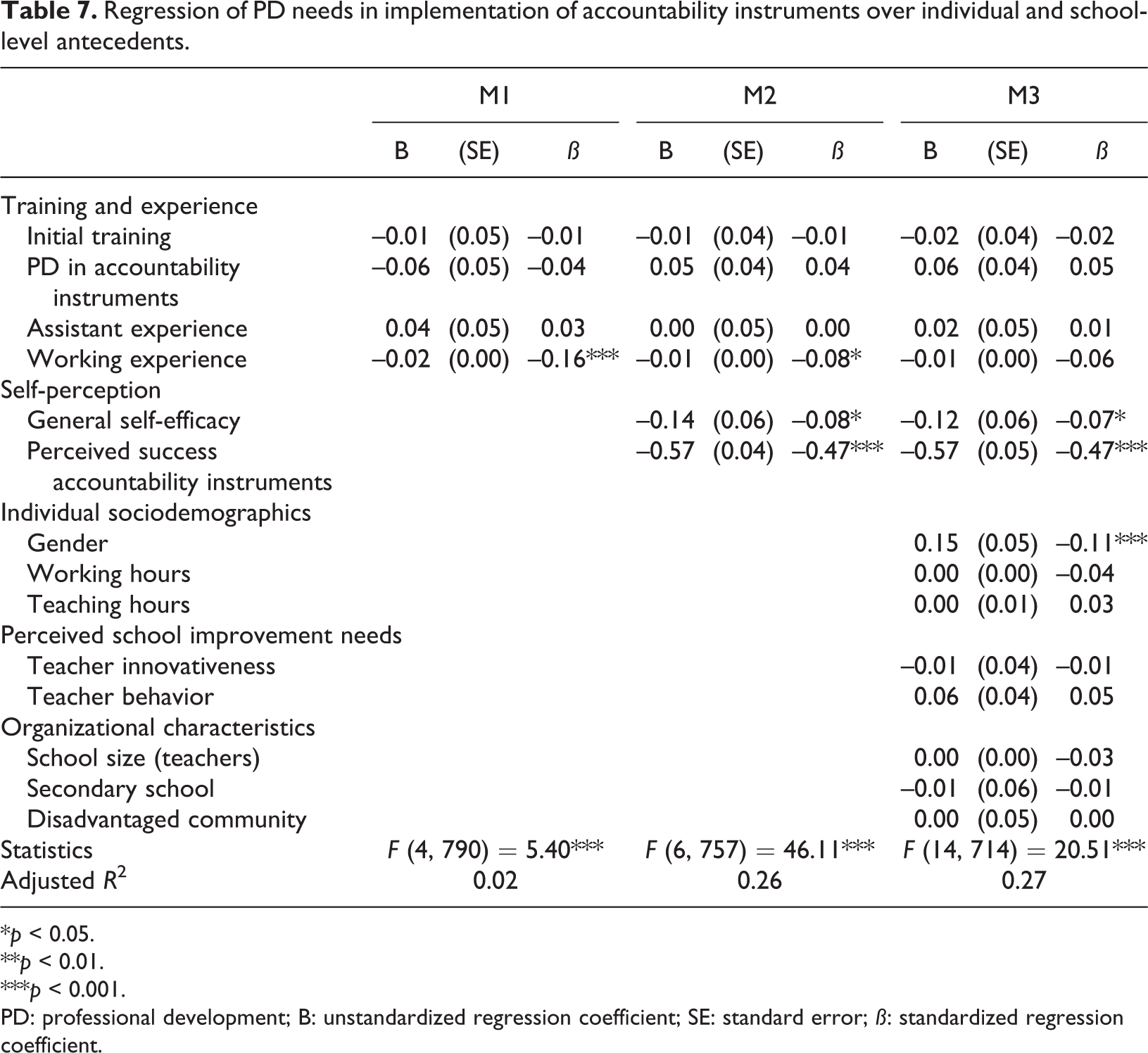
Finally, we looked at predictors for PD needs in the implementation of accountability instruments (see Table 7). Here, again, the analysis showed that it was the working experience rather than the training of principals that led to lower PD needs. Again, this association was no longer substantial when self-perception was included in model 2.
Regression of PD needs in implementation of accountability instruments over individual and school-level antecedents.
*p < 0.05.
**p < 0.01.
***p < 0.001.
PD: professional development; B: unstandardized regression coefficient; SE: standard error; ß: standardized regression coefficient.
In contrast to the PD needs in the three areas assessed before, the association between the self-efficacy of the principals and their PD needs was significant, but not substantial (ß = -0.07). The perceived success in this area, however, was again strongly related to the PD needs (ß = –0.47).
The third model showed that the perception of the teaching staff did not affect whether principals had PD needs in the area of accountability instruments. However, in contrast to the other three areas, the gender of the principals played a role: male principals reported slightly lower PD needs in this area than female principals (ß = –0.11).
Discussion
Participation in the survey was voluntary, so we cannot rule out that our sample is biased towards principals with lower PD needs because those with higher PD needs were less likely to participate – for instance, because they were more stressed and had less time – and, therefore, the PD needs in our sample are lower than the PD needs within the population. Thus, we must take into consideration that the associations that we found might be due to the sample selection.
Also, we cannot determine whether the sample is representative with regard to other aspects such as gender, seniority, or training, because there are no official statistics that we could compare our sample to. While the results reported here as well as additional analyses that we have run (Schwanenberg et al., 2018) showed that level and patterns of the perceived PD needs are largely the same across the varying sub groups of our sample, and were affected more by the individual cognitions of the principals and the perceived improvement needs of the school than demographics or external factors, we cannot preclude that the results might be different in a different sample, and our results must, therefore, be seen as exploratory and marking aspects that should be further pursued in future research.
Keeping these limitations in mind, our data point to the following aspects. First, whereas the literature review in the second section of the paper showed that principals in the US reported high PD needs – for instance, in the study by Spanneut et al. (2012), more than three quarters of the principals reported moderate or high PD needs in several items, and in the study by Duncan et al. (2011), the mean PD need was above the theoretical mean in most areas assessed – our results revealed that the German principals who participated in our study felt that their PD needs were generally moderate. When we looked at the individual items, there were only six out of 38 tasks in which a majority of the participants in our study said that they had at least “rather high” PD needs. Only a minority of the participants reported the perceived need to learn more about their tasks in organizational improvement, staff development, and instructional leadership.
The regression analysis showed that the self-perception of the participating principals and their perception of the improvement needs of their school had a decisive influence on how they assessed their PD needs. In all four areas, their reported PD needs were associated with how successful they felt in that area (all ß > 0.30). The coefficient was highest in the area in which the principals reported the relatively highest PD needs: the implementation of accountability instruments. Moreover, the perceived PD needs in organizational improvement and staff development were associated with how the principals perceived the acceptance of improvement and change in their schools. When the principals perceived the teaching staff as innovative and reflective and reported fewer issues with teacher behavior, they also reported lower PD needs.
By contrast, most sociodemographic factors were not consistently associated with the perceived PD needs. Whether the principals had received training or had received PD in the specific area was not associated to their perceived PD needs after the self-perception was included. A higher level of work experience as principal seemed to be related to the PD needs, but the association was smaller when the self-perception was included.
Other individual demographics of the participating principals only had an influence in specific areas. For example, principals who taught a higher number of hours reported slightly higher PD needs in the area of instructional leadership. Principals with a higher total number of weekly working hours tended to report slightly higher PD needs in the area of staff development. Apart from that, the working and teaching hours were not systematically related to the PD needs of the principals.
Moreover, the analyses showed that organizational factors, such as school type or a disadvantaged location, were not related to the PD needs in any of the areas, in contrast to the studies by Salazar (2007) and Houle (2006).
In sum, the results showed that the perceived PD needs of the principals were altogether moderate, and were more likely to be affected by their interpretation of their situation than by their sociodemographic characteristics.
It is possible that principals feel their PD needs are low because the objective need actually is low. So far, there are no leadership standards and neither theoretical models to operationalize nor instruments to measure their skills and, as a consequence, the objective PD needs of principals in Germany (Schwanenberg et al., 2018), which marks a blank space in leadership research as well as principal training and PD.
We cannot foreclose that the sample is biased towards principals with lower objective PD needs. If, however, we assume that the sample is not biased, the following explanations might apply: Principals might have low perceived PD needs because they do not yet identify with their new leadership role. This interpretation would be compatible with other studies from Germany showing that principals often do not see themselves as managers and leaders of their school (Warwas, 2012). Future research into PD of principals should, therefore, not only consider the principals’ interpretation of their situation, but also of their own role. Principals might have low perceived PD needs because they do not feel that their school is in need of improvement, either because there is no objective need for improvement, or because they are not aware of this need. The latter, in turn, could be an expression of missing or inappropriate external feedback: in most German states, schools receive systematic feedback only at intervals of several years (Dedering and Sowada, 2017), and principals rarely receive any specific, systematic feedback on their leadership work if they do not ask for it. Future research should analyze how formal feedback (or the lack thereof) affects principals’ self-perception and their assessment of their own PD needs.
An interesting finding is that principals who have received formal training before the job did not report less PD needs than principals who had not received such training. One explanation might be that principals participated in other programs when there was no formal training, or that the PD they have received so far levers out a possible effect of initial training. (It should be noted that our data do not suggest an association between the PD programs taken in the past 12 months, and the perceived PD needs.) Another explanation might be that initial training programs might not address the specific activities we have assessed in our questionnaire. Unfortunately, it is not possible to further investigate this assumption at this point. Even though all German states are providing training in the areas of organizational and instructional improvement nowadays, as well as staff development to some degree (Tulowitzki et al., 2019), we know very little about the concrete contents of these programs and what principals are likely to have learned in their initial training. This marks another blank space in German leadership research.
Conclusion
In Germany, principals are nowadays framed as key players for the improvement of schools. As a result, normative expectations towards their role have become more diverse and require them to have expert knowledge in staff development, organizational improvement, and other relevant areas. In contrast to that, the study reported here shows that most of the principals that participated in our study reported rather low PD needs, even in those areas that call for specialized knowledge, and even when half of them have not received formal training for the job. This result was the same for most sub groups, and it was not related to training and already received PD.
Keeping in mind that our sample is not representative and can only serve as an exploration of principals’ perceived PD needs, the findings suggest two things. First, their interpretation of their professional self and their work situation is more relevant for their perceived PD needs than sociodemographic factors. This should be kept in mind when PD programs for principals – which are always voluntary and, thus, dependent on how principals assess their own PD needs in Germany (Schwanenberg et al., 2018) – are being planned. Second, the fact that the principals that participated in our study did not perceive high PD needs in areas related to the improvement of their school is compatible with other research that points out that, on average, German principals do not necessarily seem to perceive themselves as innovators, and do not seem to exercise extensive leadership in this area. It remains unclear which role certain elements of the governance context plays in this – for instance, the “soft” external accountability and the lack of direct support for school improvement from local and regional administration (Klein and Bremm, 2020). Therefore, future research should take a closer look at the governance context when investigating the practice of principals in countries where the role of the principal has been changed.
Footnotes
Declaration of conflicting interests
The author declared no potential conflicts of interest with respect to the research, authorship, and/or publication of this article.
Funding
The authors disclosed receipt of the following financial support for the research, authorship, and/or publication of this article: The research project School Leadership Monitor (Schulleitungsmonitor) was funded by the Wübben Foundation.
