




Abstract
The aim of the current study is to disclose the results of shape factor analysis of the flow of a hybrid nanofluid over a curved sheet. The flow is caused by a stretchable curved sheet. Mathematical modeling and analyses have been performed in the presence of curvature, melting heat and heterogeneous-homogeneous reactions. Autocatalysis and the coefficients of the reactant are dealt with in a similar manner. The physical properties of the fluid, including the fluid velocity, the heat and mass transfer properties, the skin friction and the Nusselt number have been acquired and analyzed under the influences of the dimensionless curvature, melting and heterogeneous–homogeneous reaction variables. Boundary layer approximations are used in the mathematical formulation. Suitable transformations have been used to transform differential equations into nonlinear ordinary differential equations. The resulting nonlinear system of equations has been analyzed via the matlab bvp4c solver. Comparisons of nanoliquids with the hybrid nanoliquid are presented through graphs and tables. The results of this analysis show that the skin friction and the heat transfer rate in the hybrid nanofluid are seen more prominently than those of the nanofluid for larger values of the curvature parameter
Keywords
Introduction
Boundary layer flow of viscous fluids has seen extensive use in industry because of the widespread use of stretching moveable surfaces with peculiar velocities. This type of flow is promising for implementation in a variety of industrial fields, including fabrication of prominences in polymer plates using a die or extraction of plastic sheets. The melted plastic is extracted from a slit during the sheet structuring process, consequently leaving the sheet stretchable and allowing the desired thickness to be achieved. The mechanical features of refined products depend on the cooling rate and the extending features of the products during these procedures. Boundary layer flow via a moving stretchable sheet was explored for the first time by Sakiadis1,2. After this initial work,1,2 researchers documented stretchable plates in boundary layer flow in various directions. Crane 3 introduced three-dimensional analysis for incompressible laminar flow. However, closed form results for the Crane problem have been very scarce in fluid mechanics to date. Boundary layer flow research has broadened into numerous areas to explore other physical features of the flow, including suction/blowing and heat transmission. In addition, many associated problems have been developed, with each incorporating different aspects to provide a precise solution. Accurate analytical results for the Crane study 3 were investigated by McLeod and Rajagopal. 4 Stretched flow via injection/suction processes was researched by Gupta et al. 5 Wang 6 extended the axisymmetric flow into a three-dimensional stretching sheet. The stretching flow7–11 was studied extensively for both Newtonian and non-Newtonian fluids. The above research on linear and nonlinear extendable sheets focused on flat sheets only and few attempts have been made to analyze flow over stretchable curved sheets. The pioneering investigation of linearly stretchable curved sheets has been documented in the literature. 12 Subsequent studies of the use of liquid flow via curved extendable plates in industry have incorporated flow in the curved jaws of machines.13–19
Nanofluids, which are composed of nanoparticles submerged in base liquids, have seen several real applications in numerous fields, including cancer treatment, temperature reduction in electronic tools, the nuclear field, drug delivery and many other areas. Because of their significance in the aforementioned areas, nanofluids have become a challenging research topic in recent years. The characteristics of final industrial products are largely dependent on heat transport aspects and thermal conduction, and low-thermal-conductivity fluids are mostly encountered in manufacturing industries. Nanoparticles are being developed to overcome this inadequacy in fluids for industrial applications. The pioneering analysis of these engineered liquids was introduced by Choi and Eastman. 20 Because of the unique features of nanofluids, they are being used increasingly widely in medical and engineering sciences in heat exchangers, targeted drug delivery, mechanical cooling, extraction of geothermal forces and many other fields.
Hybrid nanofluids (HBNFs) have been applied extensively in the cooling of machines and motors, bio-technologies and numerous other areas. An HBNF is a mixture of two differently-sized nanoparticles and a base liquid. An HBNF was analyzed experimentally for the first time in 2007 by Jana et al. 21 A comprehensive review of the characteristics of HBNFs was later provided by Sarkar et al. 22 They concluded that HBNFs enhance both pressure and heat transfer. Subsequent investigations23–27 and further studies cited therein can be referred to for further analyses of HBNFs.
The solidification and melting features of materials have remained a prominent research topic because of their promising links to innovative technologies and industries. Research scientists tend to place importance on technologies that provide more durable, effective and low-cost energy storage. In the heat and power industries, lost heat recovery and solar energy applications are interlinked with these materials. Chemical storage and latent heat and sensible heat energies are used frequently for energy storage based on these techniques. Latent heat is more appropriate economically and there is an effective energy storage trend based on altering the phase of the storage materials. The thermal energy is preserved in the material through its latent heat by melting and is regained by later freezing the same material. The melting of ice chunks in steam was studied by Roberts. 28 Further literature reviews on aspects of melting and freezing were cited in several articles.29–34
Heterogeneous–homogeneous reactions are implicated in a variety of chemical reaction phenomena. These phenomena are engaged together in both heterogeneous and homogeneous reactions. Various reactions proceed gradually or do not occur instantaneously in the presence of a catalyst. Within fluids and on catalyst surfaces, different reaction rates occur for the different reactant species. These reactions35–36 are commonly used in processes that include food processing, fog formation and dispersion, polymer processing, combustion and biochemical processing. Merkin 37 proposed the pioneering concept of isothermal homogeneous–heterogeneous reactions. Autocatalyst diffusivity and reactants were also investigated in boundary layer flows by Chaudhary and Merkin. 38 The impact of diffusion species in nanofluids when varying the sheet thickness was reported by Hayat et al. 39 A computational study of these reactions for heat transport applications was performed by Waqas. 40
Molybdenum disulphide
The shape factors of the nanoparticles play an important role in advancement of heat transfer. However, very little consideration has been given to the heat transfer through exact nanoparticle shapes. The current analysis technique describes the flow of a water-based HBNF (
Thermal characteristics of base liquid with shape factors
The composition of the HBNF comprises

where VMoS2, VGO and Vf are the volume of MoS2, the volume of GO and the total volume of the fluid, respectively, and ϕ1 and ϕ2 are the volume fractions of MoS2 and GO, respectively. The thermal characteristics of the base liquid and the nanoparticles are presented in Table 1. Table 2 compares the thermophysical characteristics of the
Characteristics of base liquid and nanoparticles. 47
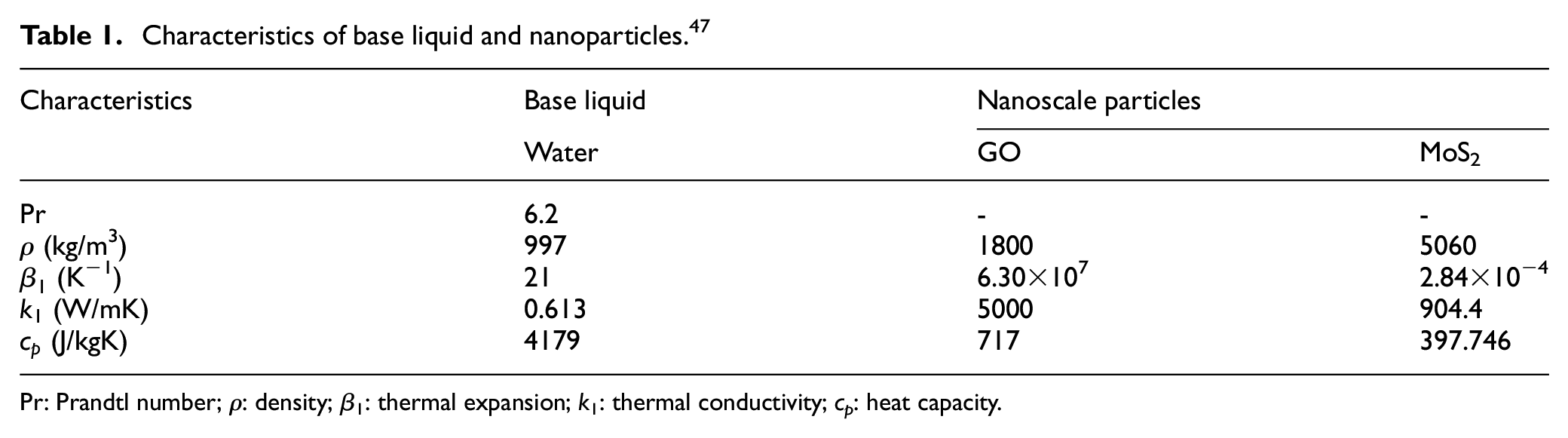
Pr: Prandtl number; ρ: density; β1: thermal expansion; k1: thermal conductivity; cp: heat capacity.
Thermophysical properties of hybrid nanoliquid

Formulation
Consider a two-dimensional incompressible HBNF flow over a curved sheet with radius

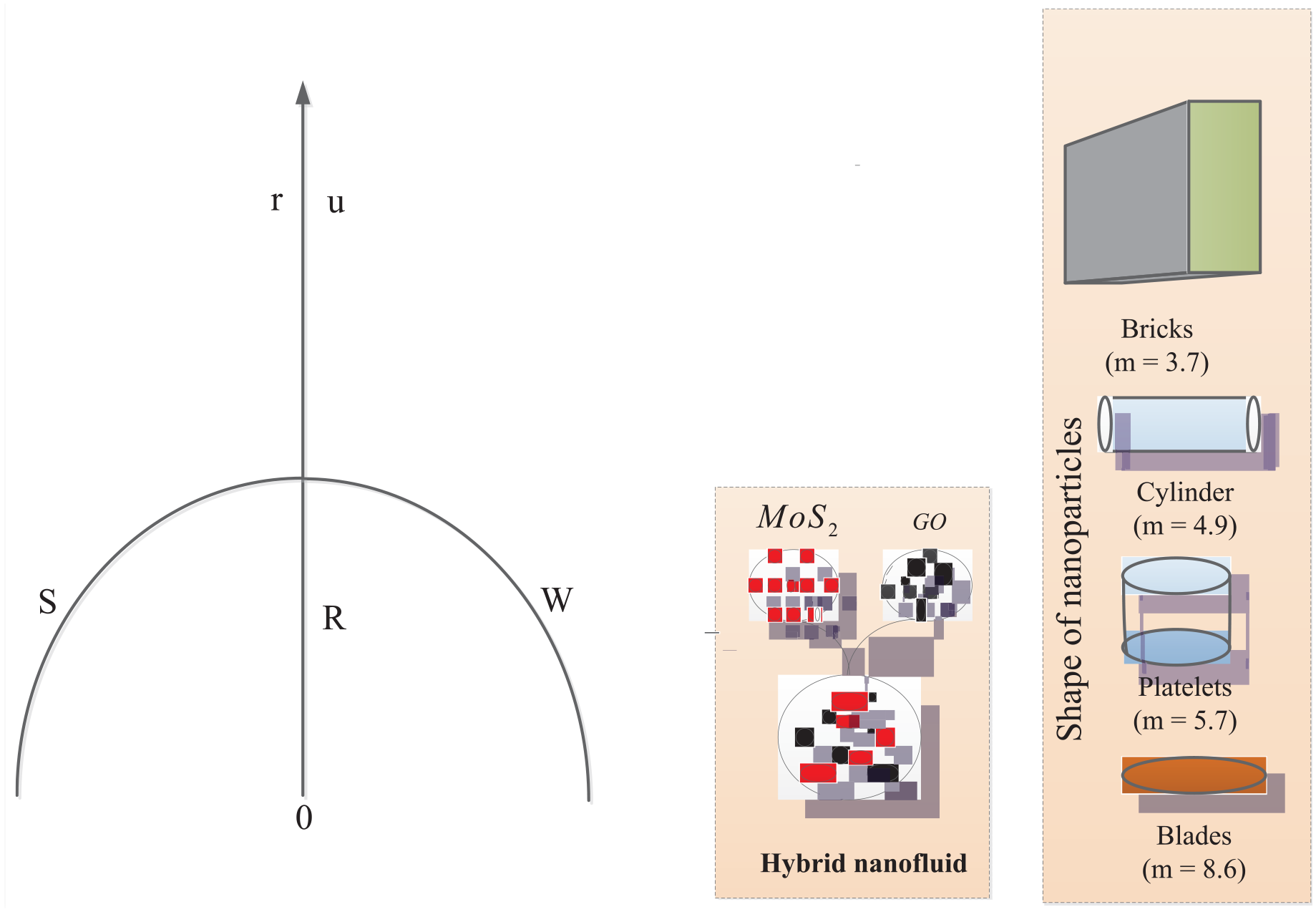
Geometric configuration of hybrid nanofluid (HBNF) problem.
where
The isothermal homogeneous reaction is defined as:

and for cubic auto-catalysis, the heterogeneous reaction on the catalyst surface is defined as:

where
Momentum analysis
The momentum balance equation reveals how the diffusion of the nanoliquid molecules in the boundary layer is caused by the nonlinear stretchable curved sheet. The resultant problems after application of approximation theory are given by:


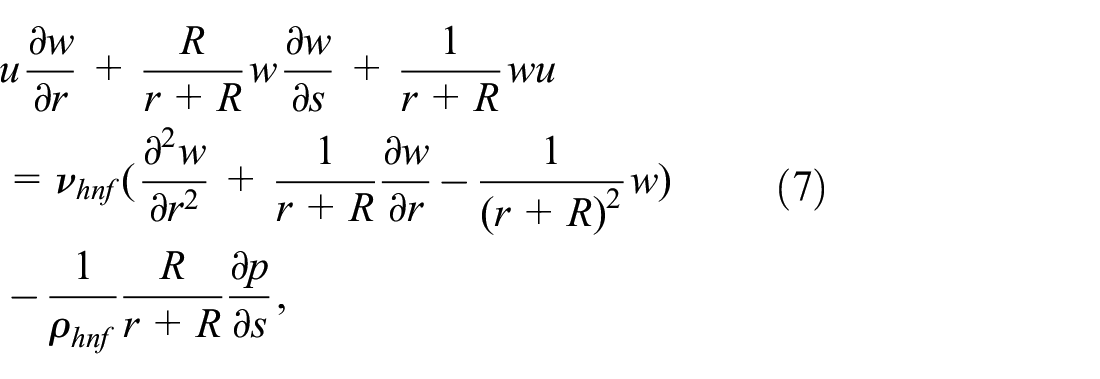
with the following conditions:

where
Energy analysis
Here, we examine how the temperature depends on the melting heat transfer. Therefore, we have the balance of energy equation as follows:

with the conditions that

where
Mass transfer analysis
The mass balance equation shows how the concentration of an HBNF varies through homogeneous-heterogeneous reactions. The resulting problems after application of approximation theory are:


with the conditions that

where
By letting
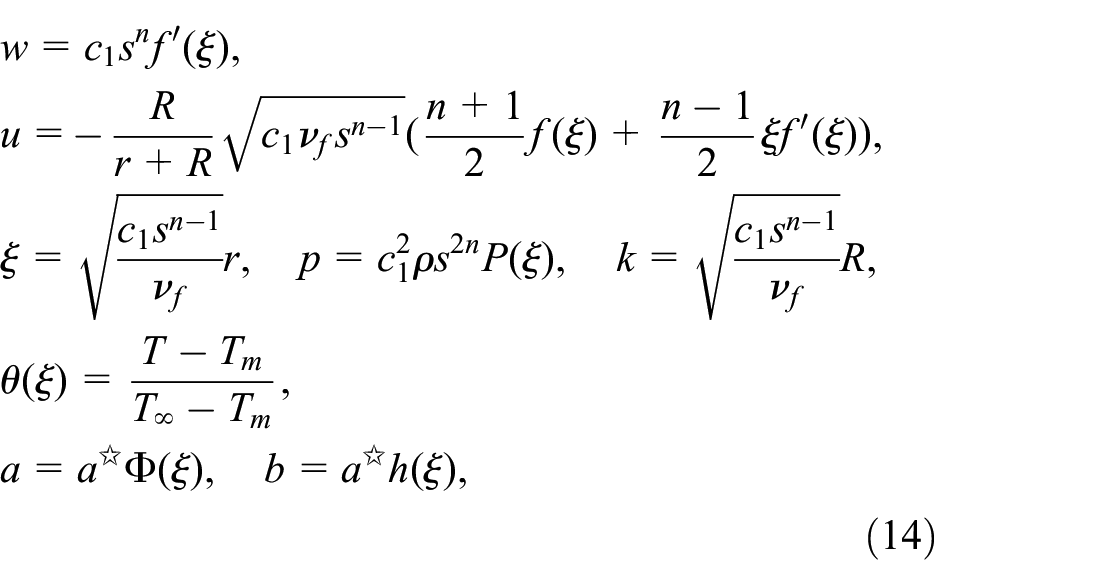
equation (5) is then balanced trivially and then equations (6–14) lead to the following form:



with

In the above,

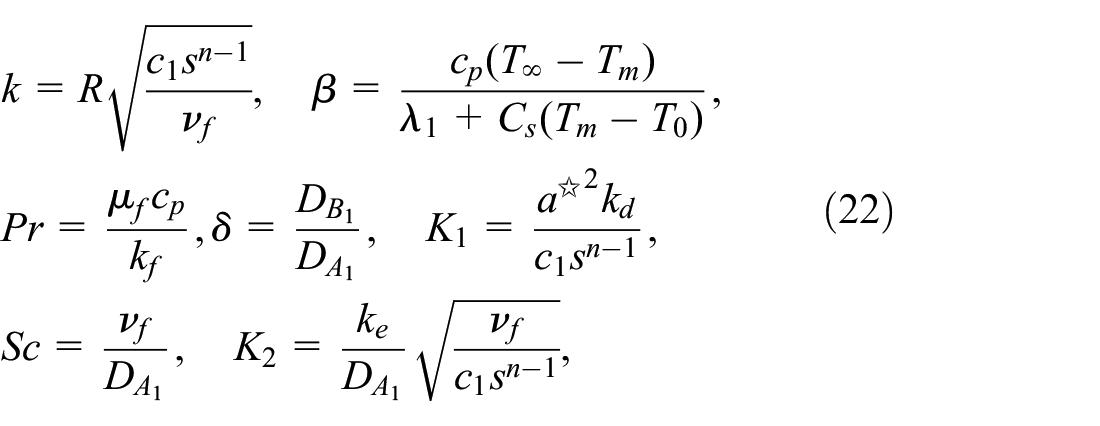
The Schmidt number, the Prandtl number, the dimensionless curvature variable, the melting variable, the ratio of the diffusion coefficients, the homogeneous reaction variable and the heterogeneous reaction variable are denoted by
By simplifying equations (15) and (16), we obtain:

where the pressure from equation (16) is given as:

For equal diffusion coefficients, where

Equations (18) and (19) then yield

with

Physical quantities
The skin friction coefficient

where

and the dimensionless quantities included above are defined as

where
Results and discussion
This section incorporates a graphical description of the dimensionless variables for the fluid velocity, the temperature, the nanofluid concentration, the skin friction and the Nusselt number. The solid lines in the figures represent the values for the nanofluid (
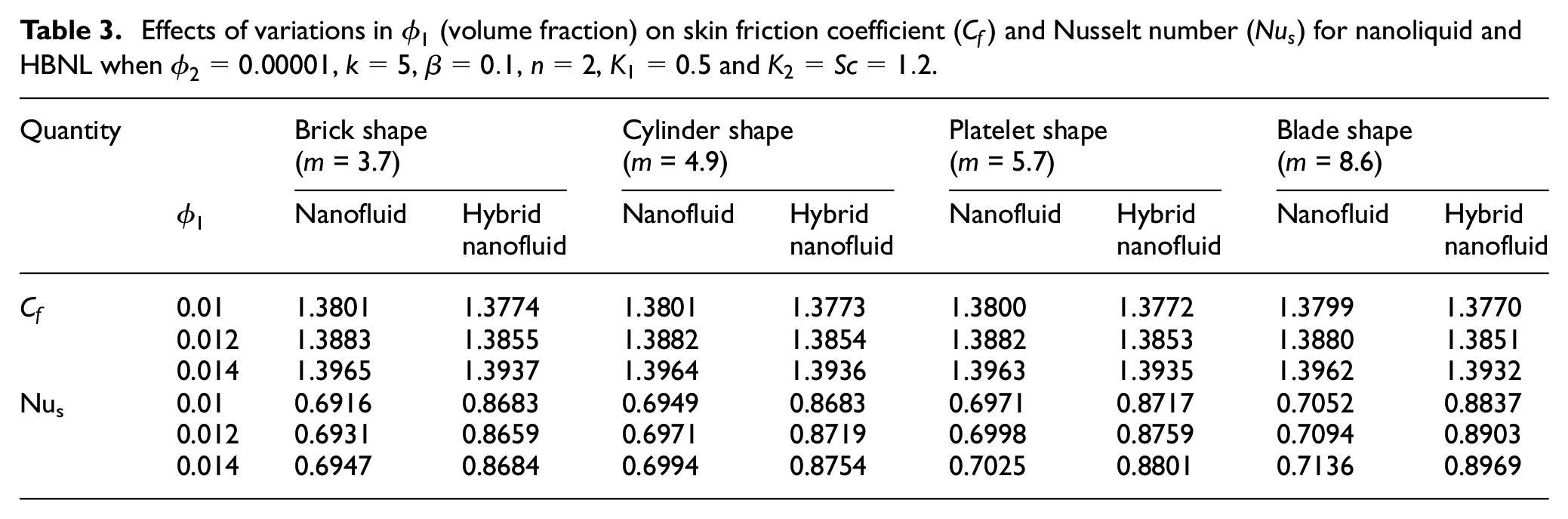
Effects of variations in
Effects of variations in

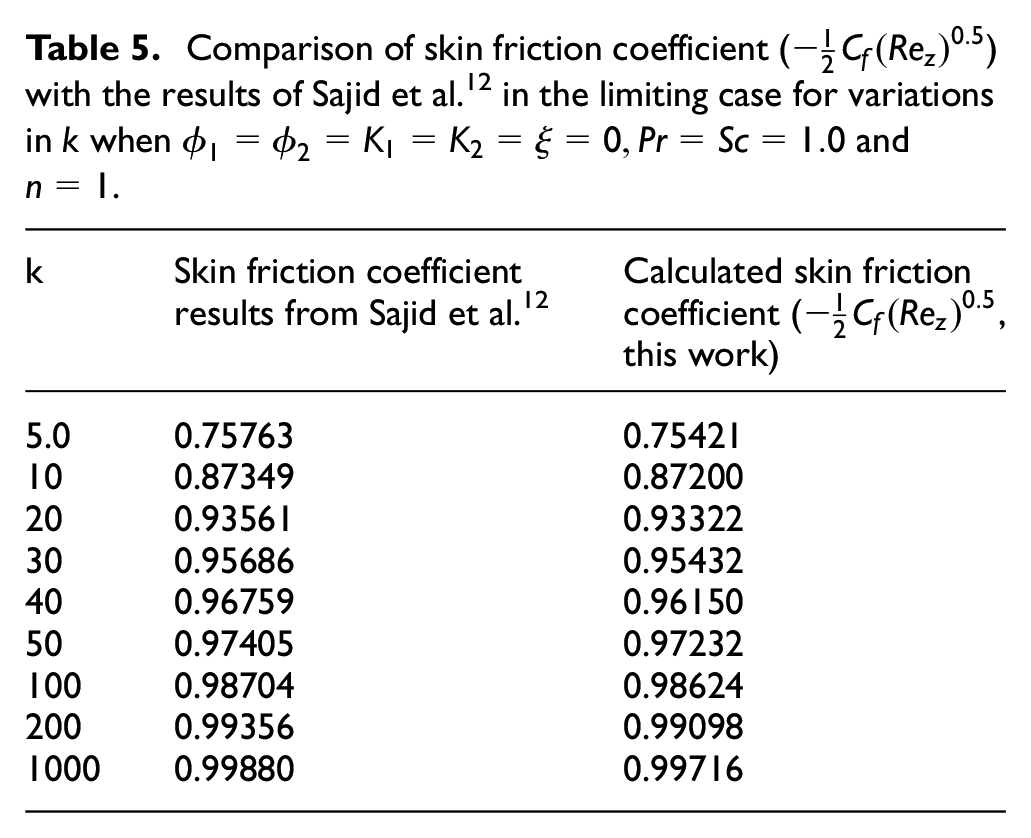
Comparison of skin friction coefficient (−
Velocity field
Figure 2 shows the influence of the curvature parameter

Curves of

Curves of n versus f′(ξ).
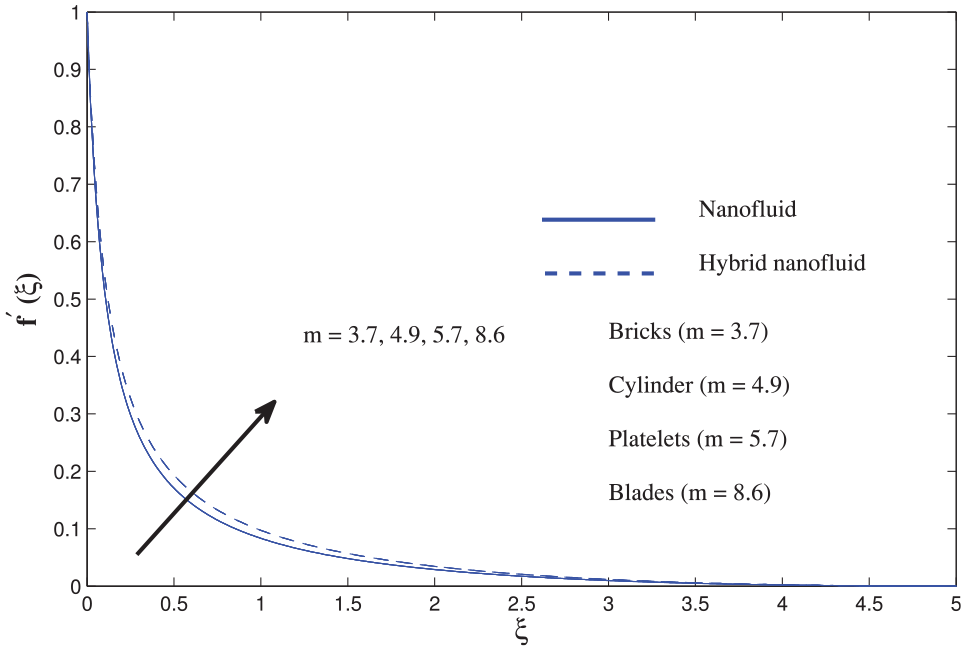
Curves of
Temperature field
The effects of the curvature variable

Curves of

Curves of

Curves of

Curves of
Concentration field
Higher values of the homogeneous and heterogeneous reaction variables cause the fluid concentration profiles to decline (see Figures 9-10). Higher values of the homogeneous reaction variable

Curves of

Curves of
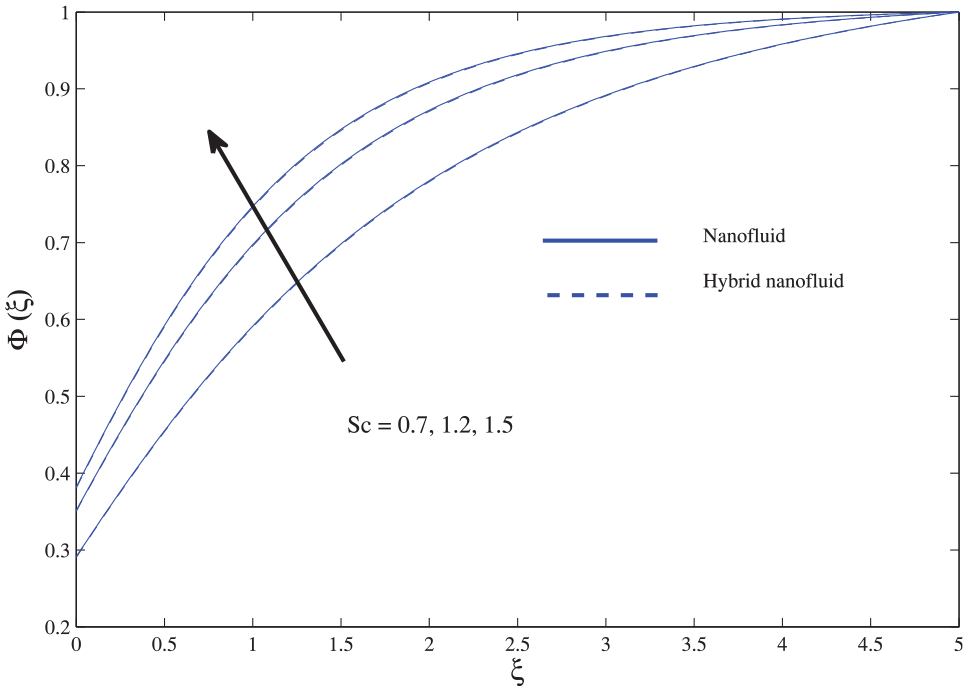
Curves of

Streamlines for

Streamlines for

Isotherms for
Table 3 shows that the magnitude of the skin friction is higher in the case of the hybrid nanoliquid when compared with that of the nanoliquid with variations in
Findings
This analysis has disclosed the results for the flow of a molybdenum sulphide
Larger values of the curvature
The fluid temperature declines at higher values of
Heterogeneous and homogeneous reaction variables show the same behavior for both fluids but the opposite was noted for the Schmidt number.
The hybrid nanofluid
Footnotes
Handling Editor: James Baldwin
Declaration of conflicting interests
The author(s) declared no potential conflicts of interest with respect to the research, authorship, and/or publication of this article.
Funding
The author(s) received no financial support for the research, authorship, and/or publication of this article.
