



Abstract
Photovoltaic assisted reverse osmosis (PV-RO) has been proven an efficient renewable energy-based desalination technique to provide drinkable water, especially in remote areas. In this manuscript, a simulation based RO design system was adopted to evaluate the desalination performance for three cities of Pakistan, that is, Lahore, Hasil Pur, and Faisalabad. The inlet concentration of Lahore, Hasil Pur, and Faisalabad was reduced from 1495, 2190, and 7683 TDS to 295.44, 237.69, and 241.98 TDS respectively, according to the WHO drinking water recommendations. The RO desalination system was integrated with the photovoltaic system to fulfill the energy requirement for desalination. The energy requirement for the RO system for the working of 10 h/day with the freshwater production rate of 0.80 m3/h for Lahore, Hasil Pur, and Faisalabad is 60, 95, and 311 kWh/month, respectively. According to PVsyst software, the energy demand can be accomplished by installing 9 PV panels in Lahore, 15 PV panels in Hasil Pur, and 40 PV panels in Faisalabad. The simulation results in PVsyst showing that the battery losses will be 52.2% in Lahore, 51.1% in Hasil Pur, and 49% in Faisalabad.
Introduction
Water is one of the most abundant things on the earth yet the availability of safe and clean drinking water is a challenge for a large number of people around the world. Only 3% of the total water on earth is fresh and drinkable while a very small percentage of this freshwater, about 0.01%, is available to humans for use. 1 According to a study, safe and clean drinking water is beyond the reach of about one billion people of the world’s population. 2 The situation is not much different in Pakistan. About 44% of the Pakistan population has no access to affordable, safe, and clean drinking water. Furthermore, 90% of such population is located in rural areas of Pakistan. 3 Due to these facts, Pakistan stands at number 80 according to the ranking of 122 nations regarding the quality of drinking water. 4 The magnitude of the problem can be assessed by the increased mortality rate of children in Pakistan due to the unavailability of clean drinking water. 3 Generally, in Pakistan, the supply of drinking water comes from surface water sources such as rivers, canals, lakes, and the underground water reservoirs. 5 Currently, the reliance on groundwater, however, has been increased and it is estimated that 70% of the drinking water extract from underground resources. 6 However, the quality of underground water is becoming progressively worse due to the naturally occurring contaminants in the soil and other human activities which involve sewage, industrial waste, and heavy use of pesticides and fertilizers in the agriculture sector. A proposed solution to this problem is Reverse Osmosis (RO) desalination process, in which these sediments and contaminants are separated from water by passing it through a membrane at a certain pressure. 7
In the RO process, a high-pressure pump is required which pushes the high concentrated saline or contaminated water to the semi-permeable membrane which refrains the salts and other contaminants to pass as shown in Figure 1.

Reverse osmosis plant flow diagram.
RO plants efficiently remove the dissolved salts and any contaminant having a molecular weight of more than 200 kg/mol. This can be very effective for the brackish, surface, and groundwater for both small and large flow applications. 8 To meet the specific pressure requirements for RO, the mechanical pump is used, run by an external power. This power can be provided by an electrical motor or by some internal combustion engine which is another challenge for an RO plant to operate in a country like Pakistan which is facing a severe energy crisis for more than a decade and the situation is only becoming worse. 9
The percentage of the population which has access to electricity is only 55% and 68% of Pakistan’s total population lives in rural areas that have no electricity in most parts. 9 The shortfall has reached 3 GW of power supply which resulted in a massive load-shedding problem all over the country. 10 The reserves of oil and gas in Pakistan are not simply enough to meet its energy, industrial and domestic demands. Therefore, the country has to depend upon imported oil and gas which put an immense strain on the country’s economy. 10 These facts, at least for the current situation make grid electricity and fossil fuel non-reliable sources to operate the RO plants. So, there is a need to look for other energy resources that are more reliable and sustainable. Solar energy is one of these sources and Photovoltaic (PV) cells have a lot of potentials to be considered as the main energy source for the RO plants.11,12 The photovoltaic system is the most suitable choice in far areas for low or medium loads because this system produces power without harming the environment.13,14 The standalone photovoltaic system supplies power to the load without connecting to the grid. In this system, an external storage device is needed to store energy when excess energy is generated and to provide energy when the generation is less than the required. 15 It has a higher initial cost off course, but it is more reliable and sustainable for a country facing such an immense energy crisis. Moreover, it is suitable for rural areas and remote locations where grid electricity is not available but the demand of safe and clean drinking water is high.
According to a study, a small scale and modular photovoltaic RO plant without inverter and battery is an energy-efficient and cost-competitive desalination system. 16 Whereas, for large scale RO plants with a more sophisticated PV system with single or dual-axis tracking, batteries, and control electronics are also feasible.17,18 Since there is a daily and seasonal solar intensity fluctuation so a variable flow pump could be utilized to compensate the variable power output from PV.
In this study, design and initial cost of a standalone PV assisted desalination system is presented for different regions of Pakistan. There was no such work available, previously. Therefore, it will be a stepping stone to design and develop a stand solar assisted desalination system at small scale. Three cities of Pakistan are identified as the location for this cased study. IMSDesign software is used to calculate the power required to desalinate the water of these cities. To fulfill the power requirement of the RO plant, the non-renewable energy source is replaced with the renewable energy source of photovoltaic panels. PVsyst software is utilized to design a solar-based energy supply system. Based on the simulation and renewable energy model design, the feasibility of integrated PV-RO is presented.
Methodology
Figure 2 explains the substantial steps required to achieve the goals defined based on the problem statement and objective of this research. The figure explains the process flow from location selection to input parameters selection, design, simulation, and analysis of RO plant along with the power calculation and corresponding PV system design. Finally cost analysis will be presented for economic evaluation.

Methodology of research.
RO system design
RO system design input parameters in IMSDesign
IMSDesign program is used for RO system design and analysis. The chemical properties and groundwater quality data of the three cities were defined in the IMSDesign package. In Table 1, the chemical properties of the groundwater of three cities are presented. The value of conductivity of Lahore, Hasil Pur, and Faisalabad water is 3180.1, 4491.7, and 19966.8 µs/cm, respectively. Similarly, Table 2 shown the quality of groundwater of selected three cities. The inlet TDS concentration of Lahore, Hasil Pur, and Faisalabad was 1495, 2190, 7683, respectively.
Chemical properties of groundwater.

Quality of groundwater in terms of ions concentration.

RO system configuration
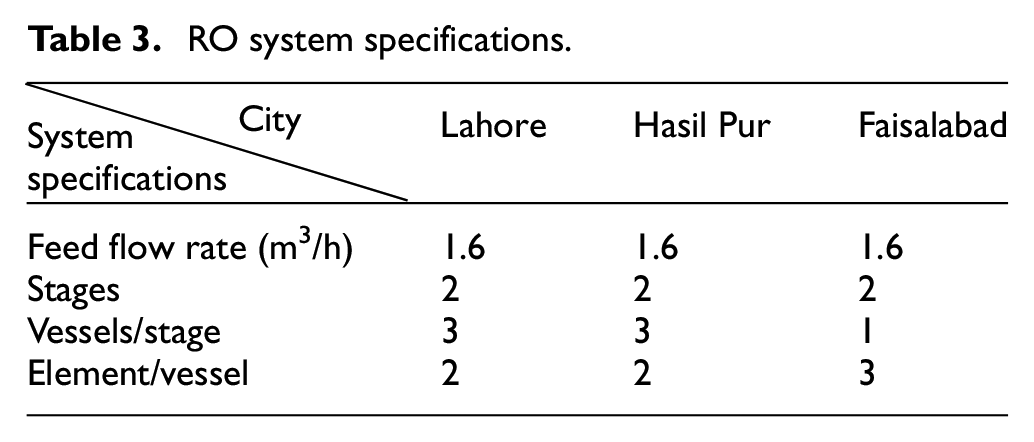
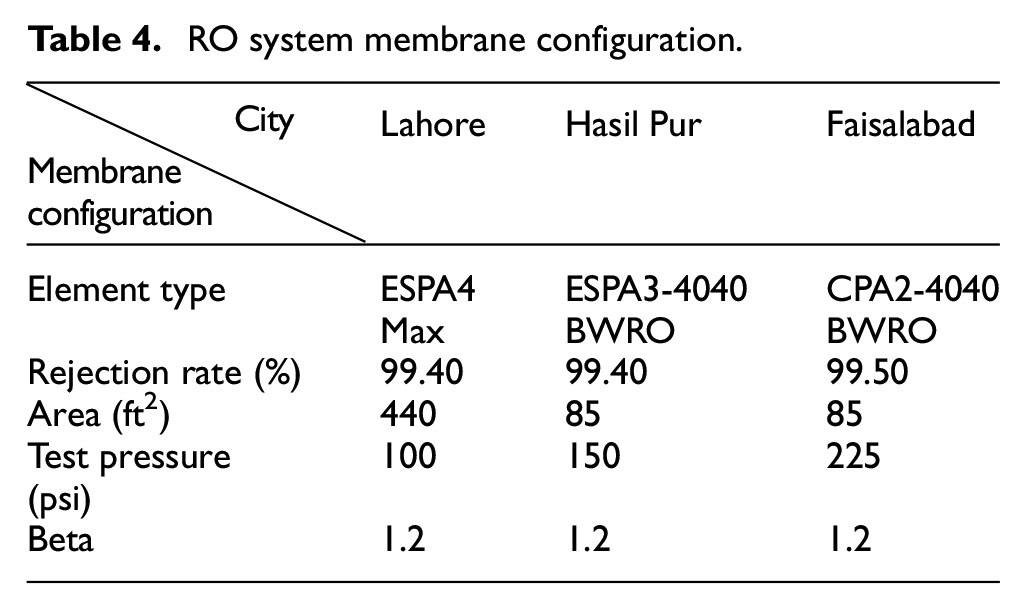
RO system was designed in the IMSDesign software. The flow rate of each RO system was described in the IMSDesign as 1.6 m3/h as shown in Table 3. The system specification is selected in the software and the performance of the system is analyzed. The two-stage system is selected for the RO desalination process of each city. Element per vessel is put 2, 2, and 3 for Lahore, Hasil Pur, and Faisalabad respectively. IMSDesign has a membrane data base. The membrane element for each RO system is specified. Element type ESPA4 Max, ESPA3-4040 BWRO, and CPA2-4040 BWRO were elected for Lahore, Hasil Pur, and Faisalabad respectively. The membrane configuration for each selected membrane is described in Table 4. The membrane selection is purely based on the permeate flow concentration.
RO system specifications.
RO system membrane configuration.
Two-stage RO system was designed in this study to desalinate the feed water, as shown in Figure 3. The feed water passed through two stages in series to produce the clean water. From Figure 3, it can be observed that the feed water entered in the first stage of RO at point 2 and permeate left at point 5. The retentate of the first stage of RO is supplied to the second stage at point 3. Furthermore, the permeate of the second stage leaves at point 6 and mix with the permeate of the first stage at point 7. Moreover, the retentate of the second stage, which is highly concentrated brine leaves at point 4. Through this mechanism, the overall water recovery of the system is increased, because the retentate of the first stage was again passed through the RO second stage to get more freshwater at point 6.

Flow diagram of the RO system.
Analysis of results on IMSDesign
Once the simulation was carried out, results will be analyzed for further processing. Based on the result analysis, there could be two possibilities: Either we would have a desired solution, that is, results were within the limits and standards, or we were exceeding limits and standards; if we would carry out with this that would not be cost-effective in terms of maintenance of membranes, power efficiency and misc.
However, under the described input parameters above, our results of the IMSDesign for the RO system was within the limits and standards.
Discussion on results of IMSDesign
The calculation results obtained from the IMSDesign software for the three cities are shown in Table 5. The highest beta value for Faisalabad and Hasil Pur is within the limits of 1.2 according to the manufacturer recommendations. Beta values for the Lahore RO plant exceed our optimum design limit of 1.2, which in terms increases the maintenance cost by the early replacement of the membranes.
Calculation results (IMSDesign).
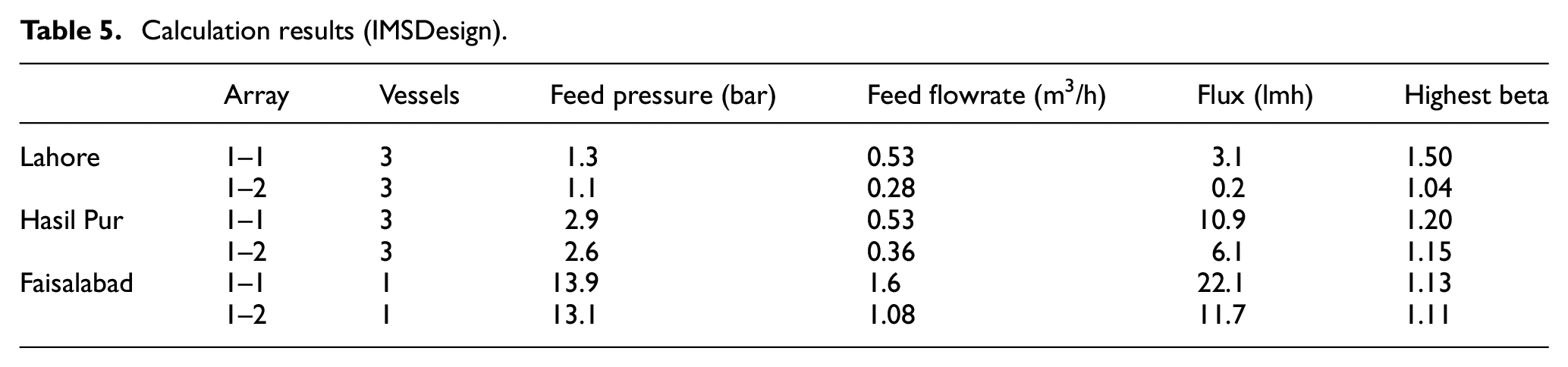
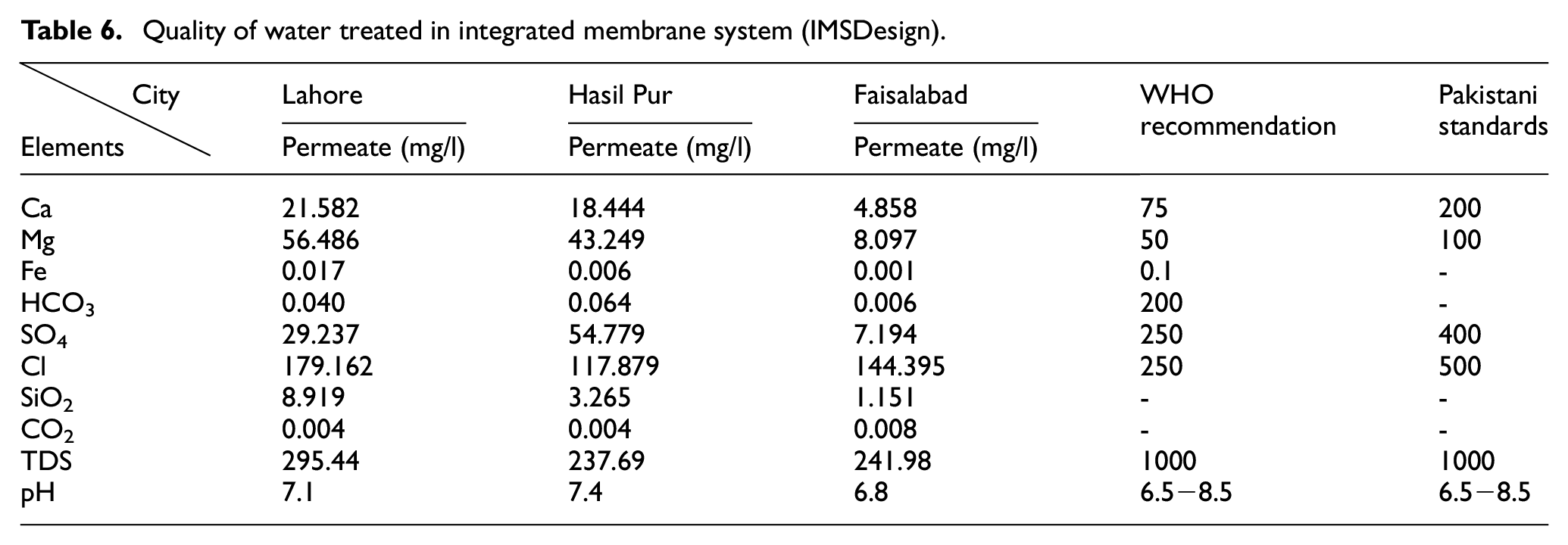
Table 6, shows the permeate water quality treated in IMSDesign. The permeate water TDS level is within the recommended standards for three cities. The value of Mg is exceeding the WHO recommendations, but according to the Pakistan standards for drinking water, the value is within the recommendations. The value of total dissolved salts for three cities is within the WHO and Pakistan standards limits for drinking water. The total dissolved salts value is 295.44, 237.69, and 241.98 for Lahore, Hasil Pur, and Faisalabad, respectively.
Quality of water treated in integrated membrane system (IMSDesign).
Power calculations on IMSDesign software
IMSDesign software was used to calculate the power required to desalinate the water through the RO system. Table 7 shows the power required for the selected cities. Total pumping power requirement is 200, 300, and 1000 W for Lahore, Hasil Pur, and Faisalabad, respectively. The total pumping power requirement is used in PVsyst to design the photovoltaic systems, which will be utilized to power the RO systems.
Power calculation of RO system for three cities.

Performance evaluation
The parameters like permeate concentration, permeate flow rate and specific energy consumption (SEC) are the key parameters to described the performance of the RO desalination process. 19 The performance analysis is achieved in the IMSDesign software by fixing the boundary conditions and alerting the variable conditions to evaluate the design of the RO system for the selected locations.
In Figures 4 and 5, the effect of the permeate flow rate and feed flow rate on the average flux rate was studied. It can be observed from the figures that by increasing the permeate flow rate and feed flow rate the average flux is increased. This means the volume of the water passed through the surface of the membrane increased.

Effect of permeate flow on average flux.

Effect of feed flow on average flux.
In Figure 6, the relation between water recovery and permeate salt concentration is studied. It can be observed that with the increase of water recovery, the salt concentration in the permeate also increased. This is because high hydraulic pressure is applied to feed water to increase the volume of water pass through the membrane to get the permeate according to the recovery rate. This high pressure causes the salt to pass through the membrane.

Effect of recovery on permeate concentration.
In Figure 7, the specific energy consumption relation with the feed water concentration is presented. The inlet feed concentration is different selected locations are different from each other. Therefore, specific energy consumption is also different for each location. The relationship between the feed concentration and the SEC is not linear. 20 Furthermore, it can also be observed from the figure that the SEC of the RO process is increased with the increase of saline concentration in the feed water.

Effect of salinity of feed on specific energy consumption.
Design of stand-alone PV system
In this section of the manuscript, the sizing and selection of PV modules were done in the PVsyst, and results are presented.
System specifications
The power calculated in IMSDesign was used in PVsyst to simulate the PV system. The working of each RO system is 10 h.
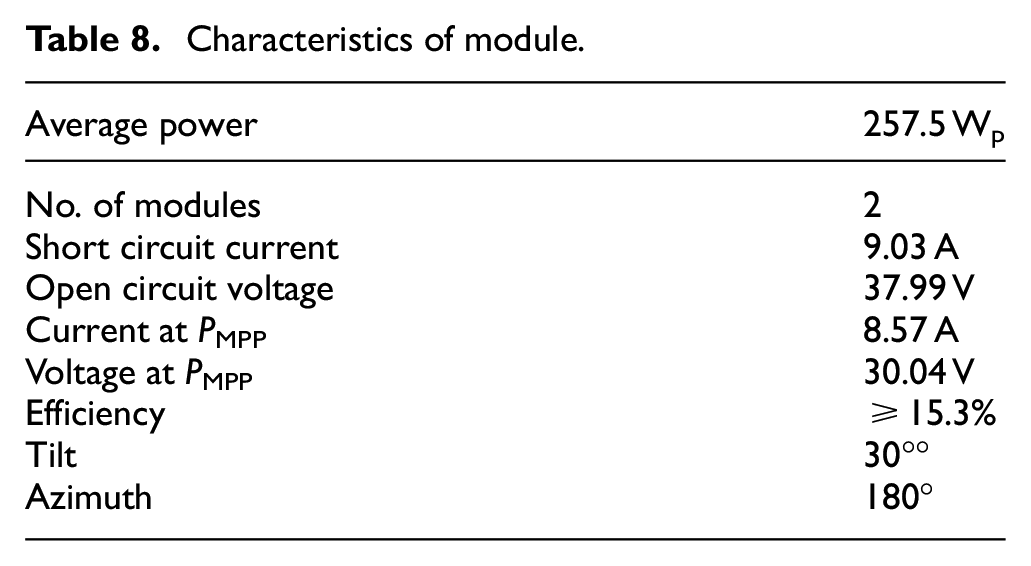
Q. Pro-G2 255 model PV module is used in this system. The tilt angle of the module is set to be 30°. Other characteristics of the module are given in Table 8. Maximum Power Point Tracking (MPPT) controller is used with the PV system. Since it supplies the generated power to the connected battery at a constant voltage. It does not matter what are the voltages generated by the PV system the output voltages of the controller will remain constant. For the storage of generated extra energy, the 130 Ah battery is used with the system to supply power to the load when the PV system is not generating any power.
Characteristics of module.
Location: Lahore
The geographical location of this system is Lahore, Pakistan. The standalone PV system selected to run the RO plant pump because in the tribal areas mostly electricity is not available and RO plant shouldn’t be dependent on general electricity source. To run the plant daily for 10 h the required energy is 60 kWh/month. Thus, to meet this electricity demand 9 PV modules are installed at the location. The results of the simulation are shown below in Table 9. The following are the terminologies used for the solar energy description.
Results of PV system simulation of Lahore.

It can be noticed that in December, the generated energy is less than the required energy but in all other months the generated energy meeting the energy requirements. In December and January, solar irradiance energy is less due to which generated power is low, but at the same time in these two months the requirement of water is also less. Due to which hours of working of the RO plant will reduce and therefore the required energy will also reduce. 21 In the remaining months power system is generating extra energy which can be used for the lightning purpose or for driving any other low-level load. In Figure 8, the loss of PV system is shown and full battery loss is 52.2% in Lahore. The full battery losses can be minimized by using the extra batteries to store the extra available energy.
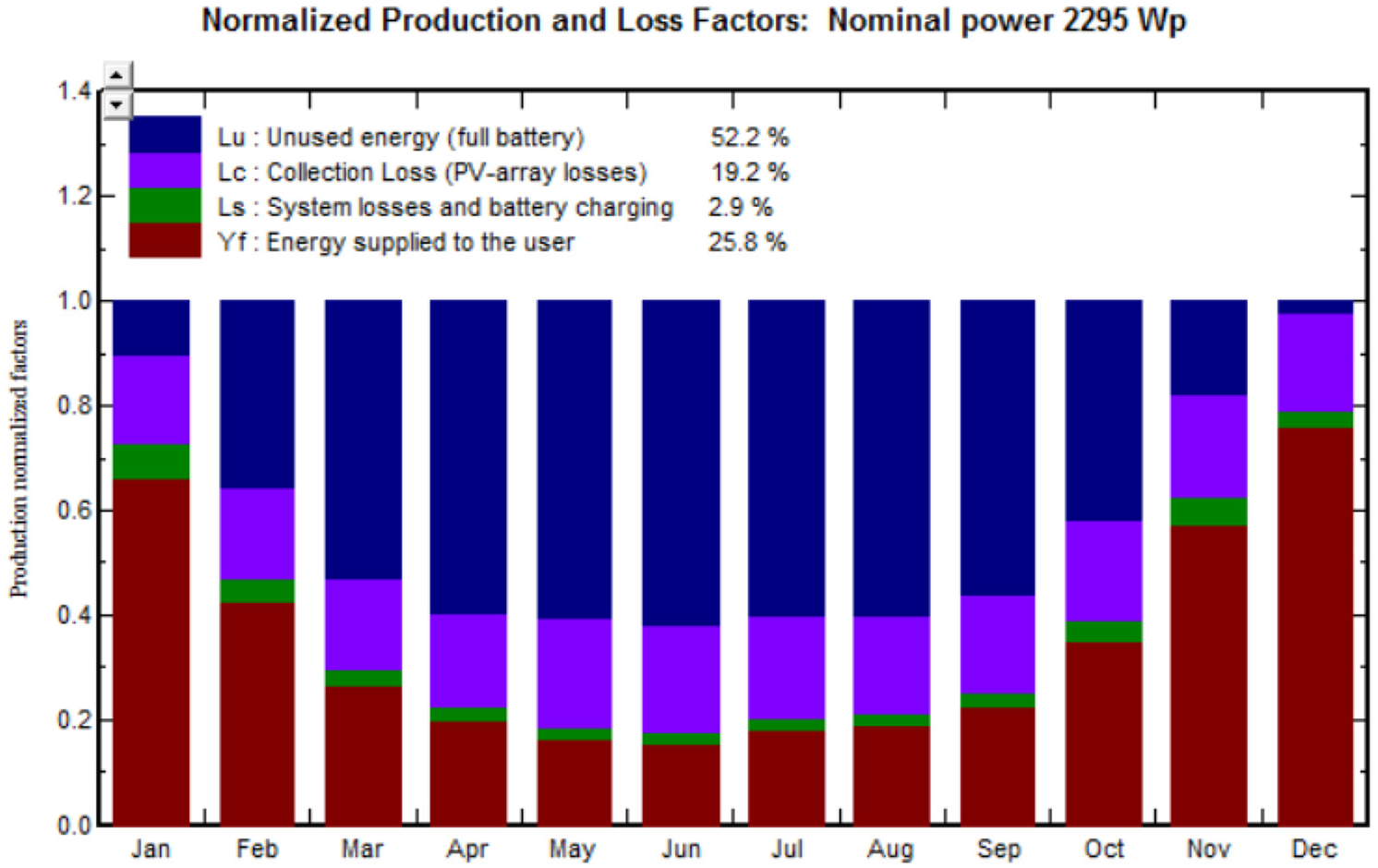
Normalized production and loss factors of Lahore.
Location: Hasil Pur
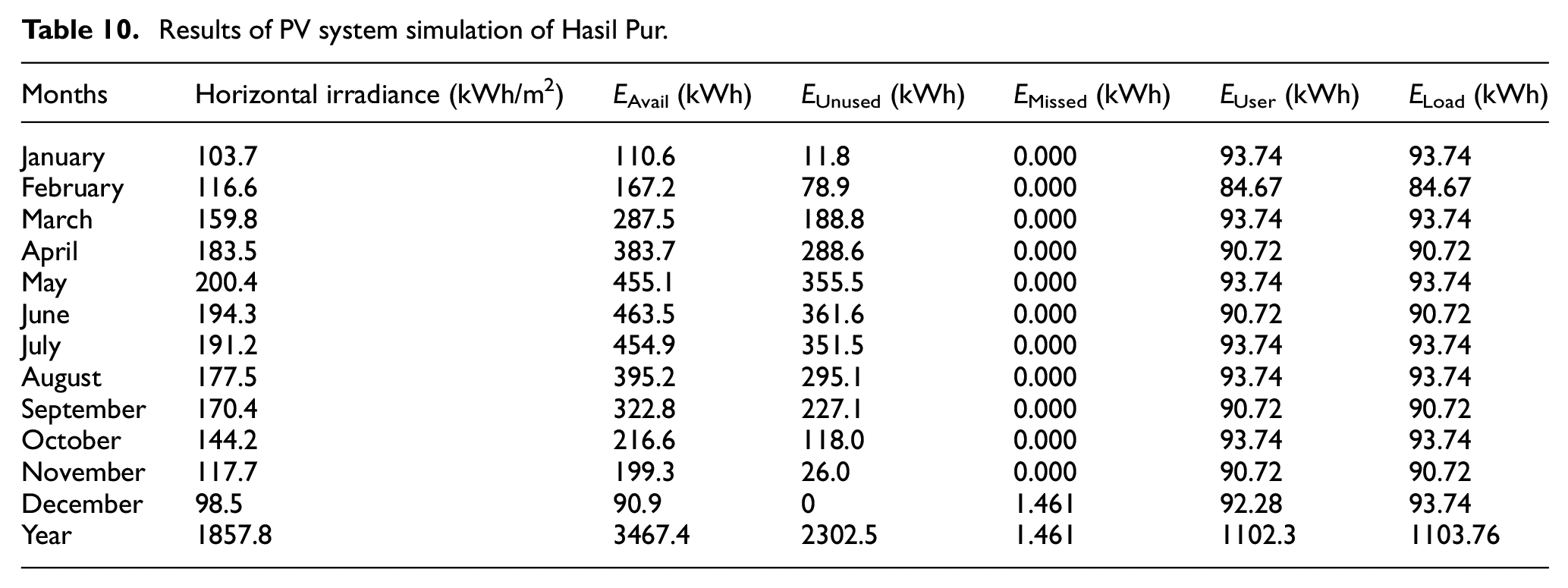
The geographical location of this system is Hasil Pur, Pakistan. At this location the required energy is near about 95 kWh/month, thus to meet this electricity demand 15 PV modules are installed at the location. Required energy demand fulfilled in all the months except in December due to the Horizontal Irradiance value is less in this month. The results of the PV system simulation are shown in Table 10.
Results of PV system simulation of Hasil Pur.
In Figure 9: the loss of PV system is shown and full battery losses is 51.1% in Hasil Pur.

Normalized production and loss factors of Hasil Pur.
Location: Faisalabad
The geographical location of this system is Faisalabad, Pakistan. System energy requirement is higher at this location so to meet the load 40 PV modules are installed at this location. These modules generate power near about to 1383 kWh in June. There is a little bit of missing energy in January and December because in these months the solar irradiance energies are too low. The results of the system simulation are shown in Table 11.
Results of PV system simulation of Faisalabad.

Furthermore, in Figure 10, the loss of PV system is shown and full battery losses is 49% in Faisalabad.

Normalized production and loss factors of Faisalabad.
Cost analysis
PV system
The PV system consists of PV panels and the balance of system (BOS) (wiring, control charger, inverter, and batteries). The initial cost of the PV system is considered in this research, without considering the shipping cost, installation cost, labor cost, land and building cost, operation, and maintenance cost. The initial total cost of the PV system is given by the following equations.


The cost of the PV system is calculated for three locations, according to equations (1) and (2), and presented in Table 12.
Cost of PV systems.

RO membrane cost
According to the results of IMSDesign, 12 membranes will be used in Hasil Pur and Lahore location and 8 membranes will be used in the Faisalabad. The cost of the membranes was provided by the manufactures (Hydranautics – A Nitto Group Company) through email correspondence and given in Table 13.
Membrane cost.

Conclusion
Three cities of Pakistan were selected to design the PV-RO desalination units. IMSDesign software was used to run the simulation to desalinate the water of 1495, 2190, and 7683 TDS to 295.44, 237.69, and 241.98 TDS for Lahore, Hasil Pur and Faisalabad, respectively. The energy required to power the RO pumps were also calculated by the IMSDesign software. Furthermore, the PV system was design in PVsyst against energy demand of 60, 95, and 311 kWh/month for Hasil Pur, Lahore and Faisalabad, respectively. The results of PVsyst showed that for the working of 10 h with batteries the PV panels will provide sufficient energy in all seasons. However, in summer the panels will provide more energy than the load. This extra energy can be used for other purposes. This manuscript gives a basic understanding of the renewable energy-assisted desalination system. The integrated solar PV-RO desalination plant is designed to work as a standalone system without any external energy supply for the remote area of Pakistan.
Footnotes
Appendix
Handling editor: James Baldwin
Declaration of conflicting interests
The author(s) declared no potential conflicts of interest with respect to the research, authorship, and/or publication of this article.
Funding
The author(s) received no financial support for the research, authorship, and/or publication of this article.
