




Abstract
The availability of fresh water in arid regions like Jordan presents a critical challenge that requires solutions benefiting from available renewable resources in the region to develop sustainable and efficient solutions. This study presents a modernization of an existing solar-powered reverse osmosis (RO) desalination system located in the Jordan Valley, which has been operating for more than 12 years. The modification is achieved by increasing the available membrane area and utilizing the residual pressure in the system which is augmented by a booster pump by two bars approximately. For that, two additional membranes have been installed in the existing system which has three membranes. Significant performance improvements have been achieved, including a 25% increase in freshwater production, reduction of specific energy consumption from 2.2 to 1.8 kWh/m3, and a decrease in electrical conductivity of produced water from about 140 µS/cm to below 90 µS/cm considering the same feed water and weather conditions. The new modified system demonstrates retrofitting an ageing solar-driven RO unit to enhance water supply for irrigation providing a cost-effective and environmentally sustainable solution for freshwater scarcity in agricultural arid regions.
Keywords
Introduction
Freshwater availability has become an increasing challenge globally. Measures and assessments that have been performed globally failed to show any consistency in estimating freshwater scarcity due to seasonal fluctuations and data availability. It is noticed that around two-thirds of the world's population live in severe conditions after recent precise monthly studies. Additionally, every year, more than half of the world's population faces a water scarcity problem. Therefore, it is important to implement proper measures, improve water consumption efficiency, and ensure equal sharing of freshwater resources (Mekonnen and Hoekstra, 2016).
Water management and planning are challenging issues, the interaction of the land, oceans, and atmospheric changes can influence to a certain degree in water planning challenge. Other important factors that affect water management majorly are population growth, increasing water demand, urbanization, pollution, and forest decay. It is expected to reach around 8.5 billion inhabitants worldwide in 2030; the number is further expected to increase to 9.7 billion in 2050. This will place tremendous stresses on water resources, intensifying the challenges associated with providing freshwater for the growing demands (Sivakumar, 2011).
In the arid region of the Middle East, there is constant discussion about an impending water scarcity issue. In the case of Jordan, this situation is already underway. Streams are shrinking, and water levels in the arid region are decreasing. A system of water rationing has been put into place, limiting citizens to receiving water from public sources just one to two days each week. With the expectation of continued population growth in Jordan, the gap between water supply and demand is assured to significantly widen. If current trends persist, by the year 2025, the per capita water supply will decrease from the current 145 m3/a to about 91 m3/a, placing Jordan in the category of countries facing a severe water shortage. Jordan holds one of the world's lowest per capita water resource levels. Experts widely consider countries with a per capita water production below 1000 m3/a to be classified as water-poor nations. Since the early 1960s, Jordan has grappled with chronic deficits in its water resources, leading to its classification as a water-scarce country. It currently ranks as the tenth country globally with regard to insufficiency in water resources (Hadadin et al., 2010).
The exploitability of water resources has also been declining, particularly with a significant drop in groundwater levels in recent years. This has resulted in shrinking areas where aquifers can be effectively utilized, with exploitability shifting further eastward. The decline in groundwater levels in the western regions has necessitated the mobilization of brackish water from the east toward currently used wellfields, increasing salinities in many of these wellfields. Therefore, desalination may be required in many areas in the future.
Considering the good solar and wind energy position in Jordan, several investments were carried out, supported by government updated regulation, to improve the energy sector and reduce the imported fuel bill. Jordan receives around 4–8 kWh/m2 of solar radiation with more than 300 sunny days yearly. In addition, the mean wind speed varies between 6–8 m/s at 100 m height (Shatnawi et al., 2021). The overall renewable energy mix, from the primary energy resources, of about 11% referring to the Ministry of Energy and Mineral Resources (MEMR) report for the strategy 2020–2023.
Energy demands in Jordan, on the other hand, increase rapidly due to the rapid population growth and the strategic plans for founding new solutions related to economic development. Jordan developed the Master Energy Strategy 2007–2020 for more local energy resources utilization, considering renewable energy resources. As a result, several projects have been launched since 2011 for exploiting renewable energy resources, mainly solar and wind, along with developing the regulations for bi-directional power generation. The energy mix reached more than 13% in 2019 (IRENA, 2021).
The MEMR initiated a foundation for the legislative renewable energy scope that resulted in increasing the renewable energy mix in Jordan. The development in increasing renewable energy sharing has been achieved through the Power Purchase Agreement (PPA), including the facilitation of Net-Metering and Wheeling systems (MEMR, 2018).
According to the National Electric Power Company (NEPCO), the Jordanian strategy has succeeded in reaching more than 26% of renewable energy contribution in 2023. This achievement is aligned with the Executive Action Plan for reducing dependency on primary energy resources by importing and conducting more investigations into local resources. The overall achieved capacity from renewable sources is 1617 MW, from 4443 MW energy capacity from traditional power plants in 2023 (NEPCO, 2023).
Considering renewable energy along with ground water for irrigation purposes open the possibility of climate change mitigation and solutions, especially when considering the evaporation rates that can be reduced through introducing proper irrigation methods as studied by Gabr et al. where different scenarios for climate change influence on evaporation rates are performed, a clear increment were resulted in the effect of green house emissions on evapotranspiration for the years 2040, 2060, 2080, and 2100 (Gabr et al., 2024).
Jordan's reliance on transboundary waters for approximately 25% of its renewable water resources adds another layer of complexity. Jordan has limited control over this supply, as the actions of neighboring countries influence it. Furthermore, climate change is intensifying the challenges. Jordan is experiencing a trend of reduced annual rainfall and rising summer temperatures, leading to reduced water availability and increased demand during hotter summer months. Projections made by the Third National Water Master Plan were based on current climate change effects, including reduced precipitation and increasing temperatures, and anticipate a 15% decrease in annual groundwater recharge and surface water runoff by 2040. This means groundwater recharge is expected to be only 240 million cubic meters per year, while surface water discharge (excluding transboundary water) will be only 340 million cubic meters yearly (Al-Addous et al., 2023; MWI, 2024; Schyns et al., 2015).
A balance of opportunities and challenges is evident in Jordan's water sector. The existing national bulk water infrastructure is robust, enabling effective management of water supplies to meet high-demand areas and enhance equitable distribution across the country. Nevertheless, future demand shifts will require additional investments to expand and modernize the bulk system, with concerns about illegal use and vandalism contributing to water losses. Jordan's underutilized brackish water resources hold potential for cost-effective desalination. The operational cost can be competitive, but challenges include managing brine water and dealing with harmful elements in brackish water, which can escalate treatment costs. Additionally, there are proactive efforts to manage water scarcity through demand management plans, awareness campaigns, and the adoption of water-saving technologies. Nonetheless, low water tariffs, intermittent supply, and market barriers for water-efficient appliances hinder conservation and efficient water usage (Al-Addous et al., 2023; MWI, 2024).
Private sector involvement has demonstrated potential for improving water operations and infrastructure. It helps tap into existing resources that would otherwise be lost due to leakage or unauthorized use. Effective risk management is crucial for successful public-private partnerships. Still, challenges such as limited capacity to manage these projects and the absence of a regulating third party in private-public collaborations must be addressed (MWI, 2024).
With the growing pressure on freshwater resources in regions suffering from water scarcity, there is an increasing demand for the efficient utilization of traditional water sources. This is crucial because future agricultural production will heavily depend on optimizing existing water resources. These conventional resources primarily include water derived from rainfall and snowmelt, directly utilized on-site, or sourced from rivers, streams, lakes, reservoirs, and aquifers. These resources are replenished naturally through the processes of the hydrological cycle.
The investigation of PV systems in agriculture, considering the brackish water desalination for irrigation, improves the cost of freshwater and leads also to efficient irrigation if improved irrigation methods are used. The reliance on PV in this application also significantly reduces the CO2 emissions where efforts to climate change are increasing. The study was made by Al-Fadhli et al. (2025) shows 5.4% reduction in water provided for irrigation considering the solar powered equipment's and improved irrigation system.
Non-traditional water sources can offer supplementary supplies to help address water scarcity issues in areas with minimal renewable water resources. These non-conventional water resources are harnessed for agricultural and various other purposes using specialized techniques, including desalination of seawater and highly saline water, rainwater harvesting, wastewater collection, treatment, and reuse, capturing and recycling agricultural drainage water, and extracting groundwater that may contain various salts (Wellmann et al., 2025). To effectively manage these resources for irrigation and other uses, it is essential to implement suitable strategies for managing soil, water, and crops (Qadir et al., 2007). Desalination technologies can be broadly categorized into three main groups: thermally driven methods, pressure-based processes, and chemically induced techniques (Greenlee et al., 2009).
Membrane-based desalination by reverse osmosis (RO) is considered to be a more accepted desalination technology compared to other alternatives like thermal processing due to the relatively low energy consumption (Fritzmann et al., 2007). The need for having fresh water supply, especially from seawater large-scale plants, triggered the necessity of developing membrane technologies for more effective RO operation, and as a result, improving the energy efficiency (Busch and Mickols, 2004).
The average operation of RO plants consumes 3–10 kWh/m3 for seawater desalination; on the other hand, RO plants need 0.5–2.5 kWh/m3 for brackish water desalination. The energy consumption per cubic meter depends on the water salinity and is affected by other parameters like pretreatment, membrane scaling, and fouling, and plant sizes (Darwish and Al-Najem, 1987; Ghaffour et al., 2013; Sarai Atab et al., 2016).
A case study was performed on the performance of RO plant in Iraq for brackish water processing to be used for both irrigation and drinking water supply by Sarai Atab et al. (2016). The results show a reduction in energy consumption to 2.8 kWh/m3 if the produced water salinity is below 400 ppm, this value can be further improved to reach 0.8 kWh/m3 with water salinity of maximum 1800 ppm (Sarai Atab et al., 2016).
Abkar et al. performed a study to improve the energy consumption of a brackish water RO system by evaluating the operational parameters like pressure, feed water salinity, temperature, and flow rate. The study shows a 36% reduction in the specific energy consumption, where the pressure is the key factor in reducing the energy consumption, which is basically related to the high-pressure pump. Recovery rates ranged between 40% and 73% at different operational pressure values and feed water salinities (Abkar et al., 2024).
In the presented study, the RO desalination powered by a standalone PV system installed to supply fresh water for irrigation at the Jordan Valley was evaluated. The produced water is used for irrigating a farm that has palm trees as the main crop. The groundwater availability, along with the good profile solar radiation in the area, presents a potential synergy to utilize the renewable solution for both energy and water supply scarcity. The available brackish groundwater could be used for irrigation purposes if the salinity is reduced to acceptable ranges for irrigation. In addition, more fresh water is needed for the incremental increases in water demands of the farm.
The improvement on the existing RO system for fresh water supply consider the local site conditions, Jordan Valley is the major source of fruits and vegetables in Jordan, where irrigation is highly demanded at that area, this also aligns with the fact of high energy demand and sometimes discontinuity of power supply. Having development on an existed system maximizes the fresh water supply by utilizing more efficient RO units, leading also to have lower specific energy and cost as well.
This study describes the improvements of adding two more spiral-wound membranes in a pressure vessel, which have been configured to the existing system, the existing system is powered by a PV panels that cover the energy needs for the electrical consumption. The feed pump, the high-pressure pump, the membrane vessel with three operational membranes and the solar photovoltaic (PV) system have been unchanged. The new pressure vessel with two additional membranes is fed by a new pump for the rejected water, raising the pressure from 8 to 11 bars. The performance of the modified system is then evaluated and compared with that of the original one in terms of production capacity and the quality of the produced water.
Operational conditions
Site characteristics
The system under testing is in the Jordanian Valley, benefiting from the groundwater availability, and is considered one of the main sources for irrigation. Groundwater is characterized by salinity levels ranging from 2000 to 4000 µS/cm. This variation is related to the change of groundwater level between winter and summer seasons. The installed system consists of a PV array of 80 m2 with 10 kWp that powers the RO unit in island configuration.
Weather data, particularly solar irradiation, plays a major role in the design and implementation of PV systems at the implementation site. Figure 1 provides an overview of the annual solar characteristics achieved from the local weather data station. This data is essential for evaluating the solar energy potential of the site and determining the solar panel installation and the energy yield.
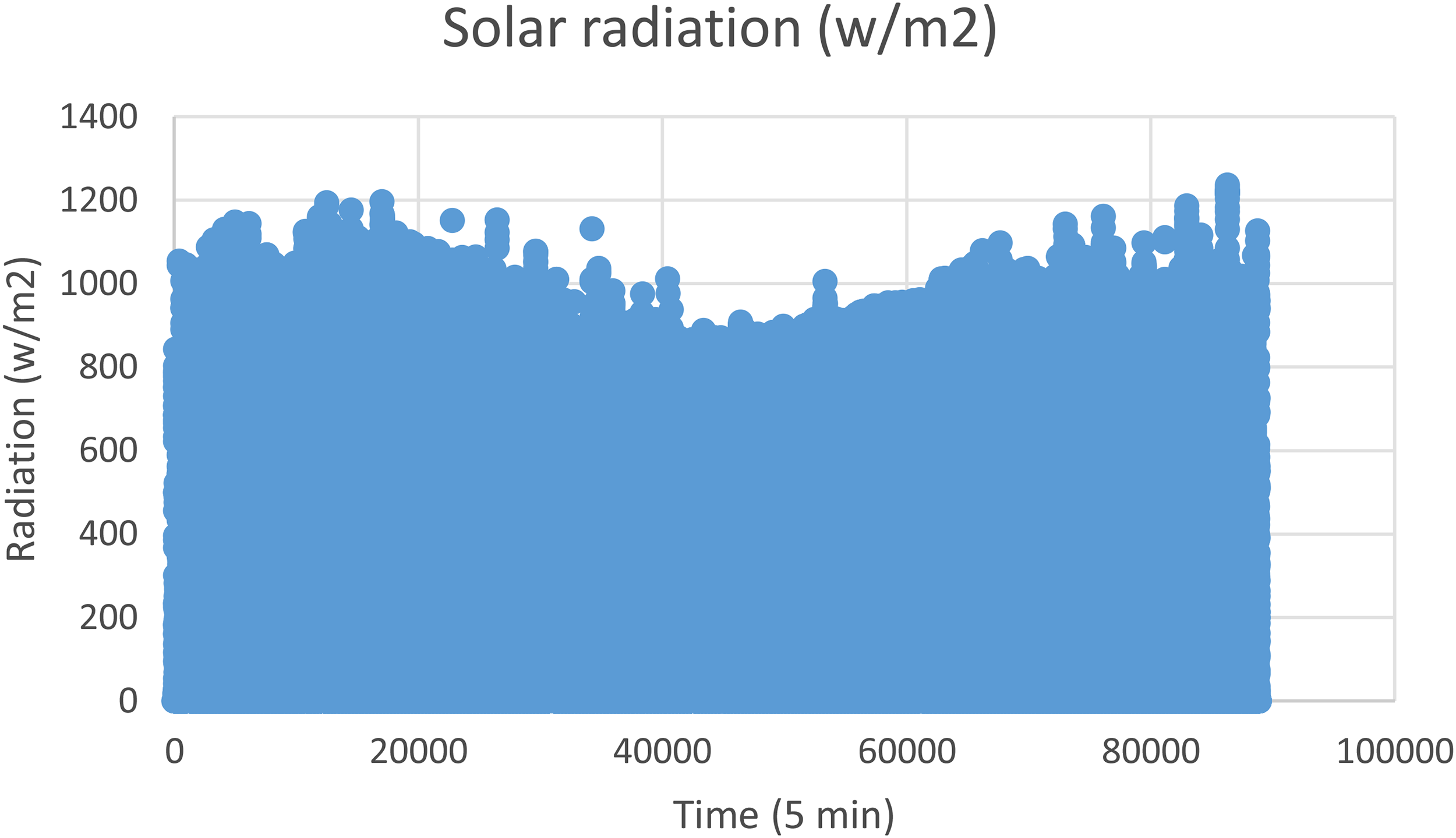
Solar radiation profile.
The annual temperature profile shown in Figure 2 shows a relatively high temperature profile compared to other areas in Jordan, which is expected due to the geographical location of the implemented project. The temperature values affect the PV yield by reducing the PV panels’ efficiency. The overall power production still meets the RO needs since it is designed to consider the high temperature profile at the installation phase. Therefore, temperature effect is not dominant since the modification is on the RO itself with the accepted range of power consumption.

Local ambient temperature profile.
System model and description
Solar-powered RO unit
The region benefits from favorable climatic conditions conducive to cultivating various crops. However, the area faces a significant challenge in ensuring an ample supply of irrigation water, exacerbated by inefficient management of existing resources, leading to water and energy wastage. At the distribution stage, it is imperative to implement a comprehensive water desalination system integrated with a brine processing mechanism. The project site primarily depends on subterranean brackish water, which is unsuitable for human consumption and irrigation of certain crops and fruit plants.
The desired improvement is shown in Figure 3 where the benefit of the existing solar system to power the overall RO unit with the same capacity, the improvement consider further processing for the brine resulted from the existing membranes.
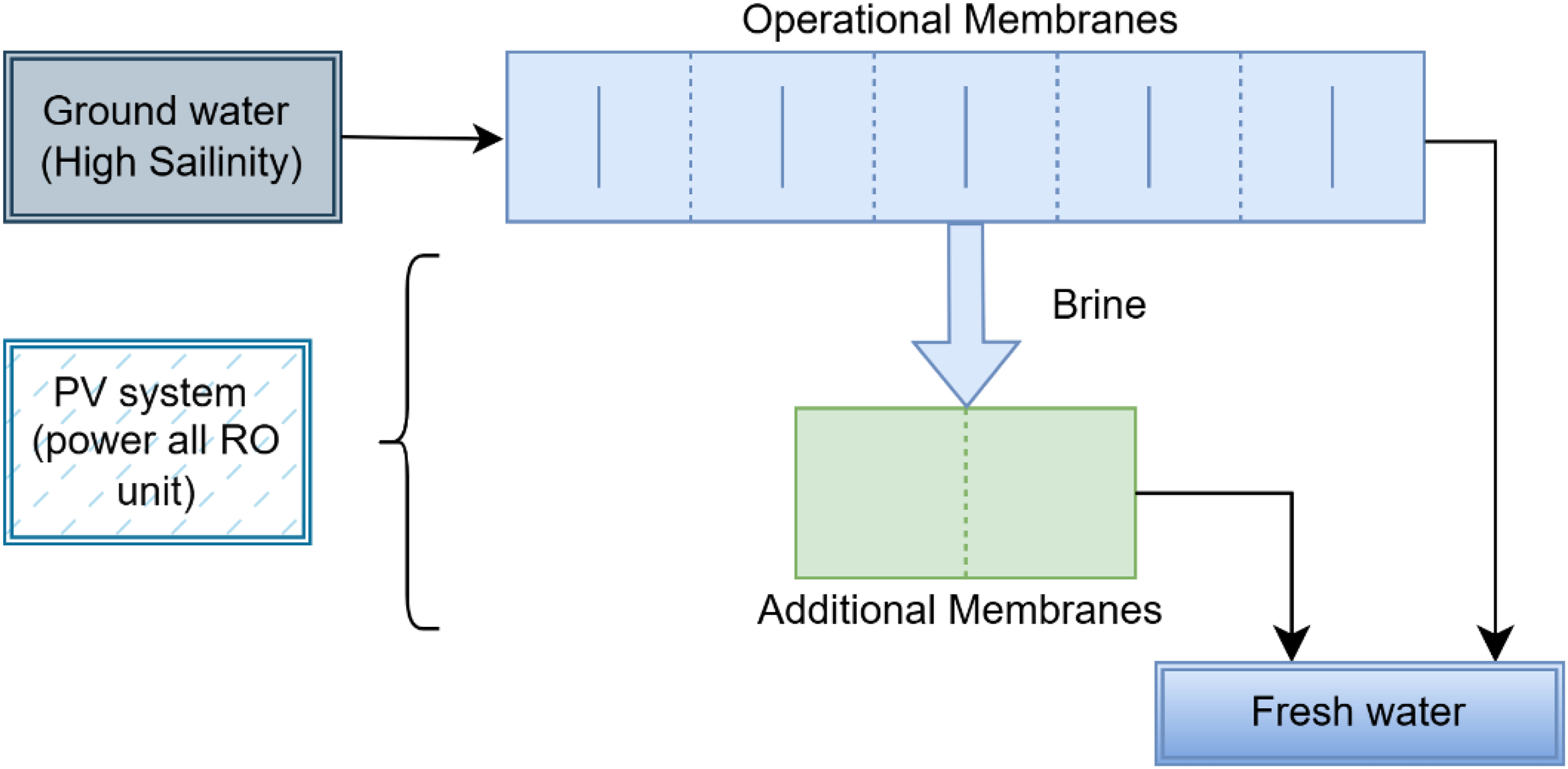
Summary of modification flow chart.
Shifting to the electrical power side, the Jordan Valley region experiences frequent disruptions and a lack of consistent power coverage, as reported by local farmers. This situation, combined with considerations like the initiatives outlined by MEMR, emphasizes the vital importance of tapping into renewable energy resources in the region. This is crucial not only for water desalination but also for the overall energy supply. Incorporating renewable energy resources emerges as an exceptionally effective solution for strengthening the national grid and improving the reliability of the entire system. Figure 4 shows the operational RO unit and the off-grid PV system.

RO unit installed in the project in South Shouna–Jordan Valley.
The RO unit is powered by a PV system boasting a capacity of 10 kWp, augmented by a series of storage batteries comprising twenty-four units, with a capacity of 28.8 kAh. Both the PV and storage systems have been carefully designed to meet the energy requirements of the project site. The PV system is shown in Figure 5.

PV panels.
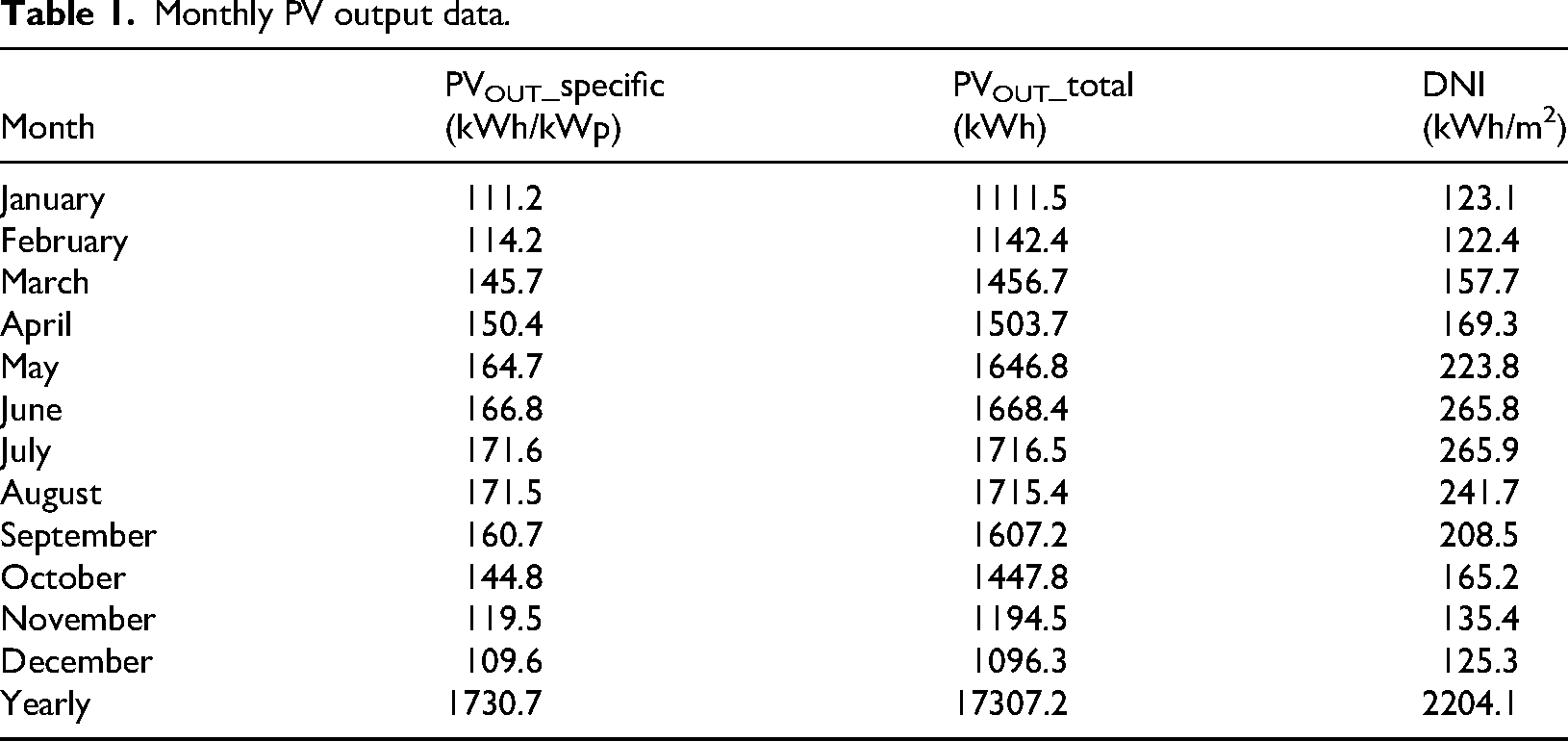
Table 1 describes the monthly PV output data. This dataset provides comprehensive information regarding the electricity generation from PV systems monthly. Analyzing this data allows for understanding the seasonal variations in PV output, thereby facilitating effective energy planning and management strategies. The monthly PV output is important for linking the RO needs with the available energy production. It is noticed that during winter months, lower specific energy and PV output are produced as seen in months November to February, compared to the rest of the year. This is also related directly to the solar radiation, considering the weather nature in the Jordan Valley which has different conditions compared to the Jordanian area.
Monthly PV output data.
RO unit
The illustration shows the functional RO unit with a daily capacity of approximately 22 m3, assuming solar operation from 6 to 9 h. This unit has undergone testing and modifications.
The chosen design fulfills the desalination process requirements and opens the potential for adjusting the operational parameters with three membranes in series. Figure 6 provides an overview of the project layout with a simplified presentation.
System layout.
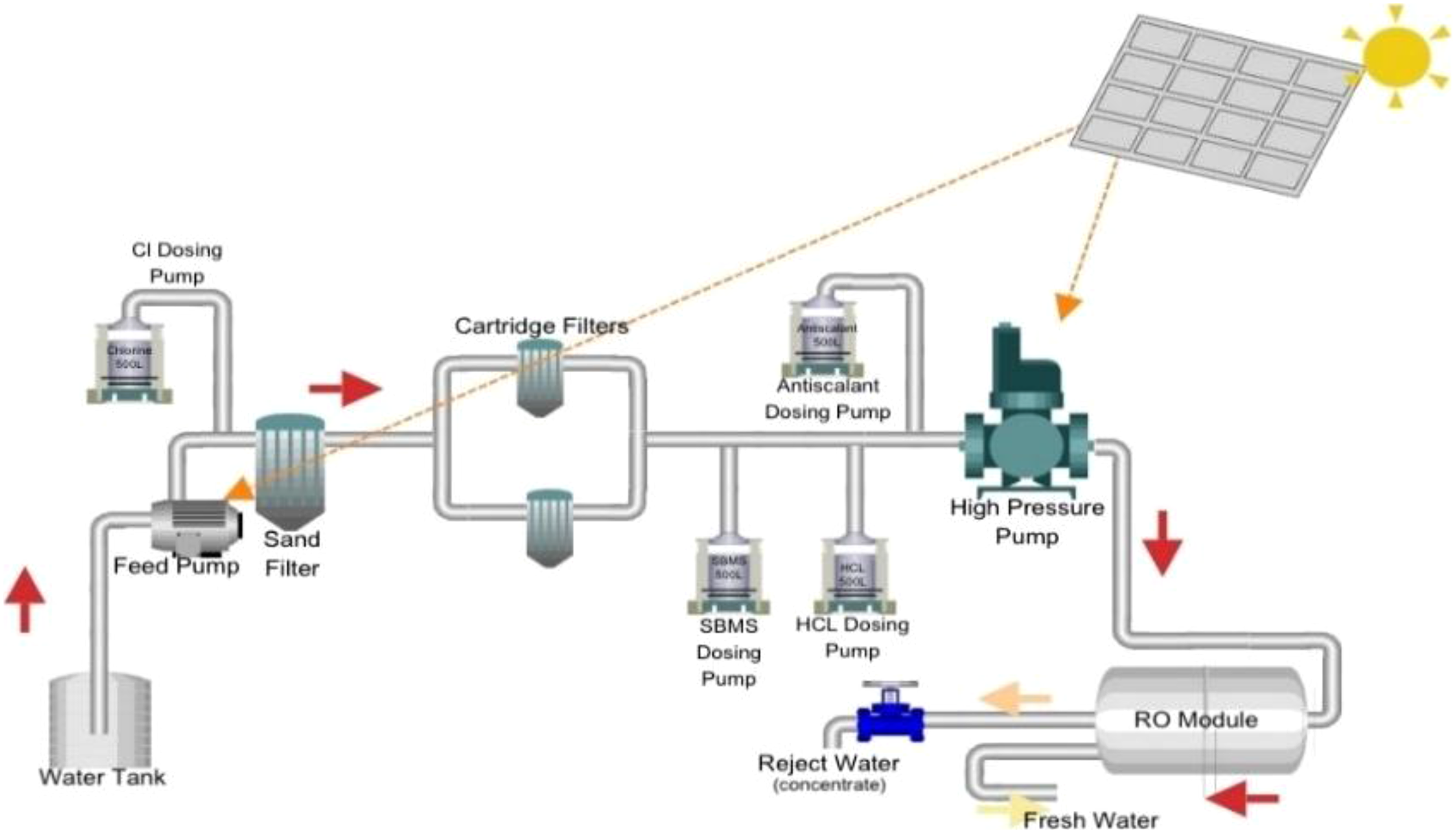
Four storage tanks with 2 m2 each are used to provide consistent feed water for the system. The operational sequence commences with a submersible pump, pumping the raw water from a 90 m deep well. A sand filter removes larger particles and sediments, safeguarding downstream components. Cartridge filters then enhance water quality by eliminating finer particles, necessitating maintenance every 20 days. Chemicals are dozed by the sodium metabisulfite dosing pump to manage scale and biological material, preventing scaling and microbial growth. The HCl dosing pump adjusts the pH to optimize membrane operation. Antiscalant chemicals are introduced to prevent scaling on the RO membrane. In the last step, a high-pressure pump, with a power rating of 5.7 kW, elevates water pressure to facilitate the RO process. The RO membrane effectively separates water molecules from dissolved impurities, culminating in the production of purified water as illustrated in Figure 7.
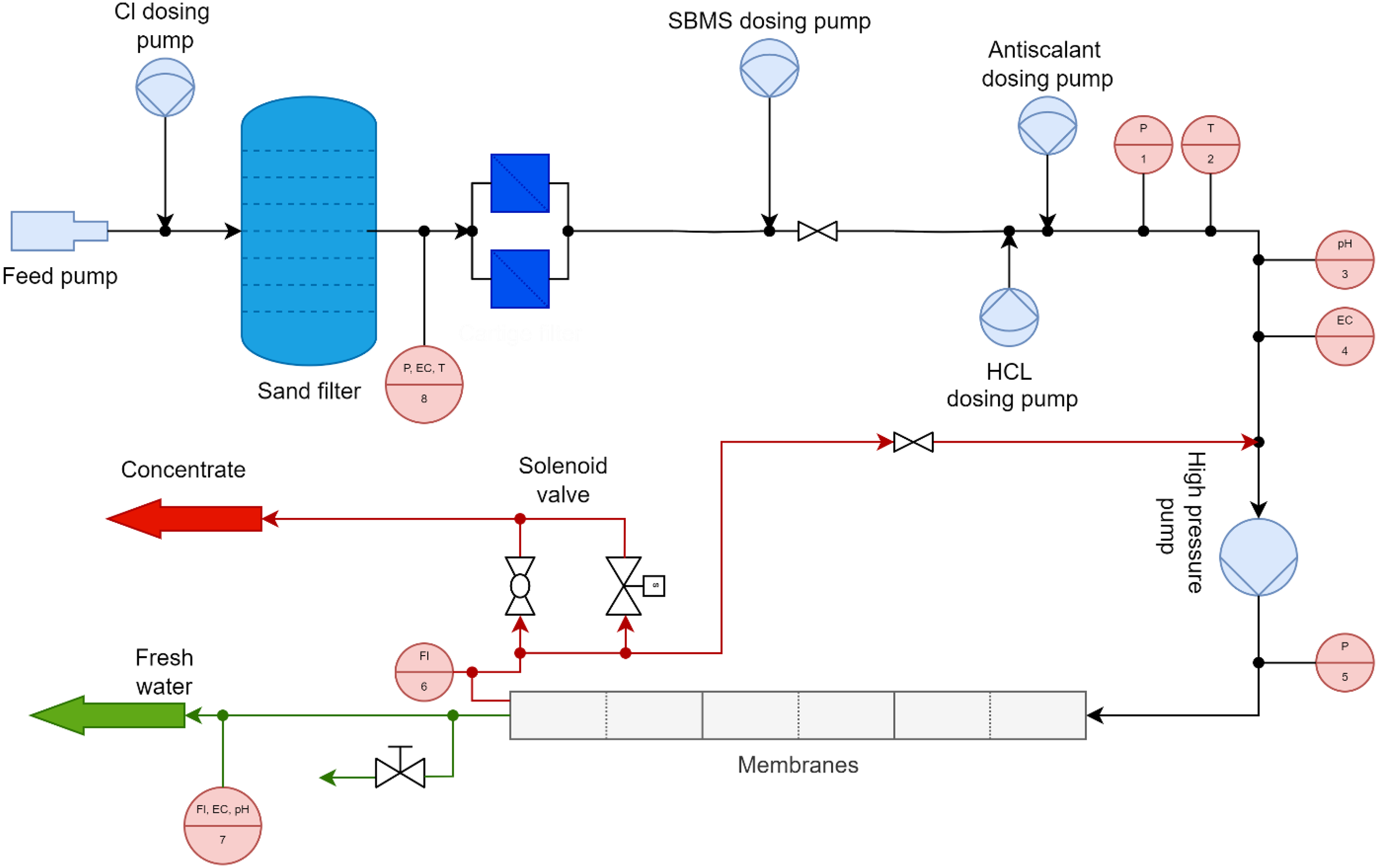
Pi&D of the RO Unit in the Jordan Valley.
The used membrane type is a low-fouling spiral wound, polymer configuration BW-30 Hydronautics and the added membranes are with the type CPA3 in the new vessel.
Figure 7 offers a comprehensive process and instrumentation diagram of the components, including the existing RO unit located in the Jordan Valley. It meticulously shows intricate details, providing a thorough insight into the inner workings of the system. This comprehensive description facilitates a clearer understanding of the unit's functionality and helps in classifying potential areas for optimization or improvement.
The system is equipped with data logging system and sensors for monitoring and controlling the operation if needed, Figure 8 summarizes the measurements used, the gauges are to indicate live operational pressure, the data are also gathered through sensors allocated in different points which are connected to the data logging system.

Instruments and monitoring devices, (a) pressure gauge before booster pump, (b) pressure sensor, (c) flow sensor with digital screen, (d) pressure gauge after booster pump, (e) TDS sensor.
Optimizations of the operational RO unit
The aim is to enhance the water yield by increasing the recovery rate of an existing solar-powered brackish RO plant by optimizing and improving the separation of dissolved solids. Accordingly, fresh water yield can be significantly increased through following some steps to modify the process of operation. Several operational tweaks can be performed on the desalination process to enhance the freshwater achievement. Starting with the benefit of solenoid valve for starting up the system by removing the air at start which are existed originally and still used after modification, additionally, the loop is designed for partial brine recovery as shown in Figure 9. RO desalination systems can benefit from using the manual valve to regulate water and concentrated brine flow, leading to an improved system operation.

Solenoid valve.
Two valves were installed in the brine tube, the first one is manual and used to control the percentage of brine recovery that mixes with the feed stream and the percentage of brine drained from the plant, with around 1 m3 of the rejected water, taming into account keeping the pressure not below 8 bar inside the membranes vessel as shown in Figure 9 and illustrated in Figure 7. This will optimize the recovery rate of the system while minimizing energy consumption. The second is the solenoid valves which serve as pressure-releasing mechanisms that open at start. By optimizing the RO process, the proposed use of valves can also reduce membrane fouling and scaling, thus extending the system's lifespan while maintaining higher performance levels.
The utilization of valves is expected to result in cost savings due to reduced energy consumption and maintenance costs and prevent costly damage and downtime by improving system safety. Overall, this proposal offers significant benefits in terms of improvement, safety, lifespan, and cost savings for RO desalination systems. Using valves at brine will increase the plant's flexibility in adapting to changes in feed water quality and environmental conditions. Finally, using valves will improve the plant's operation by reducing energy consumption and minimizing the amount of wastewater generated.
The second implemented solution is based on an analysis of the chemical composition of feed water, which showed low levels of dissolved organic carbon and chemical oxygen demand. These findings suggest a low potential for biofouling in membrane processes due to the limited organic matter in the water. Chlorine and sodium metabisulfite dosing is used where minimizing the plant's environmental impact is achieved, along with increasing membranes’ lifespan and decreasing the cost of parts replacement. Moreover, it will help maintain the quality of the product water and reduce the risk of scaling and fouling on the membrane surfaces, the addition of the mentioned chemicals is performed through 1m3 tank for each chemical, for instance, the antiscalants tank is filled with water (1m3) with 10 L of 85% antiscalant and the consumption is around 10 L/day, considering the operation of the RO unit based on the solar profile.
Solenoid and manual valves along with the chemical additions to the operation of the RO unit are considered before and after the addition of the extra membranes, that's mainly to have the effect of membrane addition to the operation only.
The major modification of the plant was the addition of two parallel pressure vessels in the RO unit. This will improve membrane protection, prolong the lifespan of the membranes, decrease the potential for fouling, benefit from the maintained pressure after the existing membranes which in turn will reduce energy consumption and lower operational costs, and finally, increase the production rate of the overall unit.
Implemented system improvements
To improve the productivity of the existing RO system, a second stage to the system by adding an 8-inch pressure vessel, which is the same as the installed membrane size. In other words, the modification on the RO unit is based on a two-stage configuration, the brine that is produced from the first stage (three membranes) is fed to the second membrane vessel (two membranes). The rejected water from the first stage, which operates at high pressure, can be utilized in the second stage to take advantage of the remaining energy potential.
The introduction of a second stage will increase the overall recovery rate of the system, allowing for more efficient use of the available resources. The rejected water from the first stage, which still contains a significant amount of energy, can be further treated in the second stage to recover cleaner water, which can then be used for irrigation. The retained pressure after the original membranes is boosted using a pump for pressure increment to around 12 bars.
For the original membranes, the operational pressure average is 11.5 bar considering that the provided pressure from the high-pressure pump, the pressure is raised from around 2.4 bars to reach the operational pressure through the feed pump as illustrated in Figure 10. The pressure drops after the original three membranes to around 8 bars, therefore, the booster pump is added to step up the pressure entry for the added membranes again to reach 11.5–12 bars. Noting that the nominal pressure is 15.5–16 bars, working on lower pressure is healthier for the membranes to reduce contaminations and having them in operation as long as possible.
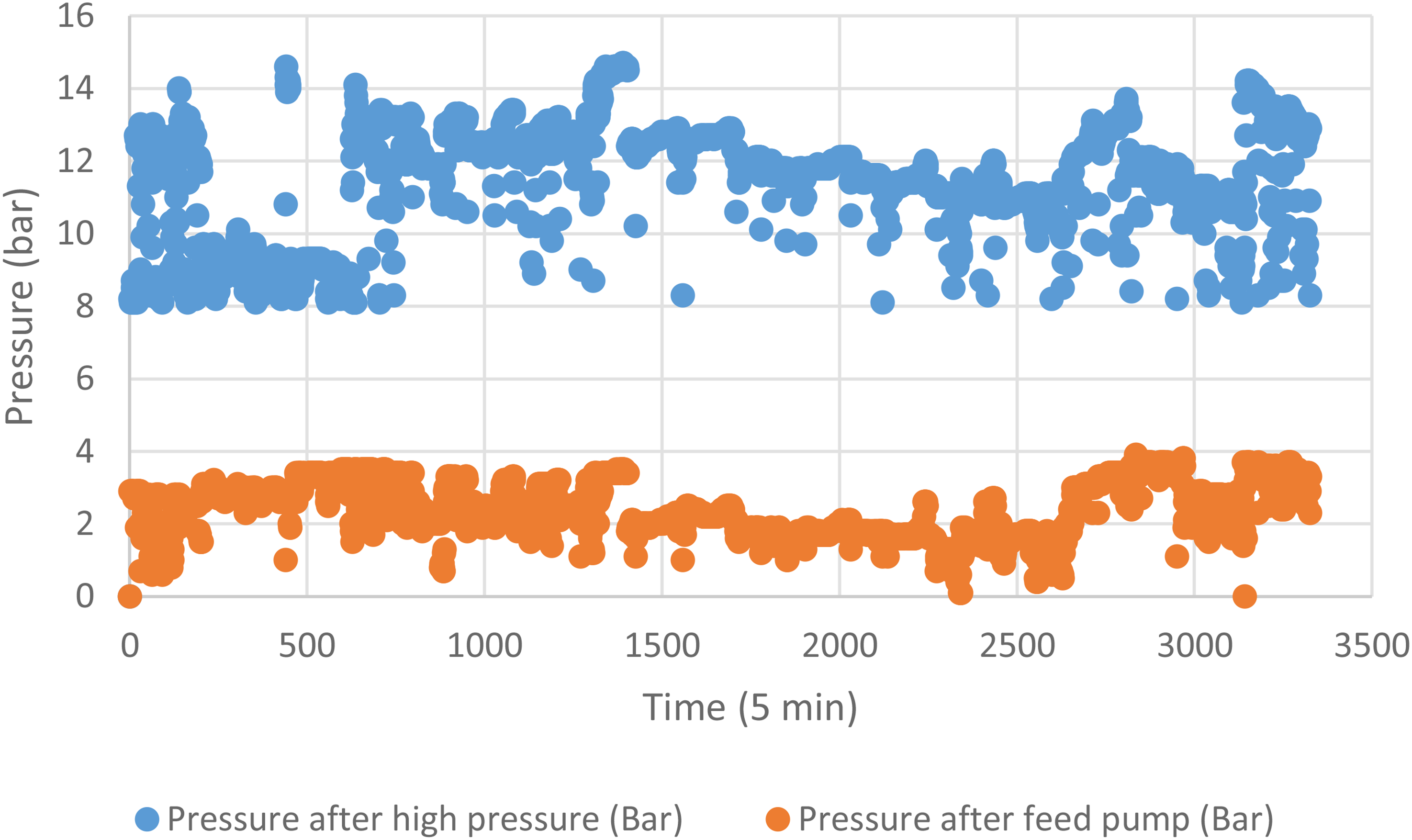
Pressure values before and after the high-pressure pump.
The proposed system is designed to operate at a lower pressure than the first stage, allowing for additional water recovery while still maintaining high levels of water quality. The same membrane types are used in the second stage with an increment on their feed pressure. This will serve to achieve higher yield since the brine is reprocessed for further freshwater utilization.
Performing the second stage will also result in a reduction in the amount of rejected water, which will minimize the environmental impact of the desalination process, the recovery is done by re-processing the brine from the existed system in the second stage, considering that the RO unit recovery is between 35% and 40%, those values are achieved taking into account the long operational time of the RO unit. By recovering more clean water, the proposed system will help to conserve water resources and promote sustainable development in the region.
Overall, adding a second stage to the existing RO system will provide numerous benefits, including higher recovery rates, and improved water quality. It will also help promote sustainable development in the region by minimizing the environmental impact of the desalination process and conserving water resources. The final improvements diagram of the existing systems is summarized in Figure 11.
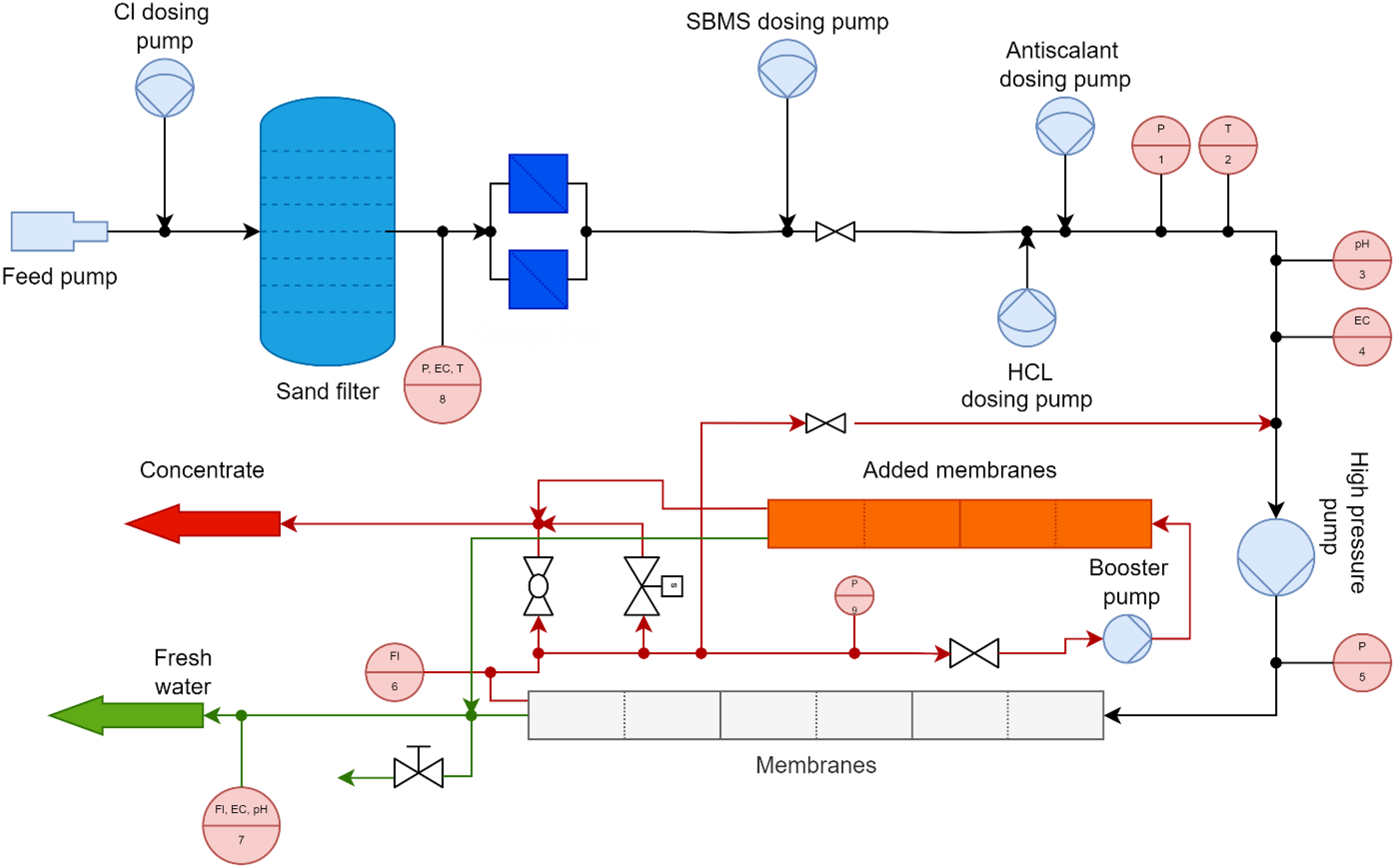
Modification design.
Adding a second stage to the existing operating RO is the most practical scenario considering the possibility of exploiting the remaining pressure. That is by considering factors influencing the performance of the RO system. These include the incorporation of two additional membranes and raising the feedwater pressure, as shown in Figure 12. The temperature rise due to the isentropic operation of pumps is not analyzed.

New membrane vessel and the booster pump.
Water flux is conducted using the following equations:
Where:

Where:

Where:


Where:
L = 3.048; D = 0.2 at Re less than or equal to 2100; α= 1.4; f = 16/ Re;

Where:
R is the recovery rate = 0.7
In the existing RO plant, three membranes with a total area of 122.7 m2 were utilized, with an average of 21.65 m3 of fresh water per day for nine operating hours. The production capacity stands at 36% fresh water of the inlet brackish water.
Incorporating extra membranes into a RO system can significantly enhance its overall performance. This enhancement frequently leads to increased filtration capacity, resulting in higher rates of purified water production within the same operational period. By distributing the filtration workload among multiple membranes, the system can efficiently manage a larger volume of feed water, thereby enhancing its water treatment operation. Furthermore, the presence of extra membranes can enhance the quality of water treated by increasing the removal of contaminants, resulting in a purer output. However, this operation improvement comes with considerations such as increased pressure requirements and potential adjustments to the system's components to maintain optimal performance. It becomes crucial to carefully calibrate system parameters and conduct regular maintenance to ensure that the extra membranes contribute positively to the system's production without significantly raising operational complexities or costs. In summary, when strategically implemented, the incorporation of extra membranes can significantly enhance the productivity and effectiveness of an RO system, refining its efficiency in providing high-quality purified water (Maddah et al., 2018).
Results and discussion
The performance of RO processes is determined by several factors, with permeate flux and salt rejection being crucial parameters. Pressure influences flux positively by overcoming osmotic pressure, but excessive pressure can harm the membrane. Recovery rate, or the percentage of feedwater converted to permeate, impacts salt concentration and can lead to scaling or fouling. Higher feedwater salt concentrations elevate osmotic pressure, requiring higher operating pressures and affecting salt rejection rates. Feedwater pH extremes can degrade membrane integrity, and optimal pH conditions are specified by manufacturers.
For this study, the recorded data collected by many sensors of the examined RO unit, feedwater, product, and rejected water have been analyzed. These values were diligently recorded at five-minute intervals daily over five months. Consequently, the operational RO energy needs are majorly driven by the high-pressure pump with 3 kW, the feed pump with 1.2 kW and the booster pump after modification with 1.5 kW.
Operational performance before the improvement
The performance of the RO unit is measured through the production of fresh water along with its salinity.
Figure 13 shows the fresh water along with the raw water flows for over 100 days before performing the second stage of membrane installation. It is worth mentioning that the plant has been in operation for more than 13 years, handling groundwater with high salinity content.
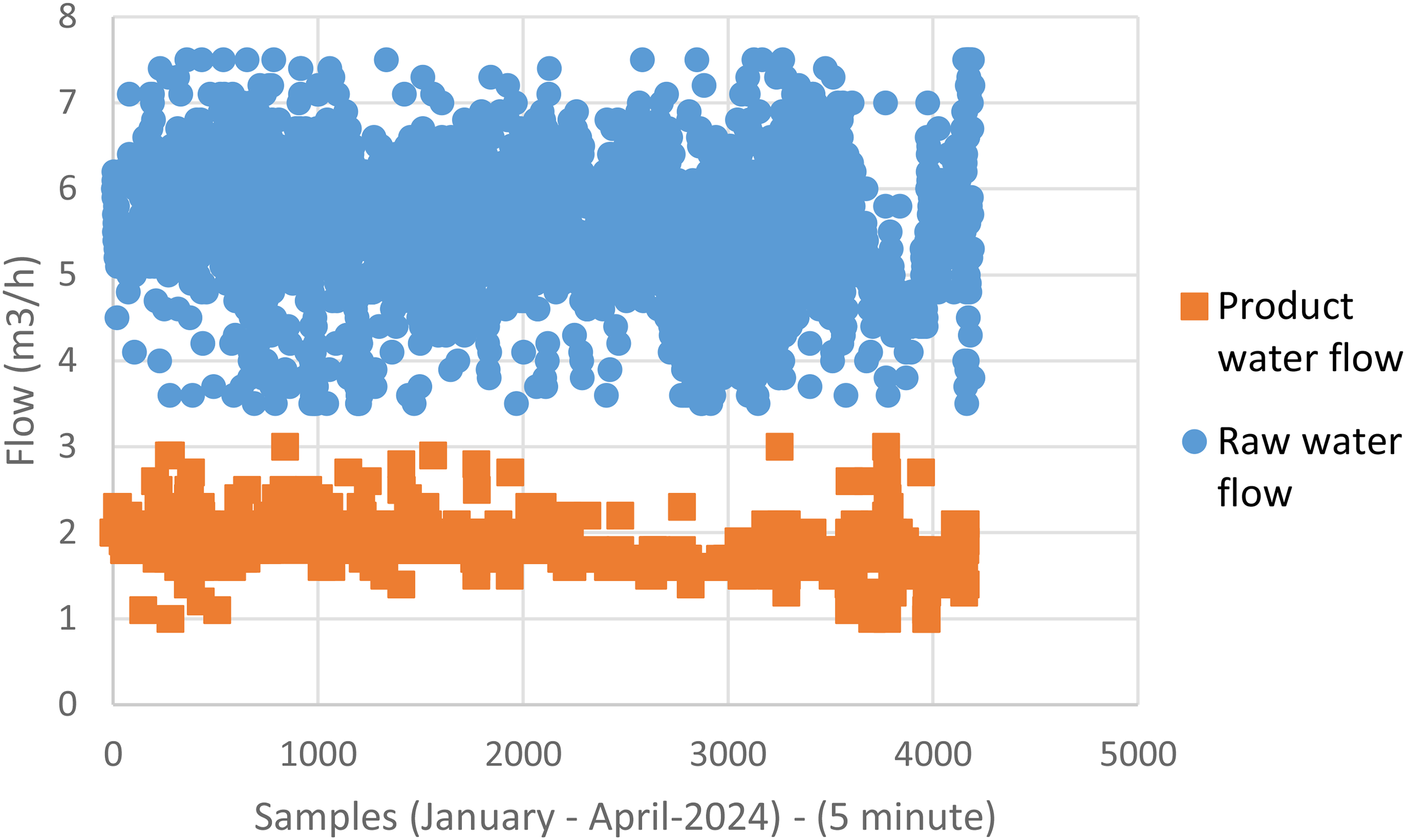
Product and raw water flow from January to April 2024, before the modification.
Samples have been collected seven times each month from January 2024 to mid-April 2024. The electrical conductivity (EC) values of the fresh water show an average of 137 µS/cm, as illustrated in Figure 14. It is noticed that the performance of the operational RO unit can be improved considering the aging of the overall system.
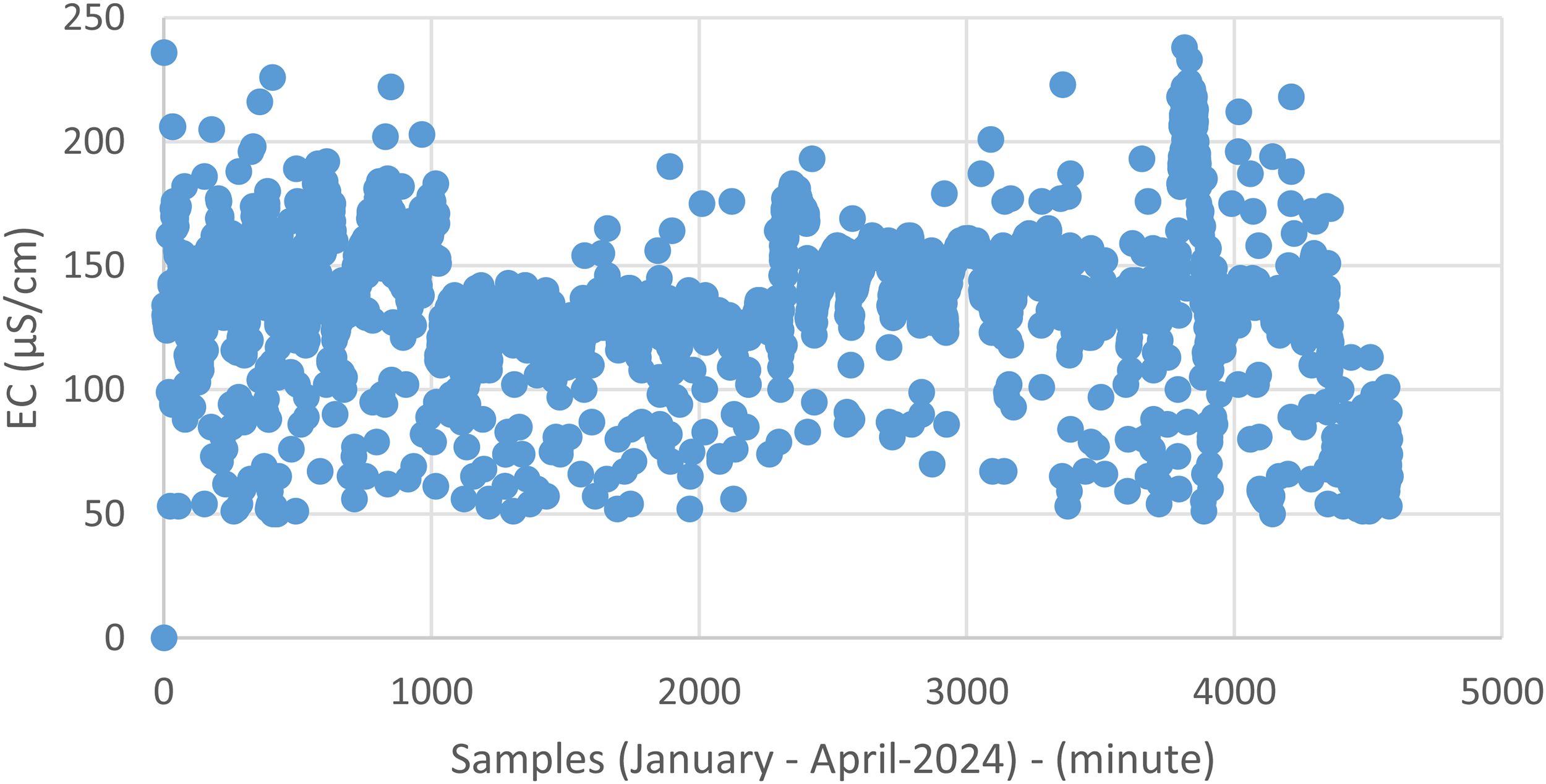
Product water EC values before the extra membrane addition.
The system results after performing the extra membranes addition are also taken seven times each month, as will be illustrated in the results section. The same operational conditions will be the same before and after improvement; only the extra two membranes added will be discussed.
Operational performance after improvement
The achieved results were taken from January 2024 to April 2024, the time before the extra two membranes were added.
The amendment was performed in April 2024; then the data were continued from May 2024 to September 2024, as shown in Figure 15.
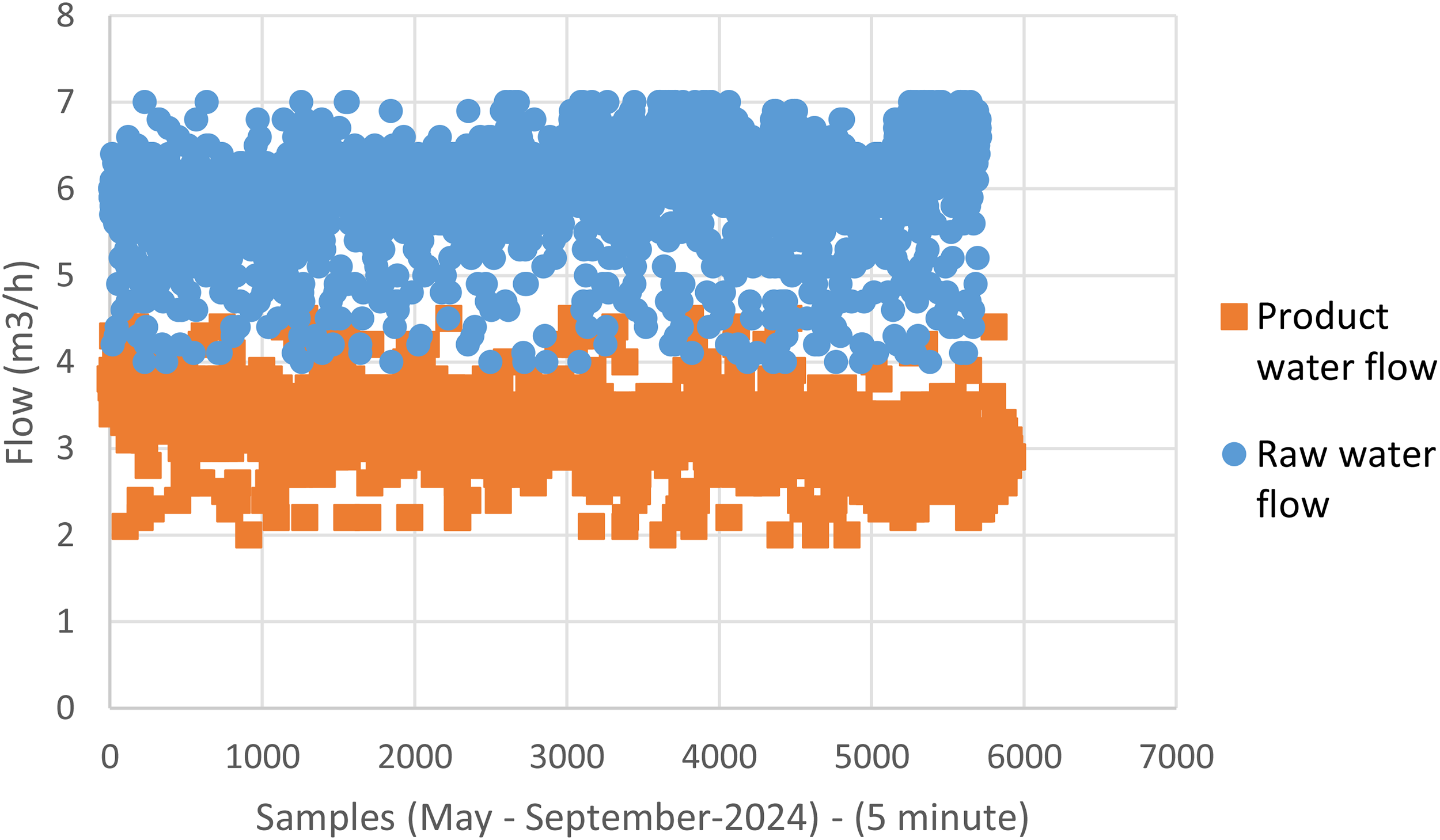
Product and raw water flow from April to September 2024, after the amendment.
Incorporating two additional membranes effectively raises the filtration area to 204.5 m2 without altering other variables. The average RO efficiency before the two-membrane addition is 36% and after adding the membranes addition it is achieved at 61%. Consequently, this led to around 25% increase in production capacity.
The achieved results before and after the membranes’ addition were taken considering that the sand filter and the old membranes are still in operation. Therefore, the 25% increment after adding the two membranes happened on the actual RO overall operation without major maintenance on the existing sand filter and membranes. However, the feed pump has been changed after adding the two membranes to meet the needs of the overall RO unit. The feed water flow increased by 1.5 m3/h, where the water flow before the pump addition is around 5.4 m3/h.
Figure 16 shows the product water EC values after the membrane's addition; it shows a reduction in the EC values with an average of 86 µS/cm compared to 137 µS/cm before the addition, considering that the three operational (existed in the original system) are in operation for 3 years, the EC improvement after modification is explained by the driving the overall RO unit to more optimistic operation due to the age, 15 years. Furthermore, the three membranes that are used in the original design are FilmTec type that has a salt recovery between 99% – 99.5%, and referring to the membrane specifications (FilmTecTM Technical Manual, 2026), they are designed to have higher flow rates and having the economic operation features while designed for lower contaminations, on the other hand, the added two membranes are CPA3 membranes that offer 99.7% salt rejection (Hydranautics CPA Brochure, 2022), therefore, they are better in salt rejection rate, considering that the three membranes on the original design are in operation for 3 years. Accordingly, the modification shows a reduction in the overall conductivity values.
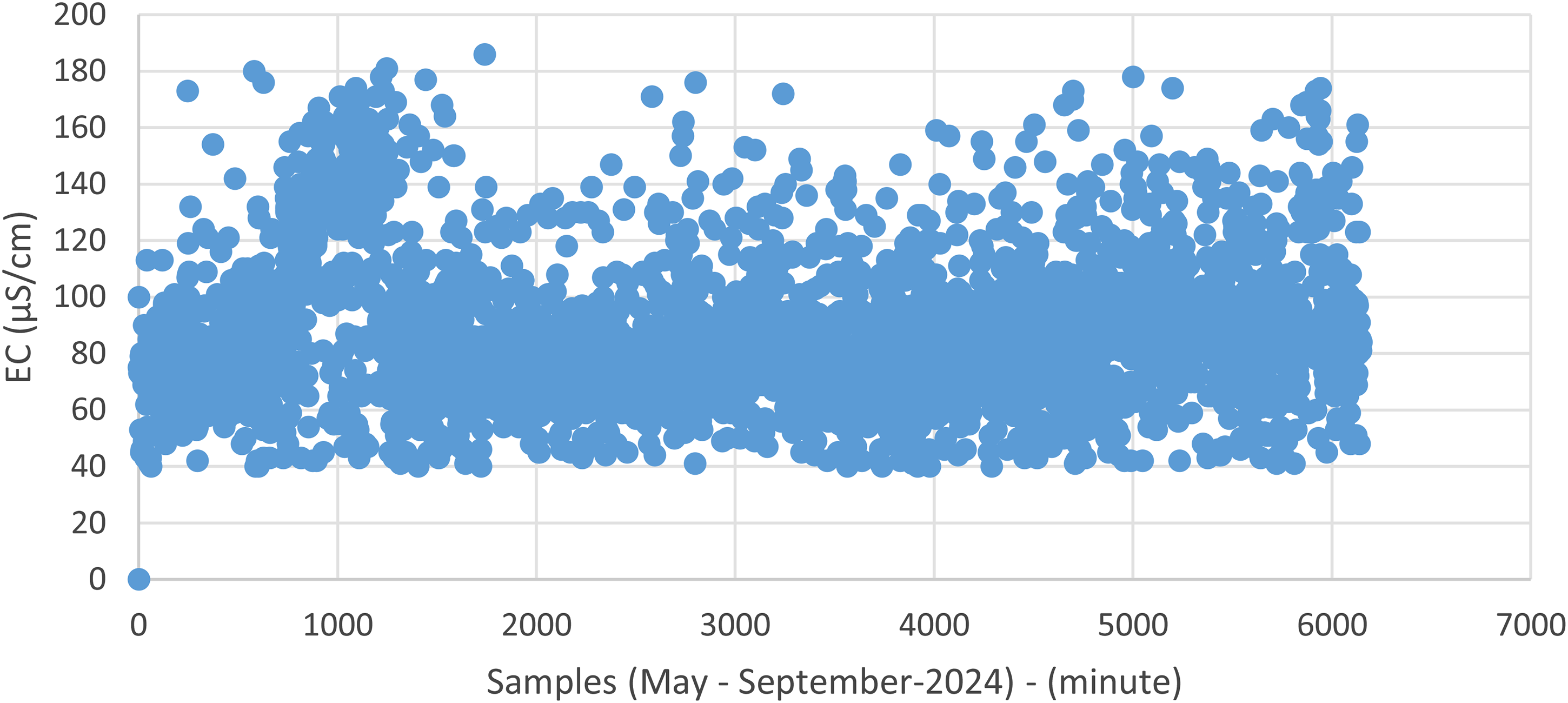
EC of the product water after the amendment.
The amendments’ results show a capacity production increment of around 25%, which is reflected in the energy consumption per m3 of produced water, as shown in Table 2 which is based on the average values that have been measured through the RO operation.
Freshwater production and specific energy.

The power added after the amendment is referred to the booster pump.
Combining results for the averages of flow between the two cases, a clear improvement on the system fresh water supply, as mentioned previously, around 25% of improvement is achieved after modification where the added two membranes serve in having extra brine treatment as illustrated in Figure 17.
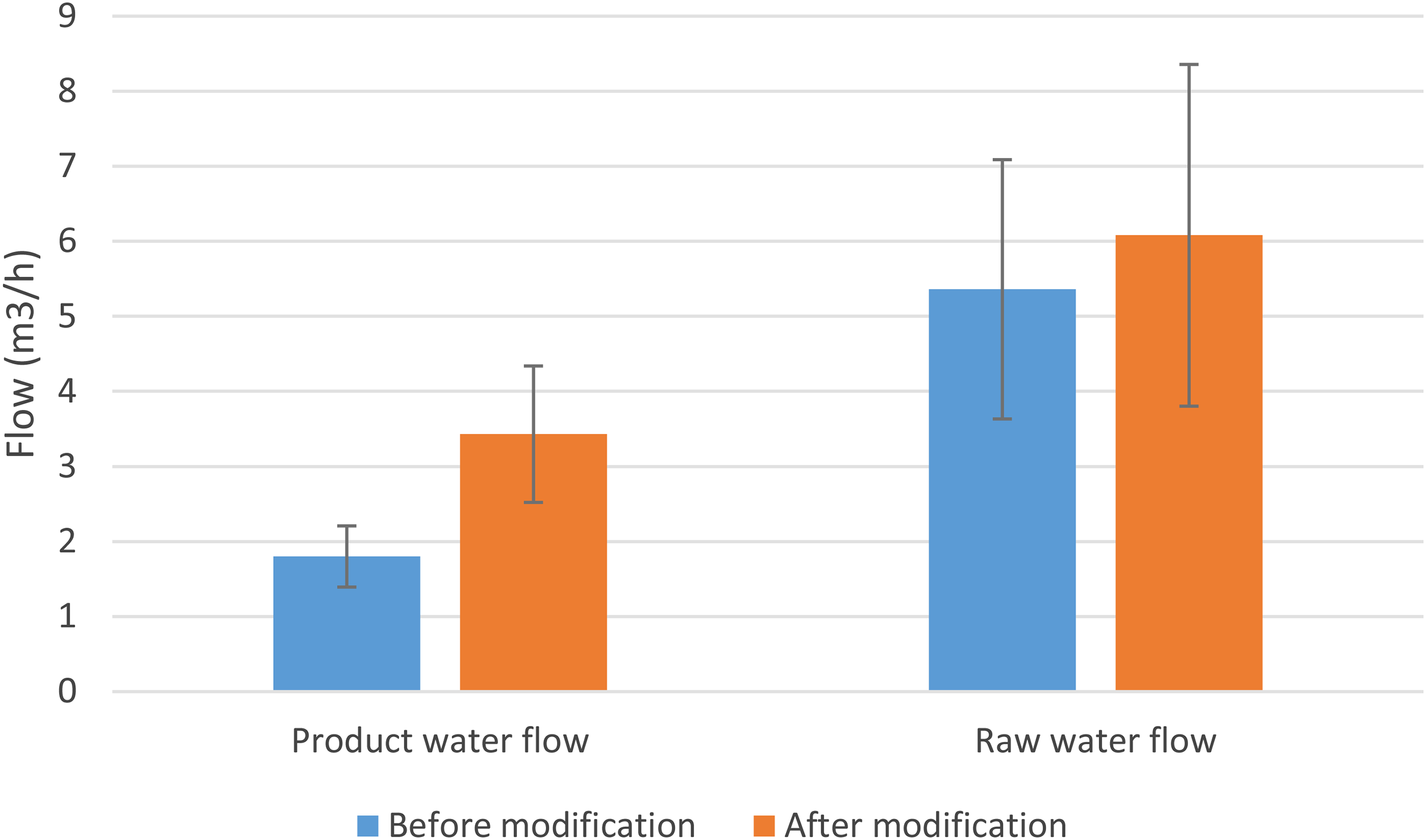
Comparison between flows of product and raw water before and after modification.
The overall specific energy saving is around 12% per m3, which is reflected in turn by reducing the energy demands for the RO unit, that is, by reducing PV system capacity.
The improvement on the fresh water TDS values also achieved with around 37% and that can be explained by the extra treatment on the brine as seen in Figure 18, this improvement allows for higher water mix volume used for irrigation.

Comparison between TDS fresh water values before and after modification.
To calculate LCOW, the total expenses encompassing the planning, design, construction, operation, and maintenance of a water project are divided by the overall volume of water treated or delivered during the project's anticipated lifespan. The result is expressed as the cost per unit volume of water [JD/m3] using the following formula:
The specified numbers were employed in the following equation, which computes the annual worth of the present value:
For the existing RO plant, the calculated annual water supply over one year for the basic operation (without modification) is 4858 m3, where the annual worth for the overall equipment's is 6217.6 JD as shown in Table 3.
Base case annual worth.

After the RO modification, and considering the addition on the membranes cost, the overall annual worth is 6969 JD, while the water production is 8084 m3 as shown in Table 4.
Annual worth after modification
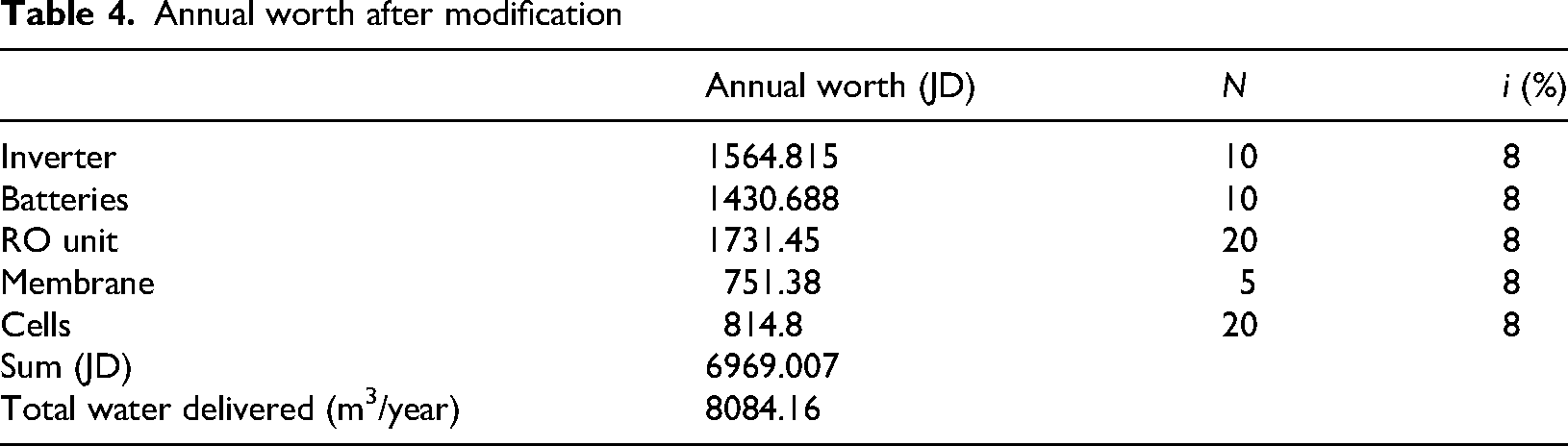
The LCOW for small and medium RO units is ranged between 0.022 and 0.5 $/m3 (Al-Obaidi et al., 2025), considering the available RO unit tested in this research, the LCOW before making the amendment is calculated to be 1.2797 JD/m3 (1.8 $/m3), after performing the amendment, the LCOW is reduced to be 0.862 JD/m3 (1.22 $/m3). Those values consider the cost of components used in the system including the solar system in the Jordanian area. The annual worth for the components is 6217.627 and 6969.007 JD before and after the amendment. The main increment in the cost is due to the membrane number increment after modification to 5, however, the production of water 8084.16 m3/year after modification compared to 4858.56 m3/year before modification.
The product water PH value remains constant, around 7.2, before and after the membranes’ addition, which is expected since there is no change in the chemicals used.
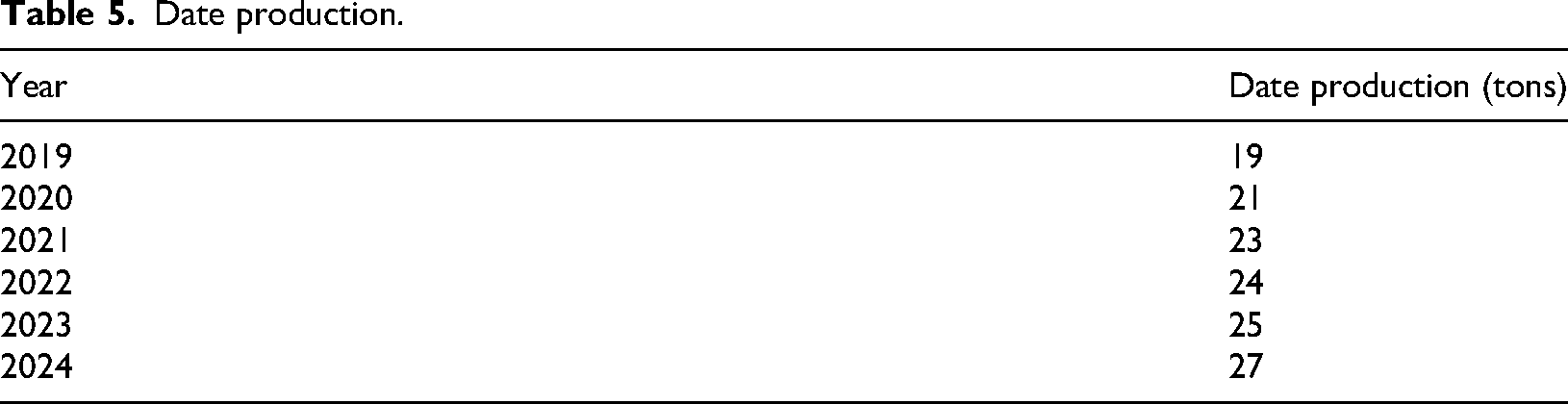
Fresh water availability helps in farming activities, where an improvement on the farm production have been noticed over the years where the original RO unit is used. The main indicator is the dates produced from palm trees, which is the main crop in the farm. With around 490 palm trees in the farm, the produced amount increases annually by one to two tons, considering the procedure followed by the farmer to remove part of the fruit punch for better quality.
Table 5 shows the date fruit production from 2019 to 2024. Additionally, the quality of the produced date is improved since the irrigation with low EC water compared with the original pumped from the ground. Usually, fresh water is mixed with the original water in around 1:5 ratio. The performance improvement on the RO unit and its effect on the dates production need to be evaluated after couple of years.
Date production.
Conclusion
Fresh water supply is one of the major challenges that faces many societies worldwide and Jordan is not an exception considering the limited resources and population growth. A key solution is to investigate renewable energy resources available in the Jordanian area and benefit from the governmental supporting regulations. Integrating water desalination, especially RO, with renewable energy supply exploitation appears to be one of the important solutions that can be addressed within the scope of energy and water supply.
This research discussed improving an aging RO unit powered by a stand-alone PV system. The presented solution is to add an extra brine processing stage through additional membranes for brine processing with the same PV system capacity. The improvement resulted in increasing overall capacity production by around 25%, reducing the specific energy from 2.2 to 1.8 kWh/m3 which aligns with the range of brackish water desalination plants range of 1.7 to 2.5 kWh/m3 (Al-Obaidi et al., 2025; Shemer and Semiat, 2017). The produced water salinity is reduced to lower than 90 µS/cm and the implemented solution raised the production of fresh water to 3.4 m3/h, where it was around 2 m3/h. Additionally, the LCOW is reduced from 1.8 $/m3 to 1.22 $/m3. The achieved results present a practical solution for the operational RO units at the area and similar places, the modification compensates installing new RO units with higher costs for higher fresh water demands.
The future work will handle further discussion on installing a pre-filtration system by using an Ultra Filtration (UF) unit, increase the inlet water temperature, perform detailed specific energy and cost analysis, and conduct sensitivity analysis on considering the PV supply.
Research highlights
The addition of two membranes + booster pump raised RO recovery from 36 % to 61 %, and increased freshwater yield by 25 %.
The specific energy consumption decreases by 12 % without enlarging the 10 kWh PV array.
The conductivity of the product EC water falls from 137 to 86 µS cm−1, which meets strict irrigation needs.
The boosted date-palm yield increased from 19 tons (2019) to 27 tons (2024).
The low cost of the off-grid solar-RO retrofit offers a replicable model for arid, water-scarce farms.
Footnotes
Acknowledgments
The authors would like to thank the Deanship of Scientific Research (DSR) at the German Jordanian University, Scientific Research and Innovation Support Fund (SRSF), DELTA-GmbH - Germany.

Contributions
Conceptualization: MB, MA-A and JW; methodology: MB, JW and MA-A; formal analysis: MB, MA, MA-A; investigation: MA-A, MB, JW and MA; resources: MA-A, JW, AR, and MA; data curation: MA-A, MB, JW; writing‒original draft preparation: MB, MA-A, MA, AR, and JW; writing‒review and editing: MB, MA-A, AR, JW, and MA; supervision: MB and MA-A. All authors have read and agreed to the published version of the manuscript.
Funding
The authors disclosed receipt of the following financial support for the research, authorship, and/or publication of this article: This research received external funding from the Scientific Research and Innovation Support Fund (SRSF), PRIMA 1/01/2021, Jordan. The support of the modification is also performed with DELTA-GmbH, and TU-Berlin University - Germany.
Declaration of conflicting interests
The authors declared no potential conflicts of interest with respect to the research, authorship, and/or publication of this article.
Data availability statement
In this study, no new data were generated. Data sharing does not apply to this article. The data supporting the content of this review paper are available from the authors upon reasonable request.