




Abstract
This study proposes a new hybrid method that adopts the theory of inventive problem solving and the Kansei evaluation in quality function deployment processes to facilitate innovative new product design and evaluation in the early design phase. The hybrid model and method procedures consist of four stages. First, user satisfaction needs are identified based on a questionnaire of linear numeric rating scale, factor analysis, and an analytic hierarchy process, and the completeness and reliability of this identification are guaranteed by the use of Cronbach’s coefficient alpha statistic. Second, crucial design zones are identified by a correlation matrix, and analyzing the interrelationship matrix at the quality function deployment to establish critical innovation points. Third, the main tools of the theory of inventive problem solving are applied to address these critical innovation points. As such, several innovative alternatives are designed by combining the suitable inventive principles, design rulers, and crucial design zones. Finally, a general and rough set for the Kansei evaluation of the best design alternative is presented. Innovative car seat design is conducted to scientifically and efficiently verify this proposed method.
Keywords
Introduction
The competitive advantage of a company lies in the successive product innovation in a global market that features on the increasing variety of user needs. 1 How a product is designed can decisively influence whether it is successful or not. 2 Thus, scientific and accurate design theories and methods are vital for the success of a product. Designers usually only consider the function, quality, and cost of the product. But recent research on ergonomics and Kansei engineering has proven that the above three elements are not the only elements that determine the success and user satisfaction of a product; instead, product safety, 3 features applicability, 4 affinity, 5 interactivity, 6 innovation, and personalization 7 also play key roles. Ergonomics aim to effectively improve users’ living and working environment by providing new product design methods for product innovation. In this manner, products can be safer and more effective, learning-friendly and user-friendly. On the other hand, Kansei engineering emphasizes users’ subjective feelings toward products, such as product appearance, color, style, tactility, and pleasantness.8,9
Consumers want ergonomically well-designed and esthetically pleasing products because, on the one hand, products that meet the principles of the scale of the human body and ergonomics can both lower the risk of professional injury and improve the user experience. On the other hand, customers are also positively influenced by product design esthetics. New product design that considers design esthetics is vital to attracting customers. Therefore, designers should provide users with products that combine ergonomics and design esthetics using innovative methods and tools.
Quality function deployment (QFD), which provides methods and tools for innovative new product design (NPD) and development for designers, is an important approach to improve user satisfaction, lower product development cost, and shorten the product development cycle. As the core tool of QFD, the House of Quality (HoQ), initiated by Akao, 10 a Japanese scholar, in 1972, has been well received and widely used in the process of obtaining user needs and translating them into product engineering elements. World-renowned enterprises accelerate the process of innovation improvement, research, and new product development.7,11–13
In addition, the theory of inventive problem solving (TRIZ) is a powerful methodology summarized from 2.5 million patents targeted at addressing technical and developmental problems. The TRIZ, acclaimed as the “Midas touch,” has already solved a considerable number of innovative problems for enterprises worldwide, such as low-carbon design, 14 the integrated design of the fixture and connection of friction stir welding based on TRIZ conflict theory, 15 the improved design of mouse based on TRIZ invention principles, 16 and the elimination of technological contradictions of new wind generating set based on TRIZ tools. 17
Moreover, among the innovative designs developed in the early design phase, the selection of the optimal design is essential for NPD. However, given the emotional, subjective, and inaccurate user evaluations, design cases cannot be easily evaluated by the algebraic approach in product design phase. Thus, Kansei evaluation (KE) is widely used in various engineering and management fields. Based on rough theory, this method evaluates and selects design cases more appropriately and accurately by rough sets.
With regard to hybrid QFD/TRIZ methods, Melgoza et al. 18 innovated medical equipment by combining QFD and the TRIZ to solve its geometric and material incompatibilities to meet patient needs. Y-H Wang et al. 19 proposed new service design approach incorporating TRIZ and QFD to improve performance and competitiveness of service innovation.
Yeh et al. 20 developed a green design method for laptops by referring to the four-phase invention theory combining QFD and the TRIZ. M Schlueter 21 studied a method combining the HoQ and the TRIZ for customer needs.
The above research shows that various hybrid methods based on a combination of QFD and the TRIZ can be used to implement the functional complements of “what to do” and “how to do.” QFD, however, is a tool used to raise innovative questions rather than address innovative problems. Moreover, it fails to offer scientific and objective methods for some case evaluations. Conversely, the TRIZ usually generates multiple innovative theories as back-ups when it solves practical problems. These innovative theories can result in multiple innovative pragmatic cases for products. However, the TRIZ fails to address the complicated and objective problems in case evaluation, and it cannot produce a scientific, objective, and accurate decision-making mechanism. In addition, the problem that both QFD and TRIZ are not equipped with the mechanism of decision-making optimization for the back-up design cases could be effectively solved by KE, ensuring decisions maximally meet the customer needs. Thus, this article, on the basis of QFD, aims to explore a complete hybrid method for product design and evaluation in the design phase by combining the TRIZ and KE.
Literature background
This chapter presents some important literature used in the proposed approach (see section “Hybrid method”).
User satisfaction model of the HoQ
HoQ chart of QFD
New product planning is the first stage of NPD. 22 QFD is an efficient and useful technique for NPD to ensure that new product planning meets users’ expectations in terms of maximizing user satisfaction.23–25 With an understanding of core needs, QFD requests designers to face user needs directly. The HoQ, a easy-to-interpret matrix introduced by American scholars Huaser and Clausing 26 in 1988, is a tool for managing such needs in practice. The HoQ is the core of QFD; it converts user needs to NPD features and deploys them in the manufacturing process with the following five steps (Figure 1):
Step 1: Identifying users and selecting user needs.
Step 2: Determining the relative weighting for user needs.
Step 3: Building a competition benchmarking matrix.
Step 4: Translating the user demands into quantifiable engineering design elements.
Step 5: Establishing the innovative engineering design objectives.

Model of QFD procedures.
Limitations of the normal HoQ
The HoQ in its normal model has many implementation limits, as follows:
Limit 1: The matrix of constructing HoQ is broad in scale, increasing the amount of time consumed and the computational complexity.
Limit 2: The normal HoQ is not equipped with methods that can ensure the complete acquisition of user needs and their efficiency.
Limit 3: The acquisition of engineering characters is too subjective, mainly subject to the knowledge and experience from technicians.
Limit 4: The normal HoQ method does not include specific ways to solve innovative problems.
Limit 5: QFD does not provide the objective and scientific product evaluation that can optimize various design cases.
In summary, although QFD is a tool for raising problems in innovation, it does not solve innovative problems and cannot scientifically and objectively evaluate multiple alternatives. Thus, to complete the processes of innovative new product positioning and generation and the evaluation and selection of innovative alternatives, an effective hybrid method based on QFD is needed for the development of innovative interdisciplinary hybrid methods and models.
TRIZ
Proposed in 1946, the TRIZ has been a guiding theory for solving innovation problems. It effectively unveils the internal laws and theories of invention and focuses on the exaggeration and settlement of internal contradictions to obtain ideal solutions. As a supportive innovation tool, the TRIZ is effective at generating innovative ideas during new product development. 27
Main tools and application process of TRIZ
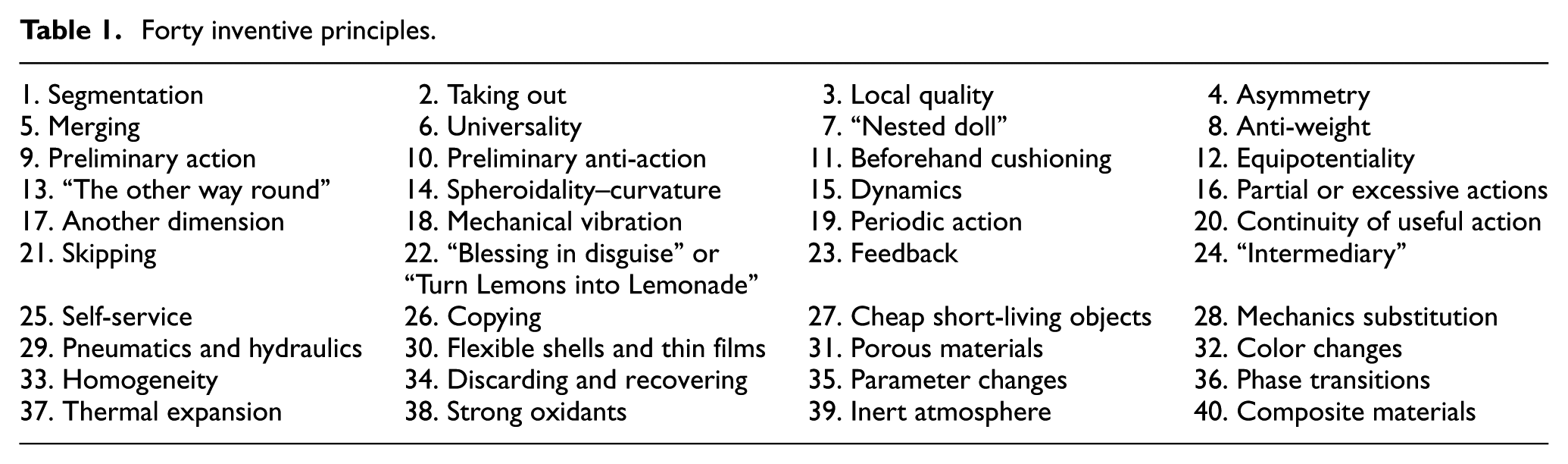
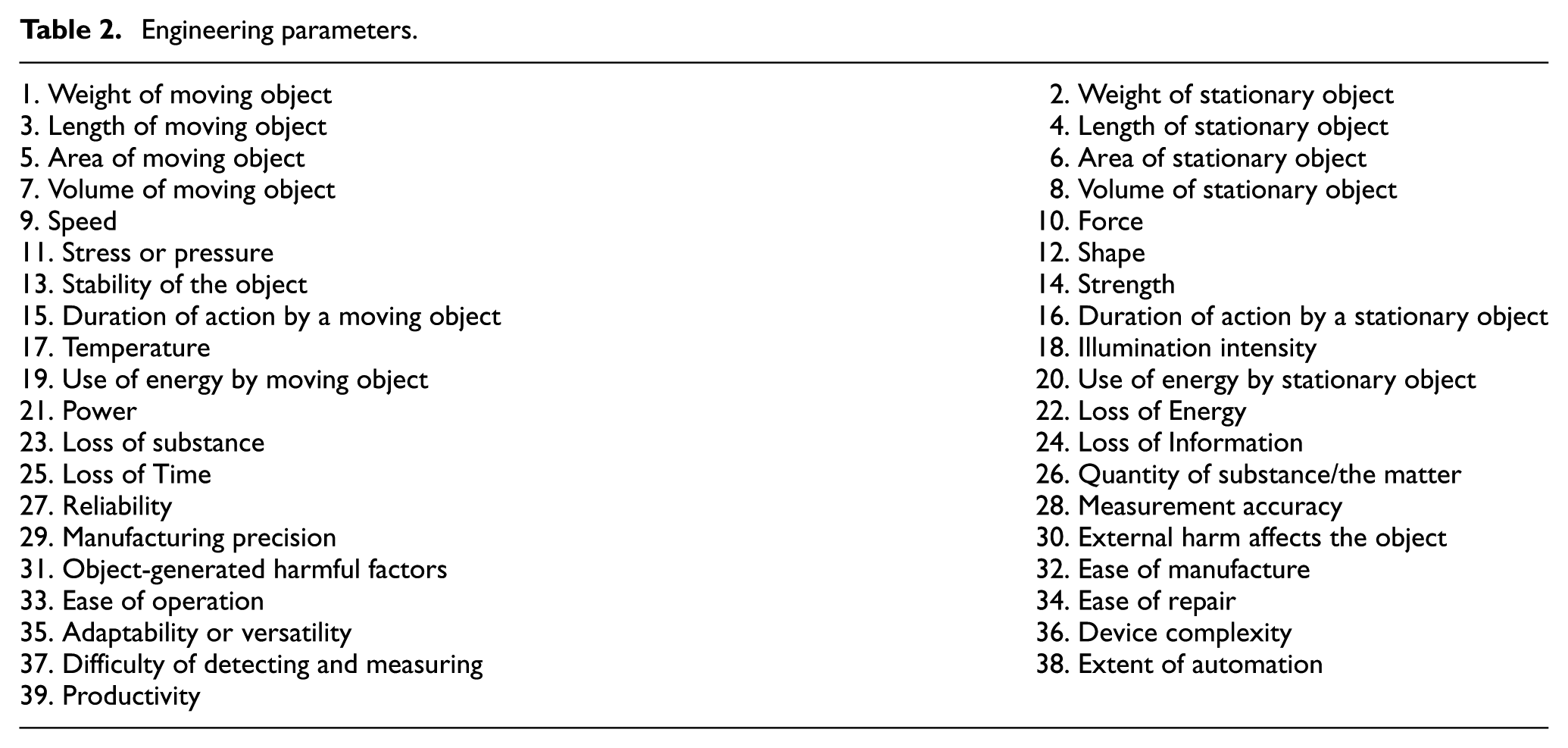
As a systematic, scientific, and operable analytical method for innovative thinking and invention, the major TRIZ tools contain 40 inventive principles and 39 standard engineering parameters and contradiction matrixes. Forty inventive principles provide concrete guidance to designers for product improvement (Table 1). Thirty-nine standard engineering parameters, as significant tools, transfer the practical design issues to the TRIZ language (Table 2). Targeting eliminates technical contradictions; the contradiction matrix connects 39 standard engineering parameters with 40 inventive principles into a contradiction matrix chart 39 × 39 so as to present their correspondence (Table 3). Separation principles are used to eliminate physical contradiction, consisting of four basic types with their related inventive principles (Table 4).
Forty inventive principles.
Engineering parameters.
Part of the contradiction matrix.

Separation principles corresponding to the 40 inventive principles.

For its application, TRIZ can be described as follows: First, 39 standard engineering parameters are used to transfer the practical design problems to TRIZ problems. Then, the transferred problems are identified and classified into two types, namely the technical contradiction and the physical contradiction. Finally, contradiction matrixes are used to eliminate the technical contradiction and the separation principles are used to eliminate the physical contradiction.
The above-mentioned TRIZ tools are easy to operate, providing the scientific and effective methods and tools for solving the practical innovation problems.
Limitations of the TRIZ
The TRIZ is a knowledge-based tool with four limits:
Limit 1: The TRIZ fails to recognize the innovation position during the design process and does not provide a way to establish critical innovation points.
Limit 2: When the TRIZ is used for problem solving, implementation still requires designers to have prior knowledge and experience.
Limit 3: TRIZ does not provide the objective and scientific product evaluation that can optimize various design cases either.
Limit 4: The 39 general engineering parameters are not comprehensive, and the selection of invention principles is redundantly dependent on experience in the contradiction matrix.
NPD rulers
Function has played the most vital role in NPD for decades. However, due to an improved standard of living and diverse user needs, the function of products alone is no longer sufficient to meet the needs of today’s consumers. Understanding user needs is an essential premise of NPD. Therefore, one of the key elements of improving user satisfaction is the effective obtainment, accurate definition, and analysis of user needs in the design standards. Thus, the series of design rulers shown in the table must be followed during the NPD process to accurately meet consumer demands. 28
KE rough decision-making theory
KE
As a perceptual evaluation of product design alternatives, KE examines user perceptual experience of products, services, and other relevant elements. This article uses KE for NPD, which is determined by the characterization of user-perceived quality in terms of importance and satisfaction.
Concept of a triangular rough set
Triangular rough sets are a generalization of crisp sets for representing imprecision or vagueness in everyday life. Triangular rough sets are used in computing with words or labels, as they provide a means of modeling the vagueness underlying most natural linguistics terms.29,30
As shown in Figure 2, the membership function of a triangular rough set

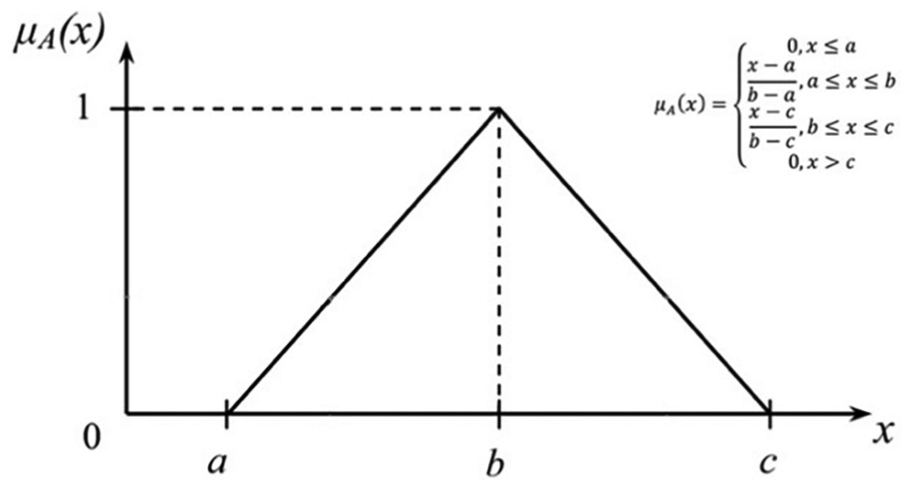
Triangular rough set.
Its defuzzification value is defined as

Rough sets for KE
The scientific evaluation for innovative design cases should be capable of accurately coping with the fuzziness and subjectivity of information. 31 Because user evaluation is usually flexible due to its rough subjectivity, triangular rough sets can be used to precisely capture this kind of rough evaluation, and the relations between language variables expressed by triangular rough sets largely fit user perceptual images. Some intersections exist among the user perceptual images transferred via triangular rough sets. For example, the common intervals between “moderately low Kansei preference” (1, 3, 5) and “medium Kansei preference” (3, 5, 7) are shown in Table 5 are.3,5 In this manner, Kansei rough user evaluation can assure that the relations among evaluation variables can be distinguished. Thus, KE expresses user perceptual degree to a product by rough sets to scientifically improve serviceability. This article introduces triangular rough sets into KE and converts weights and evaluation variables into the rating of the triangular rough sets, as shown in Table 5.
Rough set for KE attributes.

KE: Kansei evaluation.
Hybrid method
Based on the introduction and limits of existing theories, QFD precisely transfers user satisfaction needs (USNs) into the design characteristics of NPD, identifying the key design characteristics and the key innovative problems for NPD. TRIZ quickly addresses the key innovative problems by its innovative tools, acquiring multiple innovative approaches, and generating multiple concrete innovative cases. KE evaluates and selects the optimal case in an accurate way. It is an effective way to guide the product development and innovation by selectively converge the theories mentioned above. This article presents a hybrid method for innovative NPD and evaluation of QFD, the TRIZ, and KE, as shown in Figure 3.

A hybrid method for innovative product design.
The proposed hybrid model for NPD consists of four units. First, USNs should be identified to ensure the completeness and accuracy of the follow-up construction of QFD. The proposed model can also provide the theory and method to support the design process to correct the second limit of traditional QFD. Second, to correct the first and third limits of traditional QFD, the QFD HoQ chart is used to identify critical innovation points and crucial design zones. Third, correct the first and second limits of the TRIZ and the fourth limit of traditional QFD, integrating TRIZ theory and its methods for providing innovative ideas for designers and generating innovative design cases in an effective way. Finally, triangular rough sets for KE are applied to evaluate and improve the design alternatives, which corrects the fifth limit of traditional QFD and the third limit of the TRIZ. The limits of traditional QFD are discussed in section “Limitations of the normal HoQ,” and the limits of the TRIZ are discussed in section “Limitations of the TRIZ.”
Identification of USNs
The profound analysis and accurate understanding of user needs are the basis of a successful product, as well as the premise of successful QFD implementation. In order to ensure that the collected user information can accurately reflect the real situation in an all-round way, this research tends to adopt a bidirectional view, namely, the user view and the designer view, to conduct questionnaire inquiry, interview, and literature review (Figure 3).
The original descriptions of the initial collection of user needs tend to be repeated, similar and uncommon due to differences in culture, educational background, and individual user characteristics. Thus, the primary classification and arrangement of user is needed through deleting or merging the disordered and blurred information, transferring the repeated one, and identifying the complexity and subjectivity of the evaluation of priority user need.
To improve the reliability of obtained user needs, the questionnaire investigation method adopts the Likert-type scale and includes a complete prescreened list of initial USNs as shown in Figure 4. Thus, an accurate evaluation of results can better reflect user needs and satisfaction. A large-scale collection of questionnaire data and a reliability test of the obtained data are needed to improve evaluation accuracy. If the Cronbach’s α value of all datasets is larger than 0.7, then the overall data have high reliability and good internal consistency. However, if the item-total correlation value of one variable is smaller than 0.4, then this unreliable variable should be deleted.

Sample of questionnaire for USNs.
Establish QFD model
The second step is to establish the QFD to identify crucial design zones and critical innovation points, as shown in Table 6. Description of product design elements (PDEs) can be achieved from the final USNs. Then, a USN-PDE correlation matrix is constructed. The correlation between PDEs and USNs is calculated by operating a rating scale (5–3–1–0) that corresponds to four relationship levels (strong, moderate, weak, or no relationship). The PDE design priorities are represented by the total weight score of each PDE connected to the USNs, as calculated by the following equation.
Establishment of the QFD by the AHP.

QFD: quality function deployment; AHP: analytic hierarchy process; PDE: product design element; USN: user satisfaction need.
As shown in Figure 5 and Table 7, the analytic hierarchy process (AHP) is used to establish the judgment matrix for the degree of weight of USNs. The matrix is constructed as
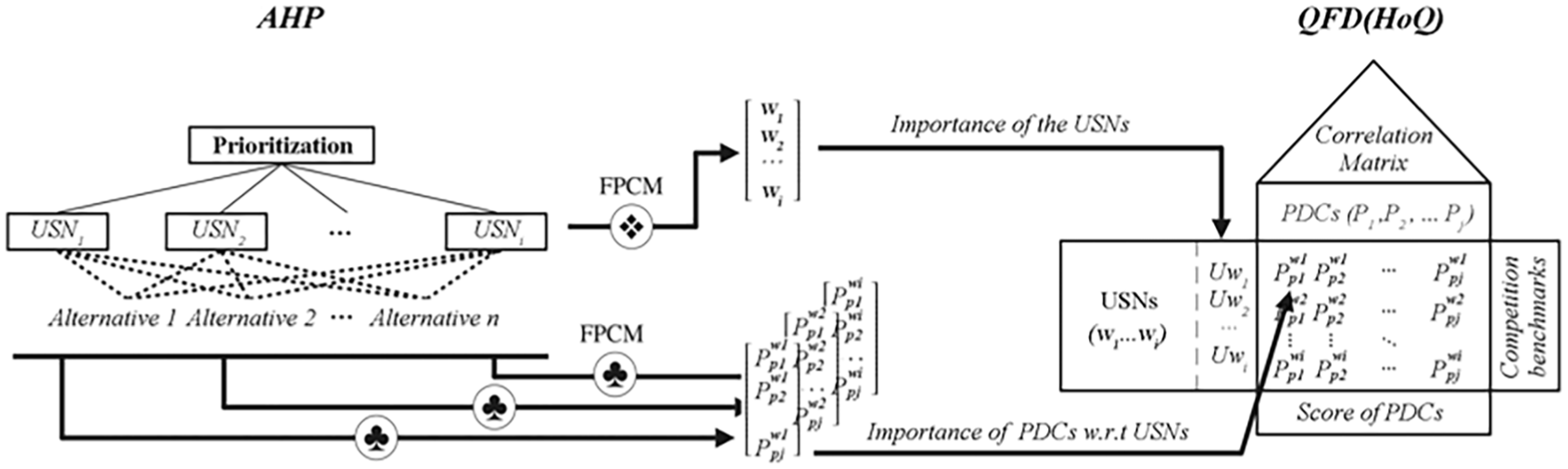
AHP in QFD: design and concepts.
Judgment matrix for the degree of weight of USNs.

USN: user satisfaction needs.
Geometric mean weights are calculated in terms of each item in a user need. The weight vector is described as


where
According to the w calculated from formulas (1) and (2), the overall USN score is calculated by the equation

where
The roof of QFD is used to classify interrelationships in PDEs. The symbols “+” and “–” represent positive and negative relationships, respectively. If the improvement in one PDE causes the deterioration of another PDE, then the relationship is negative and denoted by “–” In contrast, if the improvement in one PDE causes the improvement in another PDE, then the relationship is positive and denoted by “+.” As a result, the process mentioned above establishes relationships among critical innovation points from the negative PDE relationships, crucial design zones from the negative PDE relationships, and crucial design zones from the PDE design priorities.
Generation process for TRIZ-based innovation cases
The third step primarily employs TRIZ (the main tools and contradiction analysis) to generate innovative alternatives. First, the negatively correlating technical characters are defined as standard TRIZ problems by inputting the conflicting technical characters, combining with their related user needs, and referring to 39 engineering parameters of TRIZ. Afterward, one or more feasible innovative ideas are referred to the applicable inventive principles from the separation principles and contradiction matrixes so as to eliminate technical conflicts.
Finally, multiple product innovation cases are schemed out under the guidance of the basic innovative idea in phase 3, the design rulers outputted from phase 1, and the crucial design zones obtained from phase 2.
The fuzzy algorithm for optimized case based on KE
Identifying accurate criteria and applying logical methods are key to a successful alternative evaluation. The criteria of design alternative evaluation are established as shown in Table 8.
Step 1: A KE index system is established by transforming the USNs into KE indices. A case set, with a back-up case having a capacity of up to j, is established as
Step 2: Determine the triangular rough level of the case evaluation. Establish a group decision-making Kansei rough evaluation matrix. The Kansei rough evaluation from all decision-makers is expressed by triangular sets, that is,

Design rulers.

The rough decision-making matrix, established by the expert decision-making group evaluating case set S according to set C of the Kansei evaluating indices, is expressed as

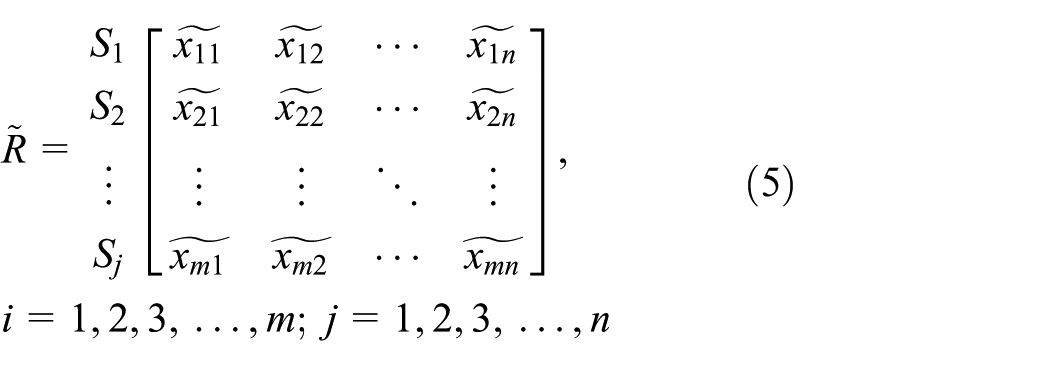

Step 3: Calculate the weighted rough group decision-making matrix and obtain the Kansei index evaluation of each layer at all levels in all cases.
Step 4: Based on the results, the optimal case is expressed as
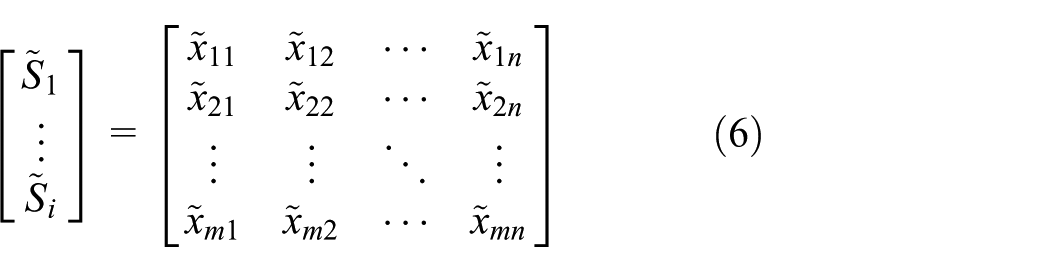

where
Finally, the design case is optimized by the evaluation of indices in all cases. In addition, a group of three evaluation-makers, including academic specialists, product designers, and industrial engineers, was made to evaluate the innovative alternative.
Empirical study
A car seat, consisting of surface material, filler, framework, an adjuster, and the car body adapting piece, is key to the interior of a car. Car seat design should not only be esthetically pleasing and achieve user comfort but also improve vehicle safety, which increases the difficulty and complexity of car seat design. As one of the closely connected parts to users, a car seat is expected to accord with ergonomics, creating proper sitting position and reasonable distribution of sitting pressure, which aims to avoid users’ physiological fatigue and damage.32,33 The structure and the color are expected to accord with users’ esthetics, connecting with users’ emotion and improving the interior quality. 34 Meanwhile, a car seat should ensure users’ safety in any accidents. 35 The application of the method mentioned to the car seat design can guide designers to meet user needs by accurately identifying user needs, promptly finding out innovative approaches to the concrete design cases.
The car seat design is verified following the hybrid model presented in this article and the four-step innovative design and evaluation process. The specific process is shown below.
Step 1: identification of car seat USNs
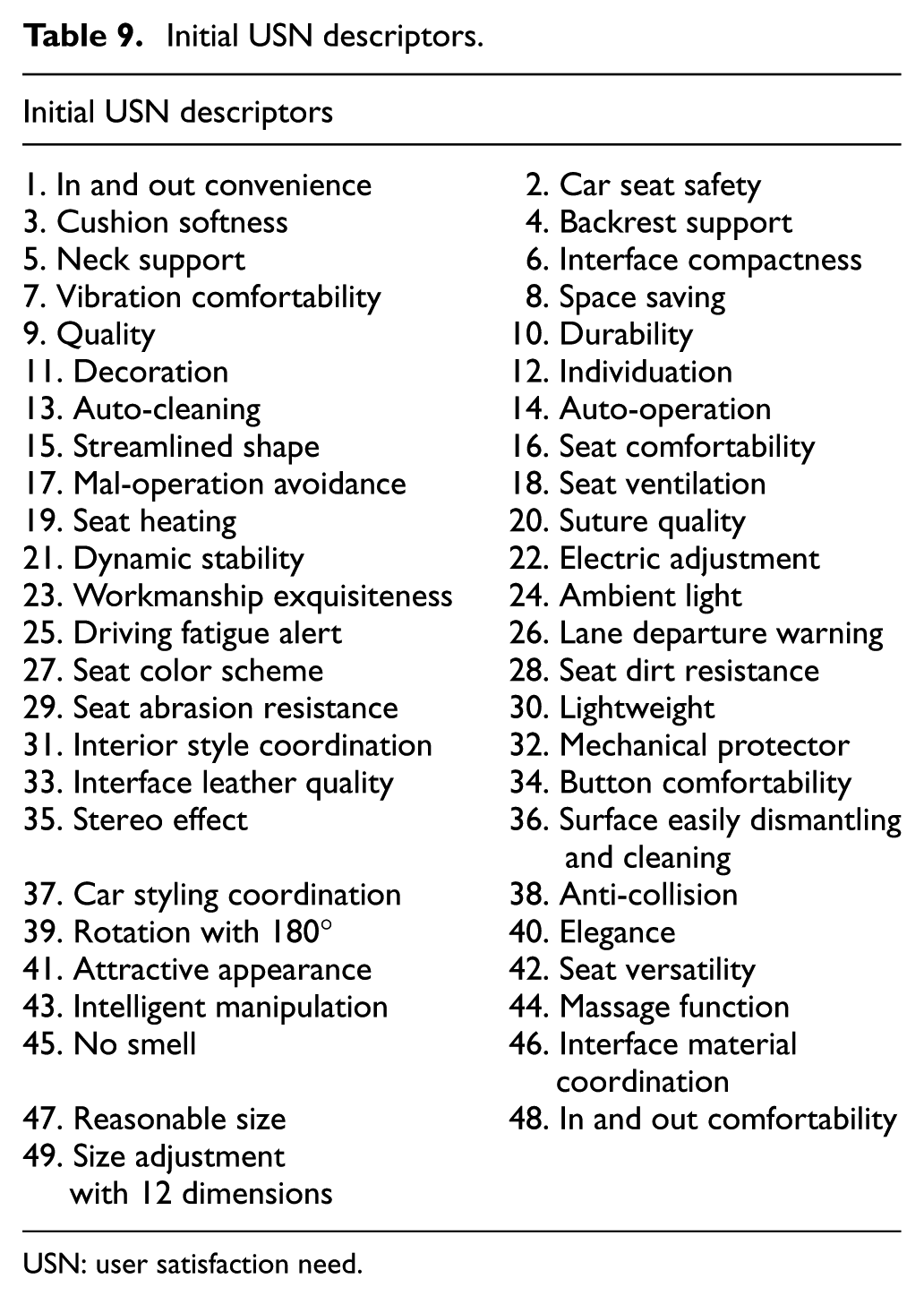
Targeting the operating environment and operational process of seats, 49 items of primary user need information are collected by expert interview (Delphi method), questionnaire inquiry, Internet inquiry, and literature review (as shown in Table 9).
Initial USN descriptors.
USN: user satisfaction need.
Twenty items of initial user needs are obtained, as shown in Table 10, by integrating, eliminating, and transferring the initial information of user needs.
USN prescreening.

USN: user satisfaction need.
The evaluation questionnaire of importance of 20 initial user needs for car seats is established by 5-point Likert-type scale; 5 points represent how important each user need is, marked as the least important, not important, normal, important, and very important. In total, 25 questionnaires are collected.
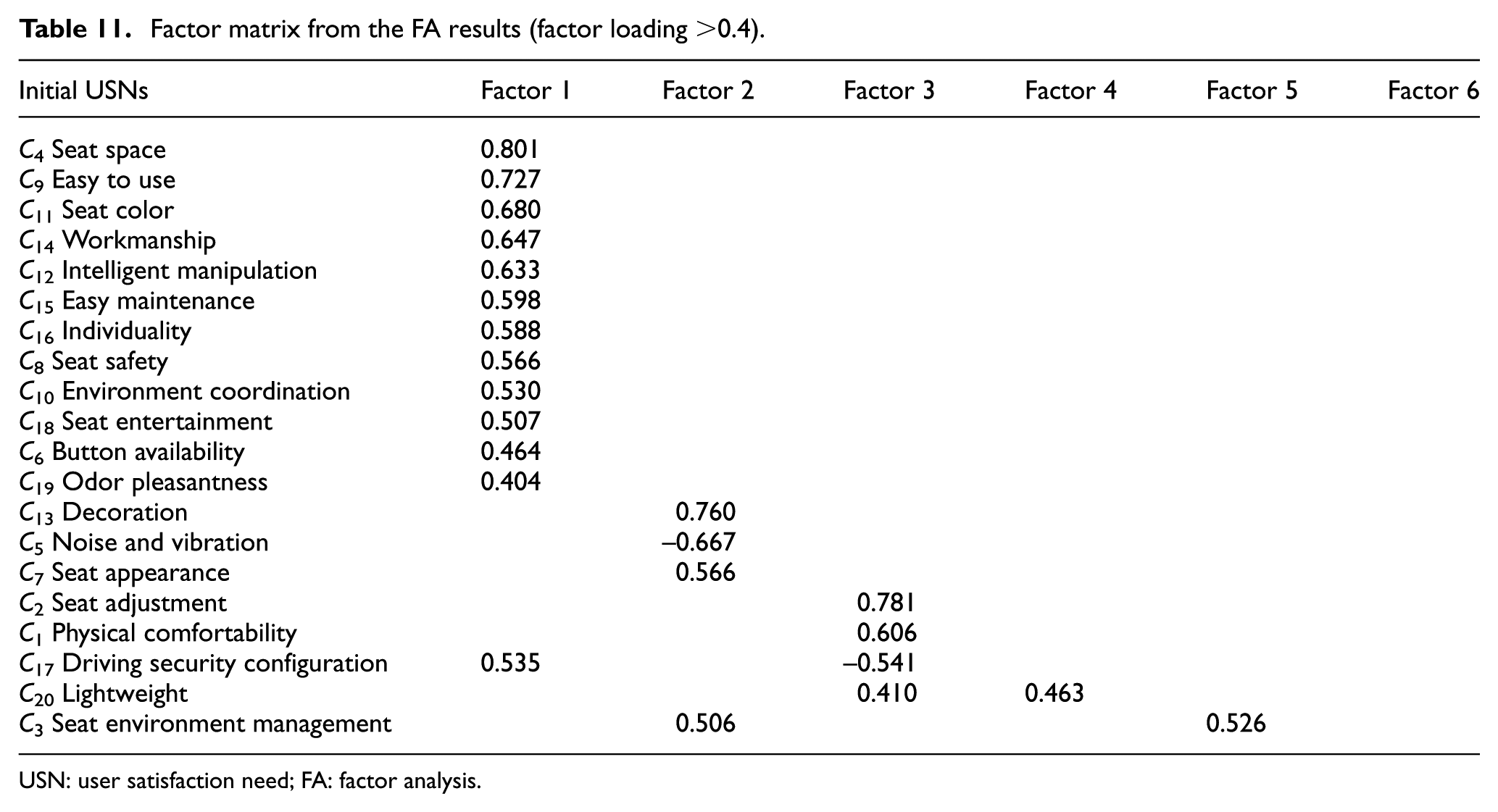
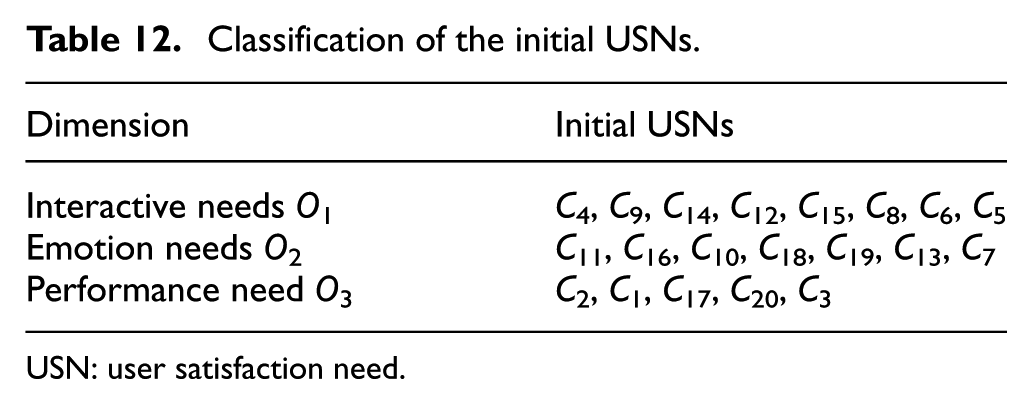
Factor matrix (Table 11) is eventually worked out by analyzing the hierarchy of the data collected with factor analysis (FA) and rotating the right angle matrix of six sets of factors whose eigenvalues are not less than 1. According to the result, set 5 and set 6 are put away because there is no weight factor higher than 0.4 in these two sets. The rest 4 statistically significant sets of factors, accounting for 75.4% of variances, are used to underline initial user needs of car seat. The result is shown in Table 12. The outcome of Kaiser–Meyer–Olkin (KMO, Table 13) suggests that the data mentioned above meet the criteria of FA.
Factor matrix from the FA results (factor loading >0.4).
USN: user satisfaction need; FA: factor analysis.
Classification of the initial USNs.
USN: user satisfaction need.
Kaiser–Meyer–Olkin and Bartlett’s test.

Examine the inner consistency by Cronbach’s alpha based on 20 initial layering results of seat user needs. The alpha values with all items of the three final dimensions of user needs are greater than 0.7, which meets the reliability standard. However, the results of Item-Correlation for C5, C13, and C3 are less than 0.4, and alpha with an item deleted is greater than alpha with all items remained. Thus, those three items were eliminated for data effectiveness. The 17 final user needs and preferences were established as shown in Table 14.
Results of the internal consistency reliability test.

USN: user satisfaction need.
Step 2: establishment of QFD
The design elements were transferred from the 17 USNs that were summarized and optimized by 10 product designers and 10 engineering experts. Then, 25 PDEs recognized by 50% of experts were used as the HoQ components. The details are shown in Table 15.
Identification of the PDEs.

PDE: product design element; USN: user satisfaction need.
The design preferences of a car seat can be obtained from Figure 6, which suggests that six crucial design zones, namely, P26, P7, P4, P14, P08, and P15, should receive attention.

HoQ for car seat innovative design.
Meanwhile, two sets of negative correlation design characters, as shown in Table 16, are acquired, according to the autocorrelation matrixes of HoQ top design characters, as shown in Table 17. (1) Eliminate the contradiction between ‘‘P8 Interface shape’’ and ‘‘P4 Whole structure.’’ (2) Eliminate the contradiction between ‘‘P26 Height, angle and position adjustment’’ and ‘‘P4 Whole structure.”
Innovative thinking based on TRIZ.[TS: Please check the MS and set the arrow symbols appropriately in all the instances.]

TRIZ: theory of inventive problem solving.
Design alternative criteria.

Step 3: generation of innovative alternatives by TRIZ
For the first innovation problem, the car seat pressure can be reduced to improve user comfort by increasing the ergonomic interface area. However, doing so will increase the seat volume, resulting in a decrease in interior space. Therefore, that contradiction belongs to the physical type and can be eliminated using the invention principle suggested by TRIZ space separation principles with the relevant invention numbers No. 1, No. 2, No. 3, No. 7, No. 13, No. 17, No. 24, No. 26, and No. 30. Based on practical problems, the first pair of contradictions can be solved using the following steps: first, the necessary part of the seat interface, especially the comfortability-effected part, is picked up according to invention principles No. 2 (“Pick up”) and No. 3 (“Local condition”) to increase the necessary interface area and reduce the unnecessary interface space. Second, the softness of the seat interface is designed to be under the user’s control by replacing the filler with an air mattress in the compressive part according to invention principle No. 30 (“Flexible film principle”).
Regarding the second innovation problem, the complexity and difficulty of seat structure construction will increase by improving the performance of the overall seat height, angle, and position adjustment. Therefore, that contradiction belongs to the technical type, which can be eliminated by the TRIZ contradiction matrix with relevant invention numbers No. 1, No. 32, No. 17, and No. 28. Based on practical problems, the seat backrest, neck rest, and cushion are divided into individual and modularized parts according to invention principle No. 1 (“Segmentation principle”) to enable users to adjust each part’s height, angle, and position at will. Meanwhile, the modularized parts are easy to assemble and maintain.
Finally, the following innovative ideas and concepts result from the above steps: (1) the interior space of the car is enlarged by increasing the interface area and decreasing the volume of the noninterface components; (2) the adjustability and comfortability of the seat are enhanced by replacing the traditional seat filler with an adjustable filler; and (3) adjustability is also enhanced by modularizing the seat backrest, neck rest, and cushion. In addition, the design rulers presented in section “NPD rulers” are used to guide design in six crucial design zones (section “Empirical study,” Step 2), namely, “height, angle, and position adjustment,”“interface material,”“seat structure,”“intelligent seat system,”“interface shape,” and “intelligent functional allocation.” Three alternative innovative schematics of a seat are obtained for three application scenarios: sports, family-friendly, and business. Then, 3D renderings, S1, S2, and S3, are drawn for each of those scenarios (S1, S2, and S3) using Rhino 5.0, as illustrated in Figure 7.
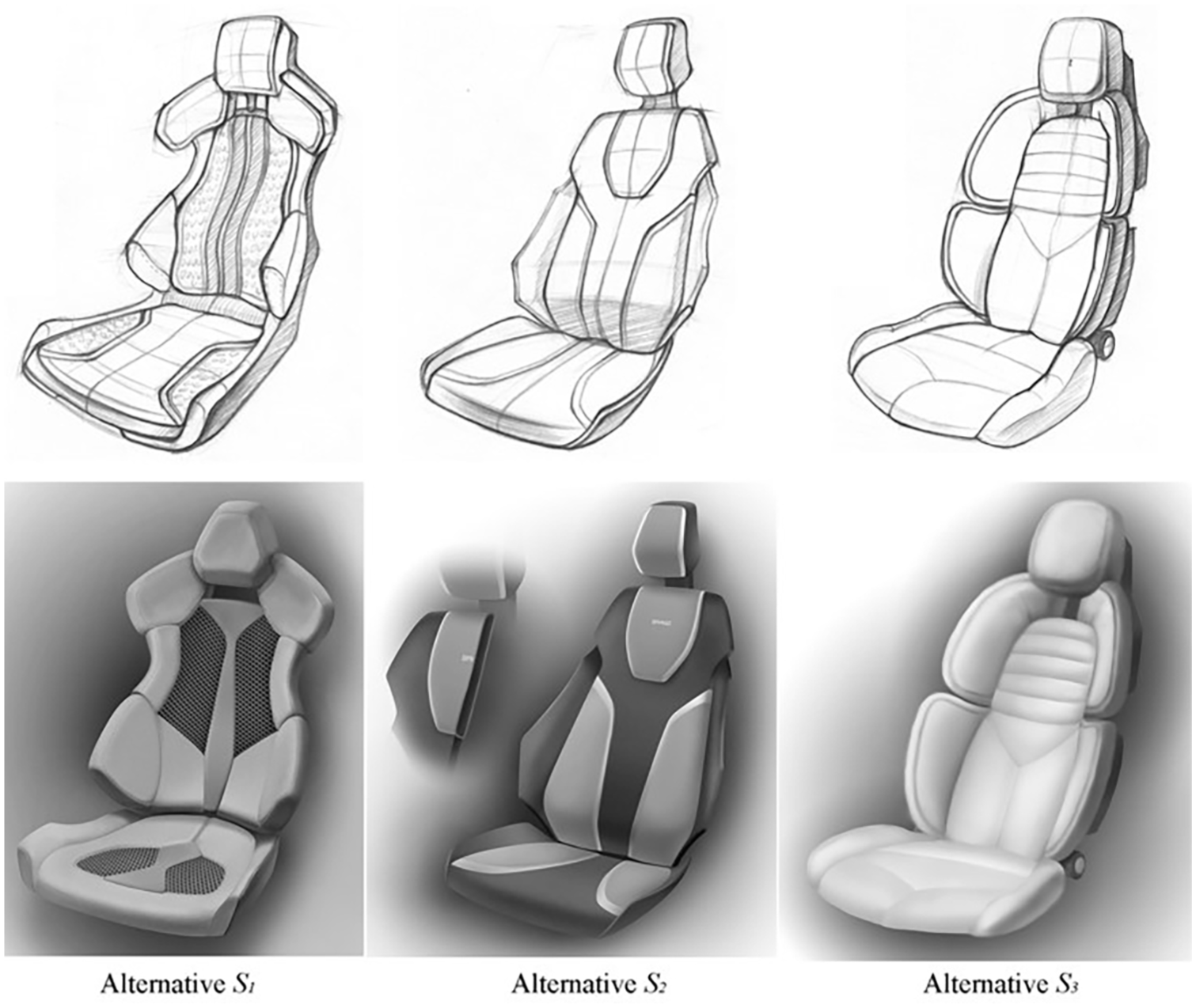
New product alternatives.
Step 4: KE of the application triangular rough set
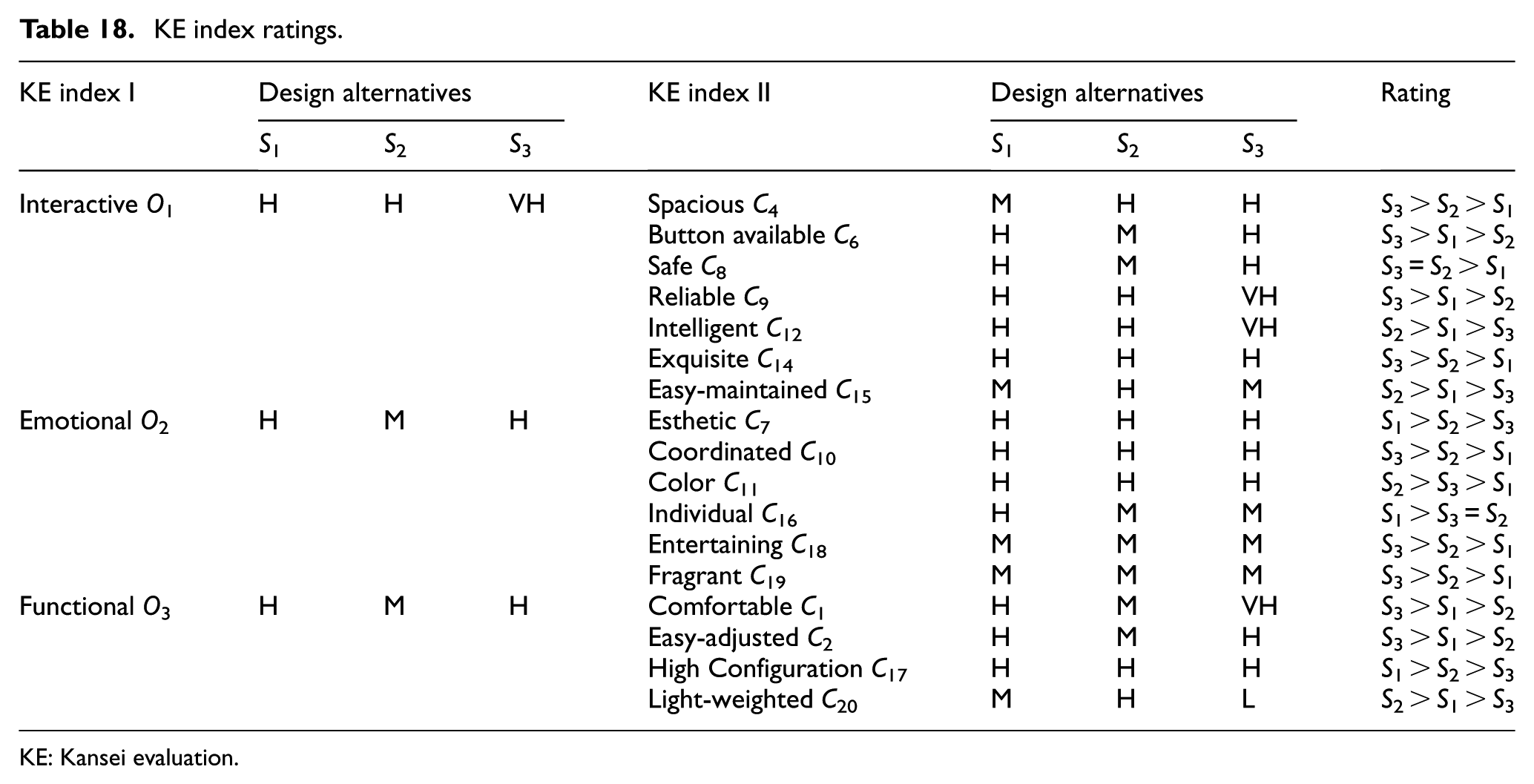
Rough sets are used to regulate the rough rating and weight by all experts to get the user condition, which yields the weight of importance and rating of the linguistic criteria, respectively, as shown in Table 18. Then, the means of the rough rating and weight are calculated, and the linguistic terms are transformed into the positive triangular rough sets. Finally, the rough evaluation matrix is established by normalizing the mean of the rough rating for the three NPD alternatives, as shown in Table 19. A panel of 40 experts evaluated the case of car seat.
KE index ratings.
KE: Kansei evaluation.
Aggregated rough comparison matrix of KE.

KE: Kansei evaluation.
The best alternative can be selected using KE. The values obtained from the KE are transferred into triangular rough sets. Then, the user’s attitude toward new products is confirmed by calculating the grade of rough evaluation, which yields the rating of the evaluation index

The three alternative innovative seat designs are sorted as
Discussion
This study proposes a hybrid model combining USN identification, QFD, the TRIZ, and Kansei engineering in innovation design that contains four steps: (1) the collection of USNs conducted by a triangulation method consisting of a questionnaire, expert interviews, and a literature review performed using the AHP; (2) the construction of a QFD HoQ chart to confirm critical innovation points and crucial design zones; (3) the generation of multiple design alternatives using the TRIZ to determine critical innovation points; and (4) the acquisition of future improvement methods using rough KE and optimized design cases. The proposed methodology corrects the deficiencies of the HoQ and TRIZ to facilitate innovative product design and evaluation in the early design stage.
The completeness and reliability of the USNs are ensured using triangulation, FA, and Cronbach’s alpha analysis. With regard to product innovation, the QFD HoQ is constructed to locate and identify crucial design zones and critical innovative points. To establish QFD, a USN-PDE correlation matrix must be constructed by translating the USNs into PDEs. This matrix is used to locate crucial design zones. The interrelationship of PDEs in QFD is responsible for obtaining critical innovation points that can be addressed using the 40 invention principles of the TRIZ, contradiction matrices, separation principles, and technical contradictions. In addition, innovative concepts derived from crucial design zones and design rulers and the solution of the recommended inventive TRIZ method are used to generate multiple innovation design alternatives. Then, KE rough group decision-making is used to select the best alternatives. The KE index system is transferred from the multilevel USN model into the HoQ. To avoid being misled by alternatives (i.e. wasting time and funding by optimizing alternatives), the TRIZ is used as an objective and specific inventive way to eliminate confliction in innovative processes, and the rough sets KE method is used to provide a scientific decision-making and evaluation process. Thus, the hybrid method proposed in this article can effectively improve the quality and benefits of the designed product to increase its competitiveness and user satisfaction. In addition, car seat innovative design is used to verify the hybrid method proposed in this paper in a scientific and effective manner. In summary, this hybrid method will facilitate product innovation and design.
Conclusion
This article presents a hybrid model and a multidisciplinary methodology that incorporates the identification of USNs, quality function development, the TRIZ, and KE rough sets for NPD in the early design stage. By integrating a series of methods, this methodology improves the product design process to achieve better products.
First, while QFD is able to identify the key design area and the key innovative problems in the product development by accurately transferring user needs into deign characteristics, it fails to provide innovative approaches to a concrete product case as it is not equipped with any innovation tools. As for TRIZ, although it is designed aiming at innovative problems during the product design process, it fails to identify the innovative problems. As for KE, it can effectively solve the problem that both QFD and TRIZ are not equipped with the mechanism of decision-making optimization for the back-up design cases.
The highlight of this article is that it proposes the integration of four phases and the related theories, integrating QFD, TRIZ, and Kansei engineering, embodying the complementation of multiple disciplines. Innovative car seat design is used to scientifically and efficiently verify this hybrid method.
I acknowledge that limitations in this manuscript are still to be researched. For instance, the data of user needs and emotional evaluations, solely derived from the questionnaire survey at present, should be collected in a better way for the completeness and accuracy in the future study. Meanwhile, the hybrid model discussed in this article should be stretched into the application of different products.
Footnotes
Acknowledgements
The authors would like to express our deepest appreciation to the related reviewers and editors.
Handling Editor: James Baldwin
Data availability statement
The data used to support the finding of this study were supplied by Shanghai Summit Discipline in Design under license and so cannot be made freely available. Requests for access to these data should be made to Zhang Zhang (
Declaration of conflicting interests
The author(s) declared no potential conflicts of interest with respect to the research, authorship, and/or publication of this article.
Funding
The author(s) disclosed receipt of the following financial support for the research, authorship, and/or publication of this article: This study was financially supported by the Shanghai Summit Discipline in Design of China and China Scholarship Council under contract nos DC17013 and 201706745023.
