




Abstract
A pin-on-disk friction and wear tester was used to investigate the tribological properties of multi-walled carbon nanotubes with different sizes and volume fractions as LB2000 vegetable-based oil additive. The wear scar of disk was characterized using scanning electron microscopy and Raman spectroscopy. Furthermore, the lubrication mechanism of multi-walled carbon nanotubes as vegetable-based oil additive was also discussed. It was found that thin and short multi-walled carbon nanotubes could improve the friction-reducing and anti-wear properties of vegetable-based oil more effectively than thick and long multi-walled carbon nanotubes. The optimal volume fraction of thin and short multi-walled carbon nanotubes was found to be 0.05%.
Keywords
Introduction
High speed and feed rate are increasingly needed to obtain high efficiency during manufacturing process, which brings about intense friction, ultimately leading to the increase in the energy consumption and rapid wear of machine parts. Therefore, improving lubricant’s properties to reduce friction and wear effectively is an important issue for advanced manufacturing process.
Nanoparticles as lubricant additive can significantly improve the wear-reduction capability, friction-reducing property, and load-carrying capacity of pure oil, which has aroused great interest of scientists. Nanoparticles that have been employed as pure oil additive involve carbon nanotube (CNT),1–3 molybdenum disulfide,4–6 and graphite.7–9 Liu et al. 10 synthesized functionalized multi-walled carbon nanotubes (MWCNTs) and adopted them as paraffin oil additive. The experiment results indicated that CNTs could improve the friction-reducing and anti-wear properties of pure oil efficiently, and the optimal additive concentration of MWCNTs in paraffin oil was found to be 0.025 wt%. Cursaru et al. 11 used a pin-on-disk tribometer to explore the friction-reducing and anti-wear properties of single-walled carbon nanotubes (SWCNTs) as mineral oil additive. The results suggested that the addition of 0.5 wt% SWCNTs to base oil could reduce the friction coefficient from 0.105 to 0.08, meanwhile the wear rate was minimum. Higher additive concentrations did not result in the reduction of friction coefficient and wear rate. Joly-Pottuz et al. 12 carried out the friction and wear tests using polyalphaolefin (PAO) oil containing SWCNTs and reported that when adding 1.0 wt% CNTs to pure oil, the friction coefficient decreased by 70%, reaching a steady value of 0.08. Moreover, the addition of CNTs led to three times smaller of wear scar width than pure oil. Peng et al. 13 researched the tribological performance of sodium dodecyl sulfate (SDS)-functionalized MWCNTs added in water using a four-ball tribometer. The outcomes indicated that the adsorption of SDS and the deposition of MWCNTs on the friction surfaces resulted in the reduction in friction and wear for steel–steel sliding system. Lu et al. 14 examined the efficiency of CNT/polystyrene (PS) hybrid mini-emulsion as water-based fluid additive. It was reported that in comparison with base fluid and base fluid with PS, the frictional property, wear resistance, and load-carrying capacity of base fluid with CNT/PS were obviously improved owing to the enhanced rolling effect of PS between friction surfaces by rigid CNT core.
The literature review shows that most researchers investigated the anti-wear and friction-reducing properties as well as load-carrying capacity of CNTs as mineral oil and water-based lubricants additive. However, less study focuses on the tribological properties of CNTs as vegetable-based oil additive. The mineral oil-based lubricant is a conventional choice for most lubricated applications. Unfortunately, application of mineral oil-based lubricant causes environment and health problems due to its inherent toxicity and non-biodegradable nature. Compared with mineral and chemically synthesized oil, vegetable-based oil has remarkable advantages in biodegradability, renewability, and environmental protection. 15 With the increase of consciousness for green manufacturing globally, it will be more widely used. Therefore, this article attempts to investigate the tribological properties of CNTs with different sizes as vegetable-based oil additive, and reveal the lubrication mechanism of CNTs.
Experimental details
Formation of CNT oil-based nanofluids
Nanofluids are fluids obtained by suspending nanoparticles with average sizes below 100 nm in base fluids. 16 In this research, LB2000 vegetable-based lubricant, supplied by ITW ROCOL North American Co., Ltd, was chosen as base fluid. Two kinds of MWCNTs with different sizes, procured from Shenzhen Nanotech Port Co., Ltd, were used throughout the experiments. One is thin and short MWCNT whose diameter and length are 10 ∼ 20 nm and less than 2 μm, respectively. The other is thick and long MWCNT whose diameter and length are 60 ∼ 100 nm and 5 ∼ 15 μm, respectively. Figure 1 presents the scanning electron microscope (SEM) images of two kinds of MWCNTs. The volume concentrations of MWCNTs in base fluid were 0.05% and 0.25%. The properties of MWCNTs and LB2000 vegetable-based oil are given in Tables 1 and 2, respectively.

SEM images of MWCNTs: (a) 10 ~ 20 nm and (b) 60 ~ 100 nm.
Properties of carbon nanotubes.
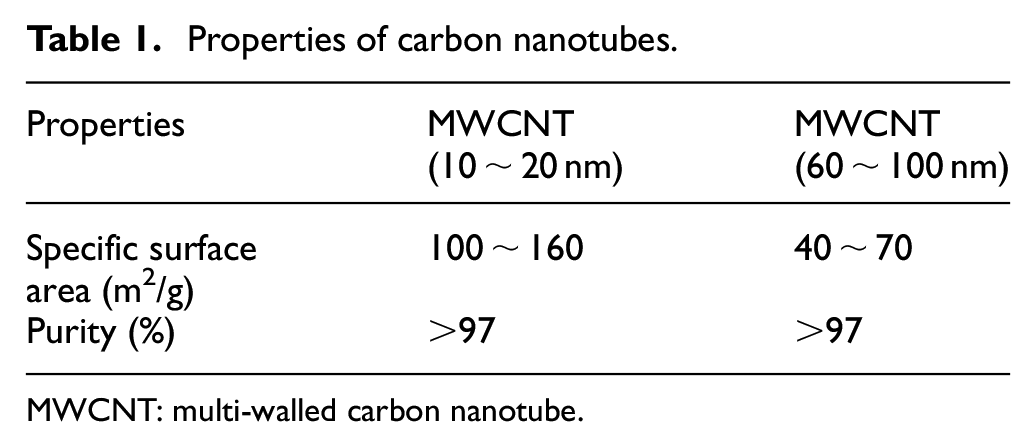
MWCNT: multi-walled carbon nanotube.
Properties of base fluid.

The MWCNT-LB2000 nanofluids were synthesized by adding a certain amount of MWCNTs to LB2000 vegetable-based oil followed by sonication (40 kHz, 100 W). In order to suspend the nanoparticles in based fluid completely, the ultrasonication time used was 2.5 h for MWCNT-LB2000 nanofluids with 60 ∼ 100 nm MWCNTs with the volume fraction of 0.05%. For the left nanofluids prepared, the ultrasonication time was 2.0 h. The particle size distribution in oil suspensions was measured by a dynamic light-scattering (DLS) equipment (Nanotrac Wave; Microtrac Instruments, USA) for analyzing the dispersion state of MWCNTS in LB2000 vegetable-based oil. LB2000 vegetable-based oil and MWCNT-LB2000 nanofluids were characterized by a Nicolet iS50 Fourier-transform infrared (FTIR) spectrometer.
Friction and wear experiment
The tribological properties of CNTs as vegetable-based oil additive were studied using a pin-on-disk friction and wear tester produced by Swiss CSM Co., Ltd. Figure 2 shows the basic configuration of pin-on-disk tribotester.

Schematic diagram of pin-on-disk tribotester.
The pin and disk were fixed on the fixture and oil cup, respectively. The friction surfaces of pin and disk in the pin-on-disk tribotester were submerged into LB2000 vegetable-based oil or MWCNT-LB2000 nanofluids. A normal force was applied on the top of pin using a loading plate and could be varied in the range of 1 ∼ 60 N. The servo motor with a variable rotating speed of up to 1500 r/min made the shaft rotate, thus resulting in the rotating motion of disk and oil cup at the same speed. Thus, a pair of sliding friction pairs was constituted due to the relative sliding between pin and disk. The pin specimen used in the tests was cemented carbide pin with a diameter of 6 mm and length of 20 mm, coupled with a titanium alloy disk of Ø30 × 7.8 mm in size. Prior to tests, the surface of disk was polished up to a roughness (Ra) level of 0.0565 μm using water milling abrasive paper of 200 and 800 mesh, respectively. After polishing, all samples were cleaned by ultrasonication in petroleum ether to remove the polishing debris. Table 3 lists the basic composition and mechanical properties of friction pairs.
The basic composition and mechanical properties of friction pairs.

The friction coefficient was recorded simultaneously during the process of friction and wear test. A Micro XAM-3D surface profiler was used to measure the wear scar depth (h) of disk. All of the measurements were carried out three times at room temperature, and the average values were employed for analysis. After the tribological tests, all specimens were cleaned using an ultrasonic bath in petroleum ether for 10 min. The morphology and element distribution of wear scar of disk were examined using an S-4800 field emission scanning electron microscope (FE-SEM) equipped with energy-dispersive X-ray spectroscopy (EDS). Raman spectroscopy was also carried out on the wear scar of disk using a DXRxi Raman spectrometer. The experimental conditions of friction and wear tests are given in Table 4.
Major conditions of friction and wear tests.

Results and discussion
Dispersion analysis and FTIR study
The dispersion state of CNTs in vegetable-based oil affected their tribological properties. Table 5 gives the particle size distribution of MWCNTs with different sizes and volume fractions dispersed in LB2000 vegetable-based oil. Although the measured particle size distributions do not correspond directly to the real nanostructures of MWCNTs owing to their high aspect ratios, it can reflect the relative degree of agglomeration of MWCNTs in LB2000 vegetable-based oil. It can be seen from Table 5 that the average size of MWCNTs in LB2000 vegetable-based oil are several times larger than their primary size determined by supplier. This indicates that MWCNTs were slightly agglomerated. In addition, the values of polydispersity index shown in Table 5 are very small, suggesting a narrow size distribution. All of these confirm that MWCNTs were well dispersed in LB2000 vegetable-based oil through sonication.
Particle size distribution of MWCNT oil-based nanofluids.
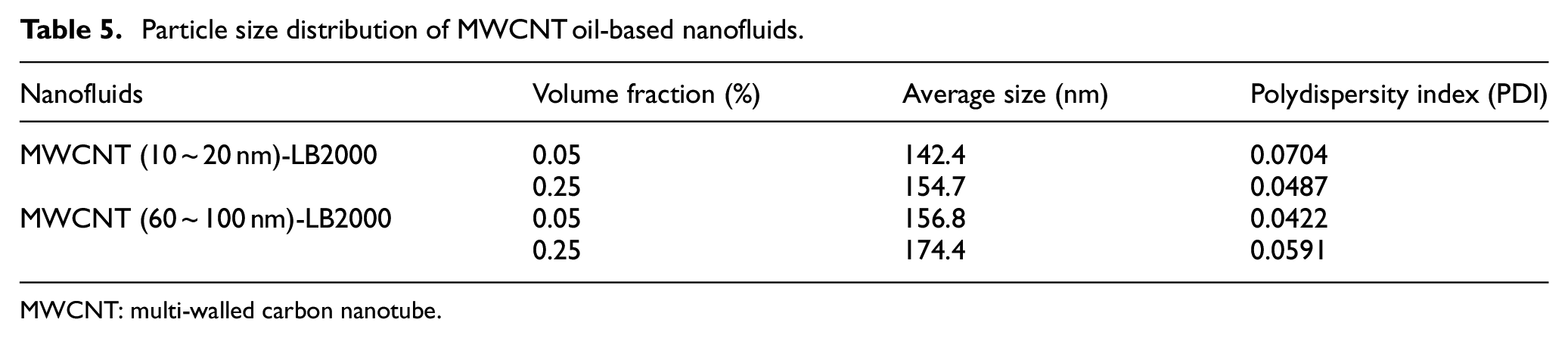
MWCNT: multi-walled carbon nanotube.
Figure 3 shows the FTIR spectra of LB2000 vegetable-based oil and MWCNT-LB2000 nanofluids. As shown in Figure 3, the FTIR spectrum of MWCNT-LB2000 nanofluids is almost consistent with that of LB2000 vegetable-based oil, which suggests that the molecular structure of LB2000 vegetable-based oil was not damaged by the added MWCNTs.

FTIR spectra of LB2000 vegetable-based oil and MWCNT-LB2000 nanofluids: (a) LB2000, (b) LB2000 + 0.25 vol% MWCNT (10 ~ 20 nm), and (c) LB2000 + 0.25 vol% MWCNT (60 ~ 100 nm).
Effect of CNTs on friction-reducing property of vegetable-based oil
Figure 4 shows a plot of friction coefficient against friction time for various lubrication conditions. It can be found from Figure 4 that under dry friction condition, the friction coefficient decreased at the beginning of test, then increased, eventually stabilized. Furthermore, the experimental results under dry friction condition also showed a lower friction coefficient at a high normal force than that at a low normal force. This may be due to the formation of oxide film caused by high temperature during the friction process with a high normal force. The friction coefficient for LB2000 vegetable-based oil with or without CNTs decreased gradually and then reached a steady value. As expected, the friction coefficient was less with application of LB2000 vegetable-based oil with or without CNTs compared to dry friction. As shown in Figure 4, the friction coefficient in case of LB2000 vegetable-based oil containing MWCNTs (60 ∼ 100 nm) with the volume fraction of 0.05% was higher or slightly lower than that in case of LB2000 vegetable-based oil. However, application of LB2000 vegetable-based oil with 0.05 vol% MWCNTs (10 ∼ 20 nm) presented lower friction coefficient than pure LB2000 vegetable-based oil on the whole friction time. These phenomena illustrated that the size of CNTs played an important role in reducing the friction coefficient. By comparing Figure 4(a) with Figure 4(b), it can be evidently seen that in case of vegetable-based oil and vegetable-based oil containing CNTs, the friction coefficient showed an obvious tendency to increase with the increase in normal force.

Friction coefficient against friction time for various lubrication conditions: (a) F = 2 N and (b) F = 10 N.
Figure 5 shows average friction coefficient variation with volume fraction of nanoparticles with different size. As can be seen in Figure 5, compared with MWCNT (60 ∼ 100 nm), MWCNT (10 ∼ 20 nm) used as LB2000 vegetable-based oil additive seemed more effective to reduce the average friction coefficient. Moreover, when adding 0.05 vol% MWCNTs (10 ∼ 20 nm) to LB2000 vegetable-based oil, the average friction coefficient dropped to the minimum value regardless of normal force. With further addition of CNTs (10 ∼ 20 nm), the average friction coefficient displayed a clear tendency to increase. At the normal force of 2 and 10 N, the maximum reduction in average friction coefficient with respect to LB2000 vegetable-based oil was 24.71% and 23.89%, respectively, which could be obtained using MWCNT-LB2000 nanofluids with 10 ∼ 20 nm MWCNTs with the volume fraction of 0.05%.

Variation of average friction coefficient with volume fraction of nanoparticles with different sizes: (a) F = 2 N and (b) F = 10 N.
As a comparison, the influence of nanographite on the average friction coefficient 17 under the same conditions is also given in Figure 5. It can be found that LB2000 vegetable-based oil with MWCNTs (60 ∼ 100 nm) represented higher average friction coefficient than that with nanographite at equivalent volume fraction, regardless of normal force. This trend may be ascribed to the fact the fibrous MWCNT agglomerated more easily than spherical nanographite, which was already found by Hwang et al. 18 At lower load (normal force of 2 N), the average friction coefficient under the LB2000 vegetable-based oil containing MWCNT (10 ∼ 20 nm) was lower than that under the LB2000 vegetable-based oil containing nanographite at the volume fraction of 0.05%, whereas the tendency was contrary at the volume fraction of 0.25%, which might be associated with the agglomeration of MWCNTs (10 ∼ 20 nm) at high concentration, as was confirmed by the following SEM and EDS analysis. At higher load (normal force of 10 N), LB2000 vegetable-based oil with MWCNTs (10 ∼ 20 nm) showed generally lower average friction coefficient than that with nanographite due to the superior mechanical and self-lubricating property of MWCNTs.
Effect of CNTs on wear-reduction capability of vegetable-based oil
Figure 6 provides the optical micrographs of wear scar depth (h) of disks for various lubrication conditions. As shown in Figure 6, the wear scar depth of disks lubricated by vegetable-based oil containing CNTs was shallower than that lubricated by pure LB2000 vegetable-based oil irrespective of particle size and normal force. Furthermore, when the volume fraction was the same, thin and short MWCNTs (10 ∼ 20 nm) used as LB2000 vegetable-based oil additive presented a shallower wear scar depth than thick and long MWCNTs (60 ∼ 100 nm), which was explained in section “Lubrication mechanism of CNTs as vegetable-based oil additive.” At the normal force of 2 and 10 N, the maximum reduction in wear scar depth of disks relative to pure LB2000 vegetable-based oil was 14.36% and 15.69%, respectively, which could be achieved using 0.05 vol% MWCNTs (10 ∼ 20 nm) as LB2000 vegetable-based oil additive. In addition, it can also be evidently seen from Figure 6 that with the increase in normal force, the wear scar depth of disks increased regardless of lubrication conditions, which was expected according to the general law of wear.

Optical micrographs of wear scar depth of disks for various lubrication conditions: (a) and (b) pure LB2000 vegetable-based oil, (c) and (d) LB2000 vegetable-based oil containing 0.05 vol% MWCNTs (10 ~ 20 nm), and (e) and (f) LB2000 vegetable-based oil containing 0.05 vol% MWCNTs (60 ~ 100 nm)—(a) F = 2 N, h = 19.5 µm; (b) F = 10 N, h = 51.0 µm; (c) F = 2 N, h = 16.7 µm; (d) F = 10 N, h = 43.0 µm; (e) F = 2 N, h = 18.0 µm; and (f) F = 10 N, h = 43.0 µm.
Worn surface analysis
Figure 7 shows the FE-SEM morphologies of wear scars of disks for various lubrication conditions. As shown in Figure 7, the wear scars were rough under dry friction condition, characterized by deep furrows and obvious adhesions (Figure 7(a) and (b)). The slightly smooth morphologies could be observed on the surfaces of wear scars lubricated with pure LB2000 vegetable-based oil (Figure 7(c) and (d)). The addition of 0.05 vol% CNTs to vegetable-based oil presented more smoother wear scars than pure LB2000 vegetable-based oil (Figure 7(c)–(h)). Moreover, the furrows on the surfaces of wear scars were shallower and slender in case of LB2000 vegetable-based oil containing CNTs than those in case of pure LB2000 vegetable-based oil (Figure 7(c)–(h)). SEM images of worn surfaces in Figure 7 indicate that abrasive wear and adhesive wear were the dominant wear mechanism of disk under the lubrication conditions employed in this study.

FE-SEM morphologies of wear scars of disks for various lubrication conditions (500×): (a) and (b) dry friction, (c) and (d) pure LB2000 vegetable-based oil, (e) and (f) LB2000 vegetable-based oil containing 0.05 vol% MWCNTs (10 ~ 20 nm), (g) and (h) LB2000 vegetable-based oil containing 0.05 vol% MWCNTs (60 ~ 100 nm)—(a) F = 2 N, (b) F = 10 N, (c) F = 2 N, (d) F = 10 N, (e) F = 2 N, (f) F = 10 N, (g) F = 2 N, and (h) F = 10 N.
Lubrication mechanism of CNTs as vegetable-based oil additive
In case of pure LB2000 vegetable-based oil lubrication condition, the bottom of pin tends to contact directly with the surface of disk due to the fact that the pure oil cannot play a good lubrication performance under continued pressure for a long time. When adding MWCNTs to vegetable-based oil, the nanoparticles can prevent the bottom of pin from contacting directly with the disk because MWCNTs can fill up the valleys of surface asperities. As a result, the pressure can be distributed over a larger contact area. So, the wear of disk decreases.
In case of using an appropriate amount (e.g. the volume fraction of 0.05%) of thin and short MWCNTs as vegetable-based oil additive, MWCNTs can penetrate into the valleys of friction surfaces easily and roll between two rubbing surfaces effectively, thus resulting in the reduction in friction (Figure 5) by playing a similar “roller bearing” effect. When the volume fraction of thin and short MWCNTs increases from 0.05% to 0.25%, large agglomerates are observed on the surface of wear scar of disk (Figure 8). The corresponding EDS spectra are shown in Figure 8. The content of carbon (C) in the area a is much higher than that in the area b. Furthermore, Raman spectroscopy in the area a is provided in Figure 9. As can be seen clearly in Figure 9, the G and D modes are at about 1585 and 1342 cm–1, indicating that the agglomerates mainly consist of thin and short MWCNTs. The agglomerates disturb the lubrication of LB2000 vegetable-based oil, thereby increasing the friction coefficient (Figure 5).
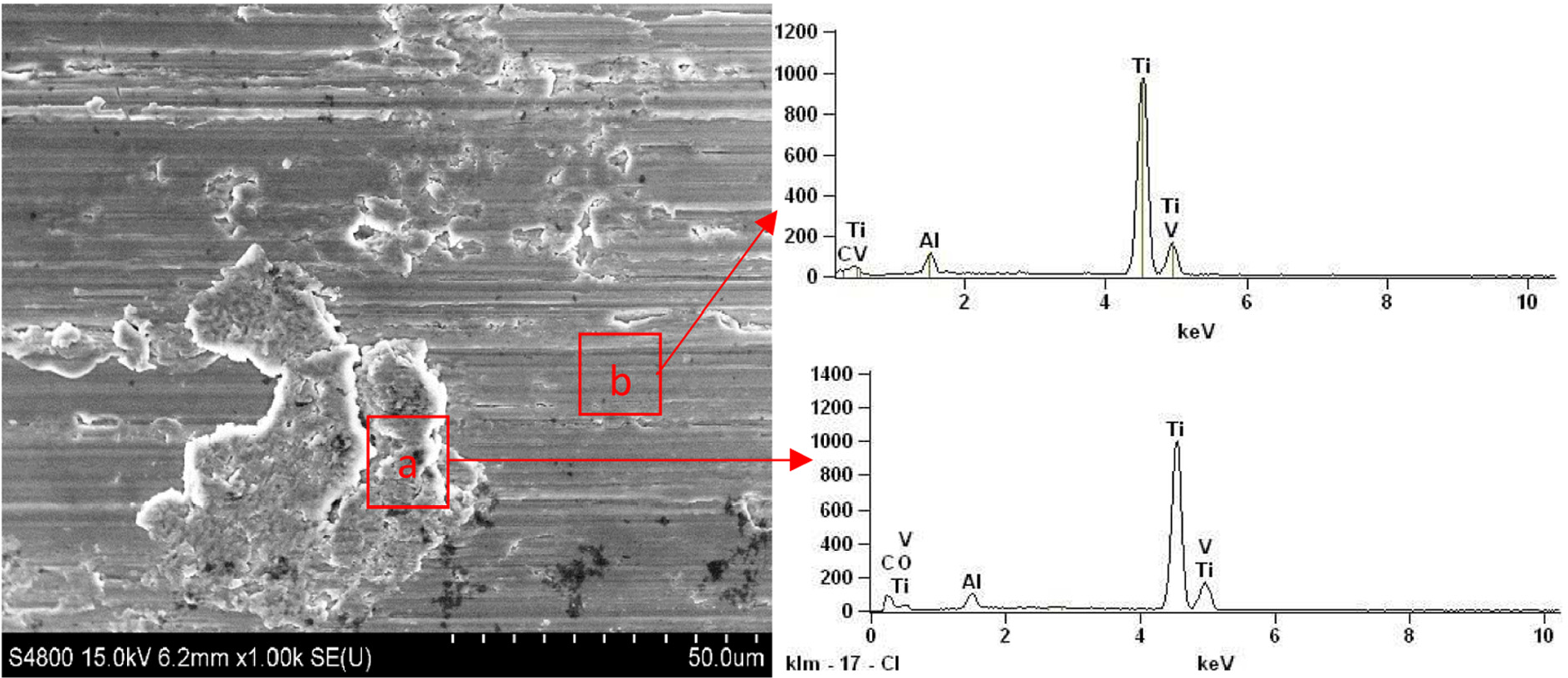
SEM image and EDS analysis of agglomerates on the surface of wear scar of disk lubricated with LB2000 vegetable-based oil containing 0.25 vol% MWCNTs (10 ~ 20 nm).

Raman spectrum of agglomerates in the wear scar of disk.
As shown in Figure 10, in case of LB2000 vegetable-based oil containing thick and long MWCNTs, MWCNTs tend to get entangled during the friction. As a result, MWCNTs agglomerate at the pin-disk interface, which leads to abrasive wear on the friction surfaces and the interlocking of nanoparticles, consequently increasing the resistance for relative motion between pin and disk. This demonstrates the increase in friction coefficient and wear scar depth of disk with respect to the addition of thin and short MWCNTs to vegetable-based oil, even pure vegetable-based oil (Figures 5 and 6).
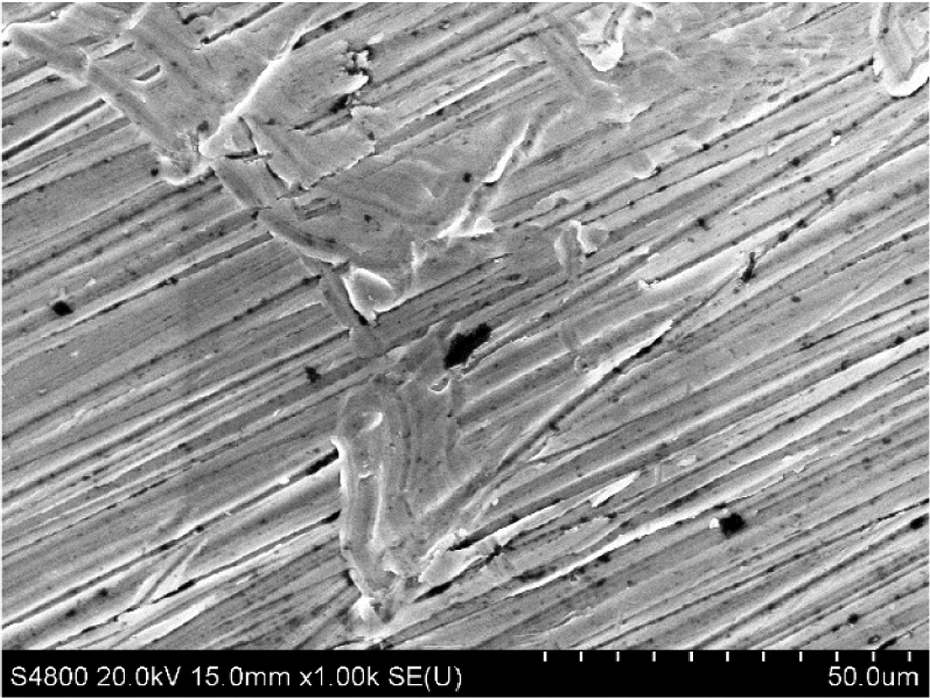
SEM image of MWCNT winding on the surface of wear scar of disk lubricated with LB2000 vegetable-based oil containing 0.05 vol% MWCNTs (60 ~ 100 nm).
The improvement of MWCNTs on the friction-reducing and wear-reduction capabilities of vegetable-based oil may associate possibly with forming a tribofilm. As pointed out by Chauveau et al. 19 and Kogovšek and Kalin, 20 the tribofilm cannot adhere to the surface strongly when using CNTs as additive. In addition, the friction coefficient under the LB2000 vegetable-based oil containing thin and short MWCNTs of high concentration and thick and long MWCNTs was even higher than that using pure LB2000 vegetable-based oil (Figure 5). Therefore, it seems that as vegetable-based oil additive, the rolling effect of MWCNTs plays a great role in the friction-reducing and wear-reduction capabilities, rather than the tribofilm.
Conclusion
In this work, the effect of MWCNTs with different sizes and volume fractions on the tribological properties of LB2000 vegetable-based oil has been studied. The results are summarized as follows:
The MWCNTs were well dispersed in LB2000 vegetable-based oil through sonication. And the molecular structure of LB2000 vegetable-based oil was not destroyed after the dispersion of MWCNTs. Thus, the use of MWCNTs in LB2000 vegetable-based oil was viable.
As LB2000 vegetable-based oil additive, the size and volume fraction of MWCNTs have an important influence on the tribological properties of MWCNTs. The friction coefficient and wear scar depth of disk were less with application of thin and short MWCNTs as vegetable-based oil additive compared to thick and long MWCNTs. The optimal volume fraction of thin and short MWCNTs was 0.05% for the improvement of friction-reducing and anti-wear properties of vegetable-based oil.
As LB2000 vegetable-based oil additive, nanographite showed better tribological properties than thick and long MWCNTs. At high load, thin and short MWCNTs improved the friction-reducing property of vegetable-based oil more than nanographite.
The addition of MWCNTs in LB2000 vegetable-based oil reduced the abrasive wear and adhesive wear, which was the principal wear mechanism of disk, thus making the morphologies of wear scars smoother. Furthermore, the furrows on the surfaces of wear scars became shallower and slender in case of LB2000 vegetable-based oil containing MWCNTs than those in case of pure LB2000 vegetable-based oil lubrication.
Lubrication mechanism of MWCNTs as vegetable-based oil additive might mainly be that in case of an appropriate amount of thin and short MWCNTs as additive, MWCNTs could penetrate into the valleys of surface asperities and roll between two friction surfaces effectively, playing a similar “roller bearing” effect. In case of thick and long MWCNTs as additive, due to the winding effect, MWCNTs tended to agglomerate and interlock with each other at pin-disk interface, which increased the resistance for relative motion between pin and disk, consequently resulting in the increase in friction coefficient and wear scar depth relative to thin and short MWCNTs as additive, even pure vegetable-based oil.
In further research, more normal loads, rotating speeds, and concentrations of MWCNT are employed to investigate the tribological properties of MWCNTs as LB2000 vegetable-based oil additive in detail.
Footnotes
Handling Editor: Crinela Pislaru
Declaration of conflicting interests
The author(s) declared no potential conflicts of interest with respect to the research, authorship, and/or publication of this article.
Funding
The author(s) disclosed receipt of the following financial support for the research, authorship, and/or publication of this article: The authors acknowledge the financial support by the China Postdoctoral Science Foundation (2017M610303), National Natural Science Foundation of China under contract no. 51205177, Natural Science Foundation of Jiangsu Province under contract nos BK2012277 and BK20171307, Natural Science Program for Basic Research of Jiangsu Province under contract no. 08KJB460002, and Research Fund of DML-HYIT (HGDML-0901).
