




Abstract
Reasonable travel cooperation cost allocation is the premise of promoting travel cooperation. Travel cooperation is the premise of relieving traffic congestion. From the perspective of cooperation, the connotation and basic principle of travel cooperation cost allocation are analyzed. Also the basic condition and specific allocation method of travel cooperation cost allocation are discussed. Travel cooperation cost allocation model is established according to travel cooperation level. The reasonability of travel cooperation cost allocation method and traveler acceptance level on allocation method are analyzed through questionnaire survey. The condition of travel giving preference to public transit is analyzed. The survey result shows that travel cooperation cost allocation method is reasonable and feasible.
Introduction
Travel cooperation refers that travelers cooperate with each other for initiatively reducing car use in order to relieve traffic congestion. Travel cooperation cost allocation refers that when travelers cooperate with each other, traveler should pay corresponding cooperation cost according to travel cooperation level. Travel cooperation cost includes travel economic cost, travel time cost, and travel comfort cost. Travel cooperation cost allocation is the premise of promoting travel cooperation and alleviating traffic congestion.
A Kimms and I Kozeletskyi 1 discussed the cost allocation for cooperative traveling salesman problem. The core concept is used to determine cost allocation and cooperative game theory is adopted. A priori calculation of cost allocation sin problems with rolling horizon can be solved by this optimization approach. B Maria and K Ida 2 analyze the traffic effects of the Gothenburg congestion charges introduced in 2013. Congestion charges can reduce traffic volume. Congestion charges change the travel cost between car and public transit, which influences travel mode choice. But there are many factors that should be considered. G Hugh 3 discusses on spatial and temporal transferability of relationships between travel demand, trip cost, and travel time. X Yu and F Daisuke 4 discuss misperceived travel time variability. The misperceived travel time variability can change travel cost. Therefore, scheduling model should be modified and rank-dependent utility theory is adopted. The value of travel time variability is increased because of misperception. The results show that travel will change their departure time. The distribution of the extra cost of misperceiving travel time is analyzed. TW Blaine et al. 5 studied on the sources of sensitivity of consumer surplus estimates in travel cost models. Y Yang et al. 6 discussed on the utilitarian walking based on travel cost. An agent-based model of utilitarian walking is constructed. Spatial and socioeconomic factors affecting adult utilitarian walking are analyzed by this model. Travel costs and various educational interventions aimed at changing attitudes can alter the prevalence of walking. DA Hensher et al. 7 discussed on the value of expected travel time savings. The impact of travel time variability on travel decision making is analyzed. The limitations of stated choice experiments are emphasized. A return to a revised focus on revealed preference data is suggested. In P Stefanie et al., 8 the travel time variability is predicted from the point of cost–benefit analysis. Simple rules to predict travel time variability are proposed. P Jeong-Yeol and J Soo Cheong 9 studied on the sunk costs and travel cancellation from the point of temporal cost. Temporal costs can be changed into monetary costs, but the conversion relationship may not be linear.
But current researches mainly focus on absolute travel cost, which include travel economic cost, travel time cost, and travel comfort cost with different travel modes. Regardless of travelers’ personal travel mode structure, the travel cost for a travel is same when traveler uses a certain travel mode, such as the travel economic cost for a travel is same as long as congestion fee and parking fee standard are determined. Current researches mainly focus on how to determine one-time congestion fee and parking fee standard which are not associated with usage amount. Also there many researches on externality cost of car use, for example, C Nicolas and P André de 10 investigated the cost of travel time variability for car users at the peak hour. The marginal social cost of travel time variability is discussed. In contrast with the value of travel time variability, travel cooperation cost allocation is not analyzed from the perspective of cooperation.
There are many related researches on cooperative game and cost allocation. MG Fiestras-Janeiro et al. 11 discussed a new allocation rule in order to improve inventory transportation systems. The new allocation rule is average of the marginal vectors with an extreme agent first (AMEF) value. It is confirmed that AMEF value makes core allocations under suitable conditions. L Kru and P Bronisz 12 proposed cost allocation process based on pricing mechanism and on different solution methods. S-L Li 13 discussed the joint costs between airports and airlines with a new allocation approach adopted. A El-Geneidy et al. 14 provided new accessibility measures that include travel time and transit fares based on point of the cost of equity. L Engelson and M Fosgerau 15 discussed the relationships between three types of measures of the cost of travel time variability. L Sun et al. 16 proposed a contribution constrained packing model for considering multiple fairness criteria on cost allocation. They introduced five fairness criteria in order to identify the objective and different cost allocation methods are evaluated.
It is obvious that how to conduct travel cost allocation among travelers with different travel mode structure from the perspective of promoting travel cooperation, that is, from the perspective of promoting travelers to initiatively reduce car use, is not analyzed. At the same time, travel cost allocation among travelers is not analyzed from the perspective of the equitable allocation of road right.
Travel cooperation requires travelers are willing to initiatively reduce car use. The purpose of travel cooperation cost allocation is to determine how much cost should be paid for each travel with a certain travel mode based on the equitable allocation of road right and travel mode structure in order to promote travel cooperation for alleviating traffic congestion.
Therefore, it is very necessary to conduct research on travel cooperation cost allocation. The research has realistic and important meaning.
The connotation and allocation principle of travel cooperation cost
The formation process of travel cooperation is game process. Travelers adjust their travel cooperation level according to travel cooperation cost. For traveler with higher cooperation level, if actually paid cost is higher than should paid cost, they will reduce cooperation level. In order to enhance cooperation level, the higher the cooperation level, the lesser the cooperation cost should be paid, and the lower the cooperation level, the more the cooperation cost should be paid. Travel cooperation level refers to the public transit proportion of all travel modes.
The connotation of travel cooperation cost
The similarities and differences between travel cooperation cost and travel cost must be defined before travel cooperation cost allocation. Travel cost is direct travel cost without considering travelers cooperation level, which includes travel economic cost, travel time cost, and travel comfort cost. But travel cooperation cost is the cost with considering travelers cooperation level, which is allocated based on equity and cooperation level. The approach of travel cooperation cost allocation includes adjusting travel economic cost and travel time cost based on travel cooperation level.
The principle of travel cooperation cost allocation
There are multi-travel cooperation levels which travelers can choose, therefore travel cooperation can be regarded as multiple-choice cooperation game. Travelers with same level of travel cooperation should pay same travel cooperation cost. That is the same travel cooperation cost should be allocated for travelers with same travel cooperation level.
The principle of travel cooperation cost allocation is analyzed from cooperation game perspective. In order to make traveler to cooperate with each other, the travel cooperation cost of traveler with higher cooperation level should be less than the travel cooperation cost of traveler with lower cooperation level. This principle can be described as following mathematic model.
Here, the total number of traveler is


Meanwhile

The above model is the principle of travel cooperation cost allocation.
The basic condition of travel cooperation cost allocation
The nature of travel cooperation cost allocation is travel intervention. The nature of travel intervention is to intervene with travelers’ travel mode structure. In order to ensure that travel intervention can be accepted by traveler, travel intervention should be equitable and reasonable based on meeting essential demand of each travel mode for each traveler, also each traveler has the right of equally using travel space-time resource. Therefore, the basic condition of travel cooperation cost allocation is the equitable allocation of travel space-time resource among travelers. That is, for each travel mode, each traveler has the right to use same amount space-time resource and the basic demand for each travel mode should be met. Here, basic demand refers to the minimum demand of traveler needs to use each travel mode.
It is important to allocate same travel space-time resource for each traveler. Then, traveler has the right of how to use the allocated space-time resource. Traveler should pay more cost when the space-time resource of actual use exceeds allocated space-time resource. Traveler should pay less cost when the space-time resource of actual use is under allocated space-time resource. Based on the equitable allocation of travel space-time resource, travel cooperation cost allocation focus on the standard of paying more cost and paying less cost according to the actual use of travel space-time resource. This standard is related to actual use of travel space-time resource.
Therefore, the basic condition of travel cooperation cost allocation is the equitable allocation of travel cooperation cost based on meeting traveler basic demand for each travel mode. Meeting traveler basic demand for each travel mode is very important.
The allocation method of travel space-time resource is as follows: the travel mode structure is decided by traveler acceptance level, and the expected travel speed of each travel mode is determined. Then, travel space-time resource of each travel mode can be allocated. Travel space-time resource of each traveler also can be allocated according to travel space-time resource of each travel mode and traveler amounts.
The method of travel cooperation cost allocation
The basic thought of travel cooperation cost allocation
The using resource during travel is travel space-time resource. Travel cooperation cost allocation must be directly related to the usage amount of travel space-time resource. Travel gain is relative gain. Travel gain is extra gain of traveler obtained when traveler uses more travel space-time resource, which exceeds constraint travel space-time resource, with the enhancement of mean travel service level in all travel, especially saving travel time and the enhancement of travel comfort in all travel. That is, when the usage amount of travel space-time resource is same, traveler should pay same travel cooperation cost and their extra gain is 0. The same usage amount of travel space-time resource means same travel cooperation level. When the travel cooperation level among travelers is different, the relatively extra gain among travelers is formed. Relatively extra gain includes positive gain and negative gain. Corresponding cost should be paid for relatively extra gain. This payment should be based on the allocation equity between cost and gain. The travel with positive extra gain should pay for the travel with negative extra gain, which is reasonable from equal point.
The methods of travel cooperation cost allocation include cost allocation method with same cooperation level and cost allocation method with different cooperation levels. Because there is remarkable difference among travelers, the research of this article is mainly on cost allocation method with different cooperation levels. The cost allocation between traveler with higher cooperation level gaining extra paid cost caused by the traveler with lower cooperation level and traveler with lower cooperation level gaining extra positive gain caused by the traveler with higher cooperation level is only analyzed.
The key of travel cooperation cost allocation with different cooperation levels is the allocation of extra obtained gaining and extra paid cost among travelers with different cooperation levels. The basic allocation model is shown in Figure 1.
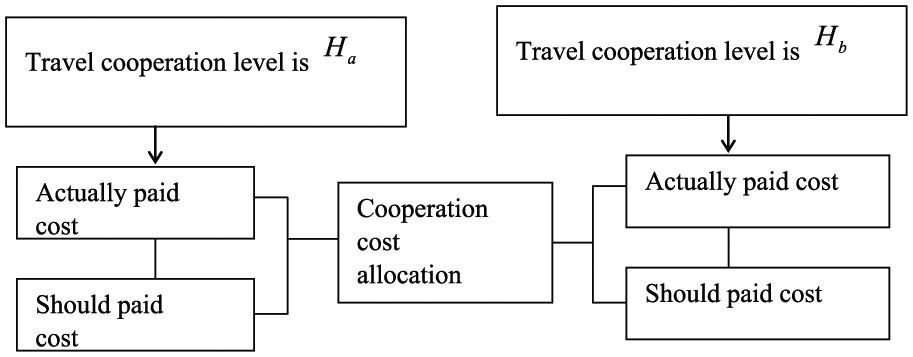
The basic model of travel cooperation cost allocation (
For traveler with travel cooperation level
Therefore, travel cooperation cost should be allocated according to travel cooperation level from above basic model. Paid cost in model includes economic cost, time cost, and comfort cost. Obtained gaining in the model is equal to should paid cost subtracting actually paid cost.
Cost allocation model of different cooperation level
Suppose that all travelers have same travel origin-destination (OD), with same travel distance
When the actual using car amount of each traveler exceeds allowed using amount, the parking cost for each park of exceeding allowed using amount is

When the using car amount of each traveler are
From the point of traffic demand management, corresponding car using amount is determined by expected travel speed, therefore

According to model

When the using car amount of each traveler is basic demand number, the corresponding traffic flow density is

In order to simplify analysis, all travelers are divided into three categories according to basic demand, allowed using amount, and exceeding allowed using amount. The traveler proportion of each category is, respectively,

Corresponding traffic flowing speed is shown as following model

Then, travel time of using car is
When traveler using car amount is basic demand, travel time of using car is
When traveler using car amount is equal to allowed using amount, travel time of using car is
The more or less paid cost of each traveler with corresponding travel cooperation level
First, the time difference between travelers actual travel time and travel time of should paid will be analyzed and calculated according to different cooperation levels or different car using amount.
Travelers who use car according to basic demand
For these travelers, the actual travel time of using car is

In the same way, the actual travel time of using public transit exceeds should paid travel time of using public transit, and the exceeding time is shown as following model

Meanwhile, the amount of using public transit is
For travelers who use car according to basic demand, the more paid time caused by travelers who use car with exceeding basic demand is shown as following model

Time cost per time is

Because the comfort of using public transit is lower than using car, the time increasement of using public tansit causes comfort cost increasement. Comfort cost per time of using public transit is

Travelers who use car according to allowed using amount
For these travelers, the actual travel time of using car is

In the same way, the actual travel time of using public transit exceeds should paid travel time of using public transit, and the exceeding time is shown as following model

Meanwhile, the amount of using public transit is
For travelers who use car according to allowed using amount, the more paid time caused by travelers who use car with exceeding allowed using amount is shown as following model

Time cost per time is

Because the comfort of using public transit is lower than using car, the time increasement of using public tansit causes comfort cost increasement. Comfort cost per time of using public transit is

Travelers who use car exceeding allowed using amount
For these travelers, the actual travel time of using car is

In the same way, the actual travel time of using public transit is less than should paid travel time of using public transit, and the decreasing time is shown as following model

Meanwhile, the amount of using public transit is
For travelers who use car according to exceeding allowed using amount, the less paid time caused by travelers who use car with allowed using amount or basic demand is shown as following model

Time cost per time is

Because the comfort of using public transit is lower than using car, the time increasement of using public tansit causes comfort cost increasement. Comfort cost per time of using public transit is

From the above analysis, it is obvious that the traveler with lower cooperation level gain benefit, and the traveler with higher cooperation level pay extra cost. Specific game matrix is as shown in Table 1.
Game matrix of different cooperation levels.

The above game matrix is clearly not stable. If there is no intervention, traveler will inevitably reduce cooperation level until entire traffic system become server congestion. The natural evolution result is that all travelers will not cooperate with each other.
The key reason of above result lies in un-eq25 and unreasonable paid travel cost among travelers with different cooperation levels, which results in unwilling to cooperate with each other. Therefore, in order to promote cooperation, reasonable and equity travel cooperation cost allocation should be realized based on the precondition of cooperation. As travel cooperation cost allocation, the traveler should pay economic cost for extra gaining benefit because of their lower cooperation level. This paid economic cost will be allocated among travelers with higher cooperation level.
Allocation method adopts the method of prorate allocation. The total extra gaining benefit of all travelers with lower cooperation level will be calculated.
The more or less paid cost of all travelers with corresponding travel cooperation level
First, the total extra paid cost of all travelers using car according to basic demand will be calculated and then the total extra paid cost of all travelers using car according to allowed amount will be calculated.
The total extra paid cost of all travelers using car according to basic demand is calculated as following model
The traveler number of using car according to basic demand during peak period is

2. The total extra paid cost of all travelers using car according to allowed using amount is calculated as following model
The traveler number of using car according to allowed using amount during peak period is

3. The total extra gaining benefit of all travelers using car exceeding allowed using amount is calculated as following model
The traveler number of using car exceeding allowed using amount during peak period is

The cost allocation method among travelers with different travel cooperation levels
The following is the allocation method of extra gaining benefit. The extra gaining benefit allocated for all travelers of using car according to basic demand is as follows

The extra gaining benefit allocated for each traveler of using car according to basic demand is as follows

The extra gaining benefit allocated for all travelers of using car according to allowed using amount is as follows

The extra gaining benefit allocated for each traveler of using car according to according to allowed using amount is as follows

The paid economic cost allocated for all travelers of using car exceeding allowed using amount is as follows:
The paid economic cost allocated for each traveler of using car according to exceeding allowed using amount is as follows

The paid economic cost allocated for each traveler every time of using car according to exceeding allowed using amount is as follows

The cooperation cost of traveler should paid based on above allocation method
When the above cost allocation is realized, for every travel, the total travel cooperation cost can be calculated as follows:
Traveler using car according to basic demand
The total cost of using car every time is as follows
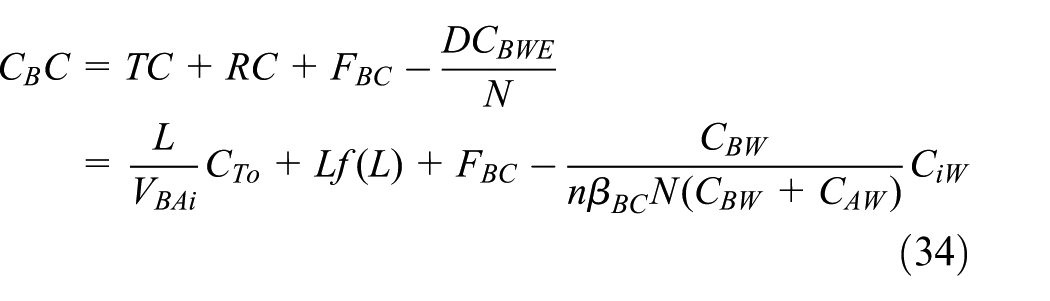
The total cost of using public transit every time is as follows

Traveler using car according to allowed using amount
The total cost of using car every time is as follows

The total cost of using public transit every time is as follows
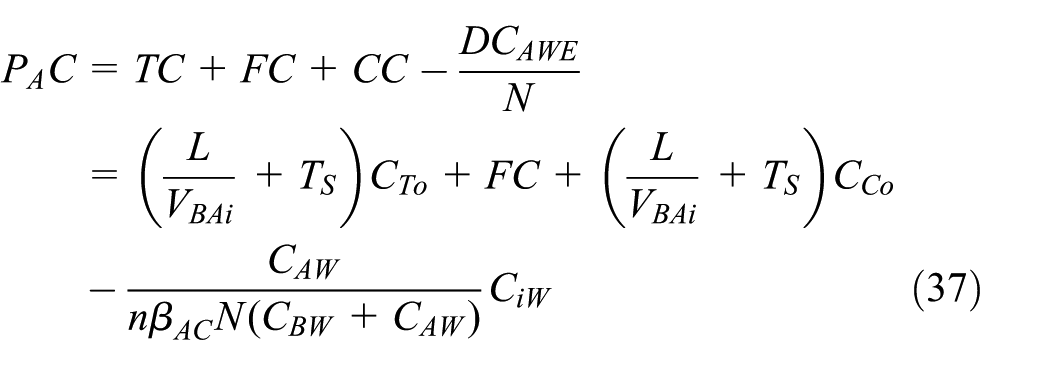
Traveler using car exceeding allowed using amount
The total cost of using car every time is as follows

The total cost of using public transit every time is as follows
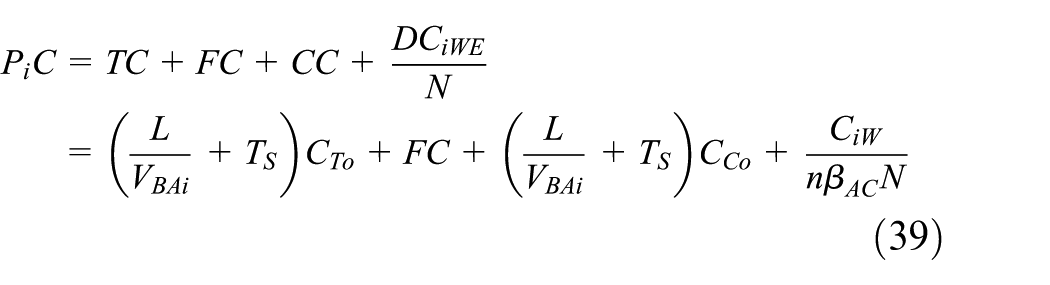
Then, travel cooperation cost can be paid through charge system. The charge system obtains the travel cooperation cost of each traveler should be paid according to the actual car using amount.
Traveler acceptance level analysis
Questionnaire survey is conducted for above travel cooperation cost allocation method. Questionnaire includes the following questions:
Do you think above travel cooperation cost allocation method is reasonable?
(A) very reasonable, (B) relatively reasonable, (C) not reasonable;
Do you accept above travel cooperation cost allocation method?
(A) willing to accept, (B) constrainedly accept, (B) can’t accept;
What proportion of the total cost of public transit to the total cost of the car is, you will give preference to select public transit?
(A) 60%, (B) 70%, (C) 80%, (D) 90%, (E) 100%.
Whether traveler own car has significant impact on questionnaire survey result, therefore travelers are classified into two categories. Traveler own car and travel and traveler don’t own car.
The number of effective questionnaire is 190 and the survey result is shown in Table 2.
Survey result.

Through above analysis, the proposed travel cost allocation method in this article is feasibility and it can promote travel cooperation level.
Conclusion
From the perspective of cooperation, the connotation and basic principle of travel cooperation cost allocation are analyzed. Also the basic condition and specific allocation method of travel cooperation cost allocation are discussed. Travel cooperation cost allocation focus on the travel cost allocation among travelers with different cooperation levels. The basic principle of travel cooperation cost allocation is that traveler with same cooperation level should be allocated for same travel cost, and the higher the cooperation level, the lesser the travel cost should be allocated. The basic condition of travel cooperation cost allocation is the equitable and reasonable distribution on travel space-time resource among all travelers. The specific allocation method is as follows. First, the extra gaining benefit produced by higher cooperation level traveler of lower cooperation level traveler should be determined. Also the extra paid cost caused by lower cooperation level traveler of higher cooperation level traveler should be determined. Second, the extra gaining benefit of lower cooperation level traveler is prorate assigned for higher cooperation level travelers in order to reduce or eliminate the extra paid cost of higher cooperation level traveler.
The reasonability of travel cooperation cost allocation method and traveler acceptance level on allocation method are analyzed through questionnaire survey. At the same time, the condition of travel giving preference to public transit is analyzed. The survey result shows that travel cooperation cost allocation method is reasonable and feasible. Research result provides for traveler initiative to reduce car use with practical and feasible travel intervention theoretical foundation.
This research about travel cooperation cost allocation is improved based on traditional cost allocation method, and the determination method of travel cooperation cost is different from the determination method traditional cost.
The main contribution of this article is to promote travel cooperation level through travel cooperation cost allocation. With cooperation level gradually enhancing, traffic congestion will be solved.
However, the allocation method of travel space-time resource and application can be further discussed in future research.
Footnotes
Academic Editor: Xiaobei Jiang
Declaration of conflicting interests
The author(s) declared no potential conflicts of interest with respect to the research, authorship, and/or publication of this article.
Funding
The author(s) disclosed receipt of the following financial support for the research, authorship, and/or publication of this article: This research was sponsored by Beijing Natural Science Foundation (No. 8131001) and National Natural Science Foundation of China (No. 51408288).