




Abstract
Latent heat storage with phase change material is a superior way of storing thermal energy because of its high thermal storage density, isothermal nature of the storage process, and easy control. In recent years, latent heat storage systems have been increasingly used in building energy conservation, solar heating systems, and waste heat recovery systems. The water tank as a key component of solar heating systems has been widely applied in practical applications. This article first reviews the research on the water tank integrated with phase change material in terms of existing research methods and heat transfer enhancing technologies and then summarizes the applications of various phase change material–based water tanks. Finally, the further research suggestions on the phase change material–based water tank are proposed in this article. The successful completion of this review will not only deepen the understanding on the research development of phase change material–based water tank but also promote practical applications of such water tanks in solar heating systems.
Keywords
Introduction
As a country with high-speed economy development and large amount of energy consumed per year, China has to face the issue of energy shortage and increasing environmental pollution. It can effectively alleviate resource pressure and reduce environmental pollution simultaneously if primary energy is replaced by clean energy. As a representative of clean energy, solar energy has become a central issue in the field of energy development and utilization. The advantage of solar heating is clean and safety, while the disadvantage is the instability and the offset of hourly radiation and building load characteristics. Therefore, extra heat storage water tank is needed to store energy, but the traditional heat storage tank has issues of occupying a large area and serious heat loss. If encapsulated phase change material (PCM) is added into heat storage water tank, it can not only reduce the volume of water tanks but also absorb and release heat continuously because PCM can transfer heat stably, besides it can avoid the disadvantage of water boiling in the tank and temperature falling too fast during night. However, the disadvantages of low coefficient of thermal conductivity are shared by PCMs, causing that the heat transfer efficiency of thermal storage unit with PCM is low during heat charging and discharging, and the heat is often unable to be stored and released quickly. So, how to enhance its heat transfer capacity has become a hot area of research for scholars. This article expounds research methods of water tank with PCM, research progress of PCM, and heat transfer enhancement technologies in detail and summarizes types and the application achievement of water tank with PCM. It indicates the further research direction of water tank with PCM ultimately. It is of great significance to improve the utilization of solar energy resources.
Research methods
The methods frequently used have combined experimental tests and software simulations. The experimental test is generally unable to complete tests of all the control groups of different parameters because of the condition limitation, so the methods of software simulation are utilized to achieve the investigation of all control groups. The common simulation methods are programming software (i.e. MATLAB, VB, FORTRAN) and computational fluid dynamics (CFD).
Bansal and Buddhi 1 presented the analysis of a PCM collector-cum-storage system resulting in the Hottel–Whillier–Bliss (HWB)-type equations in 1992. The numerical results show that a PCM collector-cum-storage system has definite advantages over a system that has a separate collection and a separate storage unit. Esen and Ayhan 2 in 1996 investigated the performance of a solar-assisted cylindrical energy storage tank and conducted numerical calculations using the Gauss–Seidel iteration process. Results show that the PCM, cylinder radius, the mass flow rate pumps, and the inlet temperature of the heat transfer fluid (HTF) must be selected carefully in order to optimize the performance of the tank, and the numerical results are validated with experimental data. In 2002, Ismail and Henriquez 3 developed a simplified transient one-dimensional model using a finite difference approach and moving grid technique to simulate the process of heat transfer of a latent heat storage (LHS) system of packed bed of spherical capsules filled with PCM and investigated the working fluid entry temperature, the mass flow, as well as the capsule temperature. Guofeng et al. 4 in 2006 introduced a stable solar heating system analysis method named F-Chart and its features with the programming language of mixed VB and Fortran to realize the visualization of F-Chart analysis software and then checked and discussed the example. The example analyzed the system economic efficiency of various auxiliary fuels and the influence of heat collector on the economic efficiency and pointed out the influence of various factors on the total investment of system. Based on phase change heat transfer theory, a mathematical model of flat-plate phase change heat storage tank was established by Juan 5 in 2013. It was calculated by MATLAB with iterative program to obtain some main parameters of the flat-plate phase change heat storage tank, the structure of the heat storage unit, the inlet temperature, the volume flow, the type of the PCMs were discussed regarding the effects on the heat transfer performance.
Tao and Peixue 6 in 2005 established the natural convection model for melting phase change in porous media and conducted two-dimensional (2D) numerical simulation with CFD on it. The numerical results indicate that natural convection is strong on the top of the melting region, and the angle between melting interface and horizon increases with the melting time. Yanping et al. 7 in 2008 used the enthalpy-porosity model and CFD to simulate the melting process of thermal storage slab with a vertical wall of constant temperature, while other sides are adiabatic and investigated the enhanced heat transfer of inverted thermal storage cells during melting as well as the effects of Rayleigh, Stefan number, and aspect ratio of the enclosure. The results manifest that inverting of the enclosure at an appropriate stage during melting results in about 30% increase of the melting rate. The larger the Rayleigh or the smaller the Stefan number, the larger the heat transfer enhancement. Dengjia and Yanfeng 8 in 2010 established and simulated a nodal model of heat storage tank in different conditions with CFD based on the analysis of the nodal model of heat storage tank for solar heating system. Results indicate that the lower the water velocity at the inlet of the pipe, the more obvious the layers, which means the energy-saving effect is better. Fanhan 9 in 2013 established a three-dimensional, nonsteady-state, liquid paraffin phase change thermal storage tank model with CFD. Results demonstrated that within the critical height, the time of heat storage growths with the increasing of the height while the increasing trend will slow down, the increasing trend of heat storage time becomes faster with the increasing of the characteristic length D, the performance of the heat storage unit improves with the increasing of fin number while the improvement ability of fin number is limited. In 2015, Tay and Belusko 10 developed a CFD model to investigate the effect of dynamic melting in a tube-in-tank PCM storage system and analyzed the temperature gradient when HTF mass flow rate of both parallel and counter flow was 0.01 kg/s and the mass flow rates of the PCM were 0.005 and 0.05 kg/s. The results show that the dynamic melting yielded a phase change time reduction of 38.9% and 36.1%, respectively, for parallel and counter flow when the PCM mass flow rate is 0.05 kg/s compared with 0.005 kg/s, which can be concluded that increasing the mass flow rate of the PCM during melting can promote the process of heat transfer. Similarly, as mentioned above, Esen and Ayhan 2 compared two models, in one of which, the PCM is inside the tubes and the HTF flows parallel to it, while in the other one is that the PCM is outside the tubes and the HTF flows parallel to it. As the result of Fluent simulation indicated, the former model is superior.
According to the research results above, although CFD simulation requires powerful computing resources and detailed boundary conditions, its results are comprehensive and dependable if the domain is modeled well with accurate boundary conditions. However, compared with CFD simulation, programming software is an effective way to speed up the calculation process and improve the computation efficiency.
Research progress of PCM for energy storage
The phase change process of PCM depends only on the temperature and can be widely used in the field of heat storage and temperature control.11,12 PCMs are highly concerned due to its high thermal storage density, compacted thermal storage device structure, the approximately isothermal process of heat absorbed and released, and the control and management that are easy to run.
According to the type of PCM, energy storage process could be described as solid–solid, solid–liquid, solid–gas, or liquid–gas. However, liquid–gas and solid–gas processes are not applicable to thermal storage due to their large volume and pressure change during phase change process. Among them, the solid–liquid PCMs are most suitable for thermal energy storage, and this article mainly focuses on it. The solid–liquid PCMs include organic PCMs, inorganic PCMs, and eutectics. A comparison of these different kinds of PCMs is listed in Table 1.13–18 Depending on the phase change temperature of materials, phase change energy storage materials are classified as high-temperature, moderate-temperature, and low-temperature materials. The temperature range of the high-temperature materials is from 200°C to 1000°C, and mostly, the materials are inorganic salts, which are applicable to some special high temperature environment. Low-temperature materials, mainly including inorganic salts, organics, and high polymers, go for the working condition under 200°C. The PCM of this temperature range is commonly used as energy storage materials and is studied for application field mostly, drawing high attention from the people. Solar energy phase change energy storage belongs to low-temperature energy storage. Some substances with potential use as PCM are listed in Table 2.

Some substances with potential use as PCM.

–: not available.
The study of PCM began in the 1960s and 1970s of last century, and the United States has always played a leading role among countries. In the 1960s, NASA began to work on the research about the phase change technology in the field of aerospace.
33
In 1980, Telkes from the United States researched on the thermal performance of inorganic salts such as
Japan and Germany were the second ones to start PCM researches only behind to the United States. In the 1970s, Japan developed a variety of hydrate nitrates, phosphates, calcium chloride, and fluoride inorganic PCM and analysis on their properties. Gawronk and Schröder
37
in 1977 investigated on
In Turkey, San et al.39,40 in 2001 and 2003 investigated charging and discharging characteristics of a large number of fatty acid PCM and their eutectic mixtures. They discussed on the suitability of such materials as thermal storage materials when applied in building envelopes, low-temperature heating, solar systems, and so on.
Researches on PCM in China developed lately but processed rapidly. Li et al.
41
in 1996 conducted the research systematically on the phase diagram, mechanism of nucleation, supercooling issue, and thermophysical properties of inorganic hydrated salts, such as
In order to overcome the shortcomings of the single inorganic or organic PCM, improve the application effect of PCM, and expand its field of application, investigation and development of composite PCM, micro-encapsulated phase change material (MEPCM), or nano-encapsulated phase change material (NEPCM) have become the focuses of thermal storage materials in recent years. For example, the phase transition properties of multifunctional phase change composite materials in which the energy storage can be improved 10% were reported by Chen et al. 44 in 2012. In 2013, Chen et al. 45 produced MEPCM capsules, which contained 90.7% of stearic acid and SiO2 as core and shell materials. Sara et al. 46 synthesized PCM nanocapsules using palmitic acid as core and SiO2 as core and shell materials in the same year.
A good solid–liquid PCM should have the following properties: The latent heat of phase change is large and can store/release more heat in the process of phase change. The phase change temperature is close to the required value, and the fluctuation of phase change temperature is small; with good reversibility of phase transition, it may prevent supercooling and separation phenomenon as much as possible, large thermal conductivity of PCM, small expansion and shrinkage of phase transformation; the PCM has large density and high specific heat capacity, nontoxic and noncorrosive, and raw materials are easy to buy and inexpensive. 47
Most of the inorganic hydrated salts are corrosive, which could cause irretrievable damage to storage containers, 48 and there are disadvantages of supercooling and phase separation during phase change. Solid–liquid types of organic PCMs could leak into their surroundings during heat storage process, which limit its practical application. Studying new PCM such as composite PCM, MEPCM, and NEPCM will become the main investigation direction in future in order to overcome the shortcomings above.
Investigation on water tank unit with PCM
Many forms including filling PCM inside the collector or the solar cooker, combining solar energy with phase change wallboard, and so on49–51 have been conducted in the engineering application of PCM. The countries such as the United States, Germany, and Japan play important roles in composite system of solar energy and phase change energy storage and have done considerable investigations in mathematical analysis, numerical analysis, experimental research, and so on.
In almost all cases, PCM has to be encapsulated; otherwise, the liquid phase would leak out. 52 There are many advantages of encapsulated PCMs, such as increasing heat transfer area, reducing PCMs reactivity toward the outside environment, and controlling the changes in the storage material volume as phase change occurs. 53 The main factors influencing the shape of water tank with PCM are the form of encapsulated PCMs due to its particular function and usage. Huishu et al. 54 in 2010 calculated and compared the heat loss values of heat storage water tanks by the analysis of rectangular, cylindrical, and orbicular water tanks. In addition, the influence of the structural change of different shape water tanks on the heat loss values was discussed and it was conducted that the sequence of the heat loss values of water tanks at the same water temperature: rectangular, cylindrical and orbicular. Zheng et al. 55 in 2016 built an experimental apparatus and developed a numerical model to investigated the influences of 10 different water tank shapes on thermal energy storage capacity and thermal stratification in the static mode of operation under laminar natural convection. Results show that the thermal energy storage capacity is closely related to the surface area of the water tank, and the sphere and barrel water tanks are ideal for thermal energy storage capacity, whereas the cylinder water tank is the least favorable among the different water tank shapes studied.
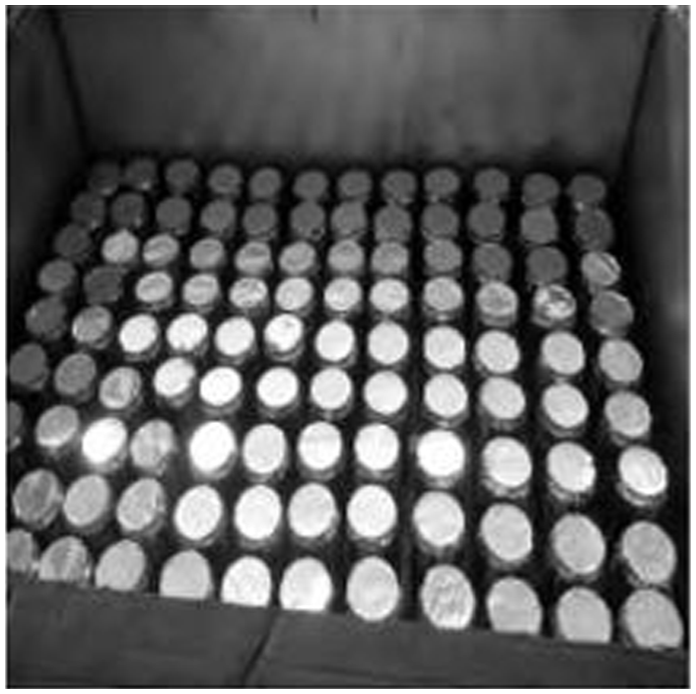
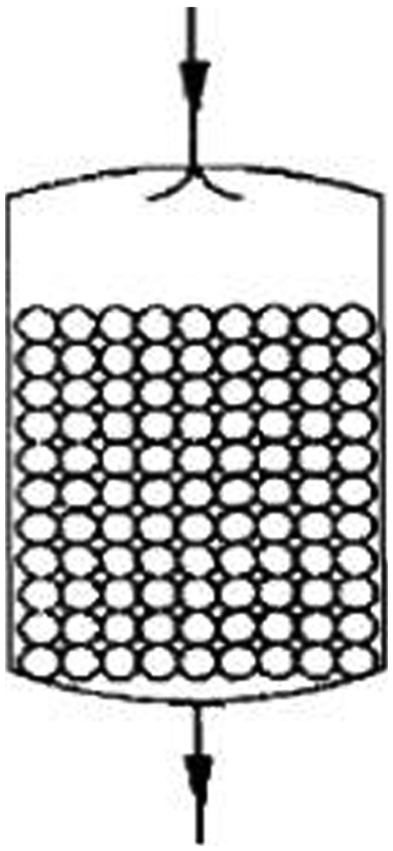
There are three common types of encapsulation: rectangular, cylindrical, and spherical. The rectangular PCM container, 56 the cylindrical PCM container, 57 and the spherical PCM container 58 are shown in Figures 1–3, respectively. Canbazoğlu et al. 59 in 2005 experimentally investigated and compared the rectangular heat storage tank in a conventional open-loop passive solar water-heating system combined with sodium thiosulfate pentahydrate PCM and those of conventional system including no PCM. It was obtained that the storage time of hot water, the produced hot water mass, and total heat accumulated in the solar water-heating system having the heat storage tank combined with PCM were approximately 2.59–3.45 times of that in the conventional solar water-heating system. Wei-Biao et al. 60 in 2011 investigated numerically the fluid flow and heat transfer in a plate-fin unit with a characteristic length of 2 mm used for rapid heat storage/release by paraffin (PCM). Adding a cylindrical PCM module at the top of a hot water storage tank with stratification was proposed by Cabeza et al. 61 in 2006, and the results show that the water tank can store more heat compared with the ordinary water tank. In 2014, Shilin et al. 57 proposed three kinds of designs for solar energy system–assisted dual water tank and discovered that the collection efficiency of the joint work of a water tank with cylindrical PCM and an ordinary water tank is increased from 0.64 to above 0.94, and coefficient of performance (COP) is increased from 2.32 to above 5.00. The relationship between the spherical shell radius and the mass flow rate of shell-and-tube with spherical PCM was summarized, and the best radius of the spherical shell encapsulated PCM in particular flow rate was studied by Lacroix 62 in 1993. Hu 58 in 2010 devised a new spherical hot water storage tank filled with composite PCM for solar water-heating system, and the physical and mathematical model of phase change ball which was used for thermal storage was developed to simulate the effects of fin pitch, fin length, fin thickness, and fluid temperature on charging performances of the latent heat thermal energy storage system (LHTES). The results indicate that the size of the fins and the temperature of the fluid have an important effect on the thermal storage performance of LHTES.

Rectangular PCM container. 56
Cylindrical PCM container. 57
Spherical PCM container. 58
In addition to the three ordinary forms mentioned above, heat exchange coil encapsulated PCM is another way. Ying
63
in 2009 built a store–release device using

External melting PCM box. 63

PCM: phase change material.
For the size of the encapsulated PCM unit, the smaller the geometrical radius of the encapsulated shape, the higher the energy transfer rate. However, if the radius is too small, the unit shell encapsulated PCM will occupy more space, the filling rate of PCM will decrease, and the heat storage will reduce. What is more, the smaller unit with PCM is difficult to be encapsulated, and it cannot be used in a wide range of applications in the short term, hence losing its application value.
In summary, the studies mentioned above remain in the theoretical analysis of the material itself or the performance analysis of the single encapsulation with PCM, and it did not provide a selection principle as well as a variety of package forms of comparison. It brings some difficulties for selecting proper water tank form with PCM and the promotion of the water tank with PCM.
Investigation on heat transfer enhancement of water tank with PCM
Although the PCM has high storage energy density and strong energy storage capacity as well as constant phase change temperature, the shortcoming such as low thermal conductivity is almost universal. Low thermal conductivity will lead to the low heat transfer efficiency of water tank with PCM during heat charging and discharging, and heat is often unable to be stored and released quickly. Therefore, how to strengthen its heat transfer capacity has become a new central issue for scholars to study.
There are several methods to enhance the heat transfer of water tank with PCM. One of them is applying new materials (such as metal,74–76 graphite,77,78 carbon fiber, 79 and nanomaterials80–82) embedded within PCM to improve the heat transfer for thermal energy storage. For example, Mettawee and Assassa 83 in 2007 conducted experiments to investigate the method of enhancing the thermal conductivity of paraffin wax by embedding aluminum powder with the particle size of 80 µm in it. It was found that the charging time was reduced by approximately 60%, and the heat releasing rate was improved by adding aluminum powder in the wax. Composite paraffin/expanded graphite PCM containing 90% (mass fraction) of paraffin was prepared by Zhang 84 in 2009. It is shown that expanded graphite remains in its vermiform structure in PCM, and the latent heat of composite PCM is equivalent to the calculated values based on the mass fraction of paraffin in the composite materials. In the same year, Donghua et al. 85 used metallic foams filled with PCMs to establish a two-temperature model of the difference in the heat transfer between the PCM and the metallic matrix and simulate the temperature distributions as well as flow fields of the PCMs by apparent heat capacity method. It was revealed that the heat transfer of PCMs with metallic foams was greatly enhanced compared with that of PCMs without metallic foams. An experimental investigation on the solid/liquid phase change (melting and solidification) processes and a 2D numerical analysis for heat transfer enhancement in PCMs using metal foams have been carried out by Zhao et al. 86 in 2010. The results show that the effect of metal foam on solid/liquid phase change heat transfer was improved compared to the results of the pure PCM sample, and the temperature distribution in the heat storage unit was more uniform. In the same year, Cui et al. 87 presented the heat transfer performance of a numerical and experimental investigation by filling metal foam in PCM. The result indicates that filling metal foam can make temperature distribution homogeneous, shorten the time of phase change, and increase the efficiency of energy storage. This is consistent with the investigation of Zhao et al. 86
Another method is using metal fins in thermal storage systems, which not only induce the PCM melt along the specific direction but also can strengthen the heat transfer of PCM. Ismail et al. 88 analyzed the heat transfer properties of vertical axially finned isothermal cylinder in 2001. The investigation indicates the strong influence of the annular space size, the radial length of the fin, and the number of fins on the time for complete phase changes in isothermal cylinder.
The use of MEPCM or NEPCM as heat transfer enhancement method has also been studied by other researchers, such as Barba and Spiga. 89 They put salt hydrates encapsulated in spherical polyethylene capsule into a water tank to constitute an LHS system and found that the time of complete solidification was greatly shortened.
As said before, heat transfer rate in water tank with PCM can be enhanced using new materials embedded within PCM, fins, capsule encapsulation, composite PCM, and so on. Adding materials to PCM can significantly improve the thermal efficiency of PCM, but it will increase the quality of the whole system, so it is needed to consider the relationship between the growth quality and thermal efficiency when adding certain materials. It is a common method to use fins to improve the heat transfer performance of heat storage system, but the fins size, shape, and arrangement should be reasonably considerable to achieve the best efficiency of heat effect in application. MEPCMs with small particles and thin wall can improve the heat transfer performance of PCM greatly, but the capsule may appear during the supercooling phenomenon or reduce the heat resistance with the decreasing particle size. A lot of experimental researches and theoretical analysis in composite PCM had been done by many scholars, such as Farid, 90 Farid and Kanzawa, 91 Shaikh and Lafdi, 92 and Fang and Chen, 93 and these results show that the heat transfer effect of energy storage system is enhanced using composite PCM, but it is necessary to further study how to combine several PCMs to obtain the appropriate combination of PCM. Therefore, the current research still needs a heat transfer enhancement method of simple, effective, easy processing, and low cost, to promote the application of phase change energy storage.
Research on operation and application of water tank with PCM
The research significance of water tank with PCM is that it can improve the system performance and reduce the energy consumption after replacing water tank without PCM with water tank with PCM. The investigation results from the research where the water tank with PCM is separated out cannot be applied to the phase change heat storage system. Therefore, only if the heat storage water tank with PCM is contained into the overall operation of the heating system, it can bring the greatest reference for the project.
Experiments and numerical simulations were carried out by Mehling et al. 94 in 2003 using different cylindrical PCM modules. The results showed that with only 1/16 of the volume of the water tank being PCM, the average energy density increases by 20%–45%, and the water temperature at the top of the water tank reduces to 55°C or a lower value during cooling. A conventional open-loop passive solar water-heating system combined with sodium thiosulfate pentahydrate PCM was experimentally investigated by Canbazoğlu et al. 95 in 2005. It was observed that the produced hot water mass and total heat accumulated in the solar water-heating system having the heat storage tank combined with PCM were approximately 2.59–3.45 times compared with the conventional solar water-heating system.
The study of Cabeza and colleagues96,97 in 2006 was to add a PCM module at the top of a hot water storage tank with stratification and construct an experimental solar pilot plant to test the PCM behavior in real conditions. Results show that the energy density is increased by 40% for 1 K temperature difference when the volume of PCM is 2.05% of water tank volume, and the energy density increases with the volume of PCM increasing.
Talmatsky and Abraham 98 in 2008 conducted annual simulations to compare the performance of a storage tank with PCM with a standard tank without PCM. The results of all simulation scenarios reveal that compared with expectation, the storage tank with PCM does not yield a significant benefit in energy provided to the end-user due to the fact that reheating of the water by the PCM has increased heat losses during nighttime. An experimental contrast from Mazman et al. 99 in 2009 using different PCMs at the top of the water tank showed that the PCM could increase the temperature of 14–36 L of water at the upper part of the solar domestic hot water (SDHW) tank by 3°C–4°C, and the mixtures of paraffin and stearic acid gave the best results for thermal performance enhancement of the SDHW tank. Kousksou et al. 100 in 2011 proposed several methods to improve the performance of heat storage systems with PCM, such as choosing appropriate phase change temperature and changing the shape of phase change module.
Wang 101 in 2006 used the heat storage unit with paraffin as the preheating unit of heat storage heat pump water heater and measured the heat conductivity when different types of metal rings are put into paraffin to improve the heat charging and discharging performances of the paraffin. The results show that the addition of cooper rings or cooper rings with nanometer materials into paraffin greatly improves the heat conductivity and the heat transfer rate of paraffin, while the addition of zinc-coated iron rings does not affect the heat conductivity of paraffin very much. The schematic diagram of PCM heat storage heat pump water heater is shown in Figure 5.
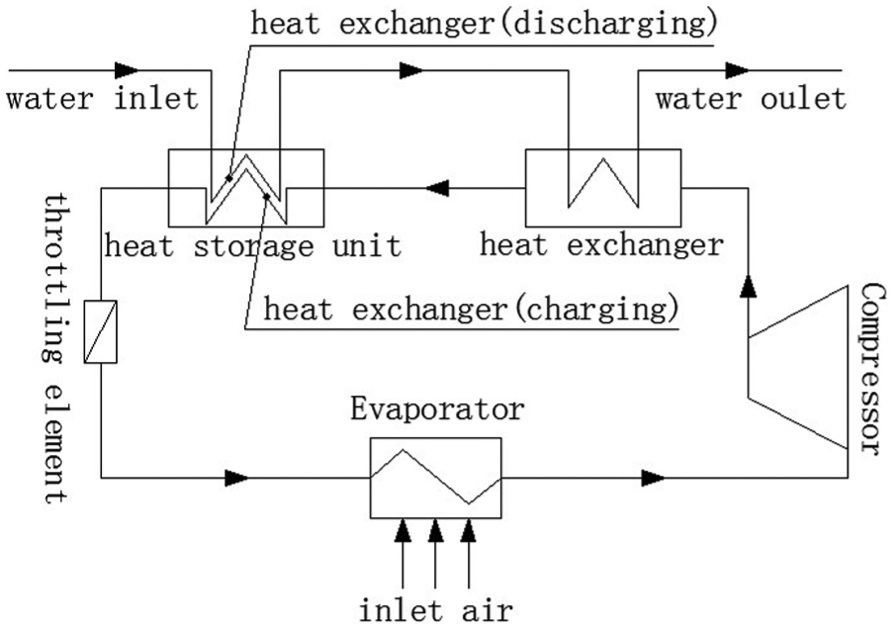
The schematic diagram of PCM heat pump water heater.
Heat storage stage
When the inlet and outlet water valves are closed, the high-temperature and high-pressure fluid discharged through the compressor and paraffin will exchange heat in the heat storage unit, and the part of heat will be stored in the paraffin in the form of latent heat and sensible heat.
Heat release stage
When the inlet and outlet water valves are opened, the cold water through the heat storage unit will be preheated by paraffin, and the secondary heating for the cold water is conducted by the heat exchanger to reach the required outlet water temperature.
Huitao 102 in 2014 designed a phase change thermal storage system which uses spherical heat storage unit in the solar energy heat pump heating system as shown in Figure 6 and carried out simulations by CFD. When the solar energy is sufficient, it is heated independently by the solar system, and it is heated preferentially by the water tank with PCM at night. When the solar energy is insufficient, it is heated by a heat pump system. The results show that heat transfer efficiency is enhanced and phase change time is cut down when reducing the spherical capsules diameter, but the effective heating time will reduced if the maximum value of the outlet water temperature is increased.

The combined solar energy heating system.
The heat pump condensing heat recovery system of phase change thermal storage was studied by Chu 103 in 2014. During the charging stage, the high-temperature and high-pressure refrigerant discharged by the compressor and the PCM outside the pipes will exchange heat through the pipe wall in the heat exchanger so that the condensation heat is stored as latent heat. The melting point of PCM is about 54°C–59°C. Then, the refrigerant flows out of the thermal storage water tank outlet through the throttling element and the evaporator and then returns to the compressor, completing the heat storage phase. During the discharging stage, the cold water flows into the water tank with PCM from the cold water valve to exchange heat with the PCM; after the pump forced circulation, the water is heated up to 40°C and is outflowed from the hot water valve to supply hot water. The investigation found that the temperature rise is about 2°C–3°C in 1 h, and the heat transfer efficiency is quite low. In the process of thermal storage, great temperature stratification appeared in the tank, and the maximum temperature difference comes to 32°C. It indicates that the heat transfer efficiency of the heat storage water tank is not well.
In conclusion, compared with the traditional water tank, the advantage of the water tank with PCM storing heat is sensible heat storage and LHS; thus, it not only can improve the thermal storage efficiency of the water tank and reduce the volume of water tank in the case of the same heat demand but also can save cost of making water tank and save building space. The investigation of phase change thermal storage tank has made some achievements, and it has shown that the phase change energy storage tank has broad prospects for development. However, the research on the water tank with PCM still has a lot of space. For instance, considering that the heat storage process of PCM is finished in the water tank, the phase change range of the PCM should be within the range of the hot water temperature of the heat storage tank; however, the hot water temperature should be as high as possible in the process of heat storage; in order to shorten the storage time of PCM, the selection of PCM should be mainly based on two parameters such as latent heat and phase transition temperature. In the shape of phase change module, the heat loss of spherical tank with PCM is minimum. 54 However, considering the complexity of the space occupied by the tank and the construction process, it is more reasonable and practical to use the cylindrical water tank with PCM. The hot water inlet and outlet should be located in the upper part of the heat storage tank because of the density difference, but there is no exact position of the hot water inlet and outlet in the relevant literature. In the arrangement of phase change module, two aspects should be considered: on one hand, the storage capacity of water tank with PCM should enable uniform distribution, and on the other hand, phase change unit should be placed in the upper part of the water tank with PCM to reduce the damage of water tank with PCM thermal stratification and so on.
Conclusion
The research of water tank with PCM has made some achievements, and it has been shown that the water tank with PCM has broad prospects for development. However, the research on LHS still has a lot of barriers. The water tank with PCM need to continue research summed up in five areas:
Research method of water tank with PCM. Although CFD simulation requires powerful computing resources and detailed boundary conditions, its results are comprehensive and dependable if the domain is modeled well with accurate boundary conditions. However, compared with CFD simulation, it is an effective way to speed up the calculation process and improve the computation efficiency to simulate by numerical models in programming software.
PCMs. Most of the inorganic hydrated salts are corrosive, and there are disadvantages of supercooling and phase separation during phase change. There are also some shortcomings in solid–liquid types of organic PCMs such as low thermal conductivity and phase change enthalpy, which limit its practical application. Studying new PCM such as composite PCM, MEPCM, and NEPCM will become the main investigation direction in future in order to overcome the shortcomings above.
Water tank unit with PCM. The present studies remain in the theoretical analysis of the material itself or the performance analysis of the single-phase change package; therefore, to choose the appropriate forms of the water tank with PCM in project and to promote the application of the water tank with PCM, further research should give a clear selection principles as well as a variety of package forms of comparison from the actual engineering aspects.
Heat transfer enhancement of PCM. PCM used for energy storage generally has low thermal conductivity, resulting in weak heat transfer capacity, which makes the performance of phase change energy storage system decline. Increasing the thermal conductivity of PCM can greatly shorten the solidification/melting time of PCM and improve the heat transfer efficiency. In the aspect of heat transfer enhancement of PCM, many scholars have done considerable research. The main methods of strengthening heat transfer include adding fins, adding high thermal conductivity metal or metal particles, making phase change microcapsules, and so on. However, the current research still needs a simple, effective, easy to process, low cost heat transfer mode to promote the application of phase change energy storage.
Suggest on optimization of water tank with PCM. The optimization of PCM-based water tank includes optimization of the selection of PCM physical properties, arrangement of phase change module, inlet and outlet locations, shape of phase change module, and so on. For instance, the selection of PCM should consider two parameters, such as latent heat and phase transition temperature. In the shape of phase change module, the heat loss of spherical tank with PCM is minimum. However, considering the complexity of the space occupied by the tank and the production process, it is more reasonable and practical to use the cylindrical water tank with PCM. In the inlet and outlet locations of water tank with PCM, the hot water inlet and outlet should be located in the upper part of the heat storage tank because of the density difference. In the arrangement of phase change module, two aspects should be considered: on one hand, the storage capacity of water tank with PCM should enable uniform distribution, and on the other hand, phase change unit should be placed in the upper part of the water tank with PCM to reduce the damage of water tank with PCM thermal stratification. The optimization ensures that the water tank has a relatively objectivity to the benefit of user and the increase in investment cost during the service life. The application of PCM-based water tank promotes the utilization of solar energy to reduce the consumption of auxiliary power.
Footnotes
Academic Editor: Shuli Liu
Declaration of conflicting interests
The author(s) declared no potential conflicts of interest with respect to the research, authorship, and/or publication of this article.
Funding
The author(s) disclosed receipt of the following financial support for the research, authorship, and/or publication of this article: This work was sponsored by National Science Foundation of China (no. 51478058) and the 111 Project (no. B13041).