In this article, we investigate the combined effects of emission of CO2 and O2 depletion on thermal stability in a long cylindrical pipe of combustible reactive material. The cylindrical pipe loses heat by convection and radiation at the surface, and the nonlinear differential equations governing the heat and mass transfer problem are tackled numerically using Runge–Kutta–Fehlberg method coupled with shooting technique. The effects of various thermo-physical parameters on the temperature, CO2 and O2 fields, and thermal stability are presented graphically and discussed quantitatively.
The study of CO2 emission and thermal stability due to exothermic chemical reaction in a stockpile of combustible reactive materials is of importance in the study of the environment and understanding of heat transfer in engineering processes. Moreover, spontaneous ignition in stockpiles of combustible materials such as industrial waste fuel, coal, hays, and wool wastes is usually experienced leading to loss of life and properties.1 For instance, Figure 1 illustrates hazard that a self-ignited stockpile of cylindrical hays can cause to properties and the ambient environment.
Ignited cylindrical hays.
Theoretical study of thermal stability in a stockpile of combustible materials due to exothermic chemical reactions has a wide range of industrial applications. These applications include processes such as heavy oil recovery, incineration of waste material, storage of cellulose material, combustion of solids, pyrolysis of biomass and coal, and also in design of internal combustion engines and automobile exhaust systems.2–4 The heat generated as a result of exothermic chemical reaction in a stockpile of combustible material may exceed the heat loss to the surrounding environment, leading to the phenomenon called thermal explosion.5–8 Analysis of thermal explosion criticality was explored by Frank-Kamenetskii9 who also developed the steady-state theory of exothermic reactive materials. This theory is very helpful in the determination of the critical values, which are limit values not to be exceeded in order to avoid self-ignition from taking place, so that explosions can be controlled in exothermic chemical reactions.
Mathematical modeling has provided useful insight into this phenomenon in order to achieve reliable thermal system design that is of importance in respect of safety and hazard assessment.9–11 Previous research study has shown that at most 80% of CO2 emission that contributes to the Greenhouse effect may be due to exothermic chemical reactions in stockpiles of combustible reactive materials.12 There is need, therefore, for more knowledge that can help to control CO2 emission for the preservation of O2 that is essential for life. The complicated chemistry involved in combustion of reactive material in a stockpile is tackled in Williams,13 Makinde,14 and Legodi and Makinde15 using one-step decomposition kinetics. The combustion reaction due to exothermic chemical reaction is very complicated and includes many radicals, especially when large hydrocarbons are involved.16 The process involves highly nonlinear interaction of reacting species with products’ diffusion and heat conduction which ultimately bring about reactants, products, and temperature gradients that are steep in nature.17 Detailed reviews of models that involve chemical kinetics for reactions of hydrocarbons with oxygen are outlined in Simmie.18 Due to the highly nonlinear nature of the differential equations describing these complicated systems, it is practically impossible to obtain an exact solution to the problem; hence, it is therefore necessary to apply numerical or semi-numerical schemes in order to obtain an approximate solution. One of such methods is the application of a special type of Hermite–Pade approximation technique1,2,19,20 coupled with perturbation method to solve nonlinear differential equations modeling thermal stability in exothermic reactive materials in various geometrical configurations.
The purpose of this article is to examine the complex interaction of heat and mass transfer in an exothermic chemically reactive and thermally radiating material in cylindrical geometry with respect to oxygen (O2) depletion and carbon dioxide (CO2) emission. The thermal stability analysis is performed on the model nonlinear differential equations using shooting method coupled with the Runge–Kutta–Fehlberg integration scheme. Pertinent results are displayed graphically and discussed quantitatively.
Mathematical model
An exothermic chemical reaction in a stockpile of combustible material is studied in a long cylindrical pipe model. The cylindrical pipe of combustible reactive material is considered to be of constant thermal conductivity k with surface emissivity . It is assumed that the reactive cylinder is undergoing an nth order oxidation chemical reaction and that it is radiating with convection. A one-step finite rate irreversible chemical kinetics mechanism between the material and the oxygen of the air is assumed, and it is represented as follows11
Heat loss as a result of radiation at the cylindrical pipe surface to the surrounding environment is expressed as , following Stefan–Boltzmann’s law. Convective heat loss at the surface of the cylinder obeys Newton’s law of cooling. Figure 2 illustrates the geometry of the problem.
Geometry of the problem.
The steady-state nonlinear ordinary differential equations governing the heat and mass transfer problem in the presence of convection, thermal radiation, CO2 emission, and O2 depletion are given by1,2,12,15,19,20
The appropriate boundary conditions on the reactive solid cylinder are, respectively
where is the reactive solid cylinder’s absolute temperature, is the O2 concentration within the cylinder, is the CO2 concentration emitted, is the ambient temperature, and is the O2 concentration at the cylinder surface. The CO2 concentration at the cylinder surface is denoted by , is the thermal conductivity of the reacting cylinder, and is the solid cylinder emissivity (). The notation represents Stefan–Boltzmann constant (), while is the diffusivity of O2 in the solid cylinder and is the diffusivity of CO2 at the cylinder surface. The symbol is the heat of reaction, is the rate constant, is the activation energy, is the universal gas constant, and is the Planck number. Vibration frequency and Boltzmann constant are, respectively, indicated by and , and represents radial distance. and are, respectively, the heat transfer coefficient at the surface of the cylinder and the CO2 transfer coefficient at the surface of the cylinder, while is the order of exothermic chemical reaction and the numerical exponent such that . The three values taken by the parameter represent the numerical exponent for sensitized, Arrhenius, and bimolecular kinetics, respectively.1,2,12,15 The boundary conditions (4) and (5) describe the temperature and CO2 conditions at the surface of the reactive cylinder. The following dimensionless parameters are introduced in equations (1)–(5)
and we obtain
with
where is the Frank-Kamenetskii parameter, is the activation energy parameter, is the O2 consumption rate parameter, is the CO2 emission rate parameter, Bi1 is the thermal Biot number, Bi2 is the CO2 Biot number, Rd is the radiation parameter, and is the dimensionless radial distance. The dimensionless heat and mass transfer rates at the cylinder surface are expressed in terms of local Nusselt number and Sherwood numbers as follows
Equations (7)–(9) and the boundary conditions (10) and (11) are solved numerically using the Runge–Kutta–Fehlberg method coupled with shooting technique.15 From the process of numerical computation, the local Nusselt number and the local Sherwood numbers in equation (12) are calculated and their numerical values presented in a table.
Results and discussion
In this section, the computational results obtained for the modeled nonlinear ordinary differential equations are presented graphically and discussed for various values of thermo-physical parameters embedded in the system. It is important to note that combustible reactive materials may include cylindrical storage of petroleum materials, industrial waste, sugarcane bagasse, coal, hays, wool waste, and so on. Moreover, our results below reveal the effect of storage geometry on the exothermic reaction and CO2 emission in reactive materials which invariably affect the environment through the production of ozone layer leading to climate change and global warming.
Effects of thermo-physical parameters on temperature profiles
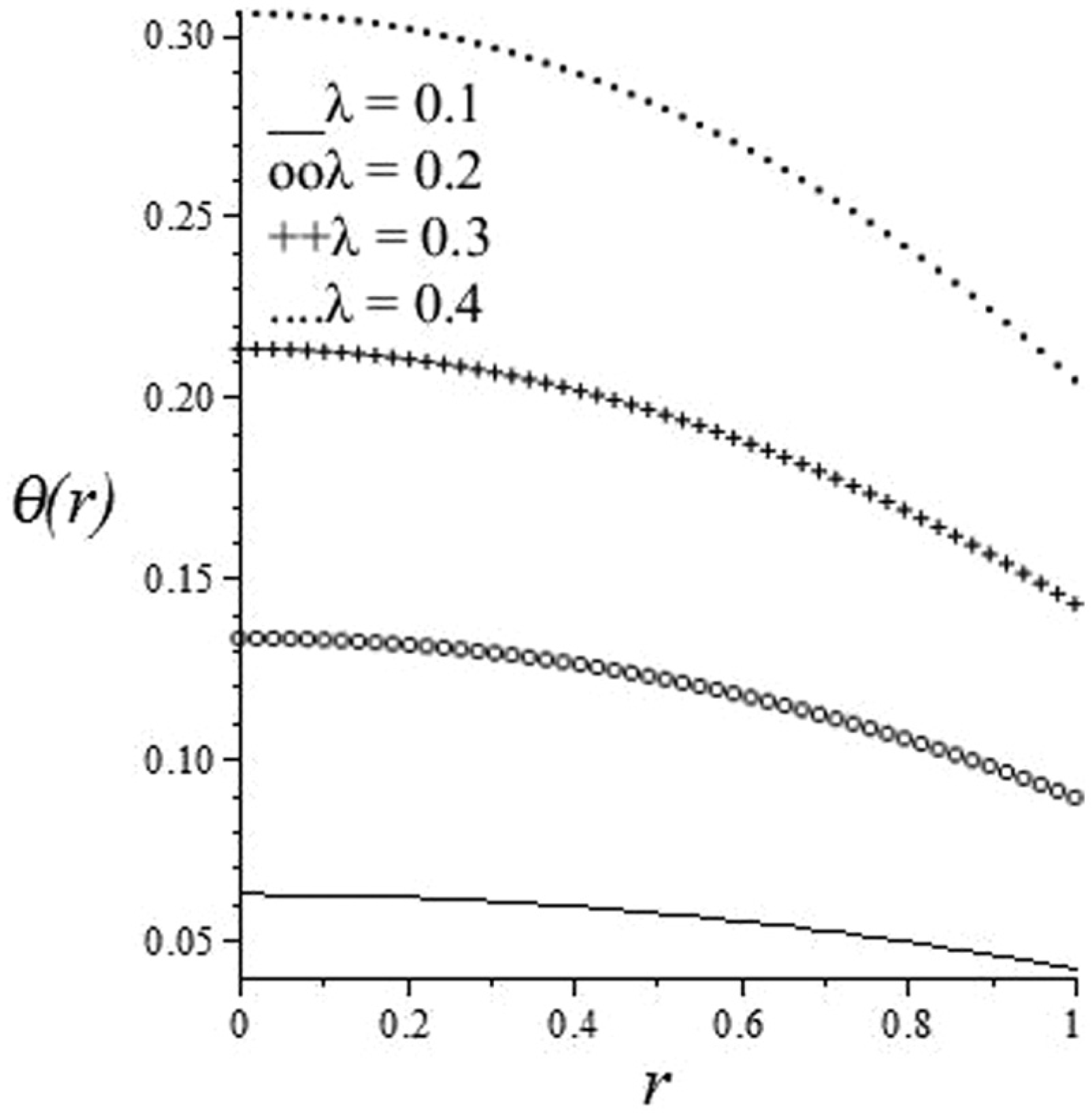
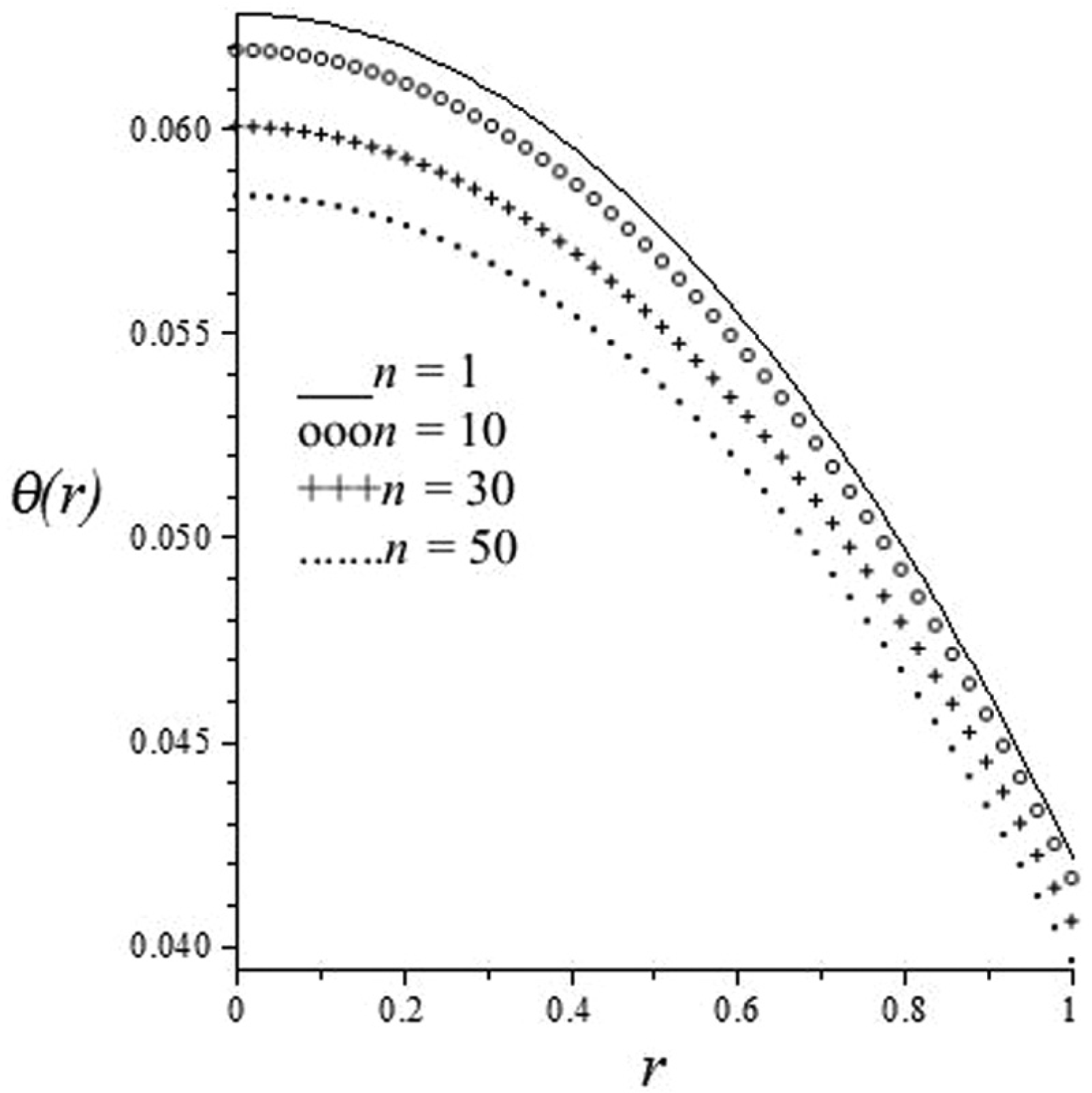
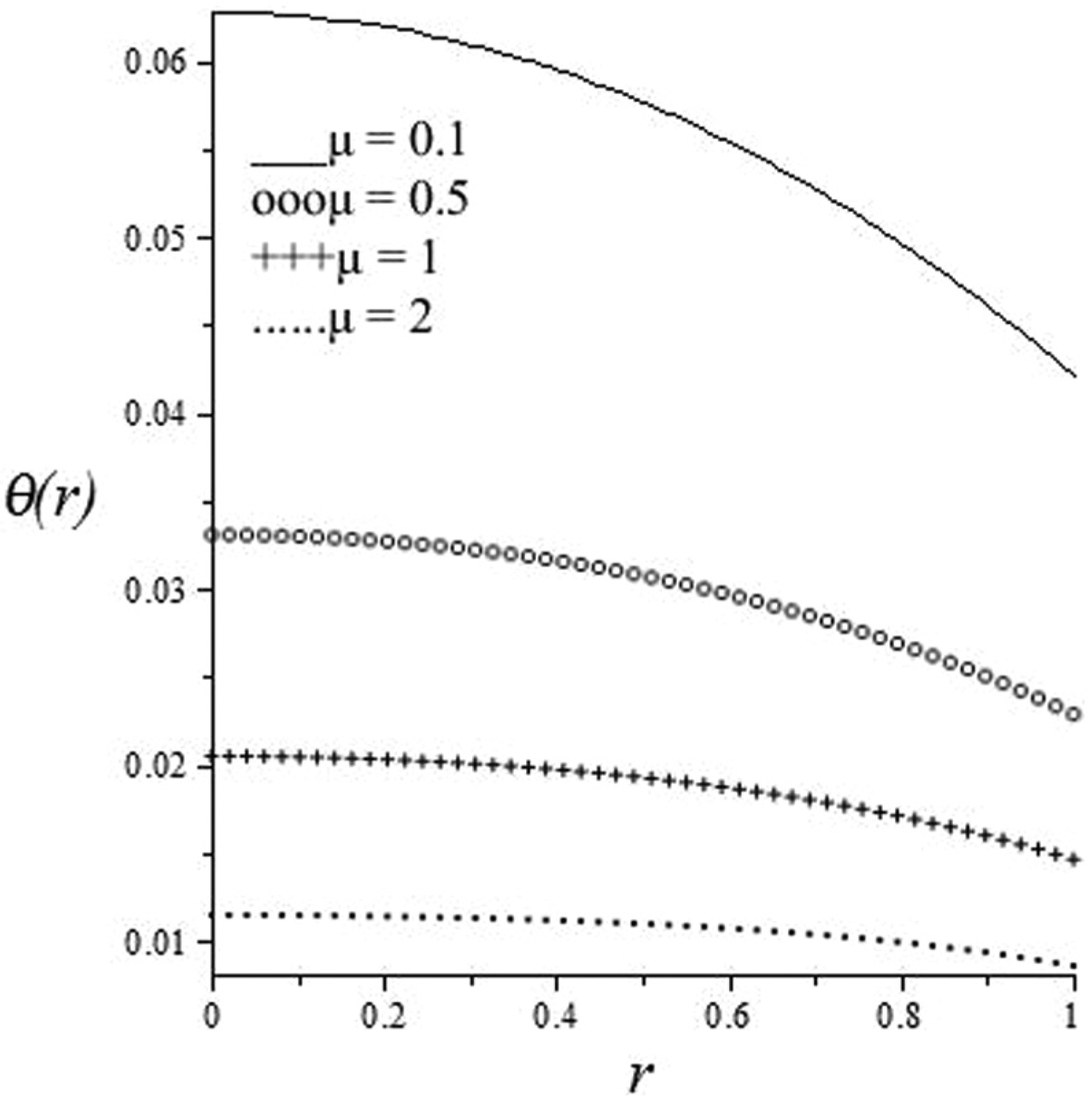
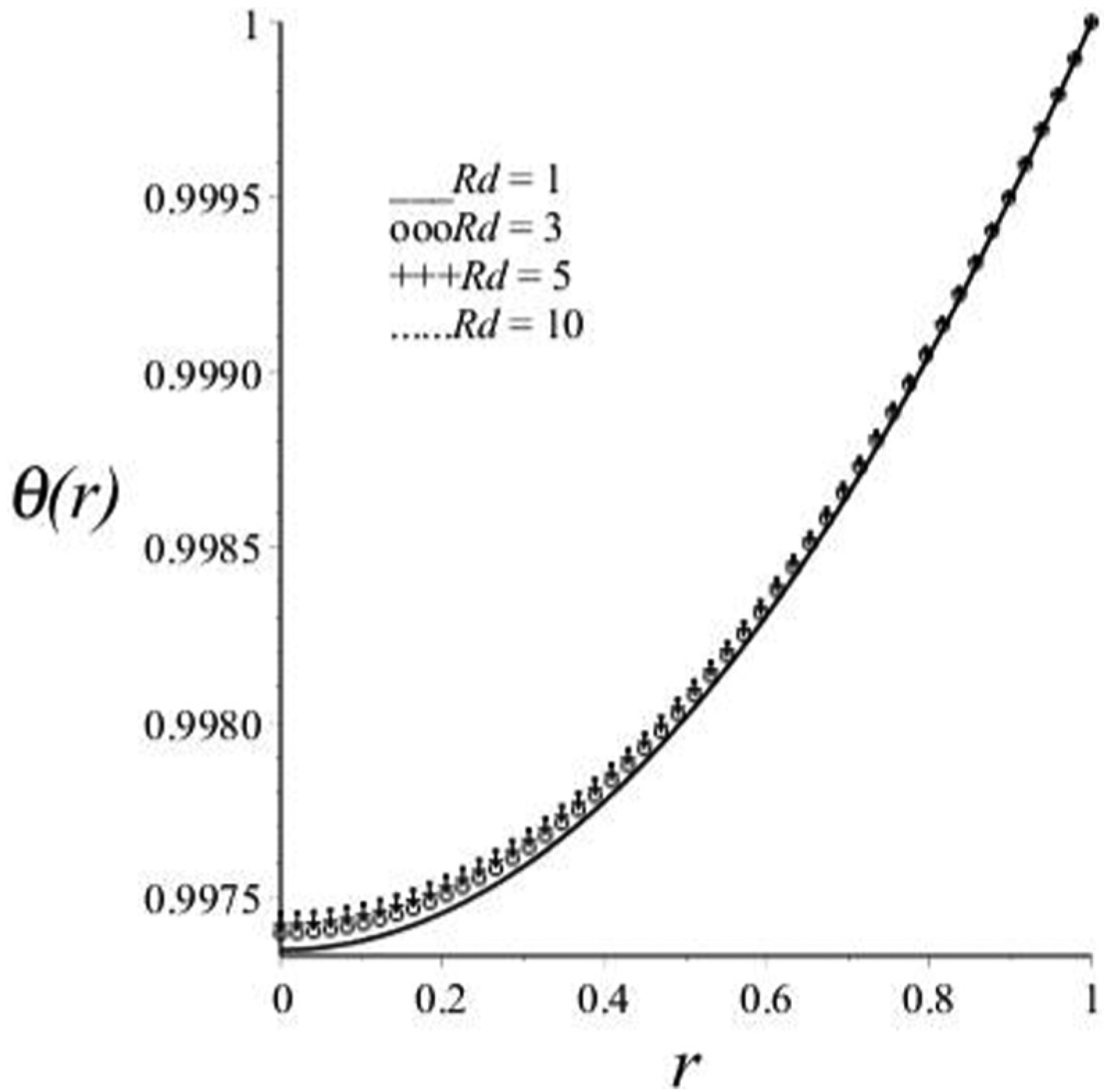
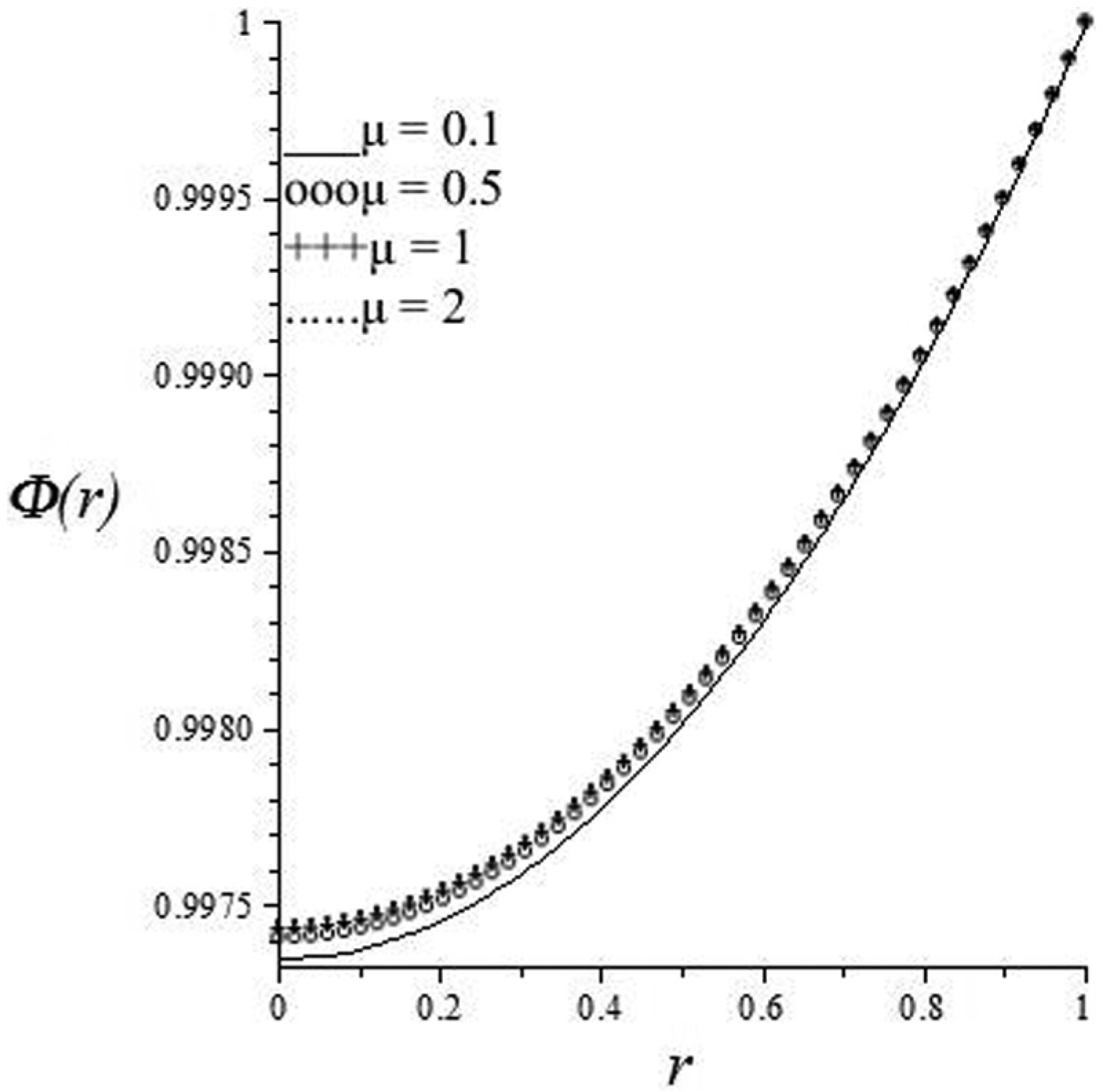
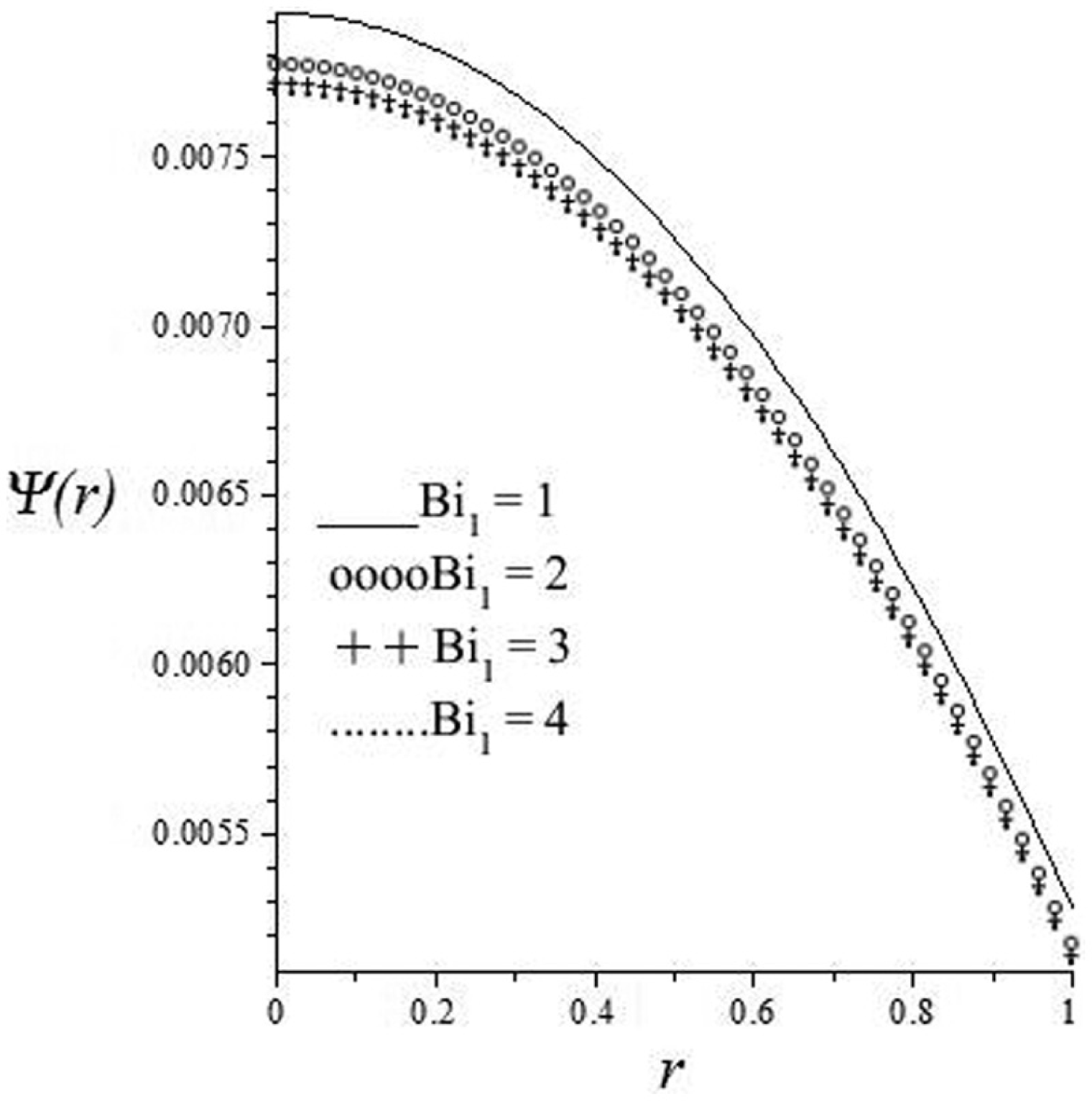
The graphical results in Figures 3–9 illustrate the effects of different parameters on the steady-state temperature profiles in the exothermic reactive cylindrical material. In Figure 3, we see that increasing the value of increases the temperature profiles. This is because as the rate of reaction accelerates, the exothermic chemical reaction increases leading to an increase in internal generated heat. We see the same scenario in Figure 5 where the increase in the numerical exponent m also corresponds to a temperature increase, with bimolecular reactions (m = 0.5) producing highest temperature profile. A different scenario is observed in Figures 4 and 6–9. The increase in the parameters n, Rd, , , and results in a decrease in temperature profiles. We may say that these parameters retard the exothermic chemical reaction to some extent, and as a result less heat production is observed with increasing parameter values.
Temperature profile: .
Temperature profile: .
Temperature profile: .
Temperature profile: .
Temperature profile: .
Temperature profile: .
Temperature profile: .
Effects of thermo-physical parameters on O2 profiles
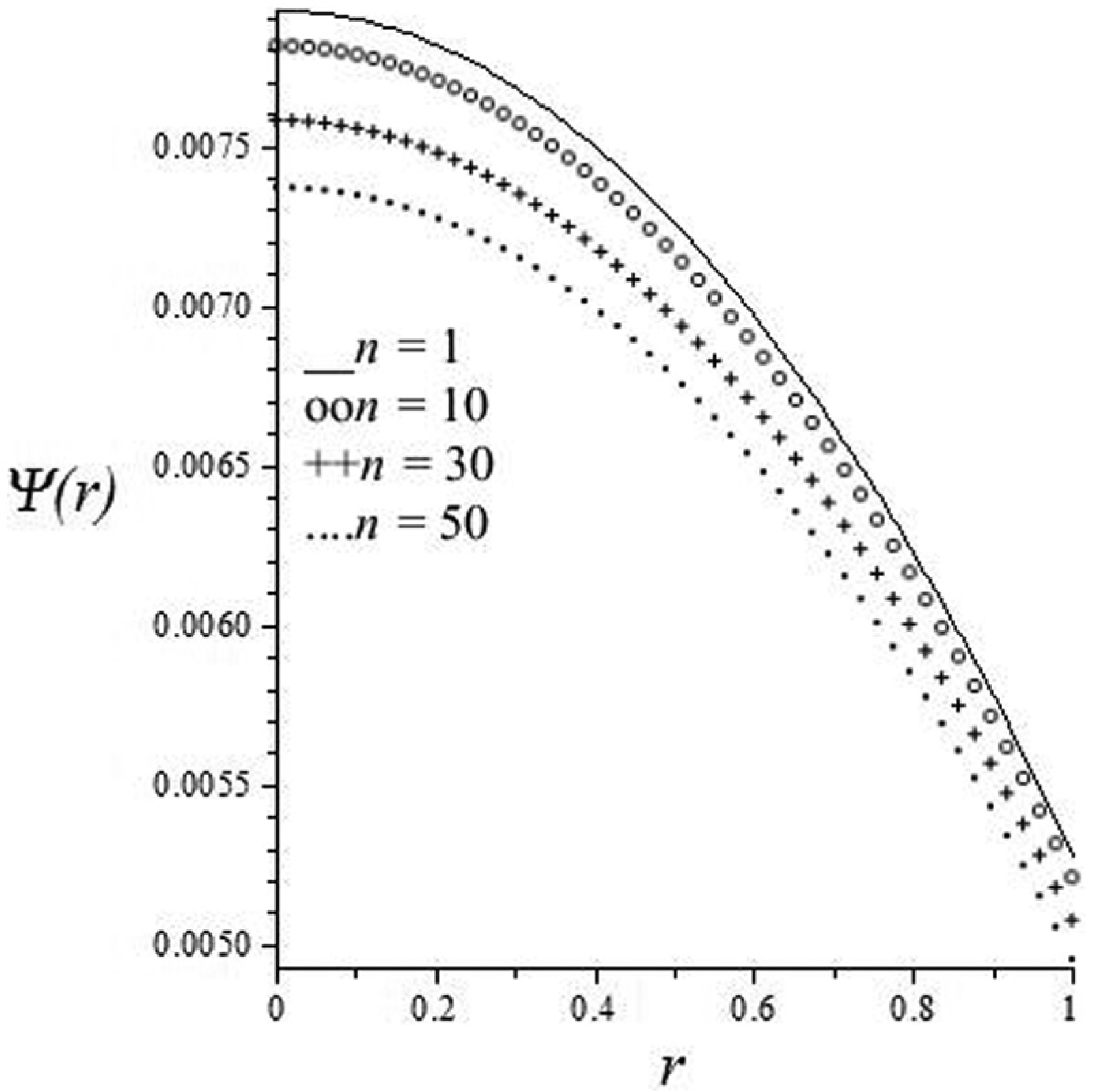
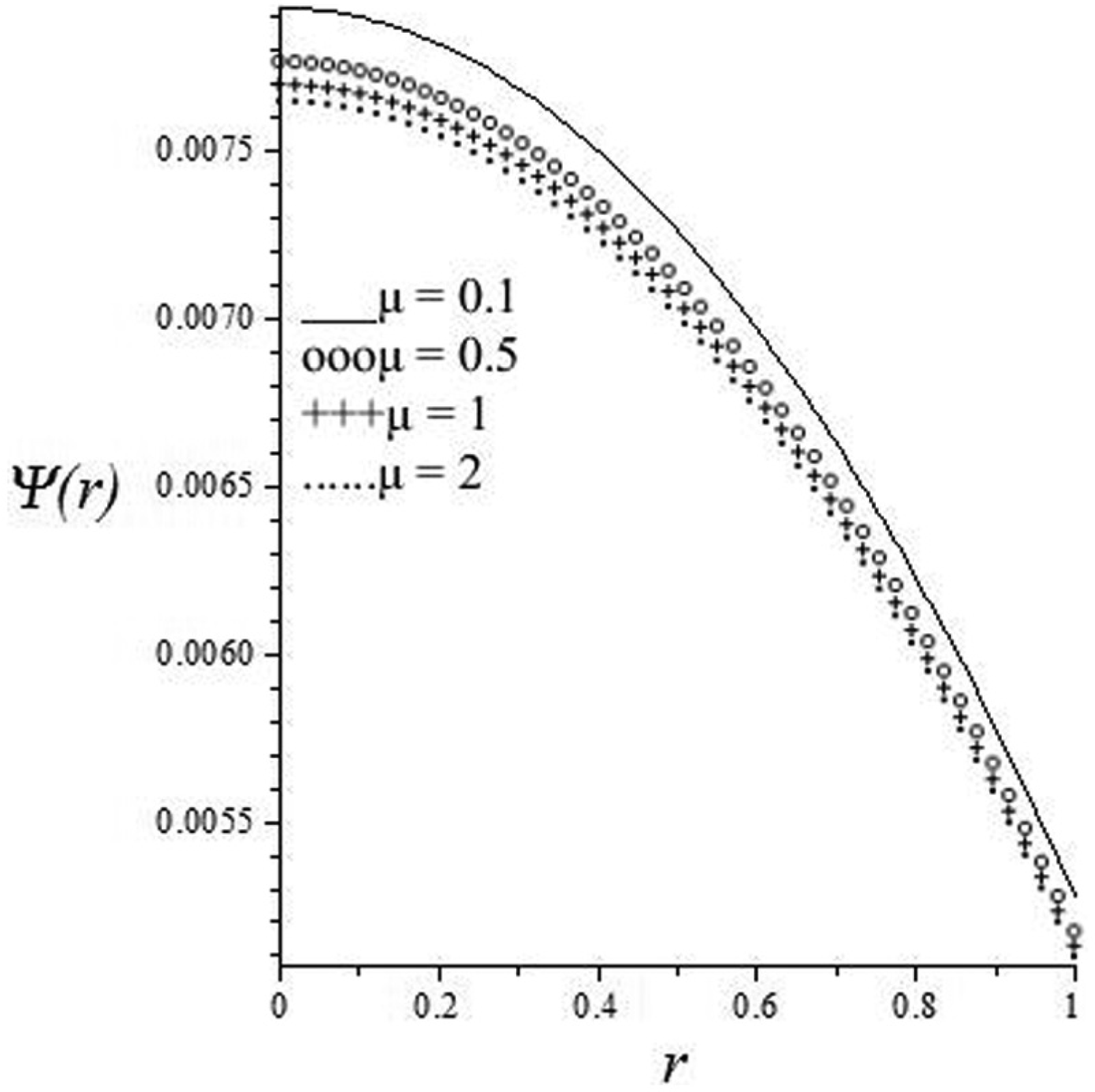
Figures 10–16 illustrate effects of different parameters on O2 profiles. We observe from Figures 10, 12, and 15 that the following parameters , m, and lower O2 profiles as their numerical values increase. These parameters reduce the O2 concentration in the reactive cylinder by accelerating the exothermic reaction that uses more oxygen. From Figures 11, 13, 14, and 16, we observe that the parameters n, Rd, , and favor the conservation of O2 concentration in a reactive cylinder. An increase in each of the parameters mentioned shows a slight increase in the O2 profiles. In other words, these parameters slow down the exothermic chemical reaction, and in turn, less O2 is consumed when the parameters are considered.
O2 profile: .
O2 profile: .
O2 profile: .
O2 profile: .
O2 profile: .
O2 profile: .
O2 profile: .
Effects of thermo-physical parameters on CO2 profiles
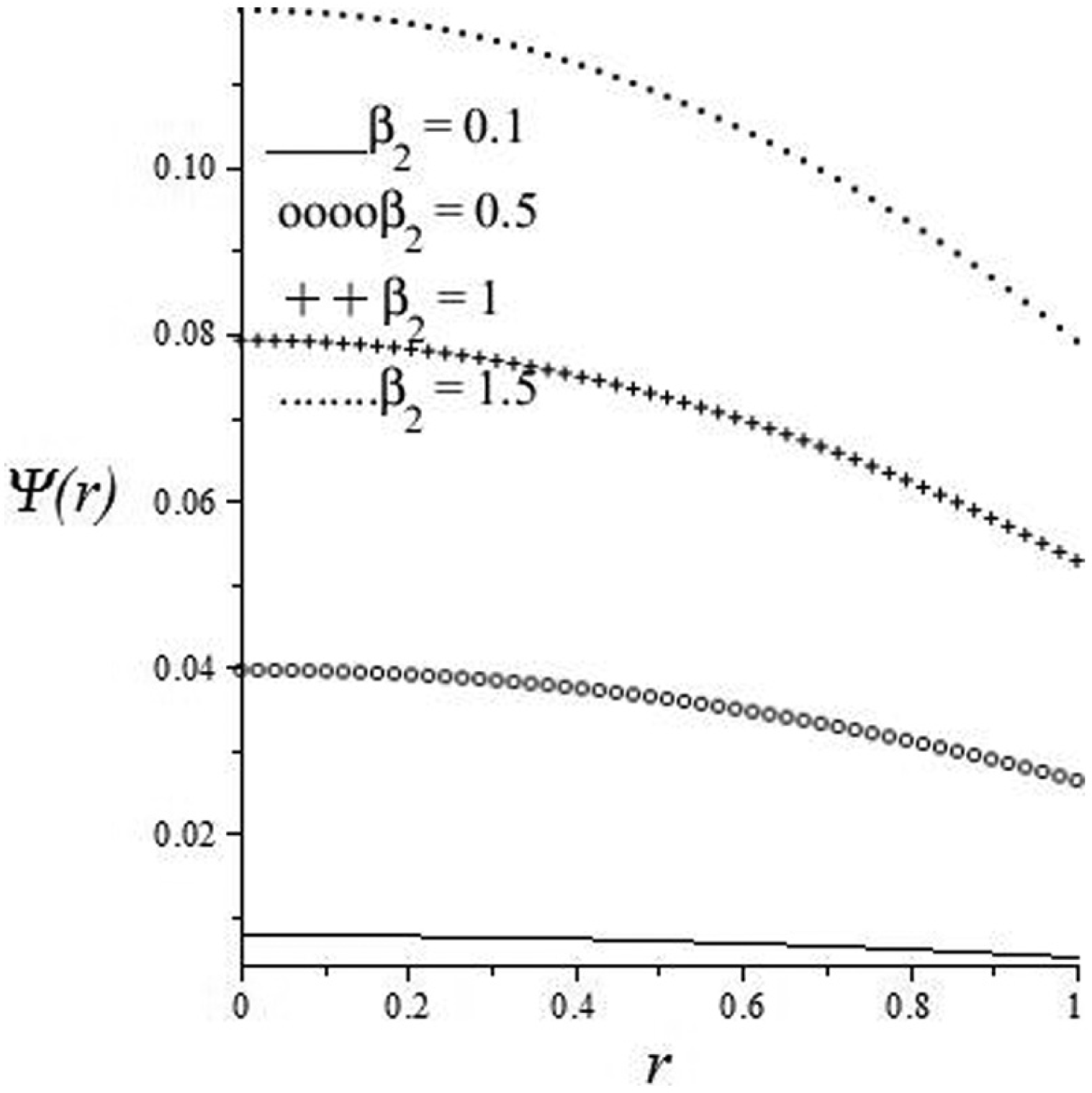
We also study how various parameters play a role in the CO2 emission due to exothermic chemical reaction taking place within a reactive cylinder of combustible material. The observations are illustrated in Figures 17–25. As in the case of temperature profiles, we see that the parameters and m increase the CO2 profiles as their numerical values are increased. This is due to accelerated exothermic reaction that produces more CO2. The illustrations are given in Figures 17 and 19. We observe the same scenario from Figure 23 where an increase in shows a corresponding increase in the CO2 profiles. From Figures 18, 20–22, 24, and 25, we see that increasing the parameters n, Rd, , , , and reduces the CO2 profiles. The last parameter shows a huge decline in the CO2 emission profiles. This is good because the emission of CO2 is lessened when these parameters are considered. It is important to note that in all processes, that is, temperature, O2 depletion, and CO2 emission, the parameter reduces the profiles as it increases.
CO2 profile: .
CO2 profile: .
CO2 profile: .
CO2 profile: .
CO2 profile: .
CO2 profile: .
CO2 profile: .
CO2 profile: .
CO2 profile: .
Effects of parameter variation on thermal criticality values or blowups
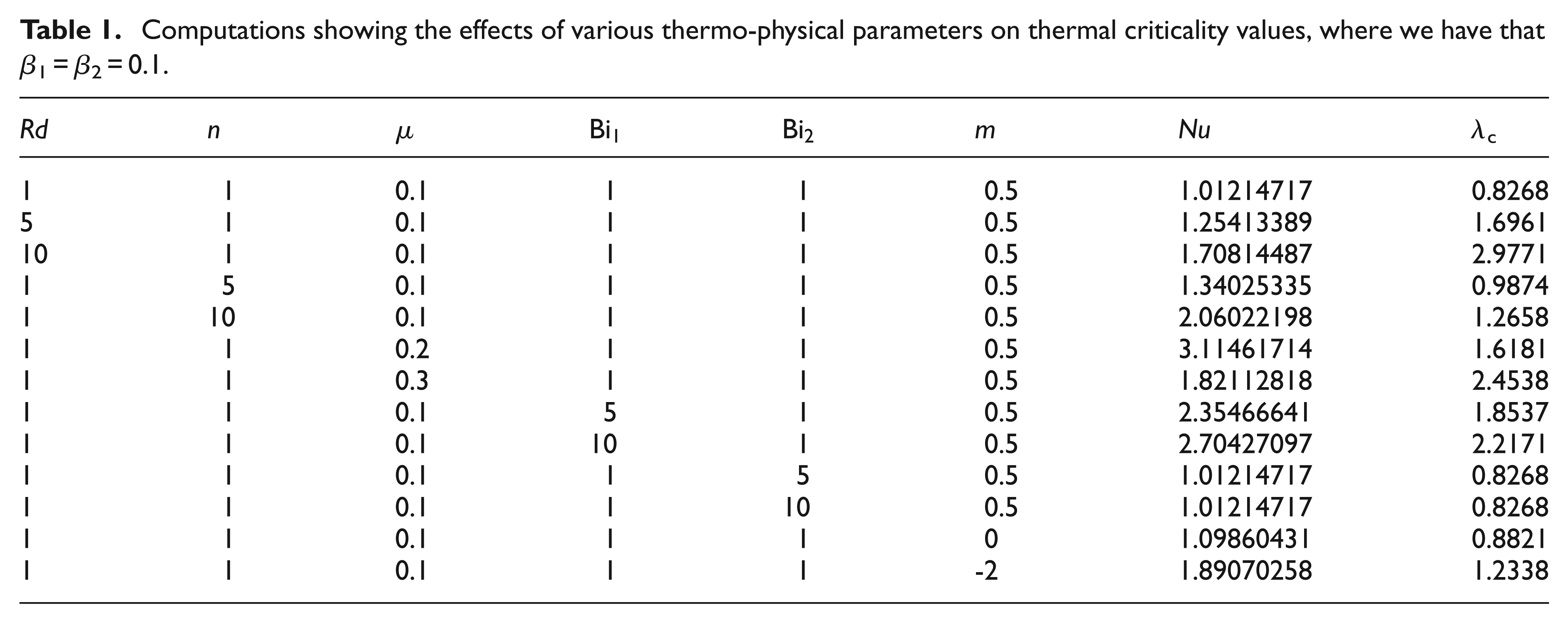
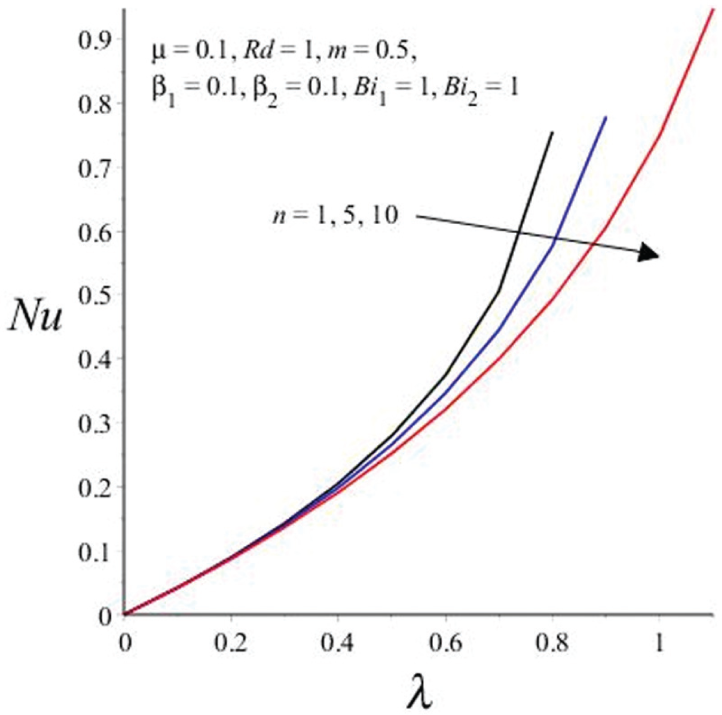
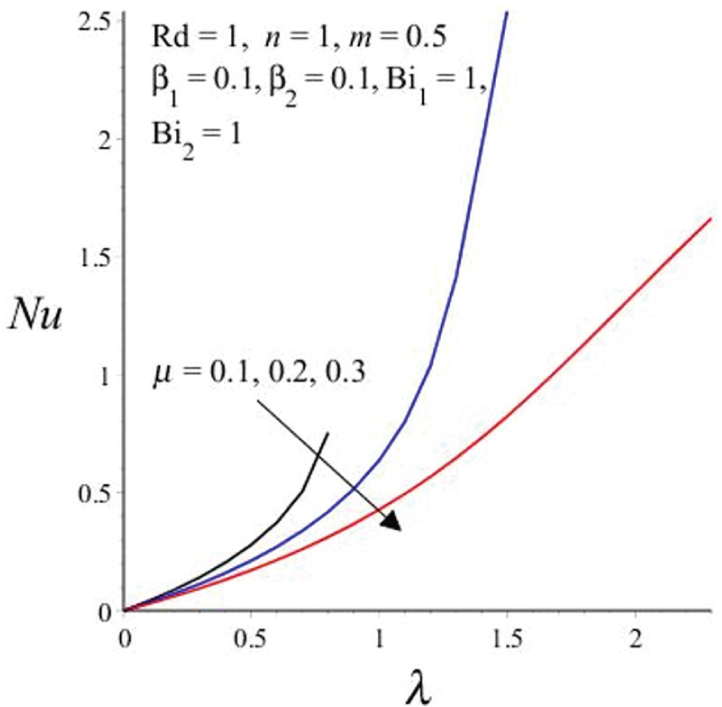
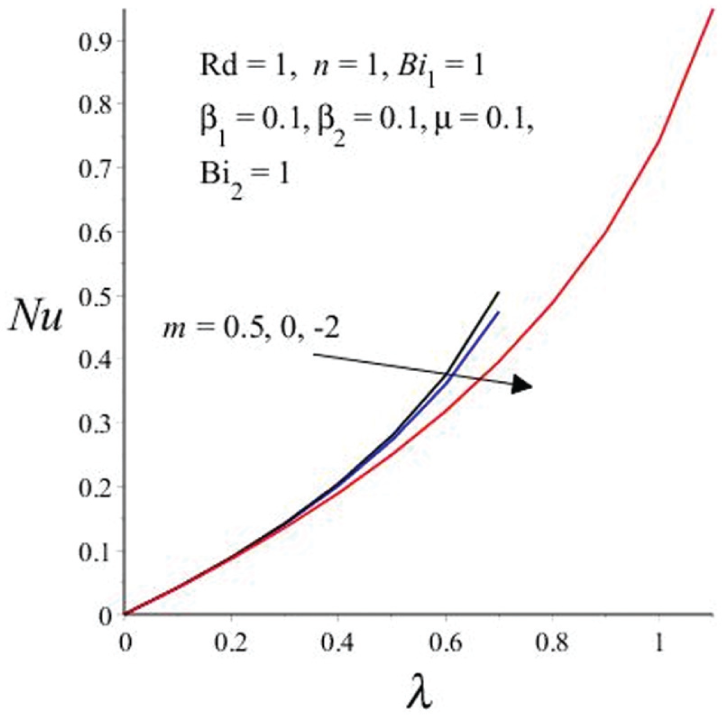
In this case, we discuss the variation in the rate of reaction, Frank-Kamenetskii parameter , with the dimensionless heat transfer rate at the reactive cylinder surface, and Nusselt number Nu, for various values of some parameters as shown by the figures plotted. It is noteworthy at blowup point that both Nu and Sh have the same critical value λc. The thermal critical values λc obtained are presented in Table 1.
Computations showing the effects of various thermo-physical parameters on thermal criticality values, where we have that β1 = β2 = 0.1.
Rd
n
µ
m
Nu
λc
1
1
0.1
1
1
0.5
1.01214717
0.8268
5
1
0.1
1
1
0.5
1.25413389
1.6961
10
1
0.1
1
1
0.5
1.70814487
2.9771
1
5
0.1
1
1
0.5
1.34025335
0.9874
1
10
0.1
1
1
0.5
2.06022198
1.2658
1
1
0.2
1
1
0.5
3.11461714
1.6181
1
1
0.3
1
1
0.5
1.82112818
2.4538
1
1
0.1
5
1
0.5
2.35466641
1.8537
1
1
0.1
10
1
0.5
2.70427097
2.2171
1
1
0.1
1
5
0.5
1.01214717
0.8268
1
1
0.1
1
10
0.5
1.01214717
0.8268
1
1
0.1
1
1
0
1.09860431
0.8821
1
1
0.1
1
1
-2
1.89070258
1.2338
The numerical values for the Nusselt number, Nu, for each parameter indicated versus the reaction rate or Frank-Kamenetskii parameter, , presented in the table above are presented graphically in Figures 26–30. From Figures 26–29, we observe that thermal stability is attained as the parameters Rd, n, µ, and are increased. The higher values of the parameters result in higher values of both the Nusselt number and rate of reaction, with an exception of µ, where the highest value gives the highest value of only . An increase in the convective and radiative heat loss to the ambient will enhance heat transfer in the reacting system and maintain thermal stability. A different scenario is observed in Figure 30 where Nu is lowest at 0, and it is observed that thermal stability is attained by keeping m very low.
Effect of increasing Rd on cylinder thermal criticality values.
Effect of increasing n on cylinder thermal criticality values.
Effect of increasing µ on cylinder thermal criticality values.
Effect of increasing on cylinder thermal criticality values.
Effect of increasing m on cylinder thermal criticality values.
Conclusion
This article considered the analysis of thermal stability and CO2 emission that involves O2 depletion in a convective and radiating cylindrical combustible reactive material. It was observed from the results that reaction processes that increase both the temperature and carbon dioxide emission profiles also increase the depletion of oxygen. The parameters that favor the slowing down of CO2 emission in an exothermic chemical reaction of combustible material were found to be n, Ra, , , , and . It was also observed that increasing numerical values of these parameters also helps to attain thermal stability of exothermic chemical reactions. As mentioned earlier, the significance of the study of reactive materials in cylindrical geometry may include cylindrical storage of carbon-containing materials such as industrial waste, sugarcane bagasse, coal, hays, and wool wastes, to mention a few. The discussion of results obtained reveals the effect of storage geometry due to exothermic chemical reaction. The emission of CO2 in reactive materials invariably affects the environment through the production of ozone layer. It is well known that increased ozone layer has led to climate change and global warming.
Finally, the adoption of mathematical model to simulate this complex phenomenon helps to provide deep insight into this intricate problem in a cheaper and safer way since it may involve thermal runaways through exothermic chemical reaction.
Footnotes
Appendix 1
Acknowledgements
The authors would like to thank anonymous reviewers for their thoughtful suggestions and comments related to this work.
Academic Editor: Bo Yu
Declaration of Conflicting Interests
The author(s) declared no potential conflicts of interest with respect to the research, authorship, and/or publication of this article.
Funding
The author(s) received no financial support for the research, authorship, and/or publication of this article.
References
1.
MakindeOD. Strongly exothermic explosions in a cylindrical pipe: a case study of series summation technique. Mech Res Commun2005; 32: 191–195.
2.
XiongQKongS. Modelling effects of interphase transport coefficients on biomass pyrolysis in fluidized beds. Powder Technol2014; 262: 96–105.
3.
XiongQKongSPassalacquaA. Development of a generalized numerical frame work for simulating biomass fast pyrolysis in fluidized-bed reactors. Chem Eng Sci2013; 99: 305–313.
4.
MakindeOD. On the thermal decomposition of reactive materials of variable thermal conductivity and heat loss characteristics in a long pipe. J Energ Mater2012; 30: 283–398.
5.
BalakrishnanESwiftAWakeGC. Critical values for some non-class: a geometries in thermal ignition theory. Math Comput Model1996; 24: 1–10.
6.
BarenblattGIBellJBCrutchfieldWY. The thermal explosion revisited. P Natl Acad Sci USA1998; 95: 13384–13386.
7.
BoddingtonTGrayPWakeGC. Criteria for thermal explosions with and without reactant consumption. P R Soc Lond A1977; 357: 403–422.
8.
AdegbieKS. Thermal explosion in a combustible gas mixture with general Arrhenius reaction-rate law: criticality and its disappearance. African Mathematical Union and Springer-Verlag: Afrika Matematika, 2011; 24: 195–208.
9.
Frank-KamenetskiiDA. Diffusion and heat transfer in chemical kinetics. New York: Plenum Press, 1969.
10.
AlhamaFCampoA. The connection between the distributed and lumped models for asymmetric cooling of long slabs by heat convection. Int Commun Heat Mass2001; 28: 127–137.
11.
MakindeOD. Hermite-Padé approach to thermal stability of reacting masses in a slab with asymmetric convective cooling. J Frankl Inst2012; 349: 957–965.
12.
MakindeODChinyokaTLebeloRS. Numerical investigation into CO2 emission, O2 depletion and thermal decomposition in a reacting slab. Math Probl Eng2011; 2011: 208426 (19 pp.).
13.
WilliamsFA. Combustion theory. San Francisco, CA: Benjamin & Cummings Publishing, 1985.
14.
MakindeOD. Exothermic explosions in a slab: a case study of series summation technique. Int Commun Heat Mass2004; 31: 1227–1231.
15.
LegodiAMKMakindeOD. A numerical study of steady state exothermic reaction in a slab with convective boundary conditions. Int J Phys Sci2011; 6: 2541–2549.
16.
SadiqMAMerkinJH. Combustion in a porous material with reactant consumption: the role of the ambient temperature. Math Comput Model1994; 20: 27–46.
17.
LiaoSSuJChwangAT. Series solutions for a nonlinear model of combined convective and radiative cooling of a spherical body. Int J Heat Mass Tran2006; 49: 2437–2445.
18.
SimmieJM. Detailed chemical kinetic model for the combustion of hydrocarbon fuels. Prog Energ Combust2003; 29: 599–634.
19.
MakindeODMhonePY. Temporal stability of small disturbances in MHD Jeffery–Hamel flows. Comput Math Appl2007; 53: 128–136.
20.
MakindeOD. Analysis of non-Newtonian reactive flow in a cylindrical pipe. J Appl Mech2009; 76: 034502.