



Abstract
In this article, a non-similar model is employed to investigate the heat and mass transfer mechanism in magnetohydrodynamic (MHD) nanofluid flow of Williamson fluid over a stretching sheet. Moreover, the combined influences of Joule heating, viscous dissipation, and nonlinear thermal radiations are also explored. The influence of chemical reactions on the flow field is examined to enhance the physical interpretation of the results. Employing the Sparrow–Quack–Boerner local non-similarity method, the governing equations are reduced to a set of ordinary differential equations. The obtained system is numerically tackled by applying Matlab based algorithm via bvp4c. In order to give each parameter a physical meaning, the influences of the obtained parameters on the pattern of concentration, temperature, and velocity of nanoparticles have been explored utilizing diagrammatical interpretation. The influence of selected physical parameters on the skin-friction coefficient, local Nusselt number, and Schmidt number is assessed through systematically organized numerical tables. In addition, the second law of thermodynamics is applied to evaluate process performance by analyzing entropy-generation rates across different system conditions. The creation of entropy rises with increasing Brinkman number and Diffusion parameter. Additionally, it is demonstrated from the numerical data that the rate of heat transmission reduces as the Eckert number expands, but the value of thermal radiation tends to rise it. Lastly, comparison with previously published work demonstrates the validity of the current work. The non-similar model of the considered problem has not been discussed in literature, which gives it uniqueness. Researchers looking at industrial nanofluid applications, such as those in geothermal and geophysical systems, biomedicine, solar water heaters, heat exchangers, and many other sectors, may find this paper to be helpful.
Keywords
Introduction
In the last few decades, non-Newtonian fluids have become the most interesting topic as a result of its important scientific developments. Oils, paints, shampoos, and soaps are a few fluids with non-Newtonian characteristics that are particularly common in the chemical processing sector. Researchers are challenged by the interpretation of non-Newtonian fluids. Non-linear fluids are common in nature. Complex equations are produced by the fundamental relations for these fluids. To handle such complexity, various models of non-Newtonian fluids have been created. One of the most important non-Newtonian fluid, the Williamson fluid, shares many characteristics with polymeric solutions, such as a lower viscosity along an expansion in shear stress. In a different sense, the Williamson fluid model predicts that the effective viscosity, which is nothing but zero viscosity at infinity shear rates and infinite viscosity at rest, should continuously decrease with increasing shear rates. In 1929, Williamson 1 made the first discovery of a Williamson model, and Subbarayudu et al. 2 looked on the evaluation of time-dependent models. Later, the perturbation solution of incompressible flows in a non-Newtonian Williamson fluid breaking rock was addressed by Dapra and Scarpi. 3 A Williamson nanofluid stream was added to a long sheet by Nadeem et al. 4 in the twenty-first century. As of 2020, several scientists continue to question the Williamson nano-capabilities fluid, such as Haq et al., 5 who investigated gyrotactic microorganisms with activation energy in the radiated liquid. The investigation of heat transmission for an electro-osmotic stream across a micro-channel for Williamson fluid motion was covered by Noreen et al. 6 Rashid et al. 7 explored how the magnetic field in a curved channel affected the peristaltic flow of Williamson fluid. An illustration of analyzing the magnetic dipole’s characteristics for covering Williamson nanofluid with thermal radiation is given by Khan et al. 8 According to Khan et al., 9 heat and solutal stratification caused an alteration in the viscosity of the Williamson nanofluid flow. According to Hayat et al. 10 Williamson nanofluid sensitive to chemical reactivity flows in a mixed convective three-dimensional manner. Using extended Fourier and Fick’s equations in a stratified media; Ramzan et al. 11 assessed 3D flow of Darcy-Forchheimer Williamson nanofluid. This investigation demonstrated that the influences of both the parameters that is, magnetic field and Williamson fluid parameter were detrimental to the velocity pattern.
According to the most recent research, industry and technological disciplines have given nanofluids a lot of attention. Nanoparticles, which are tiny nanoscale particles, are present in base fluid in nanofluids. Thin liquid suspensions of nanoparticles in a regular fluid are known as nanofluids. In comparison to base fluids like oil or water, nanofluids are shown to have higher levels of viscosity, convective heat transfer coefficient, thermal conductivity, and thermal diffusivity. Aly et al.12,13 investigated the behavior of nanofluids and hybrid nanofluids in heat and mass transfer processes, considering different assumptions to model the system accurately. High thermal conductivity has led to research into using nanofluids as the working fluid rather than base fluids. Nanofluids are used in a wide range of automotive applications, including engine oils, lubricants, and coolants. Additionally, it is salient in the medical sector because they are used to make microscopic explosives that are used to kill cancerous tumors and to treat cancerous tumors with gold nanoparticles. Effect of non-similar modeling for forced convection analysis of nanofluid flow over extending sheet with chemical reaction was investigated by Cui et al. 14 Using mixed convective flows of nanofluids across a vertically permeable surface was investigated by Hussain et al. 15
In fluid mechanics the consequences of magnetic field detain a vital role owing to its numerous implementations in magnification of thermophysical features of fluid. Numerous researchers did theoretical studies to better understand the applications and importance of MHD fluxes. MHD flows are used in many technical and industrial processes, including atomic reactors that use fluid metals and geothermal energy, MHD generators, cooling frameworks based on fluid metals, etc., making them crucial for research. In 1942, Alfvén 16 was the first to start looking into this subject. Razzaq et al. 17 analyze a more reliable non-similar MHD flow of Maxwell fluid using nanomaterials. MHD Jeffrey nanofluid flow via permeable extending sheet was investigated by Mohamed et al. 18 in the presence of nonlinear thermal radiation and heat generation-absorption. Several studies have explored the effects of magnetic fields and slip conditions on nanofluid flows. Das et al. 19 investigated the influence of induced magnetic fields and second-order velocity slip on TiO2–water/ethylene glycol nanofluids, highlighting how magnetic and boundary slip effects can significantly alter the flow and heat transfer characteristics.
Chemical processes can be divided into a variety of categories, such as homogeneous or heterogeneous, single or multiphase, catalyst- or non-catalyst-mediated, etc. The majority of the time, a chemical reaction occurs as a result of a chemical process that includes a number of initial phases, which makes the reaction more complex. To simplify the challenging complex chemical reaction, we employ a mathematical model. The mathematical model is utilized to represent the chemical process, and computer tools are employed to explain chemical issues. Modern science places a lot of emphasis on the study of chemical reactions in order to regulate, improve, and replicate the process by looking into the characteristics and attributes of molecules. Bohra’s 20 explanation of the impact of a chemical reaction on an inclined sheet was numerically analyzed. Recent research by Rafique et al. 21 has looked at how chemical reactions affect the Casson nanofluid flow over an inclined sheet. Recent studies have focused on Williamson nanofluid flows under complex thermal and mass transfer effects. Ullah et al. 22 investigated fluctuating radiative heat and mass transfer with viscous dissipation along heat exchanger plates in nuclear-power plants. Additionally, Almheidat et al. 23 analyzed entropy generation in oscillatory magnetized Darcian flow involving mixed thermal convection and Joule heating over a radiative sheet. These studies highlight the significant impact of combined thermal, radiative, and viscous effects on nanofluid performance.
The novelty of this study lies in addressing boundary-layer problems that do not admit similarity solutions. In contrast, most real-world thermal and hydrodynamic systems are non-similar in nature and therefore require formulations that retain streamwise variations to achieve physically meaningful predictions. In this study, a non-similar model is used to investigate the mass and heat transport mechanisms in MHD nano liquid flow of Williamson fluid across a stretching sheet. In addition, the combined impacts of Joule heating, viscous dissipation, and nonlinear thermal radiation are examined. To offer a physical explanation, we looked at how chemical interactions affected the flow field. Utilizing non-dimensional variables and non-similarity transformations the system of partial differential equations has been turned into a system of ordinary differential equations. These equations were then numerically resolved implementing the built-in Matlab algorithm bvp4c. The graphs in relation to all physical parameters were used to study the distributions of velocity, temperature, and concentration.
Mathematical formulation
Williamson fluid flow across a stretching sheet in two dimensions under the influence of nonlinear thermal radiation has been taken into consideration. The impacts of viscous dissipation are also considered. An ever-present,
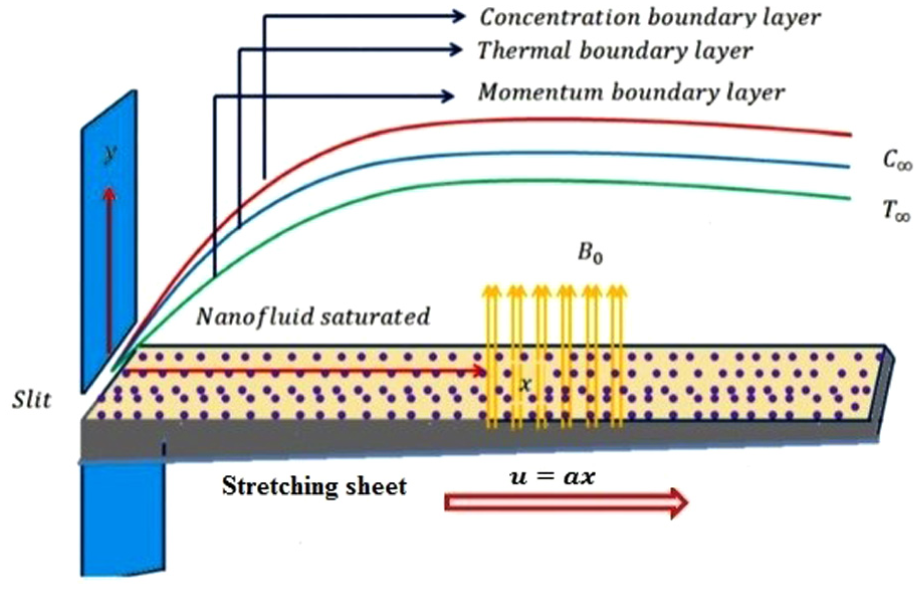
Physical configuration.
The flow equations are stated as follows in compact form under the previously mentioned assumptions. 24


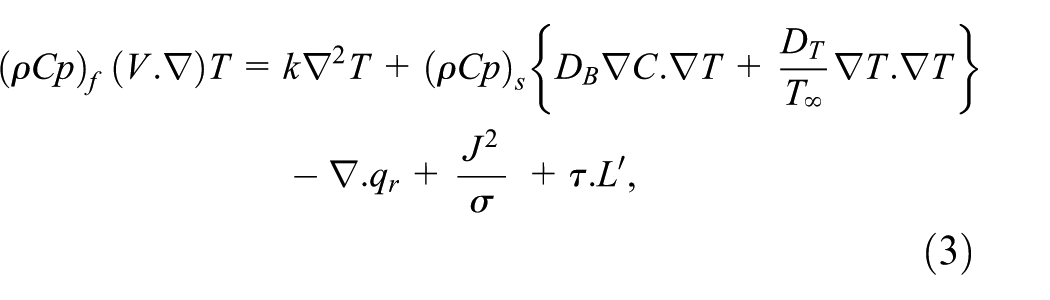

Where
We build the governing equations with the help of the Williamson fluid’s rheological formulation. For the considered fluid model (Williamson fluid), the Cauchy stress tensor is defined as.3,25


For the present study

We get the following form by converting equation (7)

The governing equations are

Continuity equation

Equation of motion

Energy equation
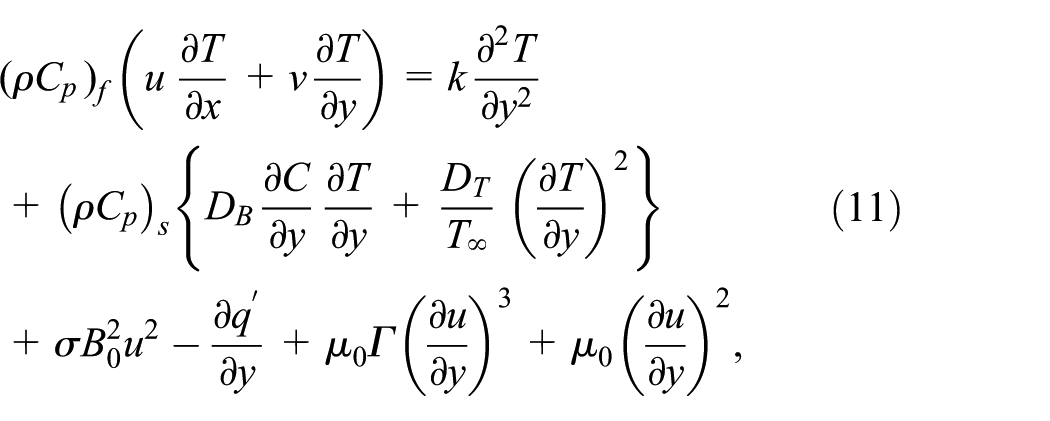
Concentration equation

The boundary conditions are as follows:

The radiative heat flux

We use the non-similar transformations which are defined below.26,27
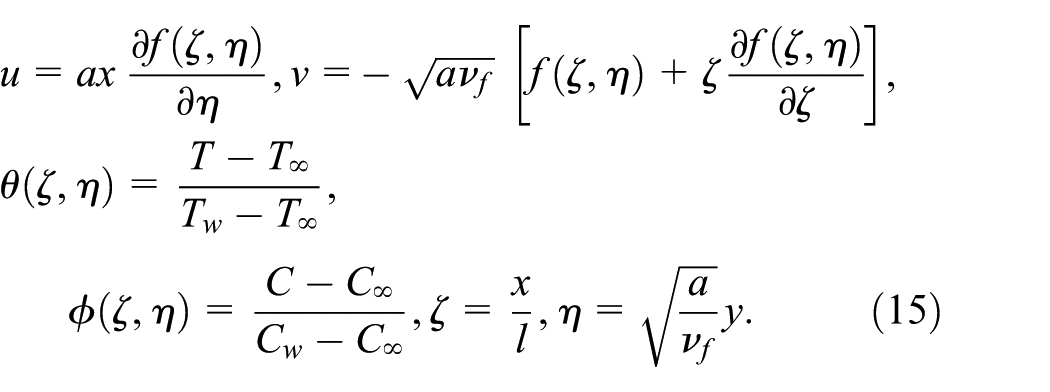
We will get following dimensionless PDEs by using equation (15) in equations (9)–(13).
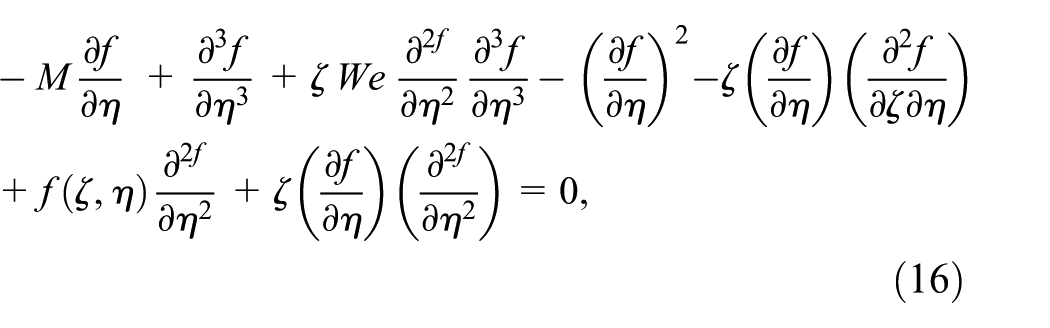
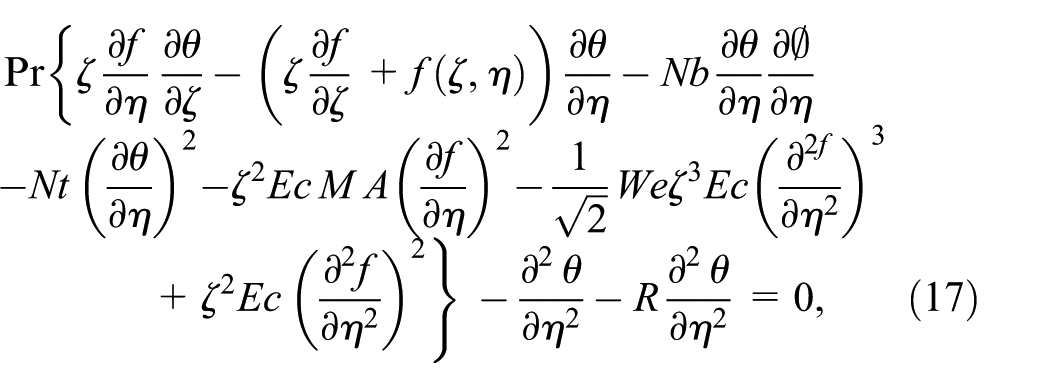
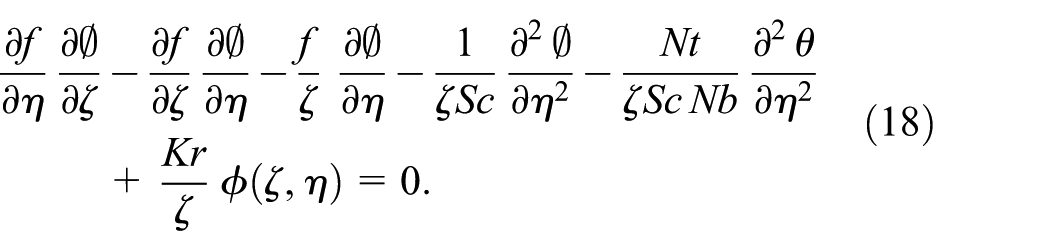
Associated boundary conditions are,
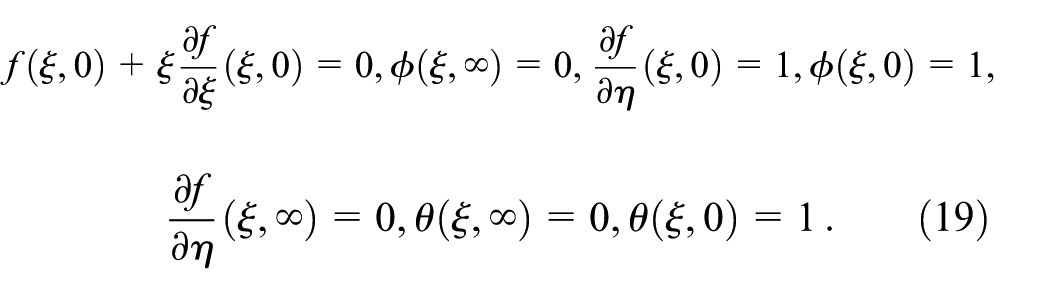
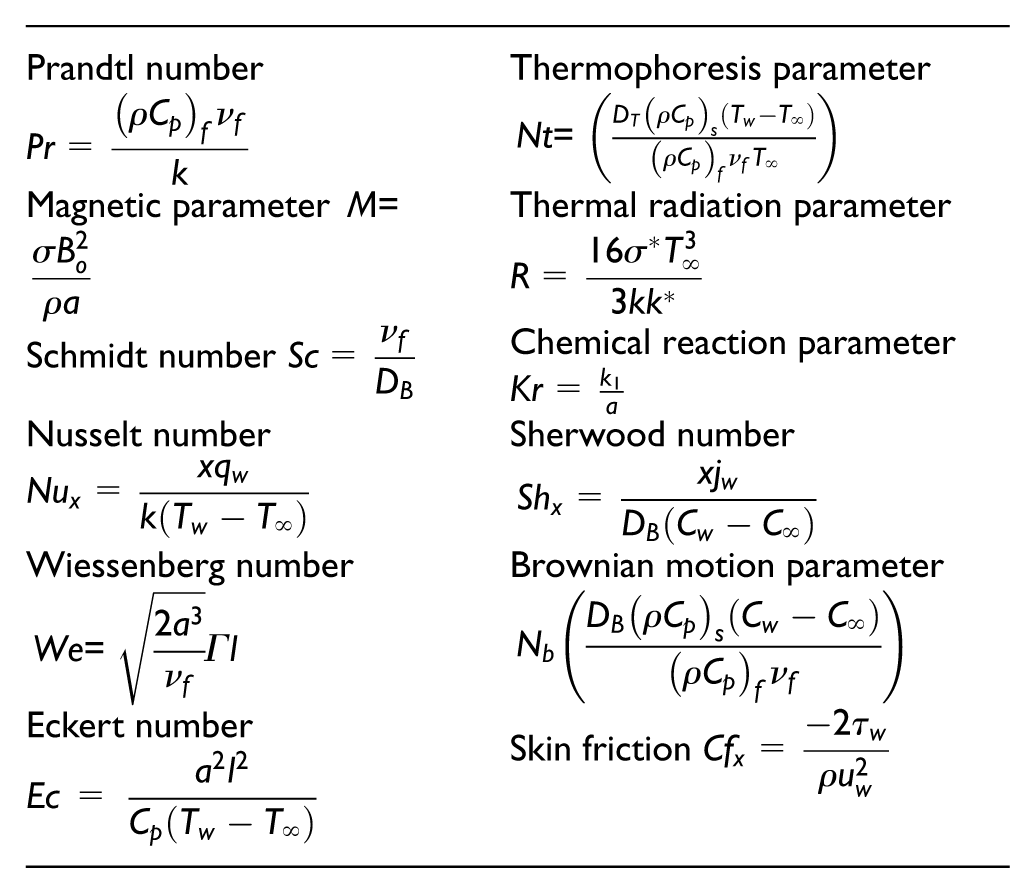
Some physical quantities are describe as,
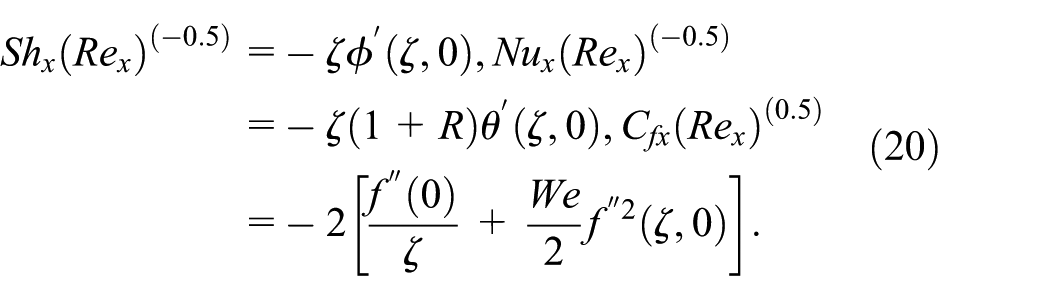
Local similarity solution
The local similarity technique is typically used in non-similar boundary layer solutions. This opinion presupposes that equations (16)–(19) term
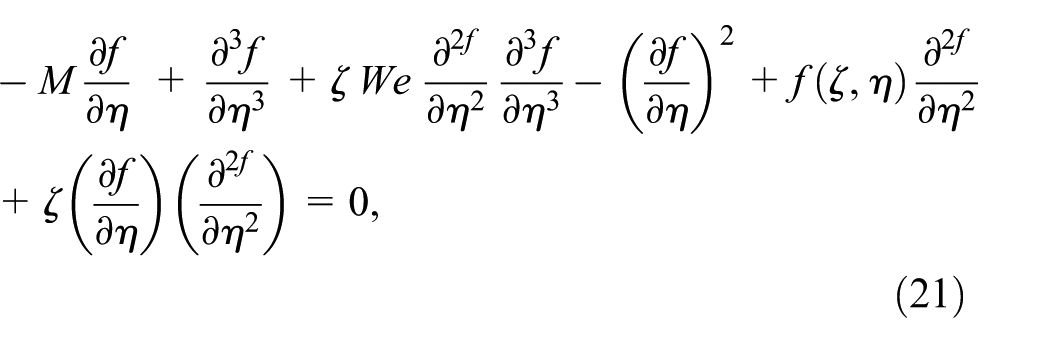
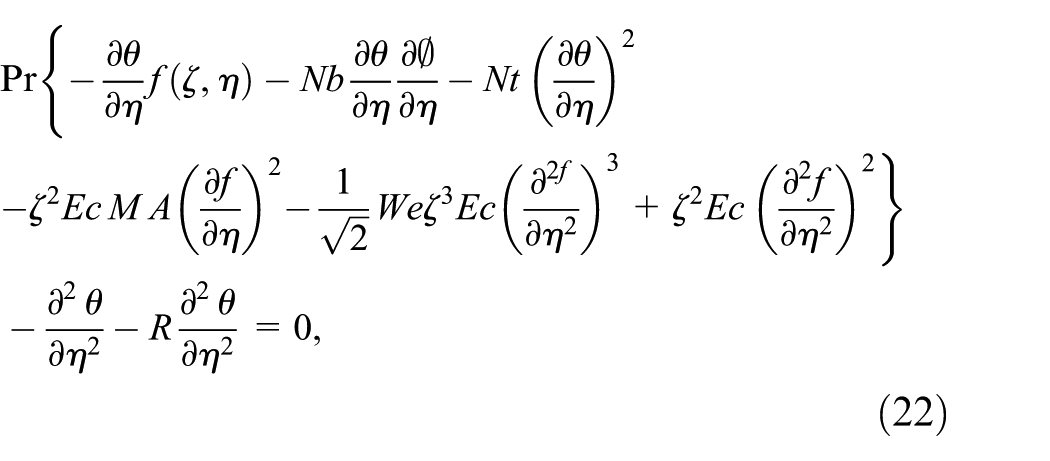

Associated boundary conditions are,

Local non-similarity solution
Sparrow and Yu 26 formulated the local non-similarity method to mitigate the inherent limitations of classical similarity approach. One common limitation of local similarity method is their inability to fully reduce the governing equations to ODEs. However, unlike conventional similarity techniques, the local non-similarity approach improves consistency and accuracy by accounting for variations in the flow through region-specific non-similar transformations. Sagheer et al. 27 applied a non-similarity method to study the improvement of thermal performance in an EMHD nanofluid with spatially varying heat flux along a stretching surface. Similarly, Razzaq and Farooq 28 evaluated the numerical behavior of nanofluids using a non-similar formulation. Furthermore, a two-dimensional mathematical model is formulated by Sagheer et al. 29 to examine the flow characteristics of an Eyring–Powell hybrid nanofluid, where the governing equations are simplified using an appropriate non-similarity transformation.
Entropy generation analysis
The largest problem facing engineering and industry today is efficient energy use. Due to the irreversibilities they contain, all thermo-fluidic systems lose energy. Any system that has irreversibilities loses thermal efficiency because the system’s thermal energy is depleted by the irreversibilities. This efficiency loss was initially described by Clausius in 1850 and was given the name Entropy. The quantity of thermal energy per unit of temperature in a system that cannot be put to use for constructive work is known as entropy. The system’s entropy can be estimated using the second rule of thermodynamics. Thus, it is recommended that the production of entropy be minimized in problems involving energy optimization as well as in the mechanics of typical engineering devices, such as thermofluid. Entropy can also enter or leave a system through mass movement and heat transfer. A system’s entropy rises when heat is introduced into it, while it falls when heat is removed. The mass contains energy and entropy. As a result, the entropy of a system grows as mass flows through it. Similar to how a system’s entropy might drop as mass leaves it. Over the past few decades, researchers and scientists have hailed the second law of thermodynamics as a powerful and practical technique for lowering the generation of system entropy. Numerous energy-related systems, such as solar, geothermal, and storage-related systems, are associated to entropy creation. Entropy formation in heat transmission and fluid flow systems was initially discussed by Bejan. 30 Hussain et al. 31 showed non-similar modeling for electromagnetic radiative flow of nanofluid along entropy generation. Abrar et al. 32 explored the entropy analysis of a nanofluid being transported by cilia while being affected by a magnetic field.
The mathematical expression of entropy generation is defined as
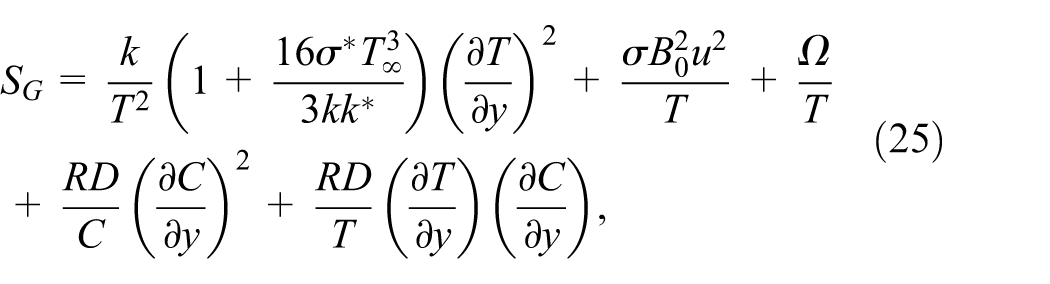
Where,
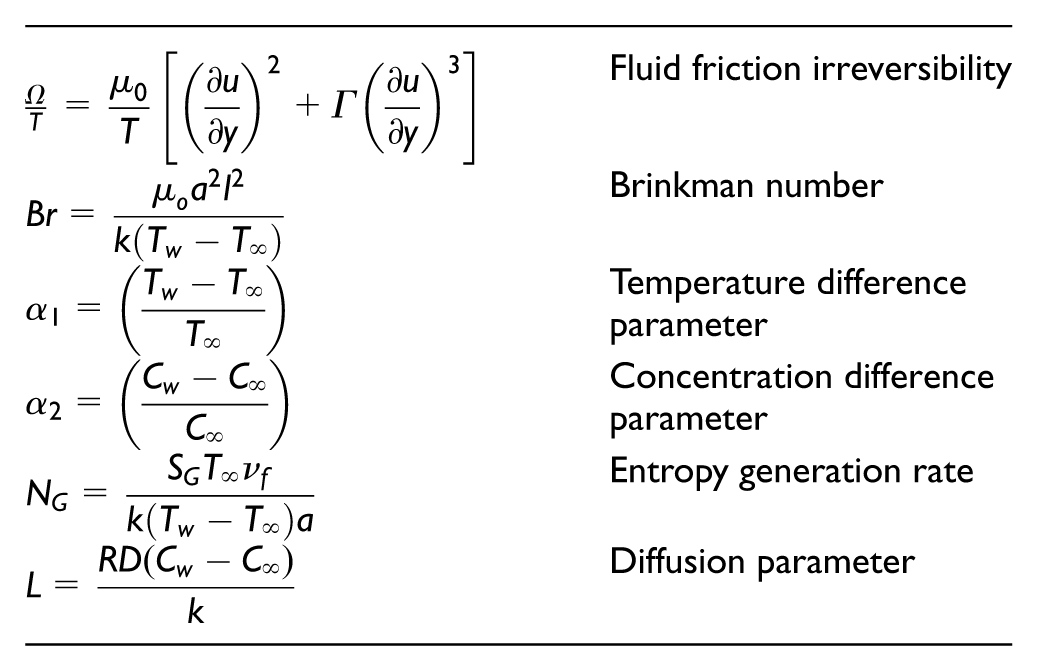
By implementing

Now, the Bejan number

Results and discussion
High-efficiency numerical simulations are performed for streamwise direction velocity, heat transport, and concentration assessments utilizing the Local Non-Similarity Approach via bvp4c. A three-stage Labatto III algorithm is used by the Matlab function bvp4c to carry out finite difference computations. These collocation polynomials provide a uniformly accurate C1-continuous solution to fourth order in the integration interval. The basis for choosing the mesh and implementing error control is the continuous solution’s residual. Using a mesh of points and the collocation method, the integration interval is split into smaller intervals. A global system of algebraic equations that were produced by the boundary conditions and collocation conditions applied to all subintervals were solved by the solver in order to produce a numerical solution. The mesh is changed, and the process is repeated until the solution fulfills the tolerance conditions. The error of the obtained numerical solution for each subinterval is determined. The study’s tabular data and graphic simulations complied with the bvp4c tolerance (10−5) requirements. Table 1 shows the possible values of the emerging dimensionless parameters. The impact of Weissenberg number
Specified parameter ranges for a stable solution.

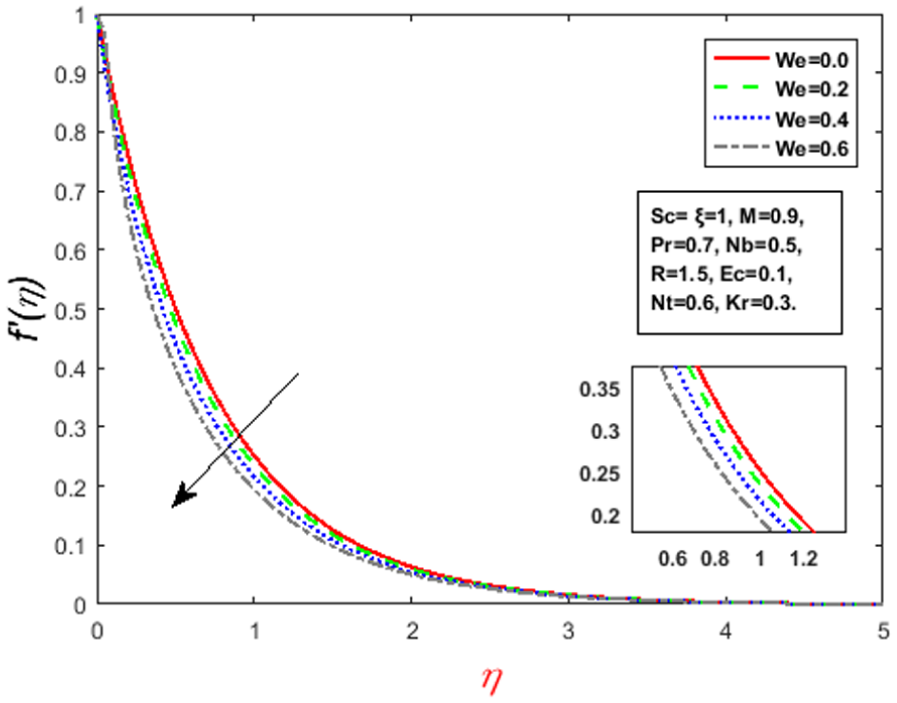
Influences of
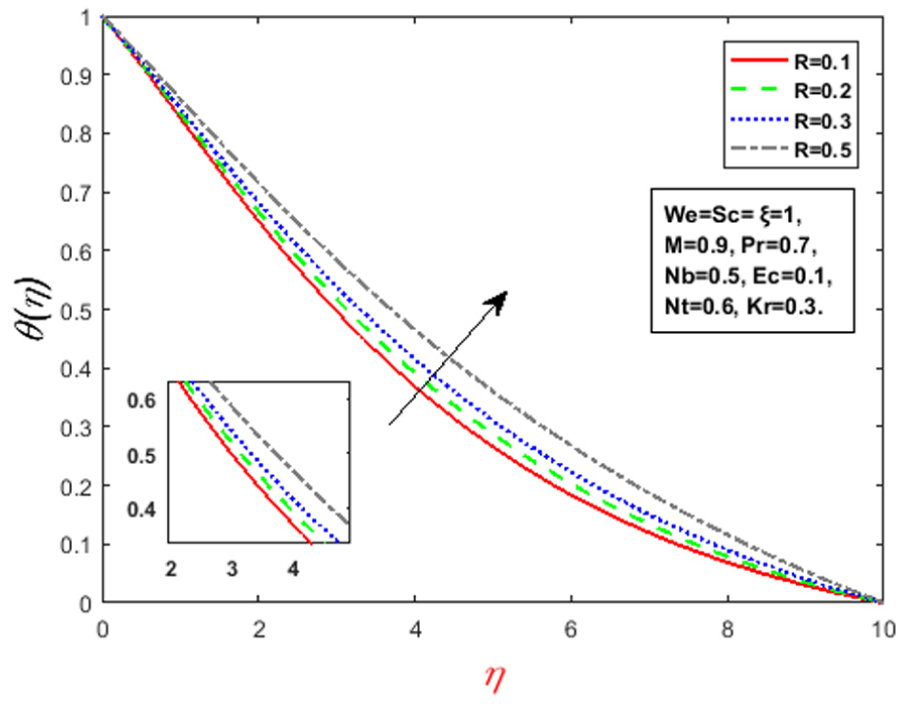
Influences of
Figure 4 shows the influence of the magnetic parameter

Influences of

Influences of
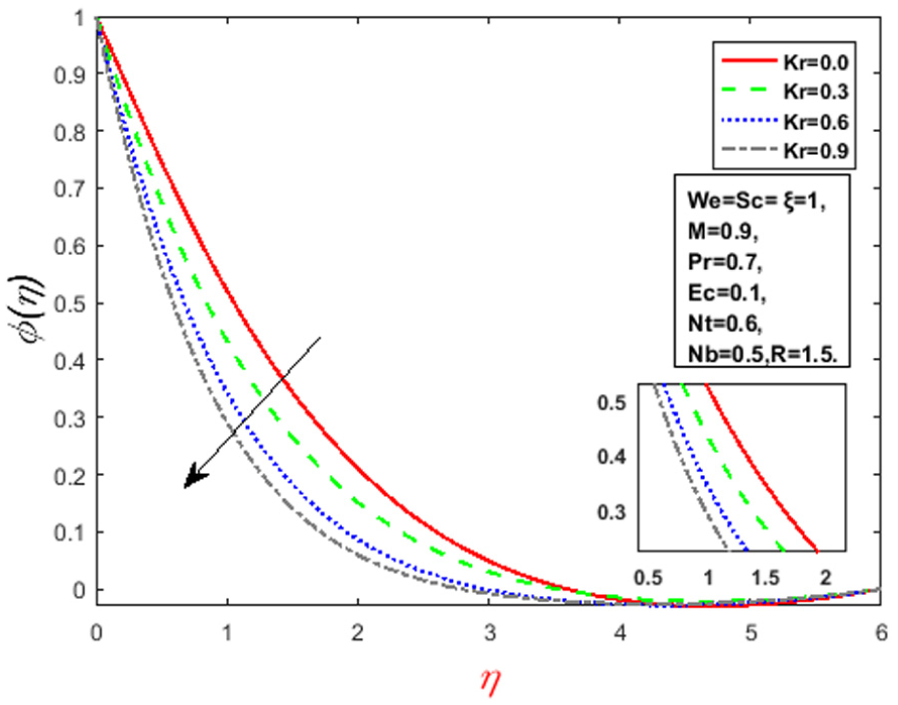
Influences of
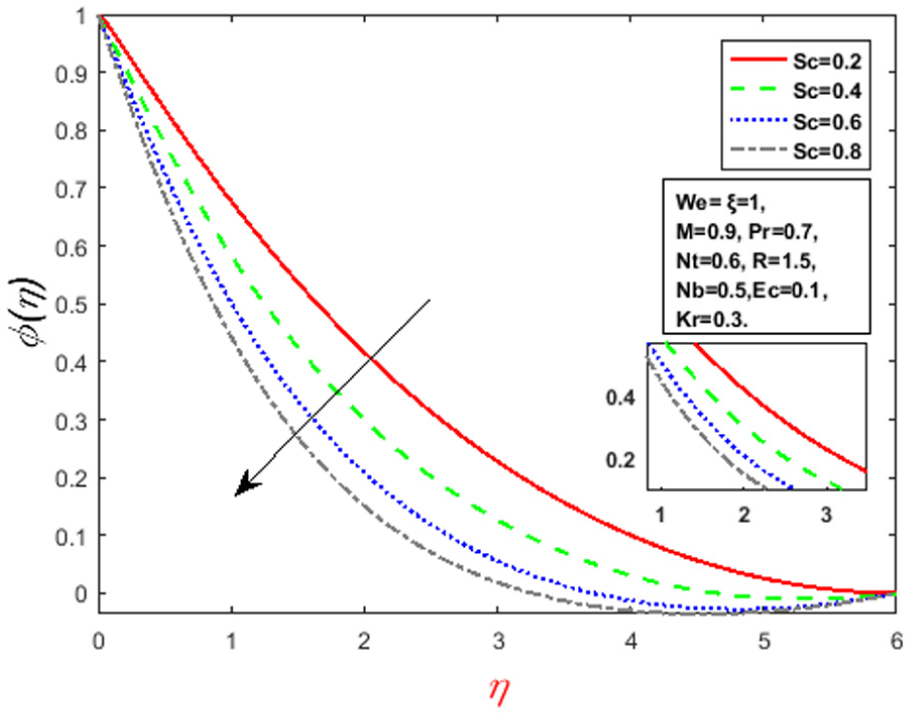
Influences of
Figure 8 shows that for increasing value of
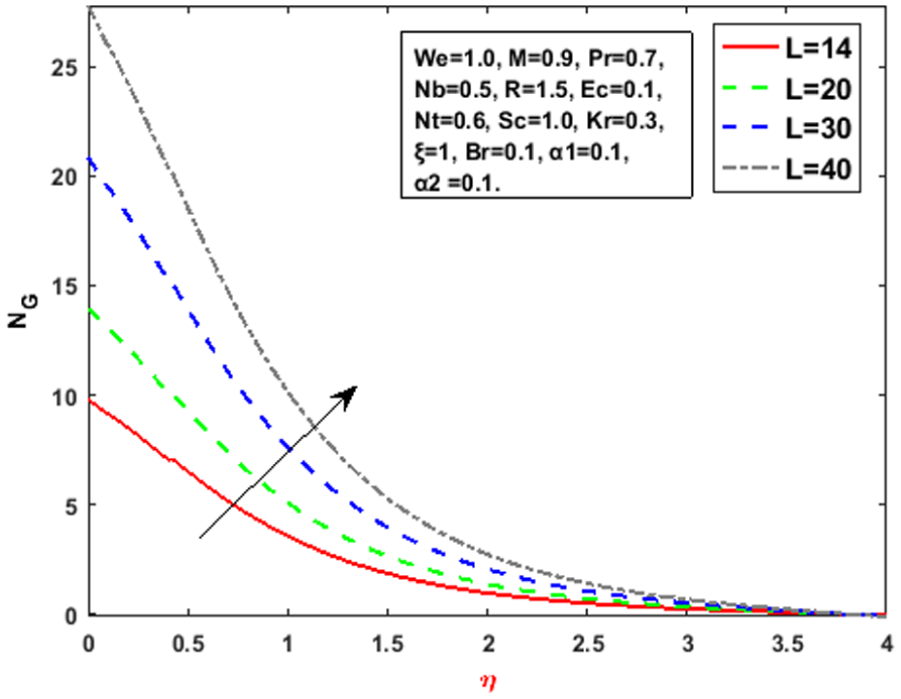
Influences of
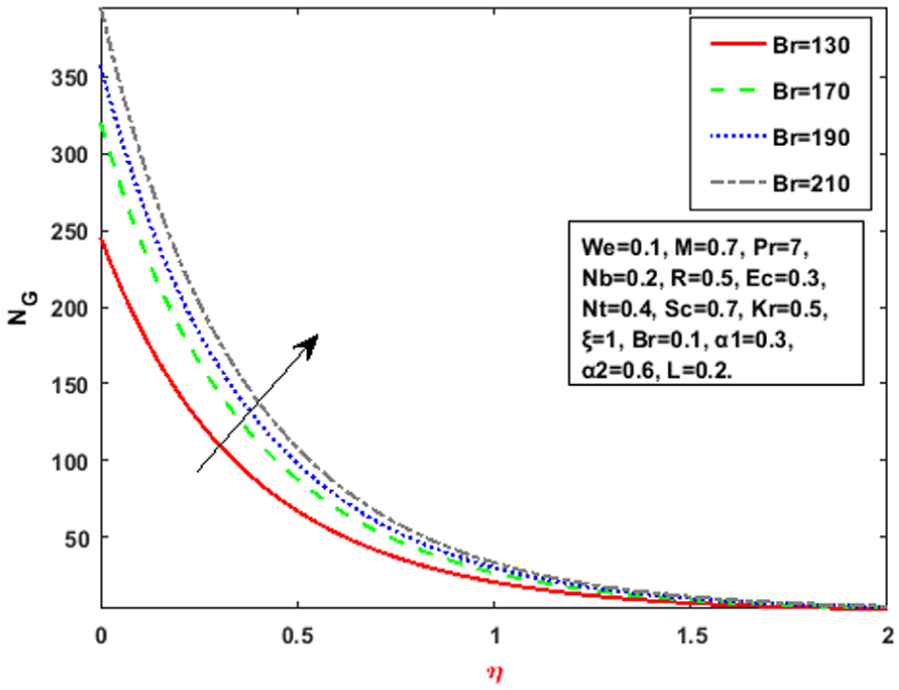
Influences of
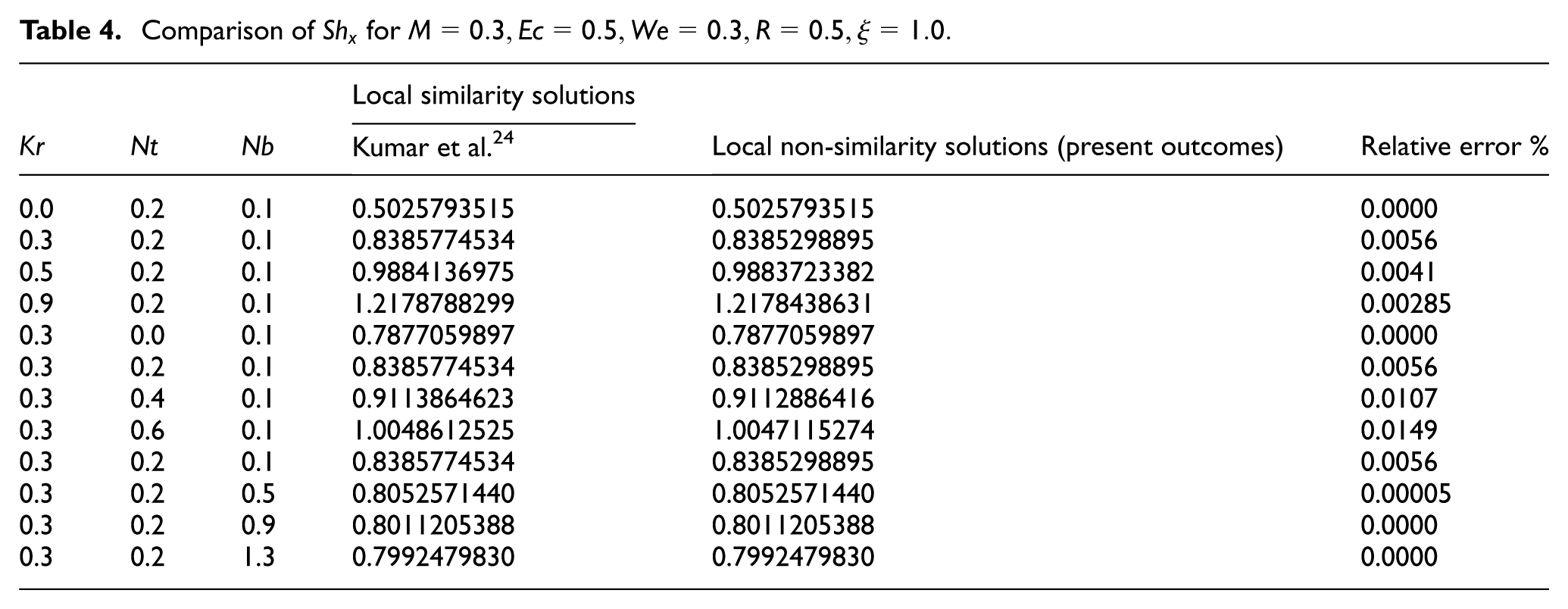
Comparison of

Comparison of

Comparison of
Conclusion
Our point in completing this research work was to explore how increasing or decreasing of all parameter’s effects fluid velocity, temperature, and concentration. Important results of the present research are given below:
As the Weissenberg number of the flow parameter increased, the fluid velocity decreased.
The temperature of the fluid is raised by expanding the radiation parameter, while it is lowered by increasing the Eckert number, Brownian diffusion parameter, magnetic parameter, temperature diffusion parameter, and Thermophoresis parameter values.
As the chemical reaction parameter and the Schmidt number is increased, the concentration of nanoparticles decreases.
A rise in the magnetic parameter causes the skin friction coefficient to increase, but an increase in the Weissenberg number causes the skin friction coefficient to drop.
As the Eckert number rises, the rate of heat transmission reduces, while the radiation and magnetic parameters rise.
As the Brownian diffusion parameter increases, the rate of mass transfer drops, but the chemical reaction and thermophoresis parameters increase.
Future recommendations
The steady convection nanofluid flow problems considered in this study can be developed for the unsteady state case.
Discussion regarding rheological features of hybrid nanofluid for the considered problem.
Non-homogenous nanofluid model can be considered instead of homogenous problem.
The current study can be extended for three dimensional and compressible flow problems.
Footnotes
Handling Editor: Aarthy Esakkiappan

Funding
The authors received no financial support for the research, authorship, and/or publication of this article.
Declaration of conflicting interests
The authors declared no potential conflicts of interest with respect to the research, authorship, and/or publication of this article.