



Abstract
Non-destructive evaluation (NDE) and structural health monitoring (SHM) play a critical role in ensuring the safety, reliability, and longevity of engineering structures and materials. Among the various NDE techniques, ultrasonic methods are widely regarded as the most effective for damage detection and material characterization due to their high sensitivity and versatility. However, conventional ultrasonic approaches face challenges in analyzing complex signals, limiting their accuracy and efficiency in certain applications. The advent of machine learning (ML) has revolutionized ultrasonic data analysis by utilizing advanced data mining and pattern recognition capabilities to decode intricate signal patterns. This review provides a comprehensive overview of ML techniques applied to ultrasonic-based damage detection and material characterization, including key processes such as data preprocessing and feature engineering. Emphasis is placed on case studies and real-world applications, highlighting ML’s role in defect detection, localization, and material property assessment. Additionally, the paper addresses critical challenges, limitations, and future directions, offering insights into the transformative potential of ML in ultrasonic NDE and SHM.
Keywords
Introduction
Material characterization and defect detection are essential for integrity, performance, safety, and durability and are employed across various industries. The importance of these practices cannot be overstated, as they involve a thorough evaluation of a material’s intrinsic properties—such as its mechanical strength, thermal stability, and chemical composition. Material characterization provides insights that inform the selection and utilization of materials, guaranteeing that they are appropriate for specific applications where durability and safety are critical. For example, in aerospace engineering, materials must withstand extreme temperatures and stress, making their proper assessment vital for the performance and safety of aircraft and passengers. Defect detection is a critical quality control component. It enables engineers and technicians to identify and analyze potential flaws early in production or during service, preventing minor issues from escalating into catastrophic failures. This proactive approach helps maintain high standards of safety and reliability, which are particularly essential in sectors where the consequences of material failures can be dire. Together, material characterization and defect detection contribute significantly to the advancement of safety and reliability. Providing a detailed understanding of material properties and ensuring that defects are promptly detected, these practices help enhance performance, reduce costs, and improve overall reliability across various applications.
Conventional methods employed for material characterization and defect detection utilize various physical phenomena. Among these methods, ultrasonic waves offer significant advantages, like high sensitivity to defects, nonhazardous, and the ability to propagate long distances in case of guided waves.1,2 Additionally, the relationship between ultrasonic waves and the fundamental properties of materials, such as density, elasticity, etc., 3 makes ultrasonic waves highly suitable for material characterization. From another point of view, the wave-material relationship’s complexity limits accurately assessing defects and characterizing materials. Furthermore, noise and the need for skilled operators to analyze the data introduces additional difficulties. 4 Recent advancements in artificial intelligence (AI) and machine learning (ML) have begun to address these limitations. AI/ML techniques are exceptional in analyzing vast datasets with exceptional speed and precision, enabling the automation of complex data interpretation by identifying patterns and features from the data while minimizing human error and providing valuable support to operators. 5 Emerging models such as transformer architectures 6 and transfer learning 7 approaches have further expanded the potential of ML in this field, offering improved generalization, the ability to learn from smaller labeled datasets and greater interpretability. These models are particularly promising for enhancing model reliability in scenarios where ultrasonic data is scarce or heterogeneous.
Several review papers have been published addressing structural health monitoring (SHM) and nondestructive testing (NDT) using ultrasonic waves and ML techniques.8–12 Yuan et al. 8 examined the application of ML methods for analyzing nonlinear ultrasonic data, providing valuable insights into specific methodologies. Cantero-Chinchilla et al. 10 focused on deep learning (DL) approaches for nondestructive evaluation (NDE) and proposed an automation framework, discussing different automation levels, their scopes, and their implications. Reviews by Sattarifar and Nestorović 11 and Yang et al. 13 concentrated on ML techniques using guided ultrasonic waves, limiting their scope to a subset of ultrasonic methods. Qing et al., 14 Monaco et al., 15 and Azad et al. 16 presented reviews on monitoring techniques tailored to composite structures, emphasizing ML algorithms, signal analysis, and delamination damage detection. Additionally, Sun et al. 17 explored ultrasonic NDT for inspecting welding defects with an emphasis on nuclear engineering applications. Silva et al. 18 provided an overview of common NDT techniques such as electromagnetic radiation, ultrasonic testing (UT), and electromagnetism testing for detecting and characterizing small-scale defects in engineering materials. While UT was included, these reviews did not comprehensively address material characterization, detection, and localization in connection with ML techniques.
While several reviews have explored UT or ML applications in NDE and SHM, most focus on ML methods tailored to specific applications such as weld inspection, delamination in composites, or guided wave-based SHM. This review uniquely integrates both domains by synthesizing ML techniques for ultrasonics-based defect detection and material characterization. It covers a diverse range of ultrasonic wave types, including longitudinal, shear, Lamb, Rayleigh, and guided waves, as well as various data representations such as A-scans, B-scans, and frequency-domain data. Unlike prior works that emphasize general deep learning strategies, or the physics of ultrasonics, this study examines how ultrasonic signal characteristics influence ML preprocessing, feature extraction, data representation, and algorithm selection. It also provides a structured summary of real-world case studies, categorized by application area, material type, data format, and ML approach, while highlighting techniques that are often underexplored in existing surveys. By addressing current challenges and outlining future directions, this review aims to bridge the gap between the ultrasonics and ML communities and to support the development of application-specific ML systems for ultrasonics-based NDE.
The structure of this paper is organized as follows: Section 2 covers the Fundamentals of UT, including the principles of UT, various wave propagation-based techniques, and the wave phenomena when interacting with defects or discontinuities. Section 3 discusses ML Techniques for Ultrasonic Data Analysis, outlining different types of learning approaches. Section 4 focuses on Data Preprocessing and Feature Engineering, detailing the essential steps before applying ML algorithms. Section 5 presents Case Studies and Applications, summarizing practical examples and their implications for defect detection and material characterization. Section 6 concludes with Challenges, Limitations, and Future Directions, offering insights into current obstacles and potential avenues for future research. Finally, Section 7 summarizes our conclusions drawn from the findings presented in this paper.
Fundamentals of ultrasonic testing
This section introduces the fundamental principles of ultrasonic wave propagation and the techniques used in testing, discusses wave types and transducer mechanisms, and explores the interactions of waves with material features such as defects and boundaries.
Ultrasonic wave propagation and testing techniques
UT is a pivotal non-destructive testing (NDT) method that utilizes high-frequency sound waves to assess material properties and detect flaws. Conventional techniques such as pulse-echo, pitch-catch, and through-transmission form the foundation of UT applications. The pulse-echo method, widely adopted for its simplicity and high resolution, uses a single transducer for flaw detection and thickness measurement across diverse materials like composites and welds.3,19,20 The pitch-catch method employs multiple transducers to detect flaws in inaccessible areas, while through-transmission excels in evaluating composite materials. Guided wave testing confines ultrasonic energy within structures like pipelines, enabling long-range inspections with minimal signal loss, particularly beneficial in industries such as oil and gas.3,19
Advanced ultrasonic techniques have significantly enhanced inspection capabilities. Phased Array Ultrasonic Testing (PAUT) and the Total Focusing Method (TFM) utilize beam steering and focusing to provide detailed defect localization and sizing.21,22 Time-of-flight diffraction (TOFD) is highly effective for crack sizing and is often combined with PAUT for comprehensive weld integrity assessments. 23 Laser-induced UT, using lasers to generate and detect ultrasonic waves, is particularly suited for extreme environments and finds applications in inspecting turbine blades and thin-film materials. 24 Nonlinear UT techniques, sensitive to early-stage damage, complement conventional methods by providing predictive insights into structural integrity.9,25–27 These advanced methods collectively expand the capabilities of UT, ensuring precise and reliable evaluations across diverse industries. Figure 1 provides a schematic overview of the discussed UT techniques, highlighting their principles.

Schematic representation of various UT techniques: (a) pulse-echo method, (b) pitch-catch method, (c) through-transmission technique, (d) guided wave technique, (e) PAUT with linear beam steering, and (f) PAUT with curved focusing. 28
Ultrasonic wave types and transducers
Ultrasonic waves are categorized based on their propagation characteristics, which influence their application suitability. The two primary types are bulk waves and guided waves. Bulk waves travel through the interior of materials and are classified as longitudinal or shear waves. 29 Longitudinal waves, or compressional waves, cause particle displacement parallel to the wave’s propagation direction. Their high velocity and deep penetration make them ideal for thickness measurements, flaw detection, and material characterization in solids and liquids. Shear waves, with particle motion perpendicular to propagation direction, require a solid medium. Although slower than longitudinal waves, their sensitivity to planar defects like cracks makes them invaluable for weld inspections, composite delamination detection, and precise defect localization during angle-beam testing.
Guided waves propagate along structural boundaries enabling efficient inspection of large structures over long distances.30–32 Lamb waves, a subset of guided waves, travel in thin plates and exhibit symmetric or antisymmetric modes, making them effective for corrosion monitoring, delamination detection, and aerospace structural assessments. Shear horizontal waves, with horizontal particle motion, excel at detecting surface and subsurface defects in anisotropic materials. In cylindrical structures like pipelines, guided waves propagate in longitudinal, torsional, or flexural modes, ideal for long-range corrosion and thinning inspections. Lastly, Rayleigh waves, a type of surface wave with elliptical particle motion and limited penetration, are highly effective for detecting surface and near-surface defects, evaluating surface roughness, and testing coatings or thin films.
Transducers are fundamental to UT, converting electrical energy into ultrasonic waves and vice versa. The choice of transducer, such as piezoelectric types for versatility, EMATs for non-contact inspections, or laser-based transducers for remote testing, directly impacts accuracy and performance.33–36 Factors like frequency range, material properties, and environmental conditions guide selection. A typical UT system comprises a pulser/receiver, transducer, data acquisition unit, and signal processing software. Recent innovations, including portable devices, high-speed digitizers, and AI-powered signal processing, have enhanced real-time defect characterization, efficiency, and reliability, driving broader adoption across industries.
Interaction of ultrasonic waves with material features
Ultrasonic waves interact with material features through mechanisms such as scattering, reflection, transmission, and mode conversion, all influenced by defect size, shape, orientation, and material properties. Scattering occurs when waves encounter defects comparable to or smaller than their wavelength, redistributing energy and aiding in the detection of inclusions, porosity, and grain boundaries. Reflection arises at boundaries with significant acoustic impedance mismatches, providing insights into defect location, size, and orientation—widely used in pulse-echo techniques for structural components. Transmission involves wave propagation through materials or defects, where attenuation or scattering alters amplitude and frequency, forming the basis of through-transmission testing for delaminations and volumetric defects. Mode conversion transforms wave modes upon interaction with boundaries or defects, enhancing subsurface defect detection and characterization in layered or anisotropic materials. Together, these mechanisms are critical for defect detection, material characterization, and reliable UT.37–43
Material properties significantly affect wave propagation and defect interaction. Anisotropy, prevalent in composites and crystalline materials, causes directional variations in wave velocity and attenuation, requiring advanced techniques for accurate testing. 44 Grain size influences scattering and signal-to-noise ratio, with coarse-grained materials demanding tailored methods to account for attenuation and boundary characterization. Additionally, factors such as temperature, residual stresses, and microstructural changes alter wave behavior. Elevated temperatures impact wave velocity and attenuation, while residual stresses induce anisotropy, modifying propagation paths. Microstructural changes from phase transformations or fatigue introduce nonlinearities, presenting challenges but also opportunities for advanced material characterization. The complex interplay between ultrasonic waves and material features highlights the need for sophisticated testing methods that account for these interactions and material-specific factors, ensuring accurate defect detection and comprehensive material assessment. Figure 2 illustrates the interaction of ultrasonic waves with material features, highlighting key mechanisms such as reflection, transmission, scattering, and mode conversion.
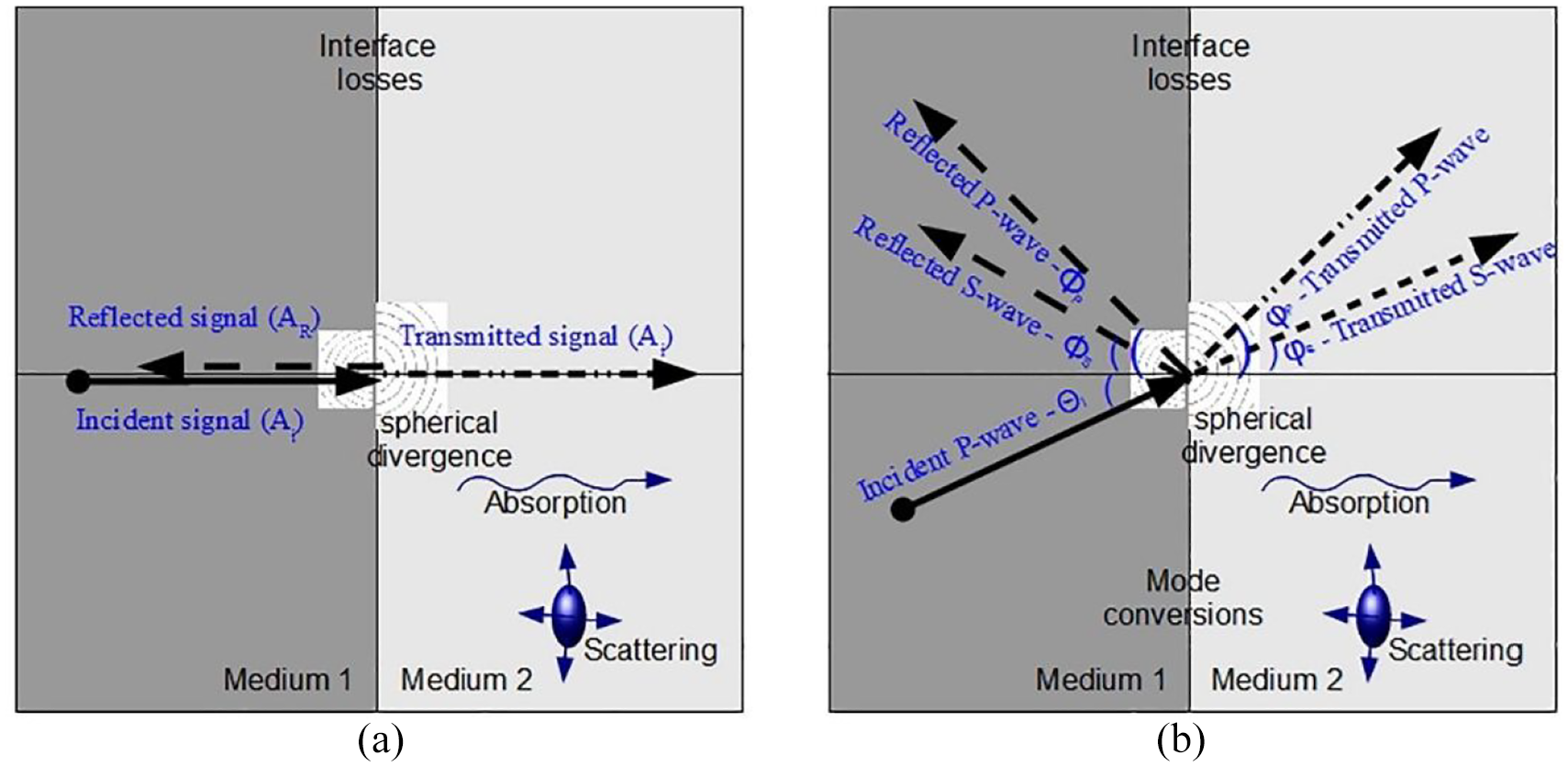
Acoustic energy loss mechanisms, including attenuation and scattering. (a) Wave partitioning at normal incidence, showing incident, transmitted, and reflected signals. (b) Mode conversion at oblique incidence, generating compressional and shear waves in reflected and transmitted directions. 39
Recent advancements in UT are evident not only in theoretical developments but also in practical applications, as reflected in the growing number of patents published in the field. These patents were collected from Google Patents using a targeted search strategy that included keywords specific to ultrasonic-based NDT and SHM. The search was further refined by incorporating the International Patent Classification (IPC) code G01N29/00, which relates to UT methods. Figure 3(a) illustrates the number of patents related to UT published annually from 2015 to 2024, showing a clear upward trend. This significant growth underscores the increasing industrial relevance of UT technologies, driven by the demand for improved defect detection, material characterization, and testing techniques across various sectors.

(a) Number of patents related to ultrasonic-based NDT and SHM published annually from 2015 to 2024, highlighting the growth in innovation and applications. (b) Word cloud generated from the analyzed patents, accompanied by a legend listing the 25 most frequently occurring terms, emphasizing key themes and technologies in ultrasonic-based NDT.
Complementing this analysis, Figure 3(b) presents a word cloud generated from the analyzed patents, highlighting the recurring themes, technologies, and applications that have defined innovation in UT. The figure is accompanied by a legend listing the 25 most frequently occurring terms. Prominent terms such as “ultrasonic,”“detection,”“device,” and “system,” reflect the focus on precision, reliability, and innovation in ultrasonic-based NDT methods. Additional frequently appearing terms, such as “inspection,”“wave,”“acoustic,”“probe,” and “nondestructive,” further emphasize the focus on ultrasonic NDT applications and methodologies. Together, these visualizations demonstrate the expanding scope and critical importance of UT in advancing material evaluation and quality assurance across industries such as aerospace, automotive, energy, and manufacturing.
ML techniques for ultrasonic-based data analysis
Advancements in ML have transformed ultrasonic NDE, addressing challenges like data scarcity, noise interference, and signal complexity with remarkable precision. This section outlines key ML paradigms—supervised, unsupervised, semi-supervised, reinforcement learning, and hybrid approaches—and their applications in ultrasonic data analysis. Supervised learning, reliant on labeled datasets, excels in tasks like defect classification and detection, achieving high accuracy when ample annotated data is available.45–48 Unsupervised methods, such as clustering and dimensionality reduction,49–51 uncover patterns in raw data, proving invaluable for feature extraction and anomaly detection where labeled datasets are scarce. Semi-supervised learning combines small labeled datasets with larger unlabeled ones, reducing annotation effort while maintaining performance.51,52 Though less common in ultrasonic NDE, reinforcement learning offers adaptability by learning through feedback from inspection environments, making it ideal for optimizing strategies and dynamic conditions.53–56 Hybrid approaches, like ensemble methods and multimodal data fusion, enhance robustness and accuracy. Ensemble techniques, such as bagging and boosting, improve generalization by aggregating multiple model predictions, 57 while multimodal fusion combines data from ultrasonic and other inspection methods for enriched analysis.58,59 In the following sections, we explore the aforementioned ML techniques in greater detail, emphasizing their role in ultrasonic-based NDE.
Unsupervised ML techniques
Unsupervised ML (UML) plays a critical role in NDE, particularly in analyzing complex ultrasonic data.60–67 By identifying patterns and structures directly from unlabeled data, UML enables automation and deeper insights, making it indispensable in scenarios where labeling is impractical (Figure 4). 52 Clustering techniques, such as k-means and density-based methods (e.g. DBSCAN), are widely used to differentiate defect signals from noise, segment regions of interest, and classify materials. These methods, often combined with preprocessing steps like noise reduction and feature extraction, enhance accuracy. Beyond clustering, dimensionality reduction techniques68–70 like Principal Component Analysis (PCA) and anomaly detection methods uncover latent structures and identify outliers indicative of defects. The success of UML methods in NDE is often evaluated using metrics such as silhouette scores for clustering and reconstruction errors for anomaly detection. By utilizing these techniques, researchers can push the boundaries of ultrasonic data analysis, enhancing both defect detection and material characterization.
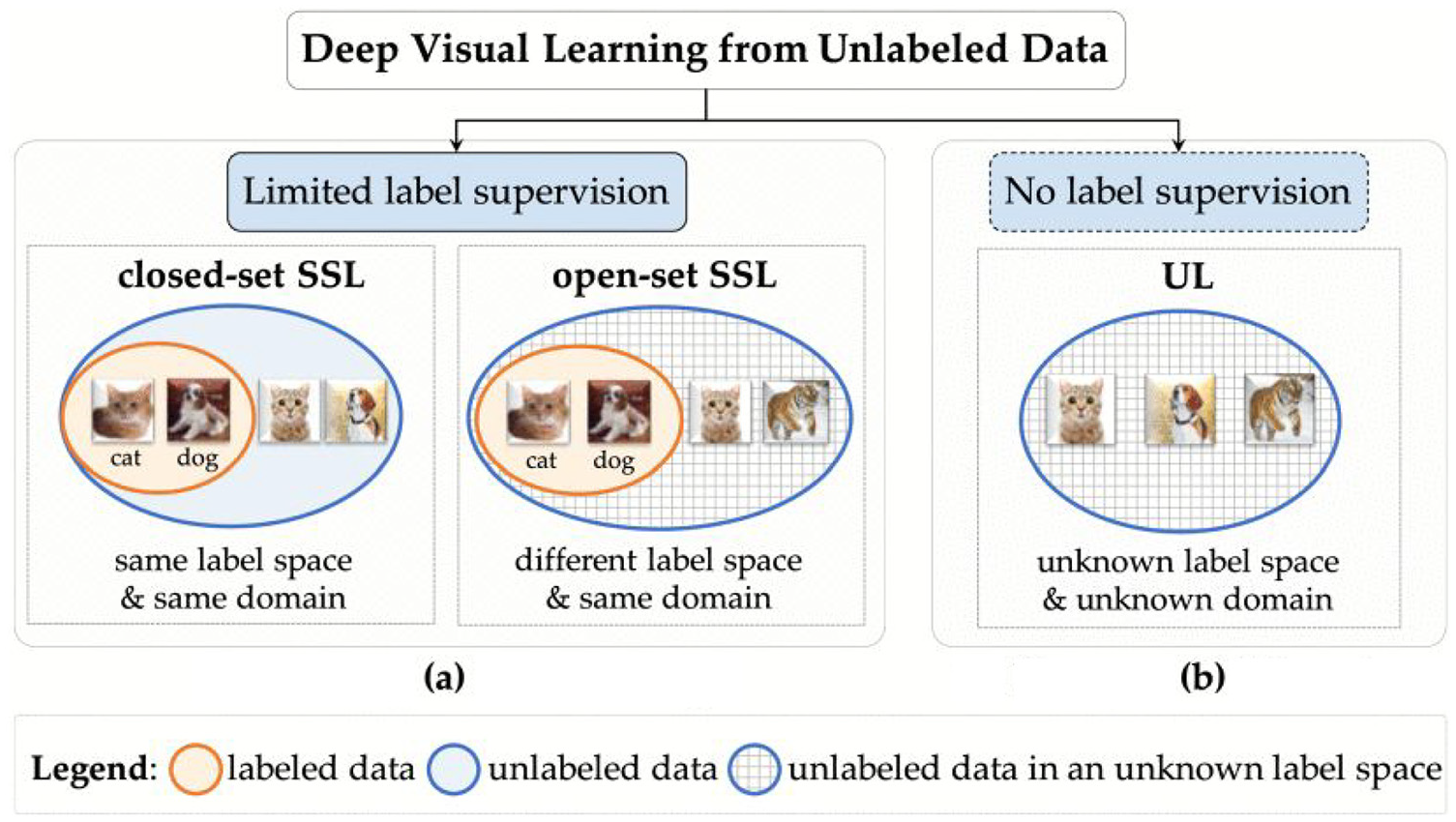
Comparison of semi-supervised and unsupervised learning techniques 52 : (a) semi-supervised learning and (b) unsupervised learning.
K-means clustering
K-means clustering is a widely used UML algorithm in ultrasonic NDE, known for its simplicity and effectiveness in analyzing unlabeled datasets.71–73 The algorithm iteratively partitions data into k clusters, represented by centroids, by minimizing the Euclidean distance between data points and their nearest centroids. These centroids are recalculated as the mean of assigned points, a process that continues until convergence. This method has proven effective in applications like flaw detection and defect classification. 74 In ultrasonic NDE, K-means have shown significant success in identifying flaws and classifying defects. For example, Du et al. 75 utilized K-means to classify acoustic emission (AE) signals from stress-corrosion cracking in 304 nuclear-grade stainless steel. Using five key signal features—amplitude, energy, duration, rise time, and ring count—the algorithm grouped data into three clusters representing distinct damage mechanisms: crack propagation, pitting, and bubble break-up. Amplitude and frequency band energy were identified as key features for distinguishing clusters, showcasing K-means’ ability to uncover damage mechanisms without labeled data. K-means has also been applied in a three-stage computer vision framework for sharpening blurred thermal diffusion-wave NDT images, effectively clustering pixel intensity values to enhance defect localization. 76 Additionally, its integration into pulse eddy current methods further highlights its versatility across image-based and signal-based NDE analyses. 77
Despite its strengths, K-means clustering has notable limitations. It requires a predefined number of clusters (k), which can be challenging to determine for complex NDE datasets. The algorithm is also sensitive to centroid initialization, potentially resulting in suboptimal clusters. Furthermore, its susceptibility to noise and outliers can reduce accuracy by forcing such points into clusters. K-means assumes spherical cluster shapes, making it less effective for datasets with non-spherical or overlapping distributions. In such cases, alternative methods like Density-Based Spatial Clustering of Applications with Noise (DBSCAN) or Gaussian Mixture Model may yield more robust results.
Gaussian mixture modeling (GMM)
GMMs are widely used in ultrasonic NDE for their ability to handle uncertainties caused by sensor noise and environmental variability. By modeling data as a mixture of Gaussian distributions, GMMs provide a robust approach to analyzing complex structures. A key challenge lies in selecting the optimal number of Gaussian components (k), which significantly impacts clustering performance and requires balancing model complexity and accuracy. The Expectation-Maximization (EM) algorithm is typically used to estimate parameters such as means, covariances, and weights. EM iteratively alternates between calculating data likelihoods (expectation step) and updating model parameters (maximization step) until convergence. 9
Several studies highlight the effectiveness of GMMs in ultrasonic NDE. Qiu et al. 78 used GMMs for fatigue damage detection, utilizing cross-correlation and frequency amplitude differences to identify subtle material property changes. Wang et al. 79 achieved 88.10% accuracy in corrosion detection and 80.95% in crack identification, demonstrating GMM’s robustness in distinguishing structural defects despite computational challenges. Virupakshappa and Oruklu 80 compared GMM to other unsupervised techniques for flaw echo detection in ultrasonic A-Scan data. GMM outperformed Mean Shift Clustering in speed and K-means in accuracy, achieving a top detection accuracy of 93%, underscoring its superior performance in this domain.
Other clustering algorithms
Advanced clustering techniques beyond K-means and GMM, particularly hierarchical clustering methods, have gained prominence in ultrasonic NDE. These methods excel in uncovering intricate patterns and detecting subtle anomalies. Hierarchical clustering, combined with transmissibility and similarity analysis, has proven effective in SHM. For instance, Zhou et al. 81 used this approach to detect structural damage in pipelines and bridges, achieving accurate differentiation between damaged and intact scenarios, even with subtle damage indicators. This capability is especially valuable for long-term monitoring, enabling early defect detection and optimizing maintenance schedules.
In a related study, Salazar et al. 82 combined hierarchical clustering with Independent Component Analysis Mixture Models (ICAMM) to classify defects using ultrasonic impact-echo data. By employing the Kullback-Leibler divergence as a distance measure, this method achieved consistent and accurate defect classifications, proving especially valuable in industries like marble manufacturing, where precise identification optimizes quality control and resource use. Further advancements include integrating hierarchical clustering with mixtures of Gaussians for defect classification in aluminum alloys. 83 Using approximations of the Kullback-Leibler divergence, this approach effectively merged clusters and demonstrated robust performance in distinguishing defective from non-defective materials. Its adaptability across various materials and defect types makes it a promising tool for enhancing quality assurance and reducing waste in manufacturing.
Tree-based algorithms
Tree-based algorithms, including decision trees, random forests, and gcForest, are highly effective in ultrasonic NDE for handling complex data and extracting meaningful patterns.84,85 Decision trees use a hierarchical structure to recursively partition data based on feature thresholds, enabling intuitive classification and regression while providing insights into the factors driving defect detection. Random forests enhance this approach by forming an ensemble of decision trees, each trained on random subsets of data and features. This ensemble significantly reduces overfitting and improves generalization, addressing challenges such as noise and variability in ultrasonic NDE data. 85
The gcForest algorithm, an advanced evolution of random forests, incorporates multi-grained scanning and a cascade forest structure to capture complex patterns and dependencies, making it ideal for ultrasonic signal analysis. Zhao et al. 86 introduced the AWGA-gcForest algorithm, combining Full Focusing A-scan techniques with multi-scale adaptive sliding windows and genetic algorithms to enhance dynamic efficiency and optimize cascade forest weighting. This approach achieved 97.50% accuracy, 97.26% precision, 96.63% recall, and an F1 score of 96.92%, outperforming other models while reducing computational costs. These findings underscore the effectiveness of tree-based algorithms, particularly gcForest, in advancing ultrasonic imaging NDE.
While unsupervised learning algorithms offer flexibility for analyzing complex and unlabeled ultrasonic data, they face significant challenges. These include limited interpretability and the absence of ground truth, as they rely solely on data structure without supervision. Noise and outliers can further distort results, and the need for extensive preprocessing adds complexity. Evaluating the quality of results often becomes subjective, particularly when true patterns in the data are unclear. These limitations underscore the importance of semi-supervised learning, which integrates labeled and unlabeled data to enhance accuracy and interpretability in ultrasonic NDE.
Semi-supervised ML techniques
Semi-supervised learning (SSL) is a powerful approach for scenarios where labeled data is scarce, expensive, or time-intensive to obtain. By combining a large pool of unlabeled data with a small amount of labeled data, SSL optimizes learning through supervised and unsupervised loss functions. The supervised loss ensures prediction accuracy on labeled data, while unsupervised loss uncovers latent structures in unlabeled data (Figure 5).
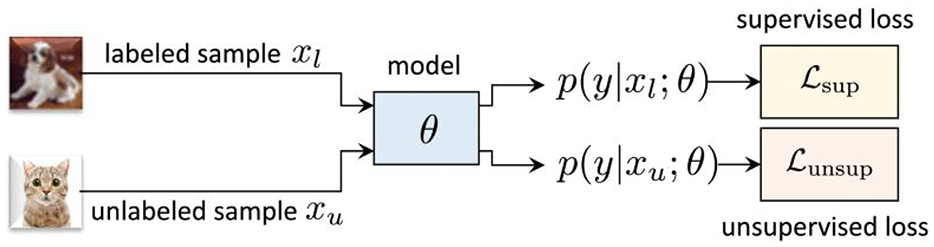
Schematic representation of SSL approach. 52
Igual et al. 87 applied a semi-supervised Bayesian classifier with Gaussian mixtures to detect material defects using impact-echo signals, achieving a harmonic mean F-value of 92.38% with just 10% labeled data. Their method balanced feature dimensionality and model complexity, reducing overfitting and demonstrating SSL’s potential in low-supervision scenarios. Similarly, Sen et al. 88 developed an SSL framework for pipe damage detection, using hierarchical clustering with minimal labeled data. By labeling a single undamaged data point, their method accurately distinguished damaged and undamaged clusters, even in challenging environments with angular offsets and reflective boundaries. This low-cost, sensor-friendly approach is practical for real-world pipeline monitoring. Yoon et al. 89 utilized SSL for analyzing concrete structures, incorporating PCA-based preprocessing to extract key frequency-domain features like peak values and energy areas. Their iterative SSL framework improved classification accuracy by 7%–8% compared to fully supervised methods, dynamically refining models to adapt to changing data distributions and enhancing the categorization of structural conditions.
SSL provides scalable solutions to reduce labeling burdens while maintaining high detection accuracy across diverse, complex environments. However, challenges such as reliance on accurate initial labels, susceptibility to noise, overfitting in high-dimensional spaces, and computational inefficiencies during iterative updates remain. Despite these limitations, SSL holds significant promise for ultrasound and structural monitoring applications. Future research should focus on improving robustness to noise, enhancing computational efficiency, and developing adaptive frameworks that dynamically balance supervised and unsupervised objectives for various applications.
Supervised ML techniques
Supervised learning (SL) methods are widely applied in ultrasonic NDT for defect classification using structured, labeled datasets.90–93 These techniques excel in controlled environments with well-curated training data. Artificial neural networks (ANNs) have shown exceptional capabilities in defect detection. Early work by Masnata and Sunseri 94 employed a three-layer neural network (NN) that utilized the shape and statistical parameters of ultrasonic signals, achieving 100% accuracy in weld defect classification under noisy conditions. Similarly, NNs applied to ultrasonic signals from pulse-echo and TOFD techniques achieved classification accuracies of 72.5% and 77.5%, respectively, with preprocessing enhancing TOFD accuracy to 97.5%. 95
Feature extraction is pivotal for improving SL performance in ultrasonic inspection. Techniques such as wavelet and Fourier transforms (FT) combined with PCA have effectively reduced feature dimensionality while maintaining classification accuracy. For instance, one system condensed 2500 A-scan data points into 5–20 critical features, achieving high classification accuracy suitable for real-time industrial deployment. 96 In spot-welded joint inspections, the integration of wavelet-domain features with particle swarm optimization (PSO) and support vector machine (SVM) classifiers has proven highly effective, delivering high accuracy and stability across varying operational conditions. 97
Convolutional neural networks (CNNs), a prominent class of deep learning models,10,18,98–100 have further revolutionized defect classification, offering robustness against noise and outperforming traditional NNs. Studies report up to 15.45% improved accuracy for detecting critical defects like cracks and slag inclusions under noisy conditions (Figure 6). 101 Additionally, autoencoders for noise reduction have enhanced CNN performance by up to 10.56%, particularly in severe noise scenarios. 102 These advancements highlight CNNs as essential tools for reliable defect detection in challenging environments.
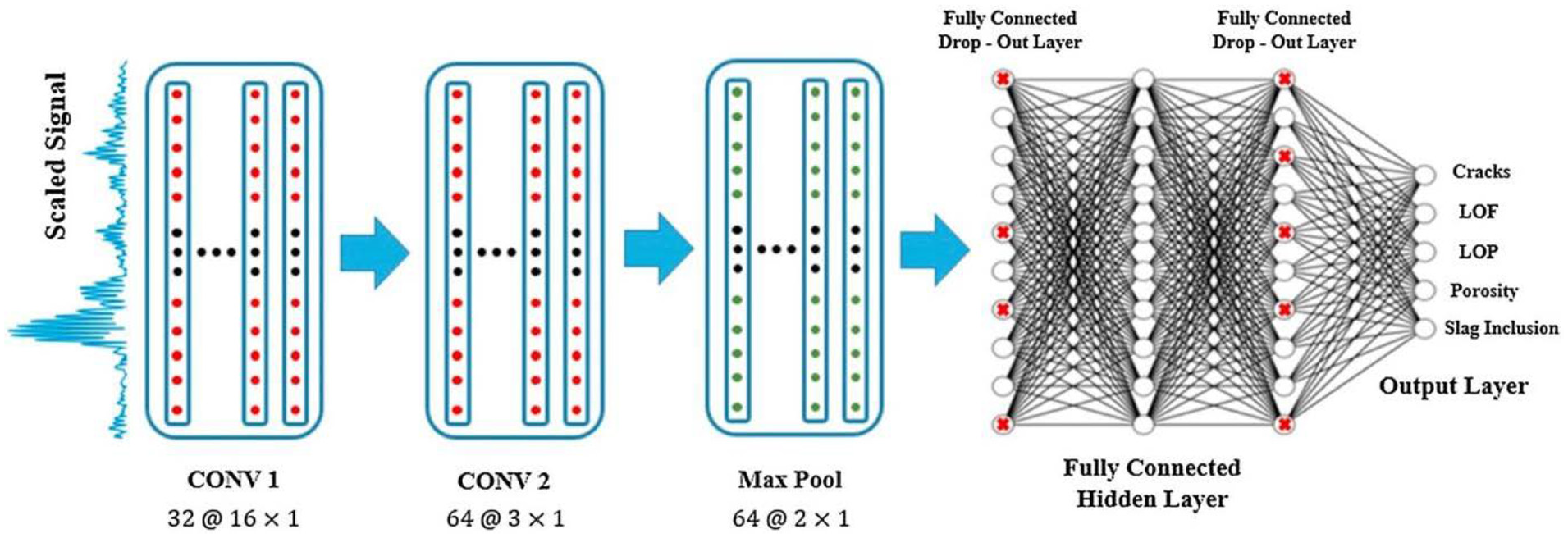
A representative CNN architecture. 101
Combining feature selection with ML has significantly advanced ultrasonic defect detection and material characterization. Decision support systems integrating statistical techniques like PCA and independent component analysis (ICA) have achieved classification efficiencies nearing 99% for complex composites such as fiber-metal laminates. These methods effectively isolate critical features from ultrasonic data, excelling in detecting defects like delamination and fiber fractures. 103 Similarly, model interpretation strategies using Shapley additive explanations and advanced feature selection techniques have enhanced resolution and imaging accuracy to sub-wavelength levels, enabling precise characterization of defects in challenging material systems. 104
In pipe inspection, NNs trained with wavelet and Fourier-transformed features have classified defects as small as 1% of the pipe cross-sectional area, achieving classification rates of up to 65% under variable conditions. 105 For PAUT of intricate weld geometries, ML classifiers demonstrated high accuracy in distinguishing defect types, achieving a maximum F1 score of 93.3%. These systems have often outperformed human experts, particularly in evaluating difficult-to-inspect materials. 53
Despite these advancements, supervised learning’s reliance on labeled datasets remains a limitation. Creating high-quality datasets is challenging due to variability in defect types, materials, and operational conditions. Techniques like time-shifting have improved dataset diversity and classifier robustness under varying noise levels. 102 However, these methods cannot fully overcome the difficulty of assembling datasets that account for all potential defect scenarios, even within a single specimen type. Furthermore, ultrasonic data acquisition is sensitive to equipment specifications, experimental conditions, and inspector expertise, introducing variability that hinders the development of standardized datasets for universal applicability.
Reinforcement ML techniques
Reinforcement learning (RL) has emerged as a transformative approach in ultrasonic NDE and imaging, excelling in complex decision-making tasks by iteratively learning from interactions with the environment. Its adaptability enhances the accuracy, efficiency, and autonomy of UT processes. A prominent application of RL is the optimization of NN architectures. For instance, the RL-based Neural Architecture Search (NAS) framework 54 automated the development of UFDNASNet (Figure 7), a network achieving 96.24% testing accuracy and processing 42 ultrasonic B-scan images per second. Using a recurrent NN controller, NAS efficiently selected convolutional operations, enabling UFDNASNet to outperform manually designed networks like VGG19 and ResNet-50 in accuracy and data efficiency. This demonstrates RL’s capacity to revolutionize NN design for NDE applications.
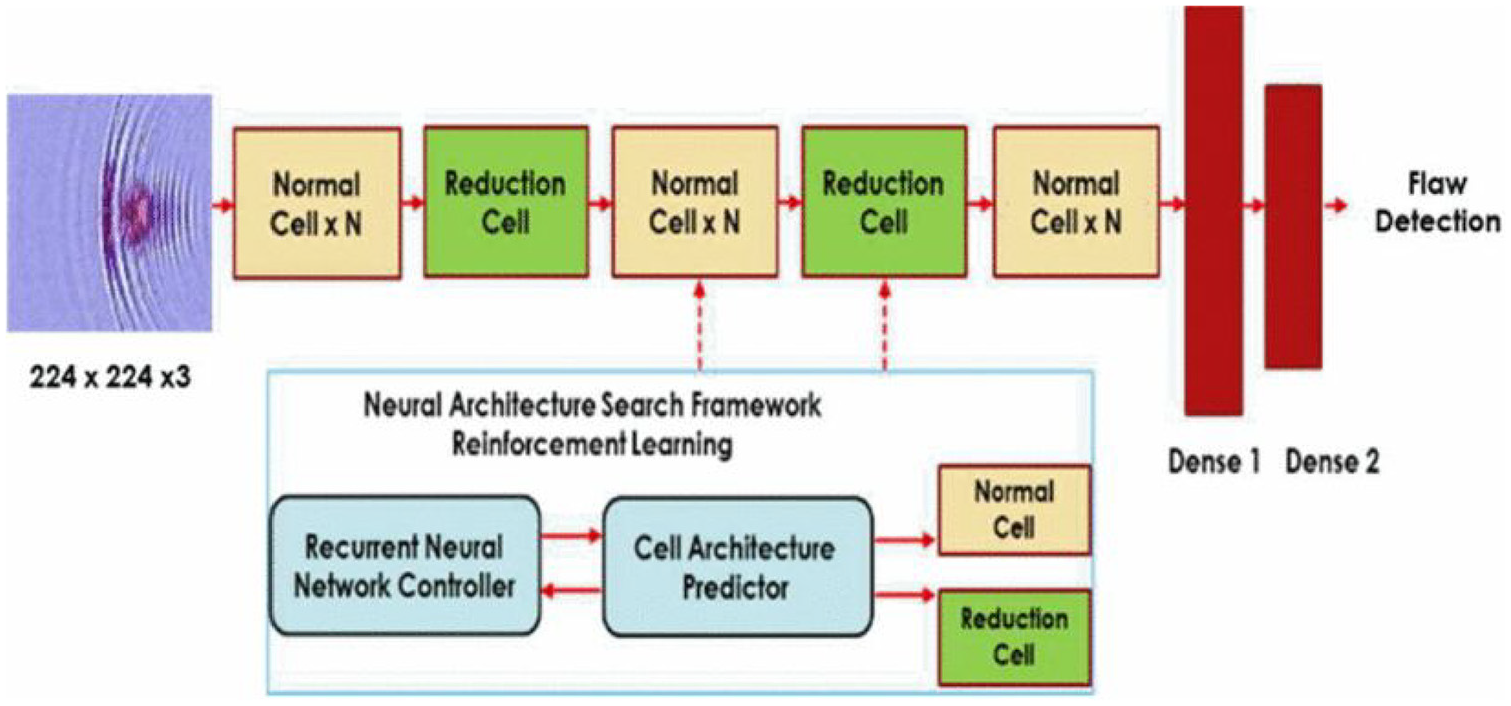
UFDNASNet, a NN architecture designed with RL-based NAS. 54
RL has also significantly advanced autonomous probe navigation in ultrasonic imaging. A deep RL-based system achieved a 92% success rate in guiding probes to standard scan planes, employing confidence-based optimization to enhance image quality. 55 This innovation addresses the critical challenge of precise probe positioning, making data acquisition more reliable and efficient. In another breakthrough, RL combined with state representation models enabled the development of a fully autonomous ultrasound system capable of imaging moving, marker-less soft targets. Validated using phantom models and human volunteers, this system effectively managed dynamic environments and variable target movements. By integrating RL with advanced representation learning, the system demonstrated robust, real-time adaptability for NDE applications. 56
Data preprocessing and feature engineering
In ultrasonic NDE, effective data preprocessing and feature engineering are fundamental to transforming raw ultrasonic signals into structured, meaningful representations.45,106–110 These representations enable the examination of a material’s internal structure with higher precision and reliability. 111 Preprocessing techniques, such as noise reduction and signal normalization, help address challenges like environmental interference and equipment variability.112–118 Feature engineering involves extracting informative characteristics from ultrasonic signals, including time-domain, frequency-domain, and statistical features, to improve defect detection accuracy and material assessment.119–121 This section presents a comprehensive review of preprocessing and feature engineering techniques categorized into classical, ML-based, and deep learning-based approaches, each playing a pivotal role in ultrasonic signal analysis.
Classical signal processing methods
Classical signal processing methods encompass foundational techniques for analyzing, manipulating, and extracting information from signals. These approaches primarily rely on deterministic mathematical models and linear operations to process signals. Key techniques include filtering, FT, and time-domain analysis, which are widely used for tasks such as noise reduction, feature extraction, and signal enhancement. These methods are computationally efficient and well-suited for applications with well-defined signal properties. Despite their limitations in handling complex or non-linear patterns, classical signal processing remains a robust tool, especially in pre-processing steps or when domain-specific knowledge can guide the analysis.
De-noising techniques
Noise reduction is vital in ultrasonic NDE, where signal clarity directly impacts defect detection and material characterization.113,122,123 Noise sources include electronic interference, environmental disturbances, and backscattered microstructural noise, which can obscure defect signals and reduce detection accuracy. Digital filters, such as low-pass, high-pass, and band-pass filters, are commonly used to target specific frequency ranges and eliminate irrelevant noise.123–125 Bandpass filters, widely applied in ultrasonic NDE, isolate the frequency range of interest, enhancing signal clarity. Similarly, high-pass filters, often used in power Doppler imaging, remove low-frequency noise to improve measurement reliability. Advanced filters like the Savitzky-Golay126,127 and adaptive filters128–130 further enhance noise suppression while preserving defect-related features.
Beyond classical filtering, wavelet-based noise reduction employs the multi-resolution properties of wavelets to decompose signals into frequency bands, enabling selective noise removal while preserving critical features.114,131–135 This adaptability makes wavelet transforms (WT) particularly suitable for complex ultrasonic environments. Blind source separation techniques, such as ICA,118,136–138 effectively isolate noise from defect echoes by separating mixed signals into independent components, with proven robustness across medical and industrial applications.
Innovative methods like coda wave interferometry enhance sensitivity to material changes in structures such as bridges and pipelines, even in noisy environments. 117 By analyzing scattered wavefields after the initial pulse, this technique supports long-term SHM. Additionally, strategies addressing backscattered microstructural noise and reconstructing outside pass-band data have shown promise in improving the temporal resolution and detail of ultrasonic inspections. These approaches underscore the critical role of advanced noise reduction in enhancing ultrasonic NDE.
Time-domain signal analysis
Time-domain analysis is fundamental in ultrasonic NDE for detecting and characterizing material defects through amplitude and temporal variations.139–142 Techniques such as amplitude trend analysis and peak detection identify issues like corrosion, cracks, and inclusions, while envelope detection reduces grain noise and highlights planar defects like delaminations in composites. Matched filtering optimizes defect detection in low signal-to-noise environments, and cross-correlation enhances signal interpretation in complex internal structures. Time-of-Flight (ToF) estimation143,144 is crucial for locating defects and assessing depth and size, particularly in welds and thick components. Additional signal properties, including slope, gradient, pulse width, and rise and fall times, provide insights into material characteristics and defect geometries, aiding in distinguishing sharp defects (e.g. cracks) from diffuse anomalies (e.g. voids). Advanced methods like time-based segmentation enable targeted analysis of specific regions in complex or layered structures. Techniques such as thresholding and symbolic time series analysis detect early-stage fatigue damage by revealing subtle material property changes.145,146 By integrating these methods, ultrasonic NDE enhances material characterization and defect detection, addressing noise reduction and improving signal-to-noise ratios in challenging scenarios.
Frequency-domain transformations
Frequency-domain transformations play a critical role in ultrasonic NDE by analyzing spectral content to enhance defect detection and material characterization. 147 The FT and its efficient variant, the Fast FT (FFT), identify dominant frequency components linked to defects like cracks or inclusions.147,148 The Short-Time FT (STFT) provides localized time-frequency representation, enabling transient signal analysis.149,150 The WT supports multi-resolution analysis, ideal for non-stationary signals in heterogeneous materials, while the Hilbert Transform aids in phase analysis and envelope extraction for characterizing interfaces and layers.151–154 Power Spectral Density (PSD) quantifies energy distribution across frequencies, distinguishing defect signals from material noise.155–157 Cross-spectral analysis correlates signals across sensors, enhancing anomaly localization, and Cepstral Analysis evaluates echoes for layer identification and bond quality.
Advanced techniques extend these capabilities for complex signals. The Hilbert-Huang Transform, combined with Empirical Mode Decomposition (EMD), adapts to non-linear, non-stationary signals, isolating intrinsic modes for detecting faint or overlapping defect signals.158,159 Fractal and chaos analysis in the frequency domain reveals hidden patterns associated with material irregularities, while Multi-Resolution Analysis (MRA) decomposes signals at varying detail levels, effectively analyzing multi-scale structures like composites. 160 Coherence and phase spectrum analysis enhance defect detection by examining signal phase relationships, aiding in identifying delaminations and weak bonds.161–164
Statistical feature extraction
Statistical feature extraction is crucial in ultrasonic signal processing, quantifying signal characteristics for effective defect detection and material characterization.165–168 Basic features like mean, standard deviation, variance, and range reveal central tendency and variability, identifying material irregularities as deviations in these metrics. Higher-order statistics, such as skewness and kurtosis, capture distribution asymmetry and peakedness, aiding in the detection of subtle defects like delaminations or microcracks. Root Mean Square (RMS) measures signal magnitude, highlighting variations due to material inconsistencies or structural changes. 169 PCA reduces dimensionality, preserving essential patterns while minimizing noise.170,171
Signal energy and histogram-based features evaluate ultrasonic signal intensity and distribution, correlating energy metrics with defect size or severity and using histograms to characterize textures or grain structures.172,173 Entropy measures, like Shannon entropy, assess signal complexity and randomness, aiding in defect detection and material homogeneity assessment. For example, Shannon entropy constructs reference images in sector scans, enabling defect sizing in welds without extensive labeled datasets (Figure 8). 174 Features like zero-crossing rate and autocorrelation focus on frequency changes and periodic patterns, enhancing the analysis of fine-grained materials and composites.175–177

Shannon entropy-based methodology for automatic defect detection using S-scan image sequence. 174
Advanced techniques such as multiscale entropy, sample entropy, and approximate entropy evaluate signal complexity across scales, offering insights into heterogeneous structures and composites.178–180 Sparse representation metrics and residual signal analysis isolate defect-induced anomalies, while information-theoretic measures like mutual information uncover dependencies indicating defect propagation or material layering. Tools like fractal dimension analysis and quantile-based features further enhance detection by characterizing roughness and highlighting specific distribution variations.181–184 Together, these methods provide robust capabilities for detecting intricate defects and characterizing diverse materials.
ML-based methods
The integration of ML techniques into the preprocessing of ultrasonic signals has transformed the field, addressing key challenges such as noise removal, signal segmentation, data imputation, and anomaly detection. Signal denoising remains a cornerstone, with methods like denoising autoencoders and Generative Adversarial Networks (GANs) excelling in extracting clean signal components from noisy environments by modeling underlying data distributions.185,186 Deep learning architectures, including Temporal Convolutional Networks (TCNs) and hybrid approaches combining WT with ML models, enhance noise reduction by utilizing contextual patterns and capturing long-range dependencies.187,188
Dimensionality reduction techniques, such as PCA, Linear Discriminant Analysis (LDA), and ICA, further enhance preprocessing by reducing data complexity and isolating key signal components. PCA suppresses noise and eliminates redundancy by reconstructing data from principal components, while ICA effectively isolates signal elements in cross-correlated ultrasonic data, particularly for ToF measurements. 189 As illustrated in Figure 9, ICA demonstrates superior performance, achieving 98.83% accuracy with a False Outlier Rate (FOR) of 2.1% and zero False Detection Rate (FDR) for longitudinal waves, and 99.92% accuracy with zero FOR and 1.24% FDR for shear waves.
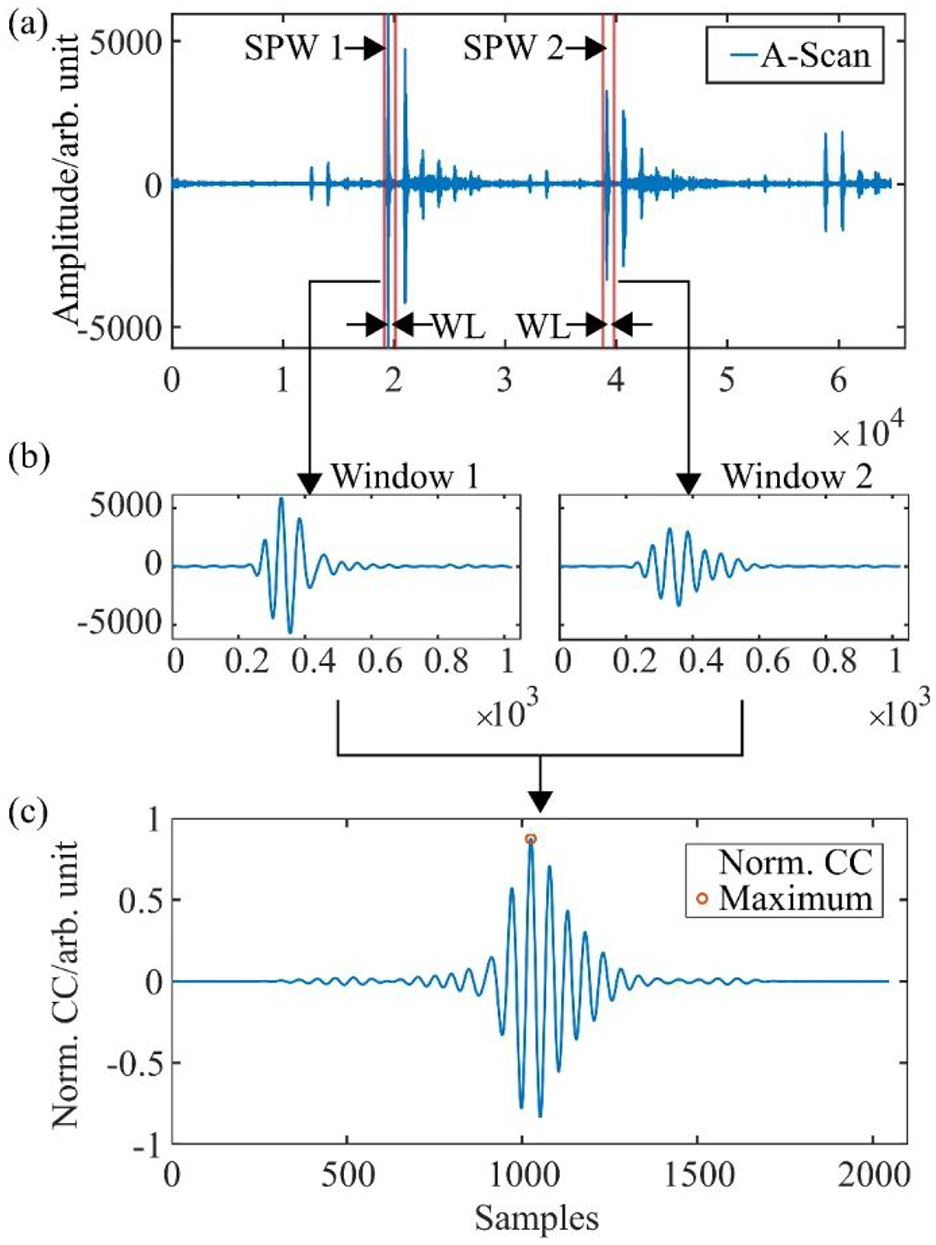
Workflow of ML-based preprocessing for cross-correlated ultrasonic signals in ToF measurements: (a) Selections of pulse windows, (b) Extraction of windowed signals, and (c) Cross-correlation of pulses. 189 .
The Ultrasonic Residual Compressive Autoencoder (URCA), a multilayer perceptron-based residual autoencoder, compresses ultrasonic data efficiently while maintaining high fidelity. 190 By incorporating sparsity penalties and residual connections, URCA achieves up to 96.04% memory savings and a Structural Similarity Index Measure (SSIM) of 0.80. Optimized using the Adam algorithm and leaky ReLU activation, URCA ensures efficient training with minimal memory usage. Together, these ML-driven approaches to noise reduction, signal enhancement, and compression significantly strengthen the robustness of ultrasonic signal preprocessing pipelines.
ML has revolutionized signal segmentation by enabling precise delineation of regions of interest, such as defect zones and reflection boundaries, through advanced architectures like Transformers and Recurrent NNs (RNNs). These innovations simplify defect characterization and enhance preprocessing pipelines. Adaptive filtering with ML dynamically adjusts parameters using contextual data, while reinforcement learning frameworks optimize filtering in real-time, adapting to noise levels and material properties for robust preprocessing.
Outlier detection and noise classification techniques, including Isolation Forests, autoencoder-based anomaly detection, and clustering algorithms like k-means and DBSCAN—maintain data quality by identifying and addressing measurement errors. Such methods enable preprocessing pipelines tailored to specific noise characteristics.
Data augmentation and neural compression address dataset limitations and storage constraints.28,191 GAN-based strategies enrich training datasets by synthesizing diverse signal patterns, improving model robustness. For instance, McKnight et al. 192 utilized a modified CycleGAN to generate realistic synthetic ultrasonic data, enhancing defect classification accuracy in experimental datasets. Neural compression further reduces storage requirements without compromising signal quality. Automated ML-driven pipelines, utilizing AutoML frameworks, integrate denoising, segmentation, filtering, and augmentation into efficient end-to-end solutions. These pipelines streamline preprocessing workflows, improving adaptability and performance across applications. 10
ML-based preprocessing methods, including denoising, segmentation, adaptive filtering, outlier detection, and data augmentation, offer precise, adaptable, and efficient solutions for ultrasonic signal preparation. While computational demands and reliance on labeled datasets pose challenges, these techniques significantly enhance data quality and reliability, forming a strong foundation for accurate feature extraction and downstream analysis.
Case studies and applications
Material characterization
Understanding material parameters is fundamental to the design and analysis of structures and components in engineering and materials science. These parameters encompass intrinsic properties of materials, such as mechanical, thermal, and electrical characteristics, which significantly influence their behavior under various operating conditions. A comprehensive understanding of these properties enables engineers to make well-informed decisions regarding material selection, ensuring that designs meet performance, durability, and safety requirements while optimizing costs. Ultrasonic waves have emerged as a powerful tool for characterizing material parameters through an NDE approach. By introducing ultrasonic waves into a material, researchers can exploit their interaction with the internal structure to assess critical properties such as density, elasticity, and the presence of defects. This technique provides a rapid, reliable, and non-invasive means of probing material characteristics, making it invaluable for applications where preserving the integrity of the material is essential.
The underlying principle of this approach lies in the propagation behavior of ultrasonic waves through different media. Key parameters such as wave velocity, attenuation, reflection, and scattering are measured during the interaction of ultrasonic waves with the material. These parameters are directly influenced by the material’s microstructure and composition. For instance, wave velocity correlates strongly with elastic moduli, while attenuation can reveal information about grain boundaries, porosity, or other internal features. By establishing precise relationships between ultrasonic wave behavior and material properties, researchers can derive quantitative insights into parameters that are critical for SHM, quality control, and material development.
Characterization of elastic constants
Elastic constants, such as Young’s modulus, are critical parameters for characterizing a material’s stiffness and are essential across diverse fields, from biomedical engineering to structural mechanics. One widely adopted approach for estimating dynamic Young’s modulus involves ToF ultrasonic wave measurements to determine the velocities of longitudinal and shear waves in a through-transmission arrangement. These wave velocities serve as the basis for calculating elastic constants, enabling precise characterization of material properties. For isotropic materials, the Elastic modulus (


where
Guided wave techniques often rely on fitting theoretical dispersion curves to experimental data.200–209 Dispersion curves, illustrating relationships between phase velocity, group velocity, and frequency, are pivotal for understanding wave behavior in specific material geometries. Recent advancements in ML methods have transformed this process, employing theoretical datasets to enhance the accuracy of experimentally reconstructed curves. Unlike traditional methods requiring multiple propagation measurements, ML-based approaches demand only two sensors on the host structure, offering a streamlined, cost-effective, and scalable solution for material characterization.
An alternative approach utilizes zero-group-velocity (ZGV) modes of Lamb waves.210–216 ZGV modes occur at frequencies where group velocity vanishes, concentrating vibrational energy. By measuring two ZGV frequencies and knowing the plate’s thickness, Poisson’s ratio, and longitudinal and shear wave velocities can be accurately determined. 213 This technique, particularly effective for scenarios with measurable thickness, complements ML approaches and enhances the robustness of elastic property characterization.
ML methods have gained prominence in material science, offering efficient, data-driven solutions for estimating elastic properties.217–231 For example, Pabisek and Waszczyszyn 220 employed an NN trained on experimental dispersion curves to predict elastic constants of isotropic plates (Figure 10). Their model achieved exceptional precision, with error margins of ∼1%, showcasing the potential of NNs for high-accuracy applications.

Flowchart of plate parameter identification using Lamb waves and NN 220 : experimental testing (Steps I–II), signal processing (Step III), and pattern recognition (Step IV).
In a related effort, Wang et al. 217 introduced the Elasticity Network (ENet), a deep learning framework based on a 1D CNN architecture. Unlike the experimental data-based approach, ENet was trained on a theoretical dataset generated using the semi-analytical finite element (SAFE) method. This dataset of 6000 samples, split 80/20% for training and testing, featured reconstructed dispersion curve segments from pre-processed sensor data. ENet demonstrated exceptional accuracy in predicting elastic constants, validating the synergy of theoretical modeling and deep learning.
Yang et al. 224 proposed a simplified NN architecture that utilized eigenvectors from wavelet-transformed waveforms for elastic property estimation. By extracting key features through WT, this approach enhanced computational efficiency and model robustness, presenting an efficient alternative for material characterization. Wang et al. 225 employed a CNN-based method with resonance ultrasound spectroscopy to predict elastic constants. Using the real components of resonant spectra and material density as inputs, the model achieved 96.5% accuracy on a simulated test set, with relative errors within 10%.
Held et al. 227 developed a NN framework that utilized dispersion images of isotropic plate-like structures (Figure 11). The team integrated data augmentation to introduce artifacts typical in experimental measurements into simulated datasets, ensuring the network’s generalization to real-world scenarios. This innovative strategy allowed the NN to generalize effectively from synthetic training data to actual experimental scenarios, demonstrating the utility of combining simulation with advanced augmentation techniques for accurate and robust material characterization.

Outline of the workflow for determining elastic constants using NN and dispersion images in the wavenumber-frequency domain: data acquisition, preprocessing, model selection, and evaluation. 227
Microstructural features and properties
NNs are predominantly utilized for analyzing elastic constants; however, their versatility extends to other critical aspects of material characterization, including the evaluation of material porosity, grain size, and phase composition, which significantly influence material properties and performance.232–237 By utilizing diverse data formats, such as stacked velocity components represented as images, 232 reflection spectra, 233 or attenuation spectra, 234 NNs enable the accurate characterization of porosity in various materials. Furthermore, these models facilitate the analysis of microstructures, providing deeper insights into critical material properties and behaviors, which play a pivotal role in industrial and engineering applications.
Grain size, a pivotal parameter in defining a material’s internal structure, profoundly affects its mechanical, thermal, and acoustic properties. Accurate measurement is vital for applications demanding precise material characterization. Ultrasonic wave-based methods have proven effective for grain size identification, utilizing the interaction of elastic waves with microstructural features. Grain size influences wave propagation properties such as attenuation, scattering, and velocity. While ultrasonic methods offer practical advantages, their accuracy remains moderate compared to high-resolution microscopic techniques.
ML holds transformative potential in addressing the limitations of traditional grain size determination methods. By utilizing ML techniques, the accuracy of ultrasonic wave-based approaches can be greatly enhanced.238–244 Unlike conventional analytical methods, ML algorithms effectively analyze complex relationships between ultrasonic wave propagation parameters and grain size, offering superior precision. These advancements enable scalable, cost-effective, and non-invasive alternatives to traditional microscopy, marking ML-driven ultrasonic methodologies as a promising frontier in material science for internal structure characterization.
Liu et al. 238 demonstrated a breakthrough by integrating nonlinear Lamb waves with a 1D CNN for high-accuracy grain size quantification. Their approach utilized a nonlinearity-aware multilevel wavelet decomposition combined with a multichannel 1D CNN, facilitating the hierarchical extraction of time-frequency features linked to acoustic nonlinearity. This method captured the complex nonlinear dynamics in ultrasonic responses, establishing a robust correlation between acoustic nonlinearity and microstructural attributes. It moved beyond traditional average grain size metrics to reveal the logarithmic distribution of grain sizes in metallic materials, significantly enhancing microstructural characterization.
Wu et al. 239 explored the potential of longitudinal wave velocity as a key input feature for predicting the average grain size and phase composition of titanium alloys. Their NN model, enhanced with random forest regression for optimization, accurately estimated the grain size of the primary α phase and the volume fraction of the transformed β matrix. Experimental validation across six samples confirmed mean relative errors of 11.55% for grain size and 10.19% for volume fraction, showcasing the model’s reliability for complex material characterizations.
Viana et al. 240 investigated the classification of five ASTM A36 steel samples with varying grain sizes using advanced feature engineering and ML techniques. A-scans obtained from 5 and 10 MHz probes were post-processed with the Python “fresh” package to extract key features that addressed limitations in existing datasets and models. Extracted features included real and imaginary FFT components, signal median and variance, continuous WT (CWT) coefficients, autocorrelation, root mean square, and quantile percentile range changes, tailored to each probe frequency. Six ML models—random forest, decision tree, K-nearest neighbors, extra trees, logistic regression, gradient boosting, and XGBoost—were trained on the enriched dataset. Notably, the XGBoost model demonstrated outstanding performance with the 10 MHz probe, achieving 100% accuracy, precision, recall, and F1 score. This underscores the pivotal role of customized feature engineering in enhancing classification accuracy.
Wu et al. 241 utilized nonlinear Lamb waves for grain characterization, employing STFT preprocessing to train a CNN. The CNN achieved high accuracy, with 94.7% for mean grain size prediction and 95.4% and 86.3% for estimating the expectation and standard deviation of the lognormal grain size distribution, respectively. Notably, the exclusion of fundamental or second harmonic components from the STFT images significantly reduced prediction accuracy, underscoring their critical role in reliable grain characterization. Extending ML techniques to other material properties, Sang et al. 245 developed a model to predict the topology of composite plates (Figure 12). Using finite element method (FEM) simulations, a dataset of 100,000 nylon-steel composite samples was generated, with 32 A-scans of shear-horizontal (SH) wave propagation collected for each plate. The model demonstrated robust performance, achieving an average prediction accuracy of 94.8% on a separate test set, highlighting its versatility and reliability for material characterization tasks.

Wave propagation setup in a composite plate, with ML predictions highlighting topologies characterized by low steel ratios. Embedded features corresponding to letters B, L, and C are shown. 245
Kwon et al. 246 predicted ductile fracture in materials using AE signals transformed into energy allocation maps, which served as inputs for a stacked autoencoder model. This innovative approach enhanced feature representation, enabling accurate prediction of material failure modes. Khademi et al. 247 applied four ML algorithms—KNN, SVM, random forest, and XGBoost regression—to quantify the interfacial transition zone (ITZ) in concrete layers. Variational mode decomposition (VMD) of ultrasonic signals yielded 21 independent features, with shear strength as the output variable. XGBoost regression achieved the highest accuracy (95%), demonstrating its effectiveness in modeling complex interfacial characteristics.
Li et al. 248 developed a deep learning framework combining a CNN and LSTM to evaluate spheroidization from backscattered ultrasonic signals. The model achieved perfect scores in accuracy, recall, precision, and F1 metrics, highlighting its ability to predict intricate material properties. Wang et al. 249 estimated surface roughness using pulse-echo signals from a phased array sensor with a 1D CNN. Simulated and experimental tests showed a mean absolute error below 3%, outperforming traditional methods like the TFM, which had a 7.5% error rate. These advancements underscore the versatility of ML and deep learning techniques in ultrasonic signal analysis, enabling accurate characterization of diverse material properties, including topology, fracture prediction, interfacial transitions, and surface roughness.
Characterization of stress, strain and fatigue life
Elastic waves also hold significant potential for characterizing other critical parameters of solid media, such as stress levels and fatigue life. Estimating stress is a cornerstone of SHM, and the acoustoelastic effect of elastic waves provides a cost-effective and nondestructive method for assessing stress in solid materials. To improve the precision and robustness of traditional techniques, advanced computational methods such as ML and NN approaches have been incorporated into this domain.
Holguin250,251 combined supervised and unsupervised learning algorithms with guided waves to map complex wave spectrums to corresponding stress states, showcasing the potential of ML in improving wave-based stress characterization. Similarly, Lim and Sohn 252 developed an online stress monitoring system using CNNs integrated with Lamb waves (Figure 13). Their model, trained on time-domain response data under varying static loads, accurately predicted stress levels, achieving a maximum error of only 3% compared to experimental measurements. This highlights the efficacy of CNNs for real-time stress monitoring applications.
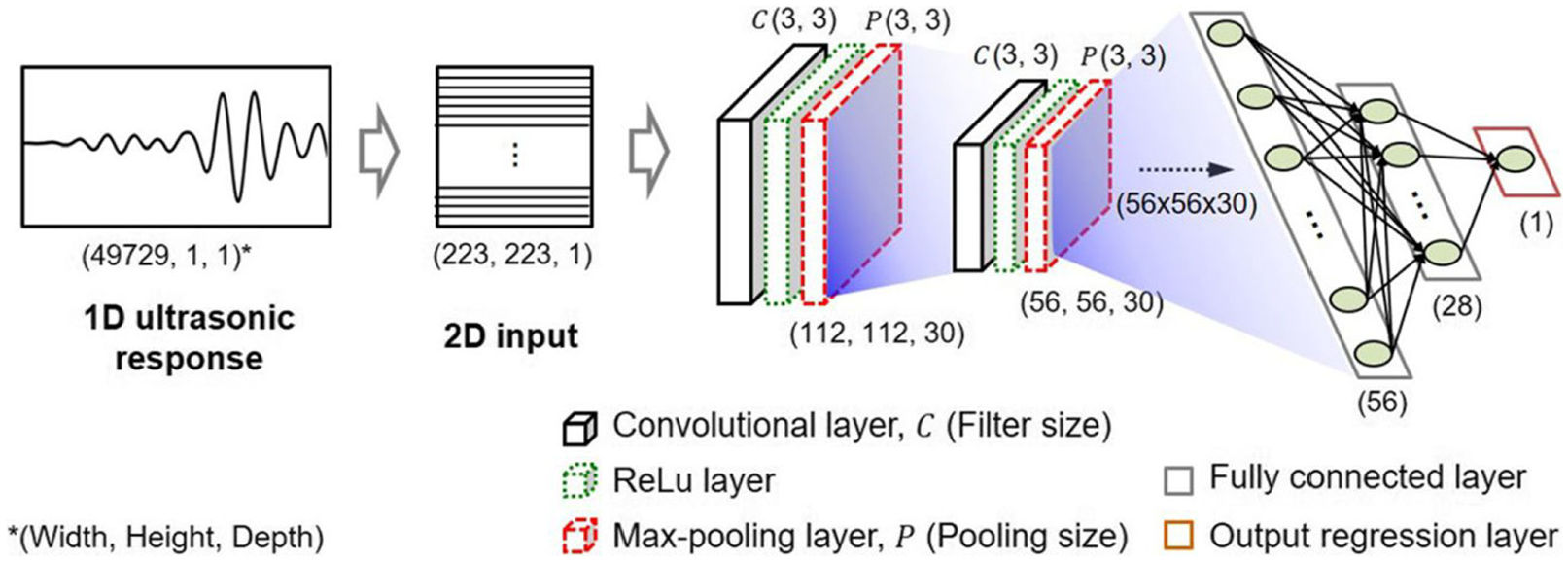
Proposed CNN for stress monitoring, adapted from LeNet-5, with two convolutional layers, two fully connected layers, and one output regression layer. 252
Ji et al. 253 explored stress characterization in seven-wire strands using simulated and experimental datasets. By applying singular value decomposition (SVD) to extract stress-related features, they demonstrated the approach’s robustness even at low-stress levels. The study emphasized the importance of larger datasets for enhancing reliability in stress monitoring systems.
Li et al. 254 utilized Lamb waves to estimate initial stress states by analyzing their effects on dispersion curves. A three-layer feed-forward DNN trained with a backpropagation algorithm predicted both the magnitude and direction of initial stresses using phase velocity data from the A0 Lamb wave mode at five frequencies. Model accuracy varied with activation functions, achieving an average error of 2.21% with the sigmoid function and 4.65% with ReLU, highlighting the impact of architecture and parameter choices on performance. Sahu et al. 255 extended NN applications to predict creep strain by integrating creep tests with nonlinear ultrasonic data. By employing historical data, their approach minimized the need for extensive experimental procedures, offering a cost-effective and time-efficient method for long-term material behavior prediction.
Elastic waves coupled with ML have also been applied to reconstruct stress-strain (SS) curves and estimate strength parameters.256–261 Park256,257 developed an ML-based approach to reconstruct full-range SS curves by analyzing A-scan-derived parameters such as longitudinal wave speed, attenuation, nonlinearity, and the speeds of shear and Rayleigh waves. These inputs fed into a 1D CNN predicted SS curves with ∼92% accuracy, capturing the stress-strain relationship up to the ultimate tensile strength (Figure 14).

(a) Process for obtaining a 3D SS surface and (b) comparison of predicted SS curves with ground truth. 256
Similarly, Amiri et al. 258 developed a methodology to estimate tensile strength and fatigue life in resistance spot-welded joints, integrating UT results with NN. Their approach achieved exceptional predictive performance, with errors of only 6% for tensile strength and 2% for fatigue life, demonstrating the reliability of ultrasonic and NN-based frameworks for evaluating mechanical properties.
Ryu et al. 259 extended ML applications to the prediction of yield strength, ultimate tensile strength (UTS), and elongation. Their study utilized input features such as longitudinal, shear, and Rayleigh wave speeds, attenuation, ultrasonic nonlinearity, electrical conductivity, and the concentration of nine key ingredients (chromium, copper, iron, magnesium, manganese, nickel, silicon, titanium, and zinc) obtained from experiments on 187 specimens. The ML model successfully predicted these mechanical properties, with an 8% error relative to ground-truth values obtained through destructive testing. Similarly, Jiao et al. 260 predicted the UTS of AISI 304 stainless-steel pipe welds by extracting ultrasonic features via a random forest algorithm and training a Bayesian Broad Learning System (BLS) network. This approach outperformed other regression models in accuracy and stability, proving effective for stainless steel welds and adaptable to other materials.
Traditional approaches for determining elastic properties, though effective for specific materials, are often labor-intensive and require extensive experimental setups, limiting their broader applicability. ML techniques have revolutionized this process by enabling efficient and accurate analysis of elastic wave propagation data, significantly reducing measurement requirements. Methods such as NN and convolutional models demonstrate strong potential in predicting elastic properties, even for complex materials, though their accuracy depends heavily on the quality and diversity of the training datasets. Studies indicate that low prediction errors can be achieved using experimental, simulated, or mixed datasets, including synthetic data generated by AI models such as NN and autoencoders. 262 By integrating modern computational techniques with established engineering principles, ML provides deeper insights into material behavior, optimizing material performance, and underscoring its transformative role in materials science. As depicted in Figure 15, the Sankey diagram highlights the interdependencies between domains (stress, elastic constants, microstructure), methods (simulation, experiment, mixed), and ML models, showcasing how computational techniques drive deeper insights into material behavior and performance optimization.
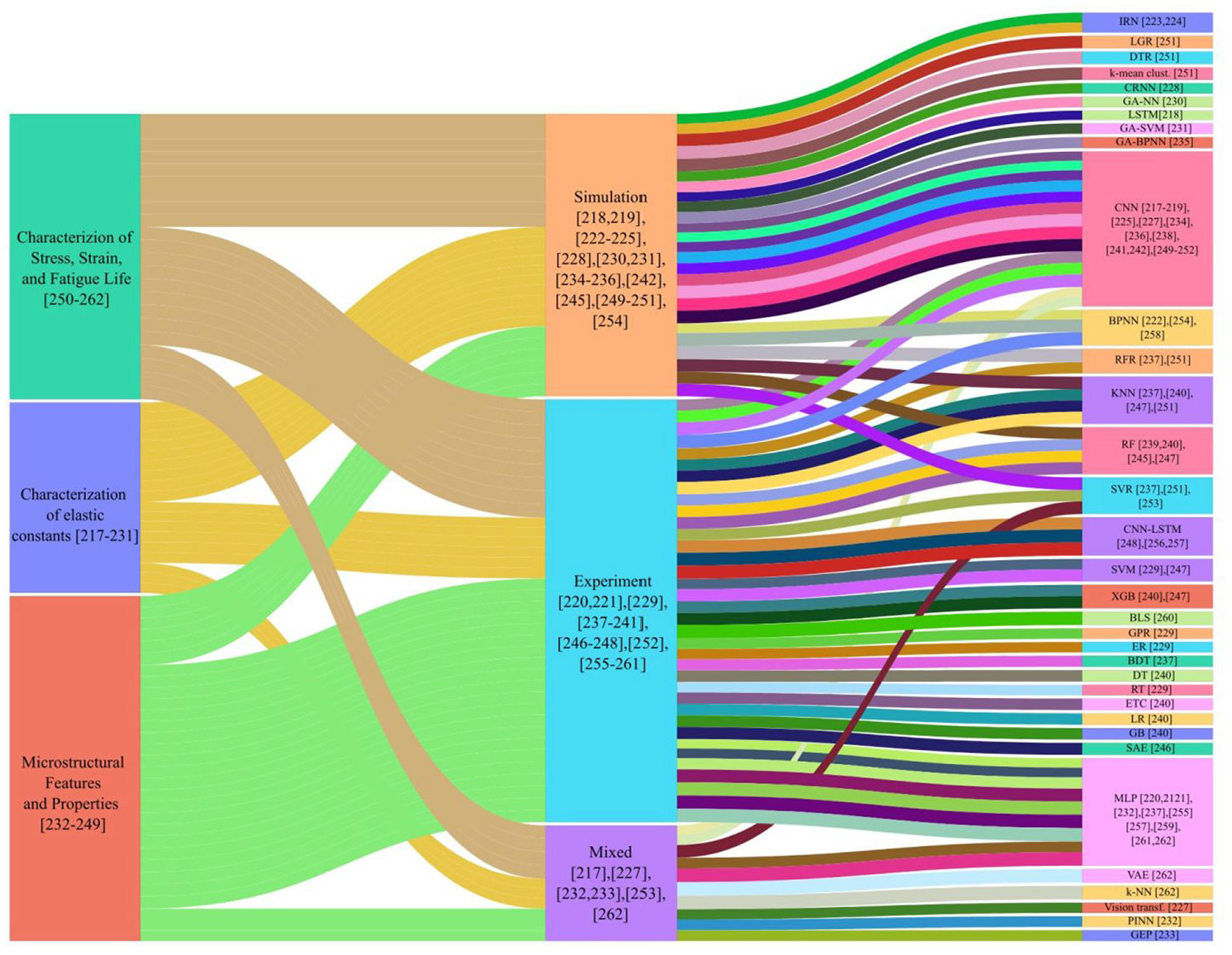
Sankey diagram depicting ML applications in ultrasonic characterization, linking domains (stress, elastic constants, microstructure) with methods (simulation, experiment, mixed) and a variety of ML models, illustrating their interdependencies.
Defect detection and localization
The integration of ML techniques into ultrasonic NDE has transformed the landscape of defect detection and localization. Traditional ultrasonic methods, while effective, often require significant expertise to interpret data, especially for complex defect geometries. By employing advanced computational models, ML not only enhances the sensitivity and accuracy of defect detection but also facilitates the precise localization of flaws with minimal user intervention. This section provides a comprehensive review of ML-driven approaches tailored to various damage types, including cracks, holes, delaminations, debonding, weld flaws, corrosion, surface irregularities, and other structural anomalies. The following subsections explore specific defect categories, discussing how machine learning (ML) methodologies, spanning supervised, unsupervised, and reinforcement learning, are advancing defect characterization and expanding the capabilities of ultrasonic NDE.
Cracks
Cracks are among the most critical defects in structural materials, posing severe risks to structural integrity and safety. These defects occur in various forms, including micro-cracks,263–265 fatigue cracks,266–268 and (sub)surface cracks,269,270 and affect a wide range of materials, such as composites,271,272 metals,171,273–277 and concrete.93,278–281 Their potential for catastrophic failure necessitates precise and reliable evaluation methods. ML has revolutionized ultrasonic NDE by automating crack detection, classification, and quantification. ML’s data-driven capabilities enable the extraction of meaningful patterns from complex datasets, surpassing traditional manual and semi-automated approaches. Techniques range from shallow models like SVM to advanced architectures like CNN and hybrid frameworks, significantly enhancing feature extraction, noise resilience, dataset handling, and interpretability.
Recent advancements demonstrate the integration of ultrasonic-guided wave analysis with ML techniques as a powerful approach for crack detection and classification. For instance, Mardanshahi et al. 271 combined Lamb waves with SVM to classify crack densities in composites, achieving 91.7% accuracy, and emphasizing the importance of robust feature engineering. Similarly, Tang et al. 282 utilized guided wave signals with a CNN framework to achieve reliable crack classification even in noisy environments, utilizing both numerical simulations and experimental data to enhance model performance.
Imaging-based ML techniques have addressed the challenges of small datasets, feature complexity, and environmental variability. Gulsen et al. 272 used transfer learning with pre-trained models (DenseNet121 and VGG19) to analyze C-scan ultrasonic images, achieving 98.8% accuracy by utilizing hierarchical feature extraction. Similarly, Zhang et al. 283 introduced a digital twin framework for laser ultrasonic defect detection, employing GANs to align simulated and experimental data. This approach significantly enhanced detection robustness under varying conditions, effectively bridging the simulation-reality gap. As depicted in Figure 16, the digital twin framework demonstrates substantial promise in mitigating environmental noise and material heterogeneity, pivotal challenges in ultrasonic NDE.

Framework integrating physical detection, simulation, and digital twin (DT) for data augmentation, model training, and detection with feedback refinement. 283
Nonlinear ultrasonic methods have demonstrated exceptional promise for detecting micro-cracks and fatigue-induced cracks, where subtle material changes often escape the sensitivity of linear methods. Ai et al. explored nonlinear spectral features derived from guided wave propagation, training a SEResNet50-based model tailored for micro-crack characterization. Their approach achieved an impressive accuracy of 97.22%, showcasing the efficacy of utilizing advanced deep-learning architectures for nonlinear ultrasonic analysis. 263 Similarly, Lee et al. extended the application of nonlinear methods to fatigue crack detection. Using a hybrid architecture that combined CNN with Fully Connected Networks (FCN), their model achieved an F1 score exceeding 96%, underscoring the potential of hybrid architectures in capturing complex crack-related patterns. 267 These studies highlight the pivotal role of nonlinear acoustic features in identifying subtle but critical material changes.
Pyle et al. 284 demonstrated improvements in defect sizing during inline pipe inspections by training CNNs on simulated ultrasonic data. This approach surpassed traditional methods, achieving significant enhancements in sizing accuracy while addressing challenges related to limited annotated datasets. To improve interpretability and manage high-dimensional data, they introduced Gaussian Feature Approximation (GFA), a dimensionality reduction technique that preserved essential defect characteristics, such as amplitude, orientation, and spatial distribution. 285 GFA effectively reduced computational complexity while providing clearer insights into defect attributes, aligning with the increasing demand for interpretable ML models in safety-critical environments.
The integration of experimental and numerical data has also proven to be a critical strategy for enhancing the reliability and generalizability of predictive models in SHM. Hawwat et al. 286 combined guided wave simulations with experimental measurements to classify crack geometries in polyethene pipes, utilizing SVM as the classification framework. This hybrid approach demonstrated high precision even under challenging conditions, such as significant signal attenuation and elevated noise levels. Lomazzi et al. 287 further advanced SHM by employing regression-based ML models for simultaneous damage localization and quantification. By processing raw input signals directly, their unified framework eliminated the biases associated with feature engineering and provided a scalable solution for comprehensive damage assessment.
Voids and porosity
Holes, encompassing perforations, voids, and porosity86,288–297 are critical structural defects that compromise material integrity by acting as stress concentrators. These defects reduce load-bearing capacity and increase failure susceptibility under operational loads, making their early detection and accurate characterization essential for ensuring structural safety. They occur across diverse material systems, including metals, composites, and polymers.
Phased array imaging has proven to be a powerful ultrasonic NDE tool for detecting and classifying holes, offering high spatial resolution and adaptability to complex geometries. Zhao et al. 86 employed an advanced gcForest-based framework to analyze ultrasonic signals for detecting porosity in metallic plates. This framework, utilizing granular computing-based cascade forest architecture, utilized multi-granular scanning and ensemble learning to iteratively refine feature extraction and classification. The integration of full-focus A-scan signals, as depicted in Figure 17, enabled robust detection of perforations even under noisy conditions, highlighting the versatility and accuracy of this approach.

Workflow of data preprocessing, improved deep forest model, and optimized weighted cascade random forests for final prediction. 86
Lu et al. 293 further advanced ultrasonic NDE by introducing a GAN-assisted hybrid ML model for reconstructing 3D representations of rail defects from 2D ultrasonic scans. GANs enhanced the model’s capability by generating high-quality synthetic data, allowing the inference of complex subsurface geometries from limited or incomplete inputs. This augmentation significantly improved prediction accuracy for subsurface defects, with the hybrid framework achieving an error rate below 20% in 3D defect reconstruction. This approach underscores the potential of combining advanced ML techniques with ultrasonic imaging for detecting and characterizing subsurface holes in intricate geometries.
Xu et al. 294 advanced LU applications to cylindrical structures, addressing challenges of curvature and geometric complexity. By combining LU measurements with Gaussian Process (GP) models and hybrid datasets from simulations and experiments, they developed a predictive framework with hole dimension estimation accuracy exceeding 98%. The GP models not only delivered high precision but also quantified uncertainty, crucial for SHM and risk assessment.
Porosity detection in additively manufactured (AM) materials presents unique challenges due to manufacturing-induced defects like irregular geometries, residual stresses, and microstructural inhomogeneities. Park et al. 295 addressed these issues using UT combined with a fully connected DNN to predict porosity utilized in AM components. Their model demonstrated high predictive accuracy, aligning closely with traditional scanning acoustic microscopy evaluations, a gold standard in material characterization. This study highlights the potential of DNNs to analyze large ultrasonic datasets and extract patterns for precise defect quantification in complex material systems.
He et al. 296 extended ultrasonic NDE applications to porosity detection in welded joints, integrating FEM with XGBoost ML. By training the model with FEM-generated synthetic data and experimental measurements, they ranked signal features and gained insights into defect mechanisms. This hybrid approach achieved an 84% classification accuracy for weld quality, demonstrating the effectiveness of feature-ranking algorithms in improving interpretability and reliability in defect characterization.
Porosity and voids, while arising in different contexts, critically impact structural integrity by concentrating stress and weakening materials. For civil engineering applications, ultrasonic NDE combined with ML has also shown promise. Sayyar-Roudsari et al. 297 used SVM to detect voids in reinforced concrete beams based on impact echo test data, achieving high precision and recall. These advancements underscore the versatility of ultrasonic NDE and ML techniques for detecting and characterizing defects, from porosity in AM materials and welded joints to voids in reinforced concrete, ensuring structural integrity across diverse fields.
Delamination and debonding
Delamination and debonding are critical defects that undermine the structural performance of composite materials298–302 and adhesively bonded structures.303–305 These defects are particularly critical in high-performance sectors like aerospace, automotive, and renewable energy, where structural integrity is vital. Precise detection and characterization of these issues are essential, and ultrasonic NDE techniques, enhanced by ML, have proven effective for advanced defect analysis and real-time monitoring.
Recent advances highlight the synergy between physics-based methods and ML in evaluating adhesive bond quality for thermoplastic composites. Li et al. 303 combined UT with an SVM classifier, using key ultrasonic signal features such as amplitude and frequency. This approach achieved over 90% classification accuracy in distinguishing high-quality bonds from poor ones, demonstrating the potential of ML-driven NDE for bond integrity assurance. Similarly, Piao et al. 304 employed PAUT and damage indices derived from ultrasonic signals within a hybrid physics-ML framework. Their method achieved classification accuracy exceeding 95%, underscoring the effectiveness of integrating ultrasonic techniques with ML for industrial applications where bonded structure reliability is crucial.
In CFRPs, delamination poses a significant challenge due to the materials’ complex anisotropic nature. The integration of numerical simulations with experimental methods has greatly enhanced defect detection capabilities. Ullah et al. 306 employed Lamb wave analysis combined with deep learning to process full wavefield data, achieving accurate localization of delamination zones in both simulated and experimental CFRP laminates. This approach demonstrated the efficacy of deep learning in navigating the intricate interactions of wave propagation and scattering within composites. Similarly, Fu et al. 307 utilized laser UT with EMD for preprocessing ultrasonic signals. This preprocessing effectively reduced noise and enhanced signal clarity, enabling their NN model to achieve a detection accuracy of 98.5%. The study highlighted the value of combining advanced signal processing with ML frameworks to improve delamination detection in CFRPs.
Numerical methods have further advanced delamination detection, especially for large-scale composite structures where experimental data collection can be resource-intensive. Junqueira et al. 308 proposed a quasi-static approximation (QSA) method to simulate guided wave scattering caused by delamination defects in laminated composites. Their framework demonstrated robustness under noisy conditions, proving its scalability for real-world applications. Additionally, Lu et al. 309 introduced probabilistic CNNs (PCNNs) with uncertainty quantification (UQ) to enhance delamination localization. Their methodology evaluated four UQ techniques for composite damage identification. By integrating simulated and experimental datasets, their PCNN approach achieved precise delamination localization, even under varying material properties and environmental conditions. The incorporation of UQ not only ensured accurate predictions but also provided a confidence measure, essential for decision-making in safety-critical applications.
For coating delaminations, Wang et al. 310 developed a guided wave method enhanced by deep learning, achieving high accuracy in localizing and sizing delaminations through numerical simulations. This approach demonstrated significant potential for safety-critical applications in multi-layered structures. The integration of guided wave techniques with advanced ML models effectively addresses the unique challenges of coating delaminations, where precise defect characterization is vital for maintaining structural integrity. These advancements underscore the versatility of guided waves and ML frameworks, offering scalable, accurate, and reliable solutions for delamination-related challenges across various industries.
Other defects
A wide range of structural defects, including weld flaws,101,311–313 corrosion,314,315 temperature-induced damage,316,317 surface irregularities,318,319 and slot defects320,321presents significant challenges to maintaining structural integrity across various industries. Tackling these defects necessitates the integration of advanced ultrasonic NDE techniques with ML to deliver robust, accurate, and scalable solutions tailored to real-world applications.
Weld flaws, such as porosity, slag inclusions, and lack of fusion, are particularly critical in pipelines and storage tanks, where structural failure can have severe consequences. Munir et al. 101 proposed a CNN model using bulk wave ultrasonic signals, achieving 94.3% classification accuracy under industrial noise. Hervé-Côte et al. 311 enhanced this by integrating PAUT with Full Matrix Capture (FMC) data, utilizing wavefield imaging and deep learning for defect detection. Their method achieved 96.7% sustained accuracy, even for previously unseen defect morphologies, demonstrating the adaptability and precision of ML-enhanced ultrasonic techniques for weld inspections.
Corrosion detection has similarly advanced through the integration of ML-driven ultrasonic methodologies. Wang et al. 314 combined guided wave imaging with CNNs, achieving a 0.91 correlation coefficient between true and predicted velocity maps, enabling real-time imaging suitable for in-service inspections. Mukhti et al. 315 focused on chloride-induced corrosion in reinforced concrete, achieving 84% accuracy in detecting corrosion at varying depths using ultrasonic pulse waves with CNNs. Additionally, they introduced an advanced monitoring framework (Figure 18) integrating IoT, robotics, and multi-physics data collection. This approach employs sensor networks, cloud-based storage, and advanced analytics, enabling scalable and efficient monitoring of concrete structures, and pushing the boundaries of NDE.
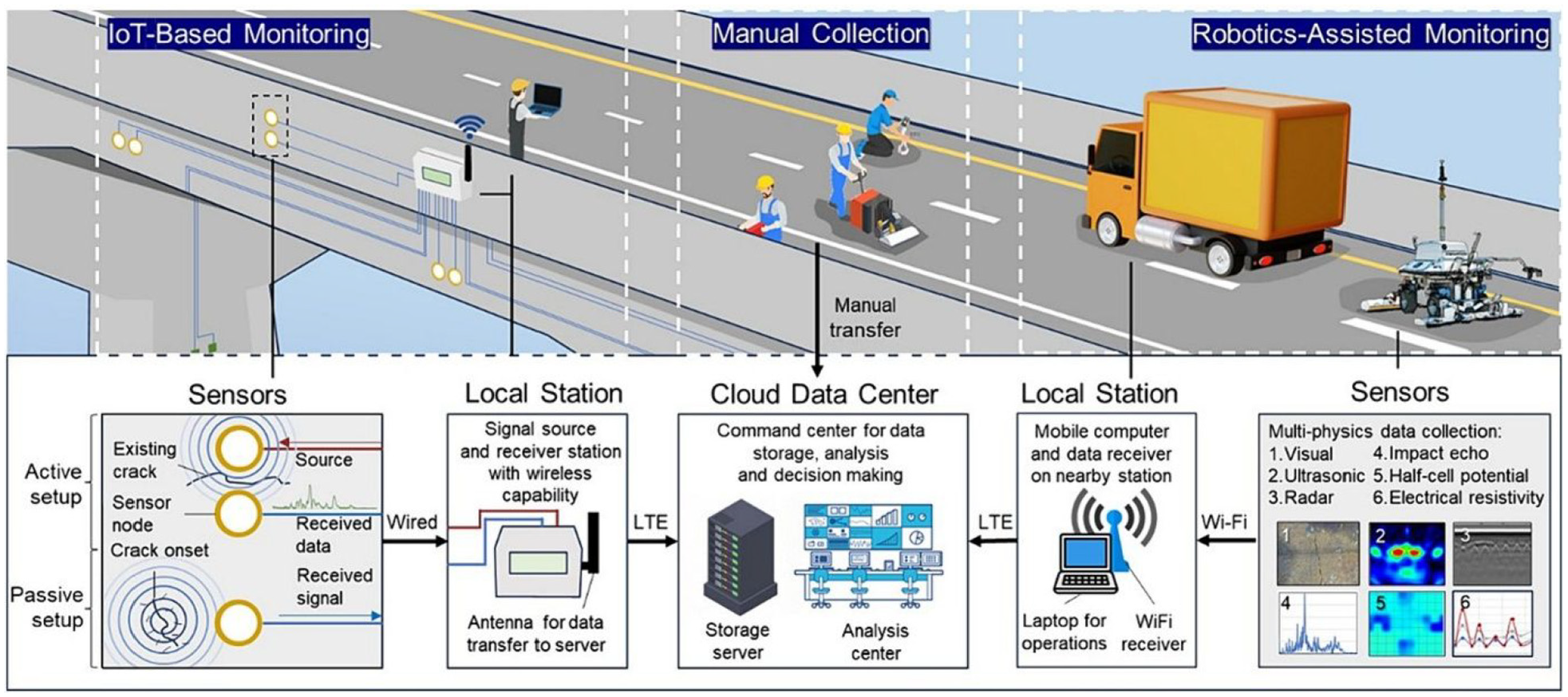
Integrated structural monitoring framework combining IoT-based monitoring, manual collection, and robotics-assisted monitoring, featuring sensor setups, data transfer methods, and multi-physics data collection for comprehensive infrastructure assessment. 315
Defects resulting from extreme temperature exposure, including spalling and micro-crack formation, critically affect the structural integrity and long-term performance of materials exposed to fire. Almasaeid 316 integrated ultrasonic pulse velocity (UPV) data with ANNs to evaluate the tensile splitting strength of fire-damaged concrete exposed to temperatures up to 800°C. Their ANN model achieved a coefficient of determination (R2 = 0.943), accurately estimating residual mechanical properties and identifying critical damage thresholds. This advancement provides valuable insights for post-fire rehabilitation planning and material assessment. Similarly, Ren et al. 317 utilized GMMs with guided wave imaging to detect and characterize temperature-induced damage in composite structures. Incorporating thermal compensation mechanisms enabled consistent defect detection under variable thermal conditions, achieving 93% accuracy in temperature-compensated damage mapping.
Surface defects in metallic components and composite rolls demand highly precise detection and classification methodologies to ensure reliability and safety in industrial applications. Among these, Rayleigh waves have shown considerable promise for characterizing surface irregularities. Xiao and Cui 318 optimized Rayleigh wave analysis using PSO integrated with ML classifiers, overcoming challenges like feature selection and signal noise to achieve 95.2% defect detection accuracy. Building on this, Sun et al. 292 introduced the Snake Optimizer (SO), a novel tool for feature selection and hyperparameter tuning. Their method outperformed PSO, achieving a superior detection accuracy of 97.6%. This progression highlights the transition from traditional optimization algorithms like PSO to advanced techniques like SO, marking a significant evolution in defect detection methodologies.
Yan 321 demonstrated the efficacy of probabilistic frameworks by integrating Lamb wave analysis with a Bayesian system identification approach for detecting and localizing slot defects in plate-like structures. Their use of Markov Chain Monte Carlo (MCMC) sampling accounted for measurement uncertainties, achieving a mean localization error below 1.5 mm, even under significant noise. This probabilistic methodology offers adaptability and reliability, surpassing deterministic models in systems with inherent uncertainties.
Figure 19 depicts the relationships between ultrasonic methods, defect types, and ML techniques in existing studies. Nodes, categorized into ultrasonic methods (blue), defect types (red), and ML techniques (green), vary in size based on their importance, determined by connection frequency. Thicker edges indicate higher research activity, with prominent connections, such as between cracks, guided waves, and techniques like CNN and SVM, highlighted in bold. In addition to the visual summary, Table 1 provides a concise comparison of representative case studies involving various ultrasonic methods, ML techniques, and signal processing strategies. To further support reproducibility and implementation, a selection of publicly available datasets relevant to ultrasonic-based NDE and SHM techniques is also highlighted in Table 2.

Network diagram depicting relationships among ultrasonic methods (blue nodes), defect types (red nodes), and ML techniques (green nodes). Node size reflects the frequency of connections, and edge thickness represents the number of research studies.
Selected case studies illustrating the integration of ultrasonic techniques, wave interaction phenomena, machine learning approaches, data formats, and preprocessing strategies for material characterization and defect detection.
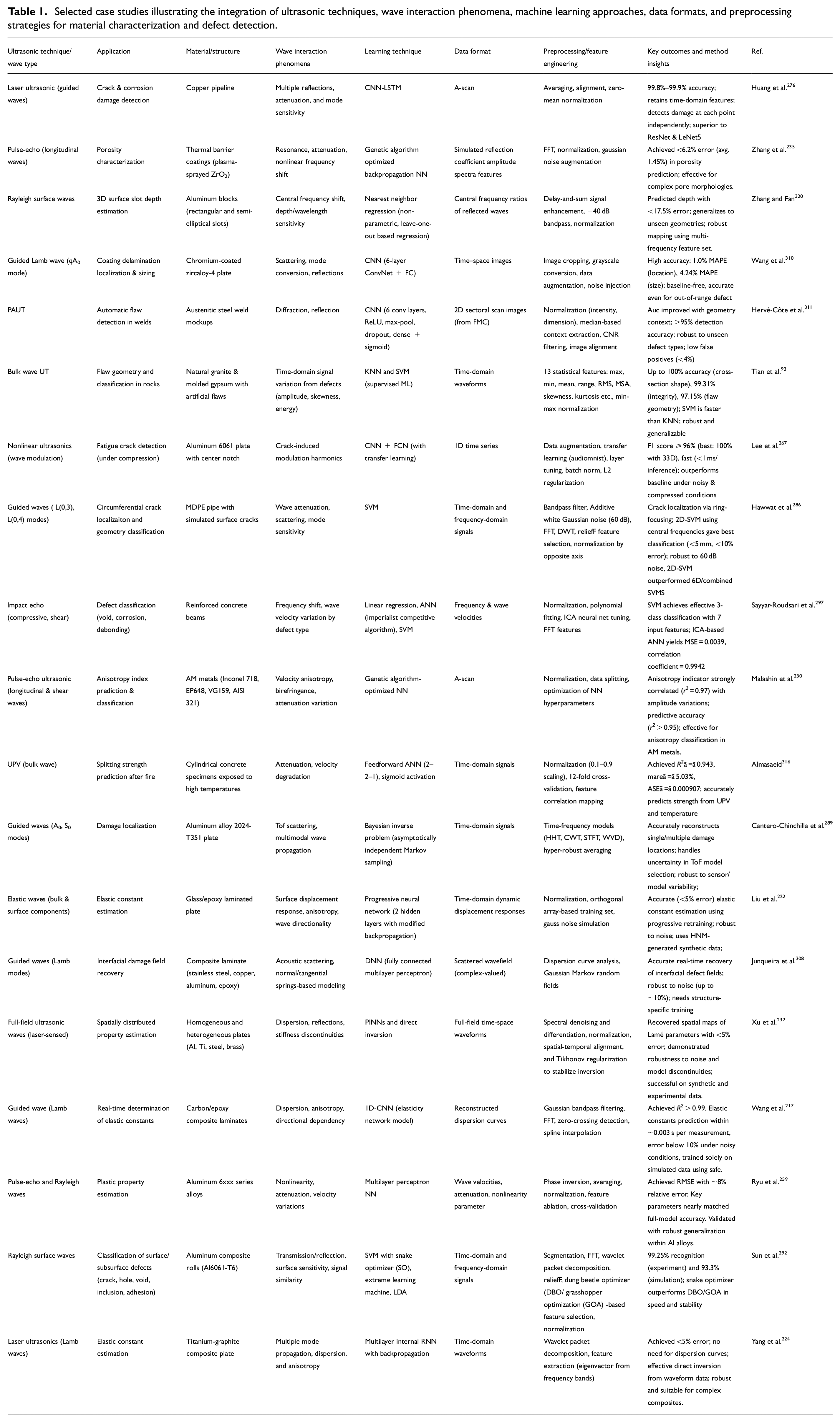
Overview of representative publicly available datasets relevant to ultrasonic-based NDT and SHM.
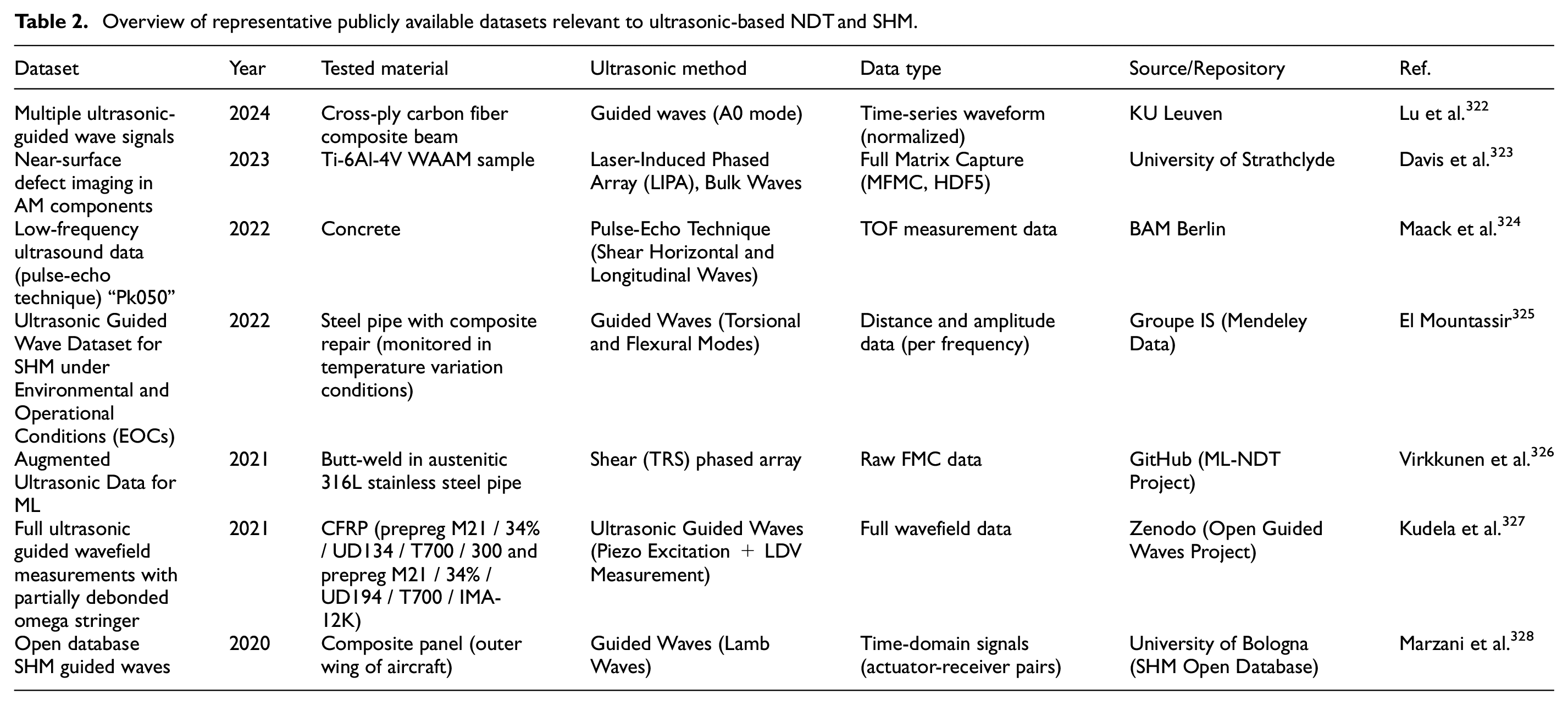
Challenges, limitations and future directions
Challenges and limitations
Advancements in ultrasonic-based NDE for material characterization have been significantly enhanced by ML, yet several critical challenges and limitations persist. ML models, while proficient in predicting material properties such as elastic constants, tensile strength, and fatigue life, often exhibit limited generalization and robustness. Models trained on experimental datasets perform well under controlled conditions but struggle to adapt to diverse materials and real-world environmental scenarios. Similarly, reliance on synthetic datasets introduces challenges in handling noisy, incomplete, or unpredictable data during practical applications.
Feature extraction methods, including WT and STFTs, improve computational efficiency but require domain-specific expertise and extensive preprocessing, limiting adaptability. Dependence on precise input features, such as longitudinal wave velocities or wavelet coefficients, further constrains versatility. Advanced ML algorithms, including CNNs, LSTMs, and ensemble methods, often lack interpretability and scalability, impeding broader adoption.
Although progress has been made in microstructural and stress characterization using Lamb waves and nonlinear ultrasonic techniques, models often fail when addressing edge cases or extrapolating beyond training data distributions. Long-term predictions, such as creep behavior and performance in noisy or dynamic operational environments remain key hurdles due to data scarcity and inconsistencies between experimental and synthetic datasets. Real-time stress monitoring in complex material systems, such as stainless-steel welds and multi-element alloys, also faces reliability issues in transitioning from laboratory to practical applications.
In defect detection, ML-based ultrasonic NDE encounters challenges with data variability, material heterogeneity, and noisy conditions, which limit robustness and accuracy in detecting and localizing defects. The scarcity of annotated datasets and discrepancies between synthetic and experimental data hinder consistent performance across diverse materials and structural geometries. Advanced ML models like CNNs and DNNs require significant computational resources, posing challenges for real-time and industrial-scale applications. Defect-specific issues, such as detecting porosity, voids, and delamination in complex materials like AM components and composites, demand resolution of microstructural inhomogeneities and manufacturing irregularities.
Extreme environmental conditions, such as high temperatures and high noise levels, exacerbate these challenges, necessitating adaptive algorithms for maintaining performance. Limited datasets constrain generalization, and bridging simulations with real-world data remains problematic despite transfer learning and hybrid approaches. Integration with physics-based models and uncertainty quantification is computationally intensive, complicating scalability. Additionally, subsurface and geometrically complex defect characterization requires diverse datasets and sophisticated calibration, which are resource-intensive.
The integration of ML with advanced ultrasonic techniques, such as guided wave imaging and PAUT, is hampered by signal processing demands and infrastructure constraints. Achieving a balance between accuracy, interpretability, and efficiency remains a pressing issue, especially in safety-critical and real-time applications. These challenges highlight the urgent need for robust, scalable, and interpretable ML frameworks to address the complexities of ultrasonic-based NDE in diverse and unpredictable operational settings.
Future directions
Future research in material characterization and defect detection using ultrasonic-based NDE and ML should focus on developing adaptive models that handle noisy, incomplete, and diverse datasets under varied conditions. Hybrid approaches combining ML with physics-based models313,329 can improve generalization and scalability, addressing material behaviors like micro-cracks, delamination, and fatigue damage. One promising direction is the use of physics-informed neural networks (PINNs), which embed physical laws directly into the learning process, enhancing robustness and interpretability, particularly in scenarios with sparse or noisy data.330–333
Techniques such as transfer learning7,334 and semi-supervised learning335,336 can bridge gaps between synthetic and real-world data while reducing reliance on labeled datasets. In parallel, hybrid deep learning architectures, such as combinations of CNNs and LSTMs,337,338 or autoencoder-based models339,340 can combine the strengths of multiple learning paradigms to extract both spatial and temporal features from ultrasonic data more effectively. Additionally, self-supervised learning methods341,342 may offer new opportunities to exploit unlabeled ultrasonic data at scale, particularly in early-stage diagnostics.
The adoption of transformer-based models,343,344 which have shown remarkable success in other domains due to their attention mechanisms and scalability, may also hold significant potential in analyzing complex ultrasonic signals, particularly when integrated with sequential or imaging data formats. Emerging paradigms such as federated learning345–347 can address data privacy and security concerns by enabling distributed model training across decentralized edge devices or industrial sites without sharing raw data. Alongside this, edge computing348–350 is expected to play a growing role in NDE and SHM by enabling real-time processing and inference directly at the point of data acquisition, reducing latency and bandwidth requirements in large-scale deployments.
Expanding multi-modal data integration, merging ultrasonic, thermal, optical, and electrical signals, can enhance material characterization and defect localization. Incorporating ML algorithms into advanced techniques like PAUT, FMC, and TFM can optimize their effectiveness by automating data interpretation and enhancing imaging accuracy. Similarly, 3D ultrasonic imaging can benefit from ML-powered reconstruction techniques for precise mapping of internal structures in complex geometries.
Future advancements may include real-time adaptive inspection systems powered by RL and automated robotic or drone-based ultrasonic inspections for inaccessible areas. Digital twins, integrating ultrasonic data into virtual models for predictive maintenance and monitoring, offer transformative potential. Hardware innovations, such as high-frequency and flexible transducers, alongside emerging quantum and metamaterial-based sensors, promise enhanced sensitivity and resolution. Additionally, cloud-based analysis and IoT integration enable real-time processing and remote monitoring of critical structures.
Efforts to improve model interpretability through explainable AI (XAI) and uncertainty quantification will increase trust in applications like SHM.285,351–353 Standardizing datasets, benchmarks, and evaluation protocols is essential to deploy scalable frameworks for diverse materials, including composites, additive-manufactured components, and reinforced concrete. Emphasizing sustainability and cost-effectiveness ensures accessibility for industries with constrained budgets, such as renewable energy and construction. These advancements will drive industry-ready solutions for safer, data-driven decision-making in high-stakes environments.
Conclusions
The advancement of ultrasonic-based NDT techniques has been pivotal in ensuring the safety and operational efficiency of large-scale engineering structures. Despite their widespread application, challenges such as structural complexity, environmental variability, and material attenuation limit their effectiveness in in-service engineering scenarios. ML has emerged as a transformative tool, offering new possibilities for defect detection and material characterization. However, challenges remain, including limited generalization of ML models, reliance on synthetic datasets, and computational demands that hinder scalability and real-time application. The lack of interpretability in advanced models and the difficulties of addressing noisy, incomplete, or diverse data further complicate their adoption in practical environments.
Future research must address these limitations by exploring emerging techniques like PINNs, transformer-based architectures, transfer learning, and hybrid deep learning models. These approaches offer promising pathways for improving generalization, learning from limited data, and capturing complex signal dynamics. Coupled with advances in explainable AI (XAI), edge computing, and federated learning, these developments will support scalable, real-time, and trustworthy NDE and SHM solutions.
By addressing these challenges and employing emerging opportunities, the integration of ML with ultrasonic-based NDE holds the potential to deliver robust, data-driven solutions for real-time monitoring and predictive maintenance, enabling safer and more efficient operations in high-stakes environments. This evolution will drive the development of scalable, industry-ready solutions for diverse applications.
Footnotes
Handling Editor: Ka-Veng Yuen

Funding
The author(s) disclosed receipt of the following financial support for the research, authorship, and/or publication of this article: This work was supported by the National Research Foundation of Korea (NRF) grant funded by the Ministry of Science and ICT (Grant No. 2019R1A5A8083201) and the Ministry of Education (Grant Nos. 2022R1I1A3069291 and 2021RIS-003).
Declaration of conflicting interests
The author(s) declared no potential conflicts of interest with respect to the research, authorship, and/or publication of this article.