




Abstract
This research paper examines the melting process of a nano enhanced phase change material (nePCM) based on paraffin wax and alumina nanoparticles in an insulated heat exchanger consisting of heated double inner tubes, surrounded by the nePCM that stores the acquired latent thermal energy and melts. The article investigates factors that directly influence the efficiency of this system, for instance, fins emplacement, along with the volume fraction 2% ≤ φ ≤ 6% of the nanoparticles and their impact on the melting process, temperature distribution, as well as the energy stored. Through a program based on the Finite Element Method, four different structures are considered to assess their thermal performance. The results demonstrate the importance of fin location, especially in the central region of the heat exchanger. As heat distribution predominantly shifts toward the system’s surface and around the heating tubes, strategically arranging fins between these tubes becomes critical for optimal performance. Notably, the utilization of a continuously connected heating system (configuration c) has shown to be highly efficient in improving heat transfer, yielding rapid melting and optimized thermal storage, followed by the performance of configuration (d) with inclined discontinuous inclined fins, particularly at φ = 4%, considering it the optimal concentration of the nanoparticles.
Introduction
Renewable Energy Systems nowadays play a crucial role in the global energy debate, addressing the escalating Earth’s temperature by reducing the power grid’s reliance on fossil fuel-based energy sources and addressing the gaps related to the available energy sources.1,2 Given the continuous growth in both economy and population, there is unprecedented pressure on the power grid to meet the rising energy needs.3,4 Adopting sustainable energy systems is pivotal to meeting the burgeoning energy demand and accelerating the transition toward a sustainable future. Especially under the policies set by governments and energy agencies to promote development and clean energy production such as Renewable Portfolio Standards (RPS), Feed-in Tariffs (FiTs), Tax Incentives and Credits, and Carbon Pricing.5,6
Solar energy is one of the most important sustainable energy resources in the energy sector, where systems based on solar energy are among the most sustainable and widely used for various applications. 7 The adoption of Solar Energy Systems serves not only for power generation but also contributes to enhancing building thermal performance and providing water heating solutions. 8
With the increasing emphasis on solar energy systems, their intermittent character poses a significant challenge. 9 Thermal Energy Storage (TES) provides a remedy by addressing the disparity between the availability of solar energy resources and energy demands. TES systems store surplus solar energy during peak sunlight hours for future utilization when demand exceeds supply, 10 and they enable the gathering of heat or cold, frequently utilizing substances such as water, molten salts, or phase change materials (PCMs), thereby enhancing TES system performance. These systems are also applicable for district heating and cooling, building thermal management and electronic cooling purposes.
Thermal Energy Storage technology serves as a pivotal intermediary, aligning solar energy production with fluctuating energy demands and thus bridging the gap between the generation of solar energy and its usage, 11 providing a stable power output in 24 h. TES systems ensure a continuous and reliable supply of energy, mitigating the intermittency inherent in solar power generation hence improving the reliability of the energy system and reducing the reliance on conventional energy sources. TES systems offer the capability to store thermal energy for future use through three distinct methods: sensible heat storage (SHTES), latent heat storage (LHTES), and thermochemical heat storage.12,13
Recently, the adoption of phase change materials in latent heat thermal energy storage systems has become increasingly significant in the thermal storage field. This growing focus on PCMs is attributed to their remarkable and unique ability to provide a cost-effective solution to thermal storage systems.14–16 Using PCMs for latent heat storage offers numerous advantages, as they exhibit nearly isothermal behavior during the charging and discharging phases, along with a high storage capacity that surpasses that of sensible heat storage techniques. Making them an efficient option for thermal energy storage.17–20 However, one of the major challenges in employing pure phase change materials in such systems is their low thermal conductivity, which slows down the charging and discharging of the PCM, resulting in inefficient heat transmission. Since the PCM takes longer to efficiently absorb or release heat, it causes uneven temperature distribution, and the overall system performance drops. In this context, during the charging and melting, heat accumulates around the heat source, whereas during discharging, some sections of the PCM may not fully solidify.21–23 To address these challenges, researchers have investigated techniques to improve thermal conductivity, such as utilizing nanoparticles, along with geometrical modifications. These changes assist in accelerating heat transmission, making the system more efficient and dependable.24,25
It has been discovered that the incorporation of nanoparticles in basic PCMs is of great importance since the excellent thermo-physical properties of nanomaterials have proved to enhance the thermal transmissions of conventional materials.26,27 The commonly used nanoparticles in the field of thermal energy storage are the carbon-based ones (e.g. Graphene, xGnP, CNT), metals (e.g. Cu, Al, Ag), and metal oxides (e.g. TiO2, Al2O3, CuO). Due to the great potential of nanoparticle-enhanced phase change materials as thermal storage medium, extensive efforts have been made by scholars to investigate the proper and effective techniques to harness their benefits in various applications. The efficiency of nano-PCMs were first examined both experimentally and analytically by Elgafy and Lafdi, 28 where multiple samples of paraffin wax were incorporated with carbon nanofibers (CNFs) at different mass ratios. These CNFs have a diameter of 100 nm and an average length of 20 μm. The experimental work demonstrated that the thermal properties (thermal diffusivity, thermal conductivity,) of the nano-PCMs significantly improved with an increase in the CNF ratio. Recent studies have similarly explored the use of nePCMs in various space-cooling applications. Sathishkumar et al. 29 conducted experimental research on the effectiveness of nano-carbon enhanced PCMs as a viable solution for Cool Thermal Storage (CTES) in building space cooling applications. The experiment featured a chiller unit equipped with a spherical container filled with nanofluid PCM. In the study, nano-PCMs were manufactured using deionized water and multi-walled carbon nanotubes (MWCNTs), achieving concentrations of up to 75%. This specific formulation effectively eliminated sub-cooling in this system and achieved an increase in latent heat of up to 14.13%. Also, Kok 30 studied numerically and experimentally a new heat transfer fin design within a tank containing paraffin wax with copper oxide NPs, results showed that the timing of the melting process in this thermal energy storage system decreased by 63%, thus reducing the high expenses spent on conventional of storage systems.
Nano-encapsulated phase change materials, particularly those based on paraffin wax, are increasingly recognized as an optimal choice for thermal storage materials due to their broad melting temperature range and compatibility with various nanoparticles.31,32 These new storing materials have also had a significant impact on solar thermal systems, as several scholars revealed their efficiency.33–35 For instance, Elarem et al. 36 studied a new Evacuated Tube Solar Collector system, where paraffin incorporating 1% of copper nanoparticles was investigated. This integration resulted in a 2K increase in the outlet temperature, along with a rapid recovery rate of stored energy after sunset. The research of Abdelrazik et al. 37 indicates that nano phase change materials substantially improve the cooling of photovoltaic panels, which ensures an enhancement in their thermal and electrical efficiency. They concluded that the employment of nePCMs is crucial as it optimizes heat transfer, ensuring effective thermal management and optimal PV panel performance.
On the other hand, Sundriyal et al. 38 investigated the cooling of photovoltaic panels using a nano based phase change material enhanced with aluminum oxide nanoparticles in a semi-circular shell and tube heat exchanger. Their findings revealed that this semi-circular setup provided up to 10% enhancement in energy storage rates, reaching 1.15 kW, compared to the circular design. Hence, why the impact of the alteration of geometrical factors is also significantly relevant to the improvement of the efficiency of thermal storage, particularly the examination of differently shaped fins. 39
As reported by Kudachi et al. 40 and Safari et al., 41 who discovered that the use of fins in thermal storage systems significantly reduces the melting time of phase change materials. Furthermore, the incorporation of finned tubes in heat exchangers has been proven beneficial and yields enhanced exergy production and energy storage as revealed by the experimental examination carried out by Khobragade and Devanuri. 42 Studying the melting/solidification of a PCM in a shell and tube heat exchanger revealed an improvement of 71% in the total exergy of the system when considering vertical fins compared to the system without fins. Tiari et al. 43 through a numerical simulation investigated the impact of different fins configurations on the thermal performance of a vertically oriented shell and tube latent heat thermal energy storage system. The study consisted of varying fin lengths and thicknesses, to optimize the system’s efficiency while maintaining a constant volume of PCM in the shell. They demonstrated how a design featuring 20 fins of varying lengths, with the longest fins positioned at the bottom and gradually shortening toward the top, resulted in a significant reduction in the charging time by almost 74%. Conversely, a configuration employing 20 uniformly sized fins exhibited the most substantial reduction in total discharge time, achieving a decrease of 79%. In addition, in the research of Saleh 44 in which they explored the influence of introducing flexible fins within a cavity on the heat storage. The outcomes declared that the use of flexible fins notably enhances thermal performance, with an impact that becomes more pronounced with the addition of nanoparticles with increased concentration from 1% to 5%.
Such results are supported by the work of Al-Salami et al. 45 in which they reported the significant importance of the adaptation of fins number, type, arrangement, dimensions, and inclination angle through an extended review analysis of several recent published studies that examine the thermal storing performance of phase change materials. Liu et al. 46 investigated the thermal performance of a finned heat exchanger with various inclinations of rectangular fins, through several angles, the study indicated how altering the fins arrangement impacts the stagnation points. For instance, their outcomes suggested avoiding horizontal arrangement for all fins as it hinders the thermal efficiency of the system since it reduces the thermal efficiency by interfering with temperature distribution, which increases the melting time of the PCM. They suggested adopting a 60° inclination angle for rapid and efficient melting. Besides the advantages acquired by the fin’s setup in thermal storages, the study of Junior et al. 47 recommended a balancing study to be made in order to calibrate the optimal thermal storage performance of systems based on phase change materials and avoid diminishing returns.
Given the substantial impact of nanomaterials on the PCM thermal behavior, along with the heat exchanger geometry and the incorporation of fins on enhancing the efficiency of thermal energy storage systems, this paper introduces a novel fin geometry within a heat exchanger integrated into a heat storage tank and filled with a nano enhanced phase change material. The novelty of this work lies in the innovative fin arrangement, which not only enhances heat transfer but also improves the thermal response time, making it more efficient for practical applications. A key application of this system is in waste heat recovery, particularly in capturing excess heat from industrial processes such as metal processing, cement production, and power generation. By integrating the proposed system with nePCMs, the thermal structure adequately stores the recovered heat, thus reducing energy waste and improving the overall rentability. The ability to harness and repurpose waste heat makes this system a valuable contribution to sustainable energy solutions, by reducing energy consumption and lowering emissions.
Physical model
Figure 1 illustrates the studied physical model is a thermal storage system, consisting of a heat exchanger between a heated transfer fluid and a heat storing material. In double elliptical tubes, the fluid flows with a temperature being Th equal to 350 K, while the nano enhanced phase change material is maintained at a lower temperature Tc that is equal to 313 K. The used PCM is “Paraffin wax RT54” with improved behavior using Al2O3 nanoparticles. A layer of foam then surrounds the thermal system with a thickness of 15 cm, which acts as an insulation layer. Rectangular copper-based fins are then implemented to enhance the thermal transmission and increase the efficiency of the heat storage; the different configurations are suggested as shown in Figure 2.

2D and 3D view of the thermal system.
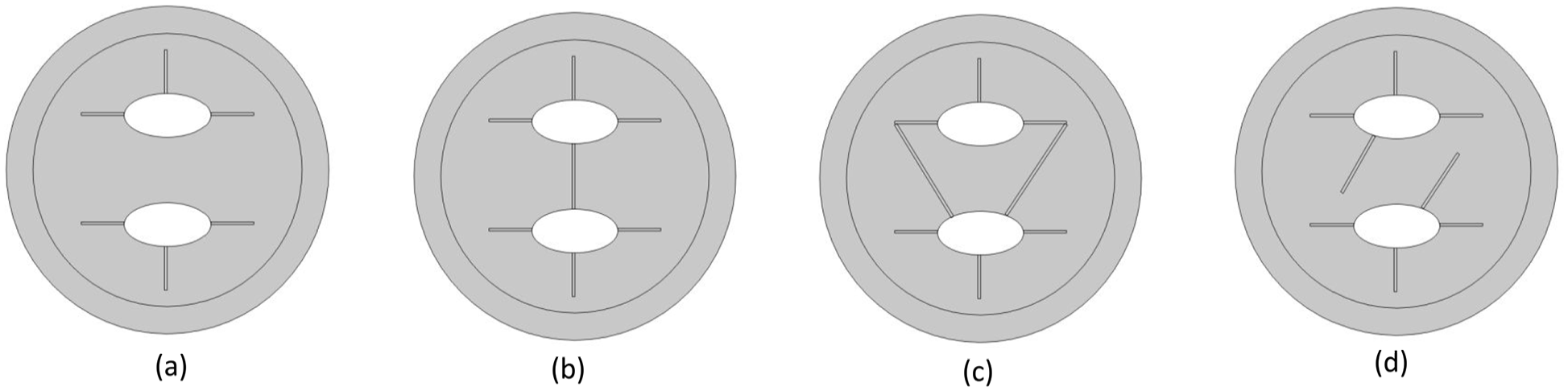
Different configurations adapted for the study: (a) configuration without fins between the inner tubes, (b) configuration with a vertical fin between the inner tubes, (c) configuration with fins attaching both top and bottom tubes that connect the heating system and (d) configuration with inclined fins between the tubes that do not connect the heating system.
The dimensions of the four investigated configurations of the thermal system are displayed by Table 1, while the overall considered surface of fins is presented by Table 2. In which case the study aims to compare the thermal performance of systems with the same fin surface, for instance a comparative analysis between configurations (a) and (b) with a fin surface of 7200 cm2, and configurations (c) and (d) with a fin surface of 10,300 cm2.
Dimensions of the geometrical systems.
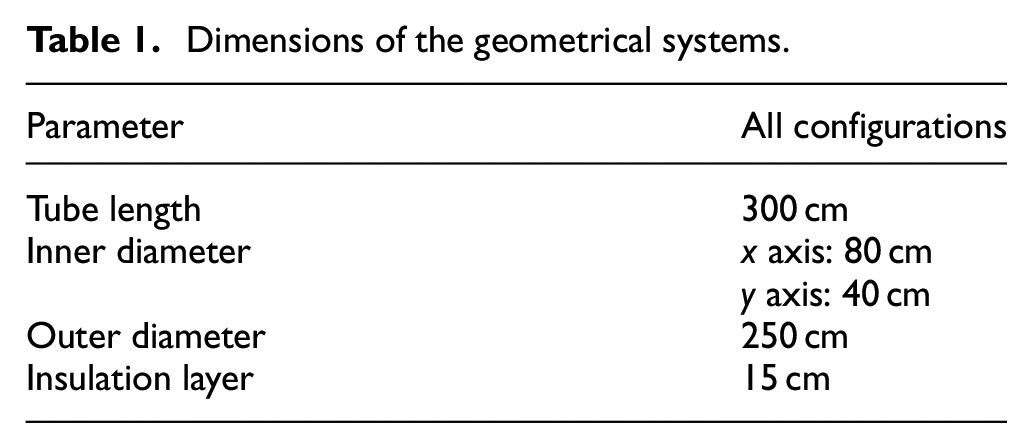
Total surface of fins and PCM filled space of all configurations.

Thermo-physical properties
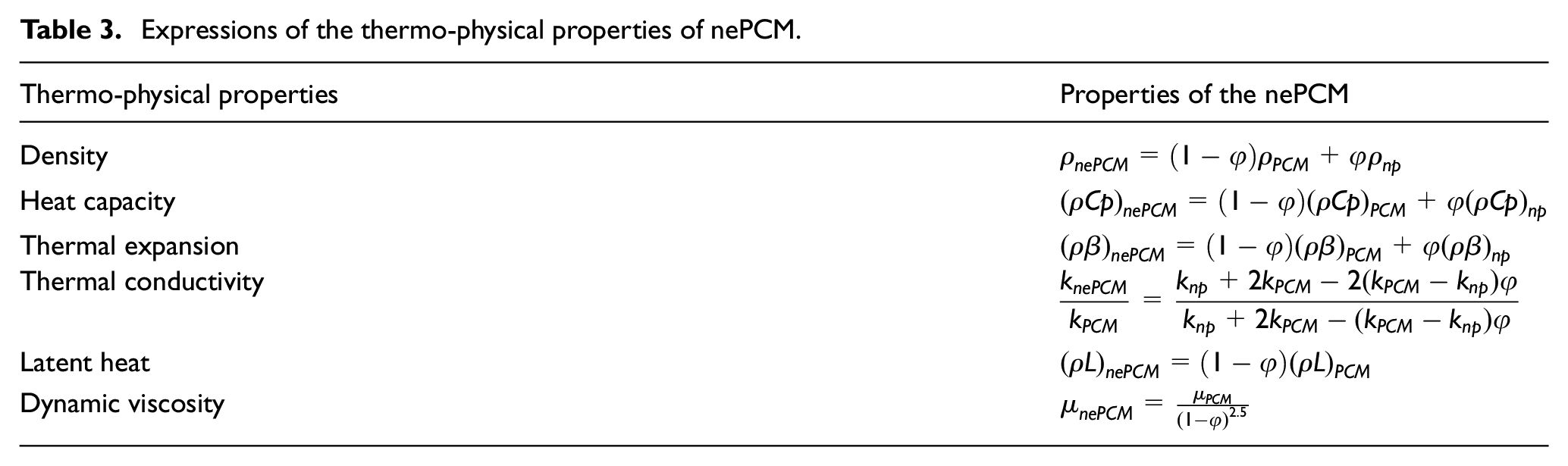
According to Maxwell’s and Einstein’s expressions, Table 3 presents the characteristics of the nano enhanced phase change material, where we can clearly see the influence of the nanoparticles features on the overall final properties of the storing material.48,49 Hence why the relevance of the investigation of the impact of nanoparticles on the storing capacity of classical phase change materials, namely, Paraffin wax.
Expressions of the thermo-physical properties of nePCM.
The properties of both the phase change material, nanoparticles, along the material of fins considered in this research paper are displayed in Table 4. And to provide a clearer understanding of the melting behavior observed in the studied configurations, Table 5 presents the total PCM filled volumes along the corresponding gross masses.

Volume and gross mass of the PCM in each configuration.

Numerical model
The governing equations supporting the thermal problem of the melting of the nePCM are53,54:
(1) Continuity equation

(2) Momentum equation

(3) Energy equation

Where H represents the total enthalpy calculated as follows:

While h and ΔH stand for the sensible and the latent enthalpy respectively:


α Stands for the fluid component and fraction of the phase change material, and it is defined as follows:
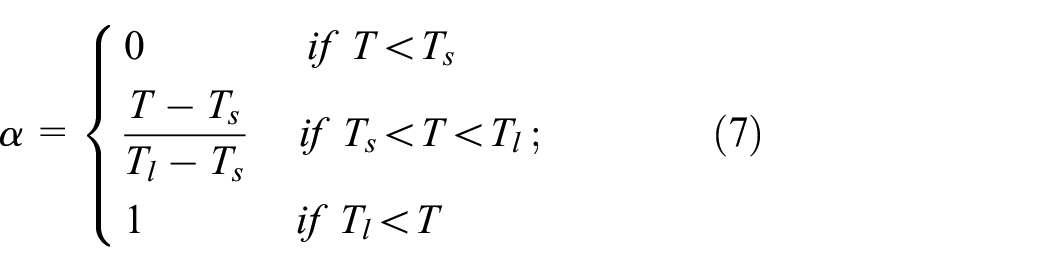
On the other hand, the conductive thermal transmissions due to the fins is defined as follows:

The stored energy by the phase change material is evaluated by considering both sensible and latent heat contributions. The total stored energy is determined by integrating the internal energy density over the PCM domain as follows:

Where e nePCM represents the internal energy, given by:

Q sensible is responsible for the sensible heat contribution, as before and after the phase change, the nePCM stores heat as its temperature increases. While, during the phase change, the nePCM stores latent heat at a constant temperature, standing for Q latent .


Validation test
In this section, the first accuracy test is carried out by analyzing the results of the melting process of a phase change material inside a square shaped cavity acquired by the current program, compared to the experimental results of Mahdi et al. 55 and the numerical results through Fluent software by Cao et al. 56 Mahdi et al. 55 investigated a thermal system that is filled with paraffin wax, considering an annulus between an outer circular tube and three inner tubes: the case with two tubes in the center of the system and one in the upper region, for the present validation test. The comparative test is displayed in Figure 3.

Validation of our program with numerical work.
Our computational study based on the FEM provides results with a small margin error of less than 2%, which shows how the obtained results are significantly accurate and consistent with those of this research article. Which validates the precision and exactitude of the present working program by the Finite Element Method.
In addition, the precision of our program is further tested and compared with the experimental results of Cao et al. 56 in which they examined the melting of a phase change material subjected to a heating source in a circular annulus thermal system. The comparison is maintained for two period time steps, showcasing the beginning of the melting at 40 min, and the developed melting of the PCM at 120 min. Figure 4 displays the melting behavior of the phase change material provided by our program (on the left side) compared to the experimental results of Cao et al. 56 and numerical validation carried out by Mahdi et al., 55 this comparison ensures the accuracy of our numerical model, thus allowing us to accurately study the considered thermal system in this paper.

Validation of our program with experimental work.
Grid independence test
Table 6 displays the grid independence test carried out in order to choose the adequate mesh for the simulation that would yield accurate results, where four types of meshes are investigated. The test is maintained while analyzing the liquid fraction of the nePCM at a volume fraction of 0.02 resulting from the melting process in the first configuration (conf a) for two time steps 20 and 80 min.
Grid test for the liquid fraction of the nePCM for configuration (a) at φ = 2%.

As the comparison shows, when adapting the fourth mesh “Extremely fine” with 92,840 elements and an average quality of 0.8615, the deviation in the values of the liquid fraction is significantly decreased for both time steps. In this context, the “Extremely fine mesh” is chosen to carry out the numerical study.
Results and discussions
The present study analyzes the melting of paraffin wax nano-enhanced phase change material in a unique finned thermal storage system, with geometrical alterations in which the emplacement of fins is adapted in order to report the best geometrical system for enhanced thermal storage efficiency. In this context, the melting fraction is presented, along with the heat distribution in the system and total stored energy, as functions of the time, configuration type, and nanoparticles volume fraction.
Influence of fins on the melting process and temperature distribution
The following Figure presents the phase transition fraction for different configurations, and for several time steps, where we can see how altering the fins number and emplacement influence the melting of the phase change material. As shown by the configuration (a) and for all time steps, we can report an uneven distribution of heat mainly in the central section of the thermal system, which resulted in insufficient thermal transmission and reduced the melted fraction compared to the upper and lower part of the geometry. In this context, in the three other configurations fins in the center of the system are introduced. We can notice how inserting a fin in between the two inner tubes increase the melted fraction of the nePCM compared to the case win no fins between the tubes. Furthermore, in configuration (c) and (d) the liquid fraction enhances significantly in the central area when introducing two inclined fins, especially for the case where we implement two long fins connected to the horizontal upper fins “configuration (c).” Therefore, yielding to a uniform heat distribution that generates an improved liquid fraction compared to the other configurations due to the increased heated surface area provides by the considered fins, which promotes an efficient melting of the PCM. However, even in this case (at t = 120 min) we can notice a small area with incomplete melting in the center portion of the system, thus reflecting the limited heat transfer in that specific section (Figure 5).

Impact of the fins on the melting of the nePCM for φ = 2% and different time steps.
Figure 6 displays the melting fraction of the nePCM for all configurations, when adapting a nanoparticle concentration of 2%, the findings demonstrate how fin positioning and design play critical roles in liquid fraction development and the overall melting of the nePCM. Although configurations (a) and (b) have the same fin surface area, configuration (b) consistently outperforms (a) throughout all time steps, demonstrating that placing a fin between the two inner heating tubes increases heat transfer efficiency and allows further melting. For further comprehension, two fin designs are considered to study the impact of fin emplacement and design on the overall thermal efficiency. Thus, for the same fin surface amount, configuration (c) adapts a connected fin system that links the upper and lower heating sources, whereas configuration (d) features inclined fins between the heating tubes that do not physically link them together.

Impact of the fins on the liquid fraction of the nePCM for φ = 2%.
The results show that configuration (c) offers higher PCM liquid rates compared to configuration (d) despite them having the same fin area. These results indicate that connecting the top and lower inner tubes and heat sources improves heat conduction, resulting in enhanced charging of the nePCM, which ultimately ensures enhanced and rapid thermal storage capacity. On the other hand, the inclined fins in (d), which do not directly link the tubes, are shown to enable less efficient heat transmission. These findings demonstrate that fin location and structural design have a major influence on heat transfer efficiency, and a good geometrical system yields optimal thermal storage performance.
Figure 7 displays the evolving temperature in Kelvin (K) profiles in the studied configurations; it allows us to comprehend the heat distribution throughout the system and for different time steps. The figure indicates how the temperature (K) increases over time, exceeding the melting temperature of the phase change material, thus enabling the melting of the nePCM. It is noteworthy to mention the excellent advantages provided by the implementation of fins, notably configuration (c) which is distinguished by its superior thermal performance, since the heat distribution in this structure surpasses by far that of the other three configurations. Thus, highlighting its potential.
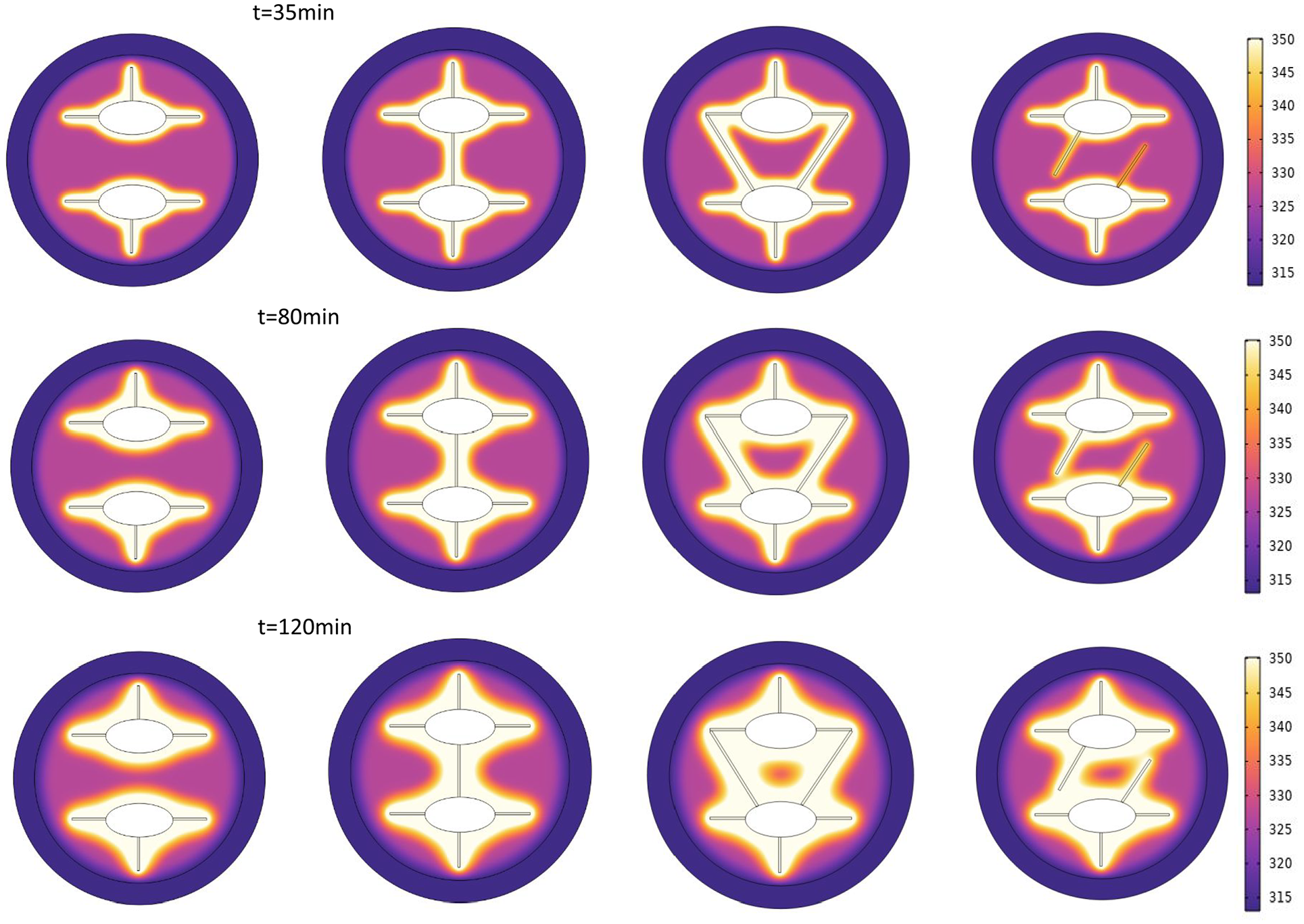
Impact of the fins on the temperature distribution for φ = 2% and different times steps.
Influence of nanoparticles on the melting process
For further enhancement of the melting of the nePCM and greater thermal performance, with a distinctive focus on the central area of the thermal system, the melting process of the phase change material is investigated by altering the volume fraction of the employed nanoparticles. In this context, the following figures demonstrate the influence of the alumina nanoparticle concentration on the melting rate of the PCM. We can conclude from Figure 8 that the augmentation in the volume fraction of the used nanoparticles directly influences the melting process of the PCM in all configurations. Even for the first configuration where heat is poorly distributed, we can perceive how the increase in the concentration from 2% to only 4% intensifies the thermal transmission, mainly in the centric area. The impact is particularly advantageous when applied in configuration (c) and (d) since the solidified area in the center immediately melts when enhancing the volume fraction over 2%. This improvement is attributed to the unique characteristics of the nanoparticles with enhanced thermal conductivity, which results in a nano enhanced PCM that can overcome thermal barriers and enable uniform melting even for regions previously resisting melting. In this case, we can report that configuration (c) with enhanced concentration of nanoparticles superior to 2% is the best and thermal system to consider for enhanced thermal exchange.

Impact of nanoparticles concentration on the melting of the nePCM for t = 120 min.
Figure 9 on the other hand, displays the liquid fraction of the phase change material as a function of the volume fraction of the used nanoparticles. The outcomes further confirm that configuration (c) consistently achieves the highest melting rates across all volume fractions compared to the remaining configurations. Although the increase in the volume fraction improved the melting of the PCM, the enhancement is more pronounced when boosting the nanoparticle’s presence from 2% to 4% only, as beyond 4% the impact of nanoparticles on the melting process becomes insignificant. Suggesting that while the addition of the alumina nanoparticles initially enhanced the thermal efficiency, a saturation point is reached where a further increase in the concentration provides no substantial improvement in the heat transmission performance, leading to additional expenses without having a major effect on the melting fraction and thermal storage.

Impact of nanoparticles concentration on the liquid fraction of the nePCM for t = 120 min.
Stored energy
Figure 10 displays the stored energy provided by the four configurations. The evolution of the configurations exhibits an increasing trend over time, with configuration (c) significantly outperforming the other three configurations in the rate of the stored energy. This superiority is attributed to the two long fins connecting the upper horizontal fins to the bottom inner tube constructing a triangular design, which channels the heat more effectively thus providing uniform heat distribution and thereby promoting efficient melting of the phase change material. The enhanced heat transfer achieved through this configuration not only improves the melting process but also leads to heightened energy storage efficiency. The absence of fins in the central portion of the thermal system in configuration (a) results in incomplete melting, leading to a reduced melted fraction. Consequently, this configuration exhibits a lower stored energy compared to the other three studied configurations, indicating less efficient thermal performance. When t = 100 min, adapting configuration (a) as the thermal system yields the energy storage to drop by 8% and 2% compared to that of conf (c) and conf (b and d) respectively. A difference that appears to increase over time, since at t = 200 min, the stored energy delivered by the third configuration surpasses the others by 10%, 7%, and 5.4% that relate to conf (a), (b), and (d) respectively. We can see how the stored energy in configurations (b) and (d) is closely matched. Initially, the energy storage path for these configurations is nearly identical, converging and equalizing shortly after 100 min. Although (b) starts with marginally higher energy storage, configuration (d) surpasses it after this point due to the presence of its two angled fins that facilitate a uniform heat distribution. By t = 120 min, the central portion of the thermal system in configuration (d) is almost completely melted, resulting in higher stored energy compared to (b) characterized with a long fin between the tubes.

Impact of fins on the stored energy rate for φ = 6%.
This indicates that the impact of the two angled fins in configuration (d) on thermal performance becomes evident slightly after 100 min, where its distinctive fin design contributes to distributing heat more evenly across the center of the thermal system, a feat that configuration (b) does not achieve. Configuration (c) clearly demonstrates a superior energy storage performance over time, indicating faster energy storage as time progresses. Exploring the impact of nanoparticle concentration on stored energy in configuration (c) is crucial to optimizing its already superior thermal efficiency. Investigating how nanoparticles enhance heat transfer and storage in this configuration can lead to the development of more efficient and cost-effective thermal storage systems.
It is noteworthy that configurations (c) and (d) exhibit greater energy storage performance despite containing a slightly smaller mass of PCM than configurations (a) and (b) (as displayed in Table 5). This implies that the enhanced heat dispersion and unique set of fins of the optimized geometrical characteristics compensate for the decreased PCM amount through improved heat transfer processes. With the best fin arrangement, configuration (c) produces quicker melting and more stored energy over time. This suggests that particularly in systems where quick charging and even heat distribution are essential, thermal efficiency and good design can overcome the effects of the phase change material bulk reduction. Additionally, the faster charging rate of designs (c) and (d) makes them especially suitable for solar thermal systems, which frequently have time-limited and intermittent energy input. Their faster response enables improved utilization of available solar radiation during peak periods, enhancing the overall reliability and effectiveness of the energy storage system.
Figure 11 illustrates the effect of varying nanoparticle (alumina) concentrations on the stored energy rate in configuration (c), highlighting a progressive enhancement in stored energy as the concentration increases from 2% to 6%. This observed increment, quantified at approximately 6%, aligns with the expectations that augmenting nanoparticle concentration in the phase change material enhances its thermal conductivity. The inclusion of alumina nanoparticles facilitates a more efficient thermal energy transfer within the PCM, leading to an improved storage energy rate. When considering a volume fraction of 6% at t = 50 min, the energy storage is reported to improve by almost 7% and 13.85% compared to the cases where φ = 4% and φ = 2% respectively.

Impact of nanoparticle concentration on the stored energy rate for Configuration (c).
Conclusions
The incorporation of nanoparticles in the phase change material, and fins (geometry, placement) plays a pivotal role in enhancing and optimizing the thermal systems. Based on the detailed analysis of different configurations (a, b, c, and d), it is evident that configuration (c) exhibits the most superior temperature distribution, primarily due to the extended reach and effective heat transfer facilitated by its triangle center fin. This configuration efficiently covers the extended area within the thermal system, leading to a more uniform and rapid melting process. As the results suggest, this configuration delivers the most superior temperature distribution, which is due to the prolonged reach and effective heat transfer provided by its angled fins.
The study has shown that the addition of fins, especially the long-angled ones connecting different parts of the thermal system, plays a crucial role in enhancing the melted fraction and ensuring consistent thermal transmission across the system. Moreover, the investigation into the impact of nanoparticle concentration on the stored energy rate reveals that increasing the alumina nanoparticle concentration from 2% to 6% in configuration (c) leads to a noticeable improvement in thermal storage efficiency. This enhancement is attributed to the nanoparticles ability to increase the thermal conductivity of the PCM, thereby providing a more effective heat transfer and storage process. Consequently, configuration “c” not only outperforms in terms of stored energy but also demonstrates the potential for further optimization through nanoparticle concentration adjustments.
Hence, we can conclude the following:
✓ The adjustment of geometrical features can greatly influence the thermal storage process.
✓ Enhancing the nanoparticle’s presence in the phase change material ensures an efficient heat transmission and accelerates the melting process.
✓ Adapting long angled fins in this thermal storage system improves the melting process of the phase change materials.
✓ Combining a geometrically well performing system with fins along with improved nanoparticle volume fraction in the PCM is greatly beneficial to energy storage.
✓ The employment of nano enhanced phase change materials nePCMs strongly enhances the overall thermal performance.
Footnotes
Appendix
Handling Editor: Sharmili Pandian

Funding
The author(s) received no financial support for the research, authorship, and/or publication of this article.
Declaration of conflicting interests
The author(s) declared no potential conflicts of interest with respect to the research, authorship, and/or publication of this article.