



Abstract

The current work scrutinizes the Dufour and Soret significance on radiative flow of dusty Ellis’s trihybrid nanofluid on Riga plate with Marangoni convection using two different thermal conductivity models, the Yamada-Ota model and the Xue model. The Darcy Forchheimer effect in porous media is taken into consideration in the momentum equation. The performance of this proposed model is compared with two well-known trihybrid nanofluid thermal conductivity models, Xue and Yamada-Ota. The thermal behavior and transport characteristics of complex nanofluids are revealed by this model, which is essential for engineering uses including thermal management systems, heat exchangers, and energy systems based on nanofluids. Predictions are more accurate when Dufour and Soret characteristics are included, especially when there are large temperature differentials or uneven concentration gradients. This provides useful advice for real-world application and design enhancements. The similarity variables are used to convert PDEs into ODEs. The shooting method (RKF-45th) is still used to obtain the mathematical conclusions of governing comparisons. The velocity fields of the fluid and dust phases upsurge as the Ellis fluid parameters are increased, whereas the temperature profiles decrease.
Keywords
Introduction
Non-Newtonian fluid flow has gained recognition recently for its ability to address significant issues in a variety of business, academic, and industrial domains. Some industrial non-Newtonian fluids have both viscous and elastic properties, and yield shear stress is one of their constitutive equations. Because many fluid materials used in contemporary production have flow characteristics that the fluid model based on Newton’s viscosity law cannot explain, non-Newtonian fluids are crucial. Therefore, low-molecular-weight polymers are the ideal candidates for these fluid simulations. Mass and heat transmissions in a variety of non-Newtonian fluid models with different physical properties are essential in the domains of fluid dynamics, engineering, and business. Non-Newtonian fluid flows can be found in volcanic lava, molten polymers, drilling mud, some authorized paints, oils, cosmetics, polycrystalline melts, liquid suspensions, food production materials, and many other substances. In a porous medium, Naveen Kumar et al. 1 inspected the non-Newtonian HNF (hybrid nanofluid) flow across a rotating disk that moves vertically upward/downward. Punith Gowda et al. 2 scrutinized the assessment of mass and heat transmission in ferromagnetic fluid flow across a sheet with the combined influence of magnetic dipole.
An Ellis fluid is a type of non-Newtonian fluid that behaves differently under various stress conditions. In technical terms, under the case of a vanishingly small shear stress, the apparent viscosity of a shear-thinning fluid without singularity is designated by the Ellis Fluid Model. This means that the fluid behaves like a Newtonian fluid (like water) when the trim strains are very lesser. At high shear stresses, the model predicts power law behavior. This model is used in various fields, such as engineering, biomedical, and geophysical areas, to understand and predict the behavior of non-Newtonian fluids. Polymer solutions, genetic liquids resembling blood, and a variety of fluid foodstuffs are examples of these fluids. Ellis’s fluid spreads in patterns like to waves, simulating the movement of food through the intestines. This phenomenon, together with the effects of pressure and heat delivered by cilia within the fluid, was explored by Channakote et al. 3 The study conducted by Steinik et al. 4 centers on observing shear-thinning fluids—specifically, the Ellis fluid—moving through a capillary tube. Ellis fluid’s rheological characteristics, flow dynamics, and surface interactions have all been extensively studied by a large number of researchers.5–7
The numerical simulation of the bio-convection radiative heat transfer flow of Carreau NF is examined by Irfan and Muhammad. 8 The combined impact of wall and hall characteristics on peristaltic convective carbon–water flow susceptible to Dufour and Soret effects was investigated by Hussain and Muhammad. 9 The Soret and Dufour impacts on MHD nanofluid flow of blood via a stenosed artery with varying viscosity were investigated by Mishra et al. 10 The Reiner-Rivlin nanofluid’s time-dependent flow across a sheet with an activation energy was examined by Muhammad and Haider. 11 Using an ANN (artificial neural network) technique, Sharma et al. 12 investigated the Darcy-Forchheimer HNF flow over the revolving Riga disk in the occurrence of a chemical reaction.
A trihybrid is an exclusive kind of nanofluid made up of three dissimilar kinds of NPs (nanoparticles) mixed together in a base fluid. One can create the nanoparticles using metals, or carbon-based compounds, metal oxides. When comparing these nanofluids to ordinary ones, they have better thermal and physical properties. A few of the many fields in which hybrid nanofluids may find use include electrical cooling, biomedical engineering, energy storage devices, and heat transport. Researchers are examining the potential and properties uses of nanofluids. They want to improve their capabilities and find new uses in various domains. Amir et al. 13 investigated using a non-local kernel to observe heat flow through the fractionalized Brinkman-type THNF, which has a progressively rising temperature. Mahmood et al. 14 examined the mathematical simulation of THNF over a sheet. Sudharani et al. 15 investigated the computational assessment of tri-hybrid nanofluids and hybrid predisposed by radiation. The impact of surface tension gradients on radiative 3D flow of THNF with Soret-Dufour impacts was inspected computationally by Alharbi et al. 16 using Yamada-Ota and Xue models. Abbas et al. 17 described the comparative analysis of a two-phase flow of an infusion of dust particles and gyrotactic microbes in a THNF with Soret-Dufour effects and melting phenomena. Galal et al.’s work 18 compared the modified and conventional Hamilton-Crosser models for thermophoretic and electrophoretic in stagnation point flow of a THNF based on diamond, SiC, Co3O4, and diathermic oil. The effects of radiation on the thermo-bioconvection flow of a THNF over an rotating disk were inspected by Galal et al. 19 using the Cattaneo-Christov flux model. Figure 1 display the flow chart of THNF and HNF.

Flow chart of THNF and HNF.
Because Dusty fluid model fluxes have a two-phase nature, whereby drawn specific attention in modern surveys. After flows of fluid—gas or liquid—include a dispersion of compact particles, this spectacle takes place. The chemical reaction and the flow of dusty air in fluidization problems that results in the coalescence of microscopic dust particles to generate raindrops are two examples. Planetary systems are mostly produced from cosmic dust, which is created when gas and dust combine. Processes include solid fuel rock, sedimentation, rain erosion, dust collection, paint spraying, powder technology, and nuclear reactor cooling nozzle performance, and directed weaponries are a few more examples of how the dusty fluid is used. Modeling, solving, and analyzing the movement of dusty fluids are taken into consideration has accelerated as a result of these facts. Because of its many uses and two-phase structure, this model has drawn special attention in recent research.20,21 With a focus on the function of the slip characteristics, Rahman et al. 22 scrutinized the properties of dusty liquefied in a Darcy-Brinkman permeable broadcasting. In the occurrence of gyrotactic microbes and Stephan blowing influences, Abbas et al. 23 investigated the effects of Cattaneo-Christov mass and heat flux models on the bioconvective flow of a dusty HNF over a Riga plate.
The phenomenon wherein there is a Soret effect is sometimes referred to as thermal diffusion. preferential migration of particles in a fluid or gas mixture due to a thermal pitch. The Soret influence is particularly significant in mixtures where there are variations in the molecular mass or size of the particles. The Soret effect shows a critical character in various natural and industrial processes, 24 including combustion, chemical reactions, and atmospheric phenomena. The Dufour effect, besides recognized as MD (mass diffusion), describes the phenomenon where there is a coupling between mass and heat transmission in fluid systems. In simpler terms, it refers to the transport of mass in a fluid or gas mixture due to a thermal gradient. Unlike the Soret effect, which involves the migration of particles, the Dufour effect involves the movement of the entire fluid or gas mixture. The Dufour effect is particularly relevant in situations where there are simultaneous variations in thermal and solutal within the fluid, such as in heat exchangers, 25 porous media, and biological systems. 26 Jamir et al. 27 inspected how heat and MTE (mass transmission effects) influence the movement of mixed convection around an extending sheet. In order to obtain the most recent knowledge and advancements, it is recommended that one examine the most recent scientific literature. The impact pf thermal radiation on symmetric plus asymmetric conduit flow of couple stress fluid were inspected by Akbar and Muhammad. 28 The combined effects of thermophoresis and Brownian motion on convective flow over an surface with chemical reaction and radiation were inspected by Sharma et al. 29
The aim of this research is to examined the features of Soret-Dufour on chemical reactive flow of a dusty Ellis trihybrid nanofluid. Specifically, the research aims to employ the Yamada-Ota and Xue models to explore how these effects influence the flow behavior, heat transfer, and chemical reactions occurring within the trihybrid nanofluid system. The current inquiry goals to provide responses to the resulting explorations:
What is the significance of the Dufour effects and Soret on the chemical reactive flow of DETNF (dusty Ellis trihybrid nanofluid)?
How do the XM and YOM models contribute to the understanding of the behavior of dusty Ellis trihybrid nanofluid?
What is the impact of Ellis fluid parameters on momentum and thermal boundary layers flow?
How do dust particles and nanoparticles volume friction on flow, thermal, and concentration boundary layer?
How does the effects of Soret and Dufour on dusty Ellis trihybrid nanofluid flow?
Which thermal conductivity trihybrid nanofluid models, Yamada-Ota and Xue, performs better in term of heat transmission?
There are important applications in numerous different domains for the use of the XM and YOM thermal conductivity representations in the investigation of chemical reactive flow of a dusty Ellis THNF while taking Soret-Dufour effects into account. Heat exchangers, thermal management systems, and nanofluid-based energy systems are just a few of the engineering applications for which these models’ insights into the thermal behavior and transport qualities are essential. To maximize effectiveness and performance, one must comprehend how fluid flow, heat transport, and chemical processes interact in these systems. Predictions are more accurate when Soret and Dufour effects are included, especially when there are large temperature differences or uneven concentration gradients. This is especially useful when making design and implementation decisions.
The trihybrid nanofluid, which has a base fluid of propylene glycol, AA7072, AA7075, and
Mathematical formulation
Deliberate a 2D laminar boundary layer flow of a non-compressible electrically conducting dusty Ellis trihybrid nanofluid over a Riga Plate as shown in Figure 2.
The importance of the thermal radiation is taken into account.
The suspension of dusty particles and nanoparticles is considered in the context of a steady, incompressible fluid two-phase flow.
The Dufour and Soret characteristic are incorporated into the concentration and energy equations.
The cylindrical shaped nanoparticles and dust are presumed to be uniformly discrete throughout the fluid.
The two-phase flow problem is associated with the boundary condition of Marangoni convection.
The dust particles’ density is assumed to stay constant, and the volume fraction is not taken into consideration.

The flow geometry.
The aforementioned assumptions30–35 apply to the physical scenario described above, and the corresponding continuity, momentum, temperature, and mass conservation equations for the dust phase and fluid phase are as follows:


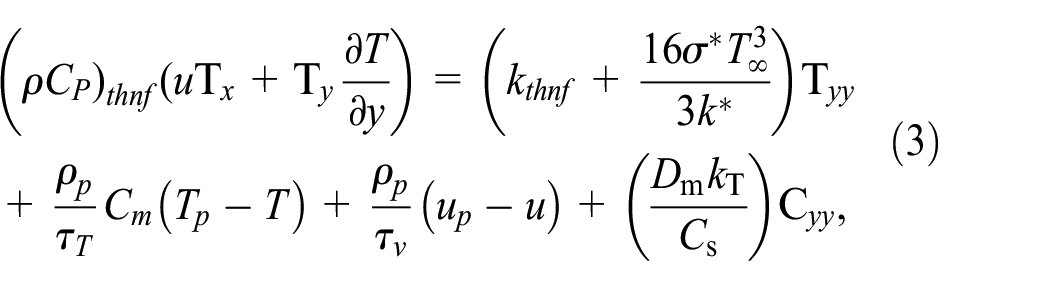





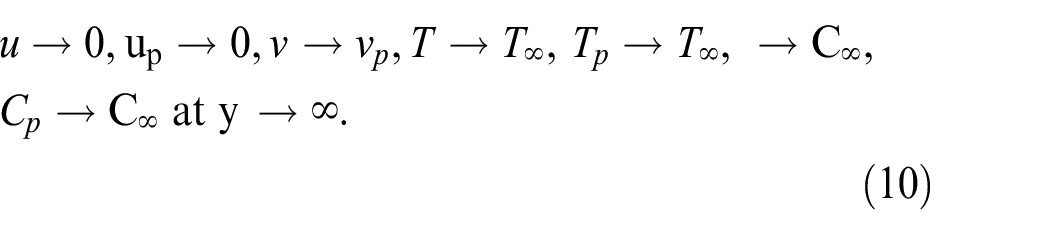
This simplifies the mathematical assessment of the existing physical problem by proposing the following formulas based on the dimensionless boundary layer coordinate 35 :


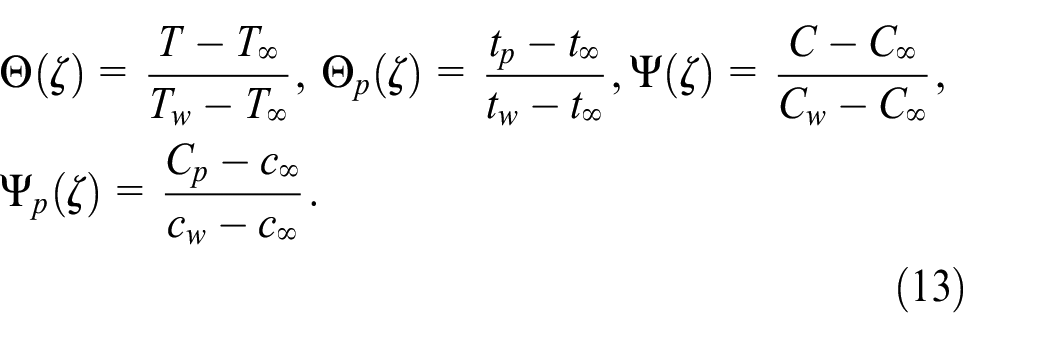
The equations (1)–(8) are reduce to,


Boundary conditions


Dust particle mass concentration L =

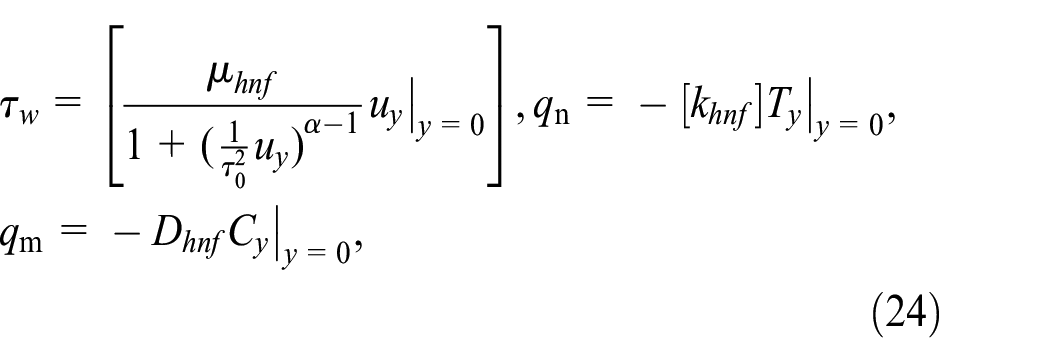
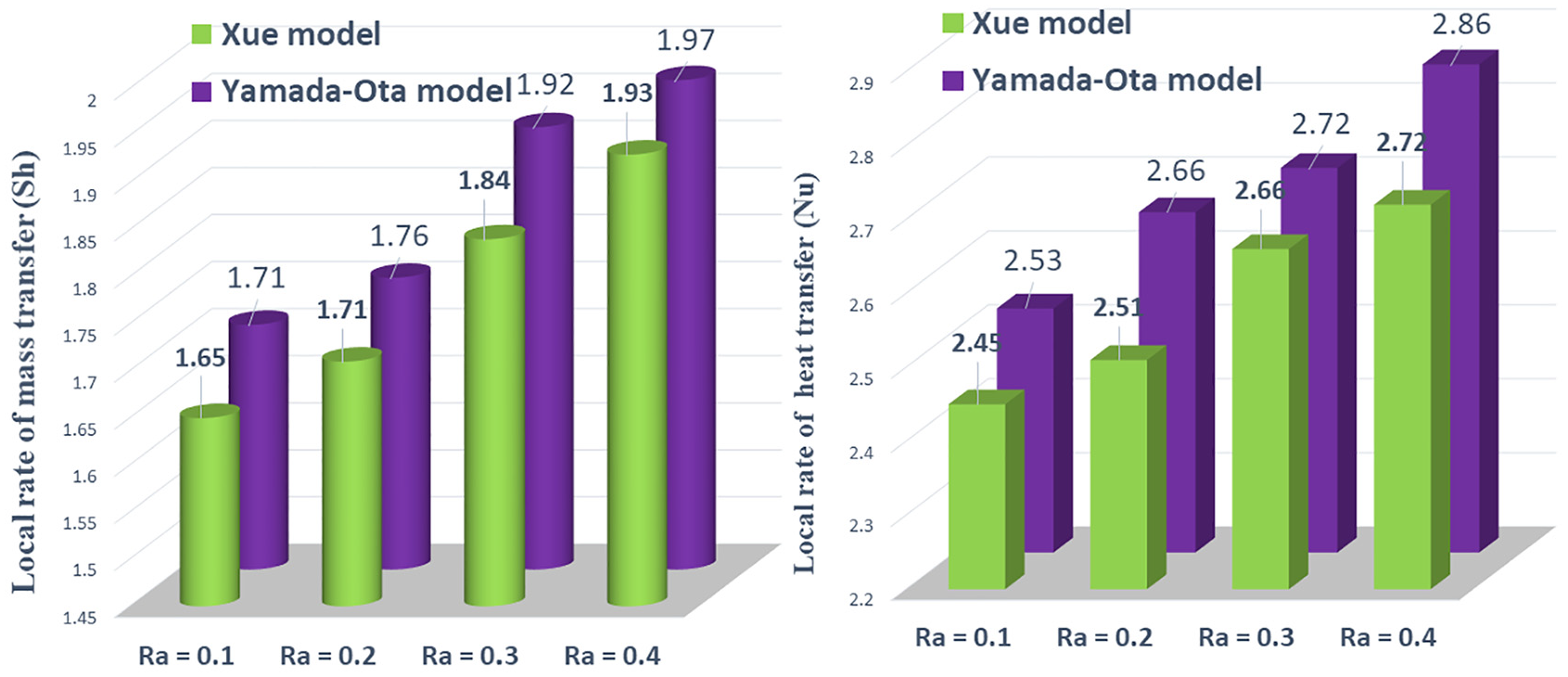
Skin friction, local mass transmission, and heat transmission rates are discussed in dimensionless forms:


The tri-hybrid thermal conductivity Xue model is defined in Abbas et al. 36

Thermal conductivity of ternary hybrids35,36 discuss Yamada Ota model expressions.

Table 1 illustrates the base fluid’s and NPs thermophysical characteristics. Table 2 lists the trihybrid nanofluid’s characteristics.

Thermal properties of the THNF. 33

Numerical method
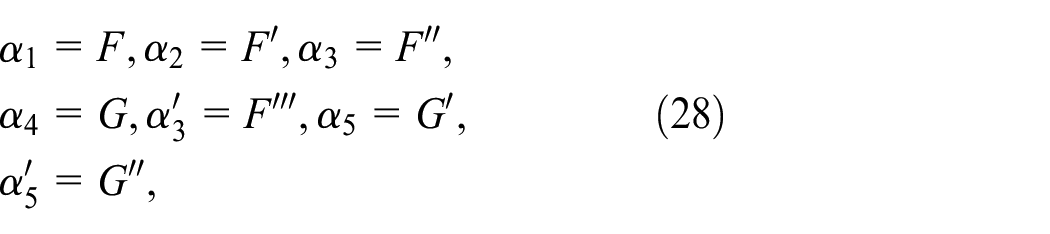
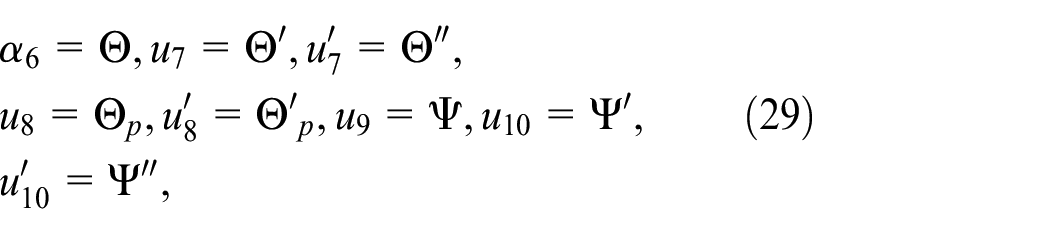
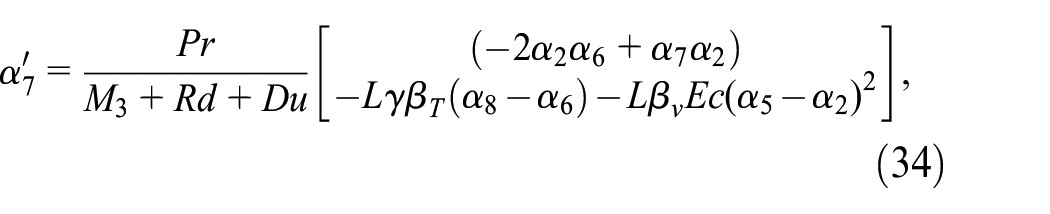
Using the shooting (RKF-45th) approach, the nonlinear BVP is solved after being transformed into a sequence of first directed IVP. The flexibility and effectiveness of the RKF-45th order method (Runge-Kutta-Fehlberg method of 4th and 5th order) make it a popular choice for solving ordinary differential equations. Adaptive step sizes, which enable the RKF-45 method to automatically modify the step size throughout the computation based on the error estimations, are a key benefit. This flexibility preserves computational efficiency while guaranteeing excellent accuracy. A wide range of problems, particularly those with different degrees of complexity or smoothness in their solutions, can benefit from the method’s ability to strike a compromise between precision and computing cost. Nevertheless, there are certain drawbacks to the RKF-45 approach as well. It can be computationally costly for issues requiring a high degree of precision or very small step sizes, even though it is effective for many other situations. As a result, processing times may be longer than using lower-order techniques. Additionally, the RKF-45 method is more complicated to implement than simpler approaches since it necessitates the computation of several intermediate steps and error estimates for adaptive step size adjustment. When compared to more specialized approaches like implicit solvers, the method might not always be the most effective option, particularly for stiff differential equations. Now, add the following factors to the equation:






Boundary conditions


Figure 3 show the significance of RKF-45th method.

Flow chart of Bvp4c of RKF-45th method.
Result and discussion
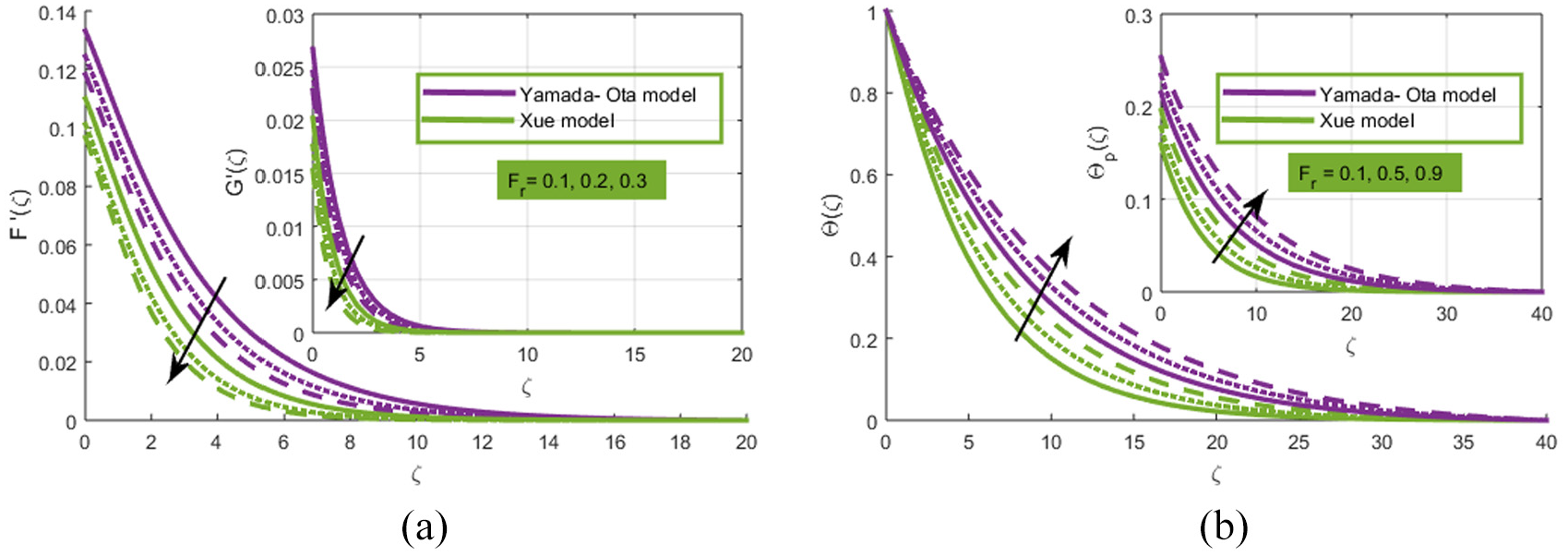
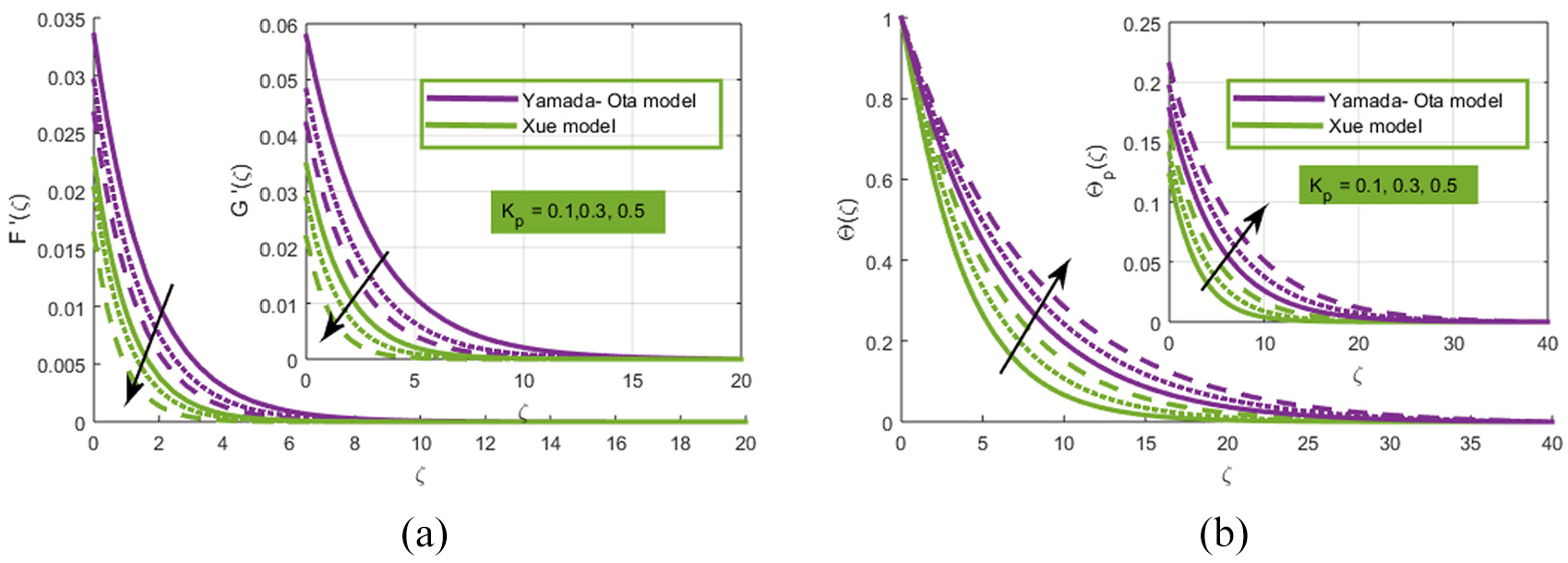
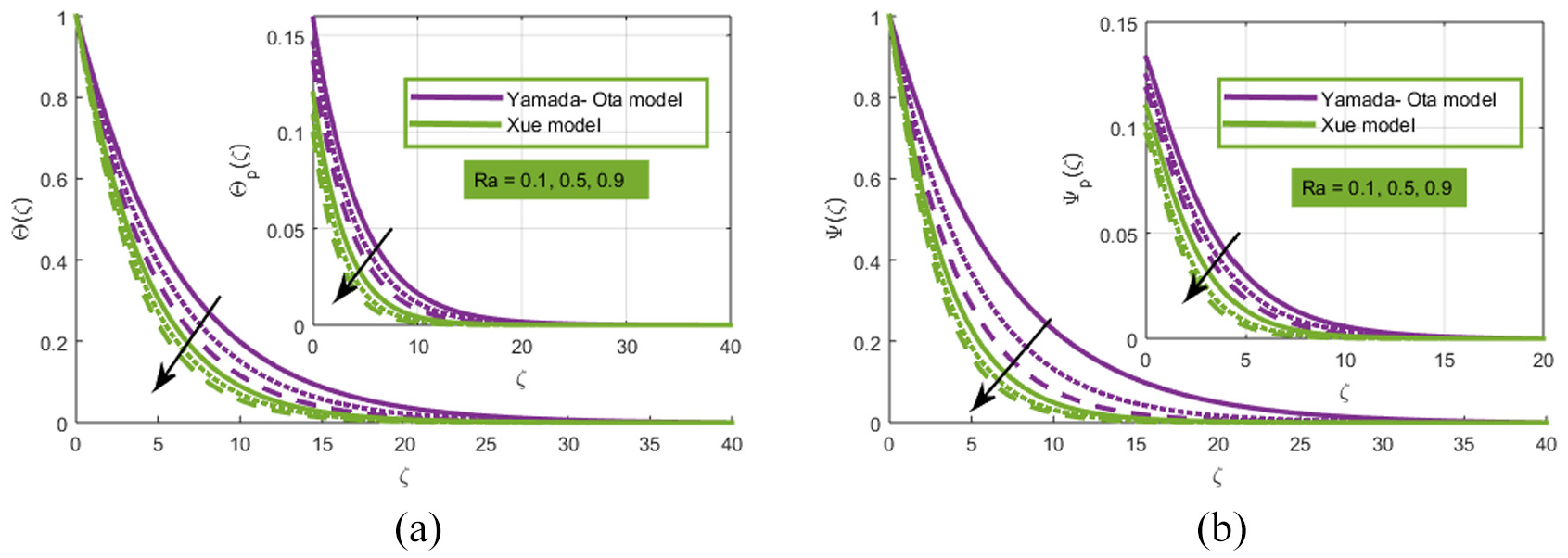
Significant uses in advanced heat transmission technologies can be found in the computational research of radiative flow in dusty Ellis propylene glycol-based trihybrid nanofluids utilizing XM (Xue model) and YOM (Yamada-Ota model) thermal conductivity models. The automobile and aerospace industries’ heating and cooling systems, energy systems like solar thermal collectors, and the effectiveness of electronic device cooling are a few examples. Moreover, the model facilitates the development of effective thermal management systems for industrial operations and medicinal devices where accurate temperature control is essential. Furthermore, it helps create the next generation of smart fluids that will be used in systems based on nanotechnology and microfluidics. To choose the range of values for the effective factors, Prasannakumara et al.
35
and Mahanthesh et al.
34
were followed that is,
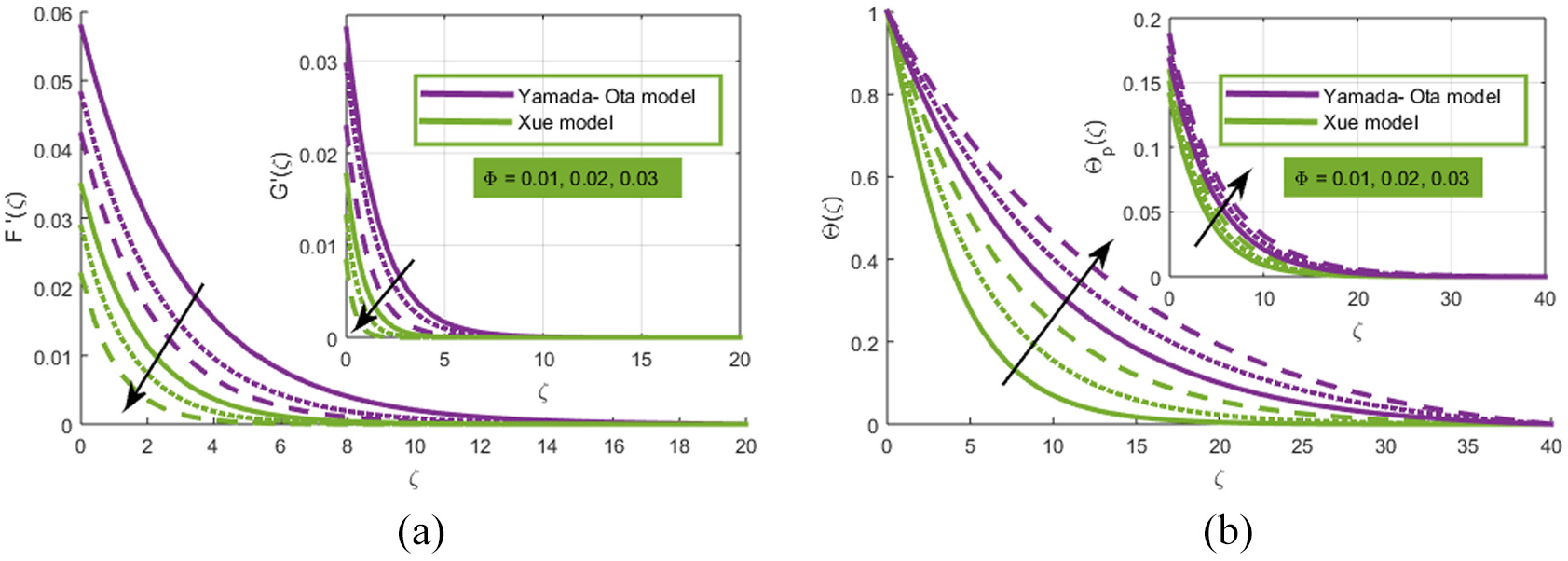
(a) Characteristics of
(a) Effect of
(a) Effect of

(a) Effect of

(a) Effect of

(a) Consequence of

(a) Consequence of

(a) Effect of
(a) Consequence of

Effect of Q on

Effect of
Effect of
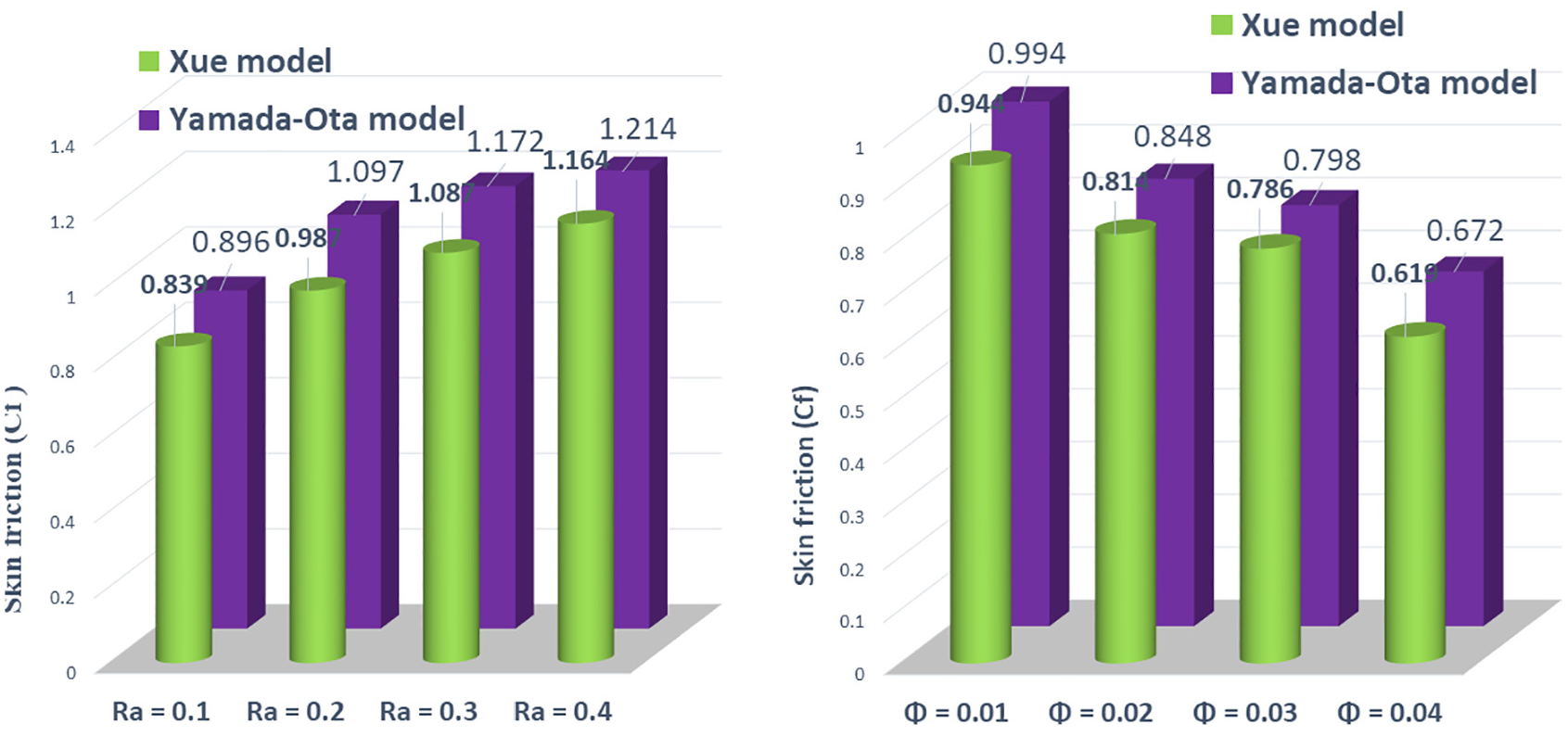
Effect of

Effect of

Effect of

Effect of

Conclusion
The present study examines the complex behavior of dusty Ellis trihybrid nanofluid flow over a porous Riga plate. The current research investigates the significance of Dufour and Soret characteristics, as well as chemical reaction. The key findings of this study are:
Due to enhanced viscosity and particle interactions, as well as energy conservation principles in fluid dynamics, the capacity fraction of nanoparticles in a nanofluid causes a decrease in the flow field.
Growing the Hartmann number leads to an enhancement in the fluid profile. This is due to the stronger magnetic field exerting a greater Lorentz force on the flow.
Ellis fluid parameter increases fluid velocity by making the fluid less viscous.
In a porous medium, a raise in the Darcy-Forchheimer number indicates a more prominent non-linear drag influence. Due to inertial effects, flow resistance can reduce fluid velocity.
An enhancement in Marangoni convection parameter improved the velocity, skin friction, rate of mass and heat transfer while reduced the TBL (thermal boundary layer) and solutal profiles.
An upsurge in the Dufour number and Soret value augments the thermal besides solutal boundary sheet.
A upsurge in the chemical reaction factor value reductions the concentration of classes due to the consumption of the chemical. Overall, the results of this investigation offer insightful information on the complex interactions among the mass transfer, fluid flow, heat transmission, and chemical reactions in the presence of a Riga plate and a dusty Ellis trihybrid nanofluid. These outcomes can have significant suggestions on behalf of the optimization and design of various engineering systems and procedures.
Footnotes
Appendix
Handling Editor: Chenhui Liang
Author contributions
Bandar Almohsen and Munawar Abbas: Supervision, Methodology, Conceptualization. Talib K. Ibrahim: Methodology, Formal analysis, Data curation. Dilsora Abduvalieva: Mathematical formulation, methodology, and result discussion. Liaqat Ali and Ansar Abbas: Writing—review & editing.
Declaration of conflicting interests
The author(s) declared no potential conflicts of interest with respect to the research, authorship, and/or publication of this article.
Funding
The author(s) disclosed receipt of the following financial support for the research, authorship, and/or publication of this article: The research is supported by Researchers Supporting Project number (RSP2025R158), King Saud University, Riyadh, Saudi Arabia.

Availability of data and materials
All data used in this manuscript have been presented within the article.