



Abstract
In the field of industrial engineering, especially in the operation of Gas Turbine (GT) propulsion systems used in frigates, ensuring reliable and efficient performance is crucial. These propulsion systems enable ships to navigate quickly, respond swiftly to threats, and successfully carry out important missions. However, the harsh conditions at sea, such as saltwater corrosion and temperature extremes, cause significant wear and tear on these systems, which can threaten both their performance and the safety of the crew. This makes accurate fault detection in GT compressors and turbines essential. This research introduces a novel approach that combines machine learning (ML) with advanced ensemble learning techniques specifically tailored for diagnosing faults in GT propulsion systems. The key innovation lies in developing a hybrid framework that leverages both the strength of traditional ML classifiers and the robustness of ensemble methods, improving the accuracy of fault diagnosis while reducing the risks of overfitting. Unlike conventional methods that focus on one type of algorithm, our method integrates diverse models to achieve better generalization and stability under varying operational conditions. Through this analysis, we assess the performance and stability of different strategies, focusing on how well this hybrid ensemble approach works compared to standard ML approaches across a variety of classifiers. The research offers valuable insights and provides a solid framework for understanding the flexibility and effectiveness of this novel technique. By connecting theory with real-world applications, this study aims to significantly improve fault detection in vital naval propulsion systems, ultimately contributing to better performance and reliability in maritime defense operations.
Keywords
Introduction
In the dynamic realm of maritime defense and naval operations, the propulsion systems of frigates emerge as the very lifeblood, propelling these vessels through the expansive and unpredictable waters of the world’s oceans. 1 These formidable warships, entrusted with safeguarding a nation’s interests and security, bear a profound reliance on the seamless operation of their Gas Turbine (GT) and GT compressor propulsion plants. The frigates’ capacity to navigate swiftly, respond to threats with agility, and execute critical mission’s pivots unequivocally on the steadfast performance of their GT propulsion systems. 2
Yet, the harsh maritime environment, marked by corrosive saltwater, extreme temperature fluctuations, and the relentless demands of operational conditions, subjects these GT propulsion systems to ceaseless wear and tear. Over time, this unforgiving milieu exacts a toll on the GT compressor and GT turbine, the very heart of these propulsion mechanisms. As these pivotal components degrade, the operational efficiency and reliability of frigates stand imperiled, thereby compromising both crew safety and mission success. 3 In light of these formidable challenges, the need for precise fault diagnosis within GT compressors and turbines assumes paramount significance. 4 The capability to swiftly and accurately discern anomalies and degradation within these intricate components constitutes the thin line between the smooth execution of a mission and the potential catastrophe that lurks in the shadows. 5 Recognizing the urgency of this matter, researchers and engineers have embarked on an unwavering quest to fashion robust fault diagnosis techniques meticulously tailored to the unique exigencies of frigate GT propulsion systems. 6 This pursuit has led us to the forefront of artificial intelligence, where machine learning has steadily emerged as one of the most potent and versatile tools. 2 As we navigate the intricate landscape of machine learning, we encounter a multitude of learning algorithms and methods, each with its own strengths and shortcomings. In this arena, two dominant approaches emerge: deep learning 7 and ensemble learning. 8 Machine learning stands as a beacon of promise in tackling intricate problems, armed with the capacity to effortlessly unravel complex patterns and automatically extract features from unstructured data. 9 Its arsenal encompasses a diverse array of network architectures, including feedforward neural networks, 10 convolutional neural networks, 11 and recurrent neural networks. 12 However, the formidable challenge of training deep neural networks, coupled with the intricate task of optimizing hyper-parameters, renders it a laborious and time-intensive endeavor, rife with the potential for overlearning. In stark contrast, ensemble learning embodies a philosophy that amalgamates a myriad of foundational models, birthing a new, robust, and comprehensive design that transcends the capabilities of its individual constituents. 13 This approach not only mitigates the risk of overfitting but also thrives in diverse application domains. 14 Ensemble techniques such as averaging, bagging, random sunspace, stacking, and boosting have demonstrated their mettle in various arenas. 15 While conventional ensemble learning integrates traditional machine learning models, recent efforts have sought to bridge the gap between ensemble and machine learning, albeit often relying on the method of averaging the outputs of basic deep machine learning models. 16
Recent research has significantly advanced ensemble learning methods. For instance, researchers explored novel ensemble strategies to improve predictive accuracy and robustness, especially in complex environments. 17 Others researchers also investigated advanced ensemble techniques tailored for dynamic systems, highlighting their benefits in fault detection and system reliability. 18 These studies underline the evolving landscape of ensemble methods and their growing importance in developing robust diagnostic models. 19
For this purpose, this article attempts comprehensive studies of the various application strategies of ensemble learning versus machine learning such as Support Vector Machine (SVM), Least Square Support Vector Machine (LSVM), Decision Tree (DT) and KNN20,21… etc. It will also discuss different issues that affect the performance, accuracy, and stability of ensemble methods, such as the type of basic learning models used, the data sampling techniques. In addition, the advantages and disadvantages of each strategy are discussed. 22
The contributions of this article are demonstrated as illustrated below. This paper provides quantitative analytical information on ensemble learning. Next, we present the basic principles and framework of ensemble learning, the different ways to create variety within basic classifiers. In addition, we introduce the framework of each of the different ensemble methods compared to the machine learning, as well as the classifier generalizations of each method. Finally, we take comprehensive studies that use ensemble learning compared to the machine learning in term of accuracy and stability.
The remainder of this manuscript is structured as followed: Section “Ensemble learning” presents the quantitative analytical information for research discussions on ensemble learning and machine learning techniques. Section “Data description” presents a data description and The Design and Methodology of the Technique Use. Section “Results and discussion and comparative studies” discusses several criteria for evaluating different ensemble learning compared to the machine learning in term of accuracy and stability. Finally, concludes this article and gives directions for future trends.
Ensemble learning
Ensemble learning is a powerful technique in machine learning, often leading to improved accuracy and robustness in predictive modeling tasks. Its effectiveness is rooted in the idea that combining multiple models can mitigate individual model weaknesses and enhance overall performance. 23 The choice of ensemble method and base models depends on the specific problem at hand, and careful experimentation and tuning are essential for achieving optimal results. However, three dominant methods currently reign supreme in the field, as depicted more comprehensively in the forthcoming Figure 1.

General overview of ensemble learning.
Common ensemble methods
There are several popular ensemble methods are used to enhance the machine learning process: boosting, bagging, stacking, and Random subspace. 13 In this sub-section, we will discuss the nature of each method’s work and its characteristics regarding the nature of data generation, the nature of training of baseline classifiers, and the appropriate fusion methods, including:
Boosting
Boosting is introduced by Freund and Schapire in the year 1997, the pseudo code, shown Appendix A section, is an ensemble learning technique that combines classifier models by assigning weights to their predictions in a sequential manner. 24 Models that make correct predictions are given higher weights, while models with incorrect predictions receive lower weights. As a result, models that perform well in previous iterations gain increased importance over time.
To provide a clearer illustration, consider the example in the Figure 2 below. 25 Multiple models are utilized, and their predictions are weighted to form the final ensemble prediction. As the boosting process progresses, well-performing models are emphasized, leading to an ensemble with improved accuracy.

Boosting architecture.
The function of bagging is shown as follows:

where
Stacking
Smyth and Wolpert introduced stacking, 1997, is an ensemble learning method that combines multiple base models by training a meta-model on their predictions. 26 The base models serve as input to the meta-model, which learns to make the final prediction based on their outputs (Figure 3).
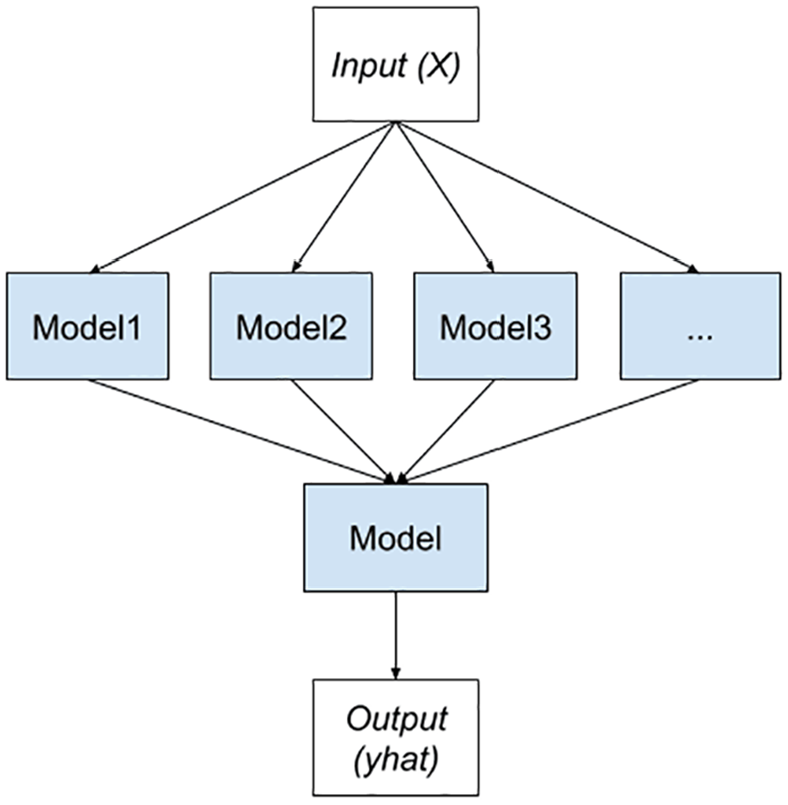
Stacking architecture.
The function of stacking is shown as follows

In the pseudo code, shown Appendix B section, base classifiers are trained on the training data, and their predictions are used to train the meta-classifier. The meta-classifier then makes the final prediction based on the outputs of the base classifiers. This stacking process enables the ensemble to benefit from the diverse insights of individual models, resulting in enhanced overall predictive accuracy.
Bagging
Bagging was introduced by Breiman, 1996, also known as bootstrap aggregating, is an ensemble learning technique that involves creating multiple datasets by down-sampling the original data with replacement. 25 Each dataset is used to train an individual model, typically of the same type, such as decision trees. During the combination stage, the predictions from all individual models are aggregated through a majority vote for classification tasks or averaging for regression tasks. This process aims to reduce variance and improve the overall predictive performance of the ensemble.
For a more intuitive understanding, let’s consider the example in the following Figure 4, where the base model used is a decision tree.

Bagging architecture.
The function of bagging is illustrated as follows:

Where
In the pseudo code, as illustrated in the Appendix C section, multiple base classifiers are trained on random bootstrap samples of the training data. The base classifiers’ predictions are then combined using majority voting (for classification tasks) to produce the final ensemble prediction. The Bagging algorithm aims to reduce variance and improve the overall predictive performance of the ensemble. 27
Random subspace
Random Subspace, also known as Feature Bagging, is a variation of bagging that introduces diversity among the base models by training each model on a random subset of features (columns) from the training data. It helps prevent overfitting and improves generalization (Figure 5). 28
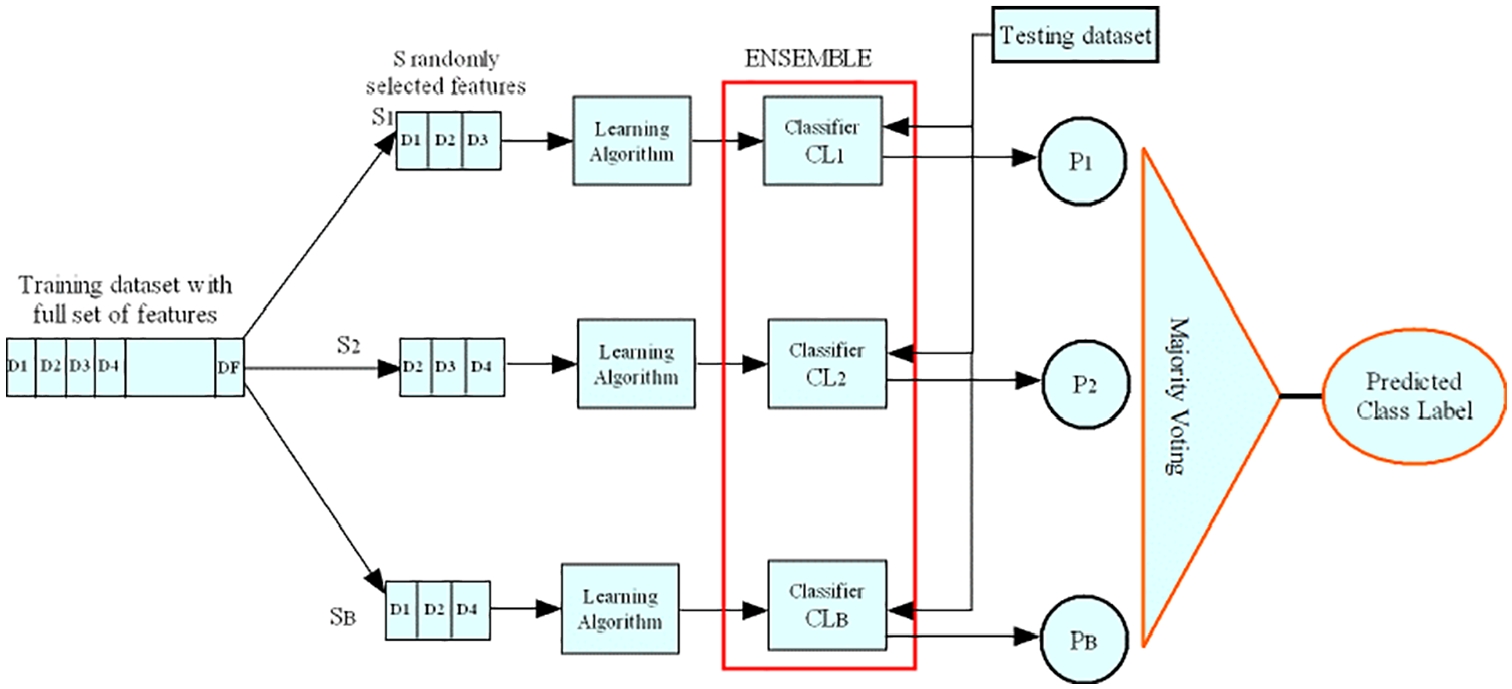
Random subspace architecture.
Suppose you have a dataset represented as a matrix X, where each row corresponds to a data sample, and each column corresponds to a feature:

The Random Subspace method can be mathematically represented as follows:
Define a binary mask matrix M, where each entry

Randomly generate the binary mask matrix M such that exactly n_selected_features columns have the value 1 (indicating feature selection), and the remaining columns have the value 0 (indicating feature exclusion).
Multiply the original dataset X by the binary mask matrix M to obtain the reduced feature subspace X_subspace:

Where:
X_subspace is a new dataset containing a subset of features from the original dataset X, with dimensions n_samples × n_selected_features.
The process of randomly generating M ensures that different subsets of features are selected in each iteration, introducing diversity in feature subsets.
The final result, X_subspace, can then be used for model training or other machine learning tasks, focusing only on the selected subset of features
In the pseudo code, as shown in the Appendices section, multiple base classifiers are trained on random subsets of features from the training data. The same feature subset used during training is also applied for generating predictions on the test data. The base classifiers’ predictions are then combined using majority voting (for classification tasks) to produce the final ensemble prediction. The Random Subspace algorithm aims to enhance model diversity and generalization performance. 29
Data description
The dataset used in this study was generated from a highly sophisticated simulator of Gas Turbines (GT) mounted on a Frigate, featuring a Combined Diesel electric And Gas (CODLAG) propulsion plant. 4 The simulator comprises various interconnected blocks, including Propeller, Hull, GT, Gear Box, and Controller, which have been meticulously developed and fine-tuned based on numerous real propulsion plants over time. As a result, the available data closely resemble those of an actual vessel see Figure 6.
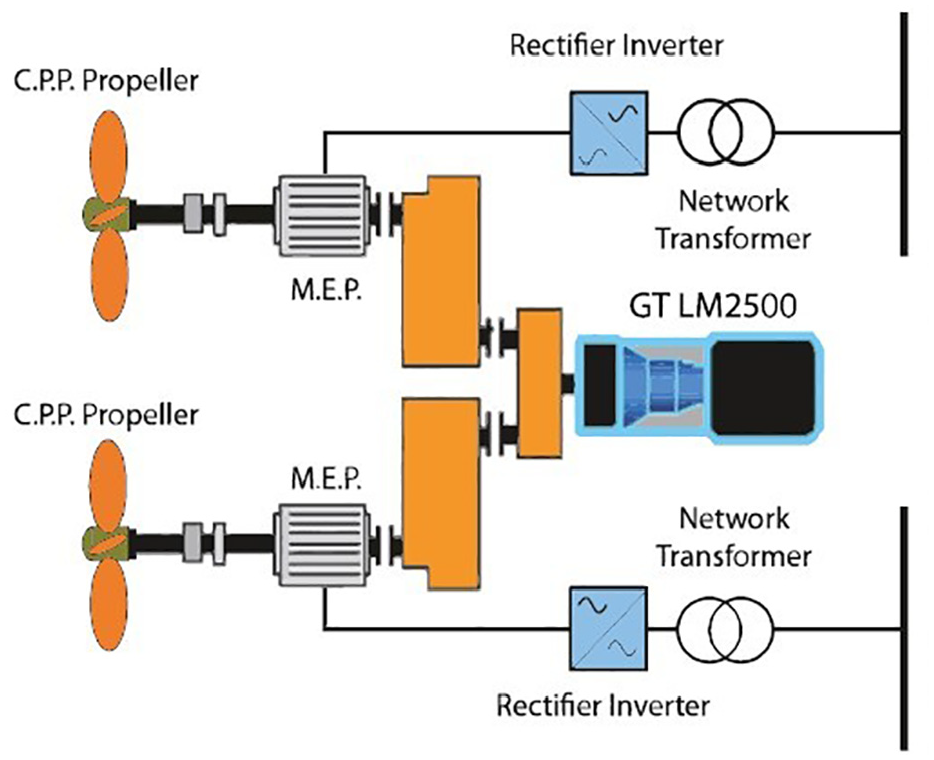
CODLAG propulsion system.
The dataset reflects the behavior of the propulsion system, and it is characterized by two essential parameters: the compression degradation coefficient (kMc) and the turbine degradation coefficient (kMt). Each conceivable degradation state is represented by a combination of these two coefficients (kMc, kMt). To ensure a comprehensive representation, the decay of the compressor and turbine was sampled using a uniform grid with a precision of 0.001, resulting in a finely detailed portrayal.
Specifically, the compressor decay state was discretized in the domain [1, 0.95], while the turbine coefficient was explored in the domain [1, 0.975]. The range of feasible ship speeds was also investigated, spanning from 3 knots to 27 knots, with a granularity of representation set at three knots.
Throughout the experiments, a series of 16 features were measured and recorded, serving as indirect representations of the system’s state subject to performance decay. These measures were collected across the parameter space, contributing to the dataset’s comprehensiveness and significance in analyzing the behavior of the propulsion system. 4
The dataset comprises a 16-feature vector, representing the Gas Turbine (GT) measures at a steady state of the physical asset. These features are as follows:
Lever position (lp) []
Ship speed (v) [knots]
Gas turbine shaft torque (GTT) [kN m]
Gas turbine rate of revolutions (GTn) [rpm]
Gas Generator rate of revolutions (GGn) [rpm]
Starboard Propeller Torque (Ts) [kN]
HP Turbine exit temperature (T48) [C]
GT Compressor outlet air temperature (T2) [C]
HP Turbine exit pressure (P48) [bar]
GT Compressor outlet air pressure (P2) [bar]
Gas turbine exhaust gas pressure (Pexh) [bar]
Turbine Injection Control (TIC) [%]
Fuel flow (mf) [kg/s] 28
Before applying machine-learning algorithms, three features with fixed values were removed from the dataset. These features were:
GT Compressor inlet air pressure (P1) [bar]
GT Compressor inlet air temperature (T1) [C]
Port Propeller Torque (Tp) [kN]
The removal of these features was necessary to avoid redundancy and eliminate any potential influence of fixed-value features on the model’s performance. With the modified dataset, machine learning algorithms were then applied to perform data analysis and prediction tasks (Figure 7).

Gas turbine scheme.
The design and methodology of the technique used
In our research, we conducted a classification task to categorize the phases of the GT Compressor decay state coefficient and the GT Turbine decay state coefficient. The objective is to analyze and identify the degradation state of the Gas Turbine (GT) components accurately.
To achieve this, we defined four distinct classes for each decay state coefficient, based on specific threshold values. For the GT Compressor decay state coefficient, the classes were defined as follows:
Class 1: When the GT Compressor decay state coefficient equals 1.
Class 2: When the GT Compressor decay state coefficient is 0.99.
Class 3: When the GT Compressor decay state coefficient ranges from 0.97 to 0.98.
Class 4: When the GT Compressor decay state coefficient ranges from 0.95 to 0.96.
Similarly, for the GT Turbine decay state coefficient, the classes were defined as:
Class 1: When the GT Turbine decay state coefficient equals 1.
Class 2: When the GT Turbine decay state coefficient is 0.99.
Class 3: When the GT Turbine decay state coefficient is 0.98.
Class 4: When the GT Turbine decay state coefficient is 0.97.
We utilized this well-defined classification scheme to accurately identify the degradation levels of the GT components and gain insights into the behavior of the Gas Turbine under different decay states. By using appropriate machine learning algorithms, we were able to effectively classify the decay state coefficients and extract valuable information for further analysis and decision-making.
The methodology employed in this classification task, along with the precise definition of classes, enabled us to carry out a comprehensive and detailed investigation into the degradation behavior of the Gas Turbine components.
In our study, we focused on analyzing and addressing two critical failures related to the Gas Turbine (GT) components:
GT Compressor decay state coefficient
The GT Compressor decay state coefficient was of primary interest in our investigation. To effectively assess the degradation level of the GT Compressor, we categorized its decay state coefficient into four distinct levels:
Very Bad State: Represents a severe deterioration in the GT Compressor decay state, characterized by a coefficient ranging from 0.95 to 0.96.
Bad State: Indicates a noticeable degradation in the GT Compressor decay state, with a coefficient ranging from 0.97 to 0.98.
Acceptable State: Signifies a moderate level of decay in the GT Compressor, with a coefficient equal to 0.99.
Normal State: Corresponds to an ideal and fully functional GT Compressor with a decay state coefficient of 1.
GT Turbine decay state coefficient
The GT Turbine decay state coefficient was another critical aspect of our research. To comprehensively evaluate the degradation level of the GT Turbine, we divided its decay state coefficient into four distinct levels:
Very Bad State: Represents a significant deterioration in the GT Turbine decay state, with a coefficient equal to 0.97.
Bad State: Indicates a notable degradation in the GT Turbine decay state, characterized by a coefficient equal to 0.98.
Acceptable State: Signifies a moderate level of decay in the GT Turbine, with a coefficient equal to 0.99.
Normal State: Corresponds to an optimal and fully functional GT Turbine with a decay state coefficient of 1.
By delineating these specific failure levels for both the GT Compressor and GT Turbine decay state coefficients, our research enabled a comprehensive understanding of the degradation patterns, facilitating precise diagnostics and efficient decision-making for maintaining and optimizing the Gas Turbine’s performance.
Results and discussion and comparative studies
To address the issues of overlearning and overfitting caused by varying load/speed condition, various types of rotating machine components and single/multiple faults, small/Big data-set, the framework of proposed approach are presented in Figure 8. This flowchart illustrates the step-by-step process of our ensemble learning approach, which involves utilizing Bagging, Boosting, and Stacking techniques to analyze and classify the degradation state coefficients of the GT Compressor and GT Turbine. Additionally, Random Subspace is employed to enhance model diversity and prevent overfitting during the classification process.

Proposed multi-fault diagnosis framework.
Simple learning scenario
In the initial phase of our study, we considered using simple learning algorithms, such as Support Vector Machines (SVM) and Naïve Bayes, to test each simple learning machine individually in term of stability and accuracy of the GT Compressor and GT Turbine decay state coefficients. However, we were uncertain about the effectiveness of the results achievable with these standalone classifiers. As anticipated, the accuracy of each classifiers was relatively differentiated, as demonstrated in the below tables.
The obtained results show in the Tables 1 and 2 a considerable variability, with SVM, LS-SVM, and Naïve Bayes yielding weak performance, while Decision Tree and k-Nearest Neighbors (KNN), with varying numbers of neighbors, achieved relatively accepted accuracy, with rating average 90%.
GT turbine prediction results using a simple learning algorithms.

The bold values represents the best results obtained with the classifiers.
GT compressor prediction results using a simple learning algorithms.

The bold values represents the best results obtained with the classifiers.
The assessment of simple classifiers on the turbine dataset as illustrated in Table 1, including a comprehensive analysis of 10 independent tests, reveals compelling information. A clearly shows in the results for each classifier, that the Decision Tree achieves a remarkable average accuracy of 90.6032%, with a particularly low standard deviation of 0.2815.
These results demonstrate that the Decision Tree its robust predictive abilities, making it the optimal choice among the classifiers evaluated for the prediction of turbine-related phenomena.
A thorough examination of the performance of simple classifiers on the compressor dataset, carried out over the 10 entire tests, provides insightful information. The results obtained for each classifier show a clearly distinguishable that the Decision Tree are successfully predicted With accuracy of 92.3060%, and with low stability of 0.3325.
We concluded that, the obtained results from the simple learning especially the DT could be considered satisfactory in some cases. By contrast, considering the sensitivity and real-world application as presented in our study where the safety and productivity are the priority objectives, we recognized the need more robust, stabile and accurate predictions.
Ensemble learning scenario
In this subsection, by applying four different ensemble-learning methods, we focused on the decay state coefficients of the GT compressor and the GT turbine. Among these methods, boosting proved the most effective for the GT turbine’s decay state coefficient, while stacking demonstrated superior performance for the GT compressor’s decay state coefficient. In our quest for the best possible results, we conducted extensive experiments with different learners until we arrived at the optimal combination of classifiers. Specifically, for the GT turbine decay state coefficient, the Boosting method proved to be the most efficient selection, using a set of 200 decision trees. On the other hand, for the GT compressor decay state coefficient, the Stacking approach proved highly effective, involving a diverse set of learners.
In the Stacking ensemble for GT Compressor, we carefully selected a range of learners, including k-Nearest Neighbors (kNN) with different values of K-nearest neighbors (3, 7, and 9), Random Forest with 200 decision trees, Linear Discernment Analysis, and Decision Tree as weak learners, in conjunction with Random Forest (200 trees) as the meta learner. The inclusion of these specific learners in the Stacking ensemble was based on their individual strong performances as standalone classifiers during the preliminary single-learning phase.
By combining the power of Boosting and Stacking, we successfully addressed the GT Turbine and GT Compressor decay state coefficients, enabling accurate and robust predictions of the Gas Turbine’s degradation levels. The strategic integration of Ensemble Learning approaches enabled us to achieve exceptional predictive accuracy and enhanced insights into the degradation behavior of the Gas Turbine components.
As mentioned previously, our study including a comprehensive analysis of 10 independent tests reveals compelling information. Firstly, in GT Turbine as illustrated in the Table 3, start with Bagging, which averaged 94.0022% accuracy. These results show that, the standard deviation (STD) a relatively higher, Bagging demonstrated steadily of 10 tests improved accuracy compared to the simple learning. Notably, Stacking and Random Subspace further improved predictive performance 95.4303% and 95.1249%, with low and high stability STD, respectively.
GT turbine prediction results using Ensemble learning algorithms.

The bold values represents the best results obtained with the classifiers.
On the other hand, ensemble boosting technique achieved an average of MAX accuracy of 96.3139%, indicating a substantial improvement over ten tests of previous methods, and also the Boosting classifier enhance the stability value, which is clearly the best prediction with low value 0.0117%.
In order to demonstrate the effectiveness of the proposed approach, an analysis of the four ensemble learning models presented in a confusion matrix of each class (4 classes of GT turbine) are illustrated in Figure 9. This demonstrates that the fault prediction accuracy of the proposed algorithms leads to the accurate identification observations with minor misclassification errors. The suggested algorithm has an impressive classification performance and can considerably improve the GT turbine fault diagnosis capabilities.
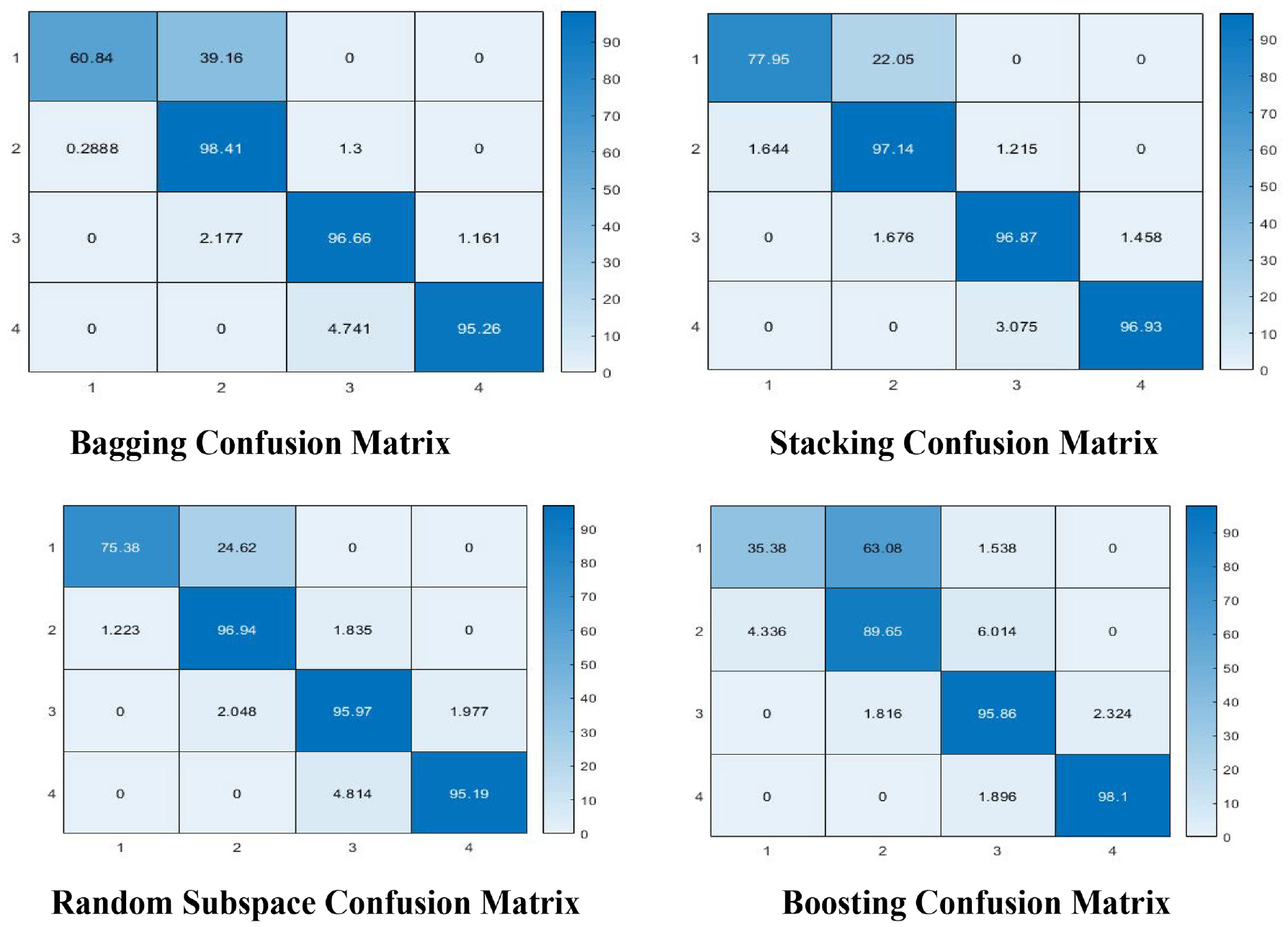
Confusion matrix of ensemble learning models of GT turbine.
As shown in the Table 4, the bagging, random subspace, boosting, and stacking each of those techniques achieve highly creditable average accuracy rates of 94.0834%, 94.5657%, 94.5624%, and 95.1843%, respectively. That these methods have a relatively narrow range of standard deviations (STDs) between 0.090 and 0.400 is impressive, confirming their consistent and reliable performance characteristics.
GT compressor prediction results using Ensemble learning algorithms.

The best results obtained in bold.
In addition, a same analysis has been made of four ensemble learning models presented in a confusion matrix of each class (4 classes of GT compressor) are illustrated in Figure 10. This study demonstrates that the fault prediction accuracy of the proposed algorithms successfully identifies with minor classification errors. The proposed approach has an incredible classification impact and can enhance the GT compressor fault diagnosis abilities.

Confusion matrix of ensemble learning models of GT Compressor.
Evaluating ensembles learning models
Predictive performance metrics have been the most important criterion for choosing classifier performance. In addition, predictive performance metrics are generally recognized as a practical way of comparing machine-learning algorithms. To evaluate an ensemble model, there are a number of common measures, such as Precision, Specificity, and sensitivity as shows below:
(a) Boosting method
Class 1: precision = 81.14, sensitivity = 77.97, specificity = 99.32.
Class 2: precision = 96.38, sensitivity = 97.14, specificity = 97.66.
Class 3: precision = 97.22, sensitivity = 96.86, specificity = 98.27.
Class 4: precision = 97.06, sensitivity = 96.92, specificity = 98.82.
(b) Stacking matrix
Class 1: precision = 85.96, sensitivity = 75.38, specificity = 95.53.
Class 2: precision = 95.41, sensitivity = 96.94, specificity = 97.31.
Class 3: precision = 95.83, sensitivity = 95.97, specificity = 97.27.
Class 4: precision = 96.1, sensitivity = 95.18, specificity = 99.01.
We observed from Figures 11 and 12 represented the results of evaluation metrics of four classes of the boosting method and stacking matrix, proving that this classifier gives the best classification model in terms of performance and stability.

Evaluation matrix of boosting method.

Evaluation matrix of stacking method.
Concluded that, the proposed criteria based on ensemble learnings does not only improve the overall accuracy but also enhance the classification of each class of faults, making it a more effective method for fault diagnosis in Naval Propulsion Systems.
Conclusion
In this study, we embarked on a rigorous exploration aimed at enhancing the accuracy and predictive prowess of fault diagnosis in Gas Turbines (GT) through the utilization of Ensemble Learning techniques. Acknowledging the limitations of traditional, standalone classifiers, we set out to unravel the untapped potential of combining multiple learners to create a cohesive and robust predictive framework. Our investigation commenced with a meticulous analysis of simple learning algorithms, where classifiers like Support Vector Machines (SVM), Naïve Bayes, and Decision Tree were scrutinized in isolation. While these methods provided valuable insights, their individual performance often fell short of our expectations, particularly when addressing the intricate nuances of the GT compressor and GT turbine decay state coefficients.
Recognizing the need for an elevated predictive accuracy, we delved into the realm of Ensemble Learning, an approach characterized by the symbiotic collaboration of diverse learners. Bagging, Boosting, Stacking, and Random Subspace emerged as our chosen ensemble methods, each contributing its unique strengths to the predictive landscape. Through a series of intensive experiments and 10 comprehensive trials, the Ensemble Learning methods demonstrated remarkable efficacy in forecasting the degradation levels of both GT compressor and GT turbine. Notably, stacking emerged as a standout performer, showcasing exceptional predictive accuracy and a remarkably low standard deviation.
The pinnacle of predictive excellence was unequivocally attained through the Boosting method, which not only achieved an impressive mean accuracy of 96.2979% but also exhibited unprecedented stability with a negligible standard deviation of 0.0117. These results illuminate the extraordinary potential of Ensemble Learning in addressing the inherent challenges of fault diagnosis in Gas Turbines.
In conclusion, our research underscores the transformative power of Ensemble Learning in fault diagnosis, particularly in the context of complex and critical systems like Gas Turbines. By harnessing the collective intelligence of multiple classifiers, we have unlocked a new realm of accuracy and precision, empowering us to better understand, predict, and optimize the performance of these vital assets. As we advance into an era of ever-evolving technologies, Ensemble Learning stands as a beacon of innovation and insight, poised to revolutionize the field of fault diagnosis and beyond.
Footnotes
Appendices
Handling Editor: Aarthy Esakkiappan
Declaration of conflicting interests
The author(s) declared no potential conflicts of interest with respect to the research, authorship, and/or publication of this article.
Funding
The author(s) received no financial support for the research, authorship, and/or publication of this article.
