



Abstract
The reliability and efficiency of brake discs are crucial for ensuring the safe operation of vehicles. With the growing demands of industrial applications and technological advancements, the mechanical performance and failure issues of brake discs have garnered extensive attention. To better understand the mechanisms affecting the mechanical performance and failure modes of brake discs, a comprehensive review of the influencing factors on their mechanical properties is presented. This includes an examination of the impact of brake disc structure, materials, and working conditions from both numerical simulation and experimental perspectives. Furthermore, the effects of temperature distribution and stress distribution on different failure modes of brake discs are summarized. Based on thermomechanical coupling theory, the failure modes under varying temperature and stress conditions are analyzed. Finally, considering the current research status of brake discs, in-depth mechanical performance analysis and failure mode studies can provide significant theoretical and practical guidance for designing more durable and safer brake discs.
Introduction
The braking system is an indispensable key component of modern vehicle safety, with the brake disc being one of the core parts of the braking system. 1 During daily use or under extreme conditions, the brake disc is subjected to complex thermomechanical loading, and its mechanical performance directly impacts the overall braking effect and driving safety of the vehicle. Therefore, the performance analysis and optimization of brake discs have been hot topics in research. 2
The performance of brake discs not only directly affects vehicle safety and reliability but is also a critical factor in the design and manufacturing of braking systems. The primary function of the brake disc is to convert kinetic energy into thermal energy through friction, thereby achieving vehicle deceleration or stopping. 3 However, the brake disc inevitably generates high temperatures during operation and suffers varying degrees of damage due to temperature cycling and stress changes caused by repeated braking. 4 Understanding the mechanical performance and failure mechanisms of brake discs under extreme working conditions is of paramount importance for improving the design, material selection, manufacturing, and service life of brake discs.
Research indicates that the main failure modes of brake discs include thermal fatigue cracking and friction wear.5–7 These failure modes are closely related to the material properties, thermal diffusion capability, thermal stress, and operating conditions of the brake disc.8–10 Understanding the mechanisms influencing these failure modes is critically important for designing superior brake discs and enhancing their performance and safety. Thermal fatigue cracking occurs due to rapid temperature changes caused by thermal cycling, which results in thermal stress exceeding the material’s resistance to cracking, thereby generating cracks. At high temperatures, the strength and hardness of the brake disc may decrease due to material phase changes, a phenomenon known as thermal annealing. This weakens the structural integrity and braking performance of the brake disc, potentially leading to the formation and propagation of microcracks, eventually causing brake disc failure. Friction wear is caused by the direct contact friction between surfaces, leading to the gradual loss of material.
This paper provides a review of recent research literature on the mechanical performance and failure mechanisms of brake discs, aiming to identify the main factors influencing brake disc failure, analyze the mechanisms of various failure modes, and explore potential ways to improve brake disc performance and extend their service life. The focus of this review will be on the following aspects: the thermomechanical properties of brake disc materials, failure modes and their influencing mechanisms, current challenges in brake disc design and manufacturing, and future improvement directions. In light of the limitations of existing research, this review will also analyze current challenges and provide references for future research on brake disc-related issues.
Mechanical properties of brake disc
Influencing factors of temperature distribution
The brake disc is an indispensable and crucial mechanical component of vehicles, essential for stopping the vehicle under various conditions. The function of the brake disc is to absorb the kinetic energy of moving elements. 11 Through the friction between the brake disc and brake pads, the kinetic energy accumulated by the vehicle (generated by its speed) is converted into thermal energy, which is then gradually dissipated into the surrounding environment through natural convection. 12 The four basic components of a disc brake are the piston housing, caliper, brake disc, and brake pads. 13 Since temperature affects the thermodynamic action of structures, thermal analysis is one of the fundamental steps in studying the braking system. 14 One of the main features of a brake disc is its ability to quickly dissipate heat into the atmosphere. If the braking system overheats, its braking efficiency will decrease. Different materials and uneven temperature distribution in disc brakes can lead to the formation of cracks. 15 To counteract uneven temperature distribution, disc brakes undergo uniform expansion to alleviate the accumulation of thermal stress and prevent cracks in the disc. This phenomenon directly affects braking performance, prompting many scholars worldwide to spend years researching the complex heat dissipation phenomena in disc brakes.
Brake disc material
Brake disc materials can be divided into black metal materials and new composite materials. At present, the main ferrous materials used are cast steel and cast iron. Cast iron brake disc has the advantages of low cost and easy forming, while cast steel brake disc has good wear resistance. In addition, forged steel materials, such as China’s CRH series EMU and Japan’s Shinkansen, as well as powder metallurgy materials are also widely used, which have the advantage of stable operation and good wear resistance. The new composite materials are mainly aluminum matrix composites. However, with the needs of vehicle development, the existing materials can not meet the requirements of high performance and lightweight, so it is necessary to study the impact of materials on the temperature field and stress field.
Guo et al. 16 established a mathematical model containing heat source through analytical calculation, and analytical calculation the brake discs of rail vehicles of Mechanite Cast Iron G.C.40, AISI 301, and Chrome Copper Casting by differential quadrature method. The results show that the better the thermal conductivity, the more uniform the distribution of temperature field. Bauzin and Laraqi 17 constructed a three-dimensional analytical model of the temperature field of the brake disc to reveal its heat transfer properties. In this study, the mathematical techniques of Fourier transform and Hankel integral transform are used to solve the model. The solution results reveal the heat transfer mechanism of the brake disc, and the results obtained by these two independent calculation methods are consistent with each other, which provides a validation for the correctness of the proposed analytical model. The research results provide a new research method for further understanding the heat transfer phenomenon and characteristics of the brake disc of rail vehicles. Yevtushenko et al. 18 used Kirchhoff transform and Laplace transform techniques to model and finite element analysis the temperature field of the friction surface of the brake disc coated with ZrO2, and the research results showed that the coating could effectively reduce the surface temperature of the brake disc. The coating technology can be cross-verified with the material studies mentioned above, and the experimental simulation can be carried out to observe whether the temperature effect of different brake disc materials is reduced by this method, which provides a new research idea for the material selection of brake disc.
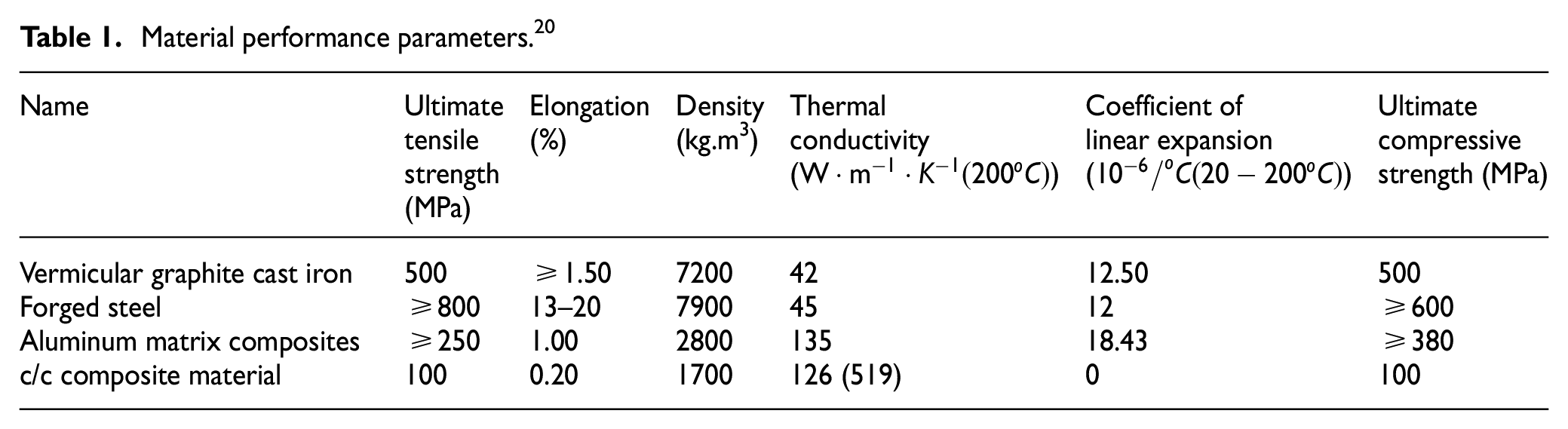
Yu et al. 19 studied SiC3D/Al materials by using the sequential coupling method of temperature field and flow field, and analyzed the transient temperature field variation rule of brake disc of high-speed train at the initial speed of 380 km/h. The results show that the friction surface temperature field of SiC3D/Al brake disc is uniform, which basically meets the emergency braking requirements of 380 km/h high-speed train. The brake disc of this material can rapidly transfer frictional heat to the whole disc body, and its material properties are also an important factor affecting the temperature field distribution, which is also consistent with the research conclusions of literature. 16 Benhassine et al. 20 analyzed the influence of materials on the temperature field and stress field of brake disc and brake disc during braking. Table 1 shows the performance parameters of several commonly used brake disc materials. The research shows that the material is an important factor that directly affects the temperature and stress of the brake disc. The research results provide a useful direction for the selection of the brake disc material and lay a foundation for further research on the life of the brake disc. Based on thermodynamic properties such as thermal conductivity and specific heat capacity of materials, Abebe et al. 21 used finite element methods to analyze brake discs made of four different materials, including cast iron, maraging steel, aluminum base composite (ALMMC), and E-glass. Key findings show that ALMMC exhibits lower temperatures and stress levels compared to other materials, making it the most suitable material for brake discs.
Material performance parameters. 20
Brake disc structure
Vehicle brake disc structure is divided into solid type and ventilated type two. Ventilated brake disc is widely used because of its excellent heat dissipation performance, which has better heat dissipation effect than solid brake disc. However, under the background of increasing vehicle speed, the wind resistance of the ventilated brake disc is also increasing. In many brake structures, brake pads and heat sinks play an important role in the distribution of temperature field. The structure, shape, arrangement of the brake disc and the contact mode of the brake disc will directly affect the heat generated during the braking process, and the structure and material of the heat sink will also affect the speed of temperature drop. On the impact of the disc brake structure on the temperature distribution, domestic and foreign scholars have done the following research:
Zhang et al. 22 established a flow simulation model similar to the actual working conditions to study the characteristics of convective heat transfer on the outer surface of the brake disc. The results show that the ratio of brake disc diameter to wheel diameter is an important factor affecting convective heat transfer, which provides ideas for the optimization of brake disc structure and the study of temperature field. Qi and Day 23 measured the interface temperature using a thermocouple method with an exposed thermocouple configuration, and explored the factors that affect it, such as braking frequency, sliding speed, braking load, and friction material type. The study found that the number of braking times has a strong influence on the interface temperature, as well as the importance of the true contact area between the disc and the liner, revealing a nonlinear relationship between the influence of local interface temperature and the coefficient of friction, which is important for optimizing the design and formulation of friction materials to achieve stable friction and wear properties. Guo 24 simulated the temperature field and stress field of the brake disk-brake disc alloy material system by using the finite element analysis method. In order to verify the accuracy and applicability of the model, a 1:1 physical braking test was carried out on the simulated conditions of the finite element model. The comparison of experimental and simulated data is shown in Table 2. The research results show that although the maximum temperature caused by partial wear on both sides of the brake disc during braking is at the second highest level compared with the ideal contact state, there is still much room for improvement. The subsequent research can consider adjusting the layout of the off-wear region in the double-sided off-wear state, and further analyze the specific influence of the proportion of the off-wear region on the temperature field and stress field, so as to optimize the thermodynamic and mechanical properties of the braking system. Zuo et al. 25 established the finite element analysis model of the brake disc by using ANSYS software, and carried out numerical simulation research on its temperature field by using the moving heat source method. At the same time, the influence of heat sink parameters, including thickness, density, shape and diameter, on the temperature field distribution is compared. The simulation results show that the highest temperature rise occurs in the friction region of the brake disc surface, and the cuboid heat sink is 5.3% lower than the cylinder heat sink at the highest temperature point. In the geometric parameters of the heat sink, the diameter and temperature show a linear change relationship, while the thickness and temperature show a nonlinear change relationship. The research results provide important theoretical guidance and reference value for the structural design and optimization of brake disc. Gao et al. 26 conducted brake tests on brake discs equipped with circular, triangular and hexagonal brake discs, and used ABAQUS software to conduct finite element simulation calculations. The results show that the experimental and simulation results are highly similar. In terms of temperature deviation, there is little difference between triangles and circles, and hexagons are clearly superior to both. At present, from the point of view of temperature, the hexagonal brake plate has a honeycomb distribution effect, but there is still a certain distance from the optimal solution, which also verifies the accuracy of the simulation and lays a theoretical foundation for subsequent in-depth research. In the direction of brake structure, most of the current research focuses on the shape of triangle, hexagon and circle. The mechanism of brake pad structure can be studied, and other shapes can be put forward to study the mechanism of brake pad shape on the temperature field and stress field of brake disc. Yan et al. 27 systematically compared the fluid flow and heat transfer characteristics of standard and cross-drilled ventilated brake discs. In order to verify the accuracy of the numerical model, the heat transfer measurement of the commercial standard brake disc was carried out. In the representative operating range of 200–1000 rpm, the results show that for radial vane brake discs, the introduction of transverse drilling improves the overall cooling capacity by 22%–27%, 28 while for pin brake discs, the advantage of transverse drilling brake discs over standard brake discs is 15%–17%, providing a new research idea for optimizing the heat dissipation performance of brake discs.
Temperature field results under different contact conditions. 24

Chopade and Valavade 29 analyzed the influence of heat dissipation rib structure on the heat transfer rate of brake disc by experimental method, and the results showed that when circular heat dissipation rib was used, the temperature distribution inside the brake disc was the most uniform, and the heat dissipation effect was better. The conclusion can be helpful for the structure design of the brake disc and prolonging the service life of the brake disc. Amira et al. 30 established a finite element model of the brake disc and analyzed the influence of material and thickness on the thermal performance of the disc. The results show that the gray cast iron brake disc with a thickness of 15 mm has good thermodynamic properties, which provides a theoretical basis for the life prediction of the brake disc, and provides a theoretical basis for the study of the influence of the material and size of the brake disc and the brake disc on its performance. Pranta et al. 31 developed an improved ventilated disc brake rotor with curved vents, holes and slots, and studied its stress and temperature distribution by using finite element simulation technology. It is found that the rotor has advantages in stress generation, temperature distribution and safety factor compared with ordinary disc brake rotors. The results can provide theoretical basis for the structure and thermal characteristics of disc brake rotors. Tauviqirrahman et al. 32 analyzed and evaluated the thermal action of three types of disc brakes by finite element method, including solid type, slot type and drilled type. In addition, the effect of modifications to the angle of the vent on the thermal performance of specific disc brakes made of different materials, namely gray cast iron, carbon ceramics and stainless steel ASTM 420, is analyzed. The relationship between the maximum temperature over time and the angle of the hole and slot is shown in Figures 1 and 2. The results show that the groove disc brake with the vent angle of 0° has the best thermal performance, that is, the lowest maximum temperature. The increase of the maximum temperature value along the drilling angle and the groove hole angle occurs in all disc brake materials, which provides an important theoretical basis for the structural optimization design of the brake disc.

Maximum temperature and borehole angle over time. 32

Relation between maximum temperature change over time and slot angle. 32
Braking condition
Due to the vast territory of China, covering a variety of road conditions, which poses a huge challenge to the safe running of vehicles, so it is of great significance to accurately understand and analyze the temperature and stress distribution of the brake disc under braking conditions for optimizing its material and structural design, and improving the reliability and safety of the brake system. For example, in northern China, winter temperatures often drop to minus or even minus 40ºC. Under such extremely cold climate conditions, snow and gravel may be squeezed into the brake disc, resulting in abnormal wear of the brake disc and generating a lot of heat during the braking process. 33 In alpine environments, heat dissipates quickly. Under such high-speed alternating hot and cold conditions, the brake disc will periodically expand and contract, which is prone to fatigue cracks. 34 In addition, the working environment such as uphill and downhill will also have an impact on the performance of the brake disc of rail vehicles. Therefore, it is necessary to study the changes of the temperature field and stress field of the brake disc under various braking conditions, so as to solve and optimize the problems existing in the brake disc of rail vehicles. 35 At present, many scholars at home and abroad have studied the temperature field and stress field of brake disc under different braking conditions.
Zhang and Chen 36 conducted a numerical simulation analysis on the impact of wind on the temperature field using ANSYS software. The study found that while wind does have some effect on the temperature field, its impact is relatively minor. The primary influencing factors of the temperature field are the average heat flux density and the uniform convective heat transfer coefficient. Therefore, to optimize temperature distribution, it is crucial to focus on managing the average heat flux density and optimizing the uniform convective heat transfer coefficient, as these parameters are key to enhancing the heat dissipation effect of the brake disc. Hatsu 37 established a time-varying convective heat transfer model using the micro-element method to analyze the temperature and stress fields of brake discs under extremely cold conditions. The study revealed that the ultra-low temperature environment significantly affects the temperature field of the brake disc, with the friction surface concentrating more heat generated by friction, while the hub area experiences relatively less heat. This model provides important theoretical insights for understanding and improving the performance of vehicle braking systems in extremely cold conditions. Jin et al. 38 established a discrete emergency braking model for high-speed trains and proposed an expectation maximization method based on sliding Windows to identify unobserved time-varying braking parameters. By selecting the sliding window size, using expectation maximization for parameter identification, and combining with gradient optimization, this study realizes the optimal identification of emergency braking parameters, and the research results provide a new research direction for the optimization of high-speed train braking system. Suxia et al. 39 used the finite element method to simulate four different operating conditions of trains, with specific parameters detailed in Table 3. The results indicated that under emergency braking conditions, the brake disc temperature was approximately 62°C higher than under normal braking conditions. If three emergency braking events were performed, the temperature increased by about 167°C compared to a single emergency braking event. By comparing temperature variation curves under different conditions, a similarity in the surface temperature variation patterns of the brake disc was observed. However, the heating rate during ramp braking was slower, while the cooling rate was faster compared to normal and emergency braking. This phenomenon is attributed to the lower pressure exerted on the brake disc during ramp braking, resulting in a slower heat input rate, and the enhanced forced convection effect during the heat dissipation phase, which accelerated temperature reduction. Shi et al. 40 conducted an in-depth exploration of the conditions of single emergency braking and three consecutive braking events, revealing the significant impact of emergency braking conditions on the residual thermal stress of the braking system. The study found a positive correlation between the severity of the conditions and the magnitude of residual thermal stress. This finding is valuable for understanding the mechanisms of damage and crack propagation in brake discs under extreme working conditions. Current extensive research indicates that brake disc temperatures are generally higher during emergency braking and multiple consecutive braking scenarios. Therefore, optimizing the structural design and material properties of brake discs can potentially improve the temperature distribution, thereby enhancing the reliability and durability of the braking system. Zhou et al. 41 developed a three-dimensional transient thermomechanical coupling model to analyze the brake discs of high-speed trains. This model fully considers various material property parameters affecting the temperature and stress fields of brake discs, including specific heat capacity, thermal conductivity, and thermal expansion coefficient. Numerical simulations using ANSYS software analyzed the dynamic changes in temperature and stress fields of brake discs under different initial braking speed conditions. The simulation results showed that although the temperature change trends were consistent across various speed conditions, the temperature rise of the brake disc increased with the initial speed. Under specific simulated conditions, the maximum temperature peak of the brake disc could reach 388.61°C, and the corresponding maximum thermal stress was 598.14 MPa. The model and its simulation results provide important scientific guidance for the design optimization and performance evaluation of high-speed train braking systems. Jian and Shui 42 focused on ventilated disc brakes and used a transient thermal-structural coupling numerical model combined with embedded thermocouple temperature measurement technology to analyze the temperature distribution of brake discs under sudden braking conditions. The study found that during sudden braking, the temperature variation of the brake disc exhibited a typical sawtooth pattern, characterized by an initial rise followed by a slight drop. On the radial distribution of the brake discs, the temperature in the central area was higher than at the edges, indicating that high-temperature zones were mainly concentrated on the effective friction surface. On a circumferential distribution, although the peak temperature timing varied, the maximum temperatures across measurement nodes showed a tendency for uniform distribution. On the axial distribution, temperature fluctuations were more significant in areas close to the friction contact surface. The study results provide important theoretical insights for the design optimization and thermal management of brake discs.
Braking parameters of various typical braking conditions. 39

Olofsson et al. 43 proposed a novel laboratory-scale testing method to evaluate the braking performance of tread brake materials under winter and snowy conditions. This method provides insights into the experimental measurement of brake disc temperature fields under low-temperature conditions. The results showed that under snowy conditions, standard composite materials produced smoother surfaces and lower friction coefficients on the counter-wheel. Pelcastre et al. 44 investigated the tribological action of different composite brake block (CBB) materials at room temperature and −15°C, focusing on the effect of material response on tribological action with and without the presence of ice in the contact area. The study found that sintered CBB materials provided higher friction compared to organic CBB materials under winter conditions.
This section introduces the current research status of brake disc temperature distribution at home and abroad. Table 4 summarizes the factors affecting the temperature distribution of the brake disc, which provides a reference for the structural optimization of the brake disc in the future.
Influencing factors of temperature distribution.

Stress distribution
As one of the core components ensuring vehicle safety, brake discs play a crucial role in the overall braking system. 45 Effective braking performance is not solely dependent on brake materials and system design but also on the stress distribution characteristics of the brake disc. 46 Therefore, studying the stress distribution of brake discs is essential for improving vehicle braking performance, stability, and safety. Uneven stress distribution can lead to thermal cracking, thermal deformation, and even fracture of the brake disc, all of which severely impact the braking efficiency and service life of the vehicle.47,48 In recent years, with advancements in materials science, finite element analysis (FEA), and computational fluid dynamics (CFD), the methods and technologies for analyzing the stress distribution of brake discs have continually improved.8,49,50 Researchers have employed a combination of simulations and experiments to delve into the thermomechanical coupling responses of brake discs under extreme conditions, particularly the temperature and stress evolution during heavy braking. 51 From a materials perspective, the traditional cast iron brake discs are prone to thermal cracking, prompting both industry and academia to explore composite materials with superior thermal stability. For instance, carbon-ceramic composite brake discs are widely used in vehicles due to their high thermal conductivity and excellent thermal stability. 52 Structural optimization design is another effective approach to reducing stress concentration and improving stress distribution. By designing the geometric shape, ventilation structure, and mass distribution of the brake disc, it is possible to significantly enhance the thermal stress state of the brake disc while maintaining braking performance. This reduces deformation and damage caused by thermal expansion. 53 In conclusion, the continuous improvement of materials and structural design, along with advanced simulation and experimental techniques, are key to optimizing brake disc performance, ensuring vehicle safety, and extending the lifespan of braking systems. 54
Zhang et al. 55 proposed a novel numerical simulation method for the coupled action of thermal load, contact stress, and wear based on a disc brake model, providing theoretical guidance for the structural design of disc brakes. Li et al. 56 conducted a thermomechanical coupling analysis on brake pad structures with three different shapes and three different arrangement methods. The results indicated that different shapes and arrangements can affect the temperature and stress fields of brake pads, but there is still a distance to the optimal shape and arrangement, providing new research ideas for future studies. Zhu et al. 57 explored the effects of different non-smooth surface structures on the temperature and stress of brake discs. The results showed that brake discs with square pits 5 mm deep, 8 mm in diameter, and with an adjacent pit spacing of 20° had the lowest temperature and stress. These brake discs also exhibited the best heat dissipation performance. The surface temperature of the brake disc gradually increased with the initial speed and pressure, with the highest temperature occurring at a radius of 136 mm. Based on the basic parameters of gray cast iron HT250, Zhang et al. 58 adopted the single variable method to set the above material parameters according to different conditions and divided them into seven groups (see Table 5) for simulation. The simulation analysis of coupling thermal and structural stress fields of disc brake with different material parameters is analyzed. Figures 3 and 4 show the temperature and stress distribution during braking under different material parameters. The research shows that the performance parameters of the material can change the temperature and stress distribution of the brake disc, thus affecting the stability of the brake system. Nong et al. 59 conducted a numerical analysis of a novel SiC3D/Al alloy co-continuous composite ventilated brake disc. The simulation results were consistent with experimental data, proving that this brake disc can meet the requirements of high-speed trains. Guo et al. 60 proposed a new composite material design based on the development of carbon fiber composite brake discs. They used sol-gel and carbothermal reduction methods to graft SiC nanoparticles (SiCNPs) onto carbon fibers and employed isothermal chemical vapor infiltration (ICVI) to deposit a pyrolytic carbon (PyC) matrix at nucleation points. Compared with C/C composites, the SiCNPs-C/C composites demonstrated superior mechanical and tribological properties, including higher hardness, interlaminar shear strength, and compressive strength, as well as a higher friction coefficient and lower wear rate. This study provides insights into improving the mechanical and tribological performance of brake disc composite materials. Li et al. 61 investigated the effect of tungsten carbide (WC) content on the performance of WC/Ni60 composite coatings used for brake discs. In the experiments, tungsten carbide powder was mixed with nickel 60 powder, and WC/Ni60 coatings with different proportions were prepared using laser cladding. The study found that coatings with 15%–30% WC content exhibited optimal bonding strength and flexural strength. As the WC content increased, porosity also increased, while compressive strength decreased. Notably, the coating with 25% WC showed the highest flexural strength, and coatings within the 20%–30% WC content range exhibited good bonding strength and mechanical performance. This research provides a theoretical basis for the study of brake disc surface coatings.
Simulation grouping and parameter setting based on grey cast iron HT250. 58


Temperature variation of brake disc under different material parameters based on gray cast iron HT250 58 : (a) different thermal conductivity and (b) different coefficient of thermal expansion.

Influence of different material parameters based on gray cast iron HT250 on stress distribution of brake disc 58 : (a) different thermal conductivity and (b) different coefficient of thermal expansion.
Ghadimi et al. 62 investigated the thermal stress distribution in ventilated brake discs of stationary and constant-speed ramp braking locomotives. The study revealed that the maximum thermal stress occurred during emergency braking at the start of the braking process, providing a theoretical basis for thermal stress analysis of brake discs. Kim et al. 63 utilized X-ray diffraction to measure and quantify the residual stress distribution, examining the relationship between thermoelastic deformation and residual stress in brake discs during the braking process. The results indicated that compressive residual stress was distributed on the circumferential and radial surfaces of unused brake discs, which transformed into tensile stress after continuous braking tests, leading to thermoelastic deformation. This research method aids in understanding the factors influencing thermoelastic deformation of brake discs and how to mitigate brake pad deformation during the design stage. Bhanuprakash et al. 64 designed a novel brake disc rotor slot and evaluated various materials, including grey cast iron, Ti6Al4V, and AISI 6150. Based on the analysis of Von Mises stress, shear stress, strain, deformation, and total heat flux, AISI 6150 was identified as the optimal material for brake disc rotors due to its potential to enhance performance and reduce accidents. The findings of this study have practical significance for designing and manufacturing safer and more efficient vehicle braking systems. Balu et al. 8 conducted finite element analysis using ANSYS 14.5 to analyze the temperature distribution, stress variation, and deformation of disc brake rotor profiles. Considering the effects of temperature distribution, Von Mises stress, and deformation, they analyzed ventilated disc brakes made of aluminum composite, low carbon steel, and cast iron, with and without perforations. The results indicated that aluminum composite material was the best for disc brakes, exhibiting minimal deformation at a frequency of 597.1 Hz in mode shape 3.
Brake disc failure forms and preventive measures
Thermal fatigue crack
During the braking process, brake discs frequently undergo rapid heating and cooling, especially under high loading or high-speed braking conditions. These abrupt temperature changes induce thermal stress, leading to plastic deformation and thermal expansion of the material. Over time, with repeated cycles, stress concentration in certain areas of the brake disc gradually causes the initiation and propagation of microcracks, eventually forming thermal fatigue cracks. 65 Current research on thermal fatigue cracks in brake discs primarily focuses on two aspects: theoretical model analysis of crack initiation and propagation mechanisms, and the search for more heat-resistant materials or better brake disc designs to enhance fatigue resistance. 66 Despite the efforts of researchers worldwide, who have proposed strategies such as surface treatment of materials, optimization of geometric design, and the addition of alloying elements to improve the thermal fatigue performance of brake discs, several critical challenges remain. These include accurately predicting the conditions under which cracks initiate and propagate, evaluating the thermal fatigue life of brake discs under various conditions, and controlling costs while ensuring performance.67–69 This section aims to systematically understand the root causes of thermal fatigue crack formation in brake discs, summarize the main progress in current research, and anticipate future research directions and key technical challenges that need to be addressed. The goal is to provide references for designing and selecting materials for more efficient and safer braking systems.
Causes of thermal fatigue crack
Thermal fatigue cracks are one of the significant factors affecting the performance and lifespan of brake discs. Their formation is closely related to the thermal cycles and thermal gradients that induce thermal stress, as well as structural and material factors during the braking process. 70 Particularly under conditions of high-speed driving or repeated emergency braking, the brake disc experiences substantial temperature fluctuations, leading to complex thermal-mechanical loads within the material. These cyclic loading can easily trigger crack initiation at the microscopic level. 71 Furthermore, material defects, improper design, and harsh operating environments can accelerate crack propagation. Researchers both domestically and internationally have conducted the following studies:
Panier et al. 72 studied the factors affecting the thermal fatigue performance of brake discs through a combination of finite element method (FEM) and experimental approaches. Their research found that different materials, brake disc structures, and braking conditions significantly influence the thermal fatigue performance of brake discs by affecting their thermomechanical properties, providing a direction for optimizing brake disc design. Mori et al. 73 investigated the crack propagation characteristics of the friction surface of brake discs through braking tests. The results indicated that at an initial braking speed of 270 km/h, radial cracks on the brake disc surface expanded rapidly, with residual stress being the primary factor influencing crack propagation. Li et al. 48 studied the impact of braking force on the fatigue crack propagation in high-speed train brake discs. The research revealed that brake discs operating at 300 km/h exhibited radial cracks on the surface, while repeated emergency braking at 200 km/h typically resulted in cracks. After regular braking, no crack growth was observed on the brake disc surface. The cyclic loading causing fatigue crack propagation included compressive stress during braking and residual tensile stress after cooling. The study showed that crack depth is closely related to the distribution of residual tensile stress in the brake disc. Higher braking forces led to the formation of hardened layers on the friction surface and the generation of oxides near the crack edges, accelerating crack propagation and laying the theoretical foundation for the study of brake disc cracks. Ghadimi et al. 74 experimentally validated the temperature variation trends of locomotive wheel-mounted brake discs. The results indicated that the maximum temperature did not occur at the end of braking but during the braking process, providing theoretical evidence for understanding how brake disc cracks originate. Shi et al. 75 analyzed the crack propagation characteristics of high-speed train brake discs under different braking conditions, with the life curve of cracked brake discs shown in Figure 5. The study found that repeated braking generated cyclic tensile and compressive stresses, which are the main driving forces for crack propagation. The findings provide a reference for establishing crack tolerance in brake discs. Shi et al. 76 investigated the interaction mechanisms between multiple cracks in forged steel brake discs used in high-speed trains through 1:1 bench tests and finite element calculations. The results indicated that the interaction between primary and secondary cracks varies with the number and spatial positions of the cracks, and different crack aspect ratios have varying impacts. The presence of more radial cracks can slow the propagation of surface cracks, effectively delaying the fatigue failure of the brake disc. Shi et al. 77 used finite element analysis to calculate the thermal stress in brake discs during emergency braking at 300 km/h, finding that circumferential residual stress is the main driving factor for crack propagation. The results showed that the stress intensity factor at the crack tip is regular under different initial crack sizes, and the crack shape tends to flatten as it propagates. The interaction between multiple cracks affects the crack propagation rate, and the number and arrangement of cracks influence the stress intensity factor. This study not only validated the accuracy of previous literature 75 but also provided insights for determining the crack limits of brake discs. Chen et al. 4 conducted clamping experiments on a custom test rig. By measuring the compressive and shear stresses of the brake disc using strain gauges, they studied the mechanical stresses and braking torque generated during the clamping process. The results indicated that the compressive stress of the brake disc concentrated at the friction interface, while the shear stress distributed circumferentially, with the maximum at the contact interface, laying the foundation for studying brake disc fatigue damage. Ni et al. 78 used finite element analysis to study the temperature, stress, strain fields, and thermal crack strength of brake discs under different braking conditions. The results showed that radial cracks are the main type of crack, with larger sizes than circumferential cracks. This research provides references for designing brake discs with better resistance to thermal-mechanical cracking. Zhou et al. 79 established a three-dimensional transient computational model using ANSYS software to simulate the temperature and stress fields of brake discs under operating conditions and studied the crack propagation and life prediction of cast steel brake discs used in high-speed trains. The results indicated that the stress intensity factor and crack growth rate at the radial crack tip are higher than at the depth tip, with the brake disc crack propagation life being 48,831 cycles. Lu et al. 80 studied the impact of crack propagation action in the radial and thickness directions on braking safety through theoretical analysis and thermodynamic finite element simulation. The results showed that crack growth rate in the radial direction is higher compared to the thickness direction. Due to the smaller size in the thickness direction, crack propagation along this direction could penetrate the thickness. When the crack length is half of the specified limit length, it accounts for over 90% of the entire crack propagation life of the brake disc. According to the calculations, the allowable limit length of radial cracks can be reduced from 80 to 40 mm without significantly impacting the brake disc’s service life, providing important theoretical support for the study of radial fatigue cracks and fatigue life of brake discs. Liu et al. 81 proposed a method for calculating the initiation life of thermal fatigue cracks based on circumferential strain and material properties at high temperatures to study the importance of thermal fatigue crack initiation life in brake discs. The study used strain fatigue methods and Miner’s linear cumulative damage theory, showing that thermal stress is the primary cause of fatigue cracks during braking, and the plasticity of HT200 significantly affects the initiation life of thermal fatigue cracks in brake discs. This research provides a theoretical basis for brake disc life studies and suggests that future research should consider plasticity factors.

Life of cracked brake disc based on gray cast iron 75 : (a) the variation curve of crack propagation life with crack length and (b) the variation curve of crack propagation life with crack length.
Sun et al. 82 proposed a novel casting process for high-speed train brake discs and used ProCAST software for numerical simulation and comparative studies to select the optimal design. The results showed that the quality of brake discs manufactured using the new process was similar to that of imported brake discs and met technical requirements, effectively reducing fatigue cracking and wear. However, there is relatively little domestic research on casting processes, and future studies should consider the impact of manufacturing processes more thoroughly. Kim et al. 83 investigated the relationship between contact pressure and thermal stress of brake discs through fatigue tests, finding that temperature and pressure changes exhibited a linear relationship. This study provides a basis for assessing the remaining life of brake discs. Zheng et al. 84 conducted a detailed investigation of brake disc cracks and analyzed the causes of crack formation. The study aimed to identify the causes of crack defects by examining the materials and mechanical properties of brake discs and to propose solutions to eliminate safety hazards, thereby improving the lifespan and reliability of brake discs. Wang et al. 85 used fracture mechanics theory, the extended finite element method (XFEM), and a self-developed crack tip mesh refinement technique to simulate hotspot formation and semi-elliptical crack propagation under thermal fatigue. They obtained crack propagation life curves for a braking speed of 400 km/h, and the predicted results were consistent with the actual service life of the brake discs. The simulation results provide important theoretical support for the lightweight design, service life evaluation, and nondestructive testing of brake discs. Lv et al. 86 employed fracture morphology observation, metallographic examination, tensile performance testing, impact performance testing, and Brinell hardness testing methods to analyze the nature and causes of bolt hole cracks in cast steel hub brake discs. The results showed that the cracks were thermal fatigue cracks, primarily caused by casting defects such as shrinkage and porosity near the bolt hole chamfers and friction surface. The coarse dendritic structure of the brake disc reduced its strength, toughness, and thermal fatigue performance, accelerating crack propagation. This study provides a theoretical basis for researching thermal fatigue cracks in brake discs.
Zhou et al. 87 proposed a cooling structure design for brake discs based on the principle of phase change thermal storage. Using phase change materials (PCMs) in brake discs can significantly reduce the maximum temperature and temperature gradient, thereby reducing thermal stress and preventing thermal fatigue cracks. The study used finite element analysis software to analyze the heat dissipation of different PCMs and obtained temperature and stress fields for three brake discs. The results showed that the proposed cooling structure effectively reduced the temperature and thermal stress during braking, providing a theoretical basis for optimizing brake disc cooling structures. Ding et al. 88 conducted tensile and fatigue crack growth rate tests on special cast steel materials for high-speed railway brake discs at different temperatures (−40°C, −20°C, 0°C, and room temperature), with material performance parameters at different temperatures shown in Table 6. The results indicated that lower temperatures significantly affect the mechanical properties and fatigue crack growth of brake disc materials. As the temperature decreased, the material’s elastic modulus, Poisson’s ratio, yield strength, and tensile strength all increased. Fracture analysis revealed a transition from ductile to brittle fracture as the temperature decreased, providing theoretical support for designing high-speed train brake discs that can operate in low-temperature environments. Lv et al. 89 developed a finite element model incorporating contact thermal resistance and conducted bench tests to analyze temperature distribution, brake disc deformation, bolt loads, and stress around bolt holes during emergency braking. The simulation results matched the test results well, showing that temperature gradients in the braking system lead to thermal stress and out-of-plane displacement of the brake disc, increasing bolt loads. Radial stress variations along the brake disc surface near bolt holes were identified as areas prone to thermal fatigue cracks, providing new insights for subsequent brake disc crack research. Xie et al. 90 used finite element and extended finite element models to analyze crack propagation, aiming to understand the dynamics of deep crack propagation and the characteristic semi-elliptical shape. The results indicated that cracks originated at the corners of bolt holes and were influenced by transient temperature differences between adjacent hotspots. Axial unstable propagation was caused by steep temperature gradients, and internal stresses induced by brake disc deformation also affected crack action. This study provides a theoretical foundation for brake disc structural design and helps better understand how braking conditions and usage affect deep crack action in brake discs. Zhang et al. 91 combined physical and chemical tests, fracture analysis, and finite element modeling using ABAQUS to understand the mechanism of bolt crack formation. The results showed that insufficient preload during assembly was the fundamental cause of bolt failure, leading to inadequate fastening of the fasteners. This study emphasized the importance of considering the usage environment and condition of bolts in crack formation analysis, laying the groundwork for future research on brake disc bolts.
Mechanical properties of brake disc material. 88

Šamec et al. 92 tested the fatigue life of ductile iron EN-GJS-500-7 rail brake discs through tensile and low-cycle fatigue experiments at room temperature, 300°C, and 400°C. The results showed that as the temperature increased, the ultimate tensile strength of the brake discs decreased, with the friction coefficient of the material at 400°C being only 10% of that at room temperature, providing theoretical support for brake disc material selection. Li et al. 93 used optical microscopy and scanning electron microscopy to analyze the crack growth rate and microstructural evolution of the cladding layer and substrate material during thermal fatigue. The results indicated that the thermally treated cladding samples did not develop significant cracks after 2000 thermal fatigue cycles, demonstrating much better thermal fatigue performance than the substrate material. Laser cladding can effectively enhance the thermal fatigue resistance of brake discs, laying a theoretical foundation for future research on brake disc surface coatings. Wu et al. 94 evaluated the effect of temperature on the mechanical properties of laser-deposited cobalt-based coatings by comparing them with commercial coatings. The study found that the strength of all coatings decreased with increasing test temperatures, and the crack growth rate increased under thermal fatigue conditions. The research analyzed the microstructural evolution and deformation mechanisms of the coatings, revealing the influence of temperature and chemical composition on the mechanical properties of the coatings, providing a significant theoretical foundation for the study of brake disc surface coatings. Yang et al. 95 analyzed the influence of temperature loading and material microstructure on the thermal fatigue crack growth action of SiCp/A356 composites. The results indicated that the crack growth process included a slow growth stage caused by the deflection of SiC particles and the release of secondary crack propagation driving force, followed by a rapid growth stage where the main crack connected with micro-damages ahead of the crack growth front. The micro-damages ahead of the crack growth front guided the crack propagation, laying the foundation for further research on the failure mechanisms of brake disc materials. Xie et al. 96 used SEM and TEM techniques to characterize the microstructural evolution of brake discs after use and conducted tensile tests to evaluate the mechanical properties of the service brake discs. They also used thermal cycling and DIC tensile tests to study the degradation mechanisms. The results showed that due to the high temperature and temperature difference induced by friction braking, the surface layer of the brake disc formed a fine martensitic structure through self-quenching, and the friction shear force during braking further refined these grains, even forming nanocrystals. This uneven grain size distribution caused a decrease in various mechanical properties, including yield strength, tensile strength, and elongation. The inhomogeneous grain size on the surface led to uneven hardness and stress concentration, weakening the overall load-bearing capacity of the brake disc and potentially forming a combination of ductile and brittle states on the fracture surface, leading to rapid crack propagation. These findings provide a solid foundation for further research on the damage mechanisms of brake disc materials. Xie et al. 6 studied the impact of recrystallized material local regions on the cracking action of steel brake discs used in high-speed railway systems. The results indicated that severe braking thermal cycles and friction shear forces are the fundamental causes of material recrystallization. Localized recrystallized materials reduced the mechanical properties of in-service brake discs due to strain localization. Recrystallization also altered the fracture mode of the material. Electron backscatter diffraction analysis showed that the uneven distribution of grain boundaries in recrystallized materials reflected strain localization. This study provides theoretical support for the material selection of brake discs.
Xia 97 conducted an 8D analysis of the circumferential crack issues observed in brake discs during bench testing, identifying the factors influencing thermal cracking and the causes of circumferential cracks. The study involved optimizing the design and verifying the feasibility of the solution using a braking inertia test bench, leading to the formulation of long-term countermeasures. This method provides significant guidance for addressing thermal crack issues in brake discs. Wen et al. 98 summarized three failure modes of brake discs: wear, hotspots, and thermal cracks, and outlined improvement measures from structural modification, material enhancement, and surface modification perspectives. The results indicated that combining ventilated brake discs with floating brake pads can enhance heat dissipation performance. Using high thermal conductivity materials can improve thermal shock resistance and wear resistance, and reducing manufacturing defects can enhance overall brake disc performance. Additionally, the study suggested that surface strengthening layers prepared by laser cladding and thermal spraying can improve brake disc performance, providing research directions for surface modification techniques and testing methods. Huang et al. 99 established an indirect coupled simulation model and an extended finite element method-based crack propagation simulation model to analyze the stress intensity factors of surface cracks in cast steel brake discs of high-speed trains. The indirect coupled finite element model was used to calculate the residual thermal stress of brake discs under typical braking conditions, identifying emergency braking at 300 km/h as the primary source of residual thermal stress. Circumferential residual tensile stress was determined to be the main driving force for the propagation of thermal fatigue cracks in brake discs. The study found that the stress intensity factor distribution at the crack front varies with the initial shape ratio of the crack, with tensile loads playing a major role in crack propagation. Over time, the crack shape tends to flatten, providing important theoretical support for understanding the propagation mechanisms of brake disc cracks.
The above research shows that domestic and foreign scholars mainly study the thermal fatigue crack and service life of brake disc from the two aspects of thermal stress and material. The causes of thermal fatigue crack of brake disc are summarized as shown in Table 7.
Crack initiation mechanism.

Preventive measures for thermal fatigue cracks
From the above analyses, it can be concluded that the formation of cracks in vehicle brake discs is primarily due to the inherent properties of the materials and the thermal stress they undergo.100,101 To reduce the likelihood of crack formation, numerous researchers have focused on the study of brake disc substrate materials. By employing finite element simulation technology in combination with microstructural analysis, these studies provide a solid theoretical foundation for the selection of materials for vehicle brake discs.
Zhang et al. 102 conducted thermal fatigue tests on notched specimens made of SiCp/A356 composites at temperatures ranging from 20°C to 300°C. The results showed that the crack initiation life of the specimens was influenced by the notch radius and specimen thickness. The use of SiCp/A356 composite brake discs in high-speed trains can enhance thermal fatigue performance. Zhu et al. 103 improved the wear resistance, heat resistance, strength, and plastic toughness of cast steel brake discs through appropriate alloying and heat treatment. The study found that, compared to other materials such as cast iron and composites, steel brake discs exhibited excellent mechanical properties and lower production costs, providing a theoretical reference for material selection of brake discs. Zhang et al. 104 analyzed the thermomechanical coupling analysis and structural optimization of functionally graded material (FGM) brake discs, presenting FGM as a potential solution for improving the thermal shock performance of brake discs. The results indicated that FGM brake discs with a gradient index of 1.5 had optimal thermomechanical properties and weight reduction effects, suppressing thermal interference. Compared to pure aluminum alloy and cast iron brake discs, FGM brake discs offered higher safety factors and longer service life. Tatsunori and Peng 105 used laser metal deposition (LMD) as an alternative to the traditional plasma transferred arc (PTA) method for manufacturing brake discs. The study compared these two methods and evaluated the performance of LMD brake discs through bench tests. The results showed that LMD provided better temperature resistance and the ability to control dilution rates and layer thickness, offering a new avenue for the development of novel brake discs. Jiang et al. 106 used 7075 aluminum alloy as the substrate material for brake discs and applied a nickel-based alloy coating reinforced with WC particles on its surface using high-velocity oxygen fuel (HVOF) spraying. Finite element software COMSOL was used to study the effects of the number, size, depth, and distribution of blind holes on the stress distribution during brake disc use. The results indicated that designing blind holes in the substrate could reduce thermal stress in the interface transition zone (ITZ) during friction braking. Increasing the number, diameter, and depth of the blind holes could reduce the equivalent stress, with a minimum value of 87.07 MPa. Among these factors, the number of blind holes had the most significant impact on reducing the equivalent stress in aluminum-based composite brake discs.
Kumar et al. 107 investigated the effect of adding metal fillers to friction materials on the formation of hotspots on brake disc surfaces. By systematically adding iron powder (Fe) as a metal filler and analyzing its specific mechanism of action on braking performance, the experimental results showed that iron powder filler in the friction material significantly reduced the formation of hotspots on the brake disc surface. This effect is attributed to the high thermal conductivity of iron powder, which helps disperse heat generated during braking, reducing local temperature concentration and the likelihood of hotspot formation. This study provides a scientific basis for understanding the mechanism by which metal fillers improve the thermal action of friction materials and offers practical guidance for designing efficient and stable friction materials. Goo and Lim 108 conducted a series of thermal fatigue tests on brake discs to analyze whether brake disc materials develop thermal cracks under cyclic stress from alternating heating and cooling. The experimental results showed that adding trace alloy elements such as nickel (Ni), molybdenum (Mo), and cobalt (Co) to the cast iron matrix significantly enhanced the thermal fatigue resistance of the brake discs. This enhancement is due to the alloy elements improving and strengthening the microstructure of the material, resulting in increased thermal stability, effectively broadening the operating temperature range of the brake discs and extending their actual service life. This research provides a theoretical and practical foundation for designing and applying high-performance brake disc materials. Kim et al. 109 used optical microscopy and electron backscatter diffraction to explore the effect of titanium (Ti) content on the microstructure and mechanical properties of ferritic cast steel brake discs for high-speed trains. The study found that the microstructural morphology of ferrite is closely related to the Ti content. Specifically, when the Ti content reached 0.06 wt%, the material exhibited the best fatigue resistance, providing solid theoretical support for understanding and studying the fatigue damage mechanisms of brake disc materials. Muflikhun et al. 110 conducted a fatigue performance investigation and analysis of different brake disc materials used in the Indonesian rail transport system. The experiments utilized various techniques such as nondestructive surface analysis, microhardness testing, energy-dispersive X-ray (EDX) analysis, and computational finite element methods to test and evaluate the fatigue resistance of gray cast iron, composite materials, and magnetic composite materials. The results showed that magnetic composite materials exhibited the highest surface roughness and hardness levels compared to the other two materials, with their unique reinforcing effects contributing to superior damage resistance. This study provides scientific evidence for evaluating the fatigue performance of brake disc materials for rail vehicles and offers theoretical references for predicting the service life of brake discs.
At present, most domestic and foreign scholars study the preventive measures of brake disc crack from the aspect of materials, which provides a scientific basis for material design and quality control. However, at present, the research on the processing technology of brake disc is still relatively small, and the research on the surface coating is relatively small. The next research can focus on the processing technology and the surface coating. Table 8 summarizes the preventive measures for brake disc cracks.
Crack prevention.

Friction and wear
The brake disc plays a crucial role in the braking system, converting kinetic energy into thermal energy and dissipating it through friction to decelerate the vehicle. 111 The friction between the brake disc surface and the brake pad is the key mechanism for braking, but this process inevitably leads to wear. 112 The friction and wear of the brake disc are influenced by various factors, including the material composition of the brake disc and brake pad, the frequency and intensity of braking, the magnitude of braking force, the operating temperature of the brake disc, design processes, manufacturing quality, and environmental conditions during vehicle operation.113–115 Sustained high temperatures of the brake disc can cause changes in the material structure, accelerating the wear rate and potentially leading to thermal cracking and thermal deformation issues. 116 Moreover, frequent emergency braking can cause impactful high temperatures, making friction and wear a highly dynamic and complex process. Design and manufacturing factors such as the thickness and hardness of the brake disc, and whether it has undergone surface treatment, also affect the degree of wear. 117 This review aims to systematically understand the root causes of friction and wear in brake discs and propose preventive measures. It summarizes the current research status by domestic and international scholars, explores future research directions, and identifies key technical challenges that need to be addressed. The goal is to provide research insights for mitigating brake disc wear, selecting appropriate materials, and designing reliable thermal management systems. This, in turn, is intended to enhance the safety and cost-effectiveness of the entire braking system, providing theoretical references and foundations for improvement.
Causes of friction and wear
Jin et al. 118 utilized a UMT-2 tribometer, scanning electron microscope (SEM), transmission electron microscope (TEM), and Olympus laser confocal scanning microscope to analyze the effect of temperature on the friction and wear characteristics of as-cast SiCp/A356 composites. The wear rate and friction coefficient variations with temperature are shown in Figures 6 and 7. The results indicated that the wear rate of the composite material is highly sensitive to temperature changes. Below 200°C, the wear rate is relatively low, primarily due to oxidative wear. However, above 250°C, the wear rate increases rapidly, with adhesive wear becoming the predominant mechanism. During oxidative wear, the friction coefficient remains stable, whereas during adhesive wear, the friction coefficient becomes highly unstable, providing a crucial theoretical foundation for the study of friction and wear in brake discs. Wang and Zhang 119 investigated the effect of SiCp content on the friction and wear properties of SiCp/A357 aluminum matrix composites for brake discs. Friction and wear tests were conducted using an MVF-1A friction and wear tester, with 45# steel as a reference material. The results showed that the addition of SiCp refined the grain size of the matrix and reduced the porosity of the SiCp/A357 composite. Compared to the A357 alloy, the hardness of the 40 wt% SiCp/A357 composite increased by 70.3%, reaching 155 HBW. As the SiCp content increased, the average friction coefficient and wear rate of the SiCp/A357 composite initially decreased and then increased. At 20 wt% SiCp content, the composite exhibited the lowest average friction coefficient of 0.420 and the lowest wear rate of 4.15 × 10⁻³ g-m−3. With increasing SiCp content, the wear mechanism of the SiCp/A357 composite transitioned from adhesive wear in the A357 alloy to abrasive wear (20 wt% SiCp/A357) and layering wear (40 wt% SiCp/A357). This study provides theoretical support for material selection and optimization design of brake discs. Zhang et al. 120 studied the effects of braking pressure and speed on the friction and wear properties of brake materials at low temperatures (−20°C). The results showed that, compared to room temperature, the friction coefficient and wear rate of brake discs and pads were slightly higher at low temperatures. Braking pressure and speed significantly influenced the friction and wear action of the brake materials. With increasing braking pressure, the friction coefficient initially decreased and then stabilized, while with increasing braking speed, the friction coefficient initially decreased and then increased. The wear rate of the brake disc and pad increased initially with increasing braking pressure and then stabilized, with the wear rate of the brake pad being higher than that of the brake disc. As braking speed increased, the wear rate of the brake disc decreased rapidly, while the wear rate of the brake pad initially decreased and then stabilized. With increased braking pressure and speed, the distribution of the third body layer on the wear surface of the brake pad became more uniform, and the number and area of spalling pits decreased, providing new insights for studying brake disc wear.
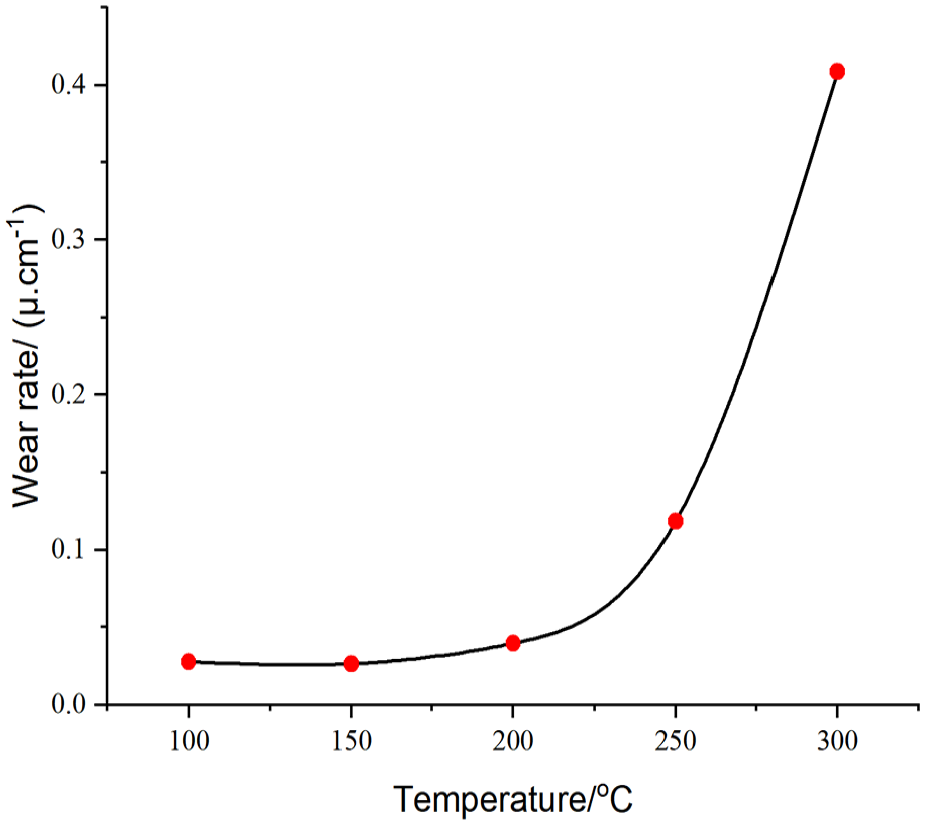
Variations of wear rate of SiCp/A356 composite with temperature. 118

Variations of friction coefficient of SiCp/A356 composite with temperature. 118
Jin et al.
121
used a UMT-2 friction and wear tester to study the friction and wear characteristics of the T6 Al-20Si-5Cu alloy. They analyzed the wear rate and wear action of the material using SEM, EDS, and an Olympus laser confocal scanning microscope (OLS4000). The results showed that the wear rate of the alloy increased with increasing applied load but remained low under high load, indicating good wear resistance. The average friction coefficient ranged from 0.38 to 0.42, remaining stable during the wear process. As the load increased, the wear mechanism shifted from oxidative and abrasive wear to fatigue wear, providing a theoretical basis for understanding the wear processes of brake discs. Wang et al.
122
optimized the material composition and structure, and prepared brake pad friction blocks using powder metallurgy, resulting in a new type of floating brake pad. The friction and wear performance of the brake pads were measured, showing that the shear strength of the friction blocks was above 7 MPa. The average friction coefficient was 0.37 ± 0.05, and the average wear loss was
Ji et al. 128 synthesized a siloxane-modified epoxy resin (ES) using hydroxyl-terminated polydimethylsiloxane (HTPDMS) and epoxy resin (EP). They compared the friction performance of PF/ES (phenolic resin/ES) blends with PF/EP (phenolic resin/EP) blends for aluminum matrix composite (AMMC) brake discs under various pressure and speed conditions. The results showed that the introduction of HTPDMS improved the thermal stability of EP, with the residual mass at temperatures above 700°C increasing by 181.1% compared to PF. PF/ES exhibited higher toughness, with impact strength improvements of 467.1% and 270.4% compared to PF and PF/EP, respectively. During stop-and-go and high-temperature braking, brake pads prepared with PF/ES had more stable and suitable friction coefficients (COF) without damaging the brake discs, providing a new research direction for reducing brake disc wear. Ravikumar et al. 129 analyzed the tribological properties of friction pairs composed of graphene nanopowder (GNP) friction composites and copper alloy gray cast iron discs (CuGCI). The study compared the performance of these friction pairs with other friction pairs formed using different friction composites and discs. The results indicated that the ternary pairs containing 10 wt% GNP-CuGCI and 15 wt% GNP-CuGCI exhibited good friction and wear performance, comparable to commercial pads tested under the same conditions. This study provides a theoretical basis for the material selection of friction composites and friction pads. Grzes and Kuciej 51 developed a fully coupled three-dimensional thermomechanical model to quantitatively describe the thermomechanical action of a railway vehicle disc brake system, including the study of temperature, stress, contact pressure, and wear distribution. Using the finite element method combined with Archard’s wear law, the wear depth distribution of brake pads was predicted while considering the relationship between wear rate, contact pressure, and sliding velocity. The study explored the interactions among friction material properties, braking dynamic parameters, and the geometric characteristics of braking components. Additionally, it analyzed the necessity of accurately predicting wear, temperature, and stress distribution in thermomechanical contact problems and the development of optimization calculation methods for friction pairs. The results highlighted the importance of understanding the wear process during the brake system design phase and provided theoretical guidance for optimizing the design of friction pairs. Mo et al. 130 conducted braking friction tests on a self-built brake system test bench and used the ABAQUS Explicit solver for finite element analysis to simulate the test process, investigating the relationship among frictional thermal effects, interface wear, and system instability vibration. The results showed that intermittent high-frequency vibration and squeal noise were generated during the braking friction process. Stress concentration was observed in the entry and exit friction zones of the brake pad surface, leading to high-temperature concentration and aggravated localized interface wear. When considering the frictional thermal effect in the simulation process, the degree of unstable vibration in the braking system was reduced, providing an important theoretical foundation for understanding the relationship between brake disc noise, vibration, and wear.
Shi et al. 131 applied a laser cladding iron-nickel-chromium composite coating on gray cast iron brake discs to enhance their wear resistance. The study analyzed the phase composition, microstructure, hardness, and wear performance of the coating. The results showed that the coating primarily consisted of Fe5C2 and Fe3C phases with a gradient distribution. The coating bonded well with the substrate, and the crystal growth morphology transitioned from columnar to cellular, dendritic, and equiaxed. Due to grain refinement, the coating’s hardness slightly fluctuated, with an average hardness of 468 HV0.3. The wear resistance of the coating was superior to that of the substrate. As the temperature increased from 100°C to 300°C, the wear mechanism shifted from abrasive wear to adhesive and oxidative wear, with the lowest wear occurring at 300°C. This study provides a theoretical foundation for reducing brake disc wear through microstructural optimization of coatings. Zhao et al. 132 investigated the friction and wear characteristics of laser remanufactured Co-based alloy coatings on the excessively worn surfaces of 30CrSiMoVA steel brake discs of high-speed trains. The results indicated that the overlay layer bonded well with the substrate, with Co elements diffusing at the interface. The average microhardness of the cladding layer was 548 HV, 2.3 times that of the substrate. The average friction coefficient of the laser remanufactured brake disc was 0.485, lower than that of the original brake disc. Both brake discs exhibited fatigue and abrasive wear, but the wear degree of the laser remanufactured brake disc was lower. The wear volume of the laser remanufactured brake disc was 7.709 mm3, smaller than that of the original brake disc (10.011 mm3), indicating improved wear resistance. This study provides important theoretical support for the research on brake disc surface coatings. Rajaei et al. 133 investigated the laser cladding of gray cast iron brake discs using iron-based coating material with 5 wt% MnS added as a solid lubricant. The performance of the coating was evaluated using three different friction materials commonly used in commercial brake pads. The results showed that with the addition of MnS, the friction coefficient and wear rate were reduced to levels comparable to those of uncoated gray cast iron brake discs. The tribological performance was optimal when sliding against fully copper friction material. This study provides a theoretical basis for improving the wear resistance of brake discs and reducing emissions. Jiang et al. 134 experimentally measured the relationship between the wear rate and temperature of copper-based powder metallurgy friction pads. Using a new simulation method that considered temperature-dependent wear rates, the high-temperature wear of the friction pads was analyzed. The study found that the wear rate of the friction pads increased rapidly with temperature. Considering the temperature-dependent wear rate is crucial for accurately predicting the wear amount and distribution of the friction pads, providing a basis for accurately predicting the wear action of railway friction pads. Varecha et al. 135 studied the tribological and thermodynamic parameters of C45 steel substrates coated using electric spark deposition (ESD) coating technology. Three experimental WC-Cu coatings with different chemical element ratios were deposited on the steel substrate, and braking simulations were performed using Matlab software. The results indicated that the WC50-Cu50 ratio was the most suitable chemical element combination among the WC-Cu coatings. The optimal thickness of the steel brake disc should be at least 8.2 mm, providing valuable theoretical guidance for designing multi-disc braking systems.
The above research shows that domestic and foreign scholars mainly study the friction and wear of brake disc from three aspects: temperature, material and treatment technology. The causes of thermal fatigue cracks of brake disc are summarized as shown in Table 9.
Factors affecting friction and wear.

Preventive measures for friction and wear
Based on the above research, the primary cause of friction and wear is material factors. Therefore, many scholars have focused on material research, providing theoretical foundations for improving braking system performance through numerical simulations and experimental studies.
Lu et al. 136 demonstrated the excellent application of SiC particle-reinforced aluminum matrix composites in friction and wear, but many issues still need to be addressed in practical applications, such as high production costs, inability for mass production, and complex processes. This provides a new direction for the study of brake disc wear. Wang et al. 137 conducted pin-on-disc friction and wear tests at 200°C to study the sliding friction and wear performance and mechanisms of SiCp/A356 composites used for high-speed train brake discs. The results indicated that the SiC particles in the composite brake discs were uniformly distributed and served as nucleation points for eutectic Si. The wear rate of the material increased with the load, while the friction coefficient slightly decreased. The SiCp/A356 composite demonstrated good wear resistance and could be used as brake discs for high-speed trains, providing a theoretical basis for developing aluminum matrix composites for lightweight and high-performance vehicle components and brake discs. Wang et al. 138 studied the effect of trace alloying elements (such as V, Ti, B, and Si) on the microstructure and properties of the cladding, exploring the use of microalloying technology to improve the wear resistance of high-speed train brake discs. The results showed that Ti powder had a more significant grain refinement effect compared to V powder, with the optimal addition amount being 1%. The optimal contents of B powder and Si powder were 3.5% and 4.5%, respectively. Friction and wear performance tests of the cladding samples confirmed that the optimized alloy powder composition resulted in lower wear rates and higher wear resistance, consistent with observations of the microstructure, microhardness, and formability, providing a new approach to reducing brake disc wear. Zhu et al. 139 prepared a new type of friction material using polydopamine (PDA)-modified BN nanosheets. The results showed that the addition of PDA@BN improved the shear strength, thermal conductivity, and wear resistance of the composite. The wear rate of the copper twin disc decreased by 55.68% due to the addition of PDA@BN, which promoted the formation of a lubricating film and reduced the adhesion of copper metal, providing a new research direction for improving the performance and extending the service life of copper twin discs. Liu et al. 140 studied the effect of laser cladding Ni60A coating on the high-temperature dry sliding friction and wear characteristics of 20CrNiMo steel commonly used for high-speed railway train brake discs. The results indicated that as the temperature and load increased, the wear mechanism of the coating transitioned from abrasive and adhesive wear to oxidative and abrasive wear. Under high load and high-temperature conditions, the coating exhibited a lower friction coefficient and better wear resistance, providing a new approach for extending the service life of brake discs. Liu et al. 141 explored the effect of grooved brake disc surfaces on friction action, as well as friction-induced vibration and noise characteristics. The study found that grooves with different angle distributions on the brake disc surface could improve friction and wear action and reduce friction noise. The presence of grooves disrupted and redistributed contact pressure, effectively reducing squeal noise. This study not only deeply revealed the relationship between grooved brake disc surfaces and reduced friction noise but also provided theoretical and practical knowledge for reducing friction-induced vibration and noise in braking systems.
Tonolini et al. 142 utilized laser cladding coatings to enhance the wear resistance and extend the service life of cast iron brake discs. Laboratory tests were conducted to evaluate the wear resistance of the laser cladding coatings, and the wear mechanisms were analyzed using a scanning electron microscope. The results demonstrated that laser cladding not only reduced material consumption of the brake discs but also improved the performance of the braking system. Vijay et al. 143 analyzed the wear surfaces using a scanning electron microscope and a 3D surface profiler to investigate the tribological performance of steel fibers coated with iron sulfide and antimony trisulfide in brake pad composites. The results showed that brake pads with metal sulfide-coated steel fibers had a 33% improvement in wear resistance compared to uncoated steel fibers. The wear surface of uncoated steel fibers exhibited wear and delamination, whereas the wear mechanism of metal sulfide-coated steel fibers showed primary and secondary mixed modes. Brake pads containing 10 wt% antimony trisulfide-coated steel fibers exhibited the best overall performance, providing an important theoretical basis for the study of brake pad components such as binders, fibers, abrasives, lubricants, and fillers. Ali et al. 144 developed a boron-doped (B-TiO2) modified aluminum matrix composite to explore its potential as an alternative to gray cast iron. Experimental results indicated that the B-TiO2 reinforced aluminum alloy brake discs exhibited a higher average friction coefficient compared to traditional gray cast iron brake discs, with an increase of 15%–32%. While the overall wear loss of the aluminum-based brake discs and their corresponding friction pads was more significant than that of the traditional gray cast iron brake discs, the wear loss of the B-TiO2 reinforced aluminum brake discs was reduced by approximately 30% compared to pure aluminum alloy brake discs. The compressive strength of the B-TiO2 reinforced aluminum alloy was enhanced by 8.66% compared to the undoped aluminum alloy. The friction layer formed on the friction interface played a positive role in stabilizing and enhancing the braking friction coefficient, laying the foundation for further exploration and optimization of aluminum alloy brake discs in braking systems. Balaji et al. 145 tested the tribological performance of brake pads using low-temperature solid lubricants such as molybdenum disulfide, iron sulfide, and bismuth sulfide, and high-temperature solid lubricants such as tin(II) sulfide, tin(IV) sulfide, and calcium fluoride. The results showed that the use of both low-temperature and high-temperature solid lubricants improved the tribological performance of the brake pads. Within specific temperature ranges, each sulfide could function as a solid lubricant before oxidizing and acting as an abrasive, providing new research directions for enhancing brake pad performance.
Currently, both domestic and international scholars mainly study the mechanisms of friction and wear of brake discs from a material perspective, providing scientific foundations for material design and quality control. However, there is still limited research on lubricants between brake discs and brake pads. Future research could focus on lubricants and the development of new materials. Table 10 summarizes preventive measures for reducing friction and wear of brake discs.
Crack prevention.

Conclusion and prospect
(1) The structure, arrangement, and contact area of brake pads and heat dissipation fins significantly influence the temperature and stress distribution on the friction surface. Studies have shown that using hexagonal honeycomb brake pads can achieve better temperature distribution. Altering the structure of the brake disc, such as drilling holes and creating slots, can enhance the heat dissipation performance to some extent. However, changing the drilling angle can lead to an increase in the heat dissipation area and a reduction in the disc thickness at different locations. The reduction in disc thickness is the reason for the rise in maximum temperature over time. Therefore, further research is needed to determine the optimal heat dissipation structure of brake discs.
(2) The thermal load generated by rising temperatures causes the microstructural evolution and dendrite segregation of the brake disc’s base material, accelerating crack propagation. There are also interaction mechanisms between cracks. Adding cladding layers to the brake disc surface and strictly controlling the machining processes and heat treatment quality can improve the material’s fatigue resistance and extend its service life. Currently, both domestic and international scholars mainly focus on material-based preventive measures for brake disc cracks. There is limited research on the machining processes of brake discs, so future research could focus on this area. Additionally, composite materials, which have advantages such as light weight, high strength, and wear resistance compared to traditional materials, have not yet been widely used in brake disc manufacturing due to high costs.
(3) Friction and wear of brake discs are crucial factors affecting their performance. Current research indicates that friction and wear are extremely complex processes influenced by material properties, surface conditions, usage environment, and braking conditions. In terms of materials, high-performance ceramic matrix composites, metal matrix composites, and carbon fiber reinforced materials are gaining attention. These materials offer higher temperature resistance and better wear resistance, maintaining stable braking performance under harsh working conditions. Surface treatment techniques such as thermal spraying, electroplating, chemical vapor deposition (CVD), and physical vapor deposition (PVD) can form wear-resistant, low-friction coatings on brake disc surfaces, improving friction and wear performance. Surface texture design is also being applied to improve friction characteristics and reduce noise. Future research and development will continue to focus on innovations in new materials and surface engineering, as well as a deeper understanding of friction and wear mechanisms. Intelligent braking systems may also make the wear process of brake discs more controllable and predictable, such as through sensors monitoring the brake disc status and advanced vehicle dynamic control systems achieving optimized braking force distribution.
(4) The study of brake disc failure modes can be approached from the following aspects: In-depth research on the failure mechanisms of brake discs under extreme conditions, such as high speed and heavy load braking, focusing on phenomena like cracking, thermal shock, and thermal fatigue. Researching the failure modes of different types of brake disc materials to better understand the relationship between material selection and failure modes. Developing new materials with corrosion resistance, high-temperature resistance, and crack propagation resistance, such as high-performance alloys and carbon-ceramic materials. Investigating innovative surface treatment technologies, such as advanced coatings and abrasive techniques, to enhance wear resistance, thermal crack resistance, and friction properties. Exploring functional surface coating solutions, such as thermochromic coatings, which provide real-time alerts when brake disc temperatures exceed safe limits. Utilizing finite element analysis and experimental research methods to optimize brake disc structures, aiming to reduce their weight while increasing their resistance to high-temperature deformation. Innovating sensor technologies to integrate into braking systems for real-time monitoring of brake disc temperature, vibration, and wear conditions. Developing brake disc materials that are easy to recycle or biodegradable, reducing waste generation. Continuous research and innovation in brake disc technology are essential to ensure the reliability and effectiveness of braking systems.
Footnotes
Acknowledgements
The authors gratefully acknowledge the support provided Gansu Provincial Transportation Planning Survey and Design Institute Co, LTD.
Handling Editor: Divyam Semwal
Author contributions
Dongna Li: Outline writing and search literature and summarize. Dele Sun: Summarize literature and write papers. Huigui Xi: Production of pictures and tables. Jianfeng Dai: Journal search and paper layout.
Declaration of conflicting interests
The author(s) declared no potential conflicts of interest with respect to the research, authorship, and/or publication of this article.
Funding
The author(s) received no financial support for the research, authorship, and/or publication of this article.
