



Abstract
This research investigates the heat transfer characteristics in the squeezing flow of a non-Newtonian fluid, specifically focusing on the Casson fluid between two parallel circular plates. The research includes the development of nonlinear ordinary differential equations (ODEs), the utilization of conservation laws and similarity transformations, and the subsequent analytical resolution through the application of the Differential Transform Method (DTM) and Akbari-Ganji’s Method (AGM). The investigation explores the influence of various factors on flow characteristics, presenting the results visually and engaging in detailed discussions. The analysis encompasses a comprehensive examination across a range of parameters, including the squeeze number, Casson fluid parameter, Prandtl number, and Eckert number. Notably, the results indicate an acceleration in the rate of motion with respect to both the squeeze number and the Casson fluid parameter. In addition, the skin friction coefficient shows an increasing trend with respect to S, while the influence of
Introduction
Heat transfer analysis in the squeezing flow of non-Newtonian fluids is a subject of significant interest in the scope of engineering. This research focuses specifically on exploring the heat transfer characteristics in the context of Casson fluid (CF) flow between two parallel circular plates. The study aims to contribute to understanding heat transfer phenomena in this flow regime and its applications in various engineering fields. Non-Newtonian fluids, such as CF, exhibit complex rheological behavior characterized by viscosity variations with shear rate and shear stress.1–3 The rheology of Casson nanofluids distinguishes itself from other nonlinear fluid models through its unique approach to modeling the flow behavior of non-Newtonian fluids, particularly in relation to yield stress. Unlike Newtonian fluids, which exhibit a linear relationship between shear stress and shear rate, Casson fluids display a nonlinear relationship that becomes particularly evident at low shear rates. This behavior is characterized by the presence of a yield stress, which must be overcome for the fluid to start flowing. This yield stress is a critical parameter in Casson fluid models, making them especially suitable for describing fluids that exhibit solid-like behavior until a certain stress threshold is reached.4–7 In contrast, other nonlinear fluid models, such as the Oldroyd-B and Carreau models, describe different aspects of non-Newtonian behavior. The Oldroyd-B model, for instance, is used to capture the viscoelastic properties of fluids, where both viscosity and elasticity play significant roles in the fluid’s response to deformation. 8 On the other hand, the Carreau model focuses on shear-thinning behavior, where the viscosity decreases with increasing shear rate without incorporating yield stress into the equation. Casson nanofluids extend the Casson model by incorporating nanoparticles into the fluid, enhancing thermal conductivity and modifying rheological properties. This makes Casson nanofluids particularly advantageous in applications requiring improved heat transfer characteristics, such as cooling systems and biomedical applications. 9 The addition of nanoparticles also affects the flow behavior, as the interaction between the base fluid and nanoparticles can lead to changes in viscosity and thermal conductivity. Due to their unique properties, these fluids are widely utilized in industrial processes and technological advancements. The investigation of heat transfer in CF flow between parallel plates holds substantial relevance for optimizing heat exchangers, enhancing polymer processing techniques, and improving lubrication systems, among other applications. The squeezing flow (SF) between parallel plates introduces additional complexities, as it involves compression and flow confinement of the fluid. This leads to intricate flow patterns and enhanced heat transfer rates. 10 Understanding the heat transfer characteristics in this flow regime is crucial for designing efficient systems and ensuring optimal performance in practical applications. Over the years, numerous studies have been conducted to investigate the heat transfer characteristics in SF of non-Newtonian fluids, particularly focusing on CF between parallel plates. These studies have contributed significantly to our understanding of various flow patterns and their implications for heat transfer performance. Researchers have employed a range of analytical, numerical, and experimental techniques to explore the complex behavior of CF flow in the confined space between parallel plates. Through their diligent efforts, these researchers have made substantial contributions to unraveling the underlying mechanisms governing the heat transfer phenomena in this system. Their findings have paved the way for advancements in the design and optimization of heat transfer systems utilizing non-Newtonian fluids, with implications for a wide range of industrial applications.11–14
The investigation conducted by Rahim et al. 15 investigates the heat transfer properties of unsteady magneto hydrodynamics oscillatory two-immiscible fluid flow consisting of CF and ferrofluid in a horizontal composite channel. The findings highlight that the addition of brick-shaped nanosized ferroparticles to the base fluid enhances momentum transfer and improves thermal performance, particularly when compared to other shapes such as blade, cylinder, and platelet-shaped ferroparticles. The dispersion of brick-shaped nanosized ferroparticles in water is recommended for achieving enhanced thermal performance in a horizontal channel. The study by Obalalu 16 investigates the transfer of heat and mass in a dynamic SF between parallel plates with variable diffusivity. The researchers introduce temperature-dependent viscosity, conductivity, and diffusivity, bridging a gap in the literature. The optimal homotopy analysis method (OHAM) and spectral collocation method (SCM) are employed for analysis, with SCM providing more accurate results. The study highlights the impact of squeeze numbers on fluid temperature, where an increased squeezing parameter leads to higher temperatures. Qureshi et al. 17 conducted research on thermal transmission in the SF of a CF between parallel plates. They developed a mathematical framework using conservation principles and similarity transformations. Analytical methods, including the Least Square Homotopy Perturbation Method (LSHPM), were employed to solve the nonlinear equations. The findings showed that higher squeeze numbers and CF parameters led to accelerated flow and decreased temperature, while the temperature profile increased with the Prandtl number and Eckert number. Obalalu et al. 18 conducted a study on thermal transmission in the SF of a two-dimensional Magnetohydrodynamics (MHD) conducting non-Newtonian fluid under solar radiation. The research focused on monitoring heat and mass transfer processes in the solar system. The study considered temperature-dependent variables and employed the Optimal Homotopy Analysis Method (OHAM) to solve the governing partial differential equations. The analysis revealed the influence of squeeze numbers on fluid temperature and the significant impact of variable viscosity on skin friction. Umavathi et al. 19 conducted research on the SF of Casson liquid (CL) between two disks, which has practical applications in compression, polymer processing, and injection molding. The study analyzed the flow using the Buongiorno model, considering convective heating, heat source/sink, and activation energy. The findings showed that the squeeze number influenced the velocity near the lower and upper disks differently, while the magnetic field strength slightly affected the velocity near the lower disk.
Khan et al. 20 investigated the utility of squeezing-driven stretching movement of non-Newtonian liquid in various industrial processes. The study focused on applications such as crude oil extraction, nuclear reactor cooling, food processing, and more. The researchers described the mathematical stimulation of SF flow using the non-Newtonian CF model. The investigation included the heat and mass transport analysis, considering the Cattaneo-Christov theory, viscous dissipation, and double stratification phenomena. The results showed that the dissipative effect increased the temperature distribution, and the CF parameter influenced the velocity field near and apart from the plates. In another research by the same authors, 21 the significance of dissipative phenomena in non-Newtonian fluids in engineering and industrial systems is explored. The study focuses on applications such as aerodynamic heating, polymer processing, and fluid flow in small devices with associated heat transport. The research presents an analytical study of the squeezing mechanism using the Casson incompressible fluid model. Viscous dissipation and convective surface conditions are considered, and a slip and stratification analysis is performed for unsteady flow, heat, and mass transfer. The study concludes that the squeezing mechanism intensifies flow velocity and reduces drag force, making it relevant for various industrial processes such as lubrication, engine cooling, and drag reduction. Akolade 22 conducted a study on the SF of magnetized blood rheological (Casson) fluid between two parallel disks. The research considered suction/injection, constant and variable thermophysical influences, nonlinear convection, slip, and convective surface conditions. Using an applicable similarity transformation, the study modeled the unsteady, squeezing, magnetized, and chemically reacting dissipative fluid flow. The analysis revealed the dominance of constant thermophysical effects over variable thermo-properties on velocities and temperature fields. Higher thermal/solutal Biot numbers highlighted the influence of positive squeezing numbers, while minimal values showcased the influence of negative squeezing numbers on flow and energy fields. The study also found that velocity slip and suction parameters enhanced fluid velocities and concentration profiles, respectively. Umavathi et al. 23 conducted a study on the transport phenomena of Casson nanofluid flow between two parallel disks with convective boundary conditions. The research focused on the mathematical modeling of the flow, considering the impact of thermophoresis and Brownian motion using the Buongiorno’s nanoliquid model. The study employed similarity transformations to obtain non-dimensional ordinary differential equations from the governing equations. The analysis revealed that the CF, squeezing, and magnetic field parameters influenced the flow velocity, while the thermophoresis parameter affected the nanoparticle concentration. The heat transfer rate was found to be influenced by the Brownian motion parameter, thermal/solutal Biot numbers, and temperature ratio parameter. Arpitha et al. 24 conducted a study on the heat transfer analysis of CF flow through an expanding and contracting channel with single-walled carbon nanotubes, aluminum oxide (Al2O3), and copper (Cu) nanoparticles suspended in water. The research employed similarity transformations to reduce the fully coupled nonlinear systems of equations describing mass, momentum, energy, concentration, and microorganism equations to a set of ordinary differential equations. The study provided insights into the nature of blood flow in squeezing vessels, microbial-enhanced oil recovery, and gas-bearing sedimentary basins. Rehman et al. 25 conducted a study on the heat transfer analysis of Casson fluid flow through an expanding and contracting channel with nanoparticles. The research aimed to examine the properties of a steady-state magneto-Casson squeezing flow, considering heat and mass transfer. The study employed a similarity transformation and the homotopy analysis method to obtain analytical results. The research explored the effects of thermophoresis, Brownian motion, magnetic fields, and various parameters on temperature, concentration, and velocity profiles. In addition, recent advancements have seen the integration of advanced methods such as artificial intelligence (AI) in predicting the flow parameters and behaviors of complex fluids like CF. AI techniques, including machine learning (ML) and deep learning (DL), are being leveraged to model and forecast the intricate behavior of non-Newtonian fluids such as CF. These methods enable the development of predictive models that can capture fluid flow’s nonlinear and complex nature, allowing for more accurate predictions and simulations. By combining the principles of fluid dynamics with the capabilities of AI, researchers, and engineers are gaining new insights into the behavior of CF, leading to enhanced understanding and improved prediction of their flow parameters and characteristics.27–41
After conducting an extensive literature review on the heat transfer analysis of CF flow, it is evident that several studies have focused on investigating the influence of various parameters on flow characteristics and heat transfer. However, a research gap still exists in terms of exploring the application of advanced mathematical methods such as the Differential Transform Method (DTM) and Akbari-Ganji’s Method (AGM) in this field. These methods offer unique advantages in terms of accuracy and efficiency in solving complex fluid flow problems. We propose several pertinent research questions to address emerging problems and guide future research. Firstly, it is essential to compare the accuracy and efficiency of different mathematical approaches, such as the DTM and AGM, in analyzing the heat transfer in the squeezing flow of Casson fluids. Understanding the relative performance of these methods can provide insights into their applicability for solving complex fluid flow problems and enhance the precision of heat transfer predictions. Furthermore, the inclusion of internal heat generation and thermal radiation significantly impacts the thermal behavior and flow characteristics of Casson fluids confined between parallel circular plates. Investigating these effects can elucidate the role of additional thermal sources and radiative heat transfer mechanisms in modifying the overall heat transfer efficiency and fluid dynamics, thereby expanding our understanding of non-Newtonian fluid behavior under varied thermal conditions. Finally, exploring the influence of varying parameters such as the squeeze number, Prandtl number, and Eckert number is crucial in determining their effects on heat transfer efficiency and flow dynamics in the squeezing flow of Casson fluids. This comprehensive analysis will enable us to optimize the operational parameters for improved thermal performance and identify critical factors that govern the heat transfer processes in non-Newtonian fluids, providing valuable guidelines for practical applications and further research.
This research endeavor is driven by the pressing need to develop efficient and accurate analytical methods for investigating the heat transfer behavior in Casson fluids. This study aims to offer simpler yet reliable solutions that can be readily applied in practical scenarios by employing the Differential Transform Method (DTM) and the Akbari-Ganji Method (AGM). The underlying motivation behind this work is to bridge the existing gap between intricate numerical techniques and the demand for accessible analytical solutions. By doing so, it is anticipated that a deeper understanding and broader application of non-Newtonian fluid dynamics in various engineering fields can be achieved. The novelty of this research lies in its utilization of the DTM and AGM to analyze the heat transfer behavior of CF flow. Through these approaches, valuable insights can be gained regarding the impact of various factors on the distribution of temperature, velocity profiles, and overall efficiency of heat transfer. By addressing this research gap, the study aims to contribute significantly to the existing body of knowledge, thereby facilitating a more comprehensive understanding of CF flow and its heat transfer characteristics.
Problem formulation
In the context of this study, we are examining the dynamics of an incompressible flow of a CF within the confined space between two parallel plates. The distance between these plates is defined by the equation
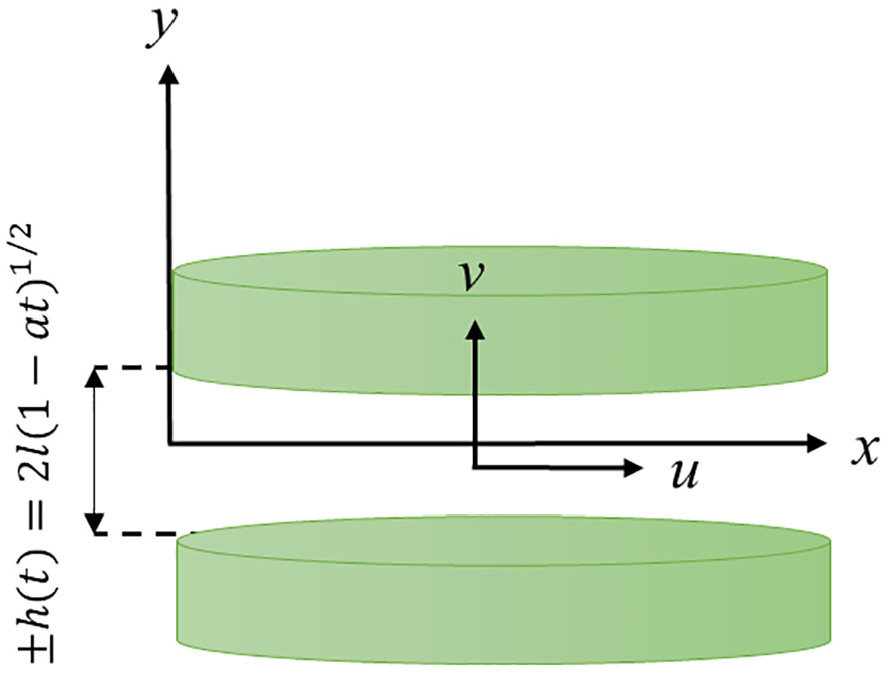
Problem representation.
Shifting our focus to the mathematical formulation of the problem at hand, we now delve into a set of partial differential equations (PDEs) that govern the dynamics of the incompressible flow of a CF within the confined space between two parallel circular plates. These equations encapsulate the fundamental principles of fluid mechanics and heat transfer, providing a comprehensive framework for understanding the complex interplay of forces and energy within the system. The Casson model characterizes a category of non-Newtonian fluids that require the shear stress to surpass a certain yield stress before flow can begin. This model’s rheological behavior is represented by the following equations (2, 11, 14):

In equation (1),




In this study, the variables u and v are utilized to denote the components of velocity in the x and y directions, respectively. The symbol p is employed to represent the pressure within the system, while T is used to characterize the temperature distribution. Furthermore, the parameter ν is introduced to signify the kinematic viscosity, and the term β is formally defined as a crucial parameter within the context of the CF, involving the quantity μ
b
multiplied by the square root of 2π
c
divided by p
y
, thereby playing a significant role in delineating the rheological behavior of the fluid. Here, α is


By employing the transformation method, we achieve the following result upon its application to a two-dimensional flow. This technique, as described by Khan et al. 34 and Wang, 35 leads to the following outcome when implemented in the context of a two-dimensional flow scenario.




Substituting equations (8) through (11) into the governing equations yields a nonlinear ODE that governs CF flow, given as follows:


In addition, the BCs can be expressed as follows 17 :

The physical and non-dimensional parameters of interest include the skin friction coefficient Cf, represents the ratio of the shear stress at the wall to the dynamic pressure of the fluid flow. The Nusselt number Nu, represents the ratio of convective to conductive heat transfer across a boundary, the non-dimensional Squeeze number S, represents the rate of squeezing between two plates and the Eckert number Ec, represents the ratio of kinetic energy to enthalpy difference in the fluid flow and the Prandtl number Pr, is the ratio of momentum diffusivity (kinematic viscosity) to thermal diffusivity. These parameters are defined as follows:

Methodology
In this study, the methodology encompasses the utilization of the Differential Transform Method (DTM) and the Akbari-Ganji Method (AGM) to investigate the impact of the Squeeze Number and CF Parameter on heat transfer characteristics in the SF of CF between circular plates. DTM is renowned for its efficiency and systematic approach in solving differential equations, enabling the derivation of analytical solutions with high precision. This method reduces the computational complexity and provides solutions in a series form, which is particularly useful for understanding the behavior of physical systems. On the other hand, the AGM is an advanced analytical technique tailored for nonlinear equations, offering robustness and accuracy in solving complex systems. It simplifies the nonlinear equations into a more manageable form, ensuring reliable results that align well with numerical solutions. The combined application of DTM and AGM in this study facilitates a comprehensive exploration of the heat transfer characteristics influenced by the Squeeze Number and CF Parameter, thereby enhancing the understanding of thermal behavior and fluid dynamics in the squeezing flow of Casson fluid between circular plates.
Differential transform method (DTM)
The basic idea of DTM
In order to comprehend the Differential Transform Method (DTM), we make the initial assumption that the function


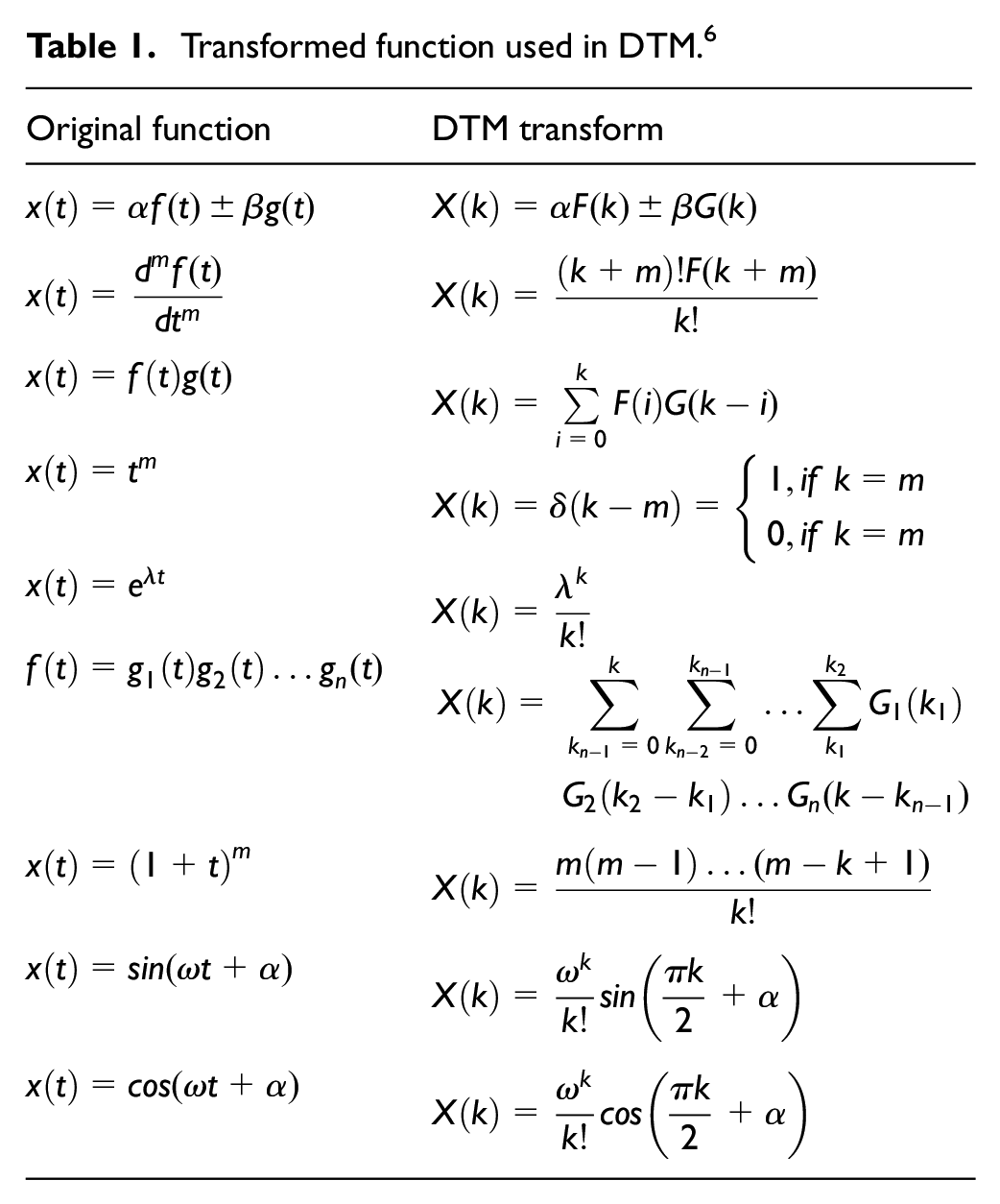
The PDEs are transformed into ODEs through the application of the differential transformation method (DTM) (refer to Table 1),6,31 leading to a more direct solution process.
Transformed function used in DTM. 6
Application of DTM
By substituting equation (15) into the governing equations, the following relations are obtained:


Furthermore, the boundary conditions will become the following relations:


By applying the differential transformation method as outlined in Table 1, the following calculations will be obtained:


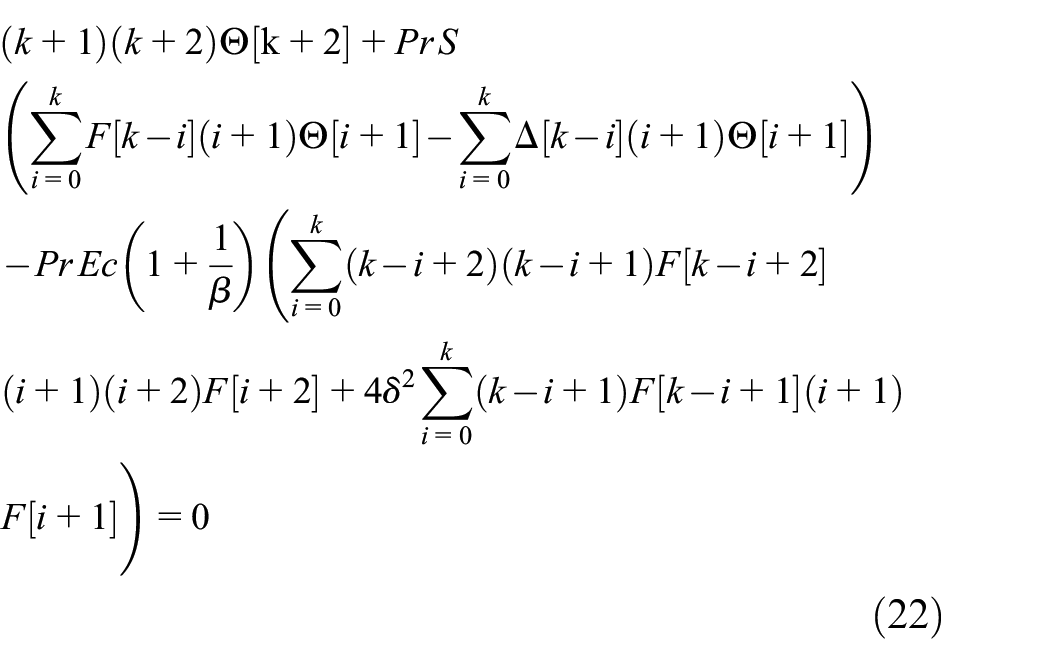
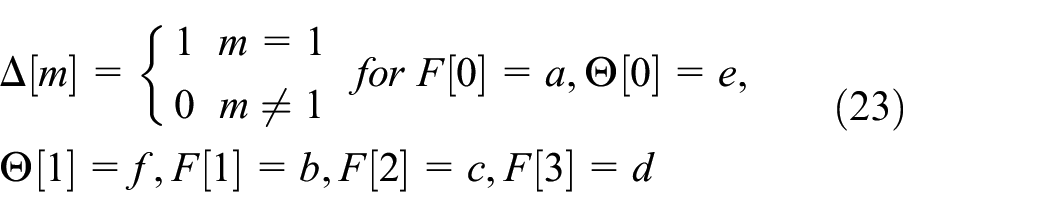
After completing the calculations for



Akbari-Ganji method (AGM)
Basic idea of AGM
In order to apply analytical techniques to solve both linear and nonlinear differential equations, it is essential to have boundary conditions (BCs) and initial conditions (ICs). It is standard practice to verify the differential equations in the following format:

Therefore, it is possible to ascertain the order n and nonlinearity of the differential equation P k , as well as the type of boundary conditions, which are represented in the following manner:


The next step in solving the problem using AGM involves employing polynomials with constant coefficients, such as the following:
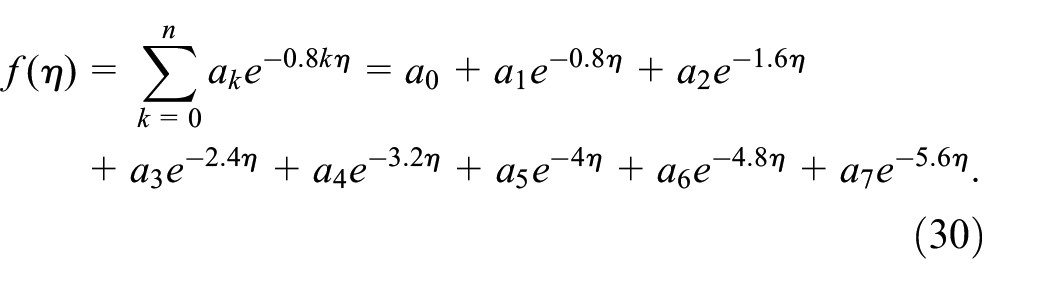
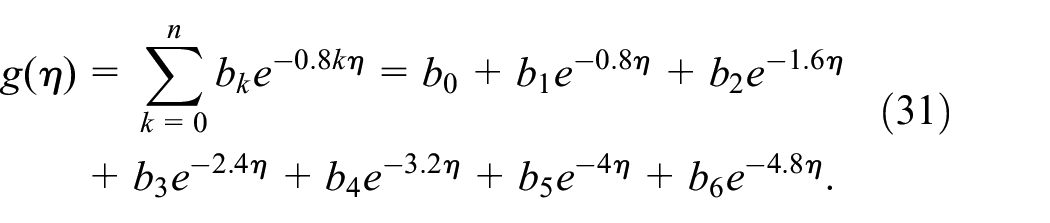
When

And

Application of AGM
With the consideration of the main equation and the basic idea of AGM from appendix, the initial values for the iterative process are chosen, and then, through a series of calculations, the AGM of these values is computed. This AGM value is then used for the next iteration as the new set of values. The process continues until a desired level of accuracy or convergence is achieved.




By incorporating this boundary condition into the AGM equation, we ensure that the solution aligns with the specified constraints and accurately represents the behavior of the system within the given boundaries. This integration of the boundary condition enhances the precision and applicability of the AGM method in addressing the problem at hand. To address this problem, we incorporate the boundary condition into the AGM equation. The boundary circumstance:


Then
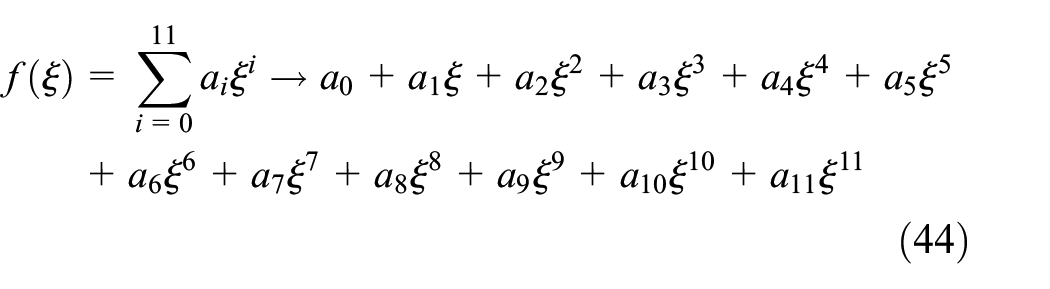

Given the aforementioned information, we considered two test functions, which have 20 constant coefficients and we have 20 equations.
Results and discussions
Validation
In order to validate the results obtained from the proposed analytical methods, we have employed a rigorous comparison with numerical results obtained from the widely recognized five-point collocation method as described in the literature.
17
This validation approach is essential for ensuring the accuracy and reliability of the analytical methods under investigation. Presented in Tables 2 and 3 are the radial velocity
Radial velocity profiles (

Temperature profiles (


Comparison radial velocity profiles (
Fluid Dynamics Analysis
In this section, we explore fluid dynamics analysis in-depth, focusing on the intricate relationships between influential parameters and their effects on various fluid behaviors. The section aims to unveil the complex interdependencies among parameters such as squeeze number, CF parameter, Pr, Ec, and δ, and their consequential impacts on radial velocity, temperature profiles, and thermal boundary layers through rigorous analyses and simulations. By scrutinizing the findings presented in a series of figures, we gain valuable insights into the significant influence of these parameters on fluid dynamics, revealing distinct trends and correlations that contribute to a deeper understanding of fundamental principles governing fluid behavior. These analyses not only elucidate the intricate nature of fluid dynamics but also hold potential for applications across diverse fields, thereby making valuable contributions to fluid dynamics research and practical implementation.
Figure 3 presents the variation of radial velocity in relation to the squeeze number

Effect of S on
Moving on to Figure 4, the examination of the impact of the squeeze number on the temperature profile

Effect of S on

Effect of

Effect of

Effect of

Effect of
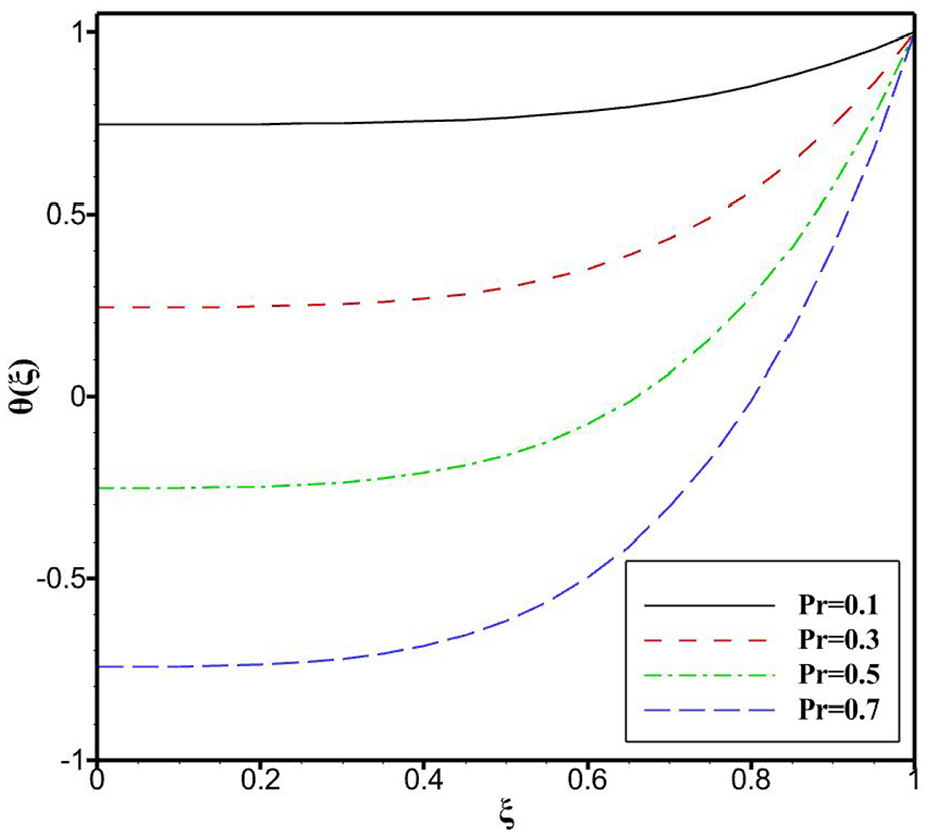
Effect of

Effect of

Effect of
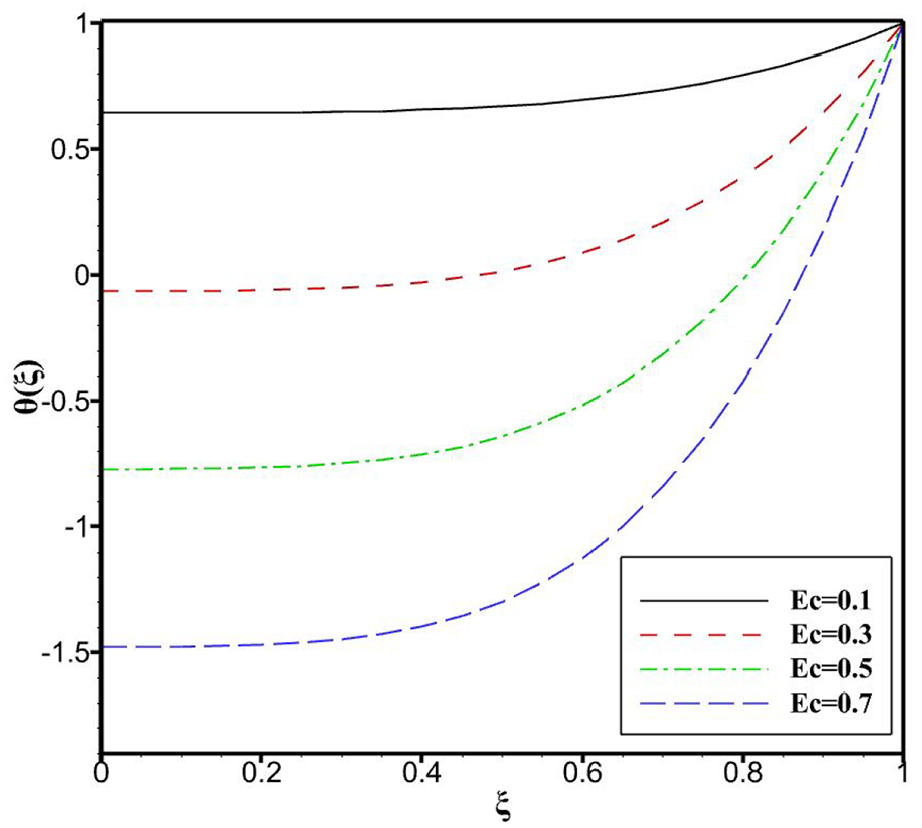
Effect of

Effect of

Effect of
The observed variations in radial velocity and temperature profiles can be explained through the underlying physical principles governing fluid dynamics and heat transfer. As the squeeze number increases, the plates move closer together, compressing the fluid and increasing the temperature gradient within the fluid layers. This compression results in a higher heat transfer rate from the plates to the fluid, causing an initial decrease in radial velocity due to the fluid’s increasing thermal energy and viscosity. However, beyond a critical squeeze number, the fluid’s momentum overcomes the viscous resistance, increasing radial velocity. Similarly, the Casson fluid parameter affects the fluid’s yield stress and viscosity, significantly influencing the flow behavior and thermal characteristics. Higher values of β indicate a more pronounced yield stress, reducing the fluid’s ability to flow freely, thereby affecting both velocity and temperature profiles. The Prandtl number, Eckert number, and the ratio of characteristic lengths further impact the thermal boundary layer. Higher Prandtl numbers, indicative of thicker thermal boundary layers, result in lower heat diffusivity, while increased Eckert numbers highlight the role of viscous dissipation in enhancing the temperature profiles. These physical insights underscore the intricate relationships between these parameters, emphasizing the necessity of considering these factors to comprehensively understand fluid dynamics and heat transfer in squeezing flows of Casson fluids.
Tables 4 and 5 provide the skin friction coefficient and Nusselt number values for varying parameters when the Prandtl number (Pr) is set to 0.5, Eckert number (Ec) is set to 0.5, and
Skin friction coefficient when

Effect of different parameters on nusselt number trends.

Conclusion
This study has provided valuable insights into the heat transfer characteristics of squeezing flow in a non-Newtonian Casson fluid between parallel circular plates. The investigation yielded analytical solutions using the Differential Transform Method (DTM) and Akbari-Ganji’s Method (AGM) by deriving nonlinear ordinary differential equations, applying conservation laws, and utilizing similarity transformations. Notably, the findings reveal an acceleration in the rate of motion concerning both the squeeze number and the Casson fluid parameter, while the temperature profile shows a declining pattern as these parameters increase. The comprehensive validation process confirmed the reliability of both the AGM and DTM methods, with the AGM demonstrating superior alignment with the numerical method. The study’s major outcomes include a detailed understanding of how the squeeze number and Casson fluid parameters influence the fluid’s velocity and temperature profiles. Specifically, as the squeeze number increases, the radial velocity initially decreases due to the increasing fluid temperature gradient and flow rate as the plates move closer together. However, an increase in radial velocity is observed for higher values of the squeeze number. Similarly, the Casson fluid parameter significantly impacts the flow behavior and heat transfer characteristics, affecting the fluid’s viscosity and yield stress.
Practical applications of these findings span various engineering and industrial fields. For instance, the insights are valuable for designing and optimizing lubrication systems where precise control of fluid flow and heat transfer is crucial. In biomedical engineering, understanding blood flow dynamics in microcirculation can benefit from the Casson fluid model. Additionally, industries dealing with food products, cosmetics, and polymers, where non-Newtonian fluids are prevalent, can leverage these findings to enhance process efficiency.
However, this study also has limitations. The assumptions of steady-state conditions may not fully capture transient behaviors relevant to practical scenarios. Moreover, the influence of external forces such as magnetic fields or chemical reactions was not considered. The geometric configuration was limited to parallel circular plates, excluding more complex geometries that could affect fluid dynamics.
Future research should explore the impact of additional parameters on the fluid system, including external forces and chemical reactions, to provide a more comprehensive analysis. Investigating varying boundary conditions and more complex geometric configurations would further enhance understanding of fluid behavior in diverse operational scenarios. Expanding the scope to include transient analyses and unsteady-state conditions will offer deeper insights into the dynamic behavior of non-Newtonian fluids.
Footnotes
Appendix
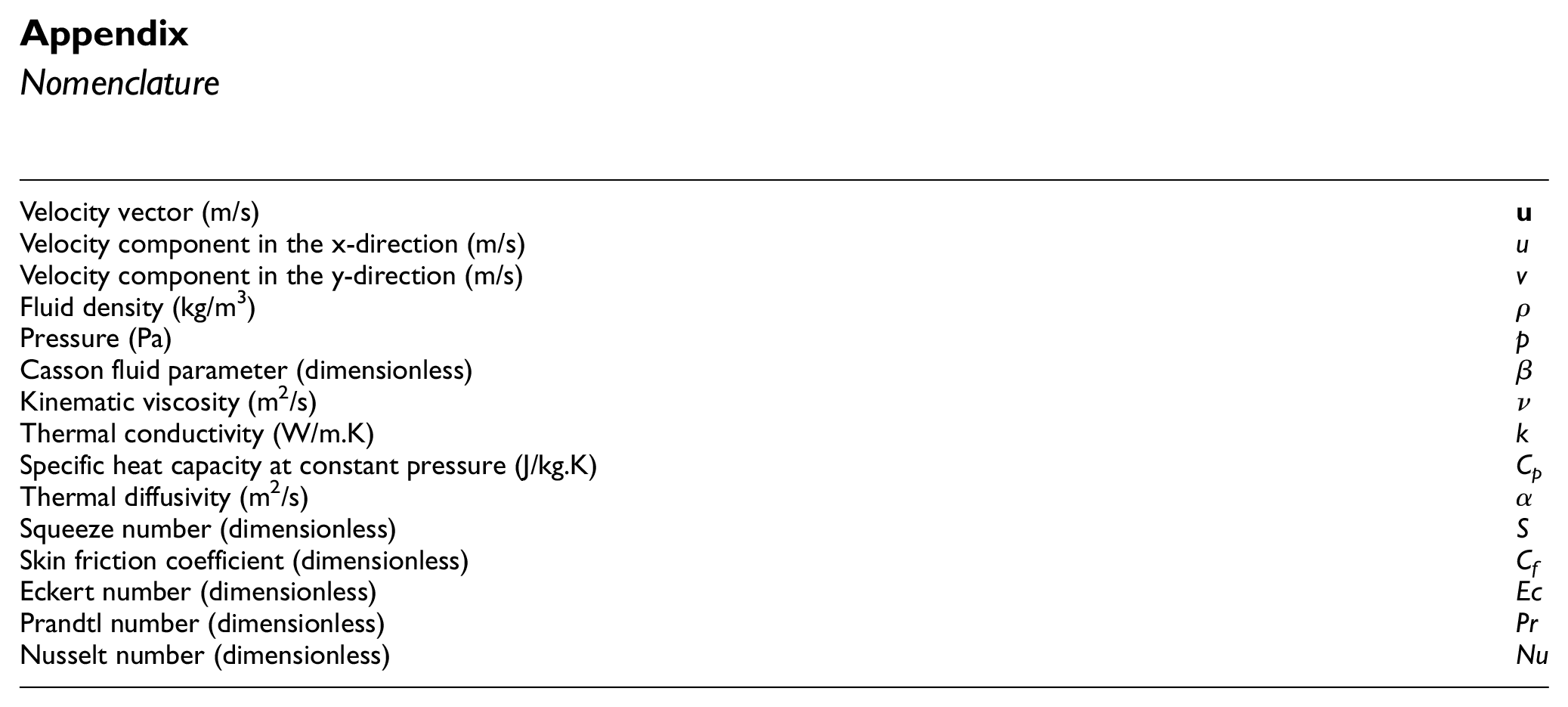
Nomenclature
| Velocity vector (m/s) |
|
| Velocity component in the x-direction (m/s) | u |
| Velocity component in the y-direction (m/s) | v |
| Fluid density (kg/m3) | ρ |
| Pressure (Pa) | p |
| Casson fluid parameter (dimensionless) | |
| Kinematic viscosity (m2/s) | ν |
| Thermal conductivity (W/m.K) | k |
| Specific heat capacity at constant pressure (J/kg.K) | C p |
| Thermal diffusivity (m2/s) | α |
| Squeeze number (dimensionless) | S |
| Skin friction coefficient (dimensionless) | C f |
| Eckert number (dimensionless) | Ec |
| Prandtl number (dimensionless) | Pr |
| Nusselt number (dimensionless) | Nu |
Handling Editor: Sharmili Pandian
Declaration of conflicting interests
The author(s) declared no potential conflicts of interest with respect to the research, authorship, and/or publication of this article.
Funding
The author(s) received no financial support for the research, authorship, and/or publication of this article.
