



Abstract
The present work investigates mass and heat transport in non-Newtonian Sisko fluid past a three-dimensional bi-directional stretched heated surface with MHD effect, heat radiation, Joule warming, variable thermic conductivity, and temperature-dependent diffusivity. Comprehension the intricate relationships amongst mass and heat transfer in Sisko fluid across various magnetic field and radiation conditions requires an understanding of this model. It offers information on how to best optimize industrial operations where controlling fluid behavior and thermal characteristics is crucial, such as cooling systems and polymer extrusion. The difficulty is derived from resembling coupled nonlinear PDEs by engaging boundary layer theory and transforming them into systems of ODEs by applying suitable similarity transformations. The nonlinear converted ODEs have been solved using OHAT (optimal homotopy analysis technique) and the results are presented via graphs and tables. The performed analysis shows that escalating values of fluid parameter shows shear-thinning behavior and as a result fluid velocity upsurges. It is observed through findings that the velocity spectrum strengthens along the x-axis and y-axis concerning the Sisko fluid factor
Keywords
Introduction
The tinny surface of fluid that makes instantaneously all over a bound sheet because of fluid circulating along is considered as the “boundary surface” in this context. Due to its location at the boundary of the fluid, engineers refer to this layer as the boundary layer. The boundary layer’s flow properties significantly impact several aerodynamic difficulties, comprising aircraft stalling, skin friction grinding against an item, and heat transmission in speedy airplanes. Sisko fluid with constant and variable viscosity depends on the shear rate. The Sisko fluid model has extensive industrial uses like food production, coatings, and paints. Moreover, wastewater management, chemical processing, oil, and also in gas industry. As a sub-compartment of generalized Newtonian fluids, Khan et al. 1 studied the Sisko fluid scheme regarded as the ultimate appropriate for lubricating liquids and solids. The Sisko fluid method has substantial value since it adequately explains a few non-Newtonian liquids across the largest kind of shear rates. The concept of mass and heat transport, as its name indicates, is based on calculating the rate at which heat is transmitted across a material, such as by conduction, convection, or radiation. Due to the difference in temperatures between the two mediums. Hatwar 2 expressed that several industries use heat and mass transfer analysis, including vehicle, steam-electric authority production, energy schemes, HVAC, electrical equipment refrigeration, and diagnosing infections. The Variable Field Module 4 (VFM4) is best suited for magnetic force microscopy and other uses where the sample depends on the applied magnetic field. The VFM4 has adjustable out-of-plane and in-plane magnetic field strengths of up to 1200 G and 8000 G, respectively. Most fluids that are extremely important in daily life and industry such as paints, oils, oiling lubricants, human blood, honey, biological liquids, etc. do not adhere to the Newtonian expression of viscosity. They are referred to as non-Newtonian fluids. Owing to their significance in everyday life, several recent research studies have examined the features of non-Newtonian fluids analyzed by Malik et al. 3 As energy-efficient heat transfer fluids are needed for such incredibly effective cooling, common base liquids have still-low thermal conductivity, which is a significant concern, and research connected to ultra-high-performance cooling technologies is now quite hard. Pal and Mandal 4 addressed that the suspension of solid nanoparticles in common base liquids provided a solution to these problems. Many investigations have been done on the viscous materials created by the traditional Navier-Stokes equations in the literature. Viscoelastic behavior is present in a wide range of compound rheological resources, including polymeric fluids, piercing grimes, shampoos, biological fluids, liquid sparklers, greasing oils, and various further. Hayat et al. 5 discussed that simple Newtonian models cannot adequately describe these materials. Many industrial engineering applications include the sensations of momentum and heat transmission in boundary surface movement across a plane animated sheet. Because of its practical significance in several engineering fields, Munir et al. 6 observed that the momentum and thermal transport caused by an animated stretched sheet have been of great interest. Due to their novel characteristics, nanofluids are quick to respond to numerous requests for heat transmission. In comparison to the base fluid, Sohail and Naz 7 described that these resources improved heat conduction and the convective thermal transference factor. Due to its numerous uses in metallurgical processes, engineering, and industry, coupled mass and thermal transference have become a well-studied spectacle. To fully comprehend the processes of heat and mass movement, Fourier’s regulation of thermal conduction and Fick’s rule of dispersion are used by Khan et al. 8 Most research used the traditional Newtonian model to describe the viscous liquids’ flow. Doh et al. 9 expressed that the majority of industrial liquids are recognized as non-Newtonian liquids since the generally accepted presumption of a uniform connection between stress and the ratio of strain is not true. A magnetic colloidal solution of single-domain magnetic nanoparticles is known as ferrofluid. As the flow field created by ferrofluid may be appropriately adjusted by adding external magnetic fields, it can be used for heat transference applications. Sheikholeslami et al. 10 have investigated the treatment of ferrofluid thermal transmission in a fluctuating magnetic field. Due to the vast range of scientific and technological applications, including object damage, lubrication systems, chemical processing units, hydro-dynamical machines, and the processing of polymers and lubricants. The revision of warmth and mass transport in unstable pressing viscous movement among two aligned plates in movement regular to the shells independently of one another and arbitrarily in terms of time was established by Hatami and Ganji 11 as one of the most significant research concerns. Magneto cross tetra hybrid Nano fluidic flow demeanor across a stenosed artery from impacts of heat radiation together with heat source/sink was investigated by Sajid et al. 12 In this investigation, Tiwari and Das Novel tetra hybrid Nano fluidic model was adopted. The impact of non-Newtonian substances bounded by parallel elastic surfaces under various influences specifically Fourier’s law with implementation of Galerkin finite element methodology was surveyed by Sajid et al. 13 Sajid et al. 14 observed the Maxwell Nano fluidic Darcy-Forchheimer flow demeanor across an extended surface. Mass and heat transmission were observed under factors such as varying thermal conduction, and activating energy together with irregular thermal radiation. The performance of magnetized Maxwell-Sutterby substance across an angled extending sheet was given by Sajid et al. 15 and influenced by variable heat conductance, an expanding energy source/sink. Sajid et al. 16 observed the impacts of dynamic molecular diffusion, chaotic radiant heat, convection boundaries, momentum slide, and variable molecular dispersion based on Prandtl liquid across an extended plate.
Heat as well as mass transmission was analyzed by Kho et al.
17
In this Analysis Buongiorno model was adopted for investigation. The Buongiorno model has many industrial applications in the field of nuclear engineering and the Buongiorno model offers heat transportation phenomena in nuclear reactors and many more. Nasir et al.
18
discovered Brownian movement and thermophoresis dispersion. Moreover, Heat transmission across the non-uniform energy source and sinks was also observed. The Buongiorno model was adopted in this study. According to Sohail et al.,19,20 the analysis of species and heat transport will produce non-Newtonian material flowing across the linear stretching sheet. With the help of the Cattaneo-Christov heat flow definition, heat transport phenomena are presented. The importance of temperature-dependent thermal conductivity and coefficient of diffusion for mass and thermal transmission in the Sutterby model was investigated by Waseem et al.
21
using OHAM. Sohail et al.
22
explained that this study uses a theoretical and numerical technique to capitalize on the three-dimensional MHD border surface movement of a steady, incompressible Casson fluid via a uniform extensible sheet with Cattaneo-Christov dual diffusion. Numerical calculations for MHD unstable 3D motion through mass and thermal transmission of the Sisko fluid were reported in the attendance of nanomaterials. With this model, Khan et al.
23
addressed the impacts of the thermophoresis parameter and Brownian movement being considered. Heat and mass transmission under convective boundary conditions were each taken into consideration. The study focuses on non-Newtonian Sisko fluid movement on a uniformly extending surface exposed to heat radiation melting heat transfer studied by Soomro et al.
24
Hazra et al.
25
investigated mixed convection beneath the influence of an externally imposed uniform magnetic field in a vented chamber saturated with a porous material and heated at the top-left and bottom-right corners. Rahaman et al.
26
investigated the linked mixed convective heat transport mechanism inside a grooved channel cavity using a CuO-water nanofluid and an angled magnetic field. From the bottom, the cavity is heated isothermally, causing differences in the locations of the heated walls inside the grooved channel. The influence of nanomaterials on regular convective border layer movement across a vertical sheet has been revisited. Nevertheless, we have now explored a more realistic scenario where the fluid material percentage on the border is inactively rather than dynamically regulated, which is an alternative to the instance of continuous temperature and nanomaterial fraction at the barrier. Kuznetsov and Nield
27
employed Buongiorno’s model, which takes into consideration both Brownian circulation and thermophoresis. This research examines the effects of a changing magnetic field and velocity slip on an incompressible pseudo-plastic EVA fluid flow in a limited film along a stretched exterior expressed by Zhang et al.
28
In this article Bhatti et al.
29
discussed the peristaltic motion of non-Newtonian fluid-comprising gyrotactic microorganisms under the simultaneous stimulus of a changing magnetic field and coagulation (blood clot). Thermal radiation is anticipated as a rising factor owing to its impact, which aids in the removal of hazardous material from blood moving through blood vessels, Thermal transportation and tri hybrid Tiwari and Das Sisko Nano fluidic flow demeanor through a stenosis artery was reported by Fangfang et al.
30
Autocatalyst reactions for thermal efficiency toward the tetra hybrid dual Nano fluidic flow subjected to Riga wedge were discussed by Sajid et al.
31
Akbar and Sohail
32
evaluated three-dimensional viscid movement passing via a planar horizontally extended exterior by utilizing a magnetic pitch, radiant heat, and sticky dissolution. Li et al.
33
discovered the impressions of buoyant and viscosity dispersion on the three-dimensional hybrid nano-liquid motion of titanium oxide
An optimal homotopy exploration technique is useful for chaotic differential equalities. Fan and You 38 claim that one or more parameters in this technique, which may be determined by minimizing a particular function, influence the convergence of series resolutions. Odibat 39 investigated the approach, developed by Liao, which has the elasticity to regulate the convergence area and rate for series clarifications to unbalanced differential calculations as one of its key benefits. It is harder to describe many nonlinear phenomena mathematically than it is to represent linear ones, even though nonlinear differential equations may properly define many nonlinear phenomena. Such events are often represented by Bahia et al. 40 considering two primary types of differential equations: ordinary and partial. Jia et al. 41 described a process for changing a linear optimum control issue into an ODE system that adheres to the Pontryagins maximal principle (PMP). Meanwhile, a mathematical solution to the linear OCPs was obtained using Mathematica 9.0′s Minimize function to minimize the square residual fault for the 10th or 15th-order estimation and the Optimal HAM method applied to the system of ODEs. The best value for such a convergence control parameter may be found using this method. The diagrammatic results and even abilities for the stream field aspects are obtained using the optimal homotopy investigation approach (OHAM) discussed by Naz et al. 42 When it comes to analytical methodology, Sohail et al. 43 examined that the Optimal Homotopy Analysis Method (OHAM) analysis approach provides an outcome to nonlinear flow problems requiring boundary conditions. For higher-order BVPs, several scholars have developed a variety of numerical approaches during the last few decades. Biswal et al. 44 studied that the homotopy analysis was a method Liao proposed for BVPs in 1992. OHAM was employed to manage the directing coupled nonlinear DEs analyzed by Biswal et al. 44 The convergence controller settings have also been calculated using a cutting-edge method, which might simplify the conventional OHAM.
Existing literature shows that no investigations have been conducted collectively to study mass, heat transmission containing variable thermal conductivity, varying diffusion coefficient, warmth radiation, and Joule warming for the bi-directional stretched movement of Sisko nanofluid. This research covers this gap. This is how the investigation is set up:
Section 1 covers the detailed literature review on nanofluid, heat, and mass transmission;
Problem formulation and dimensionless analysis are reported in section 2;
Nonlinear arising model is handled via the optimal homotopic procedure. A complete narrative of the utilized process is given in segment 3;
Results are discussed by seeing the underlying physics in segment 4 and the conclusion is presented in sector 5.
Mathematical modeling
Let the smooth, laminar circulation of an inflexible Sisko fluid in three dimensions (3D) over a surface that is capable of bidirectional extension. The Mburu et al. liquid is regarded as electrically conducting in the occurrence of a steady magnetic field
(1) Lack of chemical reactions;
(2) Incompressible flow;
(3) Insignificant outside pressures;
(4) Diluted mixture
(5) Insignificant radiative heat transfer;
(6) Negligible viscous dissipation;
(7) Local thermal equilibrium exists between the base fluid and the nanoparticles.

Geometry for the considered flow problem of Sisko fluid structure.
The constitutive equations for the incompressible Sisko fluid’s three-dimensional (3D) flow given by Wang et al. 48 are


In the case of Sisko fluid, the Cauchy stress tensor

Conventions of the extra stress tensor

The definition of the first Rivlin-Erickson tensor

The velocity field

With the boundary layer presumptions, the Sohail and Abbas nanofluid’s governing border sheet expressions for heat and mass transmission are assumed as 5



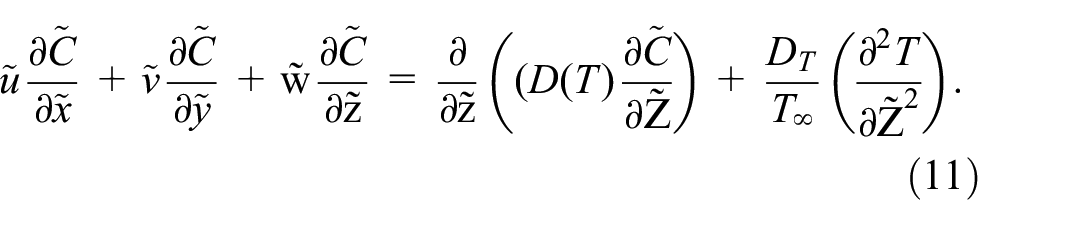
Boundary conditions that are being considered are



The subsequent dimension-less variables are now being used

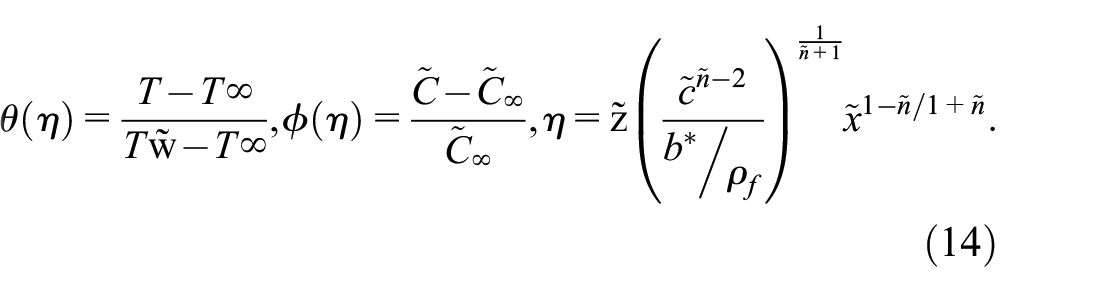
Equation (7) is now satisfied and equations (8–13) result in the following form






Some parameters are listed as follows:
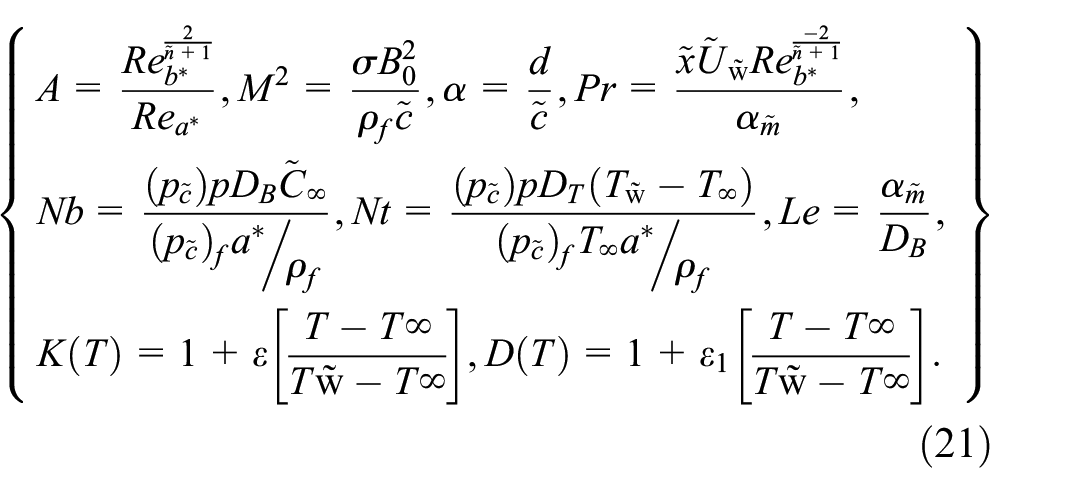
Here: The Sisko fluid parameter is represented by
The Nusselt numbers and skin friction coefficients are defined by

This dimensionless mass flow, represented by
Solutions procedure
Through the use of adjustable parameters, the Optimal Homotopy Analysis Method continuously deforms a homotopy from an initial guess to an exact solution, thereby optimizing convergence and solving ordinary differential equations (ODEs) that arise from the transformation of partial differential equations (PDEs). Control and adaptability over the convergence phase are guaranteed by this approach. When it comes to solving nonlinear differential equations, the Optimal Homotopy Analysis Approach provides improved accuracy and flexibility. Compared to conventional approaches, it enables the convergence-control parameter to be optimally computed, resulting in more precise and dependable solutions. Several modeled equations arising in mathematical physics are nonlinear and the exact solution does not exist. Our current focus is on using the technique of optimal homotopy analysis42–45 to calculate solutions. The appropriate initial guesses
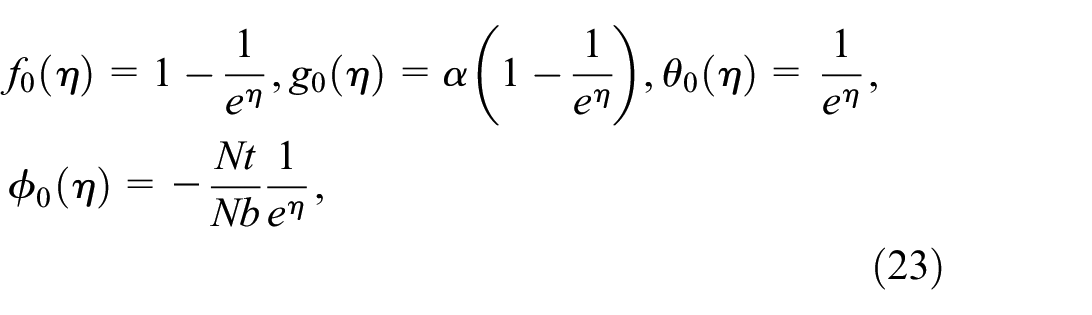

The operators mentioned above meet the criteria listed below


In which





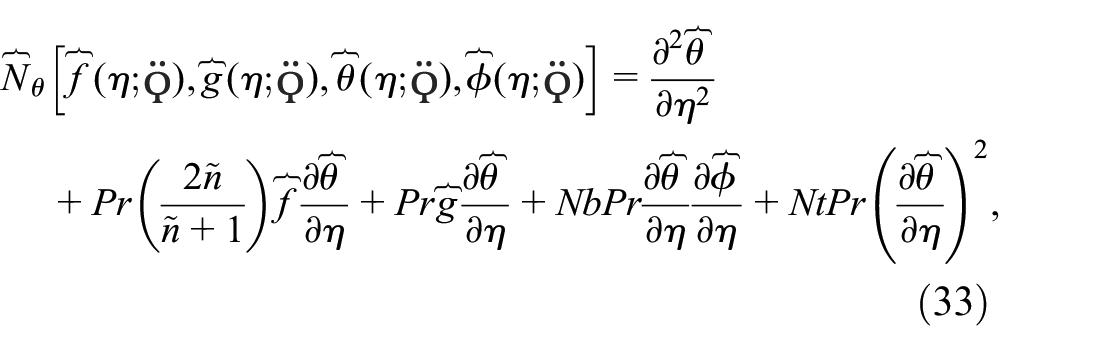

In the phrases above,


When


The convergence of equations (39–42) strongly is dependent on making the right decisions of


The






For
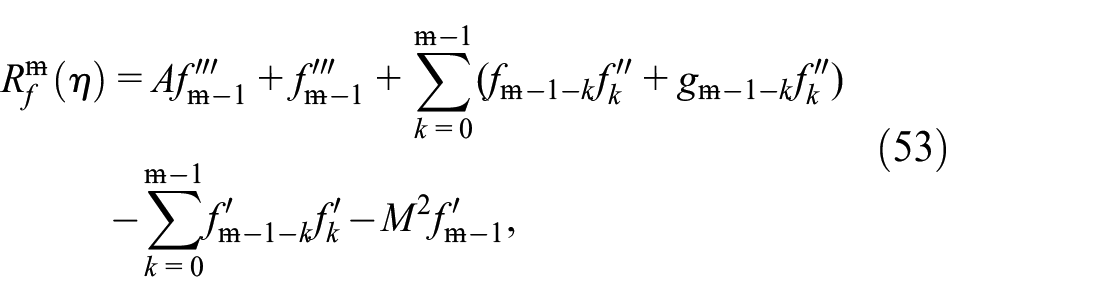


The irregular machinists for


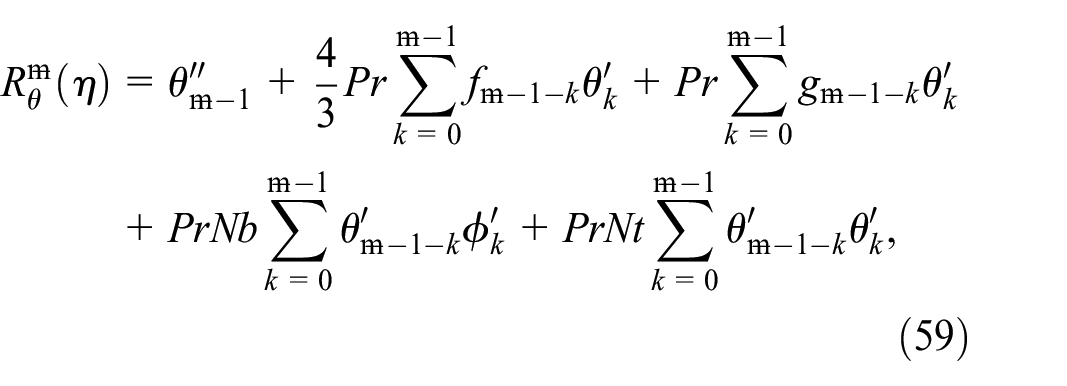


Likewise for


In which the coefficients

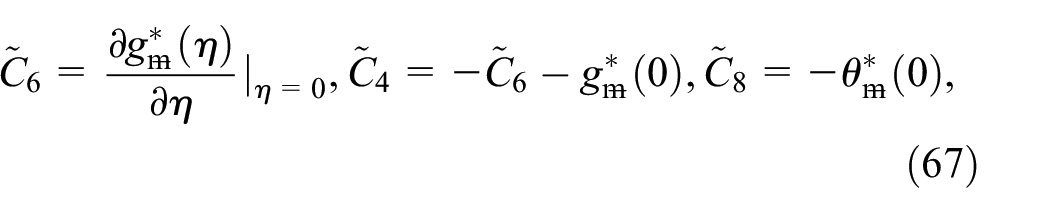
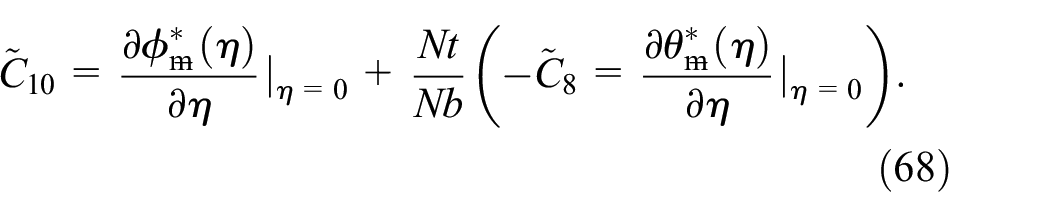
Optimal convergence control parameters
Observe that the non-zero auxiliary parameters



Where
Results and discussion
The influences of many physical features are inspected in this segment on the distribution of nanoparticle concentration
In this section, we will discuss results and numerical graphs. We observed Sisko fluid with the variable magnetic field, to investigate heat and mass transfer in bi-directional stretched flow. Numerical simulations of our investigation are presented in Figures 2 to 21.
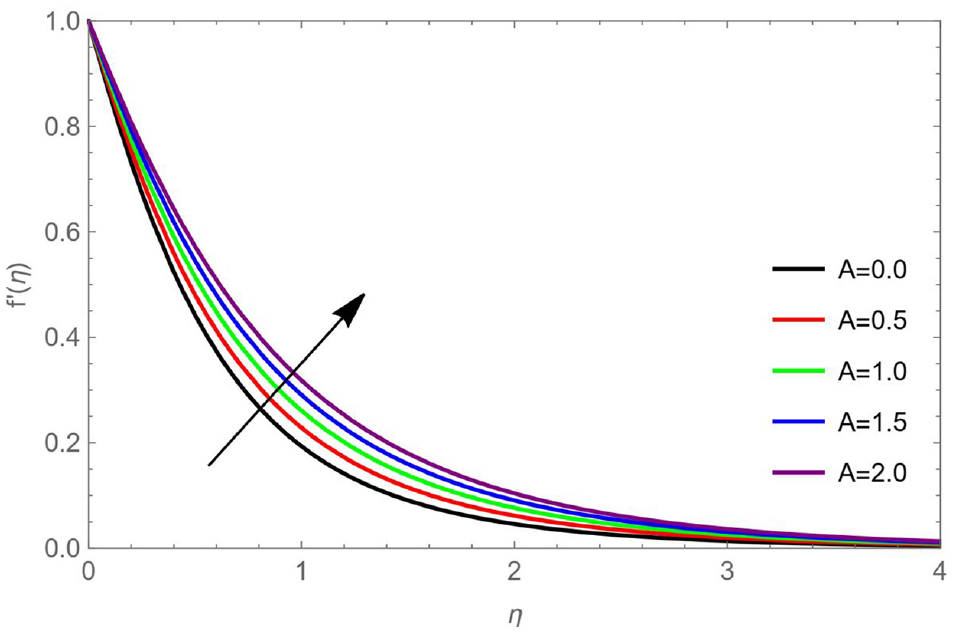
Influence

Influence of
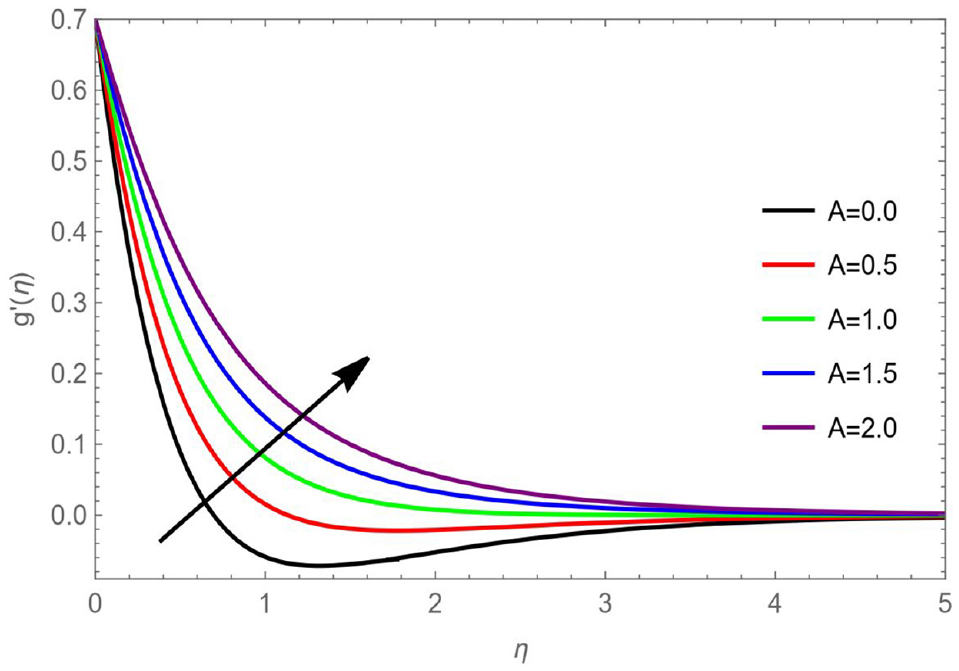
Influence of

Influence of

Influence of

Influence of

Influence of

Influence of
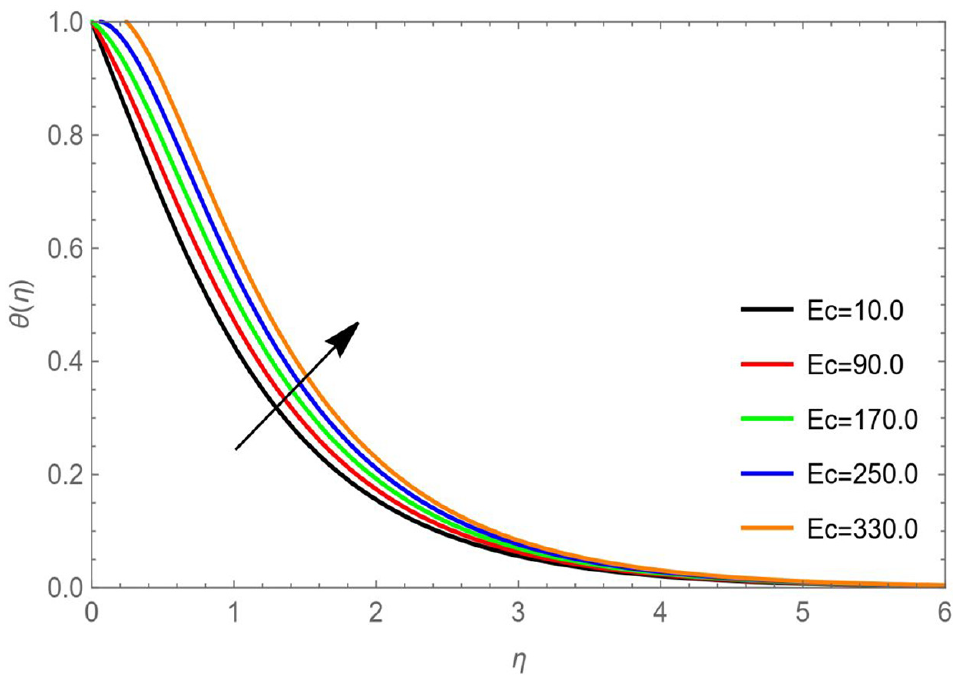
Influence of

Influence of

Influence of
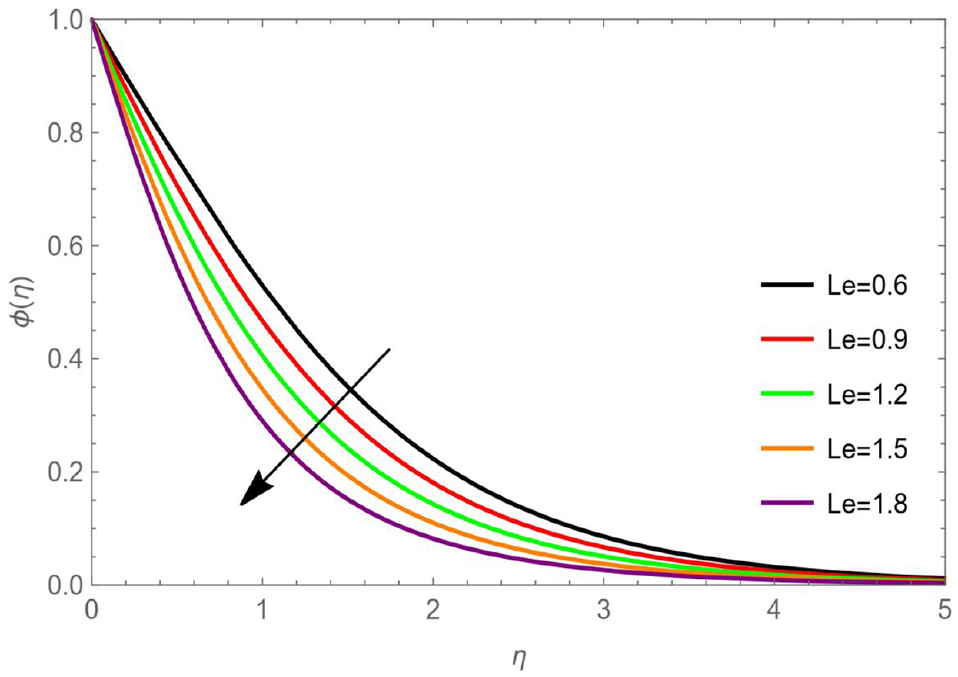
Influence of
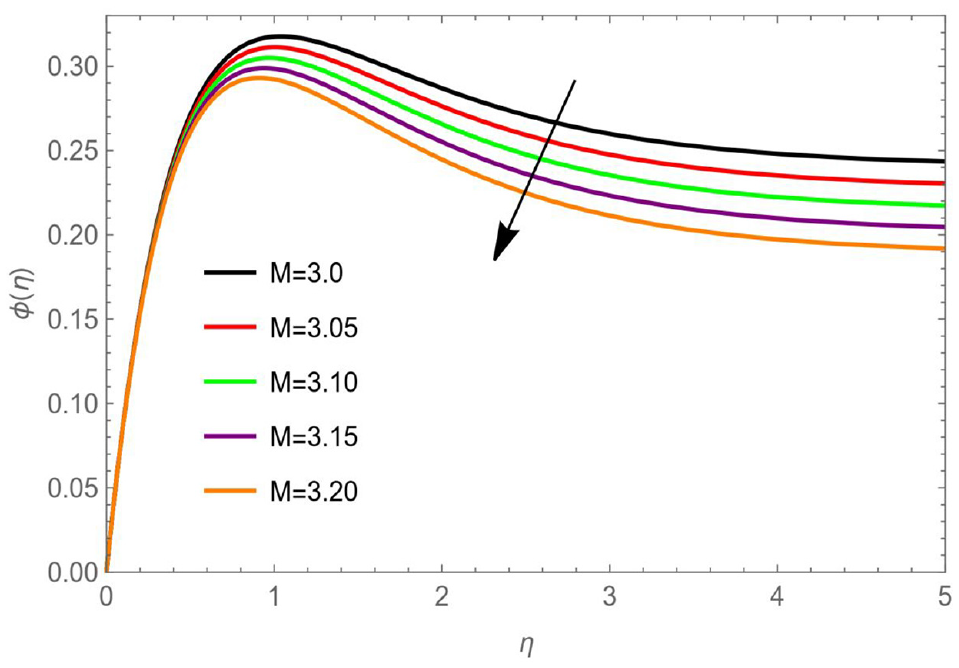
Influence of

Influence of

Influence of

Influence of
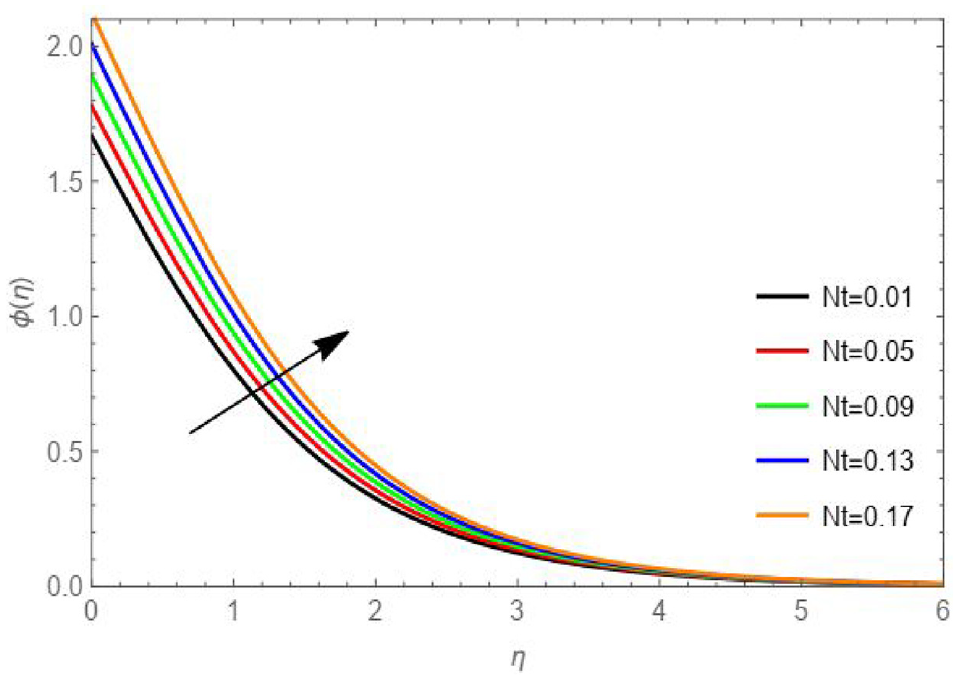
Influence of

Influence of

Influence of

Influence of
Velocity profiles
Figure 2 represents the impact of the Sisko fluid parameter
Temperature profile
Figure 6 demonstrates how the temperature profile
Concentration profile
Figure 12 presents the bearing of ratio factor
For distinct combinations of

Computation for

Different values of

Conclusions
Based on the investigation of mass and thermal transportation in the bi-directional stretched movement of Sisko liquid with a variable magnetic field, the following assumptions can be drawn:
The presence of a magnetic factor
Elevated values of the Lewis coefficient
The thermal appearance shows enhanced behavior for augmented values of thermal conductivity
Reduction in the range of nanoparticle concentration is noticed with higher values in varying heat conductivity
The Prandtl count
Temperature profile is positively affected as a result of enhancement in radiated component
The amounts of the extending factor strongly influence the flow’s heat and mass transmission characteristics. Developed ethics of the stretching factor lead to better heat and bulk transfer ratios, while lower morals of the stretching factor lead to poorer warmth and mass transfer rates.
The Sisko fluid exhibits non-Newtonian behavior, and its rheological properties strongly influence the flow’s heat and mass transmission characteristics. Advanced beliefs of the Sisko fluid parameter lead to poorer heat and mass transfer rates, while lower values of the Sisko fluid parameter lead to better heat and mass transport ratios.
The bi-directional nature of the stretching flow results in the occurrence of two distinct flow regimes, which are characterized by different heat and mass transfer characteristics. The first regime corresponds to the stretching flow along the x-direction, while the second regime corresponds to the stretching flow along the y-direction.
Overall, the investigation reveals that the joint effects of the variable magnetic effect, stretching parameter, and rheological belongings of the Sisko fluid have a substantial impression on the heat and mass transportation characteristics of the bi-directional stretched flow. The findings of this study can be useful in understanding and optimizing heat and mass transfer processes in various industrial applications.
Future directions
The Prandtl count
Footnotes
Appendix
Acknowledgements
The authors would like to thank Prince Sultan University, Saudi Arabia for support through the TAS research lab.
Handling Editor: Sharmili Pandian
Declaration of conflicting interests
The author(s) declared no potential conflicts of interest with respect to the research, authorship, and/or publication of this article.
Funding
The author(s) received no financial support for the research, authorship, and/or publication of this article.
Ethical approval
Not applicable.
Institutional review board
Not applicable.
Informed consent
Not applicable.

Availability of data and material
The datasets used and/or analyzed during the current study available from the corresponding author on reasonable request.