



Abstract
Understanding and managing the complex rheological behavior of fluid models is crucial for many real-world applications, such as industrial fluid dynamics, biomedical engineering, and environmental management. This study aims to predict the unsteady magnetohydrodynamic (MHD) flow of a second-grade tetra hybrid nanofluid in a porous medium containing uniformly dispersed dust particles. To address this challenge, we develop a mathematical model utilizing a non-fractional approach with ramping conditions. Our methodology incorporates Laplace and Sumudu transforms to analyze the velocity fields of both the fluid and dust particles. Additionally, we examine the heat transfer characteristics and the underlying dynamics of the magnetized second-grade tetra hybrid nanofluid flow. The momentum transfer of the dust particles is modeled using a separate equation. Key outcomes of this research include visual representations of novel findings, facilitating comparison with existing literature. Numerical simulations based on Sumudu and Laplace transformations produce velocity profiles for both fluid and dust particles, as well as temperature distributions, aligning with theoretical expectations. These results demonstrate the effectiveness of Laplace and Sumudu transforms in analyzing and simulating the turbulent MHD flow of nanofluids through porous media with dispersed dust particles.
Introduction
Over the course of history, a great number of models for fluids have been suggested, the two primary types of them being Newtonian and non-Newtonian fluids. The larger relevance of non-Newtonian fluids may be attributed to the breadth and depth of their use in a variety of domains. Fluids of the rate type, the differential type, and the integral type are all included in this category. Recent years have seen an increase in the amount of attention that fields such as fluid dynamics have given to the significance of free convection in addition to heat and mass transport in second-grade flows. The production of polymers, the processing of food, the insulation of buildings, geothermal systems, and other technical domains all rely heavily on these regions. In a fluid, natural convection was examined using integer-order Caputo-fractional derivatives in a work that was published. 1 Using Laplace transforms, they made an evaluation between viscous fluids and second-grade fluids in both integer and non-integer order. This allowed them to achieve precise answers. Using the Caputo-Fabrizio fractional derivatives technique, 2 another research investigated the thermal evaluation of a fluid of low quality that was moving continuously across a vertical plate. In this study, we investigated how changing the fractional parameter might affect the flow of fluid. Hosseinzadeh et al., 3 conducted research to investigate the effect that magnetohydrodynamics (MHD) has on non-Newtonian nanofluids of second-grade viscoelasticity as they flow across a curved stretching surface. In order to understand the impact of magnetohydrodynamics on the flow, various mathematical techniques such as analytical analysis, Sumudu transform, and Laplace transform were employed. The results provide new insight into the reactions of nanofluids to magnetohydrodynamics situations. A computational analysis of the flow of non-Newtonian fluid over a thin, stretched sheet was carried out by Abbas et al., 4 with the primary emphasis being on the roles that radiation and heat generation play. Their computer models gave insights into the physics of heat transmission as well as the behavior of fluids under circumstances such as these. Baranovskii 5 investigated non-isothermal flows of a second-grade fluid between parallel plates to improve our comprehension of these flows by finding precise answers using analytical methods. The research conducted by Nadeem et al., 6 investigated the influence that heat radiation has on the movement of an unstable third-grade fluid over a stretched Riga plate that has holes in two dimensions. The investigation revealed many important aspects about the effect radiation has on fluid flows as well as the behavior of third-grade fluids in environments like these.
Colloidal suspensions containing nanoparticles of varying shapes, sizes, and materials are known as hybrid nanofluids. Nanoparticles may be made of a variety of materials, including metals, non-metals, and hybrids of the two. The hybrid nanofluid’s improved thermophysical characteristics are the consequence of synergistic effects brought about by the mixing of nanoparticles, making it a potentially useful medium in a wide range of engineering endeavors. The term “tetra-hybrid nanofluid” refers to an advanced kind of hybrid nanofluid that contains four distinct nanoparticle types. Compared to conventional hybrid nanofluids, this more complicated nanofluid system is expected to exhibit much more noticeable increases in thermal conductivity, heat transfer, and other features. Modi et al. 7 critically review the efficacy of mono-nanofluid and hybrid nanofluid in enhancing solar still performance. Hybrid nanofluids may boost the performance of solar stills, allowing for more effective desalination and purification of water in far-flung locations. Kursus et al. 8 review in detail recent developments in the use of nanofluids and hybrid nanofluids in machining. These cutting-edge fluids may enhance cooling and lubrication during machining, lowering the rate of tool wear and increasing productivity. To investigate the influence of particle form on magnetohydrodynamic instability in hybrid nanofluid flow between infinite parallel plates, Chu et al. 9 use a model-based comparison analysis. Magnetic drug targeting, nanofluidic devices, and high-tech heat transfer systems are all areas where this study might be put to use. Zhang et al. 10 have looked at the flow of a hybrid nanofluid with tantalum and nickel nanoparticles across an elastic surface when an induced magnetic field is present. Research of this kind may inform the development of new types of flexible electronics, stretchy sensors, and biomedical software, Wanatasanappan et al. 11 show a novel connection. For effective flow and heat transfer in industrial cooling systems and heat exchangers, it is crucial to have a firm grasp of these characteristics. Arif et al. 12 examine the role of dissimilar-shaped nanoparticles on blood’s heat transport using a fractional model of pair-stress Casson tri-hybrid nanofluid. The findings of this study shed light on the role of heat transmission in therapeutic hyperthermia and pharmaceutical administration, among other biological applications. Basit et al. 13 investigate the behavior of hybrid nanofluids (Au-Ag/Blood and Cu-Fe3O4/Blood) across two spinning disks using numerical and computational methods. The findings of this study may be used to enhance mechanical engineering and electronic device cooling systems. Sajid et al. 14 investigate the effects of a nonuniform heat source (sink) and thermal radiation on a magnetized cross-tetra-hybrid nanofluid flowing through a stenotic artery. The study presented here improves our knowledge of the dynamics of nanofluids with potential medical uses, such as medication delivery and targeted therapy.
Particulate matter suspended in a gaseous or liquid medium is referred to as a dusty fluid, particle-laden fluid, or multiphase fluid. These solid fragments, dispersed throughout the fluid, may come in many different shapes and sizes. Dusty fluids exhibit a wide variety of intriguing phenomena due to the interaction between the fluid and the suspended particles, including sedimentation, agglomeration, and fluid-particle interactions. Knowledge of dusty fluids is essential in many scientific and technological fields, including environmental research, geophysics, astronomy, materials processing, and medical applications. Conservation Biology: Dusty fluids have a significant impact on atmospheric aerosols and air quality. A thorough understanding of the behavior of dusty air is crucial for accurately modeling climate, predicting dust storms, and assessing the impact of dust particles on human and environmental health. Understanding dusty fluid movements is crucial for both geophysical and astrophysical phenomena, such as the transfer of sand in rivers and the development of dunes. Dusty fluids are important to include when modeling the interstellar medium and the formation of planets and stars in astrophysics. Pharmaceutical, ceramic, and powder metallurgy industries, among others, rely on hazy fluid flows for particle transport, mixing, and dispersion. It is vital to understand how nanoparticles behave in biological systems when utilized in medication delivery since they act as carriers for specific therapies. Gnaneswara Reddy and Ferdows 15 examine the effect of species concentration and heat radiation on the flow of micropolar hydromagnetic dusty fluid along a paraboloid revolution, and they reach some intriguing findings. This research is significant to astrophysical occurrences because of its relevance to the study of dust-laden flows in space. Ali et al. 16 examine the impact of Newtonian heating and heat generation on the flow of a dusty magnetohydrodynamic fluid between two parallel plates. Our understanding of heat transfer and fluid dynamics is expanded thanks to this research, which has applications in industries that use fluids with a high dust content. Khan et al., 17 use a fractional model based on Fick’s and Fourier’s laws to investigate the free convection flow of a dusty fluid of second grade between two parallel plates. Engineers designing heat exchangers and cooling systems may learn from these studies. Khan et al. 18 use second law analysis to examine how Newtonian heating affects the Couette flow of a viscoelastic dusty fluid in a rotating frame. This research contributes to our understanding of the behavior of dusty fluids in such settings and has ramifications for both rotating equipment and planetary processes. Asogwa et al. 19 explore the use of swaying upright parallel plates to analyze the oblique relative magnetic field of a Brinkman-type dusty fluid. A deeper knowledge of the magnetic behavior of dusty fluids might help in medication targeting and mineral processing. Ali et al. 20 analyze dusty flow across a surface subjected to a convective boundary condition using the sequential over relaxation method. This research is helpful for developing numerical methods to describe dusty fluid flows in complex engineering applications. Khan et al. 21 use a second law technique to investigate the effects of a relative magnetic field on Casson dusty fluid in a two-phase fluctuating flow over a parallel plate. A complete comprehension of the magnetic influence on dusty fluids is necessary for applications in magnetohydrodynamic energy conversion and materials synthesis.
Through the use of four independent fractional derivatives, Akgül et al.22,23 explore the GDP model. In order to illustrate the proficiency of the Sumudu transform, certain theoretical implications and examples are presented. A fractional order COVID-19 model is developed in Yao et al. 24 using a variety of analytical tools and procedures. The proposed fractional-order model incorporates environmental pollution as a source and is transformed using the Sumudu algorithm. It has value in clinical and technical problems, as well as in social surveys. Atangana-Baleanu and Atangana-Toufik scheme are also explored in Farman et al. 25 to learn more about fractional derivatives for the COVID-19 model. Analysis of the COVID-19 pandemic using cutting-edge methods that provide meaningful results. Valid results for the epidemic model are obtained by combining the Fractal fractional and Atangana-Baleanu technique with the ST. Additionally, in References 26–31, the (ST) is used to explore various models, with the latter’s practical implications being emphasized.
The purpose of this article is to analyze the analytical application of the Laplace transform and Sumudu transform to the modeling of unsteady rotating magnetohydrodynamic (MHD) flow in a second-grade tetra hybrid nanofluid within a porous medium, drawing inspiration from the insightful studies mentioned in the previous literature. The equations of motion for the tetra hybrid nanofluid and the dust particle, as well as the energy equations describing their interactions, are expressed as PDEs with boundary conditions suited to the inquiry. Laplace transform and Sumudu transform are used because they are exhaustive approaches for finding precise answers to the temperature and velocity profiles. Using these robust mathematical methods, we are able to learn a great deal about the complex dynamics of the system. We use Mathcad-15 to generate graphical comparisons and investigate the impact of embedded factors, which greatly enriches the research. By doing so, we intend to increase the understanding of unstable rotating MHD flow in the context of second-grade tetra hybrid nanofluids in porous media, which might have far-reaching implications for a wide range of engineering and scientific endeavors.
Mathematical modeling
The following assumptions of the given fluid flow problem.
The fluid flow is incompressible, unsteady, unidirectional, and one-dimensional.
The dusty tetra-hybrid nanoparticles are distributed throughout the fluid.
The flow is generated by viscous forces and by ramping wall temperature.
Dust particles and heat conduction velocity are also taken into consideration.
A porous media and vertical plate implanted inside it is used to direct the flow.
The flow is in the (x, y) plane while the fluid is spinning around the z-axis.
The temperature of the plate is
The basic governing PDEs are provided as References [16, 32, 33] when Boussinesq’s approximation is used.
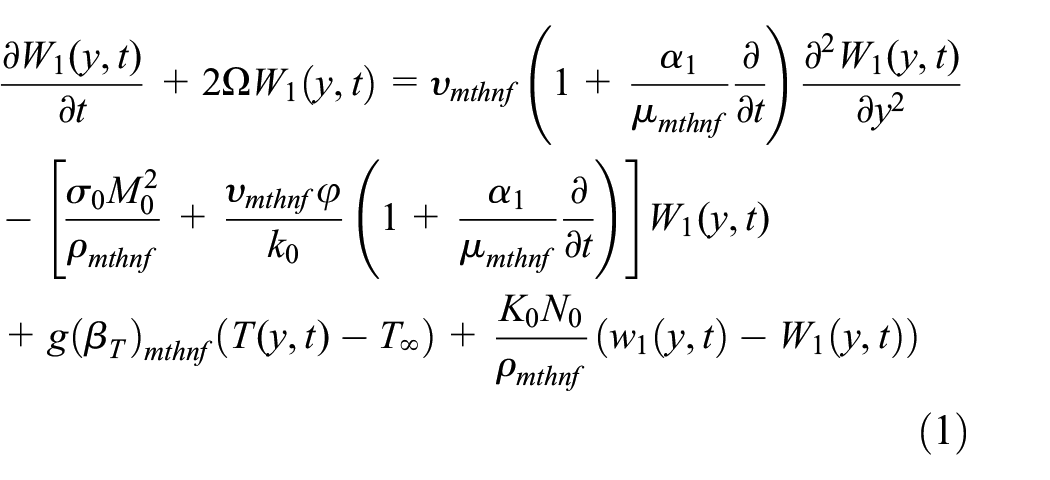
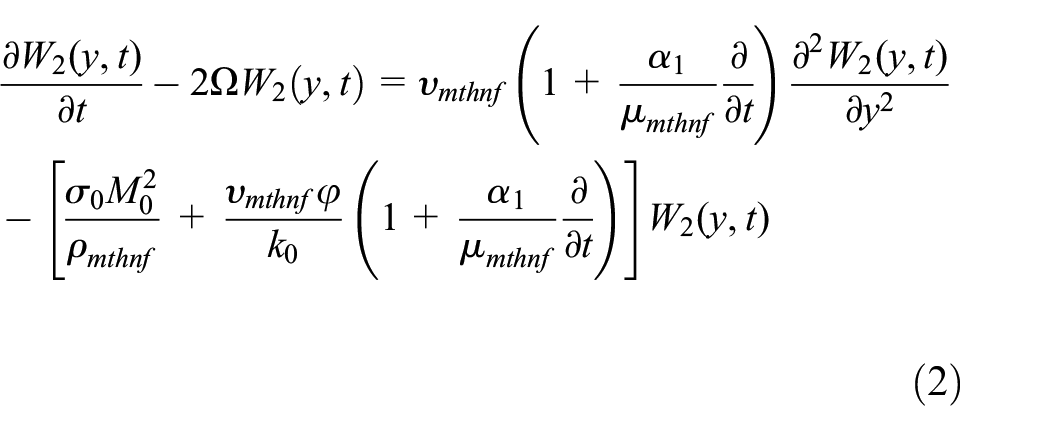



The given fluid Geometry.
The IBC are 33 : pours media






The physical IBC are:


We now introduce the dimensionless variables listed below:

Following are the derivations of the dimensionless version of equations (10)–(17); the * symbol has been removed for simplicity.






Solution of Dust particle momentum equation
This section deal with the solution of the Dust particle momentum equation through Laplace transformation method.

Where,

The Sumudu transform definition has also been modified by Khan et al. 33 and is now available in a new form as follows:

Theorem I
33
: the derivatives with integer order have the following ST if

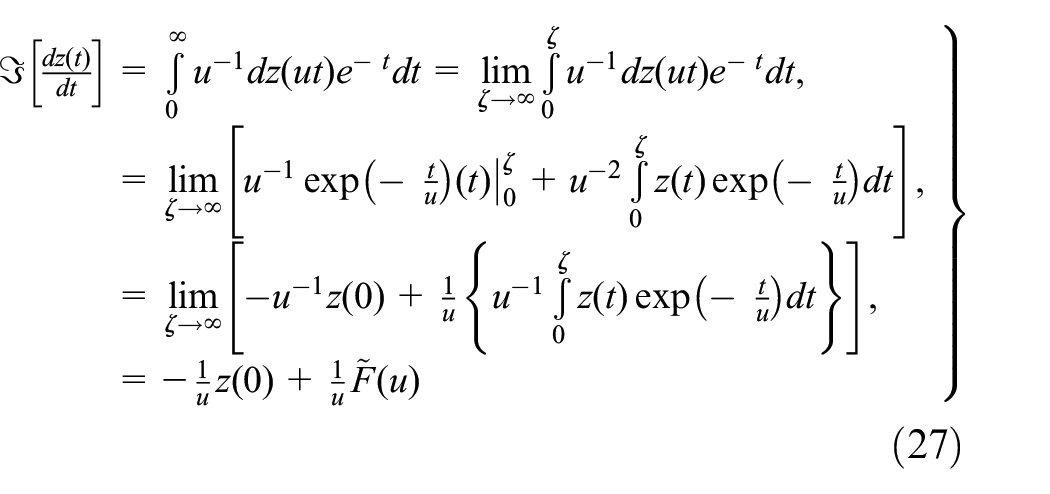
The second order derivative ST for the following may be derived using the same method.

From this theory, we may infer the general formula for Sumudu transformations of any

which accomplishes the proof.
Next, defined for

The LT and ST exhibit a complement connection that may be shown as tracks in light of equation (24).

Here, Dirac functions

The Sumudu transformation may be used to solve differential equations that include several integrals very effectively.
Theorem II
33
: Let A contains

may be acquired, for

Problem solution
The Sumudu transformation approach is used to solve the issue in this part.
Temperature profile solution of via Sumudu transformation (ST)
Theorem III: The ST operator will be defined here

Where



With
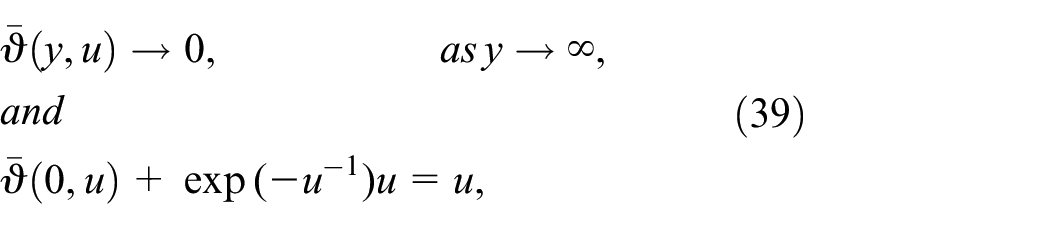
Specifically, the problem is addressed by

the solution after inverse Sumudu transformation

Where


A temperature profile’s precise solution is produced using the Laplace transformation
Theorem IV: The Laplace operator will now be defined

Where
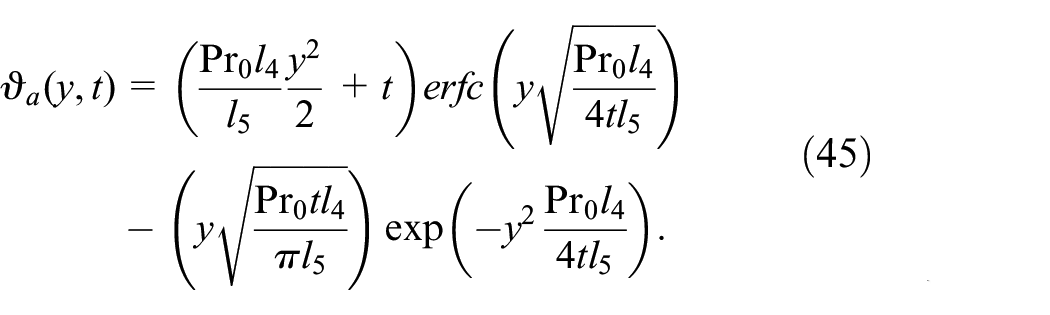
Proof: By applying the LP and the proper BCs, the solution to equation (14) is found.

With

We get

Using the inverse LT, we get equation (48).

Where

Hybrid nanofluid velocity solution
Theorem V: Assume
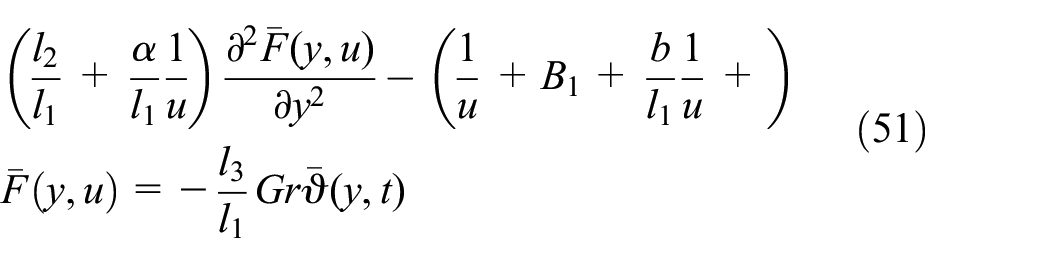
Where,
Typically, a solution may be expressed as

With equations (21)–(23) we get


The following outcomes are achieved when the inverse ST applied is:

Where

We must express the inverse ST in its equivalent form since it is difficult to acquire it in exponential form.


The following outcomes are achieved when the Sumudu inverse transformation is used:


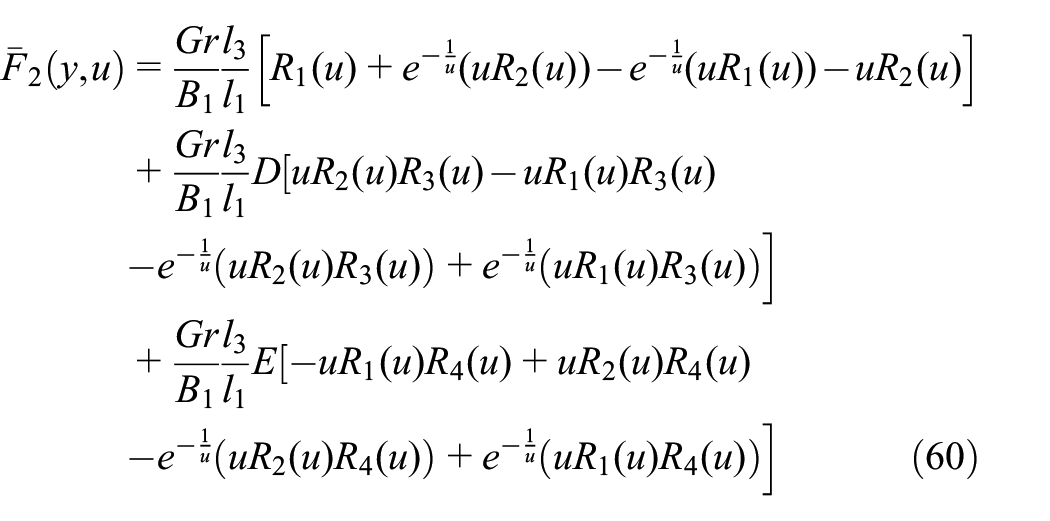
Where

The outcomes of using the Sumudu inverse transformation are as follows:
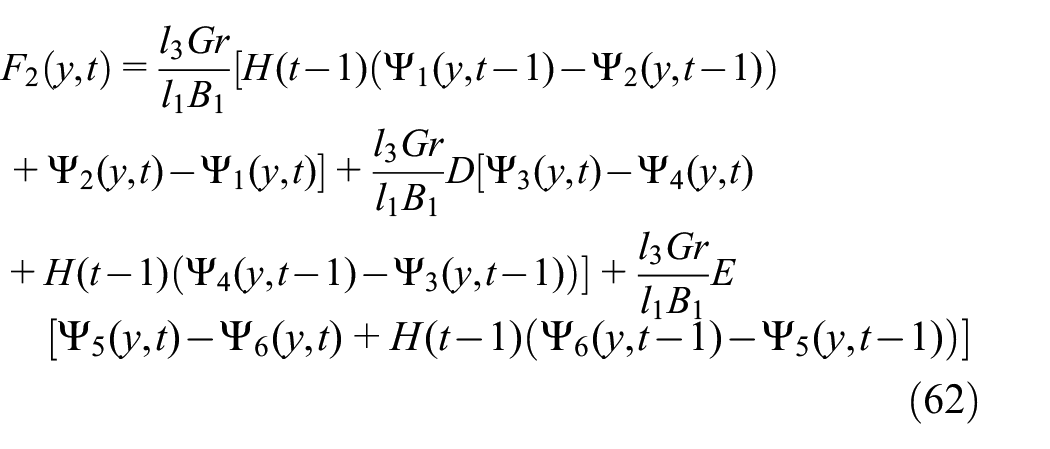
Where

Nusselt number and Skin friction
Mathematically Nusselt number and Skin friction may be expressed as


We utilize Laplace and Sumudu Transforms to solve the problem, leveraging their strengths in handling one-dimensional equations. These transforms offer exact analytical solutions, which are crucial for validating numerical methods and ensuring computational model accuracy. By converting differential equations into algebraic ones, they simplify the management of complex boundary and initial conditions. Their versatility makes them applicable to various fields, including unsteady flows, heat transfer, and magnetohydrodynamics (MHD).
However, these transforms have limitations. They are most effective for linear differential equations, and nonlinear systems may require linearization or approximations, potentially affecting accuracy. The accuracy of solutions depends heavily on the precision of initial and boundary conditions. Additionally, while they effectively simplify one-dimensional problems, their application to multi-dimensional problems can be more complex, requiring additional mathematical manipulation or computational resources.
Results and discussion
The most important objective here is to demonstrate how a variety of novel characteristics modify velocity, temperature, and local Nusselt number profiles in fluids and dust particles. To aid in this endeavor, Figures 2 to 9 have been provided.

Comparison of solution for fluid velocity (a), temperature profile (b) and Dust particle (c).

The influence of time on fluid velocity (a), temperature profile (b) and Dust particle (c).

Effect of porous medium on fluid velocity (a) (c), Dust particle (b), (d) for isothermal and ramped wall temperature.

Effect of magnetic parameter on fluid velocity (a) (c), Dust particle (b), (d) for isothermal and ramped wall temperature.

Effect of rotation parameter on fluid velocity (a) (c), Dust particle (b), (d) for isothermal and ramped wall temperature.
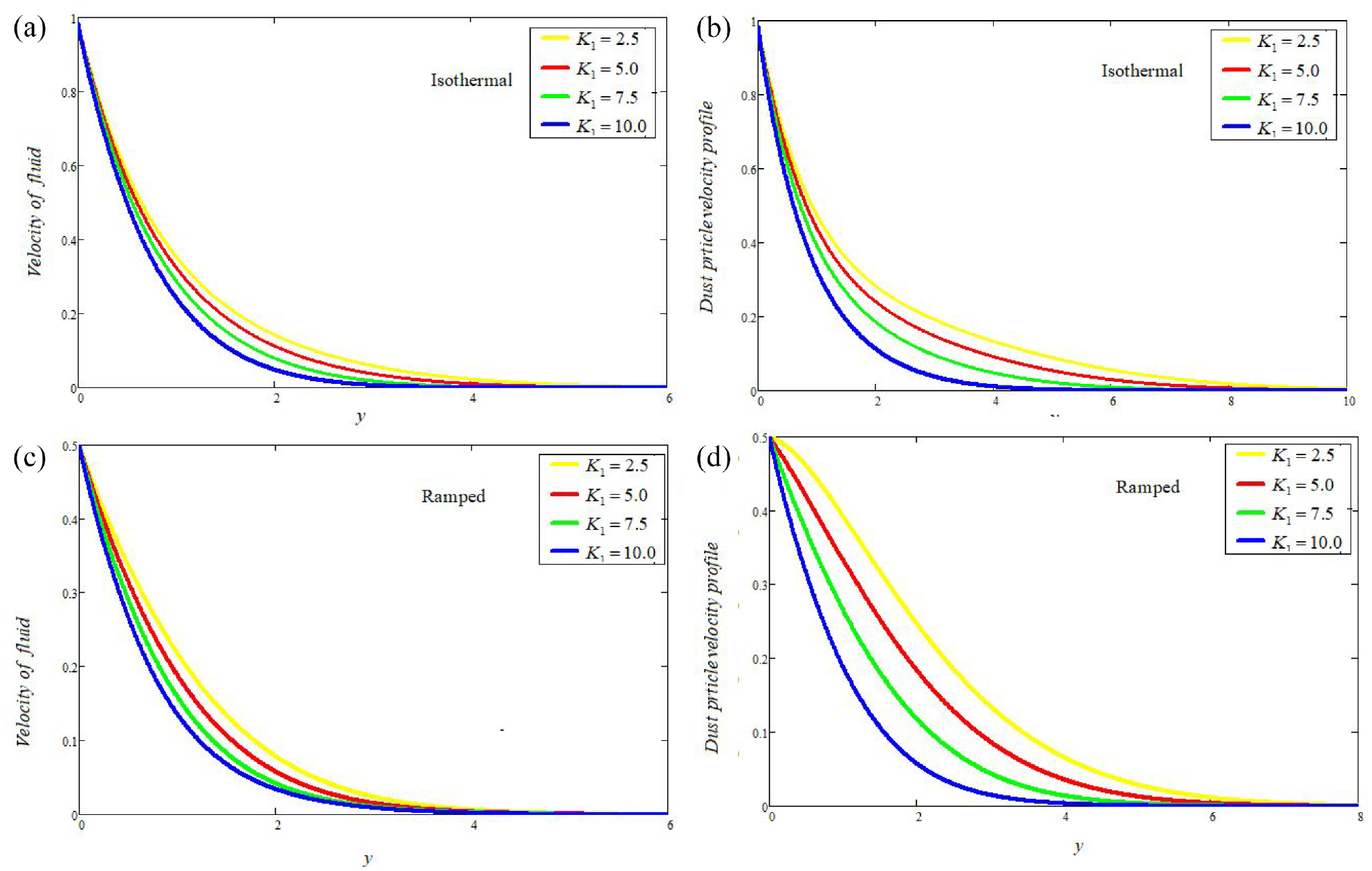
Effect of dusty fluid parameter on fluid velocity (a) (c), Dust particle (b), (d) for isothermal and ramped wall temperature.

Effect of volume fraction on fluid velocity (a) (c), Dust particle (b), (d) temperature profile (e), (f) for isothermal and ramped wall temperature.

Volume fraction of a nanofluid is analyzed using Nusselt numbers.
Figure 2(a) to (c) compares the temperature profile, fluid velocity, and dust velocity under both isothermal and ramping wall temperature conditions using Laplace and Sumudu transformations. Surprisingly, the comparison shows that the two solutions exhibit similar behavior, which demonstrates the reliability and consistency of the analytical methods employed.
The influence of time on the temperature profile and the velocities, encompassing both fluid and dust particles, is illustrated in Figure 3. This figure demonstrates that, as time progresses and the unstable model is considered, there is a noticeable increase in velocity, temperature, and the corresponding boundary layer thickness. These parameters exhibit a growth trend over time, highlighting the dynamic changes within the system under the unstable model conditions.
The porosity parameter (K) has a major impact on fluid and dust particle velocities under both Ramped Wall and Isothermal temperature settings, as shown in Figure 4. An increase in velocities has been noticed, which suggests that the porosity parameter may affect the system. These results provide new avenues for improving the efficiency and effectiveness of porous media systems by shedding light on the relationship between porosity and the velocity of fluids and dust particles in a variety of engineering applications.
Unexpectedly as seen in Figure 5, the profile varies as a function of the magnetic field value (M). The velocities (both fluid and dust particle) drop dramatically as the magnetic field intensity (M) increases. The magnetic field causes a drag-like force in the fluid flow, which explains this behavior. As a result of this force, the velocities (both fluid and dust particle) drop, and its strength increases as M increases. Knowing how a magnetic field influences the velocity of a fluid is critical for magnetohydrodynamics applications and may give important information for optimizing magnetic systems in a variety of engineering and scientific domains.
The fascinating influence of the rotation parameter on fluid and dust particle velocities is shown in Figure 6. We see an intriguing behavior where the velocities of fluid and dust particles tend to flatten out as the rotation parameter rises. The rotating motion introduced into the system is responsible for these fascinating phenomena. The velocity distribution of the fluid and dust particles becomes more even and consistent when the rotation parameter is increased. In order to optimize several engineering processes, including mixing and fluid transportation, it is important to have a firm grasp of how rotation affects the velocities of fluids and particles.
Now investigate a relation of the dusty fluid parameter in this article. The dust particles are spherical. When the Stock’s resistance increases then the dusty fluid parameter is also increases, so by drag force as transparent this effect by
Figure 8 shows the possible effects of nanoparticle volume fraction on fluid and dust particle velocities and temperature curves. Potentially increasing fluid velocity and temperature is the nanoparticle volume fraction parameter. This is because an increase in the velocity profile is caused by an increase in the temperature of the fluid, which in turn is caused by an increase in the kinetic energy of the particles.
Figure 9 shows the heat transfer rate versus the tetra hybrid nanoparticle volume percentage. Because of the increased fluid concentration caused by the greater volume percentage of nanoparticles, the kinetic energy increases, leading to a faster heat transfer rate.
To validate our present solution, the comparison results are illustrated in Figure 10, and it is found that our limiting solutions matched the solution obtained by Khan.
34
By exempting the additional included parameters

Comparison of the present results with existing results.
Table 1: show the mathematical model for tetra hybrid nanofluid.
14
Table 2
Mathematical model for tetra hybrid nanofluid. 14


Physical properties of Glycerin base nanofluid and subjected nanoparticles.

Impact of tetra hybrid nanofluid on Nusselt number and Skin friction.

Description of variables and parameters for graphical results. 35

Conclusion
The purpose of this paper is to offer a novel method for applying the Sumudu transform on a variety of tetra hybrid nanofluids of the second grade in a rotating frame. In cases when the mentioned transform preserves parity, function unity, and other desirable characteristics. The fluid and dust particle velocity profiles obtained using the Laplace transform are compared visually with those obtained using the current solution for ramping wall and isothermal wall temperature. It has been observed that tetra hybrid nanoparticles dispersed in a base fluid have a greater effect in the development of the heat transfer rate than other nanoparticles like tri, hybrid, and nanoparticles in a base fluid. The tetra hybrid nanofluid volume percentage is another factor in the improved heat transmission. The primary findings of this investigation are as follows:
The study introduces a new method for applying Sumudu and Laplace transforms to model the unsteady rotating MHD flow of a second-grade tetra hybrid nanofluid in a porous medium with dust particles.
The research shows that the inclusion of tetra hybrid nanoparticles in a base fluid significantly enhances the heat transfer rate compared to other nanoparticle configurations (e.g. tri-hybrid).
Numerical simulations indicate that both fluid and dust particle velocity profiles, as well as temperature distributions, increase over time when modeled under unstable conditions.
Raising the dusty fluid parameter results in a decrease in the velocity profiles of both the fluid and the dust particles.
The study uses a non-fractional approach with ramping conditions to analyze the behavior of the fluid and dust particles, demonstrating its effectiveness through visual comparisons.
The obtained velocity profiles using Laplace transform are visually compared with current solutions for ramping wall and isothermal wall temperature, showing consistency with theoretical expectations.
These findings have potential implications for various engineering and scientific applications, including industrial fluid dynamics, biomedical engineering, and environmental management.
Footnotes
Appendix
Handling Editor: Dharmendra Tripathi
Author contribution
D.K conceived the idea and modeling, solved the problem, computed the results, and plotted graphs. Discussed the result with physical interpretation and writing.
Declaration of conflicting interests
The author declared no potential conflicts of interest with respect to the research, authorship, and/or publication of this article.
Funding
The author received no financial support for the research, authorship, and/or publication of this article.

Data availability
The database used and analyzed during the current study are available from the corresponding author on reasonable request.