



Abstract
The ability to maintain the microenvironment and life-support systems of an extravehicular spacesuit is an important factor in determining the duration of extravehicular activity (EVA). This paper introduces a joint human-spacesuit microenvironment dynamic model. The paper presents novel simplified human body models and analyzes expendable substances. These models can reasonably predict spacesuit safety performance, correctly respond to changes in loads, and aid in the optimization of the intensity of EVAs. According to the simulations, an 8-h EVA consumes approximately 1 kg of LiOH and 2.7 kg of water under the designed working conditions. Liquid cooling systems are the primary thermal management devices in microenvironments. Activity intensity and liquid cooling system flow rate are two important factors that influence the spacesuit microenvironment and life support material consumption. Activity intensity has a significant impact on LiOH consumption, with a threefold increase in metabolic heat increases LiOH consumption by about 2.5 times. Activity intensity plays an important role in the life-support performance of a spacesuit, and proper scheduling is critical to the efficiency and safety of EVAs. The material consumption model can estimate material consumption during the mission scheduling phase, resulting in efficient and dependable operation of the life support system.
Keywords
Introduction
An extravehicular spacesuit can create a microenvironment suitable for human survival. Humans must wear a spacesuit while exploring space, which is a small spacecraft designed to protect astronauts from various hazardous environments outside the atmosphere and in space.1,2 Spacesuits in the United States and Soviet Union were developed over a longer period of time. 3 The assembly and maintenance of the International Space Station (ISS) relies heavily on extravehicular activities (EVAs). Currently, the ISS crew uses two extravehicular spacesuits. The Advanced EMU, the next generation of spacesuit systems that is more adaptable and durable than the Space Shuttle/ISS EMU, is still under development.4,5
In recent years, China has also begun to accelerate the development of its spacesuits. The Feitian extravehicular spacesuit was independently developed by China. It has been used on the Shenzhou crewed spaceflight missions and can be used for 7 h of missions.1,6 In 2021, China completed a Space Station exit mission using a new generation of the Feitian extravehicular spacesuit. The Space Station extravehicular spacesuit has a longer service life, higher safety and reliability, and better mobility and flexibility than the first generation.
Spacesuits are intended to protect astronauts and ensure the success of their missions. This work is not only time-consuming, but also requires a high level of operational skill and safety. 7 Countries have been working to improve their space exploration capabilities and spacesuit performance. However, putting too much emphasis on technology and functionality while ignoring user needs can lead to a lot of problems and a lower quality of life. 6 According to historical data, failures in life support systems during space missions are the most likely cause of death. Therefore, it is very important for people to live normally under the protection of spacesuits. 8 In the design process of spacesuits, human-centered design requirements are considered. Meanwhile, human modeling technology is gradually changing the design method of spacesuits. 9 Wang et al. 10 have developed a biomechanical model to simulate the interaction of the spacesuit with the arm. The most comfortable region for arm movement was predicted and spacesuit comfort was assessed. Longzhu and Yuan 11 studied the effect of hand temperature on spacesuit gloves. Ergonomic criteria for the working temperature of gloves were obtained, which have practical implications for the design of spacesuits. The incorporation of human factors into aerospace engineering systems allows the performance of spacesuits to be evaluated and facilitates optimization in the future. 12 In addition, research on thermal comfort is also important. Zhang et al. 13 discovered that the dynamic change of metabolic rate is an important anthropogenic factor that influences thermal regulation. Zhao et al. 14 investigated the negative impacts of high temperature and humidity in coal mines on the physical and mental health of miners, and established a thermal comfort model and evaluation indexes. The study of thermal comfort for indoor occasions can provide ideas for structural optimization and energy savings, and the situations that are frequently studied include gymnasiums, classrooms, general indoor, and automobiles.15–18
EVAs have numerous critical factors that pose a significant risk to operators. 19 The study of the microenvironment and life support capabilities within spacesuits is critical for personnel safety efforts, and their modeling varies in complexity and safe design. Modeling the environment within a spacesuit is relatively simple and focuses primarily on astronaut comfort. In contrast, the portable life support system is made up of several subsystems that not only meet the physiological needs of the astronauts but also ensure the safe operation of various equipment. In addition, the modeling of the environment inside the spacesuit needs to take safety into account, whereas the portable life support system has a redundant design, so that even if a component fails, it will not pose an immediate threat to life safety.
Performing spacesuit thermal design analyses can ensure that components operate reliably within acceptable limits. Among them, human modeling is a comprehensive process that has a significant impact on aerospace system design and engineering decisions. Li et al. 20 developed a thermal model of spacesuits and analyzed the influence of the human body and environment on the thermal control system. Studies on human emotions and productivity in various work environments have found that thermal discomfort caused by high or low temperatures has a negative impact on employee productivity. 21 Yang et al. 22 combined a human thermoregulatory model with a clothing model to predict core and skin temperatures. The physiological responses of the human body were further predicted to assess thermal comfort and heat stress.
The study of the environment in which humans conduct space exploration is still in its infancy. With the advancement of space technology, spacesuit design has become increasingly human-centered, with a focus on mission rationalization. 23 To ensure the safety, health, and comfort of astronauts, it is necessary to study the temperature control, gas management, radiation protection, and other functions in spacesuits to ensure that they can provide comprehensive protection. This paper presents a joint human-spacesuit microenvironment dynamic model capable of simulating astronaut thermal comfort and spacesuit safety during EVAs. The analysis of expendable materials aids in predicting the spacesuit’s support capability, thereby facilitating resource dispatch and mission scheduling. The simplified human body model reduces the complexity of modeling, concentrates on the core parts of the human body and is easier to analyze. The simple structure of the simplified model reduces computational costs, shortens problem-solving time, and makes it easier to analyze the key factors affecting the results. Integrated modeling of the human and spacesuit is a useful tool for determining their thermal load and comfort. The simulation of the physiological state of the human body and the performance indicators of spacesuits can be used to improve the design of thermal protection systems for spacesuits and the intensity of EVAs, to maintain thermal control within the spacesuit system and the safety of astronauts.
Conception and technical approach
Microenvironment system for extravehicular spacesuit
Extravehicular spacesuits create a microenvironment for humans that is comparable to the atmosphere and conducive to survival. The microenvironment consists of constant internal pressure, appropriate temperature, humidity, oxygen concentration, and the ability to dispose of metabolic waste. Figure 1 illustrates the energy and material exchange within the spacesuit microenvironment.

Human-spacesuit microenvironment system: (a) the relationship between energy and material exchange in the microenvironment, (b) heat flow diagram, and (c) material flow diagram.
The material exchange in the microenvironment mainly consists of providing oxygen and removing carbon dioxide. Energy exchange includes heat exchange between the human body and the microenvironment. At the same time, the liquid cooling garment removes excess heat from the body and completes the heat dissipation with the water sublimator. In Figure 1, Q1 represents heat transfer inside the human body. Q2 refers to the heat exchange between the human body and the microenvironment. Q3 is the heat transfer inside the spacesuit. Q4 is the radiation heat dissipation of the spacesuit.
Heat and gas from human activities enter the spacesuit. The spacesuit takes away the excess heat of people, shields the external heat flux outside the body, controls gas leakage, and maintains the pressure to protect the body. During use, the spacesuit’s pressure will decrease slightly. This micro-leakage is not usually caused by damage, but by gas permeation through the intact material. This phenomenon is also observed in tires, balloons, and protective clothing. The pressure loss is minimal, but it is unavoidable due to gas diffusion and permeation. The transport of gases through polymeric materials is typically described as a solution diffusion mechanism. The mathematical theory of diffusion is based on Fick’s first law. This law states that the permeate rate of gas is proportional to the concentration gradient. In the spacesuit, the gas diffuses through the airtight confinement layer along the concentration gradient.20,24
Portable life support system for extravehicular spacesuit
The portable life support system in the spacesuit can provide oxygen for astronauts to breathe, remove carbon dioxide, and control temperature. The system mainly includes the oxygen cylinder, pressure regulator, water sublimator, and gas purification assembly.
Take Feitian extravehicular spacesuit as an example, there are three main consumables in the portable life support system: oxygen, LiOH, and water. Oxygen is stored in tanks, and the oxygen subsystem provides oxygen to the spacesuit according to the requirements of supplementing respiratory oxygen consumption and clothing leakage. During the short-term EVAs, carbon dioxide produced by the astronauts can be removed by a chemical reaction with LiOH, which is stored in the carbon dioxide removal cassette. The water sublimator is a phase change heat sink that serves as a cooling source in portable life support systems. The fluid in the liquid cooling suit absorbs the heat dissipated by the astronauts and flows into the water sublimator, where it is exposed to a vacuum and undergoes sublimation, which absorbs a large amount of heat. The water vapor eventually removes the heat load in the form of latent heat of sublimation, which is then exhausted into outer space via the sublimator’s interface.25,26
During the EVA, the portable life support system and spacesuit can be used together to ensure about 8 h of EVA. Confirming the status of the consumables is one of the key factors to determine whether the extravehicular spacesuit can provide good life support for the astronauts.
Extravehicular spacesuit life support performance research path
The life support performance of an extravehicular spacesuit can be judged by the state of the internal microenvironment. Both the astronaut and the spacesuit affect the microenvironment and need to be simulated together. In this study, the human body and the spacesuit are modeled separately in layers.
Modeling ideas for human body layering details and thermoregulation
As an organism, the human body has a complex structure and regulation mechanism, which makes modeling difficult. In this paper, a simplified model of the human body is proposed, which consists of two layers and seven nodes, as shown in Figure 2. The human thermal model is divided into two layers: internal organ tissue and surface tissue. In the process of establishing the surface tissue model, the body is divided into six segments: head, trunk, arms, and legs. Each segment is simplified as a cylinder. The above entire human thermoregulatory model has seven nodes.
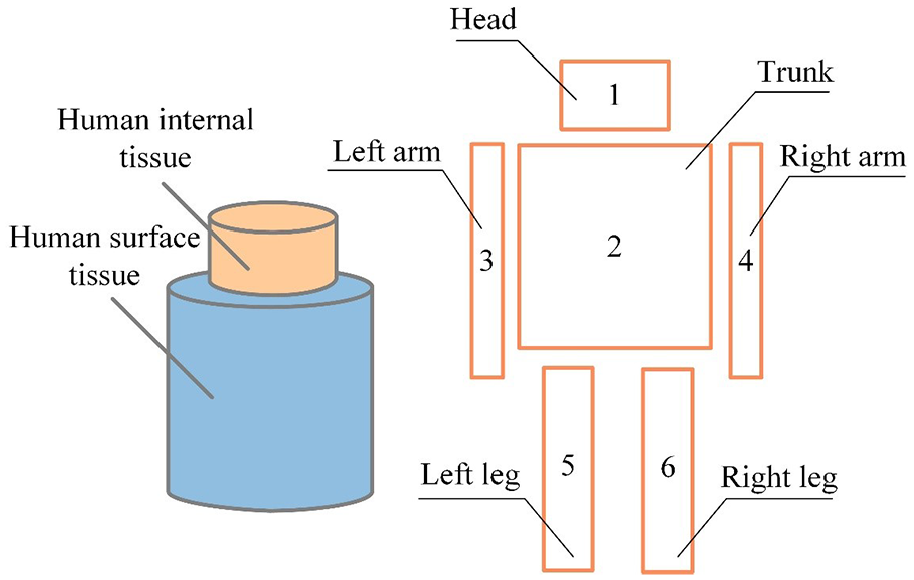
Human body structure division model.
Human thermoregulation maintains the body’s core temperature in a range suitable for survival. Human thermoregulation is an automatic control system, with internal temperature and surface temperature being the most important inputs. Human body temperature fluctuates slightly under the influence of changes in activity level and external ambient temperature. The thermoregulatory mechanism is equivalent to a negative feedback control system that maintains the body’s internal temperature at an appropriate value. The body surface temperature is highly influenced by the environment, so the body surface temperature is added to the temperature control system as a feedforward signal. As shown in Figure 3, the modeling basis of the thermoregulation system is described.

Schematic diagram of human body temperature regulation.
Modeling ideas for extravehicular spacesuit layering details and pressure
The extravehicular spacesuit is a small manned spacecraft modeled into two layers, the spacesuit inner layer, and the spacesuit outer layer, as shown in Figure 4. The inner layer of the spacesuit maintains comfortable survival conditions within the microenvironment, which includes the airtight containment layer, the ventilation liquid cooling garment, and the underwear comfort layer. The outer layer of the spacesuit can reduce the radiation and micrometeorites in cosmic space from causing harm to the human body, including the cover protective layer and the thermal insulation layer. 27

Schematic diagram of human-spacesuit layering.
Dynamic model
Extravehicular spacesuit microenvironment system model
Inner layer of spacesuit
The ventilation liquid cooling garment regulates the temperature inside the spacesuit. The inner temperature of the spacesuit is mainly influenced by the liquid cooling system, the human body, and the outer layer, as described in the thermodynamic model below.
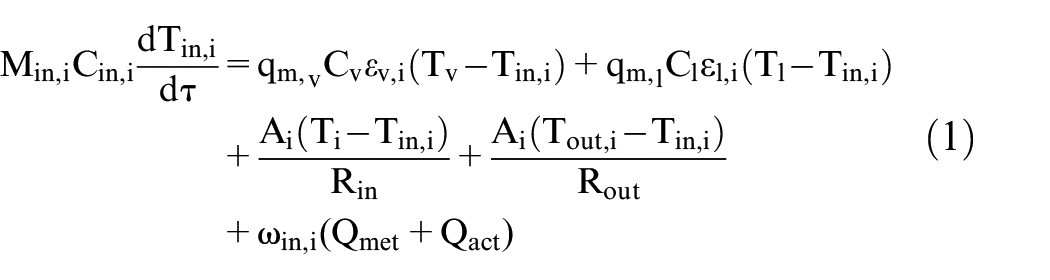

where M, C, T, and qm are mass, specific heat capacity, temperature, and mass flow, A, R, ε, and ω are heat transfer area, thermal resistance, heat transfer efficiency, and metabolic impact factor. The heat transfer efficiency is the ratio of the actual heat transfer to the theoretical maximum possible heat transfer and the value of 0.75 was taken in the study. The metabolic impact factor is the ratio of the heat dissipation from the internal heat production of the body to the skin and the environment to the total heat dissipation, and the values obtained for the various parts are shown in Table 1. Qmet and Qact represent human metabolic heat and the heat generated by the thermoregulation system, and the calculation method will be given later. The subscripts in, out, v, and l in the equation represent the inner layer, outer layer, ventilation system, and liquid cooling system of the spacesuit, respectively. The values of i in the formula range from 1 to 6, representing each of the six segments of the human body. Tin,ave is the average temperature of the inner layer of the spacesuit, which is calculated by the inner layer temperature of different segments.
Initial value setting for human characteristics parameters.

Outer layer of spacesuit
The outer layer of the spacesuit is influenced by the inner layer and the environment. Based on the conservation of energy, the thermodynamic model is established as:

where Qex is the external heat flux. σ is the Stefan-Boltzmann constant with a value of about 5.67 × 10⁻⁸ W/m2 K4. ε is the radiance.
Spacesuit internal pressure
Permeability is related to temperature. The relationship between the permeant rate and temperature follows the Arrhenius equation:

The pressure inside the spacesuit is modeled as28,29:


where k0 is the preexponential factor. ΔE0 is the diffusion activation energy. R is the molar gas constant and the value is 8.314 J/mol K. δ is the thickness of the spacesuit. Rl,i is the leakage flow resistance. Pt is the spacesuit pressure. Rg is the gas constant. V is the volume of the spacesuit. qm,O2 is the oxygen supply flow, set at 7 L/min. qm,breathe is the net flow of respiration.
Human thermoregulatory simplified model
Internal tissue of the human body
Human internal tissue temperature is affected by human heat generation and heat exchange with surface tissue. According to the conservation of energy, the thermodynamic model of internal tissue is established as follows:

where Rhum is the thermal resistance between the internal and surface tissues of the body. The subscripts 0 and b in the equation represent the internal part of the body and the blood, respectively.
Surface tissue of the human body
Human surface tissue temperature is affected by its own heat generation and microenvironment. The thermal balance of the human surface temperature of each segment can be described by the following general formula:


where Tave is the average body surface temperature, which is calculated by the body surface temperature of different segments. 30
Temperature regulation of the human body
Body temperature regulation is simulated by a closed-loop control system. The difference between the body temperature and the regulated temperature is used as an input to obtain the heat generated by the thermoregulation system through the controller. And the body surface temperature is added as a feedforward signal to the temperature control system to further influence the body’s internal temperature.



where Tset refers to the setpoint temperature. Kp,0 and Ki,0 are the proportionality and integration coefficients of the negative feedback link, with values of 5 and 1.5, respectively. Kp,i is the proportionality coefficient of the feedforward link, which has a value of 1. E(k) is the difference between the temperature and the setpoint temperature.
Material exchange during respiration
Astronauts inhale pure oxygen in the spacesuit. The exhaled gas includes carbon dioxide, which is subsequently removed. The net flow of respiration is the difference between exhaled and inhaled flow. The formula is calculated as follows. After Tandon and Campbell, 31 the inspiratory volume of the body is greater than the expiratory volume. The net flow of respiration was set to 6 L/min. The amount of carbon dioxide exhaled by the human body correlates with the human heat load. The specific relationship is shown below:


where qm,inh is the inspiratory flow. qm,exh is the expiratory flow. qm,CO2 is the amount of carbon dioxide exhaled by human. 32
Life support material consumption model
Consumption of oxygen
The oxygen cylinder stores the oxygen needed by the astronauts for their work. The model of the pressure inside the oxygen cylinder is described by the following equation.

where PO2,tank is the oxygen cylinder pressure. TO2 is the oxygen temperature in the cylinder. VO2,tank is the volume of the oxygen cylinder. ρ is the density of oxygen.
Consumption of LiOH
LiOH is used in spacesuits to remove carbon dioxide. The mass ratio of LiOH absorbing carbon dioxide is 1.35 to 1. With the accumulation of carbon dioxide exhaled by the human body, a model describing the consumption of LiOH is as follows:

where MLiOH is the consumption of LiOH. μ is the conversion factor. In operation, 1 kg of LiOH absorbs 0.75 kg of carbon dioxide, so μ takes the value of 0.75.
Consumption of water
The sublimator utilizes water as the consumable medium. The consumption of water during heat dissipation from the spacesuit is described by the following formula:

where MH2O is the amount of water consumed. γsub is the latent heat of sublimation of water, which is 2871.66 kJ/kg. 33
Simulation and characteristic parameters setting
To simplify the analysis of the problem, the above modeling assumes that the gas inside the extravehicular spacesuit is an ideal gas. The simplifications and assumptions of the model introduce limitations in applications, such as being applicable only to low-Earth orbit space missions and not directly usable for lunar or Martian spacesuits, as well as being applicable only to traditional multilayer spacesuit structures.
The simulation procedure was programmed using Visual Studio 2019 software and C. The differential equations were solved using the Runge-Kutta method and the results were collated through Origin software. Figure 5 illustrates the computational flowchart, where the dynamic operations of the thermodynamic model are performed with energy conservation as the convergence criterion. Some parameters used in the simulation process were set about the relevant literature. The initial settings of the parameters concerning the human body used during the simulation are shown in Table 1.32,34,35 The initial values for the characteristics parameters of the spacesuit are listed in Table 2. 36

Computational flowchart.
Initial value setting for spacesuit characteristics parameters.

The initial values for some other important parameters are set in Table 3.33,37
Initial value setting of other parameters.

EVAs, which typically last 6–8 h, are intended to make the best use of available time while also ensuring astronaut safety. In this paper, a duration of 8 h has been chosen for the simulation, which allows for an adequate study of the various phases of EVA.
Result and discussion
Spacesuit microenvironment steady-state simulation analysis
Firstly, the design working condition of the model was simulated and the steady-state analysis of the system characteristic parameters was performed. It is assumed that the metabolic heat of the human body is set to be maintained at 300 W, and the external heat flux received by the spacesuit is set at 600 W/m2, which is estimated according to the space radiation and absorption rate.
The average temperature of each node in the system model under design conditions is shown in Figure 5. The outer layer of the spacesuit has the highest temperature due to the direct reception of the heat flux from outside space. The inner layer of the spacesuit has the lowest temperature due to the normal operation of the ventilation liquid cooling system, which is maintained near 296 K, a very comfortable temperature for humans. The human body maintains a temperature below 310 K, which is the normal body temperature range. The thermodynamic model of the microenvironment system can steadily simulate the temperature conditions of the human body and the spacesuit to judge safety and comfort. The simulation result of the pressure inside the spacesuit for the design condition is 38.48 kPa, and the permeability of each section of the spacesuit is shown in Figure 6. Because of the difference in thickness, the gas permeability in the aerospace helmet section is much greater than in other parts.

Average temperature of the steady state condition.
The temperature of the working fluid increases after the ventilation liquid cooling system absorbs heat from the microenvironment of the spacesuit, and the exit temperature is represented in Figure 7. The temperature difference between the fluid inlet and outlet of the ventilation system is about 6 K, which is greater than that of the liquid cooling system. However, the liquid cooling system is the main cooling method in the microenvironment and takes away much more heat than the ventilation system. Figure 8 shows the consumption of life support materials. After 8 h of EVA, the life support system consumes approximately 1 kg of LiOH and 2.7 kg of water. An oxygen tank with an initial pressure of 25 MPa can support an EVA for more than 8 h, as shown in Figure 9.

Gas permeability of the steady state condition.

Ventilation liquid cooling system fluid temperature in steady state condition.

Life support material consumption in steady state condition.
The model was validated based on steady state simulation, by experimental and theoretical validation with Campbell et al., 38 Wilson and Lawson, 39 and Levander and Grodzinsky. 40 The simulation result for human body surface temperature at the ambient temperature of 23°C is 308.86 K, which differs by 0.14–1.14 K from the theoretical situation. The temperature of the liquid cooling suit in the case of 300 W metabolic heat of the human body is 296.68 K, while the simulation result of the liquid cooling suit temperature in the case of 275 W metabolic heat is 296.57 K in the reference, and the data provided by NASA is 296.67 K, with an error of 0.01–0.11 K. The water consumption of the space shuttle EMU during 6–8 h of EVA is 2.7–3.6 kg, with an error of 0–0.9 kg when compared to the simulation data. The above results have a small error compared with the results obtained in the references, and the model can be verified to have definite reliability (Table 4).

Spacesuit microenvironment dynamic simulation analysis
Effect of task intensity on the microenvironment
Activity intensity is the amount of work done per unit of time, and the astronaut plans the task before each EVA. High-intensity tasks increase body exertion and generate more heat, so activity intensity can be expressed through human metabolic heat. Activity intensity has an impact on maintaining a good microenvironment, and the study allows for a more rational task scheduling.
The metabolic heat was set to 200 W in the early stage and then increased to 400 and 600 W in sequence, representing a phased increase in work intensity. Perform 8 h of EVA simulation, the temperature of the human body is shown in Figure 10. The internal temperature of the human body increases rapidly after the metabolic heat change and then slowly equilibrates over time at about 310 K under the effect of the thermoregulatory system. The surface temperature of the human body varies greatly, and unlike the internal temperature, it will stabilize at a new temperature, as shown in Figure 11. The surface temperature of different segments is also very different. The head and trunk are near the core organs of the body and have a higher temperature. The temperature of the extremities is lower. The response time was shorter for head and trunk surface temperatures and longer for extremity surface temperatures. The temperature behind the ear of the head is an important parameter to determine the state of the person. The normal ear temperature fluctuates between 308.8 and 311 K. 40 The head temperature in the simulation results was between 308.8 and 310 K, which was always in the normal range. The results showed that the range of body temperature variation was between 307 and 311 K, which remained at normal level.

Step change in human metabolic heat.
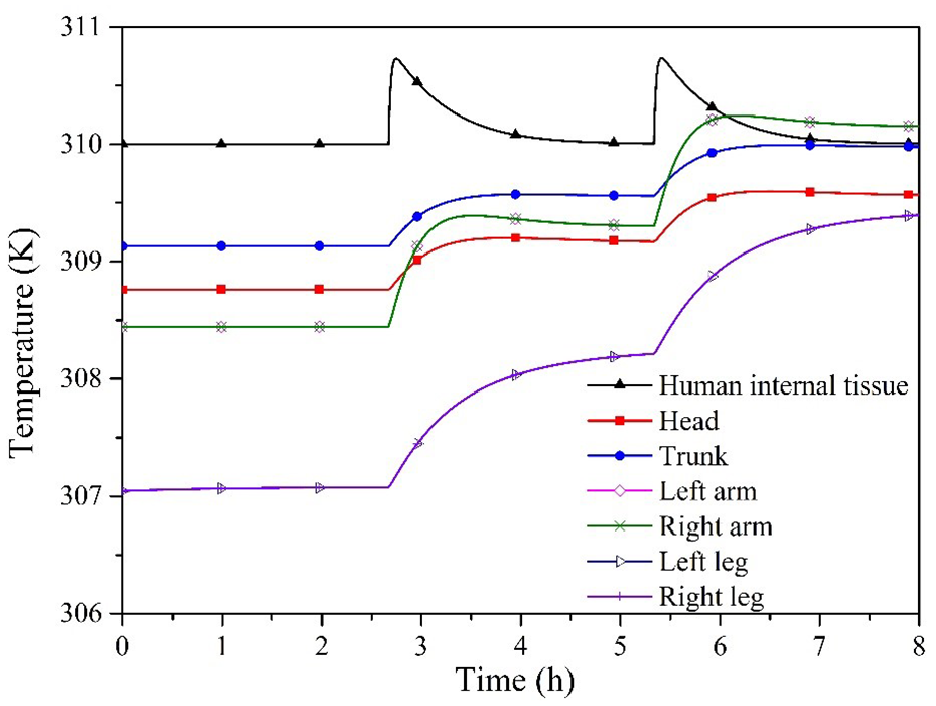
Human body temperature influenced by metabolic heat.
The inner layer temperature of the spacesuit is re-eq18 to a new temperature after being affected by metabolic heat, with the highest temperature in the helmet part and the lowest in the legs, as shown in Figure 12. The inner layer temperature increases with metabolic heat and varies overall between 291 and 301 K, meeting the normal temperature range within the spacesuit. The outer layer temperature of the spacesuit varies between 316.5 and 319.5 K and is less affected.

Spacesuit inner layer temperature influenced by metabolic heat.
The microenvironment temperature inside the spacesuit increases with metabolic heat and the diffusion activity of the gas becomes more intense. The increase in gas permeability leads to a decrease in the pressure inside the spacesuit, as shown in Figure 13. Figure 14 illustrates the average temperature and pressure within the microenvironment at different metabolic heats. The microenvironment temperature increases, the ventilation liquid cooling system absorbs more heat and the working fluid outlet temperature increases.

Spacesuit outer layer temperature influenced by metabolic heat.

Temperature and pressure inside the spacesuit influenced by metabolic heat.
Effect of external heat flux on the microenvironment
The various sources of space radiation heat that reach the outer surface of the spacecraft during operation is the external heat flux. The external heat flux has a significant impact on the spacecraft, so the spacesuits use materials with high reflectivity and low absorbance as the external surfaces. During an EVA, there are alternating sunlit areas and shaded areas, and the external heat flux reaching the surface of the spacesuit varies with time. The sunlit area and shaded area with a variation period of about 90 min, and the external heat flux in the sunlit area is greater than that in the shaded area.
The external heat flux received by the spacesuit varies periodically. The periodic variation of the external heat flux was simulated using a sine wave with a period of 90 min, as shown in Figure 15. Assuming that the astronauts spend the same amount of time in the sunlit area and shaded area, the external heat flux varies between 600 and 700 W/m2.

Ventilation liquid cooling system outlet temperature influenced by metabolic heat.
Astronauts are minimally affected by the external heat flux, as shown in Figure 16. The internal temperature of the body is maintained at 310 K under the change of external heat flux, indicating that the thermoregulatory system is working properly. The temperatures of the head, trunk, arms, and legs are stabilized at 309.3, 309.6, 309.2, and 308.1 K, respectively.

Periodically varying external heat flux.
The spacesuit temperature shows periodic changes under the influence of external heat flux. Figure 17 shows that the inner layer temperature of the spacesuit increases with the external heat flux and fluctuates slightly within 1 K, and overall varied between 293 and 301 K, which is always in the comfortable range. Figure 18 represents the temperature change in the spacesuit outer layer, which varied sinusoidally between 318 and 328 K, following the trend of the external heat flux with a lag. The spacesuit has a larger trunk area and is more affected by external heat flux, so it has the largest range of temperature variation.

Human body temperature influenced by external heat flux.

Spacesuit inner layer temperature influenced by external heat flux.
Figure 19 shows that the outer layer temperature of the spacesuit is significantly influenced by the external heat flux, which is much higher than the internal microenvironment and human body temperature. Under the influence of external heat flux, the peak temperature of the spacesuit outer layer is less than 330 K, which is far below the maximum temperature resistance standard of 423 K for spacesuits. Compared to the outer layer temperature, the inner layer and human body temperature are minimally affected by the external heat flux and smoothly maintained in a small range of temperatures. The microenvironment temperature variation is small, so the heat dissipation of the ventilation liquid cooling system is less variable. As shown in Figure 20, the system outlet fluid temperature fluctuated slightly at approximately 286 and 292.5 K, respectively. The spacesuit pressure also changes significantly periodically with a lag under the influence of the external heat flux. The pressure decreases with increasing external heat flux and varies between 33 and 37 kPa.
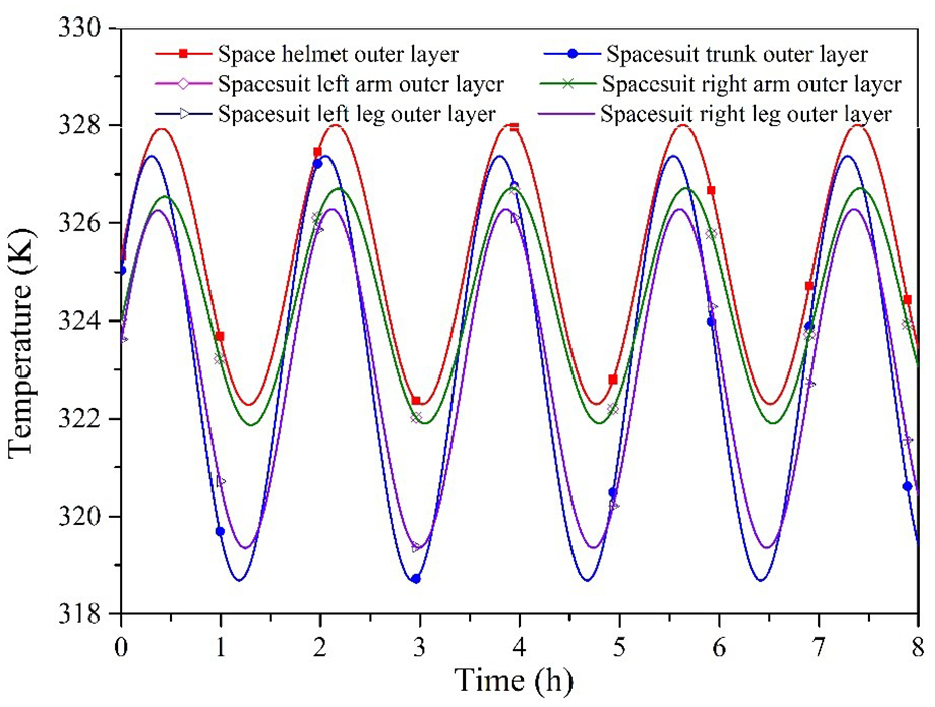
Spacesuit outer layer temperature influenced by external heat flux.

Temperature and pressure inside the spacesuit influenced by external heat flux.
Effect of ventilation liquid cooling system flow on the microenvironment
The ventilation and liquid cooling system flow is one of the important factors affecting the microenvironment. Especially, the liquid cooling system is the main way to dissipate heat within the microenvironment, and has a key impact on the life support performance of spacesuits. The effects of ventilation flow and liquid cooling flow on the thermal environment are analyzed separately below.
The ventilation flow was set to 190 L/min in the early stage, and after the system was stabilized, the flow was reduced by 20% and set to 150 L/min. Figure 21 shows the temperature difference before and after the flow change, comparing the human body and the spacesuit in different sections. The human surface and the spacesuit outer layer temperature are almost unaffected, and the maximum temperature difference is within 0.1 K. The temperature of the spacesuit inner layer is affected by the ventilation flow, with the temperature inside the helmet being the most significantly affected, and it increased by approximately 0.8 K after the ventilation flow was reduced by 20%.
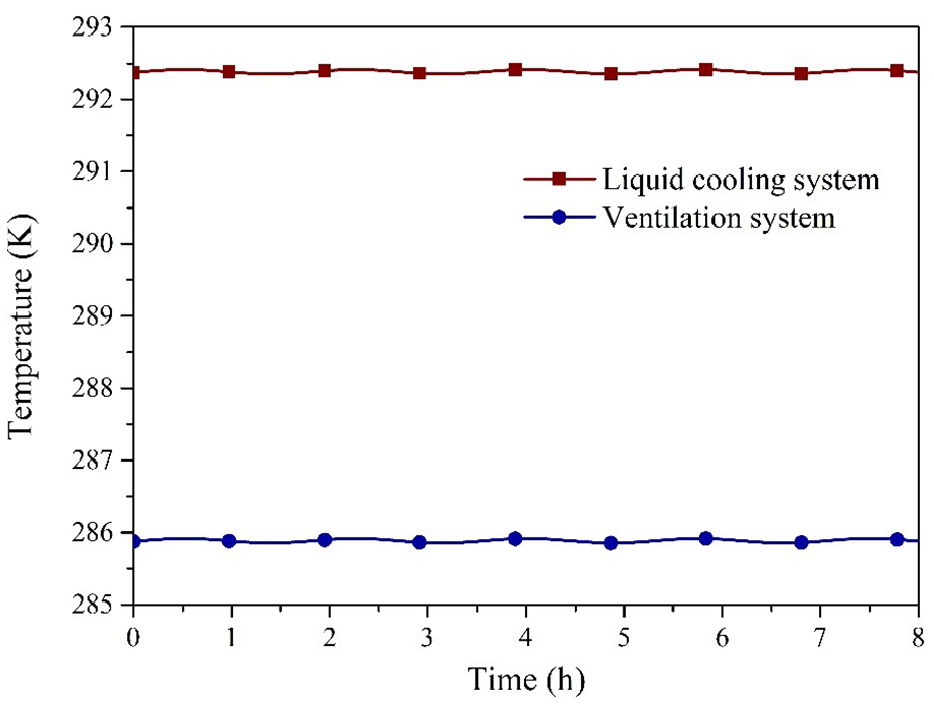
Ventilation liquid cooling system outlet temperature influenced by external heat flux.
Figure 22 shows the average temperature and change of each layer. The internal temperature of the human body is maintained at 310 K. The average temperature of the body surface and the spacesuit outer layer are approximately 308.5 and 318 K, respectively, and their temperature changes are within 0.05 K. The average temperature difference between the spacesuit inner layer is less than 0.4 K when the ventilation flow is changed, which shows that the ventilation flow has a limited effect on the thermal situation of the microenvironment. The more important role of the ventilation system is to provide oxygen and take away exhaust gases.
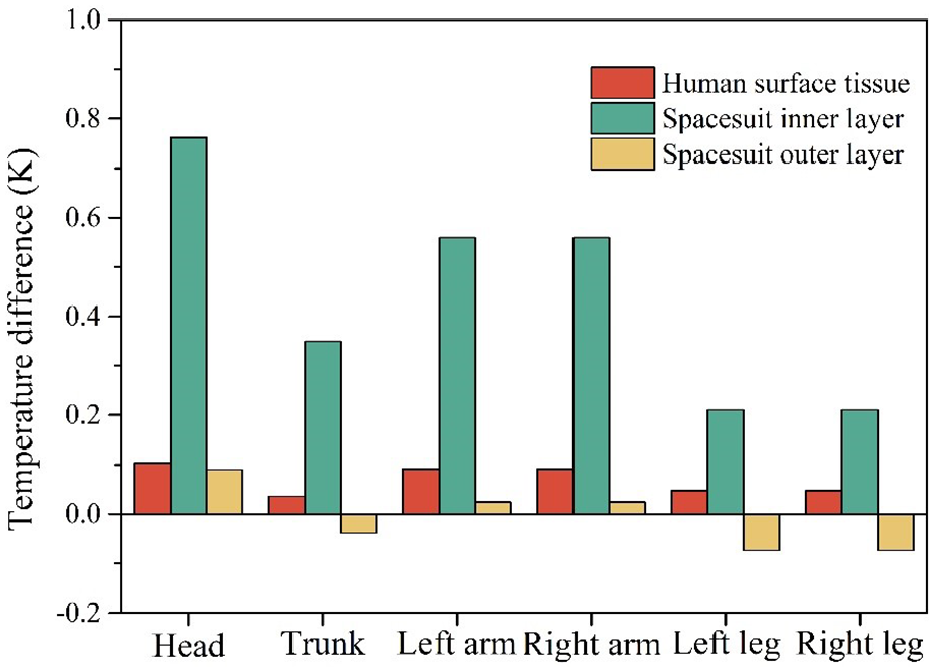
Temperature difference influenced by ventilation flow.
The liquid cooling flow was set to 1.83 L/min in the early stage, and after the system was stabilized, the flow was reduced by 20% and set to 1.46 L/min. With the same 20% reduction in flow, the effect of liquid cooling flow on the temperature inside the microenvironment is more obvious than the ventilation flow. As shown in Figure 23, the temperature change of the human surface and the spacesuit outer layer is within 0.5 K. The effect of the liquid cooling system flow on the spacesuit inner layer temperature is very obvious. After the flow is reduced, the temperature inside the helmet increases by about 2.8 K, and the minimal temperature increase in the legs reached 1.5 K.

Average temperature influenced by ventilation flow.
Figure 24 shows the temperature change after varying the liquid cooling flow. The temperature inside the human body also remained at 310 K. The average temperature of the body surface changed slightly by 0.3 K. The average temperature change of the spacesuit outer layer is smaller, less than 0.2 K. The average temperature change of the spacesuit inner layer is about 2 K. The overall temperature change is much higher than that of the ventilation flow change, which shows that the liquid cooling system has an important influence on the thermal situation of the microenvironment. Liquid cooling is the main way to take away heat from the microenvironment, and the effective thermal management of the microenvironment can be carried out by adjusting the liquid cooling flow.
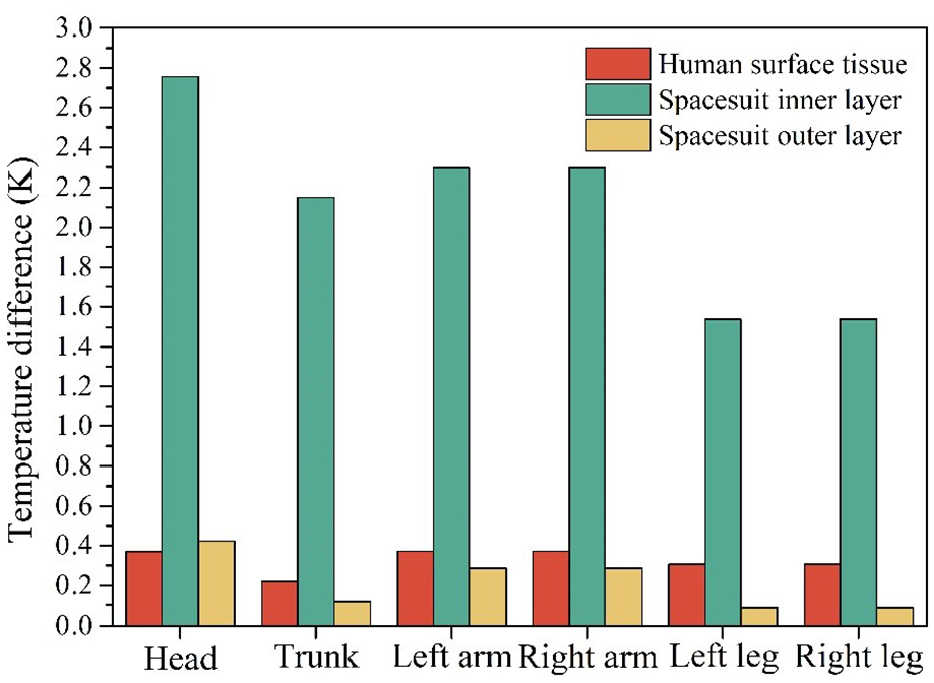
Temperature difference influenced by the liquid cooling flow.
Life support system dynamic simulation analysis
Figure 25 shows the consumption of life support materials during an EVA under the condition of gradually increasing work intensity. An EVA consumes about 1.8 kg LiOH, 2.3 kg of water, and enough oxygen to support a mission for more than 8 h. Figure 26 compares the consumption of materials at different intensities of activity. It is assumed that the metabolic heat is 200, 400, and 600 W for light, moderate, and heavy activities, respectively. LiOH is significantly affected by activity intensity, and high-intensity activity will produce more carbon dioxide, causing an increase in LiOH consumption. High-intensity activity will produce more heat in the microenvironment, and the heat dissipation of the liquid cooling system increases, so the consumption of water also rises with the intensity of the activity.
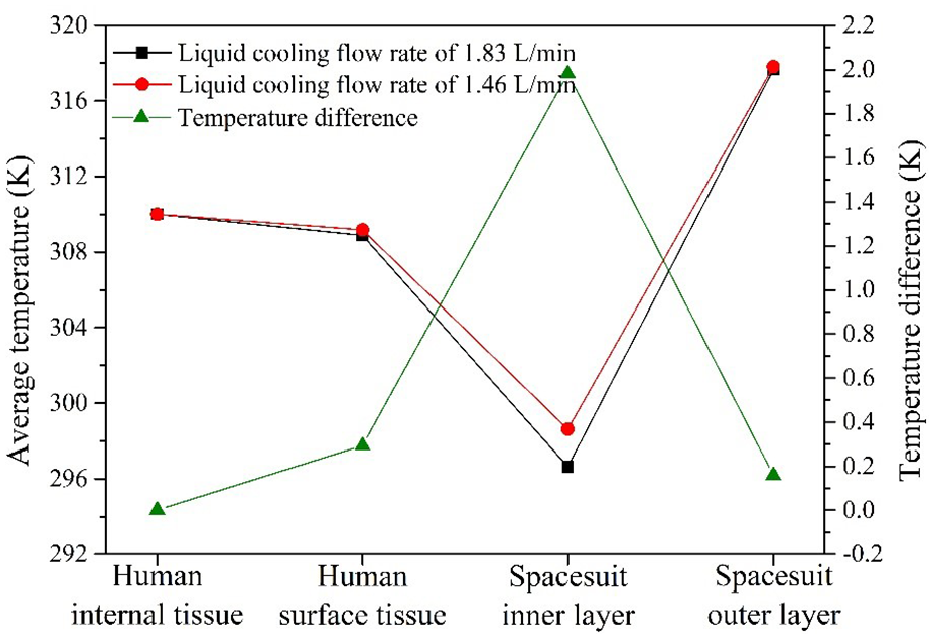
Average temperature influenced by the liquid cooling flow.

Life support material consumption during metabolic heat change.
The external heat flux in the working environment is one of the important factors affecting the extravehicular spacesuit. The external heat flux is set to change periodically between 600 and 700 W/m2. The consumption of life support materials over time is indicated in Figure 27. The pressure in the oxygen cylinder drops to 5 MPa, LiOH consumption is about 0.9 kg, and water consumption is about 2.75 kg. The consumption of materials when the external heat flux changes is similar to that in steady-state conditions, as shown in Figure 28. The effect of external heat flux on the internal environment of the spacesuit is limited, so the effect of water consumption is minimal, as shown in Figure 29.

Life support material consumption influenced by metabolic heat.

Life support material consumption during external heat flux change.
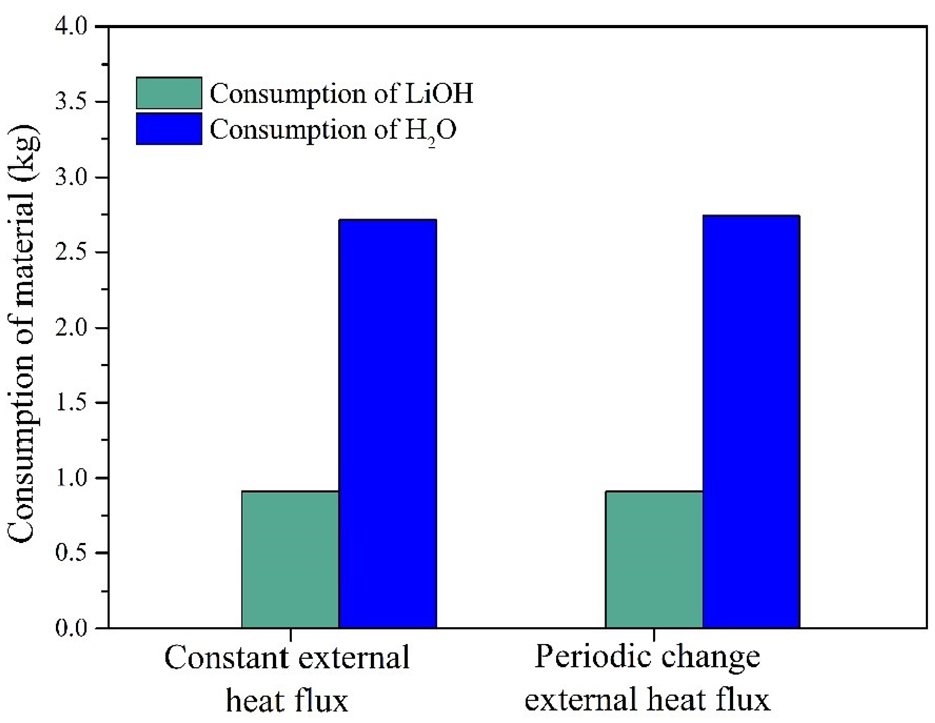
Life support material consumption influenced by external heat flux.
The results show that LiOH consumption is mainly influenced by the activity intensity and water is mainly affected by the temperature of the internal environment. According to this, the consumption of materials can be estimated in the mission scheduling phase to ensure the normal operation of life support functions.
Conclusions
In this paper, a dynamic model of the microenvironment life support system of the extravehicular spacesuit was established. The life support performance of spacesuits during EVAs was simulated, and the microenvironment of spacesuits was analyzed from two perspectives of energy and material transfer. The following conclusions were specifically obtained.
The human-spacesuit coupled microenvironment model can reasonably simulate the temperature changes of the human body and spacesuit. The model responds quickly and accurately to changes in internal and external loads.
After 8 h of EVA, the life support system consumed 1 kg of LiOH and 2.7 kg of water. The intensity of the activity had a significant impact on LiOH consumption, with a threefold increase in metabolic heat increasing LiOH consumption by approximately 2.5 times.
The thermoregulation system maintains the internal body temperature at around 310 K. Under the protection of a spacesuit, the human body’s surface temperature ranges between 307 and 311 K on average. The temperature inside the spacesuit is in the comfortable range of 291–301 K. External heat flow had a significant effect on the temperature of the spacesuit’s outer shell, which varied between 318 and 328 K.
Activity intensity and liquid cooling system flow rate are two important factors influencing the spacesuit microenvironment and life-support material consumption. Liquid cooling is the primary method for dissipating heat from the microenvironment, and adjusting the liquid cooling flow rate can effectively control microenvironmental conditions. Rationalizing work intensity is critical for workplace safety.
Spacesuits are essential for completing space missions. Dynamic joint models can simulate the microenvironment of a spacesuit and the conditions of life support materials, allowing mission safety to be predicted during EVAs. Based on the findings of this study, the impact of thermal characteristics on the reliability of spacesuits, as well as the optimization of thermal control systems in extravehicular spacesuits, can be investigated further in order to make spacesuits suitable for future missions.
Footnotes
Appendix
Notation

| Abbreviations | Subscript | ||
| EVA | extravehicular activity | in | Inner layer |
| ISS | International Space Station | out | Outer layer |
| Variables | v | Ventilation system | |
| M | Mass, kg | l | Liquid cooling system |
| C | Heat capacity, J/(kg K) | i | Segment |
| T | Temperature, K | ave | Average temperature |
| A | Area, m2 | met | Human metabolic heat |
| ε | Heat transfer efficiency | act | Heat production |
| qm | Mass flow rate, kg/s | ex | External |
| λ | Thermal conductivity, W/(m K) | O 2 | Oxygen |
| R | Resistance | breathe | Respiration |
| ω | Metabolic impact factor | t | Total |
| σ | Stefan-Boltzmann constant | b | Blood |
| Q | Heat flux, W/m2 | hum | Human |
| δ | Thickness, m | 0 | Body internal part |
| P | Pressure, Pa | set | Setpoint |
| V | Volume/m3 | CO 2 | Carbon dioxide |
| k | Permeability, m2/s | tank | Cylinder |
| μ | Conversion factor | LIOH | Lithium hydroxide |
| γ | Latent heat, kJ/kg | H 2 O | Water |
| τ | Time, s | sub | Sublimator |
| ρ | Density, kg/m3 | ||
| E | Diffusion activation energy, J/mol | ||
Handling Editor: Aarthy Esakkiappan
Declaration of conflicting interests
The author(s) declared no potential conflicts of interest with respect to the research, authorship, and/or publication of this article.
Funding
The author(s) disclosed receipt of the following financial support for the research, authorship, and/or publication of this article: This research work is supported by the Academic Excellence Foundation of BUAA for PhD Students.
