



Abstract
Investigation of thermal transport in nanofluid flow squeezed inside a channel formed by two sheets with zero slope is common in industrial and engineering applications. The heat transmission could be affected by various physical constraints which reduce the machine efficiency for desired products. Therefore, this attempt clearly focus on the development of new nanofluid thermal transport model using the significance effects of Koo-Kleinstreuer-Li correlation which used for the estimation of nanofluid thermal conductivity, impacts of magnetic field, internal heating species, and thermal radiations. Then, the LSM (Least Square Method) is magnificently implemented and obtained the physical results for multiple ranges of parameters. It is noticed that when the squeezed parameter varied in the ranges of
Introduction
In the present time, the researchers are actively looking at the dynamics of viscous nanofluids1,2 between. The viscosity of nanofluid is a major factor which affects the fluid flow behavior and its velocity. Therefore, Ghoneim et al. 3 concentrated on the nanoliquid flow by focusing on the fluid viscosity and density. Sheikholeslami et al. 4 reported analytical investigation of nanofluid by considering the physical setup of two parallel sheets. They preferred DTM for the model results and reported that how several thermophoresis parameters, 5 radiations, magnetic field, and squeeze number alter the model dynamics. The numerical treatment of the nonlinear fluid model under blowing effects has been analyzed by Mahdavi et al. 6
Mahdavi et al.
7
isothermal behavior of nanofluid
8
under imposed physical conditions. The nonlinear governing model tackled with the help of ANSYS Fluent 19.3 and simulated the results for the bounded domain. Saeed et al.
9
put their efforts toward the investigation of parallel plates fluidic model and pointed that due increased squeeze number, the fluid loss their momentum and the velocity diminishes. Due to increasing applications of nanofluids, many researchers (see Refs.10–13) are made attempted to analyze the nanoliquids from various physical aspects. Singh et al.
14
focused on the influence of Lorentz forces influence on the moving behavior of nanofluid and discussed heat transport process inside the parallel sheets. Alotaibi and Rafique
15
discussed the characteristics of streamlines flow and preferred numerical scheme for the model results. The main concerns of the authors was to analyze the mass and heat transport in the fluid under the action of physical constraints appeared. Hybrid nanoliquids are extended type of the common nanoliquids. These fluids comprising the nanoparticles of two different types. Due to potential heat characteristics; these liquids attract the researchers from the world. Therefore, Yaseen et al.
16
reported the analysis of hybrid nanoliquid of the squeezed flow due to increasing MHD effects. Khashi’ie et al.
17
scrutinized
Ullah et al. 23 scrutinized the nanofluid flow among two parallel plates. The plates are considered as convectively heated and reported that convective condition is a better physical tool to enhance the heat process of nanoliquids. Sheikholeslami and Ganji 24 provided a detailed analysis of nanofluid 25 and taking into account the influence of Brownian and thermophoretic parameters. Ghashim 26 studied the heat transmission in a circular pipe using the influence of nanoparticles and also analyzed the heat transfer rate. Akinshilo et al. 27 provided the analysis of multi walled carbon nanoparticles and along with squeezing effects. Mustafa et al. 28 studied that the heat transport reduces for rotating flow of water based nanoliquid under strong Lorentz forces. Some of the most recent studies by focusing on the heat transport performance of nanofluids discussed by various researchers (see Refs.3,29–31).
The transient characteristics of fluids are frequently studied by fluid dynamists from multiple physical aspects. Oza and Venerus 32 reported the transient flow in the creeping flow range and entertain the model numerically for the physical outcome of the model. The authors, accommodated multiple physical effects to enhance the model novelty. Hamza 33 studied that how injection and suction effects change the fluid velocity behavior and shear stresses on the walls. Ashraf Ali et al. 34 paved their attention on the model based study for a channel formed by two sheets under zero slope condition. They pointed that intensification in the strength of Lorentz forces diminishes the fluid particles motion. Moreover, Poots and Rogers 35 investigated about the characteristics of the fluid under variable medium properties. Levitskaya and Sternberg et al. 36 analyzed the errant measurement parameters effects on the model dynamics.
The KKL (Koo-Kleinstreuer-Li) model37,38 is a thermal conductivity model which use for the development of theoretical nanofluid models. The key features of this model are that it accommodates the influences of nanoparticles diameter, static and Brownian effects in thermal conductivity and dynamic viscosity. Thus, the KKL (Koo-Kleinstreuer-Li) model theory has been used for nanofluids study under various physical circumstances. The researchers motivated by the newly engineered fluids with enhanced transport characteristics. Therefore, they dedicated toward the nanofluids analysis from multiple physical aspects. Vijayalakshmi and Srinivas 39 examined the dynamics of nanofluid inside two absorber walls with Darcy effects and thermal radiations. The authors deduced that inclusions of Darcy media controlled the working fluid movement and thermal radiations enhanced the heat transport mechanism. Further studies on nanoliquids characteristics in bounded domain by considering the gold and copper based bionanofluid under slip effects and heat transport characteristics of in biological nanoliquid with static or accelerated walls have been discussed in SubramanyamReddy et al., 40 and Srinivas et al. 41 respectively.
The combined convection due to gravity highly affects the dynamics of nanoliquid models. Keeping in mind the significance of gravity effects, the potential researchers (see Refs.42,43) worked on such physical models and examined fascinating behavior of the movement and temperature of the functional liquid. They suggested that hybridity of nanoparticles enhanced thermal conductivity of the base liquids which will helpful to accommodate the better heat transport applications. Sheikholeslami and Khalili 44 provided a study related to SPTS (solar photovoltaic thermoelectric system) using hybrid nanoparticles. The study performed for building unit by considering helical tapes and simulated the results. The authors found that the used nanomaterials is very useful for the building unit applications. Similarly, some of the latest studies comprising the nanofluids applications in engineering and industrial zone have been reported by various potential researchers (see Refs.45–47) around the globe.
In the present study heat performance of nanofluids due to joint experimental as well as theoretical models will be conducted. The motivation behind such combination is to investigate the transport properties of nanofluids under physical effects like magnetic field, thermal radiations, and heat dissipation effects on the flow of incompressible fluid. The main advantage of this physical setup is to predict the physical ranges of the parameters for better heat transport results of the model without experimental expenditure and after identifying such ranges, the experiment could be performed for more reliable outcomes.
As, many researchers as cited above have been made attempt for the analysis of nanofluids under varying circumstances and estimated thermal conductivity using multiple correlations and each has their own significance. Among them, there is an important model which covers the novel influence of Brownian motion effects between the particles, static and particles diameter is known as Koo-Kleinstreuer-Li model. Inspired by the auspicious characteristics of Koo-Kleinstreuer-Li model and additional physical effects which playing crucial role in the fields of engineering and various industries are taken into account. These are thermal radiations, directed magnetic field which acts at right angle to the working domain and viscous dissipation on the flow of nanofluid inside two non-intersecting sheets are taken. The study outcomes will add the values in the literature regarding the better physical ranges of the quantities to acquire the useful heat transfer results.
Model development
Statement and the flow configuration
In the present study, squeezed nanoliquid flow between two parallel plates is taken under consideration. Two sheets are placed at a distance of
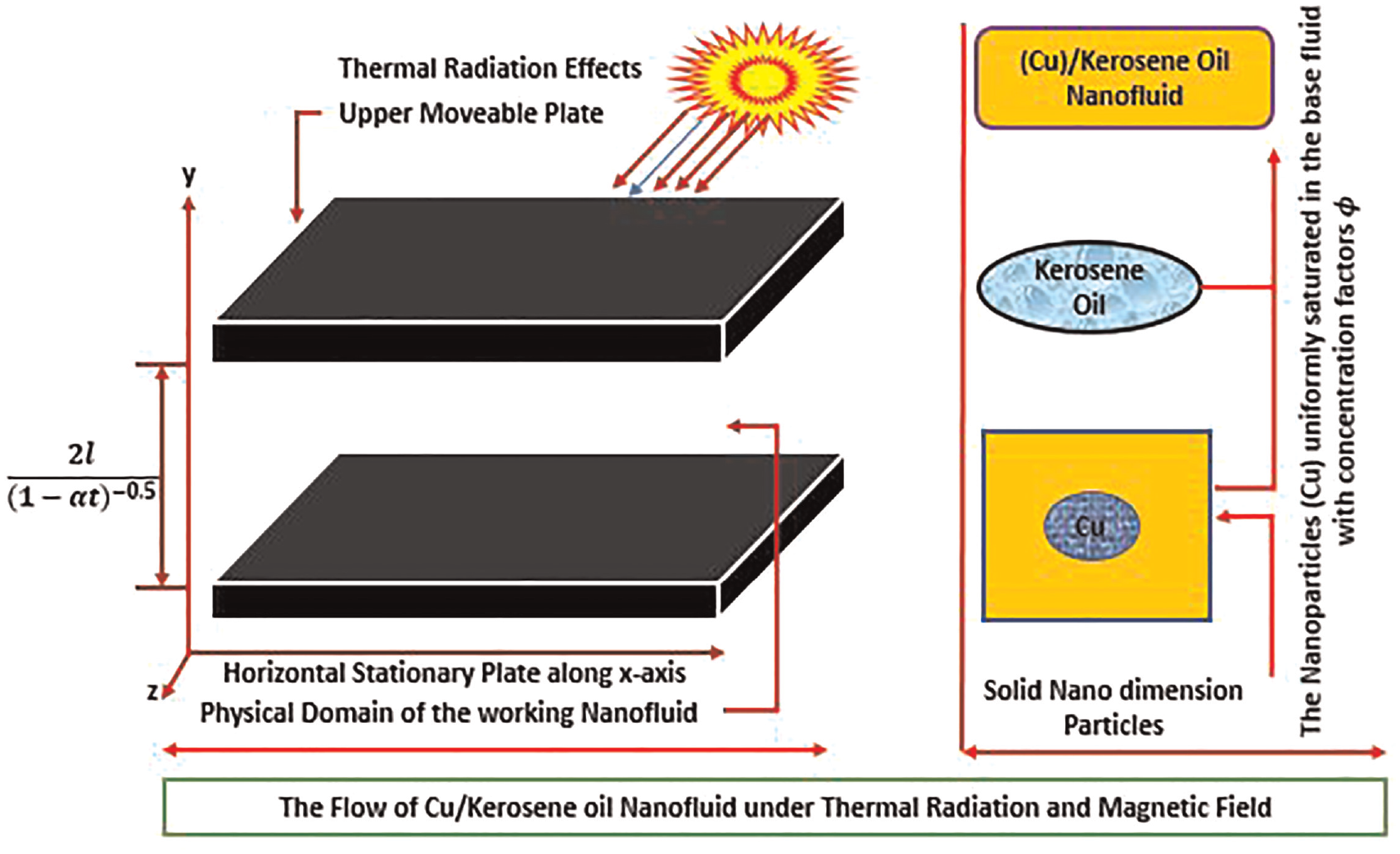
Physical domain of the working Cu/kerosene oil fluid.
Basic governing laws
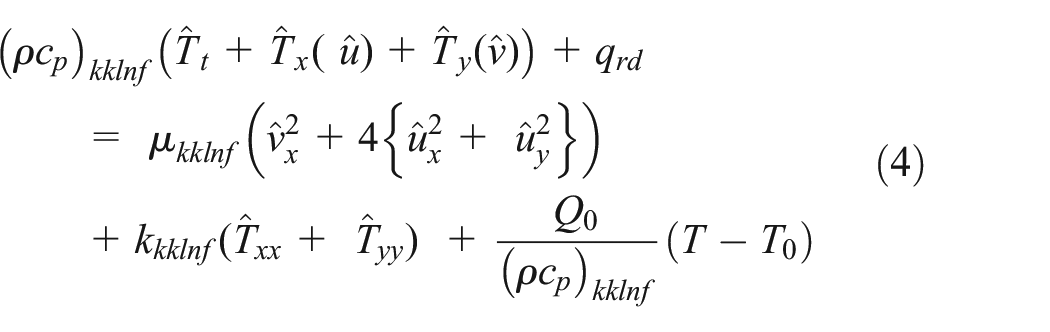
The transient governing equations 3 for the desired model development including the influence of magnetic field, thermal radiations, heating species, and dissipation effects are enlisted in equations (1)–(4):



The working boundaries of the channel restricted to the following conditions 3 :

By exercising the Roselands’ approximation’s, the

Where

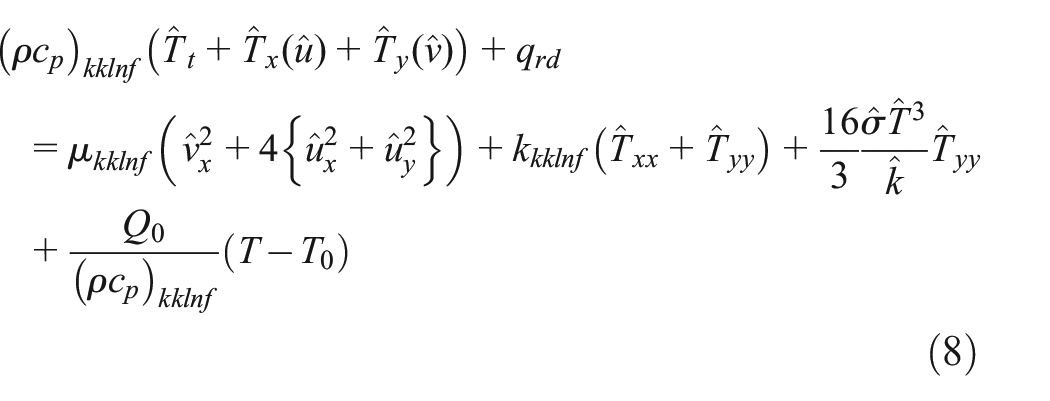
The equation (4) can be reproduced by replacing equations (6) and (7) with the following form 16 :
Use the below suitable similarity transformative expressions to convert the primary governing laws into the final formation of the model:

The KKL (Koo-Kleinstreuer-Li) model properties
In the current problem, we intended to compute the enhanced thermophysical values for the model development using the following formula including KKL (Koo-Kleinstreuer-Li) thermal conductance expression.

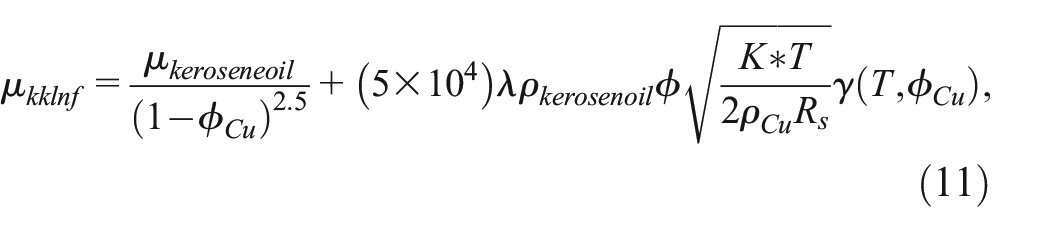


Further, the expressions for the function


The temperature ranges considered from 300 to 325 K and the solid concentration factor as 1%–4%.
Final model
By exercising all of the above data and nanofluid properties in the primary governing nanofluid laws, the final form achieved as below:
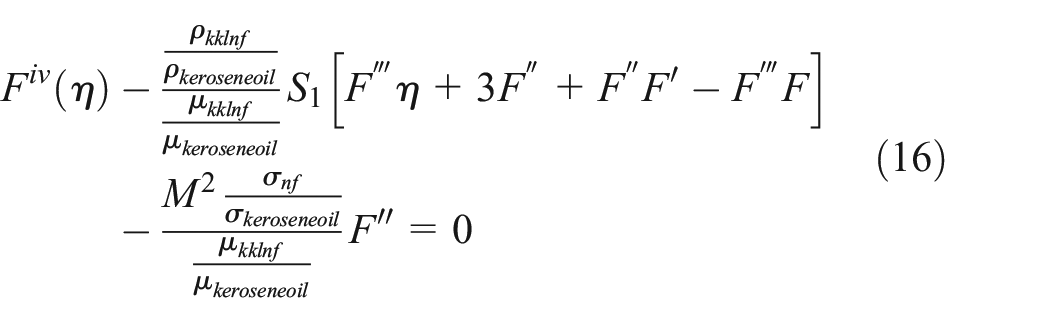
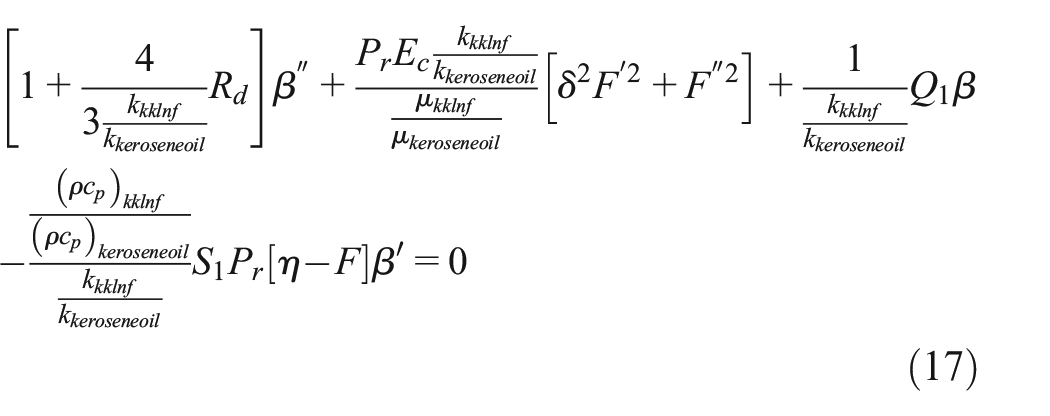
Further, the reduced version of the BCs obtained in the subsequent form:


Now, the interesting physical factors ingrained in the model are squeeze number
Modeling of engineering factors
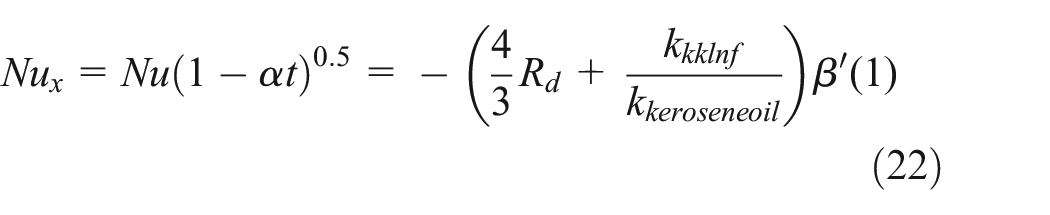
To investigate the impacts of KKL (Koo-Kleinstreuer-Li) model on NB (Nusselt Number) and SF (Skin Friction), the following formula designed for the current study:

Finally, these expressions reduced in the following version after incorporating the KKL (Koo-Kleinstreuer-Li) model characteristics and transformative parameters.

Mathematical analysis
This section deals with the mathematical analysis of the present KKL (Koo-Kleinstreuer-Li) model which enable us to examine the dynamics of the model under varying constraints integrated flow situation. Basically, the LSM48,49 is residue based functions techniques which depend on the selection of weight functions, residue functions which obtained by using the trial solutions in the original model. This whole process yields the Fredholm integral equations which are then solve to acquire the undetermined coefficient appeared in the guess solutions. The complete road map for this technique demonstrated in Figure 2.
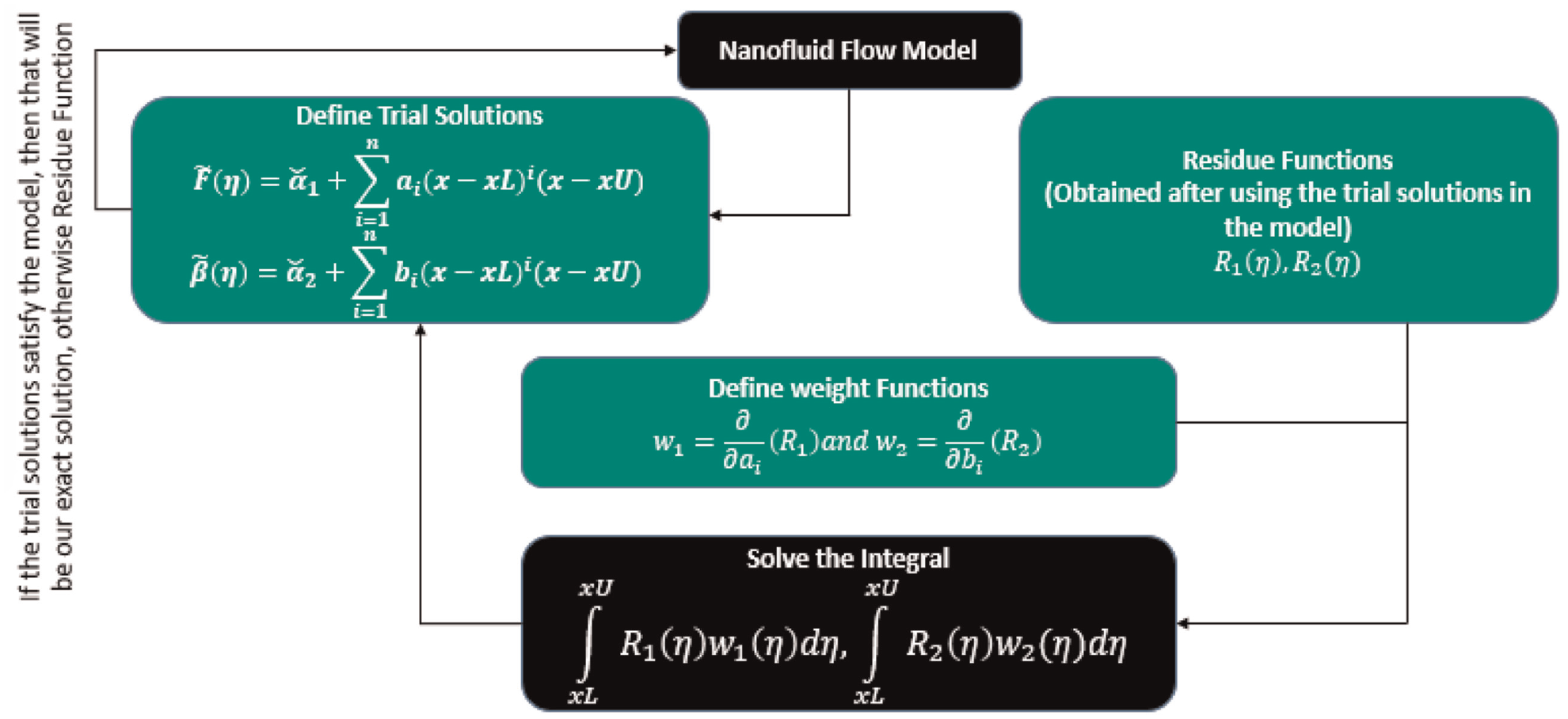
The complete LSM implementation map for the current KKL model.
Adopting the above methodology step by step, the following initial guesses for the KKL (Koo-Kleinstreuer-Li) heat transport model achieved:


Now, after completing the whole procedure, the coefficients in the trial solution determined and the following final solution for the KKL model achieved:


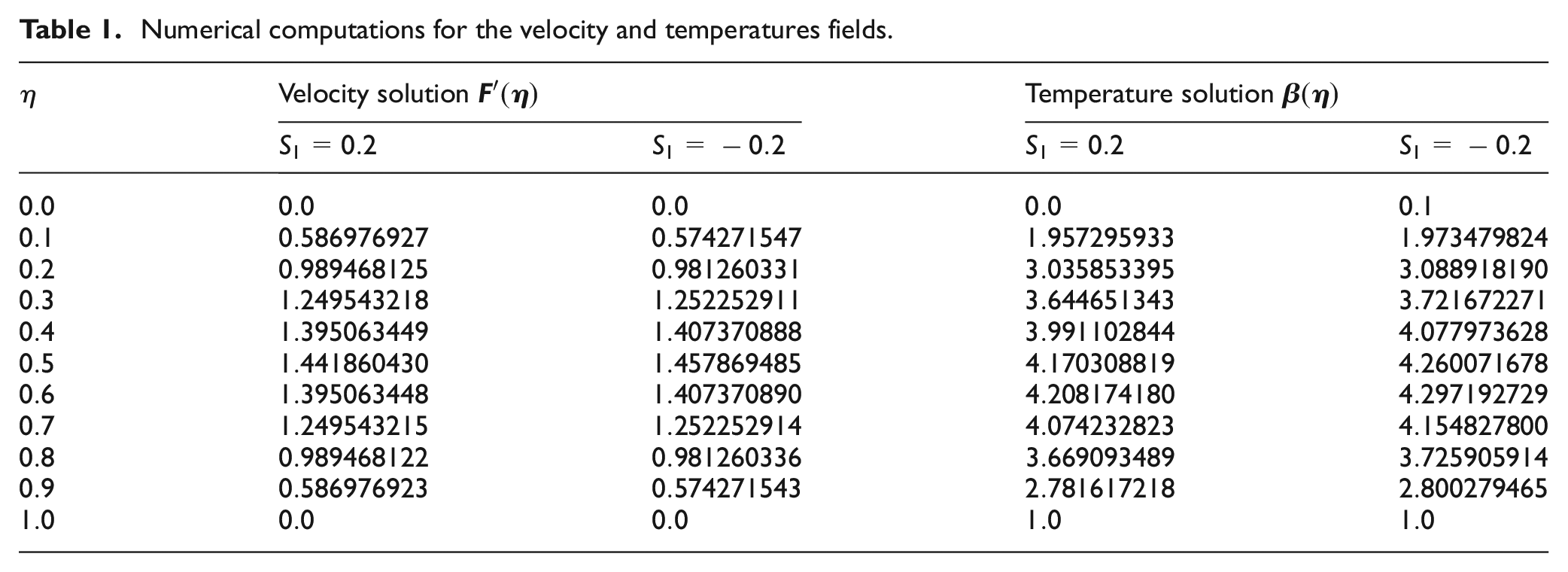
The computations model are for the performed in Table 1 for both the inward (
Numerical computations for the velocity and temperatures fields.
Results and discussion
The graphical results against the physical constraints appeared due to dissipation effects, thermal radiations, and other significant factors are elaborated in this section. The simulation done for the velocity and temperature distributions and also; the tabulated results performed for the shear drag and heat transfer rate toward the sheet surface.
The velocity distribution
The nanofluid velocity for inward (
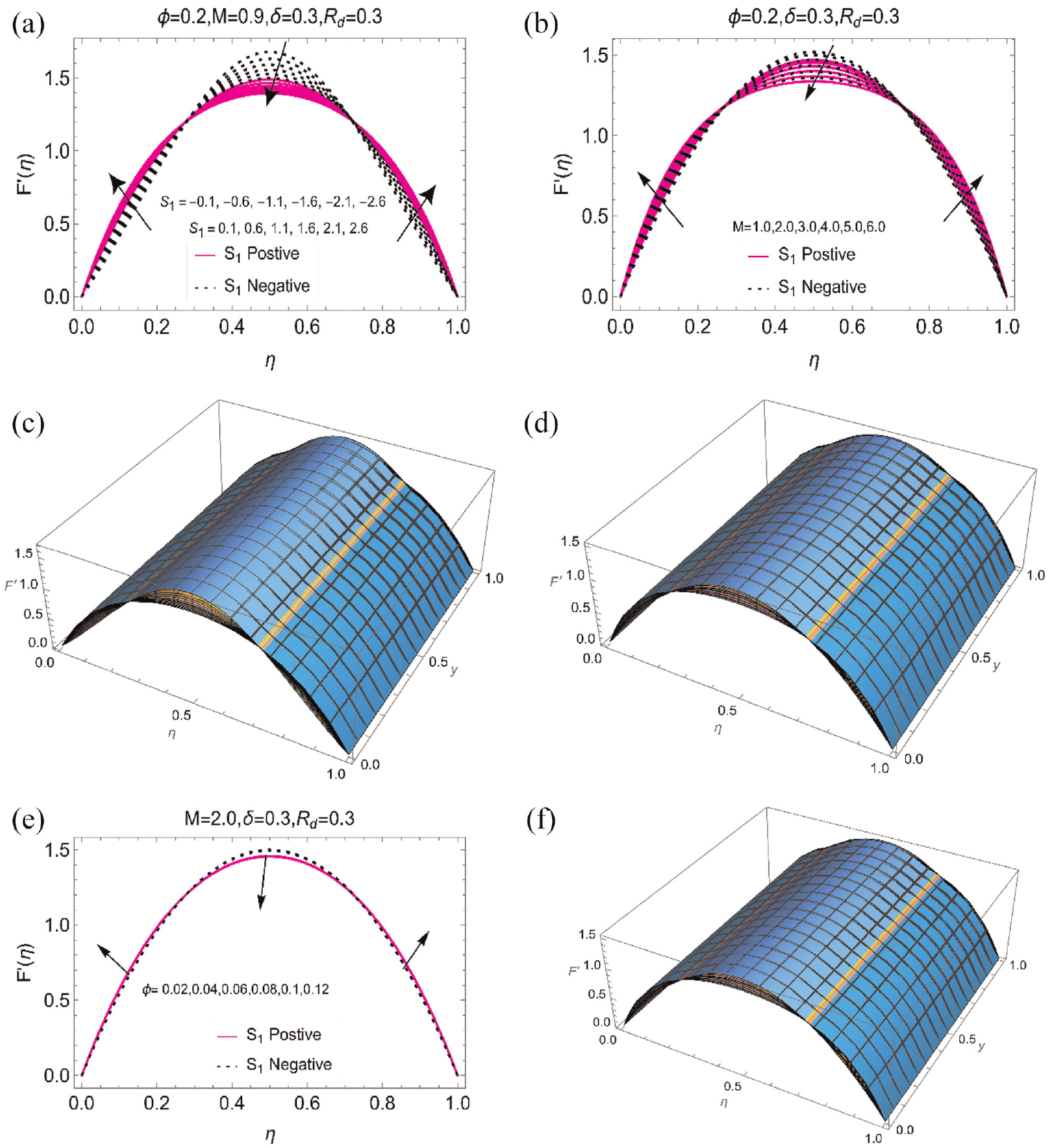
The velocity trends for (a, c) S1, (b, d) M, and (e, f)
Temperature distribution
The temperature of nanofluid behaves differently under the various ranges of model parameters. Therefore, the temperature simulation is done in this part using the parametric ranges. The temperature simulation for increasing

Thermal trends for (a)
Figures 5 to 7 organized to investigate the temperature behavior under higher

Thermal trends for (a)
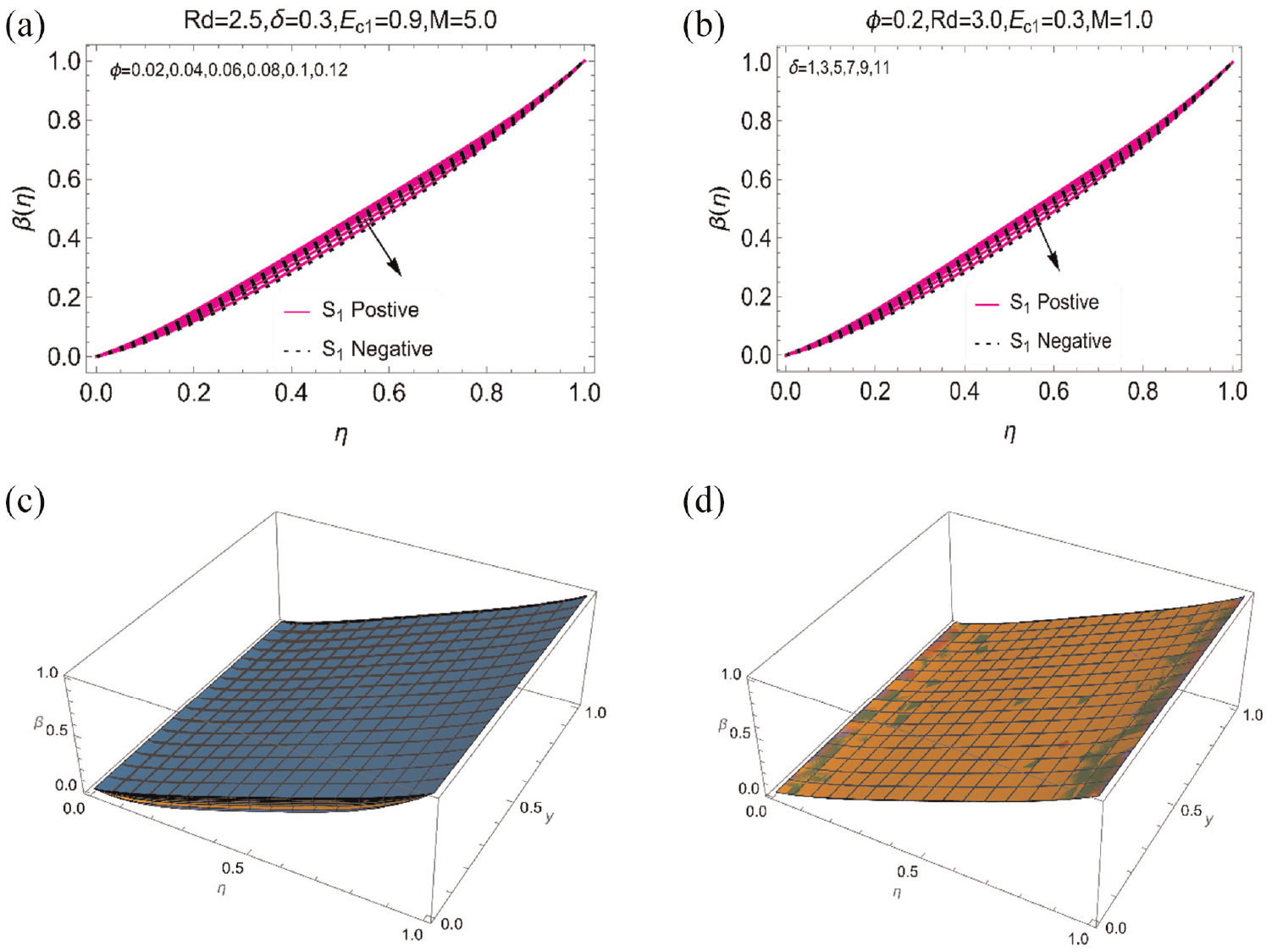
Thermal trends for (a)

Thermal trends for (a)
Thermophysical values of the nanofluid components
The selection of nanoparticles and host solvents are of central interest in the analysis of nanofluids. Therefore, based on thermal conductivity and other characteristics of Cu NPs and host fluid, the values are given in Figure 8. These values are used in the model formulation and also in the results simulation.50,51
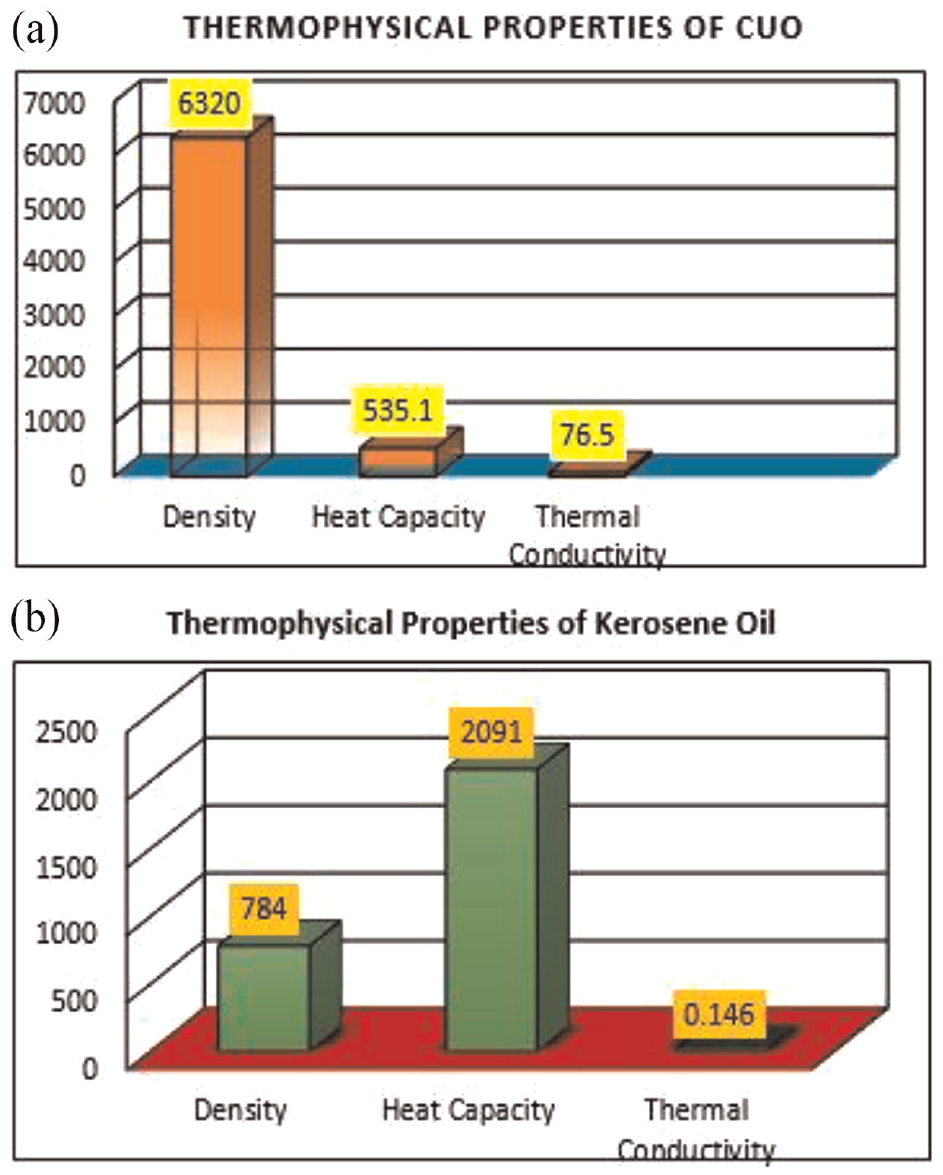
Thermo and physical values of KKL model based nanofluid components (a) CuO and (b) Kerosene oil.
Physical factors of engineering concerns
Analysis of shear drag and heat transfer rate are frequently occur in engineering applications. Therefore, these results against the multiple parameters ranges are performed and included in Tables 2 and 3, respectively. The shear drag values are computed at the upper sheet for both toward and outward movement. It is examined that when the amount of nanoparticles enlarges, the shear drag increased at the upper wall. Physically, this happening is due to the denser nanofluid. Further, it is higher when the plate accelerates in outward direction rather than inward direction. Similarly, directed magnetic field is also favors the shear drag and it can be controlled for weaker magnetic field.
The computational values for the Skin friction with various parametric ranges.

The computational values for the thermal gradient (Nusselt number) with various parametric ranges.

Table 3 highlights the heat transfer rate at the wall in the presence of varying fluidic system parameters. The heat transfer rate gradually rises when the amount of nanoparticles increases. Physically, it improves thermal conductivity of the fluidic system which is then able to increase the heat transfer rate. The desired amount of thermal transport rate can be achieved by adding the Cu NPs in the working fluid. In contrast, the heat transfer rate at the wall surface is very slow against the used magnetic field and rest of the physical constraints.
Model validation
The validation of present analysis from the published data is very important to conduct here. Therefore, an excellent graphical validation between the current analyses via LSM with the results of El Harfouf et al.
52
From Figure 9, it is clear that by excluding the Hartmann effects from the model, our results almost align with the results of El Harfouf et al.
52
keeping

The current study validation with published data (a) velocity and (b) temperature.
Conclusions
The heat transfer inspection in nanofluid via LSM is presented by encountering the physical constraints. The model is formulated for parallel sheets domain and a comprehensive analysis of the results is provided. It is scrutinized that:
The nanofluid loss the velocity at the middle of the working domain while varying
By fluid movement is almost negligible for increasing nanoparticles amount from
Thermal radiation number in the range of
The heat transfer rate against
Footnotes
Handling Editor: Chenhui Liang
Author contributions
Adnan and Aneesa Nadeem wrote the original draft, code and model validation, Haitham A Mahmoud, Aatif Ali and Sayed M Eldin review, language editing, verification of the model, validation and results and discussion.
Declaration of conflicting interests
The author(s) declared no potential conflicts of interest with respect to the research, authorship, and/or publication of this article.
Funding
The author(s) disclosed receipt of the following financial support for the research, authorship, and/or publication of this article: The authors present their appreciation to King Saud University for funding this research through Researchers Supporting Program number (RSPD2023R1006), King Saud University, Riyadh, Saudi Arabia.
