



Abstract
Introduction
It is essential to comprehend the role that fluid motion plays, as it sharply alienates the many characteristics of how different fluids flow past various surfaces. The era of intelligent technology is upon us. According to the most recent research, viscous fluids’ boundary layer flow has changed to nanofluids due to the latter’s greatly increased thermal conductivity as well as to boost heat transmission capability. In the past quarter century, our esteemed scientists and researchers have applied their skills to meet our most urgent research demands. They have succeeded in making numerous nanofluids with exceptional thermal transport for cooling in a variety of microfluidic, heat transfer and bio-medical applications. Applications of these distinctive nanofluid features can be found in an amazingly wide range of industrial domains.1–9
Nanolubricants are made up of nanoparticles dispersed in common lubricants. These are designed to improve the functionality of engine parts under high temperatures. As a result, many significant technical components, such as those utilized in military, aerospace, and industrial applications, experience less wear and friction in sliding contact. Under different thermal circumstances, nanoparticles are in fact heat stable and only slightly degrade when exposed to high temperatures. The density, viscosity, and specific heat capacity of the base fluid are indeed impacted by the addition of nanoparticles. Due to significant influence on fluid flow, heat transfer, and pumping power, viscosity is among other qualities that are strongly influenced and of major relevance. Therefore, the influence of nanoparticles on fluid viscosity has been extensively researched.10–17 Additionally, the creation and effective dispersion of the nanoparticles are liable for the smooth surface shape of the nanolubricant and its low wear rate. The drop in wear rate and friction coefficient is primarily caused by these key facets. It is essential to utilize nanolubricants in metal-forming procedures and vehicles because they drastically cut fuel consumption and consequently environmental damage (deep-drawing, improved tool life). Numerous investigations have been made into how heat transfer qualities are affected by the thermal conductivity, viscosity, viscous dissipation, and viscosity index of nanolubricants. The studies revealed that at high temperatures, the nanolubricants exhibited better thermal effects. Nanolubricants are in high demand as they are used in heat pump compressors and offer advantages like to reduce friction which saves fuel, improving efficiency, low wear of moving parts, better thermal dissipation, enhancing horsepower, improving gas mileage, decreasing operating temperature, increasing lubricant life, and longer changeovers, as well as the breakdown of
In order to make
The peculiar structure of the Riga Plate produces surface-parallel Lorentz force which stabilizes movement by decelerating growth by altering pressure-gradient driven boundary layer structure. The behavior of nanofluid over Riga surface is investigated by Ahmad et al.
25
The role of buoyancy in nanofluid flow by utilizing a Riga surface under the effect of Lorentz force is addressed by Ahmad et al.
26
They found that solutal buoyant and thermal forces accelerated fluid movement at the expense of increased wall shear stress. The effects of HHRs on
In engineering and manufacturing procedures like polymer technology, hot rolling, wire drawing, food fabrication, and the studies,32–36 it is ingenuous to assume that concern magnetic field will significantly contribute to the creation of a controlled cooling system that provides final product qualities. The investigations on MHD heat transportation in a variety of physical systems has achieved prominent attention due to its substantial industrial and medicinal applications.37–43 Some of the most important studies discussing the effects of MHD on flow of nanofluids over different geometries can be found in Giri et al.44–47 and Das et al. 48
For the situations, such as polymer array, a few suspensions, different emulsion types and froths (liquid behaves as a particle) where the partial slip is the most appropriate BC, it is true that no slip BC is not quite sufficient. Numerous researchers are convinced to conduct research into a few fields related to the partial slip condition because of the significant opportunities in the polymer and electrochemical industries. The HTR grows larger while the skin grating decreases as a result of slip restriction. Aman et al. 49 reported this. According to Shaw et al., 50 the slip parameters cause the domain of occurrence related to dual solution to grow. Using magnetization, Turkyilmazoglu 51 treated viscoelastic slip flow. He looked into how the magnetic field cuts off HTR related to the first branch for fixed non zero slip while significantly enhancing it for the second branch. Recent research on entropy analysis and the effects of thermal slip on radioactive spinning nanofluid was conducted by Rehman et al. 52 The use of thermal radiation at greater temperatures appears to have always been a feature of devices made to achieve excellent thermal performance. Beyond its original significance, ongoing research and competition between other researchers6,53–55 have shown its numerous distinct behaviors as a result of its impact on the BLF of different nanofluids. The rate of heat transmission associated to the thermal boundary layer is significantly impacted by the heat generation that occurs simultaneously. Thermal boundary layer structure varies because the heat production altering the rate of heat transport. Sharma et al. 56 examined how an augmentation in the heat source/sink parameter causes a rise in fluid temperature. Numerous high-tech engineering processes include the combustion of fossil fuels, spacecraft re-entry, solar power technologies, astrophysical flows, and many others.57–61
The literature survey reveals that only few investigations have been made on the flow behavior of
Problem’s formulation
The Falkner-Skan slip flow of a magnetized

(a) Coordinate system; (b) Flow configuration.
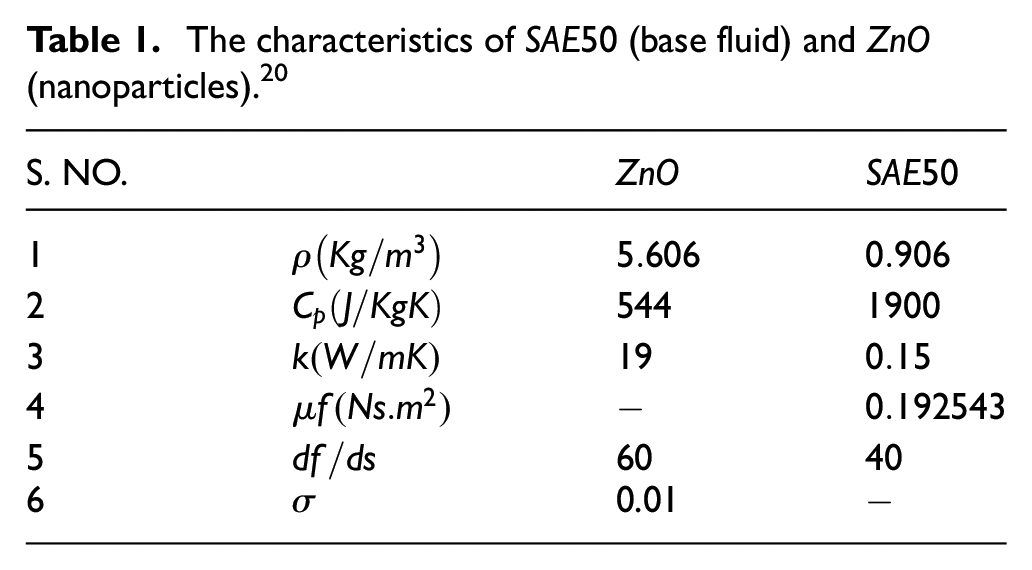
The characteristics of
The vector forms of basic flow equations of Navier Stokes and conservation of energy are given as
Navier Stokes’ equation


here,
Energy equation

here
In component form, the governing equations of the present problem can be written as22,62


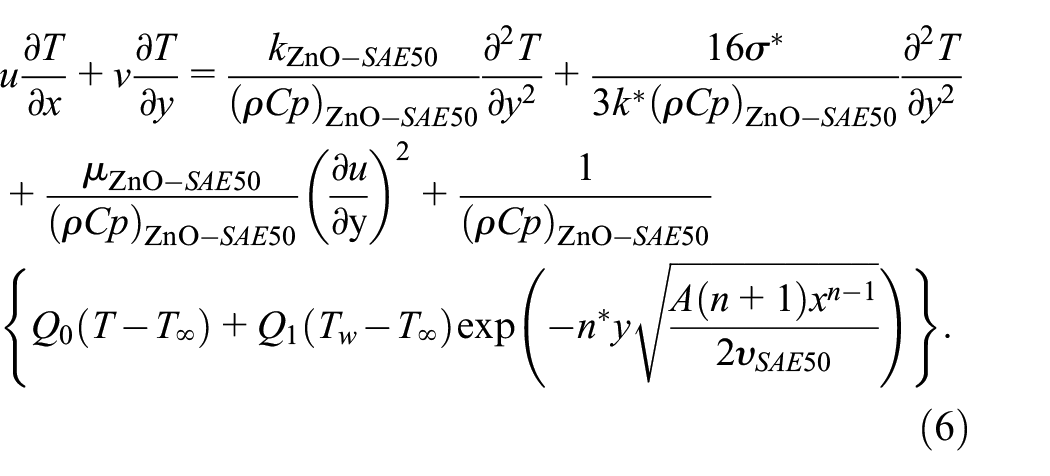
The appropriate BCs are 22

The thermo physical properties of

and

Where
The effective thermal conductivity of nano-lubricant by following Patel et al. 63 is

The suitable transformations of our model are

By applying the transformations given in equation
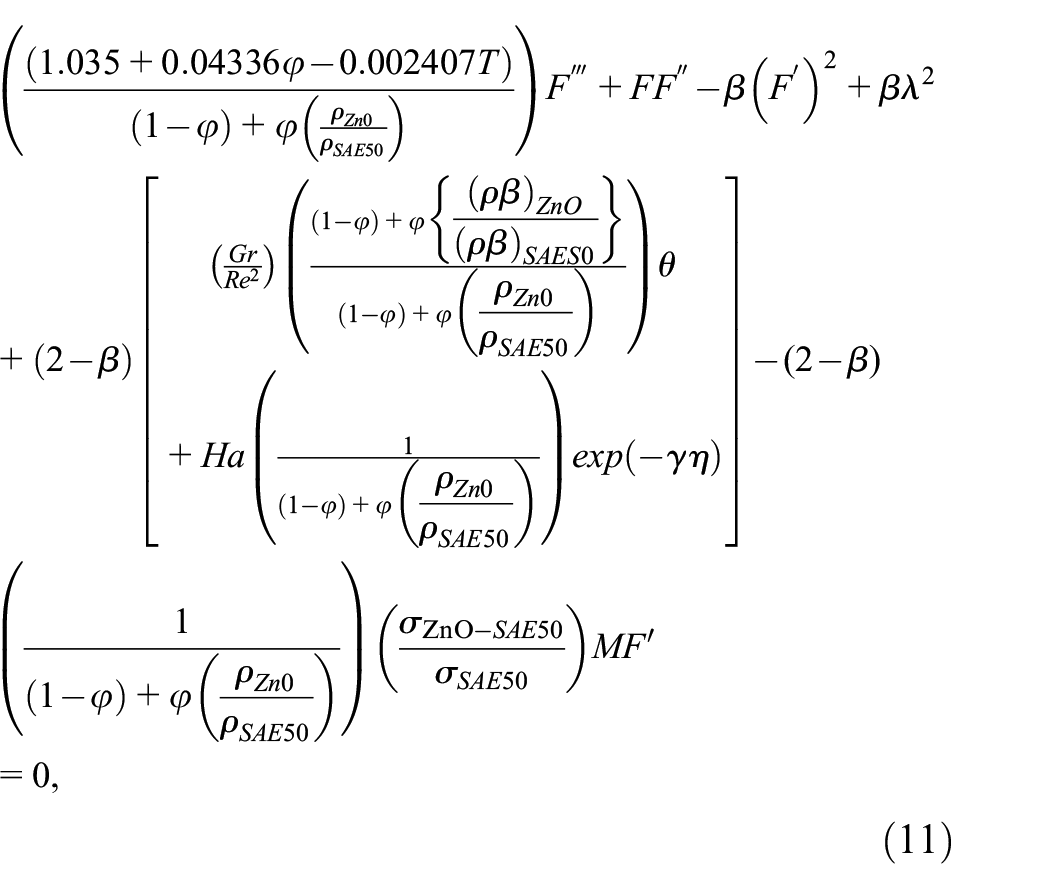

The modified BCs are

Where

It is worth mentioning that
The skin friction is locally defined as

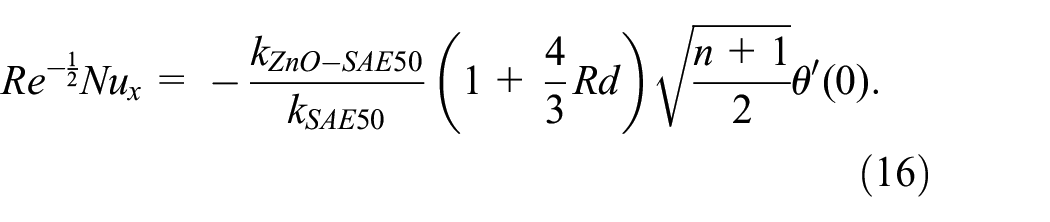
The Nusselt number is given as
Solution methodology
The solution of our resulting nonlinear problem has been found by using HAM. Liao 64 hosted HAM approach for solving nonlinear differential equations for the first time. The role of HAM is vital in order to get convergent series solution. The followings are the chosen initial guesses and linear operators:



where,

Zeroth order deformation


B.Cs.


In above equations
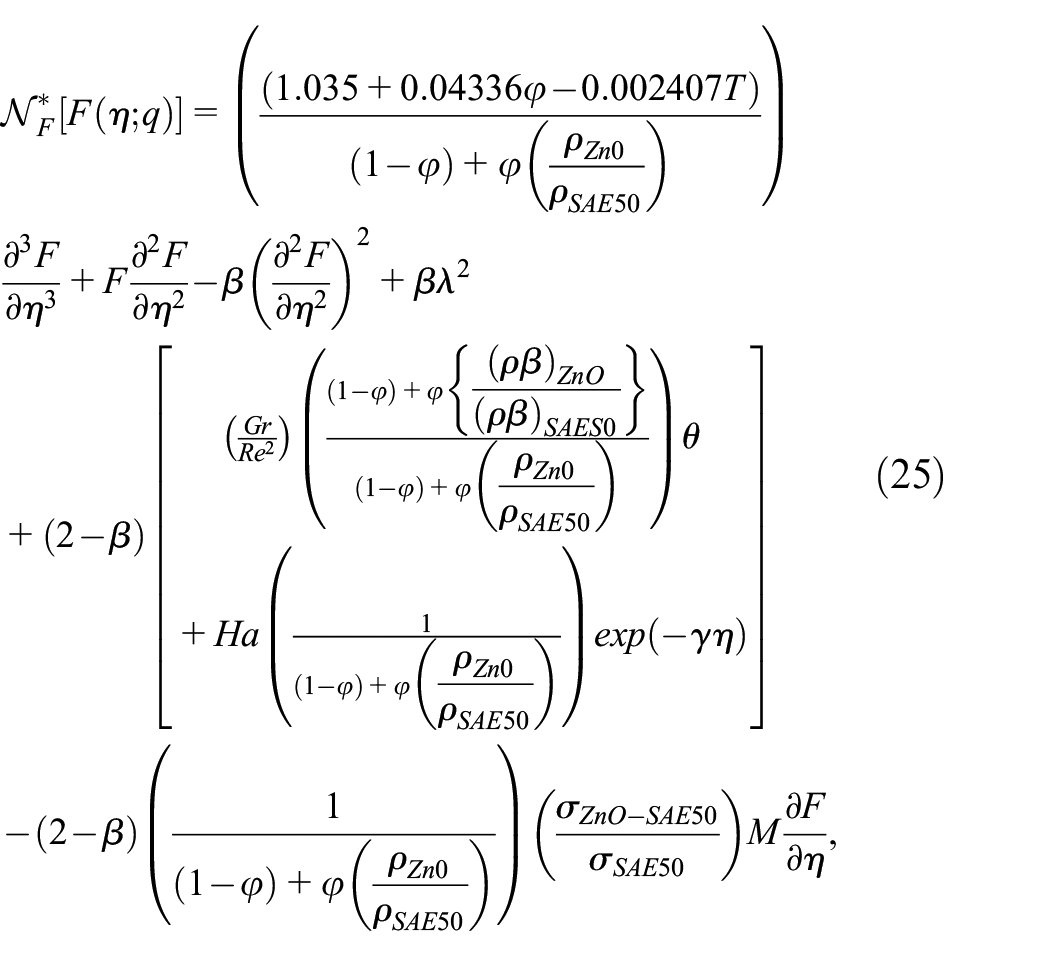

Mth order deformation
The Taylor’s series expansions of


The obtained




where,
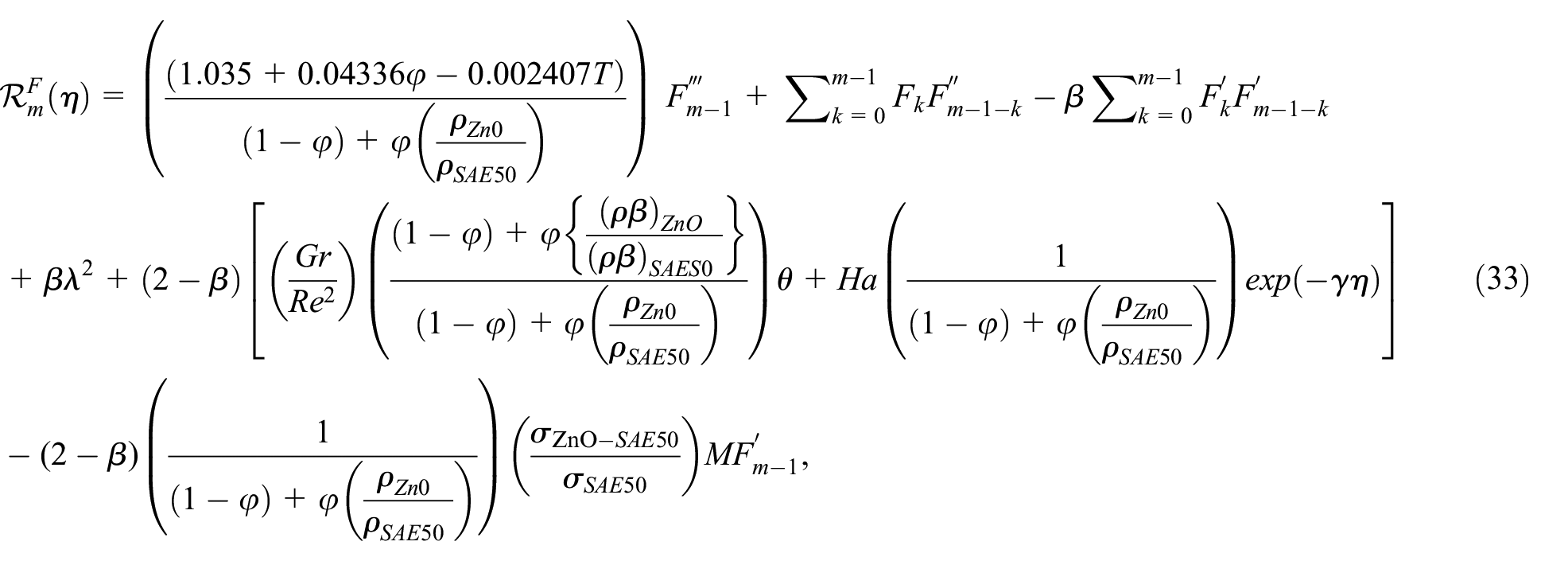


We solved the above equations by using Mathematica and attained the


here,
Hence, the analytical series solutions of


Convergence
HAM is found to be the best method to find the solution of such type of systems of nonlinear ODEs. The mandatory convergent region has been adjusted by using auxiliary parameters
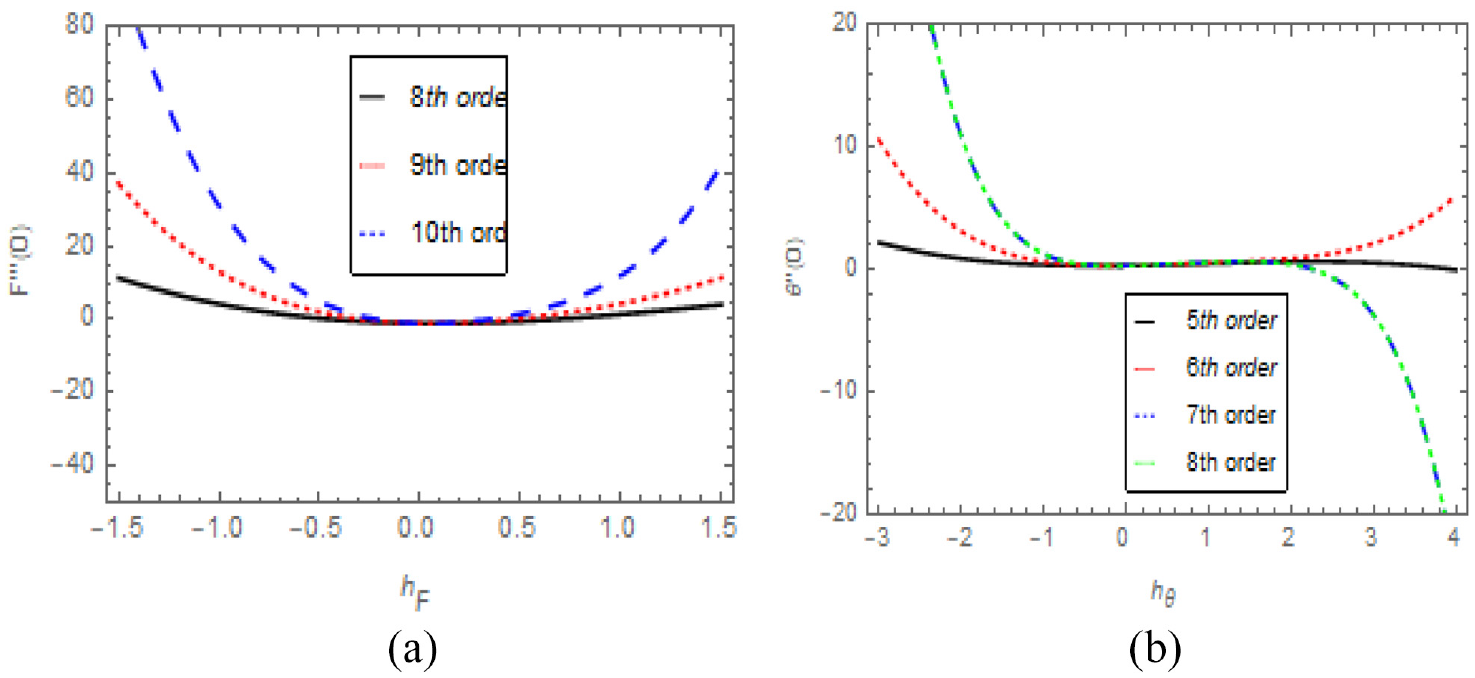
(a and b) h-curves for HAM solution.
Results and discussion
The present work analyzes the rheological behavior of magnetized
Flow enactment of nanolubricant (ZnO – SAE50)
The effects of Grashof number

Effect of

Effect of

Effect of

Effect of

Effect of
Thermal enactment of nanolubricant (ZnO – SAE50)
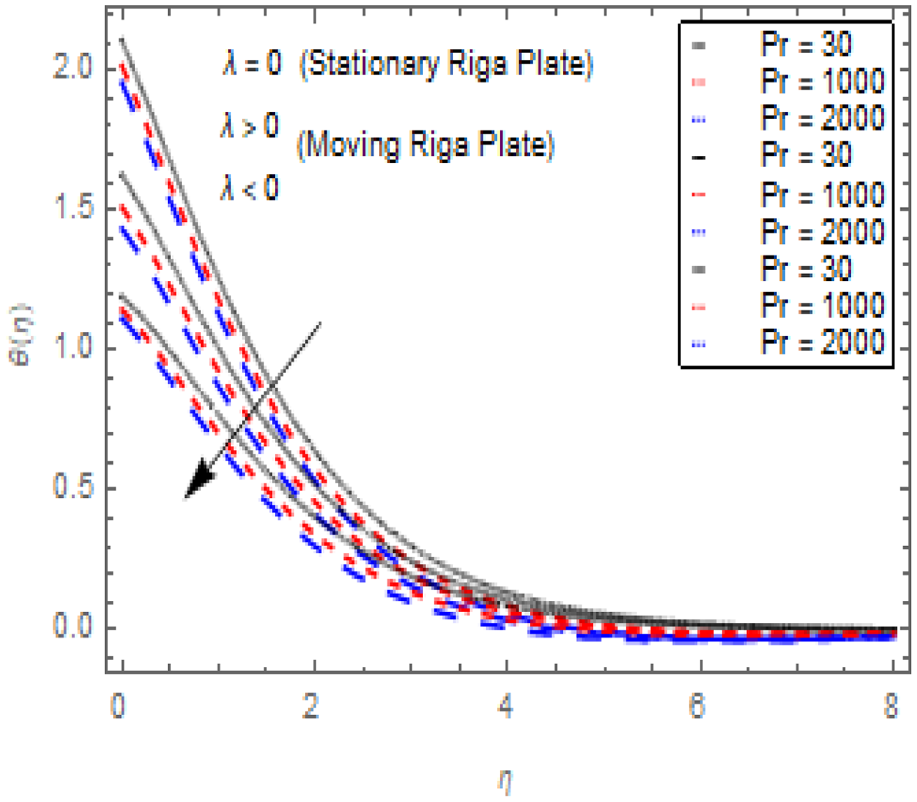
The thermal behavior of

Effect of
Effect of

Effect of
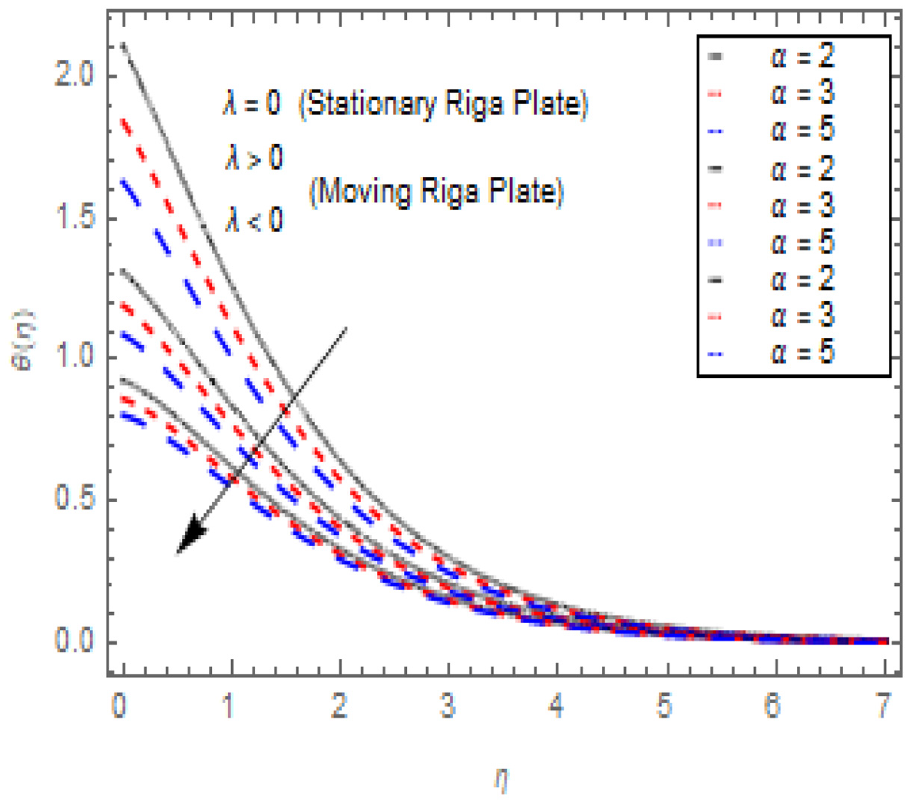
Effect of

Effect of

Effect of

Effect of
Validation of results
Table 2 represents the comparative values Nayak et al. 22 by using the various values of radiative parameter Rd. Both the results have nice match with each other in limiting approach.
Comparison of present results with Nayak et al.
22
when

Concluding remarks
The velocity profile gets enhanced for higher values of thermal Grashof number in case of static as well as moving Riga plate conditions.
The larger values of modified Hartman number accelerate the motion of nanolubricant
The augmentation in the velocity profile of nanolubricant
For all three cases (moving/static Riga plate), the increasing values of pressure gradient parameter decline the velocity profile.
The enhancing values of radiation parameter and Eckert number improved temperature profile.
The decline in temperature is revealed by the growing thermal slip factor and Prandtl number.
The higher values of nonlinear heat generation parameters upsurge the temperature profile.
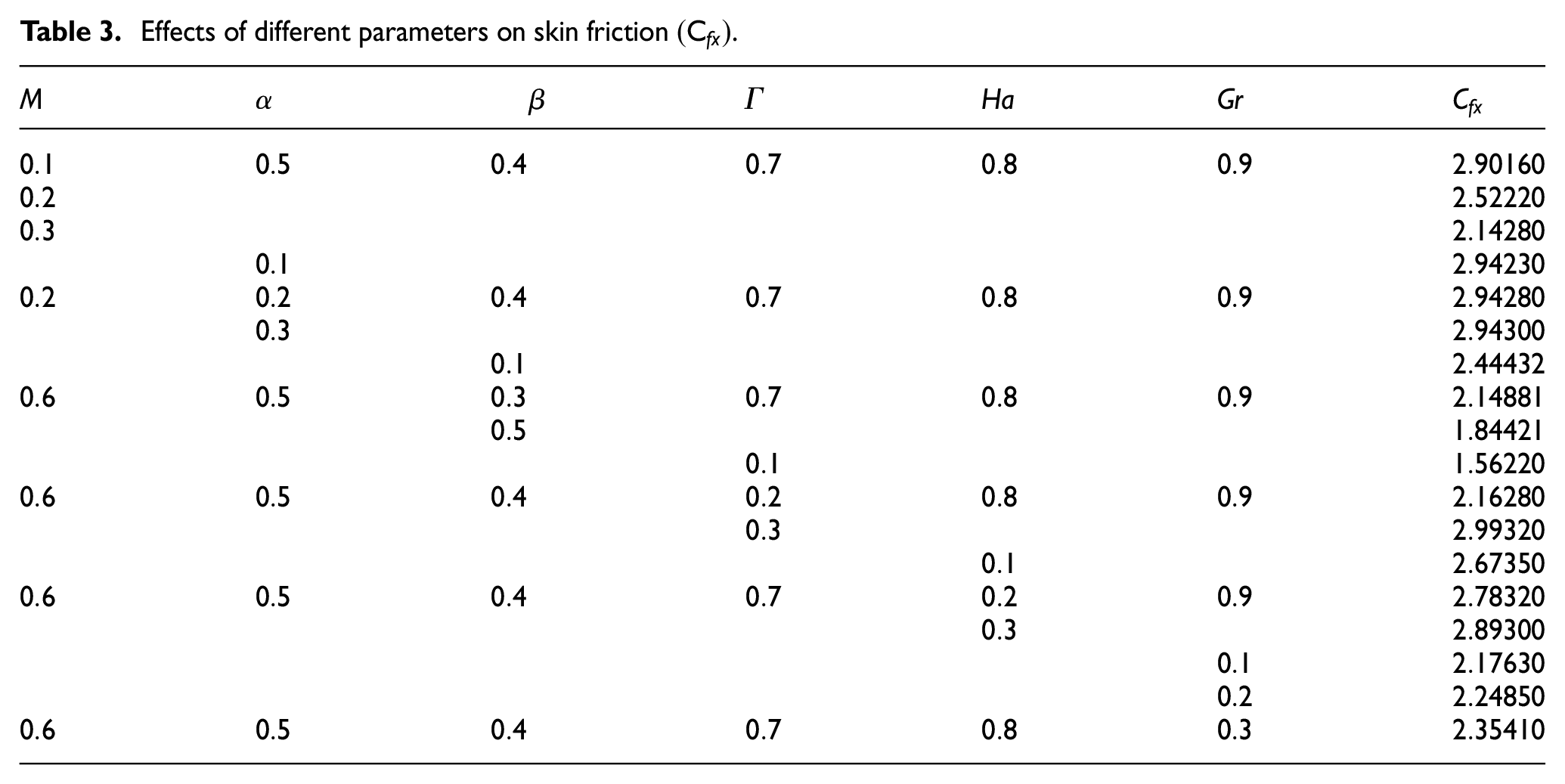
The value of skin friction increases by increasing modified Harman number and velocity slip parameter while reverse trend is observed by enhancing magnetic parameter (see Table 3).
The radiation parameter, temperature dependent heat source parameter and solid volume fraction tend to augment the value of Nusselt number at the Riga surface (see Table 4).
The presence of nonlinear heat radiation and nonlinear heat generation vividly improve the rate of heat transfer of the nanolubricant
The computations reveal that our results are in excellent agreement with the existing study.
Effects of different parameters on skin friction
Effects of numerous parameters on Nusselt number

Footnotes
Appendix
Handling Editor: Chenhui Liang
Declaration of conflicting interests
The author(s) declared no potential conflicts of interest with respect to the research, authorship, and/or publication of this article.
Funding
The author(s) received no financial support for the research, authorship, and/or publication of this article.
