




Abstract
Photo-elicitation interviews (PEIs) offer valuable opportunities to access the perspectives of underrepresented groups by using images to trigger reflection on personal experiences and to mitigate power imbalances between researchers and participants. The method was applied in research on the digital practices of migrant young adults who are outside education and employment and considered at risk of social exclusion, while also constituting a highly heterogeneous group. This diversity posed a methodological challenge regarding how to select images that could meaningfully resonate across participants’ varied life experiences. To address this challenge, photographs were organised into thematic categories, with multiple images included in each category. Treating the categorised presentation of photographs as an “unknown” factor, and drawing on Bourdieu’s epistemic reflexivity, this paper illuminates how this mode of presentation can render participants’ doxic assumptions visible. We present four narratives that illustrate distinct ways in which participants engaged with individual photographs and with the categorisation of those photographs. While existing literature has primarily focused on who produces images, how they are produced, and which images are selected, this study demonstrates that how images are presented also plays a critical role in shaping participants’ reflections on social and digital practices. This insight is particularly significant for research with hard-to-reach participants in vulnerable situations and heterogeneous life experiences.
Introduction
Photo-elicitation interviews (PEIs) are part of a broader tradition of visual research methods, offering unique opportunities to access the perspectives of underrepresented groups (Brett, 2025). By introducing photographs into interviews, researchers can evoke responses and emotional insights that are often inaccessible through words alone (Harper, 2002; Rose, 2012). Images allow participants to connect personal memories and affective experiences to the topics under discussion, revealing layers of meaning that traditional interviews may overlook (Bagnoli, 2009; Collier, 1957). Whether photographs are produced by researchers, participants, or co-created, the method may shift the power dynamics by enabling participants to guide the conversation (Lapenta, 2011). This makes PEIs especially valuable when working with vulnerable or stigmatized groups, where they not only facilitate richer data collection but may also empower participants by centering their voices and lived realities (Copes et al., 2018; Van Auken et al., 2010). As many scholars have cautioned (e.g., Zhang & Hennebry-Leung, 2023), using photographs that are unrelated to the context under study or that participants cannot readily relate to may fail to elicit reflective and detailed narrative accounts of the phenomenon of interest. This concern may challenge in studies on both vulnerable and highly heterogeneous group.
One such group is young people with migrant backgrounds who are not in education, employment, or training (NEET), who constitute the main participant group in this study. In Norway, nearly 10% of the population aged 16–29—around 100,000 individuals—fall into the NEET category. Many of these young adults face overlapping vulnerabilities, including mental health challenges, socioeconomic disadvantages, and limited social connections. Such factors reinforce their marginalization and reduce their opportunities for engagement in the society (Eurofound, 2016; Lidén & Trætteberg, 2019). Migrants are overrepresented among NEETs overall, particularly among those without a high school qualification, which heightens their risk of long-term exclusion from labor force or education. In addition, education and working life are increasingly digitalized, making digital literacies pivotal in either bridging or widening social inequalities (Helsper, 2017). For NEET youth, limited access to technology, low digital confidence, and exclusion from arenas such as school or work reduce their opportunities to develop these skills. This, in turn, undermines their ability to use Information and Communication Technologies (ICTs) for education, employment, and social participation (Van Deursen & van Dijk, 2015).
As Dobrusskin et al. (2024) note, the positive impact of images in interviews depends on careful attention to the power dynamics involved in image selection and to the contextual meanings participants attribute to them. To address challenges of photographic representation arising from the heterogeneity of NEET youth, we introduced images through predefined categories—migration, family, friends, household, hobbies, and welfare services. This approach foregrounded how digital practices are shaped by both fragile or non-supportive social relations and broader structural inequalities. This paper examines how the introduction of photographs through predefined categories shapes the dynamics of PEIs. Inspired by Allen’s (2009; 2011) discussion of PEI’s capacity to surface “unknown unknowns”, taken-for-granted aspects of social life that participants are often unaware of, the analysis is informed by Bourdieu’s framework of epistemic reflexivity and further engages Žižek’s (2006) concept of “unknown knowns.” Together, these perspectives are used to ask how methodological choices, and particularly the categorisation of images, may both reveal doxic assumptions and inadvertently reproduce them in the process of knowledge production.
It analyses how participants’ engagement with individual photographs, as well as with the categorisation of those photographs, shapes their narratives of digital practices. The paper presents four narratives that illustrate distinct ways in which photographs and categories are taken up and reflected upon. Overall, the study demonstrates that how images are presented plays a critical role in how participants reflect on their social practices, a finding that is particularly significant for research with hard-to-reach participants who are in vulnerable situations and constitute a heterogeneous group.
The following sections begin by outlining reflexivity as a theoretical framework, followed by a review of literature on PEIs, particularly in relation to research with understudied groups. We then contextualize the study and describe the methodological approach. The article continues with a presentation of the four narratives and ends with concluding remarks.
Epistemic Reflexivity as a Theoretical Lens
“Reflexivity” as a conceptual framework is central to methodological scholarship and has most often been used to address the social relation of knowledge, that is, the researcher’s relation to knowledge such as researcher’s subjectivity and social and cultural biases may affect the research process (Finefter-Rosenbluh, 2017). Autobiographical and autoethnographic reflections (Seddighi, 2022) are among the most common reflexive practices in research and typically situate knowledge production by disclosing the researcher’s background or emotion may shape the research object. Reflexivity also refers to its epistemic relation, namely how the research object is constituted and objectified (Maton, 2003). Pierre Bourdieu’s approach to epistemic reflexivity offers critical lens to scrutinize the conditions under which knowledge is produced beyond researcher’s individual lens (Bourdieu & Wacquant, 1992), which he defines as “the objectivation of the subject of objectivation” (pp. 71–72). Epistemic reflexivity thus involves “objectifying objectification”: turning analytical tools, categories, and assumptions back upon themselves to reveal how social positions, disciplinary logics, and intellectual fields structure knowledge production. As Bourdieu (1988) argues, without understanding the forces that affect how we produce knowledge, the progress of knowledge itself is at risk of being stalled. From this perspective, epistemic reflexivity draws attention to assumptions that are tacitly acknowledged yet rarely interrogated, dimensions of knowledge that are recognized as partial or uncertain but nonetheless organize inquiry.
Building on this Bourdieusian emphasis on reflexivity, the notion of the “unknown” in PEI offers a concrete methodological entry point for examining how taken-for-granted practices shape both participants’ accounts and the research process itself. Previous research on PEI has highlighted its capacity to surface forms of the unknown that remain inaccessible in conventional interviews. Allen (2011), for example, introduces the notion of the “unknown unknown” to describe elements of social life that are so taken for granted that participants are often unaware of them. In an earlier study, Allen (2009) shows how photo diaries revealed the informal “5 cm rule” among students in New Zealand—a gendered norm governing physical proximity that rarely surfaced in interviews precisely because it was experienced as self-evident. Such work suggests that PEI can make visible doxic practices by disrupting what participants assume does not need to be articulated, thereby offering a productive entry point for interrogating the epistemic limits of both everyday knowledge and the method itself.
However, if PEI is capable of revealing participants’ doxic practices, it also raises a parallel reflexive question about the doxic assumptions embedded in the method itself. In this context, the concept of “unknown knowns” (Žižek, 2006) is useful for illuminating how taken-for-granted norms shape research methods themselves. Žižek discusses unknown knowns most explicitly in the context of ideology critique after 9/11 and the War on Terror, where he uses the term to describe implicit assumptions and beliefs that Western societies “do not know that they know,” yet which nonetheless structure political judgment, moral reasoning, and public discourse (Žižek, 2006, p. 137). Applied to PEI, the reflexivity through the concept of unknown knowns provides a tool for examining how PEI introduced in categories can render doxic assumptions of participants reproduced in knowledge production. Reflexivity, in this sense, is not understood as a corrective that removes bias, but as an epistemic practice aimed at rendering the conditions of knowledge production.
Photo-Elicitation Interview as a Research Method with Understudied Groups
As a research method, PEI falls within the tradition of visual research methods, which include a range of visual approaches, such as photovoice and video ethnography. The underlying idea of PEI is to insert photographs into the research interview to evoke responses that might be difficult to reach through words alone (Harper, 2002; Rose, 2012). Harper (2002) suggested that the distinction between image-based interviews and those relying solely on words lies in how we react to these two different forms of symbolic representation. Images can evoke deeper elements of consciousness (Greig et al., 2012; Harper, 2002). Collier (1957), who first employed this method to study mental health in changing communities in Canada’s Maritime provinces, argued that photos enhanced the participants’ memory and minimized misunderstandings.
Epstein and colleagues (2006) also recommended photo elicitation as an “icebreaker activity” to facilitate deeper and more challenging discussions, as the pictures can help increase participant engagement in the research interview. Since understudied or marginalized participants may perceive the interview setting as involving significant power imbalances, this method has the potential to reduce disparities in power, class, and knowledge between researchers and participants (Van Auken et al., 2010).
There are three main approaches to how photographs can be produced: researcher-produced photos, participant-produced photos, and photos co-produced by the researcher and participant (Lapenta, 2011). The methodological aspect lies in the question of who takes the photographs, as the context of the photo production process might be as important as the content of the photos and interviews.
In the first approach, the photos are either taken or selected by the researchers. For example, in a study on the meaning of subcultures, the researchers captured photos of everyday activities within a particular subculture. These photos were later used in interview settings to prompt participants to discuss and interpret the events depicted (Snyder & Ammons, 1993).
Second, photos co-produced by the researcher and participants are highly inductive and engage participants during various stages of the process. This approach fosters collaboration, with researchers and participants working together to discuss relevant keywords or themes for the photos and later taking or selecting the photos together through dialogue (Cretin et al., 2017).
In the third approach, participant-produced photos can either be taken by the participants themselves or selected by them before the interview. For instance, in a study on home diets, participants were asked to photograph all aspects of their diet and eating at home, such as food shopping, cooking and eating facilities, and mealtimes, and to submit at least one digital photograph via email each day over the course of a week (Mills et al., 2017). This approach increases opportunities for marginalized citizens to be more meaningfully involved in data generation, enabling greater agency (Vänskä et al., 2020). It is also used when the research engages participants with intellectual disabilities (Sigstad & Garrels, 2021), increasing their empowerment during the interviews (Weiss et al., 2017). In this approach, the photos serve as a starting point for the interviews, with the discussion guided by the participants’ interpretations of their own images (Lapenta, 2011). The photos can also be included in the data material and be the subject of analysis, in line with the inductive approach. The researcher and participants have the opportunity to discuss the meaning of the photos collaboratively (Harper, 2002). However, ethical questions related to the use of participant-produced photographs may challenge decisions about how and when this approach should be applied in the research process (Copes et al., 2018; Dobrusskin et al., 2024).
Regardless of which approach one takes in the production of photographs, Hidalgo Standen (Hidalgo, 2021) noted that the method creates a different flow in the interview process than in a traditional interview setting, for the following reasons: (a) pictures are polysemic, allowing for the coexistence of multiple meanings that may vary with each participant’s experience (Crisafulli Rodriguez, 2013); (b) pictures can elicit memories that connect respondents to the emotional and affective dimensions of their experiences (Bagnoli, 2009; McGowan, 2016) thus promoting extended and more detailed narratives about participants’ experiences (Clark-Ibáñez, 2004); and (c) pictures can capture moments that cannot be existentially repeated (Byrne & Doyle, 2004).
This different interview flow makes the method particularly suitable for use as a stimulus to elicit responses, reactions, and insights from understudied or hard-to-reach participants (Brett, 2025; Collier, 1957). For example, in cross-cultural settings, photographs may offer help to reduce linguistic barriers which might otherwise affect communication between participants and researchers (Shaw, 2013). In a different context, LGBT + teachers were asked to take photographs of school spaces where they felt safe or unsafe (Brett, 2025). These images served as stimuli during the interviews, enabling the participants to articulate their personal experiences and uncover insights that would be unlikely to emerge from traditional interviews (Brett, 2025). By engaging participants in this way, photo elicitation amplifies the voices of vulnerable or marginalized groups, particularly when the research theme is emotionally charged or involves sensitive or stigmatized topics (Collier, 1957; Greig et al., 2012).
As many scholars have cautioned (e.g., Zhang & Hennebry-Leung, 2023), using photographs that are unrelated to the context under study or that participants cannot readily relate to may fail to elicit reflective and detailed narrative accounts of the phenomenon of interest. This concern was central to the methodological challenge we faced in this study, as the young adults we interviewed were situated in vulnerable circumstances while also constituting a highly heterogeneous group. Their experiences were shaped by intersecting aspects of identity, such as ethnicity, age, and sexuality, as well as by factors contributing to disconnection from education and employment, including language barriers and mental health difficulties. To ensure that the images were both relevant and genuinely reflective of participants’ lived experiences, the photo production process therefore had to be grounded in a nuanced understanding of this diversity. For example, creating a single set of photographs to represent a diverse migrant group risks obscuring important differences in culture, religion, gender norms, and socioeconomic position. This methodological tension is elaborated further in the next section.
Contextualization of the Study: Digital Inequalities Among Migrant Young Adults outside Work and Education
In Norway, almost 100,000 young people under the age of 30 (9.7%) are considered to be not in education, employment and training (NEET) (Pettersen, 2023). Around 40% of this population have immigrant backgrounds (SSB, 2024). The term NEET has been criticized for failing to effectively identify those genuinely at risk of marginalization or exclusion from labor market and education (MacDonald, 2011). It encompasses a highly heterogeneous group with different intersecting vulnerabilities (Eurofound, 2016) but often homogenizes a diverse population under a single label (Kleif, 2020; Yates & Payne, 2006) and defines young people by what they are not, rather than by their capacities and potential (Yates & Payne, 2006). Moreover, up to four out of five young people classified as NEET are not at risk of long-term exclusion from labor market or education (Kleif, 2020), as their NEET situation is often temporary. In addition, the concept reflects societal impatience regarding the expectation that young people complete their education within a prescribed timeframe (Vogt, 2017) and reinforces expectations that they will follow a linear life course. Additionally, the focus on who “counts” as NEET complicates outreach, as the label may not resonate with those it is intended to describe (Holte, 2017). Although the term is used internationally to highlight underutilized human capital and estimate unemployment rates (Eurofound, 2016), different countries and organizations apply varied definitions and sub-categories to describe NEET (Cuzzocrea, 2014). These variations stem from differences in welfare systems, citizens’ rights, opportunities for training, and cultural practices surrounding the transition to adulthood across countries (Cuzzocrea, 2014).
The Norwegian labor market often requires formal qualifications (Markussen, 2017), and incomplete upper secondary education is thus a key predictor of NEET status (OECD, 2018). Family-related risk factors include low socioeconomic status, parental unemployment, and low parental education (Fyhn et al., 2021). Many NEET young adults also experience poor mental health. Those with migrant backgrounds are overrepresented, likely due to socioeconomic rather than purely migrant factors. Qualitative research highlights their psychosocial challenges, including loneliness, weak interpersonal ties, bullying, insufficient emotional support, and perceived neglect from public services (Fyhn et al., 2021; Lidén & Trætteberg, 2019). NEET young adults also report lower levels of trust than their peers (OECD, 2018), and these experiences can leave lasting “scars” that affect their future interactions.
This paper forms part of a larger study examining how migrant youth who are outside education and employment make sense of their digital practices and the favourable outcomes they may derive from them in everyday life. The study seeks to identify how social and contextual factors, particularly those associated with an increased risk of disconnection from education and employment, shape patterns of practice, strategies, and struggles in achieving positive outcomes from digital engagement. These outcomes include interaction with peers and extended social networks, as well as access to welfare services that have increasingly been reconfigured through digital technologies.
As digital technologies have become integral to everyday life, particularly in highly digitalised societies such as Norway, they play a crucial role in both working life and access to welfare services. Despite this, we still know relatively little about how young people at risk of social exclusion—such as those not in education, employment, or training (NEET)—are able to harness digital technologies to their advantage. Public debates often assume that growing up in digitally saturated environments naturally equips young people with digital skills (Evans & Robertson, 2020). However, research demonstrates that socioeconomic disadvantages, cognitive and mental health challenges (Livingstone et al., 2022), restrictive parental mediation (Livingstone et al., 2017), and unsupportive family environments reinforce risks of digital exclusion (Helsper, 2017; Mascheroni et al., 2016; Seddighi & Corneliussen, 2025), factors that frequently overlap with pathways into NEET situations.
At the same time, individuals with similar socioeconomic backgrounds may have markedly different levels of supportive relational ties, resulting in substantial variation in digital skills (Helsper, 2017), exposure to digital tools, and capacities to interpret algorithmic systems. Social networks, including family members, peers, and professionals working with young people, can mitigate structural disadvantages by shaping opportunities for learning, interpretation, and support, and by influencing whether digital engagement translates into positive outcomes (Helsper, 2017; Seddighi & Corneliussen, 2025).
Methods of Inquiry
This paper draws from 17 interviews with participants aged 17 to 28, all with migrant backgrounds and not in employment or education. Young people who are not working or studying with migrant backgrounds can be difficult to recruit, as their connections to and participation in social institutions such as work, education and NGOs are limited. To recruit participants, flyers about the project and an online registration form were distributed through more than 40 organizations, including libraries, grocery stores, and employment training centers. Many of these organizations also shared the digital flyer on their social media platforms.
Research Design
The photographs were collected by three members of the research team. The interview guide provided a useful starting point for understanding digital media use in the context of the participants’ daily relationships and how these practices evolved in response to changes in those relationships. We had three groups of keywords: institutions, such as religion, family, and welfare services; physical and online spaces, such as living rooms and platforms; daily activities, such as food shopping, gaming, and playing football. While creating the interview guide, we collected pictures from Google and other sources, paying specific attention to visible diversity in the pictures— for example, showing individuals with different skin colors or religious backgrounds.
In another round of collecting pictures, we asked the project’s co-researcher (fourth author) to take or collect pictures from Google using the same three keywords. Co-researcher is a young woman in her early twenty. The co-researcher was invited to discuss the research, interview guide and develop the method of research because of her life experiences that resonated with the participants. She took photos around the local area with the idea that these might be recognizable to the participants during the photo elicitation interviews. This entailed, for example, taking a photo of a specific welfare office in the city, rather than using a generic image found online. She also drew on her own experience of being in a NEET situation, reflecting that small errand, which might otherwise seem insignificant, can be important parts of daily life when one is not involved in education or employment. For instance, activities such as grocery shopping can be something done outside of the home that brings structure to one’s day. Therefore, she photographed gyms, pharmacies, and grocery stores, for example. Considerations of what not to photograph were also relevant in this process. For instance, she deemed the theater and the art museum to be less relevant images/spaces of interest for the target group, due to financial factors.
The included pictures were further refined through discussions among the research team and the co-researcher. The process of collecting pictures and developing an interview guide was parallel. Grouping the photographs was intended to facilitate the interview process for participants, while allowing multiple images within each category increased diversity and the likelihood that the photographs would be relevant to participants’ lives.
Before the interviews began, the participants were invited to walk around the table, look at the pictures, and ask questions. We explained the purpose of the pictures but also underscored that it was up to the participants themselves whether they wanted to use them. This process was intended to create a friendly and relaxed interaction at the start of the interview (Epstein et al., 2006), with the aim of helping to reduce the power imbalance between interviewer and participant (van Auken et al., 2010).
The study reported its ethical considerations and procedures to the Norwegian Data Protection Services for Research and received guidance from the institution. Participation in the interviews was voluntary. To ensure transparency in the research process, participants were informed of the project’s aims prior to the interviews. They received both written and oral information about the research team and their rights as research participants. All participants provided written informed consent, and their anonymity was strictly maintained.
Research Limits
Prior to designing the study, we held several meetings with members of research projects at the Norwegian Research Center, which has extensive experience conducting research on youth exclusion. These meetings focused on practical and ethical considerations related to participants’ involvement in taking photographs. The outcomes of these discussions were further elaborated with the research team, several of whom have long-standing experience conducting research with this specific group of youth and other hard-to-reach participants.
Through these discussions, we identified several anticipated challenges, including difficulties in recruiting participants, motivating them to take photographs, and arranging multiple meetings to introduce the photographic process, discuss thematic framing, and conduct interviews. We were also advised to consider ethical risks related to the transfer and storage of photographs (Copes et al., 2018; Dobrusskin et al., 2024), particularly the possibility that images might contain sensitive information that could increase participants’ vulnerability.
Despite our interest in enhancing participant agency (Vänskä et al., 2020), the research team ultimately decided to design the PEIs using researcher-selected images. To nevertheless amplify participants’ voices and ensure that the images resonated with their lived experiences, we invited a co-researcher to participate in the design of the research method. As Chimirri (2019) notes, involving youth in research through co-research allows young adults to help shape both the object and the objectives of the study. Within such approaches, youth engagement extends beyond participation to include roles as ‘research collaborators’ or ‘co-researchers’. This reflects an attempt to recognise that power in the research process is shared and can move between researchers and participants in different ways.
Narrative Analysis
This paper explores how the categorization of images in the PEI method—an aspect that has received little research attention—might influence participants’ reflections during the interviews. To address our research question, we adopted an exploratory approach to understanding the “unknown” factor of categorization and benefited from narrative analysis. This analytical design enabled us to explore how participants constructed meaning not only through the images themselves but also through the ways in which the images were grouped and presented. Narrative analysis focuses on how individuals use stories to make sense of the world, treating the narratives themselves as objects of inquiry (Grønning, 2014). It involves interpreting how participants make meaning from their lived experiences and how they understand and articulate their social realities (Czarniawska, 2004; Riessman, 1993). Drawing on Bruner’s (1991) conception of narrative as a fundamental mode of human cognition, we approach storytelling not merely as a form of communication but as a primary means by which people interpret experiences, negotiate social norms, and respond to change.
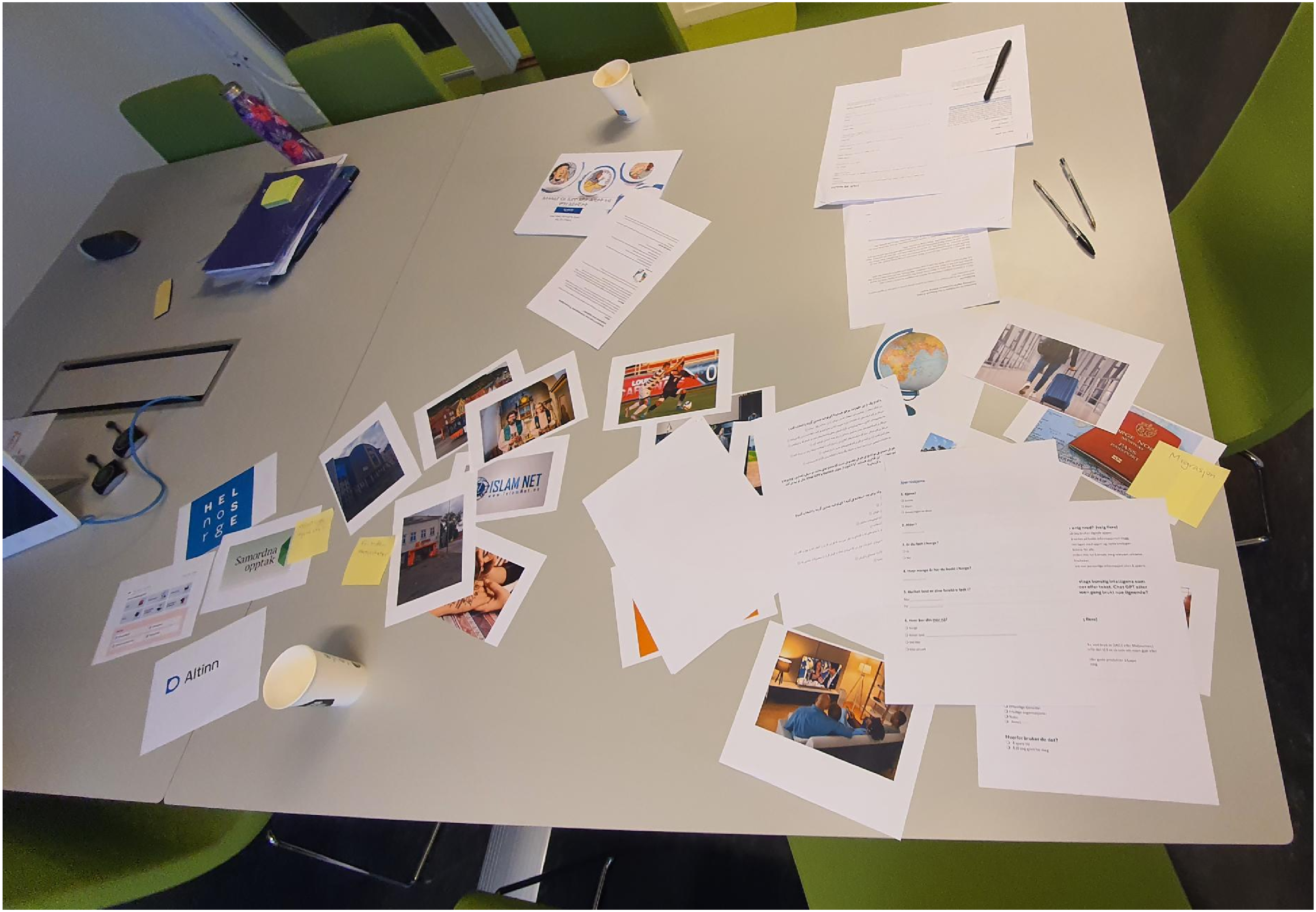
At the end of each interview, the participants were invited to share their thoughts on the images, including any reflections or recommendations for methodology they wished to offer (Figures 1 and 2). To develop a narrative around the “unknown” and to illuminate the implications of PEI for data production, we revisited these reflections in relation to how participants discussed their digital media practices. By bringing these dimensions together, we constructed narratives that illuminate the often-hidden implications of our adaptation of the PEI method. To make these implications analytically visible, we distinguish between instances in which participants primarily engaged with individual photographs and those in which they engaged with the categorisation of photographs. In this sense, our analysis of the “unknown” extends beyond participants’ explicit reflections on the method to uncover how the presentation of photographs shapes the sense making of their engagement with digital media. These dynamics are illustrated through four narratives presented in the following section. Categorized photographs for PEIs Interview table with photographs
Participants Engagement With Photographs
We organized all PEIs in a similar way by laying the photographs out on a table and beginning the interviews with an introduction to the images. Our intention was for the photographs to function as an icebreaker, potentially reducing power asymmetries between the interviewer and the participant as scholars had suggested (Epstein et al., 2006). Given that the project addressed stigmatized topic of being in NEET-situation, allowing time for participants to engage with images depicting diverse ethnicities and life experiences was also intended to ease discomfort and reduce feelings of stigma (van Auken et al., 2010). Photographs taken in the local context, such as familiar buildings and modes of transport in the town, proved particularly useful, as they enabled participants to identify and reflect on places and experiences they recognized. We believe that this shared frame of reference helped establish common ground and may have contributed to reducing perceived differences between the researcher and the participant. Moreover, the fact that these photographs were taken by co-researcher (fourth author) with social experiences similar to those of the participants may help explain why not only the local setting, but also specific places, resonated with them.
Framing Social Relations
While in many cases the images functioned more as an icebreaker, for some participants certain photographs activated a strong reflection on self and social relations that framed how they spoke about their lives (Clark-Ibáñez, 2004). One such participant was Raheleh, a woman in her early twenties, for whom the image of henna art (see Figure 3) provoked an immediate and personal response. Before formally introducing herself, she pointed to the photograph and explained that she knew how to design henna and use to paint it on female friends within her religious and linguistic community and especially female friends from the mosque. Images presented under the category of hobbies/leisure activities included both generic pictures sourced online (such as food preparation and henna design) and photographs taken of local places, including the cinema, library, and shops
As the interview shifted to digital platform use (such as Instagram and TikTok), Raheleh consistently interpreted how algorithms in platform function through the lens of these social ties. She explained how TikTok amplifies content engaged with by friends, “if my friends like, comment on, or repost a video, I’ll get it in my feed too”, which created tensions when their political views conflicted with her own. She experienced the algorithm as unfair, not the algorithmic logic itself, but the asymmetry it produced: “I think it’s unfair that they can post whatever they want because the world is on their side.”
She understood herself as a religious minority within Islamic culture. Rather than actively training algorithmically curated contents on digital platforms, Raheleh described a cautious negotiation of what to repost or ignore, shaped by her awareness of how platform recommendations circulate within her social network. Algorithmic curation thus became a site where competing political and cultural positions were negotiated, reinforcing her sense of belonging within dominant Arabic and Islamic discourses while simultaneously positioning her as a religious minority within Arabic culture, rather than as a minority within Norwegian society. The image of henna provoked reflection on how her consumption of information on digital platforms is shaped and constrained by the communities with which she interacts.
Triggering Emotion and Detailed Narratives
In another case, photographs functioned as a trigger for much deeper emotions and memories, as many scholars have identified in their research (Bagnoli, 2009). This is most evident in the narrative of Fatima, a woman in her early twenties, who reacted to a photograph of a building in town where equipment for hobbies can be purchased (see Figure 3). As we looked through the photographs laid out on the table, she exclaimed, “Oh, I know this shop, I used to buy things for gaming here, good place for someone like me.”
Fatima has chosen to reduce or cut contact with her family and friends. She also intentionally keeps distance from what she calls “mainstream culture” because she experiences it as too much and emotionally difficult. Being exposed to it reminds her of past experiences of bullying, racism, and not receiving enough care or support. As she explained, “I don’t think I’m on the same side of Instagram as ordinary people.” She actively shaped her digital environment by seeking out subcultural content. This practice, enacted as a form of self-care, can be understood as part of a dynamic through which Fatima navigates vulnerability, pointing to broader socio-algorithmic inequality. Consistent with prior research, factors such as socioeconomic disadvantage (Helsper, 2017) and mental health challenges further intensify these vulnerabilities (Mascheroni et al., 2016).
As the interview progressed, the emotional intensity of these reflections increased, illustrating how images can elicit detailed and embodied narratives of social experience (Clark-Ibáñez, 2004). Toward the end of the interview, the participant began to recall increasingly detailed experiences of online sexual harassment and started moving back and forth in her chair. The interviewer interpreted this rhythmic movement as a sign of growing discomfort. The interview was therefore paused, and a short break was offered, during which the participant was invited to take a brief walk and have some food available in the interview room. After the break, the focus of the conversation was shifted to a more pleasant topic, dreams for future.
Engaging With Grouping of Photographs
Different from the examples above where the participants reflect on individual photographs (Clark-Ibáñez, 2004; Harper, 2002) despite the fact that they were presented in groups, in some cases the categories through which the photographs were represented, were the point of discussion and reflections. Here we present two of these reflections, as they are most visible in our sample.
Negotiate the Substance of Categories
The title of each category was written on a sticker above relevant photographs. “Now I want to explain what the pictures are. We have pictures of different themes, here are the images about migration, family, friends and hobbies,” the interviewer explains at the beginning of the interview. Conducted in Dari, the category hobbies does not translate easily. Zeynab, a woman in her early twenties from Afghanistan. The interviewer elaborates: “the activities you like to do at home or outside.” This moment marks the start of a negotiation over the substance of the category itself, what counts as a hobby, and whether such a category is meaningful within her social and cultural everyday life.
Zeynab is still in a process of resettlement as she arrived in Norway through family reunification for three years ago. Throughout the interview, the category of hobbies repeatedly redirects the conversation toward duties related to motherhood. Probably not strange as the interviewee had got a small child. Her description of daily, centred on caring for her young child and shopping, points to a life rhythm that is structured by caregiving responsibilities. As she explains: “ I use to go out with my child once a day, I go to shopping, shopping center and get back home.”
Rather than naming leisure activities in the abstract, Zeynab explains her days through caregiving, household routines, and maintaining family relationships. Using digital tools were similarly explained in relation to these activities, such as finding cheap tools for her child, going out for shopping with the child for which she used to use print-screened maps as she did not have mobile data.
While earlier research suggests that photographs can mitigate linguistic barriers in cross-cultural communication (Shaw, 2013), Zeynab’s engagement with the categorisation shows how socio-cultural differences, here also shaped by the temporal condition of mothering for a small child, structure how digital practices are interpreted. Furthermore, while images are often understood as the primary stimuli in PEI (Brett, 2025), this narrative suggests that groupings of images can themselves function as powerful interpretive stimuli. Reflection on categories, in turn, can bring into view taken-for-granted assumptions that participants do not explicitly recognise as knowledge, yet that shape how social and digital experiences are interpreted and narrated. In this way, categorisation functions as both a cognitive and normative framework, shaping what kinds of digital participation are recognised or valued.
Structuring Mental Focus
Whereas in the previous narrative the photo-elicitation categories primarily functioned as triggers for discussing social norms, the following case illustrates how categories can also operate as a stabilizing interpretive device in contexts of uncertainty. Unlike many interviewees, Sasha did not initially engage with individual photographs. Rather than anchoring his account in specific images, he oriented himself toward the broader categories.
Sasha, a Ukrainian man in his early twenties, was navigating resettlement in a Norwegian town after Russia’s invasion of Ukraine. Having received asylum, he was actively seeking employment. Although categories such as friendships and hobbies were included to explore how social networks are formed and maintained, Sasha engaged with these topics only briefly. He remained reserved when discussing friendships, describing contact with former classmates in Ukraine as limited to short exchanges, and spoke pragmatically about hobbies such as chess rather than building social ties. During the interview, however, he interacted quietly with the photographs, smiling and occasionally rearranging them on the table.
When asked about digital media use, Sasha emphasized that he distanced himself from digital platforms such as Instagram, TikTok, and Facebook, explaining that he actively avoids negative or distressing content. Instead, he sought motivational videos that, as he puts it, helped him “keep [his] brain in good shape” and maintain professional competence. He described this strategy as oriented toward meeting his “basic needs,” which he defined in concrete terms: electricity, water, the internet, my mobile, food, and housing. When we asked about the method and pictures, he again engaged with the themes, rather than pictures. He said the pictures and themes have helped him to think about his priorities. He ordered the categories by importance, placing migration, family, and housing first. As he explained, securing his basic needs, was a prerequisite for later focusing on hobbies and social life, he added. While in the case of Fatima, as previous studies (e.g., Bagnoli, 2009) also show images can elicit memories and affective dimensions of lived experience, in this case the grouping helped Sasha to remain focused in the interview, highlighting his mental need. Rather than primarily evoking memories, reflection on the categories illuminated an unknown known: Sasha’s need for a stabilising framework through which to order his thoughts and experiences at a time when his life may have felt chaotic or uncertain, in contrast to Fatima’s experience. This ordering process also brought into view how mental health challenges may not only lead to social withdrawal, but also place responsibility on young adults to individually manage and adapt their digital practices to their mental health needs, often in the absence of broader social support. (Livingstone et al., 2022; Mascheroni et al., 2016).
Concluding Remarks
While existing literature has predominantly focused on who produces images and how they are produced (Lapenta, 2011; Snyder & Ammons, 1993), as well as on which images are presented to participants (Harper, 2002; Weiss et al., 2017), this study demonstrates that how images are presented also plays a critical role in shaping knowledge production. Both forms of engagement functioned as mediating devices rather than neutral elicitation tools (Clark-Ibáñez, 2004; Harper, 2002). Both photographs and categories actively shape how participants articulate their lives and digital practices. The differences between the engagement with individual photographs and engagement with groupings become most apparent in the modes of access to experience they afford and in the forms of knowledge they foreground. Engagement with photographs tends to elicit affective, embodied, and memory-based narratives (Bagnoli, 2009; McGowan, 2016). In the cases of Fatima and Raheleh, particular images provoked strong emotional responses, identity articulations, and detailed accounts of lived experience (Collier, 1957; Greig et al., 2012). By contrast, engagement with groupings of photographs more frequently elicited reflective, ordering, and interpretive practices. For Zeynab and Sasha, the categories prompted reflection on norms, priorities, and life structures rather than on emotionally charged memories. At the same time, because participants’ reflections are shaped by different conditioning factors at the moment of the interview (Crisafulli Rodriguez, 2013), grouping photographs can support diverse modes of engagement.
Accordingly, socio-digital inequality manifests differently across the two modes of engagement. In image-based engagement, inequality emerges through forms of emotional exposure, risk, and vulnerability, including experiences of harassment or distress. In category-based engagement, inequality becomes visible through restricted horizons of action, normative life structures, and constrained prioritisation, shaping what participants perceive as realistically attainable.
Learning from this reflexive practice, we recommend allowing participants time to review the photographs before the interview begins and inviting them to share their reflections on the method itself in the end of the interview. The initial engagement can help participants orient themselves and establish a more balanced interaction. In addition, involving co-researchers in producing images from local settings may enhance relevance and resonance, particularly in research with hard-to-reach groups. As photo-elicitation interviewing may evoke strong emotional memories, we strongly recommend that researchers prepare for emotional reactions and prioritize participants’ well-being over the pursuit of high-quality data.
Footnotes
Acknowledgments
We would like to express our sincere gratitude to all young adults who kindly took part in the research. We are also grateful for conversations with researchers at the Norwegian Research Center on youth exclusion, particularly those involved in the project “Relational wellbeing in the lives of young refugees in Finland, Norway and the UK”, and especially to Marte Knag Fylkesnes. We also thank Mona Tahani, artist and youth worker, for methodological discussions.

Author Contributions
The first author is the main author of the manuscript and has also led the research project. The second author and third author have greatly contributed to conducting the research. All authors have contributed to developing PEI and interview guides. All co-authors have seen, read, commented and agreed with the contents of the manuscript.
Funding
The authors disclosed receipt of the following financial support for the research, authorship, and/or publication of this article: This paper presents findings from the research project DIGcapabilities: Fostering digital capabilites among youth, funded by the Research Council of Norway with the funding ID 343081.
Declaration of Conflicting Interests
The authors declared no potential conflicts of interest with respect to the research, authorship, and/or publication of this article.