




Abstract
Our study describes the utility of group object narrative to understand the experiences of women affected by humanitarian crises. Drawing on a case study from the Swat Valley, Pakistan, we illustrate how objects act as an entry point to understand participants gendered experiences of the 2022 floods. Our findings demonstrate how this method can foster solidarity among participants, illuminate oft overlooked gender-specific challenges, and facilitate the development of practical solutions. By centering the voices of participants, we describe how group object narrative can disrupt existing power structures and amplify the voices of marginalized groups, especially women. This methodology provides a culturally appropriate, decolonial alternative to traditional research approaches, empowering participants to co-create narratives and pinpoint critical issues. The insights gained hold significant implications for public health research and practice. In particular, group object narrative can generate findings that directly translate into practice, and actionable change.
Introduction
Object-based research invites participants to select personally significant objects that help stimulate and contextualize their reflections on their experiences. Unlike direct questioning, which can limit responses to predefined categories, object elicitation encourages participants to engage with material artifacts that hold emotional, symbolic, and biographical significance (Gilles et al., 2005). In this manuscript, we will describe how research with objects, particularly group object narrative, can offer unique insights when researching sensitive topics with marginalized groups experiencing humanitarian crises.
Research with objects has been increasingly employed in qualitative work as a way to challenge traditional structures and monomodal approaches to research (Willig, 2017; Reavey & Johnson, 2008). Amongst the most well-known method is photovoice which was developed by Wang and Burris (1997) as a process by which participants can be empowered to identify and represent their communities in meaningful discussions of photographs. Similar to other object elicitation methods, participants engage with visual material to generate insights as well as a broader understanding of the relationships between people and artifacts. These methods recognize that objects serve as repositories of memory and meaning, anchoring individual and collective identities (Willig, 2017).
Importantly, object-based methods have been highlighted for their effectiveness with marginalized and disenfranchised groups. They help address power imbalances inherent in the research process, provide entry points for discussing sensitive topics, and enhance communication especially among participants with limited literacy (Johnson & Martínez Guzmán, 2013; Chubb, 2025; Charura & Wicaksono, 2023; Plumb, 2008). By encouraging active participant engagement, these methodologies enable individuals to articulate complex experiences, thereby enriching the researcher’s understanding (Chubb, 2025).
This manuscript introduces the concept of group object narrative as a tool for remembering, positioning objects as significant entry points into individuals’ memories (Hoskins, 1998). Drawing on a case study from the Swat Valley, Pakistan, we explore how engaging with objects can provide critical insights into sensitive subjects and offer access to tacit knowledge. Building on existing literature that highlights objects as sites of knowledge, we demonstrate how objects shape and influence what we come to know (Barad, 2007; O’Brien & Charura, 2024). Our approach describes the process of meaning making with objects while highlighting how this method can facilitate the articulation of embodied and experiential knowledge (Kahlke et al., 2025). We contend that, particularly in the context of humanitarian crises, research that incorporates objects allows for a thoughtful inquiry into difficult experiences (Howarth & Quirke, 2016; Jacques, 2007; Rowlands, 2008). Drawing on community-based participatory research in Pakistan’s Swat Valley, we present a case study focused on examining the gendered impacts of the 2022 floods on women’s health and wellbeing. In this article, we critically reflect on how group object narrative allowed deeper insights into the experiences of women. We also demonstrate how group object narrative allows for tangible, actionable insights for public health practitioners. Before describing our study, we situate our analysis within the existing scholarship on object elicitation methods and decolonial research practices.
Object Elicitation Methods and Group Object Narrative
A body of literature has described how objects can act as artefacts and connect individuals through space and time (Pahl, 2012; Woodward, 2016). Objects signal how individuals either integrate or differentiate themselves from others in society and how they interpret their role within their community (Csikszentmihalyi & Halton, 1981). Willig (2017) reflects on their 2015 study, where they used object elicitation to explore the lived experiences of late-stage cancer, to account for the rehearsed narratives common among cancer patients in medical and social contexts as they may arise in structured interviews. For instance, a participant brought a small coffee maker to the interview, and through reflection, she was able to describe the importance of sensual pleasures, such as the anticipation of her freshly brewed coffee, at that stage in her life (Willig, 2017). Object elicitation acts as a sensory strategy to stimulate participants’ narratives, presenting an opportunity to incorporate elements of qualitative research complementary or in addition to traditional approaches (Olmo-Extremera et al., 2024). This demonstrates the unique ability of object elicitation to surface embodied, and affective dimensions of experience that are often left unarticulated in conventional interviews, where participants may feel constrained by rehearsed scripts or the expectation to provide coherent, normative and linear narratives. By allowing participants to engage with objects that hold personal significance, this method disrupts the tendency toward rehearsed or socially conditioned responses, creating space for participants to articulate more nuanced aspects of their lived realities.
In traditional research methods, objects are often treated as secondary sources that support the narratives provided by participants. This approach aligns with dominant understanding of objects as passive, material entities that merely function as evidence or context to enrich human stories. For instance, objects like photographs, letters, or heirlooms are commonly used to corroborate participant accounts or provide additional layers of meaning, often framed as secondary to the human subject’s experiences and interpretations (Miller, 2010; Nordstrom, 2013). However, this perspective has been increasingly challenged, as scholars have demonstrated how objects hold agency and provide rich, independent insights into social processes and cultural practices (Ingold, 2013; Latour, 2005). Nordstrom’s (2013) work on family history in the Midwest exemplifies this changing perspective by treating objects as primary sources and active participants in the knowledge production process. She challenges the idea of using objects as a secondary source to support the participant as a primary source in typical qualitative research and instead uses both objects and participants as primary data sources in the production of knowledge in her study (Nordstrom, 2013). Each object-interview involved the “folding” of stories and perceptions, with connective and follow-up questions used to follow these folds presented by the objects. (Nordstrom, 2013). The objects materialize a significant event in the ancestor’s life, such as a marriage, acting as a stable entity yielding information about human life (Nordstrom, 2013). In this sense, the researcher acts as a mediator for the connections between the objects and participants to tell their stories and creating a new understanding.
The use of objects in research has been emphasized as playing a critical role in shifting power dynamics by transforming the researcher and participants into collaborators and co-researchers, instead of reinforcing traditional power hierarchies of researcher and the researched (Mannion et al., 2024). By focusing on the participant’s relationship with the object, this method, especially when used within a Participatory Action Research framework, democratizes the research process and knowledge production by enabling participants to co-construct narratives that reflect their lived realities and the depth at which they engage with their experiences (Johnson & Martínez Guzmán, 2013). The ability of research with objects to support these shifts aligns with a decolonial approach to research (Charura & Wicaksono, 2023; Plumb, 2008).
Research with objects gives participants who are marginalized the platform to discuss sensitive issues in a compassionate and ethical manner. For instance, Muhamad et al. (2022) chose to use photo elicitation in their research exploring Malay women’s sexuality given its inclusivity. Photographs, either from the researcher’s photo library or from the participants, were used to prompt discussion during interviews. The objective was to understand 26 heterosexual Malay women in Malaysia and their experiences of female sexual dysfunction (Muhamad et al., 2022). Participants were asked to identify eight photographs in response to questions about living with sexual difficulties (Muhamad et al., 2022). Following this, data collected from the interviews were crafted into narratives (Muhamad et al., 2022). The photographs allowed participants to voice their thoughts on a culturally taboo topic, which enhanced discussion as they were able to explain things more clearly to the researcher (Muhamad et al., 2022). Photo elicitation creates a bridge between the researcher and culturally sensitive participants in areas such as sexual dysfunction, offering a more inclusive and considerate approach to research in public health. Building on these historical and emancipatory trajectories, we contend that group object narrative offers an innovative, culturally informed method to understand sensitive topics.
Group object narrative is an exercise in collective meaning making. Similar to other object or photo elicitation techniques, participants are presented with a specific question. They are asked to bring in an item that responds to this question. In a focus group setting, participants are asked questions about the story of the object and how it relates to the question they were presented with. After the participant shares their experiences, a photograph of each object is taken. These objects serve as entry points for others to share similar experiences. Other participants are asked if the narrative shared brought up any specific memories or related to their own personal experiences in any capacity.
Once every participant has had the opportunity to share their object and answer the questions, the group engages in a sorting exercise. Using either pre-determined categories or ones created by the group, participants are encouraged to group objects together. Once the group reaches consensus about which objects belong to which categories, they are asked to rank categories from most to least important for them. They are then asked to choose which object within each category best exemplifies that group.
After the focus group discussion, it is essential that the research team write detailed notes on each item so that once photos are developed or uploaded, they can be tagged appropriately. Furthermore, these notes are essential for crafting a narrative associated with each object.
Through this process, participants will increase their understanding of critical needs and issues in their communities while sharing their own experiences with other community members. Much like other object-based research methods, this critical dialogue allows for solution-oriented discussions among community members (Nykiforuk, 2021). Building solidarity networks amongst community members experiencing similar challenges, and critical discussions act as catalysts for change in communities experiencing persistent health inequities. The object photos themselves act as a visual representation of the challenges experienced by a community. Through photo exhibits with policy makers, academics, and community elders, they allow for thoughtful reflection on the lived experiences of community members and the challenges they encounter (Li et al., 2024).
Decolonial Research Practices
Decolonial research challenges traditional Eurocentric research approaches to study design, focus, and conduct, confronting historical research practices and colonial structures that have marginalized certain communities (Denscombe, 2025). Central to this approach is the democratization of the research process, participants are not passive subjects but active actors who shape the study from its inception through data collection, analysis, and dissemination (Denscombe, 2024). Three elements shape the decolonial framework: the commitment to deconstruct dominant power structures, acknowledgment of historical erasure, and centering the autonomy of impacted communities to make their own decisions (Omodan & Dastile, 2023). Omodan and Dastile (2023) note that, by allowing the participants to be actively involved in the creative process, researchers ensure their voices are heard and taken into consideration, which leads to better quality of information to be captured in the study. Decolonial research also explicitly rejects the idea of neutral or objective research, instead addressing the power dynamics inherent in researcher-participant relationships to promote equitable engagement and prevent unilateral benefit (Denscombe, 2024). Ethics in this context are grounded in real-world, context-specific impacts, requiring continuous reflexivity on the part of researchers to consider how their positionality, assumptions, and cultural perspectives shape the research process. This approach enables access to nuanced and underrepresented narratives (Denscombe, 2024). In doing so, the decolonial research process can challenge dominant knowledge systems by centering participants’ lived experiences and epistemologies. Moreover, it can facilitate a culturally sensitive process in which research methods acknowledge and respond to the cultural context, ultimately producing culturally appropriate tools tailored to that specific setting.
Swat Case Study
Group object narrative was employed in a project conducted in the Swat Valley, Pakistan. The study focused on understanding the gendered impact of the 2022 floods that ravaged Pakistan submerging over a third of the country in water (Metych & Rafferty, 2024). The floods resulted in the destruction of resources, infrastructure, displacement, and disruption to daily lives. Power relations and inequitable social and cultural norms often make women more vulnerable to the impacts of disasters (World Health Organization, 2012). Women’s limited access, control, and ownership of resources can reduce their ability to respond to climate-induced emergencies (World Health Organization, 2012). As humanitarian agencies scrambled to provide services to populations in need, gender was incorporated to varying extents in flood responses across the country (Ashraf et al., 2024; Soomar et al., 2023). Our study aimed to understand the complex ways in which the 2022 floods affected the health and wellbeing of women. We conducted a community-based participatory in three villages in the Swat Valley. The villages were classified as ‘hard to reach’ areas that are characterized by a lack of infrastructure, limited road access, and difficult terrain. Data was collected between June 2023 to 2025. Several data collection strategies were used including transect walks with men in the community (n = 15), interviews with representatives from humanitarian organizations (n = 15), and focus group discussions (FGDs) with women (n = 10, 96 women) FGDs focused on experiences prior to the floods, during the floods, and after the floods. FGDs included several different strategies such as time pie allocation, dream drawing, and group object narrative. Group object narrative was the final activity that participants partook in. Data was collected in Pakhto, Urdu, and Toorwali depending on participants preferences. Latent content analysis was conducted informed by necropolitics (Ataullahjan & Gittings, 2025). Initial coding centered on understanding the personal and symbolic significance of the object and the shared meanings of object that were collectively expressed. We focused on examining how the narratives articulated about the objects reflected broader social norms, and collective gendered experiences.
Context
Swat is characterized by deeply entrenched purdah norms (gender segregation norms) that shape women’s interactions and mobility. Although purdah norms differ greatly within the region, generally, they limit women’s interactions with nonfamilial men, govern what is considered appropriate dress and veiling, and limit women’s mobility in the public sphere (Shaheed, 1989). Women are expected to veil in public spaces either using a large white saddar (chador), or a burka. Purdah norms are deeply tied to beliefs about honour, and women that transgress these norms may suffer negative repercussions from their male family members. The restriction of women’s interaction with nonfamilial men can bring up concerns about recording voices given the possibility that nonfamilial men may hear the recordings, and also limits women’s images in pictures. Fears surrounding the potential distribution of recordings with women’s voices or images publicly on social media platforms has limited the use of many visual research methods. Purdah norms in Khyber Pakhtunkhwa are so stringent that even the disclosure of a woman’s name to non-familial men can be considered a source of dishonour The Swat Valley has also been the historical site of strict enforcement of gender restrictions under the control of the Tehreek-i-Taliban Pakistan (TTP) (Notezai, 2023). The TTP no longer has formal control of the region, however, there is a recent and deep-rooted regional memory of the associated violence in the area.
Situating Our Positionalities
Our research team comprises of Pakhtuns including members of the diaspora and individuals living in Pakistan, and white settler Canadians. Our team also includes several Pakhtun women who have lived experience navigating purdah in Khyber Pakhtunkhwa, Pakistan. We are a multi-lingual team with several members speaking both Pakhto and English, allowing analysis and discussion in both languages.
We approach this study with a commitment to centre the experiences of the women in Swat Valley who lived through the 2022 floods.
The team utilized a community-based approach wherein we contacted local community elders and liaisons before beginning fieldwork to build trust, ensure appropriateness of our approach, and gain access to the community. Moreover, we hired a local female field team to support data collection and provide contextual knowledge of local norms, and dialects. We also engaged the provincial disaster management authority to obtain support and ensure real-world application of our findings.
While some team members share linguistic, cultural, and/or gendered identities with our study participants, we recognize how our educational background, geographic locations, citizenship, socioeconomic position, and institutional affiliations among other identifiers shape our access to power. We actively interrogated our access to power to inform how we approached the research and interpreted our data. In particular, this included reflexive practices and the development of a detailed audit trail. We also conducted member checking through mehfils (gatherings) held with women in all three villages where we shared preliminary findings. In addition, we hosted a symposium with local decision makers, government agencies, and humanitarian organizations in Mingora, Swat Valley.
Process
We employed group object narrative to understand the varied gender impacts of the 2022 floods on the health and wellbeing of women. Objects offered an entry point into the daily lives of women who had experienced the impacts of the floods. We conducted FGDs with women about their lives before the floods, during the floods, and after the floods. The FGDs were held over the course of three days. On the second day, women were instructed to bring an item for the next day’s session which represented their experiences during or after the floods. Emphasizing that there were no right or wrong answers, we made it clear that our primary objective was to understand their individual and collective experiences. Participants were also given the option to bring more than one object, though no one chose to do so. We shared that we would be asking questions about the item and engaging in a group discussion about everyone’s objects. They were also informed that the objects would be photographed, and these photographs would be shared in publications and public events in Pakistan and globally.
On the third day, participants arrived with their chosen objects. For those who forgot their items, the village’s size allowed for them to return to their homes to collect the object. The facilitation process was carefully designed to ensure that the meaning and prioritization of objects emerged from participants themselves rather than being imposed by the research team. At the outset, participants were informed that the purpose of the exercise was to explore the personal and collective significance of objects in their lives during the floods. Once the FGD began we asked for a volunteer who would share their object first. Other participants were instructed to think about how their own experiences relate while the volunteer answered questions. Participants were asked about the object, its meaning, story, and how it related to their life. They were also asked how we could overcome any issues that they highlighted about the item. After every participant had shared their experience, we asked them to share which items were similar. Objects were grouped together according to the major ideas and themes that were shared by respondents. We then asked participants which items were the most important to them as a group and then asked to explain why. Participants shared their reflections with limited probes from the facilitator, demonstrating a degree of comfort and agency. F: Clothes are the most important, and what comes after that? P1: The mobile phone, then the mosquito net. F: If you had to choose between a mobile phone and a mosquito net, what would you pick? P2: I would say the mosquito net is more important. F: Okay P2: Yes F: Do you all agree that the mosquito net is necessary? P3: The mosquito net protects from insects.
In the context that other participants disagreed, we engaged in a guided discussion. Firstly, participants were reminded of the purpose of the activity, how the pictures would be shared, and ensuring that they were focusing on the message of the object. Then participants were asked to share the importance and necessity of the item. This included asking for more information about the item, participants were asked to describe the value of the item during the floods, and what would happen if they didn’t have the item. The participatory and iterative process allowed participants to revisit and refine their reflections after incorporating comments from respondents. Several reflections emerged from the role that objects played in our research inquiry.
Objects as Community Building
Group object narrative acted as a vehicle through which participants connected with other community members. These objects were an entry point for women to share their experiences and recount the difficult situations they experienced during the course of the flood (Howarth & Quirke, 2016; Jacques, 2007; Rowlands, 2008). As holders of memory, objects can elicit sensory responses and foster embodied experiences that reconnect us to previous moments (Barton, 2015). Object elicitation techniques have thus been acknowledged as a sensitive and empathetic way to encourage dialogue about painful past events. (Barton, 2015; O’Brien & Charura, 2024). In our case study, group object narrative offered an ethical and empathetic way for participants to speak about the challenges they experienced during the 2022 floods. Moreover, in listening and engaging with other participants stories, participants reflected on their own experiences during the floods navigating displacement, destruction of property, and limited access to resources. These exchanges cultivated a sense of solidarity in the ways women negotiated the challenges encountered during humanitarian crises.
The objects were a bridge that forged connections across social identities including age, ethnicity, caste, and class (Howarth & Quirke, 2016). Participants had different class and caste positionalities and experienced varying levels of impacts from the floods. As participants engaged in conversations about how to overcome the issues presented by these objects, they participated in a collective meaning making process. For instance, in one FGD a participant brought in a chitaye (plastic floor mat), they shared that the chitaye is multi-purpose item (Figure 1). The chitaye is laid out on the floor when sharing community meals, in some cases, it can also be used as a sleeping mat or seating area. When displaced during the floods to a nearby school, the chitaye took on another unique function when a young woman gave birth on it as there were no functioning health facilities in the area. In this process, an everyday item such as the chitaye took on new significance and importance for the group as a symbol of resilience and ingenuity in the face of disaster, entrenched patriarchy, and disenfranchisement. The chittaye provoked question about institutional neglect, what forms of slow violence were already in place that rendered women’s health precarious prior to the floods? How did decisions about which services were prioritized reflect larger valuations about the valuation of life according to gendered and economic hierarchies? It also allowed an entry point for women to share how challenges encountered during displacement due to the 2022 floods were amplified for pregnant women. Through these shared experiences, a sense of solidarity emerged, as women collectively voiced their struggles and supported one another in navigating the heightened vulnerabilities they faced. Chitaye (plastic floor mat)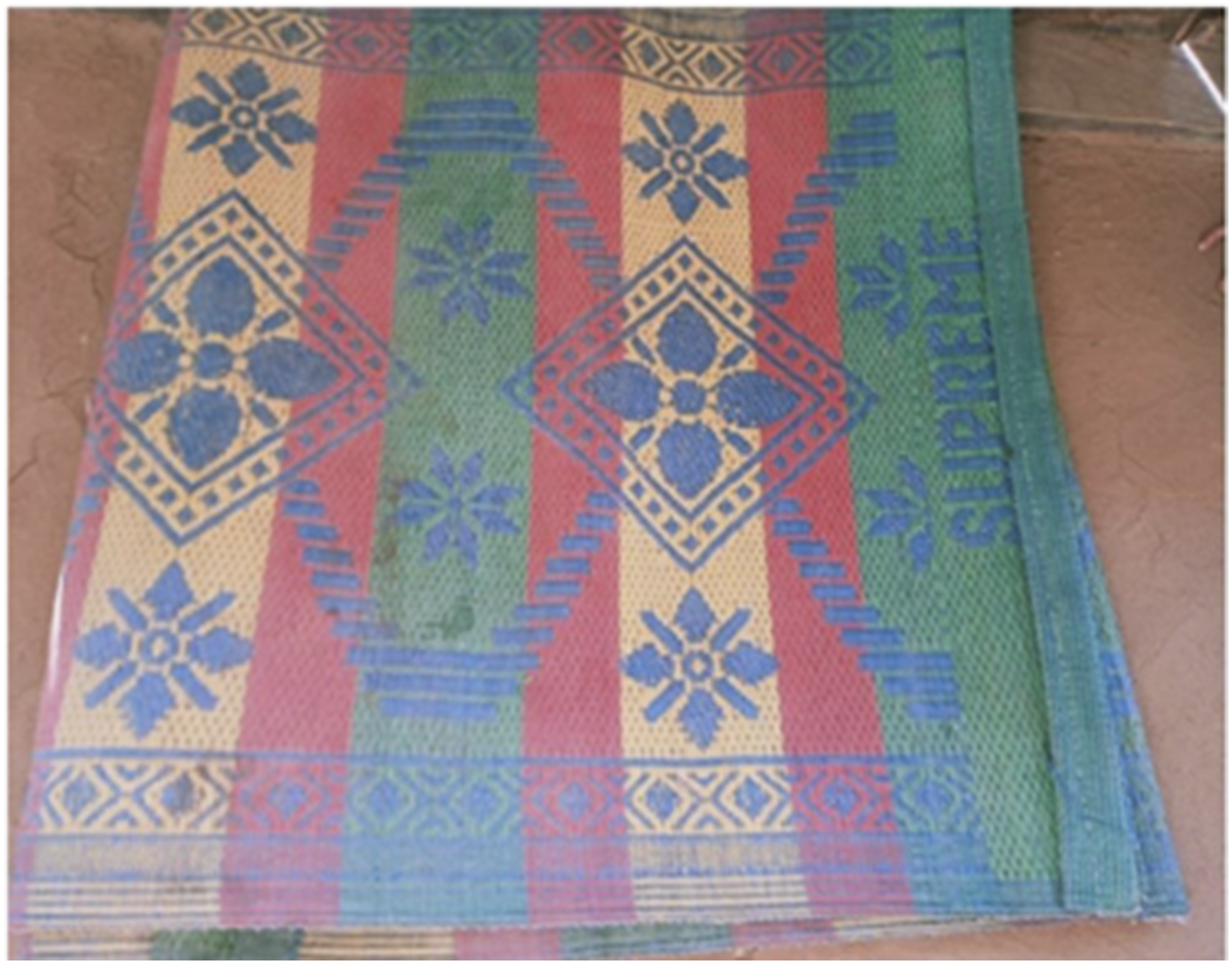
Objects as Counter Narratives
Object elicitation methods have been emphasized for their potential to amplify emic and marginalized voices (O’Brien & Charura, 2024), thereby centring the perspectives of those typically obscured in dominant discourses. In this way, they offer a compassionate and culturally appropriate method to access tacit knowledge about the lived experiences of those who are marginalized (Kahlke et al., 2025). Objects act as a vehicle for these stories to be shared, this is especially critical for women whose stories are often ignored or forgotten (Peterson, 2022; Solórzano & Yosso, 2002). In contexts with strictly enforced gender norms, group object narrative can be instrumental in offering a platform to generate counter narratives.
As previously mentioned, purdah norms in Khyber Pakhtunkhwa have long functioned as a significant barrier to the use of photo-based qualitative methods. Central to this issue are the restrictive norms around veiling, where many women are expected to veil their faces in public, and the exposure of their faces to non-familial men is regarded as shameful. The public display of women’s photographs often becomes a site of moral scrutiny, reinforcing patriarchal control over women’s bodies, with the potential for severe, even violent, repercussions for challenging these norms. Due to the potential repercussions of challenging these norms, many qualitative researchers working with women in Pakistan, and particularly in Khyber Pakhtunkhwa, have avoided using photo-based research methods. Group object narrative offered a culturally appropriate alternative. Women were only responsible for bringing in objects and did not have to physically engage with the camera or the photographs. In doing so, they were able to distance themselves from that process and potential questions around morality. As part of our process, we explicitly communicated to the participants when photographs were being taken. We asked them to stand behind the individual operating the camera, thereby addressing any potential concerns about being unintentionally included in the images. This approach was culturally informed and served to foster transparency and build trust with the participants.
Group object narrative provided a nuanced way to initiate discussions on sensitive topics, particularly those related to gendered experiences. Gender influences daily life in complex and often subtle ways that are not always easily articulated through traditional questioning during interviews and focus groups. Using objects as an entry point into lived experiences, participants could speak to the nuanced ways gender impacted their daily lives during the 2022 floods. For instance, in one FGD, a participant brought in a packet of menstrual pads (see Figure 2). They shared how they were unable to express their need for these products to their male family members or elderly female relatives because it was considered shameful. For this participant, menstruation was not just a biological reality but also a social taboo imbued gendered norms of silence and shame surrounding the topic. By bringing in the menstrual pads, the participant was able to speak into these silences. The object allowed for a conversation that challenged gendered expectations. Menstrual pads
Research with objects can be useful method through which to include participants who do not feel comfortable participating in traditional research (Kahlke et al., 2025; Williams & Keady, 2012). For participants who experience multiples forms of marginalization and disenfranchisement, group object narrative is a means to push back against existing power differentials. The majority of our participants were illiterate and had not completed any formal schooling. In such contexts, conventional research methods may reinforce existing inequities. However, the use of objects provided an accessible alternative for participants to share experiences that might not be included in traditional research.
By collaborating closely with participants instead of enacting a traditional researcher and respondent relationship, where questions are posed and answered, group object narrative pushes back against extractive and colonial oriented research (Charura & Wicaksono, 2023; Proctor, 2021). In our case study, participants assumed an active role in shaping the research process, making decisions about which aspects of their experiences they prioritize and deem important. Through the use of objects, participants could rank and visually express what they considered most significant, ensuring their voices were central in determining the focus of the inquiry. From this perspective, we incorporated a decolonial lens by placing the researcher as learner and redistributing power in the researcher-participant relationship (Charura & Wicaksono, 2023; Plumb, 2008). Moreover, by creating visuals to be shared with policymakers and the public, group object narratives was an opportunity to reclaim and reshape the story of the floods, ensuring their own experiences were included.
Objects as Pathways for Change
Incorporating research methods that bridge the gap between research and practice, the group object narrative approach can be instrumental in advocating for social change (Kogen, 2024). The act of sharing objects functions as a means of building trust, as it involves the personal and intimate gesture of offering something from one’s own life or home (Mäkelä, 2007). Additionally, objects also allow individuals to think about mundane objects in new imaginative ways (Woodward, 2016).
Building on the work of Paulo Freire’s conscientization that highlights critical consciousness as emerging from dialogue about societal conditions and realities (Freire, 1970), group object narrative initiates the process of reflection and analysis that can transform into targeted action. Through the process of describing the importance of different objects on their lives during and after the floods, women highlighted resources that were needed, inadequacies in the services provided, and challenges accessing care. Upon returning after the floods, a participant described discovering that many of her belongings, including her burqa, had been destroyed. In her new post-disaster home, she found herself unable to access public spaces or essential services because she lacked an appropriate veil. She expressed concern that without it, her family would view her as violating cultural norms, which could lead to feelings of shame and even potential violence from male relatives. This experience highlights the intersection of gender, cultural expectations, and vulnerability in post-disaster contexts, underscoring the complex ways in which women’s agency and safety are constrained by societal norms. The findings that emerge from this research method can be instructional to policymakers and humanitarian response agencies when considering the types of commodities that women require and the many barriers they experience when accessing services. The transformative potential of group object narrative as an expression of critical consciousness lies not only in illuminating gaps and resource needs, but also the potential to facilitate solution-oriented dialogue and foster networks of care. For instance, in one FGD, a woman brought a cooking pot. The discussion revealed how in the immediate aftermath of the floods, this singular cooking pot was shared among several families who lost their belongings (Figure3). The sharing of the cooking pot was a relational practice wherein women collectively decided how to organize meals and share limited food supplies. In doing so, the cooking pot was transformed from an everyday object to a vehicle that facilitated solidarity and solution-orientated discussions. It allowed these women to enact collective coping mechanisms and engage in community-based problem solving. Moreover, as a practice this collective action resisted necropolitical power hierarchies. Overall, group object narrative promoted critical dialogue among participants, and decision makers through time and space about the opportunities and needs of the community. Such research can have far reaching impacts that extend beyond the research project and translate into tangible change (Mannay, 2016). Burqa
Discussion
The experiences shared through this article demonstrate the utility of group object narrative to discuss sensitive topics experienced by individuals who experience marginalization in their daily lives. Our study deepens understanding of how object elicitation can offer a decolonial and culturally appropriate method through which to foster understanding and reflection. Objects identified from daily life act as entry points to the lived experiences of participants. These methods support the centering of participants voices in our inquiry and providing an emic understanding of the challenges they experience (O’Brien & Charura, 2024).
As public health researchers engaged in qualitative research, our engagement of group object narrative provides a unique perspective on how this methodology may offer tangible insights for public health and humanitarian response agencies. A major critique of public health research is the frequent failure to meaningfully engage marginalized communities. As a participatory approach this method centres community identified challenges and health needs and facilitates progressive questioning to uncover the root of the issue. In doing so, the method has important utility for public health by highlighting the types of upstream interventions that can address the underlying causes of health inequities. The participatory nature of the approach means the solutions and interventions are culturally situated and appropriate. They are also more likely to be adopted given that they reflect the daily lives of participants.
Our inquiry demonstrates how group object narrative illuminated the ways in which necropower operates through everyday materialities. For example, the shared cooking pot was an opportunity to highlight radical scarcity in the face of state neglect, of basic human necessities required to live. Women’s collective coping mechanisms were an example of how survival was reliant on feminized labour instead of state support. Similarly, the menstrual pads illustrated the slow, gendered violence of silence and shame that invisibilize the basic life needs of women after extreme weather events. Overall, group object narrative made visible the necropolitical logics that shaped the experience of women in the Swat Valley in the aftermath of the flood through demonstrating the ways in which abandonment and neglect were both material and epistemic.
This method is not without limitations. As mentioned above, when crafting collective narratives, it is always possible that certain voices can overpower others, and ensuring a balance of representation can be a challenge. Group object narrative is a collaborative process which results in collective ownership of narratives surrounding different items. Negotiating and navigating different dynamics within the group to craft a narrative that reflects common and shared experiences can mean balancing individual interests with the group. Similarly, social desirability and concerns about stigma may also mean that certain respondents may not share sensitive information that they feel may be judged by other participants (Peterson, 2022). Several ethical considerations must also be prioritized when utilizing group object narrative. First and foremost, confidentiality and privacy are always a consideration when conducting focus group discussions. However, these concerns are amplified when utilizing group object narrative. Pictures of various objects can potentially be identifiable, and the associated narrative may unknowingly place participants in danger. For example, sharing objects associated with narratives describing intimate partner violence may expose women to further harm from their husbands. Additionally, women may face social repercussions for sharing items considered culturally taboo, such as menstrual pads or contraceptives. In order to mitigate these potential harms, we ensured that items were displayed and photographed were unidentifiable by obscuring any identifiable features and taking photographs in a neutral location. Adopting his approach is essential for maintaining the anonymity and safety of your participants. Lastly, a critically reflexive approach is essential in ensuring that the process is participant-driven and reflects their lived experiences and concerns they encounter (Thambinathan & Kinsella, 2021; Woodward, 2016). This involves continuously examining one’s own biases and positionality to avoid imposing external interpretations on participants’ realities. Clarifying your epistemological and ontological stance is essential as it shapes the ways in which we approach knowledge especially when embarking on a decolonial approach (Proctor, 2021). By acknowledging different ways of knowing and being, researchers can challenge dominant narratives and foster more inclusive and equitable knowledge production.
Conclusion
Group object narrative offers a culturally responsive approach for public health research and practice with marginalized groups, especially those experiencing humanitarian crises, by surfacing embodied, tacit knowledge often excluded from conventional methods. As we have demonstrated in our case study, objects acted as relational tools that facilitated community connections, amplified marginalized voices, and enabled discussions on sensitive issues such as gendered issues often overlooked in traditional research. Beyond amplifying marginalized voices, the method acts as a pathway for identifying unmet needs and advocating for social change and informing more inclusive policies. In redistributing epistemic authority, and challenging extractive research logics, group object narrative advances a decolonial approach to public health practice ensure that those marginalized voices shape health priorities and practice. Overall, group object narratives can foster a more inclusive and culturally sensitive process, and, in turn, create more effective, contextually appropriate interventions.
Footnotes
Acknowledgements
This work was supported by a SSHRC Insight Development Grant and WSS Seed grant. We would like to thank our field team for their support with this work. Lastly, we would like to thank the people of Swat for welcoming us into their homes and lives.

Funding
The authors disclosed receipt of the following financial support for the research, authorship, and/or publication of this article: This work was supported by the Social Sciences and Humanities Research Council of Canada, Western University.
Declaration of Conflicting Interests
The authors declared no potential conflicts of interest with respect to the research, authorship, and/or publication of this article.