




Abstract
Participatory approaches to research with adolescents are often seen as inherently superior to other qualitative methods because of their potential to redress power imbalances and enhance engagement. In reality, implementing participatory approaches is resource intensive and a complex balancing act where compromises have to be made. In this article, we share our experiences of using participatory approaches for intervention development with adolescents in Samoa and Nepal as part of two independent research projects. We reflect critically on the challenges we faced in relation to ethics, power dynamics, logistics, data quality, and benefits to participants, and how they shaped the meaningful participation of adolescents. We argue that encouraging reflexivity and discussion about the challenges and compromises we make in our research not only provides a space to learn from each other, but can enable more impactful and transformative participatory research with adolescents.
Introduction
International funding agencies are increasingly emphasising the value of engaging meaningfully with populations before during and after research, in line with efforts to democratise the research process (Vaughn & Jacquez, 2020). Towards this aim, participatory approaches and methods have become increasingly popular, particularly when conducting research with adolescents. This is because of their potential to redress power imbalances between adults and children as well as to enhance engagement and potential benefits. However, critical reflection on how to balance the theoretical ideals of participatory research with the realities of practise is currently limited. This paper seeks to address this gap through the analysis of two case studies of participatory research with adolescents in Samoa and Nepal. We reflect on challenges related to ethics, power dynamics, logistics, data quality, and benefits to participants, describe how we addressed these, and offer recommendations for researchers seeking to ensure the meaningful participation of adolescents in diverse global contexts.
Conceptualising Children’s Participation in Research
Adolescence is recognised by the United Nations (UN) as a unique period in the latter half of childhood. Consequently, approaches to research with adolescents have been shaped by wider debates on research with children. The UN Convention on the Rights of the Child (UNCRC) in 1989 challenged pre-existing perceptions of children as vulnerable, unable to consent, and needing adult protection (Bradbury-Jones et al., 2018). The CRC (United Nations Children’s Fund, 2010) recognised a child’s right to freely express their views in matters affecting them. In research, this led to a shift towards seeing children as active agents in the research process, rather than solely as objects of investigation (Clavering & McLaughlin, 2010). As a result, researchers have begun theorising how children’s meaningful participation in research can be achieved.
The European Council describes children’s meaningful participation as “involving children in a manner that is respectful, ethical and constructive” (European Council, nd). Others describe meaningful participation as concerning the quality of participation: the extent to which children feel heard and that their knowledge and views are acted upon, and whether there is an equitable balance of power and participation in decision-making (Kennan et al., 2019; Olsen, 2025). While some frameworks view children’s participation sequentially, with more participation across research stages corresponding to greater agency and power (Hart, 1992; Shier, 2001), some argue that aiming for the highest level of participation is not always optimal. Mathur et al. argued that children’s participation is dynamic and evolving over the course of a project, and aiming for the ‘highest levels’ of participation across all stages of a project may be inappropriate (2004). Participatory research is one approach being widely used in attempts to meaningfully engage children in research about their lives.
Critical Perspectives on Participatory Approaches
Participatory research is also sometimes described as co-production, co-creation and co-design (Lipton, Bailie, et al., 2025). In our research we define it as encompassing methods and approaches that aim to transform power dynamics (Cornwall & Jewkes, 1995), which can be especially pronounced when working with children. These approaches value participants’ knowledge and capabilities, positioning them as experts and working towards empowerment and social justice. There is flexibility in how participatory approaches are defined which can foster creativity and transformational change but also means that they can be misappropriated by powerful elites, or used without reflection or critique. Cooke and Kothari (2001) warned of funders’ dominance in defining the discourse of participation to further their own interests, and Williams et al. (2020) noted structural constraints in academia that hinder the transformational goals of participatory research. Researchers face time pressure, resource costs, and stress, discouraging politically engaged approaches (Oliver et al., 2019) which can result in research falling short of empowerment and transformative goals. Researchers rarely have the luxury of turning a project around to entirely fit participants’ needs or concerns. In practice, participation is full of contestation: power relationships between different actors - each with their own priorities and structural boundaries - shape and reshape the limits of what can be achieved (Cornwall, 2008). As such, it is crucial to reflect on the dominance of participatory approaches which may prevent alternative methods from being seen as legitimate or appropriate. A participatory approach may not always be the most appropriate to meet project goals, or the ethical requirements of protecting children from exploitation and harm (Kennan & Dolan, 2017). The decision to use participatory approaches should not be guided by the inherent assumption that they are always ‘good’, without considering the possible negative unintended consequences (Cahill & Dadvand, 2018).
Researching Adolescence in Partnership with Adolescents
Adolescence, defined in this paper as the period between the ages of 10 and 19 years to align with the UN definition, 1 has seen greater prioritisation on the global health agenda in recent years (Bhutta et al., 2020; Hargreaves et al., 2022). As a period of immense biological, social and emotional change, and one with a high disease burden, adolescence is now widely regarded as a critical period in which to invest and intervene to establish healthier trajectories for current and future generations (Sawyer et al., 2012). For the first time, global health targets such as the United Nations Sustainable Development Goals have directly recognised the stage of adolescence as a unique and distinct period, expanding beyond childhood, that requires specific and targeted interventions (Temmerman et al., 2015). Aligned with the conceptual shift in children’s participation following the ratification of the UNCRC, and the increase in funding being channelled into improving adolescent health, literature on participatory health research with adolescents has expanded.
Increasing numbers of studies have used participatory methods (such as photo elicitation, or body mapping (Lys et al., 2018; Sibeoni et al., 2017)) to engage adolescents in various ways as active participants in data collection. In addition, many studies have also rooted their engagement with children in participatory approaches, which go beyond their participation in data collection, and also engage adolescents in decision-making about research processes, such as choosing which methods to use and how to disseminate findings (Montreuil et al., 2021). There is growing evidence of the benefits of involving adolescents through participatory research. Adolescents have ‘insider’ positions which gives them situated knowledge of the context, issue under study, or what it’s like to be part of the group being researched (Chappell et al., 2014). This means they may be better placed than ‘outsiders’ to select the most appropriate methods and questions, recruit participants with greater inclusivity, provide unique insights for analysis, and facilitate broader uptake of findings (Wilson et al., 2020). In addition to benefiting the research process, adolescents can personally benefit through building knowledge and skills, expanding their social and professional networks, and increasing their self-efficacy (Wilson et al., 2020).
However, participatory research with adolescents is not without challenges. Many of the challenges encountered when doing participatory research with adolescents are similar to those faced when doing research with adults, but the need to prevent harm, protect, and bring awareness of power differentials is amplified due to the additional vulnerability created by age. Meaningfully engaging adolescents in research is complex and can raise concerns around safety, power dynamics and logistics (Lipton, Dickinson, et al., 2025; Warraitch et al., 2024). Similarly, using participatory approaches does not always equate to more meaningful participation, and undertaking participatory research with adolescents may be a balancing act, with competing priorities preventing taking a ‘best practice’ approach. Without more open discussion about the pitfalls of participatory research, the field might continue to assume that participatory approaches are inherently superior to other methodologies, failing to account for the ways in which the safety and appropriateness of participatory approaches are dynamic and context-specific (Bradbury-Jones et al., 2018; Freire et al., 2022; Watson & Fox, 2018). Therefore, the aim of this paper is to open dialogue on this balancing act by presenting reflections from two global health research projects that used participatory approaches to engage adolescents in developing interventions. We include examples of compromises made and their consequences. We hope that other researchers and practitioners can build on our experience to continue challenging and advancing the field of participatory research with adolescents.
Methodological Case Studies: Participatory Research with Adolescents in Samoa and Nepal
Case Study 1: O le Sao a Tupulaga I le Taofia o Sauaga (Youth That Can Prevent Violence)
The first project discussed in this paper, ‘O le Sao a Tupulaga I le Taofia o Sauaga’ (Youth That Can Prevent Violence), was a community-based participatory research study conducted in Samoa from July to November 2023. Samoa, in the Polynesian region of the Pacific Ocean, faces the highest regional prevalence of VAWG worldwide, with an estimated 40% of women and girls experiencing physical and/or sexual intimate partner violence in their lifetime (Sardinha et al., 2022).
As part of a doctoral research project, HL worked with the Samoa Victim Support Group (local provider of support services for women and children experiencing violence in Samoa) and Brown Girl Woke (community-based youth empowerment organisation) to explore adolescents’ perspectives on VAWG and its prevention using fun, creative, and safe methods. The project used a peer research approach where four local adolescent and youth researchers (aged 19–26) were recruited, trained, and supported to facilitate data collection with adolescents (aged 15–19). When discussing the peer researchers in this case study we refer to adolescents and youth, and when discussing the participants we refer to adolescents. Peer researchers were recruited through online forums and existing networks of both organisations and were selected for their strong interpersonal skills and commitment to gender equality. They attended seven days of training over one month to develop skills in participatory and qualitative data collection and ethical processes. Peer researchers contributed to the study design, including recruitment, grouping participants, and selecting research methods. They also adapted activities to suit the age and interests of each group, like swapping a ball game for a different energiser for older adolescents. Data collection methods included participatory group discussions, role plays, cultural artefact performances, and individual interviews (Figure 1). The Talanoa approach, a Pacific method of open, relational dialogue (Suaalii-Sauni & Fulu-Aiolupotea, 2014), guided respectful and culturally sensitive discussions around violence. This included being aware of cultural norms and not probing further when adolescents appeared uncomfortable. The four peer researchers collected data with 67 adolescents across six rural villages and one urban area. Adolescents in Samoa taking part in an energiser activity during a group session
Case Study 2: SMART (Sports-based Mental heAlth pRomotion for adolescenTs)
The second project, SMART (Sports-based Mental heAlth pRomotion for adolescenTs), was a pilot cluster randomised controlled trial to develop and test the feasibility of a community-based intervention which used martial arts, dance, and football as a platform to promote mental health among adolescents aged 12–19 years old (Rose-Clarke et al., 2023). This age range is purposively wide so that we could explore the acceptability of the intervention among different age groups. The pilot trial was implemented around sports fields in four villages of Bardiya District, Lumbini Province, in the Western plains of Nepal from March 2023 to February 2024. Adolescents are exposed to many risk factors for poor mental health in Nepal. These include poverty, gender-based violence, corporal punishment and ethnic tensions (Central Bureau of Statistics, 2023). Nepal has the second highest youth suicide rate in South East Asia at 25.8 per 100,000 (WHO, 2017). The intervention has been described in detail elsewhere (Rose-Clarke et al., 2023) but briefly, three male and three female coaches ran morning and evening 90-min sports sessions in community and school grounds. Each session included meditation and warm-up, sports skills, and a cool down and reflection component where coaches related something which had occurred in the session to a mental health skill which adolescents could practise in their homes, communities, or schools. The reflection component was different for each session, but focused on common themes such as communication skills, emotion regulation (including anger management, dealing with winning and losing), setting and achieving goals, problem solving, self-esteem (assertiveness, being proud, self-awareness), and locating a supportive person and place.
The project took a community engagement approach to intervention development (Figure 2) (King et al., 2014). Researchers had three key responsibilities: (i) Risk identification and management through consultation with different stakeholder groups; (ii) Providing opportunities to listen and respond to members of the wider community; and (iii) Ensuring legitimacy by providing platforms for stakeholders to review and input into the research. In line with this approach, we provided opportunities for participation of adults and adolescents in the design of the intervention before and during its implementation. In this paper we specifically reflect on one component of this approach, the adolescent advisory committees. Committees met twice during the intervention to elicit feedback which we could use to: train and support sports coaches; to inform adolescent recruitment and retention strategies; and to adjust the intervention to meet adolescent needs and preferences. We invited adolescents aged 14–16 to be on the committee because the nature of the discussions required maturity and our previous experience showed that having groups of adolescents who were of similar age increased their comfort and increased possibilities for cohesion. Activities in the O le Sao a Tupulaga I le Taofia o Sauaga case study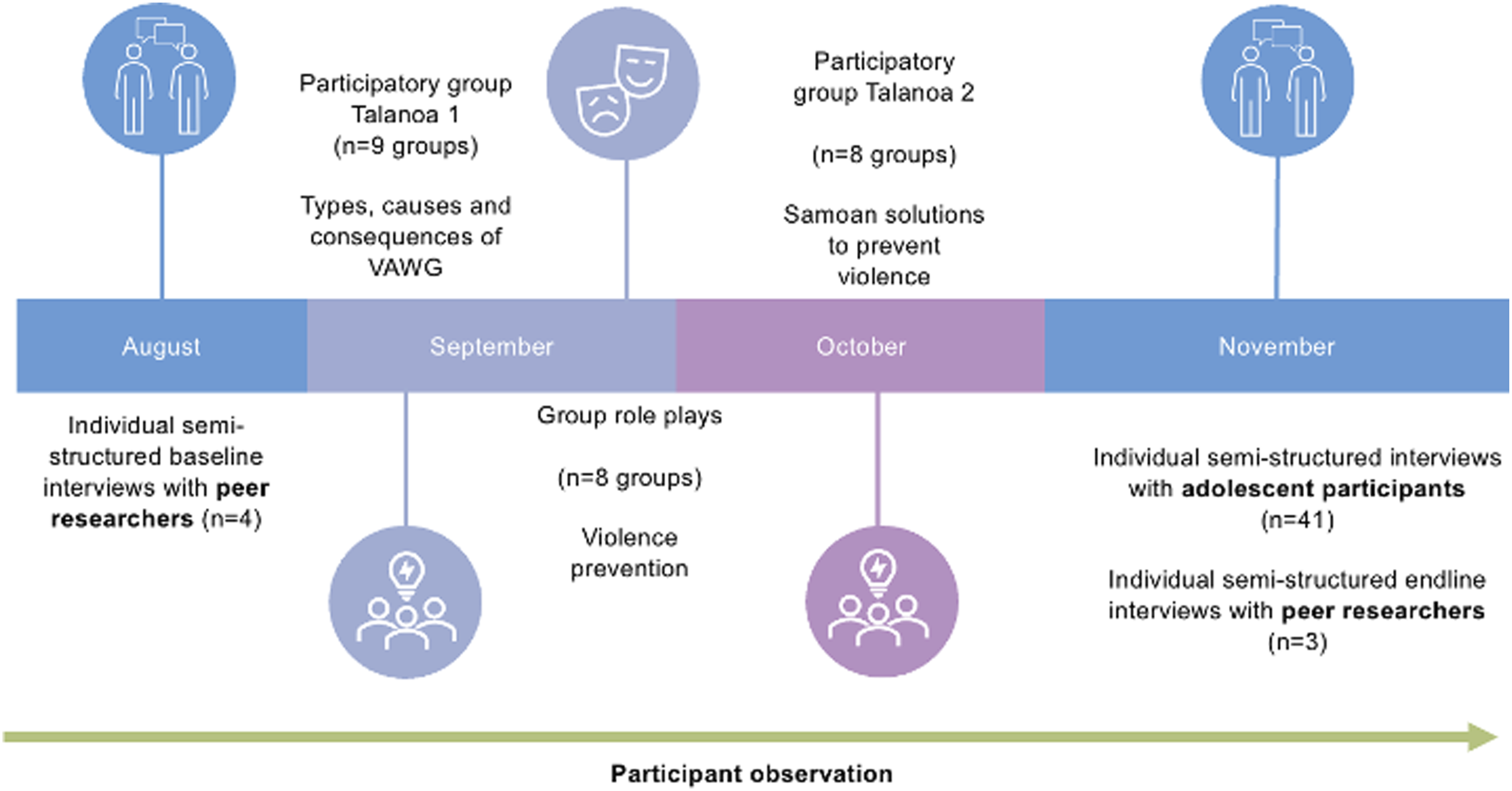
Analysing the Process
In this paper, we present our reflections on the process of engaging adolescents in participatory research across the two projects. The paper was conceptualised following a departmental seminar on participatory research with adolescents, presented by HL and JM. The seminar generated rich discussion about the importance of sharing experiences and creating spaces to reflect on learnings from participatory projects, with the goal of improving practice and advancing the field. In response, we decided to develop this journal article to contribute to that dialogue. Activities in the SMART case study
We worked collaboratively to develop the presentation for the seminar, the content of which was then used to write this paper. The reflective process we engaged in to develop the content was guided by the following questions: (a) What are the competing priorities in participatory research with adolescents? (b) How do researchers make decisions about these competing priorities? and (c) How do these compromises impact the meaningful participation of adolescents in the research? We structure this paper around a conceptual model (Figure 3) that we developed through collaborative and reflective discussions over a four-month period (December 2023 to March 2024). First, we discussed reflections from the projects over two online meetings. These reflections were drawn from field notes, meeting summaries and reflexive journals from the fieldwork period. In our conversations, we each presented our research praxis and how this compared to our original research plans. These were focused discussions where we discussed openly how we struggled to reconcile participatory research goals with fieldwork realities. As we discussed, we made methodologically reflective notes about the extent to which our praxis aligned with the theoretical approach of participatory research. We practised interpersonal reflexivity, considering how power dynamics impacted our research and how we attempted to address imbalances of power (Mortari, 2015). We then discussed where our experiences overlapped and diverged. After the second meeting, we grouped common reflections into thematic categories, which were shared over email, refined and consolidated into the categories shown in Figure 3. These included logistical feasibility, safety, participant benefits, richness of data, and balanced power. In a subsequent meeting, we discussed how each of the thematic categories overlapped, and shared examples from our projects where compromises were made at the intersections of the concepts in the model. In the following section we discuss, with relation to the broader literature, examples where challenges arose within our participatory methodologies, the compromises we made and the impact these had on achieving meaningful participation with adolescents. Adolescents taking part in a martial arts session as part of the SMART intervention in Nepal
Researcher Positionality
Working ethically and equitably with adolescents across both projects required careful interrogation of how our positionalities shaped the research process and its outcomes. In Samoa, the first author had to navigate being a palagi (non-Samoan) doctoral researcher who was living in the country temporarily and could not speak the local language. Collaborating closely with local youth peer researchers helped to bridge some of the cultural and linguistic gaps, while being of a similar age to some of the peer researchers also helped build rapport and trust. However, affiliation with a UK university and providing the funding brought certain privileges that were difficult to overcome, including challenges in being seen as an equal colleague amongst the peer researchers rather than a manager, despite many attempts to demonstrate that shared decision-making and ownership was a central objective of the project. Strategies such as spending time together outside research activities and fostering two-way, open communication helped in addressing some of the power imbalances, but these dynamics likely still influenced relationships, participation, and study outcomes and were critical to reflect on in depth throughout the analysis for this paper.
In Nepal, the last author has spent the past fifteen years based in Kathmandu. She speaks Nepali, but not Tharu, the language commonly used in the study area. She worked with a team of coaches and researchers who were based in the study area and travelled there around eight times over 2 years, usually staying for around 5 days. In addition, she spent 2 weeks at project inception in the study area, 5 days training coaches with team members, and participated in weekly online calls with the study team throughout the duration of the project. This long-term engagement, and social and professional engagement with the team helped build relationships, although professional hierarchies remained. Her senior position, older age and white, British nationality, combined with her intermittent presence meant that most data were collected in Nepali language (as opposed to English) through reflective conversations with the team - either after collecting observation data while in the study area, or during online meetings with the team. The field team were less familiar with the theory of participatory research than JM, but more skilled at implementing projects. This created a relationship of mutual learning, where practise was always prioritised over theory through necessity. Venn diagram representing competing priorities in participatory research with adolescents
Achieving Meaningful Participation with Adolescents: Reflections from Samoa and Nepal
Logistical Feasibility
The logistical challenges of doing participatory research with adolescents have been well documented (Freire et al., 2022; Lipton, Dickinson, et al., 2025; Wilson et al., 2020). Adolescents have competing demands on their time, and often they have limited control over how they use it. They are accountable to teachers, parents and other adults in their lives, who may de-prioritise participation in research. Attending school, extra curricula activities, and work in- and out of the home - may restrict their time to participate. They may be nervous about committing to engage because it may be a lengthy process, leading to an unwillingness to participate. Adolescents often have to seek support to participate, travel or stay in a research venue, which may also require time and resources from their caregivers, although this can vary with adolescent age. Adequately compensating adolescents and caregivers for their participation may help with these opportunity costs, but researchers should be mindful of local norms when planning participatory research with adolescents whose boundaries are set by their context. For example, it may not be appropriate to give money directly to adolescents in some contexts, and compensation in-kind might be more appropriate. Another example is when local definitions of risk may be defined differently by parents, adolescents and researchers and it is important to consider how this affects the logistics of adolescent participation in research.
In Nepal, we encountered some logistical challenges to engaging adolescents. We were working in two rural villages and adolescents did not live close to each other. Most were reluctant to gather on a Saturday, either having household chores or wanting to rest as this was their only day off school. It became apparent that instead of one overall advisory committee, we needed to form one advisory committee per village to enable them to come together easily in the time before or after school. Even by having one advisory committee per village, we still had to arrange transport for adolescents to attend the meeting and be mindful of social norms about it not being safe or appropriate to be out after dark, particularly for adolescent girls. We had gained caregiver consent, and the community was informed about our intervention, but there was still the possibility that the community would gossip about the girls being out late, potentially with boys. This type of gossip could be very harmful for girls, preventing their participation in future after-school activities and potentially affecting their future marriage prospects. Families’ reputations might also be questioned if they allowed girls to be out late, disrupting community relations. Poor community relations because of gossip could be particularly harmful for more marginalised families who might become even more socially excluded. These concerns limited the time we had to interact with adolescents after school, and we kept our interactions within strict time limits (Hackett, 2019).
The literature suggests engaging with adolescents in places familiar to them that are not adult-led spaces, e.g. educational and research institutions, in order to facilitate their participation (Thomas & O’Kane, 1998). In Nepal it was challenging to find community buildings in rural areas that were not ‘adult-led’ spaces, and we also wanted to balance caregiver concerns about safe and familiar locations for meetings. In the end, we ran advisory committees in schools, as this was convenient for adolescents and schools were safe, known environments for caregivers and adolescents with privacy and facilities such as water and gender-segregated toilets. We acknowledge that while we did not follow optimal guidance to enable adolescents’ participation, compromises were necessary to enable adolescents, and particularly girls, to participate at all.
We encountered similar logistical challenges when trying to bring adolescents together for group activities in Samoa. Following peer researchers’ suggestions, we planned to invite adolescents to participate from different villages who did not know each other to maintain confidentiality and support open discussion. Peer researchers felt adolescents would be more comfortable sharing with unfamiliar peers. However, coordinating bus schedules and finding a time outside of school, youth groups, church, and family responsibilities across six areas proved nearly impossible. To enable participation, we decided to invite adolescents based on geographical proximity. Girls and boys from nearby villages met in a central location, rather than the main town. While we are unsure about the negative impacts this may have had on the data, this approach had unanticipated benefits. Peer researchers noted that having familiar peers in the group supported girls to feel more confident to speak. When participants were asked to present an artefact of their choice (e.g. a poem, song, dance, drawing) that related to the strengths of being Samoan, participants from the same village could draw on shared histories, ensuring locally informed and relevant discussions on violence prevention. In individual interviews, many participants said they enjoyed meeting peers from other villages. This experience highlighted that strategies to protect adolescents from harm may have not provided them with the support that would enable more meaningful participation.
Richness of Data
Participatory methods with adolescents are generally believed to lead to richer data, especially on sensitive topics or with marginalised groups (Wilson et al., 2020). Rich qualitative data in the social sciences capture multiple nuanced perspectives, are contextualised and offer multilayered explanations of complex social phenomena. However, participatory methodologies with adolescents, such as peer research or arts-based activities, may have limitations in their potential to produce rich data. For example, adolescent peer researchers are often inexperienced and may not be skilled in sensitive data collection or asking follow-up questions. Therefore data may lack depth compared to that produced by more experienced researchers (Bell et al., 2021; Lushey & Munro, 2015). Younger adolescents may provide less in-depth insights than older ones. Similarly, outputs from creative methods like collage and body-mapping may not provide detailed data unless paired with interviews or discussions.
Throughout the Samoan case study, obtaining rich data was a constant challenge, and prioritising other aspects – like enhancing adolescents’ enjoyment – often resulted in compromises on data quality and depth. Instead of using conventional interview and focus group discussion (FGD) methods, we chose a mix of participatory activities. These included group discussions where participants created a problem tree to map the types, causes and consequences of violence, scenario-based role plays, and performance-arts sessions allowing participants to engage with violence prevention through music, poetry, theatre, or drawing. These methods were designed with the peer researchers to maximise enjoyment and engagement, as well as ensuring safety, as they believed adolescents would feel more comfortable working together with peers rather than alone with the peer researcher. This prioritisation felt appropriate given the potentially sensitive nature of discussions on violence and the need to ensure adolescents’ participation was a positive experience.
While participatory methods stimulated interest among participants, the data were often less detailed than anticipated. For example, in the problem tree activity, participants were asked to discuss the types, causes and consequences of violence in adolescents’ lives in Samoa, using the tree diagram to stimulate conversation. However, the recordings included many unrelated conversations and lengthy discussions about completing the activity itself. The focus on enjoyment led to some participants often providing one-word answers and focusing more on creative activities than elaborating on their ideas verbally. Participatory activities also took longer than anticipated to facilitate, so discussions were often rushed as peer researchers prioritised completing the drawing over deep discussion.
In another example, a group of adolescent boys were more interested in preparing a performance of spoken word and traditional dance than discussing the research topics. While this group did not discuss violence prevention in any depth, the peer researcher noted that the participants enjoyed the performance-based session. Later, their youth group coordinator reported that these participants had discussed their participation in the project and their ideas for preventing violence in their village at a community meeting. While we may not have ‘rich’ data from their group discussion, it seems that they enjoyed attending and the project encouraged them to take action, which some would argue is the ultimate aim of participatory research. Interestingly, some participants had in-depth discussions in their individual interviews at the end of the project. One noted that while he enjoyed the group activities, he felt more comfortable sharing personal information when alone with the peer researcher.
Reflecting on the challenge of obtaining rich data in this study led to several considerations, including the appropriateness of different methods in different circumstances, and how the emphasis on gathering rich data sometimes overshadows other valuable outcomes of participatory research. Our experiences taught us that using a mix of methods with adolescents can be helpful because different groups of adolescents respond in different ways, and providing different mediums to express themselves supports a more inclusive knowledge production process. This approach is similar to Clark and Moss’ Mosaic Approach (2011), where data collected through different participatory methods act as individual tiles pieced together to gain a comprehensive understanding of children’s experiences. In Samoa, the girls were more open during group sessions, gaining confidence from their peers, while boys spoke more in individual interviews, possibly due to gender norms and fear of stigma. Group sessions, though not always providing rich data from the boys, were probably springboards for richer discussion in future sessions, building trust and group cohesion. The boys may have felt more comfortable in individual interviews due to the relationships built during participatory activities. This links to debates about whether participatory methods automatically yield richer data, or if they support longer-term engagements that build rapport over time, ultimately leading to richer data (Chambers, 2002). This indicates the importance of adequate time and resources for participatory research to provide rich data.
The group activities provided an enjoyable experience for participants. Houghton argues that this is crucial when planning ethical research with adolescents due to their age and their reasons for participating, which may be different to adults’ motivations (2015). Indeed, the quality of participatory research which is on the higher end of the spectrum of participation should be judged on its ability to achieve success as defined by participants and researchers. Focusing on generating rich data can sometimes obscure equally important outcomes for achieving meaningful participation, such as building confidence and skills, having fun, or being inspired to continue the conversation beyond the research project’s activities.
Balancing Power
A key objective of participatory research is to redress power imbalances between researchers and participants which are common in research. Participatory research acknowledges power differentials and actively seeks to prioritise the perspectives of participants (Chambers, 1997). One way of doing this is by using methods that enable participants to communicate in ways they feel comfortable. Participatory tools and methods enable the expert role of participants to be acknowledged, and the researchers are explicitly put in a learning role. When participants teach researchers about their environment and experience, and researchers are reflexive about their positionality, this can help to build trust. Trust is essential to enable good communication and high-quality research. Whilst participatory tools can help to address power imbalances in communication, they need to be used in combination with other strategies to build and maintain trusting relationships. Trust can be eroded when researchers do not action or utilise adolescent preferences, and participants may feel their engagement has been tokenistic. A lack of action can lead to research fatigue and mistrust, and participants can become disillusioned with the process (Bradbury-Jones et al., 2018). Relatively few studies that use participatory methods with adolescents to inform interventions report on how adolescent consultation was used. For example, a recent review of participatory methodologies in designing school-based interventions for adolescents found that only three studies reported on the adoption of interventions or ideas that were designed with adolescents, and in those studies, the school administration made the final decisions. None reported on how and if the interventions were implemented (Reed et al., 2021).
The balance of power is usually tipped in favour of the researcher over participants, and this is amplified when working with adolescents who may not have the skills, resources, and decision-making power of adult researchers. These power imbalances are also exaggerated if the researcher is from a different or dominant culture, such as a white European or is from a higher caste. Cultures of prioritisation of adult over adolescent views and experience also contribute to this power imbalance, and these are difficult to challenge when working under time and cultural constraints. Acknowledging these limitations, in Nepal we sought to use participatory methods to facilitate communication between researchers and adolescents who had participated in the sports intervention. We used a game where a group of eight adolescents were split into two groups, and one adolescent from each group competed against each other to run to the other side of the room and put on a hat, scarf, jacket and gloves over the clothes they were wearing and run back to their team. The fastest adolescent got to choose a question to ask the other team about the intervention, and then a researcher would facilitate a broader discussion around that topic. These questions were about things that the research team wanted to know about the intervention. For example: ‘The martial arts we are teaching is non-contact (i.e. there is no fighting), as opposed to contact. What do adolescents here think about that?’ After the game we asked if there was anything that adolescents would like to discuss, or if they had any suggestions. We proposed that the adolescents could write their discussion points on meta-cards while the researcher left the room. We thought this might offer the opportunity to raise issues anonymously and therefore may facilitate openness, but we found that after the game the adolescents did not want to spend time writing and appeared comfortable telling us their opinions. Although the feedback from adolescents was largely positive, adolescents also told us some things they would like to be changed. We took this to be a positive indication of trust and open communication which was enabled because of our approach and methods.
Using participatory methods had enabled adolescents to communicate with us about several issues that concerned them, despite pervasive power imbalances, and most of the time we were able to act on adolescent recommendations. For example, sessions were offered separately for older and younger adolescents after this was requested. The dance coach kept teaching individual dance steps, as well as group choreographed dances after this preference was expressed. But we were not always able to act on adolescent recommendations. Ultimately the power to design and implement the intervention was not in the hands of the adolescents. Sometimes we had to prioritise the perspectives of caregivers or other community members because they had the power to stop the intervention or prohibit adolescents from attending the sports sessions if we implemented something that they disagreed with. Sometimes, adolescents brought up decisions that we had also struggled with, and we were able to discuss our reasoning with them during the advisory committee meeting. For example, we had moved our sessions to a school ground as opposed to a community ground because there were competing groups who wished to use the community ground at the same time. Adolescents felt it was unfair that their sessions were not prioritised over the needs of the other group and annoyed that they had to use the school ground which was more difficult to play on. We had tried to co-ordinate with the other group, but were unable to reach a compromise, and so had to move. We were able to discuss this with adolescents, and whilst they remained disgruntled, they understood our strategy.
While we did not plan for participants to lead the design of the intervention, this example draws attention to the need to be honest with adolescents regarding the potential for their recommendations to be acted upon prior to their consultation. Establishing realistic expectations about this is particularly important when engaging groups who are often marginalised, such as adolescents, to prevent feelings of tokenism or disillusion, which may discourage further engagement (Bradbury-Jones et al., 2018).
Safety
Conducting research with adolescents is often seen as fraught with ethical issues due to sensitivities related to working with an ‘at risk’ group, especially on ‘sensitive’ topics like violence and mental health (Save the Children, 2004). Ethical procedures for involving adolescents in research have traditionally taken an adult-centric risk-mitigation approach, where adults decide what is safe for adolescents and how ‘vulnerable’ adolescents should be protected (Daley, 2015; Houghton, 2015). Ethical discussions rarely focus on prioritising adolescent’s enjoyment and engagement in the research process, or on adolescents’ capacity to decide what they are comfortable with. Their perspectives are often missing from ethical discussions and decision-making (Houghton, 2015).
As part of the initial peer researcher training in Samoa, we designed a safeguarding procedure with researchers which detailed how they would respond if they thought an adolescent might be at risk to themselves or from someone else. Aware that managing safeguarding is a big responsibility, the procedure was simple: if anything concerned them, such as a participant becoming distressed or disclosing recent abuse, they would inform the research team, who would then discuss with the project safeguarding lead to decide on an appropriate course of action. We hoped this would be an easy decision for the peer researchers and did not anticipate many challenges. However, a few instances arose where the research team identified situations that could have been flagged for safeguarding when reviewing audio recordings of sessions. For example, a participant disclosed previous abuse during group sessions and became distressed during the individual interview, with the recording paused multiple times. This participant was not flagged by the peer researcher to the research team as potentially needing additional support or further action.
Through retrospective discussions with the peer researcher, it became clear they had carefully considered the situation but decided it did not need escalation. They discussed with the participant after the recording ended about whether they needed additional support and concluded that, despite the distress when talking about past abuse, the participant left feeling positive and appreciative of the safe space to talk. The peer researcher concluded they were not at risk to themselves or from anyone else. This issue presented a unique challenge for the research team at the intersection of safety and power imbalances. We had invested time in supporting peer researchers to take ownership of the project, contribute to decision-making, and building trust between adult and peer researchers. Reviewing their recordings and questioning their choices felt against the ethos and trust we had built, but it was evident that adolescent and youth researchers perceived risk differently and had different thresholds for escalation compared to adult researchers, who are balancing institutional ethical standards with local perceptions of risk.
Ultimately, in research with adolescents, safety should be prioritised, and an adult usually has to make the final call on these issues. This experience taught us that while we endeavour to honour the trust placed in peer researchers’ judgments to maintain equitable relationships, we also needed mechanisms for when things are missed, which could impact both researchers and participants. Moving forward, instead of reviewing audio recordings and questioning peer researchers, we made data collection debriefs more structured with specific questions on disclosures and distress. Having open conversations with the peer research team immediately after data collection felt more equitable, avoiding hierarchical processes and creating a safety net for participants needing additional support. This also provided a space for peer researchers to discuss their feelings after data collection. Providing a supportive environment for peer researchers is critical in participatory projects, especially when they are from the same communities or have similar experiences to participants, as the research can be (re)traumatising (Larkins et al., 2021).
Negotiating ethics in this peer research project reiterated the need for a situational approach to ethical engagement, emphasising that the good way to do something depends on “the particularities of a given situation” which is “time, place, person and culture-specific” (Groot et al., 2023, p. 2; Simons & Usher, 2000). We had to ask ourselves who was more qualified to identify a safeguarding issue: adult researchers with training in ethics and safeguarding, or adolescent and youth researchers with experiential knowledge of the topic and context? In reality, both perspectives were critical and complementary for dealing with the ‘everyday ethics’ of research practice (Rossman & Rallis, 2010). The example described above also raised the question of whether our procedural ethics were enough to handle ‘ethically important moments’ in research which Guillemin and Gillam define as “the difficult, often subtle, and usually unpredictable situations that arise in the practice of doing research” (2004, p. 262). While we may feel prepared for bigger questions like ‘is it ethical to do research on violence with adolescents?’, smaller and more subtle daily dilemmas require in-the-moment moral decision-making. Guillemin and Gillam propose reflexivity as a practice for these ethically important moments when research ethics committees are not accessible or cannot provide the answers (ibid). Expanding reflexivity – a practice whereby researchers critically reflect on their positionality and its influence on the research process – to include considerations for ethical practice could help researchers to be more alert and prepared for unpredictable everyday ethical challenges which are often magnified when working with adolescents.
Benefits to Participants
Participatory research with adolescents has benefits for the research process through increasing its relevance and enabling the contribution of adolescents’ perspectives on the issue. It also has the potential to personally benefit adolescents, through skills development, increasing their self-confidence, and expanding their social networks. Several reviews have indicated the importance of adequately compensating adolescents for their contributions to research, while acknowledging that this can be a sensitive topic requiring contextually specific responses, particularly in areas of high marginalisation (Sellars et al., 2021; Warraitch et al., 2024).
In Nepal we discussed how to compensate adolescents for advising on the design and implementation of the intervention. We wanted to acknowledge the role of the advisory committee as ‘insider’ informants, and ensure that they took their role seriously, seeking out opinions from their peers about the intervention and implementation mechanisms. We envisaged a critical reference group of boys and girls who the coaches would help us identify and they would work with us throughout the intervention. We sought to work on queries with them and discuss until consensus so we could move forward in adapting and responding to their opinions. We acknowledged that asking girls and boys to participate together in a group may restrict participation, but we wanted to pilot this type of group, facilitating girls to get boys to see their point of view and vice versa to develop a consensus. Acknowledging that this might not be ‘fun’, and that it was inappropriate to give money to adolescents in this context, we sought to compensate them by building key life skills, such as team building, budgeting and communication skills. We planned that we would give them a short training before each committee meeting, and they would receive a certificate and a snack after each meeting.
Adolescents disagreed with our model of engagement. They told coaches that it was unfair that only a few could participate in the committee. They requested rotating committee membership, and it was difficult for coaches to select adolescents. We invited adolescents to select participants for the committee, but they refused. Instead, the intervention manager selected adolescents, so that coaches could maintain positive relationships in the community, and we changed our strategy. We ran two advisory committee meetings, but did not ask adolescents to collect views from their peers beforehand, and we did not do the skills development training. Without the training there would be fewer benefits to participating, and therefore fewer inequities between those who participated and those who did not. We sought to make the meetings short, participatory and fun using games. Adolescents were given a snack, stationery and a certificate to thank them for their participation. This was broadly felt to be less contentious, although one caregiver did not allow their adolescent to attend the sports sessions until we visited them in their home to explain why they were not selected for the committee. In addition to the committees, we informally engaged with adolescents on an ad hoc basis, when we were in the community and before and after the sports sessions. We asked some key questions around issues affecting attendance, such as how we could optimise attendance of girls in sports, and boys in dance, as well as asking their general opinion of the intervention. While this was not the ‘fair compensation’ and in-depth role for the committees that we had envisaged, it fitted better with adolescent perceptions of equity of participation, and we were still able to seek adolescent advice on the intervention. We may also have been able to engage directly with a larger and more diverse group of adolescents through this method, and we may have been able to capture more critical feedback through informal interactions, with this being less intimidating than a more formal committee or written exercise (Doyle et al., 2022). Being flexible to fit with the local context, being willing to compromise and using mixed methods of engagement enabled us to meet our priority goal of enabling participation of adolescents in the design of our intervention.
Box 1. Five key recommendations for working towards meaningful participation of adolescents in participatory research
Conclusion
Achieving meaningful participation in research with adolescents is challenging, complicated by considerations of power dynamics, ethics, logistics, benefits to participants, and obtaining rich data. While many of these challenges are common to participatory research in general, we found that they are amplified in participatory research with adolescents. Issues of safety, voluntary participation, and power dynamics are particularly pronounced for adolescents, who in many contexts have less agency than adults, meaning careful attention to these aspects is especially critical. As our reflections demonstrate, participatory approaches are dynamic and require flexibility from research teams to respond to the context and needs of participants. While guidance does exist for conducting participatory research with adolescents, meeting these ideals can be difficult in reality, and striving to achieve one ideal (such as programmes being enjoyable for adolescents) may result in compromising on another (such as obtaining rich data). Using participatory approaches for intervention development is particularly complex because the research agenda is predefined to some extent, which prevents handing over complete power to participants. We argue that instead of becoming stuck in the endeavour to achieve the highest levels of participation, participatory projects with adolescents should embrace compromises, not only as learning experiences, but also as opportunities for projects to be transformed in unanticipated ways. We have shown that the compromises and adaptions we made, often in collaboration with adolescents and their communities, may have optimised participation and enabled a contextually responsive approach to the research. Research teams can be critical about their approaches, the decisions they made, and the impact these decisions had, through group reflexivity. Providing space for researchers to discuss openly, within and beyond their immediate teams, about the compromises that they made in their projects can be enormously beneficial. Being able to put research decisions to the scrutiny of an ethics committee familiar with the research context and the goals of participatory research who can give timely and appropriate feedback while participatory research is ongoing would also help this reflexive process. Communal reflexivity practices, such as the one undertaken to write this paper, can provide accountable spaces to improve research praxis, and also provide researchers with the confidence to innovate to continue the advance of participatory research methodologies and working towards meaningful participation of adolescents.
Footnotes
Acknowledgements
We are grateful for the contributions of all our colleagues who were part of the projects in Nepal, Samoa and the UK. From the SMART project we would like to thank Damodar Rimal, Indira Pradhan, Pramila Shrestha, Nagendra Luitel and all the coaches, adolescents and community members that made the research possible. From the O le Sao a Tupulaga I le Taofia o Sauaga project in Samoa we would like to thank the peer researchers and community partners who were instrumental in bringing the project to life and centring the needs of adolescent participants. We are immensely grateful for their contributions. We would also like to acknowledge the contribution of our academic colleagues, who attended a seminar in March 2024 on the topic of this paper. Their thoughtful reflections and questions challenged and advanced our analysis which led to the writing of this paper.

Ethical Considerations
The SMART project has ethical approval from King’s College London (RESCM-22/23- 27152; HR/DP-22/23-33427) and the Nepal Health Research Council (NHRC) Ethics Committees (Ref no. 3088). We obtained informed written consent from all participants, and obtained caretaker consent. The O le Sao a Tupulaga I le Taofia o Sauaga project has ethical approval from University College London (Ref no. 21639.002) and the National University of Samoa (Ref no: 20200609).
Funding
The authors disclosed receipt of the following financial support for the research, authorship, and/or publication of this article: The SMART project was funded by the UKRI Medical Research Council, the National Institute for Health Research and UKAID (MR/T040181/1).
Declaration of Conflicting Interests
The authors declared no potential conflicts of interest with respect to the research, authorship, and/or publication of this article.
Data Availability Statement
There are no datasets associated with this submission.