



Abstract
Introduction
Issues related to research quality have persisted in various forms since the emergence of modern science (Langfeldt et al., 2020). Related concepts such as open science, research integrity, and responsible research have prioritized the enhancement of quality, applicability, and ethical considerations of research findings globally (Shaw and Satalkar, 2018; Tijdink et al., 2021; Vicente-Saez and Martinez-Fuentes, 2018). Concerns about the quality and robustness of research findings have a longstanding history in both quantitative and qualitative research paradigm (Hamedanchi et al., 2021; Khankeh et al., 2024).
Research quality refers to the degree to which research meets standards of methodological rigor, relevance to stakeholders, ethical integrity, and reproducibility. High-quality research demonstrates reliability, validity, transparency, and the ability to produce meaningful and impactful findings that advance knowledge or inform decision-making (Guba, 1989). In the quantitative paradigm, the inherent nature of research, data types, data collection methods, and data analysis techniques allow for fixed and predetermined methods to evaluate the credibility of findings and rigor of the study (Khankeh et al., 2024; Speziale et al., 2011). However, in the qualitative paradigm, the flexible nature of this type of research, the non-numerical data, the diversity of analysis methods, and the role of the researcher as an instrument and co-creator of knowledge have consistently drawn criticism regarding the quality of the study findings (Khankeh et al., 2024; Speziale et al., 2011). The diversity of basic epistemological assumptions in qualitative research, ranging from positivism to constructivism, reflect differences in how reality and knowledge are understood. Positivism focuses on objective real reality and empirical data, while constructivism emphasizes subjective experiences and the social construction of reality. This variety of paradigms contributes to ambiguity in defining and assessing and defining research quality, as different approaches have distinct evaluation criteria (Spencer et al., 2014).
In this context, various scholars such as Lincoln and Guba, Morse et al., Glaser, Strauss, and Corbin have proposed criteria for evaluating the quality of qualitative research findings (Corbin and Strauss, 2008; Guba, 1981; Guba and Lincoln, 1981; Speziale et al., 2011). While numerous qualitative researchers have utilized these criteria over time, the efforts have resulted in disagreements regarding the criteria, definition, and assurance of research quality (Cohen and Crabtree, 2008; Hamedanchi et al., 2021; Kornbluh, 2015).
On the other hand, some experts argue that the proposed criteria for qualitative research are derived from the validity and reliability criteria of quantitative research, and thus, do not align with the naturalistic paradigm and the inherent nature of qualitative research (FitzPatrick, 2019; Johnson et al., 2020; Murphy and Yielder, 2010). Additionally, researchers who have implemented various strategies to ensure the quality of qualitative studies have encountered significant challenges. They believe that the application of some of these strategies is neither easy nor practical, and in many cases, the results have not been effective (Hamilton, 2020; Johnson et al., 2020). It is also important to note that the proposed criteria do not focus solely on the quality of the findings. Failure to pay attention to these criteria can also affect ethical issues and threaten the applicability and effectiveness of the findings (Hamedanchi et al., 2021; Khankeh et al., 2024; Kornbluh, 2015).
Another challenge in ensuring research quality is that different dimensions of research (such as the field and space of research) can lead to variations in definitions and criteria for study quality (Langfeldt et al., 2020). Consequently, the proposed criteria, often originating from the perspectives of scholars in the humanities and social sciences, may not be entirely suitable for other research domains, such as biomedical research (Corbin and Strauss, 2008; Guba and Lincoln, 1981; Langfeldt et al., 2020).
In biomedical studies, qualitative research provides an in-depth understanding of healthcare providers, researchers, and patients’ experiences, perceptions, behaviors, and social contexts, informing evidence-based practices and enhancing the real-world applicability of findings (Hamedanchi et al., 2021; Holloway & Galvin, 2023; Khankeh et al., 2024; Vlassoff, 2012). In this field, qualitative research plays a vital role in knowledge production by offering comprehensive insights for decision-making across macro and micro levels. These insights are crucial for planning and informed actions in education, clinical practice, management, policymaking, and research (Hamedanchi et al., 2021; Holloway & Galvin, 2023; Khankeh et al., 2024; Vlassoff, 2012). Therefore, the quality of qualitative research is essential for ensuring that the evidence generated is robust, credible, and useful.
In this regard, the first step toward achieving effective and high-quality research appears to be recognizing the existing body of knowledge on the quality of qualitative studies. The authors of this study believe that a systematic scoping review, which can identify existing evidence and gaps, can achieve a comprehensive understanding of all aspects of this subject. This study aims to identify and define the criteria and strategies for ensuring the quality of biomedical qualitative studies, examine the associated criticisms and challenges, and the solutions/recommendations that have been proposed to address these issues.
Method
Aim of the Study
This study aims to identify and define the criteria and strategies for ensuring the quality of biomedical qualitative studies, examine the associated criticisms and challenges, and the solutions and recommendations that have been proposed to address these issues.
Design of Study
This systematic scoping review was conducted using the approach proposed by Arksey and O’Malley (2005), and the PRISMA extension for scoping reviews which includes five stages: 1 Identifying the Research Questions: Defining the main questions that the review seeks to answer. 2 Identifying Relevant Studies: Conduct comprehensive searches of relevant databases and sources to gather studies pertinent to the research questions. 3 Study Selection: Applying inclusion and exclusion criteria to select studies for the review. 4 Charting the Data: Systematically extracting and organizing data from the selected studies. 5 Collating, Summarizing, and Reporting the Results: Analyzing the data and presenting the findings in a structured manner (Arksey and O’Malley (2005)).
Research Questions
In the first step, the research questions were identified by the research team based on the study’s aim. These questions were reviewed throughout the study and ultimately refined to the following: 1 How is research quality defined in qualitative research? 2 What criteria and strategies are proposed in the literature to ensure the quality of qualitative research? 3 How are the criteria and strategies defined in the literature? 4 What are the criticisms/challenges associated with the criteria for ensuring the quality of qualitative research? 5 What solutions/recommendations have been proposed in the literature to address these criticisms/challenges? 6 Is there any conceptual framework or model for helping to understand the quality of qualitative research presented in the literature?
These questions formed the foundation for the search, extraction, analysis, and presentation of the findings.
Identifying Relevant Studies
To identify literature relevant to the study’s aim, searches were conducted in databases including PubMed, Embase, Scopus, and CINAHL using English keywords such as “trustworthiness,” “research quality,” “research integrity,” “responsible research,” “rigor,” and “qualitative research” up until May 2024. Hand searches of articles were also performed using Google Scholar, key journals, and reference lists of highly relevant articles. The management of the literature was conducted using EndNote, version 7.
Study Selection
The study selection process adhered to predefined inclusion and exclusion criteria and was conducted in two stages. The inclusion criteria were: (1) peer-reviewed, full-text articles in English; (2) a primary focus on quality assurance, trustworthiness, or rigor in qualitative research; and (3) a clear context within biomedical research. The exclusion criteria were: (1) commentaries, editorials, or conference abstracts lacking original methodological discussion; (2) articles not pertaining to qualitative research methodology (National Library of Medicine, 2003). In the first stage, two researchers independently screened the titles and abstracts. In the second stage, the full texts of the shortlisted articles were independently assessed by the same researchers for final inclusion. Any disagreements at either stage were resolved through consensus within the research team (Arksey and O’Malley, 2005).
Data Extraction
Data extraction was conducted based on the study’s aim and research questions. Tables were designed by the research team, and two members of the team simultaneously reviewed five articles and extracted the findings according to these tables. The findings were then discussed with the research team, and the tables were finalized. After data extraction, the tables created by the two researchers were compared and integrated (Arksey and O’Malley (2005)). Given the diversity of quality assurance approaches in the literature, an organizing framework was essential for a coherent synthesis. We adopted Lincoln and Guba’s trustworthiness criteria—credibility, transferability, dependability, and confirmability—as our primary analytical framework (Guba, 1981). While this framework guided the initial data extraction and categorization, our analysis also remained open to emergent, inductively derived concepts that fell outside its boundaries (Bradley et al., 2007).
To ensure a common understanding within the research team, key terms were defined prior to data extraction. For this study, biomedical research is defined as “the broad area of science that looks for ways to prevent and treat diseases that cause illness and death in people and in animals” (California Biomedical Research Association, 2025; National Library of Medicine, 2003). The quality of a study refers to designing and implementing research precisely and comprehensively, in accordance with correct methodology, while adhering to ethical principles. The criteria for quality were based on the four aspects of trustworthiness proposed by Lincoln and Guba—credibility, transferability, dependability, and confirmability—to assess the accuracy and robustness of qualitative research. A strategy was defined as a set of actions (e.g., member checks, audit trails) taken to meet these criteria. Criticisms/challenges refer to problems or issues raised in the literature regarding quality assessment, while solutions/recommendations denote proposed tips to address these problems. Finally, a conceptual framework or model refers to any structured, integrated set of suggestions for ensuring qualitative research quality.
Data Analysis and Reporting Results
The findings were reported based on the research questions. Efforts were made to present the similarities, disagreements, gaps, and existing evidence in a way that facilitates the reader’s understanding of the subject under study (Arksey and O’Malley, 2005). The qualitative content analysis recommended by Graneheim and Lundman (2004) has been used for data analysis (Graneheim and Lundman, 2004).
Ethical Considerations
This study was approved by the ethics committee of Committee of the University of Social Welfare and Rehabilitation Sciences, Tehran, Iran (IR.USWR.REC.1403.193). The researchers committed to methodological rigor and precision to conduct a high-quality study (Khankeh et al., 2024).
Result
Following a comprehensive hand search and database search, we initially extracted 831 articles. After removing duplicates, 627 articles remained for the first screening. A review of the titles and abstracts led to the selection of 134 articles for secondary screening. Ultimately, based on the inclusion criteria, 58 studies were included in the final report (Figure 1). Prisma flowchart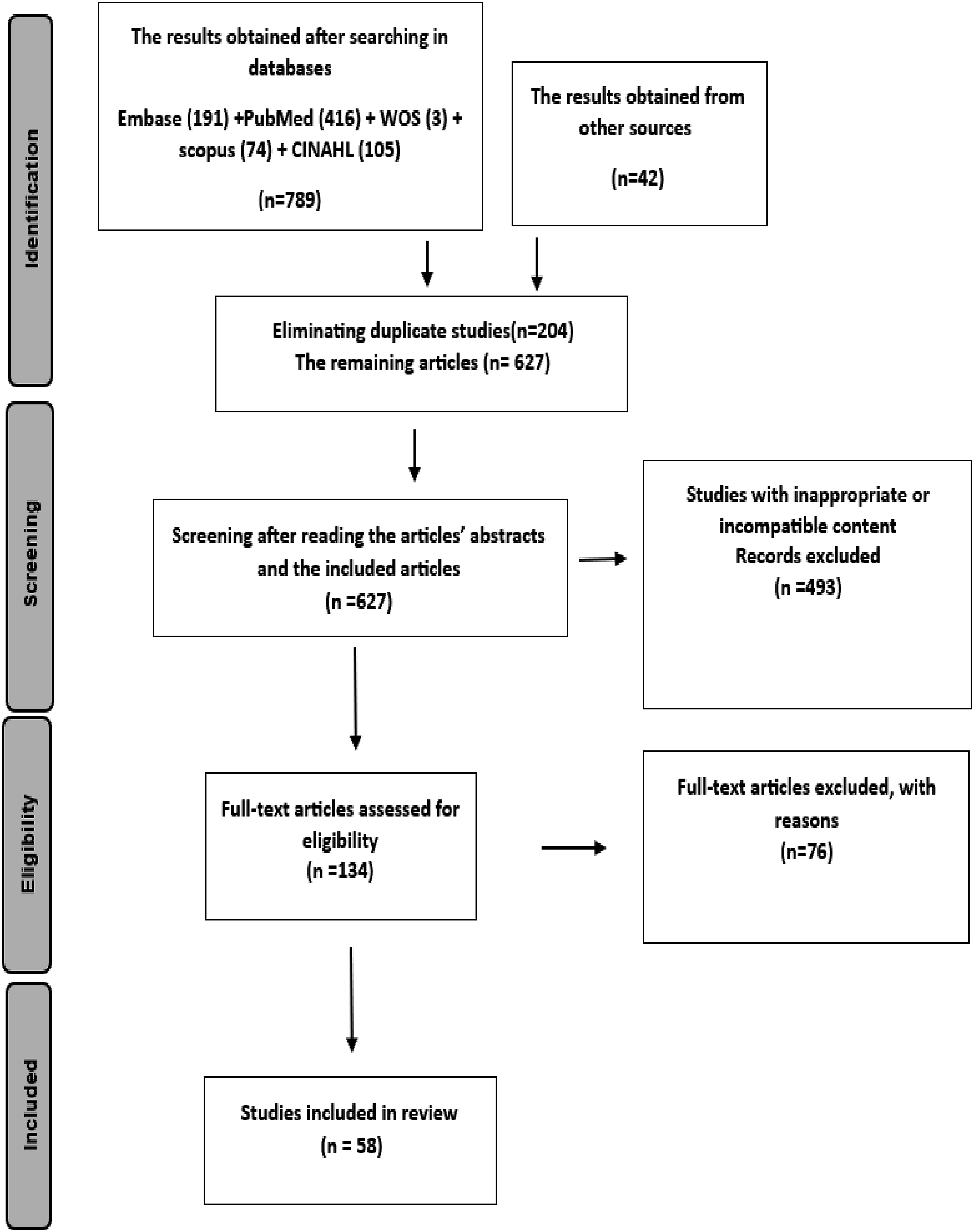
Based on the findings, the first article was published in 1993, with a noticeable increase in publications over the years, particularly in the last decade. This trend suggests a growing recognition of qualitative research and the need for rigorous standards. Figure 2 shows the process of publishing articles related to the issue of quality assurance of qualitative studies. Publication trend of articles on quality assurance of studies
The final report encompassed all articles related to quality assurance in qualitative research. Out of the 58 articles reported, 28 primarily focused on rigor and trustworthiness, despite variations in the spelling of “rigor” (Rigour) across studies. The remaining studies addressed specific strategies or issues such as large-scale studies with big data or small sample sizes.
The findings revealed that, despite some studies’ emphasis on the qualitative paradigm, terms commonly associated with quantitative research, such as “validity” and “reliability,” remained more prevalent in the reported articles. Figure 3 illustrates the frequency of these terms in published articles over different years. The frequency did not follow a specific pattern, and the usage of quantitative research terms did not decrease over time. Frequency of terms related to the quality of qualitative studies
The majority of the studies (45 articles) did not follow a specific study design. Among those that did, the majority were review studies (6 articles). Based on the analysis of the reported studies, the number of studies mentioning each specific focus area is as follows: description of criteria (38 studies), defining strategy (42 studies), criticisms/challenges (33 studies), solutions/recommendations (24 studies), and framework (7 studies). Figure 4 illustrates the proportion of each sub-area of focus within the study findings concerning the total number of reported articles. Proportion of sub-areas of focus within study findings relative to total reported articles
Based on the findings of this study, no consensus exists regarding the definitions and conceptualization of quality assessment in qualitative research. The literature reveals significant diversity and differences in how criteria are defined. This review specifically examined how the concepts of rigor and trustworthiness have been defined. To provide a clear foundational understanding, we have first synthesized the core similarities in how the major criteria are commonly defined.
Based on the authors’ analysis of the included studies, the overarching concepts of rigor and trustworthiness can be understood as follows:
Trustworthiness
Lincoln and Guba’s seminal work in the 1980s introduced the concept of “trustworthiness” to replace traditional notions of reliability and validity in qualitative research. They proposed trustworthiness as a central criterion for assessing the rigor of qualitative studies, encompassing quality, authenticity, and truthfulness of findings. Trustworthiness is achieved through credibility, transferability, dependability, and confirmability, which parallel the conventional criteria of validity and reliability. Trustworthiness is both a goal and a measure throughout the research process, involving specific activities to meet criteria related to truth value, applicability, consistency, and neutrality.
Rigor
Lincoln and Guba (1985) established criteria for judging the rigor of a naturalistic inquiry, which they call trustworthiness, providing four different criteria for its evaluation. Rigor in qualitative research means conducting precise and high-quality research, ensuring that the design, data collection, data analysis, publication of findings, and implementation of ethical principles are transparent, comprehensive, systematic, accurate, and open to critique while being free from bias.
Quality Assurance Criteria, Definitions, and Associated Strategies

Another noteworthy point is that the strategy of reflexivity has been presented in the literature both as a shared strategy across multiple criteria and, at times, as an independent approach for assessing rigor and trustworthiness. The definition derived from the texts is as follows:
Reflexivity involves acknowledging personal biases and preconceptions, questioning our understanding of reality and knowledge based on our perceptions, and examining our relationship.
Criticisms/Challenges Related to Quality Assurance in Qualitative Research

Criticisms/Challenges Related to Strategies

Proposed Solutions/Recommendations Related to Quality Assurance of Qualitative Studies

Solutions/Recommendations to Ensure the Quality of Qualitative Studies According to Each Strategy

Solutions/Recommendations for Ensuring the Quality of Qualitative Studies in Specific Situations
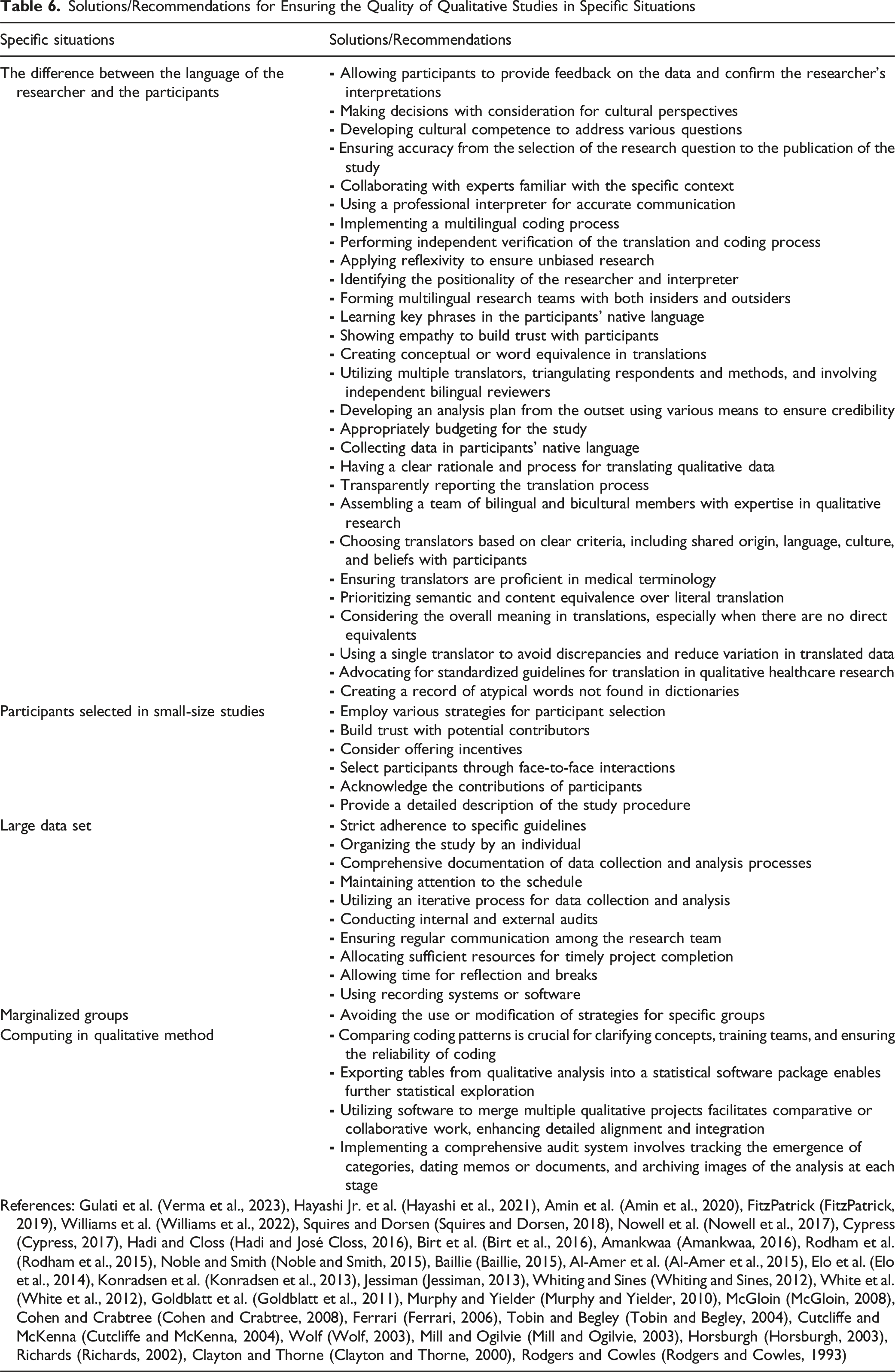
The overall review of the findings from the studies indicates that the quality of qualitative research has consistently been a concern for researchers. However, the actions taken have not always been consistent, and there have been conflicts of opinion in various areas, including terminology, definitions, and the implementation of strategies. Criticisms and challenges have been more prominent than solutions and recommendations, spanning both paradigmatic and methodological aspects. While some strategies have been proposed and debated, researchers have also encountered specific challenges that have been addressed in particular contexts. Most studies have examined research quality in general, with less emphasis on individual methodologies. Presenting findings across different areas and focusing on study results have helped identify existing evidence and highlight gaps in the literature.
Discussion
This study aims to identify and define the criteria and strategies for ensuring the quality of biomedical qualitative research, explore the associated criticisms and challenges, and examine the proposed solutions and recommendations for addressing these issues. Given the broad scope of findings in the field of quality assurance in qualitative research, the discussion section focuses on key points that highlight the most significant gaps and challenges, clarify future directions, and assist researchers in planning future studies. This approach aims to address these challenges, respond to criticisms, propose solutions, and harmonize existing literature.
The first point to note when addressing quality in qualitative research is the existence of multiple terms in the literature and the lack of agreement on their use, such as validity, reliability, trustworthiness, rigor, credibility, and quality (Cypress, 2017; Elo et al., 2014; FitzPatrick, 2019; McGloin, 2008; Mill and Ogilvie, 2003; Murphy and Yielder, 2010). This lack of consensus has persisted over time and has not diminished in intensity, as evidenced by our findings. The inconsistency in terminology has created several major challenges. Primarily, it has caused confusion among researchers in applying appropriate terms and made it difficult to search for relevant research in this area (Cohen and Crabtree, 2008; Elo et al., 2014; Hadi and José Closs, 2016; Miyata et al., 2011; Murphy and Yielder, 2010; Tobin and Begley, 2004). To address these challenges, some literature has suggested the use of specific terms, such as “rigor” instead of “trustworthiness,” and vice versa which not only seems to have had no effect in solving these challenges but has also created more confusion in the literature (Mill and Ogilvie, 2003).
The next important issue is that, regardless of the terms used to discuss the quality of qualitative studies, the incompatibility of the proposed criteria with the nature of the qualitative paradigm (such as the flexibility of the research design, the nature of the data, or the belief in multiple realities) poses a more serious criticism (Baillie, 2015; Clayton and Thorne, 2000; Cohen and Crabtree, 2008; FitzPatrick, 2019; Hadi and José Closs, 2016; Horsburgh, 2003; Murphy and Yielder, 2010; Rettke et al., 2018; Williams et al., 2022). The diversity of epistemological assumptions in qualitative research, ranging from positivism to constructivism, leads to ambiguity in assessing research quality (Spencer et al., 2014). For instance, in the early work of Lincoln and Guba, they highlighted various aspects of trustworthiness in quantitative research and proposed corresponding criteria for qualitative research (Lincoln and Guba, 1985). To achieve these criteria, they also introduced specific strategies. However, these criteria and strategies, which various researchers later adopted, were criticized for not being practical, effective, or appropriate for qualitative research, as they were derived from quantitative research principles (Konradsen et al., 2013; Tuckett, 2005).
It is important to contextualize the contribution of Guba and Lincoln. While discussions about the validity and rigor of qualitative research had been ongoing, their work in the 1980s provided a pivotal and systematic framework for conceptualizing trustworthiness in naturalistic inquiry (Guba, 1981; Guba and Lincoln, 1981; Lincoln and Guba, 1985; Lockyer, 2008). Their seminal work, which organized criteria into the domains of credibility, transferability, dependability, and confirmability, offered a structured response to criticisms regarding the validity of qualitative findings and became a foundational benchmark for the field. Accordingly, it can be said that some criticisms, such as the incompatibility of strategies with various methodologies (such as participant checks in grounded theory research), were raised regardless of the context in which these criteria were proposed (Konradsen et al., 2013; Whiting and Sines, 2012). It seems that with the development of various methodologies, the criteria and strategies needed to be revised or modified; similar to the action taken by Corbin in 2008 to introduce quality assurance criteria for grounded theory research (Corbin and Strauss, 2008).
The criticisms and challenges also target researchers using quality assurance criteria. The aim of experts like Lincoln and Guba, Corbin and Strauss, or Morse et al. in presenting these criteria has always been to guide researchers in improving the quality of their research right from the outset (Corbin and Strauss, 2008; Guba, 1981; Guba and Lincoln, 1981; Morse et al., 2002). However, some researchers may have merely used these criteria as a tool to demonstrate the trustworthiness of their research in final reports or for external assessment of qualitative research quality (FitzPatrick, 2019; Johnson et al., 2020; Tobin and Begley, 2004). As a result, these criteria have been presented in some texts as evaluation standards and used as checklists or tools. To achieve this, they must make a conscientious effort to conduct their research with integrity and report their findings honestly and accurately, allowing the audience to make informed judgments. (Hamilton, 2020; Murphy and Yielder, 2010, Cohen and Crabtree, 2008). Rather than merely accepting stated implementations as indicators of study quality, evaluators and readers should carefully assess and document how these criteria have been met. (Hamilton, 2020; FitzPatrick, 2019; Amin et al., 2020; Johnson et al., 2020, Cohen and Crabtree, 2008).
Another important aspect of ensuring the quality of qualitative research is that the solutions and recommendations proposed by different researchers in response to criticisms and challenges are not entirely consistent and often contain contradictions. This underscores the need for further research and expert consensus. Despite disagreements, all experts agree on the importance of a researcher’s commitment to methodology. Proper implementation and adherence to study protocols are universally recognized as fundamental to conducting high-quality, ethical research. (Corbin and Strauss, 2008; FitzPatrick, 2019; Guba, 1981; Guba and Lincoln, 1981; Morse et al., 2002). Based on the findings of this review, the numerous contradictions, generalities, and impracticalities prevalent in existing recommendations for ensuring qualitative research quality highlight a critical need for future efforts to focus on developing more coherent, context-sensitive, and actionable frameworks.
Finally, the issue of quality in qualitative research has been a subject of considerable criticism and challenge, reflecting its importance and the attention it has garnered from experts and researchers over time. The vital role of qualitative research in knowledge development and the necessity to align with new approaches, such as open science and responsible research, emphasize the need to address these challenges and implement effective solutions. Based on the findings of this study, the authors suggest that future research should focus on developing a framework for ensuring the quality of qualitative research. This framework should incorporate the criticisms/challenges raised while leveraging existing solutions and the experiences of researchers to enhance the quality of qualitative research.
Limitation of Study
One notable limitation of this study is that it includes only materials and data in the English language.
Conclusion
This study highlights the importance of quality assurance in biomedical qualitative research. Despite the growing recognition of qualitative methods, challenges persist, particularly regarding inconsistent terminology and the dominance of quantitative concepts like “validity” and “reliability.” The lack of a universal definition of quality complicates research efforts, underscoring the need for standardization.
Existing criteria, often rooted in quantitative paradigms, may not align with qualitative research’s flexibility and multiplicity of realities. Early frameworks, such as those by Lincoln and Guba, have been criticized for their applicability to biomedical studies, prompting calls for context-specific adaptations. However, there is unanimous agreement on the necessity of methodological rigor, transparent reporting, and ethical research practices.
To advance quality standards, a comprehensive framework is needed—one that addresses criticisms integrates effective solutions, and reflects diverse research experiences. Embracing open science and responsible research will further strengthen qualitative studies. Given ongoing gaps and disagreements, a large-scale Delphi study is recommended to gather expert consensus and develop clear guidelines for biomedical researchers.
Footnotes
Acknowledgements
We would like to thank the QUEST Center for Responsible Research and the University of Social Welfare and Rehabilitation Sciences for their support, without which this study would not have been possible.

Ethical Considerations
This study has received approval from the Ethics Committee of the University of Social Welfare and Rehabilitation Sciences, with the reference number IR. USWR.REC.1403.193.
Author Contributions
Conceptualization: HKh, ShSh. Data Curation: ShSh, MM. Formal Analysis: MS. Funding Acquisition: ShSh. Investigation: ShSh, HKh. Methodology: Hkh, UD. Project Administration: ShSh. Resources: HKh, JR. Software: MS. Supervision: HKh. Validation: HKh. UD. Visualization: ShSh. Writing – Original Draft Preparation: ShSh. Writing – Review & Editing: ShSh, HKh, MM, MS, UD, Jr.
Funding
The authors received no financial support for the research, authorship, and/or publication of this article.
Declaration of Conflicting Interests
The authors declared no potential conflicts of interest with respect to the research, authorship, and/or publication of this article.
Data Availability Statement
The datasets used and/or analyzed during the current study are available from the corresponding author upon reasonable request