




Abstract
In this study, we reflect on our experiences of planning for and implementing a large qualitative study of the lived experiences of autistic children and adolescents, a historically marginalised population. While there is a growing recognition of the need to amplify the voices of under-served populations, inclusive and participatory research is still rare, and even rarer with autistic children. Working within a neurodiversity paradigm, and drawing upon our qualitative study exploring the school experiences of autistic students aged 5 to 19 years (N = 51) in Ireland, we offer a real-world example of a flexible, person-centred research protocol involving photovoice and adapted interviews. We describe how we individualised our protocol for the autistic students who participated in this study, supporting a wide range of ages and communication profiles. Reflecting on the successes and challenges of this approach from an ethical and methodological standpoint, we highlight the importance of sensitivity, flexibility, and the value of small actions. Finally, we argue that embracing inclusivity for fully participatory research with younger children is necessary and achievable, and is needed in the wider culture of academic research.
Participatory research is an approach to research that gives voice to under-served populations (Demuth & Mey, 2015; Torabian, 2025) and is particularly important for effective and robust research with traditionally marginalised populations, such as autistic children and adolescents (Lewis et al., 2024; Pellicano et al., 2014). Participatory methods are increasingly used in research to actively include autistic people in research that is relevant to them, and in particular to foreground the lived experiences of autistic participants and researchers (Pellicano, 2020). Participatory methods work by modifying traditional interviewing methods to accommodate the unique communication needs and perspectives of participants (Harrington et al., 2014; Hummerstone & Parsons, 2022), ensuring participants are actively engaged and their voices are accurately represented in studies. These methods focus on creating a respectful and understanding environment that facilitates meaningful participation (Lundy et al., 2011). Participatory methods also include co-production wherein key interest-holders are actively involved in the design and implementation of a study (National Institute for Health and Care, 2024) and place responsibility on researchers to design inclusive methods to support participants to express their views (Bradbury-Jones et al., 2018; Tesfaye et al., 2019). Examples of co-production include co-leading research with interest-holders from the funding stage through to project completion, or can involve interest-holders actively guiding and informing the research at key stages (see Durose et al., 2014).
Participatory methods, and an inclusive approach to research more generally, align with a neurodiversity paradigm which challenges a deficit-view of neurodevelopmental differences (Dwyer, 2022). This paradigm emphasises understanding autistic people’s strengths and differences within their wider socio-cultural context, and prioritises autistic people’s perspectives in shaping that understanding (Pellicano & den Houting, 2022). Researchers adopting the neurodiversity paradigm seek to address priorities defined by the autistic community (Pellicano, 2020), which often include a desire for more applied research (e.g. on education) that will result in real world change (Roche et al., 2021).
Gaps in Participatory Research
Despite increased recognition of the value of participatory methods in qualitative research with autistic people, noticeable gaps are evident. Firstly, there is a paucity of high quality participatory studies with autistic people, and there are limited resources available for researchers to use in developing participatory studies (Pickard et al., 2022). Exploring why relatively few participatory studies have been conducted, den Houting and colleagues (2021) surveyed 64 academic and 15 community partners involved in autism research projects and found that the majority were supportive of participatory research, but that many lacked understanding of participatory approaches. They also found wider systemic issues, including limited time and funding available to support participatory research (den Houting et al., 2021). Systemic issues are especially evident in doctoral research where challenges for participatory research can be keenly felt by early career researchers. For example, doctoral assessment requirements may not recognise the time required to conduct participatory methods such as recruiting an autistic advisory group to inform all stages of a research project (Taylor-Bower et al., 2024). Time, and the funding required to secure time, is widely recognised as a critical resource for participatory researchers to establish the trust and relationships required for effectively conducting inclusive research with historically excluded and under-served populations (Pickard et al., 2022).
Secondly, participatory research with autistic children and adolescents is even rarer. Children, particularly children with disabilities and differences, have often been viewed as unreliable narrators of their own experiences (Fricker, 2007) as well as a more sensitive population requiring additional ethical considerations for research participation (Kenny et al., 2023). These views have been challenged by Kellett and others (Kellett, 2010) who have proposed that children offer unique insights on their own childhoods that are not effectively captured in adult-led research (Lewis et al., 2024). International policy, such as the Convention on the Rights of the Child (United Nations, 1989) and the Recommendation on the Participation of Children and Young People Under the Age of 18 (Council of Europe, 2018), has also played a key part in supporting a democratization of research with children and young people, especially those with disabilities or differences who have previously been excluded from meaningful engagement with research about them (Cuevas-Parra & Tisdall, 2019). Despite this increased recognition of children and young people’s rights to be heard in matters that concern them, there is a dearth of participatory research conducted with young autistic children (Lynam et al., 2024).
Lastly, within the limited literature on the lived experiences of autistic children and young people, there is a persistent under-representation of autistic girls, who are more likely to be diagnosed later than autistic boys (Ratto et al., 2018), and an under-representation of autistic children and young people who do not communicate through speech (Lewis et al., 2024). Autistic children and young people from ethnic minority groups are also more likely to be absent from participatory studies and autism studies more widely (Bradbury-Jones et al., 2018; Poulsen et al., 2022).
Despite these gaps, the small number of participatory studies with autistic children and young people have provided important evidence of ‘what works’ in terms of inclusive methods. For example, in a recent study of 13 autistic children’s lived experiences in schools at the age of 11, Lewis and colleagues (2024) examined the effectiveness of a range of participatory methods, including photovoice, walking interviews and card sorting. Children’s communication differences were carefully planned for, including the use of creative and responsive methods to foreground children’s voices, and a pre-study stage which allowed the researchers to carefully address the ‘double empathy problem’ (Milton, 2012) by gaining an understanding of the participants and their strengths, needs and preferences before participating in the research study. This study also highlighted the advantages of conducting research in a familiar setting for autistic children while highlighting disadvantages in terms of reduced flexibility to adapt the environment and interview protocol, and a greater likelihood of compliance among children due to the school setting. These challenges have been reported in other school-based, participatory studies, including a strengths-based study of autistic children’s play (O’Keeffe & McNally, 2025b). O’Keeffe & McNally (2025b) reported on extensive efforts to ensure meaningful assent was gained throughout data collection within the school context and to ensure pre-data collection planning supported responsive interviewing in schools. However, interviews were conducted with a predominately white Irish sample of autistic children, and the authors noted that research was conducted by non-autistic researchers which may have further limited the interpretation and generalisability of the findings (O’Keeffe & McNally, 2025b).
Overall, there have been calls for increased transparency given the complexities of real-world participatory research and limited practical guidance with children and young people to facilitate authentic and meaningful engagement in research (Angelöw & Psouni, 2025; Bradbury-Jones et al., 2018). The study which we now report on responded to these calls and we share practical guidance and insights for real-world participatory research drawing on a large-scale participatory study with autistic children and young people.
Current Study
Autistic children and young people have the right to be active participants in research that shapes policy and ultimately their educational experiences and to have their voices heard in line with the United Nations Convention on the Rights of the Child (United Nations, 1989), and the National Framework for Children and Young People’s Participation in Decision-Making (Department of Children Disability and Equality, 2021). Yet children with disabilities are routinely excluded from research (Lundy et al., 2011; Stafford, 2017) which is likely due to preconceptions regarding children’s capacity or competency to engage in research (Harrington et al., 2014).
This study reports on our approach to designing and conducting inclusive interviews with autistic children and young people in Ireland as part of a wider, national study of the school experiences of autistic students (McNally et al., 2025a, 2025b). The main objective of the wider study was to prioritise the voice of autistic students in educational policy-making. We thus sought to understand the experiences of autistic students from their perspectives across a range of contexts, including mainstream schools and special schools, and special classes in mainstream schools (sometimes called autism classes), in order to make implementable recommendations for inclusive education in Ireland. We also sought to contribute to the broader field of autism research by promoting equitable research methodologies (Tesfaye et al., 2019) and to extend the evidence base of real-world participatory research.
The study was guided by two central research questions: what are the educational experiences of autistic students in primary and post-primary schools in Ireland, and how do autistic students in primary and post-primary schools in Ireland perceive inclusion? Three work packages were designed and implemented over a two-year funding period: (1) a scoping review of the literature in consultation with autistic young people in order to identify key areas for investigation in subsequent work packages (Lynam et al., 2024); (2) an interview study drawing on a range of participatory methods with autistic children and young people, including a distinct focus on primary school and post-primary school respectively, and (3) a survey study of the attitudes and understanding of the wider school community to inclusive education and autism (Keenan et al., 2025). The current study reports on the methods used in work package two: our interview study with autistic children and young people.
Community Involvement Statement
The role of autistic people in conducting, advising and guiding this study was pivotal to its success. The research team included one autistic researcher and four non-autistic researchers, and the study was informed at all stages by two advisory groups, which included autistic students, autistic researchers and educational specialists, academics, and parents of autistic children. Our study was supported by community partners including AsIAm, the national Autism charity in Ireland, and the Centre for Talented Youth Ireland at Dublin City University which offers enriching educational programmes for gifted students.
Methods: Designing and Conducting Inclusive Interviews with Autistic Children and Young People as Part of the Autism-Friendly Schools Research Project
This section focuses on our reflections on designing and conducting inclusive interviews with autistic children and young people. We provide detail on ethical considerations with a particular focus on sampling and recruitment, which are often neglected in the methods literature, and details on how the advisory groups were formed and their contributions. We also describe the range of participatory methods and adaptations we used, and reflect on strategies (both successful and unsuccessful) to widen participation.
Ethical Considerations
Throughout the project we adopted what has been described as ‘person-oriented ethics’ (Cascio et al., 2020) wherein ethical considerations focused on ensuring that autistic children and young people were fully supported to participate through careful attention to their preferences, needs and adapting the environment and research protocol in a flexible and responsive way. This included an ethics of care (Heath et al., 2007) and Palaiologou’s (2014) ethical helix. Ethical approval was sought and granted from Dublin City University’s Research Ethics Committee, which included careful consideration of informed assent, consent, confidentiality, and inclusivity. Where the methods needed to be adapted we also sought amendments throughout the project, highlighting a person-oriented ethics adopted by the team.
In our ethics application and throughout the project, we prioritised the use of age-appropriate language, respectful communication, and creative methods to engage children comfortably, ensuring they felt valued and heard throughout the interview experience. We advocated for a person-centred approach to interviewing, which prioritised children’s agency, dignity, and rights. By incorporating ethical considerations and empowerment strategies, we sought to address the inherent power imbalance, creating a safe and inclusive environment that encouraged children to share their experiences with confidence and authenticity. This approach not only upheld the ethical standards of qualitative research but also fostered meaningful and transformative insights that reflected the diverse voices of autistic children and young people in our society. Details on how we sought consent and assent throughout the interviewing protocols are described below.
Sampling and Recruitment Strategies
Non-probability sampling was used for qualitative interview data collections with children and their families. Unlike large-scale quantitative research, a criterion of saturation was used (Strauss & Corbin, 1998) for interviews whereby we added new cases (interviews) to the study to the point of diminishing returns when no new information is added (Elliott & Timulak, 2005). We used a purposeful sampling strategy for the major data collection with autistic students and their families (Creswell, 1998) in order to meet the objective of capturing important components of students’ experiences of schooling in Ireland.
We intentionally sought to recruit children outside of schools to minimise limitations that have been recognised as occurring in school-based research. These limitations include that autistic boys are more likely to be identified in schools and thus are more likely to take part (Lewis et al., 2024). Children are also more likely to comply in school settings making gaining assent more problematic when children are more likely to please adults (O’Farrelly & Tatlow-Golden, 2022). There are also often substantial time and space restrictions within a busy school setting as well as less freedom for children to end the research (Lewis et al., 2024). However, a major advantage of school-based research is that participants are familiar with the environment and this is likely to enhance children’s comfort when participating in the research. Weighing advantages and limitations, we opted for a recruitment strategy that focused on reaching families outside of schools, and allowing students and families to self-select into the study.
Rate of Completion for each Study Component and Participant Characteristics

Advisory Groups
In our study, the research protocol was developed and refined through consultations with two advisory groups: (1) A Child and Youth Advisory Group (CYAG) comprised of autistic secondary school students (n = 3); and (2) An Adult Advisory Group (AAG) comprised of parents of autistic children, autistic researchers, academics, and teachers (n = 12).
Members of the CYAG were recruited through the Centre for Talented Youth Ireland. We supported autistic students to take part by sharing details of the project in advance and by presenting questions in different ways, including rephrasing and adapting materials during meetings. Members met twice online due to competing school calendar requirements and advised on all work packages including the scoping review during which our CYAG identified gaps in the literature and questions we needed to ask of autistic children and young people in Ireland. A member of the CYAG also contributed at project events, including an information session for potential participants and an event to launch the project’s summary research report. At both events they shared their experiences of the project and of post-primary school.
The AAG was recruited through the team’s networks. The AAG met more regularly than the CYAG and reviewed the work packages before ethical approval was gained for data collection and advised on key areas for investigation and ways to maximise the findings. They also advised on important considerations and accommodations for autistic children and their families to ensure meaningful and positive experiences of taking part in the research.
Establishing an Inclusive Interview Protocol
Flexible Interview Contexts
We adopted a hybrid approach to interviewing, offering both in-person and virtual options for interviews. This flexibility aimed to meet the diverse needs and comfort levels of participants, as some children may find the familiarity of their home and reduced sensory input in an online setting more conducive to open communication, while others may feel more comfortable interacting in person.
Virtual interviewing is increasingly recognised as a method that supports the inclusion of marginalised groups, as well as increasing access across geographical locations (Keen et al., 2022). In our study, the use of virtual interviews allowed children and young people to participate across Ireland without expectations to travel to take part. We carefully planned online interviews to maintain engagement and address potential technological challenges, ensuring participants had the necessary information for a comfortable experience.
We adapted each interview in several ways to accommodate children’s needs. For example, through the use of visual aids, sensory accommodations, and ample response time to create a supportive environment (Cascio et al., 2020). Parents or guardians also helped interpret non-speaking cues and ensure the child’s communication preferences were supported. Of greatest importance was taking time in interviews to establish trust between the interviewer and participants (Fletcher-Watson et al., 2019).
Pre-Interview Questionnaires
To adapt each interview (either online or in-person), we asked parents to complete a brief, anonymous online questionnaire. This questionnaire provided crucial information about each child’s specific communication needs, such as whether they used verbal speech, assistive devices, or sign language. Parents also shared sensory preferences, allowing us to create an environment that minimised potential sensory triggers. Additionally, details about each child’s interests and hobbies helped us incorporate engaging topics at the start of the interview, facilitating rapport and building trust with the researcher. This pre-interview preparation ensured a personalised, child-centred experience that valued each child’s individuality. Based on their responses, we adjusted the interview room for in-person interviews: where possible we included items in the room that they might be interested in and would make them feel comfortable. We had boxes of toys and sensory aids, different seating options, and adjustable lighting (see section Semi-Structured Adapted Interviews for more details).
We also provided space for parents to share their experiences of supporting their child in education and what they wished for in terms of education for their child. This afforded parents an opportunity to share important data on their views and experiences to date and allowed us to prioritise the children’s views at interview while gathering parental data on experiences, challenges and recommendations for policy and practice.
Seeking Assent in Interviews
Whilst initial consent was sought through parents and guardians, this study emphasised the importance of obtaining informed assent from children and ensuring that participants fully understood their voluntary participation in the research and their right to withdraw from the interview at any time (BERA, 2024; Lambert & Glacken, 2011).
A visual assent booklet was provided prior to the interview in order to allow parents to engage in dialogue with their children away from the pressure of the research environment (Harrington et al., 2014; Tesfaye et al., 2019). The interviewer then went through the booklet at the start of the interview. Informed by BERA (2024) guidelines, these booklets documented the research aims, activities involved, what children’s participation entailed, why it was necessary and how the information obtained would be used in terms of data recording and dissemination. However, negotiating assent involved an ongoing dynamic between the researcher and participants (Arnott & Wall, 2021; Dockett, 2021) through which the researcher needed to remain attune to children’s verbal and nonverbal signs of assent or, indeed, dissent. Collaboration with parents and guardians played a significant role in recognizing children’s indicators of assent or dissent based on their individual communication style.
We used an adapted version of the research-based strategy, POWR (Prepare, Offer, Wait, and Respond) with autistic young people (see Figure 1 adapted from The Qualitative Research Distress Protocol [QRDP], Whitney & Evered, 2022). In this approach, the interviewer assessed the child and noted any observable distress or discomfort – a ‘pause’ moment was then offered. The situation was then ‘reassessed’ to see if the child was ready to continue or if they would prefer to stop the interview. If the child wanted to end the interview, the child was asked if the parent could speak on the child’s behalf. Interview Emotion Assessment (Adapted From the Qualitative Research Distress Protocol [QRDP], Whitney & Evered, 2022)
Photovoice
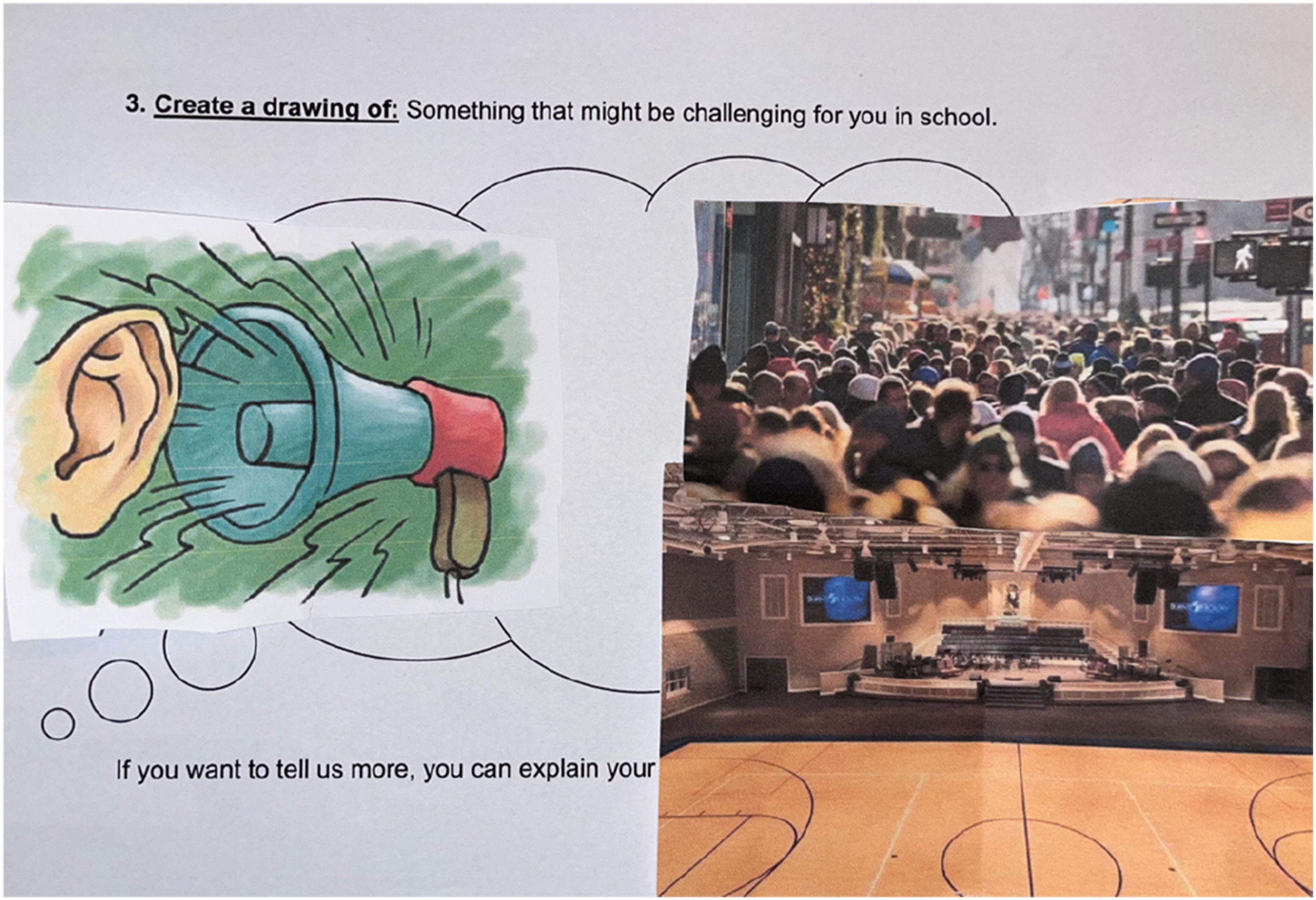
Photovoice methodology enables participants to take and manipulate photographs in order to support participants to share their lived experiences and perspectives about the places shown in the photographs (Ha & Whittaker, 2018). As part of pre-interview preparation, we invited participating children and young people through their parents to email to the research team photos or drawings of the school environment depicting: (1) something they wanted to show about their school (2) something that was important to them in school (3) something that was challenging for them in school (4) their favourite place or thing in school and (5) their least favourite place or thing in school. Where children submitted photos or drawings, we discussed these in the interview and used them as prompts for discussion. Participants could also complete this during the interview through drawings which we then used as discussion prompts about the student’s school experiences. Twelve primary school students but only one secondary school student chose to share photos or drawings as part of the interview procedure (see Images 1 and 2 for sample submissions). Drawing Completed During the Interview A Collage Completed before the Interview
Semi-Structured Adapted Interviews
Extensive planning took place for each individual interview. We sent visual guides for parents and children in advance so they would know who the interviewer was and what to expect on the day. Interviews were conducted by the project’s postdoctoral researchers: there were two postdoctoral researchers who each interviewed autistic students separately but both collaborated to ensure similarity in the interview procedure and deep familiarity with the ethical considerations and goals of the interview process. Sending materials in advance and then adapting the interview environment and questions as required was critical to the success of interviews. Sending a visual guide to participating families, which included directions for parents around the campus, also served as a social story for children in advance, with images of key locations.
Checking for potential issues in advance (e.g., large crowds or nearby events) and how busy or noisy the environment for in-person interviews (in our case the college campus) was likely to be at different times helped ensure a calm experience for visiting children and their parents. These checks extended to reducing potential logistical issues (e.g., finding a parking space near the building) and having contingency plans such as remaining nearby to aid navigation and support a smooth transition to the interview room. Knowing which doors were likely to slam in a building, and checking in with children once in the interview context (e.g. asking if it was too hot/cold/bright/dark) were small but important actions that showed respect for children’s possible sensory needs, whether these had been flagged pre-interview or not, and again supported the building of trust and relationships between the interviewer and child.
Overall, we focused on fostering an inclusive physical environment including sensory accommodations, which were made to the interview environment, such as providing earplugs or dimming the lights, to cater to participants’ potential sensitivity to sensory stimuli like noise and bright lights (see Image 3). Having a range of toys and materials of interest, and snacks (with parental approval), water bottles, and tissues available added to our ability to support autistic students’ in-person participation in a responsive and respectful way; where participants were interviewed virtually from home, they were encouraged to choose a comfortable environment and take breaks or to come and go as needed. We also engaged with autistic children and their parents or guardians to establish their preferred communication styles, such as sign language, gestures, or pictures, and used these methods during the interviews to enhance comfort. In this way, we found both in-person and online interviewing outside of school settings afforded significant flexibility for children and young people around the interview experience. The Room for In-Person Interviews
A semi-structured interview protocol was developed to explore autistic students’ school experiences, using photos/drawings as prompts if the photovoice component was completed. We focused on fostering a comfortable and inclusive social space by supporting quality interactions between the researcher and participants including the development of rapport through play and ice breaker activities (Lundy et al., 2011; O’Keeffe & McNally, 2024) as well as through the use of flexible language throughout where all forms of voice and views were respected and valued (Horgan & Martin, 2021). Using multiple creative opportunities, such as play and ice breaker activities, also helped to foster multiple means of expression and representation of learner voice (O’Keeffe & McNally, 2025a; Scott-Barrett et al., 2023; Stafford, 2017).
The interviewers also offered visual aids (e.g., pictures or PowerPoint) to help the children understand the questions and express their answers more effectively (Harrington et al., 2014). We chose the materials used to maximise children’s comfort and trust in the research process (assent booklets, toys, books, soft furnishings) and to reflect participants’ ages and interests. For example, younger children were keen to share photos and pictures with the interviewer, whereas older children and adolescents preferred to discuss experiences or to write about these, and there was very little uptake of opportunities to use photovoice methods among the post-primary cohort.
Recognising that autistic children might need additional time to process questions and formulate responses, we allowed extra time for them to respond, thereby reducing pressure (as advised Bradbury-Jones et al., 2018). We also offered children the opportunity to receive the questions ahead of the scheduled interview so that they could reflect on what would be discussed. Clear and concise language was employed to prevent confusion. Throughout the process, we maintained flexibility, patience, and understanding (Dockett, 2021; Lundy & McEvoy, 2009), aware that participants were in a new social environment with unfamiliar people whether online or in person. The interviewers adopted a flexible questioning style (i.e. using open-ended and closed-ended questions) throughout including the presentation of varying options to participants (Lewis, 2009; Tesfaye et al., 2019) as well as respecting children’s right to refrain from answering if they chose (Courchesne et al., 2022). Throughout the interview process, the inclusion of parents or guardians was crucial; their presence helped the children feel more comfortable and supported, while also providing the researchers with additional insights into the children’s preferred modes of communication and behaviour.
Lastly, we took into account children’s awareness of their autism throughout the interview process. For example, we asked parents in the pre-interview survey if their child was aware of their autism diagnosis: where children were unaware we focused on educational experiences without reference to autism. This sensitivity to children’s sense of self and their own identity ensured that children’s interview experiences reflected their daily experiences and led to minimal disruption for children.
Adaptations to Widen Participation
Many autistic children and young people communicate in ways other than speech (Kenny et al., 2023; Lynam et al., 2024). Despite efforts to recruit children who did not communicate through speech, only one child took part for whom alternative and augmentative communication (AAC) methods were used. We interviewed the child and their parent in-person on the college campus and drew on extensive pre-interview planning to support the child’s inclusion. Methods used included adapting questions to yes/no questions and the use of pictures to support the child to express their preferences and feelings about school. Throughout, the child’s participation was prioritised with active support by their parent and the interviewer. This resulted in unique insights on the child’s feelings about school and preferences. Most importantly, this fully participatory interview demonstrated the person-oriented ethics (Cascio et al., 2020), neurodiversity paradigm (Dwyer, 2022), and rights-based approach (Lundy, 2007) which underpinned the project.
Discussion
This study provides novel insights on methods for conducting research with autistic children and adolescents. The voices of younger children in particular have been on the periphery of robust research efforts which rarely includes them meaningfully as participants in research. Our study provides a detailed report of participatory methods to guide researchers new to these approaches, and addresses a gap in the research literature by providing a thorough account of participatory methods used to elicit the views of autistic children and young people (Fayette & Bond, 2017; Pickard et al., 2022). Our study is offered as a useful exemplar rather than steps that must be followed, and highlights key areas for consideration (e.g. sampling approaches, recruitment strategies, and location of interviews) which future research can further elucidate and add to.
Our study also advances knowledge in inclusive research with autistic children and young people by showing that when the systemic issues identified in the literature (den Houting et al., 2021) are addressed, more children and young people with diverse experiences can be included, and rich data gained on autistic students’ lived experiences. Funding and adequate time to plan, implement and write-up the study was necessary for the success of this project as a robust, participatory study of educational experiences, and we are immensely grateful to the funders who supported this research through a large grant. However, for the majority of studies, funding and time are more limited. By building on a growing number of robust studies that use participatory methods with autistic children and young people and by sharing additional considerations and approaches that we took to meet our study objectives, we hope this methodology article will save researchers valuable time in mapping out considerations for ethical and effective inclusive research.
In addition to meeting with a large number of autistic children and young people and their parents (N = 51) our study also included a greater proportion of girls than typically reported in studies of school experiences. Autistic girls are often under-represented in research (Ratto et al., 2018) and we believe that our recruitment strategy, outside of school environments, facilitated the inclusion of more girls and children from a range of educational settings, including those who had been excluded from school. Indeed, it was because of this approach that we became aware of the wish of several autistic children and young people to participate who had experienced, or were experiencing, school exclusion. These students were included in light of an increase in the number of autistic students who are missing school (Cooke, 2018; Nordin et al., 2024). Including autistic students learning from home also supported us to further understand autistic children and young people’s experiences of education in Ireland.
Lundy (2007) emphasises the importance of creating a safe and inclusive space in facilitating and supporting children to express their views. We focused on fostering an inclusive physical environment including sensory accommodations, as advised within the literature (Goodall, 2020; Kaczmarek-Murray et al., 2024) and informed by prior consultations with participants and parents or guardians (Holmes, 2019). Further, we embraced a strengths-based approach by building on participants’ strengths, interests and desired communication styles: the onus remained on us as researchers to best support participants to express their views (Bradbury-Jones et al., 2018; Hummerstone & Parsons, 2022; Tesfaye et al., 2019) rather than reinforce traditional deficit perspectives (Einarsdóttir, 2007) in which spoken words have been privileged (Wickenden, 2018).
Interviews were participant-led including opportunities for participants to exert their autonomy and agency over selected methods, format and pace of sessions (Holmes, 2019; Lundy, 2007; Stafford, 2017). When consulted about research with children, children themselves have pointed to the importance of autonomy and agency in the research process in ensuring children can participate in a meaningful way (O’Keeffe & McNally, 2025a). In this way, our research process focused on ‘making decisions with children not just for them’ (Farrell, 2005, p. 170).
Our methodology for inclusive interviewing shows that with careful planning and time devoted to ethical considerations for effective and respectful interviewing, autistic children as young as five could take part in research on a topic of major importance to their lives, namely inclusive education. For example, our use of a visual assent booklet prior to the interview allowed parents to engage in dialogue with their children away from the pressure of the research environment (Harrington et al., 2014; Tesfaye et al., 2019). This approach has been endorsed in similar research with young children (e.g. O’Farrelly & Tatlow-Golden, 2022; O’Keeffe & McNally, 2024; Pyle & Danniels, 2016) and we extend this research by showing that young autistic children as well as older children and adolescents can be included in rigorous, child-centred research about lived experiences of education.
Limitations and Lessons Learned
Despite the openness of our recruitment strategy and flexibility of data collection procedure and methods to ensure all autistic students could participate, regardless of location, school context or level of need, autistic students who did not communicate through speech were under-represented in our data.
To address this under-representation, we actively sought the advice of autism advocacy groups on how to best include autistic children who communicated in ways other than speech. We received important feedback that several parents felt that interviewing their autistic child would be impossible due to communication differences. Some parents expressed frustration that participatory research which prioritised interviewing methods excluded and minimised the communication needs of many autistic students and thus that participatory research would not capture important issues relevant to many autistic children and young people. To respond to this valuable feedback, we invited parents for interview to ensure that their children’s educational experiences, in particular barriers to education, were captured. This was particularly important where parents felt their child could not participate even with adaptations to the interview method. The need to develop fully inclusive methods for participants with complex communication profiles has been highlighted in the research literature (Kenny et al., 2023) yet studies which effectively investigate the lived experiences of minimally speaking or non-speaking autistic children and young people are still rare. Our experiences highlight that even with adaptations, research studies may need to specifically focus on autistic children and young people with complex communication profiles and place all efforts into reaching this group; an approach which seeks to capture all perspectives may be less effective than a targeted approach. Further, in order to facilitate inclusive interviewing with children who have substantial levels of need, it is likely that recruitment at the school level where children are familiar with their environment and already have communication supports and technologies in place will enhance participation.
Conclusion
Our study highlights that widening participation through inclusive methods enhances robust research on the school experiences of autistic children and young people. In keeping with other researchers in inclusive research, we believe that adopting a participatory, responsive and person-centred approach to research supports research excellence (Ainscow, 2020; Lewis et al., 2024). Our findings highlight that such research requires resources (e.g. time and funding), researcher ethos and disposition that are a good fit for the purpose of the research (e.g. person-centred ethics and a rights-based approach), and flexibility and expertise in the research team to adapt and respond quickly to emerging findings in the course of the research (e.g. parental feedback on feelings of exclusion in participatory research which may prioritise verbal communication). We encourage researchers considering participatory research to place children and young people at the heart of planning for research. In this way we can keep building much needed knowledge and expertise in this space and continue to prioritise autistic children and young people’s lived experiences.
Footnotes
Acknowledgements
We wish to thank all the children and their families who took part in this study. We also wish to thank our Advisory Group and our Child and Youth Advisory Group for their valuable insights and contributions throughout the project. We wish to acknowledge the Irish Research Council for funding this project and AsIAm for supporting the project. We wish to thank the Centre for Talented Youth Ireland for their support particularly in our interview phase of data collection.

Ethical Consideration
This project received full ethical approval from the Research Ethics Committee at Dublin City University.
Funding
The authors disclosed receipt of the following financial support for the research, authorship, and/or publication of this article: This project was funded through a COALESCE award from Research Ireland (formerly the Irish Research Council), grant number COALESCE/2022/884 to Dr Sinéad McNally (Principal Investigator) and Professor Mary Rose Sweeney (co-Principal Investigator).
Declaration of Conflicting Interests
The authors declared no potential conflicts of interest with respect to the research, authorship, and/or publication of this article
Data Availability Statement
Anonymised data from this study is available based on reasonable request.