




Abstract
This research makes an important contribution to understanding the music experiences of late-deafened adults while demonstrating that mixed methods can evolve beyond traditional approaches. Drawing on our previous systematic literature review, we applied a constructivist subjectivist viewpoint of the biopsychosocial model to understand how late-deafened adults present the reality of their hearing loss and how they appreciate and participate in music. The methodology was developed from the methods we employed, and our approach helped demonstrate more flexible ways to reveal new insights into late-deafened adults’ music needs. A unique 3-stage, multi-data design was implemented. Stage 1 employed a quantitative survey to establish contact with this hard-to-reach population. The survey captured demographics, allowing identification of potential participants for subsequent stages. Stage 2 purposively selected survey participants to collect four qualitative and creative datatypes; Biographies (participants wrote their hearing loss and music story), Images (showing music experiences), a Music-piece (demonstrating relationships with music) and a scaffold paragraph (explaining their music-piece choices). In Stage 3, selected participants discussed personal realities and clarified the meaning of Stage 2 data in an Audio Bio-Photographic Elicitation Interview. By allowing the methodology to develop from the methods, our approach helped overcome the rigidity of previously used frameworks and demonstrated more flexible ways to reveal new insights into late-deafened adults’ music needs. This unique study extends our understanding of mixed methods paradigms, highlights gaps in current understanding of hearing loss and music and illustrates where hearing healthcare may be falling short.
Highlights
• Mixed methods can evolve beyond traditional approaches • Creative data was a core element highlighting the significance of personal meaning • The inclusion of images and a music-piece was a unique aspect of this study • The methodology developed from the methods applied • The experiential knowledge of music and hearing loss is being neglected.
Introduction
The Problem
Approximately 430 million people worldwide experience long-term, permanent, sensory disability from a moderate or greater hearing loss (HL) (World Health Organization, 2021). While HL affects people of all ages, the World Health Organization (2021) reports late-deafened adults (LDAs) (those over 60 years of age) form the largest segment of deafened individuals. In Australia, where this study took place, two in five people over the age of 65 experience HL and this number is expected to rise by 2060, due to increased life expectancy of an ageing population. This trend has major economic and social implications and highlights the importance of robust hearing healthcare services (Australian Institute of Health and Welfare, 2024).
LDAs’ experience significant disruption in established lifestyle prospects, often resulting in, for example, reduced self-efficacy and autonomy (Tucker et al., 2011). Personhood may be challenged, and constant re-evaluation of self can affect personal notions of normality, undermine social interaction and erode identity (Tucker et al., 2011). HL, particularly when untreated, is also associated with a greater risk of cognitive decline, and long-term deprivation of sensory input can disrupt cognitive processing (brain plasticity) and increase the risk of dementia (Lin et al., 2023; Pichora-Fuller et al., 2015).
The Importance of Music
Access to music from an LDA’s perspective, is said to be a fundamental life expectation, a catalyst for expression and social interaction (Sacks, 2007). Sahli et al. (2019), reported that music positively influences the quality-of-life (QoL) of typical hearing people which can be negatively influenced if music perception is impaired due to HL or the use of hearing devices (HDs). Music has the potential to mitigate HL (Kraus & White-Schwoch, 2014), as well as moderate cognitive decline (Zhang, 2020). Along with reading, social connection and physical activity; music protects against dementia (Livingston et al., 2020). In a review by Särkämö (2018), music was found to improve cognition and plays an important role in healthy aging because it evokes memories, helps to regulate mood and maintain self-esteem often reducing feelings of loneliness. It becomes a surrogate friend (Ayyildiz et al., 2025). Music is physical, an external sound which also elicits a personal dimension and internal emotional experience (Juslin, 2016). Since HL interferes with audibility, much of the personal dimension of music and thus music appreciation, participation and perception are likely to be compromised.
Philosophical Perspective
The study team considered what might be an appropriate philosophical perspective and orientation for the study and study design. We were aware that descriptions of music as purely auditory (Bonventre et al., 2023), had led to ontological assumptions that technology can ‘fix’ hearing. This viewpoint has also been described as adhering to a biomedical model (Liamputtong, 2019; Skelton & Valentine, 2003). Whereas, viewing music from both an ontological (the fundamental nature of being) and epistemological perspective (objective, measurable knowledge) taking a wider worldview, we saw music appreciation as greater than just hearing sound, to include, among other things, one’s personal experience within a situational context. These positions create a philosophical challenge to reconcile the different ways of knowing, i.e., surface-level data captures objective experiences while understanding can emerge at a deeper level through interrogation of subjective experience, deeper connections and context. This perspective aligns with the biopsychosocial model (Hathcoat et al., 2019) which understands HL goes beyond the physical aspects of not hearing sound, recognising the broader consequences including impact to social, cultural and emotional QoL. Therefore, understanding LDAs’ experiences required interventions which addressed the ‘burden of disease’ (Rapport et al., 2020) the broader challenges of psychological adjustment to HL and lack of music (Viola et al., 2023).
Consequently, the study team chose, as the philosophical foundation for this study, an interpretive, constructivist paradigm (Conway, 2020). In constructivism, epistemology asserts that “meaning is not discovered, but constructed” (Hathcoat et al., 2019, p. 103), and that understanding comes extensively from context, participant behaviour and participant understanding. The constructivist epistemology recognises that meaning is created, situated in one’s culture, and dependent on social interaction. People impose meaning on experience and interpret this in ways which make sense to them (Moon & Blackman, 2017). For example, members of Deaf communities are often pre-lingually deafened. They form a linguistic minority using sign language (Kožuh & Debevc, 2018), with a rich culture to be celebrated and respected. For them, deafness is constructed as ‘normal’ (Kusters, 2010; Leigh et al., 2020). However, LDAs—having lost hearing in later life—value hearing and do not construct HL as normal. Indeed, they are more likely to consider themselves injured (but not necessarily disabled) (Holmes, 2017). Therefore, the understanding of HL or HDs is affected by culture, background and interaction, and influenced by social expectations (Bleckly et al., 2024a; Scharp & Barker, 2021).
Current Research Focus
Wainwright and Rapport (2005), suggested it is self-evident that a relationship exists between the whole person and health and illness. Yet in HL, the biomedical model seems to downplay that evidence. There is a focus on medical intervention to return people with HL back to ‘normal’ life (Bleckly et al., 2024a; Bonventre et al., 2023), while other aspects of adjustment and acceptance are often overlooked, including personal life changes. Rapport and Braithwaite (2020), recognised that there are myriad challenges in providing appropriate healthcare to suit an individual’s needs and that aspects of both biomedical and biopsychosocial models should be considered. It seems that a new way of listening to and understanding people was needed. Keidser et al. (2020), also suggested we have a problem in understanding the needs of people with HL, while we focus on audiometric hearing testing and miss assessments of ‘ecological validity’. Ecological validity, a term borrowed from psychology, refers in this context to “…the degree to which research findings reflect real-life hearing-related function, activity, or participation” (p. 7). The rigidity of music testing and research that concentrates solely on audiological parameters (Bleckly et al., 2024a), side-steps people’s QoL in favour of their hearing ability.
This raises judicious questions about how altered hearing changes music appreciation, participation and experience (McDermott, 2004). Can music knowledge exist without hearing (ontological focus), and how can the physical and the experiential (the epistemological focus) become interwoven (Sacks, 2007)?
Aim
The aim of this current study was to examine the complex personal truths associated with music and HL as part of LDAs’ real-life function, activity and participation. The team felt research into this topic should be underpinned by a methodological approach that engendered multifaceted, imaginative and creative data (Creswell et al., 2003) and that a paradigmatic shift was needed to move from the medical model (what can be heard and what can be fixed (Skelton & Valentine, 2003)), to a biopsychosocial model (a more patient-centred, holistic approach (Hathcoat et al., 2019)) clarifying what can be understood from real life experiences and interactions. Hence, the study’s objective was to reach a more embodied understanding of the implications of HL and HDs for LDAs’ relationship with music. This objective would enable the team to recognise the importance of music for LDAs and how HL changes their relationship with music and the impacts this causes to QoL, health, and wellbeing. The study sought to answer: What are the implications of HL and HDs for LDAs’ relationship with music and how does this affect LDAs’ QoL, health, and wellbeing?
Current Research into Hearing Loss
To place the current research in the context of previous research in the field, this research was preceded by a comprehensive systematic literature review (Bleckly et al., 2024a), following a registered Prospero Protocol (NIHR: National Institute for Health Research, 2023), which investigated research in HL. The review synthesised findings from 131 articles and revealed that research into HL, HDs and music primarily focussed on testing CI recipients for accurate music perception (n = 91). This testing was undertaken in a controlled clinical environment and focussed on whether LDAs could accurately identify key components of music such as pitch, melody, timbre and/or rhythm. When mixed methods were implemented, it was usually through one of the many available music questionnaires, to understand musicianship. While some studies employed qualitative (n = 64) or mixed methods (n = 44), this usually included one of many available music questionnaires with closed ended questions limiting insight into personal experiences.
Overwhelmingly HL is viewed as an audiological deficit which needs to be ‘fixed’ (Gfeller et al., 2022) with a HA or a CI. This focus on audiological treatment is reinforced by media (Wallhagen, 2010) (invisible, discrete HAs, for instant loud and clear hearing), and LDAs are conditioned to accept the same position. Bennett et al. (2020), pointed out most audiologists only addressed audiological matters and did not feel confident nor have the time to deal with emotional, psychological and QoL issues. Participants in Gfeller et al. (2022), reported there were constraints in access (both time and cost) to clinics for music rehabilitation. The literature review (Bleckly et al., 2024a), clearly demonstrated a knowledge-gap between evidence elicited through data collection techniques and evidence elicited through a deep-dive below the surface of LDA experience.
Greasley et al. (2020), also confirmed only 13% of audiologists addressed the need for and importance of music. The literature review revealed a knowledge-gap between evidence elicited through conventional data collection techniques (music testing, surveys, questionnaires) and evidence elicited through a deep-dive below the surface to uncover experiences which even LDAs themselves may not readily recognise.
Mixed Methods – A Unique 3-Stage Multi-Data Design
This research was driven by a ‘methods assemblage’ (Law, 2004), a concept that brings together not just traditional methods of research but interconnected heterogeneous data components. Given that LDAs are pre-conditioned to think about HL from a medical perspective, creative data-types would prompt introspective responses. Each of the stages are described in the next sections. Briefly, however, the Stage 1 survey served as a baseline for the study allowing identification of LDAs (who can be hidden and hard-to-reach), and segmentation into two cohorts (1) those who wore HAs and (2) those who had CIs with musicians or non-musicians within each cohort. While the survey quantified LDAs’ similar experiences it could not probe the depth of individual personal experience. In Stage 2, a more nuanced approach was used to understand subjective experiences. To avoid a surfeit of qualitative data, a smaller group of participants (n = 24) was purposively selected from survey responses. Participants provided four data types all related to their HL and music (1) a short biography (text), (2) 5 still photos (images), (3) a music-piece (audio) and, (4) a scaffold paragraph to explain their chosen music-piece. For Stage 3, 12 selected participants were invited to participate in an Audio-Biographic Elicitation Interview during which the data they submitted could be discussed and clarified.
Four Levels of Understanding


Source used with permission: (Maggs-Rapport, 2001, p. 102).
Quantitative and qualitive data were collected using a methodology influenced by mixed methods. Mixing methods provides a way of eliciting a fuller and more complete picture of a given subject, while at the same time leveraging strengths from discrete datatypes (Creswell et al., 2003). The team aimed for data that could highlight how individuals give meaning to their life experiences while encouraging a harmonious and complementary relationship between the chosen methodology, the methods, and datatypes.
Teddlie and Tashakkori (2012), identified common core characteristics of mixed methods research and suggested that considering a variety of paradigms, or ‘paradigm pluralism’ could optimise mixed methods philosophical foundations. Each paradigm, they said, can contribute philosophical strengths, and compensate for limitations in data capture while researchers can draw on multiple perspectives to acknowledge the value of both objective and subjective knowledge. Creswell et al. (2003) noted different paradigms provide direction for mixed methods designs. The research method was a Mixed Methods, Sequential Multi-stage, Design. It took a ‘what works’ approach, and created a flexible and iterative investigation to capture emergent phenomena, while recognising, as Figure 1 shows, that our research did not fit neatly with any one specific model outlined by Creswell et al. (2003). Research Design
Ethics approval for this study was received from Macquarie University Human Research Ethics Committee (HREC) (Macquarie University, 2022; National Health and Medical Research Council et al., 2018; Therapeutic Goods Administration, 2000) (ID 520231544452456). All participants provided written informed consent prior to enrolment in the study.
Mixed Methods, Sequential Multi-Stage, Parallel Nested Multi-Data, Investigative Model

We also considered mixed methods paradigms that had previously influenced research undertaken in complex healthcare situations e.g., (Khanom et al., 2015), concentrating on those that had successfully applied a range of creative approaches, using visual cues for greater understanding of personal experience. Learning from such studies, we felt confident that we could circumvent the rigidity of a single, structured paradigmatic approach, favouring instead diversity of method to yield a greater understanding of LDAs’ embodied experiences.
Creativity and depth informed the methodological choices while the methods directed research proceedings (Jackson et al., 2007). The design sought to explore the interconnected relationship between the physical attributes of HL (lack of audiation), wearing HDs (limits of technology), and the consequences of music loss on participants’ lives. The outcomes sought to foreground a highly personal understanding of the impact of HL and HDs on music exploring LDAs beliefs, understanding their experiences to investigate how and why music impacted on their QoL (Rapport & Braithwaite, 2020, p. 140).
Choosing methods to gather data differently but appropriately accommodated participants’ limitations caused by HL and/or HDs. Regardless of the efficacy of sophisticated HDs (Keidser et al., 2020), HL often requires complete concentration and impacts face-to-face communication. It is known that people with HL often withdraw from conversations due to concerns of being misunderstood or misinterpreted (Pichora-Fuller et al., 2015). The present study design prioritised participants’ experiences through an embodied methodological approach. The team considered that a variety of creative, visual, auditory and written methods used together would not only overcome some of these limitations but may remove some participation barriers caused by HL. Thus, participants were encouraged to deeply scrutinise both positive and negative aspects of musical experience and delve deeply into their emotional and subjective experiences (Moon & Blackman, 2017).
The team sought to collect data in a form that would pay full respect to the sensitivity of the topic (Ashley, 2021). Methods of recruitment were considered in line with the work of Kožuh and Debevc (2018), who argued that in this era of technology, researchers should take advantage of social media. The paradox in digital environments is that they can both isolate and connect people (Wiederhold, 2025). Nevertheless, for many LDAs with access to technology digital platforms facilitate connection, reducing isolation while allowing a variety of ways to express experiences (Lähdesmäki et al., 2020). We therefore chose to contact potential participants through social media and communicate via email. On-line and email contact can ease the limitations of LDAs’ communicative concerns (Kožuh & Debevc, 2018), while using a video platform such as Zoom (2021) can provide visual cues and assist with lip-reading.
The study was carefully planned to include three complementary stages, (refer to Figure 1 and the following section), producing six different datatypes both discrete and complementary. Each stage introduced new elements, built upon earlier stages, and gathered wide-ranging data for richly textured meaning, awareness and understanding. Each stage helped fine-tune knowledge of participants’ relationship with music and helped participants clarify meaning for themselves. Each datatype was chosen on its merits and on its combined effectiveness with other datatypes (Meixner & Hathcoat, 2019). The staged sequencing of data collection and consequent analysis also created logical points of triangulation, with initial findings from each stage validated, challenged, or expanded upon in follow-on stages. To the best of our knowledge, the combination of stages, along with multi-creative datatypes has not been undertaken in the Hearing Sciences.
Stage 1: Quantitative: Demographics, Music Sophistication and QoL Survey
Identify and Categorise
Although quantitative research concentrates on aspects other than the lived-experience, the Demographic, Music Sophistication and QoL Survey provided vital context for the study (Refer Supplemental Material 1 – Full Survey). This important first stage was structured to influence, and play a critical role in, the design and progress of the qualitative stages that followed. The different sections of the survey are listed in Supplemental Material 4 – Brief Description of Survey Sections. The strategic inclusion of three validated research questionnaires in HL and music, CIQoL – (McRackan et al., 2021); Gold-MSI – (Goldsmith, 2012), MuRQoL – (Dritsakis et al., 2017), supported assessment of the importance of music, attitudes, and musicianship and how HL impacted on participants’ QoL and music sophistication. Participants’ responses could be compared to other studies that used the same questionnaires and could also be explored in subsequent stages.
The survey also helped the team to contact LDAs. Responses enabled participants to be categorised by their HL, HD and level of musicianship, into one of two Cohorts, allowing purposive selection of a group to participate in Stages 2 and 3. To represent the diversity of HL levels and the heterogeneity of HD combinations the two Cohorts were delineated as: Cohort 1 – LDAs who do and do not use HAs, and Cohort 2 – LDAs who are cochlear implant (CI) recipients.
We hypothesised that musicianship would also influence responses for Stages 2 and 3. As a result, participants were further stratified into musicians and non-musicians.
The survey used convenience sampling (Etikan, 2016), contacting LDAs through known on-line groups or local clinics where LDAs are patients. The invitation was posted to Facebook Groups, such as Bilateral CI Warrior, Cochlear Implant experiences, Hearing Aid Forum, or Association of Adult Musicians with Hearing Loss (refer Supplemental Material 3 – Groups where survey invitation was posted). Snowball sampling allowed Stage 1 participants to email the survey link to other LDAs who might be interested in the study (Etikan, 2016).
Stage 2: Qualitative Multi-Data Collection
Stage 2 used a nested, integrated method to collect in-parallel, creative, audio bio-photographic and written data (Figure 1), from a smaller purposive sample of survey participants. Purposive sampling (Etikan, 2016), ensures participants have the attributes necessary for follow-on work, in this case a range of musicianship levels and skills, and different HD usage. Stage 2 participants were asked to provide four sets of data relating to their HL, use of HDs and relationship with music: (1) A one to two-page biography (text) to TELL their story of HL and HD use related to music (2) Five still photographs (images) to SHOW how HL or HDs impacted their music appreciation, participation and QoL (3) A music-piece (audio) to DEMONSTRATE their relationship with music, and (4) A scaffold paragraph (text) to EXPLAIN the meaning and symbolism of the music-piece from their perspective.
To encourage more individualised presentations, participants were only offered brief guidance and could freely express their experiences as they wished (McLaughlin et al., 2020). For example, they could encapsulate their music experience as dependent on social interactions (constructionist epistemology), situating that within the environment in which they chose to listen to music (Hathcoat et al., 2019). Moving from a HL audibility mindset to one that considered a relationship with music, we sought to emphasise the integrity of different techniques used harmoniously (e.g., (Khanom et al., 2015; Rapport, Bierbaum et al., 2018) which encouraged participants to think differently.
TELL: Biography
The biography involved storytelling around the importance of music, including any changing relationships LDAs had with music due to their HL or HDs. Stories enabled participants to express the meaning of experience through the written word (Khanom et al., 2015), which can be particularly beneficial when examining the complexity of HL and music (Rapport, Hogden et al., 2018). Participants were asked to contain biographies to one to two pages for concise descriptions. They were encouraged to describe the impact of HL and/or HDs, positively and/or negatively, and consider their impact on music appreciation and participation. In addition, Cohort 2 (CI recipients) were asked to consider whether having a CI changed their previous relationship with music.
For a variety of reasons, not all people have the skills necessary to articulate the intensity of emotion in writing. Indeed, LDAs are often emotionally challenged, can feel stigmatised, and may have self-esteem issues and poor self-efficacy (Bandura, 2010; Kobosko et al., 2018). Consequently, we deemed it necessary to offer an additional means of expression by taking photographs and/or making other images.
SHOW: Images
Continuing the novel dimension of the textual combined with the visual (for previous examples see; (Khanom et al., 2015; Rapport et al., 2006, 2007, 2009)), participants were asked to provide a maximum of five images, which could be personal photographs or made or found illustrative still images. As with biographic containment, a specific and limited number of images can help concentrate the mind on what really matters. Images were introduced at this stage to reveal aspects of LDAs’ lives which affected their ongoing musical experience or resonated with aspects of their lives apropos HL, HDs or music.
The adage ‘a picture is worth a thousand words’ indicates how images can distil complex information, communicate ideas, emotions, behaviours or situations, and may evoke emotional responses in others. Images provide a visual, object-oriented biography of someone’s life experience (Rapport et al., 2007) and can be a powerful research technique to add richness to datasets. In this case, images encouraged participants to consider and reflect in sensory ways, often reinforcing biographic points.
DEMONSTRATE: Music-Piece
It seems elementary that if a personal relationship with music is being investigated then music should be included. Consequently, in a novel research component, participants were asked to submit a music-piece which demonstrated some significant aspect of music in relation to HL. The piece could be of any musical genre, with or without lyrics. Participants could play the music-piece, send an audio file, or a link to a mixed-media electronic site (e.g., Spotify), or send a copy of sheet music.
The music-piece was a subtle ‘self-portrait’, allowing participants to reveal aspects of their relationship with music that were not possible through other media. It encouraged creative expression and added to their musical history, highlighting cultural and social identity. The chosen pieces demonstrated not only the music that participants did (or did not) like but also pieces they may have missed or had played, genre preferences, age-related interests and artists they admired. Revealing pride in their musicianship, three participants submitted their own compositions, while another provided a video where he played his chosen music-piece on his grand piano.
EXPLAIN: Scaffold Paragraph
The inclusion of a scaffold paragraph added a final layer to the qualitative data. In the scaffold paragraph, participants explained why the music-piece was chosen, added connections to self-identity and/or memories, and offered the personal significance of their chosen music-piece.
The scaffold paragraph helped elevate the music-piece from a mere sound byte, to a poignant and deeply connected lived-experience. It also intensified the study and overall project depth, by reinforcing biographic texts, submitted images and the music-piece.
Stage 3: CLARIFY and UNDERSTAND Audio Bio-Photographic Elicitation Interviews
Following data analysis of individual and whole datasets as well as stages of data collection, dataset and cohort triangulation took place (Creswell et al., 2003). This was then followed by semi-structured, Audio Bio-Photographic Elicitation Interviews (Rapport, Hogden et al., 2018), with a reduced sample of participants from Stage 2 (n = 12). Although, a smaller sample can limit generalisability (Rapport, Bierbaum et al., 2018), it is commonly employed for qualitative interviews of this nature that provide richly nuanced results. Interviews add significance to a study (Adams, 2015), and are a valued part of qualitative research. They not only clarify understanding but ensure data saturation can be reached (where no new themes or categories emerge) (Fusch & Ness, 2015). To inform the interviews, a question schedule was devised (Supplemental Material 2 – Interview questions) from analysis of Stages 1 and 2 data. The schedule included unique questions on what surprised participants about the data they had submitted, what seemed un/expected, the rationale for data choices, and participants’ feelings about the multi-stage, multi-data research method. Pilot interviews were conducted with two participants, and ensured that interview questions were appropriately worded, clear, and no obvious changes were necessary. These exploratory interviews revealed that, even though it took some time to gather data, participants found participation fun. They were pleased to work imaginatively and felt good doing something more creative and stimulating, thus reducing the potential for research fatigue (Ashley, 2021).
The interviews aimed to capture the complexity of individual experience, drawing all the threads of that experience together into a woven tapestry of knowledge-acquisition. During the online Zoom (2021), interviews, each participant’s data was reviewed through screen sharing to stimulate discussion. This also refreshed participants’ memories, which allowed them to explain sections of their data or emotionally respond to what they had produced. Reflection with data also enabled participants to highlight any changes in their relationship with music and explain how biographies, images and music-pieces related to their lived-experience. Data from transcripts comprehensively offered a cohesive whole (Richard & Lahman, 2015).
Analysis and Interpretive Process
We sought to understand personal experience of losing some degree of music experience (complete, extensive, minor) from the perspective of LDA participants. We drew on well-versed quantitative analytics and extensive qualitative analysis – from Creswell et al. (2003), to Guest et al. (2006), and from Charmaz and Bryant (2010), to Braun and Clarke (2012). These renowned researchers employed a variety of analysis techniques such as thematic, content, statistical and triangulation. In the healthcare and HL context, we drew lessons from previous research, such as that of Gfeller et al. (2022), Rapport & Braithwaite (2020), Gfeller (2022) and Rapport et al. (2018a, 2018b). This included an integrative approach using deductive and inductive coding plus adaptive taxonomies for the analysis of images and audio.
Framework Analysis
Framework Analysis informed the full qualitative dataset, a technique which is increasingly used in the health sciences (Parkinson et al., 2016), encouraging a pragmatic interpretivist approach for the integration of prior and emerging knowledge. Framework Analysis also suits a constructionist viewpoint – understanding ‘what really exists’ in people’s minds, how truth telling is constructed, and how people explain experience for others to understand (Furber, 2010).
The development of the Framework, (Figure 2) was based on data organised systematically into themes and sub-themes, (Braun & Clarke, 2012; Rapport, Hogden et al., 2018). As key issues arose, they were rationalised as follows (Furber 2010); (1) Immersion (familiarisation with the data, taking notes) (2) Through a ‘compare and contrast’ process, common themes were identified from individual and group datasets creating a draft Framework (3) A final Framework was agreed by consensus opinion by the team (4) Data were indexed revisited and recoded to ensure they fit the Framework (5) Charting data was undertaken based on a Classical Content and Taxonomic Analysis (Leech & Onwuegbuzie, 2007), to identify how different participants responded to data sentiment (6) In the final step a Sequential Triangulation method was applied (Creswell et al., 2003), to clarify interconnections between datasets, for sensemaking and understanding personal reality (Rapport & Braithwaite, 2020). Developing the Framework: Analysis Process Over All Datasets and Cohorts

Framework Analysis came at the end of other analyses and analytic data triangulation, to complete the process. Analysis of each stage is briefly explained below and illustrated in Figure 2.
Analysis Stage 1: Quantitative: Survey
While this paper concentrates on the methodology and methods used rather than data findings, it is noteworthy that 116 participants completed surveys, enabling purposive sampling for 24 participants for Stage 2. From these, 12 participants were invited for Stage 3 interviews. Analysis of participant demographic data and self-identified musicianship ensured an adequate diversity of participants for Stage 2.
Statistical analysis of the survey was undertaken employing SPSS (IBM Corp, 2020). Additional analysis in MS Excel 365 (Microsoft Office 365, 2023) revealed the context and consequences of HL and HDs in relation to music (Rapport, Bierbaum et al., 2018), while highlighting issues for further investigation in Stages 2 and 3. After qualitative data from Stages 2 and 3 were analysed, recursive statistical analysis of survey responses, using SPSS helped verify differences between Cohorts and musicians/non-musicians (Ganesh et al., 2024).
Analysis Stages 2 and 3: Qualitative Data Analysis
Throughout the qualitative data analysis, researchers returned to participants’ comments to better understand the consequences for their QoL (McLaughlin et al., 2020). Coding in NVIVO (2020), qualitative software initiated revelations about themes and concomitant categories (sub-themes) (Braun & Clarke, 2012).
Biographies
Analysis of texts started simply, through reading and note-taking (Rapport & Braithwaite, 2020), continued with constant comparison coding as an additional angle (Leech & Onwuegbuzie, 2007). A secondary, dialogic and biographic analysis examined word count and frequency, and captured keywords (Leech & Onwuegbuzie, 2007). It also examined phrases used by participants and speech-types in both biographies and interviews (Leech & Onwuegbuzie, 2007).
Photographs
A visual taxonomic analysis was applied to photographs and other kinds of images. Analysis was influenced by a visual taxonomic technique developed by Rapport et al. (2007) and since validated through research in the United Kingdom, United States and Australia – e.g., (Rapport et al., 2006, 2007, 2008; Rapport, Hogden et al., 2018). Adaptation for this study allowed researchers to examine how music can be creatively and visually presented. We examined image content (Stemler, 2015), placement of objects and people, object grouping and affect (emotional impact of the image on the viewer). We also examined context, proportionality of spaces and shapes, and colour schemes.
Audio Music-Pieces and Scaffold Paragraphs
Because audio music-pieces have not been collected in this context before, analysis techniques were adapted from the visual taxonomic framework. This included Emotional Response Technique (Zbikowski, 2010), which examines musical characteristics in the music-piece that can evoke an emotional response in the researcher and/or participant, such as timing and rhythm, musical key (major/minor) and type of music (genre, instruments, voice, lyrics) (Liu et al., 2015). The scaffold paragraph was analysed thematically (with the music-piece as context) and helped identify trends between participant responses.
Audio Bio-Photographic Elicitation Interviews
Returning to participants through the Audio Bio-Photographic Elicitation Interviews has been described by Rapport, Hogden et al. (2018), as a form of member checking. It can assist in retrospective sensemaking (Rapport & Braithwaite, 2020), allowing participants to reconnect with their data and reflect on their emotions, and why they provided a particular image, biography or audio file at a certain time.
While this article concerns methodology and methods, the vignette in Figure 3 illustrates methodological impact – how individual datasets can play a role in someone’s overall story, while a seeming ‘patchwork’ of data, once drawn together, can be transformative. Vignette. Each Dataset Complemented the Others Establishing a Thread Connecting Them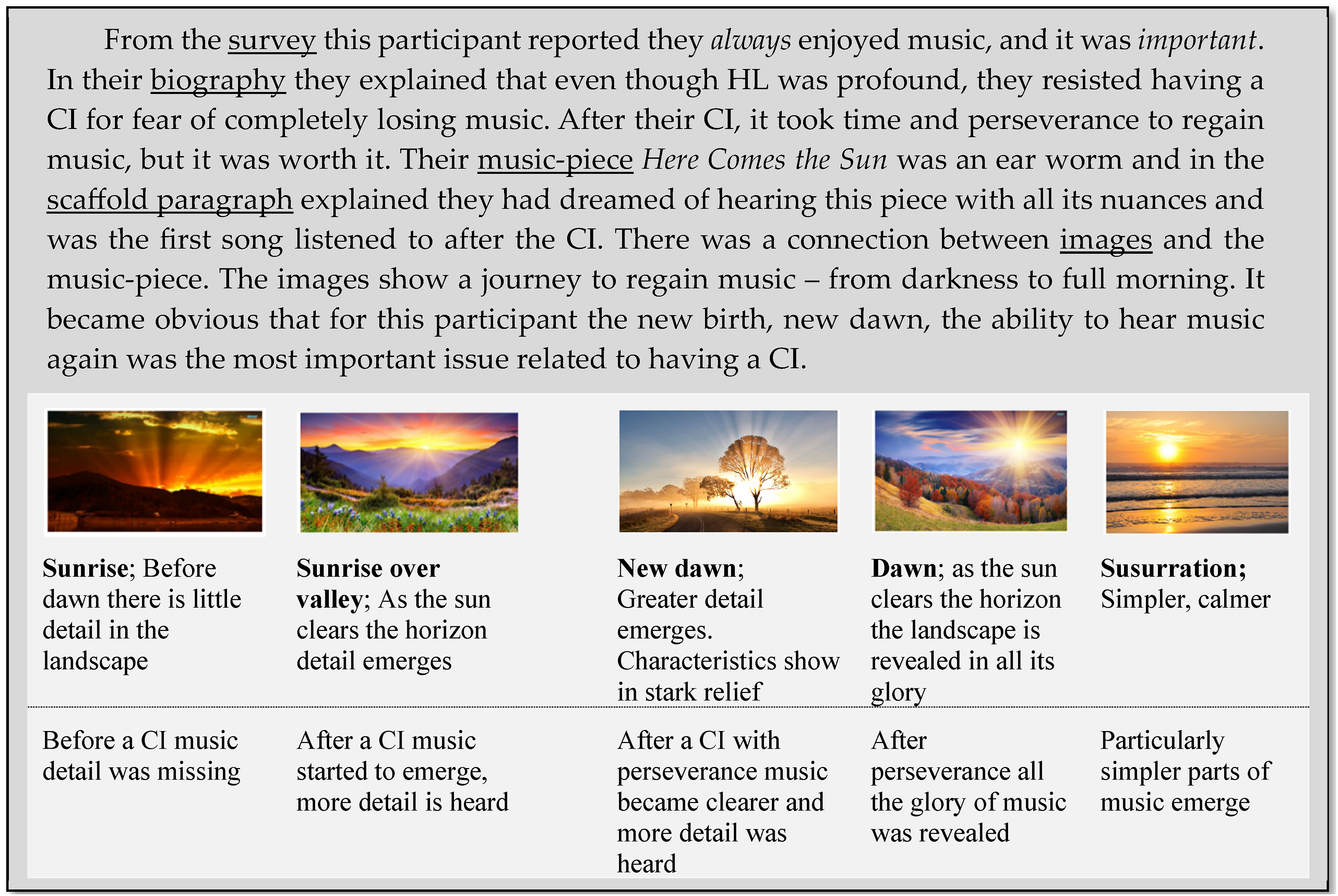
Analysis Final Stage: Themes and Sub-Themes
Analysis Framework – Answering the Research Question
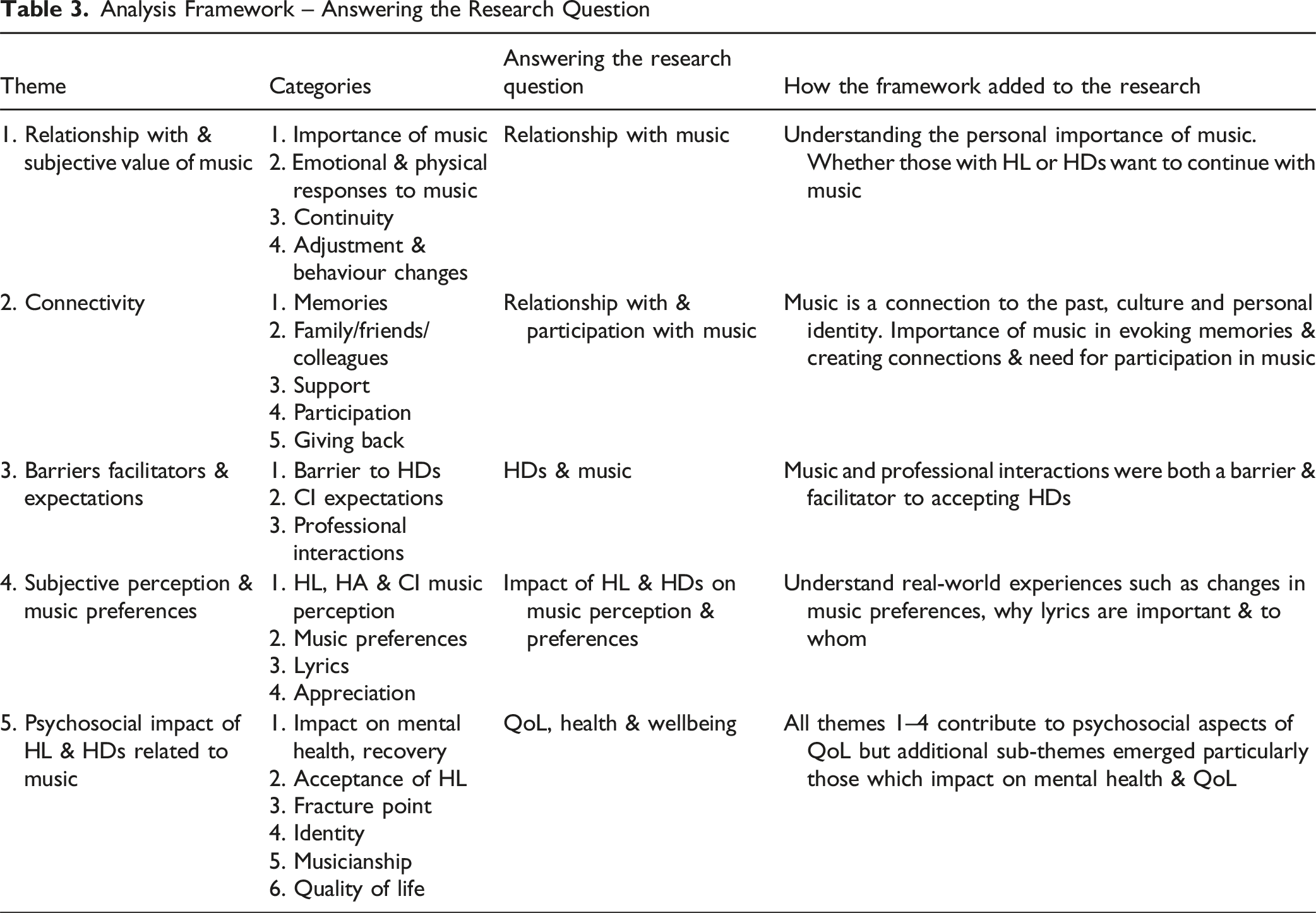
Creating themes for an Analysis Framework is a rigorous and methodical approach which provides a flexible yet structured way to organise diverse datatypes (Furber, 2010). A knowledge-base developed, allowing participants’ comments to be categorised and enabling pattern-recognition while maintaining context (Parkinson et al., 2016). The Framework indicated nuances within and between datatypes and added a three-way connection to participants’ relationship with music, often missing in other studies (Bleckly et al., 2024a).
Discussion
This research makes an important contribution to understanding the music experiences of LDAs while demonstrating that mixed methods can evolve beyond traditional approaches. By allowing the methodology to develop from the methods we employed, our approach helped overcome the rigidity of previously used frameworks and demonstrated more flexible ways to reveal new insights into LDAs’ music needs. The more usual use of a mixed methods methodology traditionally does not prioritise creative, emotional or symbolic data. Rather, data is more structured, collected through ‘conservative’ quantitative methods such as questionnaires and enhanced by secondary qualitative data such as focus group data. This often leads to results that emphasise measurement of units of data (Creswell et al., 2003), with the aim of producing generalisable results (Romani et al., 2018). We aimed for dynamism over pre-defined procedure, focussed on depth not breadth. (Conway, 2020; Hathcoat et al., 2019), integrated non-traditional data as a core element of knowledge-building, and concentrated on the significance of personal meaning (Riley et al., 2018). Blending datatypes provided meaningful insights and allowed new observations to emerge during analysis, a hallmark of advanced mixed methods approaches (Johnson & Onwuegbuzie, 2004; Tashakkori & Teddlie, 2010).
In this study an interpretive, constructivist and nuanced mixed methods methodological adaptation was necessary. This was initially recognised through a detailed and systematic literature review which highlighted dominant paradigms used in HL and music research (Bleckly et al., 2024a). It established that the archetypal research study focused on paradigms driven by the medical model, primarily concentrating on quantitative data collection alone, or a mixture of methods that enabled testing, then improvement, and ultimately ‘fixing’ an audibility problem (Hamed et al., 2024; Keidser et al., 2020; Vestergaard Knudsen et al., 2010). The medical model is consistent with a realist ontology and objectivist epistemology (Liamputtong, 2019). It depicts HL as an injury, an objective reality that can be measured, treated and perhaps rectified.
LDAs themselves have been conditioned to consider HL from within the medical model, for two reasons. Firstly, because any treatment is predicated around ‘fixing’ hearing ability (Bonventre et al., 2023), and secondly because HL has been culturally constructed as purely a loss of sound (Plack & Guest, 2022). Consequently, treatment is focussed on medical and technological interventions (Gfeller et al., 2022), rather than emotional and psychosocial implications, both of which are rarely addressed by audiologists (Bennett et al., 2020). However, as we are now aware, HL cannot simply be ‘fixed’, and this method encouraged LDAs to switch from thinking about HL as audibility, to thinking about their own lived experience. It has been acknowledged that HL and music research fails to consider the impact of the loss of music on people’s QoL (biopsychosocial model) (Hathcoat et al., 2019). Consequently, we felt the experience of HL should be studied both objectively (as a measurable numeric assessment of the impact of loss) and subjectively, to clarify how personal and emotional meaning is invested within HL.
Since the current research aimed to construct a picture of participants’ emotive and complex reality, an appropriate mixed methods paradigm was needed (refer Table 1) (Charmaz & Bryant, 2010). We chose one that could offer explanatory (quantitative) and exploratory (qualitative) data, equally. It was based on somewhat pragmatic foundations, to foreground a more thoughtful response to the research question. By allowing participants to connect with their experiences in diverse ways (show, tell, demonstrate and explain) (Rapport & Braithwaite, 2018), we aimed to encourage expressions of their innermost thoughts, including how their lives had changed as a result of losing music. We were confident that inference could be drawn from qualitative responses, while statistical analysis of survey data played a vital role in validating qualitative reasoning.
The inclusion of images and a music-piece was a unique aspect of this study. Images from participants have been successfully used in a limited manner in other healthcare research studies (Banks, 2018; Guetterman et al., 2021), to impart ideas, and while figures and diagrams have been evident in mixed methods data collection, creative, emotional or symbolic data is rarely in evidence (Teddlie & Tashakkori, 2012). To the best of our knowledge no hearing research has included images related to HL, HDs and music, in combination. A limited number of studies have asked participants to provide or play a music-piece e.g., (Blasco-Magraner et al., 2023; Gabrielsson, 2011), but none have related that to LDAs, HL and HDs. In our research, even with degraded perception, the music-piece conveyed an emotional connection to music and a subtle allusion to personal beliefs, hopes and identity that was highly impactful, enabling LDAs to consider how music might have changed for them. It also awakened memories of music before HL and linked those to important times in their lives (Belfi et al., 2020).
The unique combination of words, music and images, laid out alongside one another, and considered by the team to be of equal worth, complemented and built knowledge, while extending our frame of reference. Different media can also explain, illustrate and demonstrate relationships (Conway, 2020), that may be more difficult to describe purely in words (Refer vignette Figure 3).
Returning to participants, and reappraising data through Audio Bio-photographic Elicitation Interviews helped LDAs understand themselves better. Data collection brought surprising and enjoyable results for participants, particularly when they realised their music/HL/current situation offered something to others. We were able, during the interviews, to celebrate this realisation with them. Their unique autonomy, and the opportunity to share in the data, reinforced the fact that their views not only mattered but were invaluable to current and future research, and this not only verified the worth of the methods but also provided a new way to think about mixed methods methodology.
LDAs have a unique HL or HD experience. They once had typical hearing, and they generally identified as ‘hearing’ people even through their HL journey (Bleckly, Matthews et al., 2024). It could be said that there is no such thing as a definitive rationalisation of experience, simply because experience is paradoxical, both ontologically and epistemologically speaking (Meixner & Hathcoat, 2019), and as a result, highly personalised. However, using these methods of enquiry, based on the specific methodology chosen, demonstrated the “methodological gap between paradigmatic and whole-story investigations of patients’ experiences” (Rapport, Hogden et al., 2018), and illuminated where hearing healthcare may be falling short in providing connected and holistic care.
The methods supported revelations about music and indicated that experiential knowledge is being neglected by hearing healthcare professionals. Audiologists need additional training in music listening and music loss (Bennett et al., 2020), to help both musicians and non-musicians, those with HAs and those with CIs (Swann et al., 2023). This is supported by Greasley et al. (2020), who reported that only 37% of audiologists have some form of training to help LDAs with music listening, suggesting 63% have not received any training. D’Alessandro et al. (2022), recommended that clinicians should consider psychological support for musicians. They should create space, recognise the challenges, and struggles people face, advocate patience and optimism and provide encouragement for improved music perception.
If clinicians are to assist LDAs with managing HL (Bennett et al., 2020), then acknowledging unique individuality is essential (Rapport et al., 2005). Documenting participants’ experiences provides clinicians with a better understanding of not just their music needs, but also their QoL, desires and struggles, and guides the development of better care delivery and treatment pathways. Recognising that music is the second most important aural input (after speech) (Bonavita, 2019; Gfeller, 2001), and understanding what matters about music will lead to better rehabilitation strategies.
Strengths and Limitations
A three-staged approach helped build trust, encouraged LDAs’ to take their time in providing data, reduced feelings of being overwhelmed or misunderstood, and allowed participants to embellish their thoughts as the study progressed. This study has expanded the narrow focus of audibility for those with HL and put participant real-world experience centre stage.
Three key strengths were demonstrated through the research methods. The first was the flexibility offered to participants to explore issues which they may not have previously considered and which had not been included in other research studies (Bleckly et al., 2024a). Secondly, that all datatypes were complementary while individually robust, and when analysed collectively provided additional insights. Thirdly, that data collection helped ameliorate common method limitations by providing LDAs with different ways to interact with researchers, increasing empathy and trust.
After having applied this mixed methods methodology in the HL context, it could also be adapted to other disciplines, particularly for people where communication may be challenged (such as those with loss of sight). The design also lends itself to the field of psychology where people have undergone trauma, or where people present as feeling marginalised (disabled and Deaf groups, for example).
A number of specific limitations are acknowledged. All participants engaged in this research through the use of technology (online surveys, emails and online interviews) and those less ‘tech-savvy’ may have been experientially more limited. There were no guidelines on how to analyse images or music-pieces in this context, and adaption from other proven analysis techniques was needed. The study, while collecting rich in-depth data, only researched a small number of participants across the two Cohorts. Qualitative studies have been viewed as difficult to generalise to a wider group of people (Rapport & Braithwaite, 2020), thus while the results suggest participant experience may be of value for a wider population extrapolation is unwise. Since the primary researcher had lived-experience of HL, CIs and music, the research team met regularly to ensure that rigorous self-reflexive practices were upheld (Hughes et al., 2018).
As other authors have acknowledged e.g., (Rapport et al., 2007), applying several datasets in one study was both a strength and a limitation and became the greatest challenge but it did enable a fuller account of participants’ experiences. To overcome potential problems the prospective value of the datasets and the process of analysis was determined at the outset.
It was a privilege to conduct this study. Participants placed trust in the process and believed the presentation of their experiences would improve understanding for others. This research not only extends the mixed methods methodological paradigm in the Hearing Sciences but provides guidance for implementation strategies that we hope might improve LDAs’ life journeys.
Supplemental Material
Supplemental Material - The Role of Perceived Sleep Quality in Mental and Cognitive Health: A Study of Older Korean Americans Living in Subsidized Senior Housing
Supplemental Material for The Role of Perceived Sleep Quality in Mental and Cognitive Health: A Study of Older Korean Americans Living in Subsidized Senior Housing by Felicity Bleckly, Emilie Francis-Auton, Chi Yhun Lo, Robyn Clay-Williams, Frances Rapport in Journal of Aging and Health
Footnotes

Ethical Considerations
Ethics approval for this study was received from Macquarie University Human Research Ethics Committee (HREC) (Macquarie University, 2022; National Health and Medical Research Council et al., 2018; Therapeutic Goods Administration, 2000) (ID 520231544452456). All participants provided written informed consent prior to enrolment in the study.
Author Contributions
FB led the project, including conceiving the research, the data collection, analysis and interpretation of the data and completed the first draft and revisions of the paper. FR, RC-W and CYL conceived the research, including the study design, data analysis, interpretation of the data, and writing and revising the manuscript. EF-A was responsible for data analysis, interpretation of data, writing and revised the manuscript. All authors read and approved the final manuscript.
Funding
The authors received no financial support for the research, authorship, and/or publication of this article.
Declaration of Conflicting Interests
The authors declared no potential conflicts of interest with respect to the research, authorship, and/or publication of this article.
Statement of Author Position
The primary author (FB) has an epistemic understanding of hearing loss and cochlear implants related to music; as a musician who became a late-deafened adult and, years later, received bilateral cochlear implants and returned to music.
Disclosure
CYL, RC-W, EF-A and FR have undertaken research for Cochlear Limited in the past. This current study, however, is not linked to funding from Cochlear Limited. This review was conducted as part of a PhD research project whereby the primary author (FB) received a university merit-based scholarship (RTP).
Supplemental Material
Supplemental material for this article is available online.
Appendix
References
Supplementary Material
Please find the following supplemental material available below.
For Open Access articles published under a Creative Commons License, all supplemental material carries the same license as the article it is associated with.
For non-Open Access articles published, all supplemental material carries a non-exclusive license, and permission requests for re-use of supplemental material or any part of supplemental material shall be sent directly to the copyright owner as specified in the copyright notice associated with the article.
