




Abstract
Cancer survivors in China face ongoing physiological, psychological, social, and spiritual challenges that significantly impact their quality of life. Despite the proliferation of online interventions, existing research lacks comprehensive exploration of integrating theoretical knowledge and practical experiences into the design of digital interventions for cancer survivors. To address these multidimensional needs and identified research gaps, this study presents a structured protocol for developing and evaluating an AI-enhanced online social work intervention delivered via a WeChat mini-application. Employing a three-phase, evidence-based qualitative methodological framework, the research begins with a systematic review and meta-analysis to establish comprehensive guidelines for intervention design. This is followed by an iterative multi-stakeholder co-creation process involving survivors, family members, social workers, healthcare professionals, and technology developers to optimize the mini-application. The final phase involves qualitative evaluations of the intervention to assess participant satisfaction, usability, perceived effectiveness, and sustainability of engagement. Findings from this study contribute both practically—by demonstrating how AI technology and stakeholder collaboration can deliver tailored digital interventions—and methodologically, by validating a structured, adaptable framework for designing culturally sensitive and user-centered health interventions.
Keywords
Introduction
The Challenges Facing Cancer Survivors in China and the Potential of Online Interventions
China has the highest incidence and mortality rates of cancer globally (DeBiasi, 2023). Despite its health system having made improvements in the 5-year survival rates for cancer patients in recent years, cancer survivors in China continue to face significant challenges, not least in part because the cancer experience has profound late effects on the physical, pschological, social, and spritualwellbeing of cancer survivors (Rogers et al., 2023). Therefore, researchers argue that a comprehensive survivor care framework should include not only medical follow-up but also holistic interventions that target emotional well-being, social functioning, and a sense of spiritual fulfillment to improve their wellbeing (Haywood et al., 2024).
Many cancer survivors encounter barriers to accessing traditional face-to-face interventions due to financial burdens, logistical challenges, or mental concerns (Tonorezos et al., 2022). As a result, online or digital technology-based interventions which encompass various aspects of comprehensive care, have emerged as a viable alternative. Online interventions offer advantages such as lower costs, convenience, and enhanced privacy protection (Pandya, 2021; Yu et al., 2021). Despite their benefits with respect to accessibility and autonomy, the effectiveness of online interventions across the full spectrum of care—beyond medical support—still requires further empirical validation (Bossi et al., 2022; Schleider et al., 2022). In recent years, many researchers and institutions have developed online social work intervention apps for cancer patients, survivors, and health social workers; however, users often struggle to find high-quality options, as many apps feature incomplete content and poor development (Navarro et al., 2020; Wong et al., 2021; Zhao et al., 2024).
Gaps in Current Research on Online Health Social Work Interventions
To assess the effectiveness of online interventions, most international studies have used randomized controlled trials or non-randomized studies (Gyawali & Hamdani, 2021). These studies generally lack detailed investigation of the design process for the online intervention and fail to address ways to integrate theoretical knowledge and practical experience into scientific online interventions (Kizilcec et al., 2020). As such, there is a strong need for current research on health social work interventions to focus not only on outcome measurement but also on the design process (English et al., 2022; Oliwa et al., 2020). In relevant literature, intervention design is undertaken by adjusting existing intervention frameworks to meet specific needs, following models and theories such as the Health Belief Model or Social Cognitive Theory (Nelligan et al., 2019), or taking hybrid approaches combining multiple theories to guide interventions. However, the theories on which health social work researchers rely may lack concrete guidance for the design of practical interventions. The challenge lies in finding ways to transform theoretical knowledge into actionable intervention strategies (Steinmo et al., 2015). Unlike purely theoretical methods, evidence-based strategies—rooted in systematic reviews of established research—yield practical guidelines for designing interventions, thus enabling robust assessment and measurement (He, 2024).
Aims
This study aims to systematically develop, implement, and evaluate an AI-enhanced online social work intervention delivered through a WeChat mini-application to comprehensively support cancer survivors in China. Specifically, the study’s objectives are: (1) to establish evidence-based guidelines for designing holistic digital interventions addressing survivors’ physiological, psychological, social, and spiritual needs through a systematic review; (2) to collaboratively create an AI-powered social work mini-application using input from multiple stakeholders including cancer survivors, family members, social workers, healthcare professionals, and technology developers; and (3) to qualitatively assess the effectiveness, usability, participant satisfaction, and sustainability of the mini-application through rigorous qualitative evaluations. This integrative, iterative approach aims to deliver a culturally sensitive and practical intervention that effectively addresses the diverse and complex needs of cancer survivors.
Methodological Framework
This study is structured into three main phases: the first and second phase has already been completed, and the third phase is planned for future implementation. In the first step, a systematic review comprehensively analyzed existing literature on social work or psychosocial interventions for cancer patients and survivors, summarizing theoretical frameworks and practical recommendations for online intervention design. In the second step, a rapid qualitative analysis with multi-stakeholder co-creation was to optimize and finalize the AI-powered social work intervention delivered via a WeChat mini-application. In the third step, this study will employ a qualitative intervention approach, using qualitative evaluation methods to assess intervention outcomes. Participants will include cancer survivors receiving the intervention, as well as social workers and health professionals facilitating it.
Rationale for Combined Methods
This study is structured into three main phases, with the first two phases completed and the third phase planned for future implementation. The first phase involved conducting a systematic review to establish an evidence-based theoretical foundation and identify gaps in current intervention strategies (Sheppard, 2003; Washburn et al., 2021). Recognizing that theory alone is insufficient to fully address the dynamic needs of cancer survivors (Czosnek et al., 2021), the second phase involved a rapid qualitative analysis and multi-stakeholder co-creation process to optimize and finalize the AI-powered social work intervention delivered via a “WeChat” mini-application. In the upcoming third phase, this study will employ a qualitative evaluation approach to assess specific outcomes, including participant satisfaction, perceived effectiveness of intervention modules, usability of the mini-application, and sustainability of engagement. Participants involved in this phase will include cancer survivors, social workers, and health professionals.
Empirical Phase One: Systematic Review
The systematic review comprehensively analyzed existing literature focusing on two primary research questions: • What theoretical frameworks guide online social work interventions for cancer patients and survivors? • What practical recommendations exist for comprehensive interventions targeting cancer patients and survivors?
Search Strategy
Searches were conducted initially between October 2021 and March 2022, and updated between September and October 2024, covering English databases (Web of Science, PubMed, Embase, MEDLINE, Cochrane Library) and Chinese databases (CNKI, Wanfang Data). Keywords for English databases included “social work,” “intervention design,” “online intervention,” and “cancer survivor,” while Chinese database searches used terms such as “社会工作,” “线上干预或服务,” “干预设计,” and “癌症幸存者.” Search engines (Baidu, Google, Microsoft Bing) were also utilized to identify existing domestic and international PTSD service mini-applications and relevant reports.
Inclusion and Exclusion Criteria
Inclusion Criteria
• Studies on social work intervention frameworks, effectiveness, content, or design targeting cancer patients/survivors or PTSD clients; • Studies involving offline or online interventions for these populations; • Studies employing reflective, quantitative, qualitative research methods, or non-randomized control trials.
Exclusion Criteria
• Non-English or non-Chinese publications; • Non-academic sources (conference papers, news articles); • Publications without full-text access or incomplete data; • Studies irrelevant to intervention design for targeted populations; • Duplicate publications.
Analysis and Results Summary
The systematic analysis aimed to develop practical and operational guidelines for designing comprehensive online interventions, setting a robust foundation for subsequent phases. Using evidence-based social work methods, this study conducted systematic reviews of physiological, psychological, social, and spiritual health interventions for cancer survivors, aiming to provide scientific foundations for intervention design. During the data retrieval stage, approximately 500 papers related to the health outcomes of cancer survivors and relevant interventions were collected from major English and Chinese databases. After screening titles and abstracts, 150 relevant studies were selected. Further screening based on clear study objectives and interventions related to cancer survivors narrowed the total number reviewed down to 65 papers.
Health Risk-Based Follow-Up Guideline for Cancer Survivors

Core Modules of the AI + Social Work Intervention “WeChat” Mini-Application
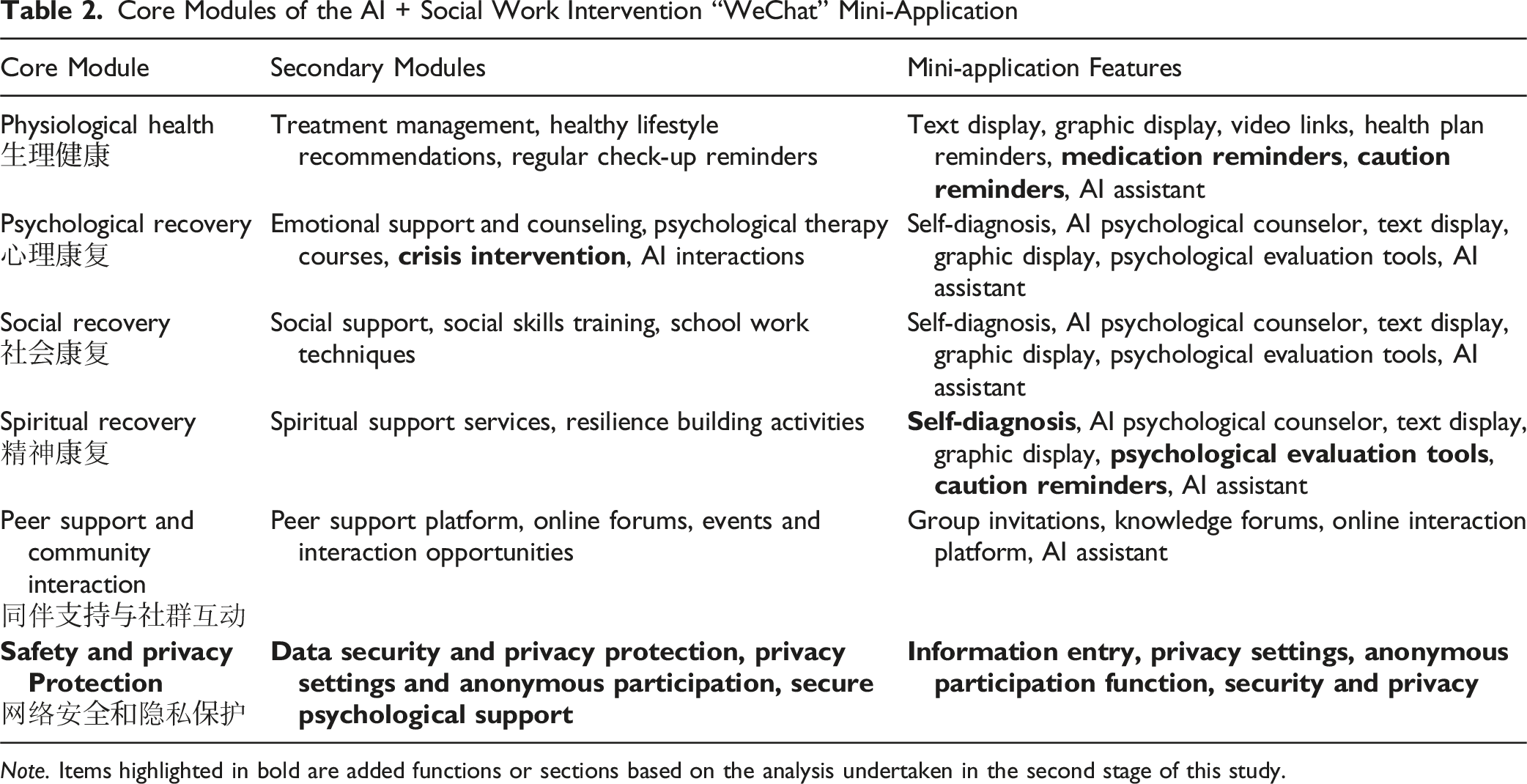
Note. Items highlighted in bold are added functions or sections based on the analysis undertaken in the second stage of this study.
Empirical Phase Two: Integrated Technology-Driven, Co-Creation, and Iterative Design
Building on the theoretical insights and practical guidelines from the first phase, this study constructed an AI-powered social work intervention delivered via a “WeChat” mini-application. Rapid qualitative analysis, featuring co-creation among multiple stakeholders, was used to optimize and finalize the intervention design.
Participants were purposively sampled and divided into four diverse focus groups recruited through relevant WeChat communities, hospitals’ official WeChat accounts, and technology partnerships: • Group One: 24 cancer survivors; • Group Two: 23 family members of survivors; • Group Three: 20 social workers, 3 psychotherapists, and 5 health professionals; • Group Four: 5 technical staff specialized in AI and mini-application development.
Each group discussion, lasting 90 to 120 minutes, gathered participant feedback on core module design and evaluated specific intervention goals set using the SMART criteria, ensuring practical relevance and effectiveness. Discussions were recorded, transcribed, and qualitatively analyzed to refine the intervention.
Analysis and Results Summary
Discrepancies in Functional Design and SMART Analysis
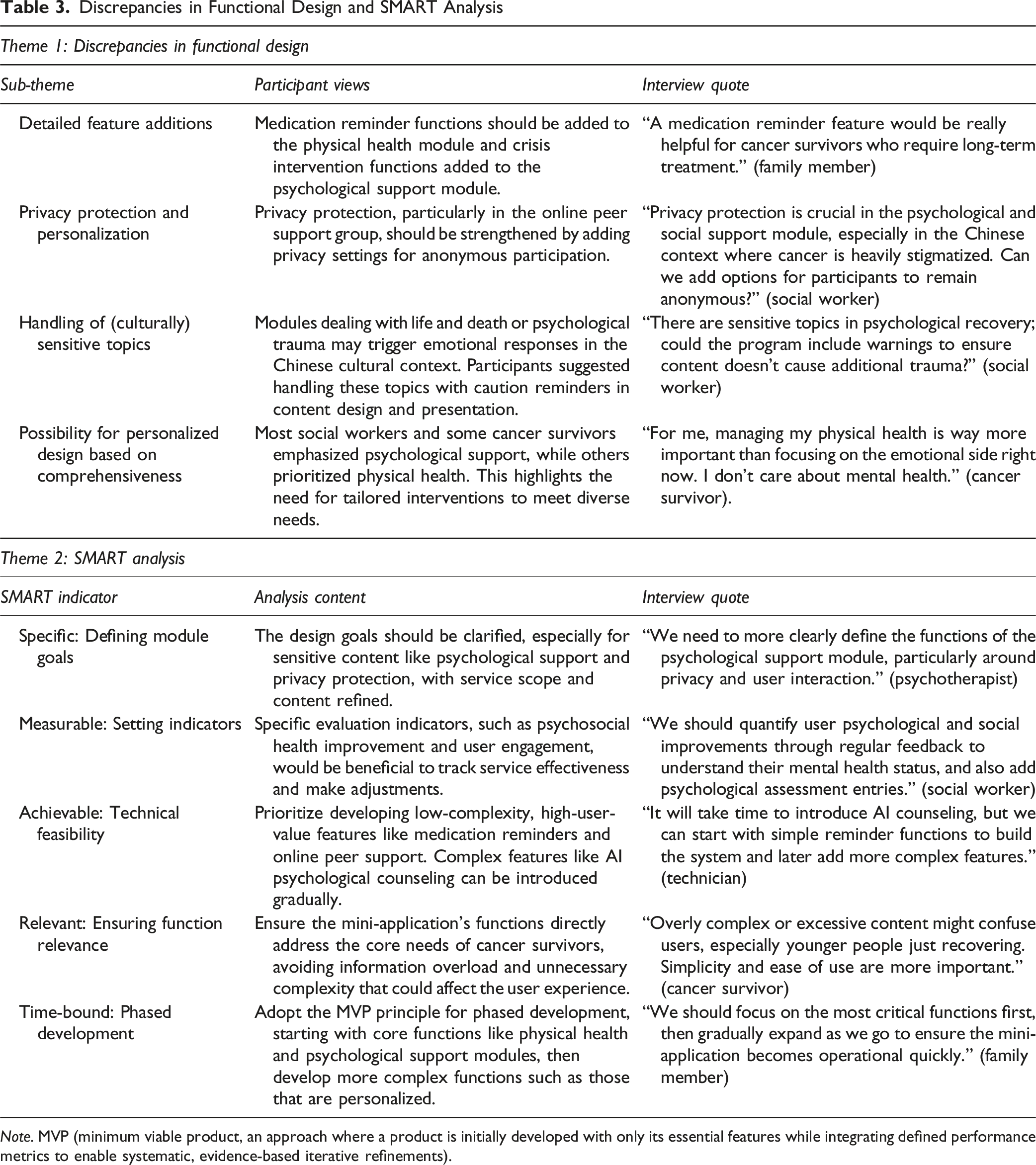
Note. MVP (minimum viable product, an approach where a product is initially developed with only its essential features while integrating defined performance metrics to enable systematic, evidence-based iterative refinements).
Theme 1: Participants pointed out some functional discrepancies in the mini-application design, mainly identifying the need for additional features, privacy protection, and personalized services. They also offered suggestions on handling sensitive topics.
Theme 2: SMART analysis of the transcripts from the four focus groups revealed that the mini-application’s design required further optimization in several areas, particularly in terms of specificity, measurability, achievability, and time-bound aspects.
Based on focus group feedback and the SMART approach, we propose several optimization strategies (see Table 2; functions added in phase three are in bold). To enhance specificity, we developed detailed feature descriptions—adding crisis intervention to the “Psychological Recovery” and “Spiritual Recovery” modules, caution reminders in the “Physiological Health” module, and a “Safety and Privacy Protection” module for anonymous participation. For measurability, a psychological self-assessment function and key evaluation metrics were introduced to gather regular feedback and assess effectiveness. To boost achievability, we prioritized technically feasible, high-value functions such as medication reminders, gradually increasing technical sophistication while managing expectations for AI. Lastly, to ensure relevance and time-bound progress, we developed the mini-application in phases according to the MVP principle, launching core functions first and expanding to additional modules over time.
The SMART and MVP strategy will continue to be essential for to achieving better effectiveness and efficacy of this mini-application. By enhancing design specificity, setting measurable service effectiveness indicators, ensuring technical feasibility, focusing on the relevance to goals, and establishing a reasonable time-bound framework, the success of this approach can be seen in Figure 1, which illustrates the advancements made in version 2.0. Some Mini Program Pages are Displayed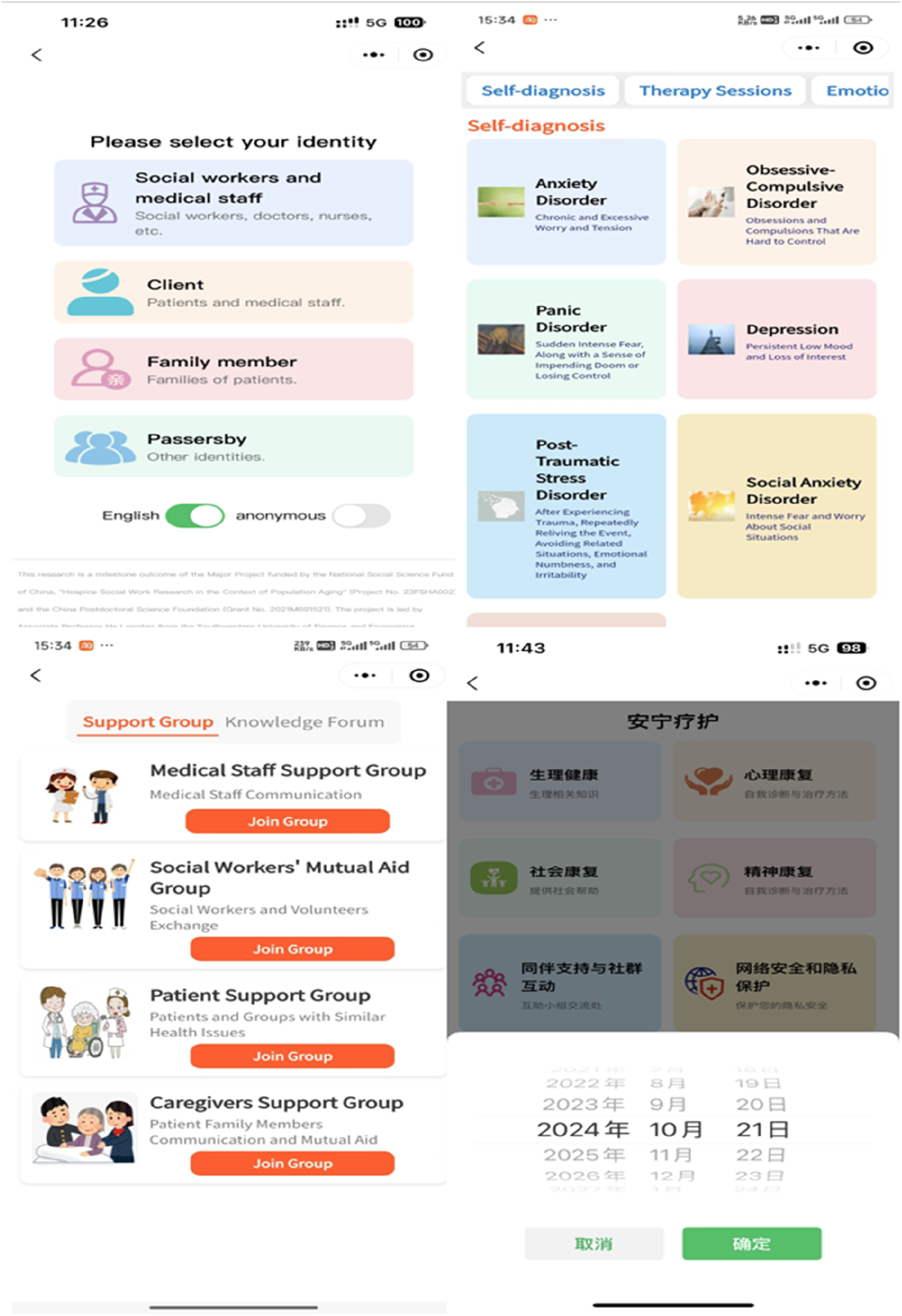
Empirical Phase Three: Qualitative Evaluation of Intervention Outcomes
The upcoming third phase will involve qualitative evaluation methods to assess specific outcomes of the finalized intervention, including participant satisfaction, perceived effectiveness of intervention modules, usability of the mini-application, and sustainability of participant engagement. Participants will include cancer survivors receiving the intervention and the social workers and health professionals facilitating it. Data gathered through qualitative methods will inform improvements in intervention design, practicality, and long-term viability.
Materials and Methods
Study Design
This research comprises three key phases, with the first two completed and the third scheduled for future implementation. The initial phase involved establishing an evidence-based theoretical foundation through a systematic review, identifying gaps in current intervention strategies.
The second phase consisted of rapid qualitative analysis and multi-stakeholder co-creation processes to refine and finalize the AI-powered social work intervention delivered via a “WeChat” mini-application.
The third phase that is about to be implemented will involve a qualitative evaluation to assess outcomes such as participant satisfaction, intervention effectiveness, usability, and sustained engagement after the actual intervention.
Research Sampling Strategy
In the third phases, a diverse and representative sample of cancer survivors will be recruited to participate in qualitative evaluations. Participants will be recruited through community health organizations, WeChat groups dedicated to cancer patients and survivors, and hospital-based communication channels. Recruitment advertisements will also be disseminated via healthcare networks and social media channels to maximize outreach and ensure broad representation. Purposive sampling will be employed to recruit specific sub-groups including 30 cancer survivors, 10 family members, 2 healthcare providers, 5 social workers, 1 psychotherapists, and 1 technology professionals involved in AI and mini-application development. Snowball sampling may be utilized to expand participant recruitment if initial responses are limited.
Study Population
The study will involve three participant groups in the Practice and In-Practice phases:
Cancer Survivors: Individuals who have experienced cancer, drawn from diverse backgrounds, including varying socio-economic statuses and urban and rural regions, providing lived experience. • Inclusion Criteria: Cancer survivors residing in China, aged 18 and above, capable of providing informed consent. Familiarity with digital tools (e.g., WeChat) is preferred but not mandatory, as technical support will be provided. • Exclusion Criteria: Individuals with severe cognitive impairments or unwillingness to engage in intervention discussions will be excluded.
Stakeholders: Health communication practitioners, social workers, healthcare professionals, government administrators, and IT developers specializing in WeChat and AI, contributing medical, technical, and policy expertise.
Family Members: Providing additional context on the social dynamics influencing cancer survivors’ well-being.
Data Collection and Storage
Focus groups and qualitative interviews will be conducted online using Tencent and WeChat conferencing tools, and all sessions will be audio-recorded for transcription. Recordings will be securely stored in a password-protected, university-managed storage system accessible only to authorized researchers via two-factor authentication. Transcripts will be anonymized by assigning unique participant codes and removing any identifying information to ensure confidentiality. Additional data, such as digital whiteboard screenshots and researcher notes, will also be securely stored. All collected data will be securely maintained for a minimum of five years before being permanently deleted.
Data Quality Control
Verbatim transcripts will be generated from audio recordings using transcription software, followed by manual verification to correct any software-generated errors. This dual verification process minimizes transcription inaccuracies and ensures data reliability. To reduce translation bias, transcripts will be reviewed independently by two researchers from different professional backgrounds—one specializing in health communication and the other in social work. To protect confidentiality and maintain data integrity, participants will not review transcripts.
Data Collection Limitations and Challenges
Potential challenges include recruitment difficulties due to the sensitive nature of the intervention and technological barriers faced by older or less tech-savvy participants. To mitigate these issues, recruitment efforts will integrate both digital and in-person strategies, and technical support will be provided as needed. The research team, comprising members from diverse professional backgrounds, will collaboratively address confirmation bias risks, ensuring accurate and reliable data collection and interpretation.
Outcome Measures
Outcome measures for this study will focus on evaluating participant satisfaction, perceived effectiveness of intervention modules, usability and accessibility of the WeChat mini-application, participant engagement levels, and sustained utilization. Additional outcomes may include enhanced psychosocial well-being, improved communication with healthcare providers and family members, and increased confidence and ability in managing long-term survivorship challenges.
Qualitative Data Analysis
Qualitative data analysis will be conducted using classic grounded theory methods. Initially, transcripts will be reviewed and openly coded to identify key concepts. Through constant comparative analysis, codes will be categorized into emerging themes and subthemes. Axial coding will follow, examining relationships among categories and refining them into coherent conceptual frameworks. Finally, selective coding will integrate categories to construct a substantive theoretical model, grounded in the participants’ experiences and perspectives, elucidating critical dimensions of intervention effectiveness and user engagement.
Ethical Considerations and Quality Assurance
Ethical approval will be obtained from the Southwestern University of Finance and Economics’ institutional review board prior to commencing the study. Informed consent will be clearly explained and documented from all participants, emphasizing confidentiality, voluntary participation, and the right to withdraw at any point without consequence. The research will strictly adhere to ethical standards, ensuring participants’ anonymity, safeguarding sensitive information, and maintaining transparency in research processes. Continuous quality assurance will be implemented throughout the study, with regular evaluations and team meetings to ensure rigorous adherence to methodological protocols and ethical guidelines.
Rigor of the Study
To ensure rigor and trustworthiness in this qualitative research, credibility will be established through triangulation of data sources, including multiple stakeholder perspectives and iterative member checks within the research team. Dependability and confirmability will be enhanced through comprehensive audit trails documenting all research decisions, coding procedures, and analytic interpretations. Transferability will be supported by providing rich, detailed descriptions of the study context, participant characteristics, and intervention development processes, facilitating applicability to similar research settings and populations.
Results and Discussion
Recruitment for the qualitative phases will begin in Aug 2025, with intervention recruitment scheduled for August 2025. Data collection and analysis are expected to conclude by November 2025. The findings from the co-design and iterative process will be finished in 2026.
This study designed and optimized an AI + WeChat mini-application intervention to address cancer survivors’ diverse needs—including physiological, psychological, social, spiritual, peer support, and privacy aspects—based on literature review and stakeholder input. Findings from three stages revealed challenges in meeting personalized needs, technical feasibility, and managing sensitive information and privacy. SMART analysis was used to propose targeted improvement strategies, offering both practical and methodological contributions.
Methodological Contributions
This study proposes an evidence-based qualitative methodological framework (Figure 2; He, 2024) that provides both theoretical and practical support for designing interventions for cancer survivors, with potential modifications for use with other populations. The framework is innovative in its fusion of scientific rigor and practical complexity. It integrates validated theoretical models and systematic evidence from the literature with empirical, co-creative strategies involving multiple stakeholders. This organic integration of research methods ensures that theoretical guidance is balanced with practical demand, thereby addressing the complex, multi-layered challenges of providing palliative care services in China (Birtwell et al., 2022; Schexnayder et al., 2023). By following a “theory-practice-in practice” logic, the framework begins with a literature-based theoretical guideline to develop an initial intervention model, which is then optimized through empirical research and multi-stakeholder analysis in a time-bound framework. Qualitative evaluation methods involving cancer survivors, social workers, and healthcare professionals were employed to assess participant satisfaction, perceived effectiveness, usability, and sustainability of engagement with the intervention.This continuous feedback loop demonstrates a robust integration between theory and practice. Furthermore, the framework emphasizes multi-level adaptability, from cultural resonance to technical sustainability, making it a scalable, versatile model for digital intervention design that is both scientifically validated and practically robust, and suitable for adaptation across diverse fields. This comprehensive framework further enhances intervention design by continuously integrating valuable stakeholder feedback and systematic iterative refinements. An Evidence-Based Qualitative Methodological Framework for Front-End Intervention Research and Design (Adopted from He, 2024)
Conclusion
This study presents an effective approach for developing a user-centered digital intervention tailored specifically for cancer survivors, highlighting the importance of iterative co-design and qualitative evaluation. The study’s innovative integration of evidence-based guidelines, AI technology, and stakeholder collaboration provides a robust framework applicable in similar intervention contexts.
However, several limitations must be noted. First, recruitment and participation challenges due to the sensitive nature of cancer survivorship may limit participant diversity and representation. Second, technological barriers experienced by some users could affect sustained engagement with the intervention. Lastly, the qualitative design may limit generalizability beyond the specific populations and contexts studied. Future research should aim to address these limitations by enhancing participant support mechanisms and exploring the intervention’s adaptability across diverse cancer survivor groups and broader healthcare settings.
Footnotes

Funding
The author disclosed receipt of the following financial support for the research, authorship, and/or publication of this article: This research was funded by the National Social Science Fund of China - Post-funding Key Project (grant: 23FSHA002), the Philosophy and Social Science Fund of Sichuan - Post-funding Project (grant: SCJJ23HO37), and the Fundamental Research Funds for the Central Universities of Southwestern University of Finance and Economics (grant: JBK2406119). The funders had no role in the research design, the writing of the article, or the decision to submit the article.
Declaration of Conflicting Interests
The author declared no potential conflicts of interest with respect to the research, authorship, and/or publication of this article.