




Abstract
This paper introduces “artistic conversation,” a novel qualitative arts-based research (ABR) methodology integrating creative writing, visual art, and video documentation to explore lived experiences of adults with ADHD. Conducted over five iterative sessions with four participants, this pilot study advances qualitative inquiry by demonstrating how multimodal dialogue—where researchers co-create art with participants—elicits sensory-rich insights beyond traditional methods. Effectiveness was evaluated through participant reflections, artistic evolution across sessions, and comparisons with verbal methods, revealing deeper sensory and relational understanding. Key innovations include GoPro documentation capturing creators’ perspectives and blended modalities for embodied insights. Participants, positioned as co-researchers, shaped outcomes, fostering inclusivity through collaborative agency, assessed via feedback on trust and reciprocity. Ethical approval ensured consent, protecting neurodiverse voices. The transparent, reproducible process—spanning recruitment, data collection, and integrative analysis—offers a rigorous model for qualitative research, with GoPro reducing extraneous data. Despite a small sample, its adaptability suggests potential for neurodiversity scholarship, warranting further exploration in larger studies.
Keywords
Introduction
Qualitative research thrives on methods that capture the richness of human experience, particularly when traditional verbal or quantitative approaches fall short (McNiff, 2008). Arts-based research (ABR), defined as “the systematic use of artistic process… as a primary way of understanding and examining experience” (McNiff, 2008, p. 29), offers a transformative lens for such exploration (Leavy, 2020). In neurodiversity studies, where subjective depth often eludes conventional tools, ABR’s promise is especially potent (Wang et al., 2024). Yet, adult ADHD—a condition underexplored compared to its childhood focus—remains a methodological challenge, with qualitative approaches sometimes lacking the nuance to access embodied, non-verbal dimensions (Barkley, 2015; Rolling, 2023).
This study introduces “artistic conversation,” an innovative ABR methodology that integrates creative writing, visual art, and video documentation into a responsive dialogue between researcher and participants. Conducted with four adults diagnosed with ADHD, it advances qualitative inquiry by leveraging multimodal tools and co-creative processes. The artistic conversation employs a co-design approach, defined as collective creativity where researchers and participants collaboratively shape the research process and outputs (Sanders & Stappers, 2008). This distinguishes it from traditional ABR, where participants may have limited interpretive roles (Leavy, 2020), by centering co-researcher agency in the iterative dialogue of creative writing, visual art, and video documentation. By positioning participants as co-researchers—active partners who co-shape the research process—this study fosters inclusive scholarship, empowering adults with ADHD to contribute as collaborators, amplifying their voices in a stigmatizing societal context (Freire, 1970; Sedgwick et al., 2019).
Building on the need for innovative qualitative methods in neurodiversity research, this study introduces “artistic conversation,” a multimodal ABR methodology. The research aims to: (1) Explore how artistic conversation captures the lived experiences of adults with ADHD. (2) Evaluate the effectiveness of a multimodal ABR approach in eliciting sensory and relational insights compared to traditional qualitative methods. (3) Assess the method’s potential for inclusive research by amplifying neurodiverse voices through co-researcher collaboration.
These aims were addressed through a five-session structure integrating creative writing, visual art, and GoPro documentation, with co-researchers shaping the process and outcomes.
Arts-based research (ABR) frameworks ground the artistic conversation, offering a lens to capture ADHD’s sensory and relational nuances (Rolling, 2023). Fish’s (2008) dialogic space emphasizes collaborative art-making to foster meaning beyond words, enabling co-researchers to externalize complex ADHD experiences (Aim 1). McNiff’s (2008) embodied understanding highlights art’s role in articulating sensory and emotional depths, distinct from clinical perspectives. Unlike traditional ABR’s participant-centric focus (Leavy, 2020), this method positions researchers as co-creators, fostering trust to amplify neurodiverse voices (Sedgwick et al., 2019). These frameworks, inspired by Winnicott’s (1958) “Squiggle Game,” inform a multimodal approach integrating painting, writing, and GoPro responses to deepen qualitative insights.
The artistic conversation method addresses the need for innovative qualitative approaches to capture ADHD’s multifaceted experiences. Unlike traditional methods, it extends contemporary multimodal applications by integrating painting, writing, edited videos, and GoPro responses in a five-session structure (2018–2019), fostering dynamic, co-researcher-driven dialogue (Martinez et al., 2024). This approach empowers participants as collaborators, enabling nuanced expressions of ADHD strengths and identities, such as sensory awareness and relational reframing (Rolling, 2023). By centering lived experiences and societal influences, the study contributes to neurodiversity scholarship and ABR, offering a framework for qualitative research.
Literature Review
Foundations of Arts-Based Research
Arts-based research (ABR) has emerged as a vital qualitative methodology for accessing lived experiences that resist traditional articulation, offering a creative alternative to conventional verbal or numerical approaches (Leavy, 2020). McNiff (2008) positioned ABR as a systematic approach to inquiry through artistic processes, emphasizing its capacity to externalize complex, embodied knowledge that eludes standard interviews or surveys. Knowles and Cole (2008) further framed ABR as a paradigm that bridges art and science, valuing aesthetic expression as a legitimate form of understanding. This resonates with qualitative research’s growing emphasis on capturing subjective depth, particularly in fields where traditional methods fall short (Barone & Eisner, 2012).
Neurodiversity and Research Gaps
In neurodiversity research, ABR’s potential is especially compelling, as conditions like ADHD demand methods that transcend verbal narratives to access non-linear, sensory experiences (Wang et al., 2024). Despite this, adult ADHD remains underrepresented in qualitative scholarship. Much of the literature prioritizes clinical diagnostics or childhood manifestations, with a 2023 review estimating over 8,000 studies on childhood ADHD from 2000 to 2020 compared to about 2,000 on adult ADHD (Faraone et al., 2023). This disparity reflects diagnostic frameworks favoring early intervention (American Psychiatric Association, 2013). While ABR is applied to both younger neurodevelopmental disorder (NDD) populations, such as autistic adolescents (Bagatell & Mason, 2019), and adults, its use in adult ADHD is limited, often overshadowed by behavioral metrics (Sedgwick et al., 2019). Rolling (2023) highlights this gap, noting that adults with ADHD—unlike their childhood counterparts—receive scant qualitative attention, leaving sensory and relational experiences underexplored.
Facilitation and Artistic Conversation in ABR
Facilitation in arts-based research (ABR) involves guiding participants through a supportive, non-directive creative process to express lived experiences via art expression like creative writing, visual art, artistic conversation (artistic conversation), and video documentation (Hogan, 2015). Facilitators prompt reflections with open-ended questions (e.g., “How does this artwork or art-making process reflect your experience?”) and foster informal discussions during art creation to build trust and encourage candid expression (Springgay et al., 2005). This dialogic approach, rooted in relational inquiry, can create a collaborative space for neurodiverse adults to articulate sensory and emotional experiences (Fried, 2019). For example, ABR facilitation with autistic adults has elicited nuanced sensory narratives through visual art and conversation, demonstrating its value in neurodiversity research (Chen & Williams, 2023). This facilitative approach resonates with methodologies like narrative inquiry, which uses guided dialogue to elicit personal stories, and collaborative ethnography, where researchers co-construct meaning with participants (Ellis & Bochner, 2000; Lassiter, 2005). Such facilitation supports collaborative exploration for neurodiverse individuals navigating societal stigma, laying the groundwork for co-researching frameworks that emphasize shared authority (Kara, 2015).
In contrast, artistic conversation in ABR refers to the collaborative shaping of iterative artistic conversation, where co-researchers actively influence creative and interpretive outcomes through art-making and conversation, while the research process remains researcher-designed (Sanders & Stappers, 2008). This approach enables co-researchers to deepen their inquiry into neurodiverse phenomena, enhancing sensory and relational insights (Fletcher-Watson & Culpin, 2021; Sedgwick et al., 2019). For instance, ABR studies with autistic co-researchers have used collaborative artistic conversation, integrating creative writing and video, to enrich qualitative findings on sensory experiences (Bagatell & Mason, 2019). Unlike facilitation, which centers on guiding the creative process, artistic conversation emphasizes co-researchers’ shared contributions to interpretive outcomes, aligning with co-design principles that prioritize neurodiverse agency (Costley et al., 2020). This strengthens ABR’s qualitative depth in neurodiversity scholarship.
Non-verbal Qualitative Methods for Adult ADHD
Adults with ADHD experience persistent challenges, including distractibility, emotional fluctuations, intense focus periods, and heightened sensory responses, shaping complex, multifaceted lives (Barkley, 2015; Sedgwick et al., 2019). Unlike childhood ADHD, which emphasizes observable behaviors, adult ADHD involves subtle emotional and social difficulties, such as struggles to articulate feelings or maintain relationships (Rolling, 2023). These non-linear, sensory-driven experiences often elude traditional qualitative methods like interviews or surveys, which rely on structured verbal responses and may miss the embodied depth of ADHD (Wang et al., 2024). For instance, rapid thought patterns or sensory overload can fragment verbal narratives, leaving key aspects unexpressed. Arts-based research (ABR) offers a robust alternative by employing visual art, creative writing, and video to capture dynamic, sensory-rich experiences (McNiff, 2008). ABR’s multimodal approach, including dialogic techniques like response art and immersive video documentation, accesses the emotional and sensory nuances of adult ADHD, addressing gaps in qualitative scholarship (Fish, 2008; Santos et al., 2023).
Within arts-based research (ABR), response art serves as a relational method where researchers create art in dialogue with participants to deepen qualitative inquiry (Fish, 2008). Defined as a dynamic, reciprocal process, response art involves researchers producing artwork that reflects or responds to participants’ creative expressions, fostering a collaborative exploration of lived experiences (Fish, 2019; Leavy, 2020). This approach, rooted in dialogic principles, captures sensory and emotional nuances often missed by verbal methods, as seen in ABR studies with autistic adults that used response art to explore sensory experiences (Chen & Williams, 2023). Response art shares principles with other methodologies, such as participatory action research, which emphasizes co-creation to explore subjective realities (Reason & Bradbury, 2008), and dialogic inquiry, where reciprocal exchanges shape interpretive outcomes (Sullivan, 2010). For example, ABR research with neurodiverse groups has employed similar co-creative techniques to reveal relational dynamics, suggesting response art’s broader applicability (Bagatell & Mason, 2019). Despite its origins in therapeutic contexts (Van Lith, 2014), response art’s methodological potential in qualitative research remains underexplored, offering a unique lens for neurodiversity scholarship.
Multimodal and Co-Creative ABR Approaches
Multimodal approaches in arts-based research (ABR), integrating text, visuals, audio, and digital media, provide layered insights into neurodiverse experiences by capturing sensory and emotional dynamics (Martinez et al., 2024). Denzin (2012) argues that multimodality strengthens qualitative research through triangulation, a view supported by studies employing ethnographic video to document creative processes in real-time (Santos et al., 2023). For example, ABR with autistic youth used participant-led video diaries to record art-making, revealing sensory triggers and emotional states, with co-researchers co-interpreting footage to shape findings (Bagatell & Mason, 2019). Similarly, photovoice projects with adults with ADHD enabled participants to create images and narratives, fostering collaborative meaning-making that aligns with dialogic ABR’s emphasis on sensory expression (Wang et al., 2024). Digital storytelling, combining video, audio, and text, has been used with dyslexic adolescents to explore identity, sharing commonalities with multimodal ABR’s focus on non-verbal narratives (Johnston & Burke, 2020). Winnicott’s (1958) Squiggle Game, where participants and researchers co-create drawings, inspires such multimodal integration, as seen in ABR studies with autistic individuals combining dialogic drawing, video, and writing to elicit spontaneous sensory narratives (Chen & Williams, 2023). Compared to performative ABR, which uses embodied acts like dance to convey lived experiences (Benjamin & Potter, 2021), multimodal ABR prioritizes diverse media, offering richer insights into neurodiverse sensory realities than narrative inquiry’s verbal focus (Ellis & Bochner, 2000).
ABR engages neurodiverse perspectives through co-creative processes that position adults with ADHD, autism, and other NDDs as active co-researchers, leveraging their unique sensory and cognitive insights (Chen & Williams, 2023; Rolling, 2023). Traditional qualitative methods often limit participant agency by treating them as passive subjects (Savin-Baden & Wimpenny, 2014). ABR counters this through co-researching frameworks like participatory design, where neurodiverse co-researchers co-design research processes, as seen in studies with autistic adults creating visual art projects to explore social experiences (Gillespie-Lynch et al., 2017). Similarly, ABR with ADHD adults used co-created zines—blending text, collage, and digital media—with co-researchers guiding thematic analysis to articulate sensory experiences (Wang et al., 2024). Video-based ABR with dyslexic youth employed participant-led filming, enabling co-researchers to co-analyze footage and enhance sensory depth (Sinner et al., 2018). Comparative studies with Tourette’s syndrome used co-designed mixed-media projects to explore tic-related sensory experiences, revealing commonalities with ADHD’s sensory overload (Buckingham & Jones, 2022). These approaches align with co-researching principles of shared authority (Kara, 2015) but distinguish ABR through its sensory-rich, creative focus, unlike participatory action research’s broader collaborative scope (Reason & Bradbury, 2008). Despite advances, gaps remain in integrating co-researching frameworks and multimodal methods across NDD populations to deepen qualitative insights into lived experiences.
Methodology
Study Design and Collaborative Roles
This qualitative study employed a five-session arts-based research (ABR) methodology, conducted from August 2018 to May 2019 with four adults diagnosed with ADHD in Jerusalem, Israel. The artistic conversation integrated creative writing, visual art, and video documentation within a participatory framework that evolved through researcher-participant collaboration. Monthly sessions, held in a private art studio or the 80-year-old participant’s home to accommodate mobility needs, fostered a supportive environment for equitable participation and candid expression.
The methodology is defined by three collaborative roles—co-researcher, co-creation, and co-design—supported by facilitation. Co-researchers, the four ADHD-diagnosed adults, actively shaped the research process and outcomes as equal partners, contributing to the study’s direction (Reason & Bradbury, 2008). Co-creation involved collaborative art-making to generate shared meaning through iterative exchanges (Chilton & Scotti, 2014). Co-design focused on co-researchers’ strategic input in shaping the research framework, such as refining session structures (Sanders & Stappers, 2008). Facilitation guided the process with non-directive prompts to ensure equitable engagement without influencing outputs (Hogan, 2015). These roles, grounded in participatory principles, empowered neurodiverse voices, fostering social justice through co-researcher agency (Bertilsdotter Rosqvist et al., 2020).
Participants
Four adults with a formal ADHD diagnosis were purposively sampled in 2017 in Jerusalem, Israel, to capture diverse sensory and relational experiences. Recruitment used professional networks (e.g., art therapy, mental health practitioners) and community advertisements (e.g., clinic flyers), targeting adults aged 30–80 in the Jerusalem area for in-person sessions. Participants were screened for current ADHD symptoms, willingness to engage artistically, and availability, with no prior artistic experience required. Art supplies were provided without monetary incentives. The sample size of four ensured qualitative depth, aligning with arts-based research principles (Leavy, 2020).
The sample included a software engineer (mid-30 s, female, diagnosed in adulthood, single, no children), a filmmaker/writer (late 50 s, female, diagnosed in childhood, married, one child), a former teacher (early 80 s, female, diagnosed in adulthood, widowed, two living children), and a drama therapist (mid-40 s, male, diagnosed in childhood, partnered, no children). Two were creative professionals, and two were active in ADHD support groups, with varied diagnosis timing (two in childhood, two in adulthood) enriching sensory and relational perspectives (Rolling, 2023). Diverse backgrounds (career, family, community ties) shaped their artistic contributions, prioritizing shared ADHD experiences. All provided informed consent after an orientation session explaining the artistic conversation procedure. Participants, positioned as co-researchers (see Study Design and Collaborative Roles), contributed to the participatory framework, centering neurodiverse perspectives (Freire, 1970).
Materials
A curated artistic environment featured drawing tools (colored pens, pencils HB-B9), painting supplies (acrylics and oil pastels), and mixed media (colored glue, paper, stickers), with paper sizes from A4 (21 × 29.7 cm) to A2 (41.91 × 59.4 cm). Video equipment evolved from a standard camera to a GoPro, capturing the creator’s viewpoint in later sessions.
Procedure
This study followed a five-session arts-based research (ABR) structure, conducted in-person with four co-researchers, using materials described above. Sessions occurred in a private art studio or the 80-year-old co-researcher’s home to ensure accessibility, with activities designed for individual engagement to capture sensory experiences (Leavy, 2020). (1) Sessions 1–2: Co-researchers wrote freely about past (Session (1) or present (Session (2) ADHD experiences, prompted by open-ended questions (e.g., “Describe a sensory memory of living with ADHD”). They created visual artworks (e.g., paintings, drawings) on A4–A2 paper, recorded by a standard camera. Informal discussions during art creation fostered dialogue. (2) Researcher Response: After Session 2, the researcher created intuitive response art (e.g., paintings) to co-researchers’ artworks, initiating a visual dialogue using the same materials. (3) Sessions 3–4: Co-researchers viewed their artworks alongside the researcher’s responses, creating new pieces prompted by “How does this dialogue reflect your ADHD experience?” Session 4 introduced GoPro filming to capture first-person perspectives, encouraging expansive expression with larger paper sizes. (4) Session 5: Semi-structured interviews reviewed all outputs (art, writing, videos), using prompts like “How did the artistic process capture your sensory experiences?” to elicit methodological reflections.
Ethical Considerations
The study was approved by an institutional review board. Written informed consent was obtained at the outset, covering art-making, video recording, and data use, with confidentiality ensured by anonymizing identifying details. Rolling consent was implemented, revisiting consent verbally before each session to confirm co-researchers’ comfort with ongoing participation, particularly given ABR’s emergent and personal nature (Gerber & Myers-Coffman, 2023). This approach aligns with ABR ethics, which emphasize participant agency and relational trust, addressing power dynamics in co-creative processes (Hogan, 2015; Leavy, 2020). Co-researchers could withdraw or modify their contributions at any time, supporting ethical engagement with neurodiverse voices.
Interaction and Response Procedures
During art creation, co-researchers engaged in informal discussions in the in-person setting (private studio or participants’ homes), fostering dialogue that enriched reflections and artworks. Formal reflections followed each session, generating quotes and insights. The researcher’s responses, created after each session, to establish trust through visual dialogue, as writing and videos were less prominent early on. Subsequent sessions integrated all modalities—paintings, writing, edited videos, and GoPro responses—ensuring comprehensive analysis, with responses (e.g., Figure 6) reflecting co-researchers’ evolving expressions across tools.
Trustworthiness
Trustworthiness was ensured through qualitative and ABR-specific criteria, emphasizing credibility, authenticity, and aesthetic validity (Barone & Eisner, 2012; Leavy, 2020). Credibility was achieved through triangulation of data sources (artworks, writing, videos, interviews), cross-verifying sensory and relational insights. Participant validation in Session 5 allowed co-researchers to review and refine interpretations, enhancing authenticity. Reflexive journaling by the researcher monitored biases and power dynamics, ensuring relational ethics in co-creative processes (Gerber & Myers-Coffman, 2023). Aesthetic validity was upheld by prioritizing the expressive quality of artworks, aligning with ABR’s focus on evocative, sensory-rich representations (McNiff, 2008). This multi-layered approach produced trustworthy findings, grounded in the lived experiences of adults with ADHD.
Data Analysis
Analysis integrated artistic, verbal, and visual data to construct evolving narratives that captured sensory and relational experiences of ADHD (Aim 1), following an iterative, thematic approach (Leavy, 2020). First, artworks were analyzed for visual elements (e.g., color shifts, compositional patterns) to identify sensory themes, using a visual analysis framework (Rose, 2016). Written reflections were coded thematically to uncover relational and emotional patterns, employing open and axial coding (Charmaz, 2014). Video footage, including GoPro recordings, was reviewed for non-verbal cues (e.g., gestures, pauses) and transcribed for thematic integration. Session 5 interviews were analyzed to identify methodological reflections, coded for themes like sensory expression and artistic dialogue. These data sources were triangulated to construct cohesive, evolving narratives—sequences of artistic and verbal outputs that revealed how co-researchers’ ADHD experiences unfolded over time (Sinner et al., 2018). For example, a co-researcher’s shift from chaotic to structured compositions might reflect evolving sensory regulation, a narrative arc traced across sessions. Comparative analysis with traditional qualitative methods (e.g., narrative inquiry; Ellis & Bochner, 2000) highlighted ABR’s unique capacity to capture sensory dimensions. Reflexive journaling cross-checked interpretations to mitigate bias, ensuring co-researcher voices shaped the narrative. This detailed process, grounded in ABR principles, supports the method’s potential for qualitative depth, though specific findings remain context-dependent (Martinez et al., 2024).
Results
To analyze the multimodal data the researcher used an integrative arts-based approach that prioritized co-researcher voice, process, and product. Written reflections were first analyzed thematically for emerging patterns and metaphors. Visual artworks were then interpreted through art-based analysis focusing on form, symbolism, and use of materials (Leavy, 2015; McNiff, 2008). Finally, GoPro and video footage were reviewed for embodied expressions, relational dynamics, and spontaneous insights. These modes were not treated as separate, but as parts of a dialogic whole: writing informed visual choices, artworks shaped verbal expression, and videos captured relational shifts. This cross-modal triangulation allowed for a deepened understanding of ADHD as lived and expressed, not only as described.
The artistic conversation methodology advanced qualitative inquiry across three aims: (1) to deepen understanding of the lived experience of ADHD, (2) to assess the effectiveness of a multimodal arts-based research (ABR) approach, and (3) to evaluate its potential for equitable, impactful research. Conducted with four co-researchers with ADHD over five sessions, the study integrated creative writing, visual art, and video documentation. This fostered a dialogic space of trust and reciprocity, which in turn unlocked rich, expressive content. The following sections summarize collective outcomes, with individual artworks (e.g., Figure 1) illustrating trends observed across all participants. Clockwise from top left. G’s First Image Created in Session One; G’s Second Image From Session Two (Top Right); Art-Based Response to Session 1 and Session 2 (Bottom Right); G’s Third Image, Created after Viewing the Art Response (Bottom Left)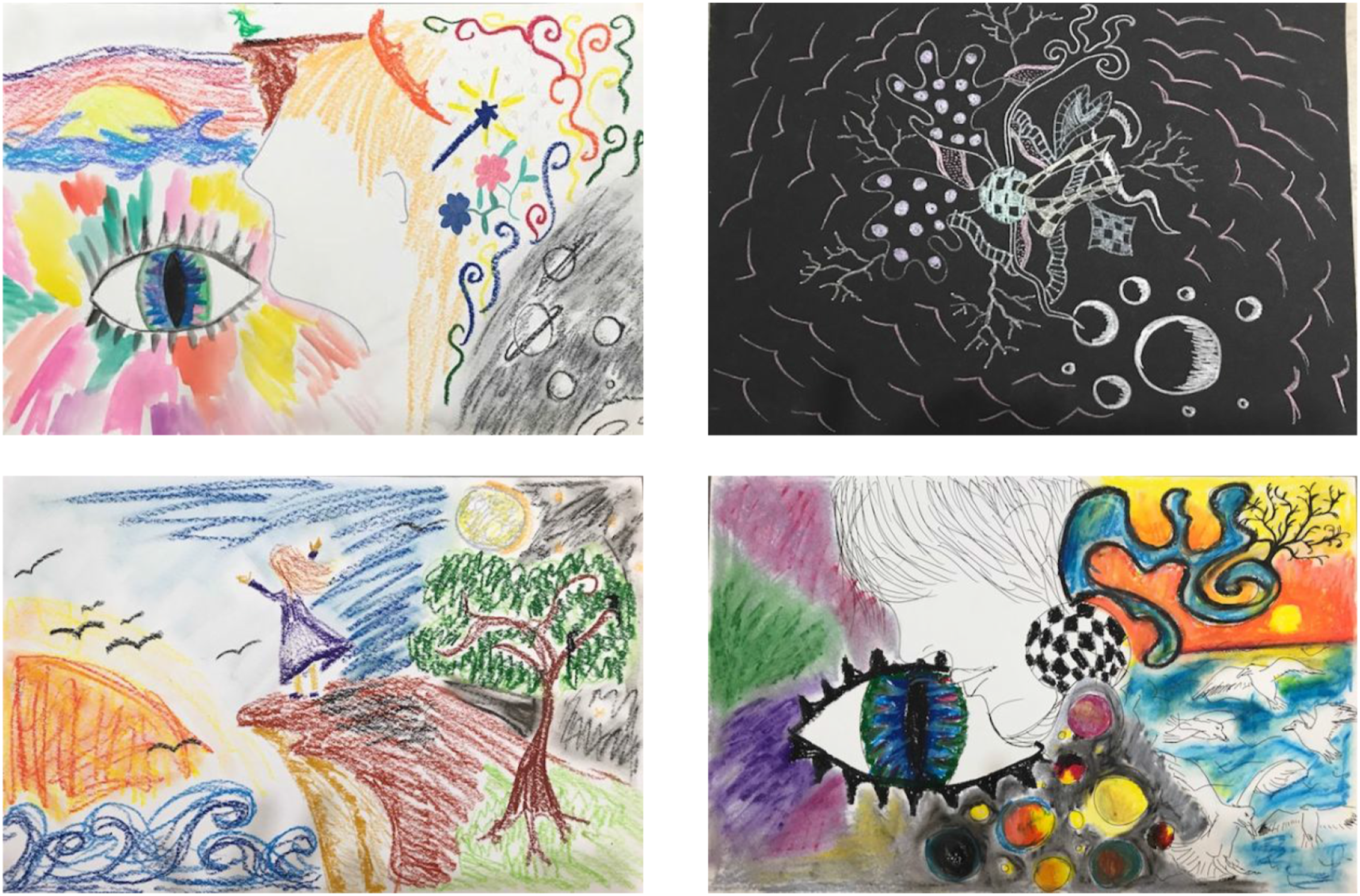
Sessions 1–2
Co-researchers began by writing freely about past and present experiences with ADHD, followed by creating figurative artworks (e.g., Figure 1). These early pieces depicted vivid memories and emotions through recognizable forms, often reflecting cautious engagement and a narrative-driven approach. The act of writing served to prime creativity and externalize previously unspoken reflections, which flowed into the visual work. This iterative process laid the foundation for dialogic engagement and contributed to nuanced qualitative insights (Aim 1), while also demonstrating the method’s ability to elicit sensory-rich data across modalities (Aim 2).
Session 3
This session introduced response art (e.g., Figure 1), where the researcher created a visual piece in dialogue with the co-researchers’ earlier artworks. One co-researcher remarked, “The researcher’s soul is in there too… both of our souls are on the line,” reflecting how co-creation fostered equality and reduced vulnerability. This shared space catalyzed a shift toward abstraction, with one co-researcher transitioning to open landscapes and others experimenting with new materials and palettes (e.g., sculpted paper, darker tones). These changes signaled growing artistic freedom and co-researcher agency (Aim 3), while reinforcing the method’s effectiveness in facilitating deeper expression (Aim 2).
Session 4
GoPro footage captured spontaneous moments and embodied engagement during artwork creation (e.g., Figure 2). The visual documentation sparked joy and deeper reflection. One participant said, “I’d forgotten how much I said,” underscoring how video playback facilitated awareness of insights that had gone unnoticed in the moment. Fourth artworks often returned to figurative forms enriched by the abstraction explored in Session 3, combining narrative clarity with symbolic depth. These works, along with response art and real-time footage, revealed layers of sensory and relational experience not accessible through verbal methods alone (Aim 2), further supporting the method’s equitable and empowering potential (Aim 3). Top left. G’s Fourth Visual Artwork, Documented via GoPro During Session Four. Top right. Art Response to G’s Fourth Artwork, Also Filmed via GoPro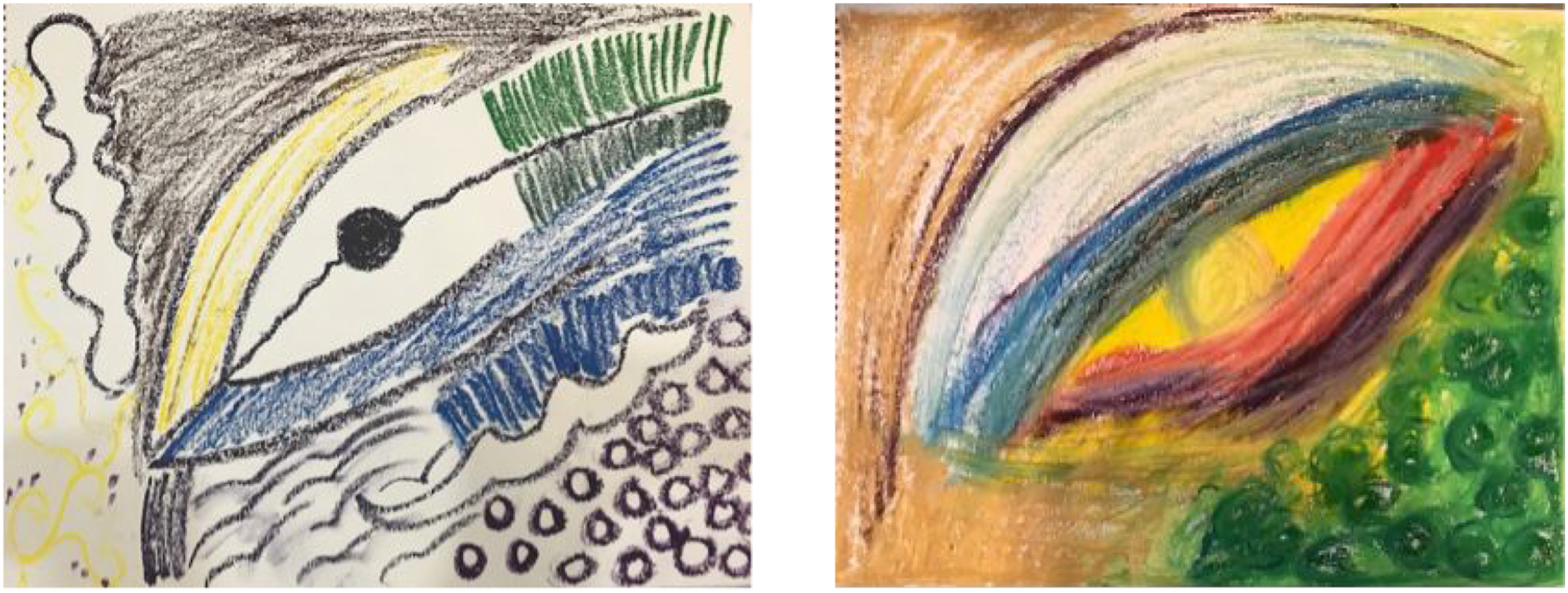
Session 5
Semi-structured interviews served as a culmination of the artistic conversation, enabling co-researchers to reflect on their experiences and evolving artworks (e.g., Figures 2, 4). Participants described how the progression from figurative to abstract and back supported insights that had been difficult to articulate. For instance, K reframed ADHD as “a relationship,” emphasizing a more dynamic self-perception. L distinguished between personal sensory triggers and general ADHD traits. S spoke of “ripple effects,” connecting the process to advocacy and community building. G’s comment, “It hit something inside of me,” captured the emotional resonance of the work. The consistency of these insights across co-researchers affirmed the method’s capacity to elicit rich, multi-dimensional data (Aim (2) and foster participant agency (Aim 3).
While the study’s small sample limits generalizability, the structured, reproducible methodology—including response art, GoPro footage, and multimodal integration—demonstrates methodological rigor and adaptability for future research.
Discussion
The artistic conversation methodology, conducted in Jerusalem, Israel (2018–2019), advances arts-based research (ABR) by creating a dialogic space for adults with ADHD to explore sensory and relational experiences (Aim 1), aligning with ABR’s focus on lived experience (Leavy, 2020; McNiff, 2008). Positioning participants as co-researchers fostered active collaboration, though power imbalances and ADHD-related distractibility posed challenges (Reason & Bradbury, 2008). Non-directive prompts, reflexive journaling, and Session 5 validation supported co-researcher agency, resonating with arts-informed inquiry’s participatory ethos (Barone & Eisner, 2012; Bertilsdotter Rosqvist et al., 2020). The small sample (n = 4) and researcher’s dual role as facilitator and co-creator limited collaborative dynamics due to varying artistic expertise. Future research should explore co-researcher training to strengthen participatory frameworks, enhancing ABR’s collaborative potential (Boydell et al., 2016).
The method’s multimodal integration of writing, visual art, and GoPro responses captured nuanced ADHD experiences, as detailed in the Results section, offering a structured framework for ABR studies (McNiff, 2008). This approach aligns with arts-based health research, which prioritizes embodied knowledge in neurodiverse contexts (Ledger & Edwards, 2011), and arts-based mixed methods, combining modalities for richer insights (Archibald et al., 2014). Cultural expectations shaping ADHD experiences were navigated in a supportive environment, supported by response art theory (Fish, 2008) and GoPro’s immersive documentation (Santos et al., 2023). This sensitivity to context, echoed in The Arts in Psychotherapy’s ABR scholarship (Chilton & Scotti, 2014), positions the method as an innovation, extending participatory ABR to neurodiversity research by amplifying co-researcher voices (Parsons & Boydell, 2012; Rolling, 2023).
Theoretical Contributions
The artistic conversation embodies a dialogic space (Fish, 2008) where shared art-making (e.g., Figure 1) generates meaning beyond verbal language and fosters embodied understanding (McNiff, 2008) by externalizing ADHD’s complexity (e.g., G’s abstract shift in Figure 1). This method can be seen as an evolution of Winnicott’s (1958) “Squiggle Game,” repurposed as a qualitative research tool that balances reverence with spontaneity (Moon, 2004). By doing so, it enriches qualitative inquiry and advances arts-based research by illuminating neurodiverse experiences in new and nuanced ways.
Advancing Qualitative Inquiry
This artistic conversation methodology advances qualitative research by prioritizing co-researchers’ voices, enhancing transparency, and integrating diverse modalities to broaden scope and impact. Positioning co-researchers as active collaborators—rather than passive subjects—elevates perspectives often overlooked in ADHD studies, which tend to emphasize clinical and behavioral dimensions over lived experience (Barkley, 2015; Rolling, 2023). This participatory approach challenges traditional research hierarchies and offers a more equitable framework potentially applicable to other marginalized populations, including those with neurodiverse or trauma-related experiences.
Transparency is another strength. Detailed documentation of session structures, response art creation, and GoPro filming, alongside rigorous ethical oversight, provide a clear, replicable blueprint for future researchers. This openness reinforces the study’s reliability, a critical pillar of robust qualitative inquiry. The synergy of multiple modalities—writing, art, and video—as demonstrated in co-researchers’ dynamic shifts from figurative to abstract and back (e.g., Figures 1–4), weaves a richer data tapestry than single-method approaches (Martinez et al., 2024). This versatile model invites adaptation across disciplines, from psychology to education, where complex lived experiences require nuanced exploration. Clockwise from top left. L’s First Image Created in Session One; L’s Second Image From Session Two (Top Right); Art-Based Response to the Images (Bottom Right); L’s Third Image, Created after Viewing the Art Response (Bottom Left) Top left. L’s Fourth Visual Artwork, Documented via GoPro During Session Four. Top right. Art Response to L’s Fourth Artwork, Also Filmed via GoPro

Additionally, blending traditional art-making with digital tools such as GoPro bridges established and emergent research practices, increasing accessibility and immediacy (Wong & Patterson, 2024). Real-time documentation of creative processes fosters immediate, shareable insights, enhancing knowledge dissemination. Together, these elements position the artistic conversation as a versatile and impactful methodology that amplifies marginalized voices and extends qualitative research’s reach.
While the small scale and pilot nature of this study limit its immediate capacity to transform qualitative methodology, its structured, reproducible framework and emphasis on co-researcher agency offer a promising model for advancing ABR. By empowering marginalized voices, as reflected in co-researchers’ feedback (e.g., “I felt like a partner”), it contributes meaningfully to social justice and holds potential for scalability in larger, cross-cultural investigations (Reason & Bradbury, 2008).
Implications for Social Change
The artistic conversation methodology fosters participant agency and reframes neurodiversity as a source of strength, with potential to drive social change. Across the study, co-researchers evolved from vulnerability toward confidence, reflected in shifts in artwork and narrative. For instance, one co-researcher moved toward outward expression, while another embraced a newfound sense of community. Rooted in collaborative dialogue, this process enabled externalization and reinterpretation of ADHD experiences, moving beyond stigma to recognize resilience and relational depth (e.g., “It really is a relationship”). By amplifying these strengths, the method challenges deficit-based narratives and models neurodiversity as a valuable perspective rather than a limitation.
Beyond individual empowerment, the method equips researchers to ethically engage silenced or marginalized groups. Trust built through co-creation—evidenced by progression from figurative to abstract and back (e.g., Figures 1–4)—created a safe environment for candid expression, especially for those hesitant due to judgment or exclusion. This approach can extend to other underrepresented populations, such as individuals with trauma or disabilities, fostering inclusive scholarship that centers participant voices. Facilitated by GoPro documentation and video reflections, the method enhances visibility and knowledge dissemination, potentially influencing attitudes and practices in education, therapy, and community contexts. In this way, it advances social change by promoting equity, agency, and reimagined understandings of diverse lived experiences.
Effectiveness and Comparative Insights of ABR
The multimodal ABR approach’s effectiveness—aligned with the study’s second aim—is evident in its ability to generate rich, sensory-laden qualitative data, empower co-researchers, and maintain methodological rigor (McNiff, 2008). The artistic conversation achieved this through nuanced reflections such as K’s relational reframing, L’s trait distinction (Figure 3 art-based response to the images), and S’s ripple effects, alongside consistent artistic evolution across participants, underscoring reproducibility (Fish, 2008). Compared to traditional qualitative methods like interviews or surveys—which tend to focus on cognitive or behavioral facets of adult ADHD (Schrevel et al., 2016; Young et al., 2008)—this approach revealed deeper sensory and relational dimensions. For example, Young et al. (2008) identified emotional challenges through interviews but missed embodied sensory triggers, which L’s chaotic (Figure 3 art-based response to the images) visually conveyed. Schrevel et al. (2016) highlighted social difficulties but did not capture the dynamic relational fluidity depicted in L’s Figure 3. ABR’s integration of paintings, videos, and GoPro responses uncovered unique insights—including non-linear thought patterns, sensory overload, and communal connections (S’s advocacy)—often inaccessible to verbal methods due to ADHD’s complexity (Wang et al., 2024). By fostering creative agency and dialogic exchange, the artistic conversation empowered co-researchers to externalize suppressed experiences, offering a richer, more equitable understanding of ADHD’s lived realities than traditional approaches, with implications for broader neurodiversity scholarship (Rolling, 2023).
Afterlife of Artworks and Social Change
The artistic conversation study empowered its four co-researchers, treated as equal partners, to reframe ADHD as a strength, fostering outward expression and a sense of community that advances social change. Through creating paintings, writings, videos, and GoPro responses (2018–2019), co-researchers transitioned from internal reflection to openly sharing ADHD experiences. For instance, S’s advocacy-focused “ripple effects” emerged in Session 4, accompanied by the statement, “Painting this made me see I can inspire others—it’s not just my struggle” (GoPro response, Session 4), reflecting a shift toward outward advocacy. K’s “compassionate mirror” embodied self-acceptance, with K remarking, “This artwork shows I’m not broken; I connect differently” (written reflection, Session 4), expressing renewed confidence. The group process fostered community, as L shared, “Creating together felt like we were all in this, not alone” (video, Session 5), linking artworks like Figure 3’s sensory strengths to collective support (Rolling, 2023).
This empowerment was the study’s primary outcome and challenges ADHD stigma. The afterlife of the artworks is limited by ethical considerations; physical artworks (Figures 1–4) were returned to co-researchers with their consent for research use, and digital outputs have been securely archived. Future research should explore professional applications of the artistic conversation in therapeutic or educational settings to further empower individuals with ADHD, necessitating rigorous methodological refinement (McNiff, 2008).
Limitations and Future Directions
This arts-based research (ABR) study, exploring the artistic conversation methodology, has limitations that shape its scope and offer opportunities for refinement. First, practical challenges included researcher self-consciousness in navigating the dual role as facilitator and co-creator, particularly in early sessions, which led to cautious interactions that initially limited co-researcher trust and expressive freedom. The time-intensive five-session structure also strained resources, suggesting that researcher training in ABR facilitation could enhance efficiency in resource-constrained settings. Second, the small sample of four co-researchers, while enabling qualitative depth into ADHD experiences, restricts broader generalizations across diverse ABR contexts.
Positioning participants as co-researchers advanced social justice but introduced challenges. Potential power imbalances, where facilitation might inadvertently influence outputs, and varying engagement due to ADHD-related distractibility were mitigated through non-directive prompts, reflexive journaling, and Session 5 validation, where co-researchers affirmed their agency (e.g., “I felt like a partner”; Reason & Bradbury, 2008). However, the small sample and differing artistic comfort levels limited collaboration, posing constraints on participatory equity (Bertilsdotter Rosqvist et al., 2020).
Future research should test the artistic conversation with larger, more varied samples, including non-creative populations, to enhance scalability and transferability, advancing equitable neurodiversity scholarship (Rolling, 2023). Integrating static artwork analysis with GoPro’s real-time documentation could better balance process and product, capturing dynamic and final outcomes for broader researcher appeal. Exploring how co-researchers’ professional backgrounds shape insights, such as the creative professionals’ emphasis on emotional and relational ADHD aspects in this study, warrants further investigation (McNiff, 2008). Strategies like co-researcher training or external oversight could strengthen participatory frameworks, ensuring robust, inclusive ABR methodologies.
Footnotes

Ethical Approval
Approved by Lesley IRB, Lesley University, 16/17-040. Written informed consent was obtained from all participants.
Consent to Participate
Written consent was secured for participation and data use.
Consent for Publication
Written consent was obtained for publishing anonymized artwork and quotes.
Funding
The author received no financial support for the research, authorship, and/or publication of this article.
Declaration of Conflicting Interest
The author declared no potential conflicts of interest with respect to the research, authorship, and/or publication of this article.