




Abstract
Three-sixty video-ethnography is a growing field of research, offering novel insights into the complex interactions between individuals and their environments. Despite its potential, the application of 360-degree video in qualitative research remains underexplored. The study presented here aims to bridge this gap, by discussing an approach to data collection and visual analysis, grounded in a multimodal epistemological framework for in-depth qualitative exploration of place-based interactions. Specifically, the paper investigates the integration of 360-degree videos and Virtual Reality Head-Mounted Displays (VR-HMD), for content production and visualization within qualitative research. This technological integration facilitates multimodal coding and enables a more nuanced attention to non-verbal cues in video-ethnography, allowing researchers to (re)experience and reflect on meaning-making practices and (dis)embodied narratives. Such an approach offers a fresh perspective into the interplay between people and their surroundings. Demonstration of the methodology’s effectiveness is substantiated through a case study from the project ‘REPLACE: Rebuilding a Sense of Place. The Socio-Cultural Role of 3D Technologies in Increasing Community Resilience after Natural Disasters’. This paper focuses on one project case-study: the seismic ‘events’ that affected the city of L’Aquila in the Apennine Mountain region of Italy in 2009. The 360° video-ethnography allowed us to capture experiences of the earthquake and its aftermath. The multimodal coding was essential for capturing how the post-earthquake period was experienced, as well as how the approaches to reconstruction influenced the social recovery and rebuilding of attachment within the affected community. Our findings indicate that non-verbal cues substantiated the narratives of the community members about the reconstruction of the city, including their perceptions of urban transformation and the Disneyfication and Disneyization processes affecting the historic center. This study contributes to the growing body of literature on immersive methodologies in qualitative research, highlighting the potential of immersive video methods for evidence-based research.
Keywords
Introduction
360-degree video-ethnography is a growing field of research, offering novel insights into complex interactions between individuals and their environments. Despite its potential, the application of 360-degree video in qualitative research remains under-explored. The study presented here aims to bridge this gap by discussing an approach to data collection and visual analysis that is grounded in a multimodal epistemological framework, allowing for in-depth qualitative exploration of place-based interactions.
In recent years, the rise of 360-degree videos and Virtual Reality (VR) technologies has attracted significant attention across various research fields, including healthcare, human-environment interactions, education, and cultural heritage (Mancuso et al., 2024). These technologies offer novel ways to virtually represent, interact with, and analyze places, providing researchers with what are now considered cost-effective tools to enhance their studies. Ethnography, in particular, has seen innovative applications of 360-degree cameras, both theoretically and empirically. Scholars such as Gómez Cruz (2017) have highlighted the multi-sensory capabilities of 360-degree technologies, which facilitate new ways of thinking about research participants through both continuity and dissonance in sensory experiences. Further, Kostakos et al. (2019) have demonstrated the efficacy of 360-degree videos and VR in virtual ethnography, advocating for their ability to create more accessible and participatory research approaches. Westmoreland et al. (2022) have provided critical insights into the concept of immersive realism, suggesting that the kaleidoscopic perspective offered by 360-degree videos can help ethnographers critically evaluate normative modes of vision and develop unique perspectives beyond traditional observational realism.
Building on this foundational research, our study explores an application of 360-degree video ethnography within the context of place-centric research in heritage studies focused on disaster recovery and disaster risk-reduction. Specifically, the paper investigates the integration of immersive technologies, including 360-degree videos and Virtual Reality Head-Mounted Displays (VR-HMD), for both content production and visualization. We maintain that this technological integration facilitates multimodal analysis and enables more nuanced attention to non-verbal cues in video-ethnography, allowing researchers to (re)experience and reflect on meaning-making practices and (dis)embodied narratives.
The empirical component of this paper is based on data collected from the REPLACE project, which stands for ‘Rebuilding a Sense of Place: The Socio-Cultural Role of 3D Technologies in Increasing Community Resilience after Natural Disasters.’ This is a 4-year program of research that focuses on regions in Italy that have been affected by earthquakes, examining how 3D technologies can help in rebuilding both tangible and intangible aspects of community heritage. By employing 360-degree video-ethnography and walking interviews, the project aims to capture the multi-sensory experiences of residents as they move through previously familiar environments altered by natural disasters.
By allowing researchers to (re)experience and reflect on the captured environments, this approach provides deeper engagement with the data. It enables the exploration of (dis)embodied narratives, for instance, where the physical presence or absence of bodies in space can be critically examined. Such an approach offers a novel perspective into the dynamic relationship between people and their surroundings, providing insights that can inform a wide range of disciplines, such as heritage, anthropology, sociology, urban studies, human geography, and environmental psychology. Ultimately, this paper aims to contribute to the growing field of immersive methodologies by demonstrating the effectiveness of 360-degree video-ethnography in enhancing place-centric qualitative research.
To address the gap in the application of 360-degree video in qualitative research, this study is guided by the following broader research questions relevant to ethnographers studying place: 1. How can 360-degree video and VR technologies enhance our understanding of place-based interactions in various contexts? 2. What are the methodological opportunities and challenges presented by immersive technologies for capturing and analyzing multi-sensory experiences in ethnographic research? 3. How can non-verbal cues and emplaced narratives captured through 360-degree video contribute to a deeper understanding of the relationship between people and their environments?
Our hypothesis is that the integration of 360-degree video and VR technologies in ethnographic research will provide deeper insights into the relationship between people and their environment, thereby enhancing the qualitative analysis of place-based interactions.
The paper is structured as follows: Part two reviews current research on 360-degree video and VR technologies, focusing on place-centric analysis and exploring how these technologies have been used to study human-environment interactions, along with the methodological challenges involved. Part three introduces the case study and methodological framework, emphasizing the experiential and affective dimensions of place, along with the use of 360-degree videos for content creation and visualization. It also covers multimodal coding and analysis, focusing on the documentation and interpretation of non-verbal cues. Part four presents and discusses the research findings, examining how the integration of 360-degree videos, VR technologies, and multimodal analysis enhances understanding of post-earthquake reconstructions’ impact on social rebuilding, using the historic center of L’Aquila, a city in the Abruzzo region (Central Italy) as a case study. This section links findings to the literature, exploring their implications for ethnographic research. The conclusion summarizes the study’s main findings, highlighting the potential of 360-degree video ethnography to offer new perspectives in ethnography, particularly in place-centric research, post-disaster reconstruction, and cultural heritage preservation.
360-Degree Video in Place-Based Research
Place-based research has a long history in ethnography, where traditional methods like participant observation, interviews, and, more recently, video interviews, have been fundamental to understanding how individuals interact with and attribute meaning to their environment. Theories of embodiment in cognitive science (Lakoff & Johnson, 2008), and phenomenological thinking in human geography (Merleau-Ponty, 1996) have advanced our understanding of place as an embodied, multi-layered experience of the physical environment (Ash & Simpson, 2019). Experience of place involves emotions, relationships and cultural knowledge as well as strong physical, sensory and perceptual processes enhanced by the relationship of the body with that environment (Ash, 2020). Ingold (2000) advanced this understanding by emphasizing the embodied experience of place, arguing that traditional methods may not fully capture the sensory dimensions of human-environment interactions. Pink (2011) further developed this by shifting the focus from embodiment to emplacement, advocating for methods that capture the dynamic interaction between people and their environments using audiovisual media and participatory approaches.
Building upon these concepts, a multimodal framework can offer a deep examination of these complex sensory interactions of human-environment interactions. This analytical framework allows to examine how various modes of communication—verbal, visual, spatial, such as images, writing, layout, music, gestures, oral expression, 3D models, etc.—contribute to understanding place. Social Semiotics (Hallyday, 1978) serves as a key theoretical underpinning of multimodal analysis, emphasizing how different semiotic resources (e.g., visual, sounds, gestures, etc.) are employed in constructing meanings. Kress (2010) describes multimodality as the simultaneous realization of discourses across different media, enabling a deeper understanding of how meaning is constructed in specific environments (Scollon & Wong Scollon, 2003). This framework supports the analysis of the visual and embodied features of interactions (Price et al., 2016), making it particularly relevant for place-based research. Despite its potential, multimodal research in this domain has often been limited to static media forms, such as texts and images, overlooking dynamic and immersive experiences. Multimodal ethnography, as Westmoreland (2022) suggests, reshapes how reality is constructed and interpreted, emphasizing the interconnectedness of communication and sensory experiences. The rise of digital technologies has transformed ethnographic practices, affected data collection, management, and analysis, and highlighted the active role of research mediation in creating data rather than merely collecting it. This mediation not only reproduces sensory experiences but enhances them, distributing agency among people, places, and technology.
Recent methodological advancements have utilized Multimodal Discourse Analysis (MMDA) to explore the interplay of different communicative modes (Le Vine & Scollon, 2004; Kress, 2013). However, MMDA’s application in immersive contexts remains underexplored. In parallel, 360-degree video and Virtual Reality (VR) technologies have emerged as powerful tools for place-based research. While these technologies have been primarily employed in quantitative studies to analyze spatial interactions, the qualitative potential of these methods—particularly through a multimodal lens—remains untapped (Cinnamon & Jahiu, 2023). Of relevance to our study, the work of Turpin et al. (2024) on using 360-degree technology for researching social exclusion in Loughborough (UK) illustrates the potential of immersive digital storytelling to convey experiences of displacement and belonging. The study explores how 360-degree and VR technologies can be deployed to visually represent and navigate places from someone else’s perspective, conveying the individual’s experience of losing their home with its continuous displacement and re-establishment of sense of place and belonging. Despite the limited sample size, the findings show the potential of 360-degree technology in facilitating the co-creation of stories of places from multiple perspectives.
In the context of natural disasters, Fraustino et al., (2018) explored the impact of 360-degree videos on public perception and communication during crises, finding that such videos can enhance the sense of presence and reliability of the content. Similarly, White (2021) examined the use of immersive technologies in Pandang, Indonesia, to develop tools that could support community resilience against tsunamis such as 360-degree video footage shot by community members integrated with 3D models from drone data and a tsunami inundation map showing shelters, escape routes and various community networks. The study suggests that immersive technologies need to be embedded within a location-based approach creating ‘a framework grounded in an already existing community’ (White, 2021, p. 100), which offers the possibility of a more nuanced and deeper understanding of the complex relationship among place, history and people.
In heritage studies scholars have discussed applications of 360-degree and VR technology for preserving of intangible heritage and virtual engagement with otherwise inaccessible cultural heritage sites (Njerekai, 2020; Pérez-Reverte Mañas et al., 2021). However, the majority of this work explores the adoption of 360-degree videos for the creation of educational and entertaining experiences aimed at cultural tourism. Consequently, the main focus of the discussion is the design process and evaluation of the impact of these experiences on different audiences through both quantitative and qualitative data collection (Argyriou et al., 2020; Selmanovic et al., 2018). Unlike this previous works, our research framework investigates the use of 360-degree technology to enhance the understanding of community-place interactions and heritage in the context of natural disasters, offering a more holistic inquiry and multimodal analysis framework (Westmoreland, 2022). The study presented here aims to fill recognized need for deeper analysis of how these tools affect not just data collection but also interpretive processes (Tojo et al., 2021), by examining the semiotic and interpretive implications of adopting 360-degree videos for the analysis of place-based interactions. Our research aims to address this gap by integrating multimodal analysis with 360-degree video, offering a more nuanced exploration of the sensory and communicative dimensions of place.
Methods
Study Design
Our research methodology is grounded in multimodality and centers on ethnographic techniques like “walking with video” (Pink, 2011) to explore the deep connections between people and their environment, fostering dialogue among researchers, participants, and their surroundings (Lee & Ingold, 2006; Kusenbach, 2018). This approach emphasizes the experiential and affective dimensions of place, recognizing that places shape identities and social relations just as much as people shape places. We explore how walking interviews utilizing 360-degree videos can effectively capture the nuanced aspects of place by enabling participants to engage with their environment in real-time, prompting in-context reflections about their surroundings (Silverman & Patterson, 2022, pp. 65–66). The use of 360-degree video ethnography was chosen for its ability to gather comprehensive and immersive data, allowing researchers to revisit and reflect on the environments and interactions captured during the interviews. This approach supports a detailed analysis of non-verbal cues and emplaced experiences, stimulating different insights into the sense of place and community resilience in post-disaster contexts. Akin to Wang and Redwood-Jones (2001), we have sought voluntary adherence to basic principles of image ethics (Gross et al., 1988). When walking interviews were recorded in public places, thus capturing people other than participants, we used only blurred the images so that bystanders or passersby could not be recognized.
Study Area
The effectiveness of the methods was tested through a case study from the REPLACE project, focusing on the analysis of samples from one of the case-studies investigated by the research program, i.e. the city of L’Aquila. Following more than 80 tremors exceeding 1.5 on the Richter Scale over 4 months, a 6.3-magnitude earthquake struck L'Aquila, Italy, on April 6, 2009. This event resulted in 309 deaths, approximately 1,600 injuries, and the displacement of over 70,000 residents. It severely damaged the historic center of the city and more than 80 surrounding villages, creating an area known as ‘the crater’. In response, a state of emergency was declared, granting extraordinary powers to the Department of Civil Protection (DCP). Exclusion zones (i.e. Red Zones) were enforced, and emergency tent camps established. Residents were evacuated and relocated to hotels, camps, or with relatives. Today, the reconstruction of the city and outskirts is ongoing, with significant progress made, but many challenges still remain, as indicated by recent open data sources (Imperiale & Vanclay, 2016; Open Data, 2024).
Participants Selection
Participants were selected through purposive snowball sampling, starting from personal contacts in L’Aquila to disseminate information about the study. The selection of snowball sampling was justified by the need to reach participants who had direct experience of the 2009 earthquake and were willing to share their personal narratives. The sample consisted of 11 participants (4 females and 7 males) aged 24 to 65, who experienced the earthquake, except for two who returned immediately afterward. Participants were briefed on the study’s objectives, which centered on their personal experiences of the earthquake and subsequent recovery efforts. Consent to participate and be video-recorded was obtained in accordance with the approved consent form from the Ethics Committee of the authors’ university. The names of the participants are represented with fictitious names. Their age and gender correspond to the information provided by the participants in a sheet for personal data declarations. All data collected within REPLACE are securely stored in a password-protected University of Essex Box Online folder on the University’s server, which can only be accessed by the project’s PI and Senior Research Officers.
Data Collection
360-degree video ethnography was employed through walking interviews to capture the multi-sensory relationships and embodied experiences of place. All researchers were trained in video ethnography by film director Pinny Grylls and video-ethnographer Ella Fryer-Smith and spent several months practicing before deploying the technology in the field. Interviews and follow-up activities were conducted from March to September 2023 during two fieldwork sessions. Walking interviews were group discussions on the move in which two to three researchers engaged in dialogue with one or two participants at a time. Using a 360-degree camera (Insta360 One RS, 1-inch 360 edition) mounted on a 120 cm selfie stick and controlled via a smartphone, researchers conducted interviews while walking with participants in post-disaster landscapes. The camera was mostly unnoticed by participants, who appeared to behave naturally and, in some instances, even forgot they were being video recorded despite being told before starting the interview. Passersby, instead, were occasionally captured while commenting on it. Such reactions went unnoticed during the interview and often discovered later by scanning the virtual environment.
Each interview lasted approximately one and a half hours and covered themes such as daily life, sense of place, resilience, place loss, and place-making. This method allowed for the collection of rich, real-time, spatially contextualized data. The data collection process was challenging as the camera’s high energy consumption required a pause every hour for battery changes. A set of four fully charged batteries was sufficient (for a maximum of two consecutive interviews). Additionally, daily backups of the large volume of data were performed on both an external hard drive and in the cloud, a time-consuming but necessary task.
Data Analysis
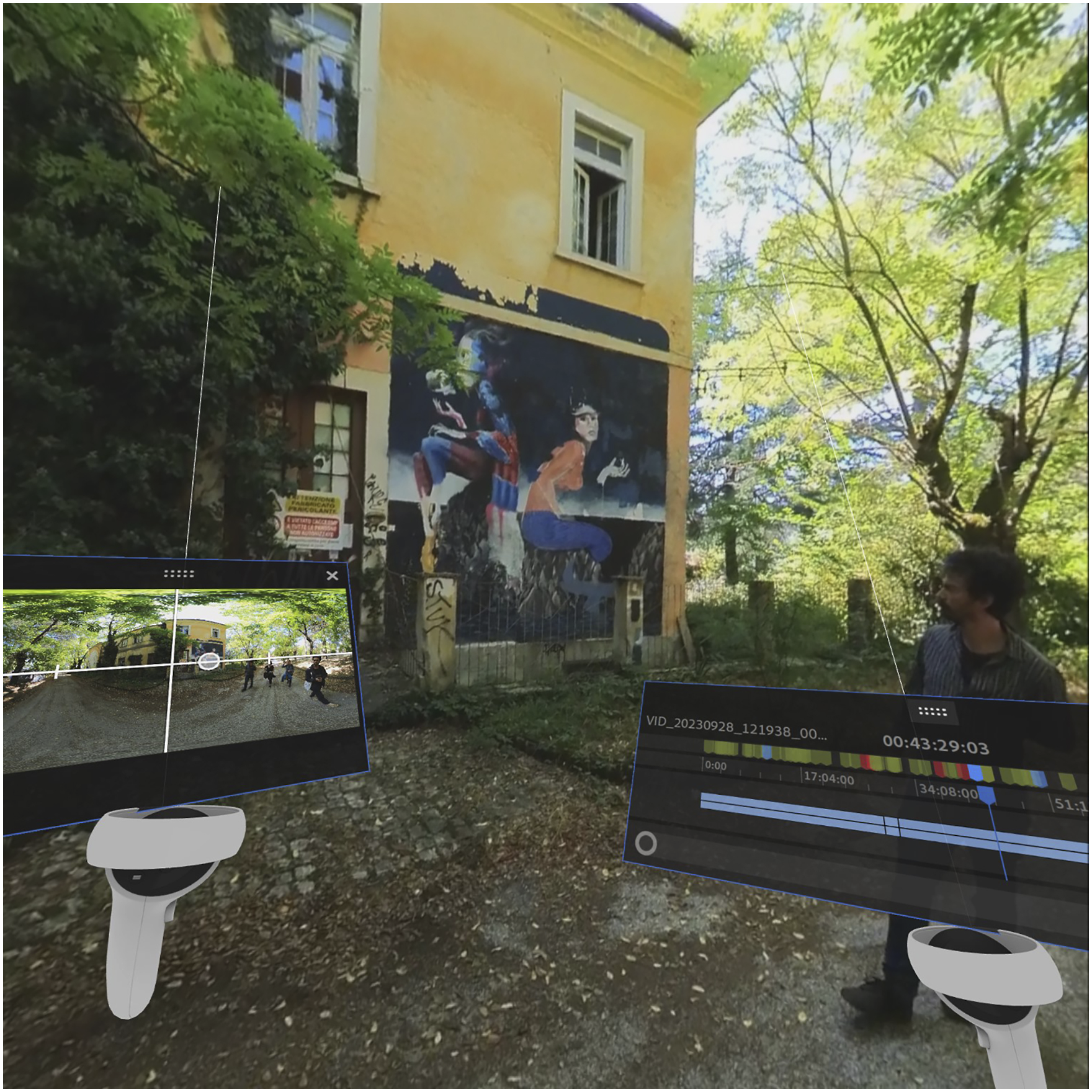
The analysis was conducted using Adobe Premiere Pro and the virtual reality toolset SteamVR, enabling immersive coding with VR Head-Mounted Displays (Oculus Quest 2). The coding process involved the following steps: 1. Marker Assignment: Points (nodes) were designated throughout the spherical image, with audio annotations linked to specific markers in space/time (Figure 1). 2. Color Coding: Different colors were assigned to specific modes (Gesture, Image, Sound, Speech, Writing) to facilitate multimodal analysis (Figure 2). 3. Data Export: All markers and annotations were exported into an Excel spreadsheet, with recorded annotations automatically transcribed and matched with markers using time tagging. Since Adobe Premiere only supported visual annotations in immersive mode, integrating supplemental audio notes was time-intensive, requiring corrections to automatic speech-to-text conversion and manual embedding into the database. The analysis of 1 hour of footage typically requires an average of three to 4 hours. Visual Aspects Assigned to Specific Color (Red Marker). Screenshots From the Headset. Several Color-Coded Markers Present in the Timeline. Screenshots From the Headset.

Sample of the Multimodal Analytical Matrix.

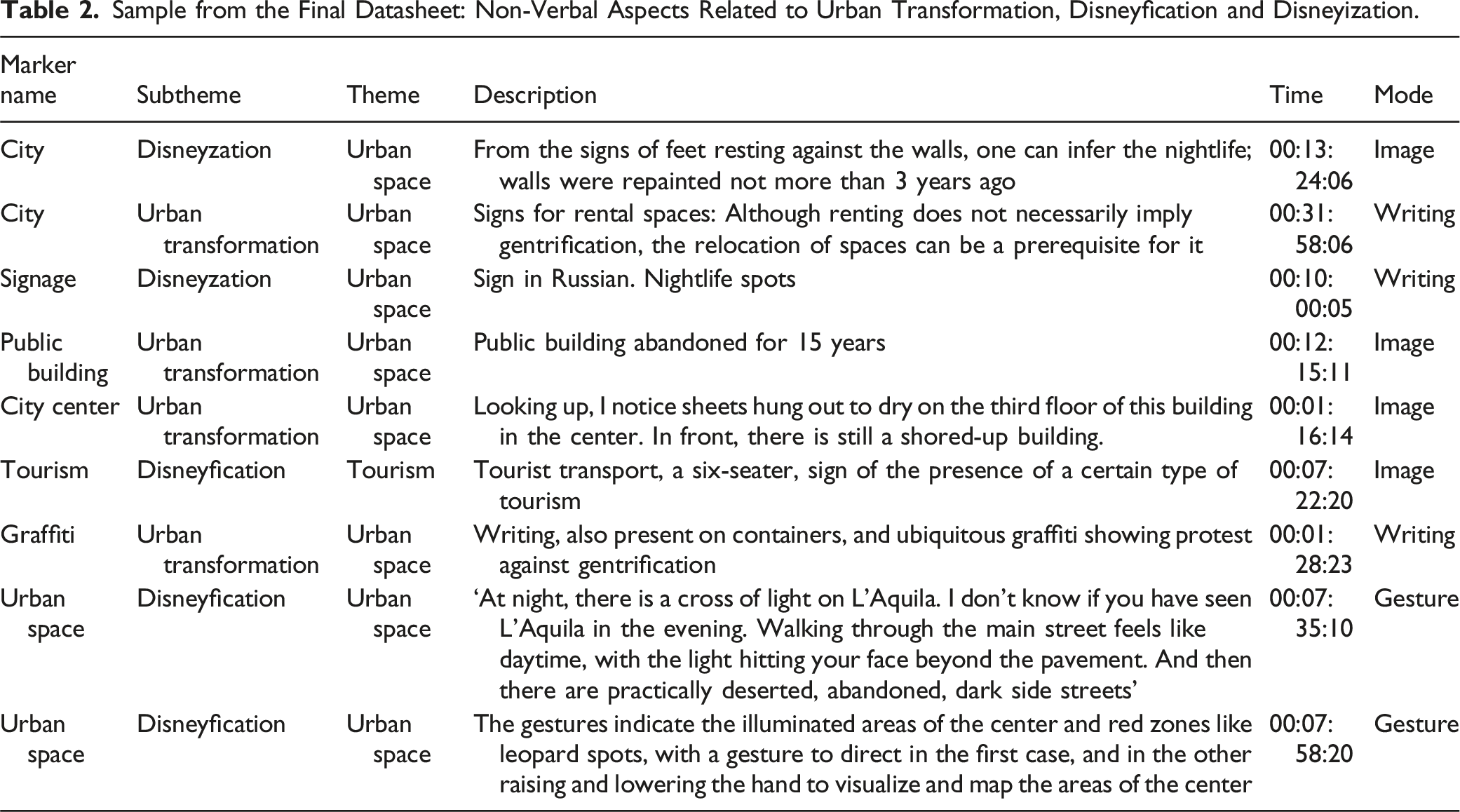
Following the thematic analysis method (Braun & Clarke, 2022; Nowell et al., 2017), each marker was named and described, with its relevance and placement noted. Themes and sub-themes were identified through inductive reasoning, and markers were renamed to optimize categorization. Two researchers independently reviewed the coded points and categorized them into 13 themes and 30 sub-themes (See Annex I – Supplemental materials).
Any disagreements were resolved through re-examination and discussion in the presence of a third researcher, ensuring reliability and validity.
Sample from the Final Datasheet: Non-Verbal Aspects Related to Urban Transformation, Disneyfication and Disneyization.
Results and Discussion
This section focuses on the interconnected sub-themes of urban transformation, Disneyfication and Disneyization of L’Aquila’s historic center post-earthquake, reflecting on how our methodological approach facilitated the exploration and discussion of these issues.
Our primary goal was to trace the discourses of our participants alongside the discourses embedded in the places we encountered, assessing how these narratives intersected, complemented, or contrasted with each other. We sought to interpret what participants communicated about the places, alongside the non-verbal cues captured in spherical images and revisited using 3 Degrees of Freedom (3DoF) in the cropped images of the VR headset.
Our multimodal analysis, while largely centered on speech and visual elements, also integrated other communicative forms. These elements, such as sound, gestures, and writing, were essential to a comprehensive data interpretation, capturing visual signs that could be missed in non-spherical filming. This immersive qualitative analysis is distinctive in its ability to incorporate these varied modes of communication, providing a richer understanding of the spaces under study.
In our dataset, speech and image represent 85% of the overall coded aspects (n = 651). However, it is within the remaining 15% (n = 108) that there is additional potential to focus on details or unnoticed elements, which were not documented in the researchers’ ethnographic notes. In 360-degree videos, the camera inevitably captures the entire surrounding environment, not requiring a predetermined framing of the researcher’s attention on a single mode prior to the analytical process. Gómez Cruz helpfully conceptualizes the deployment of 360-degree cameras within ethnographic practice as digital note-taking (2017), enabling researchers potentially to document everything in sight.
An example of this dynamic is footprints. The footprints along the bottom of walls indicate that people linger outside the premises, to consume alcohol, smoke cigarettes, and use their cell phones. In a newly reconstructed city, such as L’Aquila after the earthquake, these footprints are particularly noticeable (Figure 3), but they are likely to be considered part of the everyday and not be noticed, as happened with the researchers during the fieldwork. Footprints on the Wall as a Sign of People Standing, Resting One Foot Behind Them.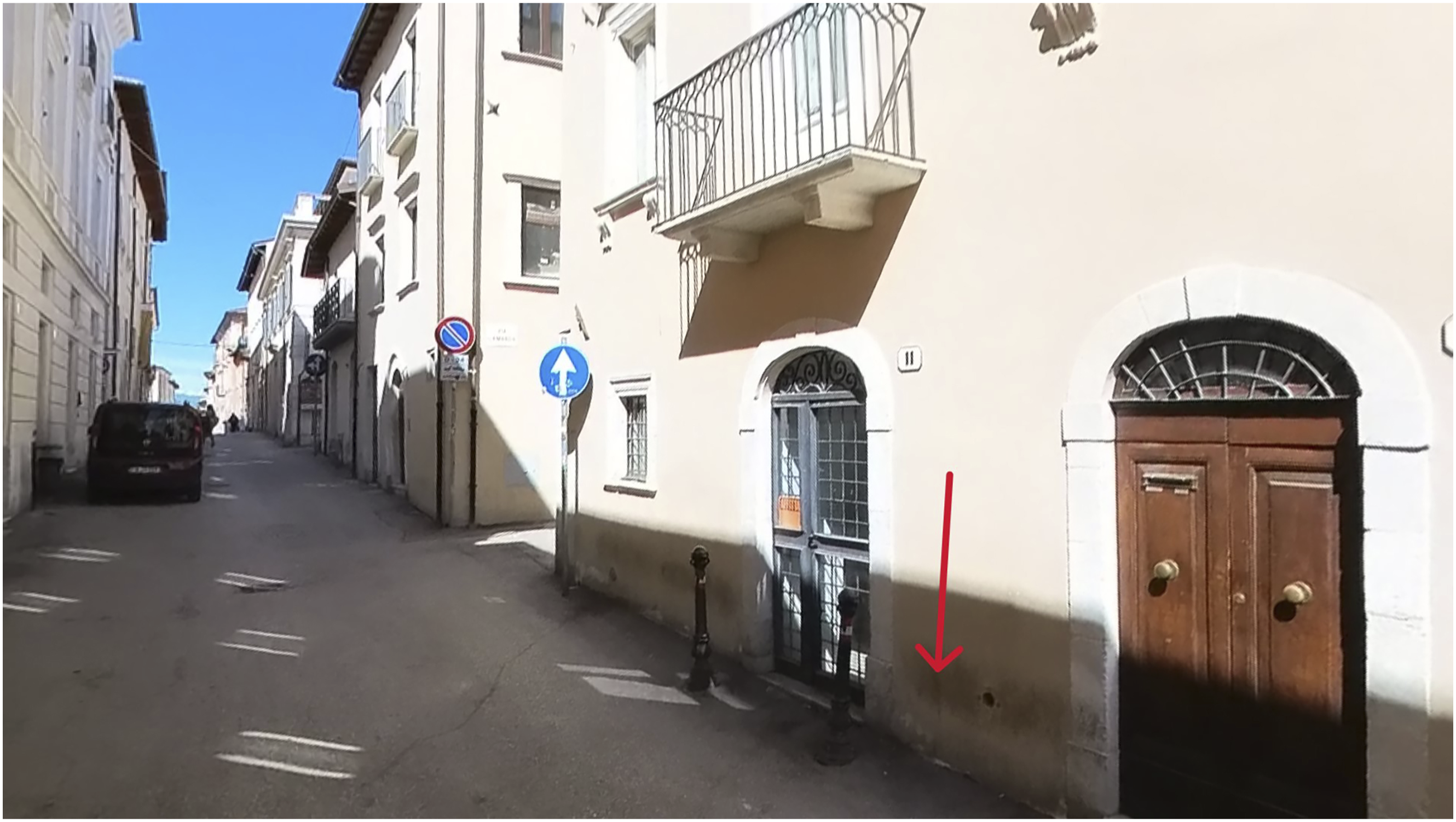
Figure 3 was extracted from a 360-degree video shot in Via Garibaldi, in the center of L’Aquila, one of the arteries of the new nightlife. One participant verbally expressed a glimpse of the sense of that place while passing along the street marked by footprints on the wall. ‘Now they are all nightlife venues. Places like this [pointing to a shop that existed before the earthquake] that have retained their old identity, are just a few, the fish shop, probably, and a pastry shop further up.’ (Jacopo, 54, M, interviewed in March 2023)
The footprints indicate a constant presence of people standing on one foot while leaning the other against the wall, pointing to a change in the use of an urban area: from transit to movida place. As an isolated element, this might have been neglected or interpreted with difficulty, but as a part of a multimodal ensemble it strengthens the credibility of the data, verifying that a coded point is reliable using another mode: in this case, a visual feature can confirm speech. With reference to this example, it points more broadly to the re-purposing of the walls of the buildings, transforming the street from a space of transit to a place of consumption, coherent with commoditization and Disneyization.
One advantage in producing 360-degree videos and displaying the contents on the VR-HMD lies in the archival and retrieval capacity of potential data points across different modes, illustrating the richness of the context captured. For instance, shop signs and posters are vital components of an urban landscape and can be studied in their composition and placement as part of the writing mode, rather than just as static and decontextualized images. This implies agency, a willingness to produce meaning, the use of a specific linguistic register, and the acquisition of competence in the possession of the repertory. These clues point to socio-demographic aspects, call for socio-linguistic sensitivity, and suggest potential investigation paths. By extracting details of a handwritten shop sign, Google Lens revealed it to be in Cyrillic – the words ‘our shop’ in Russian. This opens up a possibility for research on the new ownership of spaces in L’Aquila after the reconstruction (Figure 4). Signage, Language, and New Ownership of Space. At the Bottom of the Sign, in Russian, it Says ‘Our Shop’.
There is also an abundance of written messages communicating the availability of spaces for commercial use, such as signs indicating ‘for sale’, ‘for rent’, and ‘commercial spaces for rent’ (Figure 5). These elements support an unsolicited narrative of changing ownership that could lead to gentrification, consistent with the depopulation of the city center and its reconfiguration after the earthquake. Images presented here are taken from via Accursio, formerly a densely populated area, as stated by Jacopo, a former resident of the city center. Commercial Space for Rent in an Historic Building.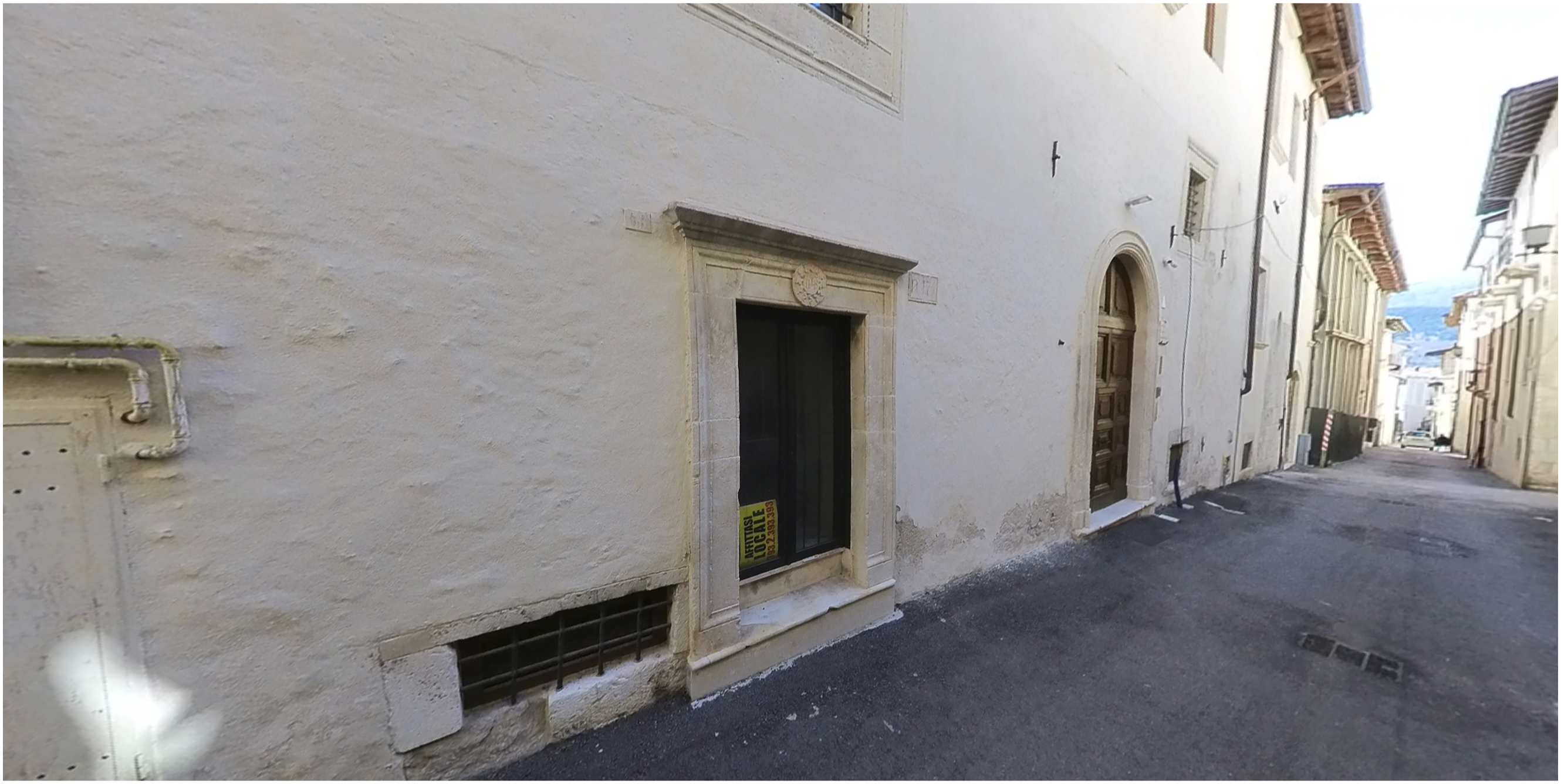
Analyzing writing as a mode helped to determine nuances of social dynamics and scale them – if not quantitatively, then at least as a well-documented collection of instances – strengthening the commonly cited subtheme of the depopulation and transformation of the city center. The shift towards the periphery is echoed many times in the words of the study participants, with speech confirming the insights gathered from our analysis of the writing. One elder commented: ‘Most will end up outside, in the immediate periphery. I live in the immediate periphery, just to be clear. And some have already left. But it’s the part of the population I referred to earlier, white collars, etc., who found a new solution through relocations and certainly won’t return. The sales market has plummeted. The rental market has disappeared from the historic center.’ (Giovanni, 64, M, interviewed in March 2023)
Speech is vital to gather information on socio-historical dynamics, as expressed by one participant: ‘A social network of inhabitants, because they were born in this city, lived in this city, there were elderly people …After ten years, fourteen years, these elderly people have either relocated elsewhere, are traumatized by yet another move, which is very difficult, or have passed away. So, the historic center, which once had about twenty thousand inhabitants, now barely houses 1,500–1,800 people.’ (Jacopo, 54, M, interviewed in March 2023)
Wearing the VR headset and raising one’s gaze in the narrower alleys of the historic center, the contrast with similar situations in densely populated historic centers in Italy is immediate. The absence of signs of residential life strikes. Only a few bed sheets were hung out to dry on a single side street (Figure 6). Tilting and Coding, Screenshot From Oculus.
Adjusting the point of view is paramount to a multimodal gaze, by tilting and panning movements that allow viewers to explore and navigate the immersive environment, excluding and including details into the vision of the researcher. Tilt refers to the vertical movement of the viewer’s perspective within the 360-degree image or video. It allows the viewers to look up or down, altering their line of sight within the scene, and explore vertical elements of the environment, such as the sky, ceiling, or ground. Pan refers to the horizontal movement of the viewer’s perspective. It allows viewers to rotate their viewpoint from left to right or vice versa, effectively turning their gaze within the 360-degree environment. Panning enables viewers to scan the scene to reveal new perspectives, shift focus, or follow the movement of subjects within the immersive environment. Tilting toward an open view of the sky wouldn’t be expected in the side streets of a historic center, where clothes lines typically indicate human presence. The opportunity of re-scanning all the skies filmed during the walking surveys in the city center, allowed us to visualize an extensive pattern of depopulation by observing the signs of absence of residential activity. Such detachment from the on-going reality in flux is difficult during fieldwork. Eye contact was often the norm, with the 360-degree camera held on a stick in a position far from the subject, allowing unobtrusiveness and spontaneous conversations. The spatial discourses noting a lack of residentiality intersect with those revolving around the ‘aperitivo model’, reflecting a materially impeccable and diligent reconstruction of the historic center, but one that is socially lacking in participation and inclusivity. Words are powerful tools to tag and define topics: ‘In the center, there’s nothing, that is, there’s only the bar, the logic of the aperitivo, which is becoming increasingly exclusive. And indeed, they [the young people] are marginalized, so they reclaim spaces that have not yet been invaded by tables, basically, so the Villa, Santa Maria in Paganica, the castle park … but there, beyond the aperitivo model, the Disneyland, the façade, and the tourist surface, there’s very little. And so, they don’t find space, so … it’s more likely they cause problems. That is, they create problems, also because they are not contained by anything.’ (Pietro, 42, M, interviewed in September 2023)
This model, primarily focused on the consumption of alcohol and dining, also leads to disturbances in the public peace experienced by residents, and potentially affects public safety, at least in terms of perception. The central areas designated for nightlife lose the dimension of social control provided by residents, exemplified by the classic stereotype of the Italian lady watching from her balcony, monitoring, and potentially interacting directly with noisy youth or reporting them to the authorities (Giovanni). This creates the need for a different type of external control, manifested through the ubiquitous presence of closed-circuit cameras (Figure 7).
1
The Street Corner of Santa Maria Paganica is Monitored by 360° CCTV Cameras.
Many previously unnoticed cameras were observed during the revisiting and coding of the data, as the visual focus during the walking interviews was mainly kept at street level. It is not surprising that measures such as the D.A.SPO. (Divieto di Accedere alle manifestazioni SPOrtive, in English: ‘Prohibition to Access Sporting Events’) are applied and also contested by some (Figure 8). The measure was applied in the city center of L’Aquila after the earthquake as an exceptional form of social control. Intended as a form of access restriction for large, occasional events at public spaces such as stadiums, it was applied to public spaces intended for everyday use, such as the historic center. The remarks regarding this are consistent with what interviewees felt about the excessive lighting in the city center. ‘At night, there is a cross of light over L’Aquila. I don't know if you've seen L’Aquila in the evening. Walking along the Corso, it's like daytime, with light glaring in your face, beyond the pavement [reflecting it]. And then there are side streets, practically deserted, abandoned, and dark’. (Luisa, 42, F, interviewed in April 2024) Graffiti Opposing the D.A.SPO. And Militarization on Wall of a Newly Restored Building in the Historic Center. [‘Neither D.A.SPO. Nor Surveillance’].
A peculiarity of controllers in immersive environments is that they allow the user to move the controller left or right to modulate the fast forward and back by a few frames at a time (from ±1 to ±10). This allows for extremely precise analysis of various gestures (Figure 9), to fix still images, but also to simulate the gesture itself, enabling smoother forward and backward scrolling of frames through the movement of the controller in the right hand. Breaking Down Gestures Metaphorically Defining Spaces (From Left to Right: Pre-gesturing, Gesture A, Transition, Gesture B).
Figure 9 shows the participant making an iconic gesture to represent metaphorically the ‘cross of light’ (gesture A), while she did not use such a trope linguistically. 2 She represented the illuminated areas of the city center by crossing the forearms, then miming dark zones with hands, palms down and fingers extended downward, making a lifting and lowering motion (gesture B). These poorly lit areas are scattered in the imaginary space left empty by the ‘cross of light’. This gestural and metaphoric representation of the lighting issues in the center, related to perceived safety, helps the researcher visualize the issue and suggests a mapping of lighting of the central zones to give sense to the false sense of security and the alternation of light (Corso area) and shadow (former residential streets in the center). Effectiveness apart, D.A.SPO. measures, control cameras, and excessive lighting convey a sense of safety and a controlled environment, coherent with the paradigm of Disneyfication.
The security issue does not revolve around the consumption of alcohol but the appropriation of public space as an extension of commercial areas, in association with a more gourmet type of food and wine offering. In pre-earthquake L’Aquila, the business model was more tied to traditions and family food, to the Osteria [Tavern] like Ju Boss, which is still very significant for residents. The re-opening in the immediate aftermath of the earthquake (December 2009), during the early stages of recovery, marked an important symbolic moment for the citizens as they re-established the use of a public space. Oral recollections are useful here in allowing remembrance of past events: ‘There’s a wine cellar in L’Aquila: Ju Boss … we used to hang out there all the time and then Ju Boss closed due to the earthquake … and many of us lost a small point of reference, which seems trivial, but it was important. On December 8, 2009, Ju Boss re-opened, and the city was full, packed with people … we met up in great numbers: there were thousands of us, all there to reconnect. People came who had moved away, who had already been living away. And that, let’s say, Ju Boss for me, my group of friends, was our elders’ Columns’. (Paolo, 44, M, interviewed in March 2023)
The ‘elders’ Columns’ refers to an even earlier model of non-consumeristic public space occupation when the gathering point was mainly a public area. The Columns takes its name from the columns of a public stone colonnade adjacent to the main Corso. Fausto asserts that The Columns function as a small living room in a public space that allows for a type of non-exclusive socialization which is partially invasive and disrespectful of privacy, potentially creating relationships between groups of individuals because sitting close together creates opportunities for micro-stories to pass through gossip to adjacent areas. Focusing on inscriptions and the type of graffiti made with black permanent markers (Figure 10), although partly transgressive, the discourse appears to be more closely related to a young demographic, i.e. foul language and obscene drawings. Use of the Columns as a Surface for Discourses by a Very Young Demographic.
Nowadays, these areas seem to attract a very young demographic, having been almost abandoned by the young adults who gathered there in pre-earthquake generations, as asserted by Paolo, Stefania and Pietro as they reflected on their own experience. Two young girls eating ice cream observed during the fieldwork provide an appropriate example and embodiment of the phenomenon. The 360-degree images captured a comprehensive view of the two adolescents: the space where they sit, the graffiti behind them, and the movement of passersby. Additionally, the spherical images displayed in the headset allow the viewer to appreciate the configuration of the writing in space, such as directionality and the use of sides of the columns as ‘pages’ by different writers. Revisiting the 360-degree videos allows appreciation of the presence or absence of bodies in motion and in the space during the different times of day when the walking interviews took place. Patterns of social dynamics can thus be identified. Based on the researchers’ personal observations and collected interviews, shopping appears to be a primary reason for going to the city center, second only to dining. Today, the Corso (Main Street) hosts most of the commercial outlets in the city center. It was the first road to be re-opened and has undergone multiple transformations. 3 Compared to the silent sideroads, here the soundscape of Main Street, characterized by a mix of chatting, bustling, and the sounds of repaving and people at work confirms the co-existence of reconstruction with the re-opened and often newly created commercial activity (the soundscape is available at the section Supplemental Material). A printed sign indicated that the shops were open during the repaving work. At one point during a walking interview the researchers were immersed in the sounds of men and vehicles at work. These everyday invasive and unpleasant reconstruction noises provided the soundtrack for the fashion shop, bar, and restaurant setting.
The role of the streets of the city center as socializing elements appears to have been lost, as they have become primarily venues for consumption, deprived of public services (Figure 11), such as schools and governmental offices, for more than 15 years since the earthquake. A Views of Corso Stretto [Narrow Main Street] in March 2023. On the Left Side, There are Fashion Stores, Bars and Restaurants; on the Right Side, the Former Registry Office.
Among the public buildings, those related to education form a category of particular interest. For example, the school building shown here is still under renovation and has been covered with one of the artworks beautifying construction scaffolding for the last 10 years (Figure 12).4,5 The Satirical Maicol’s Scaffolding Artwork and its Positioning at the Hearth of L’Aquila City Center.
The GPS location extracted from the 360-degree videos, helps to contextualize restored and unrestored buildings using Google Earth. Apart from serving as a school for the residents of the historic center, the closed ‘E. De Amicis’ Elementary School in L'Aquila hold significant historical and cultural value. The closure of educational buildings is reflected in the image of the rectorate building, highlighting the situation in a city that was presumed to be a university town. (Figure 13). Rectorate Building 14 Years after the Earthquake (the Picture was Taken in 2023; Restoration Works Began in 2024).
Finally, although the earthquake is usually interpreted as a destructive and transformative event for both the physical space (geometric) and the place itself (as a lived space), it also creates new places. Our walks in the heart of the historic center, guided by the importance of the sense of place for the interview participants, extended into an adjacent area where the Basilica of Collemaggio and the Porta Santa border the territory occupied by the former provincial asylum of L'Aquila. Case Matte/Collettivo 3.32 (named after the time of the seismic event) was occupied in the aftermath of the earthquake as a form of civic opposition to a center perceived as alienated, residents symbolically squatting in a former home for the mentally ill.
Using a 360-degree dataset, the researchers with VR-HMDs experienced a stereoscopic perspective with a 3D appearance but were still unable to visualize the sense of closeness of the two buildings, to grasp it in a single gaze. This limitation points to the boundaries of human vision that immersivity cannot overcome. By working with static 360-degree images and adjusting the Field of View (FOV), the researchers captured a perspective where both the Basilica, a classic heritage icon, and the squatters’ building, representing an unauthorized heritage discourse (Smith, 2006), are visible simultaneously. In the example presented in Figure 14 (left side), the FOV was extended from the human field of central to mid-peripheral vision, typically ranging from 13° to 60° (Strasburger et al., 2011), providing a comprehensive view of the two areas with the Tiny Planet 150-degree perspective (Figure 14, right side), including the vegetation of the park, but abandoning the human perspective. Acknowledging limitations and leveraging the affordances of 360-degree media, discussion of immersive analysis of ethnographic data can be informed or complemented by impactful data visualization (Westmoreland et al., 2022). Effect of Shifting the Point of View on the Simultaneous Perspective of the Side of Collemaggio Basilica and the Former Provincial Asylum, now Occupied by Squatters.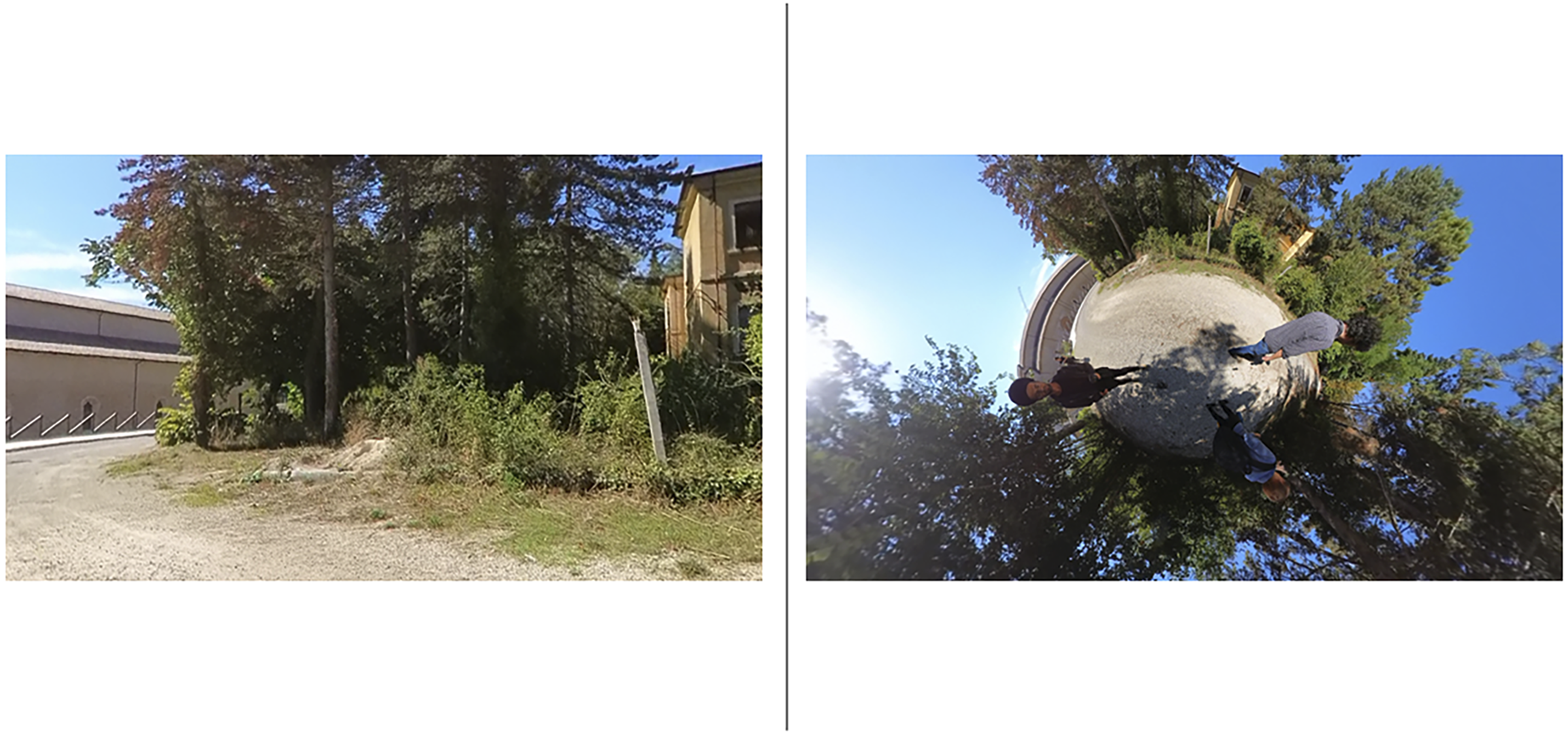
At Case Matte, the municipal and infrastructural discourse (Scollon & Wong Scollon, 2003), which for a long period coincided with that of a total and coercive institution, is challenged by transgressive discourses that are primarily expressed in the external surfaces of the building through graffitied visual artworks, and internally by graffitied writings. Analysis of the murals, which include a snail with its implied theme of slowness, a dystopian city, and various symbols of power in an image depicting Mussolini’s face (Figure 15), reveals how in this unreconstructed place, transgressive discourses proliferate, occupying the space of abandoned public discourses and reinterpreting and reusing it to their communicative advantage. Examples of Transgressive Discourses.
Conclusion
This study elaborates on the potential, effectiveness, and limitations of 360-degree video ethnography as a method for capturing and analyzing place-based interactions, particularly in the context of post-disaster environments. By employing immersive technologies, researchers can study the multi-sensory and emplaced experiences of individuals within their altered environments such as those impacted by disasters, providing rich multimodal insights. The ability to revisit and immerse oneself with unfocused attention in the collected data allows for renewed engagement with the material, enhancing the analysis of both verbal and non-verbal cues. This multimodal approach captures the complexity of human-environment interactions, enabling researchers to explore emplaced narratives and non-verbal communication effectively.
The study emphasizes that immersivity should be understood more broadly as ‘immersiveness’—an approach that involves deconstructing and multiplying viewpoints, critically reflecting on the act of seeing, and embracing the perspectives of others, including non-human entities. This qualitative experience guided our analytical integrations, such as using multiple fields of view (FOVs) to provide different spatial perspectives and employing metadata mining to extract and visualize GPS coordinates. These tools are integral to the immersive approach, even when they do not involve the use of headsets.
In the case study of L’Aquila’s post-earthquake reconstruction, through an inductive process we identified linked emerging themes such urban transformation, Disneyfication and Disneyization; we then used these as a testing ground to assess the method. The analysis of these themes was further supported by verbal testimonies, as well as visual and auditory evidence captured during the walking interviews. Several intertwined ‘discourses in place’ were identified. Signage and graffiti provided perspectives on authorized and unauthorized discourses of different nature. Visual details, such as the CCTV cameras, were captured even when unnoticed during our physical presence in the place. Absence was also noted through signs, such as footprints. We observed bodies occupying spaces, people walking, browsing their cellphones, or standing in certain areas. Sonic experiences added depth to the dynamics researched, like an auditory point of view on the issue under consideration. Gesturing was identified as a complementary way to express notions or reinforcing ideas, or seeking help when words alone were insufficient. Gestures were also linked to people re-immersing themselves in their spatial memories, with fingers and hands indicating directions, distant spaces, dimensions, and shapes of objects, creating a kind of mnemonic representation of places. The multimodal depth of data collected as spherical videos points to the potential for circumstantial analysis based on semiotic traces left by humans in their environments which is worth further exploration.
In particular, the 360-degree videos were employed to document and analyze the changes in the urban landscape and the social dynamics within the city. This method revealed how reconstruction efforts have transformed the historic center, producing community displacement and the commodification of cultural heritage, informing the ethnography of disaster places with possibly untapped potentialities.
Deploying this 360° approach to ethnography, we encountered limitations in managing large volumes of data. While cloud storage facilitated data retention, the analysis process remained time-intensive. Despite these challenges, our practical experiences and the growing body of literature on immersive methodologies in qualitative research highlight the potential of immersive video methods for evidence-based research. To improve scalability, future research should focus on refining and optimizing these methods, particularly in extensive cross-cultural projects across diverse environmental settings.
Supplemental Material
Supplemental Material - Enriching Qualitative Inquiry: Exploring Immersive Technologies in Place-Based Research
Supplemental Material for Enriching Qualitative Inquiry: Exploring Immersive Technologies in Place-Based Research by Matteo Baraldo, Francesca Dolcetti, and Paola Di Giuseppantonio Di Franco in International Journal of Qualitative Methods
Supplemental Material
Footnotes
Acknowledgments
We are grateful to the citizens of L’Aquila who participated in the research by walking and speaking with us. Special appreciation goes to Pinny Grylls and Ella Fryer-Smith, whose invaluable knowledge made our approach to video ethnography possible. We also extend our gratitude to the Case Matte collective for their availability and support. Special thanks to Catrina Appleby for her final copyediting. This work was generously supported by the UKRI (UK Research and Innovation) FLF (Future Leader Fellowship) and is part of a 4-year research program titled ‘Rebuilding a Sense of Place (REPLACE): The Socio-cultural Role of 3D Technologies in Increasing Community Resilience after Natural Disasters’.

Statements and Declarations
Conflicting interests
The authors declared no potential conflicts of interest with respect to the research, authorship, and/or publication of this article.
Funding
The author(s) disclosed receipt of the following financial support for the research, authorship, and/or publication of this article: This paper and the project here described were generously supported by the UK Research and Innovation Future Leaders Fellowship (UKRI FLF), round 6, under Grant number MR/W009153/1.
Data Availability Statement
The datasets analyzed during the current study are extensive, exceeding terabytes in size. Due to privacy restrictions and the sensitive nature of the data, involving fragile community members who were displaced or victims of catastrophic events, the data are not publicly available. However, these datasets can be made available from the corresponding author upon reasonable request, subject to appropriate ethical and legal considerations.
Supplemental Material
Supplemental material for this article is available online.
Notes
References
Supplementary Material
Please find the following supplemental material available below.
For Open Access articles published under a Creative Commons License, all supplemental material carries the same license as the article it is associated with.
For non-Open Access articles published, all supplemental material carries a non-exclusive license, and permission requests for re-use of supplemental material or any part of supplemental material shall be sent directly to the copyright owner as specified in the copyright notice associated with the article.
