




Abstract
This article introduces a culturally inclusive research methodology distinct from other qualitative methodologies in its emphasis on multiple rounds of iterative data collection, member checking and co-construction of research language, design and analysis. It describes the co-design of a culturally inclusive conceptual model, data collection process and data analysis approach as an inside researcher. Culturally inclusive nuance is critical where education concepts emanating from the global north are rightly problematised by learners from the global south. More specifically, there is a well-researched gap in identification and support for gifted low SES students who tend to represent non-dominant cultures. This methodology supports culturally responsive language, narratives and approach to meaning-making around the highly contested conceptions of giftedness in low SES environs. It has proven to facilitate examination of shared experiences within a loose community setting in a qualitative research context. This article offers an introduction to the evolving methodology and the co-design process by which it came to exist for any researchers seeking a decolonising framework. It illustrates the value of the methodology in creating safe spaces for reflection and learning. Critically, from an educative perspective, it demonstrates how the methodology actively supports participants’ meaning making about their own identity and the multiple ways in which they reveal facets of their identity in various contexts of life, family, work and education, through adolescence to young adulthood.
Keywords
Introduction
This article describes a post reflexive rethinking of the appropriateness of western methodologies for research with vulnerable populations. This is framed by a research project into the hidden rules, enablers and barriers to successful education outcomes for young adults who are gifted, culturally diverse and economically vulnerable. The revised methodology was triggered via an initial autoethnography to determine author positioning with three critical friends who were also co-researchers with specialist expertise in inclusive education. From the outset, I was conscious of how my insider experience as a researcher along with my previous relationship with participants, interrelated with their multiple truths and identities. I had previously come to know many of the participants in my capacity as a director of an education for-purpose organisation which meant that I was aware of their backgrounds and highly sensitive to their profiles. This inferred a high level of mutual trust and empathy for their shared challenge of defining themselves as gifted within non-dominant cultures. At the same time, through conducting an autoethnography personally, I became aware of the power of autoethnography to address the complexity and nuance of forming an identity as a gifted adult. This was an approach I sought to share with the participants as they were similarly coming to terms with their identity as gifted young adults through examination of the memories and epiphanies that arose throughout this research. In effect, I positioned myself strategically in the research process, consciously taking perspectives from the balcony and the dancefloor (Heifetz & Linsky, 2017). I moved from balcony to dancefloor several times during the reflexive process, extending participants the agency to lead the dance at times as I followed, in order to give them back their power in the process.
This interrelationship between participants and researcher was the first of a number of epiphanies regarding sensitivities for me throughout the research. As the traditional western approach of blended case study – narrative inquiry (Sonday et al., 2020) commenced I quickly became aware of multiple impacts of the intersection of race, ethnicity, economic status and giftedness and realised that the participants needed a different approach. A specific example occurred where participants described a struggle to be true to themselves whilst simultaneously behaving as dutiful children where this was a highly prized cultural value. It became clear that the varied yet specific vulnerabilities of this population needed to be addressed in a sensitive way. Plainly, the current tools of research inadvertently created silences, particularly around a unified view of self as gifted, coping with feelings of difference from peers, conflating low SES with disadvantage, and meeting disparate expectations of families and communities. The modified collection and management of data entailed 1. inclusive language, beyond written language and including visual artifacts, to capture cultural nuances of concepts that were framed largely in western terms; 2. conduct of interviews in comfortable social environments to minimise the stress of discussing traumatic events from their past and present; 3. addressing underlying power relationships between researcher and participants through shared meaning making; and 4. facilitation of participants’ sense making of their own identity as gifted young adults in professional careers and university.
Diversity and Intercultural Dialogue
The broader need for culturally inclusive research methods is strongly articulated (Curtis et al., 2019). The intersection of cultural diversity, cultural safety, economic vulnerability and increasing inequality is a topic of global importance in education. As an example, The United Nations Educational, Scientific and Cultural Organization (UNESCO) and The Institute for Economics and Peace (IEP) launched the Inter Cultural Dialogue (ICD) framework in 2020 in response to the confronting statistic that 89% of all current conflicts are occurring in countries with low intercultural dialogue (Boix Mansilla, 2022; UNESCO, 2023). Australia’s rapidly growing cultural diversity is reflected in a fourfold increase in the number of religions other than Christian over the 25 years between 1996 and 2021 and the fact that 27.6% of the current Australian population was born overseas in 2021 (Australian Bureau of Statistics, 2023) representing more than twice the OECD average (Hesse & Ozguzel, 2023). Thus, a nuanced perspective for Australia is insinuated.
Challenges in Identification of Giftedness for Culturally Diverse Communities
This naturally has implications for research with culturally diverse gifted students. Gifted students are already vulnerable but their cultural positioning intensifies this. The development of one’s cultural identity is dynamic and evolving, and ultimately highly complex (He, 2018; Kim, 2018; Phinney et al., 2001) as it crosses the boundaries of any single cultural identity (Warner, 2020). Further, the concept of giftedness is notably complex and contested (Dai, 2009; Meyer & Plucker, 2022; Peters et al., 2020). The contested concept of giftedness is critical as the primary barrier to gifted programs for CLED students is arguably teacher recognition of their various presentations of giftedness (VanTassel-Baska, 2010). This is supported by a vast repository of research into the way in which different cultural conceptions of giftedness may combine to exclude CLED gifted students from an appropriately challenging education (Crawford et al., 2020; Ezzani et al., 2021; Goings & Ford, 2018). The literature recognises that giftedness may or may not be celebrated or recognised in different cultural or educational milieux, and different values are important in different cultures, so a culturally sensitive concept of giftedness requires understanding of intersectionality (Cho et al., 2013) and the factors that matter most in the cultural context of each learner (Gibson & Vialle, 2020; Ibata-Arens, 2012; Peters et al., 2019). In this research, participants were identified as gifted based on a rigorous, five stage identification process employed by an Australian for-purpose organisation, Skyline Education Foundation (Skyline). Participants possess demonstrated or potential general ability and specific domain ability that is exceptional in relation to their peers (Gagné, 2020; Olszewski-Kubilius et al., 2018; Subotnik, 2003). Beyond the use of this selection criteria, the term “gifted” was explicitly evocative in this research, in the sense of eliciting reflection and perspectives from participants (Brown et al., 2020).
These complex challenges suggest significant issues for culturally sensitive research into giftedness with vulnerable populations, particularly in promoting a compassionate frame rather than a deficit frame. First, social vulnerability can only be inferred because it is not directly observable. Social vulnerability indices, although widely adopted as a proxy for adaptive capacity, are infinitely nuanced and few, if any, have been validated (Spielman et al., 2020). Second, giftedness is culturally defined (Gibson & Vialle, 2020; Ibata-Arens, 2012) so a culturally sensitive interpretation of giftedness requires conception of ability within the cultural context of each individual learner (Munro, 2021; Peters et al., 2019). Further, giftedness itself may be considered a minority culture, where socio-emotional harmony and disharmony represent two opposing cultural orientations of giftedness, either of which may be adopted by gifted individuals (Baudson & Ziemes, 2016). Alvarado (1989) further segmented the sub-culture of giftedness by noting vast differences between the experiences of those with IQs of 180+ compared with those with IQs less than 150. The risk for gifted learners is that what is considered to be normal behaviours and characteristics in gifted populations may be interpreted as pathologies outside the subculture of gifted (Alvarado, 1989). Gifted learners could become a population at risk since their skill and knowledge level is superior but may remain untapped on account of inappropriate data gathering methodologies and recognition of their complex cultural identity as gifted (Peters et al., 2020). Third, immigrant cultures may be more embracing of different worldviews (such as collectivism), compared to countries in the west, to which they have migrated (Coleman et al., 2015). A compassionate frame, rather than a deficit frame, is thus an essential element of research with socially vulnerable populations.
Participant experience is, therefore, paramount in determining the methodology or research. Coleman et al. (2015) note the need for more research attention on the lived experience of gifted students from diverse cultural backgrounds. This connotes the critical contribution of student voice to research, particularly from those who have successfully traversed their education pathways. In this context, traditional western methodologies such as focus group interviews, semi structured interviews and surveys alone, may not provide the most effective platforms for collecting data. An inclusive model gives due attention to the fact that the construction of cultural identity is constant and developmental from any interaction including the initial encounter (He, 2018). This suggests that cultural identity is impacted through participation in this research and responsible research would address unconscious bias by acknowledging that it exists, inviting genuine feedback and examining assumptions collectively. Starting with an individualised conception of giftedness for each learner with culture as a proximal factor allowed participants to dictate the starting premise and privileged ‘self’ within the proximal relationships that influence their development. In exercising elements of care and compassion for this cohort, the researchers became more insightful and realised that data cannot be collected in a traditional (western oriented) mode. Rather, data had to be collected with more culturally responsive and sensitive methods which validate the history and knowledge that individual students bring.
The overarching question that guides this research is “What are the barriers and enablers to achievement of a successful education outcomes for culturally diverse, gifted students living in low SES circumstances?” Current data collection methods may imply an unfounded deficit model of low SES and cultural diversity or reflect imperfect assumptions about this population, thereby eliciting a sense of alienation. This study therefore departed from the conviction that information gathered during the research process should be drawn authentically and meaningfully through a process that is reflexive, responsive and sensitive, interracially and interculturally.
Purpose
This paper articulates a modified conceptual framework and associated methodology to examine the hidden rules, enablers and barriers this cohort experienced along their individual pathways to successful education outcomes. The adapted conceptual model and methodology facilitated a culturally sensitive process to realise a foundational, contemporary conception of giftedness which resonated with, and was truly representative of, culturally diverse gifted students in low SES schools. In short, it enabled participants to describe their experiences where they were uncomfortable with the associations with the words gifted and disadvantaged. The revised paradigm questions two assumptions about current methodological approaches as they apply to this population. First, current models of data collection and analysis may marginalise individuals from culturally diverse backgrounds (Spielman et al., 2020). Second, there is a growing challenge to the individual-centric versus natural systems polarity in a theoretical model often used in gifted education, namely the Ecological Systems Theory (EST) (Bronfenbrenner & Morris, 2006; Elliott & Davis, 2018). The population in the study is gifted, culturally diverse, young adults from economically vulnerable backgrounds.
Positioning Our Work
The gifted participants in this research were demonstrably culturally, linguistically and economically diverse and most were living in families with various forms of social vulnerability. Low SES and cultural diversity are clearly distinctively different concepts. Many researchers have noted the link between the social background of a student and education success, particularly in relation to lower university admission rates for students of lower socio-economic status (Paulus et al., 2021; Rosinger et al., 2021). One of the key challenges for students from under-resourced and culturally, linguistically and economically diverse (CLED) backgrounds is that giftedness predominantly reflects a white, middle-class view (Hamilton et al., 2018) which does not reflect their cultural values. The perennially contested conception of giftedness combined with the middle-class bias toward standardised academic achievement as an indicator of giftedness has often hampered efforts by educators to effectively describe low SES and CLED gifted learners within and across a school (Ladson-Billings, 2023; Mun et al., 2020).
Defining low SES is equally challenging. Low socioeconomic status (Low SES) implies inequity in access to resources, social exclusion and potential barriers related to privilege, power and control (American Psychological Association, 2023; McLachlan et al., 2013). Yet, significantly, CLED status may also be a protective factor for families living in low SES circumstances (Yosso, 2005). Thus, to the extent that it applies, lack of economic, social and/or cultural capital may in fact be either a deterrent to education success or a stimulus for change for individuals (Subban et al., 2022). Since culture is the context in which we all operate equally and bilaterally, rather than solely a phenomenon of CLED or gifted communities (García & Guerra, 2004) a collaborative construction of meaning of the term gifted is necessary.
Hidden Rules within Education
Slocumb and Payne (2000) proposed the notion of ‘hidden rules’ between socio-economic classes whereby education may be perceived as a vehicle for making money and achieving career success by most teachers who are traditionally middle class, whilst education may be perceived as something that is valuable in the abstract rather than reality for economically vulnerable families. Payne’s (2000, 2018) research has attracted criticism from researchers who repudiate her representation of people living in low SES environments as entrenching deficit thinking (Bomer et al., 2008). Addressing this criticism is an underlying ambition of this methodology by giving voice to participants in a manner that allows them to describe their understanding of hidden rules, unfettered by other’s assessment of their relative advantage or disadvantage. The concept of hidden rules, particularly rules related to differential social, economic and cultural capital, is fundamental to illuminating and understanding the barriers to education success. Whilst acknowledging that broad or dichotomous cultural stereotypes are unhelpful (Parr & Stevens, 2019), it can be inferred that participants from culturally diverse backgrounds may not offer authentic information if the procedures suit a Western orientation.
Researcher Positioning
The researchers in this study are experienced educators and academics with specialised expertise in inclusive education, including gifted students. The main researcher, I, was a director of the board of the not-for-profit organisation, Skyline Education Foundation for 16 years and has extensive familiarity with the nature of the cohort. I identify as a gifted adult of Dutch-Australian-Irish background and an advocate for this cohort. The second researcher is a social justice advocate who is committed to enhancing diversity and fostering inclusive education. Her research has been published in numerous academic journals, where she explores the intersectionality of race, culture, disability and education, advocating for systemic changes in teaching practice. The third researcher has been working in the area of students with special needs for 30 years. Her primary research has revolved around students with diverse learning needs in regular secondary schools, with a particular focus on students at the senior secondary level.
An Emerging Conceptual Framework
Gagné’s (2020) model of talent development is the primary conceptual model in this research. The DMGT posits that inherent aptitudes (gifts) may be realised as demonstrated talents subject to four factors: environmental factors, developmental process, intrapersonal factors and chance. In the DMGT, culture and language are addressed as environmental factors. In this research, the DMGT is combined with the ubiquitous Ecological Systems Theory (EST) (Bronfenbrenner & Morris, 2006). The EST has been effectively adopted to research under-representation of students from CLED backgrounds (Cassells & Evans, 2020) and in gifted education programs (Crawford et al., 2020). Bronfenbrenner and Morris (2006) posit that there are five layers of influence on an individual ranging from an inner circle with elements exerting the closest impact on a person (including family, friends, peers, the church, teachers etcetera) through to the external circle which includes the broader community. According to the EST, the interaction between these five, nested layers emphasises how the elements in the external environment interplay for any given individual, in what is termed “proximal processes” (Bronfenbrenner & Morris, 2006). Although not specifically designed for the development of giftedness to talent, the EST model effectively allows for the examination of nested cultural factors that intertwine to impact identification and expression of giftedness for individuals (Crawford et al., 2020).
Overlaying the DMGT and EST conceptual models depicts each learner progressing through a talent development pathway as a unique individual within their own cultural context (Reynen-Woodward et al., 2023). Viewing this model through a lens of economic capital exchange reflects the fact that SES affects each of the four factors in the DMGT, particularly with respect to motivation and volition, interpersonal and education factors. Researching this collaboratively with other complex individuals enables collective discovery of the hidden rules of education, thus unlocking potential (see Figure 1). This reimagined conceptual model is both culturally responsive and respectful of the altered dynamic of contemporary societies. Gagné’s DMGT Viewed Through a Lens of Socio-economic Exchange.
However, limitations of the EST for research with this CLED cohort are acknowledged (Crawford et al., 2020). A constraint noted in the earliest stages of data collection was that participants representing various diasporas were managing complex cultural identities in a multicultural environment. An important departure from the EST in this research is that positioning culture at the outermost layer does not reflect participants whose intersectoral identity is inherently comprised of their culture. Critically, throughout the research it became clear that the outermost circle, that is, the broader cultural community, for culturally diverse or low SES students, was much closer to the centre of influence. In other words, the cultural identity and relationships with community, particularly where national and country-of-origin identities were conflated, were in fact proximal influences. This is particularly true of participants from collectivist cultures who now find themselves forming their identities in the individualistic spaces of the developed world (Borland, 2021). The researchers concluded that the EST worked extremely well up to a point to understand individual development (Olszewski-Kubilius & Corwith, 2018), echoing the perspectives of Crawford et al. (2020) and Elliott and Davis (2018). However, it was realised that to better represent vulnerable populations they needed to locate their culture, family and language in their personal microsystem rather than the external mesosystem represented in the EST. Furthermore, this addresses the limitation that the EST may not capture the positionality and dynamic of changing societies and groups which straddle individualism and collectivism (Crawford et al., 2020).
There were then, several emergent aspects of the research methodology that necessitated a more sensitive, logical positioning of participant voice that maximised their contribution rather than minimising it. A progressive understanding of the population and the way in which the silences arose in conversation during traditional western methods led to reflection on the need for a different, more inclusive approach. Consequently, in discussion with participants as an insider-outsider researcher I devised the SPEAC framework as both a conceptual model and a methodology to more sensitively collect, frame and interpret data.
The reimagined proximal circle factors of Self, Peers, Educators, Adults/parents and the new element of Culture/community (SPEAC) were subsequently used as the foundation to construct the three phases of data collection with member checking (Candela, 2019), and thereby examine their impact. Four pillars are mapped against the five proximal factors. First, the focus on individual difference and developmentally generative characteristics (Xia et al., 2020) led to a pillar of ‘person’. Second, the talent development pathway was considered under ‘process’. Third, the identification and selection of the most relevant barriers and enablers was described in ‘context’; and fourth, the temporal distance from their school education, that is, the ability to reflexively examine incidents with the benefit of maturity and hindsight, enabled a lens of ‘time’. The dual developmental outcomes of interest examined through the SPEAC framework were perception of self as gifted, and factors related to successful attainment of aspirational education goals. Together these constitute a new framework to design and operationalise a research program to disentangle the strands of proximal influences and then explore personal and contextual characteristics (Xia t al., 2020) of talent development in what we have termed the SPEAC methodology to elicit participant voice (See Figure 2). The SPEAC Framework to Elicit Culturally Sensitive Participant Voice.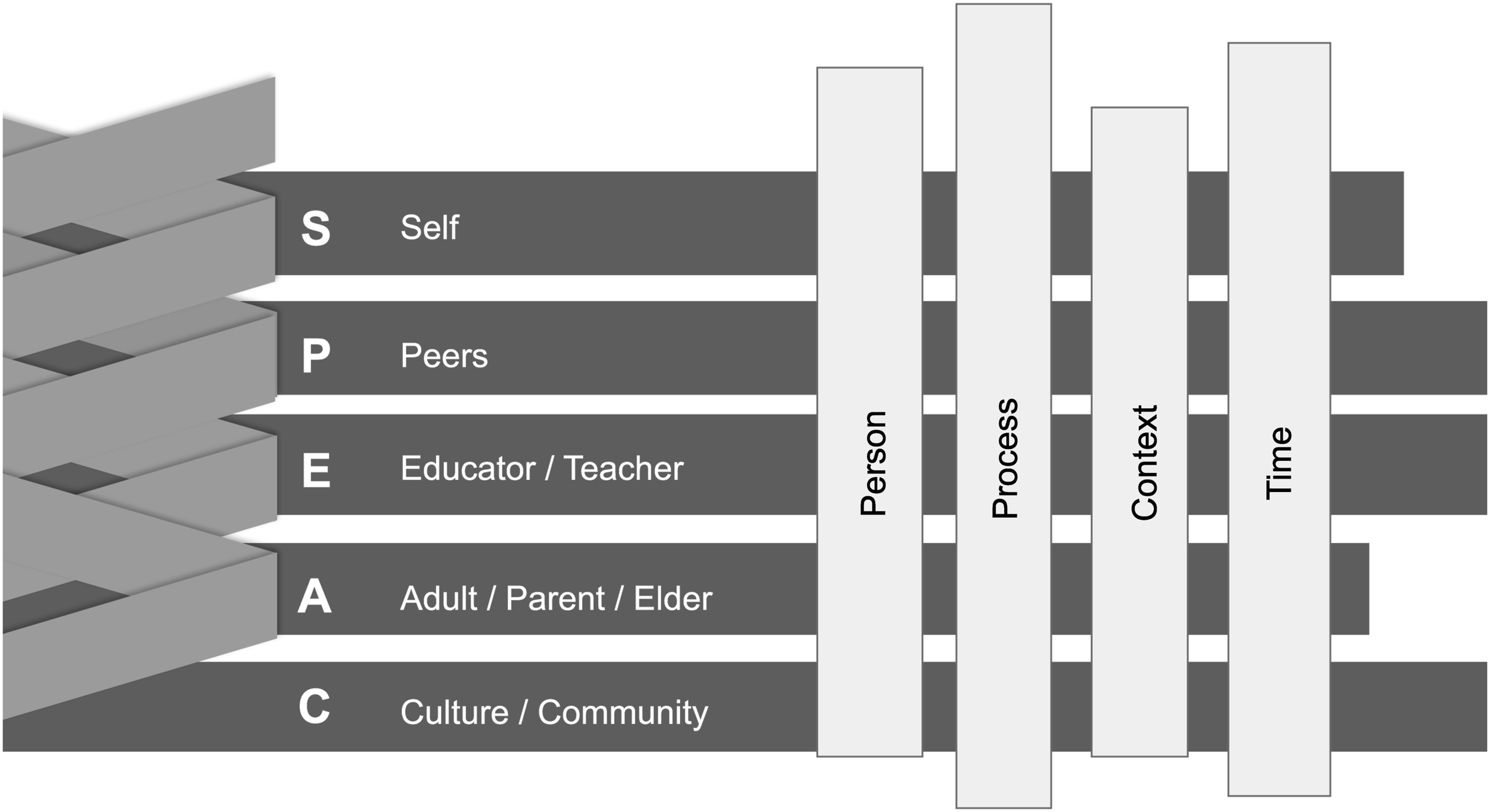
Methodology/Research Process
Population
The participant cohort was a group of 52 young adults aged between 19 and 30 years who had successfully transitioned to university from low SES schools in the past one to 11 years. All participants were alumni of the Skyline Education Foundation Australia program, a not-for-profit Victorian organisation which supports gifted students to transition to university via financial support and programmatic intervention in their final two years of secondary school. Participants were originally identified as gifted by teachers in their school who were trained or experienced in gifted education on the basis of either academic performance or potential. In addition, participants in this research had lived in homes with verified family incomes below the federal poverty threshold and additional self-reported social hardship, whilst they were at school. These social challenges included living with a sibling with cancer; living in a large family with single parent; working a full time while studying to support family income; poor mental health and depression; and rural isolation. Each of these individuals experienced alienation on account of being gifted, being racially or culturally diverse, and often speaking a language other than English in their home environment. Despite a common condition of low SES backgrounds, there was no homogeneity in the nature of social and cultural factors within this cohort. The diverse cultural composition of this cohort consisted of 34 identified cultural backgrounds, 30 languages spoken, 14 first in family to complete formal secondary education, 33 females and 19 males. Ethical approval was granted for this research through the university protocols.
Data Collection
A three-phase approach was used to collect data with co-creation with participants occurring throughout the research design (see Figure 3). This three-phase data collection process was sensitive of the need for reflexivity, collaboration and discussion with circles and communities other than the researcher and peers, and which acknowledged the presence of culture as an overarching element to thinking and conversation. Critically, participant reflexivity and member checking (Candela, 2019) were incorporated into each phase of the research as data were collected formally on the three occasions. Reflexivity occurred at an individual and group level, through collection of narratives pertaining to epiphanies and events throughout; checking of previous data at each of the three stages of the data collection process; conversations with parents, partners and friends between the interviews and focus group session; collection of physical artifacts that represented participant impressions of being a gifted learner; and a focus group discussion (alternatively described as a roundtable) about the ways in which they described themselves as gifted learners in their particular context. The SPEAC methodology (see Figure 3) was co-developed with participants, beginning with the collection of stories, events, images and other artifacts that were drawn on several times throughout the research. Methodological Approach to Applying the SPEAC Framework.
As each stage of data collection was used to build the next stage, participants gradually formed a persona of themselves as a gifted learner, within their context. This culminated in participants talking freely together about the challenges in their backgrounds and celebrating the expression of giftedness in each of their adult lives.
Stage 1: Questionnaire Co-Development and Administration
Initial consultation with Skyline alumni guided development of the initial questionnaire in terms of clarity, relevance and culturally appropriate and inclusive language. From an invitation list of 200, 50 responses were received via the anonymous questionnaire which yielded valuable personal, qualitative data and helped to frame the subsequent questions for Stage 2 of the data collection. The option to include additional free text comments in each section of the questionnaire yielded rich insights well beyond the scope of the questions.
Stage 2: Semi-Structured Interviews
From the original 50 questionnaire respondents, 11 were invited to participate further in semi-structured interviews. Nine accepted this invitation and a further two participants joined the research at this stage under a purposeful sampling procedure to achieve a spread across gender, years since school completion, cultural background and rurality (Creswell & Poth, 2016), making a total of 11 interviewees. A merged case study-narrative inquiry method was initially adopted to unearth “the interplay between structure and agency within storied lives” (Sonday et al., 2020), based on an initial questionnaire to reveal issues of universal importance. Participants were sent a list of broad questions based on information they had provided in the questionnaire. They were asked to prepare for the 1:1 semi-structured interview by reflecting on their responses to these questions and anything else that had arisen for them through the process of journaling their experience of the research including epiphanies and memorable incidents. Each participant was given a notebook and a pen and asked to privately journal their thoughts and feelings resulting from the research process. Face to face interviews were conducted in a semi-formal narrative style in which participants set the pace and location and the researcher ensured that all research questions were broadly addressed, albeit in an order determined by the interviewee. Transcripts of these interviews were shared with participants who had the opportunity to change or delete any information they did not feel comfortable to share.
Stage 3: Focus Group Discussion (Roundtable)
An invitation was sent to the eleven participants who had participated in semi-structured 1:1 interviews to explore their experience collectively in an optional focus group discussion. All 11 expressed interest to participate and three males and four females were available to attend the focus group discussion at the designated time. Cultural backgrounds of participants included Sri Lankan, Indonesian, Japanese, Vietnamese, Australian Aboriginal, Somali, Egyptian, Greek and Croatian. Importantly, this element of the research was described as a ‘roundtable’ rather than a focus group discussion, implying that each voice was equal, including that of the researcher. The purpose of the session was to redefine the terms ‘gifted’ and ‘disadvantaged’ as they had not ‘rung true’ for the majority of participants. Participants were asked to bring an artifact which best described themselves and their learning needs and competencies as a gifted student (see Figure 4). Artifacts That Best Represent Me as a Gifted Learner.
Comparison of Traditional Methods and SPEAC Methodology.

Building on the merged case-study – narrative inquiry (Sonday et al., 2020), plus the Collaborative Autoethnography (CoAE) approach by Karalis Noel et al. (2023), the SPEAC methodology differs subtly from both methodologies in several ways. These differences are frequently due to pragmatic reasons including resources (time and money) of participants who were working full time whilst they studied full time. In summary, the eight-month data collection process commenced with a questionnaire built around the five SPEAC proximal factors. Each point of the three phases of data collection was validated by participants for cultural inclusion, including the content, process, review, feedback and reflection. The narrative of participants was used to describe the impacts of low SES to support the conclusions drawn by the researchers. The products of the research were validated, amended and ultimately endorsed by participants. Cyclical review of the data occurred with significant others and the researchers throughout the eight months, culminating in collective sense making of the notion of giftedness. Participants’ influence in all aspects of the SPEAC methodology is illustrated in Figure 5. Comparison of SPEAC Data Collection and Participant Influence Compared with Collective Autoethnography (Karalis Noel et al. (2023)).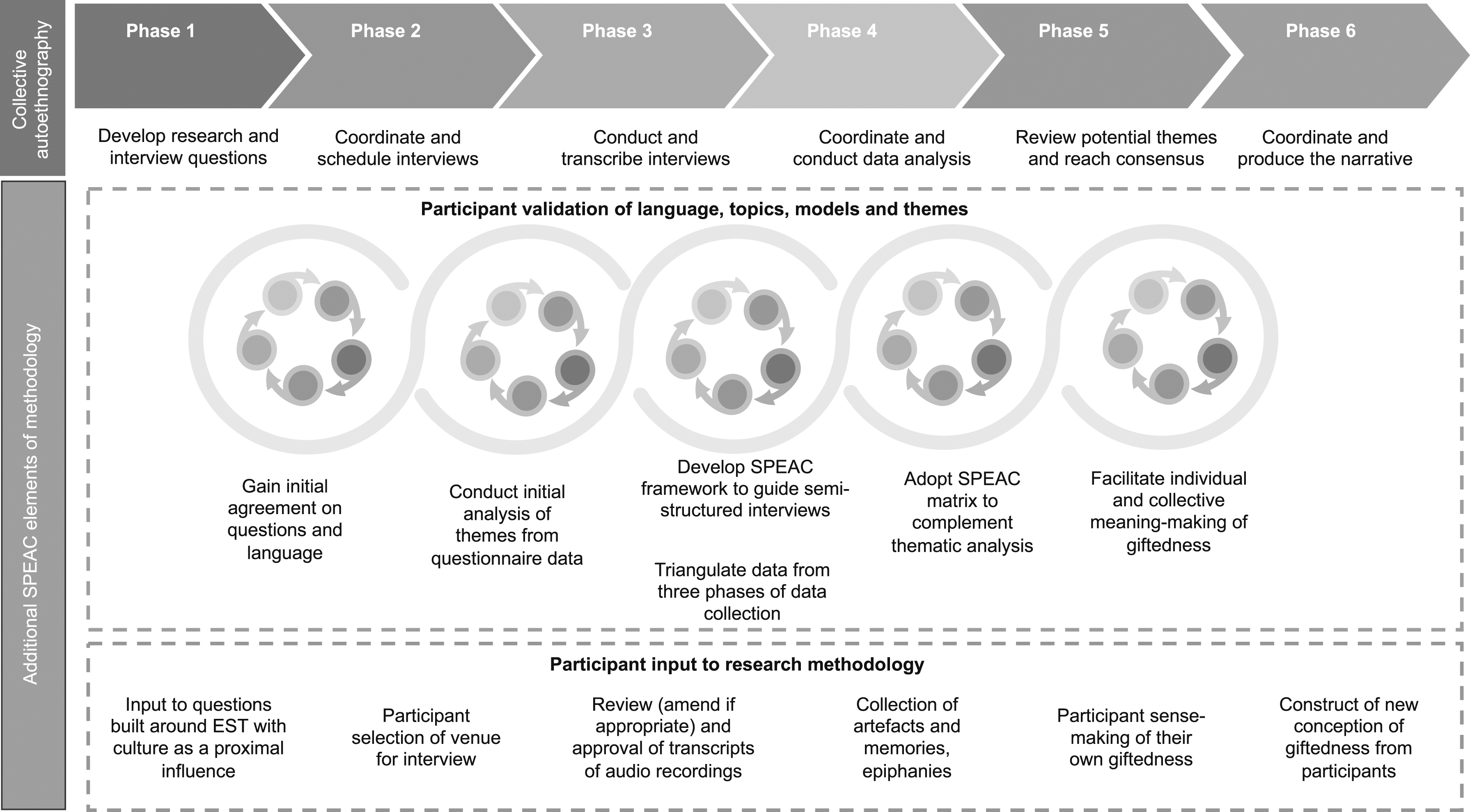
Data Analysis
Initial analysis of the participants’ narrative followed Braun and Clarke’s (2019) approach of thematic analysis in six steps. This involved familiarisation with the data, generating codes, generating themes, refining and reviewing potential themes, and finally defining and naming themes before writing the report (Braun & Clarke, 2019). Data were initially stored and coded using NVivo software after participants were invited to validate their own data. Familiarisation with the data involved reading the transcripts individually, several times, and recording initial thoughts and findings in notes prior to reading again with a critical eye for patterns of shared meaning (Braun & Clarke, 2019). This was an inductive, iterative process (Braun & Clarke, 2019) as the three researchers created narrative around themes which were supported by direct student quotes (Creswell & Poth, 2016). Data were further clustered at a high level into categories of ‘hidden rules’, ‘enablers’, ‘barriers’ and ‘self’ in a deductive process to establish categories across the three sources of data that specifically answered the research questions (Braun & Clarke, 2019).
Braun and Clarke (2019) describe creative uses of thematic analysis as “welcome, if they are done deliberately and thoughtfully, as expansion and refinement of methods is a sign of a vital field” (p. 589). Additional analysis under the SPEAC methodology represents an augmentation of Braun and Clarke’s (2019) six step analysis process with multiple points of input from participants in respect of prioritisation of particular narratives and choice of language. Validation of the findings was increased actively by checking narratives with participants at various stages; triangulating data collected from the questionnaire, interview and roundtable; and using peer researchers to jointly identify themes and patterns of meaning (Creswell & Poth, 2016). In effect, nuanced application of the Braun and Clarke (2019) thematic analysis process occurred throughout the data analysis phase to be more culturally inclusive.
Trustworthiness
Trustworthiness was established in four measures (Lincoln & Guba, 1985). Credibility was address through prolonged engagement with the participants and three rounds of data collection; triangulation of data across data collection; an initial author autoethnography for researcher positioning; and member checks throughout the process. Transferability was addressed with purposeful sampling to represent multiple cultural identities, ages and genders; and providing thick description of the development of the enhanced process to meet participants’ needs (Creswell & Poth, 2016). Dependability was addressed via creation of an audit trail and reflection on previous work at each stage of data collection. Confirmability was addressed through triangulation of results with participants as well as triangulation of data analysis with researchers and participants (Lincoln & Guba, 1985; Nowell et al., 2017).
Findings
Usefulness of the SPEAC Methodology
In this research, the flexibility of the SPEAC approach enabled the researcher to pivot to address the closer positioning of culture to self in the EST as directed by participants. This was generally adopted in response to participant direction and comfort with the approach, notably, unfolding reflexivity with significant others; connecting events, emotions and memories with current day experiences; and interrogation from a highly self-aware cohort of peers. The contestability of the central concepts of giftedness, cultural differences and low SES were discussed thoroughly and frequently, with reference to parental and community expectations and participants’ own motivation and volition. The richness of the discussion as participants recalled incidents from school days, university and professional careers; compared their interpretations of certain actions and outcomes; made sense of them iteratively throughout the interview and agreed future actions was facilitated strongly through the adaptation of the SPEAC methodology.
Application of the SPEAC Methodology
Cultural Factors in Talent Development in Gifted CLED Learners
Consideration of culture as a proximal factor in the participants’ ecosystem yielded valuable insights. The cultural context offered by each of the participants revealed the way in which their cultural background influenced their expectations of self and their education aspirations (see Figure 6). This yielded very diverse drivers emanating from diverse cultural backgrounds leading to nuanced ideas about presentation of giftedness. Importantly, it provided insights into aspects of giftedness that were more or less valued in each culture. Description of Cultural Context by Participants.
The narrative within each interview followed the line of thought that participants chose to pursue. Reflexivity in examining epiphanies through the research yielded some interesting personal revelations for participants. For example, one participant initially described how she never spoke English to her parents at home, then offered the following epiphany: “It's like women gossip as a way of finding out information and becoming powerful or not … as a mode for survival … And then men obviously, like don't want women in power, so they like demonised gossip. But, I think, in getting closer with my mom, I had to learn how to gossip more, or like, I gossip with my mom. That's how we bond and so even though I never gossiped before, it's just something I like I do with my mum” (Female, interview, 2022).
Further, participants revealed a continuum of the way in which giftedness is expressed according to individual and community values. When this is mapped against culturally variant beliefs about whether giftedness is inherited or is the result of hard work, a picture of the canvas of possible expressions of giftedness across cultures emerges (see Figure 7). Culturally Nuanced Continua of Beliefs About the Expression and Development of Giftedness.
Impact of Being Concomitantly Gifted and Economically Vulnerable Across Layers of Proximal Influences Within SPEAC Framework.

Participants were aware of the impact of their lack of resources and responded pragmatically about the circumstances of financial disparity in hindsight. The narrative of one participant reveals the juxtaposition of cultural perspective, emotional maturity, reflection over time and application of all of this to his sense of self: I used to think all they’re saying is like “Practice equals perfect. Just work hard”. Sometimes no amount of work that you do is enough when other people have had opportunities handed to them. And like, that’s not to be angry at the situation, just to say, this is the situation. I used to have a lot of bitterness and anger towards those who were handed things. And I was like, “Oh, look at me, I've put in this much work and you just got that, like, that’s great [said sarcastically]”. And it was a lot of bitterness, but I just realised it’s how it is (Male, interview, 2022).
How Participants Perceive Themselves as Gifted
Via their artifacts participants used visual metaphors to describe their unique experience of giftedness from a non-language starting point. All eleven participants referred to an element of inner determination or motivation. One participant described his personal determination via interpretation of an oil painting of a woman sewing: Looking how determined she is and like how meticulous she is, with that sewing process, I feel like that’s an analogous to my learning thus far because I feel like if the light goes out in her like in the painting, I don’t think she would stop sewing. She would keep going. And I actually feel like, that’s kind of like me, like, I feel like I’m so, determined. And there is no like, stop button (Male, roundtable, 2022).
Their idiosyncratic terminology about their artifacts was illustrative of their characteristic creativity and difference and it added rich subtlety and individuality to their description of being gifted: Here’s my laptop ... I’m very much a gamer at heart … she (coloured shape in a computer game) can float but because she’s a bit like more obese, she like feels self-conscious, but she’s the only one that can swim. So she becomes a superhero. And like, the little orange guy, he’s like really grumpy. But he ends up falling in love with the blue like, square. And it’s like, if I show you this, you’d be like, No, you’re crazy. You’re looking at squares. It’s an amazing game. And it just like it really looks beautiful and like I think it really cemented like how much personality that colours and shapes have … visually you can kind of like see their personalities (Female, roundtable, 2022).
The most notable aspect of this research activity was the poetic divergence from western textbook definitions of academic giftedness offered by roundtable participants when participants were given an opportunity to collectively define giftedness in their own representations.
Discussion
This study aimed to propose a culturally sensitive methodology to better support the conduct of research where multiple foundation terms are contested, complex and infinitely nuanced for each individual learner. The positioning of life experiences means that a dominant culture and identity frames the way in which we seek to understand others. This has caused us to reflect deeply on our own assumptions and consequently design a methodology to ‘walk with’ the participants rather than to ‘steer them’ from an elevated vantage point. There is a lack of consensus about what constitutes mixed method design in research, however Morse (2010) posits that “using a complete method with a supplemental component, both from the qualitative paradigm, is a legitimate form of mixed method design” (p. 483). The SPEAC methodology follows Morse’s (2010) definition of “a complete method (i.e., the core component), plus one (or more) incomplete method(s) (i.e., the supplementary component[s]) that cannot be published alone, within a single study” (p. 483). This is appropriate to derive deeper, wider information or to obtain deeper level of data about certain points in the research (Morse, 2010). Specifically, the SPEAC mixed method design combines autoethnography and blended case study - narrative inquiry (Sonday et al., 2020) to capture additional reflective data that is conventionally captured in an autoethnographic study.
Participants were gifted, culturally diverse and living in economically vulnerable circumstances, and as such, were recognised as possibly vulnerable on several fronts. This included a challenge to being identified as gifted in the broader community due to the interaction of factors such as low SES, cultural traditions, parenting praxes, educator practice and intrapersonal factors (Ecker-Lyster et al., 2021). This study illuminated issues relating to intersections of disadvantage within an academic context and critically reflects on the need to develop new methodologies to assist those from backgrounds in the Global South. Consequently, the findings challenge how data are gathered, negotiated, navigated and interpreted to describe the experiences of participants, and to uncover some of the assumptions which may cloud the interpretation of data.
The balance between stating the reality about their circumstances and describing this using non-deficit language remains a conundrum for many. But, as this research ultimately celebrates student success, often against the odds, the participants elucidated the unseen reality of their challenges and revealed intimate details about what enabled them to transcend their contextual challenges to ultimately achieve their potential. Gifted students from CLED backgrounds possess multiple identities in unison as a result of their unique array of background factors including gender, race, socioeconomic status, culture and religion (Bešić, 2020; Cho et al., 2013). An inclusive and culturally sensitive model of giftedness would necessarily consider all of these factors from the perspective of the individual rather than a predominantly western idea of giftedness.
Implications
There are three key implications of this research. First, researchers may use the SPEAC framework as a way to co-construct meaning of presentations of individual difference with mutual cultural understanding. Second, guided conversations with students based on the SPEAC framework may yield invaluable information about culturally diverse gifted individuals which would enable better targeting of resources and learning by teachers. Third, the collective autoethnographic process of reflexivity and member checking with significant others and peers may substantially improve practices of identity formation in culturally diverse, gifted students, including young adults, living in low SES circumstances. As Subotnik (2003) reminded educators, education is a partnership between teachers, families and students and individuals also have some responsibility to develop their own talents.
Following this study, the results reflected a need to rethink the position of individual ecologies in a more fluid manner, noting the significance of elements within the microsystem for gifted individuals from vulnerable populations. Talent development is equally fluid with some researchers observing that different talents begin, peak and end at different ages, depending on maturation, opportunity and psycho-social skill development in individuals (Subotnik, 2003). Contextual challenges facing this community of learners were varied and largely hidden to their teachers at the time so educators’ cultural literacy and openness to growth mindset were key determinants in student selection and success. In summary, the SPEAC methodology privileges the cultural identity of the student, enabling critical understandings within a process that honours cultural difference. This is particularly relevant in multicultural nations with increasing global mobility and migration such as Australia which boasts 278 cultural and ethnic groups (Australian Bureau of Statistics, 2023). When the narrative of participants was analysed within the SPEAC framework, a picture of the effects of being gifted, low SES and culturally, linguistically and economically diverse (CLED) emerged in an authentic way. Importantly, SPEAC was co-constructed through participant voice.
Limitations
The success of this emergent methodology is predicated on a high level of trust between the researchers and the participants. This was demonstrated by the researcher sharing her initial autoethnographic study with participants to examine personal factors in the light of adult status as a gifted learner. A further limitation of the methodology is a potential perception that this research method is a cobbled together version of mixed qualitative methods with weak internal linkages rather than a new methodology that is created in response to culturally important contexts. The potential conflation of data types may present issues in construction of themes, although in practice, each type of data reinforced the research questions and enabled triangulation of data. Finally, any methodology that pivots and responds to participant needs at a deep cultural level is time consuming and rigour must be applied to ensure that participant input at each stage does not distract from the central questions in the research. Importantly the SPEAC blended qualitative methodology built on Collective Autoethnography (Karalis Noel et al., 2023; Morse, 2010) by amplifying aspects of participant voice in data collection and analysis, thereby delving deeper into areas of significance at three key points in the process – design, delivery and analysis of the research design. In summary, the low SES context of participants – manifested as working full time hours while they studied full time – required a pragmatic approach to the time available for data collection. This was somewhat addressed by the spacing of the data collection process over eight months but nonetheless acknowledges a shallower, researcher led CoAE process.
Conclusion
An Australian aboriginal notion of giftedness is to “be listening with a peaceful spirit” (Thraves & Bannister-Tyrrell, 2017, p. 22). The Maori expression mahi tahi means working together as one. Together, these notions aptly describe the spirit in which this methodology came into being, through active listening, acknowledging and addressing power relationships, welcoming diversity and constantly inviting feedback and reflection. Exposing and reflecting on the risk factors, that is, the underlying circumstances which increase a student’s chance of an adverse life outcome, and protective factors, that is, the attribute, coping strategy or support which increases positive outcomes, served to locate the risk or protective factor at the point of the family, school or community, not the student. By reflecting on their experiences of school it was hoped that their insights into the hidden rules, that is, the things they wish they had known about education pathways and professional careers, could illuminate lessons for teachers about how to better identify them and meet their often quite complex education and psychological needs. It also enabled participants to continue to make sense of their unique presentation of giftedness as adults alongside trusted peers from similar backgrounds.
Fundamentally, responsivity to the needs of vulnerable populations is an essential element in any developed society to build understanding, trust and belonging (Subban et al., 2022). Teachers play a critical role in building this understanding, trust and belonging as they nurture student agency and blended cultural identity formation. A conceptual model and adapted methodology to recognise culturally appropriate language, questions, interpretation of findings and conclusions was co-constructed with participants to examine the experiences of gifted students from low SES and culturally diverse backgrounds. Through sensitive, participant led discussion via semi-structured interviews and peer reflection, participants retrospectively recalled their experience of the hidden rules of education – the things they did not know at the time – which sometimes obscured their capacity to set and achieve aspirational education goals directly related to academic achievement.
Through my experience of the silences, and levels of participation of the young adults in this research, and moments of illumination about my unconscious bias in this research, I came to the realisation that treating a cohort living at the intersection of culture, race, language and gifted as a regular cohort would not have yielded the most impactful and meaningful results. I became increasingly conscious of my power relationship with the participants in this transformative process of formation of their identity as gifted adults. Equally, I realised the opportunity to leverage the strong trust in our relationship to allow breakthrough insights for themselves, delivered in a psychologically safe environment. In this way, the methodology aligned with the decolonising methodologies which recognise how all parties may be empowered and transformed through a research process which “must resist efforts to confine inquiry to a single paradigm or interpretive strategy” (Denzin & Lincoln, 2008, p. 2). The reimagined methodology allowed exploration of the criticality of context whilst participants were experiencing the fluidity of lifelong development of their identity as gifted young adults. This happened through guided reflection on key events or epiphanies in their lives (Sonday et al., 2020). This is critical as low SES has been commonly described as a state in young people, not a trait, and should not be perceived as a lifelong circumstance. The result was an authentic, strengths-based rendering of the factors in their lives which posed barriers and enablers and helped them come to terms with themselves collectively as gifted learners as they moved out of the relative safety of their school environs into the wider world of university and professional life. This methodology was thus culturally responsive as well as illuminating of and cathartic for, gifted young adults from low SES, culturally diverse backgrounds, in equal measure.
Implications for Future Research
Implications for future research with global populations depart from the observation that children in living in low SES environments are heterogeneous on multiple measures and their proximal influences can change across a lifetime (Goings & Ford, 2018). Clearly, this discussion is nuanced and requires careful consideration of relative starting points in equity in education for children in economically vulnerable environments. For example, Cassells and Evans (2020) describe a body of research that demonstrates that children in low-income families tended to be “the recipients of less generative and more dysfunctional proximal processes” (p. 222). While such arguments exist, they do not undermine the overall conclusion that guided reflexivity and exposure of hidden rules with gifted learners may help to amplify talent development in this cohort. Further, much of the current research into giftedness is conducted in the US (Borland, 2021) which is a material criticism for Australian students. Since giftedness is culturally defined, obviously care must be taken in critically adopting US research to other cultural contexts. An opportunity exists to amplify the existing US-centric research base into countries that possess the complexity of multiple diverse nationalities in a single classroom. Given the dominance of the Global North where research paradigms are concerned, SPEAC is a research methodology emerging from the Global South that better serves to amplify the voices of learners who originate in the Global South. In this way the bilateral yet conjoined axes of educator and student, country of origin and country of migration, language spoken at home and at school, and individual or collective notion of giftedness can be better understood. This might address any misconception that the learner is the issue and examine how the environment and individual interact more positively based on shared insight and learning. This might also address Kim’s (2018) questioning of the societal ideal that intercultural identity “conjoins and integrates, rather than separates and divides” (p. 348) in the positive. Finally, to support positive identity formation in individuals, further research is recommended on the value of the SPEAC conceptual model as a tool to identify culturally diverse, gifted students living in economically vulnerable circumstances so that their interactions with their education environment are generative.
Supplemental Material
Supplemental Material - “I Used to Have a lot of Bitterness and Anger Towards Those Who Were Handed Things”. Examining the Need for a More Culturally Responsive Framework for Research With Vulnerable Gifted Populations
Supplemental Material for “I Used to Have a lot of Bitterness and Anger Towards Those Who Were Handed Things”. Examining the Need for a More Culturally Responsive Framework for Research With Vulnerable Gifted Populations by Katrina E. Reynen-Woodward, Pearl Subban and Penny Round in International Journal of Qualitative Methods
Footnotes
Declaration of Conflicting Interests
The author(s) declared no potential conflicts of interest with respect to the research, authorship, and/or publication of this article.
Funding
The author(s) received no financial support for the research, authorship, and/or publication of this article.

Supplemental Material
Supplemental material for this article is available online.
References
Supplementary Material
Please find the following supplemental material available below.
For Open Access articles published under a Creative Commons License, all supplemental material carries the same license as the article it is associated with.
For non-Open Access articles published, all supplemental material carries a non-exclusive license, and permission requests for re-use of supplemental material or any part of supplemental material shall be sent directly to the copyright owner as specified in the copyright notice associated with the article.
