




Abstract
Article 12 of the United Nations Convention of the Rights of the Child (UNCRC) (1989) sets out the right for all children to be heard and for their opinions to be given due weight. However, the voices of children with disabilities often remain silenced as their perspectives are rarely consulted. This paper describes how a visual, participatory research method called Photovoice was used to elicit the voices of students with Intellectual Disabilities (ID) in mainstream post-primary schools in the Republic of Ireland. Thirteen students with ID in four schools across Ireland participated by taking photographs of aspects of their school life that were meaningful to them. Photographs focused on places, spaces, objects and examples of learning, including their role in decision making. This paper details the stages of the Photovoice method which was adapted to support students to participate in the research process. It provides guidance on how to address the ethical and methodological concerns which arise when researching with children. It outlines a two-step approach to analysis, where participating students interpreted and created meaning which was further developed by the Principal Investigator. Employing Photovoice repositions students in this study as co-researchers and co-creators of meaning. Its use operationalises Lundy’s Model of Participation (2007) by providing space, voice, audience and influence which are necessary for children to express their views and have their voices heard in an ethical and inclusive manner.
Children’s policy developments in national and international contexts insist that the inclusion of voices of children and young people are necessary to ensure their lives are better understood and their rights upheld. Yet the perspectives of children, and in particular, of children with disabilities are rarely consulted (Alderson & Morrow, 2020; Porter & Lacey, 2005). Children and young people have been described as the missing voice in educational research (Cook-Sather, 2002) and children with disabilities largely remain invisible (Alderson & Morrow, 2020; Moloney et al., 2021). Researchers say it is “too difficult, too time-consuming, too resource intensive to include them or that it will not generate valid data” (Alderson & Morrow, 2020, p. 2). Indeed, children and young peoples’ participation in research, particularly children with disabilities, can present ethical and methodological challenges (Kennan, 2016). Despite this, researchers have a duty to include them as it is both their right and because findings can potentially be different when they are included (Alderson & Morrow, 2020). Along with other disenfranchised groups, children have long been the victims of research in medical and social sciences which have been conducted in the best interest of the researcher and not the child (Coady, 2001 cited in Harcourt & Conroy, 2005). Involving children in research affirms their role as competent social actors, who are the experts in their own lives (Crivello et al., 2009). A paradigmatic shift is therefore necessary, to move from seeing children as objects or subjects of research to valuing their role as co-researchers in the research process.
This paper outlines how an inclusive visual participatory research method called Photovoice supported students with intellectual disabilities (ID) to voice their experiences and perspectives of mainstream post-primary schools in the Republic of Ireland, which caters for students between the ages of 12 and 18. Thirteen students with ID in four schools across Ireland participated in this Photovoice project. Research on eliciting the voices of students with Intellectual Disabilities (ID) in mainstream post-primary schools, using a participatory approach, in the Irish context is scarce. With an increase in the numbers of students with ID accessing mainstream post-primary schools and with the National Council of Special Education (NCSE) (2024) recommending a progressive realisation towards full inclusion, this research is timely. Accordingly, this research focused on the lived experience of students with ID, who have been traditionally marginalised without a voice; whose educational experience is largely determined by policy makers, teachers, parents, and school management. It aims to understand if these experiences are barriers or facilitators to participation in the life of the school, including decision making. In doing so, participants in this study were co-researchers as they helped to shape the study design, documented their educational experiences and constructed meaning using Photovoice. The aim therefore is to use their experiences and voices to inform school policy and practice to advance inclusive education in post-primary schools in Ireland and internationally.
Findings highlight the importance of special class provision to enhancing a sense of belonging and participation in the life of the school. Special Needs Assistants (SNAs)/ paraprofessionals were credited for their role in supporting academic learning, despite the official role designated to supporting primary care needs of a non-teaching nature (DES, 2002). Supports such as digital technologies, visuals and methodologies such as active learning and project-based learning were valued by participants. The need for mainstream teachers to receive ongoing support to enhance inclusive practice was identified as an area of development. Participants limited awareness and experience of decision making was noted throughout.
This paper is divided into five parts; first it will present an outline of the philosophical and theoretical framework which shaped the research design. It will provide an overview of Photovoice as an inclusive methodology which can be utilised to address some of the methodological concerns when researching with children with ID. It will outline how ethical considerations were addressed in this study, to ensure a balance between protection and participation of children in the research process. It details how the Photovoice method was adapted to support the individual needs of students with ID to engage with the research. Finally, and in response to a lack of clarity regarding data analysis in Photovoice studies (Latz, 2017; Samonova et al., 2022), this paper will outline its two-step approach to analysis. It is intended that this paper will act as a guide to those who wish to use Photovoice as a method to elicit the voice of children with disabilities in an inclusive, participatory manner.
In this paper, the term children is used generally to describe persons under 18 years of age. The term student(s) is used to describe participants in this study who attend post-primary school. This corresponds with the language used by the Department of Education (DE) in Ireland.
Philosophical and Theoretical Framework
A transformative paradigm was adopted in this study as it allowed the researchers to address issues of social justice through the promotion of change led by participants for participants. Critically, the transformative paradigm supported the researchers to address the power imbalance with can result from researching with marginalised groups (Mertens, 2020). Transformative researchers shift the focus from deficit (we need to help) to an awareness of the benefits and research gains from realising the strengths and wisdom that are inherent in marginalised groups (Mertens, 2011). As a result, transformative researchers reposition participants as co-researchers and co-creators of knowledge as they “explicitly position themselves side by side with the less powerful in a joint effort to bring about social transformation” (Mertens, 2020, p. 21).
Lundy’s Model of Participation (Lundy, 2007) (Figure 1) provides a means of conceptualising the right of children to express their views and have their views heard as mandated in Article 12 of the United Nations Convention of the Rights of the Child (UNCRC). It identifies four conditions: space, voice, audience and influence which are necessary for students as right bearing citizens to express their views and have their views heard. Photovoice enhances and supports the participation of students in the research process by providing these conditions in an inclusive participatory manner. Lundy’s model of participation (2007) applied to the photovoice method.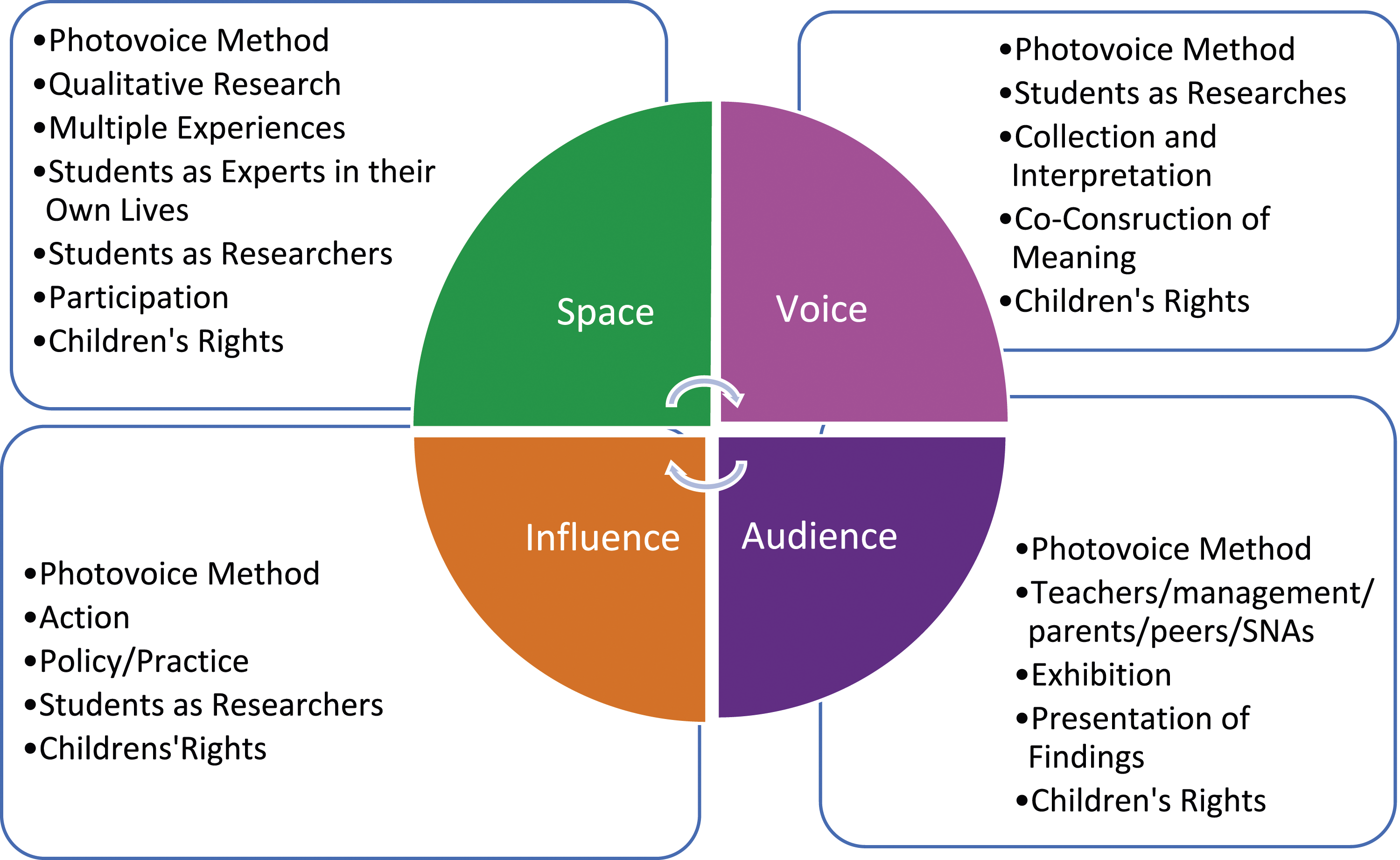
Photovoice: An Inclusive Methodology
Photovoice is a participatory visual research method developed by Wang and Burris (1994) to promote empowerment and gives voice to vulnerable communities (Cluley, 2016; Evans-Agnew & Rosemberg, 2016). Photovoice uses photography as a means of sharing knowledge and experience to bring about social change (Budig et al., 2018). It is a means for users to represent and enhance their community as makers of meaning through photography. It provides space (Lundy, 2007) by actively creating the opportunity for participants to “document, reflect upon, and communicate issues of concern” (Budig et al., 2018, p. 1). Simultaneously, it allows researchers to perceive the world from the perspective of those who traditionally are not in control “of the means for imaging the world” (Guyer et al., 1984 cited in Wang & Burris, 1997, p. 372).
Photovoice is a flexible tool which can be adapted for specific participatory objectives, for use with different groups and diverse issues (Wang & Burris, 1997). Photovoice has three main goals: (1) “to enable people to record and reflect their community’s strengths and concerns (2) to promote critical dialogue and knowledge about important community issues through large-and-small-scale group discussions of photographs, and (3) to reach policy makers” (Wang & Burris, 1997, p. 370).
Photovoice gives ownership to people of how they would like to represent themselves and how they would like to depict their reality (Booth & Booth, 2003). Participant ownership, control and empowerment challenge the traditional politics of representation typically located in the research process. This shift in power repositions the roles of participants and the researcher. The researcher moves from the status of privileged voyeur looking in or on, while making value judgements to the role of facilitator of change. Participants and researchers become collaborators and co-researchers. The collaborative nature of the participatory process provides a bilateral power structure which respects the rights of all.
Steps Involved in Photovoice Projects (Booth & Booth, 2003, p. 432; Latz, 2017, p. 4).

In expanding the steps outlined by Booth and Booth, Latz (2017) added a final stage which she coined confirmation. During this stage the researcher should endeavour to capture the views of the audience (those who engaged with the exhibition) to ascertain their perceptions and intentions to bring about change arising from findings. The presentation and confirmation stages (Latz, 2017) provide audience (those with the power to make change) and influence (due weight) (Lundy, 2007) for participants to express their views and have their voices heard. Furthermore Latz (2017) emphasises the importance of sustaining the voices of participants involved in the project through further dissemination of research. This broadens the reach of participant voices and further enhances the opportunity for participant views to have influence (Lundy, 2007).
Consequently, Photovoice as a data collection tool can successfully be utilised to provide the space, voice, audience and influence identified in Lundy’s Framework of Participation (2007). In this sense it is ideal for use in schools for seeking the perspectives of children to facilitate change. The images represent the subjective reality of the lived experience which children can interpret verbally, and which reduces the cognitive and linguistic demands that are found in other types of qualitative research.
Researching With Children: Methodological Considerations
The need to supplement language as the main means of data collection in conducting research with children with ID is widely recognised (Porter & Lacey, 2005). Traditional evaluative approaches such as interviews, questionnaires, and focus groups may not authentically capture the voice of children but rather impose adult interpretations and can produce inaccuracies in findings (Darbyshire et al., 2005; Porter & Lacey, 2005). Furthermore, extractive research which drills or mines children (Petrie et al., 2006 cited in Fleming, 2010) as data informants without any resultant change may constitute an abuse of children’s involvement (Fleming, 2010). It is the researcher’s responsibility therefore, not only to provide opportunities to participate but also to adjust the processes as necessary if research is to be truly inclusive. Inclusive participatory research demands that the methodology and processes involved are accessible, meaningful, collaborative, and bring about change (Booth & Booth, 2003; Porter & Lacey, 2005). These challenges must be overcome, and the data collection methods need to be adapted (Aldridge, 2007) if we are to empower children as right holders to become makers of meaning in all stages of the research process (Fleming, 2010; Montreuil et al., 2021).
Researching With Children: Informed Assent
Researchers must consider the impact of research on children, including potential risks, and take responsibility for the effects of research (Kennan, 2016; Kirby, 2001). An assessment of potential risks and benefits is necessary to ensure the risk of harm does not outweigh the intended benefits (Kennan, 2016). Steps must be taken to protect the child from harm while at the same time respecting their right to participate (Kennan, 2016). Issues regarding consent/assent to participate, confidentiality, and imbalance of power are key themes in research, particularly in research with children (Cree et al., 2002). Concerns around these issues have led to the exclusion and absence of children with ID from research (Yan & Munir, 2004), and in particular, participatory research (Marshall et al., 2012). Researchers therefore, must find the balance between protection and participation to enable the voices of children and particularly, those with disabilities, to have their voices heard.
Informed consent from parents and legal guardians and informed assent from minors is a fundamental principle in conducting research with children (Alderson & Morrow, 2020). However, informed assent from children with ID is a complicated issue and Marshall et al. (2012) caution us to consider how cognitive differences may “influence the ability to provide consent that is truly informed” (p. 24). Children, therefore, should be consulted and informed in terms they understand (Alderson & Morrow, 2020). Adequate information regarding research aims, methods and potential outcomes must be presented to children in a manner accessible to their cognitive abilities (Department of Children and Youth Affairs, 2012; Marshall et al., 2012). Time must be given for children to assimilate the information, ask questions and consult with others (Department of Children and Youth Affairs, 2012). Only then can participants decide if it is in their best interest to participate and collaborate (Harcourt & Conroy, 2005). To do so participants must be fully informed of: • The nature of the research • Exactly what will be expected of them • Any possible risks of the research • Their rights to withdraw at any time • What will happen to the data collected and any possible audiences for the research (Mac Naughton et al., 2001 cited in Harcourt & Conroy, 2005, p. 569).
Participants must also be given an alternative to participation (Moolchan & Mermelstein, 2002). Furthermore, if at any time a child withdraws their assent, parental consent should not override their right to withdraw (Department of Children and Youth Affairs, 2012).
In this study assent was sought in a multimodal manner. Letters of Information (Appendix A) and Letters of Assent (Appendix B) were written in a child friendly, visual manner. A short video illustrated what the project was about, their possible role and their right to withdraw. This was sent to schools in advance and all parents were asked to watch this with their child and to discuss the project with them, to ascertain if they were willing to participate, and if they knew what they were assenting to. An offer to visit the schools and meet with parents, staff and student participants to discuss the project and answer any questions in advance of data collection was made. Assent was further sought at each stage of this Photovoice project. To ensure students understood what they were assenting to, the PI outlined each step and asked for feedback from participants to monitor their understanding of what they were assenting to. Furthermore, to support students, particularly those with significant communication needs, a visual (Figure 2) was used to ascertain students’ assent to participate. A break card was provided for students who needed time or space during the research process. A Lundy feedback form (Department of Children, Equality, Disability, Integration and Youth, 2021) (Appendix C) was utilised at the end of each session to ensure that students felt their voice was heard and they were listened to. Visual used to monitor informed assent.
Researching With Children: Confidentiality and Anonymity
The right to confidentiality and protection of data to ensure anonymity are core ethical concepts in research (DCYA, 2012). However, confidentiality when dealing with children and young people is more complicated than with adults due to the possibility of disclosures which give rise to child protection and welfare concerns (Alderson & Morrow, 2020). To safeguard child protection, research with children in Ireland must be carried out in accordance with Children First, National Guidance for the Protection and Welfare of Children (DCYA, 2017). In this study a Child Safeguarding Statement was developed. This included a risk assessment outlining potential risks of harm to a child while engaging in the research as well as measures which were put in place to mitigate risks. This was approved by Mary Immaculate Research Ethics Committee in December 2022 (Ref: A22-028).
Research With Children: Data Protection in Photovoice Studies
The General Data Protection Regulation (2018) in the European Union, of which Ireland is a member, sets out the laws for data protection, storage and retrieval. Children, however, need specific protection to safeguard their data and studies which employ an alternative method to data collection such as photography require a Data Protection Impact Assessment (DPIA). Like a Child Safeguarding Statement, the DPIA identifies possible risks, measures to reduce risk, likelihood of harm and severity of impact should harm occur. Issues of confidentiality, anonymity, storage and ownership of photographs can pose significant challenges in a school or community context particularly with children under 18 years of age. These issues need to be clearly addressed prior to engaging in any Photovoice Project. How the researchers addressed these issues throughout the study is described below.
Photovoice in Practice
The lead author was the Principal Investigator (PI) for this research and collected all data. Although Photovoice was the main method of data collection, a research journal was used to chronicle thoughts, questions, struggles, and ideas the PI experienced during the research process. These were then discussed with the other researchers involved in the project. Similarly, Field Notes in a Data Collection Memo (Appendix D) were used to record observations and interactions the PI had with participants as well as reflections on the researcher’s interviewing technique and ways the researcher was influencing the data. These observations, reflections and subsequent discussions with other researchers led to adaptations of the Photovoice method and research design.
A focus group interview with Special Education Teachers (SETs) and Special Educational Needs Co-ordinators (SENCOs) from participating schools provided a nuanced understanding of developing themes from the data collection process. Although not originally planned in the research design, the necessity to conduct a focus group interview emerged after initial data collection using the Photovoice method to provide some contextual background to students’ lived experiences. Discussions in relation to data which highlighted the role of the SNA beyond that of supporting care needs of students, and data which identified the critical role of the Special Class in supporting the participation of students in mainstream schools warranted further exploration. Integrating perspectives from SETs and SENCOs who understand the context in which the data developed provided deeper insight and clarity to the phenomenon.
Photovoice in Practice.
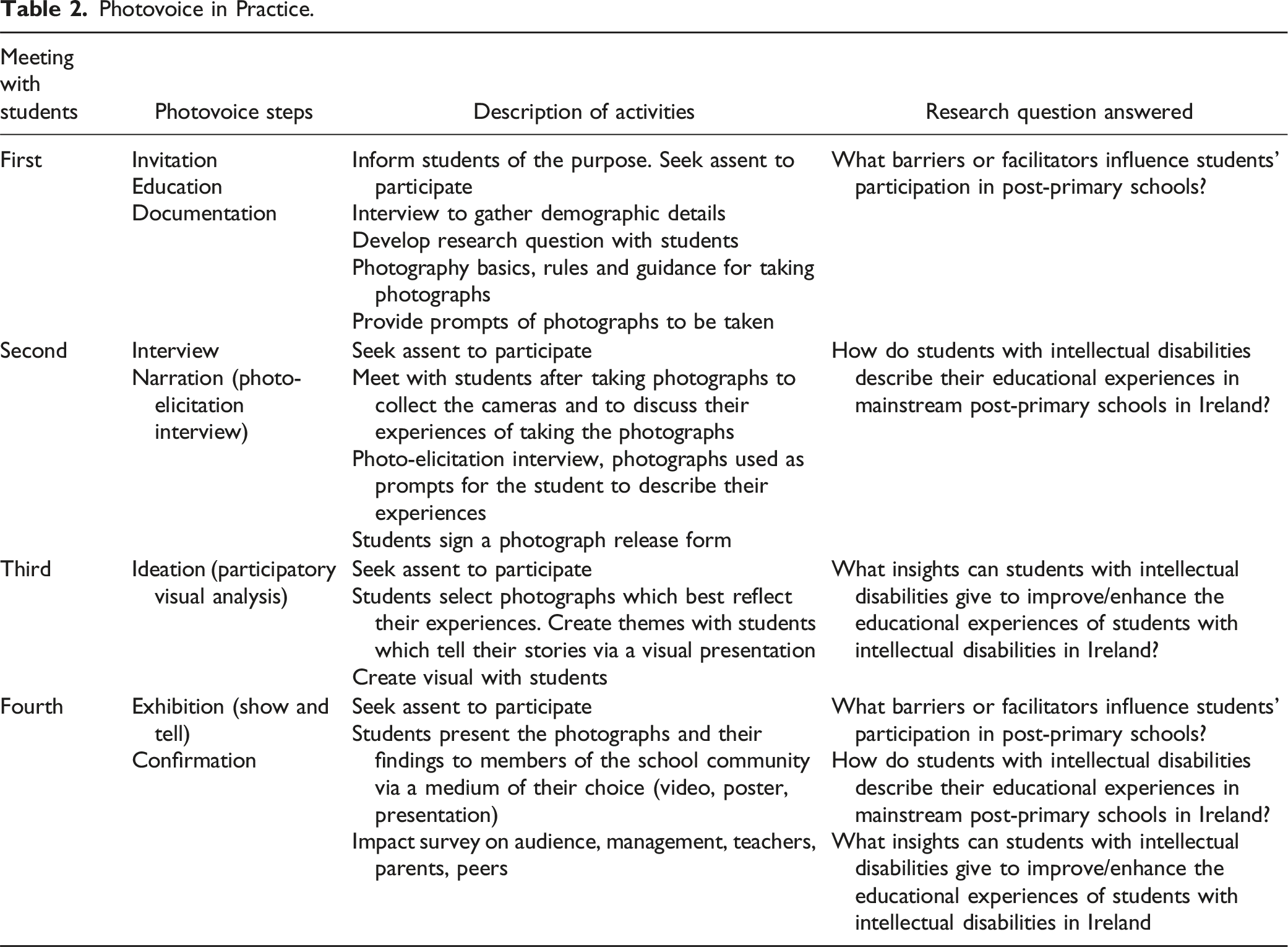
Meeting 1: Identification, Education and Documentation
The principles of Universal Design for Learning (UDL) (CAST), (2023) guided each step of the method. UDL is an inclusive approach to supporting diversity by purposefully and intentionally utilising multimodal methods to enhance students’ understanding of and engagement with the research. The use of written, digital, visual and verbal methods to support communication were incorporated throughout the various stages.
The first meeting combined the first three steps identified by Latz (2017); identification, education and documentation. Using a UDL approach, students were informed of the purpose of project and their assent to participate was re-sought. Revisiting assent at various stages of the research process builds in opportunities for clarification and understanding for participating students which supports them to decide if it is in their best interest to participate in an informed manner. Students engaged in a short semi-structured interview to gather details about likes, dislikes, subjects, and challenges they encounter in school. This allowed the researcher to establish a rapport and relationship with participants which is paramount for engagement (Waterhouse, 2011). Participants were provided with basic rules and guidance for taking photographs (Figure 3) (Appendix E). These included specific guidance is relation to confidentiality and anonymity of data. Sample of rules and guidance for taking photographs.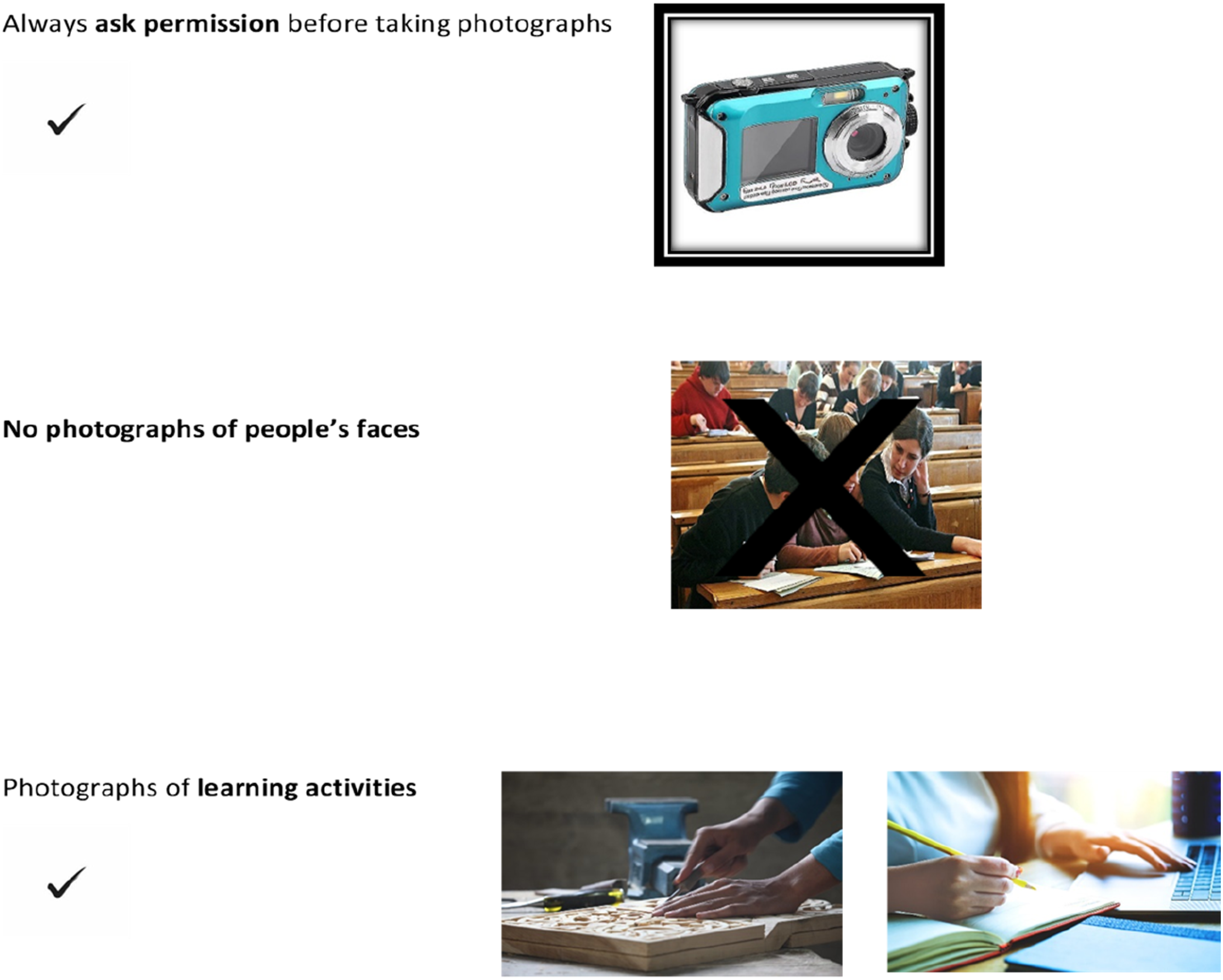
Sample for Prompts Suitable Photographs. These Prompts Might Help You When Deciding What Photographs to take. Tick When You Have Taken a Photograph of the Following.

Participatory research involves participants actively making decisions related to the research process (Liebenberg, 2018; Montreuil et al., 2021). Consequently, adaptations were made throughout, based on feedback from students, which supported them to engage with the research. Adaptations included reducing the number of photographs and the types of photographs students could take. Initially students were asked to take three photographs of each category. The purpose of this was to get a varied sample of what students liked about school or their favourite things to learn, for example. However, this was problematic as it resulted in too many photographs for students to describe and the instruction was too vague. One autistic student took three pictures of each category. Furthermore, the wording of questions in the semi-structured interview was also adapted, reflections in field notes noted “some of them [questions] are too closed, they need to allow a student to expand without too much prompting” and, “the question ‘do you receive extra support with learning’, needs to be broadened to, ‘are there other areas that you would like support with, can you tell me more about this?’” (Mannion, 2023). These were once again adapted to support students who struggled with verbal communication. A booklet called “All About Me in School” was devised, questions were presented visually using emojis and students had the opportunity to draw, write or say their answers (Figure 4) (Appendix G). Sample questions from all about me in school booklet.
Additionally, efforts to involve students in developing the research questions were incorporated throughout. For example, students were asked if there were aspects of their education or their school experience they would like to explore. They were also asked who they would like to tell about their experience in school and how they would like to inform them. These are complex concepts and students needed explicit, concrete scaffolding throughout to support them with this process.
Students were provided with an iPad to take photographs. Students agreed that photographs would not be shared with others or uploaded to social media. To minimise this risk, the iPads did not go home with students; rather they stayed on the school premises and students were supervised by staff when taking photographs. Staff were asked not to influence students’ choice of photographs, but could assist if necessary with holding the iPad, and with recording on the prompt sheet when photographs were taken. Students and staff decided that a week would be sufficient to take the photographs. Each meeting concluded with participants completing Lundy’s Children and Young People’s Feedback Form (Department of Children, Equality, Disability, Integration and Youth, 2021) to ensure they felt they had the appropriate space, voice, audience and influence necessary for them to have their voice heard at each stage of the process.
Meeting 2: Narration (Photo-Elicitation Interview)
Informed assent was considered an ongoing process at each stage of this Photovoice study. The importance of seeking assent at each stage was emphasised on one particular occasion. A student no longer wished to participate, but did not want to tell the school staff for fear of causing disappointment. By asking for her assent to continue, it provided the opportunity for her to withdraw from the research in a safe manner. Providing an environment where participants feel safe to express themselves is crucial for eliciting children’s voices (Blanchet-Cohen & Di Mambro, 2014; Lundy, 2007).
This meeting also provided an opportunity for the PI to establish if participants had any challenges or difficulties with taking photographs. Participants identified challenges in maintaining anonymity, particularly when taking pictures which represented favourite places/spaces in school. Others noted difficulties in remembering to take photographs, citing the busyness of the school day as an inhibiting factor. Therefore, a mediated approach (Cluley, 2016) was adopted, whereby staff provided verbal reminders to participants to take photographs each day.
Adaptation of PHOTO (Granziano (2004) and Hussey (2006)).

The purpose of these questions was to identify the image, its significance to the student and possible strategies to enact meaningful change. Students provided the meaning behind each picture. Discussing the images provided an extra layer of meaning (Cluley, 2016) without which the significance behind and within photographs could have been lost. Latz (2017), in contrast to Pink (2007) advises that the photographs in Photovoice studies are not data in and of themselves, rather they serve as data antecedents used to elicit responses from participants. It is the student’s narration of the photographs which is data. Learning for the researcher and the community occurs through dialogue (Freire, 1972).
A flexible, mediated approach must be prioritised when undertaking research (Cluley, 2016). It is the researcher’s responsibility to provide opportunities to participate, and to adjust the processes as necessary if research is to be truly inclusive. The Photo-Elicitation Interview in this study was adapted to support the needs of some autistic learners to engage. Adaptations included an integration of a Placemat Graphic Organiser (Bennett & Rolheiser, 2001) and use of sentence starters (Figure 5) (Appendix H). Individual photographs were placed in the centre of a placemat and questions, or sentence starters were utilised to support the narrative process. Sample of placemat graphic organiser with sentence starters.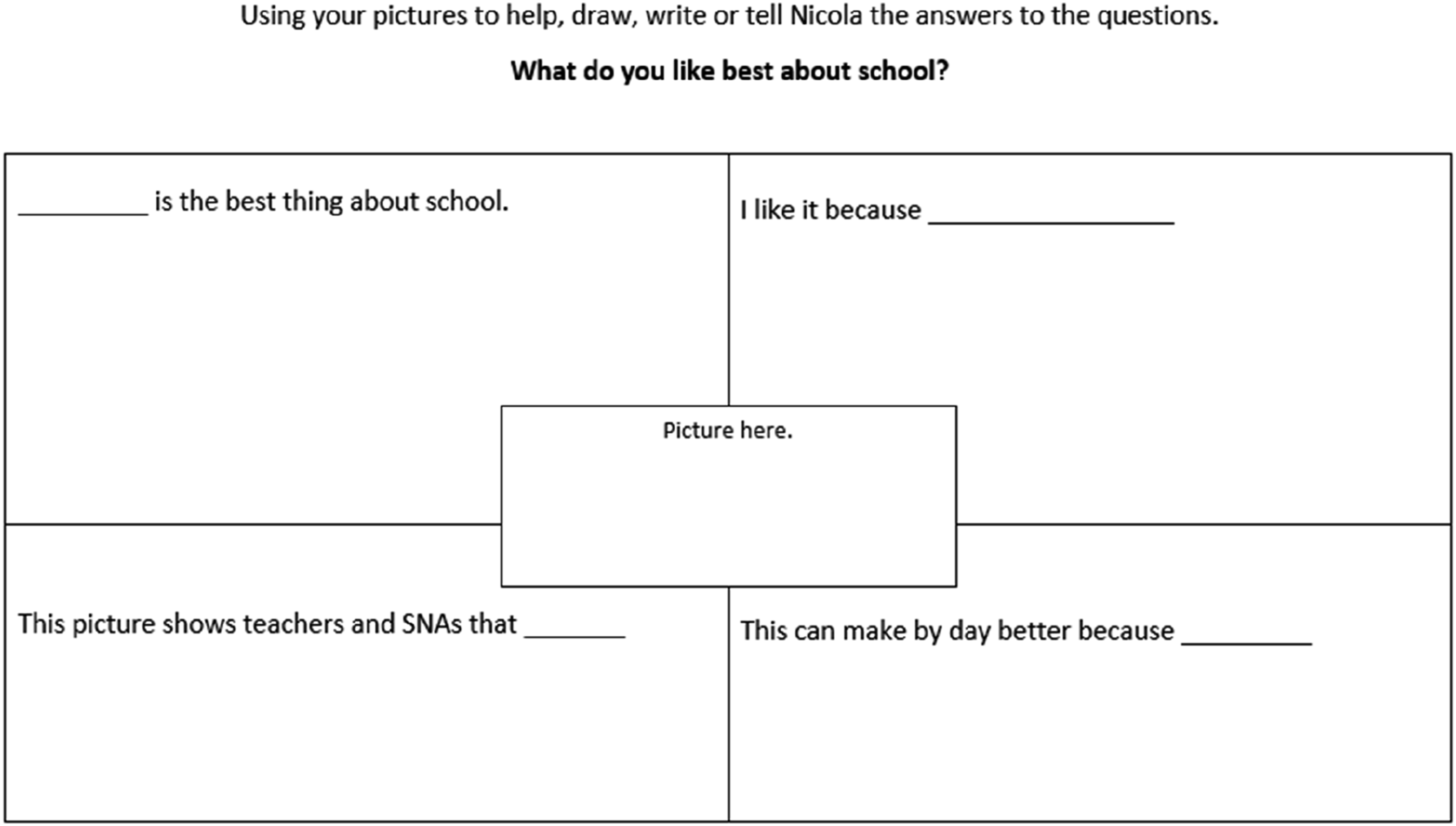
Ownership of photographs needs to be addressed prior to engaging in any Photovoice project. Latz (2017) recommends that photographs taken by participants during Photovoice Studies belong to participants and must be released to the researcher through a consent and release paperwork process. Students in this Photovoice study signed a Photograph Release Form (Appendix I) identifying which photographs they were happy to use in the research and beyond.
Meeting 3: Ideation (Participatory Visual Analysis)
Although a substantive body of research has emerged since Wang and Burris (1994) first pioneered Photovoice, limited research exists to address how data may be analysed and interpreted. Many studies focus on the results of their interpretations (Samonova et al., 2022) but provide little guidance on the analytic process (Latz, 2017). This section seeks to address this gap in literature by outlining how the data were analysed and interpreted with students.
Participatory research requires participants to be engaged in all stages of the research process including analysis and interpretation (Liebenberg, 2018). However, involving children in this stage of the research can often be overlooked or their engagement can be tokenistic (Montreuil et al., 2021). Children should be “active agents in, not just objects of, interpretation” according to Cook-Sather (2012, p. 355). As a result, analysis in Photovoice studies takes a two-step approach; analysis where children are co-creators of meaning and analysis undertaken by the researcher which is informed by the first step. It is this two-step approach which paves the way for the generation of findings and the production of new knowledge (Latz, 2017).
Wang and Burris (1997) and Booth and Booth (2003) proposed a three-stage approach to be used with participants in stage one of analysis; selecting, contextualizing and codifying images. This was later developed by Latz (2017) who coined the stage, ideation. In this study, ideation occurred after the photo-elicitation interview when students were given a copy of their photographs and were asked to select which pictures best told their story. With the support of the PI, students grouped printed photographs into two categories; “What is working for me in school” and “What is not working for me in school” (Figure 6). The PI encouraged students to group photographs according to things they felt were common in the pictures or what they felt the photographs meant to them. Photographs with a shared theme or meaning were grouped together under these categories. Themes such as “this makes me happy,” “how I like to learn,” “something I would like to change” were common. In some instances, students chose to write a caption to describe these themes. The PI assisted with cutting, glueing and writing when necessary. The photographs were then used to create a visual. Student grouping pictures into categories with common themes to create visual.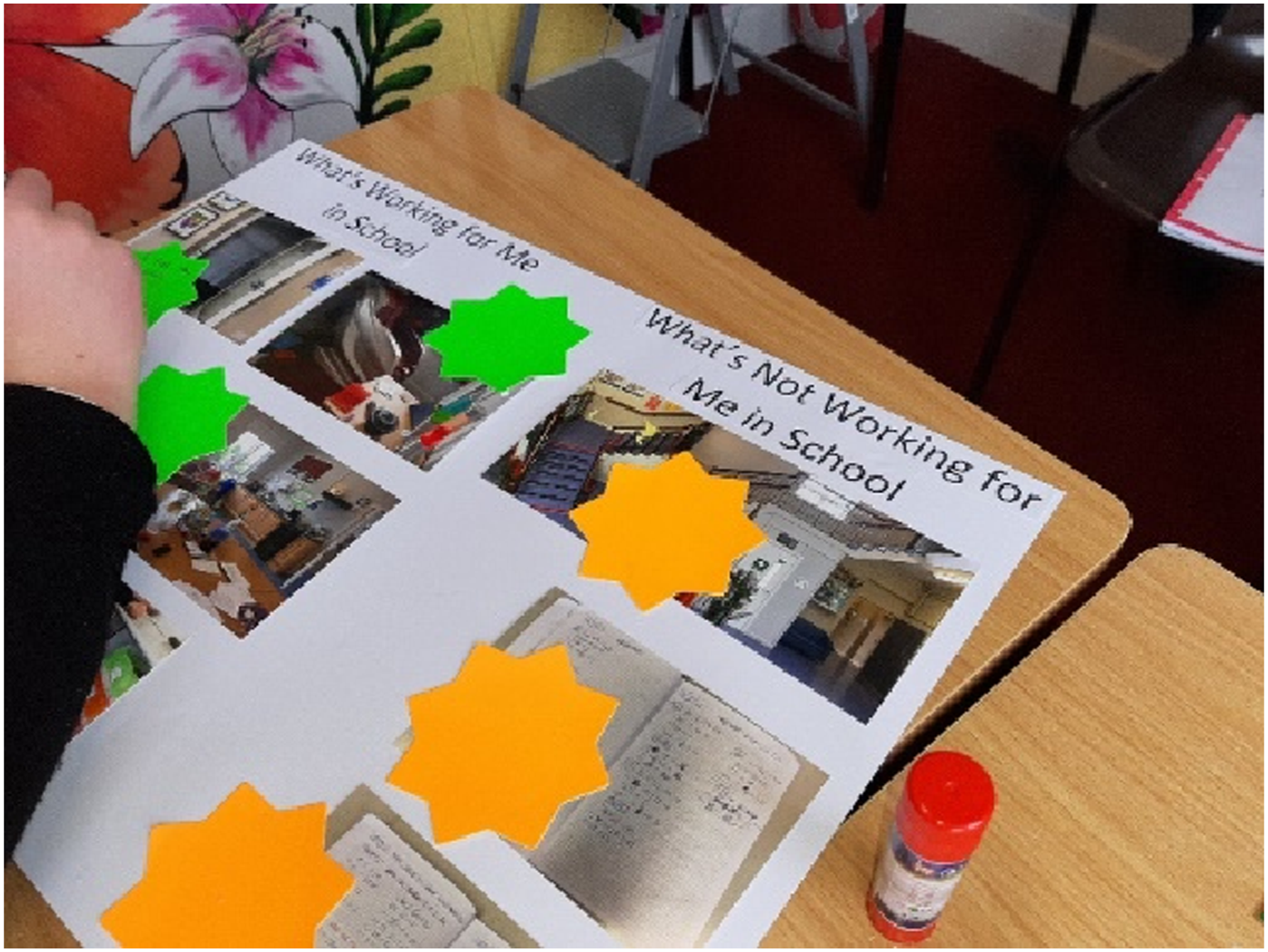
Choice is an integral element of Photovoice studies (Booth & Booth, 2003; Latz, 2017); students in this study chose which photographs they wanted to use. They also identified the type of visual they wanted to create, aligning with the UDL approach adopted throughout the process. Some chose to make a PowerPoint, others made posters. Brochures, digital story boards, newsletters, websites can also be used. Participatory, inclusive methods which build in choice and flexibility such as those used in Photovoice studies empower participants and reposition power and control throughout the research process.
Meeting 4: Exhibition and Confirmation
The fourth meeting consisted of a “show and tell” exhibition or presentation. This presentation provided the audience and influence (Lundy, 2007) necessary for students’ opinions to be heard and given due weight by those who traditionally hold the power to make decisions and impact change in schools. Students selected attendees, who included parents, peers, teachers, and members of school management. During this exhibition students outlined what was working for them, what was not working for them in school and offered advice on changes needed to advance inclusive practice (Figure 7). Visuals illustrating what’s working for students in schools and what’s not working in the context of the school.
The images in the exhibition can be used to stimulate dialogue about issues important to participants and this dialogue should result in positive change (Liebenberg, 2018). To determine potential action, and in line with Latz’s (2017) last stage confirmation, an impact survey with audience members was used to gauge initial reactions and possible impact on future school practice. The survey asked members to record their initial thoughts of the Photovoice exhibition. They were asked if there was anything in the exhibition which surprised them and what possible actions they might take as a result of the exhibition. In one instance, a member of the student council was in attendance and a student who is a wheelchair user outlined the ongoing difficulty he was experiencing with other students throwing bags on the floor. This was deeply distressing for this student and was an ongoing issue, despite school staff addressing it. The member of the student council said she would bring this back to the council and wider student body to address the issue immediately.
Data Analysis Stage Two
Reflective Thematic Analysis (RTA) (Braun & Clarke, 2022) framed Stage Two analysis of data from semi-structured interviews, photo-elicitation interviews and a focus group interview. Analysis undertaken by students during the Ideation stage of the Photovoice process informed this process.
Six Recursive Phases of Reflexive Thematic Analysis (Adapted From Braun & Clarke, 2022, p. 35).
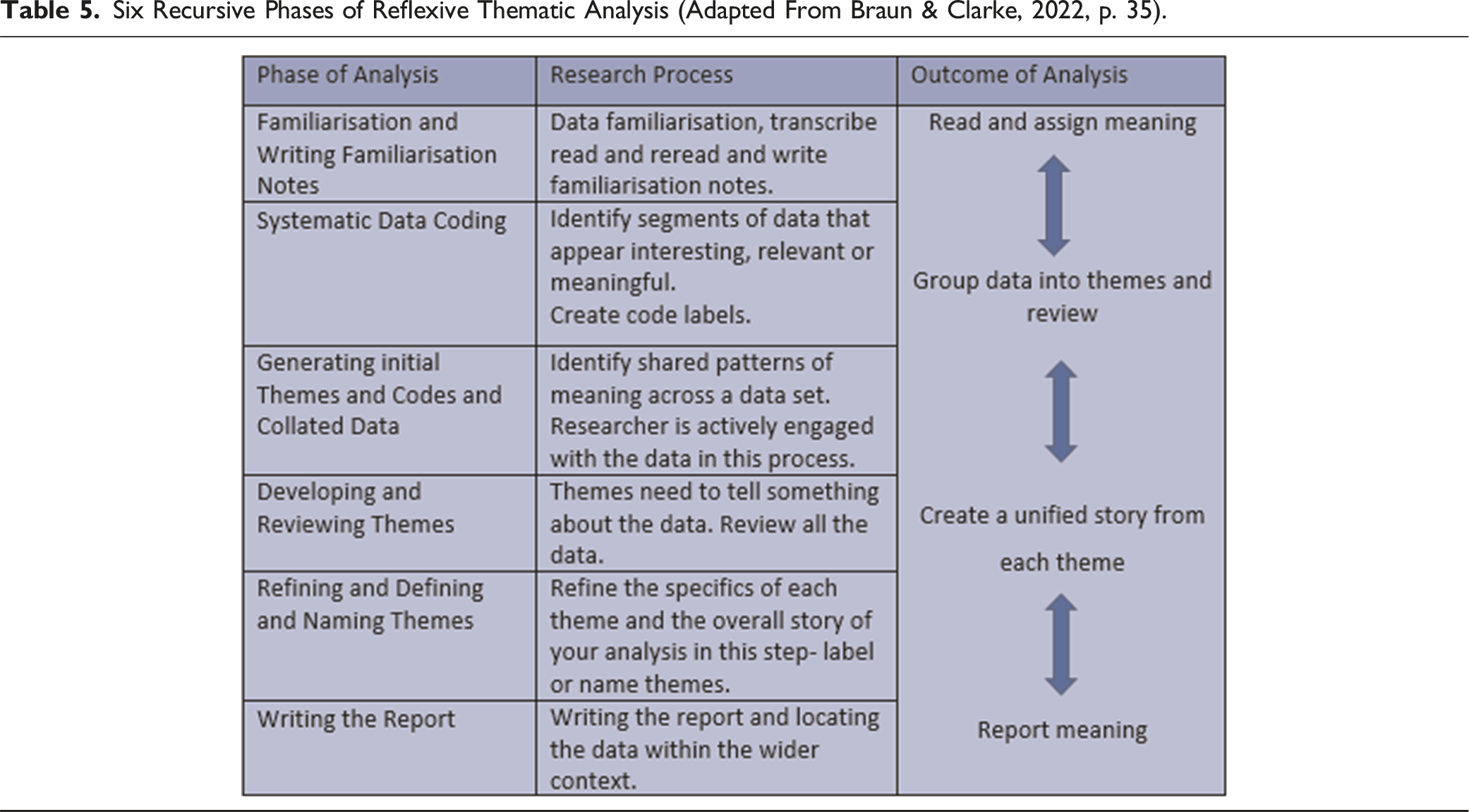

The following is an account of how the researchers applied each phase to ensure a “critical, rigorous and valid process” (Ravitch & Mittenfelner Carl, 2021, p. 244) was applied to analysing the data.
Phase One: Familiarisation and Writing Familiarisation Notes
Familiarisation of data is a crucial step in Photovoice studies and should coincide with data collection. Data from interviews were recorded using a Voice Recorder App on the PIs laptop and later transcribed verbatim. Field notes and journal entries were completed as soon as possible after each meeting with participants. Microsoft Word was originally used to support the transcription process. Reflections, comments and initial codes were added using the comment function under the review tab. Reflections were enhanced by debriefing sessions which took place with the other researchers. Prior to meeting each participant for the next phase of the Photovoice process, interviews were listened to and transcripts, field notes and journal entries were read. This is important as it allowed the PI to familiarise herself with the data and to get to know the participants. Data were used to develop relationships with participants. Furthermore, the PI was conscious of her influence on the process; getting to know participants allowed her to use their voices to scaffold their participation and increase their engagement, which reduced the PI’s interpretation of responses to questions used in the interview process. Finally, this familiarisation phase was essential as adaptations based on feedback from participants, as noted above, were necessary to enhance the Photovoice process.
Phase Two: Systematic Data Coding
At a later stage, transcriptions were imported into NVivo 12 (International, 2017). In this study NVivo 12 (International, 2017) was used as a data management tool, it was useful for storing, searching, querying data and creating visualisations in an easy, accessible manner. Acknowledging the bias and lived experience which researchers bring to the research process, a fusion of inductive (data driven) and deductive (theory driven) analysis took place. Data were both participant-driven and subjectively interpreted by the PI. The PI systematically and iteratively moved through the dataset identifying the smallest units of meaning relevant to the research question. Semantic coding explored surface level data which were explicitly expressed by participants. An example of this code is “projects,” this is where students made direct reference to projects they made or were making in school. Simultaneously, latent coding focused on a deeper level of meaning. For example, the code “special class as a place to socialise” developed from data where participants described playing games, or having great fun in the special class. However, focusing on deeper level meaning can move analysis from capturing the specific and particular to a shared pattern of meaning too quickly. The complexity of coding at this stage of analysis can be seen in this extract from the PI’s research journal: Developing code labels can be tricky, I find I am thinking of the latent meaning behind what was said. [ ] The need to honour their [students] voices weighs heavy on me. I know from the participants and from my experiences as a Special Education Teacher, what was said was not necessarily what was meant. The language skills of students were an inhibiting factor in describing photographs or the meaning behind them. Using the mnemonic device PHOTO provided a scaffold for me to ask questions in relation to the picture but some of the questions remained too conceptual despite my best efforts to give examples and provide feedback to support some students to engage with answering these questions. In many instances I know what the student is trying to say but the words are not there. []This results in me jumping to categories rather than codes. (Mannion Reflexive Journal, 2024)
To counteract this, the PI wrote descriptions for each code, this placed a boundary on what was included in the code and kept the PI from jumping ahead creating categories. An initial set 197 non-hierarchical codes were created. These codes were further analysed in Phase Three.
Phase Three: Generating Initial Themes From Coded and Collated Data
In phase three the PI created initial candidate categories by clustering together patterns of codes in the dataset (Braun & Clarke, 2022), the focus of which was on the development of a shared pattern of meaning. Several different clusters were explored. Codes were merged, pulled apart and combined to create broad patterns that were coherent, meaningful and important (Braun & Clarke, 2022). The aim was to generate “working provisional themes” (Braun & Clarke, 2022, p. 84) which provided a scaffold for further analysis to answer the research question. This phase resulted in the creation of 24 initial categories in which the 197 codes were placed.
Phase Four: Developing and Reviewing Themes
The focus of phase four was re-engagement with the entire data set. RTA is a recursive and reflexive process which requires time and space to move in and out of the phases. Immersion in the entire dataset facilitated further merging of codes. Many of the codes previously identified were thin and there was considerable overlap between themes. At this stage the PI found it useful to temporarily come out of NVivo to incorporate a manual exploration of candidate themes. Using colour to illuminate the shared pattern of meaning between codes, candidate themes were collapsed and merged while some were discarded. The focus was on developing the “central organsing concept” (Braun & Clarke, 2022, p. 35). Through this process, the initial 24 candidate themes were reduced to eight and 197 codes were reduced to 34. Together the eight themes explored “the most important patterns across the dataset” (Braun & Clarke, 2022, p. 35). At this stage the PI started to consider how the themes related and fitted with each other, what story they were constructing and how they would answer the research question.
Phase Five: Defining and Naming Themes
Phase five continued the process of critical engagement with the data. Further collapsing of and merging of codes resulted in the development of three themes. Each theme consisted of two subthemes which in turn contained a number of elements. The purpose of this was to provide a structure to support the PI in the write up of the analysis. Defining the themes provided further clarity as the boundaries for each theme became clearly demarcated. Coupled with defining the themes, naming the themes in a “punchy informative” (Braun & Clarke, 2022, p. 36) manner is advocated. A thematic map (Figure 8) further illustrated the connections between the themes and subthemes which developed from the codebook. These themes were discussed with the other researchers to ascertain their appropriateness based the original raw data and the analytic process which the PI applied. Thematic map of findings based on Braun and Clarke (2022).
Phase Six: Writing the Report
Writing the report is a final stage in the analytic process. It is through this that analysis takes shape in and through writing. However, writing is a key component of all stages of RTA. The PI made use of annotations, memos, reflexive journal entries throughout the process. Phase Six provides the opportunity to pull these together to finalise the report to bring the story to life.
Reflections on Using Photovoice and Concluding Remarks
The PI’s decision to incorporate Photovoice as the main method of data collections was rooted in her experience as a SET working with students with ID in schools in Ireland. Capturing their voices in an authentic manner was crucial, and the PI felt traditional methods alone would not enhance or support this process. Therefore, the PI started a journey to research other methods which she felt would provide the space, voice audience and influence for students to express their views and have their voices heard (Lundy, 2007). It is this journey which resulted in the PI choosing Photovoice. The trials and tribulations of this journey were captured in the flowing illustration (Figure 9) but these did not end with the PIs decision to incorporate Photovoice. The research journey.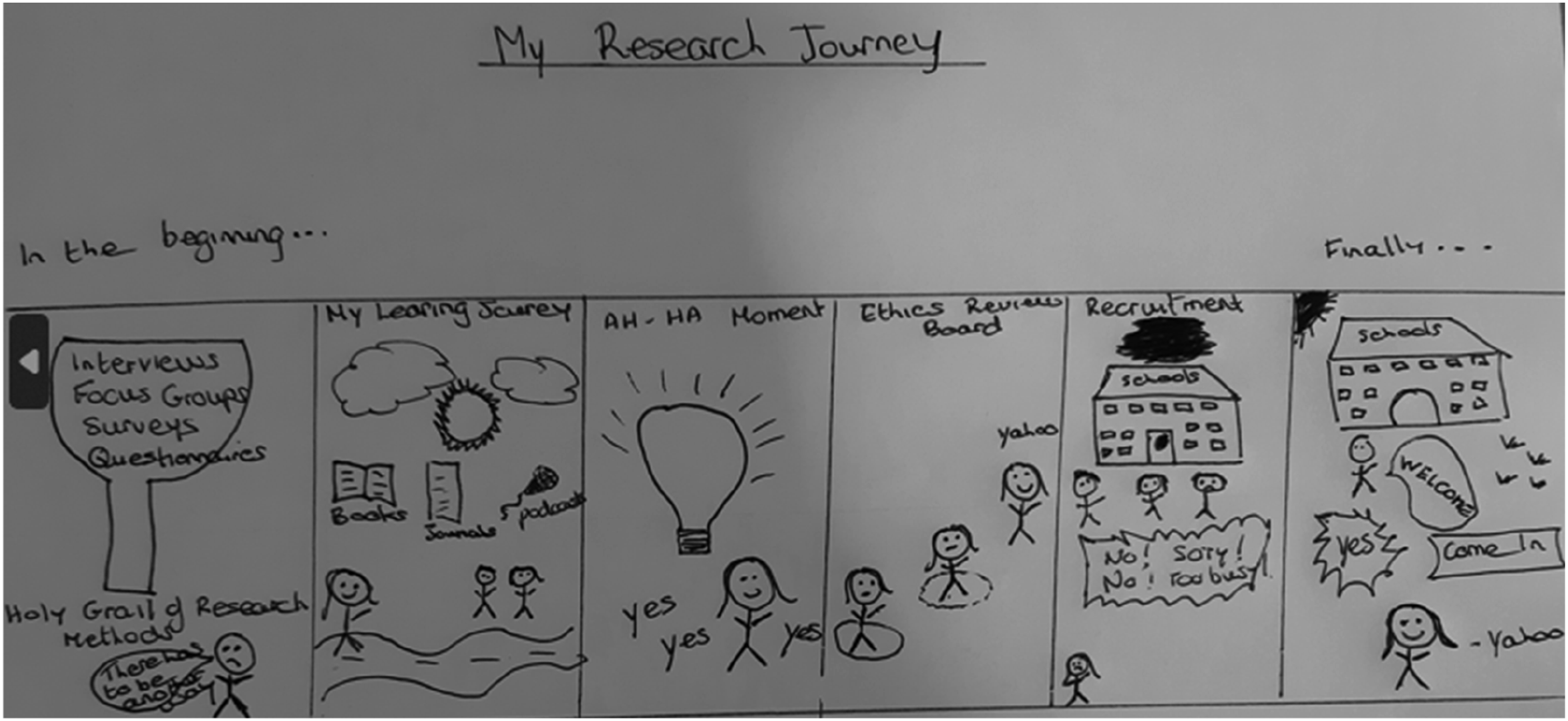
While the experience of using Photovoice to elicit the voices of students with ID was overwhelmingly positive, there were also challenges which need to be acknowledged. These challenges require careful consideration prior to choosing Photovoice as a method for data collection. Firstly, accessing research sites proved a significant obstacle to undertaking this research. Gatekeepers such as principals govern student’s participation in research (Danker et al., 2019). Only schools where a staff member was personally known to the PI or the other researchers, through their work as teacher educators, agreed to take part. Trust appeared to be an integral part of this decision. Concerns over the use of cameras as a data collection method were raised by one principal. Despite the researchers adhering to Child Protection and Data Protection Legislation which minimise any risks associated with the use of cameras in a school, these fears remained, and this principal chose not to participate.
The second concern relates to students assenting to participate in research against their will, or without them understanding what participating in the research involved. Although parents were asked to discuss the research with their children and involve them in the decision, it became obvious that this was not done in all cases. As outlined previously, the need to ensure that child assent is informed and freely given is fundamental when researching with children. Likewise, parental consent does not override child assent (Department of Children and Youth Affairs, 2012). Confirmation of assent needs to be ongoing for the duration of the study (Department of Children and Youth Affairs, 2012).
An additional difficulty was noted by students who identified the password used to unlock the iPads was too long and complex for them to remember. When asked if there were any difficulties or anything they would like to change about the project in the second meeting one student identified the password as a difficulty, “It’s a bit long and hard to remember.” He further suggested “maybe numbers might be easier” (John). This resulted in passwords being changed on all iPads before giving them to other students. Passwords need to be strong to protect data should but not so complex that students couldn’t remember them.
A significant challenge related to the time necessary to undertake Photovoice projects. Researchers need to consider what happens if students are absent on the day of arranged meetings. This was a challenge in this study; a way to circumvent this involved the school contacting the PI, if a child was absent at the start of the school day. Furthermore, time is needed to build rapport and understanding of strengths and needs of participating students. This is particularly evident when working with students with more significant communication needs. Adaptations as outlined above were necessary to support these students. Although each adaptation utilised evidence-informed practices the need to know the child on a personal level was evident. In one instance the SNA provided insight as to why a student took a particular photograph of a famous past pupil. The student had a particular interest in history and dates and the picture captured this for him. Without such insight the meaning behind the photograph would have been lost. However, SNAs were not part of this research and as such data which emerged from them could not be used in the analysis.
While the above issues certainly add to the complexity of using Photovoice, the benefits for students and researchers are plentiful. This project aimed to capture the experiences and perspectives of students with ID in mainstream post-primary schools in Ireland. Framed within a transformative paradigm, child participants in this study were co-researchers who charted their educational experiences using this visual participatory method. When asked if they enjoyed taking the photographs, one student replied “yeah [ ] it’s like being part of a research kind of thing [ ], it’s kind of fun like” (James), another responded “it’s going good so far, it’s like its great you can go outside and take pictures and it’s fun” (Evan). Furthermore, students demonstrated an awareness of their role as researchers, particularly when referring to the challenge they experienced in maintaining the anonymity of others when taking photographs in the school as one student noted “challenges were not having faces in it” (Oliver) another reported “I took one [photograph] in the hallway and there was people, they were in the hallway, and I didn’t want to get anybody in it, so that was a bit of a challenge” (Avril). Consequently, the Photovoice method in this study not only provided the space, voice, audience and influence necessary for students to express their views and have their voices heard but students embraced their role as co- researcher.
The purpose of this paper is to provide methodological insights for researchers who wish to employ Photovoice as a method to elicit the voices of children with ID. In this paper, we provided guidance on how to overcome some of the methodological and ethical challenges that may arise when researching with children with ID. We detailed how the Photovoice process was adapted and modified to support students, particularly those with cognitive and communication needs to engage with the research process. We do not claim that Photovoice is a panacea for overcoming all challenges, rather it provides an accessible and meaningful way to explore matters of importance to children. The photographs act as mirrors to communities which enable participants to step back, reflect on and engage with abstract concepts more readily (Liebenberg, 2018). The process of narration and ideation (Latz, 2017) elevate the role of participants to co-researchers as they engaged in analysis and interpretation to make meaning and provide insights on their lived experience which can be used to enhance their social reality.
Supplemental Material
Supplemental Material - Photovoice Reimagined: A Guide to Supporting the Participation of Students With Intellectual Disabilities in Research
Supplemental Material for Photovoice Reimagined: A Guide to Supporting the Participation of Students With Intellectual Disabilities in Research by Nicola Mannion, Johanna Fitzgerald, and Fionnuala Tynan in International Journal of Qualitative Methods
Footnotes
Acknowledgements
We gratefully acknowledge the participation of the individual students and their schools for their willingness to engage with this research.
Author Contributions
Conceptualization, N.M.; Data curation, N.M.; Formal Analysis, N.M.; Funding acquisition, N.M., J.F., and F.T.; Investigation, N.M., J.F., and F.T., Project Administration, N.M., J.F., and F.T.; Resources, N.M., J.F., and F.T.; Software, N.M., J.F., and F.T.; Supervision, J.F. and F.T. Validation, N.M., J.F. and F.T; Visualization, N.M., J.F. and F.T.; Writing- original draft, N.M., J.F., and F.T.; Writing- review and editing, N.M., J.F., and F.T. All authors have read and agreed to the published version of the manuscript.
Declaration of Conflicting Interests
The author(s) declared no potential conflicts of interest with respect to the research, authorship, and/or publication of this article.
Funding
The author(s) disclosed receipt of the following financial support for the research, authorship, and/or publication of this article: This work was supported by Mary Immaculate College, Research and Graduate School for the purchase of iPads which were used in this Photovoice Study. See Funding Number SF2223-2-01.

Supplemental Material
Supplemental material for this article is available online.
References
Supplementary Material
Please find the following supplemental material available below.
For Open Access articles published under a Creative Commons License, all supplemental material carries the same license as the article it is associated with.
For non-Open Access articles published, all supplemental material carries a non-exclusive license, and permission requests for re-use of supplemental material or any part of supplemental material shall be sent directly to the copyright owner as specified in the copyright notice associated with the article.
