




Abstract
The COVID-19 pandemic has caused new conditions, problems, and different research platforms for qualitative research. The aim of the present study was to analyse the challenges and opportunities facing qualitative researchers during the COVID-19 pandemic in Iran. This qualitative research was conducted with a conventional content analysis approach with twenty-four Iranian health sciences researchers. The participants were selected by snowball and purposive sampling. Data collection was carried out using semi-structured face-to-face and online interviews until reaching saturation. Data analysis was also carried out using the Graneheim & Lundman approach in MAXQDA-2018 software, and to improve the trustworthiness of the results, Guba and Lincoln’s criteria were used. Data analysis led to the identification of two main categories, 13 subcategories, and 69 primary codes: The challenges were in areas such as data collection methods, access to participants and how to conduct interviews. Opportunities also included formation of new topics for qualitative research, highlighting the importance of qualitative research, strengthening the technological knowledge of researchers, research cost-effectiveness, and presenting further information on sensitive topics. It is also possible to strengthen qualitative research by supporting qualitative researchers at universities and research centres, facilitating the administrative processes, providing communication infrastructure such as suitable Internet in universities, ensuring more diversity in data collection methods, developing an appropriate protocol during the COVID-19 pandemic, and dedicating some university rooms to qualitative researchers to conduct interviews.
Introduction
The COVID-19 pandemic and subsequent quarantine and travel restrictions to prevent its further transmission caused significant changes in daily life (Ahmadi et al., 2022; Javad Yoosefi Lebni, Seyed Fahim Irandoost, et al., 2022), so that global research projects faced unforeseen challenges (Ahmadi et al., 2021; Ahmadi et al., 2022; Buckle, 2021; Irandoost, Sedighi, et al., 2022; Javad Yoosefi Lebni et al., 2022; Yoosefi Lebni et al., 2022). The research that adapted to the COVID-19 challenges could survive. This requires “research resilience” in order to adapt to the new conditions and be able to conduct research during the crisis (Rahman et al., 2021).
During the COVID-19 pandemic, researchers have highlighted the importance of qualitative research (Webber-Ritchey et al., 2021), arguing that this approach can provide us with a greater understanding of aspects of behaviour and perceptions that are often overlooked in epidemiological and clinical research since it allows us to focus not just on what but on how. Qualitative research during the COVID-19 pandemic can ask and answer questions that complement epidemiological data by providing insight into people’s lived experiences of illness and care (Teti et al., 2020; Varma et al., 2021). In other words, qualitative research can provide insight into how people and groups understand and deal with changes caused by crises and provide a unique and targeted approach to reduce their negative effects on society (Gobat et al., 2018).
However, it is challenging to conduct qualitative research during the pandemic and health crisis (Hall et al., 2021; Maycock, 2021; Ruppel, 2020; Sah et al., 2020; Tremblay et al., 2021). Qualitative research involving data collection through face-to-face interactions has been affected during the COVID-19 pandemic, and social distancing and restricted social interactions have reduced the possibility of conducting face-to-face qualitative research (Boland et al., 2021; Howlett, 2022; Lobe et al., 2020) and have imposed significant stress on people’s lives, including researchers and participants in qualitative research (Rahman et al., 2021; Roberts et al., 2021). In other words, one of the areas where the impact of quarantine measures has been felt is social research, especially collaborative research that relies on researcher-participant cooperation (Ruppel, 2020). Patients, health care workers, and public health officials may not be able to participate in studies. In addition to the risks faced by researchers in terms of contracting infections during field studies conducted amidst epidemics, there are further challenges associated with qualitative research in such circumstances. These challenges include the formation of research teams, the difficulties in obtaining ethical approval, the real-time collection and analysis of data, as well as the dissemination of practical findings. Consequently, even if qualitative studies are conducted during epidemics, public health officials may exhibit hesitancy in trusting the findings, integrating the information into their decision-making processes, and translating it into effective policies and practices (Vindrola-Padros et al., 2020).
In a study, Tremblay et al. (2021) mentioned time constraints and physical distancing as two main challenges facing qualitative research during the COVID-19 pandemic (Tremblay et al., 2021). Therefore, attention has been paid to flexible qualitative methods and changing the research process to adapt to field crises such as COVID-19. Also, the need to adhere to new quarantine and distancing rules has forced people and researchers to work online and refer to digital work environments, and as a result, they have turned to digital research methods (online interviews, observation, etc., and using communication technologies such as the telephone and Internet) to ensure the survival of their research process (Rahman et al., 2021; Rania et al., 2021).
While there have been many studies on various health crises (Buchanan & Denyer, 2013; Doern et al., 2019), which provide guidance for conducting research on a crisis retrospectively (Buchanan & Denyer, 2013), there have been few studies on the challenges and opportunities of studies during the COVID-19 crisis. In general, despite highlighting the benefits of qualitative research during the COVID-19 pandemic, opportunities and challenges for qualitative researchers during the COVID-19 crisis and the practical issues facing qualitative researchers have been discussed less frequently, and no qualitative research has investigated the challenges and opportunities of qualitative researchers during the COVID-19 pandemic in Iran, and there are many ambiguities that need to be studied. It means the conduct of qualitative research during the COVID-19 pandemic has not been extensively studied and researched. This phenomenon has numerous unknown aspects, including challenges, opportunities, limitations, etc., which were identified in this study. Moreover, since the best method to identify these challenges and opportunities is through interviews, the present study was carried out using a qualitative approach, which helps better penetrate into the hidden layers of human life experiences, interpretations, and perceptions. It is possible to plan to deal with challenges, strengthen opportunities, and use them appropriately by understanding the opportunities and challenges of qualitative research during critical periods such as COVID-19. Therefore, this qualitative study was conducted with the aim of identifying the challenges and opportunities faced by qualitative researchers during the COVID-19 pandemic in Iran.
Method
Design and Participants
This qualitative research was conducted with a qualitative content analysis approach by researchers in health sciences across Iran. Qualitative content analysis is suitable for identifying topics that have limited quantitative knowledge and have unknown aspects (Hsieh & Shannon, 2005). In this method, information is directly collected from the participants, and codes and categories are extracted from the raw data using an inductive approach. The researcher identifies the occurrence, meaning, and relationships between words and concepts in the text and then infers the messages present in the text, including the sender, recipient, and even the culture and time in which the words and concepts are part of. As no comprehensive research had been conducted in this area before, a conventional content analysis method was deemed appropriate for this study (Elo & Kyngäs, 2008; Graneheim et al., 2017). Inclusion criteria included having research activity with a qualitative method during the COVID-19 pandemic, studying or teaching health sciences, having at least three qualitative articles indexed in Web of Science, PubMed, and Scopus in the last two years, consenting to participate in research, and recording interviews. Regarding the criterion of having three articles, it should be noted that it was due to the participants’ sufficient experience in qualitative research with the perspective that the high-quality research would be published in a reputable journal. In fact, publishing the results of high-quality research can be a sign of a successful researcher who can provide us with better and more comprehensive information about the challenges experienced during the COVID-19 era. Exclusion criteria also included incomplete interviews, studying or teaching in fields other than health sciences, and not having three qualitative articles published in reputable journals. The participants were first identified and selected through purposive sampling and then snowball sampling. To this end, the research team searched reliable scientific databases such as PubMed, Web of Science, Scopus, and the Google Scholar search engine, and a list of faculty members and students who had at least three qualitative scientific articles published in reliable journals was identified. Later, participants were contacted via email or phone call and asked to participate in the research, and the time and place of the interview were determined by them. At the end of the interview, they were asked to introduce other eligible researchers to them. Therefore, seventeen people were selected through purposive sampling and seven people through snowball sampling.
Data Gathering
Interview Guide Questions.

The interviews were conducted by the first author of the article, who has a PhD in health education and health promotion and has sufficient experience in interviewing and qualitative research. At baseline, the researcher first introduced himself or herself and gave a brief explanation about the subject and objectives of the research. Then the interview started with some demographic questions and continued with the main questions. All questions in the interview guide were asked of the participants, but, in some cases, the order of the questions was changed according to the answers of the participants. The interviews lasted 40–86 minutes. The time and place of the interviews were decided by the participants. Face-to-face interviews were held in academic environments and research centres. In all the interviews, there was no other person except the researcher and the participant, and none of the interviews were repeated. There was only a one-hour break in one of the face-to-face interviews due to the participant’s work conditions, after which the participant answered the remaining interview questions. Besides, there were interruptions in two online interviews due to Internet disconnections.
Data Analysis
Data analysis and data collection were carried out at the same time, so that two people from the research team typed and analysed the recorded file in Word 2013 software on the same day after each interview, and the formed codes were asked in the form of questions in the subsequent interviews. Therefore, the codes were constantly investigated, and interviews continued until reaching data saturation. Finally, data saturation was reached by interviewing 24 participants. Data saturation refers to the point in the research process when no new information is discovered in data analysis (Flick, 2022). Data categorization was carried out in MAXQDA-2018, and data analysis was also carried out by the first, corresponding, second, and third authors of the article using Graneheim & Lundman’s method (Graneheim & Lundman, 2004). First, the researcher typed the interview in Word 2013 software immediately after conducting it on the same day, with the help of another research colleague. Second, the interview text was carefully read twice by researchers to get a general sense of the text. Third, all the interview texts were read verbatim with great care and patience, and the basic concepts were extracted. Fourth, the researchers put the concepts with similar meanings in the same category, and their relationship was determined. Fifth, codes and categories were placed in the main categories, which were conceptually more comprehensive and abstract, and themes were extracted. Finally, the entire process of data analysis was shared, and the opinions of all members of the research team were used in a joint session.
Trustworthiness
To increase the trustworthiness of the research results, Guba and Lincoln’s criteria were observed (Lincoln & Lynham, 2011). In order to increase the credibility of the research, researchers took diverse sampling into account, and thus researchers with different education levels and different disciplines were included in the research. At the end of each interview, the researcher expressed his or her general understanding of the participants’ statements to them in order to make sure a proper understanding was achieved. Also, the table of categories, subcategories, and codes, along with quotes, was provided to ten participants at the end of the research to determine whether the researchers reported their conversations and experiences correctly or not, which was approved by all ten participants with minor modifications. In order to obtain confirmability, the researchers sent the data analysis and subsequent results to three experts in qualitative research, and wherever necessary, corrections were made according to their opinions. To ensure dependability, all the authors of the article were included in the process of analysis and coding, and they expressed their opinions in the online sessions. Finally, the names of the categories and subcategories were finalised according to their opinions. To ensure transferability, a complete description of the entire research process was provided, and the participants' quotes were cited directly and in large numbers. Also, the research findings were made available to two eligible qualitative researchers who did not participate in the study, which was finally approved by them.
Ethical Considerations
In order to adhere to ethical considerations, the research was first approved by the Ethics Committee of the university. Written and verbal consent was also obtained from participants after explaining the research aims and the method of data collection to them. Other ethical considerations included anonymity, freedom to answer questions, and the right to withdraw from the research. Also, health protocols (use of masks, proper physical distance, etc.,) were observed during the face-to-face interview. In this regard, it should be explained that since the study was conducted during the outbreak of COVID-19 and there was a possibility that the researchers could infect or transmit the COVID-19 virus to the participants, and on the other hand, based on ethical considerations in the research, which ensures the absence of harm and threat to the health of the participants, the effort was made to maintain the necessary distance from the participant during the interviews and also to use a mask during the interviews. This made the participants feel very satisfied and relaxed, and they confidently expressed their opinions.
Results
Demographic Information of Key Informants Participating in the Study.

Codes, Subcategories and Categories Obtained From the Analysis of Interviews With Iranian Qualitative Researchers.
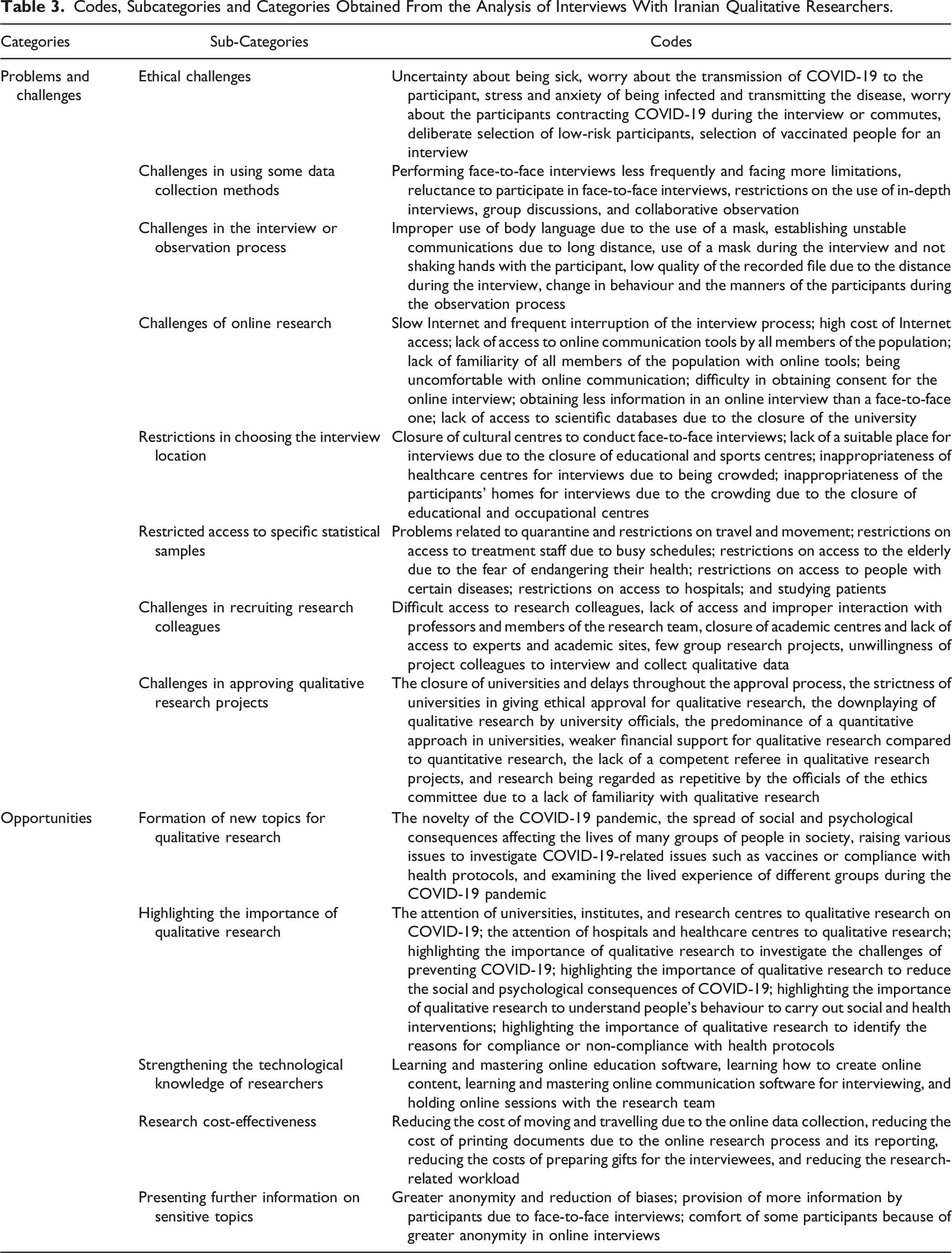
Problems and Challenges
The first category included problems and challenges faced by qualitative researchers during the COVID-19 pandemic. Due to the COVID-19 pandemic in Iran, the increasing mortality rate, and subsequent limitations, qualitative researchers faced many problems, which will be explained below.
Ethical Challenges
According to the modes of transmission of COVID-19, some qualitative researchers who did the interview had the ethical concern that they might be sick and transmit the disease to the participants. Also, another ethical challenge for qualitative researchers was to invite the participants to face-to-face interviews and have them contact COVID-19 during commutes. Another ethical challenge for qualitative researchers that might affect their research ethics is that they might consciously choose research participants from among those who are less likely to be infected with COVID-19 due to their fear of getting this disease or deliberately include only vaccinated people. “I sometimes doubted whether I had the coronavirus or not; sometimes I was afraid that the participant’s life would be endangered by participating in my interview” (A 29-year-old male PhD student). “Sometimes I thought that it was not necessary to conduct my research in this situation because the participant may get infected with coronavirus during commutes.” (A 28-year-old female PhD student) “Once, one of the participants coughed in an interview. I stopped the interview and did not interview him or her again. I was afraid that I would get the coronavirus. (A 34-year-old male assistant professor) “Recently, when I held an interview, I tried to interview people who had been vaccinated; I didn’t want to risk my health” (A 47-year-old female associate professor).
Challenge in Using Some Data Collection Methods
During the COVID-19 outbreak, some data collection methods in qualitative research, such as face-to-face interviews, group discussions, etc., were marginalised and could be used less frequently. Also, in some qualitative research, such as ethnography, where the researcher needed collaborative observation to record the phenomena, there were also great restrictions, so that the researchers were not able to be present in the study population and observe and record the phenomena. In some qualitative research studies, most of the participants also did not want to participate in face-to-face interviews due to the fear of contracting COVID-19, which could create a fundamental challenge in some subjects that require deep researcher-participant communication so that the participant provides more information to the researcher. “Due to the existing conditions, it was not possible to conduct many face-to-face interviews, so most of the interviews were conducted over the phone, although some participants did not want to participate in face-to-face interviews at all” (A 60-year-old male professor). “Part of my thesis was qualitative, and I should have used group discussions to collect data, but I could no longer perform group discussions, and the interviews were held individually due to COVID-19,” said a 28-year-old female PhD student. “I wanted to do ethnographic research in which I had to record people’s behaviour through observation. A coronavirus emerged and ruined everything. In the end, I gave up because it was no longer possible to get close to people and communicate with them so as to record their behaviour” (A 35-year-old female PhD student).
Challenges in the Interview or Observation Process
Most of the researchers stated that they faced many challenges during interviews or observations. One of the main challenges during the face-to-face interview was wearing masks, which made the researcher unable to understand the participant’s body language correctly. Also, due to the physical distancing, stable communication was not established between the researcher and the participant during the interview, which in turn had an impact on the quality of communication, and the participant might not trust the researcher in sensitive matters. Also, this physical distancing had an effect on the quality of the recorded files and sometimes caused the researcher problems while coding and typing the recorded interviews. Also, since the COVID-19 outbreak and the related health protocols caused wide changes in people’s behaviour and manners, it caused a disturbance in data collection and recording using the observation method because the researcher did not know whether this behaviour was usual or caused by the COVID-19 outbreak. “When the participants were wearing masks, I couldn’t have a good understanding of their body language; I couldn’t see whether they were happy or sad when they were talking about their own experiences.” 42-year-old female associate professor “We Iranians have a habit of treating each other with affection and shaking hands and hugging each other, but when coronavirus emerged, they were discarded, which in my opinion made it impossible to establish a good relationship with the participant” (A 52-year-old male associate professor). “I used to tell my students to observe the proper physical distance during the interview, but when I listened to the recorded file, sometimes I could not understand the participant’s statements because of this physical distance or wearing masks during the interview” (A 70-year-old female professor). “The COVID-19 pandemic had changed everything; it was no longer possible to understand anything through observation because people’s behaviour and manners had completely changed, which in turn made it more difficult for qualitative researchers to do their job” (A 57-year-old male associate professor).
Challenges of Online Research
Some researchers had turned to online qualitative research, but they faced many challenges in this regard. The first and perhaps most important challenge was the poor Internet connection and the frequent interruption of the interview flow, which could reduce the quality of the interview and participant-researcher communication. Also, some people limited their Internet use due to its high cost, which in turn prevented them from participating in the research. The participants also stated that they did not want to conduct an online interview and that it was difficult to get their consent, which could be due to the novelty of this research tool in Iran. Also, the closure of universities in Iran had caused some other researchers to be unable to access scientific databases and articles, which in turn could affect the quality of their articles. “My professor told me to carry out the interviews online, but the internet connection was interrupted ten times in every interview due to Internet problems. I didn’t feel good about the online interview at all” (A 28-year-old female PhD student). “When I wanted to interview poor people online, I knew that they might not be able to connect to the Internet at all due to the high cost of the Internet, so sometimes I would buy them an Internet package myself” (A 31-year-old female assistant professor). “My study population included elderly people; that’s why I had to interview them online. Few of them had access to phones and laptops and could use them, although even those who had internet access were not very comfortable at the time of the interview and all tried to finish the interview as soon as possible” (A 44-year-old male associate professor). “When the universities were closed due to the coronavirus, I went to my city and could not access the world’s most reliable scientific databases, and this made it very difficult for me.” (A 35-year-old female PhD student)
Restrictions in Choosing the Interview Location
Finding a suitable interview location was another challenge because most of the cultural, educational, and sports centres were closed, and the medical centres were not a suitable place for the interview due to being too crowded. Also, the participants’ homes could not be a suitable place for interviews due to the closure of many businesses and home quarantine. For this reason, most of the researchers stated that they had a lot of challenges finding a suitable place for the interview. Due to the fear of getting infected with COVID-19, finding a place with proper ventilation to reduce the risk of virus transmission was also a concern for the researchers. “I set a time for an interview, but I didn’t know where to hold an interview. I used to conduct interviews in libraries or educational and cultural centres, but they were all closed with the outbreak of COVID-19, said a 45-year-old male associate professor. “One of my students did qualitative research in the health field. He was very annoyed. There was no place where he could conduct an interview. The health centres were too crowded.” (A 64-year-old male professor). “It was very difficult to conduct interviews at the participants’ homes because all the family members were at home due to the quarantine, and the participant was not comfortable talking at all” (A 44-year-old male associate professor). “My professor told me that I must hold the interviews in an environment where there is ventilated air that does not threaten my health or the participant’s health. This made me sometimes spend an hour looking for a suitable place for the interview” (A 29-year-old male PhD student).
Restricted Access to Specific Statistical Samples
With the spread of COVID-19 in Iran, a set of quarantine restrictions were imposed, which posed a great challenge to qualitative researchers because they had to travel between different cities to access the participants and conduct interviews. Also, it was not possible to interview some special groups that were among the high-risk groups for COVID-19, such as the elderly or people with certain diseases. Also, although the medical staff and patients were greatly affected by COVID-19, which are subjects for qualitative research, it was not possible to access patients and medical staff due to the hospital conditions. Therefore, most of the researchers stated that they faced restrictions when interviewing these special people. “Our research included two large provinces, so the research group had to travel all the time, but all the roads were closed, and they could be subject to a fine if they travelled due to COVID-19. For this reason, the research was stopped for two months until the restrictions were lifted and it was possible to travel” (A 48-year-old male associate professor). “I wanted to conduct an interview with the elderly, but I went to the nursing home several times and they did not allow me, saying that you might be infected with the coronavirus and transmit it to everyone” (A 29-year-old male Ph student). “We wanted to conduct qualitative research on nurses and physicians, but they did not have time due to their busy schedules. Interviews were scheduled several times, but they were not conducted because many patients visited them” (A 37-year-old female assistant professor). “I wanted to do research on hospitalised patients, but they did not allow me to enter the hospitals at all due to the COVID-19 situation, and I had to postpone my research until the conditions were better” (A 35-year-old female PhD student).
Challenges in Recruiting Research Colleagues
Most of the qualitative researchers stated that they faced many challenges in recruiting research colleagues. These challenges were partly due to the closure of universities and research centres because researchers were not available after their closure. Also, since qualitative research requires continuous interaction between researchers, this interaction was not established in an optimal way and led to the suspension of group studies with the closure of universities and educational and research centres. Also, many researchers were no longer willing to cooperate in the data collection process due to the COVID-19-related restrictions and the difficulty of such a process. “I used to do qualitative research with some of my friends, but when the university was closed, each of them went to their own city, and I don’t have access to them” (A 38-year-old female PhD student). “We used to conduct qualitative research much more easily because we would sit with other colleagues and discuss the problems of the article and how to write it during sessions, but now these sessions can no longer be held. Now, I prefer to conduct research alone” (A 40-year-old male assistant professor). “There were two or three MA and Ph.D. students who collected data for me whenever I wanted, but they no longer want to do this work since the onset of COVID-19. I asked them to do so several times, but they refused” (A 66-year-old female professor).
Challenges in Approving Qualitative Research Projects
Despite the great importance of qualitative research in investigating new health and social phenomena such as COVID-19, some researchers stated that their qualitative projects were not welcomed by research centres and faced problems getting them approved, which could be due to the dominant nature of the quantitative approach in health-related research in Iran. Also, another limitation facing researchers was the closure of universities and the slow administrative procedures for approving research projects. However, considering COVID-19 conditions and collecting data through interviews, group discussions, etc. that could endanger the health of the researcher and the participant, the university officials become more sensitive to approving qualitative research projects, assigning a code of ethics, and requiring compliance with ethical considerations during the COVID-19 pandemic compared to the quantitative research that is performed using questionnaires. In general, according to the participants' statements, qualitative research is still not as welcomed as quantitative research in Iran, and only a limited number of people perform qualitative research. This issue creates challenges for the approval of qualitative projects because research institutes do not have a suitable referee to review these projects, and they have to appoint quantitative researchers to perform the evaluation process, which in turn makes the approval of research projects a long and tiresome process due to their insufficient knowledge. “With the spread of COVID-19, everything is messed up at the university. Previously, sessions were held more regularly and research projects were approved more easily, but now it takes a long time” (A 55-year-old male professor). “We wanted to approve a qualitative research project, but they made so many objections that we gave up. They said that you should not use interviews and group discussions because the health of the researcher and the participant may be endangered” (A 45-year-old male associate professor). “Qualitative research is a very good option for investigating the effects and consequences of COVID-19, but unfortunately, our university does not accept this because most of its professors have a quantitative perspective and believe that qualitative research is not of much value because the number of samples is small and results cannot be generalised” (A 66-year-old male professor). “Here, they easily approve quantitative research and allocate a budget, but they make a thousand excuses for qualitative research. Yet, when they want to judge it, they send it to a referee who knows qualitative research but has never done qualitative research, which in turn makes the process even more difficult” (A 29-year-old male PhD student).
Opportunities
The COVID-19 pandemic not only presented challenges and limitations to qualitative researchers but also provided them with opportunities in some cases to conduct further research and expand the scope of their qualitative research.
Formation of New Topics for Qualitative Research
The COVID-19 outbreak almost affected everyone in society, and it was accompanied by many social consequences besides health consequences, which provided qualitative researchers with new research ideas considering its novelty and unknown nature. Many qualitative studies have investigated the experiences of different groups in the face of COVID-19. “COVID-19 was a new virus that affected not only health but also the whole society and had many consequences; therefore, qualitative research could help a lot because of this unknown and novelty; that's why I did qualitative research” (A 66-year-old female professor). “Each stage of COVID-19 was accompanied by its own events and questions, which could only be properly answered through qualitative research” (A 40-year-old male assistant professor). “Different social groups experienced COVID-19 conditions in their own way. Therefore, their understanding and experience are very useful, and this could only be understood via a qualitative approach. (A 48-year-old male associate professor).
Highlighting the Importance of Qualitative Research
Due to the survival rate of the COVID-19 virus and the need to investigate its effects and consequences, universities, hospitals, institutes, and research centres have shown increasing attention to qualitative research on the COVID-19 pandemic. Also, qualitative research became important to investigate the challenges facing COVID-19 prevention, reduce the social and psychological consequences of COVID-19, understand people’s behaviour to perform social and health interventions, and identify the reasons for compliance or non-compliance with health protocols. Before the COVID-19 pandemic, our department did not believe in qualitative research at all, but when they realised how much qualitative research could help in achieving a better understanding of the phenomena after COVID-19, they supported qualitative research more frequently” (A 39-year-old male assistant professor). “I wrote about five qualitative research projects, and all of them were approved. Fortunately, our research centre attaches high value to qualitative research” (A 33-year-old male assistant professor). “In my opinion, in order to achieve a better understanding of people’s behaviour, we need qualitative research, especially in critical situations like the COVID-19 pandemic, where there is not much information about it and it has widely affected all aspects of human life” (A 55-year-old male professor). “At every stage of COVID-19, many qualitative studies could be conducted; for example, early on, it was possible to investigate the issue of why people follow health protocols or not, or qualitative research could be performed on vaccines and the experiences of families during the COVID-19 pandemic” (A 45-year-old male associate professor).
Strengthening the Technological Knowledge of Researchers
With the spread of COVID-19 in Iranian society and the imposition of extensive restrictions, face-to-face qualitative research was marginalised, and most of the research projects were conducted online, which in turn made some qualitative researchers improve their technological knowledge through learning and mastering virtual education software, learning how to create content in virtual space, learning and mastering virtual communication software for interviewing, and holding online sessions with the research team. “Before COVID-19, I rarely used online education, but as university classes were held online, I had to learn many things, and it was very useful for me in qualitative research” (A 37-year-old female assistant professor). “When COVID-19 emerged, I thought that I would not be able to do any research, but I was able to conduct interviews and many qualitative research studies by learning some good software” (A 35-year-old female PhD student). “My research team and I held an online session every two weeks and talked about our research. It was very good. I didn’t think it would go so well.” (A 40-year-old male assistant professor)
Research Cost-Effectiveness
The COVID-19 pandemic has led researchers to perform most of the research and related coordination online. This issue reduced research costs because if it was not done online, the researcher would have to pay a lot of money for commuting and collecting data. Also, since the research project process was reported online, there was no need to print it anymore, which was also effective in reducing related costs. Also, online processes reduced the workload, and there was no need to get signatures from various officials to start the research. In the online interview process, the participants have less expectation of receiving a gift for participating in the research, and this issue can reduce the financial burden of the research. “When I was doing qualitative research before the pandemic, I had to conduct interviews in person, and sometimes I paid a lot of money when the participants were scattered, but now it’s better and the interviews are held online, so I don’t need to pay any more” (A 34-year-old male assistant professor). “I had to print the report of the approved research projects before the pandemic, or we had to have our proposal printed and signed when registering it, but now there is no need to print it; everything is done online” (A 29-year-old male PhD student). “I used to give a small gift to the participant after every interview, but now it is not needed because interviews are done online” (A 48-year-old male associate professor).
Presenting Further Information on Sensitive Topics
Some researchers believed that since the participant has more anonymity in the online interview, less bias occurs, and he or she also provides more information, feels more comfortable about sensitive issues, and tends to talk more frequently. “In the online interview, the participant feels more comfortable and is under pressure less frequently, so he provides more information” (A 39-year-old male assistant professor). “Because the interviews were conducted online, the participants felt more comfortable and provided more complete information, which may be due to the greater anonymity of the participant in an online interview” (A 66-year-old female professor). “When I did an online interview, I noticed that the participants answered sensitive and private questions better; maybe because I didn’t see them closely, they felt more comfortable.” (A 35-year-old female PhD student)
Discussion
The aim of the present research was to analyse the challenges and opportunities for qualitative researchers during the COVID-19 pandemic in Iran. The results showed that qualitative researchers have faced a number of opportunities and challenges. One of the most important challenges for qualitative researchers was ethical, which was consistent with previous research (Newman et al., 2021; Santana et al., 2021). According to modes of COVID-19 transmission and the fact that there is a need for more communication between the researcher and the participant to conduct qualitative research, there were many ethical challenges for qualitative researchers because they were worried about being infected with COVID-19 when commuting to the research environment to collect data. This concern could have influenced their research in such a way that they deliberately attempted to select participants who were the least likely to be infected with COVID-19, which would lead to research bias. In some studies, it has been emphasised to ensure and give importance to the researcher’s health as one of the necessities of qualitative research during the COVID-19 pandemic (Santana et al., 2021). In another study, it was reported that people were less willing to participate in research during the COVID-19 pandemic due to their health concerns (Gobat et al., 2019).
The challenge of using some qualitative data collection methods was one of the other challenges during the COVID-19 era. Due to the nature of qualitative research, which requires mutual communication between the participant and the researcher, COVID-19 brought about a situation where this communication could no longer be formed in the research as before. Therefore, some methods of data collection in qualitative research, such as participatory observation, group discussion, etc., were affected and were used less frequently. There was even a reduced desire for face-to-face interviews, and the researcher had to use other alternative methods that may affect the results of some research. Rahman et al. (2021) referred to the decreased popularity of face-to-face interviews in qualitative research as one of the challenges for qualitative researchers during the COVID-19 pandemic (Rahman et al., 2021). Yoosefi Lebni et al. (2021), Cornejo et al., 2023 also referred to the unwillingness to conduct face-to-face interviews as one of the main limitations of qualitative research (Cornejo et al., 2023; Javad Yoosefi Lebni et al., 2021).
The challenge of interviewing and observation was another challenge for qualitative researchers, which was consistent with previous research (Howlett, 2022; Webber-Ritchey et al., 2021). Researchers could not easily use body language. Also, wearing masks, physical distancing, and being in the open air sometimes affected the quality of the recorded sounds and made it difficult for the researchers to implement the recorded files. SoleimanvandiAzar (2021) also conducted qualitative research during the COVID-19 pandemic in Iran and found that physical distancing during the interview caused some participants to feel uncomfortable and that an intimate atmosphere was not created between the researcher and the participants (SoleimanvandiAzar et al., 2021). Also, many people’s manners and customs had changed in observational research due to the spread of COVID-19, and the researcher was faced with the confusion of whether the current behaviour was caused by the COVID-19 pandemic or was a cultural behaviour of the people or the participants. In some previous qualitative research, the low quality of recorded interview files has been reported as one of the limitations of the research (Irandoost, Yoosefi Lebni, et al., 2022).
The challenges of online research were another new and interesting finding in the present research, which was consistent with the other studies (Boéri & Giustini, 2023; Webber-Ritchey et al., 2021). Considering the limitations of qualitative research in the real context, some researchers attempted to perform them online, which in turn faced many restrictions. Most of these restrictions were related to the internet situation in Iran, so many people did not have much access to the internet and were practically excluded from the research process. Also, some people were excluded from the research due to the high cost of the Internet. The online interview process was frequently interrupted due to Internet disconnections, and the researcher could not get as much relevant information from the participants as he should. In some cases, it became difficult to access scientific databases due to the closure of universities, and qualitative researchers faced many problems. Lobe et al. (2020) reported access to computer equipment for online interviews as one of the main limitations of this type of interview (Lobe et al., 2020).
Another challenge facing qualitative researchers was the limitation of choosing the interview location. The absence of a quiet and suitable interview place can affect the participant-researcher relationship, and the participant cannot easily share his or her experiences with the researcher, which in turn can affect the research results (Marhefka et al., 2020). Results of research on Iranian housewives during the COVID-19 pandemic showed that the absence of a quiet interview place due to home quarantine was one of the research limitations (Javad Yoosefi Lebni et al., 2021). Also, the need to comply with health protocols and conduct outdoor interviews sometimes created restrictions for conducting interviews and lowered the quality of the recorded sound files.
Another challenge was the limited access to specific statistical samples, which is consistent with some studies (Marhefka et al., 2020; Tremblay et al., 2021; Webber-Ritchey et al., 2021). Due to the quarantine and travel restrictions, some researchers had difficulty accessing the participants who lived in different cities. Also, there were limitations in selecting some special populations, such as the elderly and people with certain diseases that may pose health risks. There was also a need to conduct a qualitative study for the treatment staff and hospitals, but there were limitations in conducting interviews due to busy schedules and time constraints caused by the pandemic.
Another problem facing qualitative researchers was the recruitment of research colleagues, which is consistent with previous research (Hayat et al., 2021; Vindrola-Padros et al., 2020). Hayat et al. (2021) reported in a study in Iran that limited communication was one of the main challenges for students and researchers during the COVID-19 pandemic in Iran (Hayat et al., 2021). Considering the fact that qualitative research requires continuous and close communication between the researcher and the participants, many researchers did not have much desire for qualitative research during the COVID-19 pandemic since it could threaten their health.
The challenges of approving qualitative research projects were another problem for qualitative researchers in Iran. These challenges were partly related to the quantitative approach of the officials of the research and academic centres and also to the COVID-19 conditions. In other words, the COVID-19 infection caused great ethical sensitivities in approving projects, which in turn made qualitative research difficult to implement.
Despite all the challenges faced by qualitative researchers, COVID-19 created a number of opportunities for them. One of these opportunities was the formation of new research ideas. With the spread of COVID-19 and its pandemic nature in Iran, its novelty and impact on the lives of many people, and its unknown consequences on the health and personal and social lives of the individual and family, new ideas were formed to understand these unknowns, which can only be accomplished through a qualitative approach; therefore, new research topics were formed.
Highlighting the importance of qualitative research was another opportunity for qualitative researchers. In fact, many universities and research centres realised the importance of qualitative research after the COVID-19 pandemic so that they could conduct appropriate interventions by recognising the emerging challenges of COVID-19. Qualitative research can increase researchers' understanding of the extensive impacts of COVID-19 on the social life of humans through in-depth investigation and identification of complex and unexpected issues (Cornejo et al., 2023; Santana et al., 2021).
Another opportunity for qualitative researchers was to strengthen their technological knowledge. Considering the complex COVID-19-related conditions in societies, many qualitative researchers were forced to use online collection methods in their research (Howlett, 2022; Varma et al., 2021), which in turn made them increase their technological knowledge regarding online research and interviews.
The research cost-effectiveness was another advantage of qualitative research during the COVID-19 pandemic, which is consistent with previous research (Haddad et al., 2022). Boland et al. (2021) stated that cost-effectiveness and the ability to reach different populations are two of the main advantages of online interviews in qualitative research (Boland et al., 2021). Considering the current pandemic, data collection was mainly carried out using interviews, which made the research costs much lower due to a reduction in commutes. Also, other costs, such as printing documents and reports and preparing gifts for the interviewees, were reduced by online research. Providing more information on sensitive topics is another advantage of qualitative research. The participants could also talk more easily and share their experiences and thoughts with the researcher regarding some sensitive subjects that required more anonymity. This feature made some essential information available to researchers, which was often lost in face-to-face interviews.
Limitations and Strengths
This research was one of the few that analysed the challenges and opportunities faced by qualitative researchers during the COVID-19 pandemic in Iran and around the world. After identifying these challenges and opportunities, results can be made available to universities and research centres in order to take relevant measures to reduce challenges and strengthen and take advantage of opportunities. The results of the present study can also provide useful information to experts and qualitative researchers so that they can be more familiar with the challenges and opportunities during the COVID-19 pandemic. They can consider these challenges and opportunities prior to their research so that they can conduct qualitative research more effectively. Another strength of the present research was that most of the authors had experience conducting qualitative research during the COVID-19 period, which helped them have a better understanding of the experiences and challenges of the participants.
However, this research also had limitations. One of the main limitations included the fact that it was only conducted in one country, and its results may be different from those of other countries due to differences in the educational and research structure and the way of coping with COVID-19. It is suggested that similar research be conducted in other countries. Another limitation was that it was only conducted on researchers in the health sciences, while humanities researchers may have faced different challenges; therefore, it is suggested to perform further studies in the field of humanities. Another limitation was that participants lived in different parts of Iran. For this reason, telephone interviews were used in some cases to reduce costs and at the request of the participants. Additionally, the closure of university centres created limitations in accessing the participants, and the slow Internet speed in some online interviews caused disruptions.
Conclusion
The results showed that researchers face several challenges when conducting qualitative research during the COVID-19 pandemic, such as ethical challenges, challenges in the interview or observation process, challenges in online research, and limitations in using some data collection methods, interview locations, access to specific statistical samples, and recruiting research colleagues. COVID-19 has also created opportunities for qualitative researchers, such as the formation of new research topics, highlighting the importance of qualitative research, strengthening the technological knowledge of researchers, making research cost-effective, and providing more information on sensitive topics. In order to reduce the challenges, it is suggested that researchers make sure that they are not infected with COVID-19 prior to qualitative research and follow health protocols throughout their study. It is also possible to strengthen qualitative research by supporting qualitative researchers at universities and research centres, facilitating the administrative processes, providing communication infrastructure such as suitable Internet in universities, ensuring more diversity in data collection methods, developing an appropriate protocol during the COVID-19 pandemic, and dedicating some university rooms to qualitative researchers to conduct interviews.
Footnotes
Acknowledgments
The authors would like to thank all the participants who patiently participated.
Declaration of Conflicting Interests
The author(s) declared no potential conflicts of interest with respect to the research, authorship, and/or publication of this article.
Funding
The author(s) received no financial support for the research, authorship, and/or publication of this article.
Ethical Statement

Data Availability Statement
Data are available by contacting the corresponding author.