




Abstract
Comics have been used as a tool for learning, teaching, understanding, raising awareness and changing behaviours. Researchers are taking more advantage of this medium as comics in research has become a growing field. Notwithstanding, comics as research practice/method has received less attention, particularly the research framework involved in making comics. Here, we detail the research process through the drawing to create a comic about non-alcoholic fatty liver disease. We argue that deciding on visual choices intersecting the perspectives of both artist and researchers whilst promoting reflexivity can be best understood through mutual collaboration. We depict examples of how the active inter/trans/disciplinary research environment, incorporating perceptions, experiences, tensions, from the artist and researchers, and respective disciplines, also informed by patient testimonies, resulted in (new) meanings and ways of thinking in terms of visual content and structure. Particularly when creating the characters and when using multimodality and resources afforded by comics –visual metaphor, anthropomorphism, and scientific sketchnote–, to portray the human body and bring familiarity and simplicity to complex cellular and metabolic events. We end with a comic strip framing comics as research practice, outlining the active engagement during the drawing processes and the research framework that combined a mixed method research approach for creating a tool useful towards understanding science and health promotion.
Keywords
Introduction
The structure and creation of visual narratives in comics combines creativity, cognition, communication, behaviour (Cohn, 2013b; Dobbins, 2016; Davies, 2019; McCloud, 1993; McNicol, 2014). When thinking of visual narratives related to science learning and health promotion several questions arise: How do visual narratives enhance learning/understanding? Which content/What kind of story can better engage/motivate the reader with a meaning? How important are characters (and the relation between them) to convey a message? Which contexts, circumstances, natural and socio-cultural environment(s) effectively transport/persuade the reader with an impact on attitudes and behaviours? These questions link directly to multimodal features and (social) semiotic structures to thinking and creating meaning from drawings and text (Bateman et al., 2017; Borkent, 2017). However, other questions arise when thinking comics: How powerful can be the relationship between the artist(s) and researcher(s) for/during the drawing processes? What are the influences of the relationship between the artist(s) and researcher(s) in doing/for conducting research with(in) comics? This article intends to make a contribution to the qualitative research field by addressing the active inter/trans/disciplinary research environment between a comic artist (here artist-researcher) and researchers from the fields of the life, biomedical, social sciences and humanities, working in comics, visual methods, art-science collaborations, science and health communication, in the creation of a comic to raise awareness about non-alcoholic fatty liver disease (NAFLD) “A Healthy Liver Will Always Deliver!” (Alemany-Pagès, Tavares, et al., 2020).
We first introduce comics as practice in science learning and health promotion and circumstances that make it an adequate educational and awareness tool. We then briefly present NAFLD and describe the research framework used to create the comic, which combines a mixed methods research approach, starting with interviewing people with diabetes (type 2 diabetes mellitus, T2DM), who are at risk of NAFLD (Alemany-Pagès, Moura-Ramos, et al., 2020) to envision the concept and script of the story (Alemany-Pagès et al., 2021). Next, we reflect on drawing processes, bringing important aspects of visual language used in comics, and insights from artist and researchers, with a focus on the creation of characters (Eisner, 1985; Kukkonen, 2013; McCloud, 2006) and (social) semiotics, in particular visual metaphor (Forceville, 2016; Lakoff & Johnson, 2003), anthropomorphism (Epley et al., 2007; Mitchell et al., 1997), scientific sketchnote (Fernández-Fontecha et al., 2018), and multimodal complexes. We then reflect on the challenges and accomplishments, and eventual implications that emerged from the reflexivity approach. We conclude with a comic strip outlining the active engagement in thinking and deciding the drawings to create a tool to improve science learning, disease awareness and health promotion, together with a research framework following a mixed method research approach.
Comics in Science Learning and Health Promotion
Comics have been shown to be well suited to explain scientific and biomedical concepts and can further benefit from the persuasiveness of narratives as key elements towards changing behaviours. Although some familiarity with the medium is important (Cohn, 2021), the ‘sequential’ panels containing images and text (McCloud, 1993; 2006) arranged into narratives to convey a story or stories are layered and functional (Cohn, 2013c; Davies, 2019; Groensteen, 2009; Lefèvre, 2016), and can be particularly useful in creating empathy and embodiment, and turning knowledge into behavioural practises, dependent also on related circumstances and social context (Dobbins, 2016; McNicol, 2014).
The use of comics as an educational and awareness tool in health promotion may combine several purposes and meanings and be tailored towards one or different types of audiences. Aspects that can be developed include health condition knowledge, treatment adherence, self-management assistance, support in dealing with disease, empathy in illness, or engagement in preventive healthy habits. Comics can therefore be included in an interdisciplinary field of practice (Kuttner et al., 2018; 2020) in science and health communication (e.g., Alemany-Pagès et al., 2020; Farinella, 2018a, 2018b, McNicol, 2014, 2016; Varela Amaral et al., 2015), science learning and teaching (e.g., Monastersky & Sousanis, 2015; Ramalho-Santos, 2015; Azul et al., 2018), clinical and healthcare practice (e.g., Al-Jawad, 2015; Dobbins, 2016; Green & Myers, 2010; Czerwiec et al., 2015; Ashwal & Thomas, 2018), medical education and training (e.g., Green, 2013; Ronan & Czerwiec, 2020; Maatman et al., 2021), or health and social care (e.g., Dobbins, 2016; Priego & Farthing, 2020).
Despite the increasing use of comics across different fields in both sciences and humanities, less focus has been given to comics as a research practice (Kuttner et al., 2018; 2020), notably outlining the creation process itself, i.e., the phases linked to the purpose, approach, drawing processes; or exploring the production of knowledge from comics-based research; or focusing on the impact of comics research practice. Also, there has been little focus on the dynamics and experiences during the drawing processes, especially considering the artistic sensibility inherent to research (Ingman, 2022). We argue that engaging in ‘mutual reflection and experience’ can generate new meanings and ensure perspectives and biases in the comic artist(s) and researcher(s) relationship, and both their reflections and experiences (Finlay, 2002); therefore, be influential in thinking and creating meaning out of the comics. Additionally, contributions from people with disease, health providers, caregivers, family (e.g., Czerwiec et al., 2015; Dobbins, 2016), as both narrative inspiration and as avatars for a potential target audience, can further enrich graphic narratives.
A (Short) Note on Non-Alcoholic Fatty Liver Disease
Non-alcoholic fatty liver disease is currently the most prevalent liver disease in many parts of the (developed) world, part of a wide spectrum of related liver pathologies (Lazarus, Colombo, et al., 2020), including also non-alcoholic steatohepatitis (NASH). It is frequently related with obesity, diabetes, insulin resistance, and its progression is linked to liver cirrhosis, liver cancer and increased cardiovascular risk (Pimpin et al., 2018; Romero-Gómez et al., 2017). Non-alcoholic fatty liver disease is a major public health concern worldwide, increasing among children and adolescents (Anderson et al., 2015) and estimated to affect 25% of all adults (Younossi et al., 2016). Excess caloric consumption (sugar and fat) and physical inactivity represent the leading risk factors for NAFLD; however, the way food consumption is distributed throughout the day also affects the accumulation of fat in the liver (Romero-Gómez et al., 2017). The most effective and comprehensive therapy for treating people with NAFLD is lifestyle intervention, through calorie-restricted diets and regular physical activity (EASL, 2016; Romero-Gómez et al., 2017; Leoni et al., 2018). Paradoxically, NAFLD awareness is still limited, not only in the general population, but also in health care systems (Alemany-Pagès, Moura-Ramos, et al., 2020; Alemany-Pagès, Tavares, et al., 2020; Alemany-Pagès et al., 2021; Alqahtani et al., 2021; Ghevariya et al., 2014; Lazarus, Ekstedt, et al., 2020; Younossi et al., 2017).
Several outreach campaigns and educational programs have progressively sought to raise NAFLD awareness, such as the European Association for the Study of the Liver (EASL), the Fatty Liver Foundation (FLF), The British Liver Trust (BLT), the Global Liver Institute (GLI), or the American Liver Foundation (ALF). The broad adoption of healthy behaviours calls for comprehensive approaches in which health promotion is perceived as dependent of disease awareness, effective self-management, motivation and perceptions of self-efficacy (Bandura, 1977; 2004). Contributing to rising NAFLD awareness and promoting healthy lifestyles, the European project, dedicated to the pathophysiology and treatment of NAFLD, also involved an outreach task with a comic research project.
The forthcoming sections will address the following key aspects about NAFLD: Etiology – explaining the energy homeostasis imbalance that drives the metabolic disorders and disease, including the association between behaviours, weight gain, adiposity and the liver disease; Progression – explaining the progressive development of the disease. For example, insulin has an important role in regulating blood sugar levels and energy homeostasis. Whenever sugar levels are high, insulin signals different organs to store it, and, if excessive, sugar can be converted into fat. With persistent fat accumulation disruption and incapacity to remove sugars from the blood (insulin resistance) may occur, leading to more fat accumulation in the liver; Therapeutics, prevention and awareness – explaining the importance of suiting energy intake versus spending for the maintenance of liver health, including the association between diet and active lifestyles.
Framing Comics as Research Practice
The structure of visual narratives in comics, graphic stories and graphic storytelling involve inter- and transdisciplinarity, attracting researchers and practitioners from natural sciences, medical and health sciences, sciences, engineering and technology, communication, arts and humanities.
From the perspective of cognitive sciences, Cohn (2013c) argues that the structure and processing of drawing is analogous to spoken and written forms of a language (Jackendoff, 2002), meaning ‘comics are not a language, but they are written in a visual language of sequential images’ (Cohn, 2013c: 2). Cohn (2013c) proposes the ‘visual language’ theory to describe the hierarchical constituents of a visual narrative to separately explain the function of structure and meaning in visual narrative processing, and to better understand the labelling, modality, functions and relationships of individual images and text through the narrative (sequence). Importantly, experience and familiarity with visual narratives, as well as, historical, cultural, and/or biological functional aspects are crucial in comprehending and fluently understanding the sequentiality of images in comics (Cohn, 2020; 2021).
In terms of practice, Kuttner et al. (2020) placed comics-based research as a field of ‘resources and opportunities that the form affords researchers’; namely attracting researchers from different areas, sharing interests in the ‘unique semiotic, narrative, communicative, and educative properties of the comics form for their participants, their audiences, and themselves’ (p. 197). Similarly, Weaver-Hightower (2017) argues that comics-based research offers the possibility of documenting ‘inaccessible places and capture emotions and experiences’, representing a ‘multimodal way of scaffolding the analyst’s cognition’ that substantiates ‘the complexity of experience’ in qualitative research. In that path, comics-based research has been expanding qualitative research in interdisciplinary studies of medicine, medical education (Czerwiec et al., 2015; Green & Rieck, 2013) and medical humanities (Weaver-Hightower, 2017), in intercultural research and social activism (Williams, 2012; Bartlett, 2013; Meer & Müller, 2021), educational philosophy (Sousanis, 2015), social studies (McNicol, 2019), and conveying research findings (Priego, 2016), among others.
Comics combine images, diagrams, words, as multimodal communication (Bateman et al., 2017; Borkent, 2017) that can also help readers understand information (e.g., Jacobs, 2007). Some multimodal elements regarded as medium-specific include the realistic or non-realistic depiction of humans (and other beings and objects), pictograms, movement and emotion lines, text and thought balloons, onomatopoeia, among others (Forceville, 2020). When combined these elements can serve the purpose of meaning-making (Bateman et al., 2017).
The ability of comics to enhance understanding and learning and to motivate a shift towards health behaviours is influenced by the interaction with the reader (Bandura, 1977; 2004) and their transportation along the narrative (Green & Brock, 2000; 2002; Green et al., 2002). In this sense, we argue that all participants, here a comic artist and researchers, and the relationship between them, matter to thinking and deciding visual meaning to create meaning.
The Research Framework Doing the Comic “A Healthy Liver Will Always Deliver!”
The comic research framework comprised three phases (Figure 1), integrating qualitative and quantitative methods which can be summarized as the participatory research with people with diabetes, who have an increased risk of also suffering from NAFLD (phase I); the mutual collaboration between the artist and the researchers drawing the comic (phase II); and the questionnaire to assess the effectiveness of the comic (phase III). Comic research framework combining a mixed method research approach with three phases: the participatory research with people with diabetes (phase I), the mutual collaboration between the artist and the researchers drawing the comic (phase II), and the questionnaire to assess the effectiveness of the comic (phase III).
Qualitative research study on NAFLD awareness (phase I) involved 30 semi-structured interviews to people with T2DM, conducted at the Portuguese Diabetes Association (APDP; Lisboa, Portugal). The semi-structured interviews consisted of six topics: (i) T2DM knowledge and illness perceptions, (ii) knowledge on insulin resistance and the interplay between T2DM and NAFLD, (iii) basic liver function, fatty liver awareness and NAFLD awareness/knowledge, (iv) cirrhosis awareness and relation with NAFLD, (v) role of diet and exercise on T2DM and NAFLD treatment, and (vi) interest in NAFLD education (Alemany-Pagès, Moura-Ramos, et al., 2020; Alemany-Pagès, Tavares, et al., 2020). The interviews were accompanied by an anonymized questionnaire for demographic profile, with information about age, gender, education, occupation and time since T2DM diagnosis. The study involved people with diabetes, patients, healthcare professionals and researchers working in the fields of the life, biomedical, health and social sciences. The testimonies contributed to making meaning (e.g., Nasheeda et al., 2019) to select the biomedical content, and inspired the creation of characters and storylines.
Qualitative research approach on drawing a comic about NAFLD (phase II) involved regular meetings in which the comic artist and researchers from several different fields (life, biomedical and social sciences; humanities, comics, visual methods, collaborations between science and art), engaged in a reflexive approach (e.g., Finlay, 2002; Creswell & Creswell, 2018) that resulted in (new) meanings and ways to convey the visual and verbal narrative. Initially, discussions addressed the factual knowledge and the characters by analysing scientific manuscripts, technical reports, images and videos, together with the testimonies (from phase I), and in the coalescence of clear and understandable scientific content and messages to be conveyed. With the progression of visual structure and composition, reflections incorporated aspects to strengthen transportation, engagement and persuasiveness of the narrative. Other critical viewpoints during the drawing included the contexts and circumstances linked to socio-cultural and natural surroundings and the expressivity and emotion of characters. The interactions between the artist and researchers and the successive field and sketch-notes (e.g., Margolis and Pauwels, 2011; Denzin and Lincoln, 2018) nurtured the progression of the comic. The next sections detail the evolution in semantic and semiotic resources, with a focus on the creation of the main characters, the adoption of visual metaphor, anthropomorphism, and scientific sketchnote. The creation process timeline (Figure 1) involved the planning, pencilling, inking, colouring, and lettering (McCloud, 2006), spanning across 18 months. Some technical aspects in the drawing process were less sensitive to discuss, such as pencilling, inking, colouring and lettering.
Quantitative research study on the comic’s persuasiveness (phase III) aimed at assessing the capacity of the comic to elicit narrative engagement, as well as to convey NAFLD factual knowledge and influence health-related beliefs. The evaluation consisted of using pre-post questionnaires (McNicol, 2014); the only eligibility criteria were being an adult (above 18 years of age) and being a Portuguese-speaker. The questionnaire included a section on demographic data, collecting information on age, gender, nationality, education level, age, and height for body mass index (BMI) calculation, participation in prior liver testing, metabolic diagnoses (overweight, obesity, hypertension, hypercholesterolemia, T2DM, Cardiovascular Diseases, NAFLD and cirrhosis), and NAFLD awareness. Recruitment was online and in the science section of PÚBLICO (Firmino, 2021), a Portuguese daily newspaper with an average circulation of 30.000 copies in print. A total of 561 participants completed the pre-post questionnaires. The comic was shown to be able to convey factual knowledge about NAFLD and transport the reader to situations and circumstances regarding (un)healthy diets and habits, supporting engagement and persuasiveness through the narrative (Alemany-Pagès et al., 2023).
Ethical Considerations
A written informed consent was obtained from all patients before initiating the interviews, approved by APDP’s Ethics Committee for Health. This consent included information about the study’s purpose as well as the intention to produce a comic book together with patients to raise awareness on NAFLD; the patients were invited to decide about considering their knowledge and experience in living with T2DM for the construction of the script. Equally, the study to evaluate the impact of the comic in terms of engagement and persuasiveness had also a written informed consent, obtained from all participants before initiating the questionnaires and the comic experience; the study was approved by author’s University Ethics Committee of the Faculty of Medicine on September 28th, 2020. Both Ethics Committees were actively involved in the informed consent process, as guidance and practice, aiming to design a proper ethical informed consent, safeguarding the participants, the researchers, and the institutions.
Drawing a Comic to Raise Awareness About Non-alcoholic Fatty Liver Disease and Promote Healthy Lifestyles
Creating Characters Alongside the Narrative Engagement
The interviews with diabetic people, although conducted within a sample of Portuguese population, contributed with critical insights about knowledge and (mis-)understandings, illness experience, self-reflection, self-motivation, self-management:
“It was just the doctor indeed. I was completely unaware that I had (T2DM)…because, and it is that thing, I didn’t have any symptoms. Like, the doctor when she saw the analysis she began to talk to me, she made all those questions, if I had thirst, if I blah blah blah, if I… I don’t even remember exactly. And I didn’t have any of those symptoms, no, that’s it, I was thirsty and I was, I sweated a bit, but I was fat, I was one hundred and some kilos, that’s why that was a normal thing, isn’t it?” (#121, ♀, 50, SU)”
“I am going to tell you just the exercise that I do. It is to go for a walk almost at night with my puppy. I have a puppy that is called Mary-Frances, I have two married children, I have grandchildren, I also have a granddaughter who is already married, but that puppy is as if it were my daughter. It is. And we go for a walk the three of us, me, my wife and the puppy. That’s it. At night. It is the exercise that I do now, it is not worth it. I try, try to walk more than what I, what I walk. But I get very tired. I get very tired and I don’t walk more because I get tired, but I know that it is necessary to walk.” (#103, ♂, 73, 2°C)”
Recognizing the multiple levels of information, which embrace physical, psychological, and social determinants of health, the first series of sketches included patients, healthcare professionals, family members, with characters at different stages of life, e.g., young generations, adults, pregnancy, autoimmune diabetes; with actions taking place in healthcare centers and reporting daily life routines, namely family meetings (Figure 2a). The crescent diversity in context generated concerns in terms of narrative comprehension to address disease diagnoses, management and prevention (e.g., Cohn, 2013b; Cohn, 2014). After several visual and script proposals, a compromise was achieved with the adoption four main characters (Figure 2b–e) to target people with high-risk metabolic disorders, people with NAFLD diagnosis, and the general public. The left side shows selected character sketches from an early version of the comic (a), where different scenarios and situations are depicted, also highlighting different dynamics between characters. In the centre it is shown the four established characters and their body appearance (b, c, d, e). On the right side, examples of characters’ accentuated emotions are shown combined with body posture in different situations of the comic (b2-8, c2-8, d2-8, e2-8).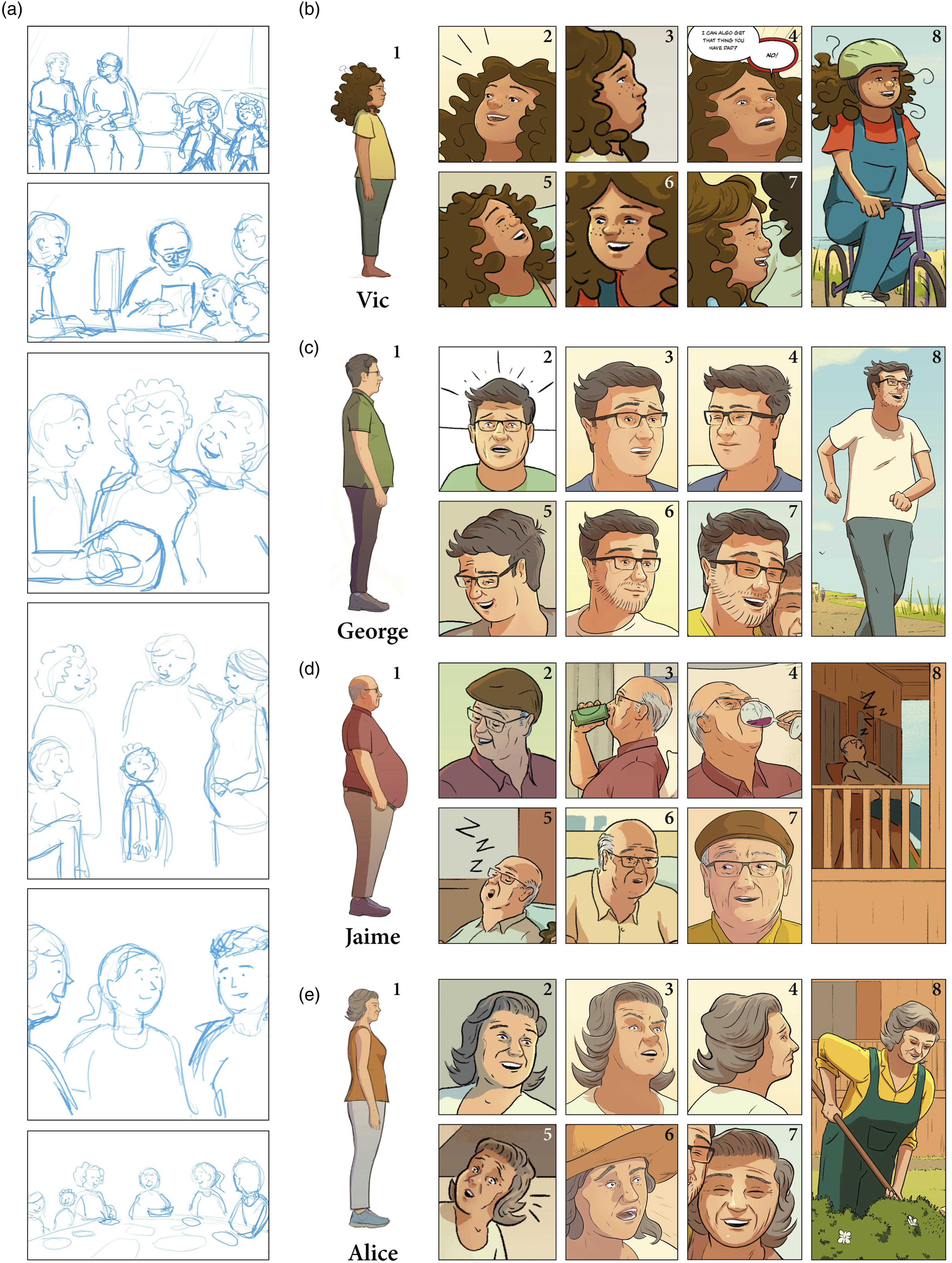
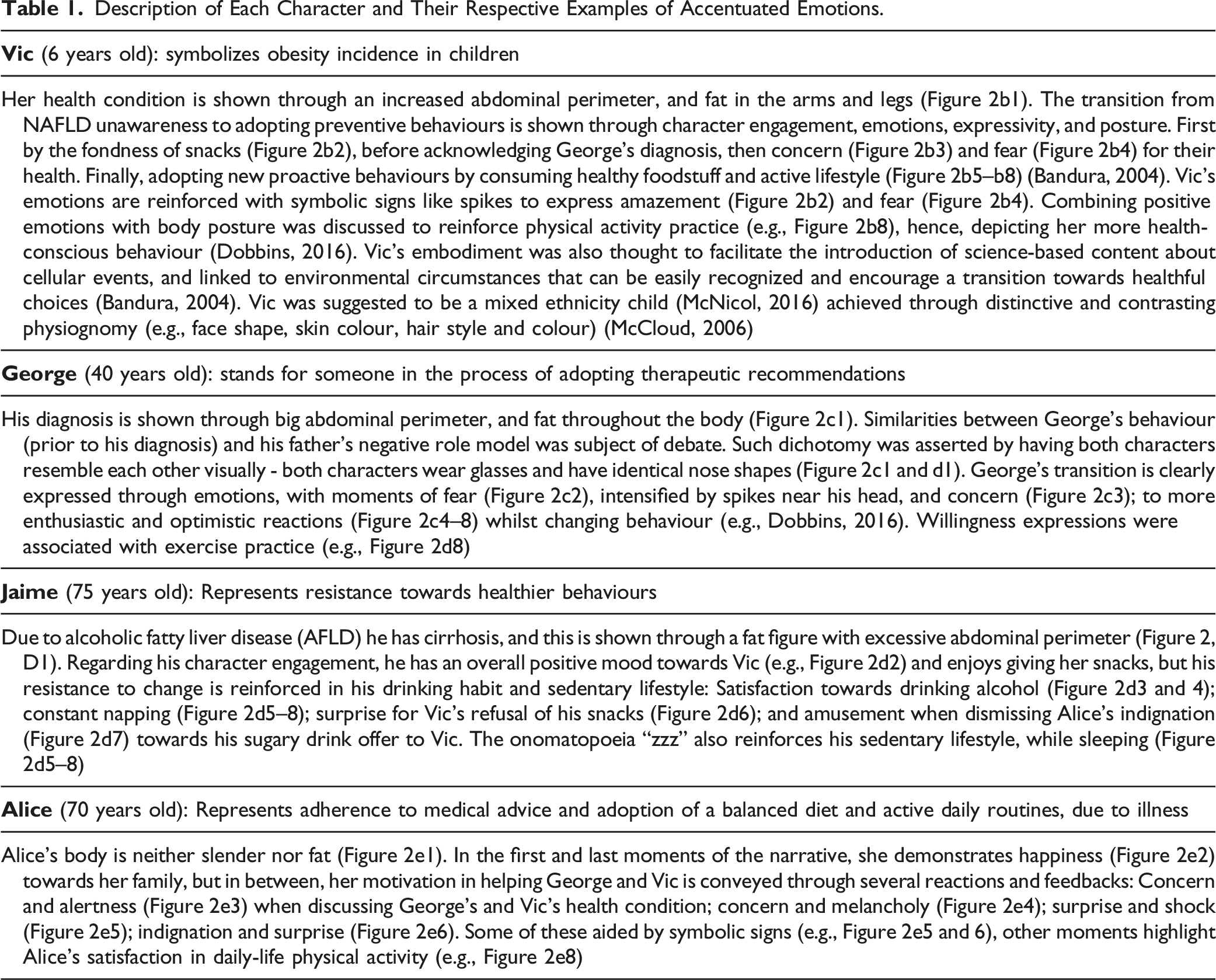
Characters were created with intentional differences in health-related beliefs and threats, representing people with disease and interpersonal relationships (El Refaie, 2019; McNicol, 2014), to act as transitional, positive and negative role models (Bandura, 2004; Slater & Rouner, 2002), able to elicit empathy (Cohen, 2001), engagement and transportation (Green & Brock, 2000) (Table 1).
Vic and George (Vic’s father) act for two transitional characters, the latter with a recent NAFLD diagnosis. Both characters are overweight and represent the NAFLD unaware (that should be reached through preventive strategies) and aware patients that are focused on changing behaviour, respectively. As transitional characters, they were envisioned as “going either way”, if they are able (or not) to address their poor lifestyle habits, that have led (George) or could lead (Vic) to complications related with the disease. Vic and George also bring key demographics aspects, given the prevalence of NAFLD in adults, and the increased incidence of obesity in children.
Alice (George’s aunt) and Jaime (George’s father) act for the positive and negative role model, respectively. Alice acts as facilitator/mentor, as she manages her illness experience (T2DM) pro-actively, showing what can be achieved if proper therapeutics and lifestyle, diet and physical activity are adopted. Jaime acts as a roadblock illustrating the life course of a liver disease culminating in cirrhosis (and the associated comorbidities), exemplifying what can happen if action is not taken.
Description of Each Character and Their Respective Examples of Accentuated Emotions.
The Human Body as a Visual Metaphor
In comics, the perceptibility of abstract events such as metabolism can become concrete and better understood via metaphors. Through the lens of Conceptual Metaphor Theory (CMT), “the way we think, what we experience, and what we do every day is very much a matter of metaphor” (Lakoff & Johnson, 2003, p 4), which means metaphor can represent structures, thought, learning, understanding, action (Lakoff & Johnson, 2003; Ortony, 1993). Among the main concepts coming out in the interviews are misunderstandings about fat storage and insulin-resistance, liver functioning, consequences of metabolic disorders:
“And, so, that (the liver) works more or less like a filter from the cars, something like that. It filters the whole blood and puts it all in order, isn’t it? I think that, it would have to do, essentially, with that, our liver.”
Therefore, preliminary reflections were centred on depicting body functions and biological processes and with Vic as a vector to engaging in learning about metabolism and NAFLD (Borkent, 2017).
The script included a bedtime story about what happens inside the body during digestion where George tells Vic: “This is the story of Corporea, a small paradise made of different lands called organs, each with its own name, shape and mission (…)”. The first exercise involved laying out the basic human body outlining the organs (Figure 3i): brain (1), circulatory system (2), lungs (3), heart (4), liver (5), pancreas (6), digestive system (7), kidneys (8), adipose tissue (9), and muscles (10) – informed by an anatomically correct depiction. The sketch was thought too literal and so different perspectives using the visual metaphor were imagined to bring the “paradise with different lands” and the interplay between the form and function of the organs (Figure 3ii): the head has a circular structure, with trees growing on it, mimicking brain cells dendrites (1); cylindrical pathways connecting all organs (2); cylindrical blocks with wind farms highlighting the air/breathing function (3); a sphere shaped core (4); hexagon shape with a middle hole allowing blood passage (5), based on the liver lobules; (6) is based in pancreas’ anatomical shape, serving as platform for beta cell agglomerates; in the digestive system (7) the stomach is loosely based on the organ anatomy, composed with mountains that connect with the mouth, and a lake containing digestive acids, while the intestines are evacuation tubes; (8) is a two-part platform filtering the blood through a single wall; the adipose tissue is cloud shaped (9); and (10) are cylinder agglomerates emulating muscle fibres; each one assuming a metaphor based on its own attributes (Gentner, 1983). The five senses are depicted as visual metaphors, assuming entrance shapes (taste, smell, hearing), a set of binoculars (sight), and a hand (touch). In comics, these aspects open the perceptivity of complex concepts and mechanisms occurring in the body and simultaneously thinking abstractly (Forceville, 2016) and learning science in a visual way (e.g., Farinella, 2018a; McNicol, 2014; El Refaie, 2019). On the left, we show the process evolution to achieve the human body as a visual metaphor (i, ii, iii). It started with a human body outline with visible organs, based on an anatomically correct representation (i), evolving into an abstract shape with different visual metaphors for each organ, like a map (ii), achieving its definitive representation by tweaking the organ visual metaphors and moving the abstract shape into a more realistic outline (iii). On the right we present examples of this metaphor applied in specific moments during the narrative.
However, the iteration of Corporea in Figure 3ii raised concerns about realism-accuracy imbalance – organ shapes and metaphors, the overall abstract body shape. Further cycles of (de)construction discussed the relation form and function of organs, such as the lungs, heart, intestines, and kidneys, to (re)turn to visual metaphors that could be clearer within a more realistic body shape (Figure 3iii): the lungs are now dome-like structures, with a tree growing inside (3), emulating the respiratory structure; the heart is a moving accordion shape with four compartments (4), reinforcing the heartbeat and its anatomy; the intestines (7) resemble their anatomical shape; and the kidneys (8) now have an embedded filtering element clearly showing filtering function. The five senses inspired the inclusion of more elements to the composition: musical notes (hearing), food (taste), and flowers (smell), which contributed to deepen the belief of a common balance, between the human body and nature.
Several elements of Corporea were combined with characters, daily life situations, and graphs to strength the persuasiveness of the story, and to link with the more traditional, albeit simplified, forms of science representation/communication. As examples, the metaphorical adipose tissue was combined with George, in a dream (Figure 3a), showing fat accumulation and amplifying George’s fear of his diagnosis and its progression; the visual metaphor of Vic’s body is superimposed to show the adipose tissue clouds vanishing (Figure 3b), implying she is starting to burn body fat due to healthy behaviours; a similar situation happens with a background character, exemplifying a healthy body (Figure 3c); another example occurs when the body mass index (BMI) is presented, showing a scheme with the several degrees of weight, combined with the body’s visual metaphor, full of adipose tissue, highlighting the accumulated body fat and its relation with the BMI. We propose that compositions with multi-layered information can be more efficient for learning and understanding science.
Bringing Familiarity to Cellular Events
Insulin, the hormone produced by the pancreas, was a main topic explored in the interviews. Despite the fact that most participants were aware on the existence and importance, not many grasped its role and, of those who did, none could explain why insulin “stops working” (insulin-resistance) (Alemany-Pagès et al., 2022).
“Yes. So, look, even now, on the bus, since I was there alone, I pulled the pullover and gave the 16 doses (of insulin) that I did earlier, in the morning. Because, since I ate almost nothing at home to make the tests here, I ate very little or almost nothing, I was afraid to do insulin, because insulin could take me down as it did in that one of the accident, which I don’t know if it was because I took insulin, isn’t it? It is possible that it could have been. But it happens that, yes, yes, I take insulin for many years now. I had many years that doctors wanted to prescribe me insulin, and I didn’t accept the insulin because I had no experience in this, I only took pills, pills, pills and, since I take insulin, I think I am better, I think insulin, for me, is good. So, I know what insulin is, I know.”
Depicting insulin was challenging, on one hand it was required to frame its role in ensuring proper blood sugar management and the regulation of the energy homeostasis in fed and fasting conditions; on the other hand, the understanding of functions of insulin from a perspective of self-management in insulin therapy or, beyond the treatment itself, in terms of education and prevention behaviours, namely in recognising the relationships between lifestyles and physiological responses in the body. First insights in drawing insulin resulted from its molecular structure (Figure 4i). This evolved towards an anthropomorphized element (Figure 4ii and iii) to reach the targeted audience’s needs. From top to bottom, we first show the early explorations of the representation of insulin (i) and its establishment as an anthropomorphised element (ii-iii). Then, we show two moments conveying insulins’ role in normal conditions (a1-2) and abnormal conditions (b), highlighting the importance of anthropomorphism to ease the depiction of such concepts. Finally, other examples of the use on anthropomorphism are shown (c, d), such as in the cell nucleus.
By introducing anthropomorphism – the attribution of human-like capacities and traits to non-human entities (Epley et al., 2007), we meant to bring some familiarity to metabolic events, namely insulin regulating blood sugar levels (Figure 4a1-2) and insulin resistance (Figure 4b). The image of insulin, as other visual elements (omni)present in the comic, intend to bring familiarity to cellular events and metabolism concepts; the comic starts with a prologue where George interacts with insulin in a dream, that reacts to the progressive accumulation of fat up to end-stages of the disease cirrhosis (Figure 4iii), with the intention of engaging the reader with suspense.
Regarding the role of insulin, it was important to convey actions in the body that would trigger cells to store sugars and to “deactivate” them when the blood sugar levels are stable (energy homeostasis). After exploring and discussing metabolic events in a deep level, as exemplified in the next section, we agreed on showing insulin as pulling a lever (e.g., Figure 5b11) to perform the triggering/deactivation, bringing a potentially familiar aspect into the composition. The most representative example of the use of scientific sketch-note during the process, where metabolic events were visually explored in depth (a–d), and then resulted in its simplification (e), by combining key elements from a to d.
However, the need to add more simplicity to metabolic events and compositions (see next section) had repercussions depicting the role of insulin. It required a solution that could display no more than one panel or movement. We arrived at the action of “chanting a spell”, which could be portrayed in simple fashion, aided by multimodal resources (e.g., lines for chanting sounds, the words being chanted). This would serve the purpose of signalling the cells to store sugar. Figure 4a1 exemplifies this. Blood sugar levels rise during digestion, due to food intake, and a blood sugar meter in the pancreas gives the alert to send insulin into the blood to help manage these levels. Insulin is then inside the blood chanting the spell (signalling) directed at muscle, adipose tissue, and liver cells, to store sugars. The blood sugar meter is shown again with the blood sugar levels regulated.
When no more food is ingested, the fasting state begins (Figure 4a2) and the blood sugar meter alerts for low blood sugar levels. This means that insulin signalling is no longer necessary. With the premise of “keep it short and simple!” we avoided using no more than one panel to show this, by using symbolic signs to show insulin disappearing. Afterwards, some of the cells release sugar into the blood to re-establish the blood sugar levels, shown in the blood sugar meter.
With excessive food intake throughout time, organ cells can no longer store sugars even with insulin signalling. This is the phenomenon known as insulin resistance and it exemplifies another use of the chanting (Figure 4b), by showing it being deflected by the organs. The cells of these organs are also anthropomorphized elements and they are holding protest signs (Figure 4b) to further show the resistance towards insulin action.
The anthropomorphic resources were applied to emphasize several metabolic events, namely cell death (Figure 4c) or liver cells struggling (Figure 4d1–7) with the fat accumulation and the evolution until the end-stages of the disease. This progression is shown backwards, by starting with irreversibly damaged cells in cirrhosis (Figure 4d1) followed by the several stages that lead to it – fibrosis (Figure 4d2), caused by inflammation (Figure 4d3–4), caused by fat accumulation (Figure 4d5–6) – ending with healthy liver cells (Figure 4d7). The concept of cirrhosis was recognized by majority of participants in the study, being associated to liver disease as result of excessive alcohol consumption, but not only that (Alemany-Pagès et al., 2022); and the discussions and further adoption of cirrhosis awareness thus intended to strengthen the persuasiveness of the narrative to engage the reader towards effective self-management and self-efficacy (Bandura, 2004).
Although anthropomorphism can carry subjectivity and place characters into moral categories, it enables a way to promote social connection when human tie is lacking at first (Epley et al., 2007; Williams et al., 2020). Anthropomorphism is largely present in comics to depict a wide variety of human emotions, motivations, intentions and actions (e.g., Maus by Art Spiegelman, 1986; Playing Out by Jim Medway, 2013), also in the emergent field of medical comics (Waite, 2019).
Achieving Simplicity on Complex Metabolic Events
From the beginning of the planning stage, complex metabolic events related to energy homeostasis, such as digestion, were deemed fundamental to make accessible the science related to what happens inside the body at many levels. This served as introduction to later explain insulin resistance in the context of NAFLD and T2DM. Here, we focus on the moments after ingestion of food: enzymes break it down; sugar and fat pass through the intestines (Figure 5a1), entering the bloodstream; blood sugar levels rise and the pancreas sends insulin to regulate it (Figure 5a2–7); insulin signals other organ cells and a series of intricate events start (Figure 5b8–17, c19–27 and d28-29) - muscle cells store sugar, adipose tissue stores fat, and liver stores sugar and fat; consequently, blood sugar levels stabilize (Figure 5d30).
We looked at the possibilities provided by comics to portray these processes beyond human perception by using multiple scales (McCloud, 1993), from the naked eye to micro/macro ranges. The visual dimension of what happens inside the human body and which organs, cells and molecules are involved, following which events and mechanisms, among others, could thus be explored through sketches to then be described, explained, narrated at the same or on different scales. The sketching of digestion included doodles and annotations, made as a way of visual thinking of the related scientific content (e.g., exploring and deconstructing the shape of sugar, fat, enzymes). It ensured topics were being clearly discussed by serving as visual aids and allowed (de)construction into visual compositions inside sequential panels, which ensured the processes could be simplified and better communicated. These sequential panels were sketched with the intended comic page dimensions and were considered as a storyboard (Eisner, 1985), which served to plan the sequences ahead. The intention was having sketched pages that could communicate the most factual knowledge possible related to the topic. This approach is called the scientific sketchnote and incorporates sketching and notes to explain scientific topics, conveyed through an array of genres such as mind-maps, concept maps, storyboards, among others (Fernández-Fontecha et al., 2018).
This approach allowed sketches to become objects of discussion to further develop the visual thinking of digestion. As discussions unfolded, the key issues stemmed from the scientific perspective tendency to include everything that is perceived as being crucial for an appropriate scientific representation, countered by the aesthetic perspective and resistance to burdening the page with too much visual information, that can morph into noise. The meanings conveyed in the sketches could then be transformed into novel meanings, by shifting into different contexts and semiotic forms (e.g., anthropomorphized elements). Such balance was achieved by refining what was, in fact, the key crucial information, with the comic artist proposing visual solutions to represent it as accurately as possible, using a variety of strategies that have already been discussed (anthropomorphism, metaphors, etc.). These parameters were mutually fine-tuned, as all collaborators gradually understand the difficulties of achieving a clear and aesthetically pleasing result, while acknowledging what the basic minimal scientific framework is, and what needs to be represented.
The first result was a sequence of detailed sketches in double-page spread compositions. This could encourage switching between global-local attention reading (e.g., Mikkonen & Lautenbacher, 2019), with dynamic page layouts that could be navigated beyond Z-paths without losing meaning (Cohn, 2013a) and create flow (McCloud, 1993). Panel transitions were mostly action-to-action (McCloud, 1993) to convey, for example, detailed intracellular enzyme functions; combined with subject-to-subject transitions (McCloud, 1993), moving from organ to organ. Through the lens of the scientific sketchnote, these compositions are considered multimodal complexes (Fernández-Fontecha et al., 2018) – compositions combining language, image, graphs, and other semiotic resources, with the additional possibility of combining further compositions between themselves. This contributed to the visual intricacy of the scientific content conveyed. The double pages displayed in Figure 5a–d are examples from the storyboard, presenting the digestion process.
The content and structure of the sequence conveyed factual knowledge related to digestion in the context of NAFLD, but its intricacy was considered too complex for non-specialized readers to comprehend (e.g., anthropomorphized intracellular events like ATP production (Figure 5a4) or enzyme functions (e.g., Figure 5b15 and c19–24)). Identifying such moments in the storyboard led to simplification while maintaining scientific accuracy.
With the combination of multimodal complexes, exploring different page layouts (e.g., Cohn, 2014) and panel transitions, the tailoring work resulted in a shorter storyboard sequence. Scientific content was maintained, within multiple levels of information, but with less complexity. The page layout could still be read beyond the Z-path, but panel transitions were now mostly scene-to-scene (McCloud, 1993). For example, the double page from the final version of the comic in Figure 5e is a multimodal complex showing the same sequence of events in A to D. ATP production or enzyme functions are no longer present and organ events are shown within one or two panel transitions between themselves (e.g., scene-to-scene transitions between Figure 5e28 and e29).
The scientific sketchnote approach made us reassess the overall narrative and pinpoint moments to apply multimodal complexes as semiotic structures, thus linking scientific content and transportation in the narrative towards healthy behaviours. We combined anthropomorphic elements and multiple scales of information (Figure 6a1), with characters discussing the metabolic complications associated with insulin resistance (A2) to convey the effect of energy homeostasis imbalance in the liver (such as other stages of fatty liver disease, cirrhosis and cancer) (A3), atherosclerosis in the heart (heart attack risk and other cardiovascular diseases) (A4), and pancreas (T2DM) (A5); organ metaphors with intracellular information (B1) and characters discussing consumption of foods and drinks high in sugar and fat (B2) to convey the effects on liver fat accumulation, interconnecting with dietary choices linked to Mediterranean diet (e.g., cereals, vegetables, nuts, mushrooms) (B3) and the reader transportation to reflect on food impact on the liver; and graphs (C1) with characters performing physical activity (C2) to convey energy intake/expenditure balance, and how it helps burn body fat. Additionally, such diversity in semiotic structures contributes to sum layers and functions that also may intertwine meanings embodied in natural, social, and cultural environments while also highlighting relational aspects. Examples of pages of the comic where character sequences are combined with multimodal complexes. Each example shows characters either discussing specific aspects related to non-alcoholic fatty liver disease or lifestyle choices, combined with different levels of information (e.g., organs, cells, graphs).
The Resulting Comic Book – A Brief Synopsis of the Story
Motivated by his recent NAFLD diagnosis and his daughter’s excess weight (thus priming her for future health problems), a man takes his daughter and his father to his aunt’s vacation house for the summer holidays to start making daily life changes. His aunt, a T2DM patient, helps in changing their lifestyle, and he and his daughter start engaging in daily physical activity and healthier diet choices, so they can prevent their liver from further disease, and stay healthy. Characters and their behaviour intend to represent different types of readers that have some sort of connection with a NAFLD diagnosis, allowing the narrative to unfold in a way that provides health knowledge not only to these readers (e.g., patients and their families) but also the general population. “A Healthy Liver Will Always Deliver!” (Alemany-Pagès, Tavares, et al., 2020) is available in nine languages (Czech, Catalan, English, French German, Italian, Polish, Portuguese and Spanish) and is part of the sustainable development goals good practises, an initiative promoted by the United Nations; it can be read online via https://www.fattylivercomics.com/.
Challenges, Accomplishments, and Future Possibilities
Comics as practice doing/in/for conducting research is a growing field in many domains and disciplines. We frame comics as research practice and the approaches and methods to/that provide insights into the creation process, which include the assessment of the effectiveness of the comic (Figure 1). Here, we explore the endeavours beyond the obvious collaboration between science and art to develop a tool to better understand science concepts and promote health. The creation of the comic is reflected on inter/trans/disciplinary aspects with(in) the scope of science, public health, visual and verbal narrative, from different angles of teaching, learning, behaviour, equity, assuming the experiences and of/between of the individuals involved in the process (Davies, 2019). We intended to highlight the artistic sensibility within a research endeavour (Ingman, 2022) and enlighten how the perspectives of the research relationship develops and shapes directions (Finlay, 2002) thinking and deciding the visual choices ultimately made. We acknowledge that a research approach bringing in reflexivity can be challenging and that this is especially true when different disciplines come together, each with their own complex questions and expectations, albeit this forms a rich territory in terms of progressing comics as research practice. Such interactive moments dealing with subjectivities, even though appointed to insightful research and documentation, easily transport tendencies and tensions by the artist and researchers, related to their own beliefs, perceptions and experiences. The direct implications of exercising reflexivity is the non-linear path to advance in the drawing processes and the eventual additional time needed to accomplish all stages of the comics creation process. The meaning and significance of mutual collaboration is translated into novel subjects, pathways for taking full advantage of the resources associated with comics, asserting for example the use of visual metaphor, the graphic style (minimalistic, cartoon, realistic, etc.), while having in mind the foundation of the visual narrative and the target audience. Not less important, structural aspects such as the page layout and panel size and transitions were integral to assessing ways to convey the concepts.
Nevertheless, we point out two limitations that should be addressed in future research. The first one relates to active engagement of other participants during the creation process. Patients, healthcare providers and families were actively involved in collecting information about NAFLD awareness (phase I) and it was expected to continue during the drawing process (phase II). In the latter case this was not possible due to the COVID-19 pandemic. Had this involvement taken place, other perspectives and contributions could have benefited the final comic. Still, patient testimonies motivated enthusiastic discussions selecting the factual biomedical knowledge, the construction of the characters and their stories in the narrative, being structural in creating meaning (e.g., Nasheeda et al., 2019), which include scenarios, dynamics, emotions (Calvo-Maturana & Forceville, 2022; Davies, 2019; Eisner, 1996; El Refaie, 2019; Kukkonen, 2013; Matuk et al., 2021; McCloud, 2006), able to engage and persuade the readers (Green & Brock, 2000), with messages for learning, understanding and changing behaviors (Bandura, 2004).
The second limitation concerns the artistic perspective. Artistic sensibility is part of research (Ingman, 2022) and, as the comic artist, every member weighed in on the discussion with their own artistic sensibilities in tandem with their area of expertise. We believe the comic artist should be actively involved in all parts of the research (and whenever possible, more than one comic artist/artist should be recruited), because it could have further broadened the visual contributions and improvements during the process. Notwithstanding, the graphic style of the comic artist affirms the dual role as researcher (Galman, 2009) and establishes its relevance as a facilitator towards the story, as it makes the readers perceive and engage with the narrative (Lefèvre, 2016), considerably aiding understanding of characters or the storyworld (Mikkonen, 2017).
We assessed the impact of the comic produced using a pre-post questionnaire study design carried out in an online format. The results showed the engagement and persuasive potential of the comic book, positively promoting NAFLD threat awareness and the intention of lifestyle changes among the participants (Alemany-Pagès et al., 2023 in press).
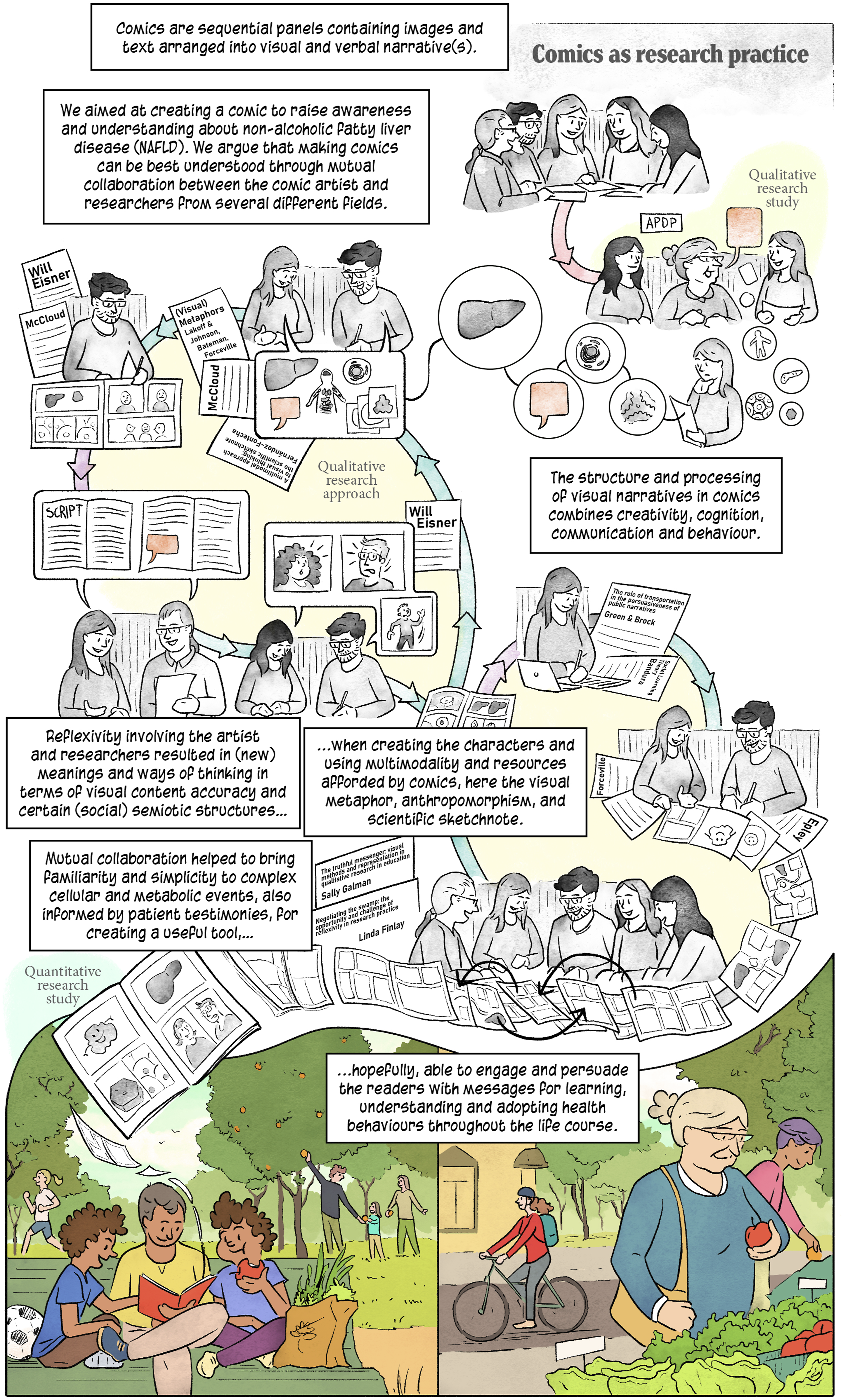
Few empirical studies address comics practice with a research framework, which can be particularly helpful when using comics as a tool in science and health communication. More research is needed to understand whether the endeavours integrating qualitative and quantitative methods contribute to framing comics as a research practice. Nevertheless, in Figure 7 we highlight the proposed research framework in the context of comics as research practice, while stressing the role of the artist in the process, aiming to potentiate its use in future research endeavours. Framing comics as research practice with a revisiting of the initial structure to potentiate the use of the framework in future research endeavours, namely regarding the active role of the artist(s) in the overall process.
Concluding Remarks
Footnotes
Acknowledgments
The interviews were conducted at the Portuguese Diabetes Association (APDP). The authors thank to all the participants in the NAFLD awareness study whose experience was crucial for the development of the comic and to APDP staff members (Rogério Ribeiro, Dulce do Ó) for making the study possible. We thank Teresa Firmino of the science section of PÚBLICO, for launching a piece about the impact study (on January 11th 2021) that resulted in a successful dissemination and participation of the general public in the questionnaires. The authors also thank to the Reviewer for the insights towards improving the reflection about framing comics as research practice.
Declaration of Conflicting Interests
The authors declared no potential conflicts of interest with respect to the research, authorship, and/or publication of this article.
Funding
The author(s) disclosed receipt of the following financial support for the research, authorship, and/or publication of this article: This research work received support from the Portuguese national funds via FCT – Fundação para a Ciência e a Tecnologia –, under the project SFRH/BD/136900/2018, the Decree Law 57/2016 (amended by Law 57/2017), UIDB/04539/2020 and LA/P/0058/2020, the Centro 2020 Regional Operational Programme: CENTRO-01-0145-FEDER-000012-HealthyAging2020; also from the European Union's Horizon 2020, Research and Innovation programme under the Marie Skłodowska-Curie, project FOIE GRAS (Grant Agreement No. 722619), the European Regional Development Fund (ERDF), through the COMPETE 2020 – Operational Programme for Competitiveness and Internationalisation.
