




Abstract
Purpose
Continuous and long-term prospective monitoring of athletes in natural training environments is essential to provide further clarity on the risk factors for running-related injuries. However, participant recruitment and retention can be problematic. This study aimed to identify factors for facilitating the recruitment and retention of recreational runners in prospective, longitudinal running-related injury research involving running technologies.
Methods
Twenty-seven recreational runners (14 female, 13 male) participated across nine semi-structured focus groups. Focus groups were audio and video recorded and transcribed verbatim. A reflexive thematic analysis was undertaken, with a critical friend approach taken to enhance reliability.
Results
Incentives, recruiting suitable participants, ease of use of running technologies, an appropriate research design, and good communication practices will facilitate recruitment and retention.
Conclusion
Receiving study outputs, evidence-based information and undergoing laboratory testing were identified as incentives, however, researchers need to consider whether these may influence participant behaviour and adversely bias the findings of their study. Researchers should offer participants an option with regard to the type, content, frequency and mode of delivery of incentives and communication. Appealing to potential participants’ personal interests will facilitate initial recruitment, while attempts to ‘feed’ this interest throughout the course of a study will enhance retention. Employing a user-friendly smartphone app and unobtrusive sensor(s), and a research study that can work with runners’ training schedules and technology usage habits, will further facilitate their recruitment and retention.
Keywords
Introduction
Running is one of the most popular physical activities worldwide (Scheerder et al., 2015) with two in five people considering themselves a runner (World Athletics and Nielsen Sports, 2021). Despite its popularity and associated health benefits (Pedisic et al., 2020) running is associated with an injury prevalence of between 18%–79% (Kluitenberg et al., 2015; van der Worp et al., 2015; van Gent et al., 2007). Running-related injuries (RRIs) occur when excessive load is applied to tissues beyond their adaptive capabilities (Bertelsen et al., 2017), with multiple contributory risk factors (Bertelsen et al., 2017; Saragiotto et al., 2014; Ceyssens et al., 2019; Benca et al., 2020; van Poppel et al., 2021). The vast majority of RRIs are ‘overuse’ injuries (Kemler et al., 2018) that develop over a period of time from repeated microtrauma (Bertelsen et al., 2017). Despite a clear theoretical relationship between risk factors for RRI’s and their onset (Bertelsen et al., 2017; Hreljac, 2005), evidence is inconsistent to date (Ceyssens et al., 2019; Hulme et al., 2017). This inconsistency is possibly due to methodological weaknesses such as retrospective data collection (Willwacher et al., 2022), a lack of internal and external load monitoring (Soligard et al., 2016), and the use of once-off assessments in laboratory environments (Kiernan et al., 2018). Additionally, it has been reported that many athletes will continue to train and compete through the presence of an overuse injury (Clarsen et al., 2013). Therefore, continuous (i.e., run-by-run) and long-term prospective monitoring of athletes in natural (out-of-laboratory) training environments is essential to provide further clarity on these risk factors for injury (Ceyssens et al., 2019; Soligard et al., 2016; Kiernan et al., 2018).
Recent technological developments in wearable sensors (Benson et al., 2018) and smartphone applications (apps) (Saw et al., 2015) which will collectively be referred to as running technologies, have made it possible to collect this prospective data, with many types of research seeing a trend towards using these technologies as methods of data collection (Izmailova et al., 2018). For example, wearable sensors can measure aspects of external load (such as magnitude of loading (van der Worp, Vrielink and Bredeweg, 2016) training frequency and distance (Dupont et al., 2010; Macera, 1992), and acute:chronic workload ratio (Gabbett, 2016)), while smartphone apps can monitor aspects of internal load (such as sleep quality and duration (Halson, 2014), and perceived exertion (Robinson et al., 1991)). These in combination with the collection of other risk factors (such as previous injury (Dallinga et al., 2019) and sex (van der Worp et al., 2015)) could provide insight into individual injury patterns that are dynamically influenced by a variety of risk factors (Bittencourt et al., 2016). Such an approach may also identify early stages of microtrauma (e.g. if there is a subtle alteration in running technique) and allow for the development of personalised interventions aimed at reducing the risk of a time loss injury (Meeuwisse et al., 2007).
Due to the intra- and inter-individual variability in injury risk factors (such as age, sex, and psychological, metabolic, hormonal and genetic factors (Borresen & Lambert, 2009)), as well as the variability in running technique kinematics and kinetics (Bartlett et al., 2007; Preatoni et al., 2013), a sufficiently large sample size is required to represent this variability and ensure ecologically validity (Oliveira & Pirscoveanu, 2021). However, moving away from single-session testing to long-term run-to-run monitoring creates a challenge in terms of participant recruitment and retention. Retention has been described as a “major challenge” of longitudinal research (Mychasiuk & Benzies, 2011) due to the associated prolonged duration and high participant burden (Davis et al., 2022; Teague et al., 2018). Participant retention has also been found to be particularly problematic in research involving wearable technologies (Meekes et al., 2021; Attig & Franke, 2020).
Gathering the opinions of potential participants can enhance the execution of research studies, including optimizing strategies for recruitment and retention (Cockcroft, 2020), while also helping to ensure relevant, ethical, and participant-friendly research is carried out (Bagley et al., 2016). To the best of the authors’ knowledge, no research has been conducted on ways to facilitate participation in long-term prospective RRI research involving running technologies. Therefore, the main aim of this study was to identify means of facilitating the recruitment and retention of recreational runners in prospective, longitudinal RRI research involving running technologies.
Methods
Design
This study was part of a larger study exploring the factors affecting injury focused running technology adoption in recreational runners. The elements discussed here solely relate to the aims of the present study. Focus groups were deemed an appropriate method of data collection as they can yield rich and in-depth data through the interaction of participants (Kitzinger, 2006; Querios et al., 2017), while constructivist grounded theory was deemed a suitable methodological choice. Grounded theory elicits narrative accounts of the lived experiences of appropriate individuals in order to generate an inductive theory (Gill, 2020). Constructivist grounded theory assumes that we construct theories through our past and present experiences of people, perspectives and practices (Gill, 2020). Grounded theory methodologies are capable of expanding on the current knowledge as well as offering new theoretical insights (Kendellen & Camiré, 2019; Morris & Cravens Pickens, 2017). Constructivist grounded theory follows an iterative process of data collection and analysis, to allow for continued improvement of the emerging theory (Kennedy & Lingard, 2006). Ethical approval was granted by the local university’s Ethics Committee. The Standards for Reporting Qualitative Research (O’Brien et al., 2014) (Supplementary Material A) was adhered to. A semi-structured focus group schedule was developed by the researchers, and followed an iterative process throughout the pilot study phase (Supplementary Material B).
Participants
A recruitment email was distributed to local running clubs containing details of the research project and the contact information of the researchers. Participants contacted the researchers to indicate their interest in participating and a purposive sample of 27 adult recreational runners were recruited. Eligible participants were aged between 20 and 60 years, and met Mulvad and colleagues’ (2018) definition of a recreational runner: someone running at least once per week for the previous 6 months. The need to have previously participated in a research study was not an inclusion criterion.
Pilot Study
A pilot study was conducted in order to educate and train the primary researcher in efficient focus group moderation techniques, and in the development and use of a systematic framework for analysing qualitative data. The results of the pilot study are not included in the main study results. Five female and four male recreational runners were recruited as a convenience sample (aged 25.1 years ± 2.2 years). Three separate pilot study focus groups were moderated by the primary author using remote video conferencing software (Zoom, version 5.7.0). Pilot focus groups lasted 39.1 minutes ± 5.4 minutes. Following the pilot focus groups, the focus group schedule was updated to include additional probes and questions of a more open-ended nature.
Main Study Procedures
Each participant was required to provide written informed consent and complete a brief questionnaire gathering demographic information, running experience and injury history (Supplementary Material C). Participants were then contacted via email to organise a focus group. Focus groups were scheduled to include participants of similar age in order to encourage interaction (Krueger, 1994). Nine focus groups were held with 27 participants (range: 2–4, median: three participants per group), and lasted 45.1 minutes ± 11.4 minutes. All focus groups were moderated by the primary author, and were audio and video recorded via Zoom Video Communications (version 5.7.0). Focus groups were initiated with a brief introduction and the aims of the study were described (Supplementary Material B). Participants were encouraged to speak freely and were given the opportunity to ask questions throughout. Participants’ use of running technologies was discussed to open the focus groups and to familiarise the participants with one another. To provide context and aid discussion, a hypothetical injury-focused research study was proposed to participants, which involved monitoring participants’ running habits and injury occurrence prospectively, potentially using a wearable sensor and app. Brief hypothetical requirements were explained to participants (e.g. using a wearable sensor and inputting data on an app), and participants were probed to discuss their perceived facilitators of, and barriers to, involvement in such a study. Before closing each focus group, participants were given another opportunity to ask questions or provide additional comments. A reflective and iterative approach was taken during the data collection phase. After each focus group, the success of the focus group and each discussion topic was considered by the researchers. Additional probes were added to the focus group schedule to encourage participants to elaborate on certain topics (e.g. frequency of communication).
Data Analysis
Frequencies and descriptive statistics were generated from questionnaire responses using SPSS (version 27.0; IBM Corporation). Focus groups were transcribed verbatim by the primary author. During transcription, participants were allocated an identification number and coded by participant gender (M = male, F = female), in order to maintain anonymity. Using NVivo software (QSR International, version 1.6.2), a reflexive thematic analysis approach was taken to data analysis according to Braun and Clarke’s principles (Braun & Clarke, 2006; 2019). This process followed six recursive phases. Firstly, the primary author familiarised herself with the data by transcribing, reading and re-reading the transcripts. The data was coded by generating brief labels to identify important aspects of the data. Initial themes were generated through the examination and organization of codes. These themes were then reviewed against the whole dataset, and developed further. Developed themes were then refined, defined and named. The data was finally organized into a written report (Braun & Clarke, 2006; 2019). An Order of Themes was developed based on the developing, merging and expanding themes and sub-themes in order to organise the codes, sub-themes, themes and core categories and present them in a visual format. Constant comparative analysis took place, beginning after transcription of the first focus group and continued throughout the data collection phase (Boeije, 2002). Theoretical sampling continued until data saturation was reached (Aldiabat & Le Navenec, 2018).
Reliability
To enhance the analytical process (McGannon et al., 2021), and to ensure reliability and rigour of results presented (Smith & McGannon, 2018), a critical friend approach was taken between the lead author and an external researcher with qualitative research experience (SOK). The critical friend approach encourages reflexivity in the co-construction of knowledge (McGannon et al., 2021; Smith & McGannon, 2018), and facilitates the exploration of multiple interpretations of the data, reducing the potential for researcher bias (McGannon et al., 2021; Sparkes & Smith, 2014). Throughout the data analysis, regular discussions on the developing codes, sub-themes, themes and core categories ensued (between researchers AL and SOK), which challenged and facilitated interpretations of the data from multiple viewpoints. The process facilitated that development of additional codes, while some existing sub-themes were merged/expanded, leading to the order of themes.
Reliability was further enhanced via investigator triangulation. The primary author met with two other members of the research team (KM and EW) in which similar processes were undertaken to review and discuss the coded data. Discussion ensued and appropriate changes were made following any disagreement.
Multiple examples of direct quotations from participants are presented, enhancing the accuracy and reliability of findings. A broad and diverse contribution from participants is also included, reducing the likelihood of individual bias (Tracy, 2010). Additional supporting quotations can be found in the supplementary material (Supplementary Material D). Included quotations were agreed upon by researchers.
Results
Participant Research and Running Experience, and Injury History.
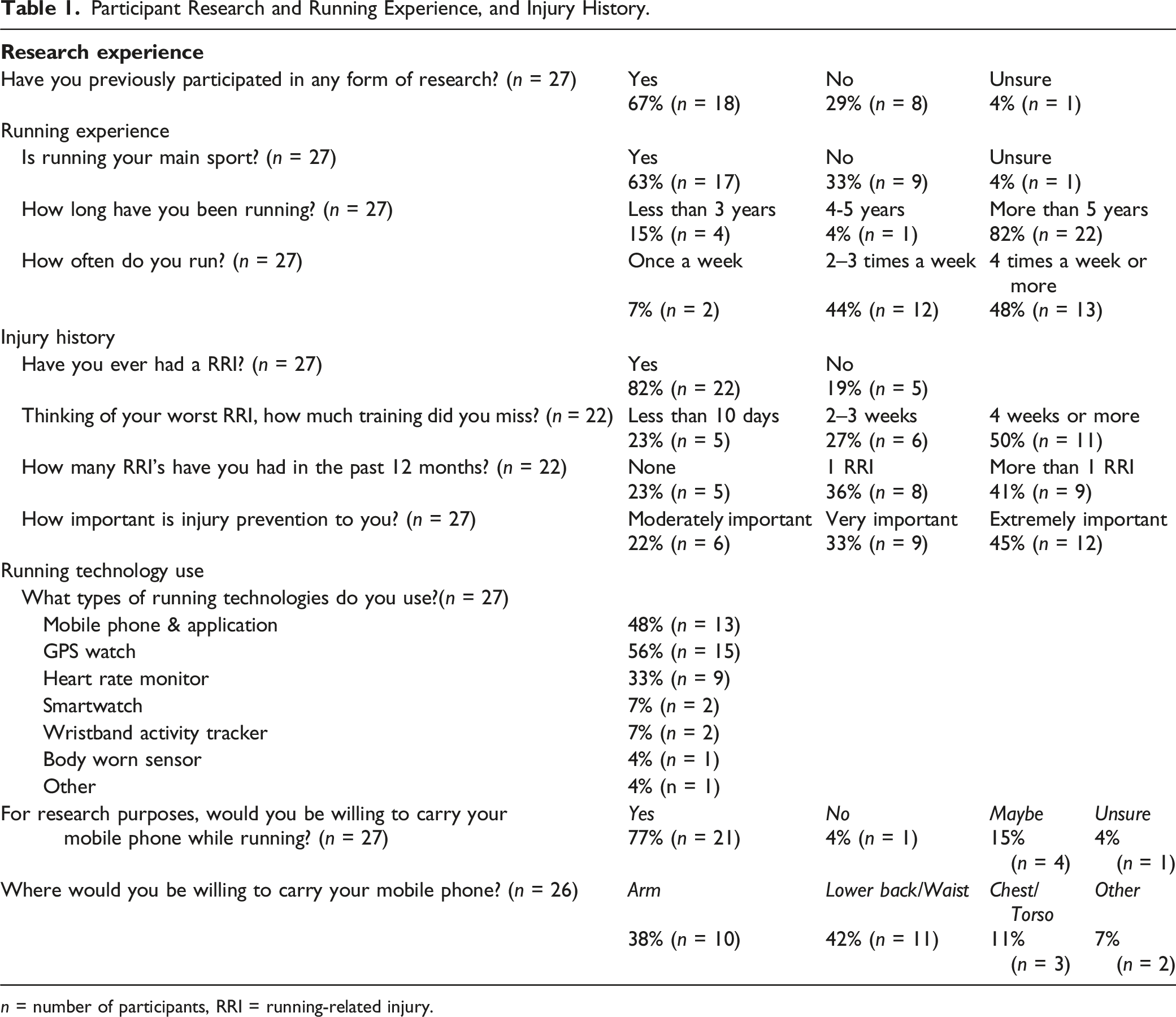
n = number of participants, RRI = running-related injury.
Perceived Facilitators to Research Involvement
Perceived Facilitators of Recreational Runners to Their Involvement in Prospective Running Related Research.

Note. Themes and sub-themes are presented in order of those most frequently discussed. * indicates out of 27 participants. # indicates out of nine focus groups.
Incentives
Several incentives were suggested by participants as a means of facilitating research involvement, including: study outputs, the provision of evidence-based information, laboratory testing, and receiving prizes. Receiving study outputs on the data collected was described as “very important” (M2) and “key” (M1) to engaging runners in research. Participants discussed three types of output that they would be interested in receiving: (i) basic individual metrics (e.g. running distance and pace for a session) as a “quick instantaneous read out” (M13), (ii) interpreted individual metrics (i.e., basic metrics with interpretation/context, e.g. your acute:chronic workload ration has increased 1.5 from last week, which has been suggested to increase the risk of injury [16]) as “some kind of a performance report that can be linked to the likelihood of an injury” (F8), and (iii) analysed group/individual findings (i.e., on conclusion of a study, e.g. males who ran more than 50 km per week were 10% more likely to develop an Achilles tendinopathy compared to males who ran 40–50 km per week) as a “general overview of the results at the end” (M10).
As for the content of these outputs, participants were interested in both injury management and performance-related feedback. Content of study outputs that could (i) reduce participants’ risk of injury and “prevent [runners] from getting back into that situation of going from one injury to another” (M3), (ii) monitor their rehabilitation from injury and “seeing their recovery” (F9), and (iii) offer recommendations on how to manage injuries to “prevent the injury developing further” (F6) were most frequently discussed. Some participants were also interested in performance-related feedback beyond what they are receiving from their current technologies in order to “improve” (M2) their running performance and “change [their] running to be better” (M2). Cadence and “stride” (M12) data, both from an injury risk and performance perspective, were specifically mentioned. There were varied suggestions as to the optimal frequency of receiving these outputs; regular or “consistent feedback” (M2) (i.e., weekly or monthly), periodic feedback, such as a “report each quarter” (F8), and summarized feedback as a “general overview of the results at the end” (M10) were all suggested but no overall consensus was reached Additionally, many participants understood that it may not be possible to receive these outputs until a study had finished, but once researchers could “promise to share the results with us or give, I’d definitely be very much inclined to take part”. There was also a variety of preferences with regard to mode of delivery, with no single mode being identified as a clear facilitator. Some participants suggested that delivering outputs through an app associated with a study would be “handy” (F5), while others suggested email as a suitable mode.
The provision of evidence-based, running related information was commonly suggested as a means of recruiting and retaining participants. Information of interest related to injury prevention advice, suitable stretching routines, strength and conditioning advice, injury rehabilitation advice, and recovery strategies. For example, one participant (F8) described her interest in receiving information on “the optimum way to recover… the optimum way to stretch… the way that you’ll most help yourself prevent injury”. Another participant described her interest in engaging with a research study to receive advice on how to best manage injuries;
F6: “for example, ‘I went for a run today’… and then I come back and I feel like I pulled or popped my hamstring… What should I do in the case of this?… Immediate advice to prevent the injury developing further”
Some participants also suggested repeated laboratory testing as a facilitator. While some mentioned specific tests of interest (e.g. VO2 max, body composition measurements or gait analyses), others indicated that simply having the experience of being tested would be sufficient, irrespective of the specific test; F10 - “being brought up to a high performance centre to get tested… to experience what it’s like in the lab”.
A few participants also suggested that the periodic potential to win a prize could be a means of encouraging participation, as it would be “a token just to keep you motivated” (F11).
Suitable Participants
The second core category of facilitators related to the type of participant involved, with themes of personal interest and daily schedule identified. Focus group members suggested that they would be “interested” (M10) in and “curious” (M8) about gaining insights into RRIs. Many participants also suggested this could be the case for other recreational runners; “I think everybody’s interested in the mechanics of how and why we get injured” (M6). Participants expressed specific interests in preventing RRIs and “not wanting to get it [an injury] again” (F14), understanding the mechanisms of injury and “how injuries happen” (M4), and monitoring injury rehabilitation to “see improvements” [from injury] (F9). A further facilitator was participants’ interest in “assisting with research” and the potential to “improve injury prevention for other runners” (M2); “I’d have an interest in it insofar as that if runners themselves don’t get involved in these things, we’re not going to get the information back out of it” (M1). Some participants described their personal interest in receiving further performance insights, “optimizing performance” (F2), and “changing [their] running to be better” (M2), while others suggested that they “find the data very interesting” (M2), and receiving any additional data from a study would facilitate their participation.
Participants also suggested that should their involvement in a research project fit with their running schedule and technology usage habits, it would be “really easy to be involved” (F6). Participants described how they’ll “be running anyway” (F7), and how they already “spend a bit of time at that” [engaging with running technologies] (M10); therefore, involvement in a research project that is complementary to these habits, would be easily facilitated.
Ease of Use of Running Technologies
Participants’ perceived the ease of use of running technologies would act as a facilitator to research engagement, with a user-friendly app and sensor design developing as themes. A “user-friendly” (F8) app was suggested as an app with a low user demand. This was suggested as one which (i) runners can use “really quickly” (M5, (ii) has user-friendly formatted questions (e.g. “tick-the-box” and “rate-the-scale” [M9]) (iii) is “connected to some of the other apps” (F9) runners are already using (e.g. Garmin, Strava, MyFitnessPal), (iv) sends the user “reminders” (F8) to engage with the running technology, and (v) “updates automatically” (M5).
M3: “I’m sort of hoping that it will be set up in a way that it’s just second nature, I don’t really have to do much. Like M5 was talking about, it’s maybe linked to Garmin or to Strava and the data goes up there. We might have an app where you have to hit a smiley face or give a rating of one to ten… you want to make it as easy as possible… and not to be a burden”.
Wearable sensor design also received some attention, with the wear-location, attachment method and discrete sensor specifications identified as facilitators. Although some wear-locations and attachment methods were perceived as more preferable than others (e.g. lower back/waist or foot/shoe and belt or clip mechanism), the main facilitating factors were the convenience, discreteness, secureness and comfort of the wear-location and attachment method. Participants suggested that a sensor situated in a location where it “doesn’t bother [them]” (F1) or they “don’t notice [it]” (M11), and one that is “easily worn” (F4) and “you can put it on and forget about it” (M2) would facilitate running technology use and therefore research participation. A small and lightweight sensor was also highlighted as a facilitator, with one participant suggesting that they “wouldn’t really notice a really small and really light” sensor (F9), while another suggested an “unobtrusive and lightweight” sensor “doesn’t take much hassle” (M8).
Finally, a sensor with a “good battery life” (F1) that is “easy to charge” and “doesn’t need to be charged too frequently” (F2) would facilitate running technology use, and therefore improve retention.
Good Communication Practices
Good communication practices also received some attention with check-ins, mode of communication, and frequency of communication discussed. Participants reported that “check-ins probably keep you on track” (F4), as well as “reminding you that you’re still there and you’re not forgetting about them” (F10). These ‘check-ins’ were perceived to: (i) reassure participants of their valuable contribution, (ii) remind them to continue with their involvement, (iii) establish any issues/concerns participants may have and (iv) highlight their inclusion within a community of runners involved in such a project. The most commonly suggested modes of communication were notifications from a smartphone app associated with the study, and email. A “notification” was perceived as “handy” and may act as a “reminder” (F9) of their involvement in the study.
Monthly communication from the research team was the most commonly suggested frequency to maintain participant engagement as it was perceived as “a nice time between things” (F10); however, no overall consensus was reached regarding the optimal frequency. Nonetheless, once participants were reassured that their contributions were valuable and being monitored, they perceived this would facilitate their involvement; M3 - “We wouldn’t need much. It’s just those little pushes to say that you’re part of something and then if it’s working”.
Perceived Barriers to Research Involvement
Perceived barriers of recreational runners to their involvement in prospective running related research.

Note. Themes and sub-themes are presented in order of those most frequently discussed. * indicates out of 27 participants. # indicates out of nine focus groups.
Difficulty of Use of Running Technologies
The design of a smartphone app was the most frequently discussed barrier to research involvement. An app that required “too much manual input” (M4), was “poorly configured” and required “a lot of energy… to operate the things” would be “quite off-putting” (M13). The use of an app which was time consuming (more than 5 minutes) or required a response for a high quantity of questions (more than four questions) was perceived as “a little bit onerous” (F8). Repetitive and irrelevant questions were also described by one participant (M11): “It just gets a bit tedious…asking loads of questions, and it’s the same questions over and over”, which were perceived to discourage participants from engaging with an app, therefore acting as a barrier to their involvement with research; F14 – “There would be a consistency issue, long term with the app I’d say. Every morning having to answer a load of questions”.
Additional barriers were identified with regard to the attachment method, obtrusiveness and location of a wearable sensor. Firstly, it was perceived by some that if the attachment method of a wearable sensor was uncomfortable or caused skin irritation, this would be a “main concern” (M8): “if it starts rubbing against your skin and the skin gets rubbed, then that’s an issue” (M8). A belt mechanism was also perceived as “uncomfortable” (M1), with one participant (F4) describing her thoughts: “if it’s something that I had to carry or strap to me, I know I’d find it really irritating… I hate those belts”. Additionally, participants reported they would “get fed up of it fairly quickly” (F11) if a sensor “[took] too long to set up and get in place” (F11). Secondly, it was suggested that an obtrusive sensor which was “bulky” (F6) or “cumbersome” (M9) would deter runners from using it; M1 - “If it’s something larger than mobile phones that you’re having to sit on your waist or your chest… that’s different. I’d try it, certainly, but I’m not sure whether I’d persist with it for 12 months”.
The potential wear-locations of a wearable sensor was also important. From previous experience, some participants found that a wearable sensor situated on the lower back was “annoying” and “you just can’t wait to throw it away” (M2). Although this was the most frequently discussed location as a potential barrier to sensor use, location on the arm/wrist was also mentioned: “I’ve had the armband… just gets annoying after a while” (M2). With variations in personal preference between participants, no consensus was reached on one location as an evident barrier. Participants also described being “iffy” (i.e., uncertain) about a “really visible” (F8) sensor. Additionally, various logistic issues were reported as barriers. Participants suggested that lost or broken sensors would result in a reduction in their participation; F11- “I could imagine one falling off during a run, me breaking it… and having to go to X and get it fixed”. Participants also suggested that frequent charging of the sensor would also discourage their use as it is “very annoying when they run out of battery quickly” (M11). Finally, some participants suggested that receiving inappropriate feedback where they felt “consumed by the data” (F2), or receiving irrelevant feedback that “I didn’t need to know” (F1) would be off-putting.
Poor Communication Practices
Some participants felt that “pestering” (M13) research participants with excessive communication would dissuade them from participating, with too much communication perceived as “annoying” (F10) and “off-putting” (M13); “just checking in on them but without hounding them” (F10. Others felt a lack of communication would discourage their participation, as they may become “disinterested” (M3) and unsure if their involvement was being monitored. Some discussed how the mode of communication may discourage them from participating, with email being considered as “a negative” (F14) and “always work” (M11).
Impact on Personal Training Schedule
Finally, some participants suggested that if the design of a research study did not fit with their personal training schedule, it would act as a barrier to participation. If participants were required to train for the duration of a study (i.e., if involvement in a study would not allow them to take a break/off-season after an event or for holiday, for example), they would be less likely to participate; M1 - “The reality is, most people will drop off for a month or two… so I’d be prepared to work with that”. Others reported that if a research project was to interfere with their running schedule (i.e., if the inclusion criteria had strict training limits, forcing participants to run more/less than they typically would) they would not participate; M1 - “if your study interferes with my running, I won’t be involved in your study. That would be my way of looking at it… If it’s interfering with what I’m doing, that will discourage me”.
Discussion
The aim of the study was to identify facilitating factors for the recruitment and retention of recreational runners in prospective, longitudinal RRI research involving running technologies. To the best of the authors’ knowledge, this is the first study to examine this research question. Offering incentives and recruiting suitable participants with a personal interest in participating will maximize interest, while the ease of use of running technologies, a research design that is complementary to participants’ schedules, and good communication practices will minimize the burden of participation. It was evident that some factors acted in a bi-directional manner existing as both facilitators and barriers. To avoid repetition, these will be discussed together in terms of maximising interest and minimizing burden.
Maximizing Interest
Incentives
Study outputs, evidence-based information and laboratory testing were identified as incentives to facilitate research participation. Study outputs can be looked at in terms of type, content, and frequency and mode of dissemination. In terms of type, study outputs were discussed in three forms: (i) basic individual metrics provided during the course of a study, (ii) interpreted individual metrics provided during the course of a study, and (iii) analysed findings provided on conclusion of a study. Despite the clear indication that the provision of these outputs would facilitate participation, researchers need to consider whether such inclusion will adversely bias (negatively affect) the findings of their study as these outputs may change participants’ behaviour (Figure 1). Knowledge can influence behaviour (Glanz et al., 1997; Carlson Gielen & Sleet, 2003) specifically, applied studies have demonstrated that knowledge of injury risk and injury prevention practices (IPPs) influences behaviour to adopt IPPs (Orr et al., 2011; McKay et al., 2014; Martinez et al., 2016). The level of ‘acceptable’ change in behaviour may be dependent upon the prospective study design. In an observational study, researchers are purely observing the relationship between a number of variables, including behaviour, and an outcome measure (e.g. injury onset), and so it may be less important if participants change their behaviour (Song & Chung, 2010). However, in an intervention study, because researchers want to examine a specific relationship between a given intervention and an outcome, they generally do not want to simultaneously change other factors which would occur if participants changed their behaviour in light of receiving additional information during a study (Bergmann & Boeing, 2002). Researchers may want to consider limiting the amount of information they give participants, in particular when providing information that has the greatest potential to cause behaviour change (e.g. analysed findings) (Figure 1). Effect of study outputs on potential behaviour change and potential bias on study findings.
Of the three types of study outputs identified in the current study, basic individual metrics would have the lowest potential for causing behavioural changes because they would not be communicated with interpretation or comparison with other data collected (Figure 1). Interpreted individual metrics would have more potential for causing changes in participant behaviour as this type of feedback would be ‘loaded’ with interpretation and context. Analysed group/individual findings would have the greatest potential for causing behavioural changes due to the comprehensive nature of the information, the direct relevance of this information to participants, and possibly by virtue that participants helped ‘create’ this information/knowledge.
In relation to the content of study outputs, the vast majority of participants were interested in receiving personal feedback (related to risk factors for injury, monitoring injury rehabilitation, and understanding the mechanisms of injury), as well as how their findings compared with other participants. This is in line with previous health-based research (Mfutso-Bengo et al., 2008; Cox et al., 2011; Mein et al., 2012; Long et al., 2016; Purvis et al., 2017). Regarding frequency of dissemination, there was no clear consensus as to exactly how often participants would like to receive these outputs, although the majority of participants reported a desire for periodic updates throughout the course of a study (e.g. weekly, monthly, quarterly, biannually). Similar to this, qualitative studies have reported that receiving feedback throughout the duration of longitudinal studies enhances participant retention (Mein et al., 2012; Purvis et al., 2017). Alternatively, some of our participants suggested that a summary of findings at the end of a study would suffice, still acting as a facilitator for retention, in line with health-based research (Long et al., 2016). Regarding mode of dissemination, our findings show that recreational runners would most like research results to be distributed via a smartphone application (associated with the study) or via email; the latter corresponding to preferences in health-based research (Long et al., 2016).
Where an app is developed to facilitate participation in prospective, longitudinal studies, it may be possible to easily tailor the study outputs delivered (the type, content, frequency and mode) to each individual’s desire, as long as it does not adversely bias findings (as discussed above). Additionally, we recommend that researchers inform participants (during initial recruitment) of the study outputs that will/will not be disseminated during the study, in order to manage their expectations. We also suggest, with the importance of research transparency (Taylor, 2019), and suggestions from participants, that researchers ensure participants are provided with analysed findings in an appropriate format at the conclusion of a study.
To increase recruitment and retention, researchers should provide evidence-based information and facilitate laboratory testing (should facilities be available, and carefully considering the associated time and financial constraints), providing it doesn’t adversely bias findings. Various forms of tangible incentives, such as tokens of appreciation and health education materials have been previously found to increase retention (Villarruel et al., 2006; Bonk, 2010; Nicholson et al., 2011), as well as being shown to be effective compared with no incentive (Edwards et al., 2009).
Suitable Participants: Personal Interest
Another facilitator for research participation was the recruitment of suitable participants. Many focus group members suggested that many recreational runners have a personal interest in both preventing injury and using running technologies, and this interest would greatly facilitate their participation in research. In particular, it was suggested that those interested in RRIs (preventing injury for themselves and other runners, understanding injury mechanisms, and monitoring injury rehabilitation), assisting with research, and enhancing their performance should be recruited. However, depending on the aims of the research, this strategy could introduce a clear bias. If the aim of a study is to purely observe recreational runners’ behaviour with running technologies, then perhaps researchers would not mind how this behaviour materialises. However, if the aim of a study is determine the extent to which recreational runners engaged with a particular/new technology (in order to enhance engagement with a sensor and/or app), then a clear bias would exist if only runners with certain characteristics (such as an interest in running technologies) were recruited. The authors suggest that researchers carefully consider the aims of their research and determine potential biases before introducing such a strategy. This suggestion from participants does however highlight key content material that researchers could consider including (where appropriate) when initially communicating with potential participants in order to maximise interest (e.g. mailing, media coverage, etc.). Highlighting the aims of a research project and how it may appeal to runners’ personal interests may facilitate initial recruitment, while attempts to ‘feed’ this interest during the course of study (e.g. using incentives discussed above) facilitate retention.
These findings, related to personal interest, map with previous research in which altruism has been reported as a leading motivation for involvement in health-related research (Burgesset al., 2009; Limkakeng et al., 2014; Soule et al., 2016) being discussed in terms of personal benefit (McCann et al., 2013; Martinsen et al., 2016; Wasan et al., 2009), benefitting science (Limkakeng et al., 2014; Wasan et al., 2009), and helping others (Irani & Richmond, 2015; Quay et al., 2017). Specifically examining motivations for participating in acute injury research, Irani and Richmond (Irani & Richmond, 2015) found altruism (in the form of helping other injured individuals and contributing to knowledge development) and individual curiosity were the second and fifth most common themes, respectively.
Minimizing Burden of Participation
Ease of Use of Running Technologies
Given that participant retention can be problematic in research involving wearable technologies (Meekes et al., 2021; Attig & Franke, 2020) and the association between high participant burden and greater attrition rates (Davis et al., 2002; Teague et al., 2018), our findings emphasise the need for user-friendly apps with low user demand, and incorporating a sensor that is small, lightweight and unobtrusive. Researchers need to find a balance between gathering more data and the burden that this may place on participants. Our findings are similar to previous research in which high manual user demand decreased technology use (Saw et al., 2015; Luczak et al., 2020; Alnasser et al., 2019), while improved comfort (Kononova et al., 2019; Hermsen et al., 2017; Kuru, 2016; Lazar et al., 2015; Shih et al., 2015), reduced obtrusiveness (Lazar et al., 2015; Shih et al., 2015) and preferable sensor location (Luczak et al., 2020; Bergmann & McGregor, 2011) influence general wearable technology use.
Suitable Participants: Daily Schedule
It was suggested by our participants that in order to reduce the burden of participation, a study design should be flexible and researchers should work with participants’ current (and potentially changing) training schedules and technology usage habits. Provided the aims of a research study are being addressed, we suggest that researchers design a ‘participant-friendly’ research study that (i) is complementary to participants’ training schedules (e.g. allowing participants to continue with their individual training plan), (ii) is complementary to participants’ daily schedules (e.g. arranging testing/data collection that suits participants’ work schedules) and (iii) allows for the easy adoption of running technologies (as discussed above). Previous research has similarly identified that time constraints and scheduling act as barriers to acute injury research participation (Irani & Richmond, 2015) and retention (Mein et al., 2012; Irani & Richmond, 2015). Additionally, the adoption of new health and fitness wearable technologies has shown to be enhanced if their use can be integrated into a person’s current habits, without the need for accommodating behaviours (Rogers, 2003; Canhoto & Arp, 2017).
Communication Practices
Communication between researchers and research participants was commonly discussed as a means of minimizing the burden of participation, and therefore facilitating recruitment and retention. Communication was discussed in terms of content, frequency and mode. Focus group members suggested that researchers should use ‘check-ins’ to reassure participants of their valuable contributions and address any issues participants may be having, but avoid pestering them with unnecessary information or requests. A variety of opinions existed between participants as to the optimum time frame to contact participants, however monthly communication was most frequently suggested as most suitable. It is clear however that preferences may vary between research participants as to how often they would like to be contacted. While no specific mode of communication was suggested as a clear barrier or facilitator, notifications from a smartphone app (if applicable) and email were the most preferred modes in the current study. We suggest that communication from researchers should (i) ensure participants that their contributions are valuable and being documented, (ii) be communicated through a modality that is suitable for individual participants, one which they will most likely respond to, (iii) be frequent enough to remind participants about engaging with the study, but perhaps most importantly, (iv) be flexible, allowing for an increase or reduction in communication based on participants’ desire for communication (i.e., encouraging ‘non-responders’ but avoiding ‘pestering’ participants).
Previous research has shown that similar check-ins (via email or text) can enhance participant retention in health research (Catherine et al., 2020). While there is no particular timeframe to contact participants in order to maintain their participation in research (Cotter et al., 2002), previous studies have shown that increasing the frequency of ‘check-ins’ helps to enhance participant retention (Catherine et al., 2020), while reduced efforts to contact long-term research participants can result in significant attrition (Cotter et al., 2002). Additionally, a lack of communication from researchers to potential participants has been identified as a barrier to initial recruitment in sports injury research (Braham et al., 2004). Regarding mode of communication, a recent systematic review identified that email and instant messaging were the most studied digital tools for participant retention (Frampton et al., 2020) and have been found to significantly increase response rates and yield quicker response times from participants of randomized controlled trials (Clark et al., 2015). However, more research is required into communication through smartphone apps given their now widespread use.
Recommendations
The follow is a summary of the authors’ recommendations for facilitating the recruitment and retention of recreational runners in prospective research involving running technologies. These recommendations should be considered providing the aims of the study are being addressed, and the study’s methodology allows. We suggest researchers: (i) disseminate study outputs to participants to maintain their interest, once researchers do not foresee unwanted behavioural changes, and allow participants to select their preferred type and content of output, and their frequency and mode of delivery. (ii) provide evidence-based information and facilitate laboratory testing throughout the course of a study, once researchers do not foresee unwanted behavioural changes. (iii) highlight the aims of a study to potential participants during recruitment in order to pique their interest in participating (e.g. use of running technologies or improving injury prevention for runners). (iv) ensure smartphone apps are user-friendly and sensors are unobtrusive. (v) design a participant-friendly research project that is flexible around participants’ schedules and allows runners to continue with their preferred training plan. (vi) allow participants to select their preferred frequency and mode of communication from researchers.
Strengths & Limitations
A representative sample of recreational runners was included, with varying ages, running backgrounds and previous experience with research. Methodological rigour was enhanced through the use of constant comparative analysis during data collection. Credibility of the results was enhanced through multiple interpretations of the data from researchers with varying research and lifestyle backgrounds, reducing the potential for researcher bias.
Although we did collect information on participants’ previous experience with research, this was used in the organisation of focus groups. Future research could arrange focus groups to stratify runners with/without previous research experience as this could potentially yield further insights. Additionally, as these focus groups addressed two research questions (as mentioned in the methods section) and there was an associated time constraint, there may have been scope for additional probing during data collection.
Conclusion
Providing incentives and recruiting suitable participants (with a personal interest in participating) will maximize participants’ interest in participating in longitudinal RRI research involving running technologies, while ease of use of running technologies, an appropriate research design (complimentary to participants’ schedules) and good communication practices will minimize the burden of participation. Receiving study outputs was identified as the most desirable incentive, however, researchers need to consider whether this may adversely bias the findings of their study because it may change participant behaviour too much. With the variance in opinion expressed in the current study regarding participants’ preferences for incentives and communication practices, there is clearly no ‘one-size fits all’ Provided the aims of the research are addressed, researchers should, where possible, offer participants an option with regard to the type, content, frequency and mode of delivery of incentives and communication, once the study methodology allows. Additionally, where possible, designing a research study that is compatible with runners’ training schedules and technology usage habits will further facilitate their recruitment and retention. Overall, there is a clear willingness and interest from recreational runners to participate in longitudinal, prospective RRI research involving running technologies.
Supplemental Material
Supplemental Material - Recruitment and Retention of Recreational Runners in Prospective Injury Research: A Qualitative Study
Supplemental Material for Recruitment and Retention of Recreational Runners in Prospective Injury Research: A Qualitative Study by Aisling Lacey, Enda Whyte, Sinéad O’Keeffe, Siobhán O’Connor, and Kieran Moran in International Journal of Qualitative Methods.
Footnotes
Acknowledgments
The authors would like to thank the focus groups participants for their participation.
Declaration of Conflicting Interests
The author(s) declared no potential conflicts of interest with respect to the research, authorship, and/or publication of this article.
Funding
The author(s) disclosed receipt of the following financial support for the research, authorship, and/or publication of this article: Funding for the study was received as part of a large-scale, centre-wide funding from Science Foundation Ireland to develop Insight (the national research centre for data analytics:  ), under Grant Number SFI/12/RC/2289_P2.
Supplemental Material
Supplemental material for this article is available online.
References
Supplementary Material
Please find the following supplemental material available below.
For Open Access articles published under a Creative Commons License, all supplemental material carries the same license as the article it is associated with.
For non-Open Access articles published, all supplemental material carries a non-exclusive license, and permission requests for re-use of supplemental material or any part of supplemental material shall be sent directly to the copyright owner as specified in the copyright notice associated with the article.
