




Abstract
Longitudinal qualitative research (LQR) is an emerging methodology in health behavior and nursing research. Researchers are turning to LQR to understand experiences across time as well as identify facilitators and inhibitors of health/illness behaviors and transitions. Currently, a lack of information exists to guide researchers on LQR techniques and considerations. Our objective was to provide a methodological resource for health behavior and nursing researchers conducting LQR. LQR may be applied to understand any human experience, as well as the sequalae of the experience and is well suited for studying transitions and developmental or behavioral changes. Conducting LQR is resource intensive and requires flexibility and complex analyses. We discuss multiple components of LQR such as design considerations, analysis options, and our lessons learned. Despite complexities, LQR provides the opportunity to understand experiences across time within an individual and among a group resulting in holistic, in-depth understandings beyond a cross-sectional time point.
Keywords
Introduction
Longitudinal qualitative research (LQR) is an emerging methodology in health behavior and nursing research—fields focused on generating evidence to support nursing practices as well as programs, and policies promoting healthy behaviors (Glanz et al., 2008; Polit & Beck, 2017). Because human experiences are rarely comprised of concrete, time-limited events, but evolve and change across time, the use of LQR offers an innovative option to capture this natural history. The advantage of LQR over cross-sectional designs in health behavior and nursing research is that LQR provides a unique understanding of experiences across time, turning points, critical time points in transitions as well as the facilitators or challenges that support or undermine behaviors aligned with health/illness and life course transitions (SmithBattle et al., 2018). In pursuit of understanding the natural history or trajectories of human experiences, LQR generates in-depth data on the social and behavioral aspects of transitions that are less evident through cross-sectional or quantitative data alone. However, the broader nursing and health behavior research literature is deficient in resources offering theoretical, methodological, and analytical guidance on conducting LQR. To fill this gap, we developed a methodological resource to guide planning and decision making in LQR for health behavior and nursing researchers by pulling from our experiences and other disciplines such as education where more literature exists on conducting LQR. Many of the examples presented here are based on our research team’s LQR applied to better understanding the transition from pregnancy to postpartum among women living with HIV in South Africa and Kenya (i.e., K23MH116807 ELT; K01MH112443 JAP). Depending on the goals of the research team, this resource may be used in its entirety or by section.
This resource includes the following sections relevant to conducting LQR:
Background
Philosophical assumptions of LQR
Methods of LQR, including design strategies and data collection.
Analysis of LQR data, including an overview of several analysis options.
Results of LQR, including how to ensure trustworthiness of findings.
Discussion of challenges in LQR.
Table 1 includes a select group of LQR studies to serve as examples of different uses of this methodology to date.
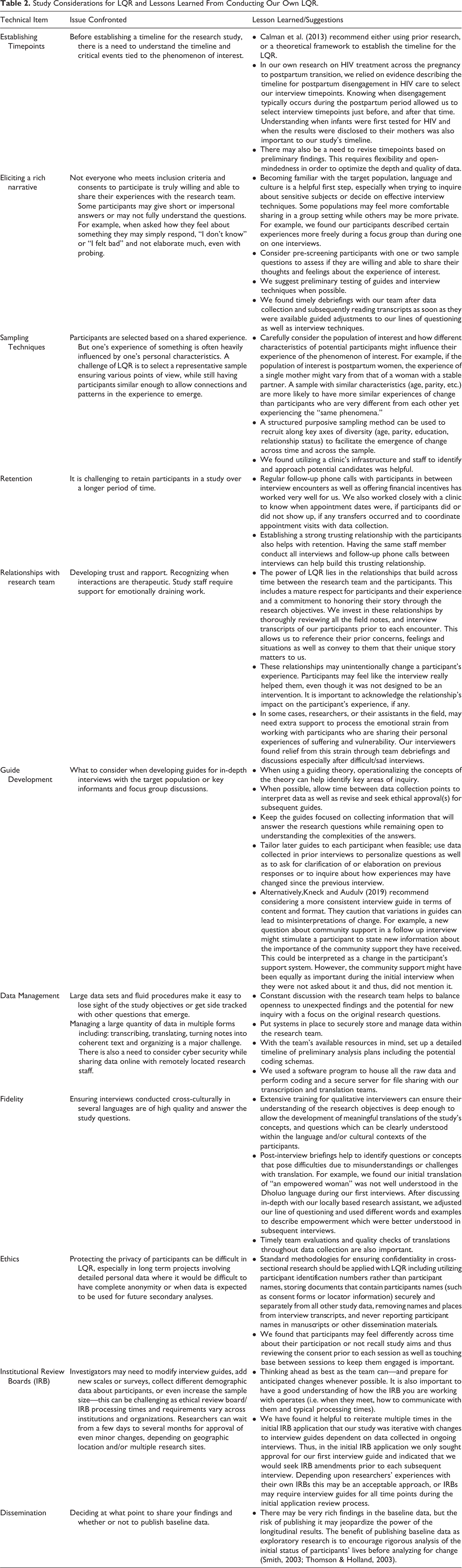
Table 2 provides design considerations and our lessons learned.
Box 1 demonstrates the application of theory in LQR.
Box 2 presents a potential LQR design based on our research.
Background
What Makes Longitudinal Qualitative Research a Distinct Methodology?
We have already introduced LQR as an emerging methodology. However, depending on one’s understanding of what a research methodology entails, LQR may appear to be something too broad or flexible to be considered a distinct methodology in and of itself (McCoy, 2017). This seems especially true when LQR is held up against long established qualitative methodologies (with more prescriptive methods) such as Grounded Theory (Glaser & Strauss, 1967; Glaser, 1978), Ethnography (Pelto, 2013) or Phenomenology (Colaizzi, 1978). Further confusion surrounding LQR’s classification as a methodology may stem from the substantial overlap of qualitative techniques and procedures between methodologies (Hermanowicz, 2013). Indeed, many LQR studies include the use of data collection techniques or analysis procedures commonly used in other qualitative methodologies.
We propose, however, that LQR exhibits all of the defining characteristics of a unique qualitative methodology (Carter & Little, 2007), including distinct research objectives, foundational assumptions, and well-developed explanations of the methodological and analytic principles as outlined in the following sections. Central to qualitative research, while some procedures or techniques may overlap between methodologies, the research objectives, assumptions, and principles of the chosen methodology should justify the procedures/techniques used (Carter & Little, 2007). For example, LQR may not simply apply a Grounded Theory analysis plan because Grounded Theory analysis procedures do not account for change across time (a primary objective of LQR). However, an inductive thematic analysis (as is applied in Grounded Theory) might be used in LQR to cross-sectionally analyze baseline data in order to identify emergent themes from the initial research encounter. Similarly, LQR studies may employ ethnographic data collection techniques such as observing behaviors across time. However, while ethnographic studies aim to understand a cultural phenomenon or behavior from the viewpoint of participants (De Chesnay & Abrums, 2015) LQR aims to establish a shared understanding of how and why the phenomenon or behavior changes across time. Thus, the management and analysis of data in LQR is inherently different from other methodologies.
What are the Unique Objectives of Longitudinal Qualitative Research?
LQR’s distinction is in its aim to understand an experience or behavior(s) across time; explicitly seeking to answer, “how did this change?” “how is this different?” “why did this change?” and/or “what remains the same?” (Saldaña, 2003). LQR designs have been applied in a variety of research areas including, transitions in human development (Schmidt et al., 2019), the experiences of incarceration (Cooper et al., 2015), aging (Oosterveld-Vlug et al., 2013) and the progression of chronic illness (Namukwaya et al., 2017), as well as behavioral research investigating medication adherence (Salter et al., 2014; Weiser et al., 2017) and breastfeeding (Doherty et al., 2006; Jardine et al., 2017). LQR may be applied to understand any human experience, as well as its sequalae and is particularly well suited for studying transition periods and developmental or behavioral changes across time. LQR may also be applied to inform the development of health behavior theories or interventions and may be used to understand if a policy or program was effective, why or why not and in what contexts might similar results be expected (Lewis, 2007; see Table 1 for selected examples of study objectives).
Examples of Longitudinal Qualitative Research from Health Sciences Disciplines.

Philosophical Assumptions of Longitudinal Qualitative Research
Although the origins of LQR are not strictly defined, there are several assumptions that comprise the philosophical underpinnings of the methodology. First, LQR is based on the assumption that two key concepts—time and change are contextual (Saldaña, 2003). While LQR often occurs over months to years, it is not only the chronological passing of time that creates meaning, but rather how the individual experiences that passage of time (Saldaña, 2003). Different points in a person’s life may make the experience of time qualitatively different from another—passing quickly when one is busy or having fun and slowly when one sits quietly. In addition to personal level variation in the experience of time, the cultural context may also influence the interpretation of time. For example, the acceptable age for marriage or first-time parenthood can vary greatly across cultures, which may impose different time-based milestones or experiences in one’s life.
Since time and our human experiences within it are both contextual, the change we experience across time is also contextual (Saldaña, 2003). Change may not be a linear or ordered journey from one state to another with a definitive end point. Thus, the depth of transitions may not be captured when change is viewed in isolation either as a single unit of analysis or as a solitary episode. LQR assumes the need to explore the complex, haphazard and potentially contradictory ways change emerges and to conceptualize the pathways in which these complexities in experiences and behaviors exist across time (Pettigrew, 1990). Overall, LQR assumes change is multi-faceted and holistic where continuity, patterns, idiosyncrasies, and contexts are key components (Pettigrew, 1990).
The second assumption in LQR centers on the human experience being a construct of the participants’ personal reflections and the researchers understanding of them, allowing multiple realities to exist simultaneously (Balmer & Richards, 2017; McCoy, 2017). Furthermore, the construction of these experiences relies on the notion that participants are willing and able to articulate their experiences in a way that can be understood by the researcher (Baillie et al., 2000). In qualitative research, and LQR in particular, participants share their experiences and researchers listen, analyze, and interpret these experiences. Researchers may present their findings back to the participant for their evaluation or ask the participants about the same experience again at a later timepoint to evaluate how their experience or their feelings about it may have changed. Through this process, the essence of the experience across time is established for each participant (Balmer & Richards, 2017; McCoy, 2017).
Methods of Longitudinal Qualitative Research
There are no gold standards or fixed rules for data collection in LQR. In general, LQR applies either prospective or retrospective designs that include two or more data collection sessions using qualitative techniques (e.g., interviews, observations, multi-qualitative methods) over a specified time frame (Saldaña, 2003). Yet, the defining principles of data collection in LQR go beyond having data collected at multiple time points. The chosen data collection techniques in LQR must also ensure the quality of data collected as well as cater to the researchers’ abilities to systematically manage and thoughtfully analyze these data across time (Smith, 2003). The researcher’s ongoing assessment of data coupled with the flexibility to make adjustments are hallmarks of LQR methods.
General Design Strategies
Designing LQR studies that effectively capture change is not straightforward. Two overarching complexities are, 1) the length of time needed to be considered longitudinal is not definitive and 2) a universally accepted definition of change does not exist, making it challenging to identify change processes or outcomes across time a priori (Pettigrew, 1990). These complexities are key, however, for researchers to work through as they consider the change they are seeking to understand and the corresponding outcomes. Some design strategies to consider include theoretical frameworks, target population and size, setting and personnel (see Table 1 for selected examples of LQR designs, see Table 2 for additional design considerations and personal lessons learned).
Study Considerations for LQR and Lessons Learned From Conducting Our Own LQR.
Theoretical framework
A theoretical framework is chosen based on the research objectives (See Box 1 for an example of a theoretical framework and its application in LQR). Theoretical frameworks are particularly helpful in identifying concepts relevant to the phenomenon of interest and how these concepts may change across time to influence behavior (Chinn & Kramer, 2011). A theoretical framework should be chosen at the outset of project planning and inform 1) sample(s) of interest, 2) content of data collection (e.g. questions/probes developed for in-depth interviews), 3) timing of data collection and, 4) plans for data analysis. Researchers can then operationalize and explore concepts from the framework by asking: How could we define and measure these concepts in the context we are interested in? What information would help us describe and understand these concepts across time? In addition, researchers must remain open to new concepts and pathways that emerge from their data.
Potential Theoretical Framework for LQR and its Application

Identifying the target population and sample size
Participants in longitudinal studies are selected based on their shared experience of the phenomenon of interest (Saldaña, 2003). Yet, an individual’s experience is distinct and close observers (friends, family, or caregivers of the individual) can also lend valuable insight (Johansen et al., 2013). Moreover, LQR does not limit the unit of analysis to individual participants. Data might also be collected from focus groups, families, or groups of co-workers (Johansen et al., 2013; see Table 1 for other examples). Thus, researchers must carefully consider who to collect their data from and how many units of analysis (individuals, focus groups, families, etc.) are needed to adequately address the research aims (Kneck & Audulv, 2019). In LQR, in particular, researchers must also anticipate a certain level of attrition because over time participants may migrate, die, or simply lose interest in participating in the study (Calman et al., 2013; Kneck & Audulv, 2019). One approach researchers may use to determine sample size is estimating the number of cases needed to reach saturation (Hennink et al., 2017), which for a phenomenology design is typically 10–12 participants (Polit & Beck, 2017). Saldaña (2003) recommends LQR studies start with more participants than you anticipate needing to ensure data saturation is reached, especially if a study takes place over two or more years. Because the context, study design, population, and setting are study specific, determining a certain number or percent to overestimate on sample size is best left to the research team’s judgment, which is based on the stability of their target population. In a systematic review of LQR in nursing, attrition was either a major limitation (20% of studies estimated 50% attrition) or a major strength (30% of studies had 0% attrition; SmithBattle et al., 2018). Given these extremes, during the planning phases of the research, attention should be given to understanding sample characteristics including potential barriers to long term participation.
Setting
A number of considerations are helpful when determining study setting in LQR. First, the venue must be convenient for the participants over the study period such as one close to the participants’ home or a venue the participants frequent such as their health clinic. Second, if the research team is conducting their study within a clinic or hospital where participants are patients, gaining the support of the clinicians and administrators prior to the start of the study and maintaining strong relationships throughout the study period is key to a collaborative, lasting partnership. Support from stakeholders ensures the desired space is reserved, the study does not disrupt the patient flow, and that the research encounters can be coordinated with participants’ regularly scheduled appointments. Third, the study team needs a private, quiet and secure location where participants will be able to focus on the interview questions while feeling relaxed and comfortable enough to fully express thoughts and experiences. This will also mitigate interruptions and background noise which may distract the participant and detract from capturing clear audio recordings. Fourth, supplying refreshments, child care, and easy access to restrooms may lead to a better experience for participants. Finally, if the researcher chooses to collect data in the homes of participants, the added value of observing participants in their own environment must be weighed against the challenges of working in a less controlled setting (more distractions, interference from other people in the home, potential safety concerns for the researcher, etc.) as well as privacy concerns (particularly when discussing stigmatized diseases or behaviors). Whatever venue is chosen, to the extent that it is feasible, maintaining the same venue throughout the duration of the LQR provides important design consistency and familiarity for participants, which may help retention. Some of these items may be relevant for cross-sectional studies as well, however, we have found that accounting for the aforementioned considerations are of paramount importance in LQR as they nurture long-term participation.
Personnel
LQR is labor intensive as collecting, organizing and analyzing data is time consuming. Researchers should plan ahead, mapping out the time required for each phase, strategically selecting who will carry out each task and which tasks are best executed collaboratively. Many different skills may be required including, interviewing, conducting focus groups, videography, transcribing audio, translating transcribed text, organizing and managing data and finally conducting the analysis. In addition, there are other demands on staff time including, 1) reviewing and quality checking initial data, 2) revising subsequent interview protocols and guides and 3) maintaining contact with participants between study sessions. The research team should consider the different skills each staff member brings to optimize effectiveness of the study procedures. For example, team members with knowledge of the local language and culture who conduct interviews may also provide invaluable insight into the interpretation of data and its meaning beyond the strictly literal translations of the interviews. Additionally, planning for the same study team member(s) to interact with participants at each data collection point optimizes rapport and trust and aids in retention efforts—particularly when the LQR is occurring over long periods of time (months and years; Nevedal et al., 2018). Managing the ebb and flow of workloads across data collection time points requires the thoughtful organization and adaptability of project coordinators in collaboration with principal investigators.
Steps for Data Collection
Step one: Operationalize concepts, including time and change
Conceptually, the notion of time may be different between participants or from the research team’s design expectations. To alleviate this potential disharmony, Pettigrew (1990) suggests that the research team clearly operationalize the concepts of time and change at the outset of the study (as discussed in the “Philosophical Assumptions of Longitudinal Qualitative Research” section above). In some cases, the “baseline” (starting point) from which the change/transition of interest begins may not fall within the first interview. For example, when looking at the experience of living with HIV, the baseline might be when the person was first diagnosed with HIV (i.e., years prior) or rather the first time they engaged in treatment sometime after their diagnosis. Change may also be absent across time, which may reflect positive or negative behaviors (maintaining medication compliance vs. maintaining unhealthy habits; Lewis, 2007; Saldaña, 2003).
Step two: Type of data to be collected
LQR data may originate from interviews with members of the target population, or with key informants such as family, friends, clinicians or other stakeholders. Data may also come from short answer surveys, focus group discussions or direct observations (Johansen et al., 2013). Initially, data may be in the form of audio recordings, videos, pictures, drawings or field notes. In some cases, LQR studies are embedded in randomized control trials or mixed-methods studies where various types of data were collected. For example, a study on depression might use an established screening tool to assess depression scores at each encounter prior to conducting in-depth interviews with participants. There are no restrictions or limitations to type or quantity of data collected, only the a priori considerations of the desired contribution from each data source, data management and data analysis plan.
Step three: Study approach
There are several approaches to consider in longitudinal qualitative inquiry. The primary approach used in LQR is serial interviews (Calman et al., 2013; Murray et al., 2009). This approach utilizes emergent issues or themes from one interview to inform the line of inquiry used in subsequent interviews. The time between data collection points allows the research team an opportunity to review the data and modify interview guides (Smith, 2003). Subsequent interviews can then be designed to build on rather than duplicate the previously collected data. Importantly, process notes/interview summaries and frequent debriefing of interviews is key to ensuring subsequent interviews are on target (See Box 2 for an example of a study on breastfeeding behaviors using the serial interviews approach).
An Application of the Serial Interview Approach from NIH K23MH116807

Step four: Triangulation of data
This step is meant to validate preliminary findings and ensure data completeness and trustworthiness. There are several ways to triangulate data. For example, findings from interviews with key informants, or focus group discussions can be compared to findings from in-depth interviews with individuals to compare completeness and consistency in findings. Another option is to conduct a final exit interview with each participant (Saldaña, 2003). The purpose of a final exit interview is to present the researcher’s findings to the participant for feedback. Questions may be asked to confirm or disconfirm preliminary assertions, themes or trends. Participants may also be asked to reconstruct their experience within the study timeframe. Similarly, questions could be focused on areas of uncertainty or missing details revealed by the analysis and interpretation. These final insights can assist the research team in confirming their description of change across time using a collaborative, reflective and flexible approach (Pettigrew, 1990).
Analysis of Longitudinal Qualitative Research Data
Longitudinal qualitative data analyses attempt to transform data into explanations and insights which address the original research objective—understanding an experience or behavior across time. Analysis in LQR is challenging on many levels given the large amounts of data to analyze (Lewis, 2007; Pope et al., 2000; Smith, 2003), the multiple types of data such as field notes, interview summaries, surveys, transcripts or even videos (Miles et al., 2014) as well as the challenge of describing how the experience may change across time within participant and among a group.
The research team is tasked with managing data collection, revision/development of subsequent interview guides and possibly even initiating data analysis while data collection is still ongoing (McLeod & Thoon, 2009; Pope et al., 2000). This is especially challenging because carefully transcribing (and when necessary translating) data is time consuming and it is not always feasible to allow ample time in between data collection time points for analysis to be completed (McLeod & Thoon, 2009). Some studies are chronologically time sensitive such as those seeking to understand distinct developmental time periods that would not be captured if data collection were postponed to a later date—early parenthood for example. In these cases, detailed process notes or summaries of individual interviews and frequent debriefings with study staff may be crucial for informing subsequent rounds of data collection. Bearing in mind the aforementioned challenges, what follows are the central analytic principles and procedures for LQR analyses (see Table 1 for selected examples of LQR analyses).
Step 1: Consider the Analysis Approach
The analysis of LQR data can be carried out using a variety of different approaches with the precise methods used often evolving alongside the data collection (Saldaña, 2003). Applying a deductive and/or inductive lens is often a good starting place. Using a deductive approach, researchers begin with a theory or framework in mind and analyze their data to identify specific findings that lend support to, clarify, or refine the theory/framework (Burnard et al., 2008). If applying an inductive approach, researchers start from their original observations and seek to find patterns or make generalizations about their data eventually using their findings to create a theory or framework, establish pathways, or to develop themes or categories related to the phenomenon of interest (Burnard et al., 2008). Researchers can also fall somewhere in between relying on predetermined codes or a framework to organize their data while still trying to identify new patterns or generalizations emerging from the data (see Box 1 for an example of this).
Researchers should also consider if their research objectives are best suited to a diachronic or synchronic analysis approach. Synchronic analysis implies analysis is simultaneous (synchronized) with data collection or occurring as a cross-sectional analysis after each wave of data collection (Nevedal et al., 2018). Synchronic analyses are common in LQR because data collection and analysis are often a fluid process where initial and ongoing analyses are imperative to inform subsequent data collection encounters (Balmer & Richards, 2017; Calman et al., 2013; Pope et al., 2000). Researchers must stop and ask, “what do we know so far?” “what have we missed?” and “what do we need to know more about to fully understand this experience?” The next round of inquiry is then directed accordingly (Pope et al., 2000). As mentioned, in some instances, synchronic analysis may be less feasible due to time constraints or less important for achieving the study objectives. In these cases, researchers may opt for a diachronic approach, meaning they wait to conduct their analysis until after all data has been collected. Of note, researchers may also choose to conduct both synchronic analysis (cross sectional, after each research encounter) and diachronic analysis (longitudinal, using all data once data collection is complete).
Step 2: Setting Up an Analytic Roadmap
Regardless of the chosen approach, an analytic roadmap outlining the specific steps of analysis is critical to providing direction given the complexity of LQR data. As the study progresses, the initial roadmap may change, and when this happens documenting how the path taken differs from the original plan is needed. A clear and auditable “trail of decisions” (Guba & Lincoln, 1981, as cited in Sandelowski, 1986, p. 33) can establish the dependability of results in qualitative research. Thus, recording when and how decisions about conducting the analysis were made is important for the research team’s reference as well as future reporting of results (see Trustworthiness of Longitudinal Qualitative Research below). The roadmap documentation should include: detailed explanations of what was done, when, and why as well as what did and did not lead to meaningful findings.
Step 3: Familiarization and Coding
After converting raw data (audio recordings, field notes, etc.) into coherent text, the next step of most analytic roadmaps is to read and reread transcripts to become familiar with the content, start identifying potential themes, and assess data quality and effectiveness of the interview guide. For some researchers, highlighting excerpts and adding comments or descriptive memos is also useful during this time, whether by hand or with qualitative data analysis software. Discussing initial data and data quality within the research team is also a part of this process. This is especially important in research teams where different members conducted the interviews and others are leading the analysis. Constructive feedback from the team can provide direction and suggestions for the interviewer in the next round of data collection while the interviewer can offer insight about the interactions with the participants (such as their tone or body language) that may not be fully evident to team members reading the transcripts.
After team discussions on data quality, the next step is often applying codes to the text. This could be a predetermined list of codes or one that emerges from the text. There are many different types of coding schemas such as descriptive coding, versus coding, or in vivo codes that one can apply to suit their analysis (for a comprehensive review on types and procedures for coding see Saldaña, 2009). In addition, one can apply the long table or manual approach to code data or use a qualitative data analysis software (Polit & Beck, 2017). Regardless of the type(s) of codes or method by which the coding is done, the objective is to inductively and/or deductively apply codes (labels) to segments of data for the purpose of grouping and organizing thematic segments as well as highlighting exemplar excerpts.
In LQR, there may be one or more members of the research team coding data. Having multiple members of the team coding has several advantages. First, this allows for the inter-rater reliability or the degree of agreement between coders to be assessed. Higher inter-rater reliability shows that codes were applied consistently and supports the rigor and trustworthiness of the study (see trustworthiness of LQR below; Tracy, 2010). Moreover, when more than one team member is coding there is opportunity to discuss discrepancies in the application of codes. This guides the team in developing codes with more complete and articulate definitions as well as develops a deeper common understanding of the meaning of each code (Miles et al., 2014). In addition, when various team members code transcripts inductively (without a predetermined code list) multiple perspectives may emerge and be useful, both in terms of capturing all of the possible emerging codes and also in terms of distinguishing between an individual coder’s interpretation of the text and the participants intended meaning (Pope et al., 2000). Conversely, some researchers prefer to have one member do all the coding. An advantage of this approach is that one person can be fully immersed in all the data which may optimize consistency in the analysis. It may also be a pragmatic decision; for example, when an ethnographer embedded in their field site conducts all the data collection and proceeds to do the analysis, this may result in a consistent, comprehensive and thoughtful telling of an experience (Saldaña, 2003).
Step 4: Describing Cross-sectional Data
Analysis of coded data in LQR frequently begins as a cross sectional analysis of the first round of data collected and can include repeated cross-sectional analyses as the researchers work to understand the experience at each timepoint of data collection (Nevedal et al., 2018). Cross-sectional analyses are often conducted using techniques borrowed from other methodologies such as thematic analyses, where coded data are grouped into common sub-themes, sub-themes are grouped into themes and themes into broad categories. Importantly, a meaningful analysis must subsequently attempt to develop a longitudinal (across time) description of the themes or experiences (Nevedal et al., 2018). As the analysis moves from cross sectional to longitudinal it evolves from descriptive (i.e., describing the changes observed) to exploratory (i.e., uncovering the causes and consequences of change or lack of change across time) (Kneck & Audulv, 2019; Lewis, 2007).
Step 5: Exploring Longitudinal Data
The final analytical leap from descriptive cross-sectional to exploratory longitudinal is often poorly described in LQR (Calman et al., 2013; Nevedal et al., 2018). This is likely because, until recently, neither prescribed nor clearly explained analysis plans for longitudinal data have been documented (Sheard & Marsh, 2019). Within the LQR methodology, researchers are developing variant and sometimes discipline specific analysis techniques consistent with the objectives, assumptions, and principles of LQR (Carter & Little, 2007; Sheard & Marsh, 2019). Such analysis plans primarily aim to find patterns of change across time and include: Longitudinal Interpretive Phenomenological Analysis (see McCoy, 2017), the Pen and Portrait Technique (see Sheard & Marsh, 2019), and the Trajectory Approach (see Grossoehme & Lipstein, 2016), which are described in detail elsewhere. In addition, there are the following approaches we describe in detail below:
Longitudinal analysis approaches
Framework Analysis (Lewis, 2007)
Framework analysis organizes data into one table for each participant (or other unit of analysis) which can then be used to find patterns across participants, across time, and across various identified themes. Patterns might be similar behavioral changes, similar feelings about an experience, or related changes in themes across time. For example, a change in a participant’s understanding of their own health condition may be closely linked to the services they are inclined to access (Lewis, 2007). The rows of the table (sometimes referred to as a framework or matrix) are labeled as the participant encounters (one row for each encounter) while the columns of the tables are topics or themes identified from the theoretical framework, the interview guide, or the initial readings, coding and/or thematic analysis of data (see Table 3). Additional columns can be left open for emerging themes (Lewis, 2007). The table is filled in with summaries from each participant in each cell as applicable. Kneck and Audulv (2019) suggest using descriptive summaries during this phase so as not to make any “analytic leaps” too early in the analysis. This process helps remedy the challenge that arises should there be a misinterpretation of data early on in the analysis process upon which future analyses are then based—making it challenging to look back and identify where the misinterpretation occurred. The cells of the table may also include salient words or phrases cut and pasted directly from the transcripts. Reading down the columns the researcher can explore the themes across time, while reading along the rows of the tables the researchers can explore the linkages between themes at a given timepoint. Researchers may also “zig-zag” through the tables to identify other patterns or trends (Lewis, 2007). As these fully populated descriptive tables are explored and analyzed, the researchers can create a second “analysis matrix” where each row represents one unit of analysis and the columns continue to represent the topics/issues/themes of interest. The analysis matrix is then populated with the researcher’s interpretations of how each theme changed (if at all) across time, for each unit of analysis (individual, focus group, family, etc.; Grossoehme & Lipstein, 2016).
Example Table for Framework Analysis—Phase 1 and Phase 2.

Cross-sectional Profiling (Smith, 2003)
Cross-sectional profiling develops descriptive summaries of each theme, issue, or topic identified for each participant whereby the participant’s thematic profile is developed further with every encounter (Smith, 2003). The summaries might also be arranged as tables with a separate table for each theme, each row representing a participant with a column for each encounter (see Table 4). A profile contains a summary of the researcher’s findings related to a specific theme for each participant for each encounter. Within each table, the individual participants (the rows of the table) may be organized in groups according to demographic characteristics, intervention vs. control, or outcomes. Initially, the first column(s) of the profile table (the participants experience of the theme at the first research encounter) guides further inquiry. For example, Smith (2003) identified ineffective lines of questioning related to one of their interview topics in a first wave of profiling and subsequently adjusted their approach. Once the profile is complete (contains summarized data from each participant at each time point), the researcher establishes the overall narrative of change for each theme for the entire group as well as the sub-groups. Then the individual narratives of change can be viewed relative to the narrative of the entire group or subgroup to which the participant belonged (Smith, 2003). In this way the researcher can understand patterns and facilitating or inhibiting factors for individual change as well as develop individual case studies of change within a particular theme. The case studies can then be explored in terms of theme’s findings for the whole group—is it an exemplar or deviant case, or is the change more or less significant than among other participants (Smith, 2003)?
Example Tables for Cross Sectional Profiling.

Case Histories (Thomson, 2007)
This type of analysis uses archives of data to construct accounts of change and continuity across time including the researchers understanding of why things happened the way they did (Thomson, 2007). Researchers use multiple data sources (interview transcripts, field notes, diaries, or notes from focus groups) and synthesize large amounts of information to develop a storyline for each case (individual or group) narrating change or continuity across time (see Table 5; Thomson, 2007). Case histories go beyond the descriptive level as researchers form a more analytic narrative of the case throughout (Henderson et al., 2012). Sheard and Marsh (2019) describe a similar technique which they refer to as the “pen and portrait analytic technique.” They recommend researchers focus the summaries on the information that is pertinent to the research questions—perhaps centering them around an important theme identified by the researchers. In this way the narratives help to focus the analysis rather than simply serving as an all-encompassing summary. Researchers then use the case histories or narratives to analyze trends. They can group individual case histories by demographics, intervention vs. control or outcomes looking for similarities and differences between the groups as well as exceptional cases within groups. Thomson (2007) describes putting individual case histories “in conversation with each other.” She tried to understand the differences and similarities from different perspectives such as the perspective of the individual versus the perspective of society. Using individual case histories, researchers may also seek to explain why two seemingly different cases have similar outcomes or why two similar cases have different outcomes (Lewis, 2007).
Example Table for Case Histories.

Pattern-Oriented Longitudinal Analysis (Kneck & Audulv, 2019)
The Pattern Oriented Longitudinal Analysis (POLA) approach is meant to be applied in nursing research when there is a single phenomenon in focus for the duration of the study and where questions and interview formats are generally consistent at each data collection point (Kneck & Audulv, 2019). POLA focuses initially on describing each individual participant’s change across time and later looks for patterns of change shared among participants. The shared patterns are developed inductively rather than grouping participants into predetermined categories or outcomes (Kneck & Audulv, 2019). Researchers must think critically to define a shared pattern as well as to assess the sufficiency of data which supports the defining aspects of the pattern and its boundaries (the limits outside which cases no longer fit the pattern). The POLA approach also uses matrices to organize data often with a specific analytic question in mind. For example, “how did the participants thoughts about their disease change across time?” The matrices evolve along with the analysis from organizing individual data to organizing group data. Shared patterns may eventually be categorized into types of patterns such as “a consistent pattern,” “an episodic pattern,” “an on-demand pattern” or “a translation pattern” (Kneck & Audulv, 2019).
Collaboration During Analysis
In some cases, a researcher may carry out their LQR analysis independently. However, it is often necessary, and arguably advisable that researchers work collaboratively within a team to design and execute their LQR data analysis (Calman et al., 2013; Pope et al., 2000). Working in teams can be useful for establishing reliability in coding as well as in theme development. Team members of various backgrounds will inevitably have conflicting interpretations of data leading to necessary discussions where multiple perspectives are taken into account and researchers attempt to distinguish between what is the researcher’s interpretation and what is an actual finding (Kinnafick et al., 2014; Pope et al., 2000).
Results of Longitudinal Qualitative Research
The emergent nature of qualitative inquiry requires flexibility in research design, data collection and analyses. Defining the endpoint for analyses can be difficult and knowing at what point and in what format to disseminate your findings is equally challenging (Thomson & Holland, 2003). Likewise, identifying a “gold standard” or “rules” that must be followed to ensure rigor is also a challenge and potentially less relevant as LQR research may be enriched by diverse strategies tailored to address specific research questions. Indeed, Nevedal et al. (2018) credits flexibility in LQR as a key facilitator that fosters innovation and creativity.
Ultimately, researchers aim to present results that speak to their original research objectives and in LQR, this includes a deeper understanding of the experience of change across time. Common outcomes presented in LQR publications are themes (and how they change across time), intervention development/evaluation, or conceptual pathways. For example, Clermont et al. (2018) were able to identify themes that explained decreased utilization of nutrient supplements in pregnant women despite their stated high level of acceptance. Meanwhile, Corepal et al. (2018) used their qualitative study to better understand how and why an intervention designed to promote physical activity was effective among a group of adolescents. Findings from another LQR study among people living with HIV in Kenya provided key information to understand how and why a livelihood intervention impacted health behaviors (Weiser et al., 2017). LQR may also identify changes in needs or levels of stress that can in turn be used to inform the development of supportive interventions (Murray et al., 2009). Findings from LQR may ultimately be used by providers and case managers designing interventions to support an experience or transition that occurs across time such as a person transitioning from aggressive curative therapies to hospice care or an individual managing a progressive chronic illness (see Table 1 for additional examples).
Trustworthiness of Longitudinal Qualitative Research
The outcomes of the LQR must also adhere to a standard of rigor and quality that ensures meaningful qualitative findings. One way to describe this is by using the principle referred to as trustworthiness of data (Polit & Beck, 2017). Trustworthiness of qualitative data is based on four principles, 1) credibility—how confident the researcher is in the truth of the data; 2) transferability—the extent to which the findings can be compared to similar populations in other settings; 3) confirmability—the degree to which research findings are based on participant narratives—the researcher was neutral in their analysis and interpretation and 4) dependability—the study design could be repeated with consistent findings (Polit & Beck, 2017). Strategies to ensure each of these principles are met have been thoroughly discussed in the nursing literature (see Polit & Beck, 2017). In LQR, however, other considerations may be necessary to achieve trustworthiness.
In LQR there is often the need to make ongoing decisions about processes and procedures throughout the study including revising study guides or protocols, even if midway into the study. Changes may be essential to effectively achieve meaningful data that can be used to develop new knowledge (Saldaña, 2003). That said, some qualitative researchers note that changing interview guides and formats can make it challenging to compare the responses of participants across time (Kneck & Audulv, 2019). In contrast, Saldaña (2003), argues that adjusting methods to enhance data richness allows the opportunity to gain greater descriptions that ultimately may serve a larger audience, thus satisfying the transferability principle of data trustworthiness. Transparency in reporting how and why decisions and changes to the study were made, is therefore vital to trustworthiness as it allows others to consider the decisions and changes that were made in conjunction with the researcher’s findings (Sandelowski, 1986).
Discussion of Challenges in Longitudinal Qualitative Research
Despite clear benefits of LQR, there are several noteworthy challenges. First, depending on the objective of the study and the nature of the change being observed, researchers may be balancing a number of different logistical and conceptual challenges. Whether the study is investigating a disease state versus a significant life change will result in different participant experiences that may need varying amounts of time to capture the essence of that change; the amount of time needed may be a feasibility limitation for some researchers in terms of securing long-term funding as well as retaining participants. A second and related challenge is the labor-intensive nature of LQR which requires adequate funding to maintain research staff throughout the study period. Third, ethical considerations may be different for LQR versus cross sectional. By nature of LQR trying to ascertain a change across time, some studies may focus on enrolling youth or adolescents to follow over a certain number of years. This will require the careful consideration of consent processes, including the participants ability to consent and understand the objective of the study. In addition, informed consent should acknowledge the potential (albeit unknown) effects of long-term participation especially among young people whose life changes may be more unpredictable than middle-aged adults. Likewise, in cases where a person’s condition deteriorates, perhaps due to end of life, the ability to reconsent may be lost (Murray et al., 2009). A fourth challenge that we note is LQR analyses are often poorly described in the literature making it difficult to follow the “recipe” (or even the thought processes) of other researchers with regard to how results were generated. This lack of explanation compromises the trustworthiness (more specifically the dependability) of the results.
Finally, a note about causality in LQR. Determining causality often requires longitudinal data to establish pathways where there is no doubt about the role of an independent variable on a dependent outcome. However, in terms of human experiences, causation is neither linear nor singular in many cases. Transitions are often impacted by multiple causes and may be better explained as “loops” versus “lines” (Pettigrew, 1990). Causation is also shown when isolating independent and dependent variables to account for any confounding. However, transitions and behaviors are marked by convergent interactions and interconnected variables across time. Thus, LQR is well suited to establish or verify patterns of interactions and complex pathways but is not meant to show causation.
Summary and Conclusion
In summary, LQR provides a unique and important opportunity to understand human experiences across time within an individual and among a group using a more holistic, in-depth approach than is possible with retrospective or cross-sectional research alone. However, conducting LQR is complex and time consuming given the inherent contextual considerations of time and change and the many challenges and considerations unique to LQR. Ultimately, the task of exploring change is most effective when flexibility and acknowledgment of the process is considered at the outset. The main process elements include, managing large amounts of data; flexibility in data collection techniques to respond to data quality; sensitivity to many possible types of change that may be occurring; determining whether and in what ways these multiple types of change interrelate with each other; analyzing how and/why these changes occur; and pulling everything together in a complete and coherent report.
Ultimately, researchers must consider these complexities and processes alongside their research objectives to determine whether LQR is an appropriate choice. Our aim was to provide guidance on methodological considerations to aid the decision processes and support well informed study implementation.
Footnotes
Declaration of Conflicting Interests
The author(s) declared no potential conflicts of interest with respect to the research, authorship, and/or publication of this article.
Funding
The author(s) disclosed receipt of the following financial support for the research, authorship, and/or publication of this article: This work was supported by UCSF Center for AIDS Prevention Studies and UCSF Center for AIDS Research (ELT) and by the National Institutes of Health Grants K23MH116807 (ELT) and K01MH112443 (JAP).
