




Abstract
Artistic research studies produce a felt and often physically embodied type of knowledge initiated in an artistic experience and consolidated as an art form. The actual art work as the outcome of these studies, complements other types of knowledge and therefore requires attention from systematic review authors who synthesize evidence from primary studies. Working with artistic research evidence in a systematic review context requires a different approach to searching, appraising, analysing and integrating research findings than what is usually promoted by international review organisations. In this paper we outline how the different steps in a systematic review process can be adapted to include art work as as a multimodal type of research evidence in systematic reviews. We discuss useful tactics of identifying artistic research evidence, judging its value, analysing and synthesizing such evidence, hereby building on iconographic, thematic and/or art and design related analytical frameworks. In addition, we feature a gallery approach to present artistic research evidence to end-users and feature a multimodal type of evidence synthesis in which individual art works are comprehensively integrated in an audio visual production.
Keywords
Background
Artistic research (AR) has been described by Boeck (2022, p. 2) as ‘a means of approaching human subjects (including oneself), objects and contexts (current or historical) — an examination often combined with an interest in gaining concrete experiences in an endeavour to convey these in a sensorially perceptible form (to incite reflection, amusement, disturbance or provocation)’. AR should be distinguished from art research in which art items or art movements are taken as the study topic under investigation. AR shares some characteristics with other types of empirical research. It systematically uses the artistic process and the actual making of artistic products as a way of understanding and examining peoples individual or collective experiences (McNiff, 2008). In this particular context, the term systematicity does not refer to a fixed, linear or stepwise methodological approach that should be followed. Rather, the terms refers to the process of creating order in an otherwise chaotic field of data and impressions through acquiring a degree of organization and classification that facilitates intra-, inter-, multi- or transdisciplinary communication. The focus of AR is on how to make sense of the world, either as an individual art researcher or in co-creation with other stakeholders in society. Although AR may start from a particular research question, the most relevant questions in relation to the process of inquiry only become clear during the research process. This process is very similar to some of the more inductive research designs used in qualitative research studies.
Very often, AR provides a starting point for social action, behavioural change or health related interventions (Fancourt & Finn, 2019; Gerber et al., 2020). It is in this particular context that AR outcomes are relevant to be considered by the broader systematic review community. Several advantages of artistic research studies have been reported. For instance, they enable researchers to capture experiences that otherwise might be difficult to express in words or numbers and make research work accessible without oversimplifying it (Boydell et al., 2012). The potential for raising awareness, unsettling stereotypes, challenging dominant ideologies and strengthening critical consciousness of AR studies (Parker & Pollock, 2020) may steer interpretations from review authors and end users in different directions. For example, the art work ‘(Dis)Repair’ (Figure 1) from Archibald and Blines (2021), provides an interesting counter narrative for the standard definition of frailty in elderly populations often used to conceptualize review projects. (Dis)repair (Archibald & Blines, 2021).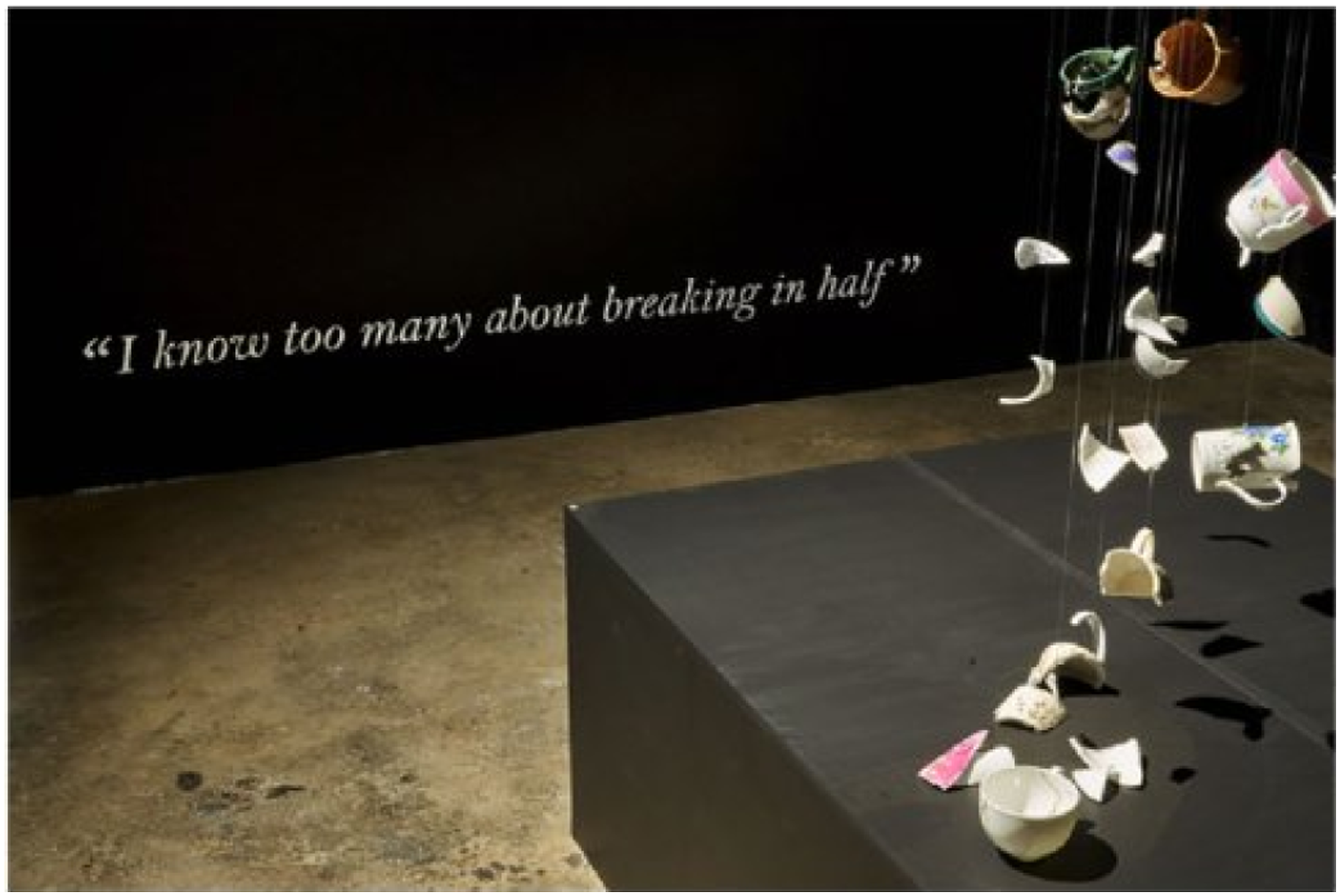
The art work was produced in response to experiences shared by elderly populations interviewed by the authors. Many of the interviewees resisted the dominant narrative of frailty as an inevitable and unmodifiable result of ageing linked to concepts such as age-related disability, physical impairment and malfunctioning (Morley et al., 2013). The work invites reviewers to reconsider their conceptualization of frailty as a review phenomenon and present evidence that challenges the connotation of frailty as a deficit (Hendry et al., 2019; Jadczak et al., 2018). This shows the potential of AR studies to stimulate meaningful reflection upon, integration, and communication of evidence misalignments (Archibald & Blines, 2021).
Just like any other empirical study, AR studies are processes of inquiry supported by a reflexive methods base. New insights are produced during or alongside the creation process. AR studies produce a felt and physically embodied type of knowledge initiated in an artistic experience and consolidated as an art form, the art work. An art work gives a form to feelings and impressions identified and investigated. It provides a universal understanding of personal experience(s) (personal communication: Mae Jemison, 2020 1 ). Art work can therefore be considered research evidence in itself. This claim invites review authors to re-visit what qualifies as evidence. Rumbold (2014) emphasizes that objective evidence from the sciences, although presumed to represent the most efficacious, for example in the health and social care sector, is actually not always equated with the desirability of health and social care outcomes. AR, like qualitative research, is often developed from within social constructionism or critical theory. It is able to capture the nuanced and empathic human context. It focusses on the more subtle in-between, holistic phenomena of human experience (Hodgins, 2017) and amplifies our insights and understanding of the human condition necessary for making progress as an individual, an organisation and society more generally. Gerber’s (2022) invitation to acknowledge the usual but productive tensions between scientific accuracy and artistic interpretation when using art work as evidence is of particular importance in the context of revisiting the systematic review process to be inclusive of AR evidence. This tension manifests itself as early as the moment when a review team decides what is considered a relevant ingredient of a review. Art work may not always present itself as a conventional research report, article or book chapter. We encounter it in many different formats: as a graphic novel, a visual diary, a comic, a drawing or painting, a multimedia production, a (series of) photograph(s), a dance or theatre performance, music, poetry, an aesthetic installation or sculpture, a collage or upcycling work, crafts, quilts, graphic design or combinations of these (Wang et al., 2017; Leavy, 2020), a statement, a presentation, an individual action, experience or a collective social process (Toro-Pérez, 2009).
Art work as the outcome of AR could be considered an equivalent of research reports produced as the outcome from other types of primary research studies. It can be included in more conventional qualitative or mixed-method review projects on the level of study types and designs considered, to make the review more comprehensive. A review team that would opt in on this idea might need additional guidance in how to deal with such evidence on a more operational level. This is the focal point of this paper.
Objectives
The idea to include AR evidence in systematic reviews was first pitched at the 10th edition of the International Congress of Qualitative Inquiry (Hannes, 2014). Currently, art work is not yet systematically considered as evidence for review projects. This has many reasons. First, review authors tend to focus on written research reports as their main source of information. Art work may not always serve the printed page because of its potential tangible nature and its appearance in (virtual) spaces where we might not be looking for research evidence. Alternative search strategies need to be developed in order to trace them. Second, review authors may be unfamiliar with the criteria used to judge the quality of AR studies and their outcome as these differ substantially from the criteria proposed for more conventional quantitative and qualitative research studies. Review authors might therefore be reluctant to engage with AR evidence. A third reason why review authors are potentially reluctant to include AR evidence is because they have not acquired the skills to analyze, interpret and represent other than narrative accounts of qualitative research.
The objective of this study is therefore to outline tactics that can support the strategy of including AR evidence in systematic reviews, with a focus on (a) how to potentially retrieve and assess the value of art work considered for inclusion in an evidence synthesis process and (b) how to analyze and synthesize art work as an outcome of AR. We will use publicly available art work to demonstrate these tactics, amongst them the artistic outcome of the international, transdisciplinary, pandemic related research project sustaining life on earth from the Arts-based Research Global Consortium (Gerber et al., 2022). A worked example of how different art works can be synthesized in a comprehensive audio-visual production will be featured.
I chose to use the term ‘artistic research’ (AR) rather than the more commonly used label arts-based research to situate art research work. I acknowledge the contribution of the arts based movement in challenging academic claims about what knowledge is and how it should be presented. However, in its effort to build a trustworthy and credible methods base it has borrowed substantially from other scholarly disciplines such as social and behavioral sciences. From a strategic point of view, this resulted in a higher level of acceptance of the movement in academia. My choice for the term artistic research is inspired by my personal interest in ensuring its usefulness as a tool of resistance against the potential risk of methodological determinism or colonization. For the remaining part of this paper, I deliberately choose to continue my writing in the ‘we’ form to acknowledge the multiple scholars who have profoundly inspired and challenged my thinking as a review author over time.
Strategies for Including Art Work in Systematic Reviews
Including art work in a systematic review project requires a flexible attitude in terms of completing the core steps in a review process. Art work usually is multimodal in nature and may combine visual, auditory or other sensory information layers with textual or numerical evidence. Similar to a research or review community, art and design communities propose, define, consolidate and renew criteria to create their own research frameworks. This requires review authors to liaise with art communities and discuss adaptations of their methodological strategies to be able to include art work as evidence. In the past, we extensively collaborated with the Arts-Based Research Global Consortium to pilot an integrative synthesis of artistic types of research evidence that emphasize the beauty and disruptive force of Covid-19 investigated by independent art researchers from across the globe (Gerber et al., 2020). In what follows, we report on what has been learned from this pilot while simultaneously presenting a way forward to adapt search and appraisal sections in reviews in which AR evidence is considered for inclusion in a synthesis project.
Identifying and Retrieving Artistic Research Evidence
The first repositories for AR studies were developed around 2005. The journal Liminalities provided a spot for art researchers and creative scholars from different disciplines to present their work differently, in the modality that came most natural to them. The Journal of Artistic Research, launched in 2010 by the Society of Artistic Research, and the journal w/k-Between Science & Art also allow art researchers to display videos and other types of creative multimedia productions, where appropriate accompanied by a short written statement in which the research context is explained. Art work as the outcome of an AR process does not automatically end up in formal scholarly repositories or major databases. While representations of art work are often digitalized for inclusion in journal articles, this often comes with a considerable time delay and mostly after the work has already been exhibited in multiple places. More often, AR evidence is on display on the web, in university depositories or on social media channels like Facebook and Instagram. These art works can be traced via handsearching, based on a predefined selection of web environments of research institutes or organisations featuring exhibition work and accompanying catalogues generated through research. An alternative strategy would be to engage in web scraping (also known as Screen Scraping, Web Data Extraction, and Web Harvesting etc.) is defined by Singrodia and colleagues (2019, p. 1) as ‘a procedure of automatic web data extraction instead of manually copying it. It is a technique in which meaningful data from the HTML of websites are extracted and stored into a central local database or spreadsheet.’ Web scraping is typically targeted towards retrieving well defined, specific types of data relevant to, in this case, the context of the conducted review project in which art work is included. Art work often presents itself on the web as an image or an audio file. This form can be specified as an eligible outcome of AR studies in the inclusion criteria of a review. A number of software packages and web scraping procedures have been developed to support the scraping of online content. Some require extensive programming expertise (e.g., in HTTP and HTML) for which additional expertise needs to be invited in the review team. Others are more user friendly and scrape web content based on URLs, user accounts or text words preselected by a review author and fed to the scraper. The software then converts and stores unstructured photo posts, video posts and accompanying storylines into a database to be consulted by the review team for extraction and analytical purposes. For example, Stogram allows review authors to scrape content from Instagram, a visually oriented social media platform, via the usernames of art researcher with an Instagram account. It can also scrape content based on specific hashtags related to the topic or subject of the review used in the search strategy. It allows review authors to filter by region and date of appearance. Content identified by scrapers is considered ‘available for public consumption’ but the ownership of the content remains with the creators. It is common courtesy to notify creators of a review team’s intention to include their work in a synthesis and request permission.
Quality Assessment of Artistic Research
According to Gerber (2022, p. 24) ‘a critical discussion of onto-epistemological perspectives is precursory and essential to shifting from the typical ways of thinking about research to those that involve imagination and inclusiveness by integrating diverse ways of knowing with pluralistic realities and methodologies’. She urges the review community to confront the ‘politics of domination’ in the academy and by extension the systematic review community where ‘unnecessary and competing hierarchies of thought’ are often established to create restrictive standards of excellence, acceptability or inferiority of particular types of scholarly work.
While the idea to develop criteria to judge the value of AR evidence is often met with resistance in the arts community, chances to develop a common language do to so are likely. A similar process of resistance has been witnessed in the qualitative research and review community approximately two decades ago, at the moment the integration of primary qualitative research evidence in systematic reviews was discussed (Hannes et al., 2013). In 2012, Hannes and Macaitis (2012) updated a review from Dixon Woods and colleagues on characteristics of published qualitative evidence syntheses in the field of health care (Dixon-Woods et al., 2007). It indicated that review authors gradually became more sympathetic to the idea of quality assessment of qualitative research evidence to be included in reviews. There was a strong push though, to tailor criteria to the specific qualitative research tradition and leave some space for authors to decide on either a list with design specific criteria, or a more general assessment approach taking into account the most crucial elements of quality such as richness, credibility and relevance of the research evidence studied for an argumentation in development. These findings are also in line with the concerns identified in a Delphi study on the usefulness of consolidating reporting criteria for qualitative research (Hannes et al., 2015) where similar arguments for resisting standard criteria were met.
Identified Assessment Criteria for Artistic and Design Related Research Studies.
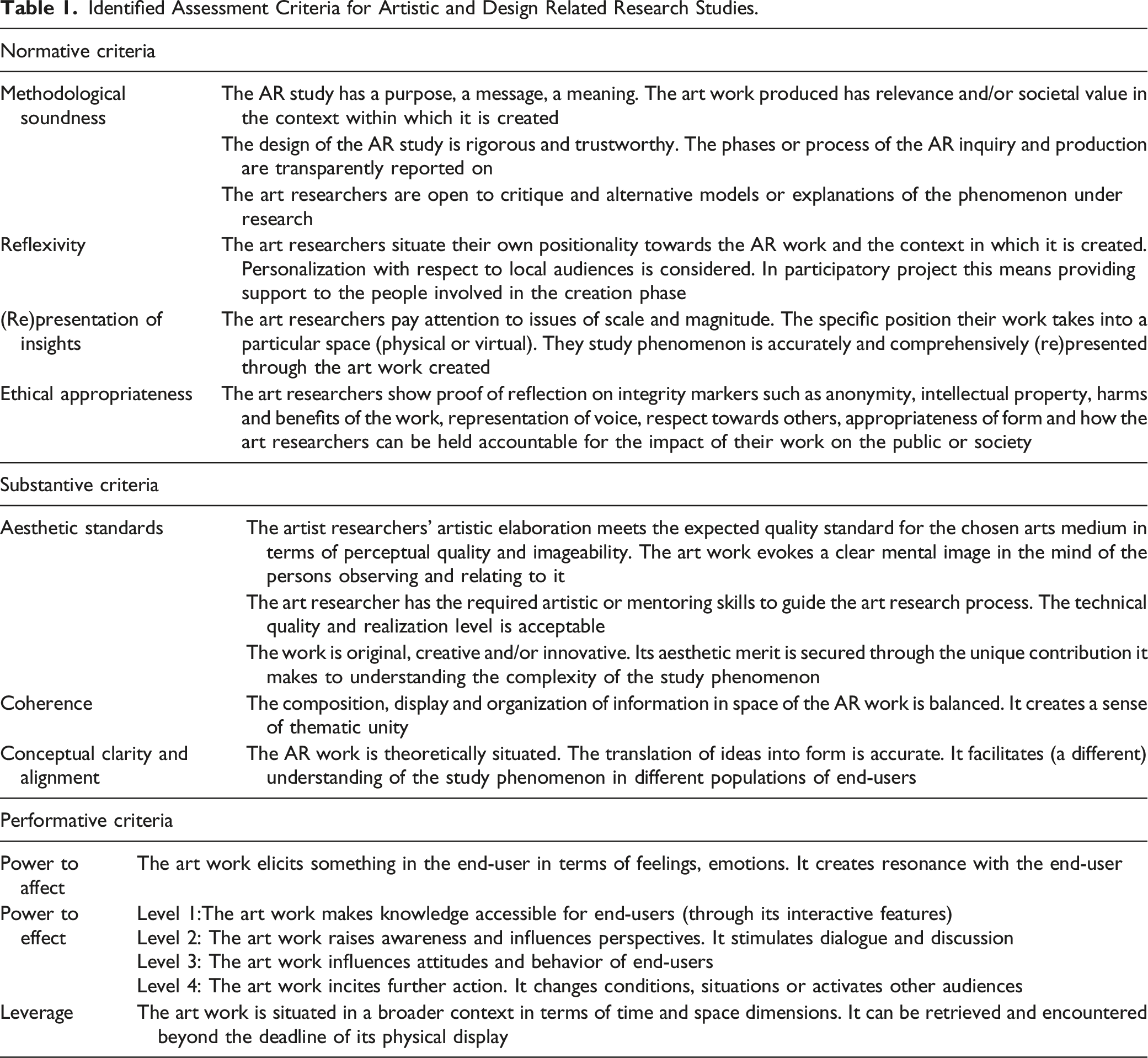
Because claims about social impact are not always consistently evaluated (Coemans et al., 2019), review authors might not be able to take along all relevant dimensions proposed in previous literature. They can decide amongst team members which criteria they find useful or choose to take along in their value assessment of art work considered for inclusion in a review and where available, its accompanying documentation. Applied to the art work ‘Disrepair’ (Figure 1) featured in the study from Archibald and Blines (2021) the following paragraph presents an outline of how the criteria facilitated our value judgment. This can potentially lead to a pass/fail approach in deciding on the usefulness or relevance of a particular work for inclusion in a systematic review.
“On the level of
On the level of
On the level of
Analysis and Interpretation of Artistic Evidence
This part outlines how art work such as installations, exhibitions and performances stored or preserved in a digital format can be analysed. We propose three different options; thematic analysis, iconographic analysis and art and design related analysis, using evidence collected in the sustaining life on earth project. We will then illustrate how different art works can be merged to reach a level of integration that is more than the sum of the different art parts.
Thematic Analysis
Clustering Art Works According to Similarity in Meaning.
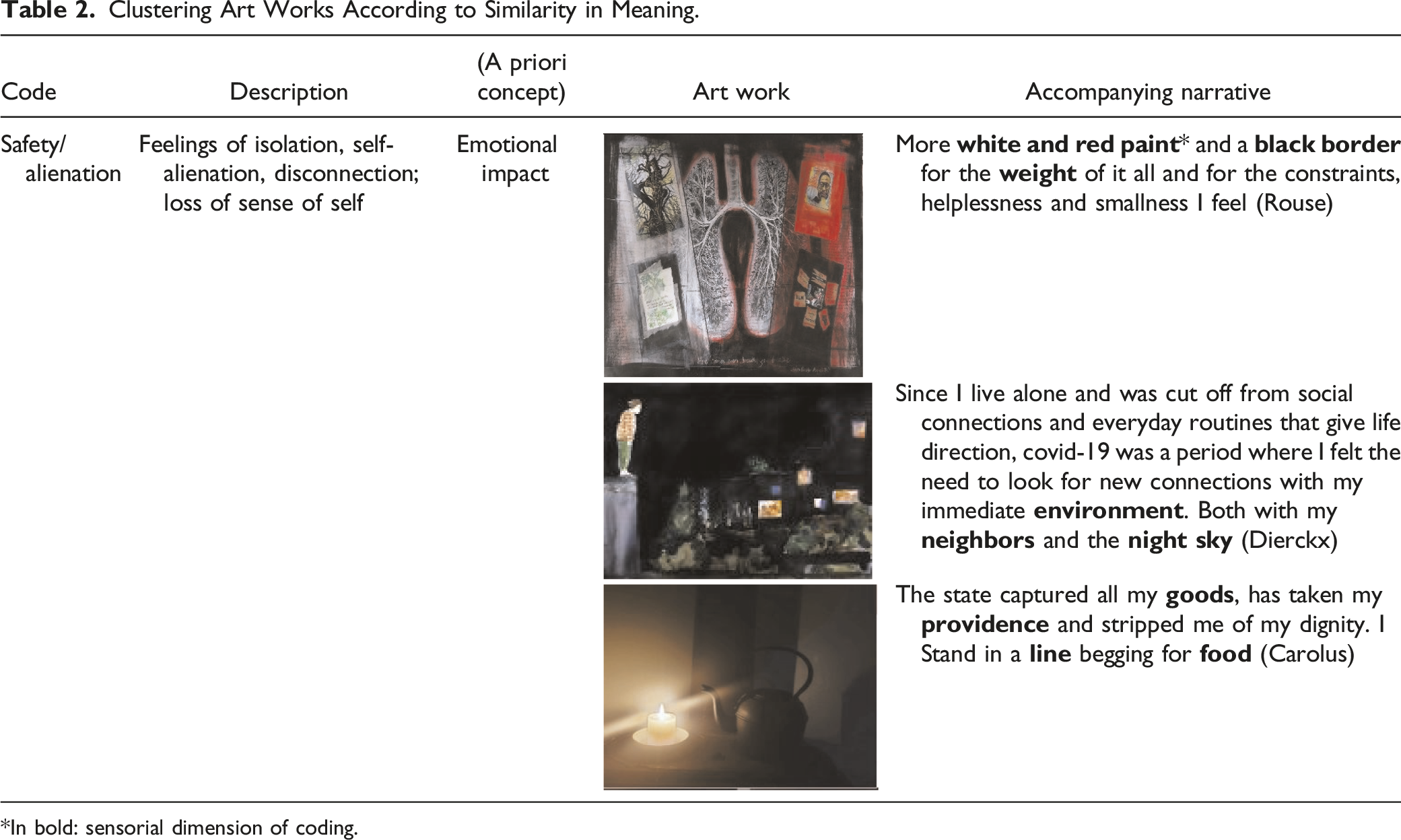
*In bold: sensorial dimension of coding.
Iconographic Analysis
Iconclass Thesaurus Applied to Art Work Figure 2 ‘Untitled’.

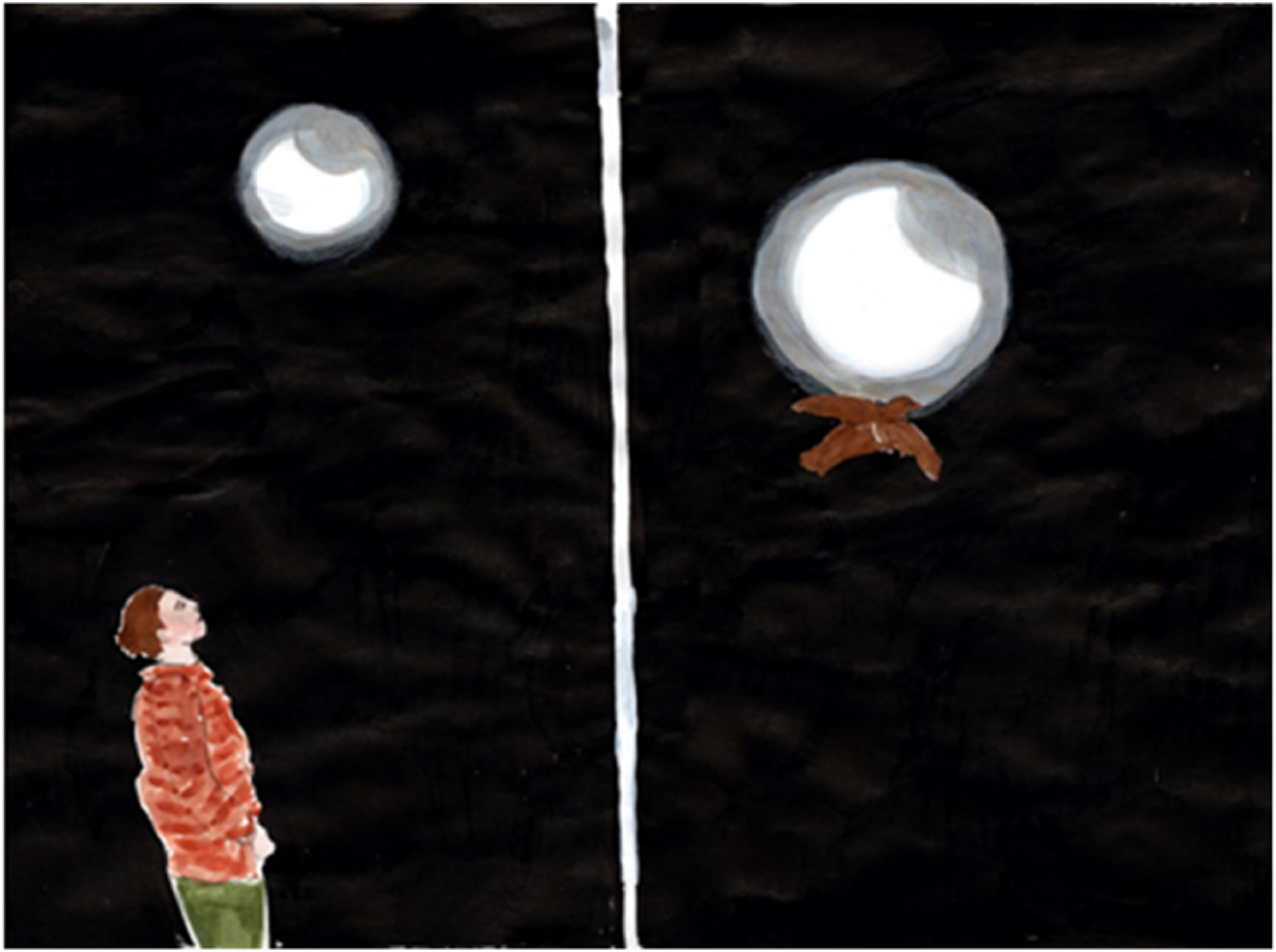
Untitled (Creator: Chloé Dierckx for the sustaining life on earth project).
Depending on the specific interest of review authors, the art works can be mapped differently, for instance with a focus on time-related or geographical markers and researcher characteristics (when, where, by whom and how is the work created). This allows review authors to consider data such as gender, age, race or the intersections between these characteristics of the maker to better understand the context in which the work was created. Likewise, extracting data on how the art-research work has been produced can be important. Material characteristics of an art-work such as the use of smudgy chalk, viscous inks, soft fiber or cold steel influences people’s perception and the meaning assigned to a work of art. This could be important when interpreting art-research data in the analytical phase. The sensory dimensions embedded in the narrative from art researcher Rouse in Table 2 illustrates this principle.
More white and red paint, and a black border for the weight of it all and for the constraints, helplessness and smallness I feel (Rouse).
Art and Design Related Analysis
Elements of Art and Principles of Design.

Analytical Reading of Primary Visual Evidence From an Intrinsic Quality Perspective of Figure 2 ‘Untitled’.
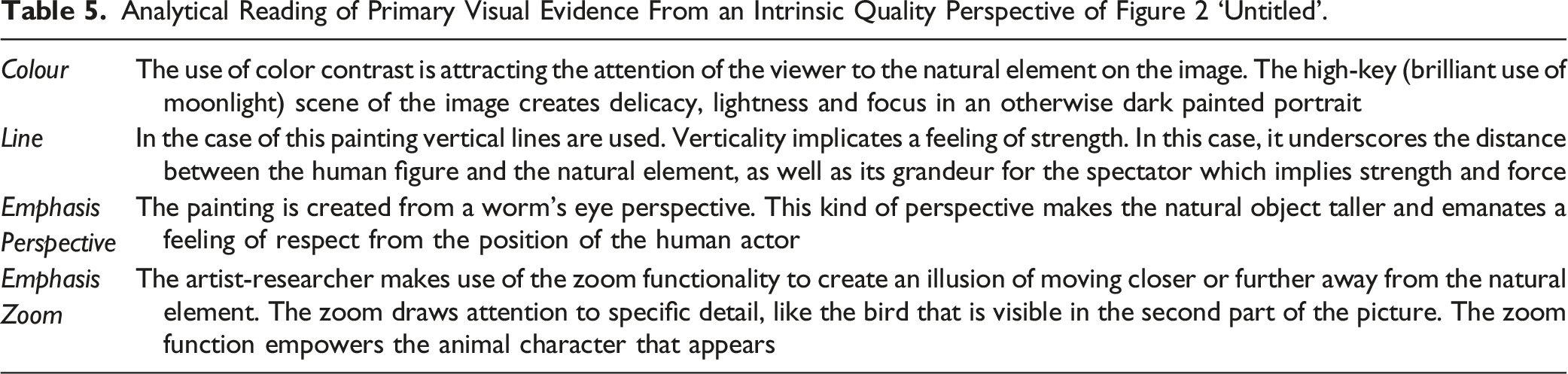
Specific guidance on how visual qualities can be read, interpreted or combined with narratives is readily available from most art schools and it has extensively been written about from multiple perspectives (Serafini, 2014; Brown & Collins, 2021; Hannes & Siegesmund, 2022). The analysis of intrinsic visual characteristics may capture content that an art researcher does not initially verbalize in a narrative (see thematic synthesis part) but is nevertheless evidenced. In case of the untitled art work, the choice of the artist for contrast, the use of a worm’s eye perspective and the combined use of vertical lines with a zoom function provides detail of the natural elements on display in the art work. It confirms her sense of the vast all-encompassing environmental character (Dierckx in Table 2) of place in pandemic lockdown situations.
An Integrative Synthesis
It is perhaps in the exercise of combining different analytical strategies that new synergies and models for an integrative synthesis of art work can be created. This is illustrated in the work conducted for the project sustaining life on earth (Gerber et al., 2022). Here, the research team opted for a mode of synthesis that captured the fluid and dynamic nature of a broad range of art works to prevent the loss of aesthetic information: the visual, the narrative and sonic dimensions of expression. An online gallery was developed to present individual art works included in the synthesis. All involved researchers curated the exhibition and merged thematic and symbolic content, theoretical framing and a reading of visual qualities into a consistent whole. While the gallery could be considered a curated form of synthesis in itself (Figure 3), the team also created a new audio-visual production that integrated qualities, concepts and narratives from the individual art works; an artistic type of synthesis on how people experienced the pandemic that can be accessed at the entrance of the gallery (Figure 4). Gallery of primary Artistic Research (AR) evidence. Integrated, audiovisual synthesis of primary AR evidence as included in the gallery.

The evidence gallery is a dynamic product. Its content can be adapted as time progresses. New layers of evidence can be added to the theme sustaining life on earth to build a more comprehensive, artistically inspired review zone. Visitors can walk into this exhibition of primary artistic research evidence and contribute to the evolving evidence base on experiences with the pandemic by engaging with the curator team (https://www.artsteps.com/view/6060c8876ef01bf10f661557?currentUser). The strength of an artistically inspired evidence synthesis is that its performative power will affect end-users differently. It also contributes to the general aim of making review insights accessible to all. While these claims need further testing, increasing the sensitivity of review authors for aesthetic dimensions of information in or as an art form would make systematic reviews most likely more comprehensive. Art work created as an outcome of AR studies certainly brings additional benefits to end users, beyond an the deadline of an AR project. It is through the art work that new insights are integrated and transferred to a public. While art work continues to have a positive impact on people’s compassion for others and increases empathy levels for those exposed to it at exhibits, physically or online (Bowen & Kisida, 2019), the evolving dialogue between members of the public is not always systematically registered. Developing some guidance for how such evaluation might work on a more global scale would be helpful, as is the development of a solid methods base in which different types of primary evidence can be merged to positively influence the completeness and comprehensibility of systematic review findings.
Footnotes
Acknowledgments
I sincerely thank the scholars involved in the Arts-Based Research Global Consortium for the inspiring content we have created and the in-depth discussion that strongly influenced my thinking: Nancy Gerber, Richard Siegesmund, Marco Gemignani, Elisabetta Biffi, Sara Coemans, Madeline Centracchio and Lucia Carriera. I am grateful for the support of the Multimodality Methods Group (M3) and wish to recognize the impact of the informal intellectual exchanges with the young scholars in research group SoMeThin’K on the work I am presenting.
Declaration of Conflicting Interests
The author(s) declared no potential conflicts of interest with respect to the research, authorship, and/or publication of this article.
Funding
The author(s) received no financial support for the research, authorship, and/or publication of this article.
