




Abstract
Qualitative systematic reviews, or qualitative evidence syntheses (QES), are increasingly used in health settings to guide the development of practice and policy. Thematic synthesis is one of the most well-developed approaches used for QES, however there are limited worked examples describing how to apply the steps of analysis in the literature. This paper describes the processes and decisions undertaken in a qualitative systematic review and thematic synthesis from the perspective of a novice researcher. The described review aimed to explore the shared musical experiences of people living with dementia and their family care partners across a range of settings. We found that shared musical activities fostered experiences of connection and wellbeing for people living with dementia and their family care partners. This was demonstrated with moderate-high confidence through six themes, and our findings informed the development of the Contextual Connection Model of Health Musicking. In presenting a worked example of our review, this paper introduces a systematic approach to coding and discusses the complexities of developing and reporting on analytical themes. We identify the need for a specific thematic synthesis reporting tool, and the need to embed reflexive practices into QES tools more broadly.
Introduction
Qualitative systematic reviews, also known as qualitative evidence syntheses (QES), combine the findings of primary qualitative studies in a systematic way (Flemming & Noyes, 2021). The terms qualitative systematic review and QES are often used interchangeably, however QES is preferred by the Cochrane Qualitative and Implementation Methods Group as it signifies the unique approaches required for synthesising qualitative evidence (Booth et al., 2016). QES is used to develop a greater understanding of issues addressed in qualitative research and generate insights that extend beyond the findings of individual studies (Carroll, 2017; Flemming & Noyes, 2021). QES is particularly helpful for understanding the experiences and needs of healthcare consumers as it combines perspectives from a range of contexts (Carroll, 2017). As a result, QES is increasingly used in healthcare to guide the development of practice and policy (Flemming & Noyes, 2021). In the study described in this paper, QES was selected to gain insights for developing research into shared musical experiences for people living with dementia and their family care partners.
Thematic synthesis is one of the most well-established approaches to QES alongside framework synthesis and meta-ethnography (Flemming & Noyes, 2021). Thematic synthesis was developed by Thomas and Harden (2008) to address questions about people’s perspectives and experiences. It is recommended by the Cochrane Qualitative and Implementation Methods Group as an accessible and epistemologically flexible approach that is particularly suitable for novice researchers (Booth et al., 2016; Noyes et al., 2018). Correspondingly, thematic synthesis is one of the most commonly used approaches for QES (Flemming & Noyes, 2021).
Despite its popularity, there are few references for conducting thematic synthesis beyond Thomas and Harden’s (2008) foundational paper. In this publication, Thomas and Harden (2008) provide a worked example of a previously published study (Thomas et al., 2003), sharing detailed insights into their coding and development of descriptive themes. In a more recent book chapter, Thomas et al. (2017) use the same example study to outline the thematic synthesis process with added reflections.
Worked examples of QES are a suitable medium for educating novice qualitative researchers (Atkinson et al., 2000). Worked examples illuminate hidden steps and challenges of research methods (Hannes & Lockwood, 2012), serving to “demystify” the numerous challenges and decision-points faced (Soilemezi & Linceviciute, 2018, p. 11). Several worked examples are evident in meta-ethnography (Benoot et al., 2016; Britten et al., 2002; Britten & Pope, 2012) and framework synthesis (Ames et al., 2019; Carroll et al., 2011; Yazdani & Yadollahi, 2019). However, we were only able to locate two worked examples of thematic synthesis in the healthcare-related literature (Lucas et al., 2007; Thomas & Harden, 2008). To address the gap, this paper describes the process and decisions undertaken by a novice researcher (Author 1) conducting a thematic synthesis. To emphasise the subjectivity of these decisions, this article is written from the first-person perspective, where ‘I’ and 'my' refers to Author 1 and ‘we’ refers to the supporting research team (all authors). This aligns with my interpretivist perspective (Wheeler, 2016) and seeks to highlight the unique challenges encountered by novice researchers.
The Example Study
The study described in this paper was a qualitative systematic review and thematic synthesis exploring the research question: How do people living with dementia and their family care partners experience shared musical activities? The rationale and findings of this study are published elsewhere (McMahon et al., 2022). The study described was conducted in the context of my doctoral studies as part of a multinational randomised control trial (Baker et al., 2019). Authors 2 and 7 provided supervision throughout the review process and contributed to reviewing and appraising articles for inclusion. Reflexivity (i.e. critical self-reflection) was applied throughout the coding and analysis process (Finlay, 2002b).
Selecting the Methodology
RETREAT Framework Considerations.

Thematic synthesis is a flexible approach to qualitative evidence synthesis (QES) designed to explore people’s perspectives and experiences (Thomas & Harden, 2008). It is particularly suitable for exploring participants’ views of interventions and identifying factors that influence an intervention’s success (Matney, 2018). Thematic synthesis involves three steps of analysis: 1) line-by-line coding of text; 2) developing descriptive themes while remaining close to the primary text; and 3) generating analytical themes by adding new interpretative constructs and hypotheses (Thomas & Harden, 2008). Analytical themes are generated by considering how the descriptive themes relate to the original research question (Thomas & Harden, 2008).
Developing a Search Strategy
My search strategy was informed by the aims of the review, discussions with supervisors, previous systematic reviews (Dowlen et al., 2018; Sellars et al., 2018) and the results from SPIDER, a search strategy tool that caters to the needs of QES (Cooke et al., 2012). The workings of my search strategy development are presented in Appendix B. The final search strategy included a Boolean search phrase, a list of databases and journals for searching, and inclusion and exclusion criteria (see Appendix B). This final search strategy and protocol was registered with PROSPERO (CRD42020169360) to reduce the risk of duplication and enable transparency.
Inclusion and Exclusion Criteria
The inclusion and exclusion criteria were informed by the aims of the review, discussions with supervisors, previous thematic syntheses (Dowlen et al., 2018; Sellars et al., 2018) and the SPIDER tool results (see Appendix B). Criteria was translated into a screening checklist and shared with Authors 2 and 7 for masked screening (see Appendix C).
Search and Screening
Through the screening process outlined in Figure 1, we identified 13 articles for inclusion in the review using Rayyan software (Ouzzani et al., 2016). To maintain independence through screening, I assessed 100% of articles, and Authors 2 and 7 shared the role of the second reviewer. This process is outlined in full in McMahon et al. (2022). PRISMA flow diagram (adapted from Page et al. (2021)).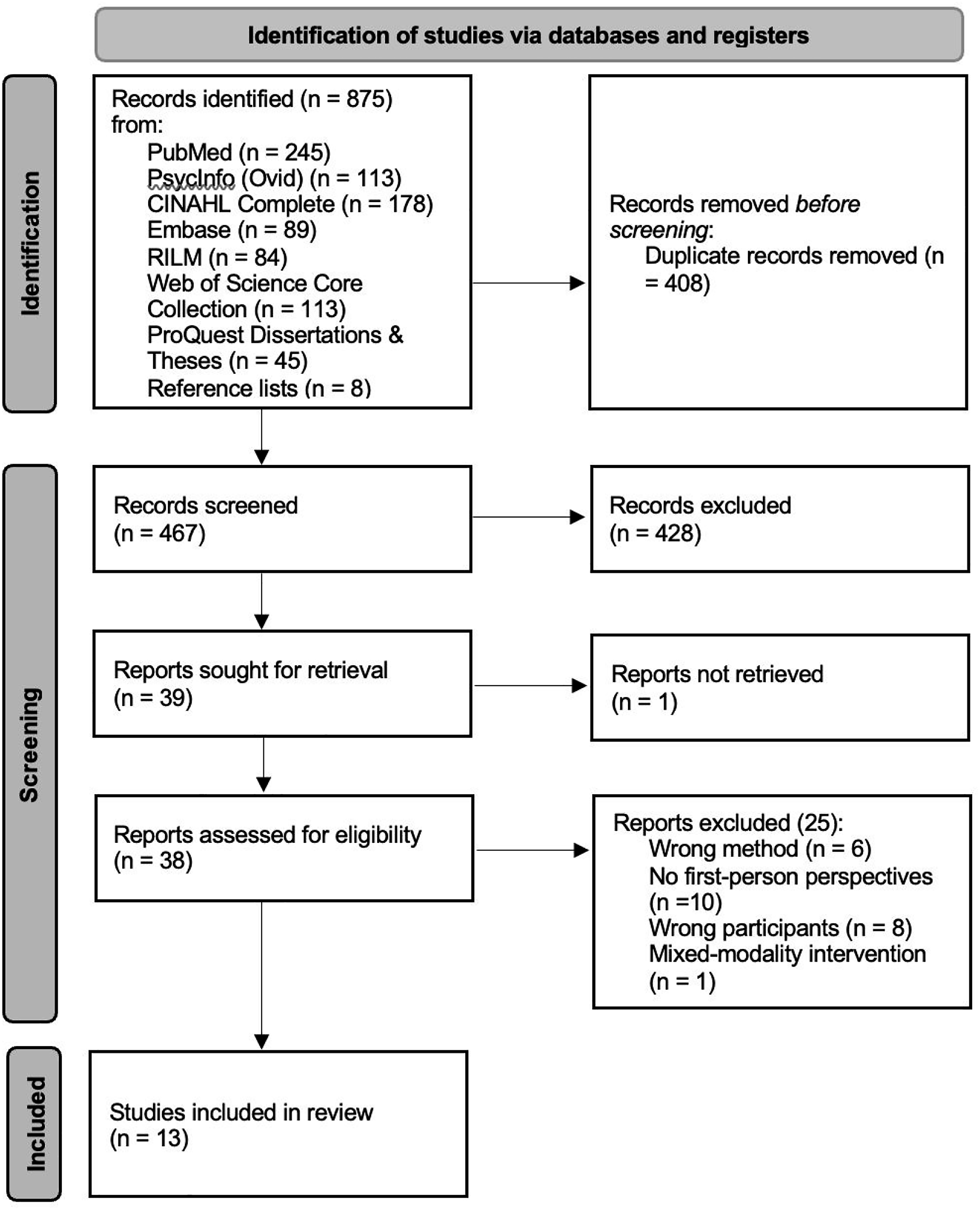
Interrater reliability
The interrater reliability of decisions made throughout the screening process (McHugh, 2012) was calculated using Cohen’s kappa (Warrens, 2015) to safeguard transparency in the systematic review process (Belur et al., 2018). The initial screening (κ = 0.54) and full text screening (κ = 0.55) showed moderate agreement between reviewers (Landis & Koch, 1977). While this categorisation of kappa is increasingly acknowledged as arbitrary (Landis & Koch, 1977; Warrens, 2015), it is interesting to consider the level of agreement between raters and the possible contributing factors. Personal factors can impact the assessment process, including assessors’ academic background and experience, methodological preferences, and closeness to the research project (Belur et al., 2018). Several of these factors may have influenced agreement in this review. As a novice researcher, I took a cautious approach and was more hesitant to exclude studies than my experienced supervisors, Authors 2 and 7. These factors may explain our moderate kappa results. The nature of qualitative research may also contribute to differences in interpretation (O’Connor & Joffe, 2020). This was highlighted through our discussions which revealed different interpretations of the inclusion/exclusion criteria. While there are arguments both for and against using interrater reliability tools in qualitative research, in the context of this study it served to promote reflexivity and dialogue about these differences within the team (O’Connor & Joffe, 2020). This ultimately led to greater clarity around the types of articles we wished to include/exclude.
Data Extraction
Identifying what counts as data within qualitative reviews is a challenge, and decisions vary across studies (Soilemezi & Linceviciute, 2018; Thomas et al., 2017). While some studies choose to include only first order data (e.g. direct participant quotes) others include entire results/findings sections (Soilemezi & Linceviciute, 2018; Thomas et al., 2017). To determine the right approach for this review, I looked to existing thematic syntheses that explored the perspectives of people living with dementia (Dowlen et al., 2018; Hennelly et al., 2019). These studies used first and second order findings. Theoretical perspectives are also relevant to this decision. Some interpretivist researchers argue researcher-selected quotes involve a level of interpretation, so there is little value in distinguishing between first and second order data in a review (Noyes & Lewin, 2011). Based on my interpretivist perspective and the review of previous studies (Dowlen et al., 2018; Hennelly et al., 2019) I decided to extract all data included in the results or findings sections of included publications. This data was imported in PDF format into MAXQDA 2020 (VERBI Software, 2019) for coding and analysis. Details about each study were extracted and entered into a spreadsheet (see Appendix A).
Step One: Coding
In step one, I coded the data inductively and line-by-line according to Thomas and Harden’s (2008) process. Line-by-line coding involves reading each sentence or paragraph carefully and assigning it with one or more codes (Thomas et al., 2017). Linneberg and Korsgaard (2019) argue that line-by-line coding helps to counter any unconscious selectivity that may have occurred in first readings/interaction with data. After sorting included articles alphabetically by author, I began coding the extracted text from the first article in my list (Clark et al., 2021). I took careful notice of specific words as well as sentences and paragraphs as a whole (Linneberg & Korsgaard, 2019). To assist with the coding process I used the research software tool, MAXQDA 2020 (VERBI Software, 2019).
Coding software such as MAXQDA 2020 is recommended by Thomas and Harden (2008) to assist with the coding process. Having previous experience with other software, NVivo (NVivo qualitative data analysis software, 2018), I was drawn to explore MAXQDA 2020 due to its visual appeal and options for colour-coding the data. Coding software has many benefits for the qualitative researcher, including the ability to label and search large quantities of data (Thomas & Harden, 2008). Coding software also allows the coder to organise codes either freely with no linked codes, or in tree-like structures (see Figure 2). These tree-like structures enabled me to create connections between codes with ease. Importantly, these codes were able to be easily moved, edited or adjusted as the coding process progressed. Codes organised in tree-like structures.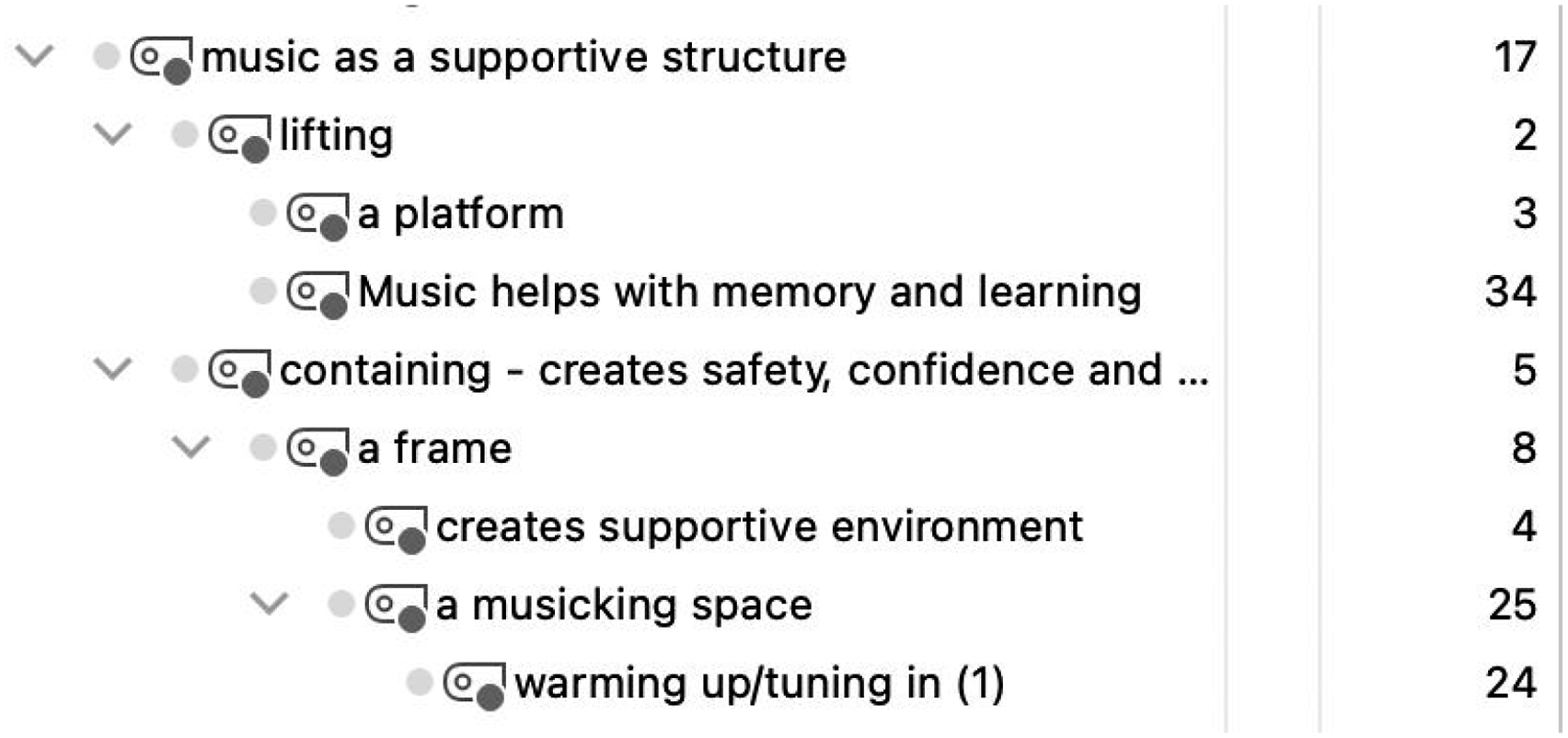
After the first round of coding my first article, I continued to code each included study in alphabetical order. Coding subsequent studies involved translation (Thomas et al. (2017), where I made judgements about whether a line of text fitted into existing codes or required a new code to be generated. For example, in the first round of coding data from Dowlen’s thesis (2019, p. 125), I allocated text to pre-existing codes: continuity, social belonging and choice and preference. However, in coding a discussion of “Scott’s comedic presence” (Dowlen, 2019, p. 126), I decided the concept of humour was significant enough to warrant its own new code. Each of these decisions was journaled about and discussed within supervision to maintain reflexivity through introspection and mutual collaboration (Finlay, 2002a).
As part of the initial coding, I was careful not to merge codes as I wanted to avoid prematurely ruling out distinctive themes. This is in keeping with reflexive practices where researchers attempt to keep an open mind while exploring data (Finlay & Evans, 2009). For example, in the initial round, several codes were developed on the topic of supportive friendships within groups: social belonging, connecting with group, supportive friendship with peers, friendship, affinity, feeling understood. While there are many similarities and overlapping meanings between these codes, I recognised subtle differences across these. For example, supportive friendship with peers was in essence different to the friendly interactions coded under friendship. This nuanced approach resulted in the generation of a large number of codes (208). To manage these numerous codes, I began to group them with like-named codes in tree-like structures for ease of navigation. For example, I grouped the codes musical connection, dyadic connection and connecting with identity/self under the code connection.
Working Definitions of Codes (extract).

Coding Log Excerpts.

Step Two: Developing Descriptive Themes
In step two, I began grouping codes into descriptive themes. This involved identifying relationships between codes and organising these into conceptual themes (Thomas et al., 2017). In the first part of this process, I used the sets feature in MAXQDA 2020 to organise codes into conceptual groups I had noticed during the coding process (see Figure 3). The sets feature allowed me to explore ideas separately to the tree-like structures created during coding, and acted as a starting point for my brainstorming. Creating sets in MAXQDA 2020.
Following these initial groupings, I engaged in mind-mapping and brainstorming with Author 2 to identify and explore key themes and concepts (see Figure 4). This process was informed by groups within the sets, the prominence of individual and grouped codes, and notes from my coding log. The prominence of a code was indicated by the number of times it was allocated across the data. Brainstorming and mind-mapping.
Based on the insights gained through brainstorming, I began organising and refining codes to create descriptive themes. I moved codes into more defined categories and checked the coded content against these categories. This systematic process involved bottom-up, top-down and side-to-side processes. During the bottom-up process, I examined less prominent codes in terms of their independence and relationship to other codes. If their meaning was sufficiently similar to another code, these two codes were merged (with the original description included in the merged code (e.g. relaxing/restful)). If they were sufficiently independent in meaning, they were allocated to sit under a relevant parent code. For example, the code something to talk about (8 allocations) was assessed as sufficiently independent to other codes and allocated to sit under the parent code supports dyadic relationship.
Within the top-down process, prominent codes were considered in relationship to other codes, with relevant codes moved to sit under these. For example, all codes were considered for their possible relevance to the prominent theme supports dyadic relationship (55 allocations). Codes identified as relevant to supports dyadic relationship were moved to sit under this code.
MAXQDA 2020s visual tools were also used to explore top-down relationships as shown in Figure 5. This tool allowed the free-form allocation of codes, assisting me to creatively explore the relationships between them. MAXQDA 2020s visual tools.
During the side-to-side processes, codes were considered in relation to multiple categories. Where applicable, codes that were relevant to multiple categories were duplicated. For example, shared moments was duplicated to sit under both shared dyadic experiences and over time>the moment, and coded content was re-evaluated under each parent theme.
Descriptive Themes.

Step Three: Developing Analytical Themes
Evolution of Descriptive Themes to Analytical Themes.

In reviewing the descriptive theme In group settings, I was influenced by previous knowledge of Community Music Therapy (Stige & Aarø, 2012) and ecological theories (Bronfenbrenner, 1992; Bruscia, 2014). For example, as I explored the codes under this theme and engaged in reflexive dialogue with Author 2, the organic development of relationships, culture and rituals in group settings became apparent, leading to the development of the analytical theme, Music groups become ecological systems.
Themes 3 and 5 were largely carried over from the descriptive themes, as these already described aspects of how dyads experienced shared musical activities. Through reflexive discussions and the writing up process, these two themes became more developed. Theme four was derived from the individual and shared experiences highlighted in the descriptive themes. Across all the analytical themes, the writing-up process helped to develop and refine each theme. This is common within qualitative research, as writing is used to process and develop ideas (Mitchell & Clark, 2021). Through this write-up stage, I noticed that the underlying theme of connection appeared repeatedly across themes. As I reviewed the codes, I identified a variety of types of connection throughout. This led to the development of Theme six: The thread of connection. The development of this new theme was discussed with Author 2 and Author 7 to maintain reflexivity.
Reflexive Practices
Throughout the analysis I engaged in regular supervision with Author 2 and Author 7 to discuss my processes and examine emerging codes and themes. This supervision supported the reflexive practice of mutual collaboration, where cycles of dialogue helped to move our understandings beyond initial assumptions, understandings and biases (Finlay, 2002a). As part of these discussions, we reviewed random segments of text and reflected on the accuracy and possible meanings of the codes and themes. We attempted to bring a self-awareness of our own contexts to these discussions (Finlay, 2002b), acknowledging our influences from previous research and theoretical frameworks such as personhood (Kitwood, 1997) and Community Music Therapy (Stige & Aarø, 2011). For example, in my initial coding I created the code performative. At the time of coding, I viewed this as simply the most accurate description for the coded text. On further reflection, I realised I was influenced by my previous knowledge of Community Music Therapy (Stige & Aarø, 2011). With a new awareness of these influences, I re-evaluated my use of this code. After reviewing the data and discussing with Author 2, I decided to retain the original code and embrace these influences while explicitly acknowledging them. I also engaged in regular journaling and note-taking throughout the coding and analysis process. The act of recording and reflecting on my decisions helped me engage in introspection throughout, and these records were a reference and prompt for reflexive dialogue during supervision (Finlay, 2002a).
Quality and Accountability
To assess the quality of these findings, I completed a CASP assessment (Critical Appraisal Skills Programme, 2018) for each included article, and a GRADE-CERQual assessment for each analytical theme and sub-theme (Lewin et al., 2018). A summary of these is provided in Appendix D, and the full results are published alongside the study’s results (McMahon et al., 2022). The GRADE-CERQual assessments found moderate-high confidence in this study’s findings based on methodology, coherence, adequacy and relevance (Lewin et al., 2018; McMahon et al., 2022). In reporting the findings of this systematic review, I used the PRISMA 2020 checklist (published in McMahon et al. (2022)) and the ENTREQ reporting guidelines (Tong et al., 2012).
Discussion
In this worked example, we aimed to explore how people living with dementia and their family care partners experienced shared musical activities across a range of settings. While the comprehensive search increased our chance of capturing all relevant articles, the subjective nature of inclusion/exclusion criteria became clear as we embarked on the reviewing process, thereby highlighting the importance of transparency. I used the updated PRISMA checklist (Page et al., 2021) and the ENTREQ reporting guidelines (Tong et al., 2012) to promote transparency. While there is considerable overlap between these tools, they both have unique benefits. PRISMA’s online tools provide a convenient and comprehensive approach for reporting on any type of systematic review (McGregor, 2021; Page et al., 2021). ENTREQ includes items specific to qualitative reviews, prompting the reporting of coding processes, theme development, and clear presentation of quotations. Therefore, we recommend the use of both PRISMA (Page et al., 2021) and ENTREQ (Tong et al., 2012) for transparency in future QES.
Despite using these tools, I found it challenging to report steps two and three transparently due to the lack of distinction between stages. This is common within thematic syntheses (Thomas et al., 2017). To counter this, we recommend reviewers keep detailed notes in every step. While I attempted to do this through journaling and recording decisions, a checklist or reporting tool may have supported this further. Since the development of ENTREQ, specific reporting guidelines have been developed for meta-ethnography, realist reviews and meta-narrative reviews (Flemming & Noyes, 2021). There are, however, no specific reporting tools for thematic synthesis despite its popularity (Flemming & Noyes, 2021). In light of the above challenges, there is a demonstrated need for a specific reporting tool for thematic synthesis.
In keeping with the Cochrane group’s recommendations, I found thematic synthesis to be an accessible approach to QES as a novice researcher (Noyes et al., 2018). The lack of distinction between stages two and three, however, may be challenging for novice researchers. Therefore, guidance across these stages from experienced researchers is highly recommended. Worked examples of thematic syntheses from experienced researchers would further benefit this field.
According to its proponents, QES makes economical use of existing data to gain insights into complex interventions (Booth et al., 2016; Flemming et al., 2019). This thematic synthesis confirms this view, making use of existing data with vulnerable populations to gain insights into complex processes within shared musical activities.
The discussed review was potentially limited by the exclusion of mixed methods studies, and the lack of diverse populations in the primary studies. Future studies may benefit from using broader inclusion criteria. Additionally, the review may have benefited from deeper reflexive practices to promote integrity and transparency (Finlay, 2002b). While I attempted to incorporate reflexive practices throughout, these were largely limited to introspection and mutual collaboration (Finlay, 2002a). While reflexivity is acknowledged as an important aspect of QES (Downe et al., 2019; Flemming & Noyes, 2021), it is not widely embedded in reporting processes. This could be improved by including reflexive practices in future QES tools.
A strength of this study was the detailed reporting of step one: coding. In this worked example, I provide a systematic approach to coding including top-down, bottom-up and side-to-side processes. This example adds to the existing literature around coding (Chenail, 2012; Linneberg & Korsgaard, 2019; Thomas et al., 2017), providing a unique perspective from a novice researcher. The use of ‘I’ in my first-person discussion also supported critical reflection on my theoretical influences and decision-making. Within a qualitative paradigm, this reflexivity increases the transparency and trustworthiness of research (Finlay, 2002b).
Conclusion
In conclusion, this worked example may provide guidance for novice researchers conducting a qualitative thematic synthesis. This paper provides an example of the key decisions and processes undertaken, and explored the challenges and benefits of conducting QES and thematic syntheses. We highlight the need for meticulous note-taking and reflexivity during analysis to facilitate transparent reporting, and the need to develop a specific thematic synthesis reporting tool that incorporates reflexive processes. We also identify the need to embed reflexive practices into general QES tools. More broadly, this worked example demonstrates how primary qualitative research may be utilised to gain insights into complex processes like music therapy (Carroll, 2017; Flemming & Noyes, 2021). These rich understandings are a valuable guide for healthcare providers and policy developers in community music, music therapy and dementia care spaces (Barbour, 2008; Booth et al., 2016; Flemming & Noyes, 2021).
Footnotes
Author Contributions
Declaration of Conflicting Interests
The author(s) declared no potential conflicts of interest with respect to the research, authorship, and/or publication of this article.
Funding
The author(s) disclosed receipt of the following financial support for the research, authorship, and/or publication of this article: This work was supported by the University of Melbourne, National Health and Medical Research Council (NHMRC; NH&MRC GNT1169867) and the EU Joint Programme – Neurodegenerative Disease Research (JPND; HESOCARE-329-005). The HOMESIDE team and HOMESIDE International PhD (HIP) group provided feedback and dialogue that supported this study’s development.

: Study Information
Details of Final Included Articles.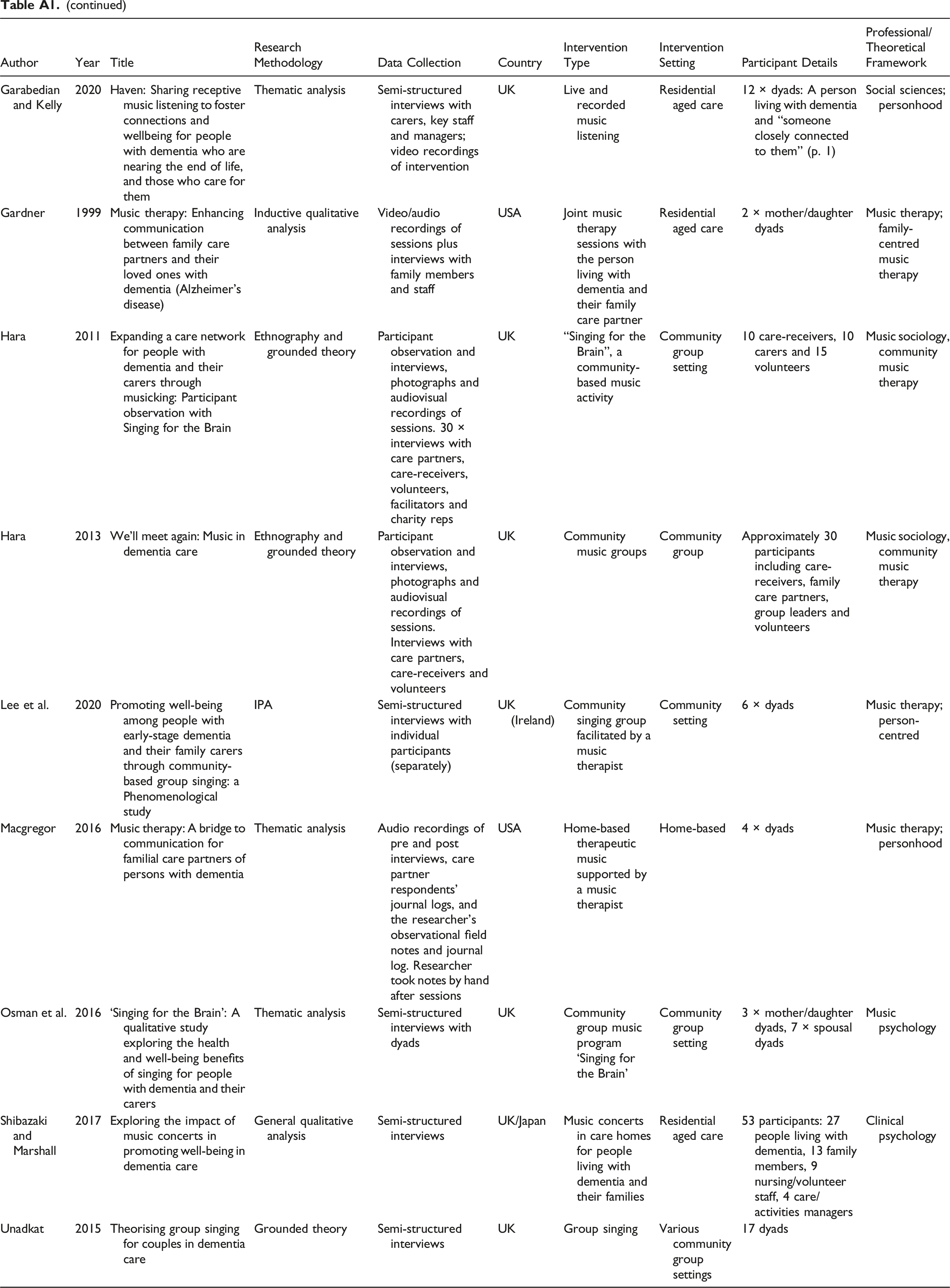
Author
Year
Title
Research Methodology
Data Collection
Country
Intervention Type
Intervention Setting
Participant Details
Professional/ Theoretical Framework
Clark et al.
2018
Community-dwelling people living with dementia and their family care partners experience enhanced relationships and feelings of well-being following therapeutic group singing: A qualitative thematic analysis
Thematic analysis
Semi-structured interviews with dyads
Australia
Therapeutic group singing
Public health facility
8 × spousal/partner dyads; 1 × parent/daughter dyad
Music therapy; Person-centred
Clark et al.
2021
“Doing things together is what it’s about”: An interpretative phenomenological analysis of the experience of group therapeutic songwriting from the perspectives of people with dementia and their family care partners
Interpretative Phenomenological Analysis (IPA)
Semi-structured interviews with dyads
Australia
Therapeutic group songwriting
Community-based
10 dyads total – 5 × spousal dyads living together, 3 × spousal dyads living separately, 2 × family dyads (parent-adult child) living separately
Music therapy; person-centred; family-centred, community music therapy
Dowlen
2019
The ‘in the moment’ musical experiences of people with dementia: A multiple-case study approach
Multiple case study design
Video-observation, video-elicitation interviews, participant diaries, and observational notes by participant/observer
UK
Group music therapy
Community-based group setting
4 × spousal dyads; Four of the six people living with dementia attended the group with a family carer; (Scott, Phillip, Carol and Henry) (Dowlen, 2019, P. 96: 880)
Music therapy; community music therapy
Elliott et al.
2020
Music lessons: Exploring the role and meaning of music for older adults with dementia
Multiple case study design – developed own qualitative analysis to analyse text and video
Semi-structured interviews, observation, and self-recorded videos from dyads
Canada
Home-based music
Home-based
3 × spousal dyads
Community health
Garabedian and Kelly
2020
Haven: Sharing receptive music listening to foster connections and wellbeing for people with dementia who are nearing the end of life, and those who care for them
Thematic analysis
Semi-structured interviews with carers, key staff and managers; video recordings of intervention
UK
Live and recorded music listening
Residential aged care
12 × dyads: A person living with dementia and “someone closely connected to them” (p. 1)
Social sciences; personhood
Gardner
1999
Music therapy: Enhancing communication between family care partners and their loved ones with dementia (Alzheimer’s disease)
Inductive qualitative analysis
Video/audio recordings of sessions plus interviews with family members and staff
USA
Joint music therapy sessions with the person living with dementia and their family care partner
Residential aged care
2 × mother/daughter dyads
Music therapy; family-centred music therapy
Hara
2011
Expanding a care network for people with dementia and their carers through musicking: Participant observation with Singing for the Brain
Ethnography and grounded theory
Participant observation and interviews, photographs and audiovisual recordings of sessions. 30 × interviews with care partners, care-receivers, volunteers, facilitators and charity reps
UK
“Singing for the Brain”, a community-based music activity
Community group setting
10 care-receivers, 10 carers and 15 volunteers
Music sociology, community music therapy
Hara
2013
We’ll meet again: Music in dementia care
Ethnography and grounded theory
Participant observation and interviews, photographs and audiovisual recordings of sessions. Interviews with care partners, care-receivers and volunteers
UK
Community music groups
Community group
Approximately 30 participants including care-receivers, family care partners, group leaders and volunteers
Music sociology, community music therapy
Lee et al.
2020
Promoting well-being among people with early-stage dementia and their family carers through community-based group singing: a Phenomenological study
IPA
Semi-structured interviews with individual participants (separately)
UK (Ireland)
Community singing group facilitated by a music therapist
Community setting
6 × dyads
Music therapy; person-centred
Macgregor
2016
Music therapy: A bridge to communication for familial care partners of persons with dementia
Thematic analysis
Audio recordings of pre and post interviews, care partner respondents’ journal logs, and the researcher’s observational field notes and journal log. Researcher took notes by hand after sessions
USA
Home-based therapeutic music supported by a music therapist
Home-based
4 × dyads
Music therapy; personhood
Osman et al.
2016
‘Singing for the Brain’: A qualitative study exploring the health and well-being benefits of singing for people with dementia and their carers
Thematic analysis
Semi-structured interviews with dyads
UK
Community group music program ‘Singing for the Brain’
Community group setting
3 × mother/daughter dyads, 7 × spousal dyads
Music psychology
Shibazaki and Marshall
2017
Exploring the impact of music concerts in promoting well-being in dementia care
General qualitative analysis
Semi-structured interviews
UK/Japan
Music concerts in care homes for people living with dementia and their families
Residential aged care
53 participants: 27 people living with dementia, 13 family members, 9 nursing/volunteer staff, 4 care/activities managers
Clinical psychology
Unadkat
2015
Theorising group singing for couples in dementia care
Grounded theory
Semi-structured interviews
UK
Group singing
Various community group settings
17 dyads
Appendix B: Search Strategy Development
Appendix C: Inclusion/Exclusion Criteria Checklist
Title. Shared musical experiences for people living with dementia and their family care partners: A thematic synthesis
Research Question. How do people living with dementia and their family care partners experience shared musical activities?
Definitions. People living with dementia are defined as people with a diagnosis of any type of dementia. Family care partners include family members or friends who provide informal care for the person living with dementia (i.e. not a paid employee). These pairs of people may be referred to collectively as a dyad. Shared musical activities are defined as a musical experience (active or receptive) where both members of the dyad are involved.
Framework. People living with dementia and their family care partners’ experiences will be explored both individually and through a family-centred lens as a dyad, which recognises the interconnected nature of these relationships (Hao & Ruggiano, 2020). For this reason, proxy accounts of people with dementia’s experiences will be included when provided by the family care partner.
Inclusion/Exclusion Criteria.
Include
Exclude
Justification
Methodology
Primary research reporting first-person expressions of subjective experiences and perspectives (or proxy reports by family care partners)
Literature reviews of primary research studies
Aim is to extract voice/perspective of participants
Methods
Qualitative studies; first-person accounts (e.g. interview, self-completed scales/questionnaires and other forms of self-expression); proxy accounts by family care partners
Quantitative studies, mixed methods studies
As noted by Zeilig et al. (2019), quantitative measures alone may be a somewhat reductive approach to measuring complex concepts such as experiences of music. As this study aims to explore the complexity of participants’ experiences, a decision has been made to limit the scope to include qualitative studies only, as this will ensure a focus on participants’ individual experiences rather than limited pre-defined categories
Participants
Studies where people living with dementia and their family care partners are involved in shared musical activities
Studies that do not include both people living with dementia and family care partners; studies with mixed participant populations (e.g. people with dementia + older adults without dementia) that do not present results of each group separately
Aim to clearly identify voices/experiences of people living with dementia and their family care partners
Intervention Settings
All settings
No exclusion
Dyads may have valuable experiences to share across a range of settings
Sample size
Any
None
Rich qualitative data may be found in all sample sizes
Music interventions
Studies with a primary focus on the use of music for people living with dementia and their family care partners. This may include formal and informal musical experiences, as well as both active and receptive music experiences
Studies that do not focus on the use of music; Studies with mixed-modality interventions (e.g. music with art, music with exercise etc.)
Aim to identify impact of music only
Topic
Studies that report on people living with dementia and family care partners’ first person experiences and/or perspectives of shared musical activities (active or receptive)
Studies that do not report on dyads’ experiences and/or perspectives of music
Aim to explore participants’ experiences of shared musical activities
Publication type
Peer-reviewed journal articles, Masters and PhD theses and dissertations, peer-reviewed book chapters
Editorials, conference abstracts and proceedings, blogs, reports, reviews
Aim to identify the representation of dyads’ experiences within peer-reviewed research specifically
Language
Studies in English
Studies in languages other than English
Non-English studies may complicate attempts to define concepts/experiences due to issues around language and translation