




Abstract
Qualitative scholars are increasingly engaged in global research where members of the research team are from different countries and cultures and have different primary languages. However, in-depth descriptions of how to work as a transnational team successfully and rigorously are scarce. Using a collaboration between Stanford University in the US and Chulalongkorn University in Thailand as a case example, we present the nuances and challenges experienced in this research collaboration, as well as the strategies employed to optimize the validity and reliability of the study findings. While we started our data analysis following a more typical qualitative analysis path, shortcomings of this approach brought us to explore an alternative, involving data review and coding by transnational coding sub-teams. This approach was better able to illuminate cultural nuances, address coding discrepancies, and bring forward discussions to enhance interpretation and validity of findings. We describe our collaborative and iterative approach, and highlight methodological implications around team composition, language nuances and translation challenges, our coding process involving transnational coding sub-teams, and important considerations for managing team dynamics (e.g., power and hierarchy) and the partnership process and engagement over time. Moreover, we highlight the benefits of integrating insiders and outsiders throughout the research process, from data collection to coding and interpretation. Our process can serve as a model for similar transnational teams seeking ways to fully benefit from cross-cultural research collaborations.
Background
Qualitative research has long been recognized as a method of choice when exploring complex issues of contextualized subjective experience (Leavy, 2020; Lindenberg et al., 2001). In the health arena, qualitative methods have offered an in-depth view of patients’ lives as they experience illness and its management (Braun & Clarke, 2019), and have increasingly been used to investigate key aspects of health and well-being (Braun & Clarke, 2014; Vujčić et al., 2019). With the recent burgeoning of global health research (Institute of Medicine, 2009), qualitative scholars are increasingly engaged in research that is conducted in different countries with varied languages and cultures. These research efforts often entail the need for a transnational team of researchers drawn from multiple countries and academic disciplines. In this article, we describe the process and challenges of working in such a team and offer insights and guidance for other research teams conducting similar qualitative cross-cultural work.
Language and cultural meaning are intrinsically embedded in qualitative research and are of particular importance in cross-cultural research (Chiumento et al., 2018; Hennink, 2008; Pelzang & Hutchinson, 2018). Understanding how language and culture may influence research team dynamics and processes, including equitable practices, as well as data analysis and interpretation, are key to successful collaboration and rigorous research. However, there are many challenges in cross-cultural research (Liamputtong, 2010) that transnational teams must overcome. Differences among members of transnational teams based on socio-cultural characteristics and positionality (e.g., social class, lived experiences, gender, age, place of education) could impact study design, team dynamics, power structures, and ultimately the interpretation of findings (Adler, 2004; Coloma, 2008; Ramji, 2008). For example, there are challenges in ensuring equal participation and input of team members across countries, especially when there are differences in institutional capacity or research resources (Beauvais, 2006). Thus, there is a need to better understand how teams navigate issues relevant to equitable partnerships throughout the research process (Parker & Kingori, 2016; Zaman et al., 2020). Qualitative inquiry relies on the words and stories of individuals, and on the interpretations of the context and meaning of those words and stories (Liamputtong, 2010). During the analysis and interpretation stages of qualitative research, power differentials as well as language differences can create a challenge for validity (Hennink, 2008). Translation, for example, can pose a major threat to validity given difficulties in conveying cultural and language nuances (Esposito, 2001; Tsai et al., 2004; Wong & Poon, 2010).
While there is growing interest in the strategies for optimizing “team science” in general (National Research Council, 2015), little guidance exists for enhancing team practices for ensuring rigor and equitable collaboration across institutions, languages, cultures, and countries. While there is a growing literature addressing frameworks for equitable collaboration between academic researchers and community partners (Pratt, 2021), less is known about how researchers themselves can form and maintain meaningful transnational collaborations. The small existing literature has focused primarily on translation and language challenges (Chiumento et al., 2018; Tsai et al., 2004), working with cultural brokers (Hennink, 2008), and positionality of research team members (Coloma, 2008). However, guidance for transnational teams that encompasses all aspects of the research endeavor, from formation of the team to dissemination of the findings, to our knowledge, has not been provided (Liamputtong, 2010). Thus, additional research that explores methodological challenges in detail and provides insights for conducting culturally informed and sensitive research is hugely needed.
Goals of This Paper
We present an in-depth case example of a collaboration between Stanford University and Chulalongkorn University, highlighting the challenges experienced and the strategies employed to optimize both the quality of the research partnership and the validity and reliability of the study’s findings. Our objectives are to: 1) describe the key steps and processes our team engaged in throughout the research endeavor, 2) describe the challenges experienced during the research process, and 3) detail the strategies used to overcome these challenges.
Parent Study Overview
The qualitative research study used as the basis of this case study is the WELL for Life Thailand study, which is part of the Stanford Global WELL for Life project. This global initiative has the goal of accelerating the science of well-being (Stanford Prevention Research Center, 2019). Currently, the project is active in five countries: the United States, China, Taiwan, Singapore, and Thailand. The first phase in each of the sites is to conduct in-depth semi-structured interviews with a purposely diverse sample of residents (see Rodriguez Espinosa et al., 2020) to begin to understand the nature of well-being among residents of the study site. Qualitative interviews help us understand the lived experiences of individuals, particularly around complex, highly subjective and nuanced constructs such as well-being. They allow for a rich exploration of the personal, social, cultural, and political aspects of people’s lives that may play a role in the experience of well-being. For the WELL Thailand site, a transnational, multidisciplinary research team including members from both Stanford University in the US and Chulalongkorn University in Thailand planned, conducted, coded, and analyzed 50 semi-structured interviews. The interview protocol adapted a narrative inquiry approach informed by grounded theory. This effort received IRB approval from both academic institutions. The main results of this effort are reported elsewhere (Suavansri, in press).
Forming the Study Team and Initial Research Steps
Figure 1 illustrates the initial stages of our research process, starting with establishing our transnational team. The Stanford Global WELL team acknowledges the importance of partnering with academic institutions in each new country that joins the initiative as an initial step in collaboration. The funder of the study in Thailand introduced researchers from the two academic institutions who had overlapping interests in well-being. During several initial meetings, we started developing a sense of trust and common purpose, and decided to proceed with a joint project. Given the prior existence of WELL as a global initiative, an initial interview protocol had already been developed for use in other Asian sites. An initial step in our US-Thailand collaboration was to review and adapt this protocol to be culturally appropriate to Bangkok (i.e., the data collection site) and to include additional research interests of the Thailand team. This is in line with practices of co-creation and co-implementation of study questions and protocols to ensure equity and success in transnational research (Zaman et al., 2020). WELL for Life Thailand study: Initial research phases.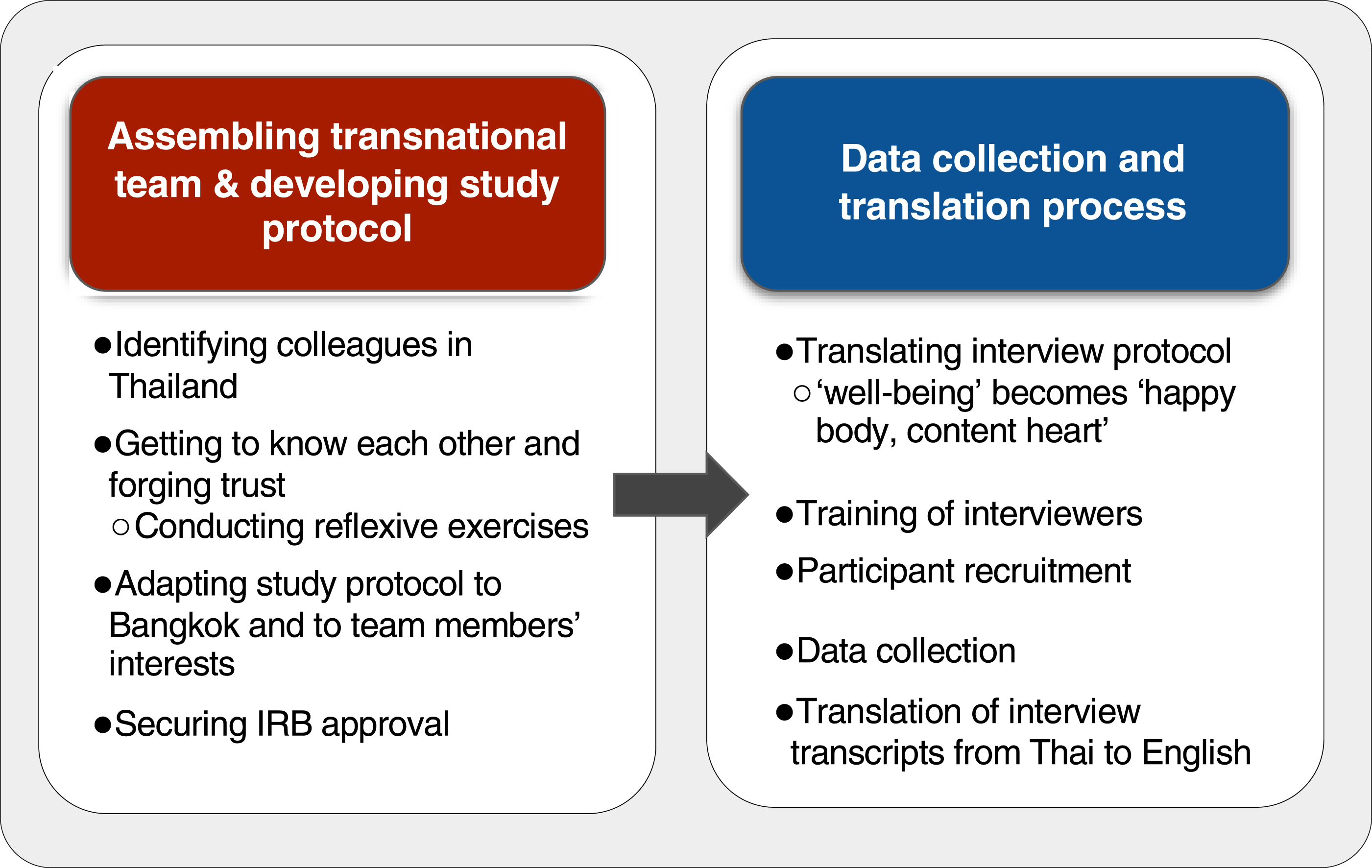
One of the first challenges we encountered involved securing IRB approval at two Universities that had different priorities and processes. This proved to be a time-consuming and labor-intensive process (over 3 months at the Thailand site), and perhaps the first research task for which team members were challenged to understand procedures that were standard in one country but not the other (e.g., the need to pilot test proposed interview questions for the Thailand IRB). Given their mission (and thus perhaps not surprisingly), IRBs emphasize the safety of research participants or interviewees (e.g., making changes to the consent form, pilot testing interviews to ensure appropriateness) with less or no emphasis on equitable or ethical collaboration procedures across sites. Thus, teams are tasked with ensuring they have protocols in place for developing and maintaining their relationship and collaboration over time.
Another early challenge involved the process for ensuring high-quality translation (culturally and linguistically) of the interview protocol. For key terms such as “well-being”, it was important to consider multiple translation options that could capture the nuances of the English term. After an iterative process that involved cognitive interviews and expert reviews, a translation of the term “well-being” was found that best elicited rich data and captured the nuances of the English construct (Suavansri et al., 2021). All members of the research team were involved in addressing these early challenges.
Team Description and Training
The research team was composed of multi-disciplinary faculty and students from the US and Thailand. Team members had varying degrees of experience with qualitative and cross-cultural research. See Supplemental Table 1 for full details. Some of the US members had had experiences living in Thailand during study abroad or were of Asian descent (e.g., a Cambodian American research assistant). However, none of the US members spoke Thai. The Thai members of the team included two faculty members and two doctoral candidates with professional training and some experience in qualitative research. Notably, both Thai faculty members had completed their doctoral training in an English-speaking country, and thus had high levels of English proficiency. This was particularly helpful in bridging the language and cultural gaps. While many members of our team had some background in qualitative research, experiences in cross-cultural or transnational research differed. Moreover, we represented different philosophies and approaches to qualitative research, and Thailand team members were not familiar with employing qualitative software (e.g., NVivo).
One early need for training emerged for the Thai members of the team who would be recruiting participants and conducting the semi-structured interviews. Two US members with extensive qualitative interviewing experience, one of whom had conducted similar interviews in other countries, led the training. Activities included review of key interviewing skills, discussion of interview objectives and procedures, role-plays, and the conduct and review of practice interviews. All team members (regardless of prior experience or role in the project) attended the trainings to ensure collective understanding and agreement with the research procedures. This was particularly important since the Thai faculty members needed to provide ongoing support and direct supervision to the doctoral student interviewers. Thus, initial trainings and group discussions served as an opportunity to enhance trust among team members and to review and collectively agree upon the approach for each stage of the research process.
Training in other components of the project (e.g., the use of NVIVO qualitative software) was provided as the study progressed. Similar to the interviewer trainings, other training meetings were also attended by all members of the team and set the stage for regular meetings and ongoing discussions around various study needs and progress.
Creating a Collaborative Tone for the Overall Research Endeavor
Frequent team meetings were an opportunity for collaboration and open discussion, and were key to maintaining team members’ engagement throughout the project. We engaged in reflexive exercises as a way of exploring key positionalities and team members’ prior experiences and their potential impact on the research process. For instance, before the start of the data collection process, each team member contributed a written reflection on their own well-being experiences and conceptualizations (e.g., “What is well-being for you? What influences it?”). This reflexive exercise was useful in showcasing variability in personal definitions of well-being, while also highlighting similarities. For instance, most team members wrote about social connections, experiencing positive emotions, having purpose and meaning, financial well-being and physical health as key aspects of their well-being experience. This also served to illustrate key concepts from the literature and initiated discussion about how participants might respond to the interview guide. Later in the project we also engaged in a reflection around power and hierarchy as experienced by each member of the team. In this reflection, meetings were characterized by team members as warm, “supportive and collegial,” and “felt like a relatively open space for communication.” While the COVID-19 pandemic hindered travel and in-person meeting opportunities, an in-person meeting earlier in the project (US senior team member traveled to Thailand) was also helpful in strengthening interpersonal connections.
It is certainly good practice for any research team to make a concerted effort to ensure that all members feel comfortable speaking up in meetings, especially if they disagree with a certain decision or proposed plan. However, it is critically important for a transnational team. The written confidential reflection exercise mentioned above, along with additional team discussions, identified the following perceived hierarchies and internal dynamics within our team: (1) Between countries: The perceived status of the different institutions involved was a major factor in creating perceived power disparities. In our case, affiliation with Stanford University created an unintended perceived sense of Stanford team members being the ultimate experts and having final voice in decisions. In retrospect, the fact that the global WELL initiative had existing research protocols and had conducted similar work in other countries, potentially inadvertently created an initial dynamic in which Stanford team members were seen as the experts while the Thai team members were “learning” the protocol and research processes. This dynamic was also apparent in smaller meetings (e.g., among coders from both countries), even when faculty were not present and team members had similar experience in qualitative research. (2) Within each country: More complex and subtle dynamics emerged based on professional titles, country of training, prior experience in transnational teams, and perceived expertise of each member in qualitative research. For Thai team members, rank (e.g., faculty vs. doctoral student) and having received education abroad were key factors reported by team members as influencing internal perceived power dynamics. For US team members, similar patterns emerged in terms of rank. However, perceived expertise in qualitative research and prior experiences with similar cross-cultural transnational research were also rated as key influences for internal perceived hierarchies. (3) Across languages: English fluency was an additional factor that influenced team dynamics, particularly for some Thai team members. The two Thai graduate student researchers had a good command of English, yet were timid when it came to speaking English in the team meetings. When called on to explain how a research process unfolded (e.g., the context for a specific interview or how a specific participant was recruited), they often chose to speak in Thai. While team members would translate during team meetings, losing context in translation was still a problem and this dynamic had the potential to reinforce hierarchies based on who spoke more often in meetings or spoke on behalf of others.
Thus, transnational teams should pay special attention to the various ways power and hierarchy may manifest within their teams. Our experience suggests that explicit efforts are needed to avoid unintended consequences in decision making and ensure representation of the voices of the various team members. In particular, we found it important to foster a collaborative atmosphere in meetings to enhance trust and encourage voicing of different ways of knowing, different lived experiences, and different ways of communicating. This is also in line with recommendations for successful global research collaborations (Parker & Kingori, 2016).
Transcription and Translation of the Interviews
Using recommendations in the extant literature regarding the need for professional certified translators when working across languages (Esposito, 2001), we employed one such company for translating the Thai transcripts into English. Several companies that specialize in transcription and translation, and with capacity in Thai and English language, were identified via referrals from other research teams. To assess quality of their work, after checking their credentials, we submitted sample interviews and reviewed their products. For the company that was ultimately selected, a member of the Thai team met with them to provide feedback on the initial sample interview (e.g., around formatting, need to include any contextual information around tone, pauses, etc.) and give them an overview of our study and purpose. Transcripts in both Thai and English were formatted side-by-side, allowing bilingual members of the team to check for accuracy in the translation. It also set the stage for coding and analysis in both languages.
Data Analysis and Finding Meaning: Processes and Insights
Figure 2 describes our process after data collection and data preparation were complete. Details are provided of the specific steps taken to ensure rigor in data coding and analysis. Throughout this section, we highlight some key challenges experienced and our approaches to overcoming them. Multi-lingual transnational coding and review process.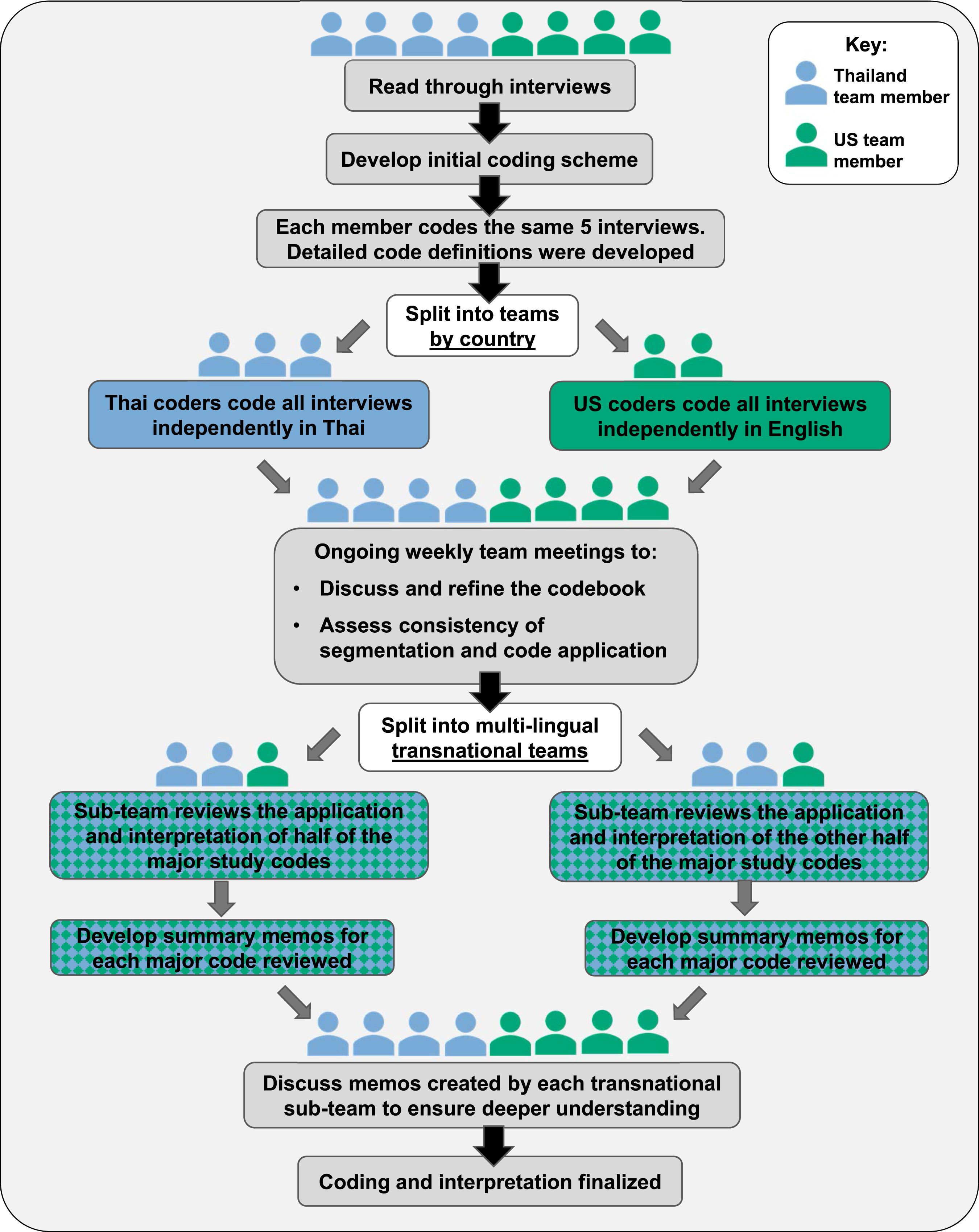
As seen at the top of Figure 2, our coding process started similarly to that traditionally employed in qualitative analysis, but with one important difference. Given our diverse team and our internal capacity to code in both languages (English and Thai), an early decision was made to code transcripts in both languages. This contrasts with the more typical approach found in cross-cultural studies in which cultural brokers or insiders collect the data, but then interview transcripts are translated into the dominant language of the team and coded in the outsider culture language (e.g., English). Our decision was influenced by multiple factors. First, given the inductive nature of our coding approach, this presented an opportunity to bring together Thai coders with insider cultural knowledge with US coders with research experience and content expertise in the area of well-being in cross-cultural settings, along with prior experiences with similar interviews, but who lacked the language capacity to code in Thai. Thus, instead aimed to bring our various experiences to the process and thought this would be more informative in bringing about cross-cultural understanding. Second, we wanted to allow team members to code in the language they felt most comfortable in. Third, our team had decided to publish in an English journal (due to the perceived higher impact factors), and it felt difficult to code in Thai, yet later convey results in another language without having integrated language and cross-cultural considerations throughout the process. A fourth and methodological reason related to challenges in cross-cultural research. Scholars have underscored shortcomings when interviews are coded in a single language, even when extensive training and supervision of coders is provided, or when standardized coding procedures are employed (Hak, 1997; Small et al., 1999; Squires, 2009). Our inductive approach would have been especially susceptible to these challenges. Moreover, some examples exist in which teams have coded data in multiple languages, assessed discrepancies, and differences were resolved by discussion (see Behr, 2015; Thrasher et al., 2011; Twinn, 1997). This approach allowed for refinement of codes, reduced linguistic bias in cross-cultural research, and overall, it enhanced reliability and validity of the data.
Initial Coding Phase
We selected five initial interviews that were coded by all members of the research team, including team members who were not coders. We strategically included a few challenging interviews based on cultural and social complexity. We used these initial cases to enhance training for the coders, to start to develop our coding scheme, and to set the stage for overall team discussions around coding and cultural interpretations. These initial discussions and decisions around coding schemes, coding definitions and general interpretation of key sections of the interviews also gave us the opportunity to model team decision making. Disagreements during these discussions served as a model for how to ensure all team members felt comfortable expressing diverse opinions and an opportunity to empower coders from both countries to express themselves and influence decisions within the larger team.
After coding a set of interviews together as a full team and some additional coding by coders, we arrived at a codebook that the team felt comfortable with and proceeded to code all remaining interviews. Coders from each country (US and Thai) coded the remaining interviews (n = 45) in their respective languages. In other words, Thai coders coded all remaining interviews using the Thai transcripts, while US coders coded the same interviews using the English versions of the transcript. Throughout this process, we continued meeting weekly as a large team to discuss emerging themes or codes, difficult portions of the interviews, and cultural nuances. Up to this point, the coding process had followed our intended planned approach. However, unexpected challenges started to emerge. First, coding inconsistencies between Thai and English coders alerted us to the need to refine and re-review the translations. Second, throughout our weekly meetings and ongoing discussions we became more aware of the language and cultural complexities (even when translations were accurate) that were leading coders and the team in different directions and were making interpretation difficult.
Complexity of Thai Language
In part, our challenges were related to some of the characteristics of the Thai language. It is not uncommon in Thai to omit the subject, omit periods or lack clear endings to sentences, omit words, or have less complete sentences (Intratat, 2007; Mittrapiyanuruk & Sornlertlamvanich, 2000). Given the importance of context for qualitative coding and interpretation, coders often had to read longer sections to ensure proper use of codes and understanding of participants’ stories. Moreover, the lack of clear punctuation or complete sentence impacted the length of a data element (i.e., codable portion of the transcript text). Given implications of the length of data elements for reliability between Thai and American coders (who were coding transcripts in different languages), we decided to determine the length of data elements according to meaning (e.g., reflecting a full thought) rather than relying primarily on sentence structure. Another language nuance emerged around the use of kinship pronouns. For example, interviewees often used kinship pronouns such as brother, sister, uncle, or aunt, even when referring to non-kin individuals who could be a taxi driver, co-worker, or others (Iwasaki & Ingkaphirom, 2005). Interviewees would also sometimes use a word such as “partner/แฟน" to refer to their spouses. Given the importance of social connections and relationships in well-being, it was critical for our team to properly interpret the relationships that participants were describing. In this case, having interviewers as part of the coding team was crucial in terms of our ability to recall contextual aspects of the interview that could help clarify any issues that arose.
Translation Challenges and Insights
Perhaps due to the complexity of the Thai language and the richness and diversity in narratives related to well-being, despite using a well-regarded professional translation company, small but potentially meaningful differences were noted by bilingual members of the team. To explore this issue, all English and Thai transcripts were reviewed for any discrepancies. While the number of discrepancies was not large, potential implications for meaning were noted. This supported the decision to keep an integrated transcript file that showed Thai and English sections of the transcript side-by-side. For example, coders could see a paragraph in both Thai and English next to each other, allowing bilingual coders to: 1) code in their prefer language, 2) read the original Thai transcript for any additional context, and 3) point to potential discrepancies in coding during roundtable discussions based on nuances of the language.
This highlights the advantages of teams with the internal language capacity to review translations for accuracy, and not simply rely on professional services outside the team. Notably, this was not an issue of inaccurate translations, but of the many ways in which complex concepts and sentence structures could be translated. Team members with the content area expertise and knowledge of the codes, research question, and discussions being held internally were simply better able (compared to translators with no content expertise) to notice when a seemingly accurate translation could be interpreted differently, and thus coded differently. It also highlighted the benefit of coding in two languages to bring to the forefront issues of interpretation of cultural nuances and language complexities. Moreover, team members had initially reviewed transcripts for accuracy. It was not until the coding process unfolded that we were able to realize the subtle translation differences and their implications for our coding. We would not have been able to account for this issue had we coded in a single language after transcriptions and translations were complete. Thus, this is an important methodological concern, especially for teams that decide to code in a single language, where after initial translation and quality control, original transcripts are not continuously assessed (particularly as the codebook develops). This also highlighted the need to be flexible to address any unplanned issues that may arise as the research unfolds.
Given that the burden of checking for translation accuracy fell more heavily on the Thai team members, even after using a professional company for translation of interviews, discussions were needed to ensure it was not perceived as burdensome or that it led to inequities in language use where English was seen as the dominant language of the project. Thai colleagues emphasized that working in bilingual spaces was their professional norm (e.g., researchers and students in Thailand are encouraged to receive formal education in English speaking countries, and lectures and presentations in Thailand often include an English component, such as the slides being in English). Thus, this unexpected additional translation work was not perceived as outside of their normal working practices. Thai team members also engaged additional students in their academic institution, which provided those students with opportunities to engage with the research team. Finally, Thai colleagues reported that the emphasis on high quality translations and deliberations around complexities of language and implications in meaning ensured that accurate data and perspectives reflected in analysis, interpretation and dissemination and served to reduce the potential for epistemic injustices (Byskov, 2021).
Moreover, team discussions revealed the nuance of language around religion. Given the ubiquitous nature of religion in the Thai culture, proverbs and sayings were often employed by participants in the interviews. However, upon careful inspection, not all were indicative of personal beliefs and practices, but were simply use of common language. This also highlighted the importance of coding the data in context and using an idiographic approach. Specific words, such as “sin”, also led to discussions around their cultural meaning. For example, the following quote was discussed during a team meeting to clarify this issue: “If I’m being honest, I feel like I’m a child who let her parents down and that is really sinful. And, honestly, I didn’t want to live in this world anymore that I upset them”/“ถ้าพูดตรงๆ เลยคือ รู้สึกหนูเป็นลูกที่แบบว่าทำให้พ่อแม่เสียใจ มันโคตรบาปอะค่ะ แล้วมัน หนูพูดตรงๆ เลยว่าหนูไม่อยากอยู่บนโลกเลยอะ ที่หนูทำให้พ่อแม่เสียใจ.” In this example, the ‘sin’ was discussed as meaning one’s duty toward parents and caring for family members, rather than having direct religious connotations.
Using Transnational Coding Sub-teams
Given these challenges with language and cultural issues during the coding process, we further examined our coding approach. We examined discrepancies in coding between the Thai and US coders as a starting place for our investigation of coding reliability. We exported all coding from NVivo to Excel to examine coding from both countries side by side. This process revealed some discrepancies in coding, but upon team discussions, they were discrepancies not easily addressed by additional training or efforts to increase intercoder reliability. The discrepancies highlighted the complexity and nuances of the constructs under examination (e.g., well-being and how various aspects of individuals’ lives and society influence it over a lifetime) and a myriad of cultural factors that required team discussion to illuminate true meaning and understanding. As a team, we observed that these discussions were hugely informative and were enhancing our interpretation and creating more subtle questions for our data analysis.
Thus, in the next iteration of our process, we decided to create transnational sub-teams composed of coders from both countries that would review all data previously coded by the Thai and US coders independently (see bottom of Figure 2). In addition to reviewing all previous coding to discuss discrepancies, these transnational sub-teams of coders also had the goal of identifying key areas of cultural importance for understanding the nature of well-being. Memoing was employed by each transnational team of coders to further probe the data, clarify codes, and aid in interpretation (Birks et al., 2008). This was key in bringing out insider and outsider perspectives, addressing language complexities and potential coding discrepancies, and in refining the codebook. Memos were then reviewed by members of the overall team and further discussed during weekly meetings to add additional viewpoints and arrive at deeper meaning and understanding of participants’ stories.
Education, Schooling and Learning as a Case Example
Our codebook originally contained an education-focused domain that was intended to capture formalized schooling and its influence on well-being. Thai team members described the role of learning outside of the classroom context and the frequency of unpaid internships in Thailand as a natural trajectory for teachers and other government employees. US coders with content expertise in education also discussed the importance of non-formal schooling. One participant, for example, spoke of learning (outside of any school setting) how to grow organic vegetables and make plant-based products that improved the health of her family: “I studied and made them. I’ve never bought anything [to use] for over ten years. I have made my own liquid soap, facial soap, shampoo, clothes detergent and dishwashing liquid. I have passed on this knowledge to my family. I spread the knowledge within my family first” / “พี่ก็ศึกษาแล้วพี่ก็ทำ ทุกวันนี้พี่ก็ไม่เคยซื้ออะไรไปใช้เป็นสิบปีแล้วค่ะ พี่ทำเอง สบู่เหลวอาบน้ำ สบู่ล้างหน้า ยาสระผม น้ำยาซักผ้า แล้วก็น้ำยาล้างจาน ทุกวันนี้พี่ก็ถ่ายทอดไปให้ที่บ้าน ให้ที่บ้านทำ พี่ก็กระจายให้กับครอบครัวเราก่อน.”
Due to the attention of the transnational sub-team of coders to such data elements, the code was expanded to ‘Schooling, Learning, and Education’ to account for modes of learning that are not school bound. This highlights the value of involving both US and Thai team members for richer discussions that brought out deep cultural knowledge and content expertise by various team members, some of whom were outsiders to the local culture.
Changes in frequency counts (e.g., how often a specific code is used) as a result of these transnational team discussions further showcase the nuanced nature of these codes and the importance of transnational team review and discussions. For this Education, Schooling, and Learning code, when coders were split by country (i.e., during our initial coding iteration) the code frequencies were somewhat similar (Thailand 253, US 277). After review by the transnational sub-team of coders, the final frequency was very different and much lower, 79. In this case, discussions led to the creation of a new code for social relationships in work and educational settings. Thus, relevant data elements were taken out of the original code and given the new code. The education code was thus refined to deal primarily with the outcomes and the impact of education on well-being - such as social mobility and purpose and meaning - rather than the impact of relationships in these settings.
Fostering An Ongoing Collaborative and Iterative Process
Processes described in this paper, while presented linearly for clarity, were often interrelated and iterative. For example, training and capacity development for team members in qualitative interviewing, coding, and use of software were addressed throughout the study. Meetings served as opportunities to build trust, to train, and to discuss coding and interpretation. Thai interviewers later became part of the Thai coding team, and further assisted in reviewing translations. Thus, team members and processes often had multiple purposes and goals as the study progressed. As a team, we made a concerted effort to ensure that all members felt comfortable speaking up in meetings, that all members had an opportunity to voice diverse opinions and created a welcoming space in which to share, receive, or offer feedback. Moreover, ongoing meetings served to develop capacity within the team, a key personal outcome that was valued among team members and per their feedback served to promote ongoing engagement despite the project spanning across multiple years (from initial meetings to dissemination and writing) and meetings being held at seemingly inconvenient hours (early morning or late night) to accommodate time zone differences. For example, team members said that capacity development in terms of interviewing skills, using software such as NVivo, coding, and more recently manuscript writing was important for their own professional development and kept them engaged and motivated to make additional contributions. Creating opportunities to share credit and enhance professional advancement was also key for continued engagement of members over time and to ensure equity in the partnership. For instance, Thai members led the publication of the main outcomes of the research, while other team members had opportunities to lead other manuscripts or presentations at various conferences and events.
Summary of the Coding and Analysis Process
Key Practices and Recommendations.
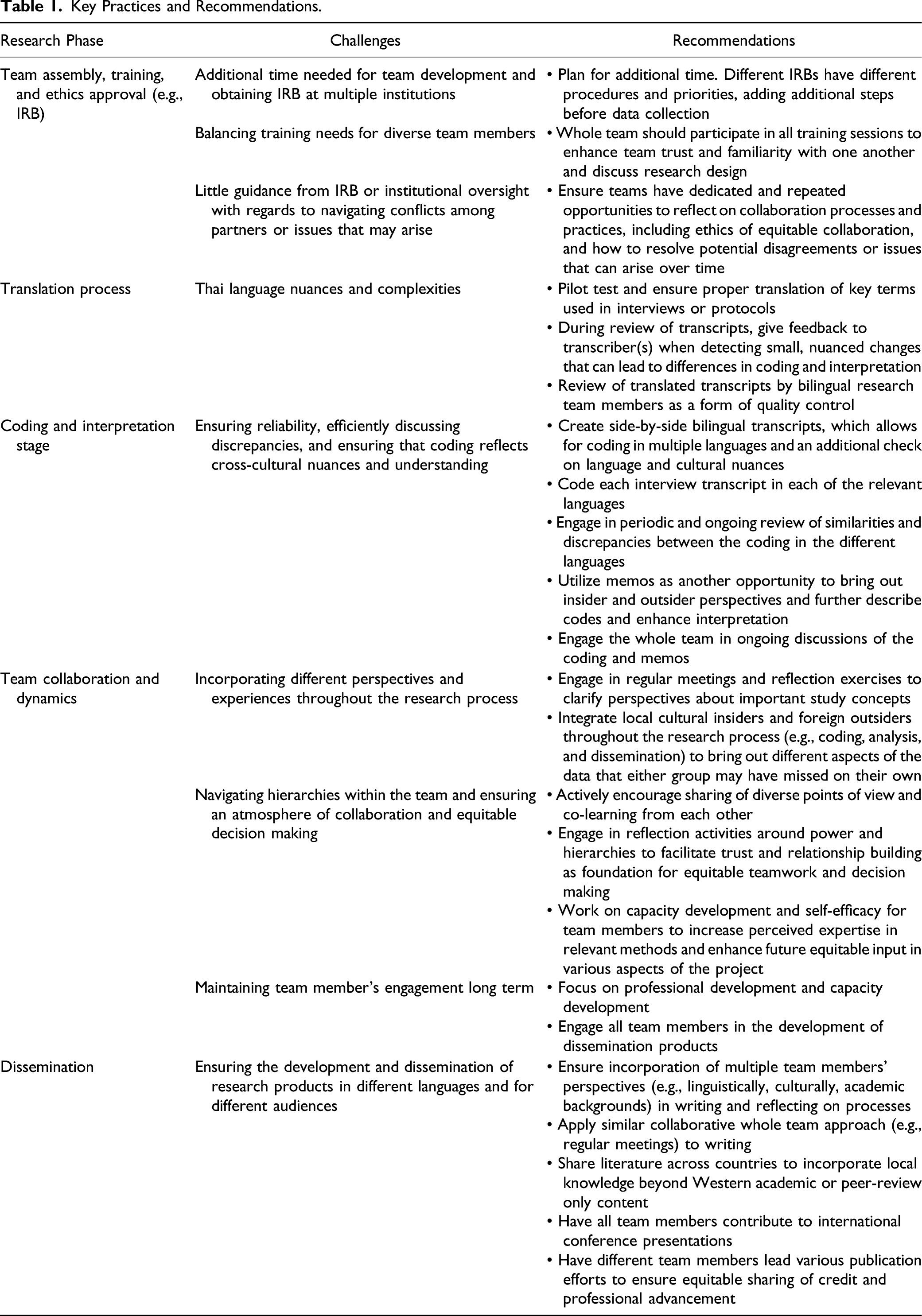
While our approach has several strengths and opportunities to enhance rigor in analysis and interpretation, this approach also has challenges and limitations including being labor and time intensive in nature. Coding in two languages required additional steps in the translation and development of transcripts, as well as in the coding process. Extensive meetings and discussions were needed to ensure coding rigor across language and to enhance interpretation. We acknowledge that not all teams and projects might have the same level of personnel or time. Although our approach might look complex, once we had a process in place (as described in this paper) the data coding and interpretation flow was straightforward to follow. Future teams can benefit from our insights and potentially further simplify our process by coding in multilingual transnational sub-teams from the start by following the bottom section of Figure 2. As team science and global research continue to increase in popularity, our approach can guide the implementation of equitable transnational research collaborations involving academic researchers from different countries and institutions with varying research capacities.
Conclusion
Our collaborative and iterative process can serve as a model for transnational teams looking for guidance on how to meaningfully engage across language and culture and overcome inherent challenges in cross-cultural qualitative research. Our approach showcases the strengths of integrating insiders and outsiders throughout the research process, from data collection to coding and interpretation, to produce deeper understanding and dialogue around cultural and language nuances that enhanced the validity of findings. Our insights can serve as a model for similar transnational teams seeking ways to fully benefit from cross-cultural research collaborations and to arrive at sound cultural interpretations that bring culture from the margins to the center of the narrative.
Supplemental Material
Supplemental Material - Found in Translation: Reflections and Lessons for Qualitative Research Collaborations Across Language and Culture
Supplemental Material for Found in Translation: Reflections and Lessons for Qualitative Research Collaborations Across Language and Culture by Patricia Rodriguez Espinosa, Nipat B. Pichayayothin, Panita Suavansri, Joanna J. French, Poonsub Areekit, Chureerat Nilchantuk, Torin S. Jones, Emily Mam, Jessie B. Moore, and Catherine A. Heaney in International Journal of Qualitative Methods
Footnotes
Acknowledgments
This work was made possible thanks to a partnership between the WELL for Life team at Stanford University School of Medicine, USA, and The Faculty of Psychology, Chulalongkorn University, Thailand. We also want to thank other members of our team who made invaluable contributions during data collection, analysis, and figure design including Tia Rich, PhD, and Katharine Rubin.
Declaration of Conflicting Interests
The author(s) declared no potential conflicts of interest with respect to the research, authorship, and/or publication of this article.
Funding
The author(s) disclosed receipt of the following financial support for the research, authorship, and/or publication of this article: Foundational funding for the Stanford Wellness Living Laboratory (WELL) was provided by Amway via an unrestricted gift through the Nutrilite Health Institute Wellness Fund. We also offer our sincere appreciation to AP (Thailand), and the other members of the Stanford Thailand Research Consortium, for their generous support of this project. The first author was supported by the Postdoctoral Fellowship in Cardiovascular Disease Prevention (T32), National Heart, Lung and Blood Institute (NHLBI), NIH 5 T32 HL007034–43, and more recently by the National Center for Advancing Translational Sciences of the National Institutes of Health under Award Number UL1TR003142. WELL for Life Thai team members were supported financially by Special Task Force for Activating Research (STAR) Funding, Chulalongkorn University (07/2562). The funding bodies had no role in the study design, data collection, analysis, interpretation and preparation of the manuscript.

Supplemental Material
Supplemental Material for this article is available online.
References
Supplementary Material
Please find the following supplemental material available below.
For Open Access articles published under a Creative Commons License, all supplemental material carries the same license as the article it is associated with.
For non-Open Access articles published, all supplemental material carries a non-exclusive license, and permission requests for re-use of supplemental material or any part of supplemental material shall be sent directly to the copyright owner as specified in the copyright notice associated with the article.
