




Abstract
Intimate partner violence (IPV) is a severe and prevalent global problem. It can damage women who survive it and children who witness it. Nurturing the mother–child relationship is critical to support mothers’ and children’s recovery. Research to date has mainly reflected information captured from conscious, verbal accounts by women and their children of explicit relationships. There is a lack of research on implicit relationships involving nonverbal and unconscious interactions that can be difficult to verbalize, especially for children. This is the first paper that describes the application of an art-based method, Joint Painting Procedure (JPP) with Chinese mother–child dyads who survived IPV to study their implicit relationship. It was conducted in a shelter for abused women in Hong Kong. Mother–child dyad was considered “partners,” and JPP was used in novel ways of promoting their agency and strengths, which became the key to turning difficulties in the data collection process into advantages. The dyads mutually enjoyed their co-creation process; however, this did not guarantee their engagement in the post-painting discussion. To facilitate this, a post-painting discussion guide was co-developed to encourage dyads to exercise their agency and strengths, decide what to present in their discussions, and how to do this. JPP and the discussion guide created a synergistic way to optimize children’s active participation, uncover mothers' needs of personal space boundaries and encourage children to learn to respect it, facilitate open dyadic dialogues, and allow reflection in a relaxed setting. Dyads’ participation in JPP and the post-painting discussions elicited information that would have been otherwise challenging to obtain. This approach can improve understanding of the mother–child relationship in the context of IPV that may imply that the art-based dyadic process can be an effective approach to rebuild and restrengthen the mother–child relationship in the post-separation stage of IPV.
Keywords
Background
Intimate partner violence (IPV) is a severe and prevalent global problem (Pinheiro, 2006; World Health Organization, 2021a, 2021b). IPV is defined as behavior by a current or former intimate partner or spouse that causes physical, sexual, or psychological harm. It is the predominant form of violence against women. Globally, about 30% of women in an intimate relationship have experienced physical, psychological, and/or sexual abuse, and approximately 38% of murders of women are committed by their intimate male partner (World Health Organization, 2021b; World Health Organization, 2013). IPV is also a form of violence against children. The United Nations (Pinheiro, 2006) estimated that between 133 and 275 million children worldwide had witnessed domestic violence annually, most frequently parental IPV. IPV has short- and long-term negative consequences on women’s well-being, including physically, mentally, relationally, economically, and politically (Ellsberg et al., 2008; Garcia-Moreno et al., 2012; Jarvis et al., 2005; Wathen & MacMillan, 2003; World Health Organization, 2021a; World Health Organization, 2013). Moreover, children who have witnessed parental IPV can suffer traumatic symptoms, internalizing and externalizing problems, and neurobiological, relational, and developmental damage (Cohodes et al., 2017; Holt et al., 2008; Kimball, 2016; McLaughlin et al., 2014; Moser et al., 2015).
The mother–child relationship is significant in the context of IPV. This relationship is often the target of “perpetrators” attacks, yet it offers critical support for women and children when recovering from IPV experiences (Chanmugam, 2014; Humphreys et al., 2006, 2011; Katz, 2014, 2015a, 2015b). Humphreys et al. (2006) provided an extensive list of tactics used by perpetrators to purposely abuse mothers in their children’s presence, to show the children that their mothers were incapable of parenting and protecting them. In the post-separation stage, perpetrators might exercise coercion and control over women through matters of custody, parenting, and visitation contacts (Hayes, 2012; Humphreys et al., 2019; Katz, 2015b; Thiara & Humphreys, 2017). Any of these issues may damage the mother–child relationship. However, a growing and encouraging body of research show that both mothers and children have active agency in influencing their relationship. Maintaining this relationship is essential for mutual support and care, so that they can cope effectively with the challenges inside and outside their family, and promote each other’s recovery from IPV experiences (Chanmugam, 2014; Humphreys et al., 2006, 2011; Jarvis et al., 2005; Katz, 2014; 2015a; 2015b; Kong & Hooper, 2018; Lai, 2011; Mullender et al., 2002; Swanston et al., 2014; Visser et al., 2016). To facilitate the effective recovery of women survivors and their children, there have been calls to shift the focus of intervention to rebuilding and strengthening mother–child relationship in the post-separation stage of IPV (Humphreys et al., 2006, 2011; Katz, 2014; 2015b; Kong & Hooper, 2018).
The mother–child relationship consists of equally-important explicit and implicit aspects. While the explicit aspect reflects conscious and verbal communication, the implicit aspect involves unconscious and nonverbal interactions (Dunn et al., 2011; Enns et al., 2016; Gavron, 2013, 2018; Gavron & Mayseless, 2015, 2018). Previous studies on the mother–child relationship in the context of IPV have mainly focused on participants' verbal accounts of their explicit relationship (Humphreys et al., 2006, 2011; Katz, 2015b; Kong & Hooper, 2018; Mullender et al., 2002; Visser et al., 2016). The implicit aspect, however, largely remains unexplored. A review of studies identified that nonverbal interactions were seldom the focus of therapeutic interventions and research, although they were crucial to parent–child relationship (Colegrove & Havighurst, 2017). Researching implicit relationships can be challenging, as nonverbal and unconscious interactions are difficult to verbalize clearly, especially for children. This reflects inherent differences between children’s and adults' vocabularies, and understanding of words (Gavron, 2013; Kirk, 2007). Moreover, exposure to parental IPV may be associated with poorer child language development (Conway et al., 2020) that could hinder children’s capacity to verbalize.
Disclosure of IPV experience is often challenging, as it can involve sensitive, distressing, and overwhelming experiences, memories and issues (McManus et al., 2013; Swanston et al., 2014; Van Gelder et al., 2020). Mother–child’s explicit verbal dialogues were generally emotionally unmatched and flat in the context of IPV (Visser et al., 2016). Empirical evidence reflected more severe IPV experiences, resulting in reduced levels of comfort and constrained dyadic dialogues (Kamody et al., 2020), as well as a lack of open communication (Godbout et al., 2009). They kept their feelings to themselves and their thoughts were unuttered, giving rise to a “conspiracy of silence”, where mothers tried to protect their children from the IPV they had experienced, and children tried to protect their mothers from their knowledge of IPV (Humphreys et al., 2006; Mullender et al., 2002). These challenges can be accentuated with Chinese mothers and children. In Chinese culture, family matters are considered private and are not disclosed to outsiders (Sullivan, 2005; Tonsing, 2016; Yick, 2000, 2007), and scant attention is given to people’s feelings (Sullivan, 2005). Chinese parents may express less verbal, nonverbal, and supportive affection to their children than American parents (Zhang & Wills, 2016). Expression of feelings can also be particularly difficult between Chinese mothers and children as it is considered a sign of weakness to express feelings, whereas strict control over emotions is valued (Hwang, 1997). Besides, mother–child communications have been suggested as being indirect, hierarchical and unbalanced (Kong & Hooper, 2018; Lai, 2011). To overcome these challenges, it is crucial to use a method that sensitively elicits information on their implicit relationship, enables their authentic expression of experiences and perspectives, especially encourages children’s active participation.
The art creation process offers a non-threatening, enjoyable and shared activity that helps reduce distress, encourages participants to express their views, and maximizes children’s active participation (Einarsdottir et al., 2009; Gavron & Mayseless, 2018; Green & Denov, 2019; Kirk, 2007; Woolford et al., 2015). Art creation is an ethical clinical and research activity, and it is relevant to sensitive situations such as IPV. It supports participants to access their implicit memory and inner subjective experiences safely, that may be difficult if only verbal reports of trauma are used (Backos & Samuelson, 2017; Green & Denov, 2019).
The art-based method has not been used to understand the mother–child relationship in the context of IPV. Backos and Samuelson (2017) applied family drawings to understand the experiences of mothers and children who had been exposed to IPV, however, they were asked to draw separately. Moreover, as their study focus was to identify and differentiate the features presented in the projective drawings of mothers and children with, and without, post-traumatic stress disorder (PTSD), the mother–child relationship fell outside the scope of their study. There have been studies using family or joint drawings to investigate the mother–child relationship in contexts other than IPV, namely, to understand middle-class mother–child interactions and children’s social development (Braswell & Rosengren, 2005), to explore associations between mothers’ perceptions of mother–child relationship and their responses to a joint drawing task (Regev & Patishi, 2017). However, the mothers and children usually drew separately (Handler & Habenicht, 1994; Leon et al., 2007), or only the mothers were interviewed to interpret their joint drawings in light of their relationship with their children (Braswell & Rosengren, 2005; Regev & Patishi, 2017; Yakovson & Snir, 2019). There is a lack of research on the implicit mother–child relationship in the context of IPV.
Aim
This paper describes the application of an art-based method, Joint Painting Procedure (JPP) with Chinese mother–child dyads who survived IPV, to explore their implicit relationship. JPP was applied as it enabled both mother and child to be involved as simultaneous “partners” in their co-creation process and post-painting discussions (Gavron, 2013, 2018; Gavron & Mayseless, 2015, 2018).
Method
Participants
The participants were residents and ex-residents of a shelter for abused women in Hong Kong. They were referred to this project by their shelter social workers. Before entering the shelter, the women had experienced IPV, and their children had witnessed it directly. This paper reports the experience of using JPP with 16 mother–child dyads, including 10 mothers and their 16 children. The mothers aged between 27 and 44, were immigrants from China and primary caregivers of their children. Their children, aged between 7 and 13, had been born in Hong Kong, where they were receiving their primary school education.
Joint Painting Procedure
Joint Painting Procedure (JPP) is a dyadic art-based method to assess the implicit parent–child relationship in middle childhood. Its basic assumption is that implicit relational information is embodied and elicited in the nonverbal art-based interactions (Gavron, 2018; 2019; Gavron & Mayseless, 2015, 2018). JPP consists of a structured five-step process, in which a parent–child dyad paint as “partners” on the same piece of paper. The five steps are as follows: 1. Each partner uses a pencil to delineate a personal space on the paper 2. Each partner paints in his/her personal space 3. Each partner paints a frame around his/her personal space 4. Each partner creates a path from his/her personal frame to the partner’s frame 5. Both partners paint together the rest of the paper, that is, their joint area
After painting together, the parent and child look at the painting together with the researcher, discuss the shared experience, create a shared story and give the painting a title (Gavron, 2018; 2019, pp. 13–14). It should be noted that the original JPP uses gouache paints which are less common in Hong Kong. The participating children of this study preferred poster colors that have been used in their schools.
Safe, Therapeutic and Empowering Research Context
Since JPP is not a method purposely designed to use with IPV survivors, to ensure its application was safe, therapeutic and empowering to mother–child dyads who survived IPV, the following measures were taken:
Theoretical Frameworks
The participants’ agency and strengths were central throughout the research process. The context of data generation was grounded on the premise that participating dyads were active agents, with individual strengths to express themselves creatively to move toward a more healthful way of life (Malchiodi, 2003; Riley & Malchiodi, 2003) and inform their experiences and views (Chanmugam, 2014; Katz, 2015a; 2015b; Kirk, 2007; Neustifter & Powell, 2015; Saleebey, 2013; Swanston et al., 2014). This study was framed and informed by the child-centered approach (Kirk, 2007) and strengths perspectives (Saleebey, 2013). Kirk’s child-centered approach cautioned that unequal power relationships between children and adults could be duplicated in the research process (Kirk, 2007). These researchers were critical of framing children who witnessed IPV as passive victims, instead, the children were presented as active agents in making decisions, taking actions and influencing their mothers and navigating their surroundings (Katz, 2015a; Kong & Hooper, 2018; Neustifter & Powell, 2015). Moreover, the strength perspective moved away from the deficit and pathological view of trauma. It denied that people who had faced trauma and pain in their lives were inevitably wounded, incapacitated or diminished by the experience (Saleebey, 1996, 2013). Both the child-centered approach and strengths perspective provided the framework for our study, which focused on identifying the strengths of IPV survivors (pride, hopes, values, capacities, possibilities, and talents), rather the negatives of shame, guilt, or alienation.
Addressing the Potential Power Issues
Emphasizing the participants' agency and strengths helped address two potential power issues: the participant–researcher and the adult–child power imbalance (Buchanan & Wendt, 2018; Kirk, 2007; Martin, 2019). Firstly, the participant–researcher power relation was addressed by recognizing the mothers and children as the knowledge holders of their relationship and collaborators with the researcher (Buchanan & Wendt, 2018). Information about the mother–child relationship was acquired through the dyads’ shared experience of JPP and their interpretations of their own paintings. Secondly, the adult–child power imbalance was addressed by underlining the mother–child partnership in JPP (Gavron, 2013, 2018, 2019; Gavron & Mayseless, 2015, 2018) and their agentic influence in their relationship (Chanmugam, 2014; Humphreys et al., 2006; Jarvis et al., 2005; Katz, 2015a; 2015b; Kong & Hooper, 2018; Swanston et al., 2014; Visser et al., 2016).
Ethical Considerations, Providing Options and Choice-Making
Ethical approval was obtained from the Human Research Ethics Committee of The University of Hong Kong before data collection. The mothers and children were given detailed information about the study. Signed informed consent was obtained from the mothers for their own and their children’s participation. Moreover, the researcher purposely sought children’s signed informed consent to show them equal respect and ensure their voluntary participation. Mothers and children were reassured that they were individually free to refuse to participate in the research, and could withdraw from this study at any time. Moreover, the participating dyads could choose the venue for their JPP for safety reasons. They opted to undertake their JPP in the shelter, where they felt safe and supported. Since not all children enjoyed drawing (Kirk, 2007), the “peaceful war” game (Ho & Chiu, 2020), a paper-drawing game, was provided as an option. Mothers and children were invited to make a choice between JPP and peaceful war game. The mothers indicated their indifference as both options were foreign to them. The children opted for JPP, as many of them had experienced painting since kindergarten, and all of them were learning painting in their visual art classes of their existing schools. They never saw their mothers painting and were eager to paint together with them. The mothers were invited to respect their children’s choice.
Data collection: A collaborative effort of Overcoming Difficulties
Data Sources
In order to understand the applicability of JPP on exploring the implicit relationship between the mothers and their children in the context of IPV, data from various sources were collected, including participants’ background information sheets, field notes, participants' JPP artworks, and audio recordings of post-painting discussions. The background information sheets provided basic demographic data, the mothers’ and children’s self-report of their concerns. The fieldnotes covered the researcher’s detailed observations on how and what the dyads did, to communicate verbally and nonverbally throughout their JPP, for example, who began painting first, whether they asked for permission before painting their partner’s artistic elements, and what they did to engage each other. Participants' JPP artworks included formal artistic elements and contents of painting. The audio recordings of the post-painting discussions contained participants' explanations of meanings of their artistic elements, interpretations of their painting contents, conversations about their perspectives, concerns, feelings, stories, and titles of their paintings. The audio recordings of the post-painting discussions were transcribed verbatim. The data were collected between October 2019 and August 2021.
The Painting Process
When mothers and children commenced the JPP, it was underlined and reinforced to them that they were partnering in a fun activity of painting together on the same piece of paper, and that they could freely engage in each of the five painting steps (Gavron, 2018, 2019). Mother–child dyads in this study undertook the five-step painting process of JPP together, using the same piece of paper. The mothers and children were happy to paint together. When their mothers suggested ending the painting session, the children suggested different items to paint as they did not want their JPP to come to an end. However, the data collection process was not without difficulty. The dyad’s mutual engagement in their art process did not necessarily guarantee the same engagement in their post-painting discussions.
The Post-Painting Discussion
In the preliminary stage of this study, mother–child dyads had difficulties in engaging fully in post-painting discussions. Their constrained engagement in the discussions could be inferred as evidence of the impact of experiencing IPV (Humphreys et al., 2006; Kamody et al., 2020; Mullender et al., 2002; Visser et al., 2016) and the influence of Chinese culture (Lai, 2011; Zhang & Wills, 2016). To overcome this communication barrier, the researcher requested assistance directly from mothers and children by engaging them as her collaborators, and knowledge holders of their relationship.
The researcher requested that the mother–child dyads consider “What can be done to assist post-painting discussions for future participants?” and “How to make it easier to talk about the painting together?” An important finding was that children not only wanted to tell their own stories, but also to listen to their mothers' stories. The mothers echoed their children’s suggestions, and noted that they found it encouraging to be able to listen to their children’s stories. Besides, the mothers and children proposed talking about their paintings step-by-step and their artistic images one by one, within each step. In this way, mother–child dyads' difficulties in engaging in the post-painting discussions were turned into positive collaboration with the researcher to co-develop a post-painting discussion guide, which was continually reviewed throughout the research process. The co-development process supported mothers and children to exercise decision-making over what, and how, they wanted to deliver in their discussions. It encouraged their bi-directional communications, and enabled them, especially the children, to freely present their views. Also, it helped ensure a safe, therapeutic and empowering research process. This resulted in the successful co-development of the post-painting discussion guide (Appendix 1). The application of the discussion guide highlighted that mother–child dyads appeared to be more ready to communicate with each other, by interpreting and explaining the meanings of their artistic elements and contents of paintings. This avoided misinterpretation of their paintings by the researcher, and encouraged children, in particular, to express their own views without imposition by adults (their mothers or the researcher).
Data Analysis
Data collection and analysis were carried out iteratively. Throughout the data collection and analysis process, continuous discussions were carried out between the researcher (the first author) and her supervisor (the second author). All field notes and transcribed post-painting discussions were analyzed according to the principals and procedures of Grounded Theory (Glaser, 1978; 1998; Glaser & Strauss, 1968) to answer the research question, “How to use an art-based method, JPP with mother–child dyads who survived IPV to study their implicit relationship?” First, line-by-line microanalysis of the data was conducted to generate codes and concepts as far as possible. Then related codes and concepts were grouped into a category. When the linkage between categories emerged, they were further combined into main categories and conceptualized. Discrepancies in the process of coding, categorizing and conceptualizing were resolved through discussions among the authors. Measures were taken to ensure trustworthiness (Lincoln & Guba, 1985), for example, prolonged engagement that the researcher had 10 years working experience with the IPV women survivors and their children in shelter and community settings; member checks that mother–child dyads were followed up to verify the findings accurately reflecting their shared experience; peer scrutiny that the use of JPP method with these mother–child dyads was presented in local, regional, and international conferences to solicit comments, feedback, and questions; and debriefings between the researcher and her supervisor were conducted on a regular basis to discuss all issues related to this study.
Findings: Synergy Between JPP and the Co-Developed Discussion Guide
The core category, “synergy between JPP and the co-developed discussion guide” was found, which consisted of four interrelated subcategories: “engaging children”, “uncovering mothers’ needs”, “facilitating open dialogues” and “reflection”. These findings are illustrated using the case examples of Flora and Karen (pseudonyms) and their children, Fred, Fanny, Kathy, and Ken (pseudonyms).
Engaging Children
The children were considered as active agents and their mothers’ partners in their JPP and post-painting discussion. Their active participation was optimized as they were fully engaged in exercising their agency throughout the research process. Firstly, the children were engaged to make choice between JPP and peaceful war game. Then their mothers were invited to respect their choice. After that, they partnered with their mothers in the co-creation process, which they were more confident in and familiar with. Their mothers tended not to communicate in a commanding and disciplinary manner, this reciprocally gave them more room to express or even to take charge of the process. Also, they assisted in co-developing the discussion guide which was used in their post-painting discussions. In the discussions, they consistently presented their agentic use of heroic images and artistic elements to ensure safety; examples are as follows:
In Figure 1, Fred (9-year-old, with autism) used “48” to symbolize his favorite heroic character, Spiderman. He also used other artistic elements to denote safety in his painting. He said, “48 means Spiderman, I originally wanted to paint it in my personal space, but was unsuccessful. Later, I painted 48 in the sky… people could play and run happily in the grassland… I can run and play hide-and-seek because Spiderman is there to bite the bad guys...” He also explained that there was no danger at all in his painting because he used the thick black line to divide the grassland and blue ocean at the left bottom of the paper so that people playing in the grassland would not fall into the ocean, and the fish in the ocean could not come out. Spiderman Family Garden, co-created by Flora (mother, 28-year-old) and Fred (son, 9-year-old, with autism).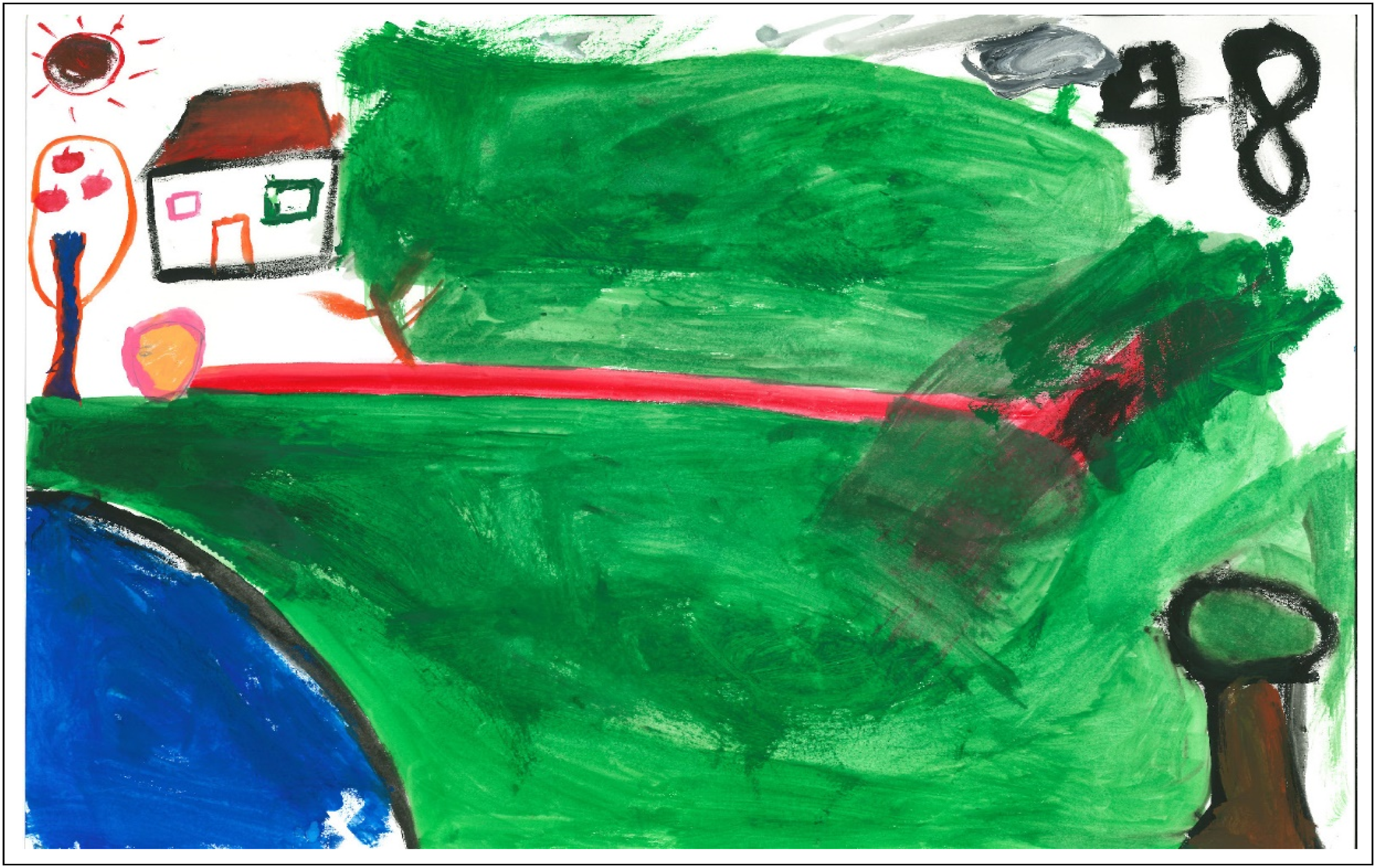
In Figure 2, Fanny (7-year-old) described that the bee above the pink flower could perform fortune-telling and predict the future. The bee told the panda to save more bamboos because it predicted that winter was coming. Garden, co-created by Flora (mother, 28-year-old) and Fanny (daughter, 7-year-old).
In Figure 3, Kathy (7-year-old) interpreted that the house painted by her on the right side of the paper was her future home, which was built above the ocean, and the dark blue dots underneath it were to support it from sinking. Also, the dark blue dots could protect them when they swam in the ocean. Happy Life, co-created by Karen (mother, 32-year-old) and Kathy (daughter, 7-year-old).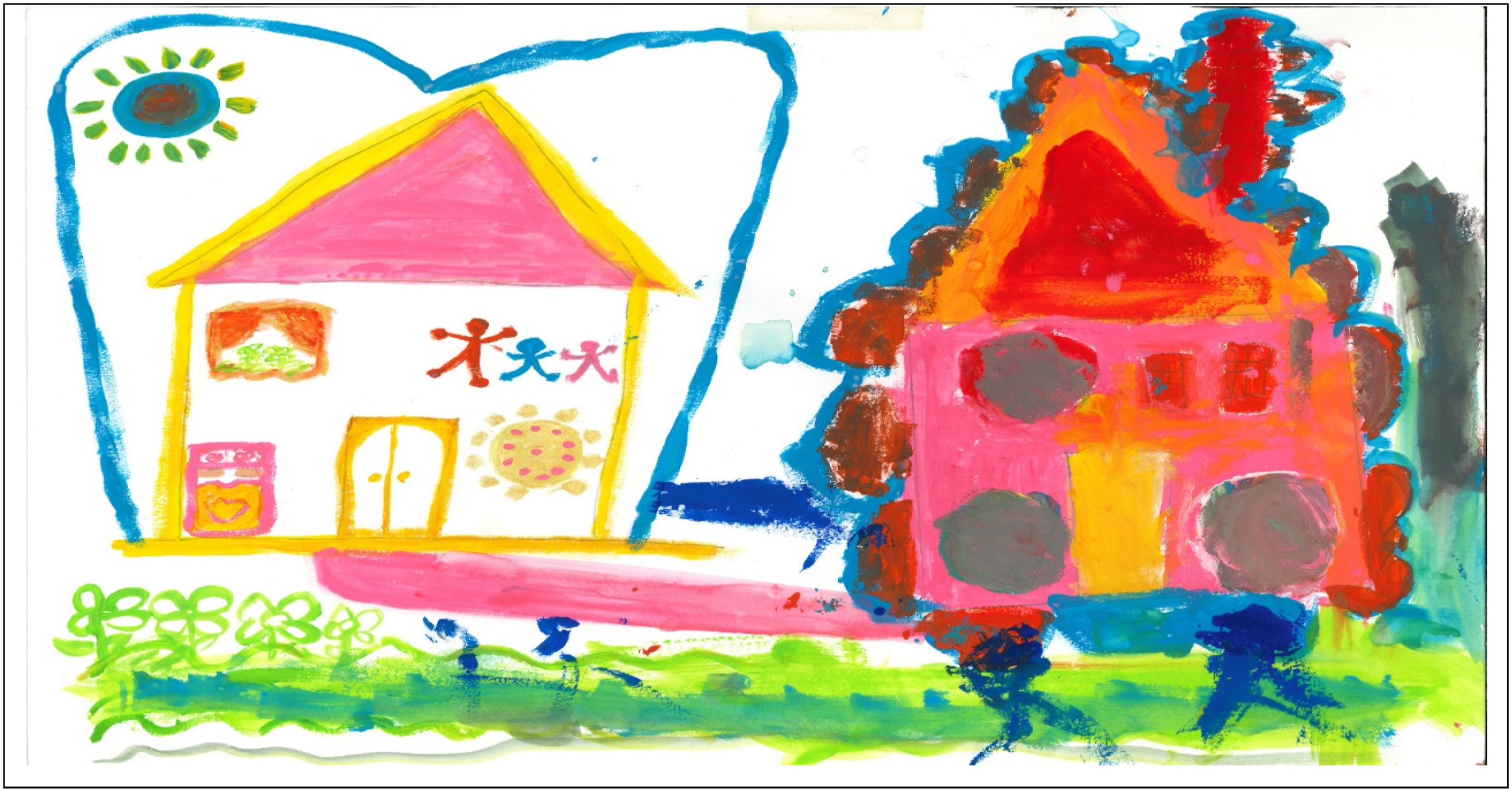
In Figure 4, Ken (11-year-old) painted Pikachu in his personal space (Pikachu is one of the Pocket Monsters fighting bravely against enemies in the universe). He explained: “Pikachu is safe inside my personal space. It is eating bread and will become bigger to fight against enemies… Pikachu will become more powerful after merging with mammy’s basketball court." Learning Hard, co-created by Karen (mother, 32-year-old) and Ken (son, 11-year-old).
Uncovering Mothers’ Needs
During the painting process, the children actively used different strategies to engage their mothers whereas their mothers persistently encouraged them to concentrate on their own painting. The mothers' need of personal space boundary (Geanellos, 2003) was uncovered. When children were able to learn to respect the mothers’ personal space boundary, this allowed the dyads to continuously take pleasure from their JPP.
In Figure 1, when Fred smeared the colors while painting in his personal space, Flora (28-year-old) observed and did not intervene. When they were painting the grassland together in the common area, Fred painted on a flower created by Flora. She reminded him and said, “That is my flower. You are painting on my flower.” Then Fred stopped and shifted to paint in other parts of the paper. After a while, Flora asked Fred, “Shall I continue to paint the grassland? It will cover your path.” Fred told her to paint, as he wanted a massive piece of grassland and was not bothered that his path was being covered by the grassland. Later, when Fred carelessly covered a bit of Flora’s red path, he immediately stopped painting on her path of his own accord. Flora observed this and brought it up in their post-painting discussion, “I am so pleased to see it, because it means that he listens to me… he knows that’s my path… he knows that I don't want him to paint on it."
In Figure 3, when Karen (32-year-old) concentrated on painting her personal space on the left side of the paper, Kathy actively used different strategies to engage her, for example, initiating different topics to talk with her, imitating the shape of Karen’s personal space and use of colors, inviting her to sing a song together, and trying to use the same brush to paint together. Karen continued to focus on her painting and persistently asked Kathy to focus on painting her “own territory”. Then Kathy quickly painted a pink dot in Karen’s personal space without asking. Karen looked at the pink dot and painted other pink dots to surround it. Kathy appreciated her mother making the pink dot beautiful and Karen continued painting in her personal space. After this, Kathy became immersed in her painting. In their post-painting discussion, Kathy interpreted that she painted her future home in her personal space. She said, “My story is about mammy and I will have our own house in the future. We will live in our own house. If I want to see her, I can easily go to her house using my path (the blue path linking up the two houses)." Karen appreciated her interpretation and said, “The story is very meaningful… I also hope that you can have your own world and life different from mine… I hope that we continue to care about each other and you won't leave mammy behind in the future."
Facilitating Open Dialogues
The “synergy” facilitated the dyads’ open dialogues in their post-painting discussions. The mother–child dyads' JPP artworks provided visual representations of their inner experiences. When they were looking at their artworks together, they were visualizing each other’s inner experiences. The co-developed discussion guide bridged their inner experiences and dialogues. When they were interpreting their artistic elements and images one by one within each of the painting steps, they were actually communicating their inner experiences with each other, that they previously had difficulties in communicating, for example, their worries, unique concerns, conflicts, and affections.
In Figure 2, Flora created the orange panda holding a green bamboo, and the panda originally had a smiling mouth. However, Fanny changed the panda’s smiling mouth to an “O" shape. Flora asked, “That is my panda. Why did you change its mouth? Why doesn't it smile?” Fanny explained, “The story is about the bee telling the panda that winter is coming. Also, the bee is reminding the panda to keep more bamboos. The panda is stunned and worried because it is unaware that winter is coming and does not save any bamboos.” After hearing Fanny’s story, Flora smiled and said, “The panda needs not to be worried because many of the bamboos have been saved under the grass."
In Figure 3, when Karen and Kathy discussed the title for their artwork, Kathy proposed “Family Reunion” but Karen suggested “Living Together”. Kathy insisted on using “Family Reunion” as the title. She said, “Members of a family should be united together without anyone missing.” Then Karen sighed about difficulties in life and expressed that it was most important for them to live happily together. Hearing this, Kathy sat closer to her mother and leaned on her. Karen acknowledged Kathy’s concern and proposed another title, “Happy Life”, Kathy accepted it.
In Figure 4, Ken explained his personal space, “I painted Pikachu’s two eyes in different ways. The two eyes represent mammy and me. Although they look alike, they are indeed different.” Karen appreciated his interpretation and asked. "Do you want me to think of you whenever I see Pikachu?” and Ken confirmed. Then Karen said, “I painted the basketball court in my personal space as I know that playing basketball is most important to him.” Ken responded, “Mammy, your painting is beautiful and the colors are special… I want to play basketball with you.” However, Karen said, “I hope you can spend more time on your homework… I want you to understand that there is no conflict between playing basketball and studying.” To make her idea clearer, Karen added the small book at the top left corner of the paper during their discussions. Their conflictual dialogues turned into affectionate communications when they talked about their paths. Karen shared that she liked Ken’s red heart shape path most. Ken said, “The path means mammy and me.” Karen asked, “Does it mean that I am in your heart or not in your heart? Ken replied, “In my heart.” Karen further asked, “Does it mean that you love me or do not love me?” Ken replied, “I love mammy.” When Karen talked about her path formed by staircases, Ken recalled the similar one they saw “together” in a magazine before, and he appreciated his mother’s painting very much.
Reflection
JPP provided a relaxed setting. When this synergized with the discussion guide, it allowed the dyads to reflect on their shared experiences. The dyads expressed their happiness of painting “together”, especially the children did not want their JPP to end. They valued their shared experience as this was their first-time painting “together”, and in some instances, even their first dyadic activity. Also, they appreciated each other’s paintings and their new experience of communication.
In Figure 1, Fred took the initiative to share in the post-painting discussion and said, “I feel tired; painting is difficult, but painting together with mammy is happy.” Flora echoed him and said, “I feel happy too… I was nervous at the beginning as he might be difficult to concentrate well… I was afraid that we could not accomplish the painting... I am happy to see that he can think of different items to paint…" When Fred shared, “I like all parts of the painting. I am happy to paint together with mammy.” Flora echoed again and said, “I am so happy. This is our first time painting together. We rarely do this at in our daily life… I feel so at ease. I looked at him and he was concentrating on his painting, I recalled my childhood drawing, so I painted the sun, the tree and the house. This is so good.” This further triggered Flora’s memories, and she said, “Last week, I bought him ice-cream. He shared half of it with me. I know that he loves me…"
In Figure 2, when Flora proposed to conclude their painting, Fanny offered to help Flora paint the windows and walls of her house on the left side of the paper. After that, Fanny kept suggesting different items to paint in their common area, for example, the blue sky above the clouds and the bugs under the clouds. When Flora appreciated Fanny’s painting skills and creativity in their post-painting discussion, Fanny said, “I do not want our painting to come to an end. I want to continue to paint together with mammy.” Flora reflected and said, “it seems I rarely have any private time with her… maybe I have been too busy with household chores, my work and her elder brother’s matter… maybe I should have more private time with her."
In Figure 3, Karen looked at the painting and said, “I feel so relaxed. Look at the colorful houses and imagine the sunlight keeping us warm… all these make us so happy... This is our first time painting together and this is my first painting… I think that I will paint again in the future.” Kathy echoed and said, “Mammy, I want to paint together with you again. We have brushes, colors, and a sketchbook at home. We can paint together again after going home!"
In Figure 4, when Karen and Ken were finishing their discussions, Ken shared, “It was quite fun to paint together with mammy and talk about our painting in this way.” Karen echoed and said, “Yes, this is good. This is so rare. We seldom discuss playing basketball and his studies without quarreling… I like communicating in this way."
Discussion
This is the first paper that we know of, which describes the application of an art-based method, JPP with Chinese mother–child dyads who survived IPV to study their implicit relationship. JPP was used in novel ways of promoting their agency and strengths. The “synergy between JPP and the co-developed discussion guide” was found. It facilitated the dyads’ spontaneous and authentic communications, and showed the importance of the co-creation process and post-painting discussion.
Promoting participants’ agency and strengths
The research process indicated that the application of JPP with these mother–child dyads was not entirely straightforward. The dyads’ constrained communications in their post-painting discussions emerged as the main issue in the data collection process. In spite of the negative impact of IPV on them and their relationship, their agency and strengths were recognized throughout the research process. They exercised their agency and strengths to decide what and how they wanted to discuss in their post-panting discussions when collaborating with the researcher to develop the discussion guide. Grounded on their perspectives, the co-developed discussion guide created a link between the JPP artworks and their dialogues. It engaged them to converse with openness and comfort about their artistic elements and images, which represented their inner experiences, one by one within each of the painting steps. This helped them breach the wall of silence, and/or usual quarreling communication patterns. Using JPP in this way clearly shows that it is essential to fully engage the participants to exercise their agency and strengths, which may be the key to turning difficulties in the research process into advantages. In this manner, this paper is in line with works that questioned the false opposition between agency and victimization found in a large number of literature on IPV. This suggests the survivors’ past victimization and existing agency can co-exist in combination (Dunn, 2005; Dunn & Powell-Williams, 2007; Herrera & Agoff, 2018; Polletta, 2009). Also, the children were recognized as their mothers’ partners and the researcher’s collaborators. They were encouraged to exercise their agency and strengths to optimize their active participation, supporting the evidences of previous studies that both the children and mothers were agentic in influencing their relationship which was the key support to their recovery from the damages of IPV (Chanmugam, 2014; Humphreys et al., 2006, 2011; Jarvis et al., 2005; Katz, 2014; 2015a; 2015b; Kong & Hooper, 2018; Lai, 2011; Mullender et al., 2002; Swanston et al., 2014; Visser et al., 2016). This emphasis might create new dynamics and changes to their hierarchical, unbalanced, and constrained communication patterns (Hwang, 1997; Kamody et al., 2020; Kong & Hooper, 2018; Lai, 2011; Zhang & Wills, 2016), and prompted the dyads to try out different strategies for their interactions. Especially by showing respect to the children’s choice of JPP and giving them a leading role in the painting process allowed the mothers to reflect and adopt new skills in their interactions (Proulx, 2000, 2002).
Spontaneous and Authentic Communications
The children consistently narrated their use of heroic images and self-invented artistic elements to create safety in their paintings. Their heroic images could be depicted by using the number, “48” (Figure 1) or imitating the original cartoon character, Pikachu (Figure 2). Their self-invented artistic elements of safety could be in different forms, a black line to separate the sea and the grassland (Figure 1), a bee with supernatural power to predict the future (Figure 2), blue dots supporting their houses from sinking (Figure 3) and “invisibly” merging with mother’s basketball court (Figure 4). Their interpretations of their “safety measures” were accepted unconditionally without judgment to support the spontaneous and authentic communications of their feelings and thoughts. Their artworks needed not to be beautiful and their painting techniques were not much considered. Their heroic images and self-invented safety elements were serving various functions: protection that allowed them to fulfill their desire of playing and running in the big piece of grassland free from danger (Figure 1); a prediction that revealed to them what to prepare for their future (Figure 2); support that prevented their houses from sinking and let them swim safely in the ocean (Figure 3); and empowerment that enabled them to become stronger to face challenges from the outside world (Figure 4). They naturally enjoyed creating and retelling stories about their paintings. Their paintings were more than paintings, they were their culture, their aesthetics (Thompson, 2006; 2007; Wilson, 2007), reflecting cultural, educational, and societal influences on how they understand art, respond to art and execute art. In this study, their choices of art expressions and their stories may reflect the influence of their experience of surviving IPV, immediate family, desires, and media. They were using resources within themselves to solve their problems, to heal and recover through art creations (Malchiodi, 2003). More importantly, they announced their intrinsic ability and inherent creativity. When they were autonomous, confident and spontaneous in creating their own artistic images and elements, interpreting them and telling stories about them, their mothers showed interest in their paintings and stories, appreciated them, and asked follow-up questions, thus allowing their new ways of communications and interactions.
JPP provided a double new experience to the mothers, painting, and painting with the children. This new experience uncovered their need for personal space boundaries (Geanellos, 2003) and their children’s ability to learn to respect them. The mothers' concern of their personal space boundary may imply their experience of “reconstruction of self” and reforming their interpersonal relationship that is the essence of their recovery in the post-separation stage of IPV (Hou et al., 2013). They were pleased when their children showed respect to stop painting on their artistic elements and in their personal space (Figures 1 and 3). These mothers had already left their abusive intimate partners. They rejected the idea of “Family Reunion” and conveyed that it was most important to live a “Happy Life” (Figure 3). Their identity had changed as they were no longer victims of IPV, struggling with their own survival in the face of abuse (Humphreys et al., 2011; Kohrt et al., 2015). They were living their new lives with their children, and were physically and emotionally available to care about their children’s feelings (Figure 2) and education (Figure 4). This may reflect their experience of transcending IPV victimization and moving to their new stories of taking charge of their children, new households and new lives, reflecting their new identities.
Importance of the Co-Creation Process and Post-Painting Discussion
The synergy between JPP and the co-developed discussion guide provided two ways of understanding the mother–child relationship: the visual and verbal ways. The dyads' mutual engagement in the art process exhibited their partnership as co-creators, and underscored that the art-based method was non-threatening, distress-reducing, safe and enjoyable (Einarsdottir et al., 2009; Gavron & Mayseless, 2018; Green & Denov, 2019; Kirk, 2007; Woolford et al., 2015). Their co-created artworks provided visual organizations of their inner experiences, in which their feelings and thoughts became visible. When they looked at their paintings together in their post-painting discussions, they literally saw their feelings and thoughts as something outside themselves. This natural way of externalizing and separating themselves from their feelings and thoughts supplemented and supported their verbal communications (Riley & Malchiodi, 2003). The post-paint discussion grounded on their perspectives is important to allow them to hear directly what they were expressing through their paintings, thus avoiding imposing the researcher’s standards on their paintings and making assumptions about their meanings. Seeing their paintings and hearing their interpretations as well as stories helped understand correctly their “here and now” feelings and thoughts. Especially these mothers and children in general did not respond well to questions about their personal feelings and family secret, such as IPV, as they were prohibited by their culture to share these matters with outsiders (Hwang, 1997; Sullivan, 2005; Tonsing, 2016; Yick, 2000, 2007; Zhang & Wills, 2016).
The dyads’ participation in JPP and the post-painting discussions elicited information that would have been otherwise challenging to obtain. This approach can improve understanding of mother–child relationship in the context of IPV. The children’s expression of safety could be difficult to express in language without JPP. This may provide an additional dimension to the concept of safety found in the previous studies. Safety is the pre-condition for the recovery of the mothers and children from their IPV experience. The previous studies relying on participants' verbal accounts of their explicit relationship found that safety was created through separation from, and cessation of contact with, the abusers (Katz, 2015b; Thiara & Humphreys, 2017). Turning to the mothers, their need of personal space boundaries (Geanellos, 2003) also provides a new dimension for understanding mother–child boundary found in the previous studies. In previous studies, both mothers and children reported a loss or absence of a normal childhood in the context of IPV. The loss or absence of normal childhood was due to children’s awareness of their mothers' vulnerability, so the children had learned to rely on themselves and function as an adult to protect themselves, their mothers and siblings (Chanmugam, 2014; Jarvis et al., 2005; Mullender et al., 2002; Swanston et al., 2014; Visser et al., 2016). Understandably, their explicit boundaries were interconnected, highly cohesive, and interdependent (Chanmugam, 2014; Katz, 2015b).
Mother and child are the most important and influential dyad in the child’s life (Rubin, 1984). The mother–child bond, whether healthy or tainted by IPV, “remains the soil within which the child exists and through which the child can receive nourishment” (Shore, 2000, p. 14). The mother–child dyads reflected they hardly had dyadic activity in their daily lives. They valued their new dyadic experience that was not weakened by mothers’ striving for clearer boundaries in the process and the dyads’ sharing of conflictual concerns in their discussions. This may imply that the art-based dyadic process can be an effective approach to rebuild and restrengthen mother–child relationship in the post-separation stage of IPV. The children’s agentic use of heroic images and artistic elements to ensure safety and the mothers’ stories of their new identities of transcending IPV victimization to take change of their new lives, may suggest the notions of heroism to be integrated into their recovery process (Gumb, 2018; Keck et al., 2017), thus their narratives of IPV experience can be extended towards a more life-affirming focus. The new focus of their stories can be their heroic journey of identifying and appreciating their concerted efforts to resist violence and re-establish their “safe and happy” new lives together. It may be helpful for professional interventions to support these mothers and children together to move past a “liminal” state in which their social identities were characterized by being “victims”, to “survivors”, then to one defined by “thriving” (Wozniak & Allen, 2012).
Limitations
The co-developed discussion guide, grounded on mothers' and children’s perspectives, appeared to be vital in enhancing participants' engagement in their post-painting discussions. However, more studies are needed to test this conclusion. All participants were residents or ex-residents of a shelter, were nominated by social workers to participate, and consented to participate. Their perspectives might not represent those who had not been housed in refuges, did not seek professional help or provide consent. Data analysis of this paper was largely based on participants’ interpretations of their paintings for two reasons: first, the focus of this study was on mother–child interaction and communication during the painting process and post-painting discussion; second, although one of the authors is an arts therapist and offered advice on this study, the researcher who performed data collection and analysis is from social work background. Further development of this approach may attend more to the aesthetic analysis of symbols and artistic elements.
Conclusion
This paper describes the use of JPP with Chinese mother–child dyads in novel ways of promoting their agency and strengths regardless of their IPV experience. The “synergy between JPP and the co-developed discussion guide” facilitated their spontaneous and authentic communications that provided rich data and new dimensions to understand the mother–child relationship in the context of IPV. The importance of their co-creation process and post-painting discussions suggest that art-based dyadic approach may be effective to affirm and strengthen their experiences of transcending their IPV victimization, re-constructing their new identities, and re-establishing their “safe and happy” new lives together.
Footnotes
Acknowledgments
We would like to thank the following people for their contributions:
1. Dr. Tami Gavron, for direct consultation of the JPP setting and steps prior to the data collection of the main study. 2. All the mothers and children for their participation and collaboration in this study. 3. Last but not least, staff of the shelter, Serene Court operated by Christian Family Services Center, for referring participants and providing a safe and supportive venue for this study.
Declaration of Conflicting Interests
The author(s) declared no potential conflicts of interest with respect to the research, authorship, and/or publication of this article.
Funding
The author(s) received no financial support for the research, authorship, and/or publication of this article.
