



Abstract
Focus groups are a core method in qualitative research for bringing people together to discuss an issue of concern; however, it has been criticized for not enabling researchers to gain a deep understanding of the participants’ lived experiences or generating in-depth personal narratives that build on those experiences. In this article, the author builds on the shared epistemologies of qualitative research and journalism to introduce the Generative Dialogue Framework. The Generative Dialogue Framework is grounded in the intersection of inquiry, knowledge, and storytelling to design and facilitate remote and in-person focus groups. Informed by phenomenology, the philosophy of dialogue, and design thinking, along with a strong visual focus, the framework aims to surface participants’ lived experiences as a way of understanding their perceptions, thoughts, and perspectives, especially within the context of controversial or polarizing topics of concern. The Generative Dialogue Framework stimulates constructive dialogue by offering a focused framework and a structured yet flexible question guide. The result is intended to be a reflective learning dialogue in which participants jointly develop shared meanings and insights, rather than simply exchanging rationalized opinions. Drawing on insights from a case study that explores people’s perceptions of the COVID-19 vaccination, the article demonstrates the framework’s application and provides a toolkit to structure the design and implementation process. Finally, reflecting on methodological and epistemological perspectives, the author reviews the advantages and challenges of applying the framework in focus group research for both researchers and participants.
Keywords
Focus groups are frequently used in qualitative research as a powerful tool for bringing people together to discuss an issue of concern that is usually informed by the research agenda and questions set by the researchers. Transcending the boundaries of a group interview, focus groups build on the interaction facilitated between group members (Duggleby, 2005; Morgan, 1988), to which participants respond, by building on the reactions of other members in the group. Interaction affords a synergistic effect (Palmer et al., 2010; Stewart et al., 2007) that allows participants to reveal points of agreement, conflict, or uncertainty, unpacking aspects of understanding which often are left untapped by conventional methods (Kitzinger, 1994). Researchers gain insights into the diverse perspectives participants share by listening to their discussions, challenges, and contradictions during the focus group.
Focus group methods have evolved over approximately the past century as “a way of listening to people and learning from them” (Morgan, 1998, p. 9). It has been considered an ideal approach for examining the stories, experiences, points of view, beliefs, needs, and concerns of individuals (Kitzinger, 2005). Nonetheless, focus groups have been criticized for not enabling researchers to gain a deep understanding of the participants’ experiences or generate in-depth personal narratives that build on lived experiences (Hopkins, 2007; Krueger & Casey, 2009). Moreover, balance and equity between participants may be compromised by certain personalities among the participants, such as vocal, reticent or fluent participants, dominant talkers, introverts, self-proclaimed experts, or even aggressive personalities (see also Hollander, 2004). While focus groups can render nuanced and insightful data, the data collected are usually difficult to analyze. Thematic coding and analyzing data can be a laborious and time-consuming multi-step process, especially when multiple researchers are involved in the coding and the analysis of such data.
Surfacing Lived Experiences Through Dialogue, Storytelling, and Design
In this article, we argue that we can address the challenges introduced in the previous section by bridging the shared epistemologies of qualitative research and journalism that are grounded in the intersection of inquiry, knowledge, and storytelling. We introduce the Generative Dialogue Framework (GDF from here forward), a framework that we designed, tested, and implemented to enhance focus group research by harnessing the power of dialogue, storytelling, and design thinking.
The framework is informed by the following fields: (a) phenomenology as an approach that emphasizes participants’ perceptions, feelings, and lived experiences and supports learning from the experiences of others (Bush et al., 2019; Frechette et al., 2020; Groenewald, 2004; Neubauer et al., 2019); (b) dialogue as a reflective, transformative process and experience (Black, 2008; Buber, 1970; Cissna & Anderson, 2018); and (c) design thinking as a human-centered and creative problem-solving approach that seeks to understand the perspectives of people; this approach also challenges assumptions and redefines problems in an attempt to identify alternative strategies and solutions that might not be instantly apparent through our initial level of understanding (Brown & Kātz, 2009; Ulibarri & Cravens, 2019).
The motivation for this work is grounded in the need to draw forth people’s lived experiences as a means of surfacing their perceptions and mental models while making meaning of these, especially within the context of controversial or polarizing topics of concern. This notion of conversational inquiry scaffolds a dynamic, meaning-making process between all participating individuals. The modality of inductive probing allows the researchers to elucidate expressions or meanings and invite participants to share their stories. Additionally, the framework can support researchers who employ focus groups in their practice but are missing how to factor in the interaction piece in an organic and creative way.
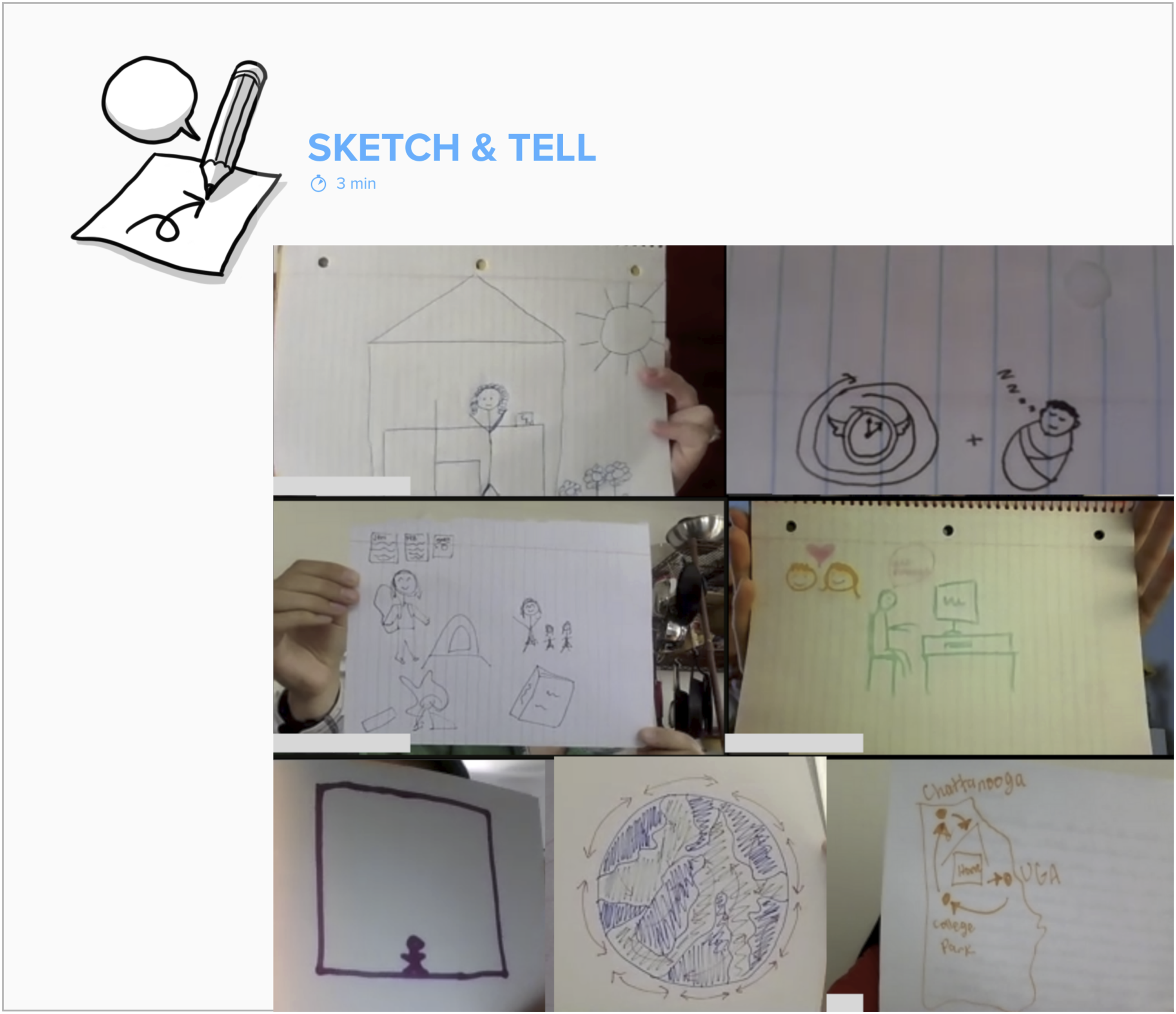
The GDF can be applied to organize small-group conversations, in both online and in-person settings, that are supported through the use of participatory and experiential activities. We frame these activities as generative, as they can elicit memories, evoke emotions and feelings, and express relationships between ideas (Sanders, 2000). The activities are designed with the goal to enhance and complement the dialogic process. Collective participation in the activities creates a shared, safe, and trusted space, and helps participants become more aware of their own thoughts and perspectives, which, in turn, can encourage them to be more authentic as conversational partners. Generative activities consist mainly of visual components (see Figures 1 and 2). Visual prompts and semantic cues are employed to give access and expression to the emotional aspect of participants’ experiences, acknowledging the subjective perspective of sensing, knowing, remembering, and expressing. The ultimate goal of the activities, in conjunction with the dialogic process, is to produce a holistic experience of dialogue through shared meanings and connections between participants. Checking In and Introductions. Participants Sharing Drawings to Illustrate how the Pandemic Changed their Lives.
The main contribution of the framework is to offer an alternative format and process for facilitating focus groups by amalgamating participatory research, design thinking, and the affordances of technology. In what follows, we refer to these focus-group-style conversations as dialogue groups to distinguish the different experiences and processes that are afforded through the GDF. The experiential format and the exploratory process give agency both to the researchers and to the participants to explore the research questions together, challenge assumptions, redefine problems, and suggest innovative solutions. The creative and playful space afforded during the dialogue allows participants to enter the conversation without over-rationalizing their responses. It also allows the conversation around the questions to evolve organically while creating a visual memory of the process. The visual scaffold that accompanies the dialogue creates equal opportunities for participants to reflect on the prompts before articulating their thoughts and sharing their experiences with the group.
The approach is designed for conducting remote, visually facilitated focus groups. The format and the toolkit can easily be translated to in-person settings with tangible dialogue artifacts (Sections 2a and 2b in the Supplementary Material include two decks of cards that can be used to facilitate in-person sessions). Moreover, it may be applied to fields such as journalism studies, communication research, and ethnographic studies, as well as to non-research settings, such as community-centered journalism, community engagement, and civic design.
Overview of the Approach
The GDF includes the development of both the dialogue group protocol and the visual template design. It is implemented over eight steps (Figure 3), which serve as a guided process allowing the conversation to evolve organically, facilitating group learning and connection, while creating a visual memory of the dialogue. In each step of the process, researchers share the prompt for the generative activity and an open-ended question for the dialogue. Each step follows the same structure: Participants start by getting involved in an activity that allows them to self-reflect or interact with the visual prompts. This allows them to actively start constructing meaning before engaging with the group, and to develop their thoughts and arguments. The process behind the conversation design supports people as they open up and embrace the topic organically (priming stage). Participants are invited to explore the topic together and learn from each other (immersion stage). The first two stages, priming and immersion, prepare participants to share their stories, and raise self and group awareness so that they can be empowered to share the learning further. Visual Overview of the Process. The steps visualized are (1) Welcome and Check-in, (2) Sketch and Tell, (3) Brainstorming on Hopes and Concerns, (4) Personal Stories, (5) Circles of Trust, (6) Walk of Empowerment, (7) Headlines from the Future, and (8) Wrap up and Check-out.
A Suggestion for a Conversation Toolkit
The GDF expands on four components that constitute its conversation toolkit and provides the foundations for designing the research process and the dialogue format. These demonstrate the diverse ways in which the GDF can be a flexible and vigorous yet engaging and creative approach in the methodological toolbox of journalism, communication, and media studies. The components of the GDF toolkit are the following: • script (focus group protocol) • activities (generative and creative) • visual language (artifacts and icons) • visual scaffold (visual collaborative template)
The visual scaffold for the dialogue is designed with three objectives in mind: (a) to elicit memories, thoughts, and emotions while supporting the participants’ self-reflection process by accompanying each question with a prompt; (b) to collect diverse data formats in order to enhance the process of analyzing the findings; and (c) to create a visual memory of the dialogue. To this end, we utilized a custom-designed visual language for our topic under study, which included 34 customized and hand-drawn icons. Hand-drawn visuals were chosen over pre-made in order to create a sense of connection and community between participants (Qvist-Sørensen et al., 2020). Based on the case study that follows, we will review how the framework and toolkit are implemented through the designed generative activities, as well as the diverse data formats that can be collected through each activity.
The Case Study: An Implementation of the Framework to Study Perceptions of the COVID-19 Vaccination
To demonstrate the process of the GDF in action, we describe a study designed to explore people’s perceptions of COVID-19 vaccination and, more specifically, to: • diagnose concerns, misconceptions, and unaddressed questions related to the COVID-19 vaccination; • bring people’s lived experiences to light as a means of understanding hopes and concerns around the COVID-19 vaccine, while identifying information and communication voids; and • explore people’s trust in media and social institutions and understand the role of prior lived experiences and personal values.
The goal of this section is to highlight the methodological aspects and components. Therefore, no theoretical framework, findings, or discussion will be provided. In the following sections, we will review the necessary phases of the process, starting with the preparation phase for the conversation design, moving on to the implementation of the process, and finalizing with suggestions for the analysis and the synthesis of the collected data.
Preparation
The preparation stage involves designing the different steps of the process (Figure 4). These include the dialogue content (the questions/prompts protocol and the visual language), as well as the activities and the visual template. The protocol for the dialogue consists of the questions guide (script) and a detailed outline (description) of each step of the process. For the visual language, a set of icons is designed to visually support the question prompts and the shared activities. A set of creative and reflective activities is designed to support each question shared by the researchers and discussed with and among the participants. A survey shared with participants when signing up for the study captures important demographic characteristics or other variables that the researchers need to include in their analysis. Additionally, all participants are required to review and sign an informed consent form before joining a session. The Building Blocks of the Dialogue Protocol Outlining the Process.
The content and the dialogue process are captured visually in a pre-designed visual template on a digital workspace that includes all prompts and activities used during the session (see Figure 3 for an overview of the template). The template that is prepared, assigns a specific color to each participant; for example, Participant 1 is assigned the color blue in the different activities. This way, each participant has their own color-coded working space on the visual board which remains consistent throughout the session, making it easier and faster for everyone to identify each member’s inputs. Figure 3 illustrates the color-coded setup. A new template is created for each focus group hosted. An optional feedback form filled in by participants at the end of the session provides helpful insights for the researchers regarding the effectiveness and the overall performance of the process.
Implementation
In this section, we will go through the different steps of the framework and share visual examples. 1 For each step, we provide the rationale behind the design and the selection of the respective activities. We frame these steps as building blocks because researchers can choose to use the prompts and the activities as actual building blocks that can be moved around, re-arranged, or removed to align the research objectives of each project, and reflect the process that the researchers have in mind. We will finalize the review of the case study by going over a variety of examples for the analysis and synthesis of the data.
Entering the Space
Researchers and participants enter two platforms: One that supports the dialogue on a videoconferencing platform, and one that supports a shared digital collaboration space. The way the online collaboration space is designed, it allows the researchers to create a step-by-step outline of the process and virtually “summon” all participants so that they are able to follow what the facilitators are demonstrating on their screen. The researchers welcome everybody, provide an overview of the process, and go through brief instructions on how to use the two platforms. They then introduce the project, its objectives, and the purpose of the dialogue. An essential part of the process is to lay the foundation for a shared experience and help participants feel welcome and comfortable to fully participate in the dialogue.
To help the conversation run smoothly, the researchers introduce a set of guidelines that participants are asked to agree to and maintain throughout the session. These conversation guidelines can be adapted to fit each project’s objectives and scope (a useful starting point is included in the sample script in the Supplementary Material). The researchers go around the group and have each participant acknowledge the guidelines. As soon as these shared guidelines are acknowledged and agreed to, they become the conversation agreements for the group. The agreements set the expectations for the dialogue by reminding all participants that the purpose of the session is for participants to share their lived experiences while listening to and exploring the experiences of others. In essence, the conversation guidelines help the process run smoothly and remind participants of their obligations and responsibilities as members of the group.
A Visual Circle Practice
One crucial element of facilitated conversations that is lost when connected remotely is circle practice. We try to approximate it by introducing a virtual mandala with all participants, including their names and avatars (Figure 1). The researchers can introduce the visual template at this point, move the group to step 1 following Mural’s outline (see Figure 3), and facilitate introductions and check-ins. As in circle practice, facilitators invite participants to go around and introduce themselves following the order of participants as reflected in the visual circle. Alongside short introductions, researchers invite participants to a check-in activity that helps the group get grounded in the moment and the experience (an example for a check-in activity is included in the sample script in the Supplementary Material).
Using Drawing to Connect
Sketch and Tell is the first generative activity (Figure 2) introduced that builds on the theory and practice of participatory visual methods (Mitchell et al., 2018). Creativity is used as the entry point to the dialogue, and drawing is employed as an alternative way of perceiving. Participants take paper and pens and draw a quick sketch to illustrate their COVID-19 experience. As soon as they are done, all participants hold up their drawings at the same time for the facilitators to take a screenshot. The facilitators move the group to step 2 in the outline (see Figure 3) and upload the screenshot capturing the participants’ drawings on the shared collaboration space for the group to reflect on. This warm-up activity helps participants uniquely share their experiences and get connected beyond words. Using a drawing to discuss an issue allows speech to be taken to an emotional level and makes the conversation less confrontational (Guillemin & Drew, 2010; Mitchell, 2011). The shared experience through drawing provides starting points for asking questions and identifying common ground across different experiences. Participants’ drawings were coded and included in the project’s corpus as visual representations of COVID-19 experiences shared in the sessions.
Exploring Together Through Brainstorming
Next, participants are invited to explore the topic of discussion together through a rapid brainstorming session and to reflect individually before engaging in discussion with the group (Figure 5). In this activity, participants are asked to share their hopes and concerns about the COVID-19 vaccination. The facilitators move the group to step 3 (see Figure 3) and explain the activity. Each participant begins working in their own space in silence for a couple of minutes, and as soon as everyone is done, the group has the chance to discuss their contributions and identify insights and meanings. This brainstorming space serves as a canvas for the stories and experiences that will be shared later. Rapid Brainstorming Canvas Exploring Hopes and Concerns for the COVID-19 Vaccination.
The power of this brainstorming session lies in its spontaneous yet focused character. By engaging in such an activity, participants stay focused on what the question means to them. In spoken conversation, answers can be influenced by the comments of other participants or may remain superficial, or it may so happen that a dominant person simply steers the conversation away from the actual question. More specifically, in the flow of a regular conversation, people tend to withhold specific comments; they may think these are not essential, they hesitate to say them out loud, or they simply forget. By providing equal space for all participants to capture their responses visually, participants record their thoughts as they emerge, and they can easily recall them during the discussion. Such practices can also eliminate the possibility of conformity that can take place in similar conversational settings.
Sharing Lived Experiences and Storytelling
Collective understanding, or otherwise the meeting of minds, is a helpful initiation point for the common exploration and deconstruction of a complicated topic. This process seeks connections that find starting points for acknowledging the other side, and gaining a refined insight into the place each person is coming from. By reaching this level of immersion in the topic, participants are primed to share their personal stories and lived experiences which have affected their concerns about the topic under discussion. They can tap into their feelings and draw associations between their shared stories and the responses they have contributed to the conversation. In this stage, the conversation reaches its climax. In other words, we could see this step as the “heart” of the process. The facilitators move the group to step 4 (see Figure 3) and, using the visual circle, invite participants to share specific moments and experiences that have influenced their perceptions, thoughts, and beliefs on the topic.
Using storytelling in the dialogic process to express and respond to personal stories empowers people to craft their identities and see the world through each other’s perspectives (Black, 2008; Stains, 2014). It is a powerful and connecting experience to be heard and seen, witnessed, and acknowledged. It invites attunement and receptivity to others’ stories, inhibits biases and stereotypes, and engages the heart as much as the mind, rather than imposing opinions and attitudes on one another (Cissna & Anderson, 2018).
Co-Creating Micro-Maps of Trust
In the next activity, we have the opportunity to focus on the levels of trust that people have in a set of people, groups, and institutions associated with COVID-19 and vaccination. The facilitators move the group to step 5 (see Figure 3), inviting participants to organize their own set of color-coded icons that represent 20 different stakeholders. The starting setup of this activity is illustrated in Figure 6(a). During this short activity, participants are invited to organize sets of color-coded icons for each institution into a series of seven concentric circles, where each circular layer corresponds to a trust score on a Likert scale ranging from 1 to 7 (1 = do not trust at all, 7 = trust extremely). Figure 6(b) illustrates how the space looks after the activity is wrapped up and the micro-maps of trust are created. (a) Generating Micro-maps of Trust (before) and (b) Generating Micro-maps of Trust (after).
This activity has proven very effective in encouraging participants to become aware of their trust in different people, experts, authorities, and institutions, in a playful and visually captivating manner. In its essence, the activity affords the collective design of micro-maps of trust. It invites participants to think of their levels of trust in terms of a two-dimensional and relational approach, instantly comparing their responses with those of other participants in their group. Instead of thinking of their inputs on a metric scale, they have the opportunity to spatially track all of their responses at the same time and start identifying patterns in their group. The data obtained in this activity can also be easily translated into a Likert scale, so researchers may use this quantified data to overview and support the qualitative findings.
Walk of Empowerment
The next activity focuses on discussing how participants are navigating all the information that is out there surrounding the COVID-19 vaccine. Facilitators move the group to step 6 (see Figure 3), sharing the visual prompt (Figure 7) to encourage participants explore what kind of information would help them move from feeling overwhelmed and helpless (due to all the misinformation and confusing information around COVID-19 vaccination), to feeling empowered and confident. In this activity, the prompt (which kinds of information would help participants feel empowered and which ones would leave them feeling helpless) is translated into a visual to help participants: (a) identify the pain points that emerge during this “journey” toward empowering information and (b) talk about challenges they face in the current media and information ecosystem. This activity creates the space for researchers and participants to identify mis- or disinformation sources, confusion, or complexity, and to explore the types of stories, angles, or perspectives that they would like to see in the news. Moving from Helpless to Empowered with Actionable Information.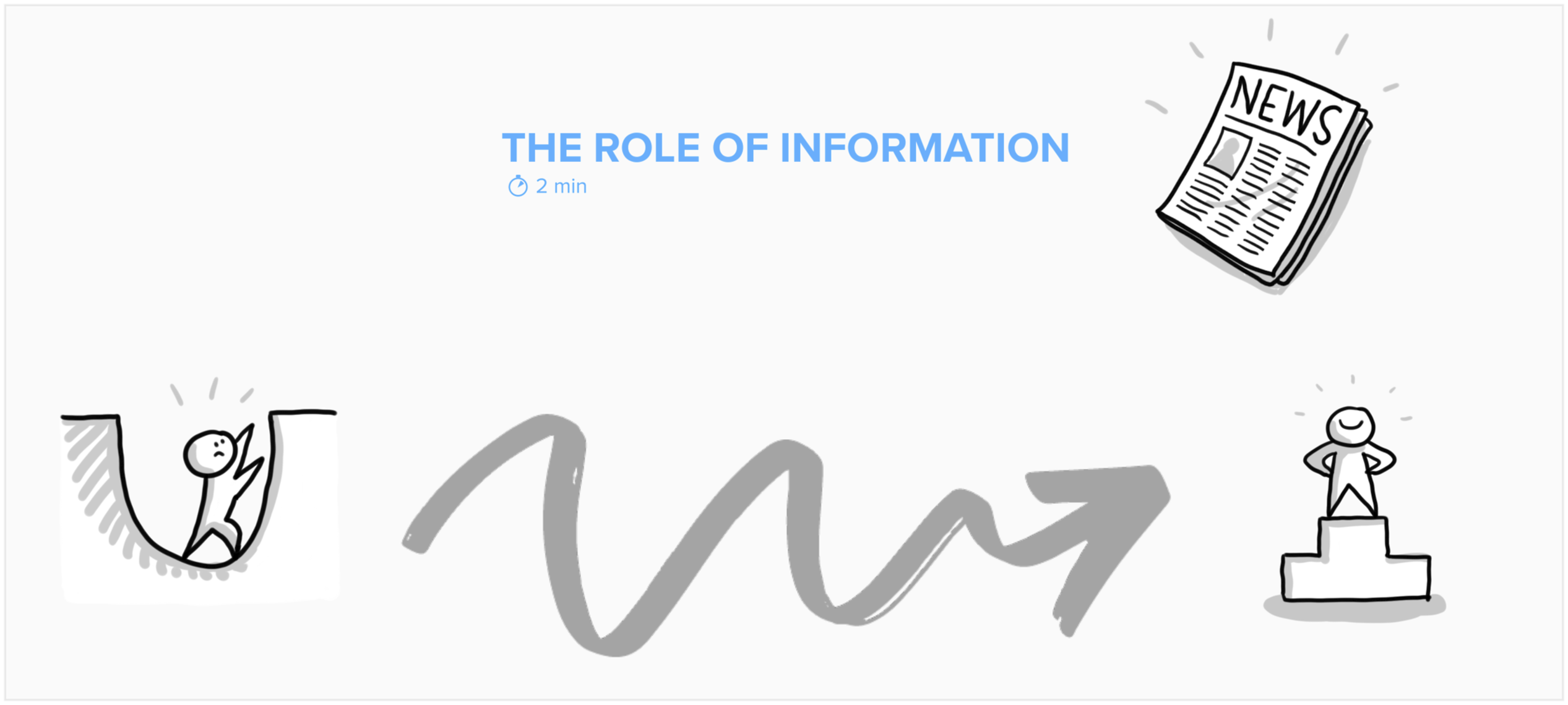
Headlines From the Future
For the last part of the conversation, participants are asked to travel into the future and engage in a visioning exercise. The facilitators move the group to step 7 (see Figure 3), prompting the participants to imagine how a future post-pandemic world would look like and feature this reality in a newspaper headline (Figure 8). In this imaginative activity, they are asked to help the researchers and their fellow participants understand what is meaningful to them by highlighting a hope, a concern, a fear, or a vision. By concluding with a visual and participatory activity, similar to the way the session started, we create an arc that links the shared lived experiences of each participant with their glimpse into the future, thus connecting their personal values with their expectations on the topic discussed. Visioning Exercise Using the Format of Newspaper Headlines.
Wrapping Up
Before everyone leaves the session, researchers invite participants to engage in a brief check-out activity. As checking in affords participants to take the time and get grounded in the moment by following a short ritual, checking out is equally important. It gives the participants the opportunity to share key reflections and takeaways and helps the group wrap up its process. Researchers move the group to step 8 (see Figure 3), which is the final part of the process, and invite participants to reflect on what worked well for them during the session, but also what did not work at all. At the same time, this last part serves as an opportunity for the researchers to receive feedback about the process and the overall experience.
Synthesis
The study described, followed a multilevel mixed methods design incorporating focus groups, surveys, visual prompts, and responses to participatory activities. The design introduced uses a blended approach across a multiple-level analysis in which qualitative and partially quantitative data from these different levels are analyzed and integrated to answer aspects of the same or related questions. For example, survey data can be collected before participants join the dialogue groups, whereas a diverse combination of data is collected through conversation and responses to the visual prompts and generative activities introduced with each question during the dialogue groups.
The innovative nature of our research method calls for an inventive approach to thematic coding, which is perceived as an organic and open iterative process that stems from the participants themselves. For example, the brainstorming maps populated by the participants and the participants’ inputs to the diverse generative activities can be exported to spreadsheets, indexed, and organized. These inputs support the development of the codebook needed for the thematic analysis of the transcribed conversations (Figure 9). The codebook created through this process serves as a conceptual artifact curated both by participants and researchers, and constitutes the first coding cycle. The research team can continue to enrich and conceptualize the codebook into meaning-based patterns through further review of the recorded sessions, by clustering codes into broader themes or splitting initial codes into two or more different codes for more nuanced coding (second coding cycle). Additionally, participants’ input on the brainstorming boards can be used, after being exported into spreadsheets, to reflect a quantitative overview of the main themes that participants shared as hopes and concerns on the topic. Using Participants’ Inputs as a Scaffold for the Development of a Codebook for Thematic Analysis.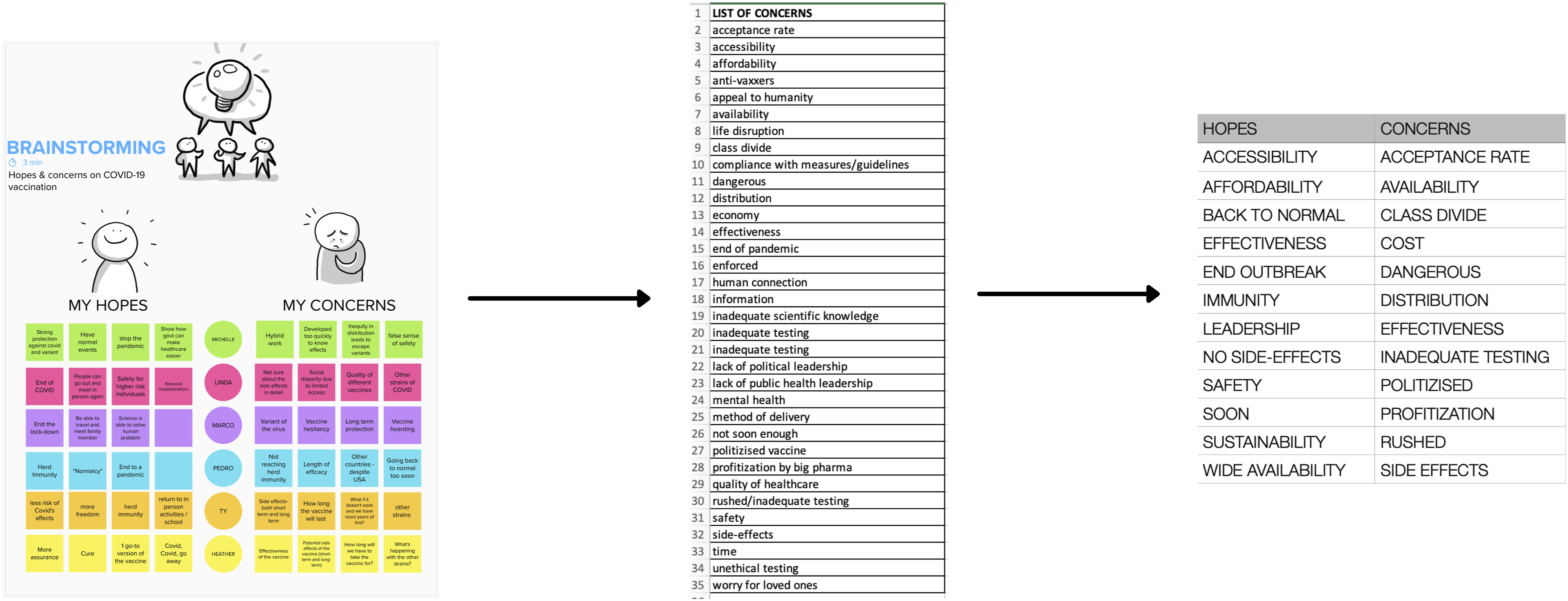
In some cases, the collected data can be converted to a different type of dataset. For example, for the circles of trust activity, participants’ responses can be translated to a Likert scale to reflect their level of trust in mentioned stakeholders (Figure 10). The data is then enhanced by the discussion in the focus groups, which provide more context around participants’ choices. Circles of Trust (translated to a Likert scale).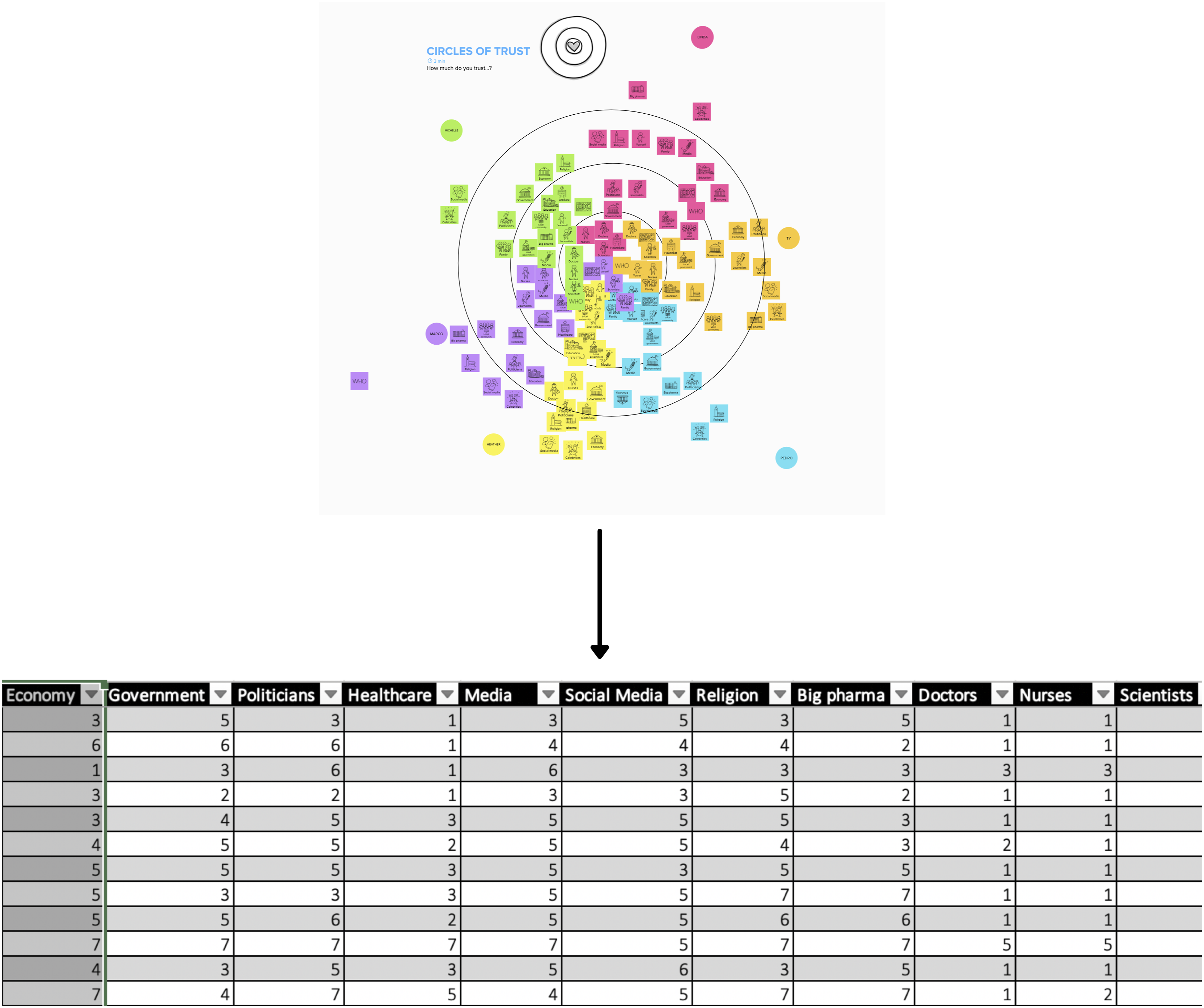
Advantages and Challenges of Applying the Generative Dialogue Framework in Focus Group Research
In this section, we review the potential advantages and possible challenges of applying GDF in focus group research through the perspectives of both the researchers and the participants.
For Researchers
Advantages
Design of Protocol: The structure of the dialogue protocol offers the researchers a foundation and the resources to build upon. At the same time, the modular format of the protocol allows researchers to be creative and experiment with the sequence, the duration, and the content of each suggested module while enabling them to add or remove steps (building blocks) to fit the research objectives of their study.
Facilitation: Researchers can monitor the conversation effectively, work with visual prompts and semantic cues that support the questions, and translate the content and the dynamics of the conversations into visual formats. As a result, a group visual memory is created that displays the trajectory of its journey. In this dialogic format, the researchers promote and stimulate the dialogue by offering a focused framework and by asking questions that invite the participants to examine, discover, and explore significant answers together. The goal is a reflective learning dialogue in which participants jointly develop shared meanings and insights rather than simply voicing and exchanging opinions.
Technology: The technology needed for this framework is a videoconferencing platform (options include but are not restricted to Zoom, Skype, Microsoft Teams, or Google Meet) and any shared collaboration space (such as Mural, 2 Miro, 3 Stormboard, 4 or Lucidspark 5 ). While access to technology can pose a limitation for researchers with restricted resources, education licenses or free plans for such platforms can be powerful alternatives to support this approach.
Analysis/Synthesis: The rich and diverse formats of the data afford both qualitative (mainly) and quantitative (partially) analysis. Depending on the scope of the study, the provided data can be combined and synthesized to support a diverse and holistic representation of the findings.
Challenges
The approach requires the synchronous participation of researchers and participants in the group and is, therefore, time-consuming. As a heavily qualitative research, the process cannot be automated. While some parts of the collected data can be easily extracted for further analysis, the synthesis of diverse data formats can be challenging. Researchers need to have basic training in facilitating group discussions, be well-organized and efficient in the effective management of time and group dynamics. They also need to be able to demonstrate empathy and support participants through their active and reflective listening skills. As the use of different platforms requires a certain level of multitasking on the facilitators’ side, being prepared and ready to troubleshoot when necessary are important skills. Assigning roles to co-facilitators, such as having the main facilitator drive the dialogue and a co-facilitator manage all technological related issues, can be helpful practices to support this work.
For Participants
Advantages
In the final stage (wrap-up) of each session, as well as in the forms submitted after the wrap-up of every focus group, participants reported that they felt extremely “engaged,” “motivated,” and “encouraged to share their personal experiences,” and they perceived the process as being “creative,” “playful,” and “refreshing.” The vast majority of participants reflected on how particularly engaging it was to perform activities with tangible materials (such as the drawing activity) while also interacting with the visual artifacts on their screens, responding to the activity prompts, and discussing with each other and the researchers.
With the visual and semantic cues activating different parts of their brain, participants had the chance to think independently and dive deep into the activities before engaging with the group. The visual formats of the conversation support both their individual reflection and their reflection as a group. This way of communicating builds bridges and provides the scaffold for more organic and sustainable conversations. It creates a relational way of seeing by empowering all parties of the conversation in order to co-create semantic maps and to bring their stories to life with words and visuals. In their feedback, participants reported that the visual prompts that supported the conversation helped them understand the questions and express their opinions clearly and concisely. They also reported that the visual prompts made the conversation more fun, creative, engaging, and immersive while also encouraging the interaction between the researchers and the participants, as well as among themselves.
Additional feedback received from participants included that the structure and the process of the dialogue group helped them understand the complexities of the issue discussed, become more empathetic toward other people with different experiences and perspectives, and finally, understand that it is possible to hold a meaningful dialogue even if there is disagreement between the people involved.
Challenges
The approach is designed to make the experience as seamless and engaging as possible. However, challenges for participants may include having access to a device with a camera as well as basic technological literacy to perform the online activities. Flexibility is key to overcoming any technical difficulties that may arise; for example, in the very few cases when participants were not able to perform the online activities on their own devices, the researcher supported them through the chat function on the videoconferencing platform employed and recorded their responses on the shared collaboration space. Another challenge may be the need for participants’ live presence in the session and the allocation of the time required to participate in the group. From the feedback we received from participants who took part in the sessions, the overwhelming majority reported that their participation was gratifying and worth their time and helped them become more aware of both their own opinions on the topic and the opinion of others.
Conclusion
Focus groups are a popular and well-established qualitative methodology for actively leveraging the interaction between members of a group as they describe or frame their lived experiences and reflect on those experiences. The researchers’ role is to facilitate the interactions and exchanges within the group to support participants in establishing the depth of experience, time, space, and personal perspective in the context of the group. This article offers an experimental framework for redesigning and reimagining the process and the data diversity that can be obtained by creatively inviting and eliciting participants’ lived experiences. It builds extensively on generative activities inspired by design thinking, thus creating a dialogic experience for all participating individuals. Inspired by the principles and the values introduced by the philosophy of dialogue, it motivates people to explore and acknowledge each other’s lived experiences.
The process of gathering data based on recollection of memories and self-perceptions involves a level of subjectivity in the reporting of inputs by participants. While self-reporting is often considered a limitation in qualitative studies, we suggest that understanding how lived prior experiences affect our thoughts, opinions, and decisions can be a powerful tool in understanding people’s mental models and perceptions. Instead of focusing on rationalizing or normalizing participants’ opinions and beliefs, we suggest a dynamic and highly interactive framework that can generate self and group reflections and awareness.
In sum, the GDF offers a dynamic redesign of contemporary focus group methods, to be employed by journalism and media researchers who are interested in surfacing lived experiences as a means of understanding thoughts, beliefs, perceptions, and decision-making processes. The strengths mentioned above for both the researchers and the participants, suggest the suitability of the framework for conducting focus groups that empower both researchers and participants to experience a reflective learning dialogue, by leveraging the affordances of technology.
Supplemental Material
sj-pdf-1-ijq-10.1177_16094069211066704 – Supplemental Material for Designing Generative Dialogue Spaces to Enhance Focus Group Research: A Case Study in the Context of COVID-19 Vaccination
Supplemental Material, sj-pdf-1-ijq-10.1177_16094069211066704 for Designing Generative Dialogue Spaces to Enhance Focus Group Research: A Case Study in the Context of COVID-19 Vaccination by Dimitra Dimitrakopoulou in International Journal of Qualitative Methods
Footnotes
Acknowledgments
The author thanks the Local Voices Network and Cortico for the original inspiration for the script, and would like to express her gratitude to all participants who took part in the dialogue groups. The author wishes to thank Professors Deb Roy and Ceasar McDowell at the MIT Center for Constructive Communication for their support and inspiration in advancing deep listening and sense-making methods. The visual language developed for this project was designed by Bigger Picture.dk.
Declaration of Conflicting Interests
The author declared no potential conflicts of interest with respect to the research, authorship, and/or publication of this article.
Funding
The author disclosed receipt of the following financial support for the research, authorship, and/or publication of this article: This work was supported by the European Union’s Horizon 2020 research and innovation program under the Marie Skłodowska-Curie, grant agreement number 844167.

Supplemental Material
Supplemental material for this article is available online.
Notes
References
Supplementary Material
Please find the following supplemental material available below.
For Open Access articles published under a Creative Commons License, all supplemental material carries the same license as the article it is associated with.
For non-Open Access articles published, all supplemental material carries a non-exclusive license, and permission requests for re-use of supplemental material or any part of supplemental material shall be sent directly to the copyright owner as specified in the copyright notice associated with the article.
