



Abstract
This study proposes a new research design, combining duoethnography and photography into a trioethnography that opens an artful lens through which educational changes, emerging and unfixed problems, and unexplored/unseen values and hopes were examined. Central to this trioethnography was voices of three Vietnamese doctoral students with transnational experiences in Canada and Australia, around three educational topics: researcher positionality, education inequity, and mindfulness in relation to the global crisis within and beyond higher education contexts. Living transnationally in these insecure and rocky times of a pandemic gives us a unique opportunity to contemplate the global educational shifts, moves, and changes in and after the crisis. We formed our discussions in the three circles of the Indigenous approach, in which we shared cultural artifacts, such as photographs, and used them as the catalysts for personal and interactive reflections. Taking up the spirit of duoethnography, we have seen that findings might be emerging from our dialogues and discussions; we gathered three different voices of contemplative educators to juxtapose our diverse perspectives and experiences of how education is changing, evolving, and shifting significantly amidst the COVID-19. In this process, we have shown efforts in progressing the traditional methodological practices of duoethnography through our trioethnographic conversations. Within the back-and-forth conversations, we have seen multiple facets of our narrative experiences through photographs, including personal sophisticated emotions, struggles, hopes, and losses.
Keywords
Introduction
By using photography as a visual method (O’Donoghue, 2019) coupled with duoethnography (Sawyer & Norris, 2013), this study acknowledges the voices of three critical and mindful young researchers, who looked into educational changes, emerging and unfixed problems, and unexplored/unseen values and hopes. Photography has become a medium for documenting critical notions of the living, being, and becoming. It helps generate multilayers of the meanings of narratives shared by researchers (Sawyer & Norris, 2013). In our narratives, we discussed the processes of learning and seeing attached to the photos shared by us, as contemplative thinkers. Having the visuals and interpretational storylines interwoven within our dialogues, we discuss education-related topics concerning COVID-19’s influence. The study used the duoethnography methodology but evolved into a trioethnographic research design by three ethnographers with different gender identities and lived experiences. Our trioethnography was created by two gay male researchers and a cisgender female researcher, who are Vietnamese doctoral students living in Canada and Australia and might have different research directions. We are working in multiple fields of education, such as educational in/equities, international education, and mindfulness practices for education. Coming to this study as a trio, we bring diverse perspectives about some critical issues in education during a global crisis.
Adopting the practice of sharing circles of Indigenous people (Lavallée, 2009), we kept a 4-month digital journal via Google doc to discuss three important topics related to global education under the epidemic’s impact: teacher positionality, social justice concerns, and the significance of mindfulness in education. Our discussions were conducted through each other’s visual narratives and reflections. Eventually, we realized that this global crisis has potentially offered us a chance to contemplate the complexities of significant issues in education that might have not been explored explicitly before.
This study focuses on three Vietnamese overseas doctoral students’ transnational experiences in Canada and Australia, which concern educators’ perceptions of the significant educational shifts, moves, and changes due to the global crisis. The dialogical approach and the concept of currere (Freire, 1970; Pinar, 1975) will be applied to this study for multifaceted dialogues and shared photographs as cultural artifacts. Photography in this study is used as a method to collect artifacts, which are pictures shared by us, for our dialogues and discussions. Currere in duoethnography means a person’s life as a curriculum and it views the philosophical views of the self and the other as the research site (Pinar, 1975). Duoethnography focuses researchers on exploring the self through a collaborative and dialogical process. For our study, critical self-examination is crucial in this process, which emphasizes our regressive, progressive, analytical, and synthetic views (Said, 1993; Sawyer & Norris, 2013). Trustworthiness and transparency with critical reflections are required for this study, which could help us engage in the collaborative process of data collection, analysis, and meaning-generation (Sawyer & Norris, 2013). In this research, we view our trioethnography as a product representing methodological innovation by combining duoethnography and photography and findings that could be emerging from our dialogues and discussions. We present our study in the form of dialogues through which we move beyond the traditional methodology of duoethnography to create a trioethnography, in which the voices of three educators are central to the discussions of the educational topics mentioned above.
Duoethnography as a Dialogic and Peer Exploratory Approach
Norris et al. (2012) argue that duoethnography originates in dialogue and is a cooperative study methodology wherein at least two researchers juxtapose their life chronicles to present their perspectives regarding the exploration of a social phenomenon. The key concept for duoethnography is that of “narrative unity” because duoethnographers work collaboratively to construct a new sense of coherence within a dialogic process (Sawyer & Norris, 2013). The goal of this approach is to scrutinize and re-conceptualize existing beliefs through a conversation written in a play-script format so that new interpretations, meanings, and understandings become both necessary and possible (Sawyer & Norris, 2013). According to Sawyer and Norris (2013), duoethnography is “both a research process and a research product” (p. 77), in which researchers engage in a multi-dialogic process that sheds light on the “preconceived views about a particular theme or event and one’s narrative relationship to that theme or event” (Sawyer & Liggett, 2012, p. 629). Duoethnographers consider themselves the sites rather than the main subjects of the study (Oberg, 2002) and create a “third space” (Bhabha, 1994)—a place where hybrid identifications and dialogues between cultures evolve and new things come into existence. Within this place, researchers feel free to express their divergent opinions and life histories and reflect on their own as well as other people’s experiences with perspectives, emotions, and thoughtful ideas. This process also reconstructs more multifaceted and layered standpoints for writers. The researchers present their ideas on the phenomenon to the readers and invite them to participate in the conversation. Norris (2008) describes the process and the relationship between authors and authors and between authors and readers as follows: Each author of a duoethnographic piece is both the researcher and researched. The team employs storytelling to simultaneously generate, interpret, and articulate data. Stories beget stories—like interview questions—the stories enable the research-writing partners to recall other past events that they might not have remembered on their own. Their stories weave back and forth in juxtaposition to one another, creating a third space between the two into which readers may insert their own stories. (p. 234)
Framed as critical and contemplative dialogues, a duoethnographic study is central to the concept of currere (Pinar, 1975), an autobiographical approach to offer a broader and deeper understanding of person’s lived experience of curriculum through a process of recalling the past, visualizing the future, then analyzing, and blending emergent themes. According to Norris and Sawyer (2017), a lived curriculum could be shaped by social, cultural, political, and material contexts, encompassing the living environment, media, family members, friends, and experiences that might be analyzed through the lens of the past, the present, and the future. Viewing the curriculum as an examination of everyday life and adopting the concept of currere, duoethnography enables researchers to critically study “the contingent and temporal cultural web of their lives” (Sawyer & Norris, 2013, p. 12). It is a reflective and pedagogical act that would be attended to through this visual and narrative work since we understand that social and cultural acts could be interpreted through visual artifacts (Charmaz, 2009), such as photographs. Dialogical and dialectical relationships are essential to a regressive, progressive, analytic, and synthetic process of examining critical discussions through duoethnographic narratives (Sawyer & Norris, 2013).
Photography as a Visual Approach
Photography is increasingly lauded as an emergent research methodology, explicitly designed to empower participants. Initially conceived by Wang and Burris (1994, 1997) as a method whereby participants are given cameras and asked to take photos of Yunnan Chinese women’s experiences (Wang & Burris, 1997), photography has evolved and been adopted to yield insights into marginalized sectors of society (Hussey, 2006; McIntyre, 2003; Strack et al., 2004; Wang et al., 2000). The goals of photography, as a research methodology, include enabling participants’ reflections on their community, facilitating a critical dialogue regarding community issues, and reaching policymakers, often via exhibitions of the photographs (Wang & Burris, 1997). Similar to photovoice, it acts as an intermediary in research, enabling the researcher to focus on the image rather than the participant. As a participatory action research method, in most cases, participants are actively and variously involved in the research process, from helping to build photography prompts to analyze the data.
As a visual method of inquiry, photography is exploited to inquire and address questions around educational practices. For this method, the images as cultural artifacts are interpreted through the “visual art forms and the cultivation of imaginative thought” (O’Donoghue, 2019, p. 18). They have the potential to make educational dialogues and discussions visible in ways that conventional social-scientific approaches cannot unearth (O’Donoghue, 2019). This method enables researchers to define the situations they see and represent them to others, positioning participants both as participants and co-researchers (Shaw, 2020). Roberts (2012) defines research on photographs as empirical hauntings staying someplace between the material and immaterial, the real and the virtual. When people engage to a certain extent in abstraction concerning a photo, they discover divergent approaches to seeing, including how seeing influences them (Berger, 2008). Focusing on its visual and intuitive quality, photography can enable inquiries related to a distinct period of time, chronicles, or the illusion of movement (Bleyen, 2012; Szarkowski, 1966). One can also experiment with photographs as an expressive medium; this process is both a visual construction and a reconstruction of the inner and outer self (Bleyen, 2012), which aims to focus on the affective and thorough character of the world in ways that “stutter and stammer” (O’Sullivan, 2012, p. 123). When Boyd (2017) focuses on how therapeutic art removes the human and emphasizes “bodily movement and relation” (p. 88), she explores how “the photomontages produced in the process of this research combined stills of the non-human with durational photography” (p. 88).
Therefore, this relatively new form of qualitative research has been deemed pioneering and painstaking across disciplines, for, as O’Donoghue (2019) elucidates, photography is beneficial to “record and mark a time lived” (p. 66) and create visual and material conditions for influential stories to emerge. Although some work has been conducted within visual-based qualitative methodologies (Bach, 2008; Meo, 2010; Ogina, 2012; Ruto-Korir & Lubbe-De Beer, 2012), this study explores duoethnography and photography as an alternative methodology, blurring the boundaries between photography and duoethnography to forge a new methodology.
Combining the Methodologies into a Trioethnography
Education as part of society has been influenced considerably by the global crisis brought about by the COVID-19 pandemic. This study aims at reflecting on these changes combining duoethnography with photography as a visual method to document our narratives about the critical concerns that we all have considered during the current global crisis. We applied duoethnography as a poststructuralist approach (Sawyer & Liggett, 2012; Sawyer & Norris, 2013) to deny the notion of a single, fixed, binary, and absolute reality that is separate from human consciousness and imagination. Taking on this notion, we created a trioethnography (Breault, 2016; Gagné et al., 2018) having three co-authors in the process of dialoguing and sharing imaginative thoughts via images. The purpose of having three voices for this study is to have more insights and experiences of the critical issues that will be examined and interrogated in the trioethnographic discussions as we are three researchers based in Canada and Australia sharing different perspectives of important educational problems that matter in this study. The innovation of our research comes from the combination of duoethnography with photography that awakens our imaginative capacities concerning human social experiences, not only “describing intact cultures or societies that exist outside or beyond the observations and analyses of researchers” but also “imagining and generating the contours of society and culture” (Hayes et al., 2015, p. 37). The co-adoption of duoethnography and photography allows us to give rise to our consciousness and imagination for a more explicit examination of contemporary society in a global crisis. We embraced the significance of the visual aids that enabled us to generate multiple layers of meaning through the photographs shared and interpreted by us as visual ethnographers.
As this interweaving is addressed within the concept of currere, we worked closely on our dialogical narratives and collaborative discussions on the three themes of positionality, education inequity, and mindfulness potentials. These discussions were situated in different education contexts, namely, Canada, Vietnam, and Australia. We did not compare the three contexts but rather elaborated on our transnational lived experiences in these countries through trioethnography. Some memories represented our sense of belonging: place attachment and identity formation to our origin, Vietnam. These images indicate the global connectivity and locality we all shared in our back-and-forth conversations, in which we recalled our personal experiences in Vietnam and took these discussions across national boundaries, as we are now in different corners of the world.
Knowing our experiences and perspectives of being, living, and learning are impossibly identical, we created a trioethnography to acknowledge these differences. Even though we are all originally Vietnamese, the global connectivity and locality central to the construction of our transnational lens might vary since the notion of belonging might be perceived and conceptualized differently among us. We certainly have abundant lived experiences and, thus, have explored our transnational lives by reflecting on the locality through our memories in Vietnam. The locality in our trioethnography was represented through the explanation for the origin of a name tag and the memories as gay children and students in Vietnam society and schools. We also presented the global connectivity through our transnational experiences in Canada and Australia, even though they were interplaying with our locality. These experiences have become vivid when situated in the context of mega educational changes. This context has given us precious moments for the contemplation of our positionality as educators, education inequity, and the role of mindfulness in today’s education. We joined this trioethnography by respecting each other’s experiences, thoughts, wonderings, and struggles. We appreciate the photographs as artifacts that we shared, and through these images, we could connect to our experiences aesthetically.
The following trioethnography has two important goals. One is to push the methodological boundaries of duoethnography via the potential research application of trioethnographic dialogues accompanied with photography as a visual method in meaning-generating trioethnography. The second goal is to discuss the contemporary shifts and changes in higher education (HE) thematically through three researchers’ visual narratives, as co-participants who are living, learning, and thriving in a pandemic. Although significantly influenced by duoethnography as a dialogical methodology (Sawyer & Liggett, 2012), our trioethnographic discussions spark critical thoughts for potential findings. Specifically, we discussed contemplatively through our personal experiences and photos to understand the complexity of our social constructions and re-conceptualize our transnational experiences in the unique context of a pandemic.
Relying on the act of photography that positions us in relation to the world and its objects and operations, we selected critical moments of our lives that have been influenced by the global crisis to document, view, judge, reflect, and contemplate. We view photography as an inquiry approach, which is an art-led method that allows researchers to engage in the sharing and discussion of visual art forms, such as images in connection to the text, which can spark thoughts about the meaning behind pictures (O’Donoghue, 2019). This method is visual multimodal to help us understand more the context of our dialogues and use photographs as a medium of exchanging ideas and examining key issues in this study. Most of the photos were created especially for this research and there was one from our personal archives for a retrospective discussion. Spiritually and visually, we walked through each other’s photographs and collaborated in dialogical and thematic discussions. All this regressive, progressive, analytic, and synthetic process was recorded digitally and collaboratively in an electronic document during the international lockdowns due to the COVID-19 spread. Again, by interweaving duoethnography and photography, for this study, we offer this methodological combination to the scholarship of qualitative research that could visualize the narratives within reflective dialogues of duo/trioethnographers.
Focusing on the three themes of education, we shared our concerns and a critical feminist perspective of contemplative educators who embrace a consciousness of the ultimate education purposes and issues and thus engage in ensuring the well-being of both teachers and students in the lifelong process of teaching and learning (hooks, 2014). Stemming from duoethnography that looks at social justice, educational well-being and transformative education, and self-reflexive practice through dialogical writing (Sawyer & Norris, 2013), trioethnography as a method has sought to gain critical feminist perspectives that empower researchers to promote social changes. Central to our trioethnography is three sharing circles, which are a practice of Indigenous sharing circles. Lavallée (2016) sees this approach to inquiry as a means of collecting people’s lived experiences. It is intersectional with the focus group discussion method of qualitative research; however, sharing circles are more about the spiritual connection, transformation, and enlightenment of the researchers and participants (Lavallée, 2016). Therefore, the application of sharing circles in this study provides us with spiritual spaces for reflective discussions and image analysis.
A Trioethnography of Positionality, Education Inequity, and Mindfulness Potentials in Education
As mentioned, we present three circles of photographs and structured discussions that document and signify the critical notions of our perceptions about educator positionality, education inequity, and mindfulness contemplation. The ideas that we shared are connected to the global HE contexts, reflecting our origin, living, and learning surroundings. The discussions might not embody an ideally formed duoethnography; however, our purpose is to emphasize how we perceive duoethnography as a method to discuss our inquiries and photography as an approach to document our reflections. Reflecting the fact that duoethnographic researchers are co-participants (Sawyer & Norris, 2013), we used our first names Giang, Vuong, Trang, for the following discussions. For each circle, each of us contributed one photo to the discussion, accounting for nine photographs across three circles. We selected photos depending on how much we thought they could fit in the context of the sharing circles. To our current aims, we selected only six photos that can serve as the best medium of our stories and the visual catalyst for the expression of thoughts and feelings embedded in our discussions.
Positionality
Giang: As an international student in Canada, I have been asked by Canadian colleagues and professors whether they should call me by my Vietnamese name instead of an English name: Kevin (Figure 1 A Westernized or personalized name? Trang: Giang, you are mentioning many things about how your positionality has shaped who you are now—you just started to create a narrative of self-discovery. Trying to imagine the details, feelings, and nuances of the story, I found myself a part of it. Vuong: Giang, this is a typical example of the power of education when teachers and students can develop a positive connection (Liu & Meng, 2009), which can help motivate students’ yearnings and talents. The impact of this strong relationship could be seen through students’ performance and their lives after school (Farmer, 2018). I also share with you that the way humans respond to cultural forces, social changes, and personality changes shape their histories and themselves. I used to tolerate the faces of oppression due to my gender identity from age 12, and nobody helped me except me going through physical and mental sufferings. I was in pain, but my hands were so small to touch the freedom, and my knees were not robust enough to run away from that ferocious world. Like other students with mental or physical difficulties, I was scared and powerless to confront the bullying and persecution at school. Nobody PROTECTED US! These past experiences are a part of a new me today, and I am always grateful for scars, markings that shaped a new me of today and my positionality: from a bullied boy to a resilient, affirmative and optimistic gay educator and researcher promoting justice and gender equity. Amidst the pandemic, in spite of being disconnected from social activities, I do not feel scared because this crisis is only a slice of history that may generate more scars I need to embrace throughout this life. Giang: I share with you the terrified memories of a gay child bullied in the past. I recall myself in your sharing as my standpoint is also that of a gay child in Vietnamese social, cultural, and political contexts of education, through which schools, playgrounds, and home were constructed as places and spaces for discrimination and oppression against gender and sexual minority youth and young adults. Vuong, our identity constructs evolved from those contexts. Like you, I understand that those painful memories as gay children in Vietnam embody our locality as admittedly, they impact the construction of belonging, and there has been no way for us to deny those times. We will always remember what we went through, and we continue to grow strong and brave. I now would love to gain insights from Trang about her positionality construction. Any critical incident that resonates with you to share? Trang: When you mention the picture of yourself through the symbolization of the name tag, I think about a story of myself that reveals my positionality as a fresh international student in Australia. It was the second day of my first semester at an Australian university. Despite my eager anticipation, it failed to soothe my anxiety when the professor announced that he would do a roll call followed by brief introductions, resulting in professors’ blank stares and discomfort prior to pronouncing my name. The apprehension surrounding this, which should have been a simple procedure, became evident from both ends. It took even longer to ask myself a crucial question: Why do I need to feel embarrassed for something that is a significant part of my cultural identity which involves “self and collective understandings of belonging, or memberships to particular groups that share a common difference and/ or shared practices to other identifiable groups or groupings” (Urrieta, 2018, p. 19). This self-questioning worsened during the coronavirus pandemic, making me at times feel seriously alienated from the academic journey I am taking. Being in the midst of a global crisis throws up so many issues that none of us could ever have expected to face and so never would have thought you needed to be equipped to deal with. It is perfectly normal for you and me to feel alienated from an identity that may have felt so secure in normal life. Giang: I think you have raised a very significant issue here about the sense of belonging and social connections, especially for international students like us in foreign countries. Your experiences in two different times within one context of living and learning resonate to me as you emphasize the impacts of this crisis on the national identity in a landscape you are not familiar with. However, against the discomfort you experienced in the past, your desire to reconnect with friends as companions of the academic journey is strong enough to conquer fears and embarrassment that once happened to you. Trang: I find this viewpoint particularly intriguing, Giang. On the one hand, the story urges me to decipher the far-reaching consequences of this unprecedented time from the vantage point of the subordinate role of international students. On the other hand, it got me thinking about my positionality as a teacher who is trying to familiarize myself with a novel mode of virtual teaching. As days go by, I find myself in a state of dullness in the midst of a pandemic. My days have blurred into Zoom, Seesaw class application, virtual classes, and deep contemplation. Following my contemplative sitting, I was drawn to the picture painted by one of my 4-year-old students just a few days before the lockdown (Figure 2 Pandemic ponderings: How will we be different? Giang: I love your contemplative reflection on this student’s portrayal of you, which demonstrates a shift of your perception about the pandemic; transformational times, you said. You took this crisis as a chance to revisit your positionality as a contemplative teacher through the student’s lens. For me, that revisit sounds like part of reconstruction or deconstruction of your positionality, perhaps! Vuong: I love how you use the world of “revisit” as part of shaping Trang’s positionality. When writing this circle, my childhood memory came back so often, opening inner dialogues between the me of today and the me of yesterday. The me of yesterday was the little boy with a dream of being the hero of the ultimate galaxy—a free big boat (Figure 3 My inner dream.


Discussion Summary
Finding ourselves struggling with defining our positionality amid a coronavirus pandemic, we have considered this time an unfamiliar and unique opportunity for self-reflection and possible revisits to the past memories that we might have not been able to pause and contemplate before. Through photographs of our embodied identities, such as the name tag (Giang), the teacher’s portrayal by a student (Trang), and a boat (Vuong), we have seen our positionality shift and reform under the pandemic’s effects. In this conversation about positionality, locality through an understanding of belonging has been discussed when we had an opportunity to reconnect to our past experiences in Vietnam. The new exploration of belonging in our transnational lives appeared in this discussion when we found connections to new communities of learning and living abroad, such as a community of doctoral colleagues in Canada and a new life as a teacher in Australia. Social distancing due to this global crisis resulted in crucial disconnections between us and our communities of learning and teaching. The sudden move to the virtual mode of knowledge delivery has caused us, as overseas teachers and graduate students, to grapple with positioning ourselves via strange instructional and unreal methods, such as Zoom video conferencing. Global lockdowns have contributed significantly to distancing student researchers from academic gatherings and networks, which might affect our emerging positionality as young scholars. Through dialogical reflections and interrogations, new ideas to interpret each other’s stories have come up that could offer a multifaceted lens of teacher positionality construction and reconstruction.
Education Inequity Amidst the Pandemic
Vuong: In recent months, I have talked with my queer friend about this crisis and its effects on the gender and sexual minority (GSM) people. Conversing with her enabled me to interpret the epidemic through a queer lens. She sent me this photo (Figure 4 Elegance from the Back (used with artist’s permission). Giang: Absolutely, we felt the need for further discussion on social justice for the marginalized agents of HE in Vietnam (Le, 2019). Although this population is more visible in HE, it is still under-researched (Phan, 2018). The way a friend perceived this difficult time is very interesting, Vuong, which demonstrates the notion of queerness as a sense of difference or strangeness (Butler, 1990), conceptualizing their lens of interpreting the world. However, her experiences of discrimination in HE also show the potential learning and teaching disadvantages they may encounter in a pandemic. Vuong: Giang, I also wonder whether there are potential difficulties in continuing the pursuit of knowledge, especially in the global lockdowns, that the disadvantaged learners in general might be experiencing. I am curious about the bigger picture of marginality in the global education context with the massive teaching and learning upheavals...Looking at other marginalized groups of learners in HE maybe? Trang: we are talking about how we delve into the issue of social justice for marginalized populations from a more critical perspective. These numerous perspectives were grounded in various narrative understandings that helped to shift how I see the world. It seems like everything that I experienced was reinforced and relatable to Vuong and Giang’s sharing. Having arrived in Australia at the age of eight, my friend Christine (unreal name)—she did not have any conceptualization of why she left her homeland. In a little girl’s childhood recollection, there emerged memories of checkpoints, shells, and especially crowded trains traveling across the night sky on the way to immigrate to Australia. However, they were faint and blended with the general exoticness of a faraway land. She was a refugee, or in other words, a creature of war. Feuerverger (2011) describes the experience as living on “a psychological border—always on the margins, never in the center; always looking in through the window of loss and alienation, never quite belonging” (p. 10). Education is therefore a key aspect of refugees’ social and emotional rehabilitation and healing (Sinclair, 2001). She is among thousands of disadvantaged and marginalized learners in Australia struggling to keep up with a novel mode of delivery—virtual learning; in the meantime, their efforts are impeded by a language barrier. Amidst this challenging time, there was also an overwhelming need for hope for ways to cope with the intersecting anxieties students and educators are facing. I am just wondering whether there is any faraway land to escape this current struggle for Christine and GSM as a whole? Giang: Recalling my memories as a gay child raised to act like “a real boy” in a Vietnamese traditional family where heteronormative norms, such as shame for being homosexual and heterosexual marriage as a duty to continue the family line, have shaped parenting approaches (Nguyen & Angelique, 2017), I think marginalization is a crucial similarity between GSM and immigrant people in any social and cultural context. I assume that being in the margin might cause some challenges in moving their learning online because of global virus outbreaks, such as unreliable Internet connections, as the majority of these students in the study that Vuong and I conducted are in rural areas of Vietnam with technological supporting disadvantages. Vuong: Yes, I concur that to immigrant and GSM populations, this global education move may cause additional unjust issues. Although virtual learning is an effective way for HE in managing the loss of teaching and learning (Wiley, 2020), a challenge for educational justice is many marginalized students who originate from lower socio-economic families living in rural and agricultural areas (Phan, 2018). Due to a lack of financial resources and location, they could be blocked from reaching knowledge and information because they cannot afford a computer and reliable internet connectivity to support online education. Hence, they could be left behind during this virus spread.
Discussion Summary
Starting with concerns about HE inequities for GSM students, we recognized that the school lockdown and the unexpected switch to online teaching continue to put this community in the margin of education with learning disadvantages related to the geographical location and the lack of financial resources. When we shift our dialogical reflections and interrogations critically to a larger picture of marginality in the global education milieu, we found that there is a critical similarity between GSM and immigrants regardless of their different social and cultural contexts. Many populations of these groups may not reach equitable learning environments during this virus spread; thus, they may be left behind. These days, we wonder if complicated emotions and mental health problems caused by the chaos and disconnections during the quarantine time generate additional pressures on these people. In response to these issues, is there any possibility that mindfulness will be integrated centrally in education as a healing method for emotional problems affecting these underprivileged individuals, especially HE students?
Mindfulness as a Coping Mechanism
Trang: Summer heat has given way to milder autumn days, and nights herald the coming cold of winter. Rich colors of autumn have dropped, leaving deciduous trees stark naked so that the winter sun can touch the ground below. Through mindfully and observantly walking and exploring the surrounding neighborhood, of all the countless images I have captured serendipitously, the most awe-inspiring are those of the scattered autumn leaves (Figure 5 Scattered autumn leaves. Vuong: Reading your story, I felt like I could touch your emotion and the pain you went through, Trang. Apparently, this circle made me recognize that the duoethnography helps the three of us slightly dare to walk into the complicated but mindful multilayers of our inner-selves in a very honest way, regardless of our different places, time, and space. In the world where you might feel cold and alone, you found mindfulness to heal your emotional wounds. Your contemplative journey generated lived experience—a treasure for youngsters about how to utilize mindfulness to survive unexpected challenges they may face in their whole life. In today’s virtual world, the power of mindfulness may help young people, including HE students, develop their “cognitive and performance skills and executive function” (Weare, 2012, p. 2) by spreading the power of deep contemplation among people. Giang: Vuong’s notion of mindfulness as a way for students to survive these challenging times brings me to a method of inquiry that might be potential in incorporating mindfulness into education likely at multiple levels, including HE. I think this method is also intersectional with Trang’s photo and her perception of mindfulness. It is a walking-based practice as a mindfully pedagogical process and an artistic form that engages teachers and students in attunement with social, ecological, and cultural contexts of being, living, and learning (Feinberg, 2016). May I share with you my photo picturing my walking space as a way of contemplative thinking? In Figure 6 Walking alley. Trang: That walking practice sounds fascinating. Pondering on a question about the possibility of a sense of healing that might occur during your walk, Giang, I always consider mindfulness an integral part of my healing process, offering me a novel approach to engaging with my students based on a mindfulness-integrated curriculum. In virtual classrooms, in which little effort has been made to enhance spiritual well-being or care of the soul (hooks, 2014), my students invariably find themselves nervous when sitting for hours in front of the computers or iPads. It is suggested that during their break time, these students should stop working, close their eyes, and breathe a few times, and then change their mental channel back to a positive one. Repeatedly tuning to positive channels strengthens their signal so that they may eventually become default channels. In an environment where stress is often debilitating, we are also confronted with the outer battles of either pandemic, social injustices, or cultural clashes on a daily basis. It is encouraging to disseminate the power of deep contemplation among my students. Giang: Your concerns about the nerves that students and, of course, teachers encountered in their virtual learning and teaching resonate to me as we should consider the potential of mindfulness applications to alleviate anxiety. Breathing practice helps me concur. I have practiced mindful breathing when I was walking since breathing in and out mindfully is key to mindfulness (Hanh, 2003). Yes, I have felt healed when through my breath, I could connect my mind-body-spirit, and thus I have found conditions of happiness that are in me and around me. They are essential conditions of being, living, and learning, including nature and other living beings within it (Hanh, 2003). I am still very interested in the possible pedagogical approaches of interweaving mindful breath and walking into virtual learning and teaching. Any thoughts? Trang: It seems to me that your insights into a mindful joint-walk into and beyond the inner alleys have pointed to a journey of unfolding consciousness, touching something in the human psyche—a longing, a hunger perhaps for a spiritual awakening, that our traditional pedagogical approaches, for all their merits, are unable to meet. Much current educational practice fails to capture this struggle and does not touch the emotional grief and suffering involved. Therefore, so-called holistic education, which is defined as an ideal combination of mind-body-spirit, is of inestimable value in our current educational climate since it is “based on the premise that each person finds identity, meaning, and purpose in life through connections to the community, to the natural world, and to spiritual values such as compassion and peace” (Miller, 1997, p. 1). While there are many different routes to achieving this goal, the focus on mindfulness and engaged pedagogy seems a promising path to not only educate the whole student but, more specifically, pave the way for genuinely rich and deep learning and the journey from self-obsession to a fuller engagement with life and with others as “when we practice this we are liberated from fear, sorrow, and fires burning inside us. When mindfulness embraces our joy, our sadness, and all our mental formations, sooner or later, we will see their deep roots.” (Hanh, 1999, p. 75). Vuong: Trang’s reflection reminded me of the holistic model in education (hooks, 2014) when she emphasized the wholeness and union of mind-body-spirit in pedagogy. I believe that if educators can interweave mindfulness with the engaged pedagogy for virtual learning, many emotional and mental problems can be solved. Giang’s idea about integrating patterns of mindful breathing into walking for online education could be possible. The problem is not linking breathing and walking—they are linked. The point is to use them in a conscious way. While breathing practice is considered a key to mindfulness (Hanh, 2003), taking a mindful walk can help people reach and renew their body, brain, and spirit (Frakes, 1999). Therefore, amid the pandemic when students cannot go out, taking an indoor walk synchronized with mindful breathing in a virtual class may enhance students’ capacity and spiritual rejuvenation and growth to live fully and deeply as well as be more resilient against unpredictable incidents. Giang: I love the idea of indoor mindfulness practices, including breathing and walking in a virtual learning environment. It is very important when Vuong has just mentioned the consciousness in the mindfulness approach and I agree that it comes to emptiness of body, mind, and spirit as emptiness/nothingness is key to opening a dao-field, which encompasses “anywhere humans reside, including our classroom” (Cohen & Bai, 2007, p. 7). I see the great potential of this pedagogical initiative in today’s virtual learning and teaching, likely as the new normal of international higher education since both teachers and students essentially need the empty dao-field through mindfulness for a radical attunement with unfamiliar teaching and learning conditions.
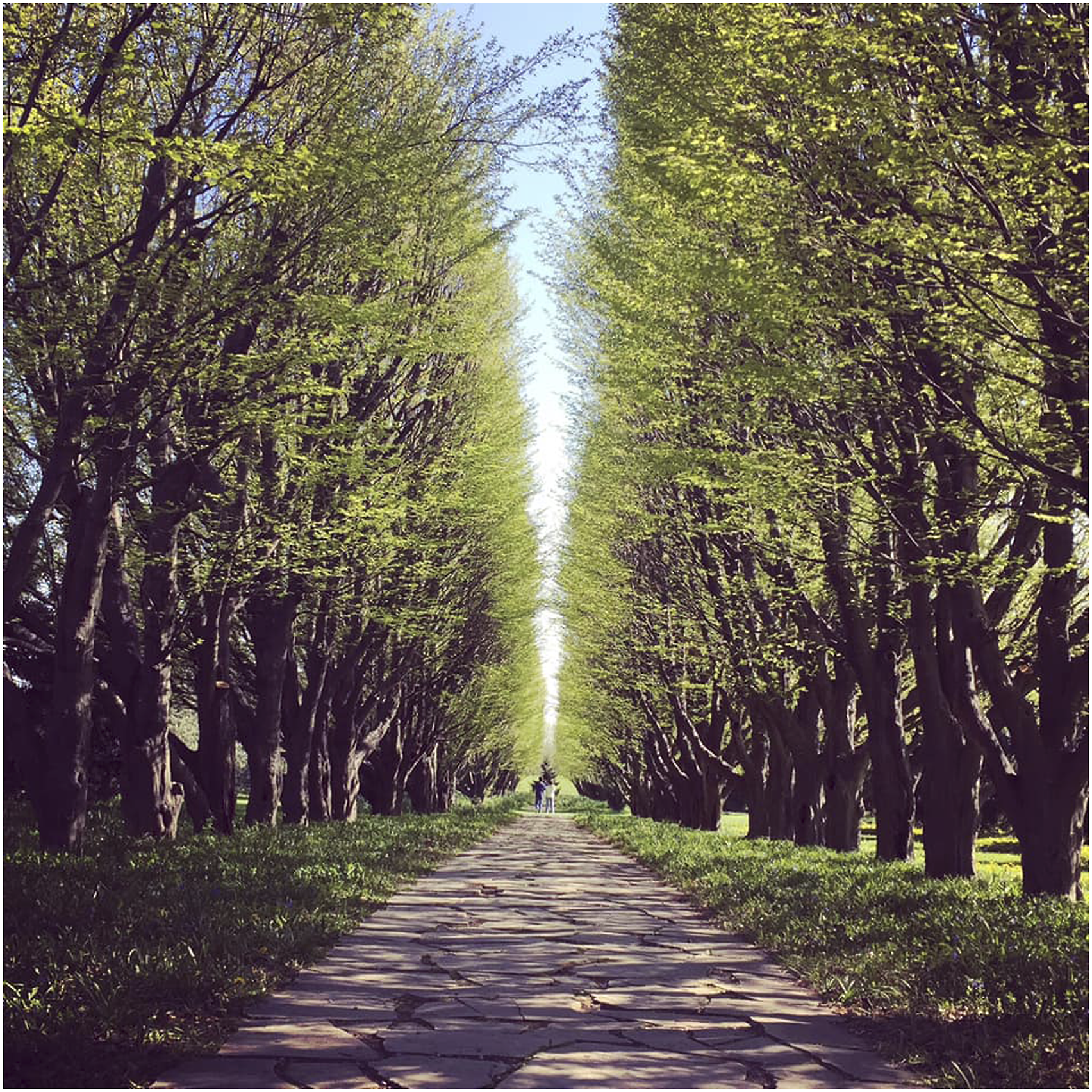
Discussion Summary
While there arise countless routes to attaining the goal of the so-called holistic model, mindful breathing and walking seem promising paths not only to address the aforementioned educational inequities in HE as a whole but, more specifically, to pave the way for mindfulness and engaged pedagogy as HE initiatives in the midst of global chaos and volatility. This genuinely rich and deep teaching and learning marks a profound shift in the positionality of teachers and practitioners when adapting themselves to remote learning, leading up to the journey from the inner self to a fuller engagement with others. Mindfulness-integrated approaches allow teachers as mindful educators to delve into the roots of social injustices and trigger compassion, for “when we practice this we are liberated from fear, sorrow, and the fires burning inside us. When mindfulness embraces our joy, our sadness, and all our mental formations, sooner or later we will see their deep roots” (Hanh, 1999, p. 75). With so many uncertainties, mindfulness has therefore manifested itself as a spiritual healer in response to this unprecedented crisis of uncertainty and anxiety aroused in virtual learning, emphasizing “wholeness, a union of mind, body, and spirit” (Hanh, 1991, p. 14) to provide a more holistic approach to healing.
Conclusions
Gathering the narrative experiences of three young overseas Vietnamese doctoral students in Canada and Australia, we have built a trioethnography to discuss three important education-focused topics under the inevitable influence of the coronavirus global spread: educator positionality, education inequity, and mindfulness applications to HE contexts of virtual learning and teaching. In the formation of sharing circles (Lavallée, 2009), discussions about these topics are considered a methodological framework in which duoethnography and photography are combined to help us interrogate the educational upheavals in this crisis from a multifaceted perspective. The significance of this study is that photographs as the artifacts of our living, being, and learning promote an aesthetic inquiry, which enables us to contemplate, interrogate, and disrupt the narrative experience.
We have seen our trioethnography as ongoing and constantly evolving with a consciousness of being, living, and learning in a more fluid context of global education. Central to this trioethnography is researchers’ narrative experiences of learning and teaching during the global educational changes; hence, there might be subjectivity in analyzing their lived experiences and using them to generalize the research outcomes (Sawyer & Norris, 2013). Findings could be found in our dialogues and we left them to readers for their own interpretation. Also, our study is an illustrative excerpt of trioethnography, in which three researchers came together to review their transnational lives and discuss the emerging problems of learning and teaching faced by both teachers and students in different educational settings. The contemporary global crisis has given us a unique opportunity to revisit and likely reform our positionality as educators in a new era of teaching and learning with the unpredictable evolution of a pandemic.
Methodologically, there are critical issues that we have experienced during this joint-writing process. Breault (2016) denotes that in writing a duoethnography, “what is important is the believability and trustworthiness of the research” and trust between the co-researchers is prerequisite (p. 779). Parallel talk is key to a duoethnography where co-researchers present a sharing of experiences around the common topics (Breault, 2016), which can be very personal, such as identity exploration, thoughts about education inequity, and mindfulness pedagogy. Hence, it has been really difficult for us to build trust among us, not two but three researchers in offering personal thoughts about critical issues we have observed and struggled with. It has become extreme when we situated our dialogues in the current context of a pandemic as we, as educators, have become vulnerable to the significant educational changes and shifts. Trust is hard to obtain but is a must to achieve for the intimate conversational flow of our trioethnography. When we gained trust in sharing experiences, we felt free to write about them. We have seen the prospects of this study through the vulnerability to get personal in writing a trioethnography. Getting personal has moved us beyond the courage to see through multiple lenses of being, living, and learning.
In our dialogues, we wrote about inequities in education, including gender issues and learning issues for immigrants. Sharing a concern with Breault (2016) about the third voice in duo/trioethnography, we have found it a matter of “what is lost or gained” there as in our conversations, it was an immense gain to cover the education inequity topic with a bigger discussion about the marginalized people pursuing education in a global crisis. Hence, as a crucial research implication, we have seen a prospect for future duoethnographic studies to welcome more diverse perspectives of being, living, and researching in order to build thick voices in mutual and reciprocal dialogues.
Footnotes
Acknowledgments

Declaration of Conflicting Interests
The author(s) declared no potential conflicts of interest with respect to the research, authorship, and/or publication of this article.
Funding
The author(s) received no financial support for the research, authorship, and/or publication of this article.